
- Home
- »
- Consumer F&B
- »
-
Dairy Products Market Size And Share Report, 2026-2033GVR Report cover

Dairy Products Market (2026 - 2033) Size, Share & Trends Analysis Report By Product (Milk, Cheese, Yogurt, Butter), By Distribution Channel (Supermarkets and Hypermarkets, Convenience Stores, Online Retailers), By Region, And Segment Forecasts
Market Size, 2025
$551.3BMarket Estimate, 2026
$567.9BMarket Forecast, 2033
$737.3BCAGR, 2026–2033
3.8%Dairy Products Market Summary
The global dairy products market size was valued at USD 551.3 billion in 2025 and is projected to grow from USD 567.9 billion in 2026 to USD 737.3 billion by 2033, at a CAGR of 3.8% from 2026 to 2033. The Asia Pacific market held the largest share of 33.6% of the global market in 2025. The dairy industry is benefiting from several key drivers, including a rising global population, increased urbanization, and growing consumer awareness of the health benefits associated with dairy products.
 Source: Grand View Research, IR Documents, Primary Interviews, Paid DatabasesTo learn more about this report,
 Download Free Sample Report
 Key Market Trends & Insights
- By product: The milk dairy products dominated the market with a share of 31.6% in 2025.
- By product: The yogurt market is expected to have a CAGR of 4.3% from 2026 to 2033.
- By distribution channel: The sales of dairy products through the supermarkets and hypermarkets accounted for a share of 60.5% in 2025.
Regional Highlights
- Largest regional market: Asia Pacific (33.6% revenue share, 2025)
- By country: The China held the largest market share in 2025.
Market Size & Forecast
- Market size in 2025: USD 551.3 Billion
- Estimated market size in 2026: USD 567.9 Billion
- Projected market size by 2033: USD 737.3 Billion
- CAGR (2026-2033): 3.8%
Three ways to get this report
Buy it, customize it, or ask a question.Ask an Analyst
Analyst response in 1 business day
- AccessReport author, directly
- Reply timeWithin 1 working day
- No sales callDirect answer only
- FormatEmail reply
- CostFree, no cost
Get the Full Report
What the study covers
- FormatsPDF · Excel · Dashboard
- Timeline2026–2033 annual, 2025 base
- Coverage20+ countries, 5 regions
- Companies10+ key players profiled
Customize the Report
20% free customization
- IncludeCountries, segments, points
- TailorTo your product definition
- ExtendDeeper competitor detail
- OrA fully bespoke study
- Turnaround5–10 working days
Dairy products are often seen as a rich source of essential nutrients, such as protein and calcium, making them an attractive choice for health-conscious consumers. In addition, the increasing availability of dairy through expanded retail distribution and enhanced cold-chain infrastructure is contributing to market growth. Furthermore, government policies and initiatives in developing countries are further bolstering the industry by improving access to dairy products and supporting the growth of the dairy sector globally.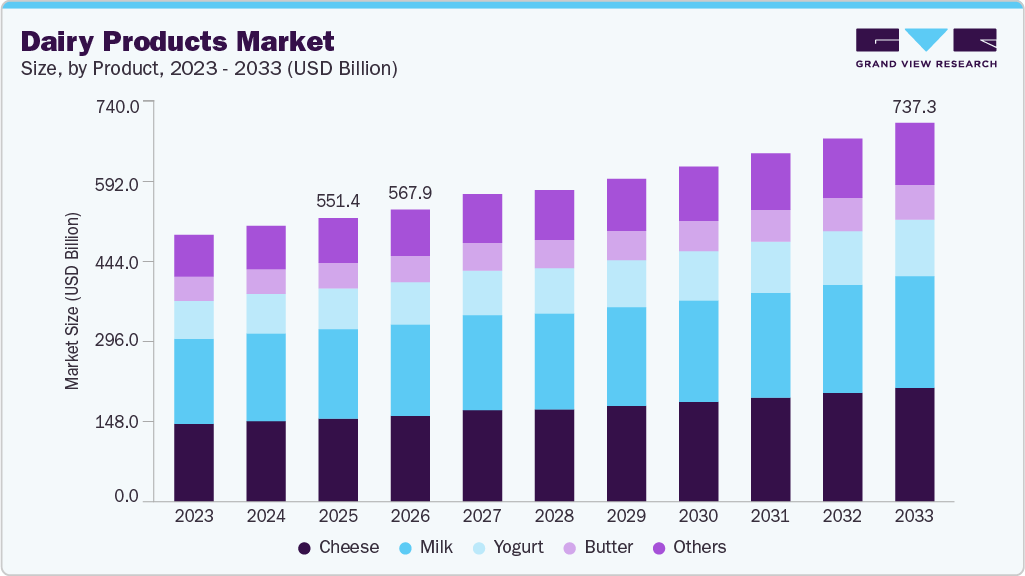 To learn more about this report, Download Free Sample Report
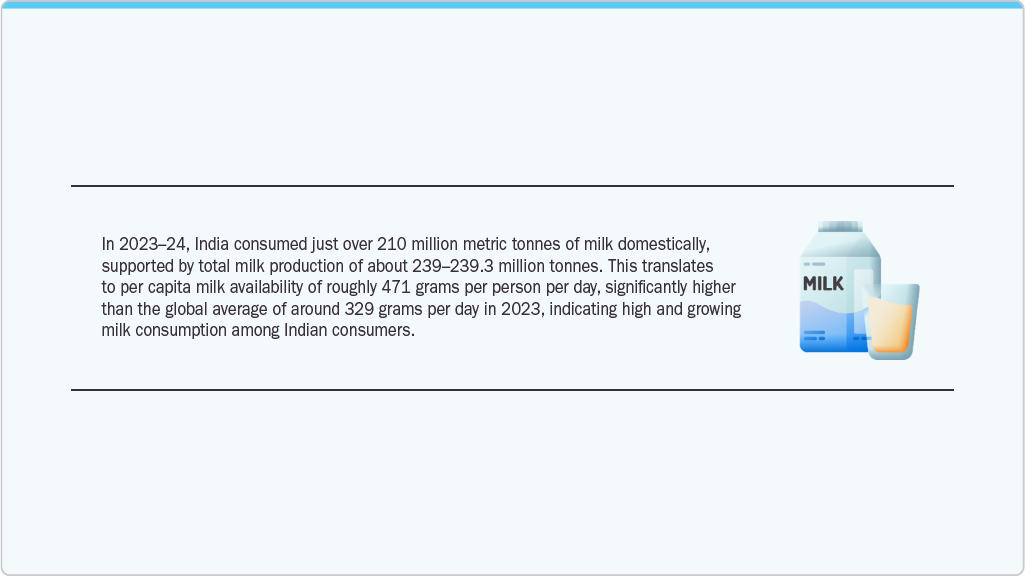
 In 2025, India remained the world’s largest milk producer and one of the biggest consumers by total volume, driven by its large population and strong cultural reliance on dairy. The U.S. also ranks among the leading producers and consumers of dairy products, while several European countries, including Finland and Albania, consistently record some of the highest per-capita milk consumption levels globally. Growth across Asia, especially in countries like China and Pakistan, is supported by rising incomes, urbanization, and increasing adoption of dairy in everyday diets. Although global dairy consumption continues to expand, regional differences remain significant. Developed markets such as the U.S. and Europe show relatively stable or slowly changing consumption patterns, whereas developing regions in Asia and the Middle East are experiencing much faster growth, driven by demographic shifts and evolving lifestyle preferences.
 To learn more about this report, Download Free Sample Report
 According to World Population Review, Leading Cheese-Consuming Countries Globally, 2025
Country
Per capita consumption (Kg)
U.S.
17.4
Canada
13.7
Australia
12.5
UK
11.9
New Zealand
10.1
Argentina
8.5
Saudi Arabia
7.8
Chile
7.4
Russia
5.1
Packaging innovations are also playing a critical role in the dairy market's growth. Companies are focusing on sustainable packaging solutions that use recyclable materials or reduce plastic use, catering to consumers' increasing environmental consciousness. Modern packaging solutions now feature easy-to-open containers and portion-controlled formats to cater to the needs of busy, health-conscious individuals.
Manufacturers are also increasingly innovating with product offerings. The dairy sector is introducing a range of products that cater to changing consumer tastes. High-protein and functional dairy products are gaining traction, as consumers increasingly seek products that can support their fitness goals or improve their gut health. There is also a growing interest in dairy products with unique flavor profiles and the incorporation of popular functional ingredients, such as plant-based additives or ancient grains. Furthermore, some manufacturers are experimenting with botanical and superfood-infused dairy options to attract a broader range of health-conscious consumers. This trend is especially prevalent in the snackable dairy segment, where ready-to-eat options that combine dairy with other wellness ingredients are becoming more common.
Market Dynamics
The increasing consumer preference for functional, nutrient-rich, and protein-based foods is one of the major factors contributing to the growth of the dairy products market. Consumers are increasingly incorporating products such as probiotic yogurt, fortified milk, cheese, and high-protein dairy beverages into their daily diets due to growing awareness regarding digestive health, immunity, bone strength, and overall wellness. According to the International Dairy Foods Association (IDFA), U.S. dairy consumption reached approximately 661 pounds per capita in 2023, reflecting strong consumer demand for dairy-based nutrition products. In addition, rising urbanization, improving disposable incomes, and expanding retail and cold-chain infrastructure across developing economies are further supporting dairy consumption globally. Manufacturers are also investing heavily in innovative product launches, clean-label formulations, and convenient ready-to-consume dairy options, which is further accelerating market growth.
The growing consumer inclination toward plant-based and dairy alternative products is one of the key factors restraining the growth of the dairy products market. Increasing awareness regarding lactose intolerance, vegan diets, environmental sustainability, and animal welfare concerns is encouraging consumers to shift toward alternatives such as almond, soy, oat, and coconut-based beverages. According to the Plant Based Foods Association, the U.S. plant-based food market reached USD 8.1 billion in retail sales in 2023, highlighting the rising popularity of dairy alternatives among consumers. In addition, younger consumers are increasingly adopting flexitarian and vegan lifestyles, reducing their consumption of conventional dairy products. The availability of fortified plant-based products with added calcium, vitamins, and protein is further intensifying competition for traditional dairy manufacturers, thereby limiting market growth potential in certain regions.
Consumer Insights
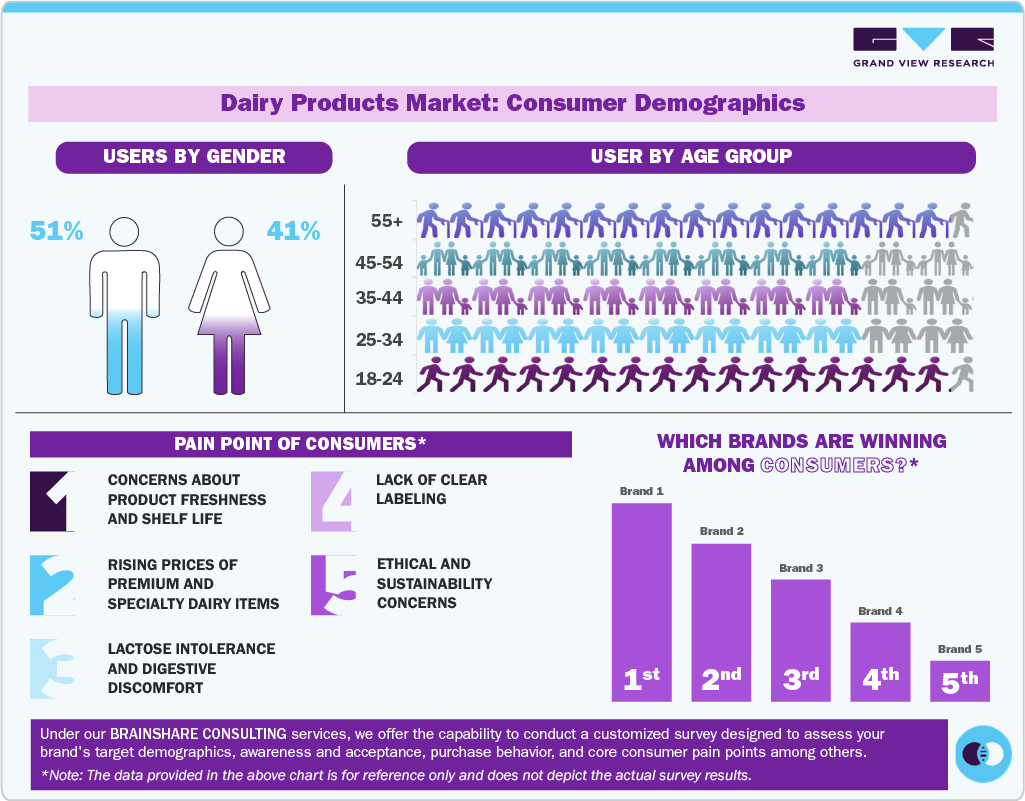
Consumer demand for dairy products has been shifting in response to several trends, such as an increasing focus on health and wellness. People are increasingly turning to functional dairy products, such as probiotic yogurts, kefir, and high-protein milk, driven by a desire for foods that provide additional health benefits. The rise of functional dairy aligns with broader wellness trends, with consumers seeking products that support digestive health, weight management, and overall well-being. Another significant trend is the growing preference for dairy snacks like cheese sticks and ready-to-eat yogurt, which cater to the rising demand for convenient, on-the-go food. Ethical considerations, including animal welfare and sustainability, are also shaping consumer preferences, with more individuals opting for ethically sourced dairy products, even if they come at a premium.
 To learn more about this report, Download Free Sample Report
 Consumers in the dairy products market are also increasingly preferring clean-label formulations, with growing interest in products made with fewer additives, natural ingredients, and transparent sourcing. Premiumization is becoming increasingly prominent as buyers are willing to pay more for organic, grass-fed, or minimally processed dairy products. Younger consumers, in particular, are influenced by social media trends and brand storytelling, which shape perceptions of quality, taste, and lifestyle alignment within the dairy category.
Along with these trends, the dairy milk market is evolving as consumers seek products that offer both convenience and health benefits. Many buyers are choosing fortified milk options, such as those enriched with vitamins and minerals or high-protein formulations. There is also a rising demand for value-added dairy products such as flavored milk, lactose-free variants, and functional beverages that support digestion and immunity. As lifestyles become busier, ready-to-drink dairy solutions and portion-controlled packaging are gaining popularity, further shaping growth in the overall dairy products industry.
Product Insights
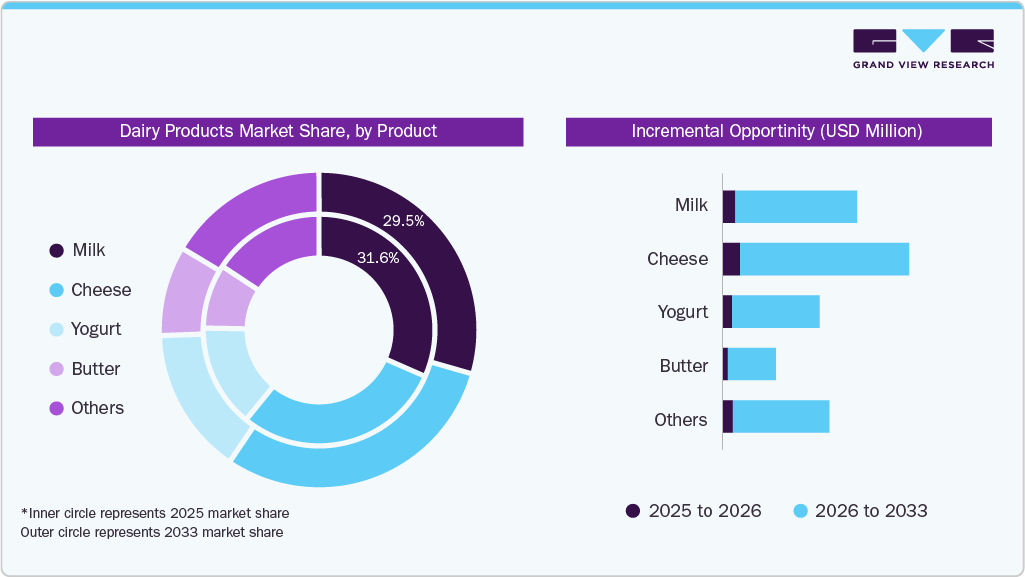
Milk dairy products dominated the market with a share of 31.6% in 2025. Milk is widely recognized for its high calcium content, essential for bone health, along with other vitamins and proteins that contribute to overall wellness. In addition, the rise of dairy alternatives, such as lactose-free and organic milk, has expanded their appeal to a broader consumer base, catering to diverse dietary preferences. These factors, combined with the rising demand for fortified and functional dairy products, are driving the growth of the milk-based dairy products.
 To learn more about this report, Download Free Sample Report
 At the same time, dairy alternative products are gaining strong traction as consumers increasingly seek healthier, ethical, and environmentally friendly options. Plant-based milk varieties, such as almond, oat, soy, and coconut, are becoming mainstream due to their perceived digestive benefits and suitability for lactose-intolerant individuals. Many brands are also introducing fortified plant-based beverages enriched with calcium, vitamins, and protein to closely match the nutritional profile of traditional dairy. This growing shift toward flexible consumption patterns, where consumers use both dairy and plant-based options, is further shaping the overall dynamics and competitive landscape of the dairy products market.
The yogurt market is expected to have a CAGR of 4.3% from 2026 to 2033. Increasing health awareness has driven demand for nutrient‑rich foods, and yogurt is widely perceived as a source of probiotics, protein, and essential vitamins, supporting digestion and overall wellness. Changing lifestyles and busier routines have also boosted preference for convenient, ready‑to‑eat dairy options. In addition, the rise of innovative flavors, formats, and fortified products has broadened appeal across age groups, while growing distribution through supermarkets, convenience stores, and e‑commerce has made these products more accessible to consumers everywhere.
Moreover, the fortified dairy products market is expanding as consumers increasingly look for functional foods that offer added health benefits beyond basic nutrition. Manufacturers are enriching yogurt with probiotics, vitamins, minerals, and high-protein formulations to meet the needs of health-conscious buyers. This trend is particularly strong among young adults and urban consumers who prioritize immunity, digestive health, and energy-boosting ingredients. As fortified offerings become more diverse and widely available, they further strengthen the position of yogurt within the broader dairy category, supporting overall market growth in the coming years.
Distribution Channel Insights
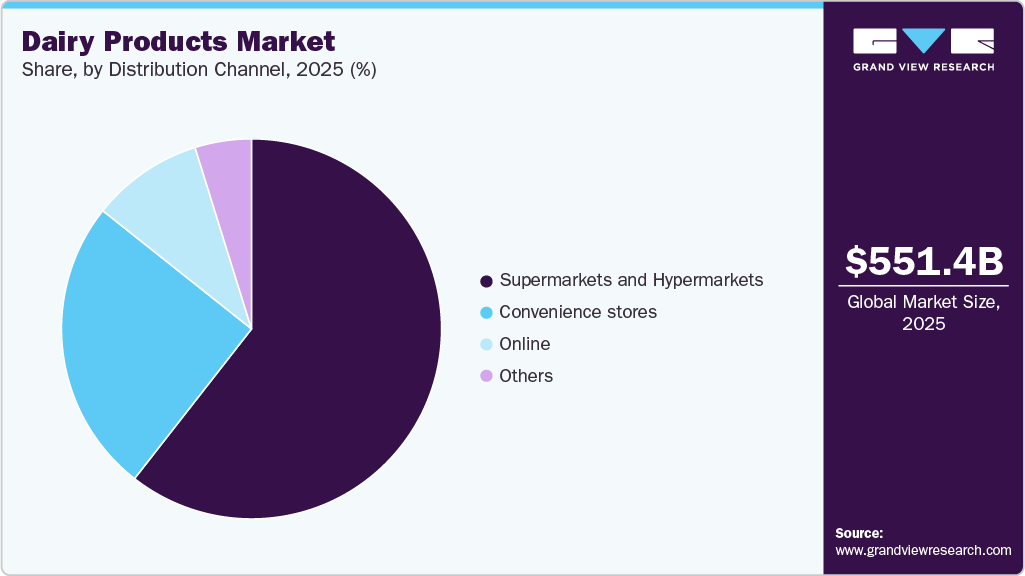
Sales of dairy products through the supermarkets and hypermarkets accounted for a share of 60.5% in 2025. Supermarkets and hypermarkets provide a wide variety of dairy products, from milk and cheese to yogurt and butter, offering convenience and competitive pricing that appeal to a broad consumer base. The trend is particularly strong among middle-income families and working professionals who prefer one-stop shopping experiences. In addition, promotions, discounts, and private-label offerings have made dairy products more accessible, driving increased sales in these retail channels.
 To learn more about this report, Download Free Sample Report
 Sales of dairy products through the online distribution channel are expected to grow at a CAGR of 4.6% from 2026 to 2033. The rise of e-commerce platforms, coupled with the growing demand for home delivery services, has made it easier for consumers to access a variety of dairy products, including milk, cheese, yogurt, and plant-based alternatives. This trend is particularly evident among tech-savvy consumers who prefer the ease of shopping from home and the ability to compare prices and brands. As a result, many dairy companies are expanding their online presence to meet this demand and offer tailored promotions and subscription services.
Regional Insights
The North American dairy products market is expected to grow at a CAGR of 2.1% from 2026 to 2033. Consumers increasingly perceive dairy as a natural source of high-quality protein, calcium, and functional nutrients that support bone health, muscle recovery, and overall wellness, particularly among aging populations and fitness-oriented consumers. At the same time, manufacturers have expanded offerings beyond traditional milk to include value-added products such as Greek yogurt, high-protein cheese, lactose-free milk, and fortified dairy beverages, making dairy more accessible to health-conscious and lactose-sensitive consumers.
U.S. Dairy Products Market Trends
The dairy products industry in the U.S. is rising primarily due to increasing consumer interest in high-protein, functional, and clean-label dairy foods. Demand for products such as probiotic yogurt, lactose-free milk, and nutrient-fortified beverages continues to grow as health awareness rises. Strong innovation in flavors, packaging, and convenience formats, along with the expansion of online grocery channels and sustained foodservice demand, is further supporting the steady market growth across the country.
Alongside this growth, the dairy products testing market is also expanding as regulators and consumers place greater emphasis on product safety, quality, and transparency. With rising demand for clean-label, minimally processed dairy products, manufacturers are increasingly investing in advanced testing methods to ensure compliance with nutritional claims, contamination standards, and shelf-life requirements. This includes microbiological testing, adulteration detection, and verification of ingredients across the dairy supply chain. As quality assurance becomes a key competitive factor, the testing market continues to play an essential role in supporting the reliability and consistency of dairy products available to U.S. consumers.
Europe Dairy Products Market Trends
The dairy products industry in Europe is expected to grow at a CAGR of 1.6% from 2026 to 2033. The market for dairy products is rising among European consumers, driven by a combination of evolving dietary preferences, health perceptions, and product innovation. Dairy continues to be viewed as a natural, nutrient-dense source of protein, calcium, and probiotics, supporting bone and gut health, and overall nutrition across age groups. At the same time, manufacturers are expanding their premium and functional offerings, such as high-protein yogurts, lactose-free milk, organic cheese, and fortified dairy products to address specific consumer needs related to digestion, active lifestyles, and healthy aging.
Moreover, the lactose-free dairy products in Europe are expanding rapidly as more consumers seek solutions for lactose intolerance and digestive comfort without giving up traditional dairy. Brands are introducing a wider range of lactose-free options, including milk, yogurt, cheese, and flavored beverages, to meet growing demand across all age groups. These products are increasingly seen as both healthier and easier to digest, aligning well with the region’s rising focus on wellness and personalized nutrition. As availability improves through supermarkets and online channels, lactose-free dairy continues to strengthen its position within the broader European dairy products landscape.
The UK dairy products industry is expected to grow at a CAGR of 1.7% over the forecast period from 2026 to 2033, primarily due to rising demand for high-quality, minimally processed dairy foods and the growing popularity of protein-rich diets. Consumers are increasingly choosing functional dairy options such as probiotics, fortified milk, and reduced-sugar yogurt. In addition, strong retail penetration, steady innovation in flavors and packaging, and expanding online grocery platforms are supporting long-term market growth.
Asia Pacific Dairy Products Market Trends
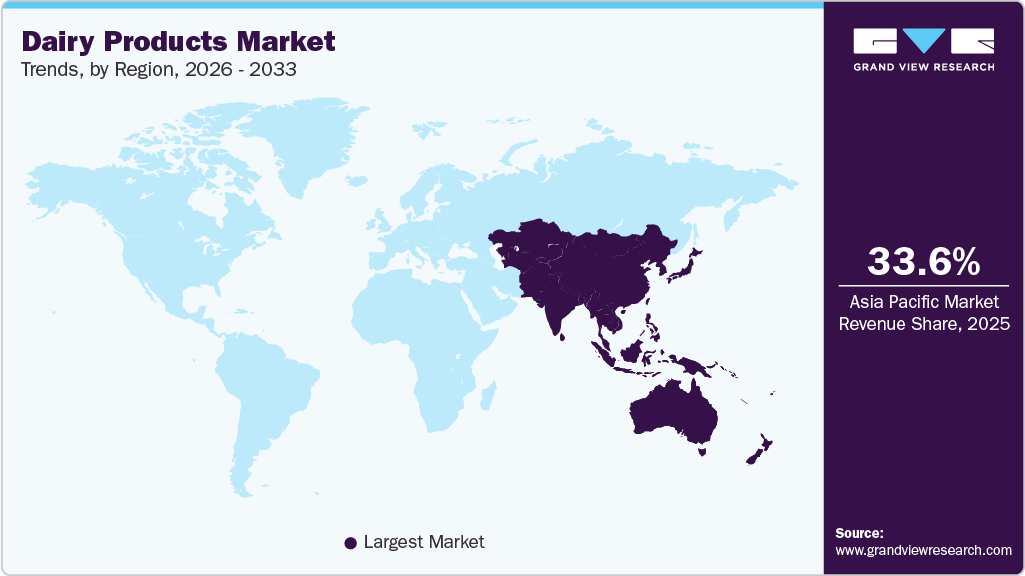
The dairy products industry in the Asia Pacific accounted for a share of 33.6% in 2025. The market for dairy products is rising among Asia-Pacific consumers due to increasing urbanization, higher disposable incomes, and changing dietary preferences. As the region experiences economic growth, consumers are becoming more health-conscious and seeking convenient, nutritious options. Dairy products, such as milk, cheese, and yogurt, are increasingly seen as essential components of a balanced diet, contributing to the rising demand. Additionally, the growing awareness of the benefits of dairy for bone health and the popularity of dairy-based snacks are further driving consumption in the region. This trend is also supported by the expanding availability of dairy products in retail outlets and online platforms.
 To learn more about this report, Download Free Sample Report
 The functional dairy products market, on the other hand, is gaining strong momentum in the Asia Pacific region as consumers increasingly look for foods that provide added health benefits. Products enriched with probiotics, vitamins, minerals, and high-protein formulations are becoming popular among young professionals, fitness-focused individuals, and families seeking better nutrition. Functional milk drinks, fortified yogurts, and immunity-boosting dairy beverages are in especially high demand, driven by rising awareness of digestive health and overall wellness. As manufacturers continue to innovate and expand these value-added offerings, functional dairy is playing a significant role in shaping the region’s rapidly evolving dairy consumption landscape.
The China dairy products industry accounted for a share of 59.7% in 2025 in the APAC region, driven by strong domestic consumption, expanding urban populations, rising incomes, and increasing demand for premium, nutritional, and value-added dairy offerings. Moreover, shifting lifestyle patterns and higher health awareness are encouraging consumers in the country to incorporate dairy more regularly into their diets. The rise of e-commerce platforms and quick-commerce delivery models has made dairy products more accessible across both urban and semi-urban areas, fueling the market in the country.
Central & South America Dairy Products Market Trends
The dairy products industry in Central & South America accounted for a share of 13.2% in 2025, supported by steady demand for milk, cheese, and yogurt across both urban and rural markets. Rising health awareness, expanding retail channels, and increasing adoption of fortified and value-added dairy products are contributing to this growth. In addition, government efforts to enhance local dairy farming, improve supply chain infrastructure, and promote nutrition programs are helping strengthen the region’s overall market performance.
Middle East & Africa Dairy Products Market Trends
The dairy products industry in the Middle East & Africa region accounted for a share of 8.6% in 2025, driven by rising consumer demand for nutritious, high-quality dairy products and expanding urban populations. Growth in modern retail formats, greater availability of chilled dairy products, and increasing interest in functional offerings such as probiotic yogurt and fortified milk are supporting market expansion. In addition, improved supply chain capabilities and ongoing product innovation are helping strengthen the region’s overall market presence.
Key Dairy Products Company Insights
The presence of a few established players and new entrants characterizes the market. Many big players are increasing their focus on the growing trend of the dairy products market. Players in the market are diversifying their service offerings in order to maintain market share.
 To learn more about this report, Download Free Sample Report
 Key Dairy Products Companies:
The following key companies have been profiled for this study on the dairy products market.
- Arla Foods amba
- Fonterra Co-operative Group
- GCMMF
- The Kraft Heinz Company
- Nestle S.A.
- Danone S.A.
- DMK Deutsches Milchkontor GmbH
- Royal FrieslandCampina
- Meiji Holdings Co., Ltd.
- Dairy Farmers of America, Inc.
Recent Developments
-
In October 2025, Almarai launched Trofos, the first authentic Greek Feta cheese with PDO certification available in Saudi Arabia and the GCC, produced in Greece using 70% sheep’s and 30% goat’s milk to offer a creamy, high‑protein cheese that reflects traditional Greek craftsmanship. The brand aims to strengthen Almarai’s position in the premium cheese segment, support its regional expansion strategy, and align with Saudi Vision 2030, alongside prior investments in new cheese production lines in Egypt to meet growing demand for high-quality cheese products.
-
In June 2024, Arla Foods, in partnership with Mondelēz International, launched a new Milka-branded chocolate milk range in Germany, Austria, and Poland, using Elopak’s Pure-Pak cartons to combine premium shelf appeal with more sustainable packaging. The range, produced at Arla’s Esbjerg dairy in Denmark, comes in several pack sizes and flavors such as Original Chocolate, Caramel, and Noisette, aiming to grow Milka beyond chocolate bars and secure a leading position in the chocolate milk category in these markets.
Dairy Products Market Report Scope
Report Attribute
Details
Market size in 2025
USD 551.3 Billion
Estimated market size in 2026
USD 567.9 billion
Projected market size by 2033
USD 737.3 billion
Growth rate
CAGR of 3.8% from 2026 to 2033
Base year for estimation
2025
Historical data
2021 - 2025
Forecast period
2026 - 2033
Quantitative units
Revenue in USD million/billion, and CAGR from 2026 to 2033
Report coverage
Revenue forecast, company ranking, competitive landscape, growth factors, and trends
Segments covered
Product, distribution channel, region
Regional scope
North America; Europe; Asia Pacific; Central & South America; Middle East & Africa
Country scope
U.S.; Canada; Mexico; UK; Germany; France; Italy; Spain; China; India; Japan; South Korea; Australia & New Zealand; Brazil; South Africa; UAE
Key companies profiled
Arla Foods amba; Fonterra Co-operative Group; GCMMF; The Kraft Heinz Company; Nestle S.A.; Danone S.A.; Royal FrieslandCampina; Dairy Farmers of America, Inc.; DMK Group; Meiji Holdings Co., Ltd.
Customization scope
Free report customization (equivalent up to 8 analysts working days) with purchase. Addition or alteration to country, regional & segment scope.
Pricing and purchase options
Avail customized purchase options to meet your exact research needs. Explore purchase options
Global Dairy Products Market Report Segmentation
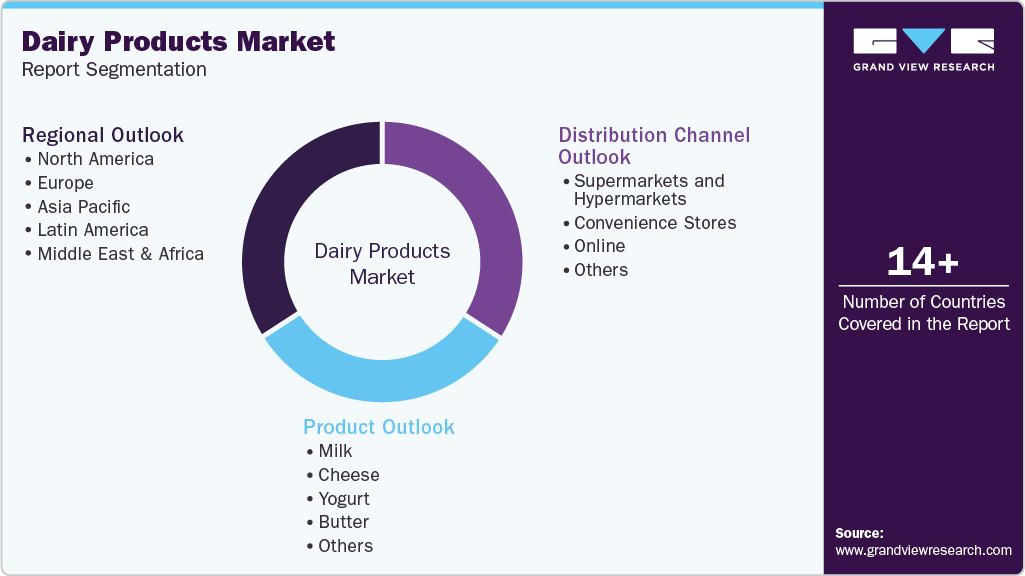
This report forecasts revenue growth at global, regional & country levels and provides an analysis on the latest trends and opportunities in each of the sub-segments from 2021 to 2033. For this study, Grand View Research has segmented the global dairy products market report on the basis of product, distribution channel, and region.
 To learn more about this report, Download Free Sample Report
 -
Product Outlook (Revenue, USD Billion, 2021 - 2033)
-
Milk
-
Cheese
-
Yogurt
-
Butter
-
Others
-
-
Distribution Channel Outlook (Revenue, USD Billion, 2021 - 2033)
-
Supermarkets and Hypermarkets
-
Convenience Stores
-
Online
-
Others
-
-
Regional Outlook (Revenue, USD Billion, 2021 - 2033)
-
North America
-
U.S.
-
Canada
-
Mexico
-
-
Europe
-
UK
-
Germany
-
France
-
Italy
-
Spain
-
-
Asia Pacific
-
China
-
India
-
Japan
-
Australia & New Zealand
-
South Korea
-
-
Central & South America
-
Brazil
-
-
Middle East & Africa (MEA)
-
South Africa
-
UAE
-
-
Delivered Customizations
This report has been delivered with the following In-depth customizations
Client Request
Customization Delivered
Value Adds
Cross-Segmentation Analysis for Dairy Products Across Channels
Comprehensive cross-segmentation analysis of dairy categories including milk, cheese, yogurt, butter, flavored milk, lactose-free dairy, and functional dairy products across supermarkets, convenience stores, foodservice, e-commerce, and specialty retail channels. Analysis of pricing tiers, consumer demographics and purchasing trends, consumption behavior, and regional market penetration across developed and emerging markets.
Identify the fastest-growing dairy categories across retail and online channels. Evaluate channel-wise revenue contribution and premiumization trends by product type. Support category expansion, shelf placement, and merchandising opportunities. Highlight whitespace opportunities for fortified, probiotic, and high-protein dairy products, including SKU benchmarking and brand positioning analysis.
Dairy Production & Competitive Manufacturing Analysis
Comprehensive assessment of competitor-wise dairy production capacities, processing infrastructure, sourcing networks, cold-chain logistics infrastructure, and regional manufacturing and infrastructure footprint. Portfolio benchmarking across conventional, organic, lactose-free, and premium dairy segments. Analysis of private-label exposure, manufacturing and operational efficiencies, and supply chain integration strategies.
Identify the advantages of vertical integration, including supply stability and cost optimization. Benchmark manufacturing scale, processing capabilities, and sourcing efficiencies across key players. Support strategic expansion, localization, and product innovation investment decisions. Evaluate opportunities in value-added and functional dairy manufacturing, including premium vs. mass-market comparisons and innovation pipeline assessment..
Dairy Pricing & Packaging Format Analysis
Analysis of global dairy pricing fluctuations across milk, yogurt, cheese, butter, and functional dairy categories. Assessment of raw material cost pass-through and pricing analysis, packaging innovations, and pricing strategies across retail, foodservice, and online channels. Benchmarking of packaging formats including cartons, pouches, tubs, bottles, cups, and sustainable packaging solutions.
Support region-specific pricing and premiumization strategies based on consumer affordability and competitive intensity. Identify packaging formats with the highest adoption across dairy categories. Evaluate opportunities in sustainable, portion-controlled, and convenience-oriented packaging solutions. Support innovation and product development strategies for functional and ready-to-consume dairy products, including consumer purchasing behavior analysis.
Frequently Asked Questions About This Report
The milk dairy products segment held the highest market share of 31.6% in 2025.
The supermarkets and hypermarkets segment held the highest market share of 60.5% in 2025.
The global dairy products market size was estimated at USD 551.3 billion in 2025 and is expected to reach USD 567.9 billion in 2026.
The global dairy products market is expected to grow at a compound annual growth rate of 3.8% from 2026 to 2033 to reach USD 737.3 billion in 2033.
The dairy industry is benefiting from several key drivers, including a rising global population, increased urbanization, and growing consumer awareness of the health benefits associated with dairy products.
Some key players operating in the dairy products market include Arla Foods; Fonterra Co-operative Group; GCMMF; The Kraft Heinz Company; Nestlé S.A.; Danone S.A; Royal FrieslandCampina; DMK Group; Meiji Holdings Co., Ltd. and Dairy Farmers of America, Inc.
Asia Pacific dominated with a 33.6% revenue share in 2025.
About the Author(s)
Consumer F&B Research Team
Consumer Goods · Consumer F&BThis report was authored by the consumer f&b research team at Grand View Research - comprising two research analysts, one senior research analyst, and one industry expert - with specialized expertise in the consumer f&b segment of the consumer goods industry. All findings are based on proprietary consumer goods databases, executive interviews, and regulatory analysis, subject to internal peer review prior to publication.
Last Updated:
Speak to Analyst

Customize this report to your needs - add regions, segments, or data points, with 20% free customization.
Or view our licence options:


ISO 9001:2015 & 27001:2022 Certified
We are GDPR and CCPA compliant! Your transaction & personal information is safe and secure. For more details, please read our privacy policy.


