
- Home
- »
- Consumer F&B
- »
-
Decaffeinated Tea Market Size, Share & Trends Report 2035GVR Report cover

Decaffeinated Tea Market (2027 - 2035)
Size, Share & Trends Analysis Report By Product Type (Decaffeinated Black Tea, Decaffeinated Green Tea), By Distribution Channel (Supermarkets & Hypermarkets, Convenience Stores), By Region, And Segment Forecasts
Market Size, 2026
$3.1BMarket Estimate, 2027
$3.3BMarket Forecast, 2035
$5.8BCAGR, 2027–2035
7.3%Decaffeinated Tea Market Summary
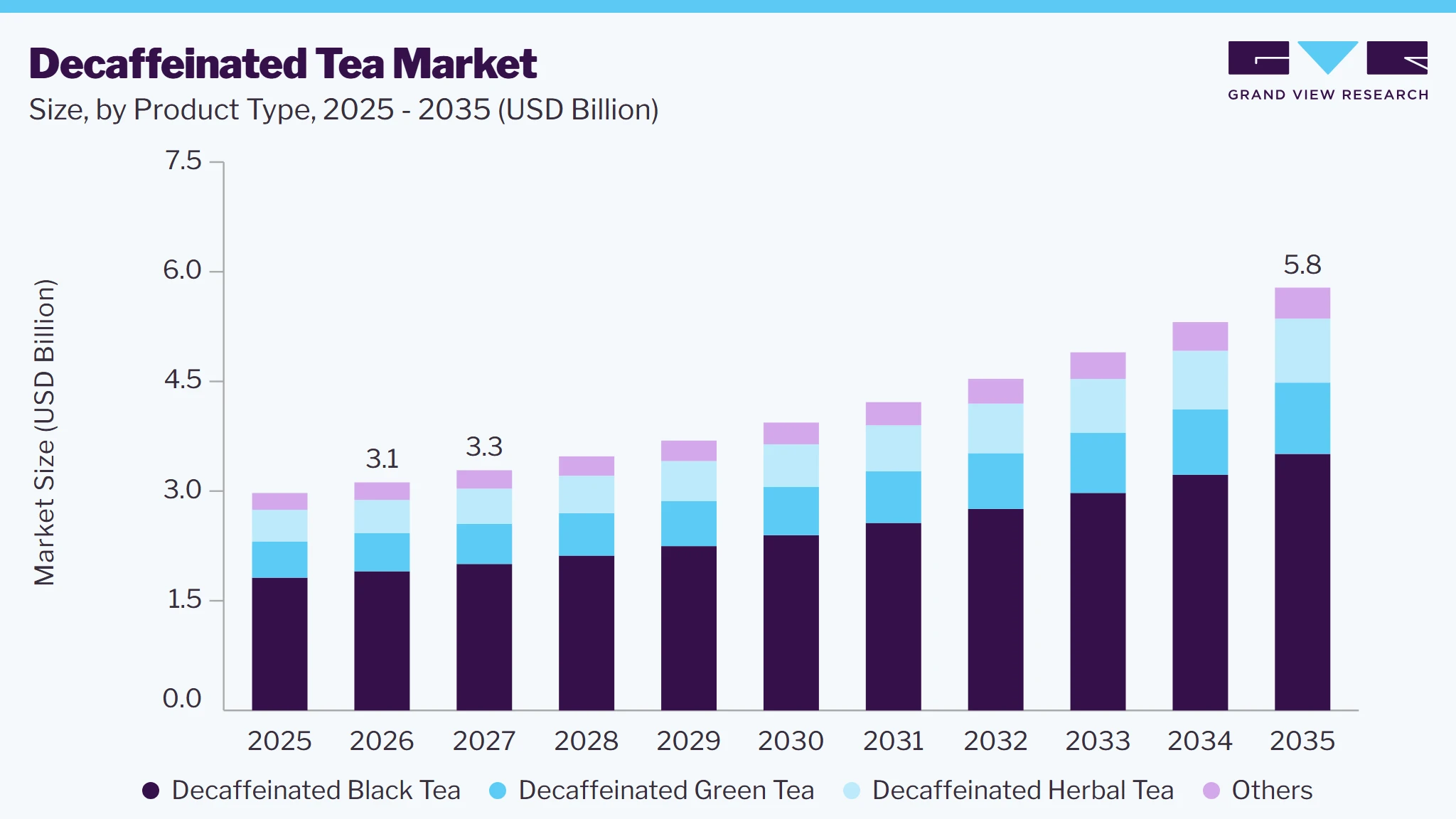
The global decaffeinated tea market size was valued at USD 3.1 billion in 2026 and is projected to grow from USD 3.3 billion in 2027 to USD 5.8 billion by 2035 at a CAGR of 7.3% from 2027 to 2035. North America dominated the market, accounting for a revenue share of 34.1% in 2026. The decaffeinated tea market is primarily driven by growing consumer demand for healthier, low-caffeine beverage options.
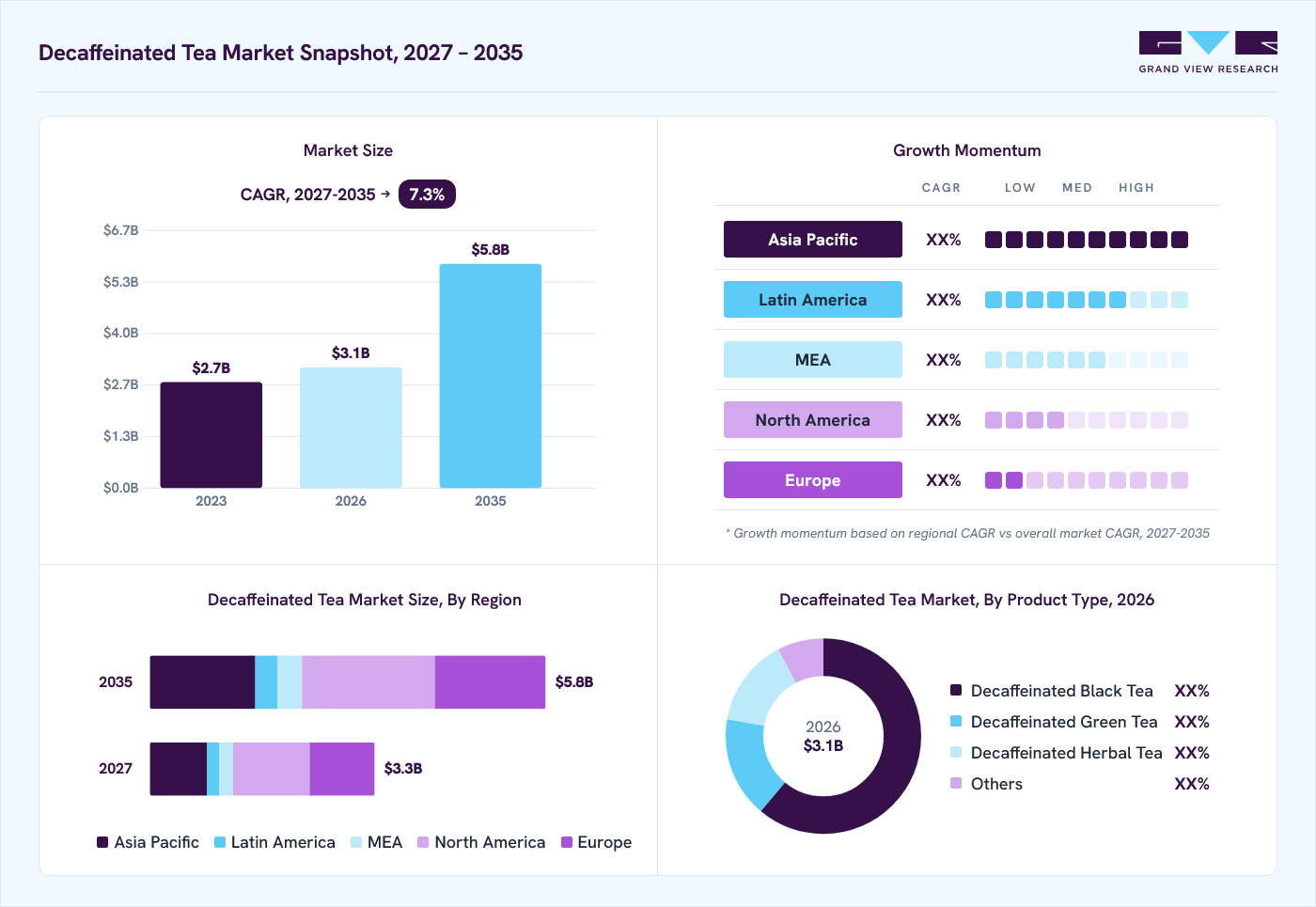 Source: Grand View Research, IR Documents, Primary Interviews, Paid DatabasesTo learn more about this report,
 Download Free Sample Report
Key Market Trends & Insights
- By product type: Decaffeinated black tea market accounted for the largest market revenue share of 61.0% in 2026.
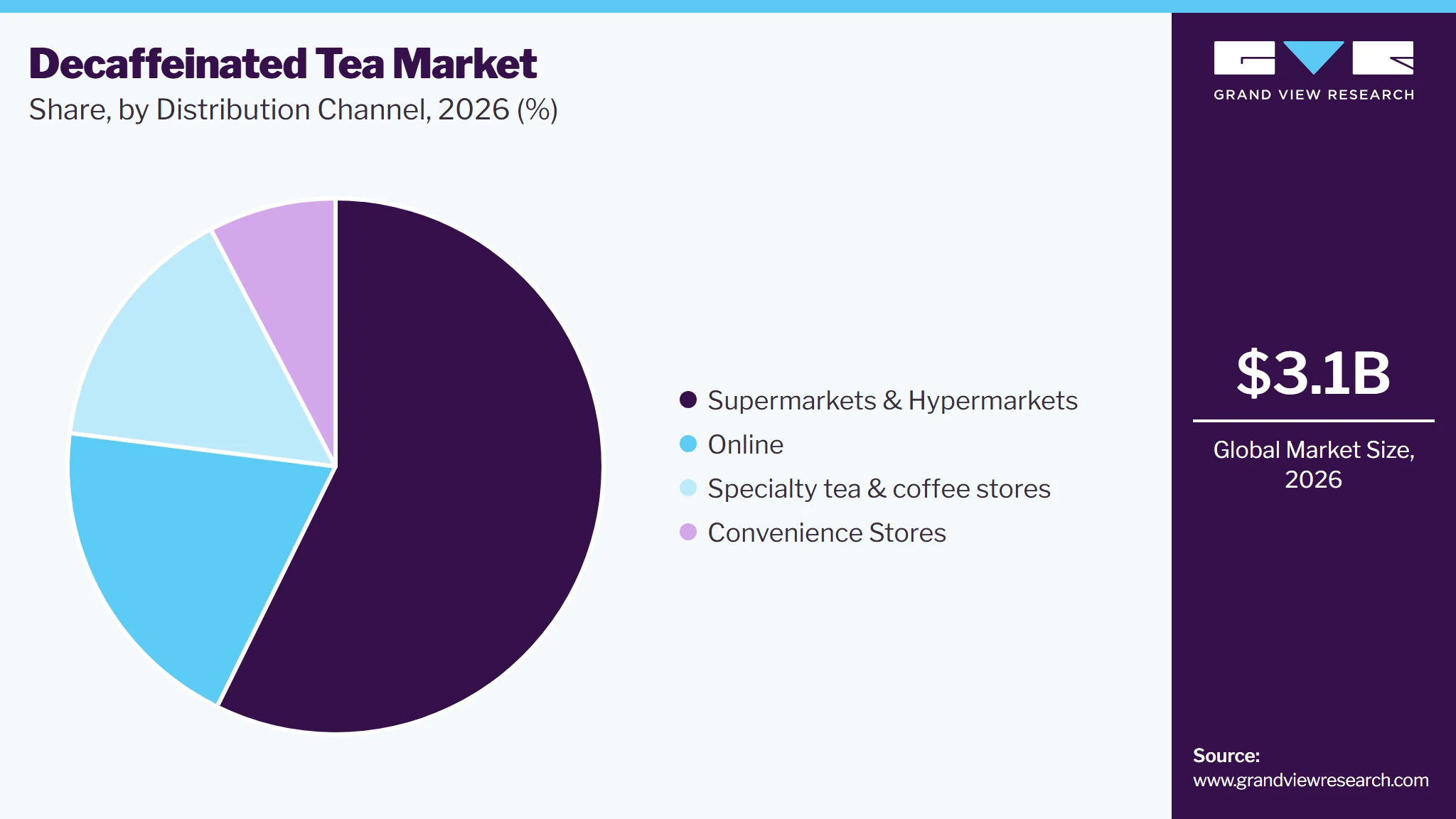
- By distribution channel: Supermarkets & hypermarkets segment accounted for the largest share of 57.3% of the global revenue in 2026.
Regional Highlights
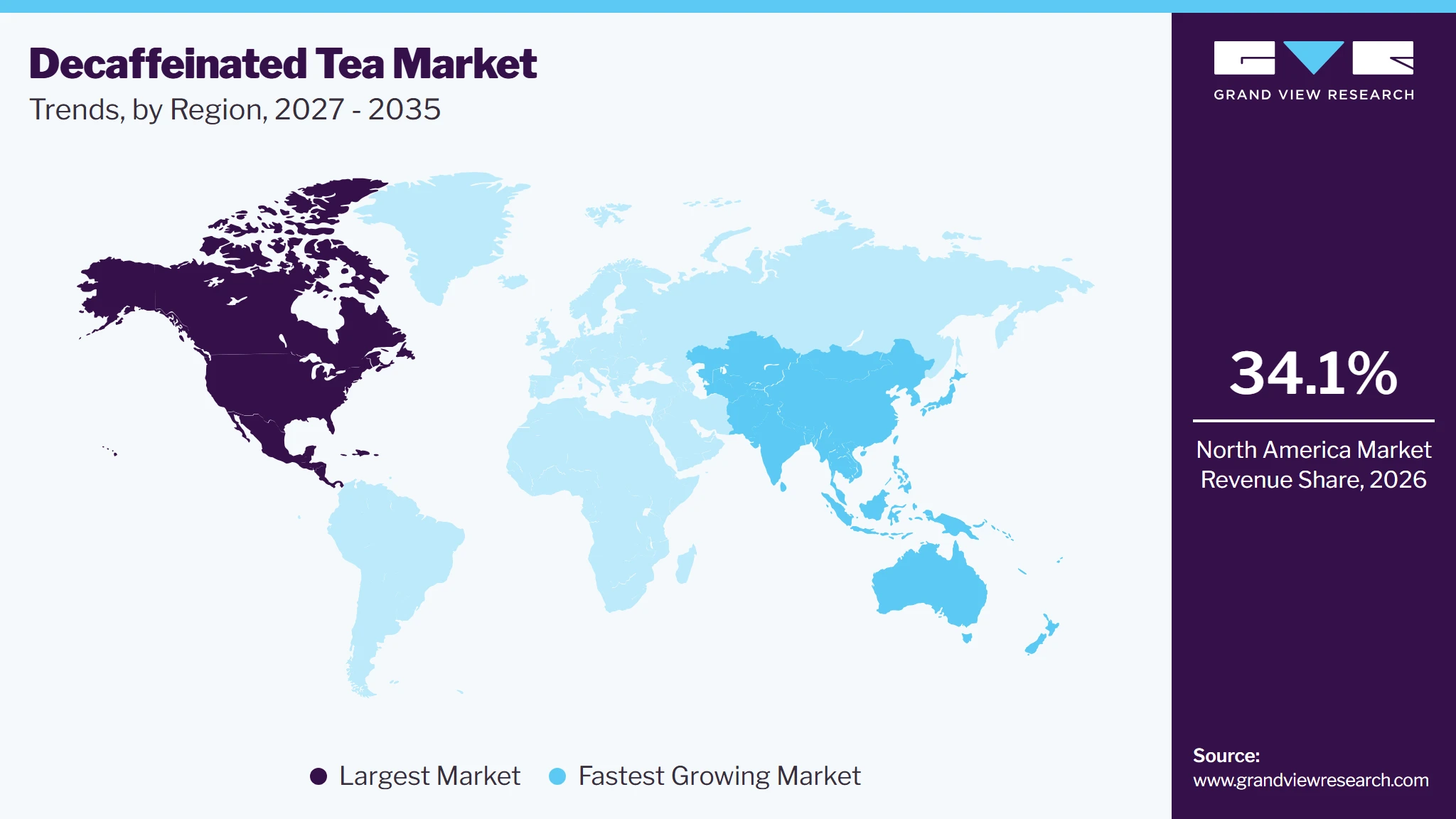
- Largest Region: North America (34.1% revenue share, 2026)
- Fastest-growing region: Asia Pacific (highest CAGR, 2027-2035)
- By country: The U.S. held the largest market share in 2026.
Market Size & Forecast
- Market size in 2026: USD 3.1 Billion
- Estimated market size in 2027: USD 3.3 Billion
- Projected market size by 2035: USD 5.8 Billion
- CAGR (2027-2035): 7.3%
Prism AI by Grand View Research Free to tryAsk a question about the decaffeinated tea marketTry asking✓Every figure cited from GVR research Prefer the report? Download free sample →
Increasing awareness of the potential effects of excessive caffeine consumption is encouraging consumers to opt for decaffeinated alternatives. In addition, product innovation, wider retail availability, and rising demand for premium and functional teas are supporting the market’s growth. In October 2024, Clipper Tea expanded its U.S. supermarket distribution to 1,600+ Albertsons-banner stores, including its organic decaf black tea. The expansion highlights product innovation and wider retail availability, supporting the growing demand for premium and functional tea offerings.The market is also benefiting from the increasing popularity of tea among health-conscious and wellness-focused consumers, with changing lifestyles and demand for convenient, low-caffeine beverages encouraging product innovation. For instance, in September 2025, TRA Tocklai launched a decaffeinated green tea powder with 75% less caffeine and antioxidant benefits, developed from Assam’s elite tea clones, highlighting the development of diverse decaffeinated tea varieties to meet evolving consumer preferences. Meanwhile, the growth of online retail and specialty tea stores is further improving consumer access to these products.
 To learn more about this report, Download Free Sample Report
Furthermore, the growing geriatric population and consumers with caffeine sensitivity are creating additional demand for decaffeinated tea products. Rising disposable incomes are enabling consumers to explore premium tea offerings with specialized formulations and ingredients. Manufacturers are also focusing on sustainable sourcing and eco-friendly packaging to align with changing consumer preferences.
Market Dynamics
Consumers are increasingly seeking beverage choices that fit specific dietary and lifestyle preferences. Decaffeinated tea provides an option for individuals who want to enjoy tea without the stimulating effects associated with caffeine, particularly during the afternoon and evening. This shift is reflected in market behavior, with Starbucks Korea reporting a 31% year-on-year increase in sales of decaffeinated beverages in April 2025, while caffeine-free tea offerings also received positive consumer feedback. The growth highlights increasing interest in low- and caffeine-free beverages, particularly among health-conscious consumers seeking options that can be enjoyed later in the day without disrupting sleep.
Decaffeinated tea production involves additional processing steps compared with conventional tea manufacturing, including caffeine extraction, which can increase production costs. These processes require specialized equipment, additional energy consumption, processing inputs, and stringent quality control to preserve tea flavor, aroma, and quality. Higher manufacturing costs can put pressure on producers' profit margins or translate into higher retail prices, potentially limiting the price competitiveness of decaffeinated tea against conventional tea. Smaller tea manufacturers may face additional challenges in investing in specialized decaffeination technologies and processing infrastructure, thereby limiting their ability to expand production and compete in the decaffeinated tea market.
Manufacturers can differentiate their products by combining decaffeinated tea with ingredients such as botanicals, vitamins, minerals, or plant-based extracts. Such formulations can create specialized products targeting particular consumer needs and preferences. Innovation in blends and formulations can also help companies establish distinctive product portfolios. Premium functional variants may provide opportunities for higher-value product segments. This approach can support market expansion through greater product variety and differentiation.
Analyst Perspective
The global decaffeinated tea market is positioned for steady development as consumers increasingly seek alternatives to conventional caffeinated beverages. Product diversification across black, green, herbal, and specialty tea formats is expanding the range of offerings available to consumers. Manufacturers are focusing on improving taste retention and processing efficiency to strengthen product appeal. Retail expansion and digital commerce are also improving accessibility across both developed and emerging markets. Overall, innovation, product differentiation, and broader distribution are expected to remain important factors shaping the market.
Consumer Insights
 To learn more about this report, Download Free Sample Report
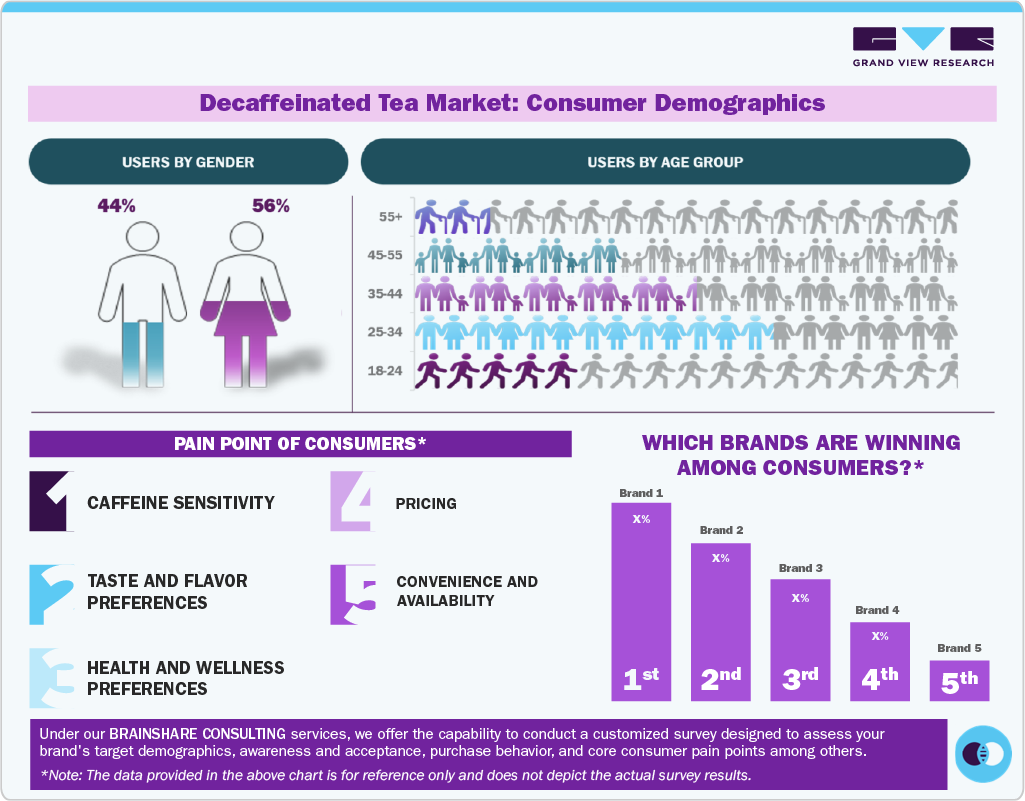
Consumers in the decaffeinated tea market increasingly value products that provide the traditional tea experience without the stimulating effects of caffeine. Taste, aroma, ingredient quality, and the perceived naturalness of the decaffeination process are important considerations during purchase. Convenience also influences preferences, with tea bags, easy-brew formats, and smaller packs appealing to consumers with busy lifestyles. Brand reputation, packaging, price, and product reviews can further shape purchasing decisions. Consumers are also showing interest in varied flavors and specialty blends that provide greater choice beyond conventional tea offerings.
Product Type Insights
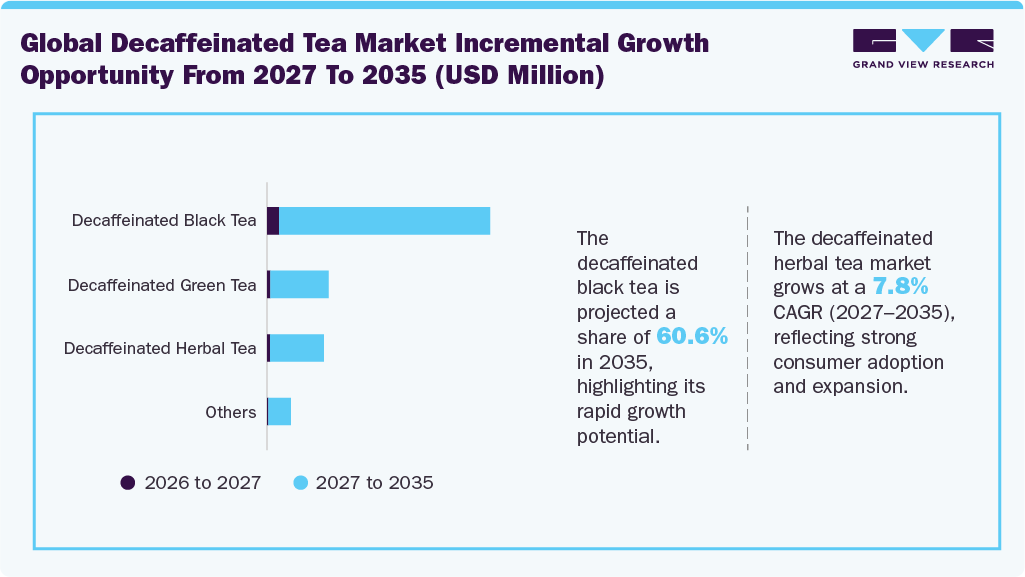
The decaffeinated black tea market accounted for the largest share of 61.0% of the revenue in 2026. The segment is supported by the established popularity of black tea across global markets, providing a strong consumer base for its decaffeinated variants. Its familiar taste profile makes it easier for existing tea drinkers to transition to products with reduced caffeine content. Growing availability of premium loose-leaf and specialty black tea varieties is also creating opportunities for product differentiation. Manufacturers are introducing different origins, blends, and flavor profiles to appeal to a wider range of preferences. The segment can therefore benefit from the combination of traditional tea familiarity and greater product variety.
 To learn more about this report, Download Free Sample Report
The decaffeinated herbal tea market is projected to grow significantly at a CAGR of 7.8% from 2027 to 2035. The segment is driven by the increasing popularity of herbal infusions among consumers seeking naturally derived beverage options. A wide range of botanicals, including chamomile, peppermint, ginger, and hibiscus, allows manufacturers to offer diverse flavor experiences. Herbal tea also provides opportunities to develop blends associated with relaxation, digestion, and other wellness-oriented preferences. The absence of conventional tea leaves in many herbal formulations further distinguishes these products from decaffeinated black tea. This versatility enables brands to target niche consumer groups through specialized blends and formulations.
Distribution Channel Insights
The sales of decaffeinated tea through supermarkets & hypermarkets account for the largest share of 57.3% of the global revenue in 2026. Supermarkets and hypermarkets benefit from their ability to offer extensive shelf space for different decaffeinated tea brands and product formats. Physical product visibility allows consumers to compare packaging, flavors, ingredients, and prices before making a purchase. Promotional activities such as discounts, multi-pack offers, and in-store displays can encourage trial among new customers. The presence of decaffeinated tea alongside other beverages also increases opportunities for impulse purchases. Strong distribution networks and frequent consumer visits further support sales through this channel.
 To learn more about this report, Download Free Sample Report
The sales of decaffeinated tea through the online channels are projected to grow significantly at a CAGR of 7.8% from 2027 to 2035. Online distribution is supported by the convenience of purchasing decaffeinated tea from home without depending on physical store availability. Digital platforms allow consumers to access products from specialized and international brands that may have limited offline distribution. Detailed product descriptions, customer reviews, and ratings help shoppers evaluate unfamiliar varieties before purchasing. Subscription services and repeat-order features can also encourage regular purchases. Targeted digital marketing enables brands to reach specific consumer groups based on their browsing and purchasing interests.
Regional Insights
North America decaffeinated tea market accounted for the largest market share of 34.1% in 2026. The decaffeinated tea market in North America is supported by the strong presence of specialty beverage retailers and established tea brands. Consumers have access to a wide selection of imported, premium, and specialty tea products through multiple retail formats. The region’s developed food and beverage industry also facilitates the introduction of new decaffeinated tea varieties. Growing interest in personalized beverage choices is encouraging manufacturers to diversify their offerings. Strong brand competition further contributes to product innovation and market development.
 To learn more about this report, Download Free Sample Report
U.S. Decaffeinated Tea Market Trends
The U.S. led the North American decaffeinated tea market in 2026, holding the largest market share with 82.5% of the region’s total revenue. The decaffeinated tea market in the U.S. benefits from a well-developed specialty tea culture and a broad range of packaged beverage choices. Consumers increasingly explore products based on flavor, formulation, origin, and preparation style. The presence of established tea companies and specialty retailers supports continuous product launches and wider market penetration. Café culture and premium beverage consumption also provide additional avenues for introducing decaffeinated varieties. Strong consumer engagement with new beverage concepts creates products.
Europe Decaffeinated Tea Market Trends
Europe decaffeinated tea market is projected to grow at a CAGR of 6.9% from 2027 to 2035. Europe's decaffeinated tea market is driven by its long-standing tea consumption culture and extensive availability of specialty tea products. Consumers in the region show interest in diverse tea origins, blends, and preparation methods. The presence of established tea markets provides manufacturers with well-developed distribution and retail infrastructure. Growing emphasis on product quality and transparent sourcing is influencing purchasing decisions. European demand for differentiated beverage products is supporting the introduction of more specialized decaffeinated tea options.
UK led the European decaffeinated tea market in 2026, holding the largest market share with 23.5% of the region’s total revenue. The UK decaffeinated tea market is supported by its deep-rooted tea-drinking tradition and high familiarity with different tea formats. Retailers offer a broad selection of branded, private-label, loose-leaf, and specialty teas to consumers. The popularity of at-home tea preparation creates consistent opportunities for packaged decaffeinated products. Consumers are also increasingly exploring alternatives to conventional tea for different consumption occasions. Strong supermarket penetration and established tea brands help maintain product accessibility across the country.
Asia Pacific Decaffeinated Tea Market Trends
Asia Pacific decaffeinated tea market is expected to grow at the fastest CAGR of 8.0% in 2026. The decaffeinated tea market in the Asia Pacific is influenced by the region’s large and diverse tea-consuming population and expanding premium beverage sector. Urbanization is contributing to changes in beverage preferences, particularly among younger consumers in major cities. International tea brands are expanding their presence, introducing new formulations and product formats to regional markets. The region’s expanding e-commerce ecosystem provides additional opportunities for specialized tea products.
China led the Asia Pacific decaffeinated tea market in 2026, holding the largest market share with 30.6% of the region’s total revenue. China's decaffeinated tea market is supported by its extensive tea production base and deeply established tea culture. Growing urban consumer segments are increasingly exposed to international tea products and modern beverage formats. Premiumization within the tea industry is encouraging greater interest in differentiated products with specialized characteristics. The expansion of modern retail and digital commerce is improving access to packaged specialty teas. Domestic producers also have opportunities to develop decaffeinated products using locally recognized tea varieties.
Central & South America Decaffeinated Tea Market Trends
Central & South America decaffeinated tea market is projected to grow at a CAGR of 7.6% from 2027 to 2035. The decaffeinated tea market in Central & South America is supported by expanding urban retail networks and increasing consumer exposure to international beverage trends. Modern supermarkets and specialty stores are improving the availability of imported and premium tea products. Growing café and foodservice activity is creating additional points of consumer exposure to specialty beverages. Local companies are also expanding packaged beverage portfolios to address changing consumer preferences. Improvements in e-commerce infrastructure can further facilitate access to niche tea products.
Middle East & Africa Decaffeinated Tea Market Trends
Middle East & Africa decaffeinated tea market is expected to grow at a CAGR of 7.4% from 2027 to 2035. The Middle East & Africa market is influenced by population growth, urbanization, and the gradual expansion of modern retail infrastructure. Consumers in major urban centers are gaining greater access to international beverage brands and specialty tea products. Hospitality, tourism, and foodservice industries provide additional channels for introducing premium tea offerings. In May 2025, Tetley launched a new Decaffeinated Tea Blend in South Africa, targeting growing demand from health-conscious consumers seeking to moderate caffeine intake. The product expands Tetley’s portfolio with a caffeine-reduced option suitable for evening consumption and wellness-focused settings, including hospitality and healthcare.
Key Decaffeinated Tea Company Insights
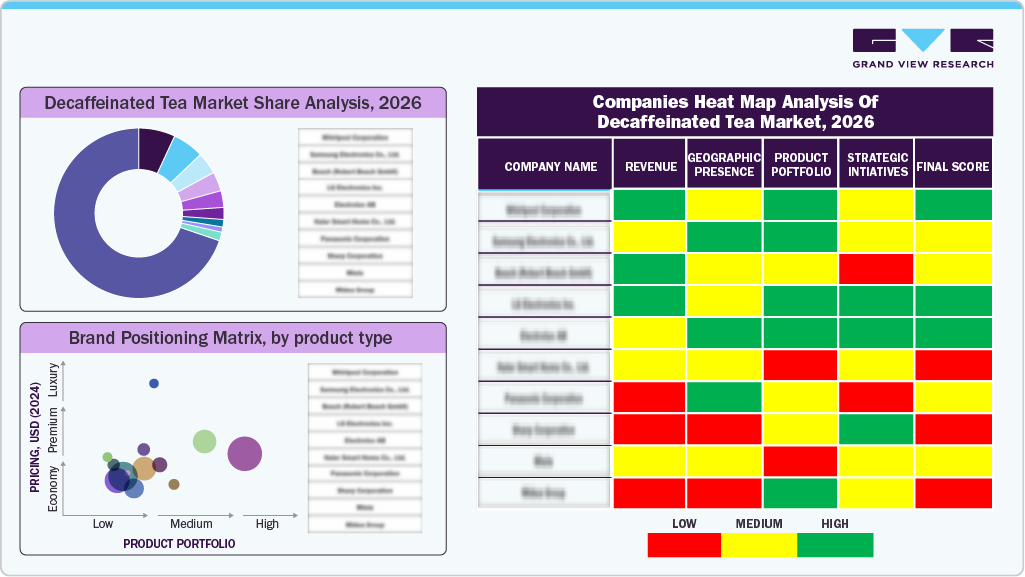
The decaffeinated tea market is characterized by the presence of established tea manufacturers, specialty tea companies, and regional brands competing across different product categories. Key players focus on expanding their portfolios through new blends, premium formulations, and improved processing technologies.
Market share is influenced by brand recognition, product quality, distribution reach, pricing strategies, and innovation capabilities. Companies are also strengthening their presence through supermarkets, specialty retailers, and digital commerce platforms. Competitive dynamics vary by region, with both multinational companies and local producers contributing to market development.
 To learn more about this report, Download Free Sample Report
Key Decaffeinated Tea Companies:
The following key companies have been profiled for this study on the decaffeinated tea market:
-
Twinings
-
Lipton
-
Tetley
-
Bigelow Tea
-
Celestial Seasonings
-
Harney & Sons Fine Teas Ingredients
-
The Republic of Tea.
-
Yorkshire Tea
-
PG Tips
-
Dilmah
Competitive Benchmarking
Category
Operating Strategies
Competitive Edge
Weakness
Established Players (Twinings, Lipton, Tetley, Bigelow Tea, Celestial Seasonings, Yorkshire Tea, PG Tips, Dilmah)
- Leverage established tea brands, expand decaffeinated black and green tea offerings, strengthen supermarket and e-commerce distribution, introduce convenient tea bag formats, and maintain competitive pricing across consumer segments.
- Strong brand recognition, extensive retail distribution, established customer relationships, diversified tea portfolios, large-scale production capabilities, and access to international markets.
- Strong competition from other established tea brands, dependence on conventional tea categories, pricing pressure in mass-market products, and the need to differentiate decaffeinated products from regular tea offerings.
Specialized & Premium Players (Harney & Sons Fine Teas, The Republic of Tea)
- Focus on premium decaffeinated tea collections, specialty blends, distinctive flavor combinations, high-quality tea sourcing, attractive packaging, and differentiated offerings targeting premium and health-conscious consumers.
- Premium brand positioning, specialized tea collections, differentiated flavor profiles, strong product presentation, and opportunities to attract consumers seeking specialty tea experiences.
- Relatively narrower mass-market reach, premium pricing, dependence on specialized consumer segments, and competition from larger tea companies with broader distribution networks.
Recent Developments
-
In May 2026, Japan GreenTea Co. expanded its decaffeinated tea portfolio, offering decaf sencha, hojicha, genmaicha, and black teas to cater to consumers concerned about caffeine intake and sleep. The company’s new decaf range, including honey-lemon and other flavor options, demonstrates product innovation and diversification to meet growing demand for healthier, low-caffeine beverages.
-
In May 2025, Tetley launched a new Decaffeinated Tea Blend in South Africa, targeting growing demand from health-conscious consumers seeking to moderate caffeine intake. The product expands Tetley’s portfolio with a caffeine-reduced option suitable for evening consumption and wellness-focused settings, including hospitality and healthcare.
Decaffeinated Tea Market Report Scope
Report Attribute
Details
Market size in 2026
USD 3.1 billion
Estimated market size in 2027
USD 3.3 billion
Projected market size by 2035
USD 5.8 billion
Growth rate (Revenue)
CAGR of 7.3% from 2027 to 2035
Actuals
2023 - 2026
Forecast period
2027 - 2035
Quantitative (Revenue) units
Revenue in USD million/billion and CAGR from 2027 to 2035
Report coverage
Revenue forecast, company ranking, competitive landscape, growth factors, and trends
Segments covered
Product type, distribution channel, region
Regional scope
North America; Europe; Asia Pacific; Central & South America; Middle East & Africa
Country scope
U.S.; Canada; Mexico; UK; Germany; France; Italy; Spain; China; Japan; India; Australia & New Zealand; South Korea; Brazil; South Africa
Key companies profiled
Twinings; Lipton; Tetley; Bigelow Tea; Celestial Seasonings; Harney & Sons Fine Teas; The Republic of Tea; Yorkshire Tea; PG Tips; Dilmah
Customization scope
Free report customization (equivalent up to 8 analysts’ working days) with purchase. Addition or alteration to country, regional & segment scope.
Pricing and purchase options
Avail customized purchase options to meet your exact research needs. Explore purchase options
Global Decaffeinated Tea Market Report Segmentation
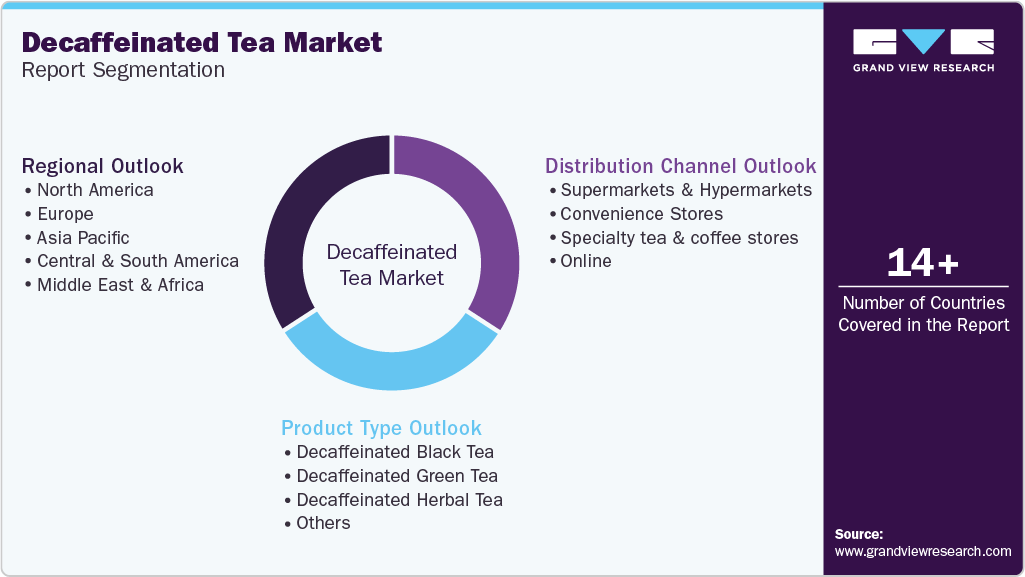
This report forecasts revenue growth at the regional and country levels and provides an analysis of the latest industry trends and opportunities in each of the sub-segments from 2023 to 2035. For this study, Grand View Research has segmented the decaffeinated tea market report on the basis of product type, distribution channel, and region.
 To learn more about this report, Download Free Sample Report
-
Product Type Outlook (Revenue, USD Million, 2023 - 2035)
-
Decaffeinated Black Tea
-
Decaffeinated Green Tea
-
Decaffeinated Herbal Tea
-
Others
-
-
Distribution Channel Outlook (Revenue, USD Million, 2023 - 2035)
-
Supermarkets & Hypermarkets
-
Convenience Stores
-
Specialty tea & coffee stores
-
Online
-
-
Regional Outlook (Revenue, USD Million, 2023 - 2035)
-
North America
-
U.S.
-
Canada
-
Mexico
-
-
Europe
-
UK
-
Germany
-
France
-
Italy
-
Spain
-
-
Asia Pacific
-
China
-
Japan
-
India
-
Australia & New Zealand
-
South Korea
-
-
Central & South America
-
Brazil
-
-
Middle East & Africa
-
South Africa
-
-
Research Methodology
The decaffeinated tea figures in this report are based on a proven research process that combines executive interviews with secondary research from proprietary databases, company filings, and recognized regulatory and institutional sources. Market size is built through value-chain sizing-reconciling supply-side and demand-side estimates-and triangulated with bottom-up and top-down approaches. Every estimate passes multiple levels of expert validation before publication, with each decaffeinated tea segment quantified using the revenue-capture definitions in the table below.
Segment Definition
Segment - Product Type
Revenue capture definition
Decaffeinated Black Tea
This segment includes the sales of black tea products processed to remove caffeine while retaining their characteristic flavor, aroma, and taste. It covers decaffeinated black tea bags, loose-leaf teas, and other packaged brewing formats.
Decaffeinated Green Tea
This segment includes the sales of green tea products that undergo decaffeination while retaining their natural flavor and characteristic properties. It covers decaffeinated green tea bags, loose-leaf varieties, and specialty packaged tea products.
Decaffeinated Herbal Tea
This segment includes the sales of caffeine-free herbal tea infusions made from botanicals, flowers, fruits, spices, and other plant-based ingredients. It covers herbal tea bags, loose herbal blends, and packaged botanical infusion products.
Others
This segment includes the sales of decaffeinated tea products that are not classified under black, green, or herbal tea categories. It covers specialty decaffeinated blends, flavored tea variants, and other innovative tea formulations.
Segment - Distribution Channel
Revenue capture definition
Supermarkets & Hypermarkets
This segment includes the sales of decaffeinated tea products through large-format retail stores offering a wide range of packaged tea brands, varieties, and product formats. It covers black, green, and herbal decaffeinated teas sold through dedicated beverage aisles and branded retail sections.
Convenience Stores
This segment includes the sales of decaffeinated tea products through small-format retail outlets that offer convenient access to packaged tea products. It covers ready-to-brew tea bags, small tea packs, and single-serve formats purchased for regular household consumption and on-the-go convenience.
Specialty Tea & Coffee Stores
This segment includes the sales of decaffeinated tea products through dedicated tea and coffee retailers specializing in premium and differentiated beverage offerings. It covers specialty loose-leaf teas, premium tea blends, single-origin varieties, and curated decaffeinated tea collections.
Online
This segment includes the sales of decaffeinated tea products through brand-owned websites, e-commerce platforms, and online grocery retailers. It covers standard tea packs, premium collections, assorted gift boxes, and subscription-based tea offerings purchased through digital channels.
Estimation Model
Layer
Key Question
Description
Consumption Profile Layer
Who consumes decaf tea?
The consumption universe includes individuals seeking reduced-caffeine or caffeine-free tea alternatives, including health-conscious consumers, individuals sensitive to caffeine, and consumers preferring tea during evening hours.
Market Reach Layer
Where do consumers access it?
Consumers access decaffeinated tea through supermarkets and hypermarkets, convenience stores, specialty tea and coffee stores, and e-commerce platforms. Product availability includes packaged tea bags, premium blends, and specialty decaffeinated formulations.
Purchase & Retention Layer
What drives repeat purchases?
Frequent purchasers include health-conscious individuals, caffeine-sensitive consumers, working professionals, older adults, and regular tea drinkers seeking alternatives to conventional caffeinated beverages.
Value Generation Layer
How is revenue generated?
Revenue is generated through the sale of decaffeinated black tea, green tea, herbal tea, and other specialty varieties across different product formats and distribution channels.
Delivered Customizations
This report has been delivered with the following In-depth customizations
Client Request
Customization Delivered
Value Adds
Decaffeinated Tea Market Brand Share Analysis
Evaluated key companies based on decaffeinated tea product portfolios, brand presence, product variety, geographic reach, distribution networks, and competitive positioning.
Helps identify leading decaffeinated tea brands, brand strength, competitive positioning, and opportunities for portfolio expansion.
Decaffeinated Tea Market Share Analysis
Analyzed market shares across product categories, including decaffeinated black tea, green tea, herbal tea, and others, along with distribution channels such as supermarkets and hypermarkets, convenience stores, specialty tea and coffee stores, and online platforms.
Provides insights into leading product categories, distribution channel contributions, market concentration, and competitive dynamics.
Decaffeinated Tea Market Pricing Analysis
Examined product pricing across tea varieties, including black, green, and herbal tea, considering packaging formats, product quality, premium positioning, pack sizes, and distribution channels.
Helps identify price variations, evaluate premiumization opportunities, understand competitive pricing strategies, and assess revenue potential across product categories.
Frequently Asked Questions About This Report
The global decaffeinated tea market size was valued at USD 3.1 billion in 2026 and is estimated at USD 3.3 billion for 2027.
The global decaffeinated tea market is expected to grow at a CAGR of 7.3% from 2027 to 2035, reaching USD 5.8 billion by 2035.
Asia Pacific is the fastest-growing region over the forecast period.
Key factors include growing health and wellness awareness, increasing consumer preference for low-caffeine and caffeine-free beverages, rising concerns about sleep quality and caffeine sensitivity, and growing demand for premium, organic, and specialty decaffeinated tea products.
Key players include Twinings, Lipton, Tetley, Bigelow Tea, Celestial Seasonings, Harney & Sons Fine Teas, The Republic of Tea, Yorkshire Tea, PG Tips, and Dilmah.
The decaffeinated black tea market segment led with a 61.0% revenue share in 2026, while decaffeinated herbal tea is the fastest-growing segment.
Supermarkets & hypermarkets held the largest revenue share of 57.3% in 2026, while the online channel is the fastest-growing channel.
North America dominated the market, accounting for a revenue share of 34.1% in 2026.
About the Author(s)
Consumer F&B Research Team
Consumer Goods · Consumer F&BThis report was authored by the consumer f&b research team at Grand View Research - comprising two research analysts, one senior research analyst, and one industry expert - with specialized expertise in the consumer f&b segment of the consumer goods industry. All findings are based on proprietary consumer goods databases, executive interviews, and regulatory analysis, subject to internal peer review prior to publication.
Last Updated:
Speak to Analyst

Customize this report to your needs - add regions, segments, or data points, with 20% free customization.
Or view our licence options:


ISO 9001:2015 & 27001:2022 Certified
We are GDPR and CCPA compliant! Your transaction & personal information is safe and secure. For more details, please read our privacy policy.


