- Home
- »
- Medical Devices
- »
-
Dental Burs Market Size And Share, Industry Report, 2033GVR Report cover
![Dental Burs Market Size, Share & Trends Report]()
Dental Burs Market (2026 - 2033) Size, Share & Trends Analysis Report By Material (Diamond Burs, Carbide), By Application (Oral Surgery, Orthodontics), By End Use (Dental Clinics), By Region, And Segment Forecasts
- Report ID: GVR-4-68039-918-5
- Number of Report Pages: 100
- Format: PDF
- Historical Range: 2021 - 2024
- Forecast Period: 2026 - 2033
- Industry: Healthcare
- Report Summary
- Table of Contents
- Segmentation
- Methodology
- Download FREE Sample
-
 Download Sample Report
Dental Burs Market Size & Trends
The global dental burs market size was estimated at USD 677.06 million in 2025 and is projected to reach USD 1,080.34 million by 2033, growing at a CAGR of 6.06% from 2026 to 2033. The market is driven by the increasing prevalence of oral diseases, increasing volumes of restorative and cosmetic dental procedures, and stricter infection-control protocols that raise replacement rates for dental burs used in routine clinical practice.
Key Market Trends & Insights
- North America dominated the dental burs market with the largest share of 38.30% in 2025.
- The dental burs market in the U.S. accounted for the largest market revenue share of 85.38% in North America in 2025.
- By material, the diamond burs segment led the market with the largest revenue share of 45.14% in 2025.
- By application, the cavity preparation segment led the market with the largest revenue share of 28.70% in 2025.
- By end use, the hospitals segment led the market with the largest revenue share of 46.45% in 2025.
Market Size & Forecast
- 2025 Market Size: USD 677.06 Million
- 2033 Projected Market Size: USD 1,080.34 Million
- CAGR (2026-2033): 6.06%
- North America: Largest market in 2025
- Asia Pacific: Fastest growing market
Oral disease continues to shape global demand for dental care and related clinical tools. As populations age and retain more of their natural teeth, dental practice has shifted toward restorative and cosmetic procedures rather than extractions. At the same time, stricter infection-control standards have increased the frequency of dental bur replacement. According to the World Health Organization’s Oral Health fact sheet (published March 2025), oral diseases affect approximately 3.7 billion people worldwide, with untreated dental caries in permanent teeth identified as the most prevalent health condition globally. The sustained burden of dental caries, periodontal disease, tooth loss, and oral cancer, combined with limited access to preventive and curative services in many countries, continues to drive procedural volumes and associated demand for dental burs.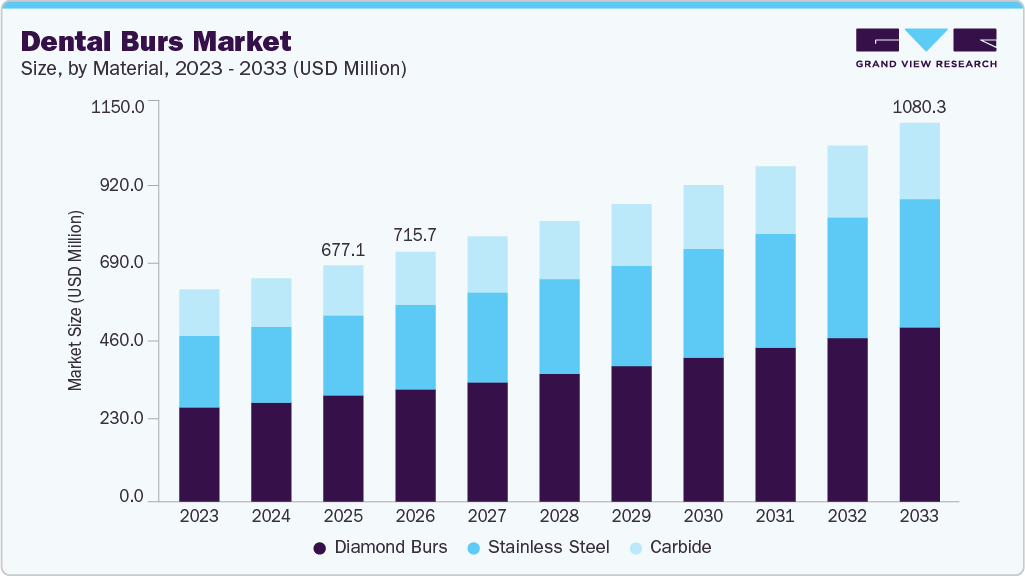
Rising Global Burden of Dental Disorders Driving Demand for Dental Burs
The growing prevalence of dental disorders, including tooth decay, tooth loss, and advanced periodontal disease, is a key market driver, as these conditions directly increase the volume of operative dental procedures. According to the World Health Organization (published March 2025), approximately 7% of adults aged 20 years and above and around 23% of adults aged 60 years and older experience complete tooth loss, contributing to rising demand for restorative treatments and implant-related procedures that require extensive bur usage. In addition, global estimates indicate that over 3.5 billion people are affected by oral diseases, with dental caries and gum disease remaining highly prevalent among adults. This increasing burden of cavities, tooth loss, and periodontal conditions is expected to sustain demand for restorative, surgical, and implant dentistry, thereby driving consistent consumption of dental burs across clinical settings.
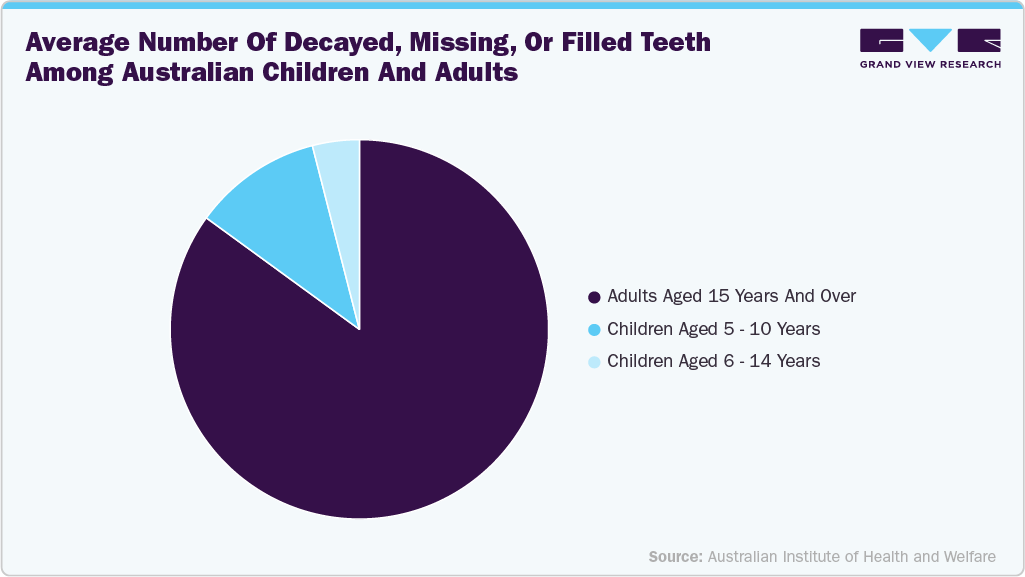
Moreover, dental disorders affect both children and adults across various age groups, highlighting a prevalent oral health challenge that underscores the growing need for effective dental treatments, including implants.
In addition, the market is supported by stricter dental infection-control regulations, which increase instrument sterilization requirements and replacement frequency, as outlined by CDC guidance published in May 2024. The CDC document provides basic, evidence-based infection prevention and control recommendations for all dental health care settings, integrating CDC’s 2003 Guidelines for Infection Control in Dental Health-Care Settings with subsequent updates. It emphasizes Standard Precautions as the foundation for preventing infection transmission among patients and dental health care personnel, and includes tools such as a compliance checklist. Key elements address hand hygiene, personal protective equipment, sterilization and disinfection of instruments and equipment, administrative policies, and environmental cleaning. The guidance supports safe care delivery by outlining practices to minimize infectious risk during dental procedures. As a result, dental clinics face ongoing replacement needs for dental burs, as single-use burs require frequent repurchasing and reusable burs require periodic replacement, contributing to stable and recurring demand across dental care settings.
Clinical Validation, KOL Influence, and Strategic Consolidation in the Dental Burs Market
Key opinion leaders (KOLs) play an important role in validating product performance in real clinical settings. Feedback from experienced clinicians highlights how improvements in instrument quality, such as precision drills and consistently sharp, sterilized burs, can enhance procedural efficiency and clinical workflow.
"With over 10 years of experience using the MIS system, I see LYNX as a natural evolution. I am impressed by the quality of the prosthetic components and the drills. Small details, like sterilized and sharp burrs, make our work as clinicians easier. said Dr Gustavo Giordani, a Dentsply Sirona speaker and educator from São Paolo, Brazil. ”
In addition, SS White Dental is known for its focus on quality and innovation, manufacturing carbide and diamond burs, rotary instruments, polishers, and endodontic solutions for dental professionals worldwide. In October 2024, the company was acquired by HuFriedyGroup.
Tom Gallop, CEO of SS White, said, "We chose HuFriedyGroup as the right partner to continue SS White's legacy based on the company's excellent reputation, values, and commitment to the highest quality. By combining our complementary products with HuFriedyGroup's portfolio and geographic reach, we will further enhance our ability to help doctors create better patient outcomes and be more efficient globally."
Together, clinician endorsements and strategic acquisitions highlight the importance of quality, precision, and reliability in dental burs, reinforcing the manufacturer's focus on clinically validated products that support efficient workflows, improved patient outcomes, and sustained adoption across global dental practices.
Dental Burs Average Price per Piece (USD)
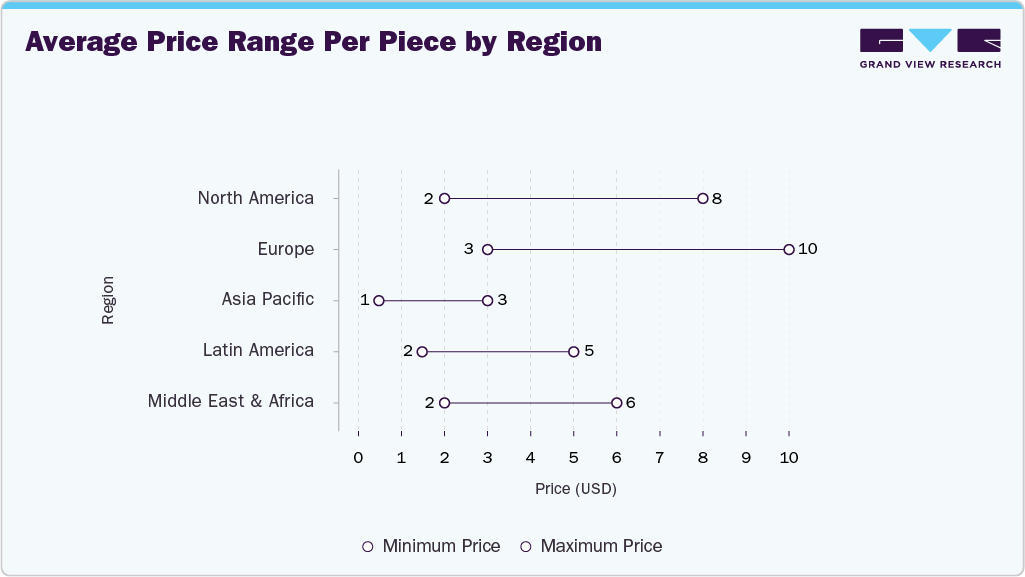
The above graph illustrates regional average price variations per dental bur, highlighting clear disparities driven by import dependency, regulatory compliance costs, distribution margins, logistics premiums, and wholesale sourcing dynamics.
North America and Europe demonstrate the highest average price ranges (USD 2.00-10.00), primarily due to stringent regulatory standards (FDA/CE compliance), established distribution networks, brand premiums, and multi-tier markups between manufacturers, distributors, and dental clinics. Retail prices in these regions typically reflect 2-3x Asian wholesale benchmarks.
In contrast, Asia Pacific exhibits the lowest average price range (USD 0.50-3.00), supported by localized manufacturing ecosystems in China, economies of scale, bulk minimum order quantities (MOQs), and vertically integrated production models.
Latin America and MEA fall within mid-range pricing bands, reflecting strong reliance on Chinese bulk imports combined with added freight, customs duties, and distributor margins.
Overall, the pricing structure underscores the influence of global supply chain positioning, regulatory intensity, cost arbitrage, and procurement volume leverage across regions.
Market Concentration & Characteristics
The market growth stage is medium, and the pace of the market growth is accelerating. The dental burs industry is characterized by increasing volumes of restorative, surgical, and cosmetic dental procedures. Rising prevalence of dental caries, tooth loss, implant treatments, and stricter infection-control requirements are supporting consistent growth in dental bur demand.
The dental burs industry demonstrates a moderate but continuous level of innovation, primarily focused on material science, cutting efficiency, and infection control. In 2025, manufacturers such as Premier Dental introduced new diamond bur lines incorporating proprietary technologies (e.g., SmartEdge and LTech) to improve cutting precision, durability, and procedural control. These developments reflect ongoing innovation centered on clinical performance, consistency, and workflow efficiency rather than disruptive technology shifts.
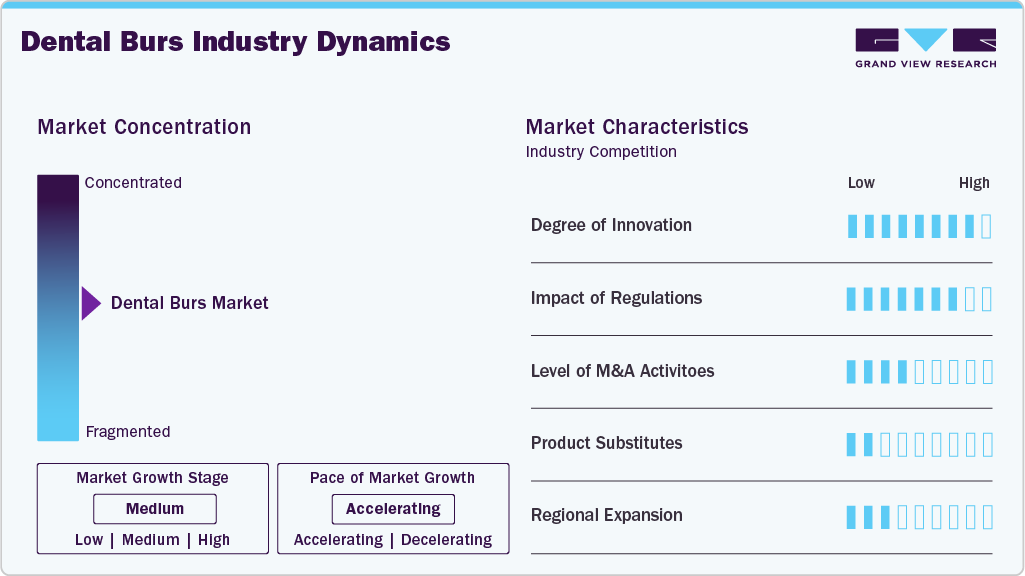
Regulatory oversight plays a critical role in shaping the dental burs industry in the United States, as these products are classified as medical devices. In the U.S., dental burs are regulated by the Food and Drug Administration (FDA) under established medical device standards covering safety, performance, quality systems, and labeling. In addition, updated CDC infection-control guidance (May 2024) emphasizes sterilization protocols, single-use instruments, and standard precautions, directly influencing procurement decisions, product innovation, and replacement frequency for reusable and disposable burs. Further strengthening the regulatory and trade environment in the U.S., the United States International Trade Commission (USITC) announced on January 14, 2026, that it had instituted a Section 337 investigation (Inv. No. 337-TA-1479) into certain dental burs and kits following allegations of patent and trademark infringement. The case involves multiple domestic and foreign respondents, and potential outcomes include exclusion or cease-and-desist orders, highlighting the role of trade enforcement and intellectual property protection in the U.S. dental burs industry.
The dental burs industry has experienced selective and strategic M&A activity, focused on strengthening rotary instrument portfolios and global reach. In October 2024, HuFriedyGroup acquired SS White Dental, a long-established manufacturer of carbide and diamond burs. This acquisition expanded HuFriedyGroup’s presence in precision rotary instruments and reflects consolidation aimed at portfolio breadth, manufacturing expertise, and distribution scale rather than aggressive market roll-ups.
Substitutes for dental burs include alternative tooth-preparation technologies such as dental lasers, air abrasion systems, and ultrasonic instruments. While these alternatives may reduce bur usage in selected procedures, they are not universally applicable and are often limited by cost, learning curve, procedural scope, or material compatibility. As a result, dental burs remain essential tools across restorative, prosthodontic, surgical, and cosmetic dentistry.
Regional expansion in the dental burs industry is driven by manufacturers strengthening distribution networks and integrating acquired production capabilities rather than large-scale greenfield investments. Global dental instrument companies continue to expand access to their bur portfolios across emerging and developed markets through acquisitions, localized sales organizations, and regulatory approvals, supporting broader availability and consistent supply in regions with rising dental procedure volumes.
Material Insights
The diamond burs market dominated the market and accounted for the highest revenue share of 45.14% in 2025. Diamond burs have maintained a leading position in the market due to their effectiveness in cutting enamel, ceramics, and restorative materials used in crown and veneer preparation. The market offers a wide range of diamond burs from established manufacturers such as Premier Dental, which supplies Priva Rotary Instruments Diamond Burs and Two Striper Diamond Burs, and Kerr Dental, known for SimpliCut single-use diamond burs. SS White Dental also manufactures carbide and diamond burs used across restorative and prosthetic procedures. Continuous product introductions focused on cutting efficiency, durability, and infection-control compatibility have reinforced the widespread adoption of diamond burs across general and specialty dental practices.
The carbide burs segment is projected to grow significantly alongside rising dental procedure volumes, as these burs remain essential for cavity preparation, crown work, removal of old restorations, and bone contouring in both restorative and surgical dentistry. Carbide burs are made from tungsten carbide, a material known for exceptional hardness and cutting efficiency, enabling precise removal of enamel and dentin with minimal vibration and enhanced control. Clinicians rely on these tools across general practice and specialist treatments due to their durability and versatility in high-speed handpieces. Some of the products available in dental settings include Mani M Carbide Burs Pk/10, SUPERENDO Zekrya Tungsten Carbide Burs for surgical and crown removal applications, Prima Dental Carbide FG Airotor Burs Taper Fissure for restorative preparations, Finishing Carbide Dental Bur RA for finishing, and Carbide Bur FG 271 and Dental Carbide Burs (HP‑704) as general-purpose burs in routine practice. These product offerings, along with the increasing adoption of single-use and sterilizable options and the need for quick, controlled cutting in diverse clinical procedures, support steady growth in the carbide burs market.
Application Insights
The cavity preparation segment dominated the market in 2025. Cavity preparation is one of the most frequently performed clinical procedures in dentistry and directly relies on dental burs to remove decay and shape tooth structure before restorations. As the foundational step in restorative treatment, from removing caries to establishing mechanical form for fillings, efficient removal and shaping of tooth structure continues to sustain high procedural volume, driving demand for burs designed specifically for this application. Dental burs remain indispensable in precise cavity preparation, and their selection significantly impacts clinical outcomes.
The implantology segment in the market is expected to grow significantly over the forecast period. The implantology segment’s growth is supported by rapid expansion in dental implant procedures, driven by rising patient awareness of long-term restorative solutions and increasing procedural demand for replacing missing teeth. Dental implants require specialized surgical preparation of bone and soft tissues, often involving dedicated burs and osteotomy tools for precision osteotomy and implant site refinement. Advances in implant techniques and widespread adoption of implant dentistry are increasing the volume of surgical procedures that depend on these specialized rotary instruments.
End Use Insights
Hospitals led the market, accounting for the highest revenue share in 2025. Hospitals serve a broad spectrum of complex dental procedures, from emergency extractions and advanced restorative work to surgical implant placements. Hospital dental departments often treat medically compromised patients requiring multidisciplinary care, have access to a wider range of surgical and restorative equipment, and handle high patient throughput, all of which increase procedural volumes that rely on dental burs, making hospitals a primary consumption hub.
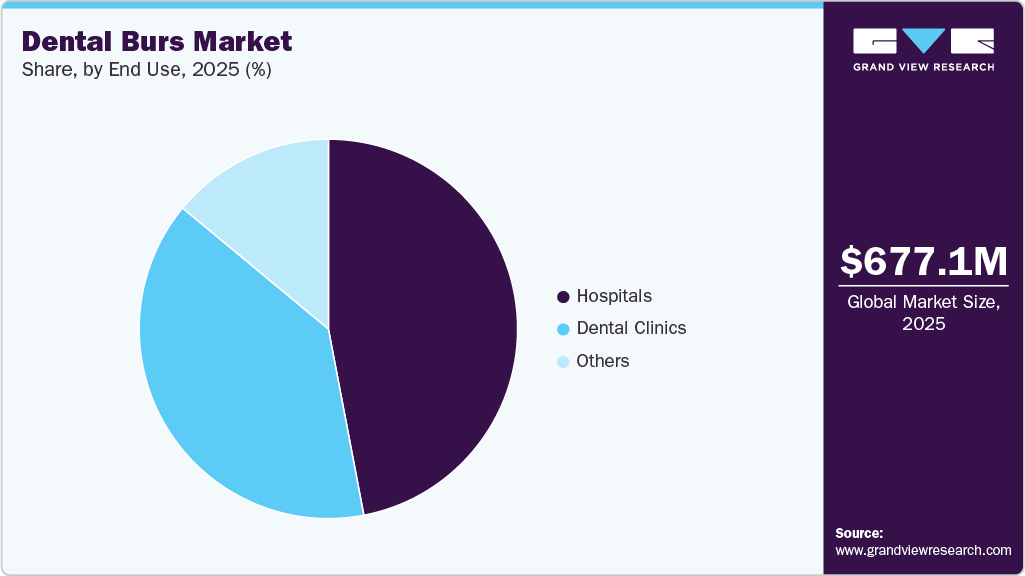
The demand for dental burs in dental clinics is expected to grow at the fastest CAGR over the forecast period. Dental clinics are increasingly the first point of contact for routine and specialized oral care, offering greater accessibility and flexible scheduling than hospital dentistry. Clinics often perform high-volume restorative, preventive, and implant procedures, and patients increasingly choose clinic-based care for cost, convenience, and continuity. With rising public awareness of oral health and easier access to outpatient dental services, clinics are experiencing growth in procedural demand that directly translates to higher consumption of dental burs across clinical interventions.
Regional Insights
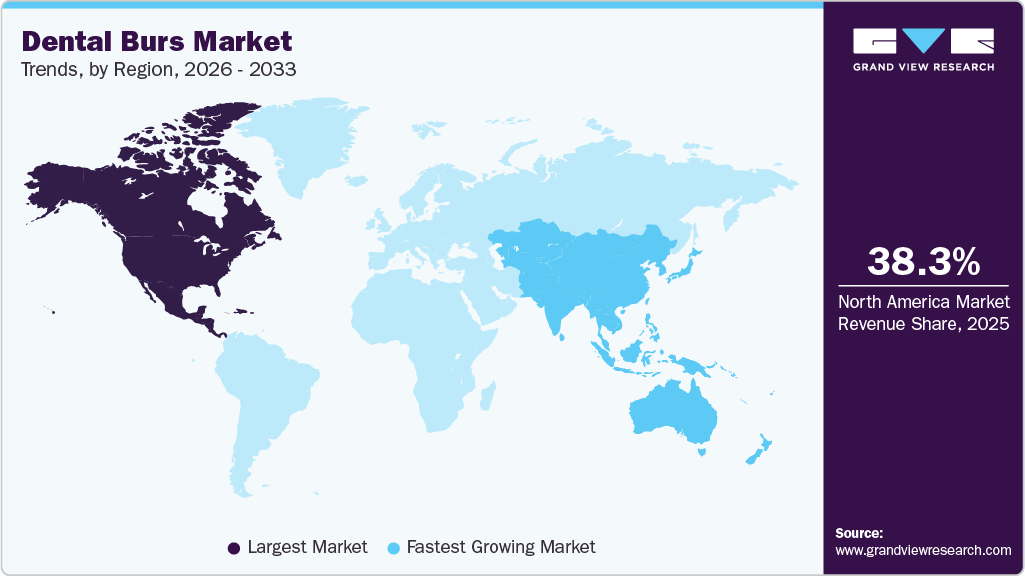
North America dominated the dental burs market with the largest share of 38.30% in 2025, supported by advanced dental infrastructure, high procedural volumes, and strong adoption of restorative and implant dentistry. The region benefits from significant healthcare expenditure, widespread presence of private dental clinics, and early adoption of technologically advanced rotary instruments. In addition, strict regulatory standards and strong distribution networks contribute to premium product utilization, further strengthening North America’s leading market position.
U.S. Dental Burs Market Trends
The dental burs market in the U.S. led North America with the highest revenue share in 2025, driven by strong procedural volumes, advanced dental infrastructure, and continuous product innovation across restorative and endodontic applications. In addition, mergers and acquisitions strengthen market competitiveness by expanding product portfolios, accelerating innovation, and enhancing distribution networks across the U.S. market. For instance, in May 2025, Engineered Endodontics acquired CJM Engineering, the creator of Münce Discovery burs, expanding its portfolio of endodontic and specialty rotary instruments. The acquisition aims to integrate CJM’s bur technology with Engineered Endodontics’ manufacturing capabilities, enhancing product innovation, distribution reach, and clinical solutions for dentists. This strategic move underscores industry consolidation and growing demand for advanced, high-performance dental burs tailored to endodontic and restorative procedures.
This development reflects broader market trends emphasizing technological advancement, strategic partnerships, and portfolio expansion to strengthen competitive positioning within the evolving U.S. dental devices landscape.
“We are honored to carry forward the legacy of innovation that Dr. Munce and CJM Engineering have established,” said Mark Fiorina, Managing Director of Engineered Endodontics. “The Munce Discovery Burs align perfectly with our mission to provide clinicians with the instruments they need to practice with confidence and precision.”
Europe Dental Burs Market Trends
The dental burs market in Europe held a substantial market share in 2025, supported by a well-established dental healthcare infrastructure, a high dentist-to-population ratio, and strong adoption of restorative and implant procedures. Stringent compliance with EU Medical Device Regulation (MDR) drives demand for high-quality, certified rotary instruments. In addition, growing aesthetic dentistry trends, increasing geriatric population, and the presence of leading dental device manufacturers across Germany, France, and the UK further strengthen regional market performance.
Germany dental burs market is supported by a highly developed dental care infrastructure, a strong presence of domestic dental device manufacturers, and high per-capita dental expenditure. Germany has one of the largest dental practitioner bases in Europe, driving consistent demand for restorative, surgical, and implant procedures. Compliance with the EU Medical Device Regulation (MDR) ensures stringent quality standards, favoring premium and technologically advanced burs. In addition, growing demand for implantology, CAD/CAM restorations, and minimally invasive dentistry supports steady consumption of high-precision diamond and carbide burs across clinics and hospitals.
The dental burs market in the UK is driven by strong National Health Service (NHS) dental service utilization, increasing private dental clinic expansion, and growing demand for restorative and cosmetic dentistry procedures. The rising prevalence of dental caries and periodontal diseases supports consistent procedural volumes. Regulatory compliance under the UK Medical Devices Regulations (UK MDR) ensures quality standards, influencing product selection. In addition, growing adoption of single-use and high-precision rotary instruments enhances replacement rates, while technological advancements and clinician preference for premium burs support steady market growth.
France dental burs market is supported by a well-established public healthcare system, high dental practitioner density, and increasing focus on preventive and restorative dental care. Growing demand for implants and aesthetic dentistry contributes to higher utilization of specialized diamond and carbide burs. Strict EU Medical Device Regulation (MDR) compliance drives quality-focused procurement. Expansion of private dental clinics and rising awareness of oral health further stimulate demand, while import reliance and distributor networks influence pricing and competitive dynamics.
Asia Pacific Dental Burs Market Trends
The dental burs market in the Asia Pacific is expected to grow at the fastest CAGR over the forecast period. The growing burden of geriatric diseases, an increase in dental care centers, and the rise of dental tourism in the region are driving market growth. Countries in the region are popular for offering affordable dental treatments, making them a top destination for dental tourism. Favorable government initiatives, such as India's National Oral Health Programme, aim to improve oral health by enhancing health determinants, reducing oral disease morbidity, and integrating prevention and promotion services, further boosting market expansion.
Japan dental burs market dominated the Asia Pacific region in 2025, supported by advanced dental technology adoption, strong reimbursement structure, and high per-capita dental visits. Japan’s aging population significantly drives restorative, prosthetic, and implant procedures, increasing demand for precision diamond and carbide burs. The country’s stringent medical device regulations and preference for high-quality, domestically manufactured instruments further strengthen premium product penetration and consistent replacement demand across private clinics and hospital-based dental settings.
The dental burs market in China is expanding rapidly due to growing dental awareness, rising disposable income, and significant expansion of private dental chains. Increasing demand for cosmetic dentistry, orthodontics, and implant procedures supports high-volume bur consumption. Local manufacturing capabilities provide cost advantages, while government healthcare reforms improve access to oral care services. Growing urbanization and investment in dental infrastructure continue to drive procedural volumes and demand for both standard and advanced rotary instruments.
Middle East And Africa Dental Burs Market Trends
The dental burs market in the Middle East and Africa is driven by the rising prevalence of diabetes, increasing surgical procedures, and growing incidence of chronic wounds such as diabetic foot ulcers and pressure injuries. Expanding healthcare infrastructure, particularly in Gulf Cooperation Council (GCC) countries, supports the adoption of advanced wound care products. In addition, government healthcare investments and increasing awareness regarding infection prevention contribute to growing demand for modern dressings, negative pressure wound therapy, and biologics across the region.
Saudi Arabia dental burs market is expanding due to high diabetes prevalence and increasing hospital admissions related to chronic and surgical wounds. Government-led healthcare modernization initiatives under Vision 2030 are strengthening hospital capacity and procurement of advanced wound care technologies. Rising awareness of early wound management, improved reimbursement mechanisms, and expansion of private healthcare facilities contribute to growing demand for antimicrobial dressings, foam dressings, and advanced wound therapy systems.
The dental burs market in Kuwait is driven by rising obesity and diabetes rates, contributing to a higher incidence of chronic wounds. Strong government healthcare funding supports hospital infrastructure and access to advanced wound management products. Increasing surgical volumes and improved clinical awareness of infection control are accelerating the adoption of modern dressings and negative pressure wound therapy. Import dependence and partnerships with international medical device suppliers shape competitive dynamics within the Kuwaiti market.
Key Dental Burs Company Insights
Key companies in the global market include Dentsply Sirona, COLTENE Inc., SHOFU INC., and MANI, INC. Major companies in the market maintain global competitiveness by investing in advanced technology, offering high-quality, precision-engineered products, and expanding their product lines to meet diverse consumer needs. They focus on innovation, including the development of durable, efficient burs with cutting-edge materials. Strategic partnerships, strong distribution networks, and compliance with global standards also help them stay ahead in the market.
Key Dental Burs Companies:
The following key companies have been profiled for this study on the dental burs market.
- Dentsply Sirona
- COLTENE Inc
- SHOFU INC.
- MANI, INC
- Brasseler USA
- American Orthodontics
- Prima Dental
- Diatech
- Komet Dental
- Envista
Recent Developments
-
In November 2025, Premier Dental announced the launch of Priva Rotary Instruments Diamond Burs, equipped with SmartEdge Technology, designed to enhance rotary cutting performance. SmartEdge uses engineered, uniformly shaped diamond crystals to maximize contact, improve cutting efficiency, reduce vibration, and support precise tooth surface preparation. These electroplated diamond burs are offered in 5-packs through authorized distributors and aim to expand clinicians’ rotary instrument options for consistent procedural performance.
-
In November 2025, Premier Dental introduced TSZTech ZX Diamond Burs featuring LTech Technology, designed to enhance cutting efficiency and bur longevity. These diamond burs use a proprietary lattice-bonding process to improve diamond retention and cutting performance while reducing heat generation during preparation. The product line is available in a variety of shapes and grits to support restorative procedures and aims to deliver consistent clinical results with improved durability and handling.
-
In September 2025, Premier Dental introduced Two Striper EURO Diamond Burs, expanding its renowned Two Striper line with Euro-numbered shapes to simplify selection for clinicians. These diamond burs feature grit-indicating grooves and a proprietary P.B.S. brazing process that delivers faster cutting and longer performance for multiple preparations. The design aims to support efficient rotary procedures with familiar ISO shape numbering for preferred handpiece compatibility.
-
In 2025, Prodia Dental introduced the Z-Series dental burs, designed to enhance cutting efficiency and durability in restorative dentistry. The Z-Series features optimized flute geometry and precision-balanced shanks to reduce vibration, improve handling, and extend tool life. These burs aim to deliver smoother cutting, greater consistency, and improved clinical performance across a range of dental procedures, addressing clinician demand for reliable, high-quality rotary instruments.
-
In February 2025, MIS, an implant dentistry company, launched the MIS LYNX implant system in the U.S., offering a versatile, reliable solution for various clinical applications. The system includes sharp, sterile, single-use drills with each implant, ensuring adherence to hygiene protocols. Featuring the MIS CLEAR wet surface, it enhances implant quality. This cost-effective system reflects MIS's commitment to supporting dental professionals with innovative, high-quality solutions for predictable, confident patient outcomes.
-
In October 2024, HuFriedyGroup, a company that offers dental products, acquired SS White Dental, a renowned manufacturer of carbide and diamond burs, endodontic instruments, and lab tools. This acquisition aligns with HuFriedyGroup’s commitment to innovation and high-quality dental solutions. It expands its portfolio, enhancing product offerings and global reach, and supports dental professionals in delivering better patient outcomes, improved efficiency, and enhanced safety.
-
In February 2024, Kerr Dental launched SimpliCut rotary single-use diamond burs, which come pre-sterilized and ready for single-patient use to eliminate cleaning and sterilization steps. Packaged in sets of 25 with a range of shapes and color-coded grit sizes, these burs are designed for fast cutting and reduced handpiece wear. The product is now available for order to support clinicians seeking convenient, efficient rotary instrument options.
Dental Burs Market Report Scope
Report Attribute
Details
Market size value in 2026
USD 715.72 million
Revenue forecast in 2033
USD 1,080.34 million
Growth rate
CAGR of 6.06% from 2026 to 2033
Base year for estimation
2025
Historical data
2021 - 2024
Forecast period
2026 - 2033
Quantitative units
Revenue in USD million/billion, and CAGR from 2026 to 2033
Report coverage
Revenue forecast, company ranking, competitive landscape, growth factors, and trends
Segments covered
Material, application, end use, region
Regional scope
North America; Europe; Asia Pacific; Latin America; MEA
Country scope
U.S.; Canada; Mexico; UK; Germany; France; Italy; Spain; Denmark; Sweden; Norway; Japan; China; India; Australia; South Korea; Thailand; Brazil; Argentina; South Africa; Saudi Arabia; UAE; Kuwait
Key companies profiled
Dentsply Sirona; COLTENE Inc; SHOFU INC.; MANI,INC; Brasseler USA; American Orthodontics; Prima Dental; Diatech; Komet Dental; Envista
Customization scope
Free report customization (equivalent up to 8 analysts working days) with purchase. Addition or alteration to country, regional & segment scope.
Pricing and purchase options
Avail customized purchase options to meet your exact research needs. Explore purchase options
Global Dental Burs Market Report Segmentation
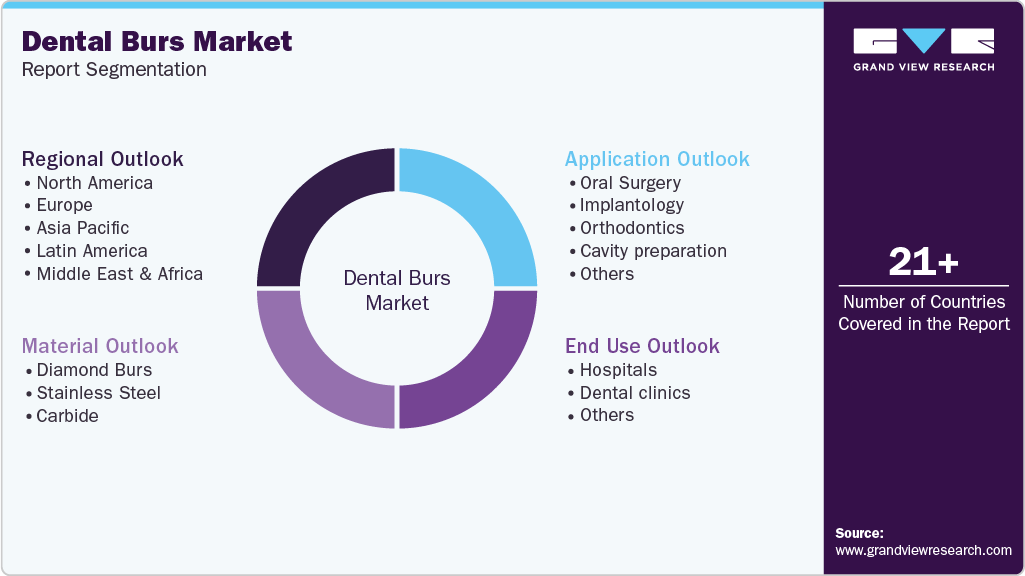
This report forecasts revenue growth at global, regional, and country levels and provides an analysis of the latest industry trends in each of the sub-segments from 2021 to 2033. For this study, Grand View Research has segmented the global dental burs market report based on material, application, end use, and region:
-
Material Outlook (Revenue, USD Million, 2021 - 2033)
-
Diamond Burs
-
Stainless Steel
-
Carbide
-
-
Application Outlook (Revenue, USD Million, 2021 - 2033)
-
Oral Surgery
-
Implantology
-
Orthodontics
-
Cavity preparation
-
Others
-
-
End Use Outlook (Revenue, USD Million, 2021 - 2033)
-
Hospitals
-
Dental clinics
-
Others
-
-
Regional Outlook (Revenue, USD Million, 2021 - 2033)
-
North America
-
U.S.
-
Canada
-
Mexico
-
-
Europe
-
UK
-
Germany
-
France
-
Italy
-
Spain
-
Denmark
-
Sweden
-
Norway
-
-
Asia Pacific
-
Japan
-
China
-
India
-
Australia
-
South Korea
-
Thailand
-
-
Latin America
-
Brazil
-
Argentina
-
-
Middle East & Africa
-
South Africa
-
Saudi Arabia
-
UAE
-
Kuwait
-
-
Frequently Asked Questions About This Report
b. The global dental burs market size was estimated at USD 677.06 million in 2025 and is expected to reach USD 715.72 million in 2026.
b. The global dental burs market is projected to grow at a CAGR of 6.06% from 2026 to 2033 to reach USD 1,080.34 million by 2033.
b. Based on material, diamond burs market dominated the dental burs market and accounted for the highest revenue share of 45.14% in 2025.
b. Key companies in the global dental burs market include Dentsply Sirona, COLTENE Inc., SHOFU INC., MANI, INC, Brasseler USA, American Orthodontics are some of the major players in the dental burs market
b. The dental burs market is driven by the increasing prevalence of oral diseases, increasing volumes of restorative and cosmetic dental procedures, and stricter infection-control protocols that raise replacement rates for dental burs used in routine clinical practice.


Share this report with your colleague or friend.
Need a Tailored Report?
Customize this report to your needs — add regions, segments, or data points, with 20% free customization.


ISO 9001:2015 & 27001:2022 Certified
We are GDPR and CCPA compliant! Your transaction & personal information is safe and secure. For more details, please read our privacy policy.
Trusted market insights - try a free sample
See how our reports are structured and why industry leaders rely on Grand View Research. Get a free sample or ask us to tailor this report to your needs.