
- Home
- »
- Healthcare IT
- »
-
Dental Practice Management Software Market Report, 2033GVR Report cover

Dental Practice Management Software Market (2026 - 2033)
Size, Share, & Trends Analysis Report By Deployment Mode (On-premise, Web-based, Cloud-based), By Application (Patient Communication, Invoice/Billing, Payment Processing), By End Use, By Region, And Segment Forecasts
Market Size, 2025
$3.1BMarket Estimate, 2026
$3.4BMarket Forecast, 2033
$6.8BCAGR, 2026–2033
10.6%Dental Practice Management Software Market Summary
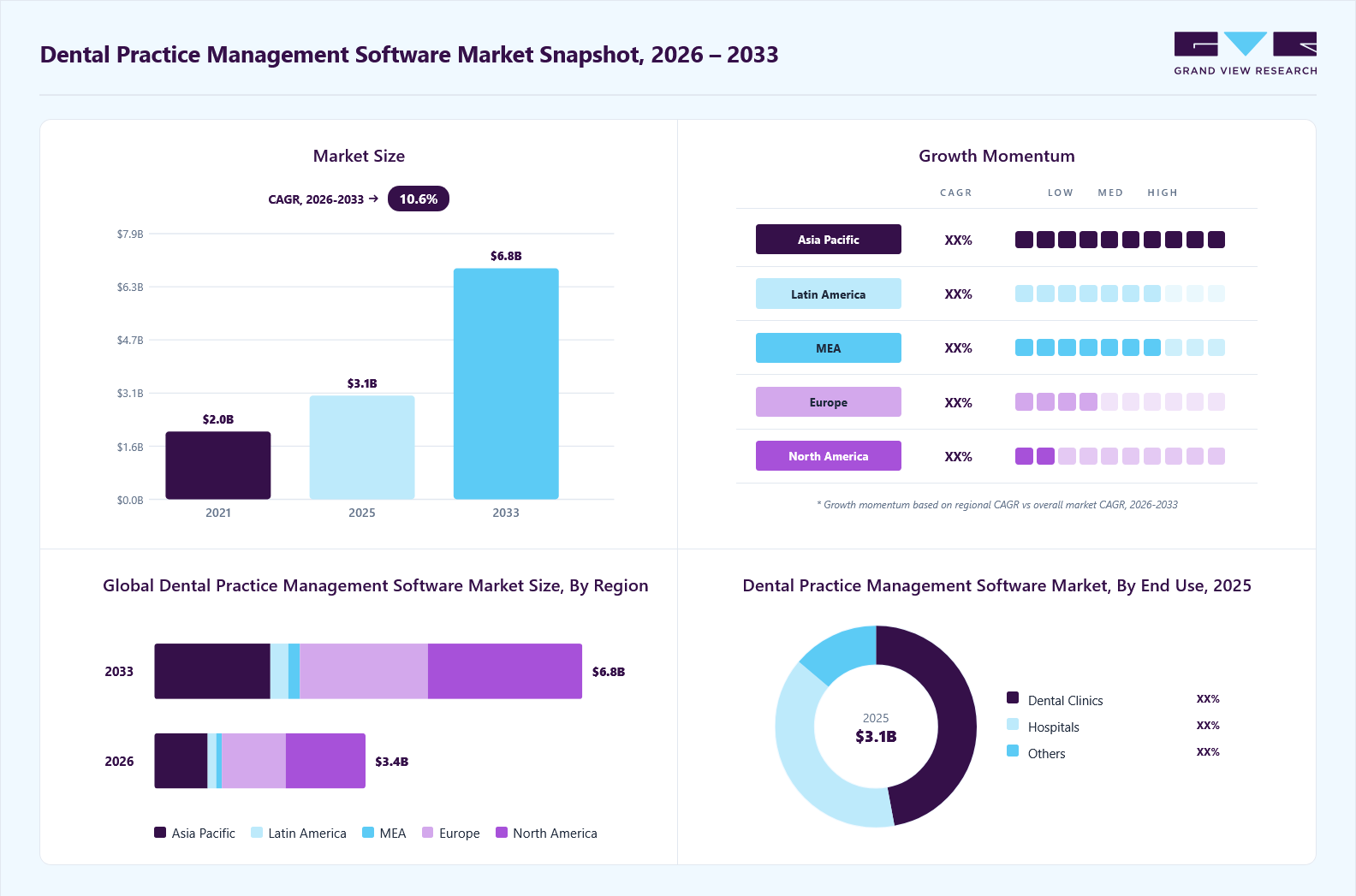
The global dental practice management software market size was estimated at USD 3.1 billion in 2025 and is projected to grow from USD 3.4 billion in 2026 to USD 6.8 billion by 2033, growing at a CAGR of 10.6% from 2026 to 2033. North America dominated the dental practice management software market with the largest revenue share of 38.0% in 2025. The market is expected to grow significantly, driven by the increasing dental visits, growing focus & awareness about oral health in Europe & the U.S., and rapid technological advancements.
 Source: Grand View Research, IR Documents, Primary Interviews, Paid DatabasesTo learn more about this report,
 Download Free Sample Report
 Key Market Trends & Insights
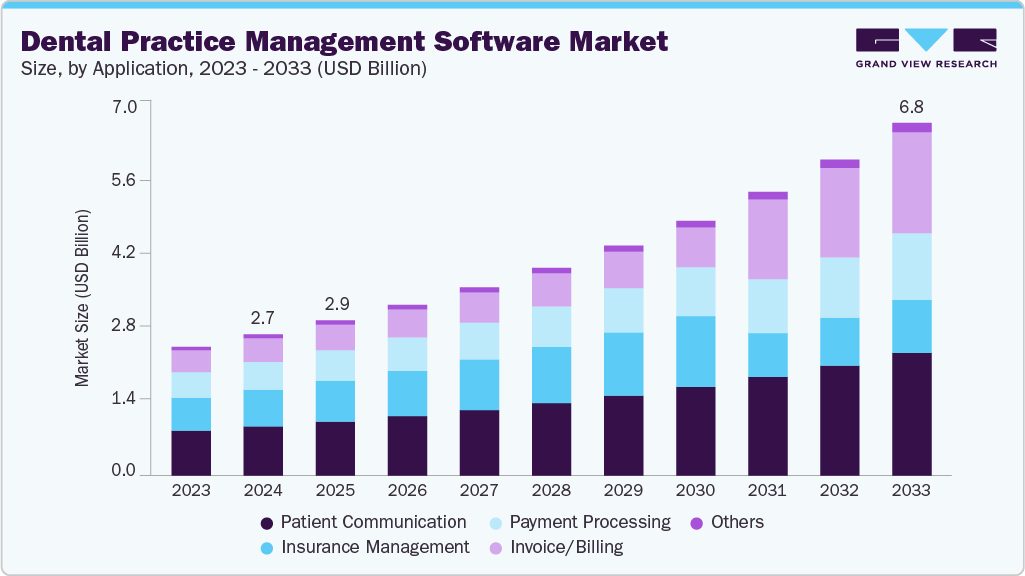
- By application: Patient communication segment led the market with the largest revenue share of 21.4% in 2025. However, the insurance management segment is anticipated to grow at the fastest CAGR during the forecast period.
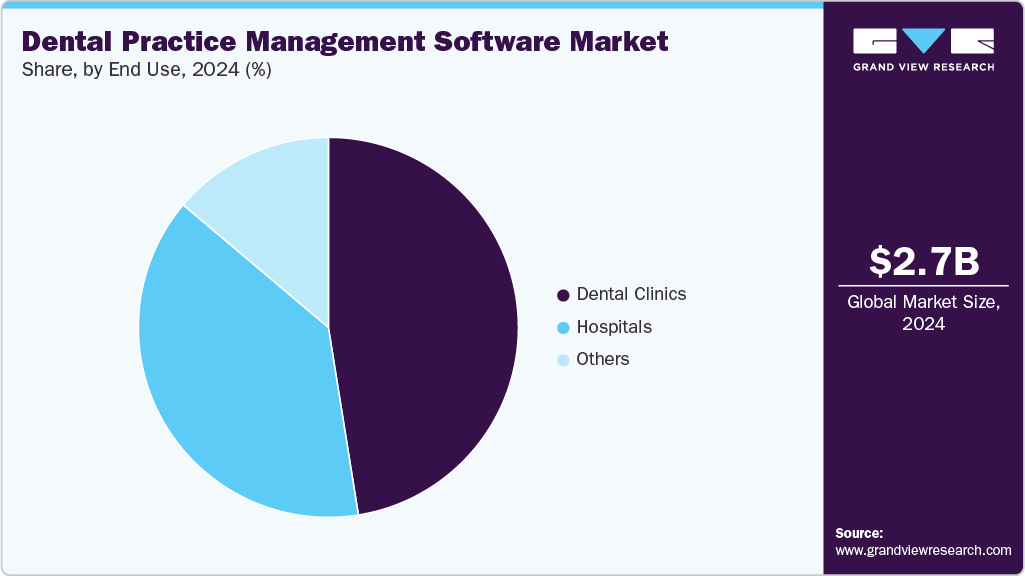
- By end use: Dental clinics segment led the market with the largest revenue share of 47.0% in 2025. However, the hospitals’ segment is anticipated to grow at the fastest CAGR during the forecast period.
Regional Highlights
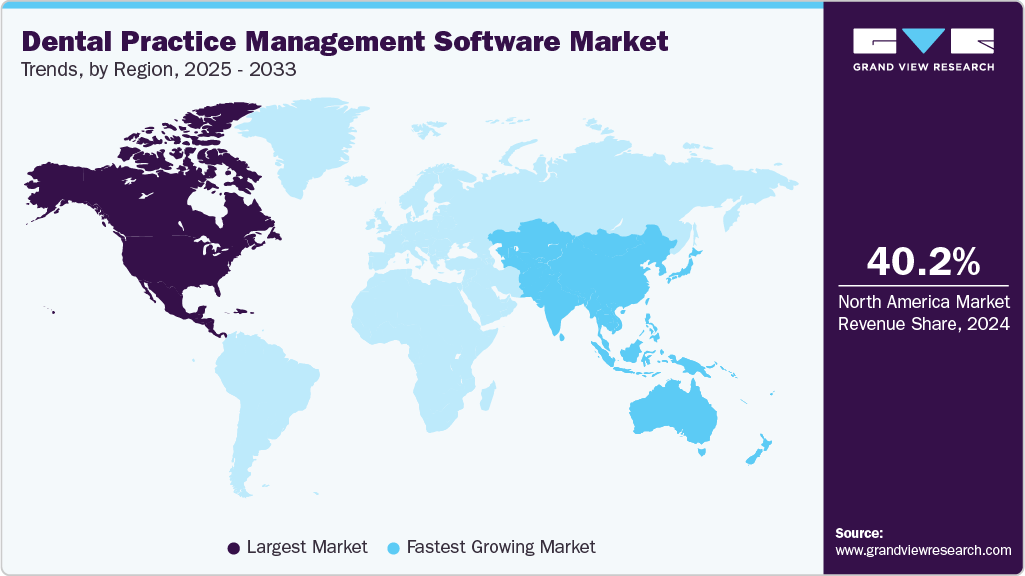
- Largest regional market: North America (38.0% revenue share, 2025)
- Fastest-growing regional market: Asia Pacific (highest CAGR, 2026-2033)
- By country: The U.S. held the largest market share in 2025
Market Size & Forecast
- Market size in 2025: USD 3.1 Billion
- Estimated market size in 2026: USD 3.4 Billion
- Projected market size by 2033: USD 6.8 Billion
- CAGR (2026-2033): 10.9%
Three ways to get this report
Buy it, customize it, or ask a question.Ask an Analyst
Analyst response in 1 business day
- AccessReport author, directly
- Reply timeWithin 1 working day
- No sales callDirect answer only
- FormatEmail reply
- CostFree, no cost
Get the Full Report
What the study covers
- FormatsPDF · Excel · Dashboard
- Timeline2026–2033 annual, 2025 base
- Coverage20+ countries, 5 regions
- Companies10+ key players profiled
Customize the Report
20% free customization
- IncludeCountries, segments, points
- TailorTo your product definition
- ExtendDeeper competitor detail
- OrA fully bespoke study
- Turnaround5–10 working days
The Health Information Technology for Economic and Clinical Health (HITEC) Act encourages and accelerates the use of health information technology in the U.S. The adoption of healthcare IT solutions, especially by specialty clinics such as oral practices, is anticipated to increase insurance coverage. These factors are expected to boost the demand for oral services, thereby driving the need for DPM software.An increase in independent dental practices due to supportive government initiatives about oral health and an increase in dental visits witnessed high footfall in recent years. According to the American Dental Association (ADA), 202,304 dentists were practicing in 2023 in the U.S. According to the American Health Policy Institute, the dentist workforce is expected to witness rapid growth, reaching 67 dentists per 100,000 people in 2040. This increase in dental practices can be attributed to increased awareness and demand for dental care over the past few years.
 To learn more about this report, Download Free Sample Report
 Furthermore, the dental practice management software market is witnessing a surge in the development and integration of new technologies, including cloud computing and artificial intelligence (AI). Automation of processes enables patients to access various management solutions. For instance, in January 2024, Smilefy, Inc. launched Smilefy 4.0, a 3D smile design software program powered by AI. The software allows dental professionals to create 3D smile designs, generate 3D print-ready models, and offer patients a trial to view their new smiles in advance. This facilitates communication and helps establish realistic expectations.
The high cost of dental procedures in many countries is due to added lawsuits and malpractice insurance costs. Thus, people residing in the U.S. and Canada travel to other countries, such as Mexico and Costa Rica, for cheaper dental care. According to the Costa Rica Star, over 42% of the total medical tourists in Costa Rica seek dental care, which includes 80% of visitors from the U.S., 10% from Canada, and the rest from Central America and the Caribbean. In addition, dental clinics meet the national and international standards of hygiene & safety in these countries. Moreover, patients save more than 75% on costs for the same service, quality, and materials.
Integration of Artificial Intelligence into Dental Practice Management Platforms
Integrating artificial intelligence (AI) into dental practice management platforms has significantly transformed the operations of dental practices. AI-powered features such as automated scheduling, patient communication, billing optimization, clinical data analysis, and predictive analytics enhance workflow efficiency and enable data-driven decision-making for dental professionals. These advanced capabilities reduce administrative burdens and increase the time available for patient care, leading to enhanced productivity and improved patient satisfaction.
Furthermore, AI facilitates personalization in patient engagement through automated reminders, tailored treatment recommendations, and real-time feedback mechanisms, leading to higher patient retention and adherence to dental care plans. For instance, in October 2024, Open Dental partnered with Bola AI to integrate Bola AI's Voice Perio software into its practice management solution. This software enables dental professionals to record periodontal data in real-time by speaking values aloud. This AI-powered voice technology streamlines clinical workflows, reduces documentation burden, and enhances patient engagement by facilitating conversations about periodontal health. Moreover, as dental practices increasingly implement digital solutions for remote consultations and teledentistry, AI is crucial in enhancing communication and facilitating virtual diagnostics.
The following are some Recent Strategic Initiatives in AI in Dental Practice Management
Company
Month & Year
Initiative
Adit
May 2025
Adit introduced an orthodontic-specific version of its all-in-one practice management platform, enhancing treatment tracking, scheduling, communication, and payment processing.
RevenueWell
May 2025
RevenueWell partnered with Mila Health to introduce an advanced AI-powered assistant for dental practices. This assistant enhances patient experience with 24/7 service, automates 90% of care management tasks, and significantly reduces no-show rates.
“At RevenueWell, we are leaders in modernizing oral care in 11,200 practices and over 4 MM patients. With this launch, we are bringing the next-generation artificial intelligence (AI) tools to our customers to reinvent the way they reach their patients for oral health, and increase revenue, while automating complex tasks such as treatment plan follow-up and pre-procedure preparation.”
-Katherine Shuman, CEO of RevenueWell.
Sensei
April 2025
Sensei and DentalMonitoring announced a strategic integration to incorporate AI-powered remote monitoring into Sensei Cloud Ortho. This collaboration streamlines workflows, supports hybrid care models, and enables multi-site scalability with AI insights and 3D visualization, enhancing personalized, efficient orthodontic care.
“By bringing DentalMonitoring’s AI-powered remote monitoring capabilities directly into Sensei Cloud, we’re empowering practices to deliver smarter, faster, and more personalized care-without added complexity.”
-Philippe Salah, CEO and co-founder of DentalMonitoring
Intiveo
February 2025
Intiveo launched Intiveo Voice, an integrated communication solution for dental and specialty practices. This platform combines RingCentral’s AI-powered cloud-based phone system with Intiveo’s patient engagement software, streamlining workflows.
Software of Excellence
May 2024
·Software of Excellence partnered with Pearl to integrate Pearl’s Second Opinion AI dental diagnostic software into its EXACT practice management system.
“Together, we are enabling a higher standard of care for Software of Excellence customers and helping to enhance dental AI efficiency by empowering practices in leading dental markets with seamless access to one of dentistry’s most comprehensive AI-powered toolset.”
-Ophir Tanz, founder and CEO of Pearl.
LIBERTY Dental Plan
March 2024
LIBERTY Dental Plan launched innovations in oral health by integrating generative AI (GenAI) into its care management and benefits programs. The enhancements include AI-powered tools for personalized care management, improved member engagement, and streamlined administrative processes.
Market Dynamics
The dental practice management software market is expected to grow significantly, driven by the increasing dental visits, growing focus & awareness about oral health in Europe & the U.S., and rapid technological advancements. The Health Information Technology for Economic and Clinical Health (HITEC) Act encourages and accelerates the use of health information technology in the U.S. The adoption of healthcare IT solutions, especially by specialty clinics such as oral practices, is anticipated to increase insurance coverage. These factors are expected to boost the demand for oral services, thereby driving the need for DPM software.
An increase in independent dental practices due to supportive government initiatives about oral health and an increase in dental visits witnessed high footfall in recent years. According to the American Dental Association (ADA), 202,304 dentists were practicing in 2023 in the U.S. According to the American Health Policy Institute, the dentist workforce is expected to witness rapid growth, reaching 67 dentists per 100,000 people in 2040. This increase in dental practices can be attributed to increased awareness and demand for dental care over the past few years.
Furthermore, integrating artificial intelligence (AI) into dental practice management platforms has significantly transformed the operations of dental practices. AI-powered features such as automated scheduling, patient communication, billing optimization, clinical data analysis, and predictive analytics enhance workflow efficiency and enable data-driven decision-making for dental professionals. These advanced capabilities reduce administrative burdens and increase the time available for patient care, leading to enhanced productivity and improved patient satisfaction. For instance, in February 2026, Planet DDS launched DentalOS AI Agents, an embedded AI workforce for Denticon and Cloud 9 dental practice systems. The initial agents automate appointment confirmations and scheduling to reduce no-shows, protect production, and save front-desk time. In May 2026, Pearl launched Pearl RCM, an AI-driven dental revenue cycle platform that integrates insurance intelligence into daily workflows. It verifies eligibility, coverage, imaging quality, and claim readiness before submission, helping practices reduce denials, downcodes, and unexpected billing issues.
Moreover, AI facilitates personalization in patient engagement through automated reminders, tailored treatment recommendations, and real-time feedback mechanisms, leading to higher patient retention and adherence to dental care plans. Moreover, as dental practices increasingly implement digital solutions for remote consultations and teledentistry, AI is crucial in enhancing communication and facilitating virtual diagnostics.
Data security and regulatory compliance remain significant challenges for providers and software vendors operating in the dental practice management software market. Dental practices manage large volumes of sensitive patient information, including treatment records, diagnostic images, insurance details, billing information, and personal health data. As digitalization increases, healthcare organizations become more vulnerable to cyberattacks, ransomware incidents, data breaches, and unauthorized access attempts. Maintaining a robust cybersecurity infrastructure requires continuous investment in encryption technologies, access controls, threat monitoring systems, and employee training programs. In addition, dental software providers must comply with evolving healthcare data protection regulations such as HIPAA in the U.S., GDPR in Europe, and other regional privacy standards. Failure to meet compliance requirements is likely to result in legal penalties, reputational damage, and loss of patient trust. Frequent regulatory updates may also require software modifications and system upgrades, increasing operational costs for vendors and healthcare providers. Concerns regarding data privacy, information security, and regulatory obligations can delay purchasing decisions and create barriers to adoption, particularly among smaller dental practices with limited IT expertise and resources.
The growing digital transformation of small and independent dental clinics represents one of the most significant opportunities in the dental practice management software market. In addition, government-led healthcare digitization initiatives and broader adoption of electronic health records are further encouraging dental practices to modernize their operational infrastructure. The increasing availability of cloud-based, subscription-driven software models has lowered the financial barriers traditionally associated with digital adoption. Unlike large upfront investments required for on-premise systems, modern software-as-a-service (SaaS) platforms offer affordable monthly pricing, making advanced practice management capabilities accessible to smaller clinics. Features such as automated appointment scheduling, digital patient intake, insurance verification, billing management, treatment planning, and patient communication tools provide measurable operational benefits while reducing administrative workloads.
Market Concentration & Characteristics
The chart below illustrates the relationship between industry concentration, industry characteristics, and industry participants. The x-axis represents the level of industry concentration, ranging from low to high. The y-axis represents various industry characteristics, including industry competition, level of partnerships & collaboration activities, degree of innovation, impact of regulations, and regional expansion. The dental practice management market is fragmented, with the presence of several emerging players entering the market. The degree of innovation, product expansion, and the impact of regulations on the market is moderate. The level of partnerships and collaborations is high.
The market is witnessing a moderate degree of innovation, with several market players launching new products to improve their market penetration. In January 2024, Napa EX/MEDX LLC introduced Image Sync for Vyne Trellis, a revenue acceleration platform. This innovative tool ensures smooth integration among supported imaging systems. Its primary benefit lies in enabling users to upload high-quality patient images to claims effortlessly. This capability empowers practices to expedite claim processing, reduce reimbursement time, and optimize workflow efficiency.
 To learn more about this report, Download Free Sample Report
 The level of partnerships & collaborations in market is high due to several key market players including Henry Schein, Inc., Nextgen Healthcare, Inc., Carestream Dental, LLC, CD Newco, LLC (Curve Dental), involved in partnerships & collaboration activities to expand their market presence. For instance, in November 2022, Henry Schein, Inc. partnered with VideaHealth, a leading dental AI-platform. As a result, Henry Schein One introduced Dentrix Detect AI-powered and manufactured by VideaHealth, an AI-enabled X-ray analysis tool that integrates directly into Dentrix Practice Management Systems.
The impact of regulations on the dental practice management software market is moderate. However, the market is expected to experience growth due to favorable government policies and laws that ensure the data safety and efficacy of dental practice management software services. For instance, in April 2021, the Kuwait Communication & Information Technology Regulatory Authority (CITRA) released the Data Privacy Protection Regulation, No.42 of 2021. All dental practice management vendors and healthcare IT companies are required to comply with these regulations.
The degree of innovation in the market is low due to factors such as slow adoption of new technology by practices, regulatory constraints, and cost considerations. These factors collectively hinder the development of groundbreaking features and solutions, resulting in a relatively low level of innovation compared to other industries.
The level of regional expansion in the market is low due to changes in regulatory frameworks and the specific demands of target customers in low- and medium-income countries. However, some of the market players are expanding their presence in various regions to gain market share. For instance, in May 2023, P1 Dental Partners selected Henry Schein, Inc.’s software: Dentrix Ascend, a cloud-based dental practice management software, and Jarvis Analytics, a dental analytics tool, to provide its partner dentists with a seamless practice management workflow across over 40 practices, helping elevate patient care and drive practice success.
Case Study Insights: ROOT Periodontics & Implant Centers' Transition to Care Stack for Enhanced Operational Efficiency
ROOT Periodontics & Implant Centers, a multi-location dental practice headquartered in Dallas, Texas, faced significant operational challenges due to fragmented systems and inefficiencies inherent in their previous desktop-based software. Seeking a comprehensive solution to streamline operations, improve patient scheduling, and enhance overall efficiency, ROOT transitioned to CareStack's cloud-based dental practice management software. This case study outlines the challenges encountered, the solutions implemented, and the outcomes achieved through this transition.
Challenge
Operating across seven locations, ROOT Periodontics & Implant Centers utilized a desktop-based system that led to fragmented patient and referral information. The team faced multiple operational hurdles, including:
-
Multiple logins for different systems.
-
Unexpected system blocks disrupting workflows.
-
Inability to schedule patients seamlessly across various locations.
These challenges hindered their ability to provide consistent and efficient patient care, necessitating a unified platform to centralize operations.
Solution
After evaluating various options, ROOT selected CareStack, an all-in-one, cloud-based dental practice management software, to address its operational challenges. The implementation process included:
-
Centralizing operations to ensure seamless scheduling and unified patient information.
-
Eliminating system blocks and the need for multiple logins.
-
Utilizing CareStack's referral portal to communicate and share patient information with over 400 referral providers in a HIPAA-compliant manner.
-
Leveraging robust reporting and analytics tools to monitor key performance indicators (KPIs) in real-time.
The onboarding process began with their first location in December 2019, with customized training plans developed for different user groups to ensure a smooth transition.
Result/Outcome
The integration of CareStack's comprehensive solutions led to significant improvements in ROOT's operations:
-
A 35% increase in gross production.
-
A 29% increase in new patient acquisition.
-
Enhanced patient experience through efficient scheduling and centralized information.
-
Improved business performance, with all KPIs showing positive trends.
“Robust reporting and analytics - provided me with a better way to watch the numbers and see things real time and quickly. All our KPIs have improved. Overall, we have seen our business improve since being on CareStack.”
-Dana VeachCOO, ROOT Periodontics & Implant Centers
Analyst Perspective
The dental practice management software market is transitioning from basic administrative software to comprehensive digital platforms that support clinical, operational, and financial workflows. Increasing adoption of electronic records, cloud-based solutions, and patient engagement tools is driving demand across both independent dental practices and large dental service organizations (DSOs). Providers are seeking solutions that improve scheduling efficiency, streamline billing processes, optimize insurance claims management, and enhance patient experiences.
The market's competitive advantage will increasingly depend on vendors' ability to offer integrated, cloud-native platforms that combine practice management, analytics, patient communication, and workflow automation within a single ecosystem. The growing incorporation of artificial intelligence for appointment management, revenue cycle optimization, and operational decision-making is expected to further strengthen adoption. As dental practices continue to prioritize efficiency, scalability, and digital transformation, software platforms are evolving into essential operational infrastructure, creating long-term opportunities for vendors with strong interoperability, recurring revenue models, and comprehensive service offerings.
Deployment Mode Insights
Based on deployment mode, the web-based segment led the market with the largest revenue share of 52.8% in 2025. Moreover, the cloud-based segment is expected to grow at the fastest CAGR over the forecast period. The growth is attributed to its increased security, quick updates, unrestricted storage space, and low cost. The rise in adoption of DPM software in oral practices for reporting, billing, scheduling, patient charting, and treatment planning is expected to boost segment growth.
Cloud-based segment is expected to grow at the fastest CAGR during the forecast period, owing to the new software launches, collaborations, and mergers among key players aimed at providing cloud-based solutions to their consumers are projected to drive this segment's growth. For instance, in September 2022, Carestream Dental launched Sensei Cloud for Oral Surgery, a cloud-based practice management software solution for oral and maxillofacial surgery. This innovation aimed to provide user-friendly and readily accessible management solutions for oral and maxillofacial surgery specialists.
Application Insights
Based on application, the insurance management segment held the largest market share of 21.4% in 2025. Improvements in dental insurance coverage are expected to drive segment growth. According to the American Dental Association (ADA) Health Policy Institute's 2026 report, approximately 55.1% of children aged 0-18 years in the U.S. have private dental benefits, while 37.9% receive dental coverage through Medicaid or the Children's Health Insurance Program (CHIP).
The dental analytics segment is expected to grow at the fastest CAGR during the forecast period. By analyzing patient demographics, treatment patterns, and revenue streams, dental practices uncover trends and patterns that lead to improved patient care and increased profitability. These insights enable practices to make informed decisions on marketing strategies, service offerings, and resource allocation.
Segments Covered in the Report
This report forecasts revenue growth at global, regional, and country levels and provides an analysis of the latest industry trends in each of the sub-segments from 2021 to 2033. For this study, Grand View Research has segmented the global dental practice management software market report based on deployment mode, application, end use and regions.
End Use Insights
Based on end use, the dental clinics segment led the market with the largest revenue share of 47.0% in 2025. However, the hospitals’ segment is anticipated to grow at the fastest CAGR during the forecast period. The rise in dental visits is expected to increase the need for software to manage patient data and treatment regimes. Thus, many dental clinics are adopting Electronic Dental Records (EDR) and appointment scheduling platforms. EDR can be easily integrated with DPM software, which boosts segment growth.
 To learn more about this report, Download Free Sample Report
 The hospitals segment is expected to experience the fastest growth during the forecast period. This growth is attributed to the high frequency of oral care visits and the adoption of DPM software solutions in Dental Clinics. The cloud based DPM software offers greater storage capacity through cloud servers, allowing for the storage of significant volumes of patient data, making it the perfect choice for major Dental Clinics with high patient volumes.For instance, Birmingham Dental Hospital in Europe has invested in a new facility equipped with all dental services for 120,000 patients with 98.7% positive feedback.
Regional Insights
North America dominated the dental practice management software market with the largest revenue share of 38.0% in 2025. This is attributed to various factors such as supportive government regulations for healthcare Information Technology (IT), high disposable income, and a large geriatric population in the U.S. & Canada. The presence of major players, such as Curve Dental and Henry Schein One, increasing funding for start-up businesses, and the growing adoption of oral care services by baby boomers are some of the key factors expected to propel market growth in North America.
 To learn more about this report, Download Free Sample Report
 U.S. Dental Practice Management Software Market Trends
The dental practice management software market in the U.S. held the largest share in the North America region in 2025, owing to an increase in number of dental practices & dentists in the U.S. According to the American Dental Association (ADA), there were around 201,117 practicing dentists in 2020 across the U.S., accounting for an increase of 2.7% from 2015.
The dental practice management software market in Canada is expected to witness the fastest growth over the forecast period. This can be attributed to growing awareness regarding oral health in the country is expected to propel the demand for dental health services during the forecast period.
Europe Dental Practice Management Software Market Trends
The dental practice management software market in Europe is anticipated to grow significantly due to rapid technological advancements and increasing consumer spending capacity. According to NHS Dental Statistics for England, 18.1 million adults were seen by an NHS dentist in the 24 months up to June 2023.
The dental practice management software market in the Germany held the largest share in 2024, owing to the increasing awareness regarding oral health in the country.
Denmark dental practice management software market is expected to witness the fastest growth over the forecast period. This can be attributed to the implementation of advanced IT frameworks in Dental Clinics and general practitioner centers.
The dental practice management software market in the UK is expected to grow significantly over the forecast period. This can be attributed to the increasing number of dental practices and supportive government initiatives being undertaken to raise awareness about oral care & dental check-ups among children.
Asia Pacific Dental Practice Management Software Market Trends
Asia Pacific is expected to witness the fastest growth over the forecast period. With the growing investments by healthcare IT companies in the region and improving economic conditions & healthcare infrastructure are favoring the market growth.
The dental practice management software market in Japan held the largest share in 2023, owing to the increasing prevalence of dental disorders and the presence of a robust healthcare infrastructure.
India dental practice management software market is witnessing growth due to the increasing prevalence of dental diseases are expected to contribute to the growth.
Key Dental Practice Management Software Company Insights
The market is highly fragmented, with the presence of many country-level players. With the growing elderly population and the need for mobile health, a few smaller competitors are entering the industry and are expected to gain a significant share of the market. Some emerging players in the market are, Dental Intelligence, Inc, Jarvis Analytics, Practice Analytics, ABELMed Inc., and Practice-Web, Inc.
Key Dental Practice Management Software Companies:
The following key companies have been profiled for this study on the dental practice management software market.
-
Henry Schein, Inc.
-
Carestream Dental, LLC
-
DentiMax
-
Practice-Web, Inc.
-
Nextgen Healthcare, Inc.
-
ACE Dental Software
-
Datacon Dental Systems, Inc.
-
CareStack (Good Methods Global Inc.)
-
CD Nevco, LLC (Curve Dental)
- Dentiflow
Competitive Benchmarking
Category
Operating Strategies
Competitive Edge
Weakness
Established Players (Henry Schein, Inc., Carestream Dental, LLC, NextGen Healthcare, Inc., CareStack, Curve Dental)
- Expand cloud-based practice management platforms through acquisitions, strategic partnerships, and integration with imaging, EHR, and revenue cycle management solutions.
Invest in AI-enabled workflow automation, analytics, patient engagement tools, and multi-location practice support.
- Strong market presence, extensive customer base, and comprehensive product portfolios covering clinical and administrative workflows.
- Established distribution networks, robust technical support capabilities, and high interoperability with third-party healthcare systems.
- Higher implementation and maintenance costs may limit adoption among small dental practices.
- Complex product architectures and longer upgrade cycles can reduce flexibility in addressing evolving customer requirements.
Emerging Players (DentiMax, Practice-Web, Inc., ACE Dental Software, Datacon Dental Systems, Inc., Dentiflow)
- Focus on affordable and user-friendly solutions targeting independent dental clinics and small-to-mid-sized practices.
- Leverage cloud deployment, flexible pricing models, and customer-centric feature development to increase market penetration.
- Greater agility in product development and faster response to customer feedback and market requirements.
- Ability to offer cost-effective, specialized solutions tailored to niche dental practice needs.
- Limited financial resources and smaller sales networks compared to larger competitors.
- Lower brand recognition, restricted international presence, and fewer integrated service capabilities may hinder large-scale expansion.
Recent Developments
-
For instance, in January 2025, Pearl partnered with Centaur to expand the adoption of its Second Opinion AI dental diagnostic software across Australia and the Middle East. This collaboration expands access to AI-powered disease detection in dental X-rays for professionals across Australia and the Middle East, enhancing diagnostic accuracy, clinical efficiency, and patient communication.
“Second Opinion represents the next generation of diagnostic tools for the dental profession. By incorporating AI-powered evaluations, we’re enabling dental professionals across the Asia Pacific and Middle East to improve diagnostic accuracy, streamline patient communication, and ultimately deliver a higher standard of care.”
-Sean Perera, CTO of Centaur
-
In October 2024, Archy, a provider of cloud-based automation software for dental practices, raised USD 15 million in Series A funding to Optimize Dental Practices with AI-powered automation.
-
In October 2024, Maxim Software Systems launched Mint Ops, a comprehensive ecosystem designed to support dental clinics across Canada. Mint Ops integrates MaxiDent’s trusted practice management software with additional operations, marketing, staffing, and patient communication solutions.
-
In August 2023, Henry Schein, Inc. acquired majority shares of Large Practice Sales (LPS) LLC, which is a leading consultant to individual dental practices. LPS helps these practices in their sale or partnership with larger general practice and dental specialists.
-
In May 2023, Henry Schein, Inc. acquired the Regional Health Care Group Pty Ltd, a medical products distribution company that serves public- and private-sector customers in New Zealand and Australia.
-
In November 2022, Pearl and Curve Dental partnered to integrate Pearl’s Second Opinion disease detection abilities within Curve Dental’s SuperHero practice management system, providing Curve’s 70,000 users in the U.S. and Canada with FDA-cleared clinical AI capabilities.
Dental Practice Management Software Market Report Scope
Report Attribute
Details
Market size value in 2025
USD 3.1 billion
Estimated Market size in 2026
USD 3.4 billion
Projected market size by 2033
USD 6.8 billion
Growth rate
CAGR of 10.6% from 2026 to 2033
Historical data
2021 - 2024
Forecast period
2026 - 2033
Quantitative units
Revenue in USD million/billion and CAGR from 2026 to 2033
Report coverage
Revenue forecast, company ranking, competitive landscape, growth factors, and trends
Segments covered
Deployment mode, application, end use, region
Regional scope
North America; Europe; Asia Pacific; Latin America; MEA
Country scope
U.S.; Canada; Mexico; Germany; UK; France; Italy; Spain; Norway; Denmark; Sweden; China; Japan; India; South Korea; Australia; Thailand; Brazil; Argentina; Saudi Arabia; South Africa; UAE; Kuwait
Key companies profiled
Henry Schein, Inc.; Carestream Dental, LLC; DentiMax Practice-Web, Inc.; Nextgen Healthcare, Inc.; ACE Dental Software; Datacon Dental Systems, Inc.; CareStack (Good Methods Global Inc.); CD Nevco, LLC (Curve Dental); Dentiflow
Customization scope
Free report customization (equivalent up to 8 analysts' working days) with purchase. Addition or alteration to country, regional & segment scope.
Pricing and purchase options
Avail customized purchase options to meet your exact research needs. Explore purchase options
Global Dental Practice Management Software Market Report Segmentation
This report forecasts revenue growth at global, regional, and country levels and provides an analysis of the latest industry trends in each of the sub-segments from 2021 to 2033. For this study, Grand View Research has segmented the global dental practice management software market report based on deployment mode, application, end use, and region.
 To learn more about this report, Download Free Sample Report
 -
Deployment Mode Outlook (Revenue, USD Million, 2021 - 2033)
-
On-Premise
-
Web-based
-
Cloud-based
-
-
Application Outlook (Revenue, USD Million, 2021 - 2033)
-
Insurance Management
-
Payment Processing
-
Invoice/Billing
-
Patient Record Management
-
Appointment Scheduling
-
Treatment Planning and Charting
-
Lab & X-Ray Orders
-
Dental Analytics
-
Digital Imaging and Radiography Integration
-
Others
-
-
End Use Outlook (Revenue, USD Million, 2021 - 2033)
-
Dental Clinics
-
Hospitals
-
Others
-
-
Regional Outlook (Revenue, USD Million, 2021 - 2033)
-
North America
-
U.S.
-
Canada
-
Mexico
-
-
Europe
-
UK
-
Germany
-
France
-
Italy
-
Spain
-
Denmark
-
Sweden
-
Norway
-
-
Asia Pacific
-
China
-
Japan
-
India
-
South Korea
-
Australia
-
Thailand
-
-
Latin America
-
Brazil
-
Argentina
-
-
Middle East and Africa (MEA)
-
South Africa
-
Saudi Arabia
-
UAE
-
Kuwait
-
-
Research Methodology
Segment Definition
Segment - Deployment Mode
Revenue capture definition
On-premise
On-premise dental practice management software is installed and operated on local servers and computer systems within a dental facility. This deployment model provides greater control over data storage, security, and system customization but requires significant investment in hardware, maintenance, and IT support.
Web
Web-based dental practice management software is accessed through an internet browser without requiring extensive local installation. These solutions enable users to manage appointments, patient records, billing, and administrative functions remotely while reducing infrastructure and maintenance requirements.
Cloud
Cloud-based dental practice management software is hosted on remote servers and delivered through a Software-as-a-Service (SaaS) model. It offers scalability, automatic updates, remote accessibility, data backup, and lower upfront costs, making it increasingly popular among dental practices of all sizes.
Segment - Application
Revenue capture definition
Patient Communication
Patient communication solutions facilitate interaction between dental providers and patients through appointment reminders, recall notifications, treatment updates, messaging platforms, and patient portals. These tools help improve patient engagement, reduce missed appointments, and enhance overall care coordination.
Invoice/Billing
Invoice and billing applications automate the generation, management, and tracking of patient invoices and financial transactions. These solutions streamline billing workflows, improve revenue collection efficiency, and reduce administrative errors associated with manual billing processes.
Payment Processing
Payment processing solutions enable dental practices to securely accept and manage payments through multiple channels, including credit cards, digital wallets, online payments, and recurring payment plans. These systems improve transaction efficiency and enhance patient payment convenience.
Insurance Management
Insurance management applications support insurance eligibility verification, claims submission, reimbursement tracking, denial management, and payer communication. These solutions help dental practices optimize revenue cycle management and reduce claim processing delays.
Others
This segment includes additional practice management functionalities such as appointment scheduling, patient record management, treatment planning, reporting and analytics, inventory management, staff scheduling, document management, and regulatory compliance tools.
Segment - End Use
Revenue capture definition
Dental Clinics
Dental clinics represent the primary end users of dental practice management software. These facilities utilize the software to manage patient records, appointment scheduling, billing, insurance claims, treatment planning, and overall clinical and administrative operations.
Hospitals
Hospitals with dedicated dental departments or oral healthcare units use dental practice management software to integrate dental services with broader hospital information systems. These solutions support patient management, clinical workflows, billing processes, and multidisciplinary care coordination.
Others
The others segment includes academic dental institutions, dental service organizations (DSOs), specialty dental centers, community healthcare facilities, research organizations, and government-supported oral healthcare programs that utilize practice management software to support operational and patient management activities.
Estimation Model
Stage
Description
Information Procurement
The stage involves the procurement of market data or related information via different sources & methodologies.
Information Analysis
This step involves the analysis & mapping of all the information procured from the previous step. It also encompasses the analysis of data discrepancies observed across various data sources.
Market Formulation
The final step entails the placement of data points at appropriate market spaces in an attempt to deduce viable conclusions. Analyst perspective & subject matter expert based heuristic form of market sizing also plays an integral role in this step.
Validation & Publishing
Validation is the most important step in the process. Validation & re-validation via an intricately designed process helps us finalize data-points to be used for final calculations.
The movement from step 1 and step 2 is bi-directional in nature. The process follows a to & fro from both the ends. This is an integral data filtration technique used by GVR.
The validation & market formulation steps are also reversible in nature. They are run parallel to ensure data accuracy and process flexibility.
The process of market sizing & data point identification runs throughout the report schedule. The process moves from Step 1&2 to Step 3&4, while keeping the steps 1&2 and 3&4 reversible. The cycle of market sizing & variable identification also keeps repeating until every data point is duly validated and is fit for publishing.
Market-specific Research Models
Consensus-Based Estimates & Forecasting
The dental practice management software market presents emerging to dominant opportunities, featuring global key players like Henry Schein, Inc. and NXGN Management, LLC. To ensure a holistic approach, the GVR research team adopted a comprehensive methodology, considering multiple companies worldwide and utilizing various variables for data accuracy.
Methodology included:
Model 1: Commodity Flow Analysis - For public players, annual reports were referenced. For private players, premium paid data sources such as S&P Global, Crunchbase, ZoomInfo, RocketReach, etc., were used for the latest revenue insights.
Model 2: Parent Market Analysis
Model 3: Country-level Multivariate Analysis Assumptions
Model 4: Segment-level Multivariate Analysis Assumptions
Model 5: Dental Practice Management Software Market CAGR Calculations
Model 1: Commodity Flow Analysis
Step
Description
1
Identified leading dental practice management software providers including Henry Schein, Carestream Dental, Dentimax, Practice-Web, NextGen Healthcare (NXGN Management), ACE Dental, Datacon Dental Systems, CareStack, Curve Dental (CD Newco), Dentiflow, Dental Intelligence, Jarvis Analytics, Practice Analytics, and ABELMed, along with other regional and niche vendors operating across dental workflow management, analytics, billing, and patient engagement solutions.
2
Benchmarked dental practice management software platforms and integrated solutions across key functionalities, including patient scheduling, electronic dental records, billing and invoicing, insurance claims management, payment processing, patient communication, analytics, reporting, and cloud-based practice management capabilities.
3
Analyzed individual company revenues, software portfolio performance, customer base, subscription models, and estimated segment-specific revenues associated with dental practice management software, analytics platforms, and revenue cycle management solutions.
4
Estimated application-level, deployment-level, and end-user revenues across dental clinics, hospitals, and specialty practices. Aggregated revenues from selected participants and extrapolated overall market size by evaluating market penetration, customer adoption rates, and the share held by leading vendors.
5
Forecasted market growth based on historical adoption trends, cloud migration rates, increasing dental practice digitization, demand for workflow automation, patient engagement solutions, analytics integration, regulatory requirements, and technology investments across global dental care settings.
Commodity flow analysis was employed to track the movement of dental practice management software through the value chain, from technology providers to end users. This analysis provided insights into demand generation points, intermediary roles, and ultimate consumption patterns.
Delivered Customizations
This report has been delivered with the following In-depth customizations
Client Request
Customization Delivered
Value Adds
Dental Practice Management Software Market Adoption & Digital Workflow Analysis
Developed a tailored analysis of the global Dental Practice Management Software market focused on practice digitization trends, administrative workflow automation, patient communication platforms, billing management, insurance processing, and cloud-based software adoption across dental clinics and hospitals. The study assessed deployment preferences, software utilization patterns, and healthcare IT investments influencing practice management modernization.
Enables stakeholders to understand evolving digital dentistry trends, identify high-growth software segments, assess technology adoption readiness, and evaluate the impact of workflow automation on operational efficiency, patient experience, and long-term market growth.
Dental Practice Operations, Patient Engagement & Revenue Cycle Assessment
Delivered a customized evaluation of software utilization trends across appointment scheduling, patient communication, invoicing, payment processing, insurance management, and treatment workflow coordination. The analysis assessed patient engagement strategies, digital payment adoption, practice productivity improvements, and demand for integrated platforms supporting efficient clinical and administrative operations.
Provides actionable insights into changing dental practice management requirements, commercially attractive application segments, and emerging opportunities linked to patient-centric digital solutions, revenue cycle optimization, and improved operational performance.
Dental Healthcare IT Infrastructure, Deployment & Competitive Landscape Assessment
Conducted a focused assessment of the dental software ecosystem, including cloud-based, web-based, and on-premise deployment models, vendor positioning, interoperability requirements, cybersecurity considerations, and software scalability across independent clinics, DSOs, hospitals, and specialty dental practices. The analysis evaluated technology adoption barriers, implementation challenges, and competitive differentiation strategies among market participants.
Supports strategic planning for software development, cloud migration initiatives, partnership opportunities, and market expansion by identifying adoption drivers, deployment preferences, investment opportunities, and competitive advantages across the global dental practice management software value chain.
Frequently Asked Questions About This Report
Asia Pacific is the fastest-growing region over the forecast period.
Patient communication held the largest revenue share in 2025, while insurance management is the fastest-growing segment.
The global dental practice management software market size was estimated at USD 3.1 billion in 2025 and is expected to reach USD 3.4 billion in 2026.
Some key players operating in the dental practice management software market include Henry Schein, Inc., Carestream Dental, LLC, DentiMax, Practice-Web, Inc., Nextgen Healthcare, Inc. (NXGN Management, LLC), ACE Dental, Datacon Dental Systems, Inc., CareStack (Good Methods Global Inc.), CD Newco, LLC (Curve Dental), and Dentiflow.
Market growth can be attributed to the growing geriatric population, increasing focus and awareness on oral health in the Europe & United States, and increasing technological advancements.
North America dominated with a 38.0% revenue share in 2025.
Dental clinics held the largest revenue share in 2025, while hospitals is the fastest-growing segment.
The global dental practice management software market is expected to grow at a compound annual growth rate of 10.6% from 2026 to 2033 to reach USD 6.8 billion by 2033.
Based on deployment mode, web-based segment dominated the dental practice management software market with the largest share of 52.8% in 2025.
About the Author(s)
Healthcare IT Research Team
Healthcare · Healthcare ITThis report was authored by the healthcare it research team at Grand View Research - comprising two research analysts, one senior research analyst, and one industry expert - with specialized expertise in the healthcare it segment of the healthcare industry. All findings are based on proprietary healthcare databases, executive interviews, and regulatory analysis, subject to internal peer review prior to publication.
Last Updated:
Speak to Analyst

Customize this report to your needs - add regions, segments, or data points, with 20% free customization.
Or view our licence options:


ISO 9001:2015 & 27001:2022 Certified
We are GDPR and CCPA compliant! Your transaction & personal information is safe and secure. For more details, please read our privacy policy.


