
- Home
- »
- Medical Devices
- »
-
Diagnostic Dermatology Imaging Devices Market Report 2026-2033GVR Report cover

Diagnostic Dermatology Imaging Devices Market (2026 - 2033)
Size, Share & Trends Analysis Report By Modality (Advanced Diagnostic Imaging Systems, Biopsy Devices), By Application (Skin Cancer, Inflammatory & Autoimmune), By End Use, By Region, And Segment Forecasts
Market Size, 2025
$5.4BMarket Estimate, 2026
$5.9BMarket Forecast, 2033
$11.2BCAGR, 2026–2033
9.7%Diagnostic Dermatology Imaging Devices Market Summary
The diagnostic dermatology imaging devices market size was valued at USD 5.4 billion in 2025 and is projected to grow from USD 5.9 billion in 2026 to USD 11.2 billion by 2033, at a CAGR of 9.7% from 2026 to 2033. North America dominated the diagnostic dermatology imaging devices market with the largest revenue share of 41.8% in 2025. The growing prevalence of skin disorders, rising awareness about skin cancers, and the growing demand for non-invasive diagnostic procedures are the factors affecting the market's growth.
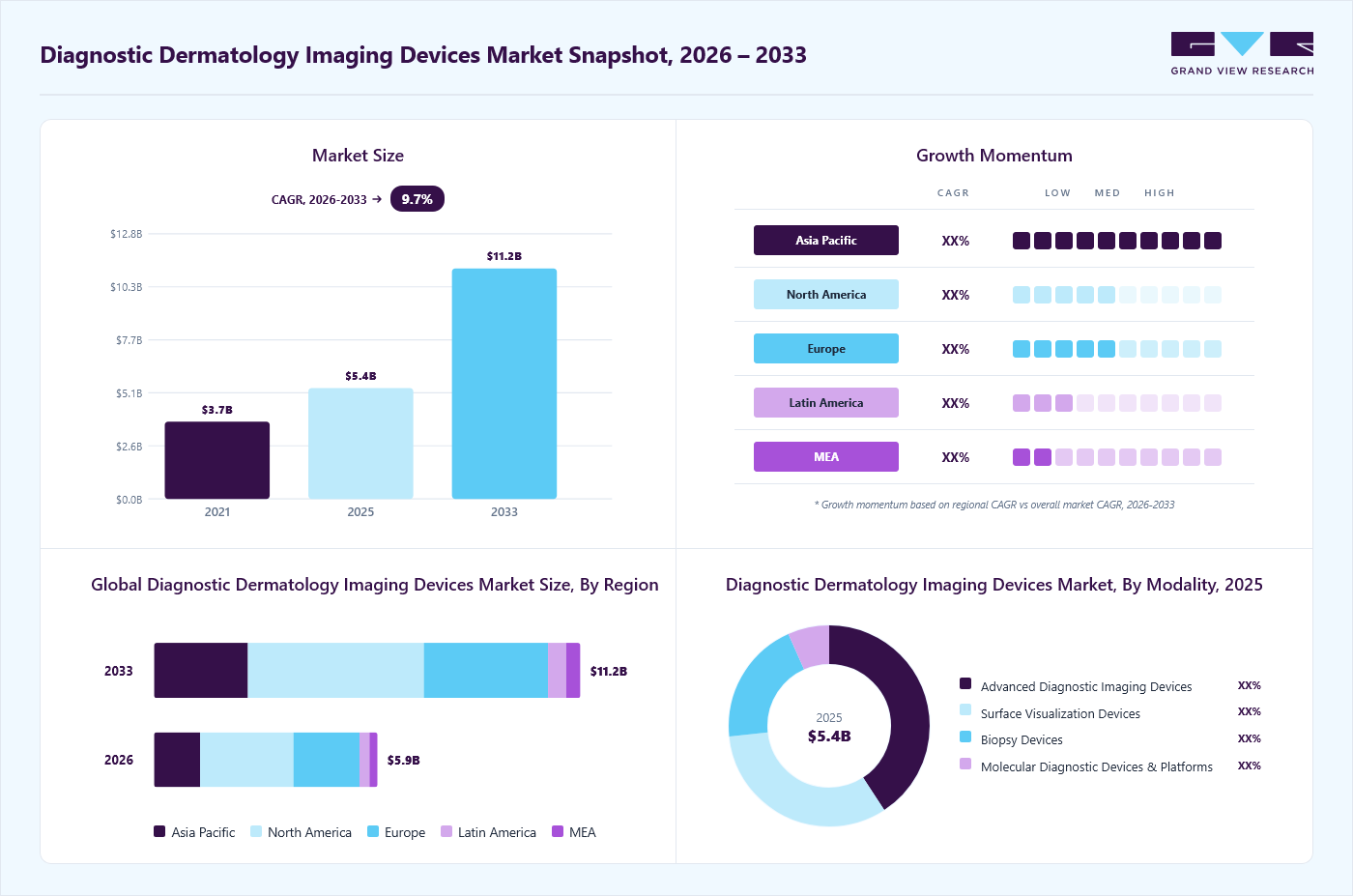 Source: Grand View Research, IR Documents, Primary Interviews, Paid DatabasesTo learn more about this report,
 Download Free Sample Report
Key Market Trends & Insights
- By modality: Advanced diagnostic imaging devices segment held the largest market share of 40.7% in 2025
- By application: Skin cancer segment held the largest market share of 49.0% in 2025.
- By end use: Hospitals segment held the largest market share of 37.3% in 2025.
Regional Highlights
- Largest regional market: North America (41.8% revenue share, 2025)
- Fastest-growing regional market: Asia Pacific (highest CAGR, 2026-2033)
- By country: The U.S. held the largest market share in 2025
Market Size & Forecast
- Market size in 2025: USD 5.4 Billion
- Estimated market size in 2026: USD 5.9 Billion
- Projected market size by 2033: USD 11.2 Billion
- CAGR (2026-2033): 9.7%
Three ways to get this report
Buy it, customize it, or ask a question.Ask an Analyst
Analyst response in 1 business day
- AccessReport author, directly
- Reply timeWithin 1 working day
- No sales callDirect answer only
- FormatEmail reply
- CostFree, no cost
Get the Full Report
What the study covers
- FormatsPDF · Excel · Dashboard
- Timeline2026–2033 annual, 2025 base
- Coverage20+ countries, 5 regions
- Companies10+ key players profiled
Customize the Report
20% free customization
- IncludeCountries, segments, points
- TailorTo your product definition
- ExtendDeeper competitor detail
- OrA fully bespoke study
- Turnaround5–10 working days
There is a significant rise in the number of skin cancer cases globally, which drives the need for advanced solutions to facilitate better cancer care. For instance, in February 2025, Canfield Scientific introduced the new D2 Digital Dermatoscope, which has a high-resolution display, and its design enhances ease of use and elevates the user experience. It enables consistent, standardized imaging for accurate documentation and precise diagnostics.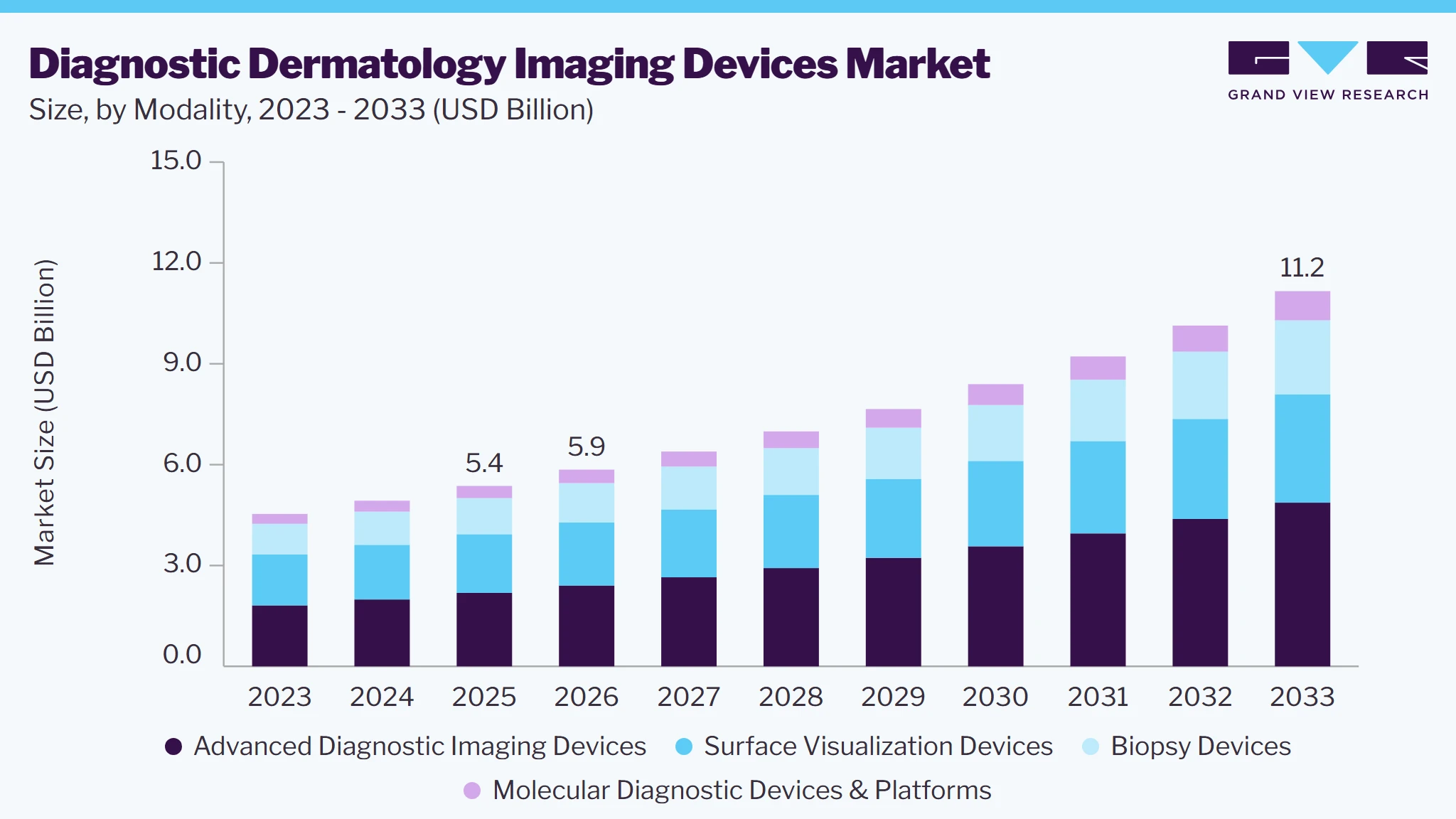 To learn more about this report, Download Free Sample Report
The increasing prevalence of skin disorders and skin cancers significantly drives the growth of the diagnostic dermatology imaging devices market. Skin cancer, including melanoma and non-melanoma types such as basal cell carcinoma and squamous cell carcinoma, continues to rise globally due to factors like prolonged UV exposure, aging populations, and enhanced awareness and screening efforts. According to the American Academy of Dermatology, skin cancer is most prevalent in the U.S.; approximately 9,500 people are diagnosed with skin cancer daily, and over 1 million individuals are currently suffering from melanoma.
Furthermore, the Global Cancer Observatory (GLOBOCAN) reports that the number of skin melanoma cases is expected to increase to 599,565. Skin cancers are predominantly found in women under the age of 50, but they occur significantly more frequently in men over the age of 50. This discrepancy can be attributed to differences in recreational and occupational UV exposure. Estimates suggest that around 1 in 27 men and 1 in 40 women are expected to suffer from melanoma.
Number of Melanoma of Skin Cases in Men and Women from 2022 to 2030
Countries/Regions/Geographies
Melanoma of Skin Cases in Men
Melanoma of Skin Cases in Women
2022
2030
2022
2030
Africa
3,351
4,349
4,126
5,429
Asia
12,764
15,500
12,239
15,256
Europe
73,364
79,456
72,957
76,283
Latin America and the Caribbean
10,687
12,789
9,604
11,417
North America
67,217
80,329
45,590
51,442
Oceania
12,570
15,612
7,253
8,728
Source: International Agency for Research on Cancer (IARC), GVR Analysis
The growing awareness of early disease diagnosis has emerged as a critical driver in healthcare, particularly in fields like dermatology, where early intervention can significantly improve patient outcomes. Increased public education, widespread use of digital health platforms, and a greater understanding of skin cancer risks empowered individuals to seek medical attention sooner, creating a demand for accurate, non-invasive diagnostic tools. This trend is particularly significant for detecting conditions such as melanoma, where early identification can be lifesaving. Consequently, dermatology clinics, hospitals, and even primary care providers increasingly adopt advanced imaging technologies to address the market demand.
This directly influences technological innovation and strategic activity within the companies operating in this market. For instance, in May 2023, Orlucent, Inc. received FDA Breakthrough Device Designation for its Skin Fluorescence Imaging System, which provides a non-invasive molecular analysis of moles. This approval marks a significant advancement in the market for diagnostic dermatology imaging devices. The handheld, non-invasive device uses a topically applied fluorescent peptide to detect αvβ3 integrin, which indicates early melanoma development. By offering molecular-level imaging and analysis of moles, the mSFI system allows clinicians to evaluate the biological tissue remodeling activity associated with atypical moles, thereby enabling the early detection of melanoma without requiring invasive procedures.
Additionally, the growing demand for non-invasive diagnostic approaches is fueling market expansion. Both patients and clinicians increasingly favor methods that eliminate the risks, discomfort, and downtime linked with conventional biopsies. This trend is particularly prominent in dermatology-especially skin cancer diagnosis-where early detection is vital. Techniques like optical coherence tomography (OCT), reflectance confocal microscopy (RCM), and dermoscopy deliver detailed skin lesion imaging, supporting accurate assessment and ongoing monitoring.
Technological advancements have played a pivotal role in this transition. Devices like DermaSensor, which received FDA clearance in January 2024, utilize AI-powered spectroscopy to non-invasively assess skin lesions for potential malignancy. In clinical studies, DermaSensor demonstrated a sensitivity of 97% in detecting various skin cancers, including melanoma, basal cell carcinoma, and squamous cell carcinoma. Such innovations not only improve diagnostic accuracy but also reduce reliance on subjective clinical assessments, enabling more consistent and efficient evaluations. The further emergence of technologically advanced devices, such as hyperspectral dermatoscopes, offers a promising approach for non-invasive skin evaluation. These devices capture a broad range of wavelengths with high precision, identifying and characterizing various skin conditions. Preliminary results suggest that hyperspectral imaging can enhance diagnostic accuracy, providing a new platform for research and clinical applications in dermatology.
Market Dynamics
The diagnostic dermatology imaging devices market is gaining significant traction as hospitals, dermatology clinics, skin cancer centers, academic medical institutions, and teledermatology providers increasingly adopt advanced imaging technologies to diagnose, monitor, and manage a wide range of skin disorders. These solutions encompass a broad spectrum of technologies, including dermatoscopes, digital dermoscopy systems, optical coherence tomography (OCT), reflectance confocal microscopy (RCM), total body photography systems, multispectral imaging platforms, and artificial intelligence (AI)-enabled diagnostic software.
These technologies enable clinicians to achieve enhanced visualization of skin lesions, improved diagnostic accuracy, earlier disease detection, and more personalized treatment planning. Diagnostic dermatology imaging devices help healthcare providers address the growing burden of melanoma, non-melanoma skin cancers, inflammatory skin diseases, pigmented lesions, and other dermatological conditions by supporting non-invasive assessment and continuous monitoring. Increasing emphasis on early skin cancer detection, preventive healthcare, teledermatology expansion, and AI-assisted diagnostics is driving the adoption of advanced dermatology imaging technologies across healthcare settings.
The diagnostic dermatology imaging devices market is expanding rapidly due to the increasing prevalence of skin cancer and other chronic dermatological conditions worldwide. Melanoma and non-melanoma skin cancers continue to represent a significant public health challenge, particularly in regions with aging populations, high ultraviolet (UV) radiation exposure, and increasing awareness of skin health. Growing public health initiatives and skin cancer screening programs are encouraging earlier diagnosis, which significantly improves treatment outcomes and survival rates.
Additionally, increasing incidences of psoriasis, eczema, acne, rosacea, and other chronic skin disorders are driving demand for advanced diagnostic tools that enable precise lesion assessment and disease monitoring. Healthcare providers are increasingly adopting digital dermoscopy, confocal microscopy, OCT, and AI-powered imaging solutions to improve diagnostic confidence, reduce unnecessary biopsies, and enhance clinical workflow efficiency. As awareness of preventive dermatology continues to rise, demand for advanced imaging technologies is expected to increase substantially.
Despite strong growth potential, the diagnostic dermatology imaging devices market faces challenges related to the high cost of advanced imaging systems and unequal access to specialized dermatology services. Technologies such as confocal microscopy, OCT systems, AI-enabled imaging platforms, and total body photography systems often require substantial capital investment, making adoption difficult for smaller clinics and healthcare facilities with limited budgets.
Many low-resource regions and rural healthcare settings also face shortages of trained dermatologists and imaging specialists, limiting the effective utilization of advanced diagnostic technologies. In addition, reimbursement limitations, inadequate healthcare infrastructure, and lack of awareness regarding advanced dermatological diagnostics can restrict market penetration. These factors may delay technology adoption in emerging markets and reduce access to high-quality dermatological imaging services for underserved patient populations.
Market Concentration & Characteristics
The diagnostic dermatology imaging devices industry exhibits moderate industry concentration, with several key players dominating the market. Initiatives to raise awareness and knowledge about skin conditions and early diagnosis further stimulate market growth.
The diagnostic dermatology imaging devices industry is characterized by high innovation. Notable innovations have included traditional dermoscopy, AI-powered diagnostic tools, teledermatology platforms, and 3D imaging. These innovations primarily focus on improving the early detection of skin cancers, particularly melanoma, and making diagnostics more accurate and accessible through mobile devices and cloud-based solutions. Companies are also integrating machine learning algorithms to assist clinicians in making more consistent and objective decisions.
 To learn more about this report, Download Free Sample Report
Regulatory frameworks significantly influence the diagnostic dermatology imaging devices industry, as these products are classified under medical devices in most regions. Compliance with regulatory requirements, such as US FDA guidelines or EU CE marking, is imperative for market entry and consumer trust. These regulations govern various aspects, including product design, manufacturing processes, and post-market surveillance, influencing product development timelines and market access. Evolving regulatory landscapes necessitate continuous monitoring and adaptation by industry players to ensure compliance and navigate market dynamics effectively.
Mergers and acquisitions in the diagnostic dermatology imaging devices industry are rising due to the need for research and development, reflecting the industry's dynamic nature. Companies engage in mergers and acquisitions to expand their product portfolio, enter new markets, acquire cutting-edge technologies, and achieve economies of scale. Such acquisitions aim to expand portfolios, gain AI capabilities, or access new markets. There is a consistent interest in both traditional and medical device players and tech companies looking to enter the digital health and skin diagnostics space.
The diagnostic dermatology imaging device industry faces competition from traditional and emerging imaging methods. Conventional dermatology imaging devices and systems, such as conventional dermatoscopes, remain prevalent due to their cost-effectiveness and simplicity. However, digital and advanced dermatoscopes offer advantages such as camera attachments or built-in digital capture, image storage, comparison over time, basic lesion analysis, and teledermatology use, which drive their adoption. However, the high cost of such imaging devices and the need for specialized training can limit their acceptance in certain markets.
The diagnostic dermatology imaging devices industry is expanding globally, with North America and Europe leading in adoption due to advanced healthcare infrastructure, higher awareness, and regulatory clarity. Asia-Pacific is emerging rapidly, especially in urban centers of China, Japan, South Korea, and India, driven by rising skin cancer rates, improving healthcare access, and the growing presence of telehealth platforms. For instance, in May 2024, efforts by Melanoma Latinoamérica and Melanoma Uruguay emphasized the urgent need for public education on skin cancer prevention and the importance of early diagnosis through digital imaging tools.
Analyst Perspective
The diagnostic dermatology imaging devices market is positioned at the intersection of several long-term healthcare, dermatology, and precision diagnostics trends, including the rising global burden of skin cancer, increasing prevalence of chronic dermatological disorders, growing awareness of preventive skin health, and continuous advancements in non-invasive imaging technologies and artificial intelligence (AI)-enabled diagnostics. Growing clinical concerns related to melanoma, non-melanoma skin cancers, psoriasis, eczema, autoimmune skin disorders, infectious skin diseases, and chronic wound conditions are creating significant opportunities for imaging device manufacturers, healthcare providers, and specialized dermatology centers as healthcare systems seek earlier diagnosis, improved clinical accuracy, and better patient outcomes.
Furthermore, the increasing shift toward non-invasive and image-guided dermatological assessment is fundamentally transforming the market landscape. Advanced technologies such as digital dermoscopy, optical coherence tomography (OCT), reflectance confocal microscopy (RCM), total body photography systems, and AI-assisted diagnostic platforms enable enhanced lesion visualization, real-time tissue assessment, improved diagnostic confidence, and reduced dependence on invasive biopsy procedures. These innovations support earlier disease detection, more accurate treatment planning, and continuous patient monitoring.
Modality Insights
Based on modality, the advanced diagnostic imaging devices segment led the market with the largest revenue share of 40.7% in 2025. Technological advancements and increasing demand for non-invasive diagnostic methods drive the advanced diagnostic imaging devices segment in the dermatology imaging devices market. The advanced diagnostic imaging devices include Optical Coherence Tomography (OCT) Devices, Reflectance Confocal Microscopy (RCM) Devices, high-frequency ultrasound devices, and others. Innovations in these devices enhance the accuracy of skin cancer detection and improve patient outcomes by enabling detailed imaging of skin structures.
The molecular diagnostic devices & platforms segment is expected to grow at the fastest CAGR of 11.4% over the forecast period. The increasing demand for early, precise, and non-invasive skin disease detection methods drives this segment. These platforms enable clinicians to identify specific molecular markers associated with skin cancers, inflammatory conditions, and genetic dermatologic disorders, as these molecular diagnostic platforms, such as PCR-based systems, Next-Generation Sequencing (NGS), and microarray technologies, provide detailed insights into the genomic and proteomic levels. Integrating molecular diagnostics with dermatologic imaging enhances diagnostic accuracy, helping differentiate between benign and malignant lesions with better accuracy. This growing clinical preference for molecular-level insights encourages healthcare facilities and dermatology labs to adopt such platforms to enhance traditional imaging modalities.
Application Insights
Based on application, the skin cancer segment led the market with the largest revenue share of 49.0% in 2025. Market growth is driven by the increasing prevalence of melanoma and non-melanoma skin cancers, such as Squamous Cell (SCC) and Basal Cell (BCC) carcinomas. Skin cancer is one of the most common forms of cancer in the U.S. Furthermore, according to the American Academy of Dermatology Association, current estimates indicate that one in five Americans will be diagnosed with skin cancer each day in the U.S. In May 2024, a new EU-funded portable skin cancer screening device, developed by researchers in Latvia, aimed to revolutionize melanoma detection. This device uses LED lights to analyze skin lesions based on chromophore reflections and sends images to an AI-powered cloud system for rapid results.
 To learn more about this report, Download Free Sample Report
The wound and ulcer segment is expected to grow significantly over the forecast period. This growth is fueled by the increasing prevalence of chronic wounds and ulcers, particularly among aging populations. Chronic wounds, such as diabetic foot ulcers and pressure ulcers, pose significant healthcare challenges due to their complex nature and longer healing times. These conditions require continuous monitoring and documentation to track healing progress and optimize treatment plans. Furthermore, the rising incidence of diabetes and vascular diseases is another factor driving the growth of wound and ulcer assessment. For instance, the latest IDF Diabetes Atlas (2025) indicates that 11.1% of adults aged 20-79, or 1 in 9, are living with diabetes, with over 40% unaware of their condition.
End Use Insights
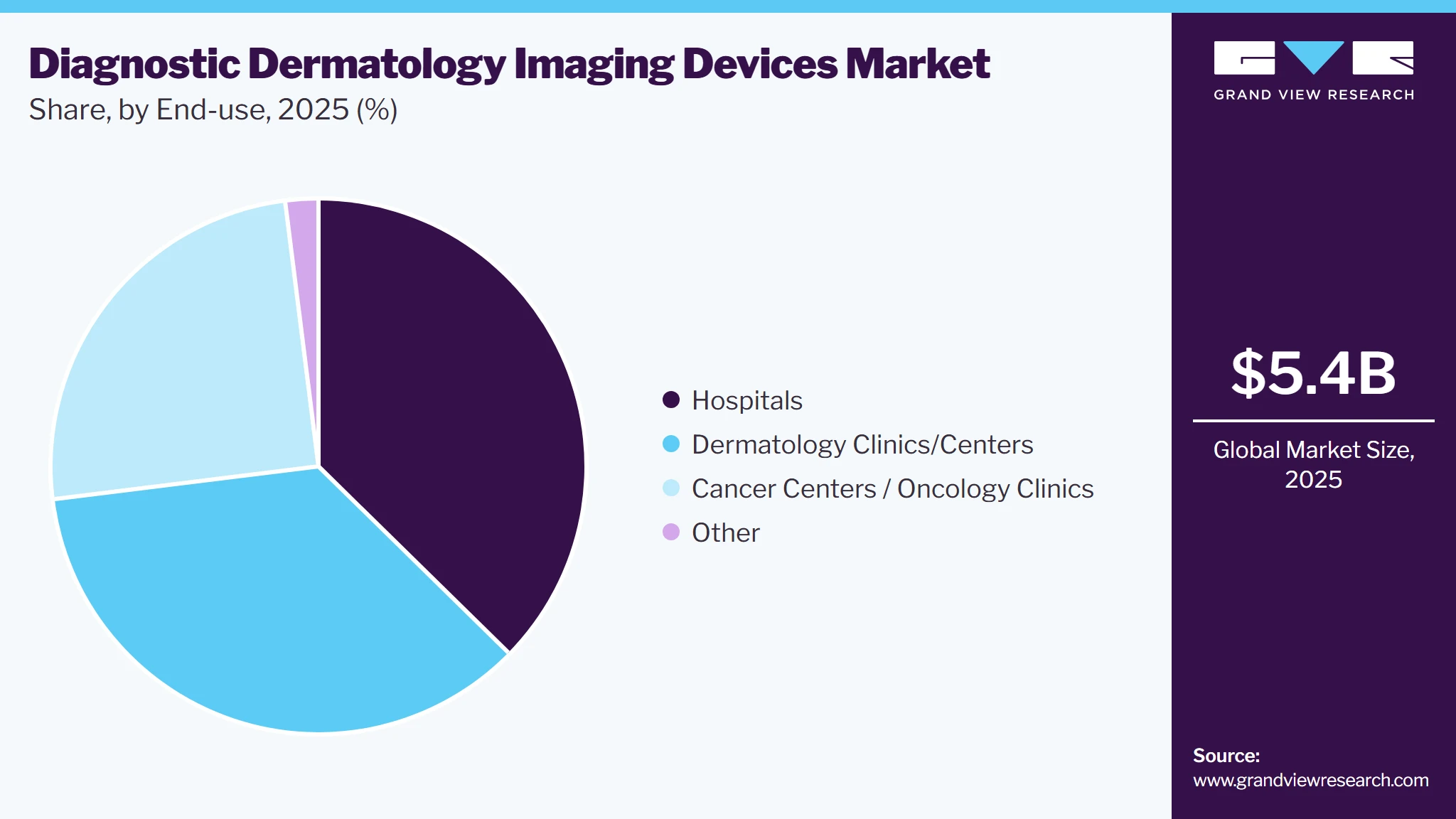
Based on end use, the hospitals segment led the market with the largest revenue share of 37.3% in 2025. Hospitals increasingly invest in advanced imaging technologies such as dermatoscopes, confocal microscopy, photographic imaging systems, and high-resolution ultrasounds to enhance their diagnostic capabilities.The growth of this segment is significantly influenced by the increasing prevalence of skin disorders and the rising demand for early diagnosis. For instance, in November 2023, Allegheny Health Network (AHN)launched a cutting-edge melanoma and skin cancer center, incorporating advanced technologies like Vectra for 3D imaging. This innovative approach enhances patient care by providing detailed assessments of skin lesions, improving diagnosis and treatment planning for melanoma and other skin cancers.
 To learn more about this report, Download Free Sample Report
The dermatology clinics/centers market is expected to grow significantly during the forecast period. Dermatology clinics are increasingly adopting high-resolution imaging technologies that enhance the accuracy of skin disease diagnosis. As awareness about skin health rises among the general population, patients are more inclined to seek specialized care at dermatology clinics that utilize effective diagnostic tools. These clinics typically handle many dermatological conditions, ranging from common skin issues to complex malignancies, making diagnostic imaging tools necessary.
Regional Insights
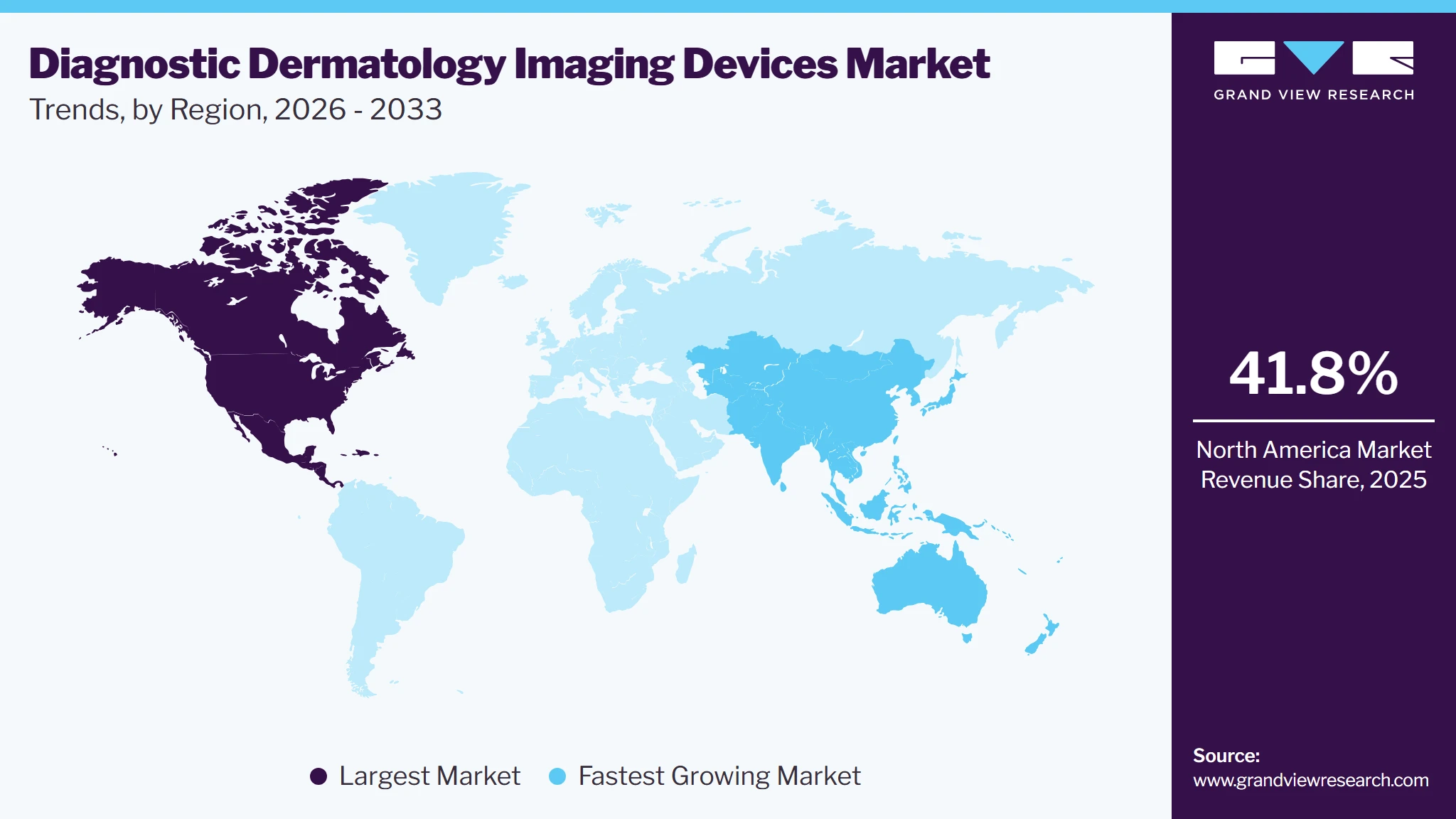
North America dominated the diagnostic dermatology imaging devices market with the largest revenue share of 41.8% in 2025. Some key factors contributing to the growth include the increasing incidence of cancer and other skin conditions, heightened awareness of early disease detection and treatment, and the availability of advanced technologies and imaging modalities that facilitate dermatologists' ability to diagnose and treat skin disorders.Additionally, there is a growing patient preference for non-invasive diagnostic procedures, which offer detailed assessments without the discomfort associated with traditional biopsies.Moreover, the integration of teledermatology has expanded access to specialized care, particularly in remote areas, by allowing high-quality images to be captured and transmitted for expert analysis.
 To learn more about this report, Download Free Sample Report
U.S. Diagnostic Dermatology Imaging Devices Market Trends
The diagnostic dermatology imaging devices market in the U.S. held the largest share in the North America region in 2025, driven by factors such as the rising incidence of skin cancer, the growing prevalence of skin disorders, and technological advancements. Innovations such as high-resolution imaging, AI integration, 3D visualization, optical coherence tomography, digital photography, and high-frequency ultrasound have enhanced dermatologists’ diagnostic capabilities. For instance, in April 2024, researchers from Stanford Medicine discovered that artificial intelligence, particularly deep learning-based computer algorithms, improves the accuracy of skin cancer diagnoses among healthcare professionals.
Europe Diagnostic Dermatology Imaging Devices Market Trends
The European diagnostic dermatology imaging devices market is witnessing growth fueled by the increasing prevalence of chronic diseases, technological advancements, and regulatory support for innovative imaging systems. Countries such as Germany, France, and the UK are at the forefront of this expansion, with strong healthcare infrastructure and favorable reimbursement policies accelerating the adoption of diagnostic dermatology imaging devices and reducing dependency on healthcare facilities.
The diagnostic dermatology imaging devices market in the UK is one of the key markets in the region. The rising incidence of skin disorders has increased the demand for advanced diagnostic tools. Furthermore, technological advancements and the shift in healthcare dynamics drive the market. Technological innovations, such as integrating artificial intelligence (AI) in imaging devices, have enhanced diagnostic accuracy and efficiency. The British Skin Foundation reports over 100,000 new skin cancer cases annually in the UK. One in five children has eczema. Further, at least 60% of people in the country have a skin condition or previously had one. This increases the need for advanced, accurate, and non-invasive diagnostic tools.
France's diagnostic dermatology imaging devices market is expected to grow over the forecast period. The rising prevalence of skin disorders, such as psoriasis, eczema, and atopic dermatitis, requires specialized imaging devices to diagnose these conditions, which is driving the growth of the market in the country. France's robust healthcare infrastructure and emphasis on early detection have fostered an environment conducive to adopting advanced imaging technologies. For instance, in February 2024, Pierre Fabre Laboratories announced a global study on the epidemiology of acne in the Journal of the American Academy of Dermatology (JAAD).
According to key personnel of the Avène Dermatological Laboratories member, “This study represents a breakthrough in deepening our understanding of the different etiological factors of acne. It opens the way to new prevention and treatment strategies for this chronic skin condition by taking into account the lifestyles and specificities of each population.”
These advancements highlight France's proactive approach to adopting cutting-edge dermatological imaging technologies, which is driven by a commitment to early diagnosis and improved patient care.
The diagnostic dermatology imaging devices industry in Germany is projected to expand in the forecast period. Germany’s diagnostic dermatology imaging devices market is witnessing significant growth due to technological advancements, a high prevalence of skin conditions, and strategic industry collaborations. For instance, in January 2024, Karl Storz SE & Co. KG acquired London-based software manufacturer Innersight Labs Ltd. to enhance its imaging capabilities, particularly in integrating augmented reality into diagnostic procedures.
Italy diagnostic dermatology devices market is projected to expand in the forecast period due to increasing demand for advanced therapeutic solutions, particularly for chronic disease management. Companies operating in the country’s market, such as Canfield Scientific, Inc., are undertaking various initiatives to increase their presence, fueling market growth. Canfield Scientific, Inc., a key player in the diagnostic dermatology imaging devices market, acquired Medici Medical s.r.l, a key player in dermoscopy innovations and solutions.
Asia Pacific Diagnostic Dermatology Imaging Devices Market Trends
The diagnostic dermatology imaging devices market in the Asia Pacific region is projected to experience the fastest growth during the forecast period. China and Japan are expected to dominate this market. Additionally, the availability of trained professionals and the development of healthcare facilities are anticipated to contribute significantly to market growth.Furthermore, the increasing disposable income of people in Asia is expected to increase the demand for dermatology imaging devices.
Japan diagnostic dermatology devices market will expand in the forecast period. Japan's well-developed healthcare infrastructure and the availability of advanced medical devices have contributed to the market's expansion. The increasing prevalence of skin disorders, including acne, eczema, psoriasis, and skin cancer, has fueled the demand for dermatology imaging devices. Notably, the incidence of skin cancer, particularly melanoma, has been on the rise in recent years, necessitating the use of advanced imaging techniques for early detection and diagnosis.
In April 2023, Shimadzu Corporation showcased its latest medical imaging technologies at the International Technical Exhibition of Medical Imaging (ITEM 2023) in Yokohama. The exhibition emphasized innovations to improve examination efficiency, enhance visualization, and reduce operator workloads.
The diagnostic dermatology imaging devices market in China is expected to grow over the forecast period. Technological advancements and rising healthcare infrastructure drive the market in China. Technological advancements have led to more advanced imaging devices that offer greater accuracy and resolution, while increasing healthcare expenditure has enabled more patients to access dermatology services.The increasing prevalence of skin conditions such as acne, psoriasis, eczema, and skin cancer is significantly influencing the growth of the dermatology imaging devices market.For instance, according to the Global Cancer Observatory (GLOBOCAN), the 5-year prevalence of melanoma in the country is 29,059, and the incidence of melanoma of the skin in 2030 is expected to reach 10,568.
India diagnostic dermatology imaging devices market is expected to grow over the forecast period.The market is experiencing significant expansion, driven by the rising prevalence of skin conditions, preference for non-invasive diagnostics, technological advancements, and certain government initiatives or collaborations to boost the growth of diagnostic imaging in the country.Significant investments and initiatives are also shaping the overall market landscape of medical devices. For instance, in March 2024, Wipro GE Healthcare announced a USD 960 million investment in India's manufacturing and research and development facilities over the next five years, aiming to boost local manufacturing and align with the government's "Make in India" initiative.
Latin America Diagnostic Dermatology Imaging Devices Market Trends
The increasing burden of skin cancer and rising awareness about early detection in the region drive Latin America's diagnostic dermatology imaging devices market. Over the past two decades, skin cancer incidence in Latin America has risen steadily due to prolonged exposure to ultraviolet (UV) radiation, a consequence of both geographic positioning and lifestyle factors such as outdoor activities and tanning culture.Additionally, recent studies, such as the BRAF-Mutated Melanoma Journey in Latin America (published in 2024), show rising melanoma incidence and mortality, with many patients diagnosed at stage IV. This highlights the necessity of diagnostic advancements, including BRAF-mutation testing and imaging devices, for earlier detection and personalized treatment.
Middle East & Africa Diagnostic Dermatology Imaging Devices Market Trends
Rising skin cancer and other skin conditions, increasing adoption of advanced surgical techniques, and growing healthcare infrastructure are the factors driving the Middle East and Africa diagnostic dermatology imaging devices market. A pivotal study, first published in November 2024, from a tertiary care center in Lebanon reinforces this trend, highlighting the region's growing competence in skin cancer management.Consequently, the Middle East & Africa diagnostic dermatology imaging market is expected to expand steadily, fueled by regional clinical advancements, aging populations, and rising skin cancer awareness. These developments present strong growth opportunities for device manufacturers seeking to support skin cancer diagnosis and surgical planning in emerging healthcare markets.
The diagnostic dermatology imaging devices industry in Saudi Arabia is anticipated to expand in the forecast period. The factors affecting market growth include advancements in medical technology and the rising prevalence of skin conditions, such as skin cancer, psoriasis, and eczema. For instance, eczema or atopic dermatitis, which is highly prevalent in Saudi Arabia, affects approximately 13.1% of college students.The country's extreme climate-high temperatures and low humidity-exacerbates skin conditions, increasing the demand for effective diagnostic and treatment solutions.
Kuwait diagnostic dermatology imaging devices market is expected to witness moderate growth, driven by higher healthcare spending, growing awareness of health, and investments in healthcare infrastructure. Furthermore, the increasing awareness and the need for early detection of skin cancers also drive the market's growth. A 13-year study in Kuwait (Dec 2023) found that basal cell carcinoma (84.2%) and squamous cell carcinoma (15.8%) were the main non-melanoma skin cancers, mostly on sun-exposed areas. With an average patient age of 64.9, the study highlights the need for better screening in older adults and improved diagnostic tools. These findings underscore the necessity for advanced diagnostic tools in dermatology.
Key Diagnostic Dermatology Imaging Devices Company Insights
The diagnostic dermatology imaging devices market is highly competitive. Key players such as Canfield Scientific, Caliber Imaging & Diagnostics, SciBase AB, Damae Medical, DermaSensor Inc., and Michelson Diagnostics (MDL) hold significant positions.
Leading companies are pursuing a mix of organic and inorganic strategies, including new product development, partnerships, acquisitions, mergers, and regional growth, to address the unmet demands of their customers.
Key Diagnostic Dermatology Imaging Devices Companies:
The following key companies have been profiled for this study on the diagnostic dermatology imaging devices market.
-
Canfield Scientific
-
Caliber Imaging & Diagnostics
-
Michelson Diagnostics (MDL)
-
SciBase AB
-
DermaSensor Inc.
-
Damae Medical
-
Apollo Medical Optics
-
Enspectra Health, Inc.
-
Cortex Technology
-
Dermavision Solutions
-
Pixience
-
Adamo srl. (Horus)
-
Dermus Ltd.
Competitive Benchmarking
Category
Operating Strategies
Competitive Edge
Weakness
Established Players (Canfield Scientific; Caliber Imaging & Diagnostics; Michelson Diagnostics (MDL); SciBase AB)
- Established companies focus on expanding comprehensive dermatology imaging portfolios comprising digital dermoscopy systems, total body photography platforms, optical coherence tomography (OCT) systems, confocal microscopy devices, AI-enabled diagnostic software, and skin lesion analysis solutions. They leverage strong clinical validation programs, dermatologist training initiatives, research collaborations, and partnerships with hospitals, dermatology clinics, and cancer centers to accelerate technology adoption and support early skin disease detection.
- Extensive installed bases across dermatology clinics, hospitals, academic medical centers, and skin cancer screening programs. Strong brand recognition, robust clinical evidence, regulatory expertise, and long-standing relationships with dermatologists and healthcare providers. Broad product ecosystems covering the dermatology diagnostic workflow from lesion visualization and monitoring to diagnostic decision support and patient management.
- Legacy product portfolios may face challenges adapting rapidly to emerging AI-driven diagnostic technologies and evolving digital healthcare models. Regulatory compliance requirements, clinical validation demands, and lengthy product development cycles can increase operational complexity and delay product launches.
Emerging Players (Cortex Technology; Dermavision Solutions; Pixience; Adamo srl. (Horus), Dermus Ltd.)
- Emerging companies prioritize AI-powered skin imaging, portable diagnostic devices, cloud-based dermatology platforms, teledermatology integration, and cost-effective imaging technologies. They focus on addressing unmet needs in skin cancer detection, lesion monitoring, and dermatological diagnostics through enhanced imaging quality, workflow automation, real-time analytics, and improved accessibility.
- Agile organizational structures enable rapid innovation, faster product development cycles, and responsiveness to dermatologist requirements. Advanced AI algorithms, portable imaging architectures, digital health integration, and telemedicine compatibility provide differentiation from established competitors.
- Limited financial resources, smaller commercial footprints, and restricted distribution networks compared with larger diagnostic imaging manufacturers. Regulatory approvals, reimbursement uncertainties, clinical evidence requirements, and physician adoption barriers may slow commercialization and widespread market penetration.
Recent Developments
-
In March 2025, Damae Medical, a developer of cutting-edge imaging devices and AI-driven solutions that offer exceptional diagnostic support for dermatologists, announced that its deepLive medical device has received 510(k) clearance from the U.S. Food and Drug Administration (FDA).
-
In February 2025, Apollo Medical Optics, Ltd. (AMO) entered into a distribution partnership with Japan-based Integral Corporation, a key player in dermatology, aesthetics, and skin research equipment. With the fulfillment of its first order, AMO successfully marked its entry into the Japanese market.
-
In May 2024, SciBase Holding AB unveiled the eBarrier Score, a groundbreaking AI-driven skin barrier assessment tool tailored for research and cosmetic testing. This launch was officially announced at the Cosmetotest symposium on cosmetic testing in Lyon France.
-
In January 2024, DermaSensor Inc. announced that the FDA granted clearance for its real-time, non-invasive system designed to evaluate skin cancer. This marks the first opportunity for the 300,000 primary care physicians throughout the U.S. to provide quantitative, point-of-care testing for all skin cancer types, thereby improving early detection capabilities in primary care settings.
Diagnostic Dermatology Imaging Devices Market Report Scope
Report Attribute
Details
Market size in 2025
USD 5.4 billion
Estimated Market size in 2026
USD 5.9 billion
Projected Market size by 2033
USD 11.2 billion
Growth rate
CAGR of 9.7% from 2026 to 2033
Historical data
2021 - 2024
Forecast period
2026 - 2033
Quantitative units
Revenue in USD million/billion and CAGR from 2026 to 2033
Report coverage
Revenue forecast, company ranking, competitive landscape, growth factors, and trends
Segments covered
Modality, application, end-use, region
Regional scope
North America; Europe; Asia Pacific; Latin America; MEA
Country scope
U.S.; Canada; Mexico; Germany; UK; France; Italy; Spain; Norway; Denmark; Sweden; China; Japan; India; South Korea; Australia; Thailand; Brazil; Argentina; Saudi Arabia; South Africa; UAE; Kuwait;
Key companies profiled
Canfield Scientific; Caliber Imaging & Diagnostics; Michelson Diagnostics (MDL); SciBase AB; DermaSensor Inc.; Damae Medical; Apollo Medical Optics; Enspectra Health, Inc.; Cortex Technology; Dermavision Solutions; Pixience; Adamo srl. (Horus), Dermus Ltd.
Customization scope
Free report customization (equivalent up to 8 analysts' working days) with purchase. Addition or alteration to country, regional & segment scope.
Pricing and purchase options
Avail customized purchase options to meet your exact research needs. Explore purchase options
Global Diagnostic Dermatology Imaging Devices Market Report Segmentation
This report forecasts country-level revenue growth at global, regional, and country level and analyzes the latest industry trends and opportunities in each sub-segment from 2021 to 2033. For this study, Grand View Research has segmented the global diagnostic dermatology imaging devices market report based on the modality, application, end use, and region:
 To learn more about this report, Download Free Sample Report
-
Modality Outlook (Revenue, USD Million, 2021 - 2033)
-
Advanced Diagnostic Imaging Devices
-
Optical Coherence Tomography (OCT) Devices
-
Reflectance Confocal Microscopy (RCM) Devices
-
High-frequency Ultrasound Devices
-
Others
-
-
Surface Visualization Devices
-
Dermatoscopes
-
Photographic Imaging Systems
-
Others
-
-
Biopsy Devices
-
Molecular Diagnostic Devices & Platforms
-
-
Application Outlook (Revenue, USD Million 2021 - 2033)
-
Skin Cancer
-
Melanoma
-
Non-melanoma
-
-
Inflammatory & Autoimmune Skin Diseases
-
Psoriasis
-
Eczema/Atopic Dermatitis
-
Others
-
-
Infectious Skin Conditions
-
Wound & Ulcer Assessment
-
-
End Use Outlook (Revenue, USD Million 2021 - 2033)
-
Hospitals
-
Dermatology Clinics/Centers
-
Cancer Centers/Oncology Clinics
-
Others
-
-
Regional Outlook (Revenue, USD Million, 2021 - 2033)
-
North America
-
U.S.
-
Canada
-
Mexico
-
-
Europe
-
UK
-
Germany
-
France
-
Italy
-
Spain
-
Denmark
-
Sweden
-
Norway
-
-
Asia Pacific
-
Japan
-
China
-
India
-
Australia
-
South Korea
-
Thailand
-
-
Latin America
-
Brazil
-
Argentina
-
-
Middle East & Africa
-
South Africa
-
Saudi Arabia
-
UAE
-
Kuwait
-
-
Research Methodology
The diagnostic dermatology imaging devices market figures in this report are based on a proven research process that combines executive interviews with secondary research from proprietary databases, company filings, and recognized regulatory and institutional sources. Market size is built through value-chain sizing - reconciling supply-side and demand-side estimates - and triangulated with bottom-up and top-down approaches. Every estimate passes multiple levels of expert validation before publication, with each diagnostic dermatology imaging devices segment quantified using the revenue-capture definitions in the table below.
Segment Definition
Segment - Modality
Revenue capture definition
Advanced Diagnostic Imaging Devices
Revenue is captured through the sale of high-resolution dermatology imaging systems such as optical coherence tomography (OCT), reflectance confocal microscopy (RCM), multispectral imaging systems, AI-enabled imaging platforms, and total body photography systems. Revenue includes capital equipment sales, software licenses, upgrades, maintenance contracts, and service agreements.
Surface Visualization Devices
Revenue is generated from dermatoscopes, digital dermoscopy systems, skin analysis cameras, mole mapping devices, and total body imaging platforms used for lesion visualization and skin assessment. Revenue streams include device sales, imaging software subscriptions, and accessory purchases.
Biopsy Devices
Revenue is captured through the sale of punch biopsy tools, shave biopsy instruments, excisional biopsy devices, biopsy needles, and specimen collection kits used to obtain skin tissue samples for pathological evaluation. Revenue is closely linked to dermatology procedure volumes and diagnostic testing demand.
Molecular Diagnostic Devices & Platforms
Revenue is generated from molecular testing platforms, genomic analysis systems, PCR-based diagnostic devices, biomarker detection tools, and companion diagnostic technologies used for skin cancer and dermatological disease assessment. Revenue includes instrument sales, testing kits, reagents, consumables, and laboratory service contracts.
Segment - Application
Revenue capture definition
Skin Cancer
Revenue is captured through the utilization of dermatology imaging devices and diagnostic platforms used for the detection, monitoring, and characterization of melanoma, basal cell carcinoma, squamous cell carcinoma, and other skin malignancies. Revenue is driven by screening volumes, diagnostic procedures, and increasing skin cancer incidence.
Inflammatory & Autoimmune
Skin Diseases
Revenue is generated from imaging and diagnostic systems used to assess conditions such as psoriasis, eczema, vitiligo, lupus, and other autoimmune dermatological disorders. Revenue is linked to disease monitoring, treatment response evaluation, and recurring patient follow-up visits.
Infectious Skin Conditions
Revenue is captured through diagnostic imaging and molecular diagnostic technologies used to identify bacterial, viral, fungal, and parasitic skin infections. Revenue is derived from diagnostic procedures, testing consumables, and imaging examinations performed in clinical settings.
Wound & Ulcer Assessment
Revenue is generated from imaging systems and diagnostic devices used to evaluate chronic wounds, diabetic foot ulcers, pressure ulcers, venous leg ulcers, and burn injuries. Revenue is driven by wound monitoring frequency, disease prevalence, and adoption of advanced wound care management solutions.
Segment - End Use
Revenue capture definition
Hospitals
Revenue is captured from purchases of dermatology imaging devices, diagnostic platforms, software solutions, and service contracts by public and private hospitals. Revenue includes capital equipment procurement, maintenance agreements, and diagnostic procedure-related utilization.
Dermatology Clinics/Centers
Revenue is generated through the adoption and routine use of dermatology imaging systems, dermatoscopes, skin analysis devices, and diagnostic software in specialized dermatology practices. Revenue is closely associated with patient consultation volumes and skin screening procedures.
Cancer Centers/Oncology Clinics
Revenue is captured using advanced dermatology imaging technologies and molecular diagnostic platforms for skin cancer screening, diagnosis, treatment planning, and disease monitoring. Revenue is influenced by oncology patient volumes and specialized cancer care services.
Others
Revenue is generated from sales to academic medical centers, research institutions, ambulatory care facilities, teledermatology providers, aesthetic clinics, and specialty healthcare centers utilizing dermatology imaging technologies for diagnostic, research, and educational purposes.
Estimation Model
Scope Definition
Build the Product Base
Estimate Penetration
Revenue Conversion
What is being sized?
How large is the total addressable market?
What portion of the market is actively adopting and utilizing the solution?
How much value does the market generate?
PROCESS STEPS
PROCESS STEPS
PROCESS STEPS
PROCESS STEPS
1. Define diagnostic dermatology imaging device categories.
1. Gather data on dermatology clinics, hospitals, skin cancer centers, and aesthetic dermatology facilities.
1. Assess adoption rates of imaging devices across dermatology practices and healthcare facilities.
1. Calculate average selling prices (ASP) of software subscriptions, devices, and service contracts.
2. Define application areas such as skin cancer detection, melanoma diagnosis, and lesion assessment.
2. Estimate installed base of dermatology imaging systems globally and regionally.
2. Analyze patient screening volumes and imaging procedure utilization rates.
2. Segment revenue streams by product and service categories.
3. Set geographic boundaries (global/regional).
3. Evaluate replacement cycles, procurement trends, and technology upgrade patterns.
3. Assess penetration of AI-enabled diagnostic imaging and teledermatology platforms.
3. Apply regional pricing models and conversion rates.
4. Align on base year and forecast horizon (2026-2033).
4. Project growth in dermatology consultations, skin cancer screenings, and preventive healthcare initiatives.
4. Validate findings using company sales data, clinical adoption trends, and expert interviews.
4. Cross-check market estimates using company revenues, distributor sales, and import/export statistics.
DATA SOURCES
DATA SOURCES
DATA SOURCES
DATA SOURCES
ACS, CDC, WHO, CoA Member Databases
National healthcare databases, hospital procurement databases, reimbursement reports, company disclosures
Physician interviews, company filings, end-user surveys
Distributor pricing sheets, procurement data, company reports, financial disclosures
Delivered Customizations
This report has been delivered with the following In-depth customizations
CLIENT REQUEST
CUSTOMIZATION DELIVERED
VALUE ADDS
Competitive Landscape Analysis
Conducted a comprehensive competitive landscape assessment for the diagnostic dermatology imaging devices market, covering manufacturers of dermatoscopes, digital dermoscopy systems, optical coherence tomography (OCT) devices, confocal microscopy systems, total body photography systems, and AI-enabled skin imaging platforms. The study evaluated company positioning, product differentiation, regulatory approvals, technology innovation, strategic collaborations, geographic expansion, and commercialization strategies. It also benchmarked leading global and emerging players based on product portfolios, installed base, technological capabilities, and market presence.
Enables stakeholders to understand competitive positioning, identify technology leaders, assess innovation strategies, evaluate partnership opportunities, and formulate market entry or expansion plans within the dermatology diagnostics ecosystem.
Segment by Product Analysis
Conducted a detailed segment-level analysis of the market across dermatoscopes, digital imaging systems, OCT devices, confocal microscopy systems, total body imaging platforms, and AI-assisted diagnostic software. The study assessed adoption patterns, pricing dynamics, clinical utility, technological advancements, and demand drivers across dermatology clinics, hospitals, skin cancer centers, and teledermatology settings.
Enables stakeholders to identify high-growth product categories, evaluate emerging technology trends, understand clinical adoption dynamics, and prioritize investments in the most attractive market segments.
Macroeconomic Analysis
Conducted an in-depth assessment of macroeconomic and healthcare factors influencing the diagnostic dermatology imaging devices market, including skin cancer incidence rates, healthcare expenditure growth, dermatology workforce expansion, preventive screening initiatives, reimbursement policies, digital health adoption, and investments in advanced diagnostic technologies. The study also evaluated economic conditions, healthcare infrastructure development, and regulatory frameworks affecting market growth across key regions.
Enables stakeholders to understand the broader economic, demographic, and healthcare trends shaping market demand, support long-term strategic planning, identify growth opportunities, and assess risks associated with market expansion and technology adoption.
Frequently Asked Questions About This Report
North America dominated the diagnostic dermatology imaging devices market with a share of 41.8% in 2025. This is attributable to improved healthcare facilities, sedentary lifestyle practices, and high adoption of surgical meshes as a treatment option.
The global diagnostic dermatology imaging devices market size was estimated at USD 5.4 billion in 2025 and is expected to reach USD 5.9 billion in 2026.
The global diagnostic dermatology imaging devices market is expected to grow at a compound annual growth rate of 9.7% from 2026 to 2033 to reach USD 11.2 billion by 2033.
Asia Pacific is the fastest-growing region over the forecast period.
Some key players operating in the diagnostic dermatology imaging devices market include Canfield Scientific; Michelson Diagnostics (MDL); Caliber Imaging & Diagnostics; SciBase AB; DermaSensor Inc.; Damae Medical; Apollo Medical Optics; Ensepectra HealthInc.; Cortex Technology; Dermavision Solutions; Pixience; Adamo S.r.l. (Horus); Dermus
Key factors that are driving the diagnostic dermatology imaging devices market growth include the increasing prevalence of skin cancer & skin disorders, growing awareness of early disease diagnosis, rising demand for non-invasive diagnostic procedures.
Hospitals segment held the largest market share of 37.3% in 2025.
The advanced diagnostic imaging devices segment dominated the diagnostic dermatology imaging devices market with a share of 40.7% in 2025. This is attributable to an increase in prevalence of skin cancers, the development of healthcare infrastructure, and increasing awareness about the benefits of early skin cancer detection.
The skin cancer segment accounted for the largest market revenue share of 49.0% in 2025 and is also projected to register the fastest growth rate during the forecast period.
About the Author(s)
Medical Devices Research Team
Healthcare · Medical DevicesThis report was authored by the medical devices research team at Grand View Research - comprising two research analysts, one senior research analyst, and one industry expert - with specialized expertise in the medical devices segment of the healthcare industry. All findings are based on proprietary healthcare databases, executive interviews, and regulatory analysis, subject to internal peer review prior to publication.
Last Updated:
Speak to Analyst

Customize this report to your needs - add regions, segments, or data points, with 20% free customization.
Or view our licence options:


ISO 9001:2015 & 27001:2022 Certified
We are GDPR and CCPA compliant! Your transaction & personal information is safe and secure. For more details, please read our privacy policy.


