
- Home
- »
- Medical Devices
- »
-
Dialysis Services Market Size & Share Report, 2026-2033GVR Report cover

Dialysis Services Market (2026 - 2033)
Size, Share & Trends Analysis Report By Type (Hemodialysis, Peritoneal Dialysis), By Service (Acute dialysis), By End-use (In-center dialysis), By Region (North America, Europe, Asia Pacific, Latin America, MEA), And Segment Forecasts
Market Size, 2025
$90.5BMarket Estimate, 2026
$95.5BMarket Forecast, 2033
$150.4BCAGR, 2026–2033
6.7%Dialysis Services Market Summary
The global dialysis services market size was valued at USD 90.5 billion in 2025 and is projected to grow from USD 95.5 billion in 2026 to USD 150.4 billion by 2033, at a CAGR of 6.7% from 2026 to 2033. North America accounting the market, accounting for a revenue share of 36.8% in 2025. This growth is attributed to the rising prevalence of chronic kidney disease, diabetes, and hypertension, along with the growing aging population.
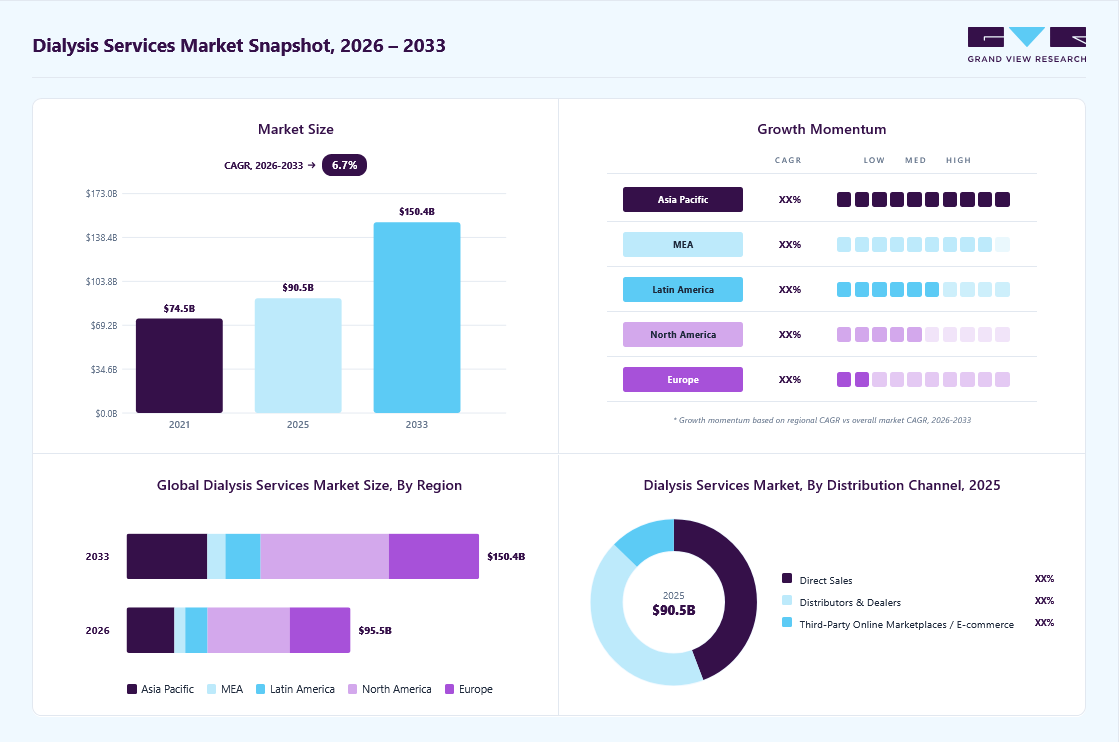 Source: Grand View Research, IR Documents, Primary Interviews, Paid DatabasesTo learn more about this report,
 Download Free Sample Report
Key Market Trends & Insights
- By type: Hemodialysis segment held the largest revenue share in 2025.
- By service: Chronic dialysis segment held the largest revenue share in 2025.
- By end-use: In-center dialysis segment held the largest revenue share in 2025.
Regional Highlights
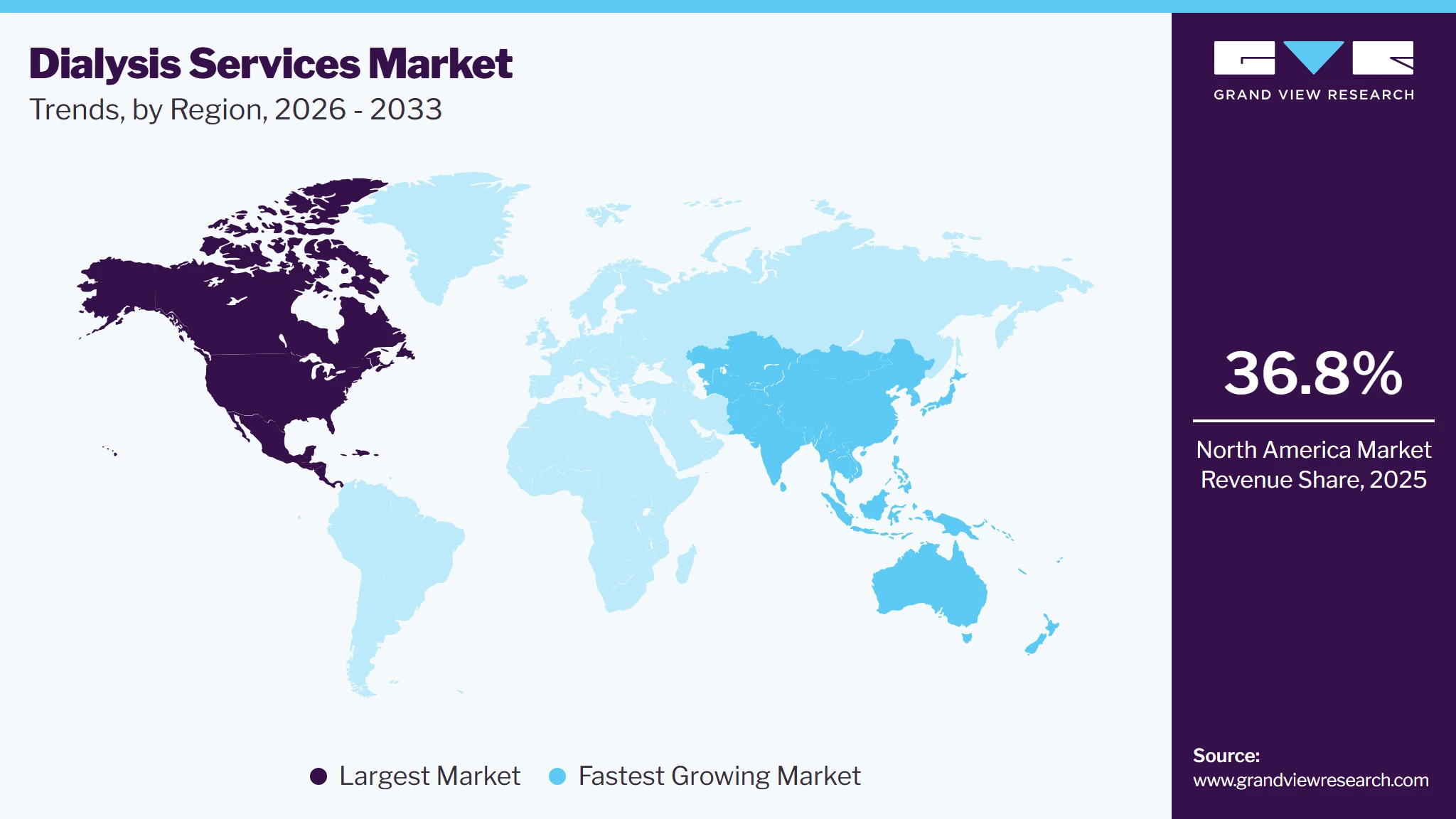
- Largest regional market: North America (36.8% revenue share, 2025)
- Fastest-growing regional market: Asia Pacific (highest CAGR, 2026-2033)
- By country: The U.S. held the largest market share in 2025.
Market Size & Forecast
- Market size in 2025: USD 90.5 Billion
- Estimated market size in 2026: USD 95.5 Billion
- Projected market size by 2033: USD 150.4 Billion
- CAGR (2026-2033): 6.7%
Prism AI by Grand View Research Free to tryAsk a question about the dialysis services marketTry asking✓Every figure cited from GVR research Prefer the report? Download free sample →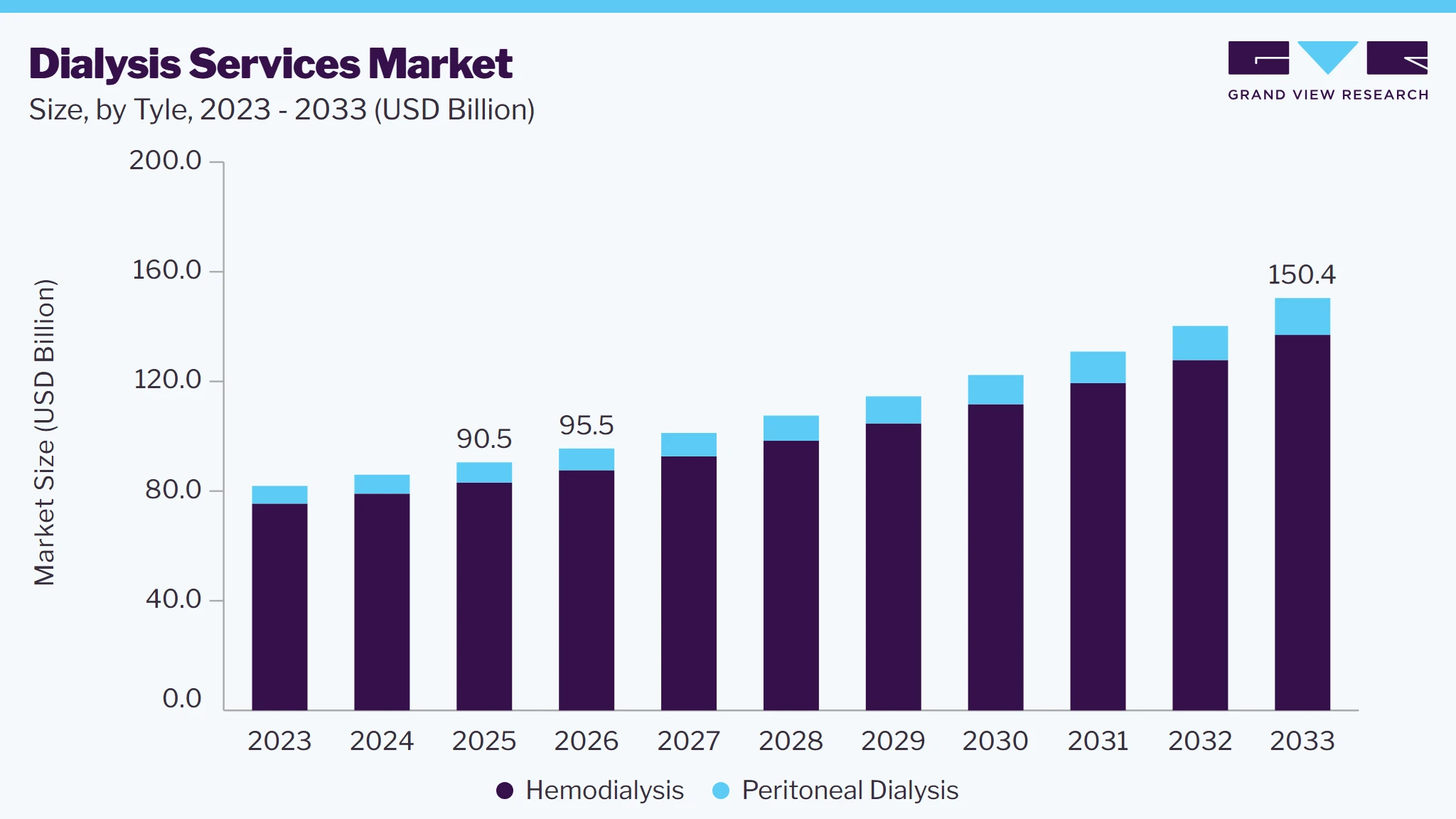 To learn more about this report, Download Free Sample Report
Increasing awareness of kidney health, improved access to renal care, and expansion of dialysis centers are supporting demand. In addition, technological advancements in hemodialysis and peritoneal dialysis, growing adoption of home-based treatments, and government initiatives to improve kidney care are contributing to market growth.Market Dynamics
The market is driven by the rising prevalence of chronic kidney disease, diabetes, and hypertension, along with the growing aging population and increasing demand for renal replacement therapy. Advancements in dialysis equipment, improved treatment efficiency, and the expansion of dialysis centers and home-based services are supporting market growth. However, high treatment costs, limited access to specialized facilities, reimbursement challenges, and shortages of trained healthcare professionals restrain market expansion. Growing investments in healthcare infrastructure, government initiatives to improve kidney care, and increasing adoption of home-based and automated dialysis solutions are creating new growth opportunities.
The increasing prevalence of chronic kidney disease, diabetes, and hypertension is a key driver of the dialysis services market, as these conditions can progressively damage kidney function and lead to end-stage kidney disease, requiring regular dialysis or kidney transplantation. According to the World Health Organization (WHO), an estimated 674 million people globally were living with CKD, based on its April 2026 fact sheet. The growing burden of these chronic conditions is increasing the need for long-term renal replacement therapy, including hemodialysis and peritoneal dialysis. As more patients progress to advanced kidney disease, demand for recurring dialysis sessions, specialized treatment facilities, and ongoing renal care is expected to increase.
Moreover, Nephrocare Health Services, which operates dialysis centers under the NephroPlus brand, reported a 16.6% year-on-year increase in treatment volumes in FY2026, with 3.84 million treatments performed during the year. The company attributed demand growth partly to the increasing burden of diabetes and hypertension, illustrating how the growing CKD patient population is translating into higher utilization of dialysis services.
The expansion of dialysis centers and healthcare infrastructure is a key driver of the market, as increasing treatment capacity improves access to regular kidney care, particularly in underserved and rural areas. Governments and private healthcare providers are investing in dialysis units, hospital-based services, and standalone centers to address the growing burden of chronic kidney disease and reduce the need for patients to travel long distances for treatment. The 2025 U.S. Renal Data System Annual Data Report found that 18,759 adults newly diagnosed with end-stage renal disease-initiated home dialysis in 2023, representing 15% of new adult dialysis patients receiving treatment. This reflects growing use of home-based treatment options. Public-private partnerships and reimbursement programs are also helping expand service availability for patients who cannot afford treatment out of pocket. As dialysis typically requires repeated sessions every week, the availability of geographically accessible centers is particularly important for treatment continuity and patient outcomes.
- According to the Ministry of Health and Family Welfare, the Pradhan Mantri National Dialysis Programme (PMNDP) covered 751 districts across all 36 States and Union Territories, with 1,856 haemodialysis centres and 13,535 machines as of June 2026. The programme supports the establishment of dialysis facilities in district hospitals and other healthcare facilities, improving access to treatment.
- In April 2026, the Telangana government announced plans to establish 79 new dialysis centers with 416 beds in government hospitals and add 155 beds across 67 existing centers. The initiative targets rural, tribal, and remote areas where patients face difficulties accessing dialysis services.
- In August 2026, a parliamentary committee recommended promoting home-based peritoneal dialysis under PMNDP to reduce travel burdens, out-of-pocket expenses, and treatment-related disruptions. It also called for better patient counselling, availability of dialysis supplies, and training of healthcare professionals to support wider adoption.
The high cost of dialysis treatment, including recurring sessions, specialized equipment, consumables, and ongoing clinical monitoring, can limit access to services, particularly among patients without adequate insurance or public healthcare coverage. Since patients with kidney failure typically require regular, long-term dialysis, the cumulative financial burden can be substantial. For instance, a December 2024 study conducted by National Library of Medicine using data from the International Society of Nephrology’s Global Kidney Health Atlas found that only 28% of 65 low- and lower-middle-income countries provided publicly funded hemodialysis free at the point of delivery. In addition, the International Society of Nephrology reported that treatment affordability remains a major barrier in South Asia, where patients may face substantial personal expenses and uneven access to publicly funded dialysis
Integration of dialysis services with transplant-oriented kidney care creates opportunities for providers to offer comprehensive treatment pathways for patients with advanced kidney disease. Dialysis providers can collaborate with transplant centers to identify eligible patients, facilitate transplant evaluations, provide education about transplant options, and coordinate care before and after transplantation. This approach can strengthen referral networks, improve continuity of care, and help providers establish long-term relationships with patients. As healthcare systems increasingly emphasize coordinated kidney care and transplantation as an alternative to long-term dialysis, partnerships between dialysis providers and transplant centers can create new service and growth opportunities.
Geopolitical tensions, trade restrictions, and disruptions in international supply chains pose a macro-level challenge to the Dialysis Services Market. Dialysis providers depend on the reliable supply of essential consumables, including dialyzers, blood tubing, specialized filters, and dialysis solutions. Trade disruptions and transportation delays can increase procurement costs, affect inventory availability, and create operational uncertainty for healthcare facilities, particularly those reliant on imported medical supplies.
In March 2025, the U.S. Food and Drug Administration (FDA) reported interruptions in the availability of hemodialysis bloodlines due to supplier issues, warning that the disruption could affect patient care and require adjustments to treatment management. This demonstrates the vulnerability of dialysis services to supply-side disruptions.
Market Concentration & Characteristics
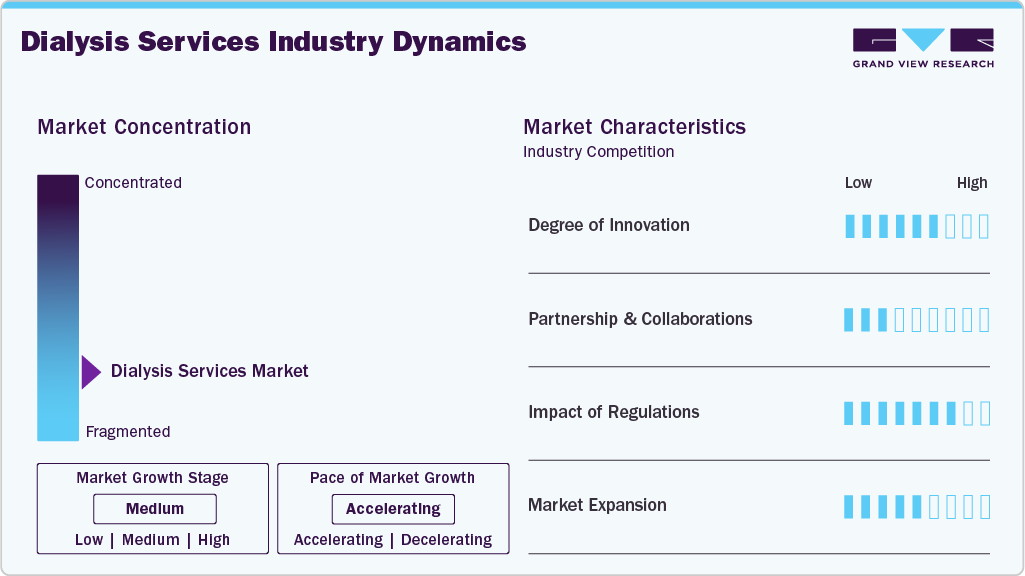
The chart below represents the relationship between industry concentration, industry characteristics, and industry participants. The industry consolidates, with few large manufacturers entering the market. There is a high degree of innovation, moderate level of merger & acquisitions activities, high impact of regulations, and moderate high expansion of industry.
The market is witnessing a moderate to high degree of innovation, driven by digital health integration, AI-enabled treatment monitoring, connected dialysis equipment, and improved management of home dialysis programs. These technologies help providers monitor treatment remotely, streamline clinical workflows, and personalize patient care. In June 2026, Fresenius Medical Care launched kinexus, a unified digital platform connecting remote therapy monitoring and operational workflows for home peritoneal dialysis and home hemodialysis.
“By launching a unified platform that connects therapy management and operational workflows, we are continuing to build a digital foundation designed for the realities of home dialysis care.”
- Joe Turk, Chief Executive Officer of Care Enablement at Fresenius Medical Care.
 To learn more about this report, Download Free Sample Report
The level of mergers and acquisitions (M&A) and strategic partnerships is moderate to high, as providers seek to expand their geographic presence, increase patient capacity, and strengthen their positions in the fragmented dialysis services market. Acquisitions allow established networks to enter new markets more quickly than organic expansion alone. In February 2025, NephroPlus acquired seven dialysis clinics in the Philippines, expanding its network in the country to 36 clinics and extending its international footprint.
The impact of regulations is high, as dialysis providers must comply with clinical quality standards, patient safety requirements, facility operating conditions, and reimbursement policies. Regulatory frameworks influence service delivery, quality reporting, infection control, and provider payments, making compliance essential for maintaining operations and financial performance. In the U.S., the Centers for Medicare & Medicaid Services (CMS) administers the End-Stage Renal Disease Quality Incentive Program (ESRD QIP), which links Medicare payments to dialysis facility performance. Facilities that fail to meet applicable performance standards may face payment reductions of up to 2%.
Market expansion is supported by the entry of dialysis providers into new geographies, acquisitions of existing clinics, and partnerships with local healthcare networks. In February 2024, South African healthcare group Life Healthcare completed the expansion of its renal care network through the acquisition of 41 dialysis clinics from Fresenius Medical Care in South Africa, along with five renal clinics in Namibia and one in Eswatini. The transaction expanded Life Healthcare’s South African dialysis network from 31 to 72 facilities across six provinces, demonstrating how acquisitions can increase service capacity and strengthen geographic coverage.
Analyst Perspective
The market is evolving toward a diversified care model that combines in-center hemodialysis with home-based treatment options. Market growth depends on improving facility utilization, managing operational costs, and maintaining treatment quality. Home-based peritoneal dialysis and home hemodialysis offer opportunities to enhance accessibility and reduce dependence on healthcare facilities. However, adoption varies across countries due to reimbursement policies, patient suitability, training, and home-care support. Future market development will depend on expanding dialysis capacity, improving affordability, and ensuring treatment continuity. Integration of dialysis services into broader kidney care pathways will further support patient outcomes and operational efficiency.
Type Insights
The hemodialysis segment accounted for the largest market revenue share in 2025 driven by its widespread use as a primary treatment modality for patients with kidney failure, as it uses a dialysis machine and filter to remove waste products and excess fluid from the blood. The established availability of hospital-based and outpatient dialysis centers, along with the need for repeated treatment sessions, supports continued demand for hemodialysis services. According to the Australian Institute of Health and Welfare, 83% of people receiving dialysis for kidney failure in Australia underwent hemodialysis in 2024, compared with 17% receiving peritoneal dialysis, highlighting the dominant role of hemodialysis in renal care.
The peritoneal dialysis segment is expected to grow at the fastest CAGR over the forecast period driven by the increasing preference for flexible, home-based kidney treatment that allows eligible patients to manage dialysis without frequent visits to healthcare facilities. Peritoneal dialysis requires less specialized infrastructure than in-center hemodialysis and can improve treatment accessibility for patients living in remote areas. Government initiatives and the development of assisted dialysis programs are further supporting adoption by expanding access to home-based treatment. India's Pradhan Mantri National Dialysis Programme (PMNDP) includes peritoneal dialysis services under the National Health Mission. The government provides guidelines for establishing these services to improve access to home-based dialysis and reduce the infrastructure burden associated with treatment delivery.
Service Insights
The chronic dialysis segment accounted for the largest market revenue share in 2025. This is driven by the long-term treatment needs of patients with end-stage kidney disease (ESKD), whose kidneys can no longer adequately filter waste and excess fluids from the blood. As these patients often require regular dialysis over extended periods when transplantation is unavailable or unsuitable, demand for ongoing dialysis sessions and long-term service arrangements remains strong. According to the U.S. Renal Data System (USRDS) 2025 Annual Data Report, the number of Americans living with kidney failure reached a record 831,192 in 2023, highlighting the substantial patient population requiring ongoing kidney replacement care.
The acute dialysis is expected to grow at the fastest CAGR over the forecast period. This is driven by the increasing need for immediate renal support among hospitalized patients experiencing acute kidney injury (AKI), particularly those in intensive care units (ICUs) with sepsis, severe infections, major surgery, or critical illnesses. Acute dialysis helps remove excess fluid, correct electrolyte imbalances, and manage the accumulation of waste products when kidney function deteriorates rapidly. Demand is further supported using continuous renal replacement therapy (CRRT) for critically ill patients who may not tolerate conventional intermittent dialysis as of hemodynamic instability.
End-use Insights
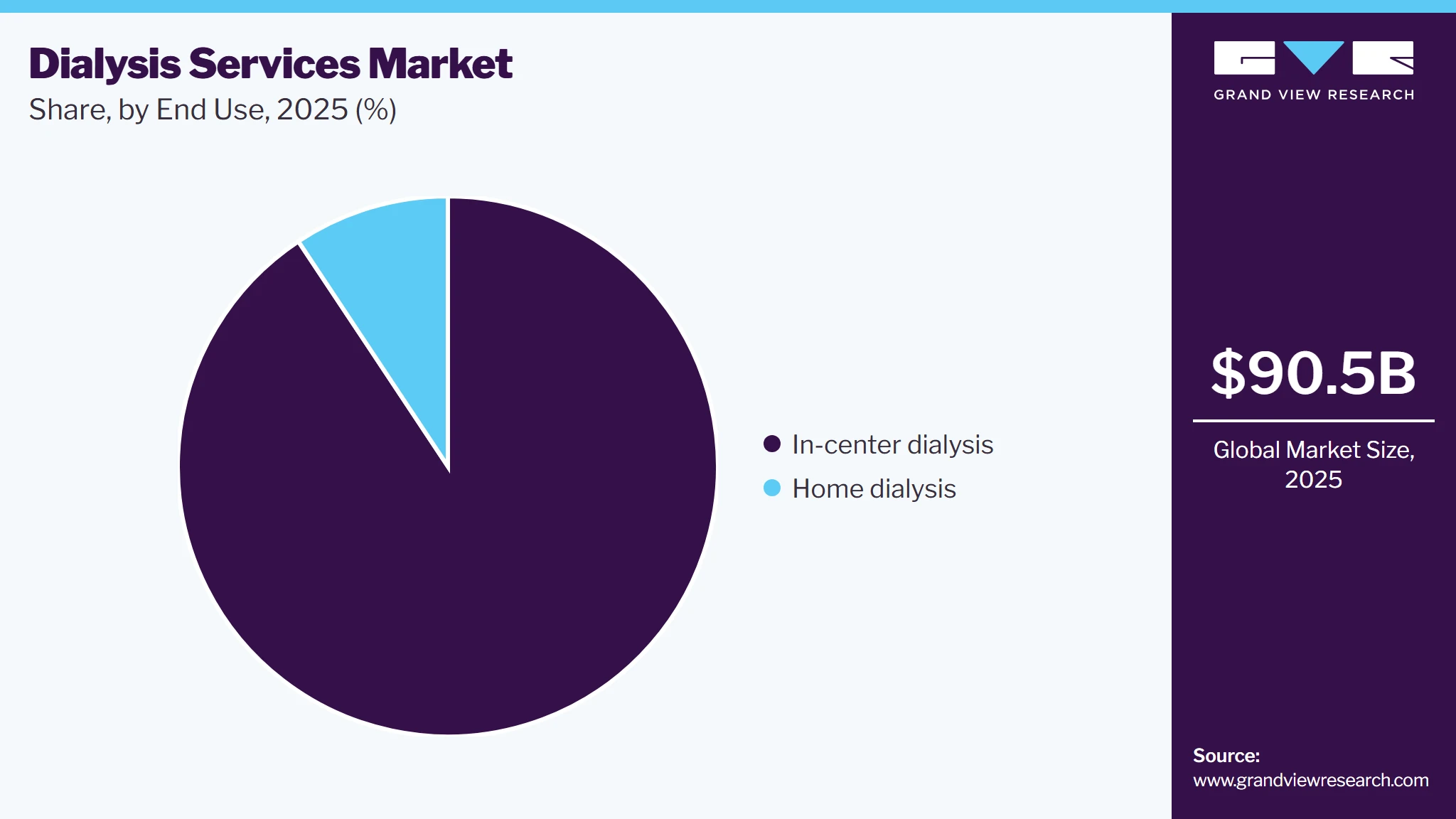
The in-center dialysis segment accounted for the largest market revenue share in 2025. This is driven by the need for continuous clinical supervision, trained staff support, and access to specialized equipment during treatment. In-center hemodialysis is particularly suitable for patients who require assistance with treatment procedures, vascular access management, and monitoring for complications. Established dialysis facilities also provide structured treatment schedules and access to nephrologists, supporting its continued adoption among patients requiring regular dialysis.
 To learn more about this report, Download Free Sample Report
The home dialysis segment is expected to grow at the fastest CAGR over the forecast period. This is driven by increasing patient preference for flexible treatment schedules, greater independence, and the convenience of receiving dialysis at home rather than traveling regularly to dialysis centers. Advancements in portable dialysis machines, simplified treatment interfaces, and remote patient monitoring are making home-based therapies more accessible and manageable for eligible patients. In its 2025 annual report, Fresenius Medical Care reported that more than 15,300 U.S. patients used its NxStage systems for home hemodialysis, representing a 6% increase from the previous year. The company also highlighted its FDA-approved GuideMe software, which simplifies treatment procedures and supports patients transitioning to home dialysis.
Regional Insights
North America dominated the market with a revenue share of 36.8% in 2025 supported by high prevalence of chronic kidney disease, established reimbursement frameworks, and an extensive network of dialysis facilities. The region also benefits from the presence of large dialysis service providers and the adoption of advanced renal care technologies.
 To learn more about this report, Download Free Sample Report
U.S. Dialysis Services Market Trends
The U.S. dialysis services market is driven by the large population requiring long-term kidney replacement therapy, established Medicare and private insurance coverage, and the extensive presence of specialized dialysis providers. The recurring need for dialysis sessions supports sustained service utilization, while investment in home dialysis and coordinated kidney care is creating opportunities to diversify service delivery. According to the 2026 U.S. Medicare payment framework, approximately 7,600 certified ESRD facilities are covered by the dialysis prospective payment system, demonstrating the scale of the region's established treatment infrastructure.
Europe Dialysis Services Market Trends
Europe dialysis services market is driven by established public healthcare systems, reimbursement coverage, aging populations, and a growing need for long-term treatment of kidney failure. The region also benefits from organized renal care networks and clinical monitoring systems, although access to specific dialysis modalities and reimbursement arrangements varies between countries. A February 2026 analysis published in Nephrology Dialysis Transplantation estimated that approximately 309,905 people in Europe were receiving dialysis in 2023, demonstrating the substantial need for ongoing renal replacement services.
The Germany dialysis services market is supported by an established healthcare system, insurance-based treatment financing, specialized renal care facilities, and demand for long-term treatment among patients with kidney failure. The country's aging population and high healthcare resource utilization also reinforce the importance of dialysis within chronic disease management. In August 2026 the Europe kidney replacement therapy analysis reported 55,129 people receiving dialysis in Germany, making it the largest country by dialysis patient numbers in the European Union in the reported dataset.
The UK dialysis services market is driven by the growing number of people requiring kidney replacement therapy, the National Health Service's role in delivering renal care, and the need to expand in-center and home-based treatment options. National renal registries also support clinical monitoring and service planning across kidney centers. The UK Renal Registry's latest report, covering the end of 2024, recorded 74,157 adults receiving kidney replacement therapy, including dialysis and patients living with a functioning kidney transplant. More than 27,000 adults were receiving in-center hemodialysis.
Asia Pacific Dialysis Services Market Trends
Asia Pacific is expected to experience strong growth, supported by the large population affected by chronic kidney disease, diabetes, and hypertension, along with expanding healthcare infrastructure and improving access to renal replacement therapy. Government-funded dialysis programs, investment in private dialysis networks, and the development of treatment facilities in secondary cities and rural areas are helping address unmet demand across emerging economies.
The China dialysis services market is supported by government initiatives to expand county-level hemodialysis access, improvements in hospital infrastructure, and efforts to make treatment more accessible to patients who would otherwise need to travel long distances. Continued equipment upgrades and improvements in local service capacity are also supporting the development of the country's renal care network. China's National Health Commission announced a target for counties with more than 100,000 permanent residents to provide hemodialysis services by 2025. It also identified the need to upgrade outdated equipment and address remaining gaps in local treatment capacity
The India dialysis services market is driven by government-backed access programs, the expansion of public-private partnerships, and the need to extend renal care beyond major metropolitan hospitals. Public funding and the establishment of dialysis centers in district hospitals are helping improve treatment access for lower-income and underserved populations.
Latin America Dialysis Services Market Trends
The Latin America market is primarily driven by the increasing number of patients requiring long-term renal replacement therapy, the expansion of specialized treatment facilities, and public healthcare systems' role in financing dialysis. However, differences in healthcare funding and service availability across countries influence the pace of market development. Brazil represents a major market as of its large, treated patient population and extensive demand for recurring dialysis services. The Brazilian Dialysis Survey 2024 estimated that 172,585 patients were receiving dialysis as of July 2024, with 52,944 new patients starting dialysis during 2024. These figures illustrate the scale of ongoing treatment demand in the region's largest country by population
The Brazil dialysis services market is expected to expand as the number of patients receiving chronic dialysis increases and healthcare providers work to improve treatment capacity and clinical outcomes. Public financed healthcare plays an important role in service delivery, while the need to improve vascular access, dialysis adequacy, and access to peritoneal dialysis creates opportunities for providers to strengthen renal care services. The Brazilian Dialysis Survey 2024 found that 87.3% of prevalent dialysis patients were receiving hemodialysis, compared with 5.6% receiving peritoneal dialysis. The findings demonstrate the dominant role of facility-based hemodialysis and the importance of maintaining and expanding service capacity
Middle East & Africa Dialysis Services Market Trends
The Middle East & Africa market is supported by the increasing burden of kidney disease, demand for specialized renal care, and investment in hospital infrastructure and dialysis facilities. Market development varies across countries according to healthcare funding, insurance coverage, and access to specialist services. Gulf countries benefit from comparatively developed healthcare systems, while several African markets continue to face gaps in dialysis availability and affordability. The International Society of Nephrology's 2023 Global Kidney Health Atlas, published in 2024, reported that the prevalence of treated kidney failure through dialysis or transplantation ranged from 152 patients per million population in the UAE to 869 per million in Kuwait. This variation highlights differences in treatment demand and renal care provision across the Middle East.
The UAE dialysis services market benefits from investment in advanced healthcare infrastructure, specialized kidney care facilities, and an established health insurance system. The concentration of specialist services in major cities, together with the development of integrated healthcare networks, supports access to dialysis and creates opportunities for providers to expand their service offerings. The International Society of Nephrology's regional assessment reported that the UAE had a prevalence of treated kidney failure of 152 patients per million population and approximately 1.0 hemodialysis center per million population. These findings indicate an established treatment base while highlighting the importance of continued service planning and infrastructure development.
Key Dialysis Services Company Insights
The dialysis services market players are focusing on devising innovative business growth strategies in the form of product portfolio expansions, partnerships & collaborations, mergers & acquisitions, and business footprint expansions.
Key Dialysis Services Companies
The following key companies have been profiled for this study on the dialysis services market
-
U.S. Renal Care, Inc.
-
Fresenius Medical Care AG
-
DaVita Inc.
-
NephroCan Holdings Corporation
-
Niagara Health
-
Nephrocare Health Services Limited
-
Apex Kidney Care.
-
DaVita UK
-
Nephro Arabia
-
Bumrungrad International Hospital
-
Diaverum Germany
-
DiaFlux GmbH
Competitive Benchmarking
Category
Operating Strategies
Competitive Edge
Weakness
Established Players (e.g., U.S. Renal Care, Inc., Fresenius Medical Care AG, DaVita Inc., Diaverum Germany, Nephrocare Health Services Limited)
- Expand dialysis clinic networks, strengthen hospital partnerships, improve treatment protocols, and invest in advanced dialysis equipment, digital patient monitoring, and integrated kidney care services. Optimize clinic utilization and service delivery while expanding into new geographic markets.
- Extensive dialysis center networks, established clinical expertise, experienced healthcare professionals, strong relationships with hospitals and payers, and the operational capabilities to serve large patient populations.
- High operating and staffing costs, dependence on reimbursement policies and payer contracts, significant investment requirements for clinic expansion, and exposure to regulatory changes and fluctuations in treatment costs.
Regional and Specialized Players (e.g., NephroCan Holdings Corporation, Niagara Health, Apex Kidney Care, DaVita UK, Nephro Arabia, Bumrungrad International Hospital, DiaFlux GmbH)
- Focus on regional expansion, specialized renal care, hospital-based dialysis services, and partnerships with local healthcare providers. Differentiate through patient-focused care, flexible service models, home dialysis programs, and improved treatment accessibility.
- Local market knowledge, established regional healthcare relationships, specialized clinical services, flexibility in service delivery, and the ability to address specific patient needs and underserved markets.
- Smaller geographic footprint in some markets, limited financial resources compared with global operators, dependence on local healthcare infrastructure and reimbursement systems, and challenges in recruiting and retaining specialized personnel.
Recent Developments
- In October 2026, the U.S. Department of Health and Human Services (HHS) launched the Kidney Care National Plan to improve kidney disease prevention, expand dialysis treatment choices, and strengthen transplantation services. The plan prioritizes reducing regulatory barriers for new dialysis providers, promoting competition, expanding home-based dialysis, and encouraging innovative treatments to improve patient outcomes and quality of life.
"President Trump changed the course of kidney care in 2019 by challenging a system that waited for patients to reach kidney failure. Now HHS is building on that work by detecting kidney disease earlier, expanding treatment and home-care options, removing barriers to innovation and transplantation, and strengthening safety across the transplant system. Our goal is simple: preserve kidney health, give patients more choices, and help more Americans avoid kidney failure and live longer, healthier lives."
- HHS Secretary Robert F. Kennedy, Jr.
- In February 2025, NephroPlus acquired seven dialysis clinics in the Philippines, increasing its network to 36 clinics serving nearly 2,000 patients in the country. The acquisition supports geographic expansion, strengthens its service delivery capabilities, and demonstrates the role of acquisitions in consolidating the dialysis services market.
“This partnership is a big move for NephroPlus in the International market as we want to deliver the best care possible at efficient price points to patients across multiple countries. We are excited to rollout best practices around patient centric care in Philippines and are keen to bring best practices of RCDC into India as well. This multinational operational expertise will significantly strengthen NephroPlus’s brand equity amongst our nephrologist and hospital partners in India”
- Mr. Kamal Shah, Co-Founder and Director Patient Services, NephroPlus
- In September 2025, Quanta Dialysis Technologies and Innovative Renal Care entered into a multi-year agreement to expand access to the Quanta Dialysis System across selected care programs in the U.S. The system supports multiple treatment modalities, including intermittent hemodialysis, sustained low-efficiency dialysis, and continuous renal replacement therapy, potentially improving treatment flexibility across intensive care units, bedside settings, and dialysis facilities.
“Our care teams are excited to have an innovative, new option for dialysis for acute care patients. The ability to make immediate treatment adjustments all on the same platform is a game-changer. We are thankful for the opportunity to partner with MercyOne Waterloo and Quanta to bring this technology to the state of Iowa.”
- Sara Brady, chief nursing officer for IRC
Dialysis Services Market Report Scope
Report Attribute
Details
Market size in 2025
USD 90.5 billion
Estimated market size in 2026
USD 95.5 billion
Projected market size by 2033
USD 150.4 billion
Growth Rate
CAGR of 6.7% from 2026 to 2033
Actual Data
2021 - 2025
Forecast Data
2026 - 2033
Quantitative units
Revenue in USD million/billion, and CAGR from 2026 to 2033, average procedure volume 2021-2033, average procedure cost 2021-2033
Report coverage
Revenue forecast, company ranking, competitive landscape, growth factors, and trends
Segments covered
Type, service, end-use, region
Regional scope
North America, Europe, Asia Pacific, Latin America, and MEA
Country scope
U.S., Canada, Mexico, UK, Germany, France, Italy, Spain, Denmark, Norway, Sweden, China, India, Japan, Australia, Thailand, South Korea, Brazil, Argentina, South Africa, Saudi Arabia, UAE, Kuwait
Key companies profiled
U.S. Renal Care, Inc., Fresenius Medical Care AG, DaVita Inc., NephroCan Holdings Corporation, Niagara Health, Nephrocare Health Services Limited, Apex Kidney Care, DaVita UK, Nephro Arabia, Bumrungrad International Hospital, Diaverum Germany, DiaFlux GmbH
Customization scope
Free report customization (equivalent up to 8 analysts working days) with purchase. Addition or alteration to country, regional & segment scope.
Pricing and purchase options
Avail customized purchase options to meet your exact research needs. Explore purchase options
Global Dialysis Services Market Report Segmentation
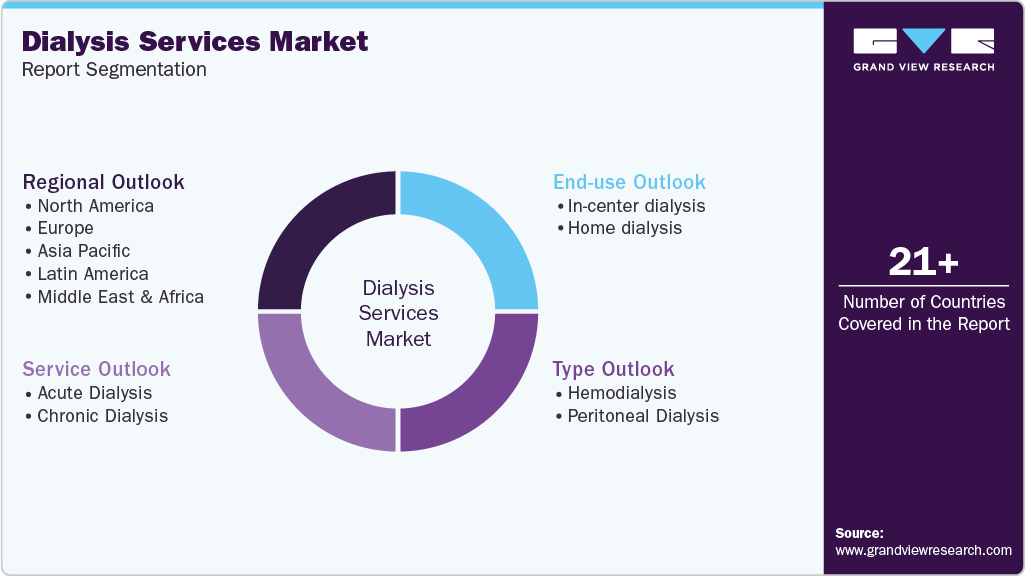
This report forecasts revenue growth at global, regional, and country levels and provides an analysis on industry trends in each of the segments from 2021 to 2033. For the purpose of this study, Grand View Research, Inc. has segmented the global dialysis services market report on the basis of type, service, end-use and region:
 To learn more about this report, Download Free Sample Report
-
Type Outlook (Revenue in USD Million, 2021 - 2033)
-
Hemodialysis
-
Peritoneal Dialysis
-
-
Service Outlook (Revenue in USD Million, 2021 - 2033)
-
Acute dialysis
-
Chronic dialysis
-
-
End-use Outlook (Revenue in USD Million, 2021 - 2033)
-
In-center dialysis
-
Home dialysis
-
-
Regional Outlook (Revenue in USD Million, 2021 - 2033)
-
North America
-
U.S.
-
Canada
-
Mexico
-
-
Europe
-
UK
-
Germany
-
France
-
Italy
-
Spain
-
Sweden
-
Denmark
-
Norway
-
-
Asia Pacific
-
China
-
India
-
Japan
-
Australia
-
South Korea
-
Thailand
-
-
Latin America
-
Brazil
-
Argentina
-
-
MEA
-
South Africa
-
Saudi Arabia
-
Kuwait
-
UAE
-
-
Segment Definition
Segment - Type
Revenue capture definition
Hemodialysis
Uses a machine and an external filter to remove waste products and excess fluids from the blood when the kidneys cannot function adequately.
Peritoneal Dialysis
Uses the abdominal lining (peritoneum) and a dialysis solution to remove waste products and excess fluids from the body.
By Service
Revenue capture definition
Acute Dialysis
Provides short-term dialysis for patients experiencing sudden kidney failure or severe complications requiring immediate kidney support.
Chronic Dialysis
Provides regular, long-term dialysis for patients with end-stage kidney disease to maintain fluid, electrolyte, and waste balance.
By End-use -
Revenue capture definition
In-center Dialysis
Deliver dialysis treatments at hospitals or specialized dialysis centers under the supervision of trained healthcare professionals.
Home Dialysis
Enables patients to receive prescribed dialysis at home using appropriate equipment, typically through home hemodialysis or peritoneal dialysis.
Estimation Model
Section
Key Summary
1.1 Research Approach
A hybrid research approach combining secondary and primary research methodologies is used to assess the dialysis services market. The assessment considers dialysis treatment volumes, patient population, service pricing, treatment frequency, facility capacity, reimbursement, and technological advancements. Insights from dialysis service providers, hospitals, healthcare professionals, equipment manufacturers, government agencies, and industry experts are used to validate market estimates.
1.2 Market Estimation Framework
Market size is estimated using three approaches: (1) patient population and treatment demand model, (2) dialysis treatment volume and revenue model, and (3) key provider revenue validation model. These approaches are triangulated to estimate the overall market size and develop forecast projections.
1.2.1 Demand Model
Estimates market demand based on the prevalence of chronic kidney disease and end-stage renal disease, the number of patients requiring dialysis, treatment initiation rates, dialysis frequency, and access to healthcare facilities. Demand across hemodialysis, peritoneal dialysis, acute and chronic dialysis, in-center services, and home-based dialysis is considered, along with demographic trends and healthcare infrastructure expansion.
1.2.2 Revenue Model
Market value is calculated based on the number of dialysis patients, annual treatment sessions, average revenue per session, treatment modality, and service pricing. Reimbursement rates, public and private healthcare funding, home dialysis programs, and revenues from related clinical services are also considered where included within the market definition.
1.2.3 Vendor Model
Market estimates are validated using revenues from key dialysis service providers, facility networks, patient volumes, treatment capacity, service expansion, strategic partnerships, and financial disclosures. Revenue contributions from hospital-based dialysis units, independent dialysis centers, and home dialysis service providers are assessed to support market-size validation.
1.3 Forecast Development
Forecast projections are developed by analyzing trends in chronic kidney disease prevalence, diabetes and hypertension incidence, population aging, dialysis treatment adoption, healthcare expenditure, and expansion of dialysis facilities. Advancements in dialysis equipment, automated peritoneal dialysis, home-based treatment, and remote patient monitoring, alongside reimbursement changes and government initiatives, are also considered.
1.4 Segmentation Method
Market segmentation is determined using weighted analysis of patient volumes, treatment frequency, service pricing, modality adoption, facility capacity, reimbursement structures, and healthcare access. Segmentation considers dialysis type, service setting, treatment duration, and geographic region, with variations in demand across hospitals, specialized dialysis centers, outpatient facilities, and home-based care.
1.5 Scope & Assumptions
The market is measured in USD based on revenues generated from dialysis treatment services within the defined market scope. Estimates incorporate hemodialysis and peritoneal dialysis services across acute and chronic treatment settings, including in-center and home-based dialysis where applicable. Regional variations in treatment pricing, reimbursement, patient volumes, facility availability, and treatment frequency are considered. Revenues from dialysis equipment sales, standalone consumables, and pharmaceuticals are excluded unless explicitly included in the market definition, avoiding double counting between service providers and equipment or supply vendors.
Customization Table
Client Request
Customization Delivered
Value Adds
Dialysis Service Pricing & Treatment Cost Analysis
Assessment of dialysis costs across hemodialysis, peritoneal dialysis, acute dialysis, chronic dialysis, in-center dialysis, and home dialysis, including treatment frequency, consumables, and service-related expenses.
Supports pricing comparisons, affordability assessment, identification of cost variations, and evaluation of treatment options across patient groups and healthcare settings.
Dialysis Modality × Patient Segment Opportunity Matrix
Mapping of dialysis modalities against patient demographics, disease severity, treatment settings, and care requirements to identify suitable service models and underserved patient segments.
Helps providers identify high-potential patient segments, evaluate modality adoption opportunities, and align service offerings with patient needs.
Dialysis Provider Capacity & Utilization Analysis
Assessment of dialysis centers, treatment stations, operating capacity, patient throughput, utilization rates, and geographic distribution across hospitals and standalone facilities.
Supports capacity planning, identification of underserved areas, facility expansion decisions, and assessment of infrastructure gaps.
In-Center vs. Home Dialysis Economics
Comparative assessment of in-center hemodialysis, home hemodialysis, and peritoneal dialysis based on operating costs, staffing, equipment, consumables, training, and patient support requirements.
Helps providers evaluate service delivery efficiency, identify cost-saving opportunities, and assess the commercial feasibility of home-based dialysis programs.
Frequently Asked Questions About This Report
The dialysis services market size was estimated at USD 90.5 billion in 2025 and is projected to grow from USD 95.5 billion in 2026
The dialysis services market size is projected to grow at a CAGR of 6.7% from 2026 to 2033 reaching at a value of to USD 150.4 billion by 2033.
The hemodialysis segment accounted for the largest market revenue share in 2025 driven by its widespread use as a primary treatment modality for patients with kidney failure, as it uses a dialysis machine and filter to remove waste products and excess fluid from the blood.
North America dialysis services market dominated global market in 2025 and accounted for the largest revenue share of 36.8%. This is supported by high prevalence of chronic kidney disease, established reimbursement frameworks, and an extensive network of dialysis facilities.
The key drivers include the the rising prevalence of chronic kidney disease, diabetes, and hypertension, along with the growing aging population. Increasing awareness of kidney health, improved access to renal care, and expansion of dialysis centers.
Key players in the market include U.S. Renal Care, Inc., Fresenius Medical Care AG, DaVita Inc., NephroCan Holdings Corporation, Niagara Health, Nephrocare Health Services Limited, Apex Kidney Care, DaVita UK, Nephro Arabia, Bumrungrad International Hospital, Diaverum Germany, DiaFlux GmbH.
The chronic dialysis segment accounted for the largest market revenue share in 2025. This is driven by the long-term treatment needs of patients with end-stage kidney disease (ESKD), whose kidneys can no longer adequately filter waste and excess fluids from the blood.
The in-center dialysis segment accounted for the largest market revenue share in 2025.
Asia Pacific is the fastest-growing region over the forecast period.
About the Author(s)
Medical Devices Research Team
Healthcare · Medical DevicesThis report was authored by the medical devices research team at Grand View Research - comprising two research analysts, one senior research analyst, and one industry expert - with specialized expertise in the medical devices segment of the healthcare industry. All findings are based on proprietary healthcare databases, executive interviews, and regulatory analysis, subject to internal peer review prior to publication.
Last Updated:
Speak to Analyst

Customize this report to your needs - add regions, segments, or data points, with 20% free customization.
Or view our licence options:


ISO 9001:2015 & 27001:2022 Certified
We are GDPR and CCPA compliant! Your transaction & personal information is safe and secure. For more details, please read our privacy policy.


