
- Home
- »
- Medical Devices
- »
-
Digital Dermatoscopes Devices Market Report, 2026-2033GVR Report cover

Digital Dermatoscopes Devices Market (2026 - 2033)
Size, Share & Trends Analysis Report By Product (Handheld, Smartphone Attached, Desktop/Stationary Systems), By Application (Skin Cancer, Inflammatory & Autoimmune Skin Diseases), By End Use, By Region, And Segment Forecasts
Market Size, 2025
$3.3MMarket Estimate, 2026
$3.6MMarket Forecast, 2033
$7.0MCAGR, 2026–2033
10.0%Digital Dermatoscopes Devices Market Summary
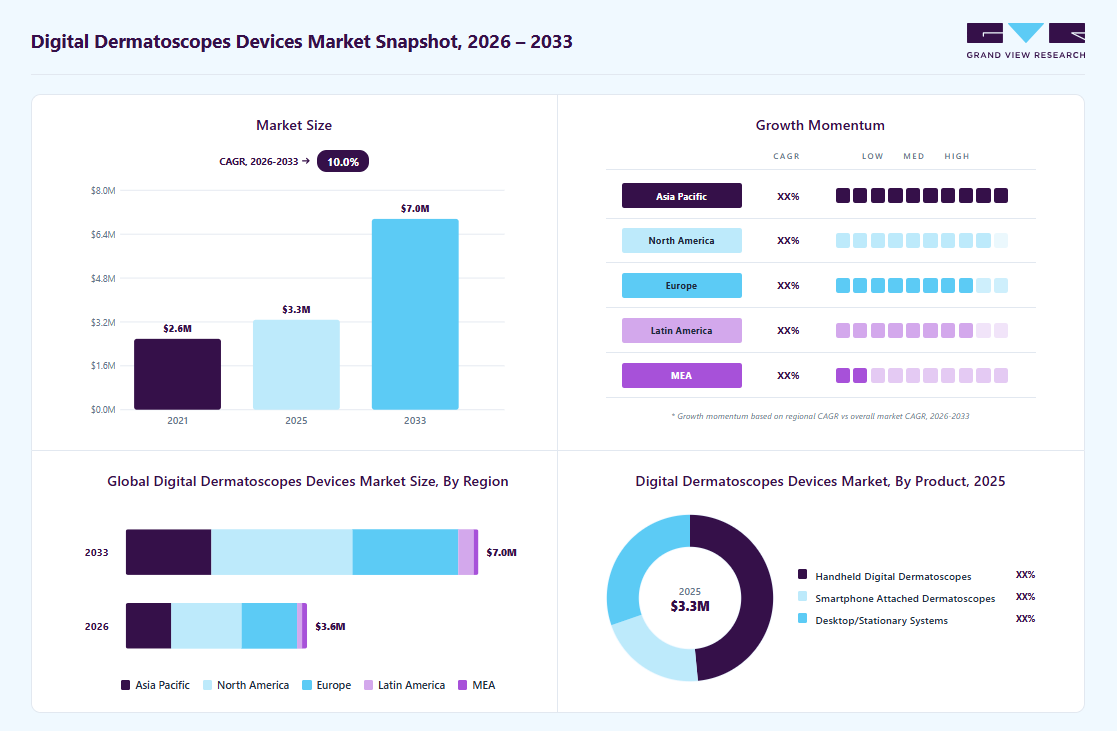
The global digital dermatoscopes devices market size was valued at USD 3.3 million in 2025 and is projected to grow from USD 3.6 million in 2026 to USD 7.0 million by 2033, at a CAGR of 10.0% from 2026 to 2033. The North America held the largest share of 39.7% of the global market in 2025. The industry is witnessing steady growth as healthcare providers increasingly seek faster, more accurate, and connected skin imaging solutions that align with telehealth and AI-assisted diagnostics.
 Source: Grand View Research, IR Documents, Primary Interviews, Paid DatabasesTo learn more about this report,
 Download Free Sample Report
 Key Market Trends & Insights
- By product: Handheld digital dermatoscopes segment held the largest market share of 47.9% in 2025.
- By application: Infectious skin conditions segment held the largest market share of 32.2% in 2025.
- By end-use: Dermatology clinics/centers segment held the leading market share in 2025.
Regional Highlights
- Largest regional market: North America (39.7% market share, 2025)
- Fastest-growing regional market: Asia Pacific
- By country: The U.S. is expected to grow significantly over the forecast period.
Market Size & Forecast
- Market size in 2025: USD 3.3 Million
- Estimated market size in 2026: USD 3.6 Million
- Projected market size by 2033: USD 7.0 Million
- CAGR (2026-2033): 10.0%
Three ways to get this report
Buy it, customize it, or ask a question.Ask an Analyst
A direct answer, usually in 1 working day
- AccessReport author, directly
- Reply timeWithin 1 working day
- No sales callDirect answer only
- FormatEmail reply
- CostFree, no cost
Get the Full Report
What the study covers
- FormatsPDF · Excel · Dashboard
- Timeline2026–2033 annual, 2025 base
- Coverage20+ countries, 5 regions
- Companies10+ key players profiled
Customize the Report
20% free customization
- IncludeCountries, segments, points
- TailorTo your product definition
- ExtendDeeper competitor detail
- OrA fully bespoke study
- Turnaround5–10 working days
For example, in March 2025, the Chelsea and Westminster Hospital NHS Foundation Trust implemented an independent AI unit from Skin Analytics, DERM. With the help of digital dermatoscope imaging, this unit recognizes and releases patients having non-cancerous skin growths without a dermatologist's confirmation. The project speeds up the process of skin-cancer triage, therefore making approximately 30% of the urgent clinic appointments available for high-risk cases.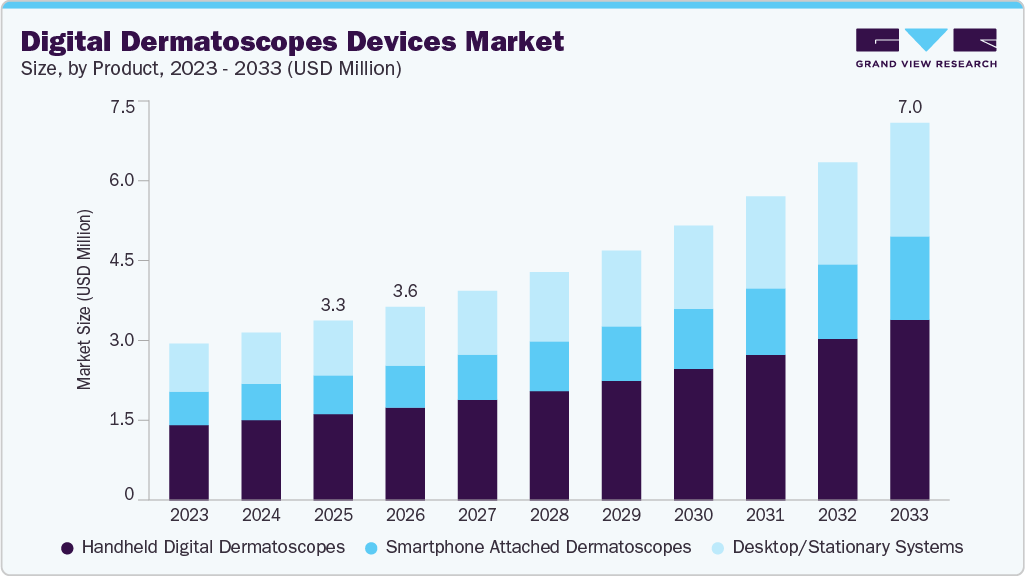 To learn more about this report, Download Free Sample Report
 Themarket expansion is primarily fueled by the rising adoption of teledermatology and hybrid care models, which allow dermatologists to evaluate patients remotely through high-quality imaging. This trend has gained momentum as digital dermatoscopes become essential tools for remote triage and skin cancer screening. According to the study published by Elsevier B.V. in March 2024, the fast artificial intelligence development is the next factor to be credited for the market growth as AI algorithms are now demonstrated to be at par or better than the interpretation of dermoscopic images done by less-experienced clinicians. These advancements are prompting manufacturers to install AI features in digital dermatoscopes and in the cloud-based platforms.
Inaddition, product innovation and miniaturization have been significant factors in the market growth. Key players are focusing on introducing wireless, high-resolution, and smartphone-compatible dermatoscopes, which are essential for clinics and mobile screening programs, further driving the market growth. For instance, in March 2024, FotoFinder Systems GmbH introduced skeen, a wireless AI-powered dermatoscope providing high-resolution imaging of skin and hair with cloud integration and on-device deep-learning analysis. In parallel, growing regulatory and investment activity is driving commercialization, with strategic acquisitions and funding in skin-imaging firms expanding distribution channels and after-sales services.
Market Concentration & Characteristics
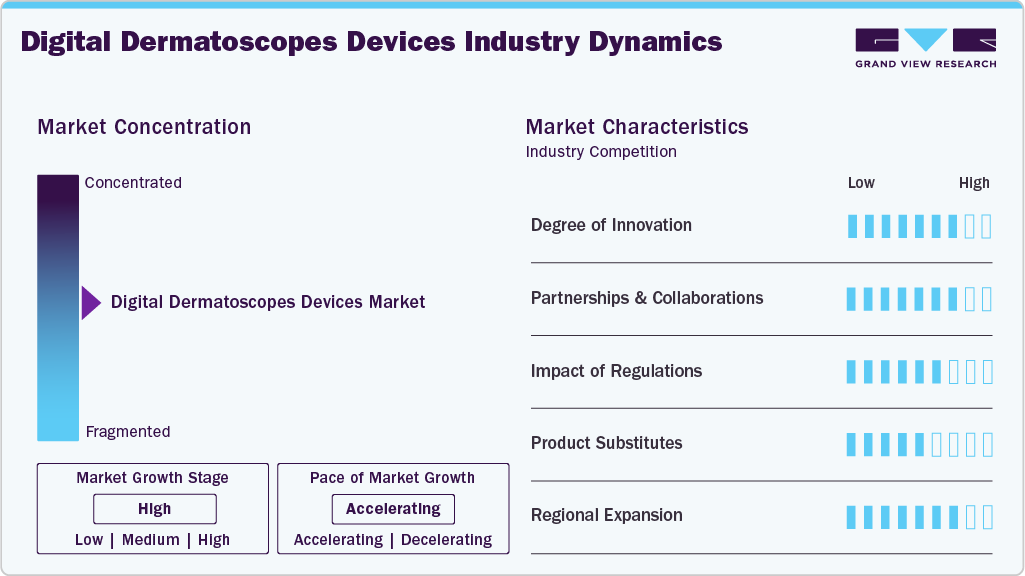
The industry is moderately fragmented, with top players such as Canfield Scientific, FotoFinder Systems GmbH, HEINE Optotechnik, 3Gen / DermLite, MetaOptima Technology dominating the market with a significant share, with strong product portfolios. A key growth driver for the market is the increasing demand for non-invasive, precise skin diagnostics that facilitate the early detection of skin disorders. The constant innovations in imaging optics, polarized light, and AI-assisted analysis are making the process more precise, safer, and user-friendly. The introduction of wireless, portable, and smartphone-compatible devices is further broadening the reach of advanced skin imaging in clinics as well as in remote areas. Together with these innovations and the increasing awareness of skin health, the adoption of digital dermatoscopes is expanding at dermatology clinics and teledermatology platforms.
The degree of innovation in the industry is accelerating, driven by advancements in imaging precision, AI integration, and workflow connectivity. For instance, in March 2023, Canfield Scientific announced the launch of the proVEOS, a 3-D dermatoscope that magnetically attaches to an iPhone Pro for ultra-high-fidelity skin lesion imaging and seamless integration with the company’s DermaGraphix software. Such innovations mark a shift toward intelligent, cloud-connected dermatoscopy systems that combine advanced optics, AI-driven analytics, and portability to expand early detection and precision dermatology globally.
 To learn more about this report, Download Free Sample Report
 Strategic partnerships and collaborations are playing a crucial role in the expansion of the digital dermatoscope market. For instance, in August 2025, Affidea Group, a major pan-European diagnostics and specialist care provider, announced a strategic partnership with Skin Analytics to deploy its AI medical-device software “DERM” for automating skin-lesion analysis across clinics in Romania and Lithuania, with Greece next. This collaboration showcases how imaging-device manufacturers and care-provider networks are combining forces. Such alliances accelerate the adoption of digital dermoscopy by enhancing remote triage, improving clinical workflows, and improving the scalability of teledermatology.
Regulatory frameworks are shaping the industry dynamics for digital dermatoscopes, and they are a critical factor for both manufacturers and buyers. For instance, in June 2023, DeepX Diagnostics Inc. received clearance for its digital dermatoscope, DermoSight from the U.S. Food and Drug Administration for use in teledermatology screening of suspect skin-cancer lesions in the U.S. Similarly, in Europe, the Medical Device Regulation (MDR) has introduced more stringent compliance requirements for devices such as dermatoscopes, including higher-class re-classification and rigorous clinical evidence obligations. These regulatory milestones reinforce trust in device safety and performance, encouraging wider adoption by clinicians.
A notable alternative is non-dermatoscopic skin-imaging systems that nonetheless fulfill similar diagnostic/monitoring roles, such as high-resolution multispectral or reflectance confocal imaging devices. For instance, in November 2024, Enspectra Health launched an FDA-cleared handheld skin imaging device, featured in Scientific Reports, which offers real-time, non-invasive, high-resolution imaging without requiring rigid positioning. The technology has been validated for different skin types and corresponds to histopathology, so it is likely to revolutionize the skin care technology workflow.
The industry has shown significant regional expansion. In North America, the well-established healthcare infrastructure and high adoption of teledermatology continue to drive dominant device usage. In Europe, broad national skin-cancer screening programmes, supportive regulatory frameworks for AI-enhanced diagnostics, and significant penetration of dermatology clinics are fostering the adoption of digital dermatoscopes. Meanwhile, the market growth in Asia-Pacific is driven by rising disposable incomes, the expansion of private dermatology networks in countries such as China, India, and Japan, increasing awareness of skin health, and a surge in mobile and tele-dermatology workflows.
Product Insights
The handheld digital dermatoscopes segment accounted for the largest market share of 47.9% in 2025. This growth is mainly driven by the portability and versatility of handheld digital dermatscopes in clinical deployment. Clinicians increasingly favor handheld devices as they allow for quick, point-of-care imaging, whether in dermatology clinics, mobile screening units, or telehealth settings. In addition, AI-driven innovations are redefining early skin cancer detection, which helps in avoiding further treatment complexities. For instance, in January 2024, the U.S. FDA cleared DermaSensor’s AI-powered handheld device for detecting common skin cancers, enabling real-time, non-invasive lesion analysis. The tool uses elastic-scattering spectroscopy to assist primary-care doctors in early diagnosis and referral decisions. These factors are collectively driving the growth of the handheld digital dermatoscopes segment in the market.
The smartphone attached dermatoscopes segment is expected to witness the fastest growth rate of 10.3% CAGR during the forecast period. These devices offer high-resolution imaging on mobile devices, enabling clinicians and even patients to capture detailed skin lesion photographs via iOS or Android platforms. Amid growing integration of AI and mobile diagnostics in dermatology witnessing rapid clinical validation and regulatory progress. For instance, in May 2025, AI Medical Technology’s Dermalyser received CE-mark approval in Europe for its AI-powered melanoma detection tool. The smartphone-based software, used with a dermatoscope, demonstrated higher accuracy than dermatologists in trials. These developments reflect a surging demand for point-of-care, portable, and tele-dermatology-friendly imaging tools, highlighting growth for the smartphone-attached dermatoscopes in the market.
Application Insights
The infectious skin conditions segment accounted for the largest market share in 2025. This growth is mainly driven by the high global prevalence of bacterial and viral skin infections, increasing incidence of contagious conditions such as impetigo and cellulitis, and growing susceptibility among aging and immunocompromised populations. Infectious dermatological disorders remain a significant public health burden, with conditions like impetigo alone affecting over 140 million people globally and representing one of the most common pediatric skin infections. The rising prevalence is further supported by factors such as poor hygiene in densely populated regions, increasing cases of diabetes and vascular diseases, and compromised skin barriers, all of which elevate infection risk. In addition, the emergence of antibiotic-resistant strains, including MRSA, has increased the need for advanced and targeted treatment options, thereby accelerating segment growth. Furthermore, the high recurrence rates of conditions like erysipelas and cellulitis, along with their associated hospitalization burden, continue to drive demand for effective therapeutics and long-term management solutions. Overall, the combination of high disease burden, increasing risk factors, and continuous product development is expected to sustain the dominance of the infectious skin conditions segment in the market.
The growth of the inflammatory & autoimmune skin diseases segment is driven by their high prevalence and diagnostic complexity. Conditions such as Psoriasis, lichen planus, and Discoid Lupus Erythematosus fall into this category and frequently require non-invasive tools to aid in accurate assessment. For instance, in October 2023 A hospital-based cross-sectional study in Nepal evaluated dermoscopic features of common inflammatory skin conditions using handheld DermLite dermatoscopes. Among 205 patients, psoriasis (42%), lichen planus (13%), and contact dermatitis (12%) were most prevalent, with dotted vessels and whitish scales as key dermoscopic markers. These findings highlight how digital dermatoscopes enable dermatologists to visualize microvascular and epidermal features non-invasively, improving diagnostic confidence and helping distinguish between overlapping conditions. The chronic nature of inflammatory and autoimmune skin disorders fuels demand for connected dermatoscopes that capture and store high-quality images to track disease progression and assess treatment response.
End-use Insights
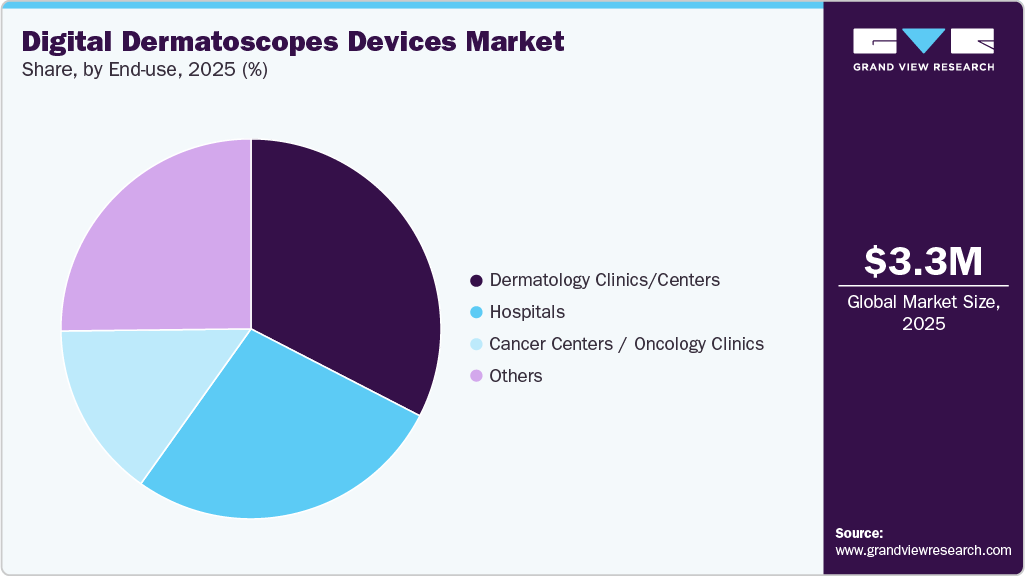
The dermatology clinics/centers segment accounted for the largest market share in 2025 and is expected to witness the fastest CAGR over the forecast period. The growth is driven by rising demand for specialized skin imaging solutions and facilities for better diagnosis and management. In addition, the availability of skilled staff and well-developed infrastructure for dermatology or related conditions attracts patients towards it. These clinics rely heavily on high-resolution dermoscopic imaging to evaluate pigmented lesions, monitor suspicious skin changes, and support informed clinical decision-making. A recent study found that when dermatologists used a digital dermoscopy image‑based AI device, diagnostic sensitivity and management specificity improved significantly compared with conventional methods in a clinical dermatology setting. Similarly, a survey among dermatologists in Greece reported that around 93.2 % of dermatoscopes are used regularly in their clinical practice, emphasising the device’s integration into routine dermatology workflows. This is expected to drive the growth in the adoption of digital dermatoscopes across these centers.
 To learn more about this report, Download Free Sample Report
 The hospitals segment is witnessing significant growth, driven by high patient volumes, complex dermatology caseloads, and the need for integrated diagnostics in multidisciplinary settings. Hospitals are increasingly investing in advanced imaging tools and cloud-connected workflows that support early skin cancer detection, inpatient dermatology consultations, and teledermatology triage. For instance, in March 2025, Chelsea and Westminster Hospital NHS Foundation Trust deployed an autonomous AI system that analyzes dermoscopic images to identify benign skin lesions, allowing patients to be discharged the same day without dermatology review. The technology, the only AI device approved to make clinical decisions in cancer care, has helped reduce clinician processing time and free up specialist appointments for higher‑risk patients. This shows the hospitals' rising focus on developing dedicated infrastructure for dermatological conditions.
Regional Insights
North America digital dermatoscopes devices market is witnessing significant growth driven by highly advanced healthcare infrastructure, broad access to dermatologists, and strong reimbursement frameworks. In the U.S., for example, the increasing incidence of skin cancers and the growing emphasis on early detection are fueling demand for high-end dermatoscopy solutions. Innovations in technology, such as AI analytics, digital imaging integration, and connectivity to tele-dermatology platforms, are quite significant in this region. Furthermore, public awareness campaigns and the popularity of cosmetic dermatology procedures lead to the upgrading and adoption of devices by the users of the premium class. All these factors combined are estimated to result in an increased uptake of digital dermatoscopes in the whole region, thereby contributing to the growth of the market.
 To learn more about this report, Download Free Sample Report
 U.S. Digital Dermatoscopes Devices Market Trends
The digital dermatoscopes devices market in the U.S. is experiencing steady growth, driven by a well-established specialist dermatology network, strong reimbursement pathways for skin cancer screening, and a high incidence of skin diseases. In addition, the rise of tele-dermatology further supports the use of remote imaging devices and digital dermatoscopes integrated into broader telehealth platforms. A recent study published by MDPI in October 2024 found that dermatologists using a digital dermoscopy image‑based AI device achieved a diagnostic sensitivity of 86.1% vs 78.8% without it. The strong dermatology specialist network, high awareness of skin cancer among patients, and the willingness of specialties to invest in imaging upgrades make the U.S. a key market for premium digital dermatoscope solutions.
Europe Digital Dermatoscopes Devices Market Trends
The digital dermatoscopes devices market in Europe is witnessing significant growth, driven by regulatory support for advanced diagnostic tools, public health initiatives emphasizing early skin cancer detection, and the rising adoption of tele-dermatology across national health systems. For instance, in June 2023, the U.K.'s National Health Service (NHS) fast-tracked the installation of high-resolution skin-imaging and teledermatology systems, employing dermatoscope-lens smartphone attachments to make referrals more convenient and diagnostics more efficient. These factors collectively support increased demand for connected, portable dermatoscopes, positioning them as key tools for improving early diagnosis, patient management, and overall dermatology workflow across European healthcare networks.
The UK digital dermatoscopes devices market is mainly influenced by the NHS's commitment to digital health transformation and the implementation of early skin cancer screening programs. The public sector procurement and centralized purchasing are giving rise to vendors who need to ensure that their devices comply with NHS interoperability standards and show evidence-based outcomes. At the same time, the demand for private aesthetic dermatology is increasing, thus creating a dual market, public preventive dermatology and private cosmetic services. Meeting the UK regulatory requirements, which are in line with EU/UK MDR, calls for strong clinical evidence, cost-effectiveness data, and the availability of comprehensive support services. Annually, dermatology services are the recipients of about one million primary care referrals. Out of these, 60% are urgent cases of suspected skin cancer; however, only 6% of them are confirmed, thus indicating the necessity for appropriate triage and diagnostic tools. This shows the increasing need of adoption of digital dermatscopes for accurate and timely diagnosis.
Asia Pacific Digital Dermatoscopes Devices Market Trends
The digital dermatoscopes devices market in the Asia-Pacific region is driven by the rising consumer awareness of skin health and aesthetics, the expansion of private dermatology clinics in fast-growing economies, and the increasing use of teledermatology and mobile-imaging tools in remote regions. The combination of growing middle-class demand for aesthetic dermatology and public health interest in early-detection tools creates a favorable environment for digital dermatoscope manufacturers offering cost-effective and portable devices adapted to emerging-market contexts.
Japan digital dermatoscopes devicesmarket is shaped by cautious patient preferences and strict regulatory oversight. The growth is supported by a high-technology healthcare ecosystem that emphasizes imaging quality, workflow digitization, and integration with dermatology information systems. Japanese dermatologists are increasingly adopting high-resolution dermatoscopes for both skin-cancer screening and aesthetic dermatology. Coupled with the country’s aging population and high consumer demand for non-invasive skin health solutions.
Latin America Digital Dermatoscopes Devices Market Trends
The digital dermatoscopes devices market in Latin America is supported by growing demand for dermatologic and cosmetic services, expanding private-clinic networks in urban centers, and an increasing recognition of the skin-disease burden by both public and private healthcare providers. In addition, the overall trend of growing tele-dermatology and digital-imaging adoption supports the demand for portable, cost-efficient dermatoscope devices in markets with infrastructure development.
Brazil digital dermatoscopes devices market is experiencing significant growth due to the factors such as improved public awareness about skin cancer and the growth of private dermatology practices in urban areas. The increasing demand for dermatology, cosmetic, and aesthetic services by the middle class is giving more advanced imaging tools a higher rate of adoption. Although public healthcare budgets are still tight, private clinics and dermatology centers are creating great opportunities for the use of digital dermatoscopes. The country is becoming a major market for high-resolution, point-of-care skin imaging devices as a result of the preventive healthcare measures, urbanization, and the growing popularity of cosmetic treatments.
Middle East & Africa Digital Dermatoscopes Devices Market Trends
The digital dermatoscopes devices market in the Middle East & Africa is growing due to the healthcare infrastructure that is being upgraded significantly in the GCC countries, the medical tourism that is getting more and more, and the increased focus on the early detection of skin diseases and aesthetic treatments. The governments in the region are building world-class dermatology centers, tele-dermatology networks, and investing in cutting-edge digital imaging technologies to improve patient care and make diagnostics more efficient. The mix of public health measures, the expansion of private clinics, and the demand from medical tourists is resulting in a very good situation for the introduction of high-resolution, connected dermatoscopes, which is turning the Middle East into a major growth market for digital skin-imaging solutions.
The Saudi Arabia digital dermatoscopes devices market is expected to grow at a lucrative CAGR over the forecast period. The growth is driven by the Vision 2030 healthcare reform initiative, which emphasizes digital health, specialist care, and domestic technology adoption. The prevalence of skin conditions resulting from high UV exposure, such as skin cancers and inflammatory skin diseases, combined with growing interest in cosmetic dermatology and the expansion of hospitals and clinics, positions Saudi Arabia as a key market for the digital dermatoscopes.
Key Digital Dermatoscopes Devices Companies Insights
The digital dermatoscopes devices market is highly competitive, with key players such as Canfield Scientific, FotoFinder Systems GmbH, HEINE Optotechnik, 3Gen/DermLite, and MetaOptima Technology. The major companies undertake various organic and inorganic strategies, such as product introduction, collaborations, and regional expansion, to serve the unmet needs of their customers.
Key Digital Dermatoscopes Devices Companies:
The following key companies have been profiled for this study on the digital dermatoscopes devices market.
- Canfield Scientific
- FotoFinder Systems GmbH
- HEINE Optotechnik
- 3Gen / DermLite
- MetaOptima Technology
- Derma Medical Systems
- Firefly Global
- Tre T Medical Group
- Optilia Instruments
- Vivascope
- DermLite
- Rudolf Riester GmbH
Recent Developments
- In March 2024, FotoFinder Systems signed a definitive agreement to acquire DermLite LLC, a manufacturer of handheld dermatoscopes. This strategic move merges DermLite’s expertise in dermoscopy tools with FotoFinder’s advanced imaging systems, creating a unified platform to enhance dermatological diagnostics and research globally.
Digital Dermatoscopes Devices Market Report Scope
Report Attribute
Details
Market size in 2025
USD 3.3 million
Estimated market size in 2026
USD 3.6 million
Projected market size by 2033
USD 7.0 million
Growth rate
CAGR of 10.0% from 2026 to 2033
Actual period
2021 - 2024
Forecast period
2026 - 2033
Quantitative units
Revenue in USD million/billion and CAGR from 2026 to 2033
Report coverage
Revenue forecast, company ranking, competitive landscape, growth factors, and trends
Segments covered
Product, application, end-use, region
Regional scope
North America; Europe; Asia Pacific; Latin America; MEA
Country scope
U.S.; Canada; Mexico; Germany; UK; France; Italy; Spain; Denmark, Sweden; Norway; Japan; China; India; South Korea; Thailand; Australia; Brazil; Argentina; South Africa; Saudi Arabia; UAE; Kuwait
Key companies profiled
Canfield Scientific; FotoFinder Systems GmbH; HEINE Optotechnik; 3Gen / DermLite; MetaOptima Technology; Derma Medical Systems; Firefly Global; Tre T Medical Group; Optilia Instruments; Vivascope; DermLite; Rudolf Riester GmbH
Customization scope
Free report customization (equivalent up to 8 analysts working days) with purchase. Addition or alteration to country, regional & segment scope.
Pricing and purchase options
Avail customized purchase options to meet your exact research needs. Explore purchase options
Global Digital Dermatoscopes Devices Market Report Segmentation
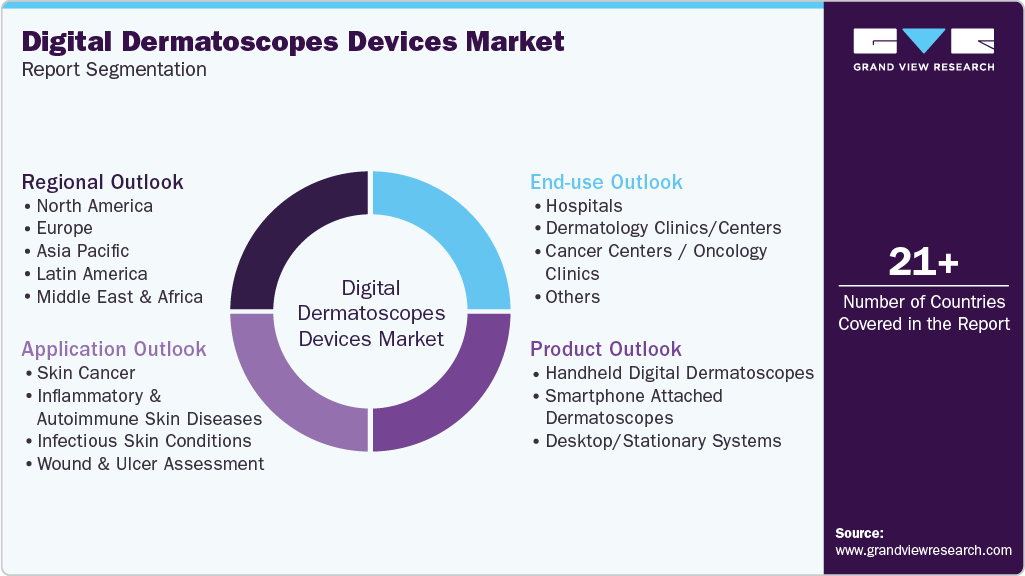
This report forecasts revenue growth at the global, regional and country levels and provides an analysis of the latest industry trends and opportunities in each of the sub-segments from 2021 to 2033. For this study, Grand View Research has segmented the global digital dermatoscopes devices market report on the basis of product, application, end use, and region:
 To learn more about this report, Download Free Sample Report
 -
Product Outlook (Revenue, USD Million, 2021 - 2033)
-
Handheld Digital Dermatoscopes
-
Polarized
-
Non-Polarized
-
Hybrid (Dual-Mode)
-
-
Smartphone Attached Dermatoscopes
-
Desktop/Stationary Systems
-
-
Application Outlook (Revenue, USD Million, 2021 - 2033)
-
Skin Cancer
-
Melanoma
-
Non-Melanoma
-
-
Inflammatory & Autoimmune Skin Diseases
-
Psoriasis
-
Eczema / Atopic Dermatitis
-
Others
-
-
Infectious Skin Conditions
-
Wound & Ulcer Assessment
-
-
End-use Outlook (Revenue, USD Million, 2021 - 2033)
-
Hospitals
-
Dermatology Clinics/Centers
-
Cancer Centers / Oncology Clinics
-
Others
-
-
Regional Outlook (Revenue, USD Million, 2021 - 2033)
-
North America
-
U.S.
-
Canada
-
Mexico
-
-
Europe
-
UK
-
Germany
-
France
-
Italy
-
Spain
-
Denmark
-
Sweden
-
Norway
-
-
Asia Pacific
-
China
-
Japan
-
South Korea
-
Thailand
-
Australia
-
India
-
-
Latin America
-
Brazil
-
Argentina
-
-
Middle East & Africa
-
South Africa
-
Saudi Arabia
-
UAE
-
Kuwait
-
-
Frequently Asked Questions About This Report
The global digital dermatoscopes devices market size was estimated at USD 3.3 million in 2025 and is expected to reach USD 3.6 million in 2026.
The global digital dermatoscopes devices market is expected to grow at a compound annual growth rate of 10.0% from 2026 to 2033 to reach USD 7.0 million by 2033.
Asia Pacific is the fastest-growing region over the forecast period.
Some key players operating in the digital dermatoscopes devices market include Canfield Scientific, FotoFinder Systems GmbH, HEINE Optotechnik, 3Gen / DermLite, MetaOptima Technology, Derma Medical Systems, Firefly Global, Tre T Medical Group, Optilia Instruments, Vivascope, DermLite, and Rudolf Riester GmbH.
The primary factors driving the market are healthcare providers increasingly seeking faster, more accurate, and connected skin solutions that align with telehealth and AI-assisted diagnostics.
The handheld digital dermatoscopes segment led with a 47.9% market share in 2025, while the smartphone attached dermatoscopes segment is the fastest-growing.
The infectious skin conditions segment held the largest market share in 2025.
The dermatology clinics/centers segment held the largest market share in 2025 and is expected to witness the fastest CAGR over the forecast period.
North America dominated with a 39.7% market share in 2025.
About the Author(s)
Medical Devices Research Team
Healthcare · Medical DevicesThis report was authored by the medical devices research team at Grand View Research - comprising two research analysts, one senior research analyst, and one industry expert - with specialized expertise in the medical devices segment of the healthcare industry. All findings are based on proprietary healthcare databases, executive interviews, and regulatory analysis, subject to internal peer review prior to publication.
Last Updated:
Speak to Analyst

Customize this report to your needs - add regions, segments, or data points, with 20% free customization.
Or view our licence options:


ISO 9001:2015 & 27001:2022 Certified
We are GDPR and CCPA compliant! Your transaction & personal information is safe and secure. For more details, please read our privacy policy.


