
- Home
- »
- Medical Devices
- »
-
Disposable Negative Pressure Wound Therapy Devices Market Report, 2026-2033GVR Report cover

Disposable Negative Pressure Wound Therapy Devices Market (2026 - 2033)
Size, Share & Trends Analysis Report By Type (Canister-free, Canister-based), By Wound Type (Acute Wound, Chronic Wound), By End-use, By Regional, And Segment Forecasts
Market Size, 2025
$421.7MMarket Estimate, 2026
$466.8MMarket Forecast, 2033
$929.2MCAGR, 2026–2033
10.3%Disposable Negative Pressure Wound Therapy Devices Market Summary
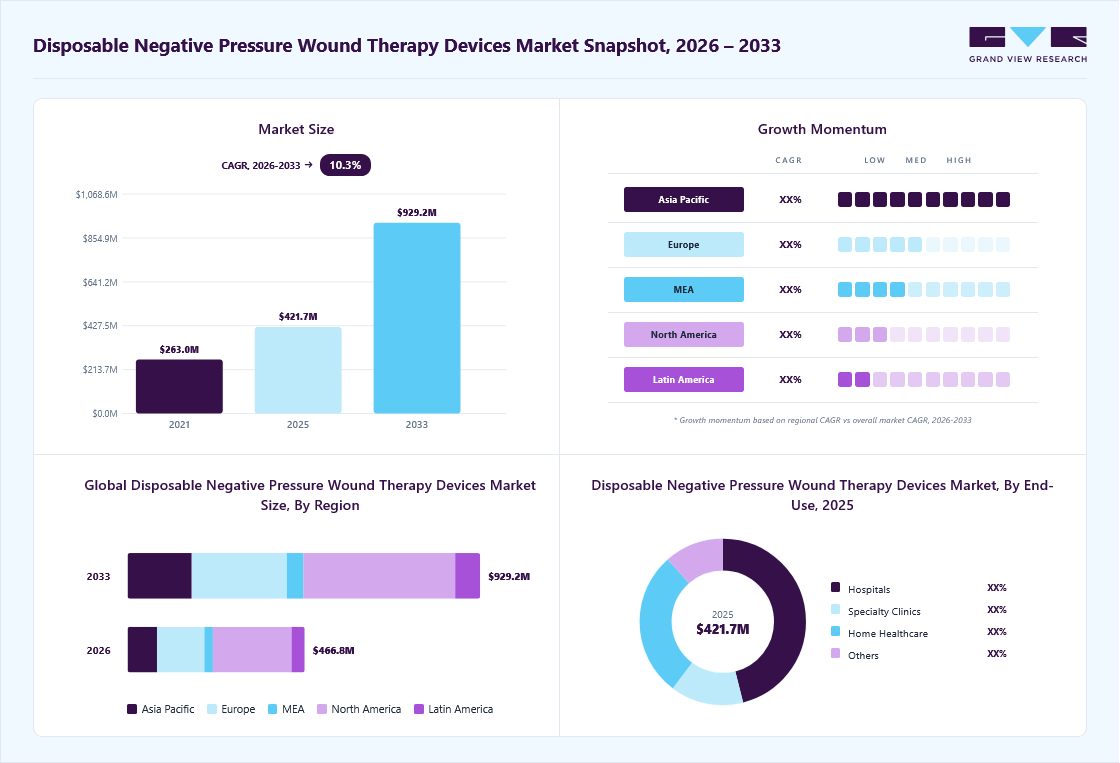
The global disposable negative pressure wound therapy devices market size was valued at USD 421.7 million in 2025 and is projected to grow from USD 466.8 million in 2026 to USD 929.2 million by 2033, at a CAGR of 10.3% from 2026 to 2033. The market in North America dominated with a revenue share of 43.9% in 2025. The market is driven by the growing burden of chronic and surgical wounds, particularly those associated with diabetes, aging populations, and the increasing number of surgical procedures.
 Source: Grand View Research, IR Documents, Primary Interviews, Paid DatabasesTo learn more about this report,
 Download Free Sample Report
Key Market Trends & Insights
- By type: Canister-free segment held the largest market share of 67.8% in 2025.
- By wound type: Chronic wounds segment held the largest market share of 57.1% in 2025.
- By end-use: Hospitals segment held the largest market share in 2025.
Regional Highlights
- Largest regional market: North America (43.9% revenue share, 2025)
- By country: The U.S. held the largest market share in 2025
Market Size & Forecast
- Market size in 2025: USD 421.7 Million
- Estimated market size in 2026: USD 466.8 Million
- Projected market size by 2033: USD 929.2 Million
- CAGR (2026-2033): 10.3%
Prism AI by Grand View Research Free to tryAsk a question about the disposable negative pressure wound therapy devices marketTry asking✓Every figure cited from GVR research Prefer the report? Download free sample →
The shift toward home healthcare and outpatient treatment is further accelerating demand for portable, single-use negative pressure wound therapy (NPWT) systems that are easy to apply and require minimal maintenance. In addition, the need to reduce healthcare costs, hospital stays, and infection rates, along with ongoing technological improvements that enhance usability and patient comfort, continues to support strong market growth.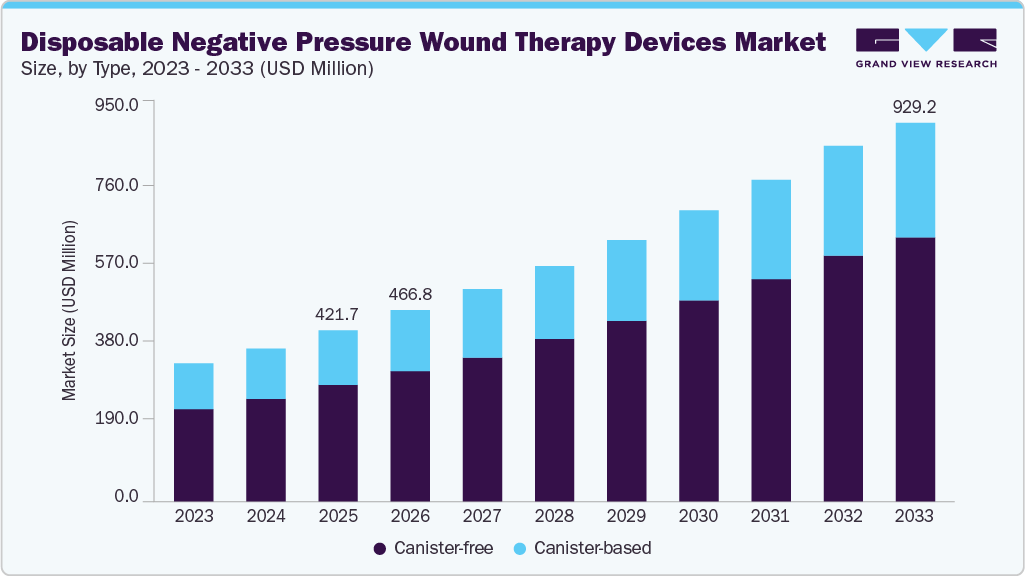 To learn more about this report, Download Free Sample Report
The rising prevalence of chronic and surgical wounds is a major driver of the disposable Negative Pressure Wound Therapy (NPWT) market, as conditions such as diabetic foot ulcers, pressure ulcers, venous leg ulcers, and post-operative wounds require advanced and consistent wound management. Disposable NPWT devices support faster healing and reduced infection risk, making them suitable for both acute and long-term wound care. As surgical volumes and chronic disease incidence continue to increase, demand for efficient, easy-to-use NPWT solutions is accelerating across healthcare settings.
Prevalence and Recurrence Rate of VLU in U.S. (2023)
Country
Population Group
Prevalence
Recurrence Rate (3 Months)
Recurrence Rate (12 Months)
Recurrence Rate (3 Years)
U.S.
People aged 65 and above
4%
22%
57%
78%
Source: Wiley Online Library
 To learn more about this report, Download Free Sample Report
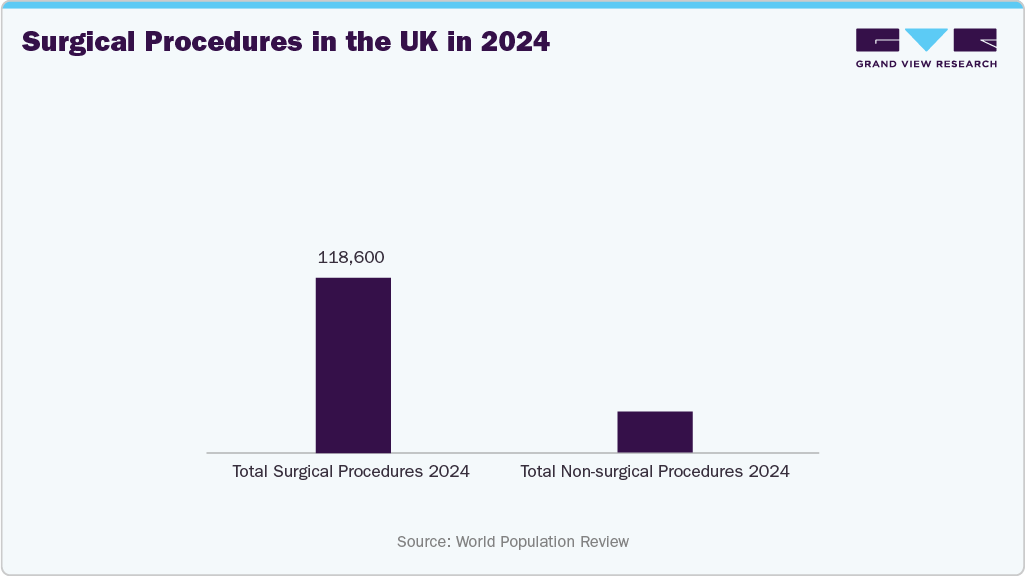
The increasing number of surgical procedures is a key driver of the disposable NPWT devices market, as effective post-operative wound management is crucial for reducing complications such as infections and delayed healing. Disposable NPWT systems are widely adopted for surgical incisions due to their ability to manage exudate, protect closed wounds, and support faster recovery. As surgical volumes continue to rise globally across orthopedic, cardiovascular, and general surgeries, demand for convenient, single-use NPWT solutions is increasing. According to the World Population Review, the total number of surgical procedures performed in the U.S. increased from 1.8 million in 2023 to 2.0 million in 2024, reflecting a steady rise in surgical volume.
 To learn more about this report, Download Free Sample Report
Technological advancements are a key driver of the disposable Negative Pressure Wound Therapy (NPWT) devices market, as innovations have significantly improved ease of use, portability, and treatment effectiveness. Modern disposable NPWT systems feature lightweight designs, longer battery life, quieter operation, and simplified application, making them suitable for both clinical and home-care settings. In addition, improved dressing materials and pressure control technologies enhance wound healing outcomes, encouraging wider adoption among clinicians and patients.
For instance, in April 2024, Smith+Nephew, a global medical technology company, announced the launch of its RENASYS EDGE Negative Pressure Wound Therapy (NPWT) System in the U.S., designed as a patient-centric solution for chronic wound management. The lightweight and compact system can be easily worn or carried, features a discreet canister, and operates quietly to support patient comfort and minimize disruption to daily activities.
“When designing the RENASYS EDGE System we kept patients and their needs in the forefront of our minds. It’s the very definition of our purpose - Life Unlimited - allowing patients to continue with their daily lives while receiving prescribed negative pressure wound therapy,” stated Laura Ackerman, Vice President and General Manager, NPWT at Smith+Nephew. “And now with SunMED in the commercial healthcare market and First Nation Group supporting our veterans, RENASYS EDGE will be able to create a lasting impact on the way patients experience the benefit of negative pressure wound therapy in the comfort of their home.”
"ciNPT is a prime example of an established standard of care that continues to evolve with evidence and technology," said Dr. H. John Cooper, study author and associate professor of orthopedic surgery, Columbia University Irving Medical Center, New York-Presbyterian Hospital. "This consensus underscores the benefits of the use of ciNPT across surgical sub-specialties in managing high-risk patients."
Market Concentration & Characteristics
The disposable NPWT devices market is characterized by a moderate to high degree of innovation, driven by advances in portability, user-friendly design, and integrated smart features that simplify wound care outside clinical settings. Continuous improvements in lightweight materials, customizable pressure settings, and battery efficiency are expanding applications and enhancing patient comfort. As demand grows for at-home and outpatient solutions, manufacturers are rapidly iterating to deliver more effective, cost-efficient, and accessible NPWT technologies. In November 2024, privately held Guard Medical Inc. announced that it had received the 2024 American Association of Hip and Knee Surgeons (AAHKS) Industry Innovation Award for NPseal, its next-generation Negative Pressure Wound Therapy (NPWT) dressing designed for the management of closed surgical incisions.
“We’re grateful for AAHKS’s recognition of our breakthrough NPseal technology. Winning this award highlights how NPseal addresses a significant need in the orthopedic space for both providers and patients” stated Machiel van der Leest, CEO of Guard Medical, “and this is evidenced by the swift adoption of NPseal in hospital systems and practices across the nation.”
 To learn more about this report, Download Free Sample Report
“The AAHKS Innovation Award is now in its third year and we have had a record number of submissions” stated Cory Calendine, MD, Chair of AAHKS Industry Relations Committee, “it is a competitive company award recognizing cutting edge technologies in the field of arthroplasty.”
The disposable NPWT devices market has seen a moderate level of mergers and acquisitions, with key medical device companies strategically acquiring innovative startups to broaden their product portfolios and accelerate entry into the growing at-home care segment. Rather than large consolidation waves, activity tends to focus on targeted deals that enhance technological capabilities and distribution networks, reflecting significant investor interest in this specialized niche of wound care. In December 2025, Solventum announced that it had successfully completed the acquisition of Acera Surgical, a privately held bioscience company specializing in the development and commercialization of fully engineered materials for regenerative wound care.
"Announcing and completing our first strategic acquisition is a significant milestone and the successful completion of another commitment made as part of our three-phased transformation plan," said Bryan Hanson, chief executive officer of Solventum. "The addition of Acera's innovative synthetic tissue matrix technology complements our existing advanced wound care portfolio, enhancing the solutions our specialized commercial team can provide to clinicians and decision makers in acute care settings. We are excited to welcome the Acera team to the Solventum family and look forward to our work together to accelerate growth and create significant value for patients, clinicians and shareholders."
The regulatory requirements in the disposable NPWT devices market significantly shape product development timelines and market entry, pushing manufacturers to invest in linical data and quality systems. While stringent standards ensure safety and build clinician trust, compliance costs can slow innovation and favor larger players with resources to navigate complex approval pathways. Disposable NPWT devices are regulated as medical devices and are typically classified as Class II (moderate risk) due to their active therapeutic function and contact with wounds. In certain cases, involving higher risk indications or extended use, specific NPWT systems or components may fall under Class III, requiring more rigorous regulatory approval.
The end-use concentration in the disposable NPWT devices market is shifting toward home healthcare and ambulatory care settings, as both patients and providers seek convenient, effective wound management outside traditional hospitals. While hospitals and specialized wound care centers remain significant users, the rise of outpatient services and home care programs is diversifying the customer base and fueling broader adoption.
Type Insights
Canister-free systems dominated the disposable NPWT market in 2025 due to their compact design, ease of use, and improved patient mobility. By eliminating bulky fluid canisters, these devices simplified therapy management and enhanced comfort in outpatient and home care settings. Their suitability for low-to-moderate exudate wounds and support for early discharge further reinforced widespread adoption.
Canister-based NPWT systems segment is expected to witness a significant growth during the forecast period as demand rises for managing high-exudate and complex wounds. These systems are increasingly preferred in hospitals and surgical settings where fluid volume control and monitoring are critical. The expansion of surgical procedures and trauma cases, along with improvements in canister design and capacity, is accelerating their adoption.
Wound Type Insights
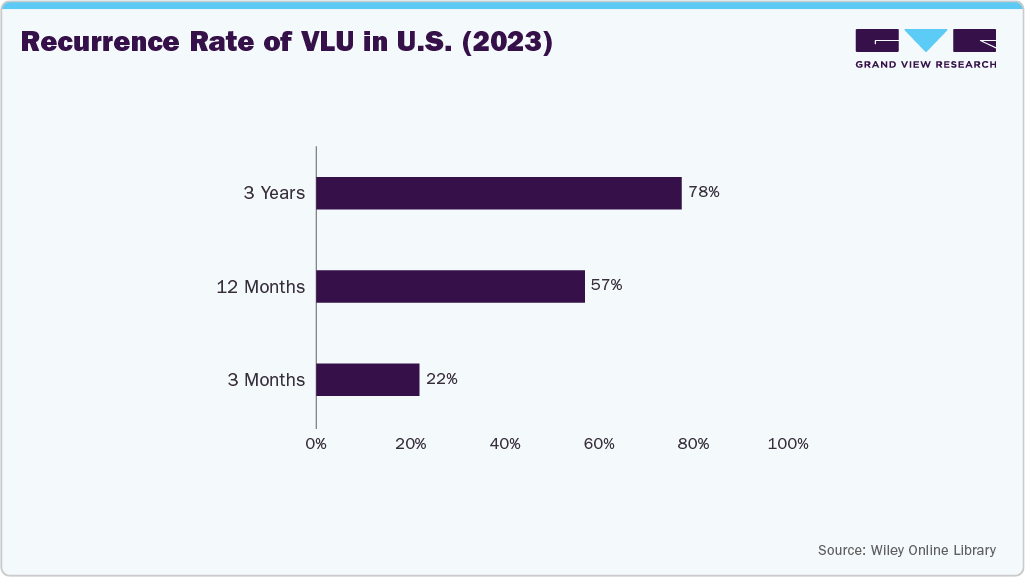
Chronic wounds dominated the application segment in 2025. Driven by the rising prevalence of diabetic foot ulcers, pressure ulcers, and venous leg ulcers associated with aging populations and increasing diabetes incidence. Disposable NPWT systems are widely preferred for chronic wound management due to their ease of use, portability, and suitability for long-term, home-based care, enabling consistent therapy while reducing hospital visits and overall treatment burden. For instance, in 2023, Wiley reported that in the U.S., up to 4% of individuals aged 65 and older are affected by venous leg ulcers. Despite initial healing, recurrence remains high, occurring in 22% of cases within 3 months, 57% within 12 months, and 78% among patients followed for three years.
 To learn more about this report, Download Free Sample Report
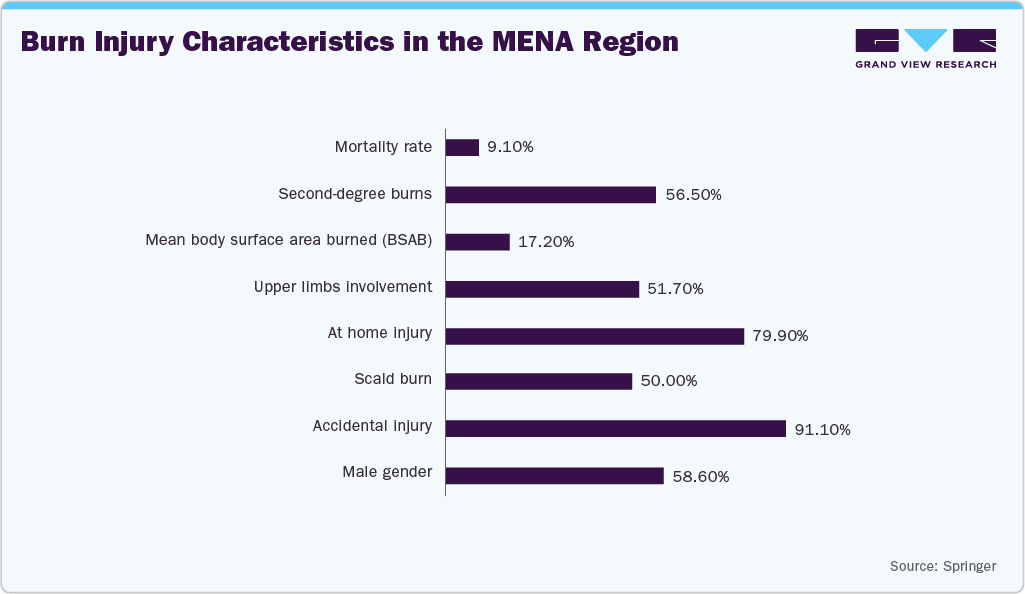
The acute wounds segment is expected to grow at the fastest CAGR in the disposable NPWT devices market. The increasing surgical volumes, trauma cases, burn injuries and post-operative wound management needs. Disposable NPWT devices are adopted for acute wounds due to their ability to reduce infection risk, manage exudate effectively, and support faster healing in short-term care settings, including hospitals and ambulatory surgical centers.
End-use Insights
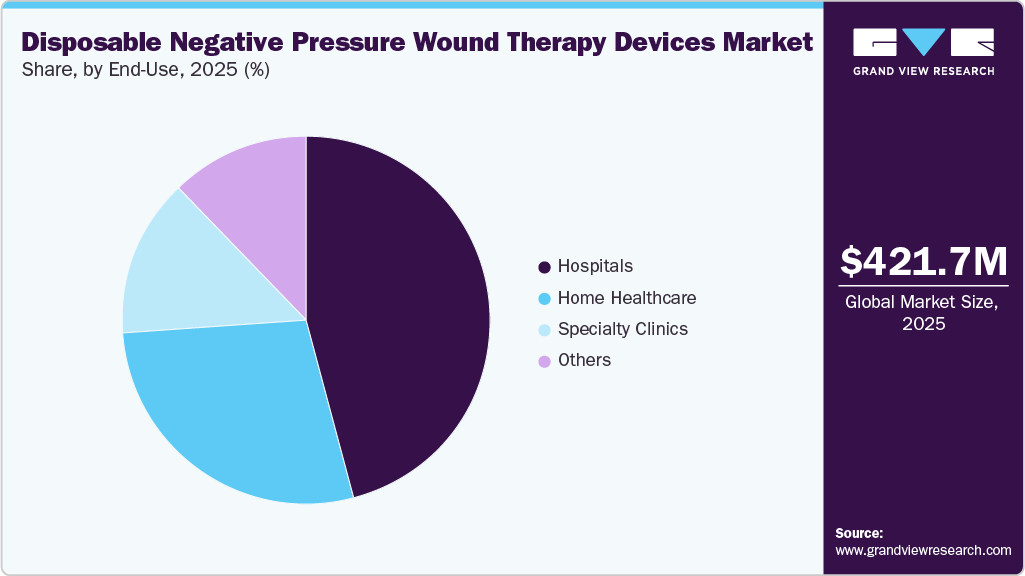
Hospitals dominated the end-use segment in the disposable NPWT devices market in 2025, as they remain the primary setting for managing complex surgical, traumatic, and high-risk wounds. High patient inflow, availability of trained clinicians, and the need for immediate post-operative wound management drive strong hospital adoption of disposable NPWT devices, particularly to reduce surgical site complications, shorten length of stay, and improve clinical outcomes.
 To learn more about this report, Download Free Sample Report
The home healthcare segment is expected to grow at the fastest CAGR in the disposable NPWT devices market. Supported by the growing shift toward outpatient treatment and cost-efficient wound care. The portability, user-friendly design, and low maintenance of disposable NPWT systems make them ideal for home use, allowing uninterrupted therapy while helping to lower hospital readmissions and overall healthcare expenditures. For instance, in July 2024, AOTI, Inc., a medical technology company dedicated to durable wound healing and amputation prevention, announced that it received U.S. FDA 510(k) clearance (K241515) for its NEXA Negative Pressure Wound Therapy (NPWT) System for use in the home care setting. The updated labeling expands the system’s indications to include acute, extended, and home care environments, enabling broader commercialization across all care sites in the U.S., building on existing international approvals for home care use.
Dr. Mike Griffiths, Chief Executive Officer and President of AOTI, INC. commented: "I am delighted that the FDA has granted clearance for our NEXA NPWT device such that it can now be marketed for use in the home care setting too, bringing it in line with the approvals we already have in international markets. We continue to believe that the NEXA NPWT System offers significant capabilities, in a more cost-effective platform, to transition patients more effectively from hospital to the community and reduce the risk of subsequent re-admission due to complications with their wounds. I would like to thank the entire team at AOTI for all their hard work and diligence in providing a thorough submission to the Agency such that this important clearance was received so expeditiously."
Regional Insights
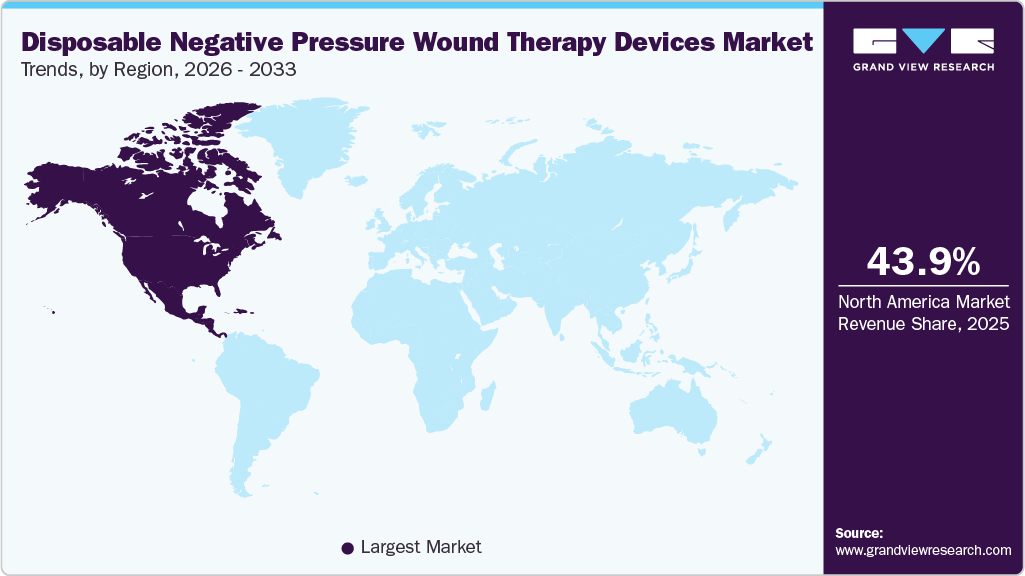
The North America disposable negative pressure wound therapy devices market held the largest share and accounted for 43.9% of global revenue in 2025. This can be attributed to the increasing prevalence of chronic and surgical wounds, widespread adoption of advanced wound care technologies, and favorable reimbursement policies that support outpatient and home healthcare. Healthcare providers are integrating portable disposable NPWT systems to enhance patient comfort, reduce hospital stays, and improve clinical outcomes. Furthermore, ongoing product innovations and strategic collaborations among key players are further driving market expansion across the region.
 To learn more about this report, Download Free Sample Report
U.S. Disposable Negative Pressure Wound Therapy Devices Market Trends
The disposable NPWT devices market in the U.S. held the largest share in North America's disposable negative pressure wound therapy devices market in 2025. Hospitals and home healthcare providers are adopting portable wound therapy solutions to improve patient outcomes and reduce overall care costs. Strong awareness of the benefits of advanced wound care, supportive reimbursement frameworks, and the high prevalence of chronic and surgical wounds are key drivers of market expansion. In addition, ongoing innovations in user-friendly designs and digital features are further encouraging uptake across diverse care settings.
To learn more about this report, Download Free Sample Report Europe Disposable Negative Pressure Wound Therapy Devices Market Trends
In Europe, the disposable NPWT devices market is expanding as healthcare systems prioritize cost-effective wound care and outpatient treatment models, supported by the growing incidence of chronic wounds and increasing demand for home-based therapies. Adoption is further propelled by favorable reimbursement policies in several countries and heightened clinician awareness of NPWT benefits. Ongoing product innovations tailored to regional needs are strengthening market growth across Western and emerging European markets.
The UK disposable NPWT devices market in 2025 is shaped by NHS and private healthcare providers emphasize cost-effective, patient-centered wound care solutions. The rising prevalence of chronic wounds and a growing shift toward community and home healthcare settings are boosting demand for portable, easy-to-use NPWT. Furthermore, supportive clinical guidelines and pilot programs exploring advanced wound therapies are contributing to the broader adoption of these therapies across care pathways. According to the JMIR Research Protocol, in 2024, more than 4.3 million people in the UK were diagnosed with diabetes, and it is estimated that 19%-34% of these individuals will develop diabetes-related foot ulcers (DFUs) at some point during their lifetime.
The disposable NPWT devices market in France is witnessing significant growth as healthcare providers focus on efficient wound management across hospital and community care settings. The emphasis on reducing inpatient stays and optimizing healthcare spending is encouraging the adoption of portable, single-use NPWT systems. In addition, growing clinical awareness of advanced wound therapies and gradual integration into post-surgical and chronic wound care pathways are supporting market expansion.
Asia Pacific Disposable Negative Pressure Wound Therapy Devices Market Trends
The disposable NPWT devices market is emerging rapidly in the Asia Pacific, supported by expanding healthcare infrastructure and rising awareness of advanced wound care solutions. The increasing prevalence of diabetes, traumatic injuries, and post-surgical wounds is driving demand, particularly in urban hospitals and home healthcare settings. Moreover, cost-sensitive innovations and growing adoption of outpatient and home-based care models are shaping positive market momentum across the region.
The disposable NPWT devices market in China is growing as healthcare providers seek modern wound care solutions to manage the rising burden of chronic and surgical wounds. Rapid urbanization, increased investment in healthcare facilities, and expanding home care services are boosting demand for user-friendly, portable NPWT systems. The heightened clinical awareness and efforts to integrate advanced therapies into standard treatment protocols are driving the broader adoption of these therapies. According to an article published in 2025 by the National Library of Medicine, the prevalence of diabetic foot (DF) is estimated at 6.3%, while the reported annual incidence ranges from 0.1% to 11%.
Latin America Disposable Negative Pressure Wound Therapy Devices Market Trends
The disposable NPWT devices market in Latin America is gradually expanding as healthcare systems recognize the value of advanced wound care in both hospital and outpatient settings. The growing prevalence of chronic conditions such as diabetes and limited access to prolonged inpatient care are encouraging the adoption of portable, easy-to-use NPWT solutions. The cost sensitivity and varying reimbursement environments mean that market growth is stronger in urban centers and private healthcare networks.
MEA Disposable Negative Pressure Wound Therapy Devices Market Trends
The disposable NPWT devices market in the Middle East & Africa is showing considerable progress as healthcare providers incorporate advanced wound care solutions into clinical practice. The rising burden of diabetes-related wounds and trauma, along with ongoing investments in healthcare infrastructure, is supporting demand for portable and easy-to-use NPWT systems. Although cost limitations slow adoption in some areas, uptake is growing in urban hospitals and private healthcare facilities.
Diabetic Foot Ulcers (DFUs) in Saudi Arabia (2024)
Parameter
Statistic
Lifetime risk of developing DFU in diabetes patients
19-34%
Mortality within 12 months of DFU
~5%
Mortality within 5 years of DFU
~42%
Amputation risk
Higher in patients with diabetes compared to non-diabetics
Source: NCBI
Key Disposable Negative Pressure Wound Therapy Devices Company Insights
The disposable NPWT market is led by a mix of well-established medical device companies and innovative smaller players, creating a moderately competitive landscape. Large manufacturers generally command higher market shares due to strong brand presence and extensive distribution channels, while emerging companies are increasing their share by offering focused, cost-effective, and user-friendly solutions.
Key Disposable Negative Pressure Wound Therapy Devices Companies:
The following key companies have been profiled for this study on the disposable negative pressure wound therapy (NPWT) devices market.
- Smith & Nephew
- Convatec
- DeRoyal Industries, Inc.
- Mölnlycke Health Care AB
- Medela (Medaxis LLC)
- Solventum
- Cardinal Health
- Genadyne Biotechnologies, Inc.
- Pensar Medical ( Lion Street Medical, LLC)
- Guard Medical
- Sunmedic AB
- Advanced Oxygen Therapy Inc.
Recent Developments
-
In December 2025, Solventum announced the consensus recommendations issued by an international, multidisciplinary panel of surgeons and wound care experts regarding the clinical use of closed incision negative pressure therapy (ciNPT) with reticulated open-cell foam (ROCF) dressings.
-
In December 2025, Solventum announced that it had successfully completed the acquisition of Acera Surgical, a privately held bioscience company specializing in the development and commercialization of fully engineered materials for regenerative wound care.
-
In November 2024, Guard Medical Inc., a privately held company, announced that it had received the 2024 American Association of Hip and Knee Surgeons (AAHKS) Industry Innovation Award for NPseal, its next-generation NPWT dressing designed for the management of closed surgical incisions.
-
In July 2024, AOTI, Inc., a medical technology company focused on durable wound healing and amputation prevention, announced that the U.S. FDA granted 510(k) clearance (K241515) for its NEXA Negative Pressure Wound Therapy (NPWT) System to be used in home care settings. The updated labeling now extends indications to include acute, extended, and home care environments, enabling the company to market the system across all care sites in the U.S., particularly supporting expansion into the growing home healthcare segment.
-
In August 2024, Pensar Medical, a pioneer in NPWT, announced a strategic partnership with Centurion Therapeutics to distribute its Microdoc single-use NPWT (sNPWT) platform. The collaboration focuses on broadening access to advanced wound care solutions while improving patient outcomes through the expanded availability of innovative wound management technologies.
Disposable Negative Pressure Wound Therapy Devices Market Report Scope
Report Attribute
Details
Market size in 2025
USD 421.7 million
Estimated market size in 2026
USD 466.8 million
Projected market size by 2033
USD 929.2 million
Growth rate
CAGR of 10.3% from 2026 to 2033
Base year for estimation
2025
Historical data
2021 - 2024
Forecast period
2026 - 2033
Quantitative units
Revenue in USD million/billion, and CAGR from 2026 to 2033
Report coverage
Revenue forecast, company ranking, competitive landscape, growth factors, and trends
Segments covered
Type, wound type, end-use, region
Regional scope
North America; Europe; Asia Pacific; Latin America; MEA
Country scope
U.S.; Canada; Mexico; Germany; UK; France; Norway; Denmark; Sweden; Spain; China; Japan; India; South Korea; Australia; Brazil; Argentina; Saudi Arabia; UAE; South Africa; Kuwait
Key companies profiled
Smith & Nephew; Convatec; DeRoyal Industries, Inc.; Mölnlycke Health Care AB; Medela (Medaxis LLC); Solventum; Cardinal Health; Genadyne Biotechnologies, Inc.; Pensar Medical ( Lion Street Medical, LLC); Guard Medical; Sunmedic AB; Advanced Oxygen Therapy Inc.
Customization scope
Free report customization (equivalent up to 8 analysts working days) with purchase. Addition or alteration to country, regional & segment scope.
Pricing and purchase options
Avail customized purchase options to meet your exact research needs. Explore purchase options
Global Disposable NPWT Devices Market Report Segmentation
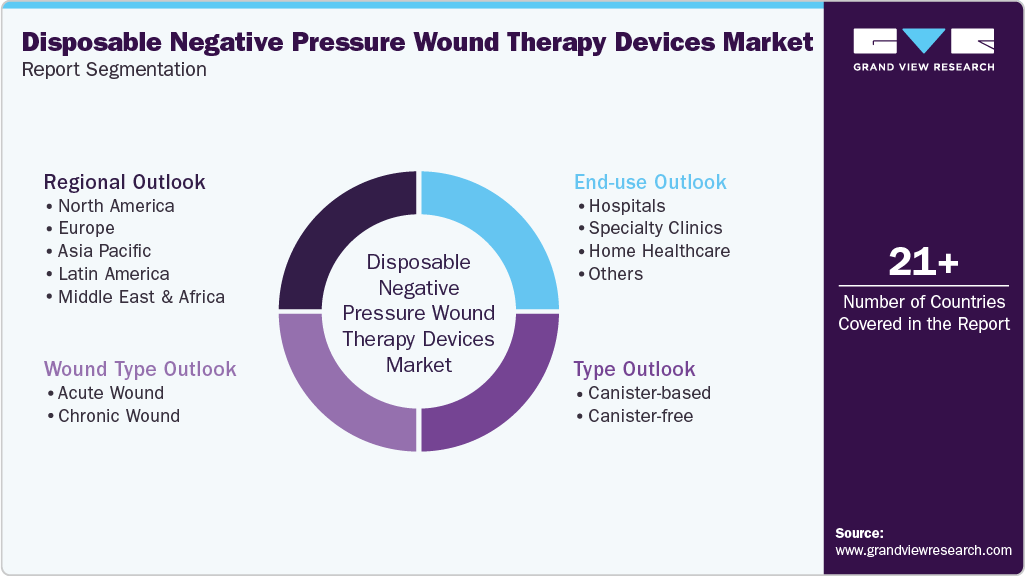
This report forecasts revenue growth at global, regional, and country levels and provides an analysis on the latest industry trends in each of the sub-segments from 2021 to 2033. For this study, Grand View Research has segmented the global disposable negative pressure wound therapy devices market report on the basis of type, wound type, end-use, and region:
 To learn more about this report, Download Free Sample Report
-
Type Outlook (Revenue, USD Million, 2021 - 2033)
-
Canister-based
-
Canister-free
-
-
Wound Type Outlook (Revenue, USD Million, 2021 - 2033)
-
Acute Wound
-
Surgical & Traumatic Wounds
-
Burns
-
Chronic Wound
-
-
Diabetic Foot Ulcers
-
Pressure Ulcers
-
Venous Leg Ulcers
-
Other Chronic Wounds
-
-
-
End-use Outlook (Revenue, USD Million, 2021 - 2033)
-
Hospitals
-
Specialty Clinics
-
Home Healthcare
-
Others
-
-
Regional Outlook (Revenue, USD Million, 2021 - 2033)
-
North America
-
U.S.
-
Canada
-
Mexico
-
-
Europe
-
Germany
-
UK
-
France
-
Italy
-
Spain
-
Sweden
-
Denmark
-
Norway
-
-
Asia Pacific
-
Japan
-
China
-
India
-
Australia
-
South Korea
-
Thailand
-
-
Latin America
-
Brazil
-
Argentina
-
-
Middle East & Africa
-
South Africa
-
Saudi Arabia
-
UAE
-
Kuwait
-
-
Frequently Asked Questions About This Report
The hospitals segment held the largest revenue share in 2025, while home healthcare is the fastest-growing segment.
The chronic wounds segment led with a 57.1% revenue share in 2025, while acute wounds is the fastest-growing type.
North America dominated with a 43.9% revenue share in 2025.
The global disposable negative pressure wound therapy devices market is expected to grow at a CAGR of 10.3% from 2026 to 2033, reaching USD 929.2 million by 2033.
The global disposable negative pressure wound therapy (NPWT) devices market size was valued at USD 421.7 million in 2025 and is estimated at USD 466.8 million for 2026.
Canister-free systems segment dominated the disposable NPWT market with 67.8% revenue share in 2025 due to their compact design, ease of use, and improved patient mobility. By eliminating bulky fluid canisters, these devices simplified therapy management and enhanced comfort in outpatient and home care settings. Their suitability for low-to-moderate exudate wounds and support for early discharge further reinforced widespread adoption.
Key players include Smith & Nephew; Convatec; DeRoyal Industries, Inc.; Mölnlycke Health Care AB; Medela (Medaxis LLC); Solventum; Cardinal Health; Genadyne Biotechnologies, Inc.; Pensar Medical ( Lion Street Medical, LLC); Guard Medical; Sunmedic AB; Advanced Oxygen Therapy Inc.
The market is driven by the growing burden of chronic and surgical wounds, particularly those associated with diabetes, aging populations, and the increasing number of surgical procedures. The shift toward home healthcare and outpatient treatment is further accelerating demand for portable, single-use NPWT systems that are easy to apply and require minimal maintenance. In addition, the need to reduce healthcare costs, hospital stays, and infection rates, along with ongoing technological improvements that enhance usability and patient comfort, continues to support strong market growth.
About the Author(s)
Medical Devices Research Team
Healthcare · Medical DevicesThis report was authored by the medical devices research team at Grand View Research - comprising two research analysts, one senior research analyst, and one industry expert - with specialized expertise in the medical devices segment of the healthcare industry. All findings are based on proprietary healthcare databases, executive interviews, and regulatory analysis, subject to internal peer review prior to publication.
Last Updated:
Speak to Analyst

Customize this report to your needs - add regions, segments, or data points, with 20% free customization.
Or view our licence options:


ISO 9001:2015 & 27001:2022 Certified
We are GDPR and CCPA compliant! Your transaction & personal information is safe and secure. For more details, please read our privacy policy.


