
- Home
- »
- Advanced Interior Materials
- »
-
Electric Baseboard Heater Market Size, Share Report, 2033GVR Report cover

Electric Baseboard Heater Market (2026 - 2033)
Size, Share & Trends Analysis Report By Distribution Channel (Online, Retail Stores), By Application (Residential, Commercial), By Type, By Product, By Region And Segment Forecasts
Market Size, 2025
$2.9BMarket Estimate, 2026
$3.0BMarket Forecast, 2033
$4.0BCAGR, 2026–2033
4.1%Electric Baseboard Heater Market Summary
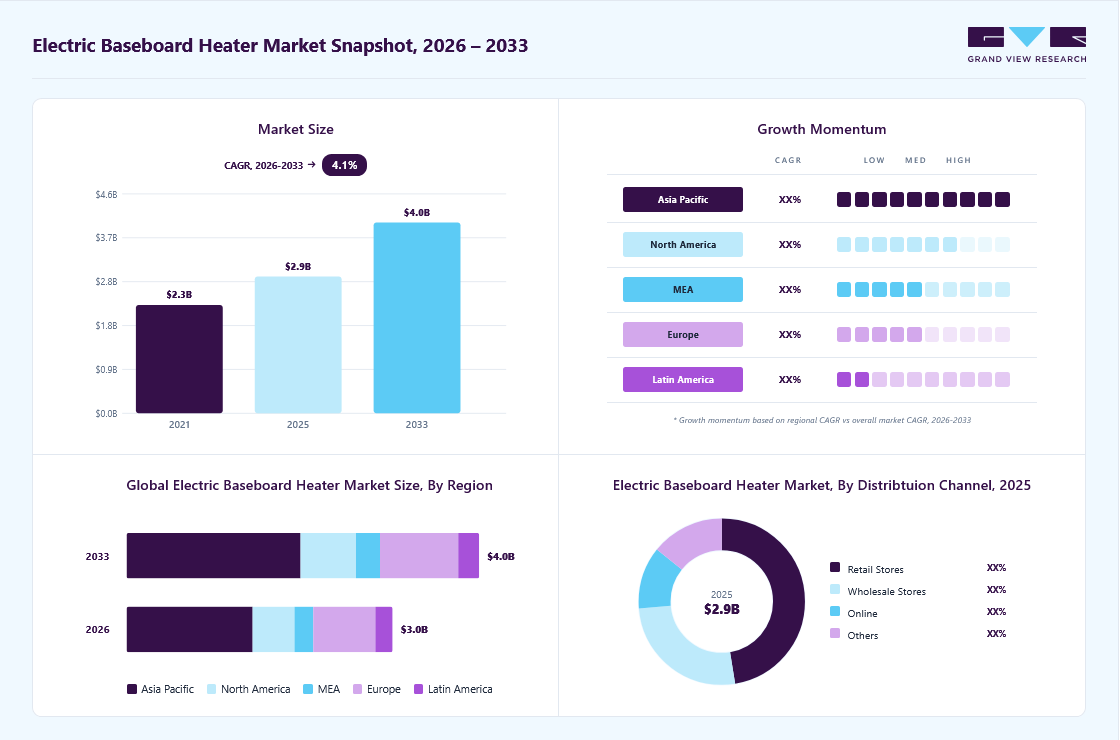
The global electric baseboard heater market size was valued at USD 2.9 billion in 2025 and is projected to grow from USD 3.0 billion in 2026 to USD 4.0 billion by 2033, at a CAGR of 4.1% from 2026 to 2033. Asia Pacific dominated the market, accounting for a revenue share of 47.0% in 2025. The growing demand for energy-efficient space heating solutions is a major factor driving the market.
 Source: Grand View Research, IR Documents, Primary Interviews, Paid DatabasesTo learn more about this report,
 Download Free Sample Report
 Key Market Trends & Insights
- By type: Fixed segment led the market with the largest revenue share of 79.0% in 2025.
- By distribution channel: Retail stores segment led the market with the largest revenue share of 47.4% in 2025.
- By product: Electric type segment led the market with the largest revenue share of 82.9% in 2025.
- By application: Residential segment led the market with the largest revenue share of 43.7% in 2025.
Regional Highlights
- Largest regional market: Asia Pacific (47.0% revenue share, 2025)
- By country: China held the largest market share in 2025.
Market Size & Forecast
- Market size in 2025: USD 2.9 Billion
- Estimated market size in 2026: USD 3.0 Billion
- Projected market size by 2033: USD 4.0 Billion
- CAGR (2026-2033): 4.1%
Three ways to get this report
Buy it, customize it, or ask a question.Ask an Analyst
Analyst response in 1 business day
- AccessReport author, directly
- Reply timeWithin 1 working day
- No sales callDirect answer only
- FormatEmail reply
- CostFree, no cost
Get the Full Report
What the study covers
- FormatsPDF · Excel · Dashboard
- Timeline2026–2033 annual, 2025 base
- Coverage20+ countries, 5 regions
- Companies10+ key players profiled
Customize the Report
20% free customization
- IncludeCountries, segments, points
- TailorTo your product definition
- ExtendDeeper competitor detail
- OrA fully bespoke study
- Turnaround5–10 working days
These heaters are increasingly preferred for residential and small commercial applications due to their low installation costs and ease of use. Another key driver is the rising construction of new residential and commercial buildings, especially in colder regions like North America and Europe. As modern buildings focus on zone heating and decentralized systems, electric baseboard heaters offer an effective supplemental solution. Furthermore, the trend toward smart homes accelerates the adoption of programmable and Wi-Fi-enabled electric baseboard units. These innovations cater to consumer preferences for comfort, convenience, and energy savings.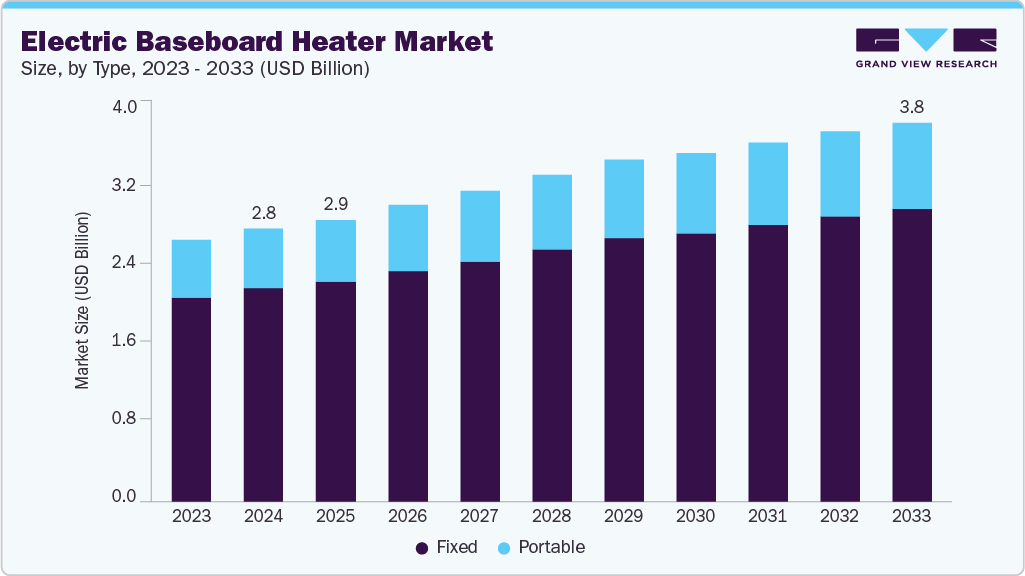 To learn more about this report, Download Free Sample Report
 Market Dynamics
The electric baseboard heater market is influenced by the continued demand for simple, reliable, and space-specific heating solutions in residential and light commercial buildings. Market growth is supported by renovation of existing properties, replacement of aging heating equipment, and the availability of electric heating in areas with limited access to natural gas infrastructure. Product innovation, including improved heating efficiency, digital temperature controls, and smart home integration, is enhancing customer adoption. Market expansion is constrained by high electricity costs in certain regions and increasing competition from energy-efficient heat pump systems. Growth opportunities are linked to building electrification programs, energy efficiency regulations, and the introduction of advanced electric baseboard heaters with enhanced control features and reduced power consumption.
The replacement of aging heating equipment and increasing residential renovation projects are supporting demand for electric baseboard heaters. Their ease of installation and suitability for retrofit applications make them a practical solution for upgrading existing buildings. Demand remains strong in regions where zone heating is widely preferred for improving indoor comfort. Product enhancements such as electronic thermostats and programmable temperature controls further improve operational efficiency. These factors continue to strengthen market demand.
Higher electricity expenses remain a limiting factor for the adoption of electric baseboard heaters in several regions. Consumers are increasingly evaluating heating systems based on long-term operating costs and energy efficiency. Heat pumps and other advanced heating technologies offer attractive alternatives for new construction projects. Electric baseboard heaters are also less suitable for heating large spaces efficiently. These factors moderate market expansion.
The transition toward building electrification is creating favorable opportunities for electric heating technologies. Regulatory emphasis on improving building energy performance is encouraging the adoption of advanced heating systems with enhanced efficiency. Manufacturers are introducing smart-enabled electric baseboard heaters featuring programmable controls and connectivity options. Renovation of older residential buildings is also generating replacement demand. These developments are creating new growth avenues across residential and light commercial sectors.
Market Concentration & Characteristics
The global electric baseboard heater industry is moderately fragmented, with several regional and international players. No single company holds a dominant market share, leading to healthy competition across various geographies. While large firms offer technologically advanced products, smaller manufacturers cater to niche demands and regional preferences. This fragmentation encourages continuous innovation and competitive pricing within the industry.
The electric baseboard heater industry is witnessing steady innovation focused on energy efficiency and smart control features. Manufacturers are integrating programmable thermostats, Wi-Fi connectivity, and compatibility with home automation systems. Design improvements for sleek and compact models are also gaining traction to suit modern interiors. These innovations aim to enhance user comfort while lowering energy costs.
 To learn more about this report, Download Free Sample Report
 Mergers and acquisitions in this market are moderate, mostly led by companies aiming to broaden their product lines and enter new regions. Larger heating and HVAC firms often acquire smaller, specialized manufacturers to boost their capabilities. Collaborations also help share technologies and expand distribution channels. Despite this, many local and regional players still operate independently.
Government policies supporting cleaner energy and energy-efficient appliances are shaping market growth. Incentives for electric heating over gas-based systems are helping drive adoption. Standards related to energy consumption and product safety are becoming stricter. As a result, manufacturers must ensure compliance to stay competitive and maintain consumer trust.
Analyst Perspective
The electric baseboard heater market is growing steadily, supported by replacement installations, residential renovation activities, and continued adoption of electric heating systems in cold-climate regions. These heaters remain a preferred solution for residential apartments, multi-family housing, and light commercial buildings because of their simple installation, low upfront cost, and ability to provide zonal heating without requiring ductwork. Growing interest in energy-efficient building systems is encouraging manufacturers to introduce programmable thermostats, smart connectivity, and improved heating controls that enhance comfort while reducing electricity consumption. At the same time, advances in product design, compact form factors, and quieter operation are strengthening their appeal in both new construction and retrofit applications. Although competition from heat pumps and other high-efficiency heating technologies is increasing, electric baseboard heaters continue to maintain a strong position in regions with established electric heating infrastructure and applications where localized heating remains the preferred solution.
Type Insights
Based on type, the fixed segment led the market with the largest revenue share of 79.0% in 2025, due to their widespread use in residential and small commercial settings. These systems are preferred for permanent heating solutions, offering consistent warmth and better energy efficiency. They are commonly installed in colder regions where long-term heating is essential. Their durability and compatibility with centralized controls further support their dominance.
The portable electric baseboard heater segment is expected to grow fastest due to rising demand for flexible and temporary heating solutions. These units are ideal for renters, small apartments, and seasonal use, offering easy relocation and minimal setup. Increasing urbanization and smaller living spaces are fueling their popularity. Moreover, their affordability makes them attractive to budget-conscious consumers.
Distribution Channel Insights
Based on distribution channel, the retail stores segment led the market with the largest revenue share of 47.4% in 2025, owing to their widespread availability and consumer trust. Buyers prefer in-store purchases to physically evaluate product size, design, and performance before buying. These outlets also offer immediate product availability and after-sales support. Established retail chains often carry popular brands, reinforcing their dominance.
Online sales channels are witnessing the fastest growth driven by increasing internet penetration and digital shopping trends. E-commerce platforms offer a wide product range, competitive pricing, and doorstep delivery, attracting tech-savvy consumers. Detailed product reviews and comparisons help buyers make informed decisions. The convenience and growing familiarity with online shopping continue to boost this segment rapidly.
Product Insights
Based on product, the electric type segment led the market with the largest revenue share of 82.9% in 2025. Electric baseboard heaters dominate the market due to their lower upfront cost and simple installation. They are widely used in residential applications where centralized heating isn’t available. These heaters provide quick, zone-specific warmth and require minimal maintenance. Their availability in various sizes and styles further supports their widespread use.
Hydronic baseboard heaters are expected to be the growing segment due to their superior energy efficiency and consistent heat distribution. They retain heat longer, making them ideal for prolonged use in colder climates. Growing awareness about long-term energy savings is boosting their demand. In addition, their quieter operation and enhanced comfort appeal to high-end residential buyers.
Application Insights
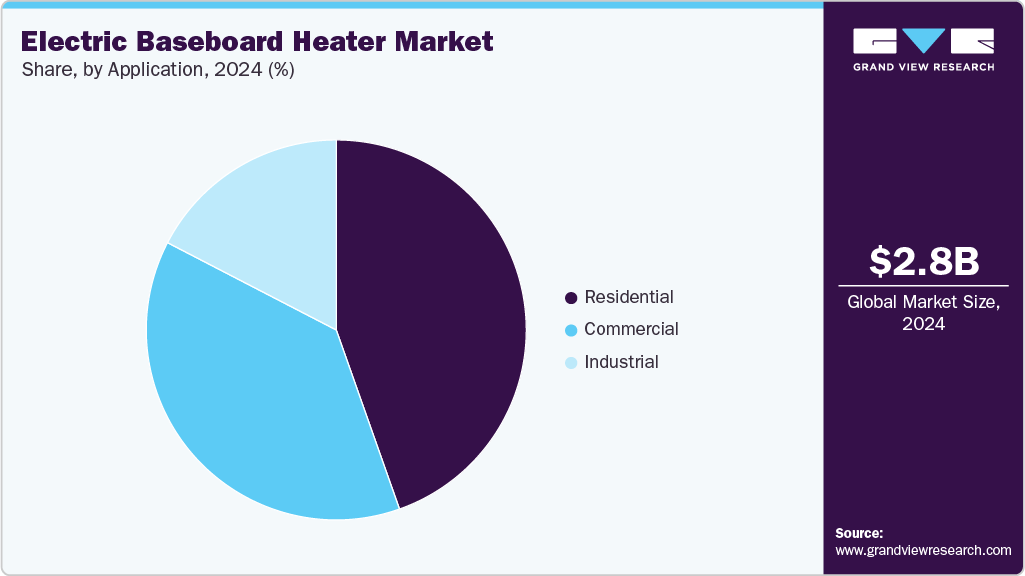
Based on application, the residential segment led the market with the largest revenue share of 43.7% in 2025 due to its widespread use in homes and apartments for space-specific heating. These systems are favored for their affordability, ease of installation, and ability to deliver zoned comfort without ductwork. Demand is especially strong in colder climates across North America and Europe, where room-by-room heating is essential. The rising trend of energy-efficient retrofitting in older homes further strengthens their market dominance.
 To learn more about this report, Download Free Sample Report
 The commercial segment is the fastest-growing globally as more offices, retail outlets, and service facilities adopt efficient, low-maintenance heating solutions. Businesses increasingly choose electric baseboard heaters for supplemental heating in individual zones, especially where central systems are costly or impractical. Growth is driven by renovation activity, stricter energy efficiency mandates, and the need for space-specific temperature control. The expansion of commercial infrastructure in emerging markets is also accelerating product adoption.
Regional Insights
North America is growing at a significant CAGR of 3.4% in the electric baseboard heater market, driven by the rising adoption of energy-efficient and zone-based heating systems in the U.S. and Canada. Consumer preference for smart and programmable heaters is boosting sales. The region’s colder climate increases the need for reliable space heating solutions. Supportive regulations and incentives for clean energy heating further propel market growth.
U.S. Electric Baseboard Heater Market Trends
The electric baseboard heater market in the U.S. leads the North American market and accounts for a 79.3% share due to its prolonged winter seasons and strong demand for zone-based heating systems. High adoption in residential and small commercial buildings and strict energy-efficiency regulations drive widespread usage. Advanced infrastructure and integration with smart home systems further support market penetration.
Mexico electric baseboard heater market is the fastest-growing in North America, supported by urban development and expanding residential construction. Increased awareness of energy-efficient appliances and a gradual shift toward electric heating solutions fuel adoption. Electric heaters become a viable option for localized comfort as electrification spreads across more regions.
Europe Electric Baseboard Heater Market Trends
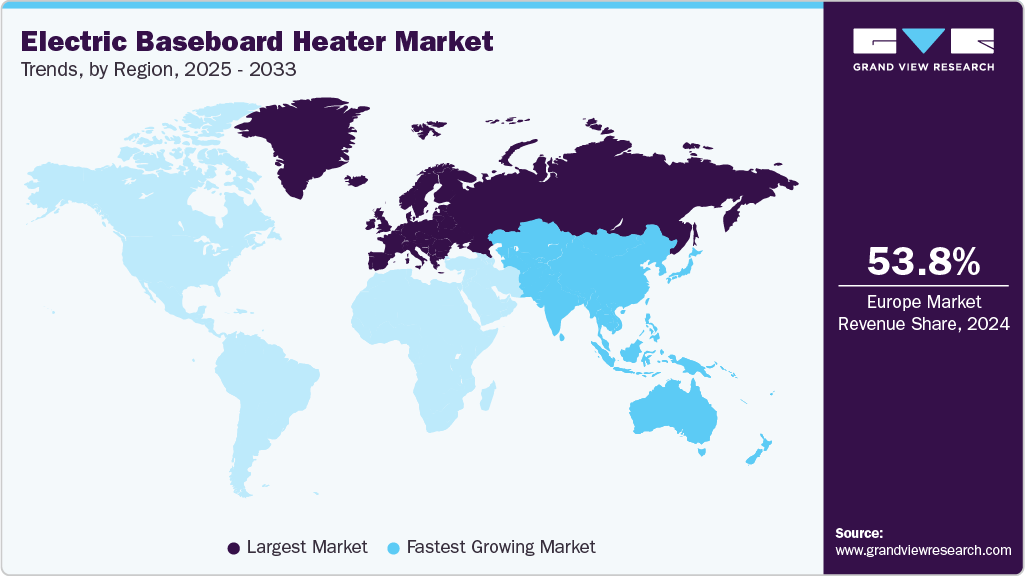
The electric baseboard heater market in Europe accounted for 53.8% market share in 2025, due to increasing retrofitting activities and demand for sustainable heating alternatives. Countries like Germany, the UK, and Nordic nations are adopting electric baseboard heaters in residential and commercial spaces. Energy efficiency norms and decarbonization goals drive product innovation. The shift away from gas-based heating supports gradual adoption.
Germany electric baseboard heater market dominated the European market due to strict energy efficiency regulations and a strong emphasis on reducing carbon emissions. The country’s commitment to sustainability has led to widespread adoption of electric heating in residential and commercial spaces. Increased retrofitting of older buildings and a high level of integration with smart control systems are also contributing factors.
The electric baseboard heater market in the UK is the fastest-growing market in Europe, driven by rising interest in clean and efficient heating alternatives. Government initiatives aimed at promoting low-emission technologies are encouraging the replacement of outdated heating systems. The growing popularity of smart home solutions is also increasing the appeal of modern, programmable baseboard heaters.
Asia Pacific Electric Baseboard Heater Market Trends
Asia Pacific dominated the electric baseboard heater market with the largest revenue share of 47.0% in 2025. The electric baseboard heater market in Asia Pacific is a growing global market fueled by rapid urbanization and rising demand for affordable heating in colder regions like China, Japan, and South Korea. Growth in residential construction and rising disposable incomes are boosting product adoption. Government initiatives promoting energy-efficient appliances also support market expansion. Furthermore, increased electrification in rural areas fuels further demand.
 To learn more about this report, Download Free Sample Report
 The electric baseboard heater market in China held the largest share in the Asia Pacific region in 2025. China electric baseboard heater market dominated Asia Pacific due to rapid urban development and a strong push for cleaner heating alternatives. The country is transitioning away from coal-based systems in favor of electric heating, particularly in northern regions. Supportive government initiatives promoting energy efficiency and green buildings are fueling this shift. Moreover, domestic manufacturing strength and widespread infrastructure projects are accelerating product deployment.
The electric baseboard heater market in India is experiencing steady growth, particularly in cooler regions such as the north and hilly areas. Urbanization, rising income levels, and increased construction activity increase demand for efficient heating systems. Consumers are becoming more aware of energy-saving options, and builders are adopting eco-friendly technologies. The availability of compact, smart-compatible heaters tailored for local needs also supports market expansion.
Middle East & Africa Electric Baseboard Heater Market Trends
The electric baseboard heater market in the Middle East & Africa is experiencing gradual growth, primarily in cooler areas and high-altitude zones. Urbanization and infrastructural development in countries like South Africa and parts of the GCC are boosting demand. Baseboard heaters are used in specific applications like mountain resorts or hospitals. Market penetration remains limited but is expected to improve with economic development.
Saudi Arabia electric baseboard heater market is witnessing growing demand for electric baseboard heaters, largely due to increased urban development and modernization efforts under its Vision 2030 plan. As electricity infrastructure expands and power capacity improves, electric heating becomes a more accessible option. Higher living standards and rising demand for residential comfort also encourage product adoption. In addition, initiatives promoting energy efficiency and sustainable building practices support regional market growth.
Latin America Electric Baseboard Heater Market Trends
The electric baseboard heater market in Latin America shows emerging growth potential, mainly in countries like Chile and Argentina, where colder climates and urban development intersect. Rising awareness of affordable heating technologies is contributing to increased demand. Economic improvements and housing expansion support product uptake. However, limited consumer awareness and high electricity costs still pose challenges.
Brazil electric baseboard heater marketis experiencing growth, supported by ongoing urbanization and rising construction activities in both residential and commercial spaces. Cooler regions in the southern part of the country are particularly driving demand for effective heating solutions. Improvements in electrification and access to reliable energy sources are making electric heating more practical.
Key Electric Baseboard Heater Company Insights
Some of the key players operating in the market include Glen Dimplex Group., Cadet Manufacturing Company, Stelpro Design Inc.
-
Glen Dimplex is a key player in the electric heating segment, particularly recognized for its advanced baseboard heaters and integrated heating control technologies. The company emphasizes energy efficiency through smart thermostats, zoned heating, and compliance with eco-design standards. Its heating products are widely used across Europe and North America in residential retrofits and low-carbon housing projects. The brand’s investment in heat-pump hybrid systems and electric thermal storage positions it strongly in the transition toward electrified home heating.
-
Cadet specializes in electric baseboard and wall heaters tailored for localized and zoned heating applications in the U.S. market. The company’s product lines are designed for quick installation, energy control, and durability in residential and light commercial settings. Cadet’s innovation includes smart temperature management and sleek, compact designs suitable for modern interiors. It operates under the Glen Dimplex Group umbrella, benefiting from shared R&D capabilities and a strong distribution network across North America.
Key Electric Baseboard Heater Companies:
The following key companies have been profiled for this study on the electric baseboard heater market.
-
Glen Dimplex Group.
-
Cadet Manufacturing Company
-
Stelpro Design Inc.
-
Marley Engineered Products
-
King Electric Manufacturing Co.
-
Ouellet
-
Danfoss A/S
-
Honeywell International Inc.
-
Lasko Products, LLC
-
STIEBEL ELTRON GmbH & Co. KG (DE)
-
Runtal North America, Inc.
-
Econo-Heat Inc.
-
TPI Corporation
-
Friedrich Air Conditioning Co.
-
Broan-NuTone LLC
Competitive Benchmarking
Category
Operating Strategies
Competitive Edge
Weakness
Established Players (e.g., Glen Dimplex Group, Cadet Manufacturing Company, Stelpro Design Inc., King Electric Manufacturing Co., Ouellet Canada Inc., TPI Corporation, Thermolec Ltd.)
- Focus on expanding portfolios with energy-efficient, smart, and programmable electric baseboard heaters for residential and commercial applications.
- Strengthen market presence through extensive distributor networks, HVAC contractors, retail partnerships, and continuous investment in product innovation and manufacturing capabilities.
- Strong brand recognition, well-established distribution channels, and long-standing relationships with contractors and distributors.
- Broad product portfolios, large-scale manufacturing capabilities, and compliance with regional energy efficiency and safety standards.
- High dependence on replacement demand in mature markets, limiting rapid growth opportunities.
- Exposure to raw material price fluctuations and increasing competition from heat pumps, radiant heating systems, and other energy-efficient heating technologies.
Emerging & Regional Players (e.g., Runtal North America, Inc., Comfort Cove (Radiant Systems Inc.), Econo-Heat Inc.)
- Focus on niche product offerings, compact designs, and energy-efficient heating solutions tailored to regional customer requirements.
- Expand market presence through online channels, regional distributors, and customized solutions for residential renovation and light commercial projects.
- Greater flexibility to develop customized products and respond quickly to changing customer requirements.
- Competitive pricing, specialized product offerings, and strong regional market knowledge support niche market penetration.
- Limited manufacturing capacity and geographic reach compared to established manufacturers.
- Lower brand visibility and comparatively smaller R&D investments may restrict expansion into larger commercial and international markets.
Recent Developments
-
In May 2025, King Electric launched the KBSH Series stainless steel unit heater to elevate temperatures in unoccupied industrial and commercial rooms up to 160°F. It is especially suited for environments such as curing chambers, food processing areas, and laboratories that require precise and high-intensity heating. The system features a remote-mounted control panel for maintaining stable temperatures while protecting sensitive components. Its durable stainless steel construction and sealed enclosure make it ideal for use in harsh and frequently cleaned settings.
-
In April 2025, Danfoss expanded its partnership with Assemblin Caverion Group through a new agreement focused on advancing energy-efficient and sustainable building solutions. The collaboration aims to upgrade various facility types, including hospitals, schools, and data centers, with modern energy systems.
Electric Baseboard Heater Market Report Scope
Report Attribute
Details
Market size in 2025
USD 2.9 billion
Estimated market size in 2026
USD 3.0 billion
Projected market size by 2033
USD 4.0 billion
Growth rate
CAGR of 4.1% from 2026 to 2033
Base year for estimation
2025
Historical data
2021 - 2024
Forecast period
2026 - 2033
Quantitative units
Revenue in USD billion and CAGR from 2026 to 2033
Report coverage
Revenue forecast, company ranking, competitive landscape, growth factors, and trends
Segments covered
Type, distribution channel, application, product, region
Regional scope
North America; Europe; Asia Pacific; Latin America; Middle East & Africa
Country scope
U.S.; Canada; Mexico; UK; Germany; France; Spain; Italy; China; Japan; India; Australia; South Korea; Brazil; Argentina; Saudi Arabia; UAE; South Africa
Key companies profiled
Glen Dimplex Group; Cadet Manufacturing Company; Stelpro Design Inc.; King Electric Manufacturing Co.; Ouellet Canada Inc.; TPI Corporation; Thermolec Ltd.; Runtal North America, Inc.; Comfort Cove (Radiant Systems Inc.); Econo-Heat Inc.
Customization scope
Free report customization (equivalent up to 8 analysts' working days) with purchase. Addition or alteration to country, regional & segment scope.
Pricing and purchase options
Avail customized purchase options to meet your exact research needs. Explore purchase options
Global Electric Baseboard Heater Market Report Segmentation
This report forecasts revenue growth at the global, regional, and country levels and provides an analysis of the latest industry trends in each of the sub-segments from 2021 to 2033. For this study, Grand View Research has segmented the global electric baseboard heater market report based on type, distribution channel, product, application, and region:
-
Type Outlook (Revenue, USD Million, 2021 - 2033)
-
Portable Baseboard Heater
-
Fixed Baseboard Heater
-
-
Distribution Channel Outlook (Revenue, USD Million, 2021 - 2033)
-
Online
-
Retail Stores
-
Wholesale Stores
-
Others
-
-
Product Outlook (Revenue, USD Million, 2021 - 2033)
-
Electric Type
-
Hydronic Type
-
-
Application Outlook (Revenue, USD Million, 2021 - 2033)
-
Residential
-
Commercial
-
Industrial
-
-
Regional Outlook (Revenue, USD Million, 2021 - 2033)
-
North America
-
U.S.
-
Canada
-
Mexico
-
-
Europe
-
Germany
-
France
-
Italy
-
Spain
-
UK
-
-
Asia Pacific
-
China
-
India
-
Japan
-
South Korea
-
Australia
-
-
Latin America
-
Brazil
-
Argentina
-
-
Middle East and Africa
-
Saudi Arabia
-
UAE
-
South Africa
-
-
Research Methodology
The electric baseboard heater market figures in this report are based on a proven research process that combines executive interviews with secondary research from proprietary databases, company filings, and recognized regulatory and institutional sources. Market size is built through value-chain sizing - reconciling supply-side and demand-side estimates - and triangulated with bottom-up and top-down approaches. Every estimate passes multiple levels of expert validation before publication, with each electric baseboard heater segment quantified using the revenue-capture definitions in the table below.
Segment Definition
Segment - Type
Revenue Capture Definition
Portable Baseboard Heater
Revenue generated from the sale of movable electric baseboard heaters designed for temporary or supplemental space heating in residential and light commercial applications.
Fixed Baseboard Heater
Revenue generated from the sale of permanently installed electric baseboard heaters used as primary or supplementary heating systems across residential, commercial, and institutional buildings.
Segment - Distribution Channel
Revenue Capture Definition
Online
Revenue generated from the sale of electric baseboard heaters through e-commerce platforms, manufacturer websites, and online retail marketplaces.
Retail Stores
Revenue generated from the sale of electric baseboard heaters through home improvement stores, electrical supply retailers, and consumer appliance outlets.
Wholesale Stores
Revenue generated from the sale of electric baseboard heaters through distributors and wholesalers supplying contractors, builders, and commercial customers.
Others
Revenue generated from the sale of electric baseboard heaters through direct sales, OEM partnerships, project-based procurement, and other specialized distribution channels.
Segment - Product
Revenue Capture Definition
Electric Type
Revenue generated from the sale of conventional electric resistance baseboard heaters that produce heat through electric heating elements for residential and commercial applications.
Hydronic Type
Revenue generated from the sale of hydronic electric baseboard heaters that use electrically heated fluid to provide consistent and long-lasting radiant heat.
Segment - Application
Revenue Capture Definition
Residential
Revenue generated from the sale of electric baseboard heaters installed in single-family homes, apartments, condominiums, and other residential buildings.
Commercial
Revenue is generated from the sale of electric baseboard heaters used in offices, hotels, retail stores, educational institutions, healthcare facilities, and other commercial buildings.
Industrial
Revenue generated from the sale of electric baseboard heaters installed in industrial facilities, warehouses, workshops, and utility buildings requiring localized space heating.
Estimation Model
Layer Name
Key Question
Description
Space Heating Demand Layer
Where are electric baseboard heaters required?
Analyze demand across residential and commercial applications. Assess new building construction, renovation activities, replacement demand, climatic conditions, and electric heating adoption to determine the addressable demand for electric baseboard heaters.
Building Infrastructure & Sales Channel Layer
Where is new equipment demand being created?
Evaluate investments in residential and commercial buildings, along with procurement through online platforms, retail stores, wholesale distributors, and other sales channels. Assess new installations and replacement purchases that drive demand for electric baseboard heaters.
Product Adoption Layer
Which electric baseboard heater configurations are being deployed?
Segment demand by type, product, application, and distribution channel. Apply adoption rates based on installation requirements, heating efficiency, space availability, building type, and purchasing preferences.
Revenue Generation Layer
How much market revenue is generated?
Estimate annual shipments of electric baseboard heaters by type, product, application, distribution channel, and region. Quantify revenues generated exclusively from the sale of new electric baseboard heaters.
Delivered Customizations
This report has been delivered with the following In-depth customizations
Client Request
Customization Delivered
Value Adds
Competitive Benchmarking
A competitive benchmarking analysis was conducted by evaluating established manufacturers based on product portfolio, heating technology, energy efficiency, manufacturing footprint, distribution network, innovation capabilities, strategic initiatives, and competitive positioning within the electric baseboard heater market.
This benchmarking enabled stakeholders to assess competitive strengths, identify product differentiation opportunities, understand evolving industry strategies, and develop effective market positioning and growth plans.
Regional Segmentation
A comprehensive regional analysis was provided across major markets, highlighting demand patterns, climatic conditions, residential construction activity, renovation trends, electrification initiatives, regulatory frameworks, and manufacturing presence influencing the electric baseboard heater market. The assessment also evaluated the contribution of major countries to regional market performance.
The regional insights helped stakeholders identify high-growth markets, optimize expansion strategies, allocate investments efficiently, and align product offerings with regional heating requirements and regulatory standards.
Opportunity Assessment
A detailed opportunity assessment was conducted by evaluating building electrification initiatives, energy-efficient heating technologies, residential renovation activity, smart heating adoption, and evolving end-user preferences across the electric baseboard heater market. The analysis identified high-growth opportunities across residential retrofits, multifamily housing, and light commercial applications.
This assessment enabled stakeholders to prioritize investment opportunities, align product development with changing customer requirements, strengthen competitive positioning, and capitalize on demand for smart, energy-efficient electric heating solutions.
Frequently Asked Questions About This Report
Based on type, the fixed segment led the market with the largest revenue share of 79.0% in 2025.
Based on product, the electric type segment led the market with the largest revenue share of 82.9% in 2025.
Which distribution channel segment accounted for the largest electric baseboard heater market share?Based on distribution channel, the retail stores segment led the market with the largest revenue share of 47.4% in 2025.
Based on application, the residential segment led the market with the largest revenue share of 43.7% in 2025.
The global electric baseboard heater market size was valued at USD 2.9 billion in 2025 and is projected to grow from USD 3.0 billion in 2026 .
The global electric baseboard heater market is expected to grow at a CAGR of 4.1% from 2026 to 2033, reaching USD 4.0 billion by 2033.
Asia Pacific dominated the electric baseboard heater market with the largest revenue share of 47.0% in 2025
Some of the key players operating in the global electric baseboard heater market include Glen Dimplex Group.; Cadet Manufacturing Company; Stelpro Design Inc.; Marley Engineered Products; King Electric Manufacturing Co.; Ouellet; Danfoss A/S; Honeywell International Inc.; Lasko Products, LLC; STIEBEL ELTRON GmbH & Co. KG (DE); Runtal North America, Inc.; Econo-Heat Inc.; TPI Corporation; Friedrich Air Conditioning Co.; Broan-NuTone LLC
The global electric baseboard heater market is primarily driven by the growing emphasis on energy conservation and the need to maintain indoor air quality in buildings. Increasing urban development, commercial expansion, and the adoption of smart HVAC technologies further support market growth.
About the Author(s)
Advanced Interior Materials Research Team
Advanced Materials · Advanced Interior MaterialsThis report was authored by the advanced interior materials research team at Grand View Research - comprising two research analysts, one senior research analyst, and one industry expert - with specialized expertise in the advanced interior materials segment of the advanced materials industry. All findings are based on proprietary advanced materials databases, executive interviews, and regulatory analysis, subject to internal peer review prior to publication.
Last Updated:
Speak to Analyst

Customize this report to your needs - add regions, segments, or data points, with 20% free customization.
Or view our licence options:


ISO 9001:2015 & 27001:2022 Certified
We are GDPR and CCPA compliant! Your transaction & personal information is safe and secure. For more details, please read our privacy policy.


