
- Home
- »
- Medical Devices
- »
-
Embolization Particle Market Size, Share Report, 2026-2033GVR Report cover
![Embolization Particle Market (2026 - 2033)Report]()
Embolization Particle Market (2026 - 2033)
Size, Share & Trends Analysis Report By Structure (Calibrated Spherical Microspheres, Non-Spherical/Irregular Particles), By Function, By Material, By Particle Size, By Delivery Format, By Application, By Region And Segment Forecasts
Market Size, 2025
$368.9MMarket Estimate, 2026
$394.6MMarket Forecast, 2033
$661.8MCAGR, 2026–2033
7.7%Embolization Particle Market Summary
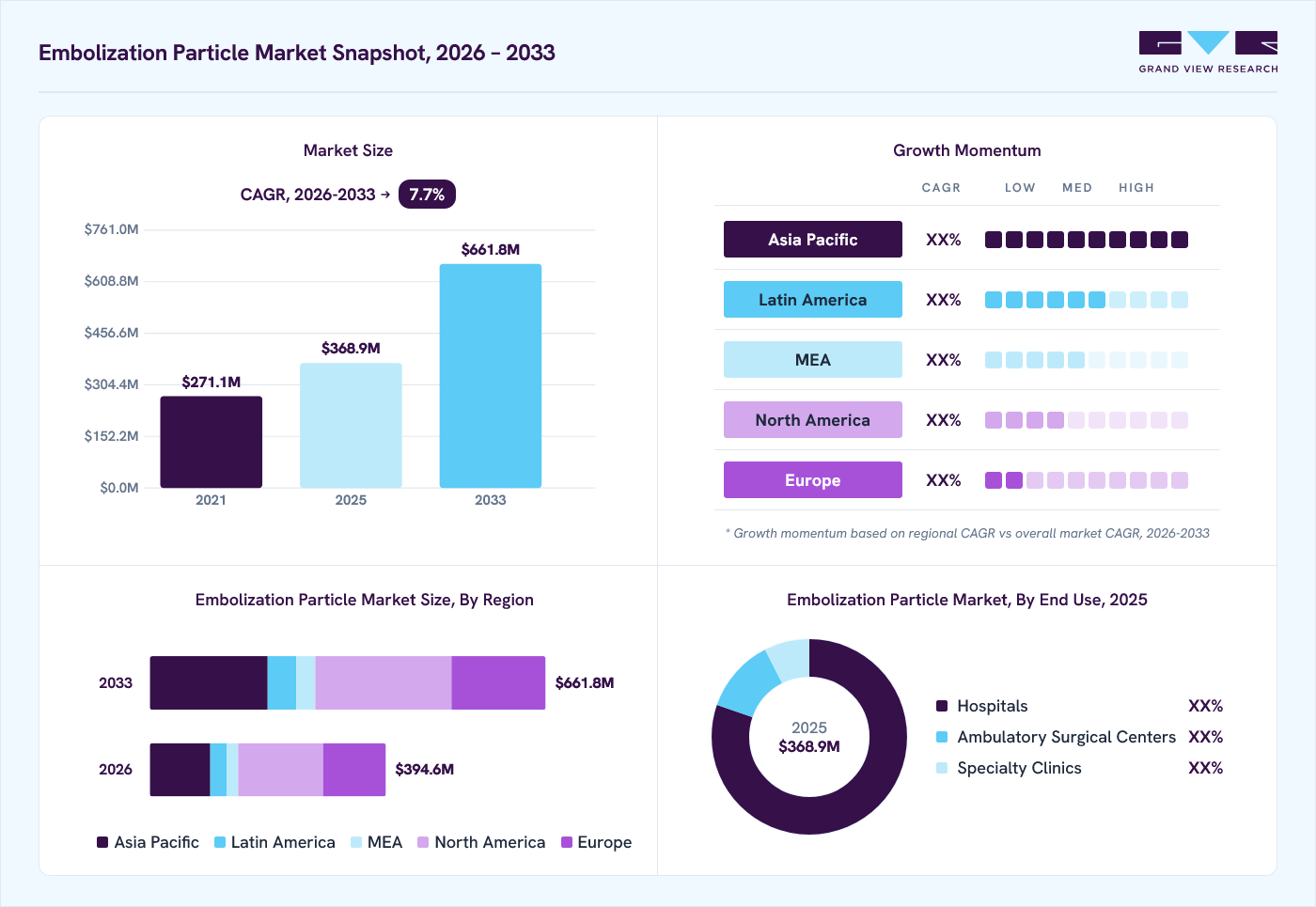
The global embolization particle market size was valued at USD 368.9 million in 2025 and is projected to grow from USD 394.6 million in 2026 to USD 661.8 million by 2033, growing at a CAGR of 7.7% from 2026 to 2033. North America dominated the market with the largest revenue share of 36.2% in 2025. The market encompasses minimally invasive embolic technologies used to selectively occlude blood vessels and control, reduce, or redirect blood flow during image-guided procedures.
Key Market Trends & Insights
- By structure: The calibrated spherical microspheres segment led the market with the largest revenue share in 2025.
- By function: The plain/non-drug-eluting embolics segment led the market with the largest revenue share in 2025.
- By material: The PVA-based materials segment led the market with the largest revenue share in 2025.
- By particle size: The 100-300 µm segment led the market with the largest revenue share in 2025.
Regional Highlights
- Largest regional market: North America (36.2% revenue share, 2025)
- Fastest-growing regional market: Asia Pacific (highest CAGR, 2026-2033)
- By country: The U.S. held the largest market share in 2025
Market Size & Forecast
- Market size in 2025: USD 368.9 Million
- Estimated market size in 2026: USD 394.6 Million
- Projected market size by 2033: USD 661.8 Million
- CAGR (2026-2033): 7.7%
These technologies are utilized across interventional radiology, oncology, gynecology, and vascular care, particularly for the management of hypervascular tumors, uterine fibroids, arteriovenous malformations, and selected cases of hemorrhage and peripheral vascular conditions. Market development is supported by the growing adoption of image-guided interventions as alternatives or adjuncts to open surgery, the expansion of interventional radiology services, the increasing availability of advanced catheter-based procedures, and a greater emphasis on targeted treatment with reduced procedural morbidity.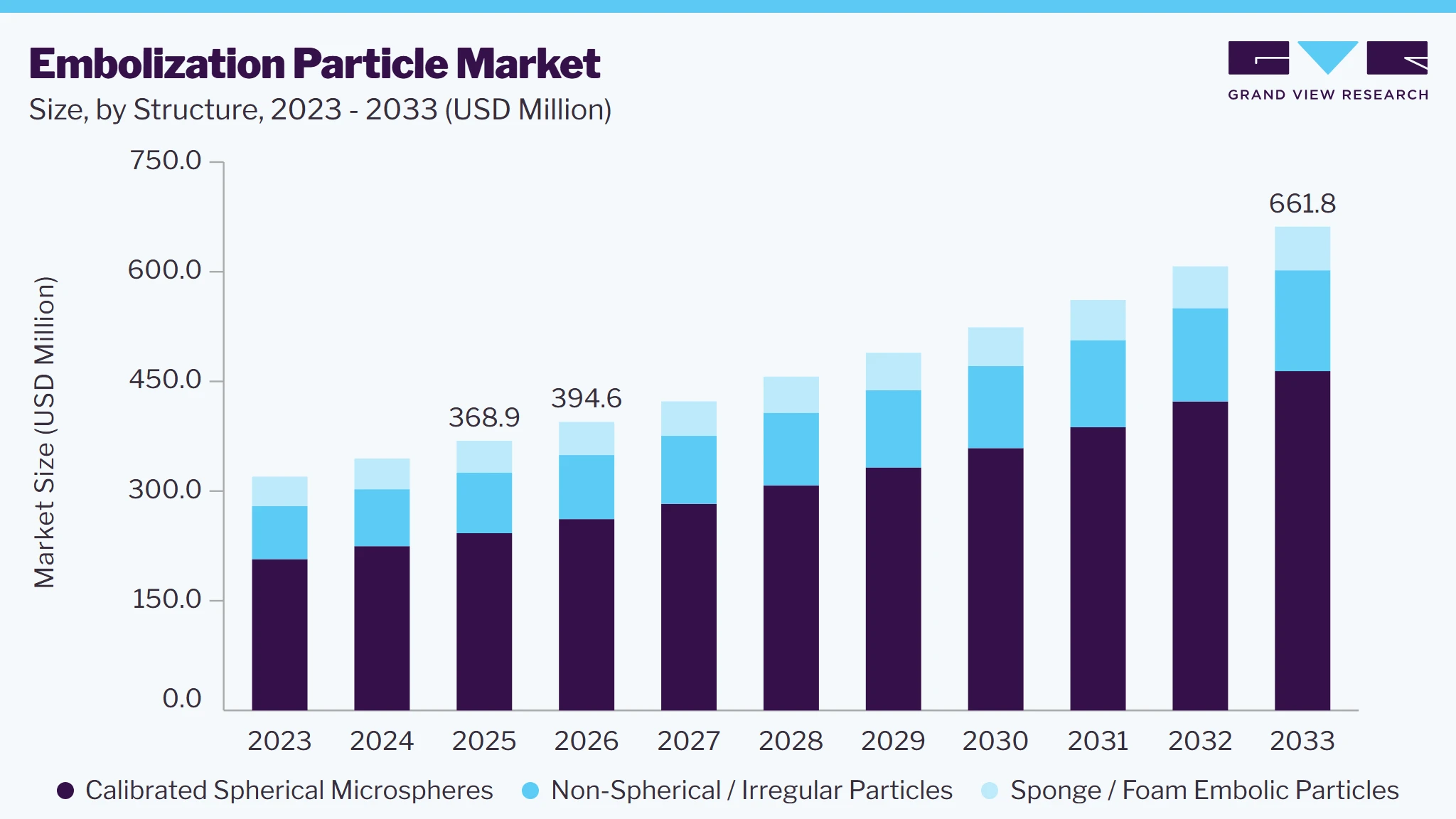
The rising prevalence of cancers requiring tumor embolization procedures is driving market demand by expanding the number of patients undergoing vascular-based tumor interventions. Cancers such as hepatocellular carcinoma and metastatic liver tumors can require embolization to restrict the blood supply supporting tumor growth. As the number of patients requiring these interventions increases, the volume of tumor embolization procedures also expands, creating greater demand for embolization particles used to occlude tumor-feeding vessels. The growing clinical use of embolization as part of locoregional cancer management further supports particle utilization, particularly among patients with tumors that are unsuitable for surgical resection or require targeted vascular treatment. Increasing use of repeat and sequential embolization procedures for selected tumors can also contribute to recurring demand for embolization particles.
Liver tumors, particularly hepatocellular carcinoma and certain metastatic liver tumors, may require embolization to restrict the blood supply to the tumor and achieve localized treatment effects. As more patients require locoregional management, the number of embolization procedures increases, creating greater demand for embolization particles used to occlude tumor-feeding blood vessels. The use of embolization in patients who are not suitable candidates for surgical resection further expands the potential treatment population. In addition, repeated or sequential embolization procedures for selected patients can lead to repeated use of embolization particles. According to the data published by the WHO in 2026, the following graph shows that scientists at the International Agency for Research on Cancer (IARC) estimated that a substantial number of people worldwide were diagnosed with liver cancer and died from the disease in 2024.

The increasing incidence and clinical burden of uterine fibroids are driving market demand by expanding the number of patients requiring effective, uterus-preserving, and minimally invasive treatment options. Symptomatic uterine fibroids can cause heavy menstrual bleeding, pelvic pain and pressure, anemia, and fertility-related complications, often requiring active intervention. As patients and healthcare providers prefer alternatives to major surgical procedures such as hysterectomy, Uterine Artery Embolization (UAE) has gained importance as a minimally invasive treatment approach. During UAE, embolization particles are delivered through a catheter into the uterine arteries to reduce blood flow to the fibroids, resulting in ischemia and gradual shrinkage of the lesions. The minimally invasive nature of the procedure, reduced surgical burden, shorter recovery time, and uterus-preserving characteristics make it an attractive option for appropriately selected patients.
For instance, data published by FIGO in 2025, uterine fibroids affect up to 70% of women by menopause, with the burden reported to be particularly high among African women, where incidence has been estimated at around 80%. Although generally benign, fibroids can cause heavy menstrual bleeding, chronic anemia, infertility, miscarriage, early labor, postpartum hemorrhage, and disruptions to bladder, bowel, and sexual function.
The increasing demand for minimally invasive vascular interventions is driving market growth, as healthcare providers favor catheter-based procedures over open surgery for managing vascular conditions. Advances in interventional radiology, imaging guidance, catheter technology, and selective vascular access have expanded the use of endovascular procedures across conditions such as peripheral vascular hemorrhage, arteriovenous malformations, aneurysms, pseudoaneurysms, hypervascular tumors, and other abnormal vascular conditions. Embolization enables targeted occlusion of specific blood vessels via a catheter, reducing the need for large surgical incisions and potentially shortening recovery and hospital stays. The increasing adoption of outpatient and day-case vascular interventions is further supporting this shift toward less invasive treatment approaches.
The growing availability of interventional radiology consultants and the expansion of dedicated IR centers are driving market growth by increasing capacity for image-guided vascular procedures. A larger and more specialized IR workforce enables hospitals to diagnose and treat a broader range of conditions requiring embolization, including peripheral hemorrhage, hypervascular tumors, vascular malformations, aneurysms, pseudoaneurysms, and other peripheral vascular disorders. The establishment of dedicated IR suites also improves access to minimally invasive procedures and strengthens referral pathways from oncology, vascular surgery, gastroenterology, urology, and emergency care departments. As more healthcare facilities develop specialized IR capabilities, procedures that previously required surgical intervention can be managed through catheter-based approaches. For instance, data published by The Royal College of Radiologists in 2025 UK on IR consultants by city is shown in the graph.

Market Dynamics
The embolization particle industry is being shaped by increasing demand for minimally invasive, image-guided interventions across a broad range of vascular and nonvascular conditions. The expanding use of embolization in the management of uterine fibroids, hypervascular tumors, peripheral vascular hemorrhage, arteriovenous malformations, aneurysms, pseudoaneurysms, and other vascular abnormalities is increasing the clinical need for particulate embolic agents. Embolization allows physicians to selectively reduce or block blood flow to targeted vessels through catheter-based procedures, providing an alternative to more invasive surgical approaches. In addition, the growing adoption of interventional radiology, improvements in imaging and catheterization technologies, increasing preference for uterus-preserving and outpatient procedures, and greater awareness of minimally invasive treatment options are supporting procedure volumes.
The expansion of interventional radiology infrastructure is driving market growth by increasing the availability and capacity of facilities capable of performing minimally invasive embolization procedures. The development of dedicated interventional radiology suites, improved angiography systems, and specialized treatment centers enables hospitals to perform a broader range of vascular and tumor embolization procedures. As more healthcare facilities establish or expand interventional radiology services, access to embolization-based treatments increases, particularly for patients requiring minimally invasive management of tumors, vascular malformations, hemorrhage, and other vascular conditions. The growing presence of trained interventional radiologists and multidisciplinary teams also facilitates greater adoption of embolization procedures.
For instance, in 2025, the Society of Interventional Radiology in the U.S. is a nonprofit professional medical society representing over 8,000 practicing interventional radiology physicians, trainees, medical students, scientists, and clinical associates. SIR’s members range from medical students and residents to university faculty and private practice physicians.
The high cost of embolization procedures and associated devices is restraining market growth by increasing the financial burden on healthcare providers and patients. Embolization procedures often require specialized interventional radiology suites, advanced imaging and angiography systems, catheter-based equipment, embolization materials, and trained clinical personnel, which together result in substantial procedural costs. The additional expenses associated with hospital infrastructure, physician expertise, and post-procedure monitoring can make embolization less accessible, particularly in healthcare systems with constrained budgets or limited reimbursement coverage.
The development of next-generation embolic particles represents a significant market opportunity by addressing limitations associated with conventional embolic materials and expanding the range of clinical applications. Advances in biomaterials and particle engineering are enabling the development of embolic agents with more precise particle-size distribution, improved biocompatibility, controlled degradation, enhanced radiopacity, predictable vascular penetration, and greater occlusion control. Biodegradable particles can provide temporary embolization while reducing the long-term presence of external material. In contrast, imageable and trackable particles can improve visualization of particle distribution and treatment endpoints during procedures.
In September 2025, Merit Medical Systems, Inc. announced that its Embosphere Microspheres received the CE Mark in the European Union for genicular artery embolization to treat knee osteoarthritis. The expanded indication demonstrates the potential for embolization particles to move beyond established applications and address emerging therapeutic areas. The company highlighted the microspheres’ calibrated spherical design, which enables consistent and predictable occlusion of targeted blood vessels and is particularly relevant for procedures involving small genicular arteries. The development enables next-generation embolic particle technologies with greater precision, more predictable vascular occlusion, and broader applicability across new clinical indications.
Market Characteristics
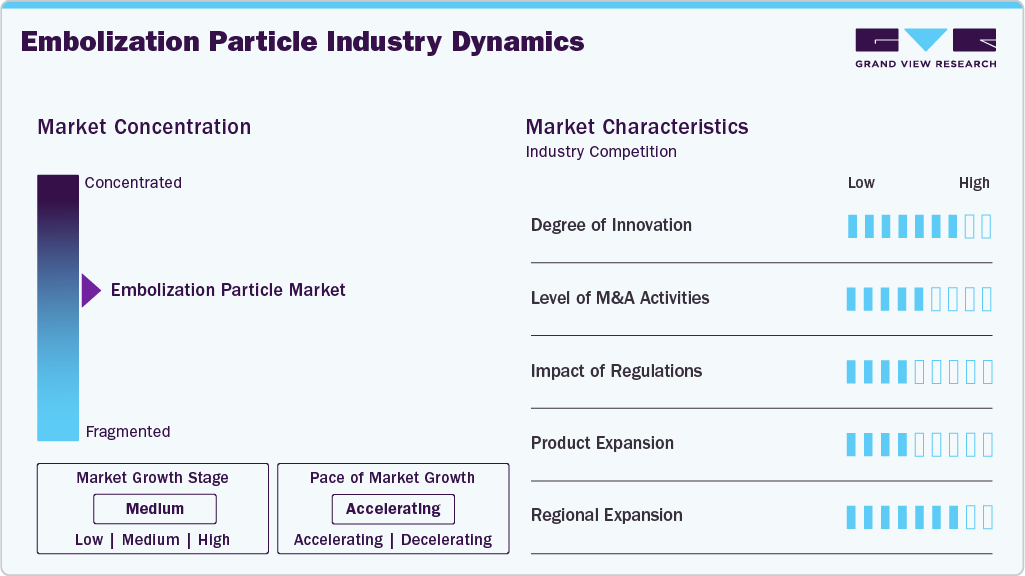
The embolization particle industry is characterized by a competitive landscape shaped by established medical device manufacturers and specialized regional companies with differentiated embolization technologies. Market participants compete through product consistency, particle-size precision, material properties, delivery convenience, clinical performance, regulatory approvals, and expansion across a broader range of embolization procedures. Established products benefit from accumulated clinical evidence, physician familiarity, hospital relationships, and established distribution networks, while smaller and specialized companies focus on technological innovation and targeted clinical applications. Regulatory requirements, clinical validation, manufacturing standards, and the need for reliable particle characteristics create barriers to entry for new participants.
The embolization particle industry is experiencing continuous technological development across particle composition, size calibration, morphology, delivery systems, and therapeutic functionality. Manufacturers are improving particle uniformity and size precision to enable more controlled vascular occlusion and enhance procedural predictability. Innovation is also focused on drug-eluting particles that combine embolization with localized drug delivery, while hydrogel-based and advanced synthetic polymer materials are being developed to improve biocompatibility, swelling behavior, durability, and handling characteristics. Prefilled syringes and ready-to-use delivery formats support simpler procedural preparation and improved workflow efficiency. In addition, application-specific development is expanding the use of embolization particles across uterine fibroid embolization, prostate artery embolization, tumor embolization, hemorrhage control, aneurysm treatment, and peripheral vascular interventions, creating opportunities for differentiated particle designs and improved treatment outcomes.
In July 2025, Sirtex Medical announced that its SIR-Spheres Y-90 Resin Microspheres received U.S. FDA approval for the treatment of unresectable hepatocellular carcinoma. The expanded indication extended the use of the microsphere-based radioembolization therapy to another major liver cancer application, complementing its existing indication for metastatic colorectal cancer. SIR-Spheres uses personalized dosimetry to deliver radiation directly to tumors through the hepatic arteries, supporting patient-specific treatment planning.
Merger and acquisition activity in the embolization particle industry is supporting portfolio expansion, technology diversification, and broader capabilities across interventional and vascular therapies. Companies are pursuing acquisitions to obtain complementary technologies, strengthen manufacturing and distribution networks, expand relationships with hospitals and physicians, and enter adjacent therapeutic areas. These transactions can also provide access to established regulatory approvals, clinical expertise, and specialized product portfolios, reducing the time required to develop capabilities internally. Increasing consolidation across the interventional medical device sector is encouraging companies to combine complementary technologies and expand their presence across embolization, oncology, vascular intervention, and hemostasis procedures.
Regulatory requirements significantly impact the embolization particle industry, as these products must undergo rigorous evaluation of safety, performance, biocompatibility, manufacturing consistency, and clinical effectiveness before commercialization. Regulatory authorities require manufacturers to demonstrate that particle characteristics such as size distribution, material composition, sterility, delivery performance, and vascular occlusion behavior meet applicable standards. Changes in intended use or expansion into new clinical applications can require additional clinical evidence and regulatory submissions, influencing product development timelines and commercialization strategies. Differences in regulatory pathways across major markets can also increase compliance requirements for companies seeking international market access.
The end user concentration in the embolization particle industry reflects the specialized infrastructure, trained interventional specialists, and imaging capabilities required to perform embolization procedures. Hospitals account for a substantial share of end-user demand because they generally provide comprehensive interventional radiology facilities, multidisciplinary clinical teams, advanced imaging systems, and emergency care capabilities required for complex embolization procedures. Ambulatory surgical centers are gaining relevance as selected embolization procedures shift toward shorter-stay, outpatient settings, while specialty clinics and vascular centers are expanding their roles in elective and application-specific interventions.
Structure Insights
The calibrated spherical microspheres segment led the market, accounting for 65.7% of revenue in 2025. Their uniform shape and controlled size distribution provide predictable embolization and consistent vascular occlusion. The availability of calibrated particle sizes allows interventional radiologists to select particles based on vessel diameter, lesion characteristics, and the desired embolization depth. Their spherical geometry also supports smoother catheter delivery and more controlled distribution within the target vasculature. These characteristics are particularly important in tumor embolization, vascular malformations, hemorrhage control, aneurysm-related procedures, and other peripheral interventions.
Non-spherical/irregular particles are expected to exhibit significant growth, as they remain clinically useful in applications where predictable particle geometry is less critical. Their irregular surfaces can promote particle interactions, aggregation, and mechanical occlusion of vessels, thereby enabling effective embolization in several peripheral vascular procedures. These particles also benefit from established clinical experience and comparatively straightforward manufacturing, which can support cost-sensitive adoption, particularly in developing healthcare markets.
Function Insights
The plain/non-drug-eluting embolics segment led the market with the largest revenue share of 73.1% in 2025. They have broad applicability across peripheral embolization procedures where the primary objective is mechanical vessel occlusion rather than localized drug delivery. These embolics are used for indications such as hemorrhage control, vascular malformations, aneurysms, pseudoaneurysms, hypervascular tumors, and other peripheral vascular conditions. Their established clinical use, wide range of particle sizes and materials, straightforward deployment, and familiarity among interventional radiologists support continued utilization across hospitals and IR centers. Unlike drug-eluting embolics, they do not require drug loading or integration with a chemotherapy regimen, making their use operationally simpler across a wider range of procedures.
Drug-eluting embolics are expected to be the fastest-growing segment within the function category, supported by the increasing use of embolization as a platform for both vascular occlusion and localized drug delivery. These embolics combine the mechanical effect of vessel blockage with controlled delivery of therapeutic agents, particularly in transarterial chemoembolization for hepatocellular carcinoma and other hypervascular tumors. Their ability to deliver higher drug concentrations directly to the target lesion while limiting systemic exposure provides a strong clinical rationale for adoption.
Material Insights
The PVA-based materials segment led the market, with a revenue share of 30.4% in 2025. PVA particles have been used in embolization for decades across applications such as hemorrhage control, vascular malformations, tumor embolization, and other peripheral vascular procedures. Their availability in different particle sizes allows physicians to select materials based on the target vessel anatomy and desired embolization level. In addition, PVA-based microspheres have evolved to provide more uniform particle dimensions and improved delivery characteristics, helping address some limitations of conventional irregular PVA particles.
Hydrogel-based materials are expected to be the fastest-growing segment within the material category, driven by their favorable elasticity, compressibility, tunable properties, and potential for multifunctional embolization. Hydrogel microspheres can deform during catheter delivery and recover their shape after exiting the microcatheter, enabling deeper and more controlled penetration into smaller vessels. Their structure can also support drug loading, controlled release, imaging functionality, and other advanced therapeutic features, making them particularly attractive for interventional oncology and targeted embolization.
Particle Size Insights
The 100-300 µm segment led the market with the largest revenue share of 28.6% in 2025. This size range is widely available across major embolic platforms, including PVA-based particles, tris-acryl gelatin microspheres, and hydrogel microspheres, reflecting broad clinical acceptance. Its versatility makes it suitable for tumor embolization, vascular malformations, hemorrhage management, and other peripheral interventions where excessive distal penetration can increase the risk of non-target embolization. Clinical practice also frequently uses 100-300 µm particles in procedures such as prostate artery embolization. The combination of predictable deposition, established physician familiarity, and broad product availability supports its leading position.
The <100 µm particle-size range is expected to be the fastest-growing segment, driven primarily by increasing demand for deeper and more selective embolization. Smaller microspheres can penetrate more deeply into the distal vascular network, making them attractive for procedures in which occlusion of smaller feeding vessels is clinically desirable. The size range is incorporated into multiple embolic platforms, including tris-acryl gelatin, PVA-based hydrogel, and other microsphere technologies.
Delivery Format Insights
The vial segment led the market with the largest revenue share of 59.2% in 2025. Vial-based products allow clinicians to withdraw the required particle volume and mix it with saline, contrast media, or other preparation fluids as needed. This format is available across several established embolic particle platforms and supports a range of particle sizes and concentrations. Vials also provide convenient storage, established sterile packaging, and flexibility in adjusting the final embolic suspension, making them suitable for diverse embolization procedures.
Prefilled syringes are expected to be the fastest-growing delivery format because they simplify preparation and can reduce the number of handling steps before embolization. The embolic particles are supplied in a ready-to-use suspension, allowing clinicians to connect the syringe to the delivery system after appropriate preparation and contrast mixing. This can improve procedural workflow, reduce preparation time, and minimize handling-related variability. Prefilled formats are already available across established microsphere platforms and are increasingly attractive as IR centers focus on efficient procedure turnover and standardized workflows.
Application Insights
The tumor embolization segment led the market with the largest revenue share of 32.7% in 2025. Particularly established in liver-directed procedures, including transarterial embolization and chemoembolization, where particles can selectively occlude tumor-feeding arteries. The ability to achieve targeted vascular occlusion while preserving surrounding tissue makes particulate embolization relevant across several tumor types and treatment settings. The increasing use of minimally invasive cancer therapies, the expansion of interventional oncology services, and the greater availability of image-guided procedures continue to support the use of particles.
Prostate artery embolization is expected to be the fastest-growing application segment, supported by increasing clinical acceptance of PAE as a minimally invasive treatment option for lower urinary tract symptoms associated with benign prostatic hyperplasia. Recent clinical guidance recognizes PAE with particle embolics as an option for appropriately selected patients, strengthening its position within interventional urology. The procedure uses microspheres or PVA particles to selectively reduce blood flow to the prostate, offering an alternative to more invasive surgical approaches.
End Use Insights
The tumor embolization segment led the market with the largest revenue share of 80.2% in 2025. They provide comprehensive infrastructure, multidisciplinary specialists, imaging systems, and emergency care capabilities required for a wide range of embolization procedures. Hospitals are equipped to manage complex cases involving severe hemorrhage, hypervascular tumors, vascular malformations, aneurysms, and other peripheral vascular conditions. They also maintain established interventional radiology departments and catheterization or angiography suites, enabling continuous access to image-guided embolization.
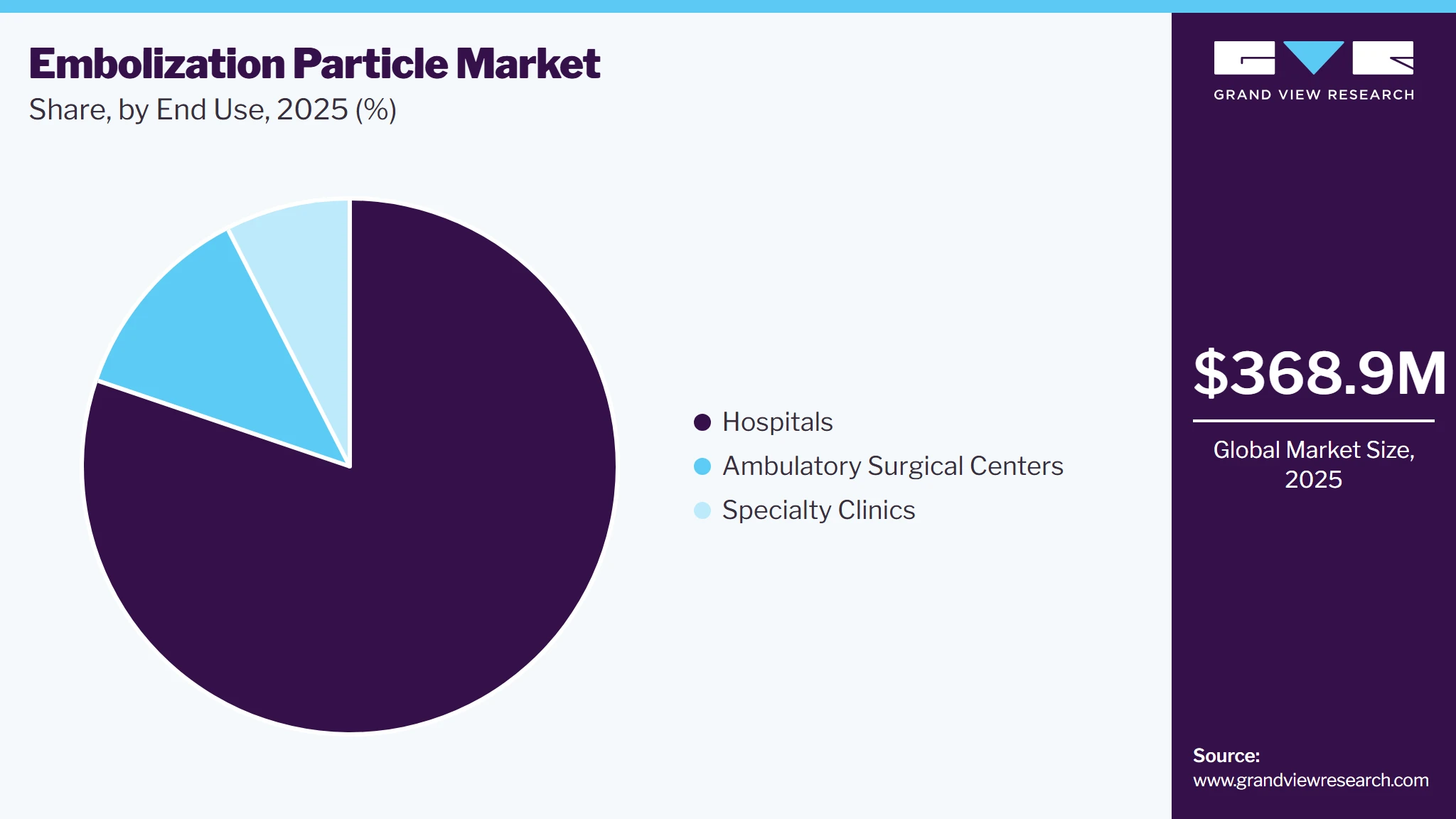
Ambulatory Surgical Centers (ASCs) are expected to be the fastest-growing end-use segment as an increasing proportion of selected embolization procedures can be performed in outpatient or short-stay settings. Procedures such as prostate artery embolization and selected uterine fibroid and peripheral vascular embolization interventions can be performed with minimally invasive techniques and limited post-procedure observation, making them suitable for appropriately selected patients.
Regional Insights
North America dominated the embolization particle market with the largest revenue share of 36.2% in 2025, due to its established interventional radiology infrastructure, increasing adoption of minimally invasive vascular procedures, and availability of advanced image-guided treatment facilities. The region benefits from a large network of hospitals and specialized centers equipped to perform embolization procedures across oncology, hemorrhage control, vascular malformations, aneurysms, uterine fibroids, and other vascular conditions. In the U.S., the presence of experienced interventional radiologists, advanced imaging capabilities, established reimbursement pathways, and increasing clinical adoption of particle-based embolization supports procedural demand. Canada is also expanding the use of interventional radiology services, particularly through specialized hospitals and tertiary care centers.

U.S. Embolization Particle Market Trends
The embolization particle market in the U.S. is supported by the continued use of embolization in the management of cerebral Arteriovenous Malformations (AVMs). Cerebral AVMs involve abnormal connections between arteries and veins that can increase the risk of intracranial bleeding and other neurological complications. Endovascular embolization can reduce blood flow through these abnormal vessels and may be performed as a standalone intervention or as part of a broader treatment strategy. The availability of specialized neurovascular centers, advanced imaging technologies, and experienced interventional specialists supports the utilization of embolization procedures for cerebral AVMs. For instance, data published by the American Heart Association in 2024 indicate that brain arteriovenous malformations are rare vascular lesions characterized by abnormal connections between dysplastic cerebral arteries and veins. The estimated prevalence of bAVMs is 1.3 per 100,000 person-years, and the detection rate for symptomatic bAVMs is 0.94 per 100,000 person-years. The rarity of the condition and the presence of asymptomatic patients make the actual disease burden difficult to determine.
The market is also supported by the liver cancer burden in the U.S., particularly hepatocellular carcinoma, which represents the major form of primary liver cancer. Patients with liver tumors who are unsuitable for surgical resection or require locoregional management may undergo transarterial embolization-based procedures to restrict blood flow to the tumor. The continued need for tumor-directed interventions, combined with established interventional oncology capabilities and specialized treatment centers, drives increased utilization of embolization particles and supports market growth.
Estimated Number of Liver Cancer Deaths by State, U.S., 2026
State
Estimated Liver Cancer Deaths
Alabama
550
Alaska
-
Arizona
730
Arkansas
360
California
3,690
Colorado
450
Connecticut
340
Delaware
110
District of Columbia
40
Florida
2,200
Georgia
990
Hawaii
160
Idaho
190
Illinois
1,090
Indiana
560
Iowa
290
Kansas
250
Kentucky
500
Louisiana
580
Maine
130
Maryland
530
Massachusetts
650
Michigan
830
Minnesota
500
Mississippi
330
Missouri
650
Montana
120
Nebraska
170
Nevada
Upgrade the report license to gain access to the complete analysis.
New Hampshire
New Jersey
New Mexico
New York
North Carolina
North Dakota
Ohio
Oklahoma
Oregon
Pennsylvania
Rhode Island
South Carolina
South Dakota
Tennessee
Texas
Utah
Vermont
Virginia
Washington
West Virginia
Wisconsin
Wyoming
U.S.
30,980
Source: American Cancer Society 2026
Europe Embolization Particle Market Trends
The embolization particle market in Europe is growing significantly due to the increasing adoption of minimally invasive embolization procedures across oncology, vascular, and benign disease applications. The region has a well-established interventional radiology infrastructure supporting embolization for hepatocellular carcinoma, metastatic liver tumors, arteriovenous malformations, renal tumors, and uterine fibroids. The expanding use of transarterial procedures for liver tumors is particularly supporting demand, as embolization provides a locoregional treatment option for patients who may not be suitable for surgical intervention. In addition, the availability of specialized interventional radiology centers, trained specialists, advanced imaging technologies, and multidisciplinary cancer care is facilitating wider use of embolization procedures.
The UK embolization particle market is supported by the increasing burden of kidney and renal tumors, which is expanding the patient population requiring interventional treatment. The growing incidence of kidney cancer is creating greater demand for treatment approaches that can manage tumors in patients who are unsuitable for surgery, require preoperative intervention, or need control of tumor-related bleeding. Renal artery embolization can reduce blood flow to kidney tumors by selectively occluding tumor-feeding vessels, helping control vascularity and associated symptoms. As the number of patients diagnosed with renal tumors increases, the potential pool of patients requiring embolization-based interventions also expands, supporting greater utilization of embolization particles. The established interventional radiology infrastructure in the UK, combined with increasing physician expertise in image-guided procedures, facilitates the adoption of minimally invasive approaches for selected renal tumors.
For instance, data published by Cancer Research UK, kidney cancer incidence in the UK is projected to increase by 14% between 2024-2026 and 2038-2040, with approximately 21,900 new kidney cancer cases expected annually by 2038-2040. This projected increase in kidney cancer cases is expected to expand the patient pool requiring renal tumor management, including selected embolization procedures, thereby supporting demand for embolization particles in the UK.
The embolization particle market in Germany is growing due to the increasing use of embolization for uterine fibroids, liver tumors, and vascular malformations, supported by the country’s well-developed hospital and interventional radiology network. A key contributor is the growing preference for minimally invasive alternatives to open surgery, particularly for patients who require targeted treatment but may not be suitable candidates for conventional surgical procedures. The increasing availability of specialized interventional radiology units and advanced angiographic imaging is enabling physicians to perform more selective embolization procedures with greater precision. In addition, Germany’s aging population and associated rise in cancer and vascular disorders are expanding the number of patients who may require embolization-based interventions.
Asia Pacific Embolization Particle Market Trends
The embolization particle market in the Asia Pacific is growing due to the expanding adoption of interventional radiology, increasing cancer treatment volumes, and improving access to image-guided minimally invasive procedures across China, Japan, India, South Korea, and Australia. The high burden of hepatocellular carcinoma and other hypervascular tumors supports the use of embolization in interventional oncology, particularly through transarterial procedures. In parallel, the increasing availability of specialized interventional radiology departments and improved imaging infrastructure is allowing hospitals to perform more targeted embolization procedures.
Japan embolization particle market is growing due to the established use of interventional radiology in cancer and vascular disease management, supported by a well-developed healthcare infrastructure and increasing preference for minimally invasive procedures. The high clinical burden of hepatocellular carcinoma continues to drive demand for transarterial embolization and transarterial chemoembolization, in which embolization particles are used to achieve targeted vascular occlusion. In addition, the use of embolization techniques in procedures such as portal vein embolization, splenic artery embolization, and treatment of selected vascular abnormalities contributes to broader clinical utilization. Japan’s aging population also increases the need for minimally invasive management of cancer and vascular conditions. The availability of specialized hospitals and experienced interventional radiologists facilitates the adoption of advanced embolization techniques.
- According to the World Economic Forum, Japan's Ministry of Internal Affairs and Communications reported that, as of 2024, the country had a record 36.25 million people aged 65 and over, accounting for 29.3% of the total population. This share is projected to rise to 34.8% in 2040 and 36.3% in 2045. Japan's proportion of elderly residents is already far higher than second-ranked Martinique (25.3%), making it the world's most aged society.
The embolization particle market in India is growing as the expansion of interventional oncology is increasing the number of procedures requiring targeted vascular occlusion. Liver cancer management is an important contributor, with transarterial chemoembolization incorporated into treatment pathways for patients who are not suitable for surgery or local ablation. The availability of drug-eluting beads and other embolic materials is also broadening procedural options for interventional radiologists. Beyond liver tumors, embolization is being utilized for gastrointestinal bleeding, pseudoaneurysms, vascular malformations, preoperative tumor devascularization, and portal vein interventions, widening the addressable clinical base.
Latin America Embolization Particle Market Trends
The embolization particle market in Latin America is growing as interventional oncology gradually expands beyond a limited number of high-volume referral centers, creating opportunities for wider adoption of particle-based embolization. Transarterial chemoembolization remains an established locoregional approach for intermediate-stage liver cancer, generating recurring demand for embolic materials, while transarterial embolization is also being used for selected vascular and bleeding-related conditions. The market is supported by the development of specialized angiography facilities, greater availability of image-guided procedures, and increasing clinical experience with minimally invasive treatment.
Middle East and Africa Embolization Particle Market Trends
The embolization particle market in MEA is growing as healthcare infrastructure is upgraded and interventional radiology capabilities expand across major tertiary-care and cancer centers. Investment in new hospitals, angiography suites, advanced imaging systems, and specialized oncology facilities is improving the capacity to perform image-guided embolization procedures. The rising cancer burden is another important demand driver, particularly as the number of cancer cases in the Eastern Mediterranean region is projected to increase substantially over the coming decades, increasing the need for locoregional and minimally invasive treatment options.
Key Embolization Particle Company Insights
Key market players are shaping the industry through continuous innovation in embolic material technology and image-guided delivery systems. Innovations such as improved particle-size uniformity, enhanced vascular penetration, controlled embolization, greater radiopacity, and improved catheter compatibility are enabling more precise and predictable vessel occlusion during interventional procedures. Manufacturers are also focusing on developing particles with improved handling characteristics and controlled distribution within target vessels, particularly for tumor embolization and other vascular applications. Advances in drug-eluting and imaging-visible embolic technologies are further enabling more targeted treatment while improving procedural visualization.
Key Embolization Particle Companies
The following key companies have been profiled for this study on the embolization particle market:
-
Merit Medical Systems
-
Boston Scientific Corporation
-
Siemens Healthineers
-
Terumo Corporation
-
Sirtex Medical
-
Instylla, Inc.
-
IMBiotechnologies Ltd.
-
NEXTBIOMEDICAL CO., LTD.
-
Suzhou Hengrui Medical Equipment Co., Ltd.
-
Magle PharmaCept GmbH.
-
Pfizer Inc.
-
Crannmed
Competitive Benchmarking
Category
Operating Strategies
Competitive Edge
Weakness
Established Players (Merit Medical Systems, Boston Scientific Corporation, Siemens Healthineers, Terumo Corporation, Sirtex Medical)
- Expand established microsphere portfolios through product innovation, clinical evidence, regulatory approvals, and broader therapeutic applications.
- Leverage global sales networks, interventional radiology relationships, physician training, and hospital partnerships to increase particle utilization.
- Strong brand recognition, extensive clinical experience, established regulatory approvals, and broad physician acceptance across major embolization procedures.
- Diverse particle technologies, calibrated sizes, drug-eluting capabilities, and complementary interventional portfolios support differentiated procedural applications.
- High product costs and established manufacturing structures can limit price competitiveness against emerging regional manufacturers and lower-cost alternatives.
- Dependence on mature particle technologies can create vulnerability as resorbable microspheres and novel embolization platforms gain clinical acceptance.
Emerging Players (Instylla, Inc., IMBiotechnologies Ltd., NEXTBIOMEDICAL Co., Ltd., Suzhou Hengrui Medical Equipment Co., Ltd., Magle PharmaCept GmbH, CrannMed)
- Focus on differentiated particle technologies, particularly resorbable, biodegradable, and application-specific microspheres targeting unmet clinical needs.
- Build market access through regulatory clearances, clinical trials, strategic partnerships, and targeted expansion into new embolization indications.
- Resorbable and biodegradable particle platforms can enable temporary embolization, restoration of blood flow, and potential expansion into new indications.
- Smaller, focused organizations can develop specialized technologies and respond rapidly to emerging applications such as musculoskeletal embolization.
- Limited commercial scale, manufacturing capacity, clinical evidence, and physician adoption compared with established global embolization manufacturers.
- Dependence on regulatory approvals, clinical validation, funding, and distribution partnerships can delay broad international commercialization.
Recent Developments
-
In January 2026, NEXTBIOMEDICAL announced that Nexsphere-F, a fast-resorbable embolization microsphere, received approval from Health Canada for musculoskeletal pain embolization. The microsphere is designed to temporarily occlude abnormal blood vessels associated with osteoarthritis-related pain and subsequently dissolve after the procedure, distinguishing it from permanent embolization particles.
-
In November 2025, Canyon Medical announced that its SureSphere and BlocSphere PVA Embolization Microspheres received both U.S. FDA 510(k) clearance and approval from the National Medical Products Administration (NMPA). The products are available in six calibrated particle sizes ranging from 75 to 1,200 μm, enabling more controlled and targeted embolization across different vessel sizes. The microspheres are designed to be highly compressible and resilient, supporting delivery through catheters while maintaining stable embolization after deployment.
-
In September 2025, Merit Medical announced that its Embosphere Microspheres received CE Marking in the European Union for genicular artery embolization to treat knee osteoarthritis. The expanded indication extends the established use of embolization microspheres into musculoskeletal embolization, where selective reduction of blood flow to inflamed synovial tissue is intended to reduce pain and improve joint function.
Embolization Particle Market Report Scope
Report Attribute
Details
Market size in 2025
USD 368.9 million
Estimated market size in 2026
USD 394.6 million
Projected market size by 2033
USD 661.8 million
Growth rate
CAGR of 7.7% from 2026 to 2033
Historical data
2021 - 2025
Forecast period
2026 - 2033
Quantitative units
Revenue in USD million and CAGR from 2026 to 2033
Report coverage
Revenue forecast, company ranking, competitive landscape, growth factors, and trends
Segments covered
Structure, function, material, particle size, delivery format, application, end use, region
Regional scope
North America; Europe; Asia Pacific; Latin America; MEA
Country scope
U.S.; Canada; Mexico; Germany; UK; France; Italy; Spain; Norway; Denmark; Sweden; China; Japan; India; South Korea; Australia; Thailand; Brazil; Argentina; Saudi Arabia; South Africa; UAE; Kuwait
Key companies profiled
Merit Medical Systems; Boston Scientific Corporation; Siemens Healthineers; Terumo Corporation; Sirtex Medical; Instylla, Inc.; IMBiotechnologies Ltd.; NEXTBIOMEDICAL CO., LTD.; Suzhou Hengrui Medical Equipment Co., Ltd.; Magle PharmaCept GmbH.; Pfizer Inc.; Crannmed
Customization scope
Free report customization (equivalent up to 8 analysts' working days) with purchase. Addition or alteration to country, regional & segment scope.
Pricing and purchase options
Avail customized purchase options to meet your exact research needs. Explore purchase options
Global Embolization Particle Market Report Segmentation
This report forecasts revenue growth at the regional and country levels and provides an analysis of the latest industry trends across each sub-segment from 2021 to 2033. For this study, Grand View Research has segmented the global embolization particle market report based on structure, function, material, particle size, delivery format, application, end use, and region:
-
Structure Outlook (Revenue, USD Million, 2021 - 2033)
-
Calibrated Spherical Microspheres
-
Non-Spherical/Irregular Particles
-
Sponge/Foam Embolic Particles
-
-
Function Outlook (Revenue, USD Million, 2021 - 2033)
-
Plain/Non-Drug-Eluting Embolics
-
Drug-Eluting Embolics
-
-
Material Outlook (Revenue, USD Million, 2021 - 2033)
-
PVA-Based Materials
-
Acrylic/Other Synthetic Polymer-Based Materials
-
Hydrogel-Based Materials
-
Gelatin-Based Materials
-
-
Particle Size Outlook (Revenue, USD Million, 2021 - 2033)
-
<100 µm
-
100-300 µm
-
300-500 µm
-
500-700 µm
-
700-900 µm
-
≥900 µm
-
-
Delivery Format Outlook (Revenue, USD Million, 2021 - 2033)
-
Prefilled Syringe
-
Vial
-
Other Delivery Formats
-
-
Application Outlook (Revenue, USD Million, 2021 - 2033)
-
Hemorrhage Control
-
Gastrointestinal Bleeding
-
Traumatic Hemorrhage
-
Postoperative/Iatrogenic Hemorrhage
-
Other Hemorrhage
-
-
Tumor Embolization
-
Hepatic Tumors
-
Renal Tumors
-
Other Hypervascular Tumors
-
-
Vascular Malformation Embolization
-
Peripheral AVMs
-
Cerebral AVMs
-
Other Vascular Malformations
-
-
Aneurysm/Pseudoaneurysm Embolization
-
Peripheral Aneurysms/Pseudoaneurysms
-
Visceral Aneurysms/Pseudoaneurysms
-
Other Aneurysms/Pseudoaneurysms
-
-
Uterine Fibroid Embolization
-
Prostate Artery Embolization
-
Portal Vein Embolization
-
Other Particle-Based Embolization
-
Other Peripheral Embolization
-
Other Organ Embolization
-
Other Particle-Based Applications
-
-
-
End Use Outlook (Revenue, USD Million, 2021 - 2033)
-
Hospitals
-
Ambulatory Surgical Centers
-
Specialty Clinics
-
-
Regional Outlook (Revenue, USD Million, 2021 - 2033)
-
North America
-
U.S.
-
Canada
-
Mexico
-
-
Europe
-
Germany
-
UK
-
France
-
Italy
-
Spain
-
Norway
-
Denmark
-
Sweden
-
-
Asia Pacific
-
China
-
Japan
-
India
-
South Korea
-
Australia
-
Thailand
-
-
Latin America
-
Brazil
-
Argentina
-
-
MEA
-
Saudi Arabia
-
South Africa
-
UAE
-
Kuwait
-
-
About the Author(s)
Medical Devices Research Team
Healthcare · Medical DevicesThis report was authored by the medical devices research team at Grand View Research - comprising two research analysts, one senior research analyst, and one industry expert - with specialized expertise in the medical devices segment of the healthcare industry. All findings are based on proprietary healthcare databases, executive interviews, and regulatory analysis, subject to internal peer review prior to publication.
Last Updated:
Speak to Analyst


Customize this report to your needs — add regions, segments, or data points, with 20% free customization.
Or view our licence options:


ISO 9001:2015 & 27001:2022 Certified
We are GDPR and CCPA compliant! Your transaction & personal information is safe and secure. For more details, please read our privacy policy.


