
- Home
- »
- Medical Devices
- »
-
Emergency Tourniquet Market Size And Share Report, 2033GVR Report cover

Emergency Tourniquet Market (2026 - 2033)
Size, Share & Trends Analysis Report By Mechanism Type (Windlass Tourniquets (CAT, SAM-XT, SOF T)), By End Use (Emergency Medical Services (EMS) & First Responders, Consumer, Civilian & Industrial), By Region, And Segment Forecasts
Market Size, 2025
$150.0MMarket Estimate, 2026
$158.7MMarket Forecast, 2033
$232.4MCAGR, 2026–2033
5.6%Emergency Tourniquet Market Summary
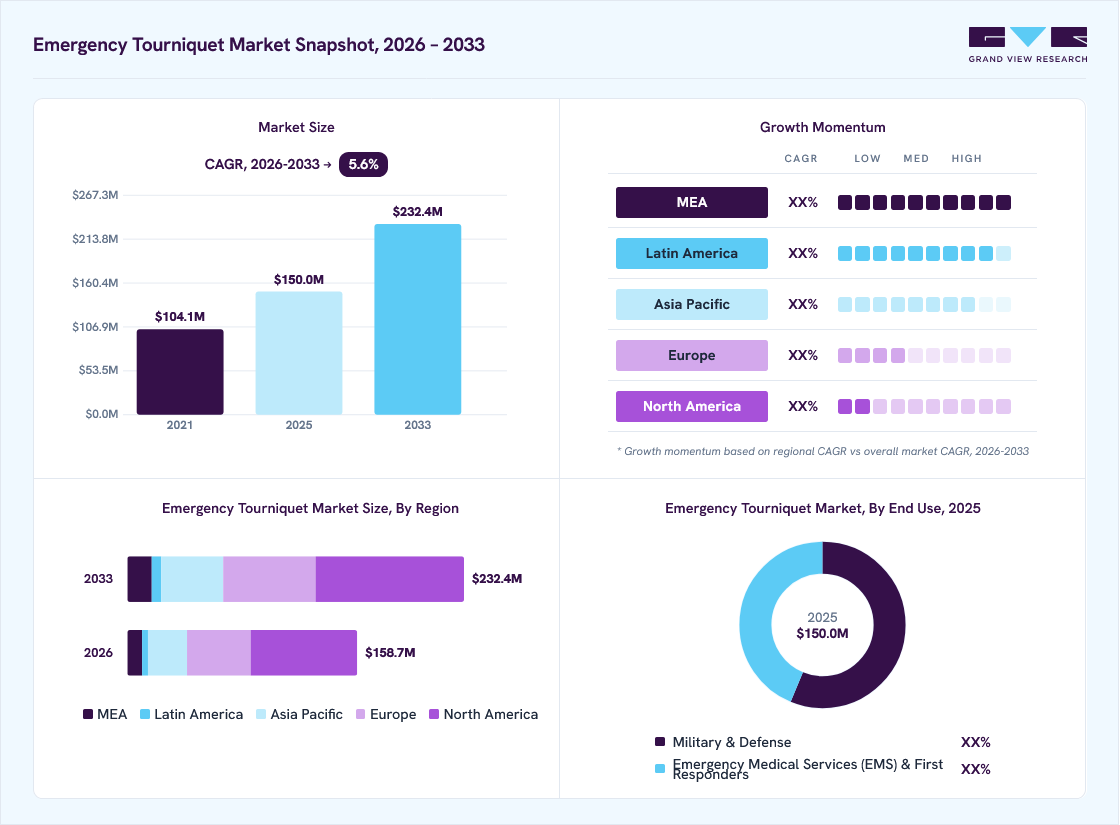
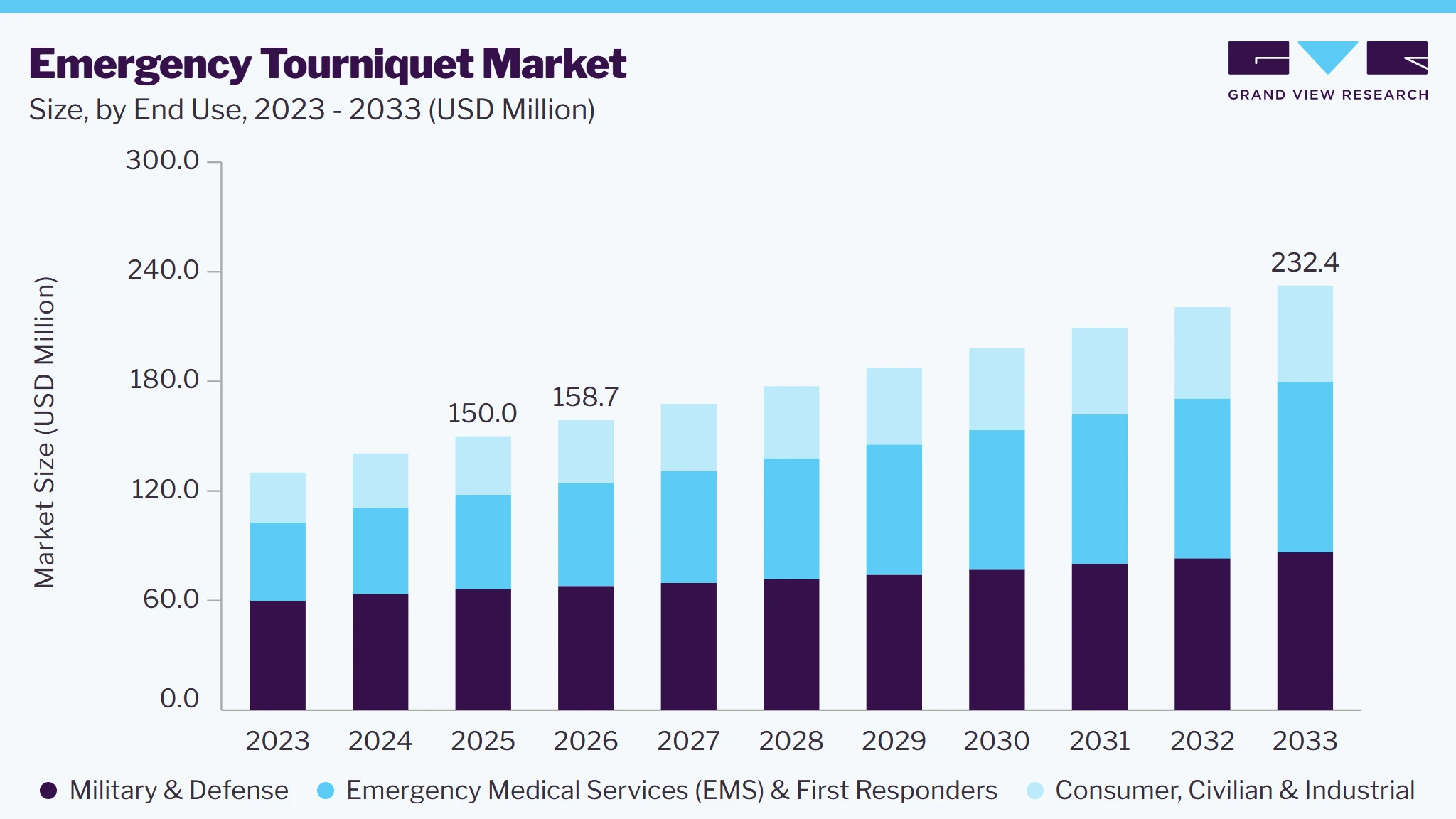
The global emergency tourniquet market size was valued at USD 150.0 million in 2025 and is projected to grow from USD 158.7 million in 2026 to USD 232.4 million by 2033, at a CAGR of 5.6% from 2026 to 2033. North America dominated the market, accounting for the revenue share of 46.5% in 2025. The market is driven by rising traumatic injuries, increasing demand for rapid hemorrhage control, and the growing use of tourniquets by military personnel, emergency medical services, and civilian first responders.
 Source: Grand View Research, IR Documents, Primary Interviews, Paid DatabasesTo learn more about this report,
 Download Free Sample Report
Key Market Trends & Insights
- By mechanism type: Windlass tourniquets (CAT, SAM-XT, SOF T) segment led the market with the largest revenue share of 70.0% in 2025.
- By end use: Military & defense segment dominated the market with the largest revenue share of 44.2% in 2025.
Regional Highlights
- Largest regional market: North America (46.5% revenue share, 2025)
- Fastest-growing regional market: Middle East & Africa (highest CAGR, 2026-2033)
- By country: The U.S. dominated North America with the largest revenue share in 2025
Market Size & Forecast
- Market size in 2025: USD 150.0 Million
- Estimated market size in 2026: USD 158.7 Million
- Projected market size by 2033: USD 232.4 Million
- CAGR (2026-2033): 5.6%
Three ways to get this report
Buy it, customize it, or ask a question.Ask an Analyst
Analyst response in 1 business day
- AccessReport author, directly
- Reply timeWithin 1 working day
- No sales callDirect answer only
- FormatEmail reply
- CostFree, no cost
Get the Full Report
What the study covers
- FormatsPDF · Excel · Dashboard
- Timeline2026–2033 annual, 2025 base
- Coverage20+ countries, 5 regions
- Companies10+ key players profiled
Customize the Report
20% free customization
- IncludeCountries, segments, points
- TailorTo your product definition
- ExtendDeeper competitor detail
- OrA fully bespoke study
- Turnaround5–10 working days
 To learn more about this report, Download Free Sample Report
The rising incidence of road traffic accidents, workplace injuries, falls, and violence-related trauma is driving demand for emergency tourniquets. Severe extremity bleeding requires rapid intervention to reduce the risk of hemorrhagic shock before definitive medical treatment is available. Emergency medical services, trauma centers, and first responders rely on tourniquets as part of prehospital bleeding-control protocols. This growing need for timely hemorrhage management supports the expansion of the emergency tourniquet industry.
 To learn more about this report, Download Free Sample Report
 To learn more about this report, Download Free Sample Report
The growing adoption of tourniquets in civilian emergency care is driving the market growth as ambulance services, police departments, firefighters, and first responders increasingly prioritize rapid bleeding control. Wider integration of tourniquets into prehospital trauma protocols is improving access to immediate hemorrhage management before patients reach hospitals. In addition, public bleeding-control training and the availability of emergency trauma kits in workplaces and public facilities are expanding civilian demand for tourniquet products.
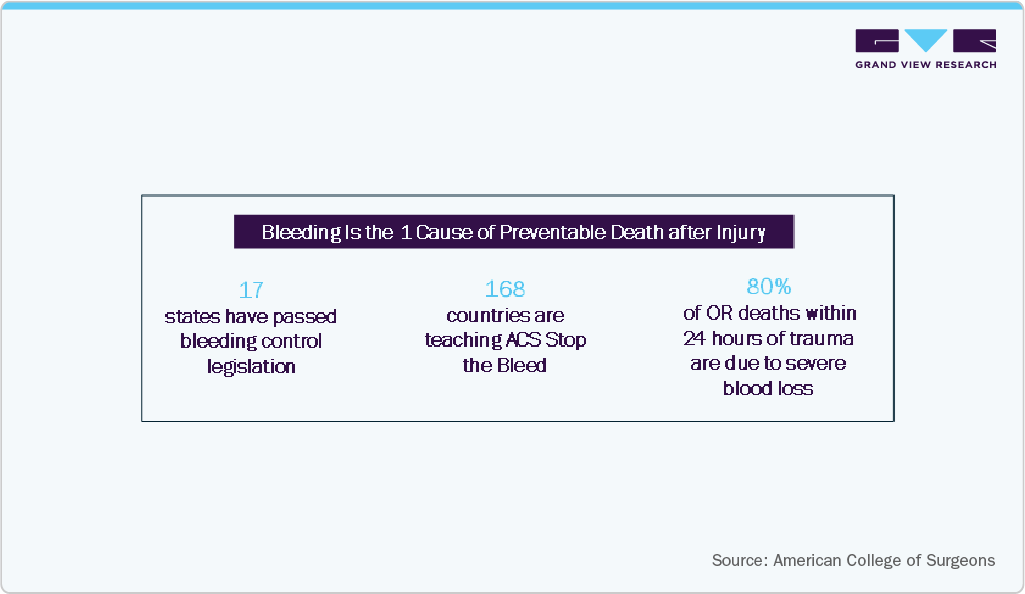
For instance, in July 2025, the American College of Surgeons (ACS) announced that its STOP THE BLEED program had trained more than 5 million people to control severe bleeding and potentially save lives. Since its launch in 2016, the program has expanded across all 50 U.S. states and at least 141 countries, increasing public awareness and preparedness for bleeding emergencies and supporting the adoption of tourniquets in civilian emergency care.
“Reaching 5 million people trained is a testament to the power of teaching communities these critical lifesaving skills,” said Patricia L. Turner, MD, MBA, FACS, Executive Director & CEO of the ACS. “Our mission doesn’t stop at 5 million. We will continue our efforts until bleeding control training is as ubiquitous as CPR.”
“From Chicago to Ukraine and communities around the world, we’ve seen how these skills save lives - whether in mass casualty events or everyday accidents,” said Kenji Inaba, MD, FACS, FRCSC, Chair of the ACS Stop the Bleed Committee. “We plan to train millions more. We’re just getting started.”
 To learn more about this report, Download Free Sample Report
Furthermore, the expansion of public bleeding-control training programs is driving the emergency tourniquet industry by increasing awareness of how to manage life-threatening bleeding before professional medical assistance arrives. Initiatives such as the American College of Surgeons’ STOP THE BLEED program encourage schools, workplaces, community organizations, and public safety personnel to learn tourniquet application techniques. These programs support demand for emergency tourniquets and bleeding-control kits across civilian settings, expanding adoption beyond military and clinical environments.
Market Dynamics
The emergency tourniquet industry is shaped by rising traumatic injuries, increasing awareness of rapid hemorrhage control, and growing adoption across military, civilian emergency medical services, and first-responder settings. Market growth is supported by public bleeding-control training programs, improvements in tourniquet design, and expanding emergency preparedness initiatives. However, product affordability, the need for proper application training, regulatory compliance, and concerns about improper use influence adoption across different end-user groups. Manufacturers are focusing on user-friendly designs, strategic distribution partnerships, and expanded access to bleeding-control kits to address these challenges and capture emerging market opportunities.
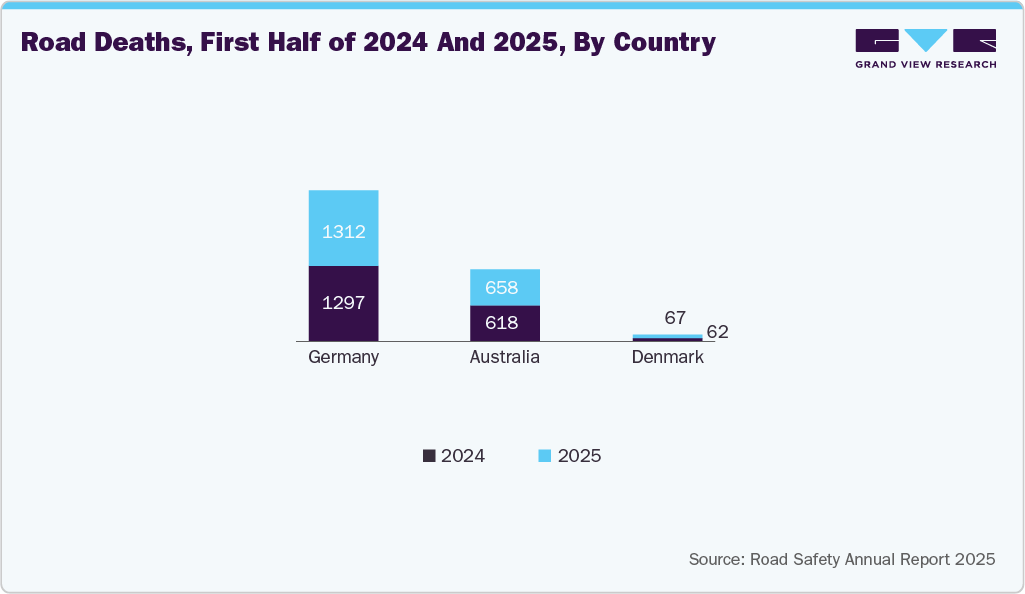
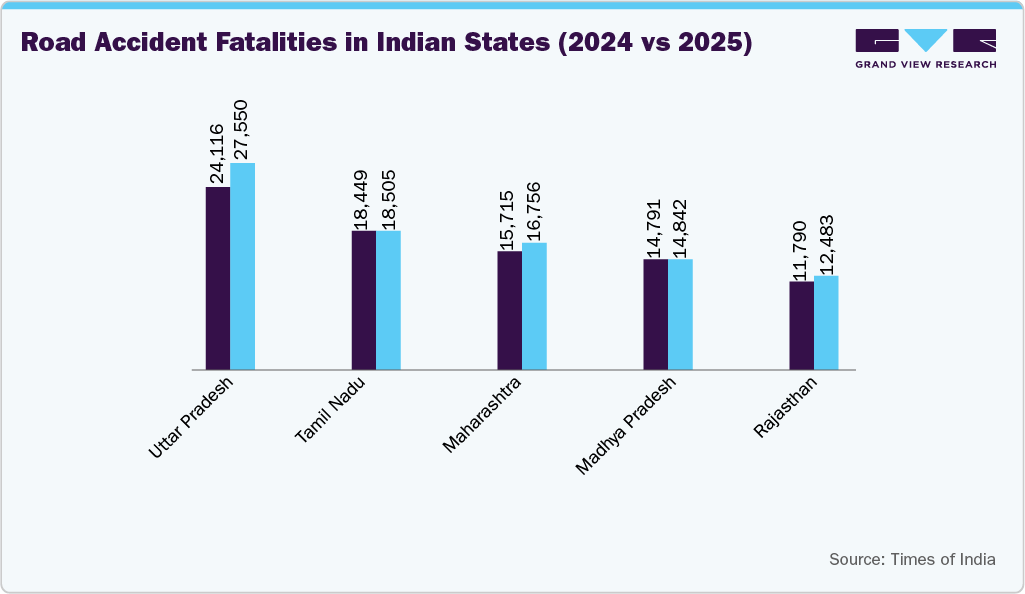
The rising incidence of road traffic accidents and occupational injuries is driving demand for emergency tourniquets to manage severe extremity bleeding at accident scenes. Industrial incidents, machinery-related injuries, and high-impact collisions can cause life-threatening hemorrhages requiring immediate intervention before hospital admission. Emergency medical services, workplace safety teams, and first responders are emphasizing rapid bleeding-control capabilities, supporting demand for tourniquets in emergency medical kits and prehospital trauma care.
According to the World Health Organization (WHO), as reported in July 2026:
• Approximately 1.16 million people die annually from road traffic crashes worldwide.
• Road traffic injuries remain the leading cause of death among children and young adults aged 5-29 years.
• Around 92% of global road traffic fatalities occur in low- and middle-income countries, despite these countries accounting for approximately 60% of the world's motor vehicles.
• More than half of road traffic fatalities involve vulnerable road users, including pedestrians, cyclists, and motorcyclists.
• Road traffic crashes cost most countries approximately 3% of their gross domestic product (GDP).
• The United Nations has established a target to halve global road traffic deaths and injuries by 2030, under Resolution A/RES/74/299.
The risk of improper application and misuse is a restraint in the emergency tourniquet industry, as incorrect placement, insufficient tightening, or inappropriate use can compromise bleeding control and patient safety. Limited training and unfamiliarity with tourniquet application can create hesitation among civilian users and first responders. These concerns increase the need for standardized training and clear product instructions, potentially slowing adoption in settings where trained personnel and emergency preparedness resources are limited.
Expansion into civilian and public-access markets presents a significant opportunity in the global market, as schools, workplaces, airports, shopping centers, and sports facilities increasingly prioritize emergency bleeding-control preparedness. Manufacturers can capitalize on this opportunity by supplying easy-to-use tourniquets through public-access bleeding-control kits and first-aid programs. Partnerships with educational institutions, workplace safety organizations, and community emergency response programs can further expand product distribution and increase adoption beyond traditional military and healthcare settings.
In January 2026, the American College of Surgeons (ACS) reported that the U.S. National Defense Authorization Act for Fiscal Year 2026 included the Improving Police Critical Aid for Responding to Emergencies (CARE) Act, allowing law enforcement agencies to use Byrne Justice Assistance Grant funding to purchase bleeding-control kits containing recommended tourniquets and instructional materials. This initiative creates opportunities for emergency tourniquet manufacturers to expand into law enforcement procurement and civilian public-access bleeding-control markets.
Market Concentration & Characteristics
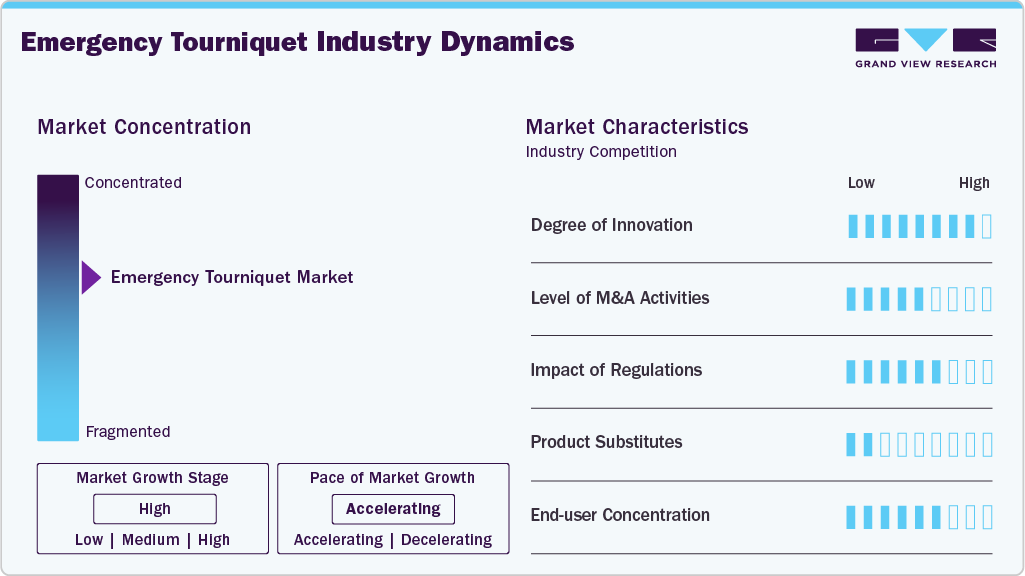
The market demonstrates a moderate degree of innovation, primarily focused on improving application speed, ease of use, and reliability during critical bleeding emergencies. Manufacturers are developing improved windlass mechanisms, secure locking systems, durable materials, and ergonomic designs to support effective hemorrhage control. Innovation also includes compact configurations and training-oriented designs that improve usability for military personnel and civilian first responders. For instance, SAM Medical's SAM XT tourniquet uses TRUFORCE buckle technology that automatically locks at a predetermined circumferential force, helping reduce strap slack and simplify application. The product is available with metal and polymer windlass configurations, illustrating continued innovation in application mechanisms and product design.
The global market exhibits a relatively low to moderate level of merger and acquisition (M&A) activity, as competition is primarily driven by specialized medical device manufacturers and established tactical medical suppliers. Consolidation opportunities are linked to expanding trauma-care portfolios, strengthening distribution networks, and gaining access to military and emergency medical procurement channels. Strategic acquisitions within the broader emergency medical supplies sector also enable companies to expand their hemorrhage-control product offerings and geographic presence.
 To learn more about this report, Download Free Sample Report
Regulatory requirements significantly influence the emergency tourniquet industry by establishing standards for product safety, quality, performance, and manufacturing practices. In the U.S., the FDA's medical device classification and applicable premarket requirements affect product commercialization, while the EU Medical Device Regulation (MDR) governs conformity assessment and market access in Europe. Compliance with these requirements increases testing, documentation, and quality-management costs, builds buyer confidence, and supports the adoption of reliable hemorrhage-control devices.
End-use concentration in the market is primarily influenced by military and defense organizations, emergency medical services (EMS), hospitals, and law enforcement agencies. Military and tactical applications represent an important demand segment due to the need for rapid hemorrhage control in combat-related injuries, while civilian demand is supported by ambulance services and trauma-care providers. Demand diversification across public safety organizations, healthcare facilities, and individual emergency preparedness users helps expand the market beyond defense applications.
Mechanism Type Insights
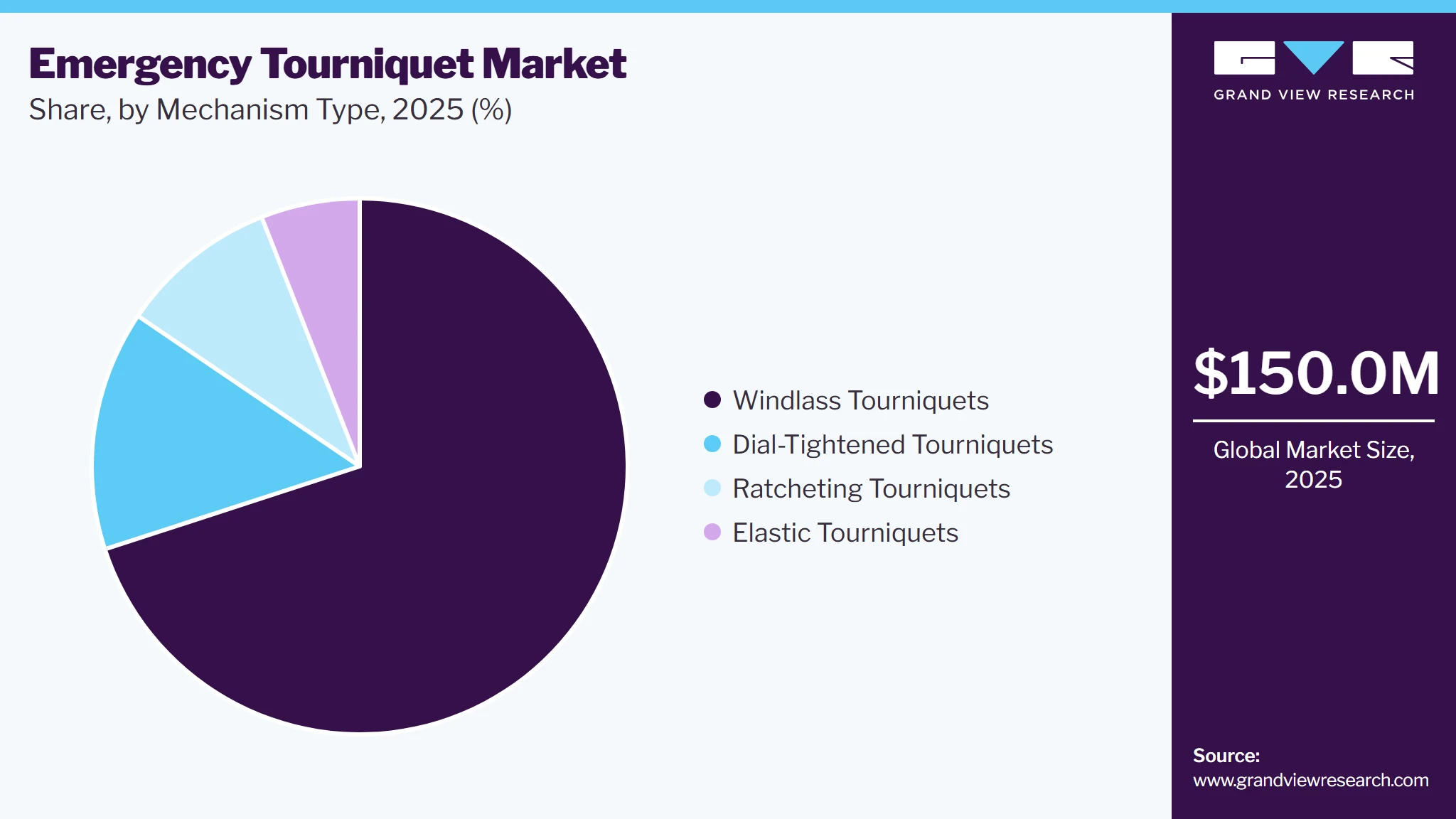
The windlass tourniquets (C-A-T, SAM XT, SOF T) segment dominated the market with the largest revenue share of 70.0% in 2025. due to their established use in military, tactical, and civilian trauma care. Their mechanical tightening mechanisms enable controlled application of pressure to manage life-threatening extremity bleeding. Proven product designs, portability, and familiarity among trained first responders supported demand across defense organizations and emergency medical services.
 To learn more about this report, Download Free Sample Report
The elastic tourniquet segment is expected to grow at the fastest CAGR during the forecast period due to its lightweight construction, flexibility, and ease of use in selected emergencies and clinical applications. Its compact design supports convenient storage in first-aid kits and emergency medical supplies. Growing demand for portable bleeding-control solutions may create opportunities for the adoption of elastic tourniquets, although their suitability for severe hemorrhage control depends on the specific product design and intended use.
End Use Type Insights
The military & defense segment dominated the market, with the largest revenue share of 44.2% in 2025, driven by the critical need for rapid hemorrhage control in combat operations, blast injuries, and tactical emergencies. Armed forces prioritize tourniquets that offer durability, rapid application, and reliable performance under challenging field conditions. Continued procurement of individual first-aid kits and tactical trauma supplies supports demand for emergency tourniquets across military medical units and defense organizations.
The emergency medical services (EMS) and first responders segment is expected to grow at the fastest CAGR during the forecast period, as demand increases for immediate hemorrhage control at accident sites and other emergency scenes. Greater integration of tourniquets into prehospital trauma protocols is supporting adoption among paramedics, ambulance personnel, firefighters, and law enforcement officers. Expanding bleeding-control training programs and investments in emergency response capabilities are further creating opportunities for tourniquet use across civilian settings.
Regional Insights
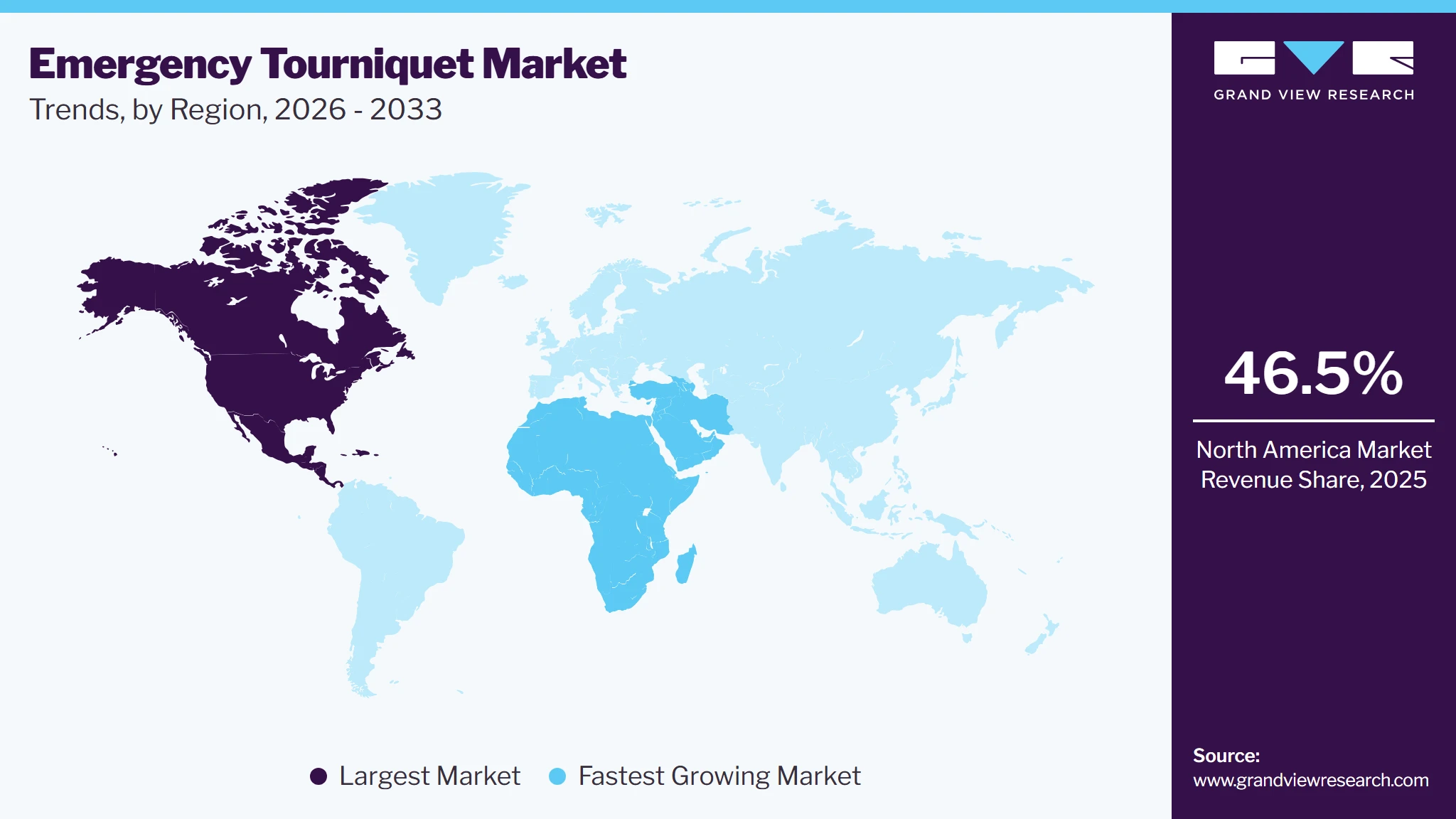
The emergency tourniquet market in North America held the largest revenue share of 46.5% in 2025, supported by established emergency medical services, advanced trauma-care infrastructure, and strong demand from military and law enforcement agencies. The growing adoption of bleeding-control kits in schools, workplaces, and public facilities is driving civilian demand. In addition, public bleeding-control education initiatives, including the American College of Surgeons’ STOP THE BLEED program, are supporting awareness and preparedness across the region.
 To learn more about this report, Download Free Sample Report
U.S. Emergency Tourniquet Market Trends
The emergency tourniquet market in the U.S. accounted for the largest revenue share in North America in 2025, driven by competition among specialized trauma-care manufacturers, product differentiation, and procurement requirements across the healthcare and public safety sectors. Demand is influenced by product affordability, ease of application, durability, and compliance with applicable medical device regulations. Established distribution networks and relationships with institutional buyers also play an important role in manufacturers’ market positioning and commercial expansion.
Europe Emergency Tourniquet Market Trends
The emergency tourniquet market in Europe is supported by established emergency medical services, hospital trauma-care networks, and continued investment in prehospital emergency response capabilities. Demand varies across countries according to healthcare procurement practices, defense requirements, and access to emergency medical equipment. Compliance with the EU Medical Device Regulation (MDR) also influences product approvals, market entry, and competition among tourniquet manufacturers.
The UK emergency tourniquet market is influenced by demand from ambulance services, trauma centers, police forces, and military medical units. Investment in prehospital trauma care and emergency response capabilities supports the use of tourniquets for managing severe limb bleeding. Market development is also shaped by NHS procurement practices, product availability, and compliance with UK medical device regulations overseen by the Medicines and Healthcare Products Agency (MHRA).
The emergency tourniquet market in France is supported by the country’s established emergency medical services, hospital trauma-care infrastructure, and military medical requirements. Demand is influenced by procurement from emergency response organizations, defense agencies, and healthcare facilities seeking reliable hemorrhage-control equipment. Compliance with European Union Medical Device Regulation (MDR) requirements and France’s medical device oversight framework also shapes product commercialization and market competition.
Asia Pacific Emergency Tourniquet Market Trends
The emergency tourniquet market in the Asia-Pacific region is supported by expanding emergency medical services, improving trauma care infrastructure, and increasing investment in healthcare systems. Demand varies across the region based on access to prehospital care, military procurement, and the availability of emergency medical supplies. Growing healthcare infrastructure in countries such as China, India, Japan, and Australia provides opportunities for manufacturers to expand distribution and address diverse clinical and emergency response needs.
The China emergency tourniquet market is influenced by the expansion of emergency medical services, investments in trauma-care infrastructure, and demand from military and public safety organizations. Domestic medical device manufacturing capabilities offer local producers opportunities to supply cost-competitive hemorrhage-control products. Market growth is also shaped by medical device registration requirements, product quality standards, and the increasing emphasis on strengthening emergency response preparedness.
Latin America Emergency Tourniquet Market Trends
The emergency tourniquet market in Latin America is influenced by the gradual development of prehospital emergency care systems, trauma treatment capabilities, and public safety infrastructure. Demand is driven by hospitals, ambulance services, law enforcement agencies, and military healthcare units that require equipment for rapid bleeding control. However, disparities in healthcare funding, uneven access to emergency medical services, and dependence on imported medical devices influence product availability and market expansion across the region. According to DATASUS data from Brazil’s Ministry of Health, external causes accounted for 30,149 deaths in 2023 and 30,010 deaths in 2024 through November. The persistently high number of fatalities highlights the need for effective emergency response measures and targeted policies to reduce deaths associated with accidents and violence.
MEA Emergency Tourniquet Market Trends
The emergency tourniquet market in the Middle East and Africa (MEA) is anticipated to grow at the fastest CAGR during the forecast period, driven by demand from military medical services, emergency response agencies, hospitals, and trauma care facilities. Investments in healthcare infrastructure and emergency preparedness across parts of the Middle East are supporting the procurement of hemorrhage-control equipment. However, limited access to advanced prehospital care, budget constraints, and uneven distribution of medical supplies across parts of Africa limit broader market penetration.
Key Emergency Tourniquet Company Insights
The emergency tourniquet industry includes key players such as North American Rescue, SAM Medical, TacMed Solutions, Safeguard Medical, and RevMedX. Competition is shaped by product reliability, ease of application, procurement by military and emergency services, and distribution capabilities. However, independently verified market share percentages for individual companies are not publicly available, making precise company-level share comparisons difficult.
Key Emergency Tourniquet Companies
The following key companies have been profiled for this study on the emergency tourniquet market.
-
Sam Medical (Tri-Tech Forensics, Inc.)
-
North American Rescue, LLC (Henry Schein, Inc.)
-
TacMed Solutions (CNL Strategic Capital, LLC)
-
RevMedX
-
Safeguard Medical
-
Aristeia
-
Snakestaff Systems
-
TMI Medical LIMITED
-
LOCKLIX by CNEX
-
m2 Inc. (Edgewater Technology-M2)
-
Rapid Medical
-
CAT Resources, LLC
-
Delfi Medical Innovations Inc.
-
TQ DNIPRO (PROSTIR LLC)
-
SICH Medical LLC
-
Golden Hour Medical, Inc.
Competitive Benchmarking
Category
Operating Strategies
Competitive Edge
Weakness
Established Players (Sam Medical (Tri-Tech Forensics, Inc.), North American Rescue, LLC. (Henry Schein, Inc.), TacMed Solutions (CNL Strategic Capital, LLC))
- Expand established product portfolios, strengthen distribution networks, maintain institutional procurement relationships, and invest in product quality and incremental design improvements.
- Strong brand recognition, established military and emergency medical services relationships, broad product availability, and proven experience in trauma-care equipment.
- Dependence on institutional procurement cycles, pricing pressure, and the need for continuous product differentiation in a competitive market.
Emerging Players (Aristeia, Snakestaff Systems, TMI Medical LIMITED)
- Introduce innovative tightening mechanisms, develop user-friendly tourniquets, target civilian bleeding-control programs, and establish new distribution partnerships.
- Product innovation, specialized designs, flexible product development, and opportunities to address unmet needs in civilian emergency preparedness.
- Limited brand recognition, less-established distribution networks, challenges securing institutional contracts, and the need to demonstrate product reliability and user acceptance.
Recent Developments
-
In January 2026, Golden Hour Medical, the company behind the AutoTQ automated tourniquet, announced a collaboration with The Blueprint Corporation to expand access to advanced bleeding-control technology across safety-focused organizations in the United States. The partnership aims to improve the availability of automated hemorrhage-control solutions across civilian and professional emergency-response settings.
-
In January 2026, Lee County Public Safety partnered with Golden Hour Medical, Inc. to deploy 25 AutoTQ Automatic Tourniquet kits across public parks and recreation locations in Lee County, Florida. The kits were installed alongside county-managed automated external defibrillators (AEDs), expanding public access to emergency equipment for sudden cardiac arrest and life-threatening bleeding.
-
In April 2025, research led by Dr. Naveena Yanamala at Rutgers Health evaluated Auric Innovations’ XForce Tourniquet against the industry-standard Combat Application Tourniquet (C-A-T). The study, published as a preprint on medRxiv, reported that the XForce Tourniquet reduced total application time by 47% compared with the C-A-T, highlighting its potential to improve application speed and usability in emergency hemorrhage control.
Emergency Tourniquet Market Report Scope
Report Attribute
Details
Market size in 2025
USD 150.0 million
Estimated market size in 2026
USD 158.7 million
Projected market size by 2033
USD 232.4 million
Growth rate
CAGR of 5.6% from 2026 to 2033
Base year for estimation
2025
Historical data
2021 - 2024
Forecast period
2026 - 2033
Quantitative units
Revenue in USD million, and CAGR from 2026 to 2033
Report coverage
Revenue forecast, company ranking, competitive landscape, growth factors, and trends
Segments covered
Mechanism type, end use, region
Regional scope
North America; Europe; Asia Pacific; Latin America; MEA
Country scope
U.S.; Canada; Mexico; Germany; UK; France; Italy; Spain; Norway; Denmark; Sweden; China; Japan; India; South Korea; Australia; Thailand; Brazil; Argentina; Saudi Arabia; South Africa; UAE; Kuwait
Key companies profiled
Sam Medical (Tri-Tech Forensics, Inc.); North American Rescue, LLC. (Henry Schein, Inc.); TacMed Solutions (CNL Strategic Capital, LLC); RevMedX; Safeguard Medical; Aristeia; Snakestaff Systems; TMI Medical LIMITED; LOCKLIX by CNEX; m2 Inc (Edgewater Technology-M2); Rapid Medical; CAT Resources, LLC; Delfi Medical Innovations Inc.; TQ DNIPRO (PROSTIR LLC); SICH Medical LLC; Golden Hour Medical, Inc.
Customization scope
Free report customization (equivalent up to 8 analysts' working days) with purchase. Addition or alteration to country, regional & segment scope.
Pricing and purchase options
Avail customized purchase options to meet your exact research needs. Explore purchase options
Global Emergency Tourniquet Market Report Segmentation
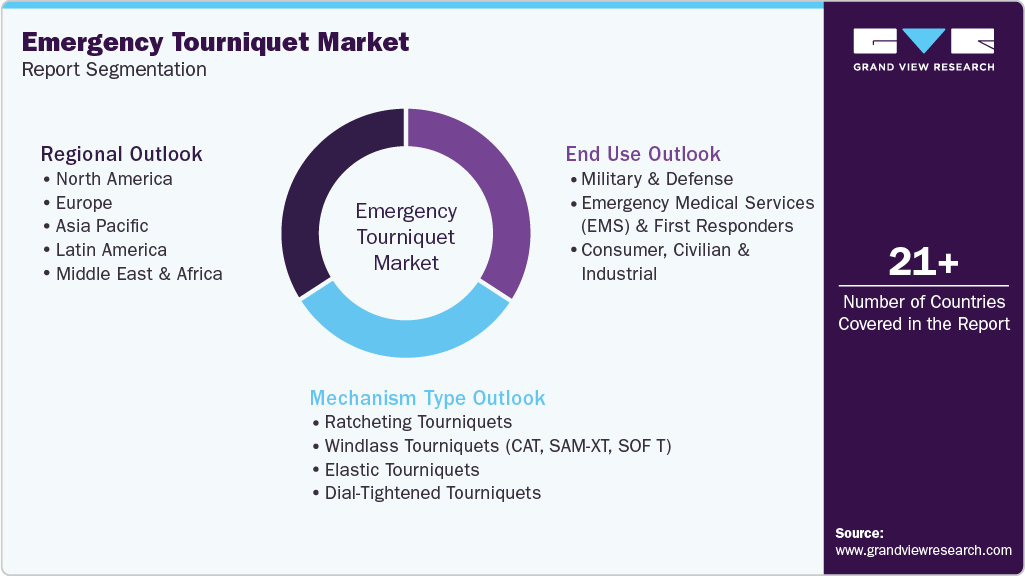
This report forecasts revenue growth at global, regional & country levels and provides an analysis of the latest industry trends in each of the sub-segments from 2021 to 2033. For this study, Grand View Research has segmented the global emergency tourniquet market report based on mechanism type, end use, and region:
 To learn more about this report, Download Free Sample Report
-
Mechanism Type Outlook (Revenue, USD Million, 2021 - 2033)
-
Ratcheting Tourniquets
-
Windlass Tourniquets (CAT, SAM-XT, SOF T)
-
Elastic Tourniquets
-
Dial-Tightened Tourniquets
-
-
End Use Outlook (Revenue, USD Million, 2021 - 2033)
-
Military & Defense
-
Emergency Medical Services (EMS) & First Responders
-
Consumer, Civilian & Industrial
-
-
Regional Outlook (Revenue, USD Million, 2021 - 2033)
-
North America
-
U.S.
-
Canada
-
Mexico
-
-
Europe
-
UK
-
Germany
-
France
-
Italy
-
Spain
-
Denmark
-
Sweden
-
Norway
-
-
Asia Pacific
-
Japan
-
China
-
India
-
Thailand
-
Australia
-
South Korea
-
-
Latin America
-
Brazil
-
Argentina
-
-
Middle East & Africa
-
South Africa
-
Saudi Arabia
-
UAE
-
Kuwait
-
-
Research Methodology
The emergency tourniquet market figures in this report are based on a proven research process that combines executive interviews with secondary research from proprietary databases, company filings, and recognized regulatory and institutional sources. Market size is built through value-chain sizing - reconciling supply-side and demand-side estimates - and triangulated with bottom-up and top-down approaches. Every estimate passes multiple levels of expert validation before publication, with each emergency tourniquet segment quantified using the revenue-capture definitions in the table below.
Segment Definition
Segment - Mechanism Type
Revenue capture definition
Windlass Tourniquets (C-A-T, SAM XT, SOF-T)
Captures revenue generated from the sale of emergency tourniquets that use a windlass-based tightening mechanism to apply circumferential pressure and control severe extremity bleeding. Revenue includes standard and specialized models sold to military, EMS, hospitals, law enforcement, and civilian users.
Ratcheting Tourniquets
Captures revenue from tourniquets that use a ratchet-based mechanism to tighten and secure the strap through incremental mechanical adjustment. Includes sales of tactical and emergency models to professional responders, healthcare providers, defense agencies, and civilian preparedness markets.
Elastic Tourniquets
Captures revenue from emergency tourniquets that use stretchable bands or elastic materials to create compression around a limb. Includes applicable products designed for emergency bleeding control and sales through medical suppliers, first-aid distributors, and emergency preparedness channels.
Dial-Tightened Tourniquets
Captures revenue from emergency tourniquets that use a rotating dial mechanism to tighten and secure the strap, allowing controlled mechanical adjustment. Includes sales of dial-operated devices intended for emergency extremity hemorrhage management across professional and civilian response settings.
Estimation Model
01
02
03
Bottom-Up Installed Base and Procedure Volume Modeling
Top-Down Revenue Triangulation
Demand-Side End-User Consumption Modeling
Model emergency tourniquet demand across military and defense organizations, emergency medical services (EMS), hospitals, law enforcement agencies, and civilian first-aid programs. Estimates annual unit demand using the number of equipped personnel, emergency response vehicles, trauma kits, and public-access bleeding-control stations, incorporating replacement cycles and average selling prices (ASPs) to calculate market revenue.
Aggregates emergency tourniquet revenues from manufacturers and relevant suppliers, including SAM Medical, North American Rescue, TacMed Solutions, and RevMedx. Validates estimates using company disclosures, product pricing, procurement contracts, government tender data, and distribution information, adjusting for overlapping portfolios and excluding unrelated surgical tourniquet revenues.
Assesses estimated tourniquet purchasing patterns across defense agencies, EMS providers, hospitals, police departments, workplaces, schools, and public-access emergency programs. The model incorporates procurement budgets, trauma-care protocols, training initiatives, inventory stocking levels, product replacement frequency, and regional adoption rates to estimate demand by end user and geography.
Delivered Customizations
This report has been delivered with the following In-depth customizations
Client request
Customization delivered
Value adds
Product and Segment Share Analysis
Segmentation by tourniquet type, application, end user, and distribution channel, including windlass, elastic, military, and civilian emergency-care categories.
Identifies high-demand product categories, segment-level growth opportunities, and potential portfolio expansion areas.
Competitive Landscape Analysis
Company-level assessment of mature and emerging players, including product portfolios, pricing positioning, operating strategies, innovations, and distribution networks.
Highlights competitive advantages, product differentiation, market gaps, and opportunities for strategic positioning.
Regional Market and Growth Opportunity Analysis
Country-level assessment across North America, Europe, Asia Pacific, Latin America, and the Middle East and Africa, covering demand drivers, regulations, procurement trends, and public-access initiatives.
Supports geographic prioritization, market entry decisions, distribution planning, and the identification of emerging customer segments.
About the Author(s)
Medical Devices Research Team
Healthcare · Medical DevicesThis report was authored by the medical devices research team at Grand View Research - comprising two research analysts, one senior research analyst, and one industry expert - with specialized expertise in the medical devices segment of the healthcare industry. All findings are based on proprietary healthcare databases, executive interviews, and regulatory analysis, subject to internal peer review prior to publication.
Last Updated:
Speak to Analyst

Customize this report to your needs - add regions, segments, or data points, with 20% free customization.
Or view our licence options:


ISO 9001:2015 & 27001:2022 Certified
We are GDPR and CCPA compliant! Your transaction & personal information is safe and secure. For more details, please read our privacy policy.


