
- Home
- »
- Medical Devices
- »
-
Ambulance Services Market Size & Share Report, 2026-2033GVR Report cover

Ambulance Services Market (2026 - 2033)
Size, Share & Trends Analysis Report By Transport Vehicle (Ground Ambulance, Air Ambulance), By Emergency Services (Emergency Services, Non-Emergency Services), By Equipment, By Region, And Segment Forecasts
Market Size, 2025
$51.2BMarket Estimate, 2026
$56.1BMarket Forecast, 2033
$111.7BCAGR, 2026–2033
10.3%Ambulance Services Market Summary
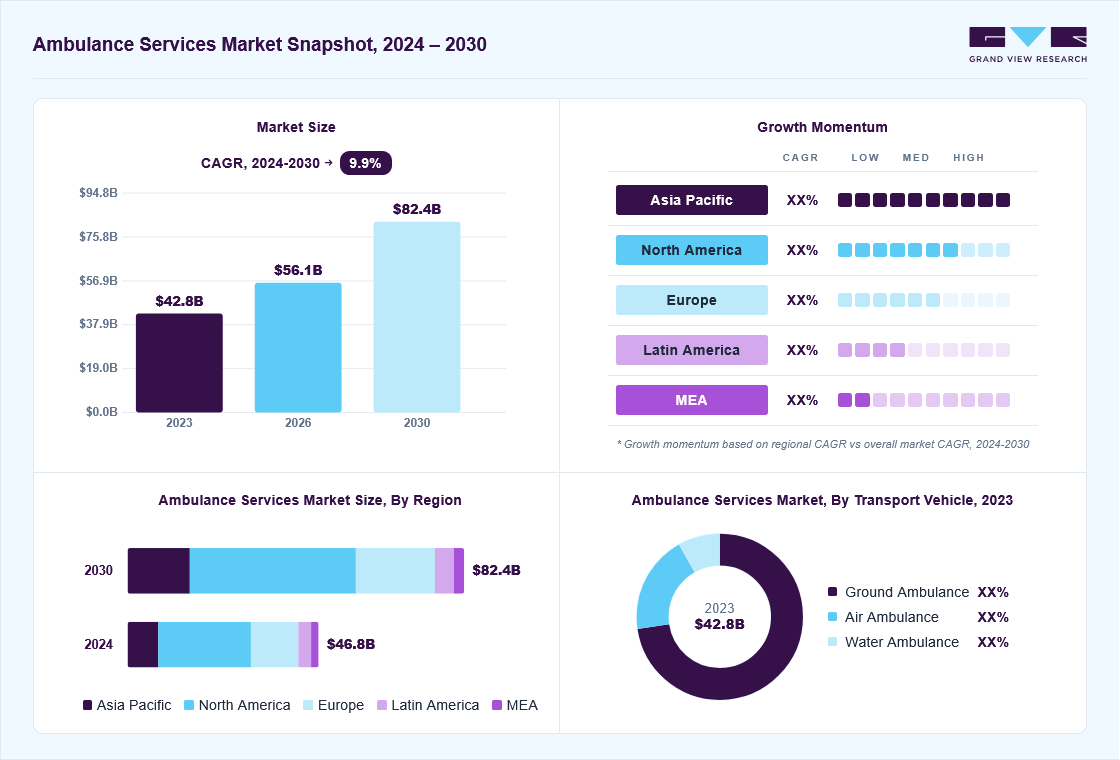
The global ambulance services market size was valued at USD 51.2 billion in 2025 and is projected to grow from USD 56.1 billion in 2026 to USD 111.7 billion by 2033, at a CAGR of 10.3% from 2026 to 2033. The market in North America dominated with a revenue share of 48.6% in 2025. The demand for ambulance services has increased due to rising incidence of traumatic accidents, an increase in a number of people suffering from various chronic diseases, and a rise in geriatric population.
 Source: Grand View Research, IR Documents, Primary Interviews, Paid DatabasesTo learn more about this report,
 Download Free Sample Report
 Key Market Trends & Insights
- By transport vehicle: Ground ambulance segment held the largest market share of 73.1% in 2025.
- By emergency services: Emergency services segment held the largest market share of 61.8% in 2025.
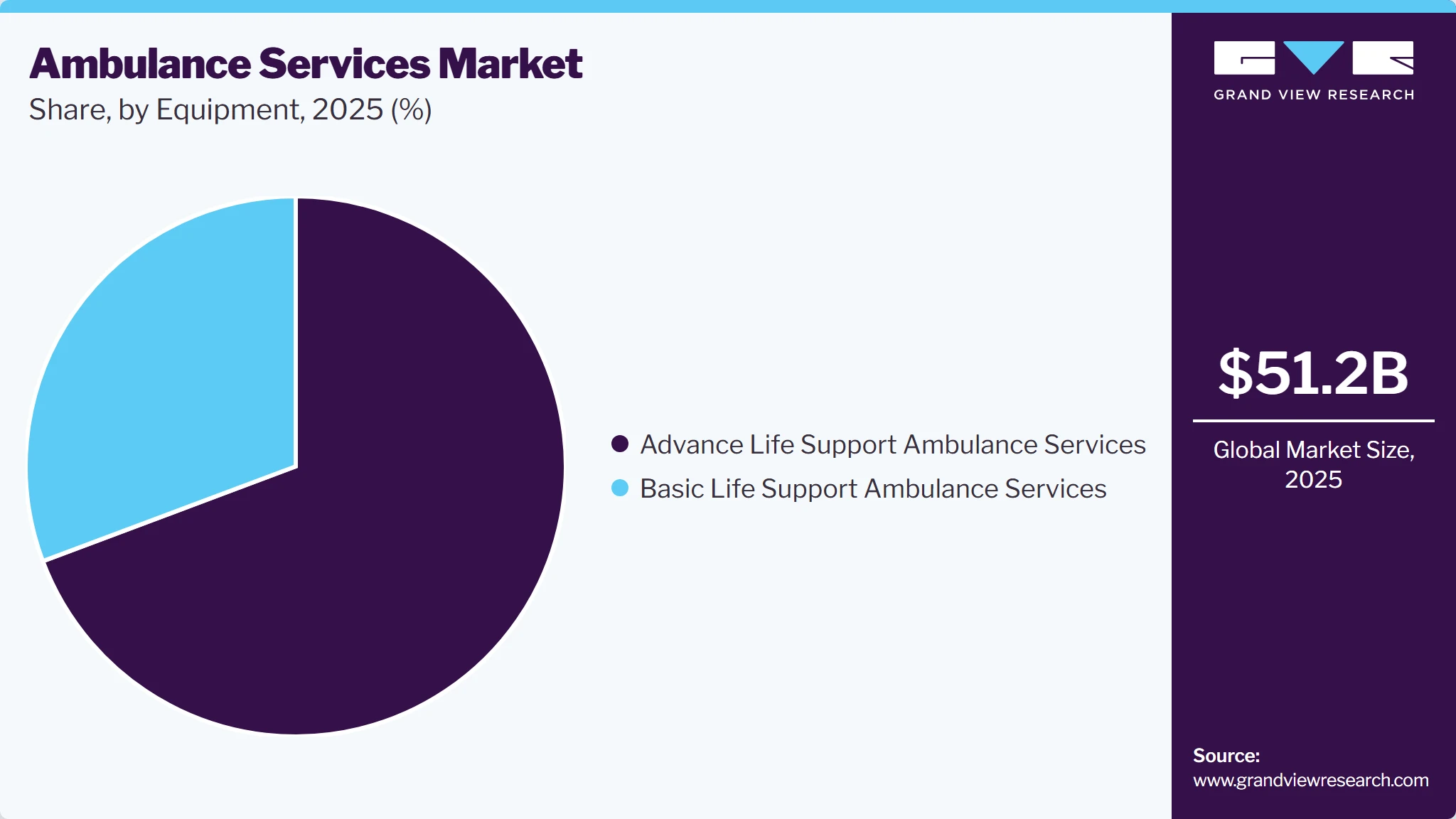
- By equipment: Advance life support (ALS) ambulance services segment held the largest market share of 69.3% in 2025.
Regional Highlights
- Largest regional market: North America (48.6% revenue share, 2025)
- Fastest-growing regional market: Asia Pacific (highest CAGR, 2026-2033)
- By country: The U.S. held the largest market share in 2025
Market Size & Forecast
- Market size in 2025: USD 51.2 Billion
- Estimated market size in 2026: USD 56.1 Billion
- Projected market size by 2033: USD 111.7 Billion
- CAGR (2026-2033): 10.3%
Three ways to get this report
Buy it, customize it, or ask a question.Ask an Analyst
Analyst response in 1 business day
- AccessReport author, directly
- Reply timeWithin 1 working day
- No sales callDirect answer only
- FormatEmail reply
- CostFree, no cost
Get the Full Report
What the study covers
- FormatsPDF · Excel · Dashboard
- Timeline2026–2033 annual, 2025 base
- Coverage20+ countries, 5 regions
- Companies10+ key players profiled
Customize the Report
20% free customization
- IncludeCountries, segments, points
- TailorTo your product definition
- ExtendDeeper competitor detail
- OrA fully bespoke study
- Turnaround5–10 working days
In addition, rise in medical tourism and availability of reimbursement policies are also expected to boost the demand for global market over the forecast period. The presence of a large population pool over 60 years, which typically has a lower immunity level and is prone to neurological diseases, cardiac problems, cancer, and spinal injuries, is also expected to be a high impact rendering driver for the growth of the market over the forecast period. For instance, as per a report by United Nations, Department of Economic and Social Affairs, published in 2023, approximately 1 in every 6 people in the world are expected to be over 65 years of age by 2050. Moreover, as per similar source, there were 761 million people who were above 65 years of age globally in 2021. Hence, increasing geriatric population is likely to result in the market growth. To learn more about this report, Download Free Sample Report
 Medical tourism is also rising due to developments in healthcare infrastructure and advanced reimbursement policies. For instance, according to HealthCare, Inc., around 787,000 Americans are estimated to travel abroad for medical and dental treatment in 2022. Similarly, as per The American Journal of Medicine, the number of U.S. medical tourists & number of medical tourist in the world is expected to increase by around 25% every year. Furthermore, as per Consulate General of India, India has emerged as top 6 medical tourism site globally in recent years. Therefore, due to the growth of medical tourism, ambulance services may be required in the travel destination to transport patients to their venue of treatment. This is expected to boost market growth.
The COVID-19 pandemic has positively impacted the market due to elevated usage of ambulance services in this period. For instance, as per Quartz India, Accretion Aviation witnessed a growth of 20% during the COVID-19 pandemic. However, with decline in a number of COVID-19 patients, the need for ambulance service is anticipated to reduce, thereby the market is expected to foresee a slightly negative impact in the year 2022-2023. Even though the market declined, it is anticipated to witness a significant CAGR over the forecast period. This can be attributed to increase in number of ambulances during the COVID-19 period. For instance, according to the Mint, Ziqitza Healthcare was going to provide 200 additional ambulances to the Madhya Pradesh government during the time of COVID-19. Thus, aforementioned factors are expected to be responsible for the market growth.
Market Dynamics
The ambulance services market is driven by the increasing prevalence of medical emergencies, including cardiovascular diseases, strokes, respiratory disorders, trauma injuries, and road accidents that require immediate medical attention and transportation. The growing elderly population and rising burden of chronic diseases are further increasing the demand for both emergency and non-emergency ambulance services. Governments and healthcare organizations are investing in modernizing emergency medical service (EMS) systems, expanding ambulance fleets, and improving healthcare accessibility. Technological advancements such as GPS-based vehicle tracking, real-time communication systems, telemedicine integration, and advanced life support (ALS) ambulances are enhancing response times and the quality of patient care. The growing adoption of air ambulance services for critical and long-distance patient transport is also supporting market growth.
The rising prevalence of medical emergencies and trauma cases is a significant driver of the ambulance services market. The rising incidence of cardiovascular diseases, strokes, cardiac arrests, respiratory emergencies, and other life-threatening conditions has increased the need for rapid pre-hospital medical care and timely transportation to healthcare facilities. In addition, the growing number of road traffic accidents, workplace injuries, sports-related injuries, and natural disaster-related emergencies has created a greater demand for emergency medical response services. According to global health organizations, road traffic injuries remain a leading cause of death and disability worldwide, particularly among younger populations, emphasizing the importance of efficient ambulance networks. Urbanization and increasing population density have further contributed to higher accident rates and emergency healthcare requirements. Ambulance services play a critical role in providing immediate medical stabilization, advanced life support, and continuous patient monitoring during transport, helping to reduce mortality and improve clinical outcomes.
- According to data published by the WHO in 2026, approximately 1.19 million people die each year as a result of road traffic crashes. Road traffic injuries are the leading cause of death for children and young adults aged 5-29 years. Furthermore, 92% of road traffic fatalities occur in low- and middle-income countries, despite these countries accounting for only around 60% of the world's vehicles. More than half of all road traffic deaths occur among vulnerable road users, including pedestrians, cyclists, and motorcyclists. In addition, road traffic crashes cost most countries approximately 3% of their Gross Domestic Product (GDP).
The high operational and maintenance costs associated with ambulance services are a significant restraint on market growth. Ambulance operators are required to make substantial investments in vehicle acquisition, advanced medical equipment, communication systems, and emergency response technologies to ensure high-quality patient care. In addition, recurring expenses such as fuel, vehicle maintenance, insurance, licensing, and regulatory compliance contribute to the overall cost burden. The need to employ and retain skilled paramedics, emergency medical technicians, drivers, and support staff further increases operational expenditures. Continuous training programs and certification requirements also add to service costs. Advanced Life Support (ALS) ambulances, equipped with complex monitoring and life-saving equipment, require a higher capital investment and greater maintenance than Basic Life Support (BLS) units.
The increasing adoption of digital health solutions and advanced emergency medical technologies presents a significant opportunity for the ambulance services market. The integration of telemedicine, real-time patient monitoring, electronic health records (EHRs), GPS-enabled fleet management, and AI-powered dispatch systems is transforming emergency medical services by improving response times, operational efficiency, and patient outcomes. Ambulances are being equipped with advanced communication technologies that enable paramedics to transmit patient data to hospitals before arrival, allowing healthcare professionals to prepare for immediate treatment. In addition, the growing implementation of smart ambulance systems, connected healthcare infrastructure, and mobile healthcare services is creating new growth opportunities for service providers.
- In September 2025, the London Ambulance Service NHS Trust reported the first AI trial in which paramedics used Ambient Voice Technology within the 999 clinical hub. The tool, developed by TORTUS, listens to clinician-patient conversations and converts them into structured medical notes, which are then reviewed and approved by paramedics. The system is designed to reduce administrative workload by automatically transcribing calls, allowing clinicians to focus more on patient care and potentially treat more patients over the phone.
Market Concentration & Characteristics
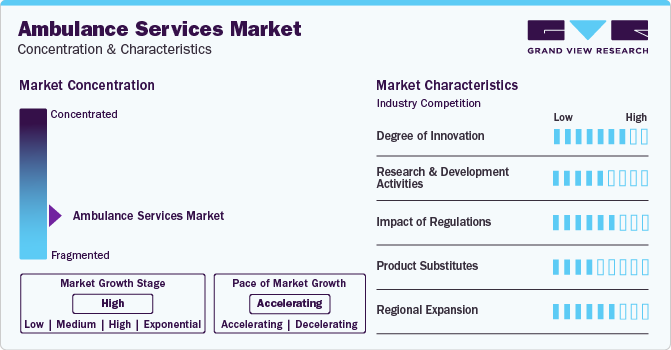
The market growth stage is high, and the pace of the market growth is accelerating. The market is characterized by a moderate-to-high degree of growth. Key drivers include the global rising prevalence of chronic diseases, surge in incidence of traumatic accidents and growing geriatric population across the globe. Advancements in medical technology, communication systems, and vehicle design advance the efficacy and effectiveness of ambulance services. For example, GPS navigation systems and telemedicine capabilities enable faster response times and better patient care. These factors further shape the market dynamics.
 To learn more about this report, Download Free Sample Report
 Key strategies implemented by players in the market are new product launches, expansion, mergers & acquisitions, partnerships, and other strategies. In January 2024, LifeLine Ambulance Service announced the acquisition of Liberty Ambulance Service. The strategic acquisition of Liberty Ambulance Service marks a significant milestone for LifeLine-EMS, as it broadens its reach and improves its capabilities in providing both non-emergency and emergency medical transportation services.
The ambulance services are increasingly incorporating telemedicine capabilities, allowing emergency medical personnel to consult with healthcare professionals remotely. This enables faster diagnosis and treatment decisions, improving patient outcomes.Moreover, ambulances are being equipped with advanced medical equipment and technology to enhance patient care during transportation. This includes features such as cardiac monitors, ventilators, point-of-care testing devices, and advanced life support systems. Nonetheless, ambulance services are utilizing data analytics and performance monitoring tools to track key performance indicators, optimize resource allocation, and identify areas for improvement in service delivery. This data-driven approach helps enhance operational efficiency and patient care quality.
Regulations have a significant impact on the market, influencing various aspects of service delivery, safety standards, quality of care, and reimbursement models. Ambulance services must adhere to licensing and certification requirements mandated by regulatory agencies, such as state health departments or national regulatory bodies. Some regulatory agencies establish response time requirements for ambulance services, specifying the maximum allowable time for emergency medical personnel to reach patients after receiving a call for assistance. Ambulance services must comply with Health Insurance Portability and Accountability Act (HIPAA) regulations and patient privacy laws to protect patient confidentiality and safeguard personal health information.Overall, regulations play a critical role in shaping the market by establishing standards for safety, quality, reimbursement, and accountability.
Companies are actively acquiring development-stage firms to broaden their product portfolios, catering to a larger patient base. These collaborative efforts aim to strengthen relationships and improve the implementation of clinical programs pitched towards reducing hospitalizations for members. For instance, in September 2023, Acadian Ambulance Service announced the accomplishment of an agreement to acquire considerably all of the assets of St. Landry EMS.This acquisition allows Acadian to operate four additional units and recruit 35-40 new personnel, bolstering services in the Hub City and Central Louisiana regions.Both firms' commitments to providing great emergency medical care remain unwavering, and this deal is expected to further enhance their ability to serve communities better.
The market comprises a large number of ambulance service providersespecially in regions with diverse healthcare systems and multiple providers, which leads to a highly fragmented market scenario. Many ambulance services are provided by local or regional entities, including private ambulance companies, municipal fire departments, nonprofit organizations, and hospital-based services. These entities often operate independently, serving specific geographic areas or communities. The ambulance service market features diverse ownership structures, with a mix of public, private, and nonprofit providers. This diversity contributes to fragmentation, as different organizations may have varying service models, priorities, and operational strategies.The structure of the ambulance service market can vary significantly from one region to another based on factors such as population density, healthcare infrastructure, regulatory environment, and funding mechanisms.
Ambulance service companies may pursue regional expansion for several reasons, including capturing market share, diversifying revenue streams, and leveraging economies of scale. This involves forming partnerships, making acquisitions, and adopting localized marketing strategies to establish a stronger presence in key geographical areas. Ambulance service companies may pursue organic growth strategies by establishing new ambulance stations, deploying additional vehicles, and hiring personnel in target regions. This approach requires significant investment in infrastructure, staffing, and marketing to build brand recognition and market presence over time. Further, securing contracts with healthcare systems, hospitals, or government agencies in new regions can drive regional expansion for ambulance service companies.
Analyst Perspective
The ambulance services market is experiencing steady growth driven by rising emergency healthcare demand, increasing incidences of chronic diseases and road accidents, and an expanding elderly population requiring frequent medical transportation. Governments and healthcare providers are investing in advanced emergency medical services (EMS), including technologically equipped ambulances, real-time communication systems, and integrated dispatch platforms to improve patient outcomes and response times. In addition, the growing adoption of private ambulance services, expansion of air ambulance networks for critical care transport, and increasing healthcare accessibility in rural and underserved regions are creating new growth opportunities. However, challenges such as high operational costs, workforce shortages, and reimbursement constraints may impact market expansion. Despite these hurdles, continuous advancements in telemedicine-enabled ambulances, fleet modernization, and the development of supportive healthcare infrastructure are expected to sustain long-term market growth.
Transport Vehicle Insights
Based on transport vehicle, the ground ambulance segment led the market with a 73.1% revenue share in 2025. Ground ambulance includes van or pickup trucks, car/SUV, motorcycle, bicycle, all-terrain vehicles, golf cart, and bus. Rising cases of cardiovascular disorders in this region is anticipated to impel the segment growth. For instance, as per CDC, every 30 seconds, one person dies in the U.S. due to cardiovascular disorder. Moreover, as per similar source, around 18.2 million people aged 20 and above have coronary artery disease in the U.S. Similarly, rising geriatric population in this region is expected to drive the segment growth further. For instance, according to Statistics Canada, the number of people aged 85+ increased by around 12% during the year 2016-2021. Thus, due to aforementioned factors, the ground ambulance segment is expected to dominate the market.
The air ambulance segment is expected to grow at the fastest CAGR over the forecast period. Increasing cases of various accidents is expected to increase the use of air ambulance, thereby propelling the segment growth. For instance, as per Association for Safe International Road Travel, more than 46,000 people in the U.S. die every year due to road accidents, whereas, more than 4.4 million people are seriously injured. Air ambulance services are faster than ground ambulance and water ambulance services and can quickly reach remote areas where ground and water ambulance services are unable to reach. Thus, the aforementioned factors are anticipated to help the segment growth.
Emergency Services Insights
Based on emergency services, the emergency services segment led the market with the largest revenue share of 61.8% in 2025, and it is expected to grow at the fastest CAGR over the forecast period.
The growth of the emergency services segment can be attributed to the prevalence of cardiovascular diseases such as cardiac arrest, stroke, and congestive heart failure and rising cases of COVID-19 across the globe.
The emergency ambulance services are provided to patients with acute injury or illness and to those who are in urgent need of medical attention. For instance, according to Heart and Strokes Organization, Canada, every year, approximately 35,000 people in Canada suffer from cardiac arrest, whereas, this number increases to around 62,000 people suffering from stroke every year. In addition, according to statistics by CDC, around 3.4 million people in the U.S. suffer from epilepsy. Similarly, as per Government of Canada, the number of injuries tallied up to about 101,572 in 2020. Moreover, as per UC Davis Health about 39,707 deaths occur in the U.S. due to firearm related accidents. Thus, people suffering from emergency healthcare situations and various traumatic accidents are expected to boost the segment growth over the forecast duration.
Nonemergency ambulance services are primarily for the transportation of pediatric and bariatric patients, transportation of patients from one healthcare facility to another, for patients requiring daycare treatments, and transportation of discharged patients from hospital to home. The segment is expected to witness the significant CAGR of 9.38% during the forecast period. Increasing number of geriatric populations in this region is expected to drive the segment growth. For instance, as per a United Health Foundation report (published in May 2023), more than 55.8 million adults aged 65 and older lived in the U.S., accounting for about 16.8% of the nation's population in 2021. Thus, due to tremendous growth in the geriatric population, coupled with rising number of discharged patients, the segment is anticipated to witness a fastest CAGR over the forecast period.
Equipment Insights
Based on equipment, the advance life support (ALS) ambulance services segment led the market with the largest revenue share of 69.3% in 2025, and it is expected to grow at the fastest CAGR over the forecast period. For instance, as per St. John Ambulance, Canada, approximately, 40,000 people in Canada suffer from cardiac arrest. Moreover, according to Sudden Cardiac Arrest Foundation, approximately 356,000 out-of-hospital cardiac arrests occur in the U.S. every year, which are around 1,000 people every day.
In addition, the rise in COVID-19 patients has helped the ALS segment propel over the past few years. For instance, according to Worldometer, the total COVID-19 cases in the U.S. have tallied up to 83,437,158 as of May 06, 2022. Patients suffering from COVID-19 are in continuous need of ventilator. Moreover, if a person suffers from additional comorbidities, continuous cardiac monitoring is required. The ALS provides patients with continuous cardiac monitoring and ventilator support along with emergency medical technician. Hence, as a result of aforementioned factors, the segment is expected to dominate the market.
 To learn more about this report, Download Free Sample Report
 The Basic Life Support (BLS) is anticipated to grow at the significant CAGR of 9.15% during the forecast period. Rising incidence rate of acute illness such as asthma attack, bronchitis, burns, heart attacks, pneumonia is expected to drive the segment growth. For instance, as per American Thoracic Society, approximately 1.0 million adults in the U.S. are admitted in the hospital to treat pneumonia, whereas, 50,000 people from pneumonia.
Moreover, as per data by the WHO, around 3.24% people died due to influenza, pneumonia in Canada. Similarly, rising number of burn incidence is further increasing the use of BLS ambulance. For instance, according to U.S. Fire Administration, in 2021, fire death rate in the U.S. was 13.0 deaths per million populations. Similarly, according to the Joye Law Firm, on an average, about 450,000 burn injuries are registered in the U.S. alone.
Regional Insights
North America dominated the ambulance services market with the largest revenue share of 48.6% in 2025. The growth can be attributed to factors such as presence of several key market players in this region, growing demand for high-quality healthcare services, well-established healthcare infrastructure, and favorable reimbursement policies and regulatory reforms in the healthcare sector. For instance, in February 2019, the U.S. Department of Health and Human Services (HHS), Center for Medicare and Medicaid Innovation (Innovation Center), announced a new payment model for emergency ambulance services that aims to allow Medicare Fee-For-Service (FFS) beneficiaries to obtain the most appropriate level of care at the right time and place with the potential for lower out-of-pocket costs. All of these reimbursement regulations make ambulance services accessible for the patient population, hence propelling the market growth.
 To learn more about this report, Download Free Sample Report
 The U.S. market is expected to grow the fastest CAGR over the forecast period, due to healthcare infrastructure development, technological advancements, public awareness campaigns, government support, and changes in reimbursement policies.
The Europe market was identified as a lucrative region in this industry.The European market is a rapidly growing sector within the healthcare industry. It is a crucial part of the emergency medical services (EMS) sector, which provides critical care and transportation to patients in emergencies. Various regulations on ambulance care have been implemented in most European nations to improve the quality of services. In addition, most European nations have incorporated quality indicators for regulating the quality of ambulance services. The focus of European healthcare policy on quality improvement and providing patient-centric care also drives the growth of healthcare services, such as ambulance services, in this region.
The UK market is a vital part of the healthcare sector, providing emergency medical care and transportation to patients in need. The market is highly competitive, with both public and private ambulance services operating across the country. The NHS ambulance service is the primary provider of ambulance services in the UK, with services provided by 10 NHS ambulance trusts in England, the Scottish Ambulance Service, the Welsh Ambulance Service, and the Northern Ireland Ambulance Service. Private ambulance companies also provide services in the UK, particularly for non-emergency patient transport.
In France, the ambulance services sector has seen several changes and developments in recent years. The demand for ambulance services is rising due to the increasing aging population and increasing incidents of acute and chronic illnesses. Furthermore, ambulance services in France are adopting new technologies, such as telemedicine and mobile health apps, to improve patient care and response times. In combination with these, there is a greater emphasis on training and education in the ambulance services sector in the region and more attention is being given to professional development and continuing education for ambulance staff, which is improving the quality of care provided to patients. The private sector is increasingly participating in this market, which is driving competition and leading to improvements in service quality and efficiency.
The Germany market is expected to grow at the significant CAGR over the forecast period, due to aging population, increasing demand for emergency medical services, and the need for better integration with other parts of the healthcare system. Furthermore, High healthcare spending in Germany is expected to further boost the market growth. As per the data, in 2020, 67.9 billion euros of health expenditure was financed by government allocations and subsidies in Germany. The Federal Statistical Office addresses that it was a huge increase of 16.3 billion euros, or 31.5%, compared to 2019.
The Asia Pacific market is projected to witness the fastest CAGR of 12.77% during the forecast duration. The growth rate can be attributed to rising geriatric population in countries such as China, India, and Japan. For instance, as per Statistics Bureau of Japan, in 2020, the number of population aged 65+ was tallied up to 36.19 million which contributed around 28.8% of the total population. Similarly, according to the WHO, the geriatric population in China in expected to reach 28% of the total population by 2040, as geriatric population is more susceptible to various ailments, the Asia Pacific region is anticipated to have the fastest CAGR over the forecast period.
The China market is expected to grow at the significant CAGR over the forecast period, due to presence of large target population and technological advancements. China has developed "smart ambulances" that are equipped with advanced medical equipment, including electrocardiogram (ECG) machines and ultrasound devices, to help paramedics diagnose and treat patients more quickly. In addition, the country has been investing heavily in 5G technology, which has the potential to greatly improve emergency care. 5G can support high-speed data transfer, allowing doctors to remotely monitor and diagnose patients in real time.
China has been increasing its use of air ambulances to transport critically ill or injured patients to hospitals. These air ambulances are equipped with advanced medical equipment and staffed by highly trained medical professionals. The regional government of China has encouraged the development of a rural Emergency Medical Systems (EMS) system and set a deadline of 2025 for the completion of a government-led EMS system plan that serves both urban and rural areas
The rising geriatric population in Japan is likely to drive the demand for ambulance services over the forecast period. According to the article published in the BBC news, in September 2023, the national data of the Japan illustrates that around 29.1% of the 125 million population is aged 65 or older- a record. Moreover, more than one in 10 people in Japan are now aged 80 or older. The elderly population is more susceptible to various diseases and disabilities, which may propel the market for ambulance services in this country.
In addition, Japan is known for its highly advanced technology, and its ambulance services are no exception. Some ambulance services in Japan are equipped with telemedicine technology, which allows doctors to communicate with patients and paramedics in real time. This can be especially helpful in remote or hard-to-reach areas, and it also uses GPS and real-time traffic information to find the quickest and most efficient route to the scene of an emergency.
The Latin America market is expected to grow at a lucrative CAGR over the forecast period. An increase in per capita healthcare spending, prevalence of cardiovascular disorders, and rise in the number of road accidents are expected to boost the market in Latin America. For instance, as per the latest statistics published in Guardian News & Media Limited, around six million injuries, and 130,000 deaths are caused due to road accidents in Latin America. Road fatalities require immediate medical attention and EMS, which in turn propels the market in the region.
Moreover, an increase in the incidence of heart failure also contributes to the market growth. The country has a varied healthcare infrastructure and emergency care centers, with some countries having more advanced systems than others. In many Latin American countries, the government is responsible for providing healthcare services. These services are often offered through a national health system or public hospitals, which provide emergency medical care. The healthcare infrastructure in Latin America varies depending on the country. While some countries have well-equipped hospitals and medical facilities, others may lack basic resources such as medical equipment and supplies.
Advancements in their healthcare system and infrastructure are expected to increase the demand for ambulance services in the region. Moreover, the high prevalence of infectious diseases in African countries makes emergency ambulance services a necessity. For instance, as per the data published by the United Nations Organization, in July 2022, Africa] is experiencing an increasing risk of zoonotic pathogen outbreaks, such as the monkeypox virus, which started in animals and subsequently switched species to infect humans. According to a World Health Organization (WHO) report, the number of zoonotic outbreaks in the region increased by 63% between 2012 and 2022 compared to 2001-2011. While these numbers have risen over the last two decades, there was a notable uptick in 2019 and 2020, when zoonotic infections accounted for roughly fifty percent of all public health occurrences. Ebola Virus Disease and other viral hemorrhagic fevers account for roughly 70% of these outbreaks, with dengue fever, anthrax, plague, monkeypox, and a variety of other diseases making up the remaining 30%.
In addition, increasing government focus on healthcare services in the region further drives the market growth. For instance, in May 2023, the Ministry of Health received two ambulances for use at the National Infectious Disease Center and one land cruiser pickup to support oxygen plant operations from the World Health Organization (WHO) and the government of the Federal Republic of Germany as part of their ongoing efforts to improve the quality of healthcare services in Liberia.
Key Ambulance Services Market Company Insights
Key players are involved in adopting strategies such as merger and acquisitions, partnership, and launching new products to strengthen their foothold in the market. Moreover, considering technological developments in this industry, several industry players are introducing new ambulances and launching new technologies to enhance ambulatory care that might positively impact the industry share in the forecast period.
Key Ambulance Services Companies:
The following are the leading companies in the ambulance services market. These companies collectively hold the largest market share and dictate industry trends. Financials, strategy maps & products of these ambulance services companies are analyzed to map the supply network.
- Babcock International Group PLC
- London Ambulance Service NHS Trust
- Acadian Ambulance Service
- BVG
- America Ambulance Service, Inc.
- Falck A/S
- Global Medical Response
- Air Methods Corporation
- Ziqitza Healthcare Limited
- MEDIVIC PHARMACEUTICAL PVT LTD.
Competitive Benchmarking
Category
Operating Strategies
Competitive Edge
Weakness
Established Players (Falck A/S, Global Medical Response, Air Methods Corporation (American Securities LLC), Acadian Ambulance Service, London Ambulance Service NHS Trust, Babcock International Group PLC, Saudi Red Crescent Authority)
- Focus on large-scale integrated EMS networks, long-term government and insurance contracts, and advanced digital dispatch systems to optimize response times and resource allocation across regions.
- Expand air-ground integration, strategic partnerships, fleet modernization, and data-driven operations, improving efficiency and patient outcomes.
- Strong nationwide or multinational network coverage, advanced fleet (air + ground), and integrated emergency response systems enable faster dispatch and higher service reliability.
- Long-term government contracts, strong insurance partnerships, and investment in digital EMS technologies provide financial stability and operational scalability.
- High operating costs are driven by large fleets, regulatory compliance, and workforce intensity, which reduce pricing and margin flexibility.
- Dependence on government contracts and reimbursement systems makes revenue vulnerable to policy changes and payment delays.
Emerging Players (Ziqitza Healthcare Limited (MUrgency Group), Medivic Ambulance, MedE Emergency Medical Services, The Helicopter Company (THC), BVG)
- Focus on regional or niche markets with asset-light models, digital booking platforms, and cost-efficient operations to quickly scale without heavy infrastructure investments.
- Build partnerships with hospitals, insurers, and local governments while leveraging technology (tele-EMS, AI dispatch) to improve efficiency and expand service reach.
- Flexible, technology-driven operations with lower overhead costs enable faster scaling and customized service offerings in underserved or high-demand regional markets.
- Strong adaptability to new digital platforms, partnerships, and innovative care models such as app-based dispatch and telemedicine integration.
- Limited fleet size and geographic coverage reduce response capacity and restrict ability to serve large-scale or high-volume emergency contracts.
- Dependence on external funding, weaker brand recognition, and limited long-term government contracts make revenue streams less stable and harder to scale sustainably.
Recent Developments
-
In August 2023, Huntsville Hospital merge with HEMSI ambulance service to expand their services throughout northern Alabama
-
In May 2023, Empress EMS has announced the acquisition of Mobile Life Support Services to minimize operational disruption and to ensure consistent quality service for the communities. This joint venture is expected to boost the revenue of the company
Ambulance Services Market Report Scope
Report Attribute
Details
Market size in 2025
USD 51.2 billion
Estimated market size in 2026
USD 56.1 billion
Projected market size by 2033
USD 111.7 billion
Growth rate
CAGR of 10.3% from 2026 to 2033
Base year for estimation
2025
Historical data
2021 - 2024
Forecast period
2026 - 2033
Quantitative units
Revenue in USD million/billion and CAGR from 2026 to 2033
Report coverage
Revenue forecast, company ranking, competitive landscape, growth factors, and trends
Segments covered
Transport vehicle, emergency services, equipment, region
Regional scope
North America; Europe; Asia Pacific; Latin America; MEA
Country scope
U.S.; Canada; Mexico; Germany; UK; France; Italy; Spain; Norway; Denmark; Sweden; Russia; Iceland; Finland; China; Japan; India; South Korea; Australia; Thailand; Singapore; Brazil; Argentina; Saudi Arabia; South Africa; UAE; Kuwait; Israel
Key companies profiled
Babcock International Group PLC, London Ambulance Service NHS Trust, Acadian Ambulance Service, BVG, America Ambulance Service, Inc. (Hartford HealthCare), Falck A/S, Global Medical Response, Air Methods Corporation (American Securities LLC), Ziqitza Healthcare Limited (MUrgency Group), Medivic Ambulance, MedE Emergency Medical Services, The Helicopter Company (THC), Saudi Red Crescent Authority, among others
Customization scope
Free report customization (equivalent up to 8 analysts' working days) with purchase. Addition or alteration to country, regional & segment scope.
Pricing and purchase options
Avail customized purchase options to meet your exact research needs. Explore purchase options
Global Ambulance Services Market Report Segmentation
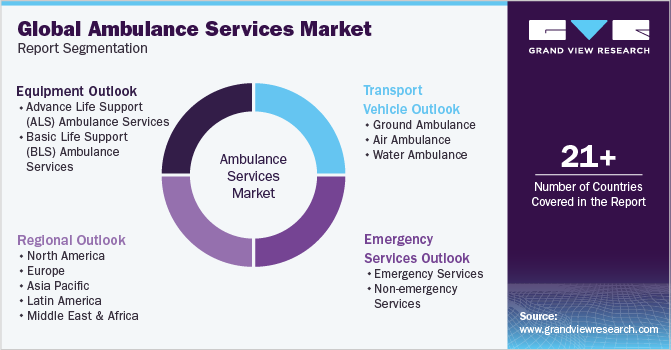
This report forecasts revenue growth at global, regional, and country levels and provides an analysis of the latest industry trends in each of the sub-segments from 2021 to 2033. For this report, Grand View Research has segmented the global ambulance services market report based on the transport vehicle, emergency services, equipment, and region:
 To learn more about this report, Download Free Sample Report
 -
Transport Vehicle Outlook (Revenue, USD Billion, 2021 - 2033)
-
Ground Ambulance
-
Air Ambulance
-
Water Ambulance
-
-
Emergency Services Outlook (Revenue, USD Billion, 2021 - 2033)
-
Emergency Services
-
Non-Emergency Services
-
-
Equipment Outlook (Revenue, USD Billion, 2021 - 2033)
-
Advance Life Support (ALS) Ambulance Services
-
Basic Life Support (BLS) Ambulance Services
-
-
Regional Outlook (Revenue, USD Billion, 2021 - 2033)
-
North America
-
U.S.
-
Canada
-
-
Europe
-
UK
-
Germany
-
France
-
Italy
-
Spain
-
Sweden
-
Denmark
-
Norway
-
-
Asia Pacific
-
Japan
-
China
-
India
-
Australia
-
South Korea
-
Thailand
-
-
Latin America
-
Brazil
-
Mexico
-
Argentina
-
-
Middle East & Africa
-
South Africa
-
Saudi Arabia
-
UAE
-
Kuwait
-
-
Research Methodology
The ambulance services market figures in this report are based on a proven research process that combines executive interviews with secondary research from proprietary databases, company filings, and recognized regulatory and institutional sources. Market size is built through value-chain sizing - reconciling supply-side and demand-side estimates — and triangulated with bottom-up and top-down approaches. Every estimate passes multiple levels of expert validation before publication, with each ambulance services segment quantified using the revenue-capture definitions in the table below.
Segment Definition
Segment - Transport vehicle
Revenue capture definition
Ground Ambulance
This segment captures global revenue from road-based emergency and non-emergency medical transport, including vans, trucks, and specialized all-terrain vehicles. It includes base-rate dispatch fees, mileage-based charging, and recurring government or private insurance reimbursements for pre-hospital clinical care.
Air Ambulance
Revenue in this category tracks fixed-wing aircraft and rotary-wing helicopter services utilized for rapid, long-distance, or rural critical-care transport. Capital is captured through premium specialized flight hourly rates, high-acuity advanced life support bundling, corporate subscription memberships, and managed-care institutional healthcare contracts.
Water Ambulance
Financial tracking for this localized segment focuses on maritime rescue boats and specialized medical transport vessels operating across islands, coastal zones, and waterways. Revenue is primarily counted through municipal emergency health budgets, marine tourism insurance claims, and specialized harbor or industrial offshore service agreements.
Estimation Model
Bottom-Up Dispatch Model
Top-Down Approach
Demand-Side Care-Setting
Utilization and incident rates derived from healthcare databases combined with average cost parameters across major urban hubs.
Analyzing total public and private medical budgets
to estimate emergency medical transportation
allocations globally.
Volume analysis of patients segmented by care
setting (acute emergencies, inter-hospital transfers)
combined with reimbursement rates.
Delivered Customizations
This report has been delivered with the following In-depth customizations
Client Request
Customization Delivered
Value Adds
Region-Specific Market Sizing
Country-level granularity mapping fleet deployments across North America,
Europe, Asia-Pacific, Latin America, and MEА..
Enables market prioritization, supports regional expansion strategies, and identifies regulatory frameworks.
Mission Volumes by Vehicle Type
Quantification of medical transport tasks split by road units (BLS/ALS),
rotary aircraft, and fixed-wing jets.
Assists in asset optimization, capital allocation, and supplier fleet sizing models
KSA Air Ambulance Data
Micro-level mission volume tracking within Saudi Arabia, split precisely into
rotary and fixed-wing networks.
Guides strategic positioning within GCC's premium medical aviation growth hub.
Frequently Asked Questions About This Report
The global ambulance services market is expected to grow at a compound annual growth rate of 10.3% from 2026 to 2033 to reach USD 111.7 billion by 2033.
The Advanced Life Support (ALS) ambulance services segment dominated the global market, accounting for 69.3% of revenue in 2025. The segment is anticipated to grow at the fastest rate over the forecast period.
North America dominated the ambulance services market, accounting for the largest revenue share of 48.6% in 2025. The region is expected to witness a CAGR of 10.7% over the forecast period.
The global ambulance services market size was valued at USD 51.2 billion in 2025 and is expected to reach USD 56.1 billion in 2026.
The emergency services segment dominated the ambulance services market, accounting for the largest revenue share of 61.8% in 2025. The segment is anticipated to grow at the fastest CAGR over the forecast period.
Rising road accidents, the increasing prevalence of chronic and emergency conditions, an aging population, and the growing demand for rapid pre-hospital care are driving the ambulance service market. Expansion of healthcare infrastructure, government emergency response programs, and adoption of advanced EMS technologies further support growth.
Key players include: Babcock International Group PLC, London Ambulance Service NHS Trust, Acadian Ambulance Service, BVG, America Ambulance Service, Inc. (Hartford HealthCare), Falck A/S, Global Medical Response, Air Methods Corporation (American Securities LLC), Ziqitza Healthcare Limited (MUrgency Group), Medivic Ambulance, MedE Emergency Medical Services, The Helicopter Company (THC), Saudi Red Crescent Authority, among others
The expansion of air ambulance and critical care transport services, increased outsourcing of EMS by governments, and the rising adoption of digital dispatch and telemedicine platforms create strong opportunities. Growth in emerging markets, partnerships with hospitals, and integration of AI-based emergency response systems further support market expansion.
The ground ambulance segment dominated the global market, accounting for 73.1% of revenue in 2025, and the air ambulance segment is anticipated to grow at the fastest rate over the forecast period.
About the Author(s)
Medical Devices Research Team
Healthcare · Medical DevicesThis report was authored by the medical devices research team at Grand View Research - comprising two research analysts, one senior research analyst, and one industry expert - with specialized expertise in the medical devices segment of the healthcare industry. All findings are based on proprietary healthcare databases, executive interviews, and regulatory analysis, subject to internal peer review prior to publication.
Last Updated:
Speak to Analyst

Customize this report to your needs - add regions, segments, or data points, with 20% free customization.
Or view our licence options:


ISO 9001:2015 & 27001:2022 Certified
We are GDPR and CCPA compliant! Your transaction & personal information is safe and secure. For more details, please read our privacy policy.


