
- Home
- »
- Medical Devices
- »
-
Endometrial Ablation Market Size And Share Report, 2033GVR Report cover

Endometrial Ablation Market (2026 - 2033)
Size, Share & Trends Analysis Report By Method (Radiofrequency Ablation, Cryoablation), By End-use (Hospitals, Clinics), By Region (North America, APAC, Europe), And Segment Forecasts
Market Size, 2025
$1.3BMarket Estimate, 2026
$1.4BMarket Forecast, 2033
$2.0BCAGR, 2026–2033
5.2%Endometrial Ablation Market Summary
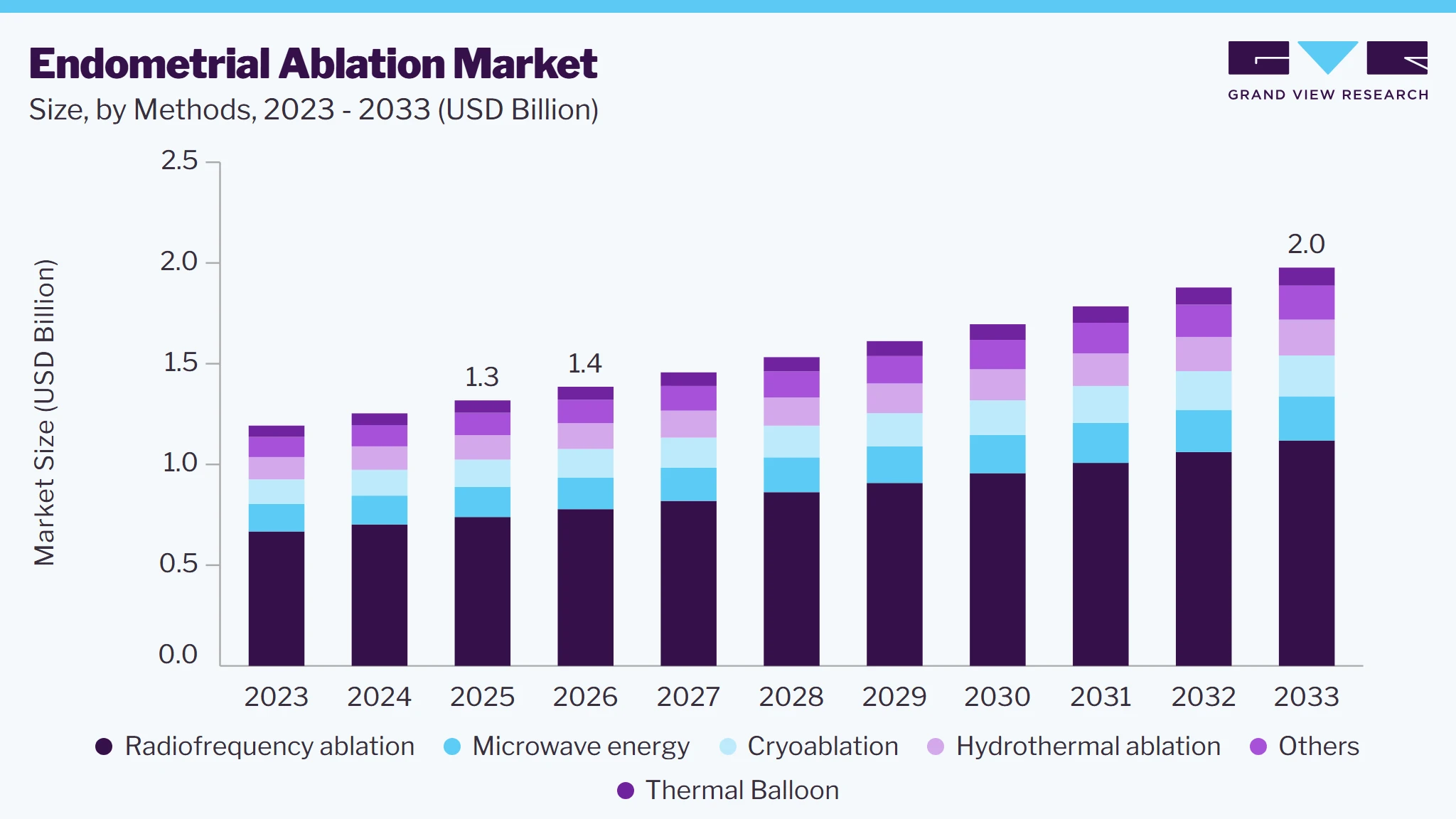
The global endometrial ablation market size was valued at USD 1.3 billion in 2025 and is projected to grow from USD 1.4 billion in 2026 to USD 2.0 billion by 2033, at a CAGR of 5.2% from 2026 to 2033. North America dominated the market, accounting for a revenue share of 31.7% in 2025. This can be attributed to the increasing demand for endometrial ablation devices owing to the rising prevalence of gynecological disorders, such as PCOD, and menorrhagia, and rising public awareness about the procedure.
 Source: Grand View Research, IR Documents, Primary Interviews, Paid DatabasesTo learn more about this report,
 Download Free Sample Report
Key Market Trends & Insights
- By method: Radiofrequency ablation segment led the market with the largest revenue share of 56.1% in 2025.
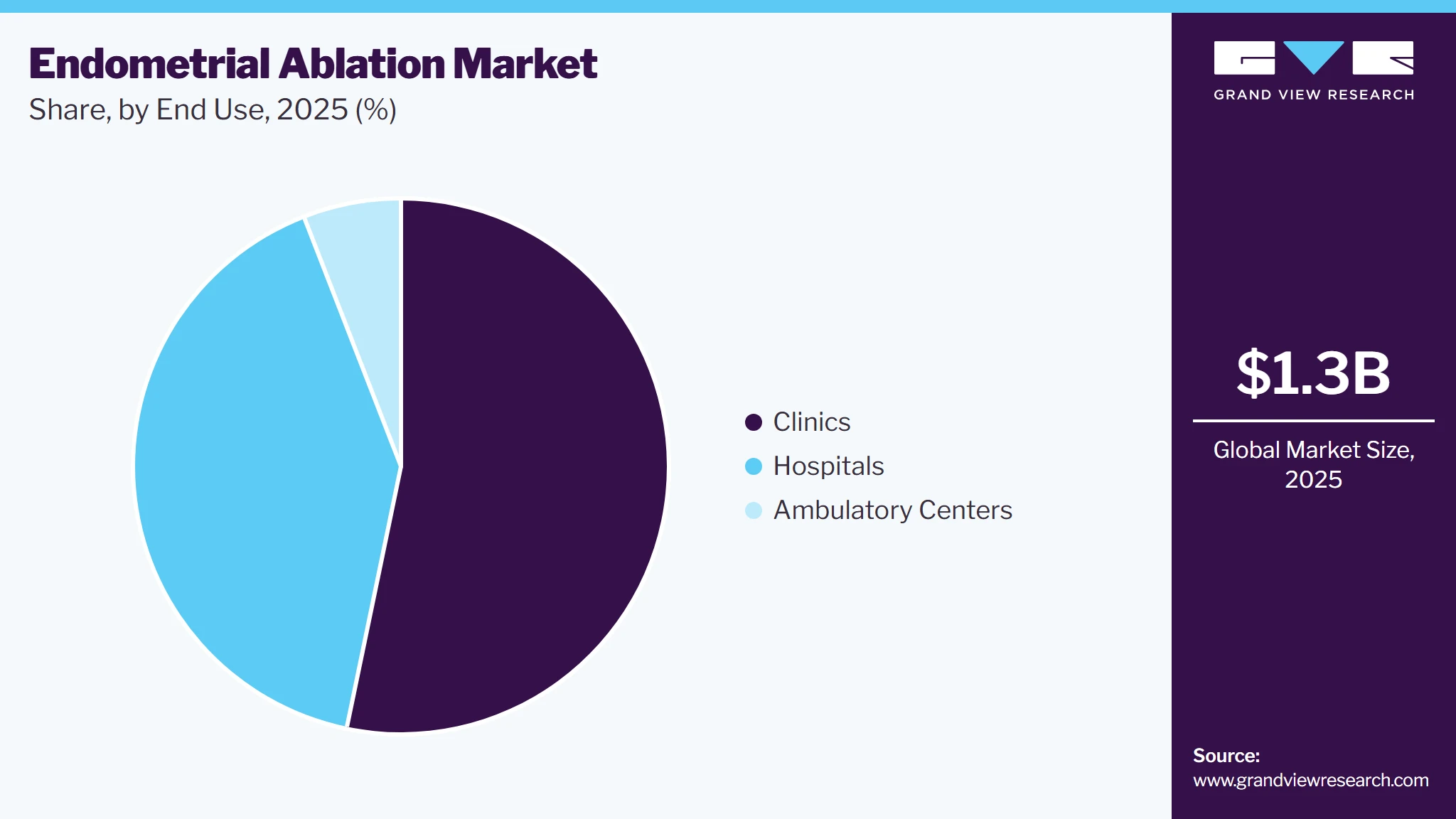
- By end use: Clinics segment led the market with the largest revenue share of 53.3% in 2025.
Regional Highlights
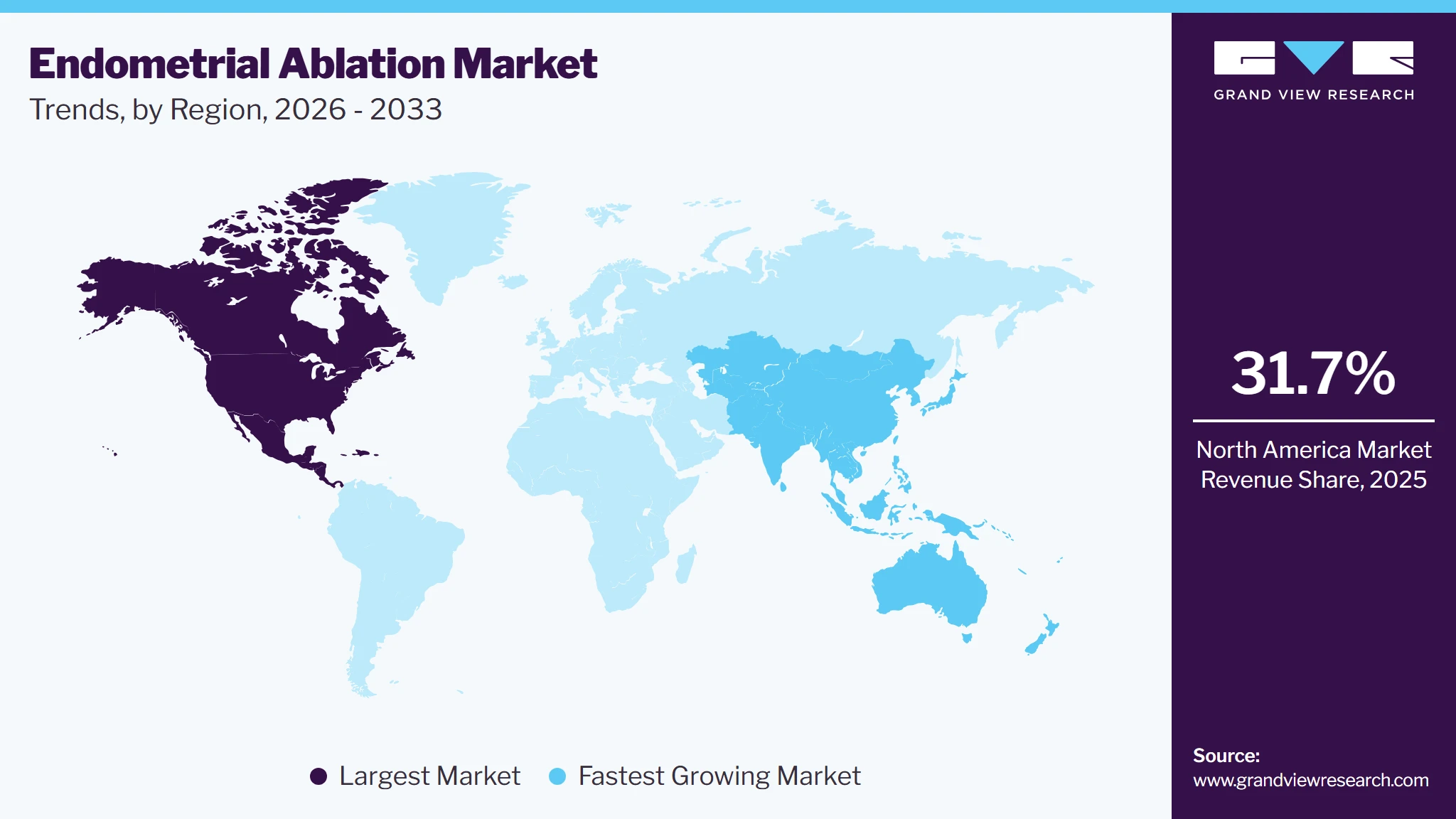
- Largest regional market: North America (31.7% revenue share, 2025)
- Fastest-growing regional market: Asia Pacific (highest CAGR, 2026-2033)
- By country: The U.S. held the largest market share in 2025.
Market Size & Forecast
- Market size in 2025: USD 1.3 Billion
- Estimated market size in 2026: USD 1.4 Billion
- Projected market size by 2033: USD 2.0 Billion
- CAGR (2026-2033): 5.2%
Prism AI by Grand View Research Free to tryAsk a question about the endometrial ablation marketTry asking✓Every figure cited from GVR research Prefer the report? Download free sample →Furthermore, the competitive advantage of endometrial ablation over other surgical procedures, such as minimal invasiveness, is expected to boost the demand for devices in the coming years. Endometrial ablation is a minimally invasive procedure that removes the inner lining of the uterus to treat heavy menstrual bleeding. The global endometrial ablation market is experiencing significant growth, driven by several key factors. The rising prevalence of gynecological disorders, such as PCOS and abnormal uterine bleeding, has led to an increased demand for less invasive treatment options. Women are seeking alternatives to traditional surgeries that offer quicker recovery times and less discomfort. This patient-centered approach aligns with the global trend towards minimally invasive medical interventions, improving overall quality of life for those affected by these conditions.
 To learn more about this report, Download Free Sample Report
The growing percentage of patients affected by menorrhagia, also known as heavy or abnormal menstrual bleeding, is anticipated to boost market growth during the forecast period. Heavy menstrual bleeding (AUB) affects 20-30% of women annually, with 53 per 1,000 women experiencing it each year. Some of its causes include fibroids, polyps, coagulopathies (e.g., 13% of women with AUB have Von Willebrand disease), and hormonal disorders. Treatments include endometrial ablation, which can significantly reduce bleeding in many cases.
Women's coverage plans are one of the primary elements projected to drive industry growth in developed countries. For instance, in India, numerous tax benefits and exemptions are available to women under various sections of the income tax legislation; one is the income tax deduction, which can be claimed on premiums paid for health insurance policies. Such initiatives concerning women’s health may increase the adoption of treatment options available for them, including endometrial ablation, thus boosting the market growth.
Furthermore, the market is benefiting from growing awareness about endometrial ablation procedures and a shift in patient preferences. As information becomes more readily available through healthcare professionals and online resources, women are becoming more informed about their treatment options. This empowerment has led to a preference for procedures like endometrial ablation, which offers shorter hospital stays, reduced pain, and faster recovery compared to traditional surgeries. The improved patient experience associated with these procedures has contributed to their increasing popularity.
Market Dynamics
The endometrial ablation market is experiencing steady growth, driven by the increasing prevalence of abnormal uterine bleeding (AUB), rising demand for minimally invasive gynecological procedures, growing awareness of uterus-preserving treatment options, and continuous technological advancements in endometrial ablation systems. The market is further supported by the increasing incidence of uterine disorders such as menorrhagia and fibroids, a growing preference for outpatient and office-based procedures, an expanding middle-aged female population, and improved access to advanced gynecological care across both developed and emerging healthcare markets. Endometrial ablation technologies enable hospitals, ambulatory surgery centers (ASCs), specialty gynecology clinics, and office-based practices to effectively treat excessive menstrual bleeding by destroying or removing the endometrial lining, thereby reducing or eliminating menstrual flow while avoiding hysterectomy in appropriately selected patients. Endometrial ablation devices are widely utilized for the treatment of abnormal uterine bleeding (AUB), particularly heavy menstrual bleeding (menorrhagia) in women who have completed childbearing and have not responded adequately to medical therapy.
The increasing prevalence of abnormal uterine bleeding (AUB), particularly heavy menstrual bleeding (HMB), is one of the primary drivers fueling the growth of the endometrial ablation market. AUB is among the most common gynecological conditions affecting women of reproductive and perimenopausal age and is frequently associated with uterine fibroids, adenomyosis, hormonal imbalances, endometrial polyps, and ovulatory dysfunction. Heavy menstrual bleeding can significantly impair quality of life by causing chronic anemia, fatigue, reduced workplace productivity, and psychological distress, prompting a growing number of women to seek effective long-term treatment options. While medical therapies such as hormonal contraceptives and intrauterine devices remain the first-line treatment for many patients, a substantial proportion either do not achieve adequate symptom control or prefer non-hormonal alternatives. As a result, endometrial ablation has emerged as an effective minimally invasive treatment that reduces menstrual bleeding while preserving the uterus and avoiding the morbidity associated with hysterectomy. Technological advancements in second-generation ablation systems have further improved procedural safety, efficacy, and ease of use, enabling procedures to be performed in outpatient and office-based settings with shorter recovery times.
One of the major restraints limiting the growth of the endometrial ablation market is the restricted patient eligibility for the procedure, coupled with the availability of alternative treatment options. Endometrial ablation is recommended only for women with abnormal uterine bleeding (AUB) who have completed childbearing, as pregnancy following the procedure is uncommon but remains possible and is associated with significant maternal and fetal risks. Consequently, the procedure is contraindicated in women who wish to preserve fertility, as well as in patients with suspected or confirmed endometrial cancer, active pelvic infections, significant uterine abnormalities, or large submucosal fibroids that distort the uterine cavity. These clinical limitations considerably reduce the addressable patient population compared with other gynecological treatment modalities. In addition, many patients initially receive conservative management with hormonal therapies, levonorgestrel-releasing intrauterine systems (LNG-IUS), or other pharmacological interventions before being considered for endometrial ablation. For women with severe uterine pathology or recurrent symptoms, hysterectomy continues to be regarded as the definitive treatment because it permanently eliminates abnormal uterine bleeding and removes the risk of symptom recurrence.
Analyst Perspective
The global endometrial ablation market is positioned at the intersection of evolving women's healthcare needs, increasing adoption of minimally invasive gynecological procedures, and continuous technological advancements in endometrial ablation systems. The market is primarily driven by the rising prevalence of abnormal uterine bleeding (AUB) and heavy menstrual bleeding (HMB), particularly among women in the perimenopausal age group, along with the growing preference for uterus-preserving treatment options over conventional hysterectomy. Increasing awareness regarding women's reproductive health, improving access to gynecological care, and expanding availability of minimally invasive treatment options are creating significant growth opportunities for medical device manufacturers, hospitals, ambulatory surgery centers (ASCs), and specialized gynecology clinics. Furthermore, the growing global burden of obesity, uterine fibroids, hormonal imbalances, adenomyosis, and other gynecological conditions associated with excessive menstrual bleeding continues to expand the eligible patient population for endometrial ablation procedures. The market is further supported by the increasing shift toward outpatient and office-based gynecological procedures, driven by shorter recovery times, reduced healthcare costs, lower risk of surgical complications, and improved patient satisfaction compared to traditional surgical interventions.
Method Insights
Based on method, the radiofrequency ablation segment led the market with the largest revenue share of 56.1% in 2025. The growth is driven by the product’s convenience, speed of treatment, efficacy, and cost-efficiency compared to other ablation devices. In addition, the growth is further boosted by its convenience, rapid treatment process, high effectiveness, cost-efficiency, and widespread accessibility. These attributes make it an appealing option for both patients and healthcare providers. Furthermore, the increasing number of regulatory approvals for advanced devices is accelerating the expansion of this market segment. For instance, in February 2023, Hologic Inc. secured approval for its NovaSure V5 global endometrial ablation device in Canada and Europe. This next-generation device incorporates innovative features designed to enhance patient outcomes and procedural efficiency, contributing to its adoption across these regions.
The cryoablation segment is expected to grow at a CAGR of 5.4% from 2025 to 2030, owing to technological advancements that enhance precision and effectiveness. Its ability to treat complex cases with minimal tissue damage is particularly appealing. In addition, the procedure's adaptability to various clinical settings and compatibility with existing infrastructure contribute to its adoption. Furthermore, as healthcare systems focus on innovative treatments, cryoablation's unique benefits are driving its expansion.
End Use Insights
Based on end use, the clinics segment led the market with the largest revenue share of 53.3% in 2025, primarily driven by the implementation of innovative technologies for treating menorrhagia, increasing awareness about the use of endometrial ablation devices, expanding clinical trials on endometrial ablation methods, and increased government research allocations for the widespread availability of healthcare devices. Furthermore, the rising availability of advanced devices in clinics, coupled with increasing awareness about minimally invasive treatments, contributes to their expansion. Moreover, the convenience of localized care and shorter procedure times further solidify clinics as a preferred choice for endometrial ablation procedures.
 To learn more about this report, Download Free Sample Report
The hospitals segment is expected to grow at a CAGR of 5.5% over the forecast period. This can be attributed to a rise in the number of patients being hospitalized for gynecological disorders, as hospitals provide excellent care as well as reimbursements. In addition, hospitals possess advanced treatment devices, which contributes to the expansion of this segment. Furthermore, due to the ease of managing any problems that may develop during surgical procedures and the availability of a wide range of treatment options in the facility, hospitals see a substantially higher inflow of patients for gynecological treatments than other healthcare settings.
Regional Insights
North America dominated the endometrial ablation market with the largest revenue share of 31.7% in 2025, attributed to rising cases of gynecological disorders, the presence of key market players, and rising preference for minimally invasive surgical procedures. In addition, increasing awareness about minimally invasive procedures and the availability of reimbursement policies are encouraging more patients to opt for endometrial ablation. Furthermore, the presence of leading market players and government initiatives promoting affordable healthcare further accelerate growth. Moreover, the rising adoption of outpatient procedures and technological advancements in ablation devices make North America a dominant region in the global market.
 To learn more about this report, Download Free Sample Report
U.S. Endometrial Ablation Market Trends
The endometrial ablation market in the U.S. held the largest share in the North America region in 2025, driven by a large patient pool suffering from gynecological conditions, such as menorrhagia, affecting millions annually. High disposable incomes and comprehensive insurance coverage make this procedure more accessible to patients. In addition, the introduction of next-generation devices by key industry players and government support through policies like the Affordable Care Act enhance market expansion. Furthermore, growing awareness campaigns and precision medicine initiatives are improving treatment accessibility, solidifying the U.S. as a leader in this segment.
Asia Pacific Endometrial Ablation Market Trends
The Asia Pacific endometrial ablation market is expected to grow at the fastest CAGR of 5.6% over the forecast period. A growing prevalence of gynecological disorders, coupled with an expanding middle-class population, drives demand for cost-effective procedures. Improved access to healthcare facilities and government initiatives supporting advanced medical technologies further contribute to market growth.
The endometrial ablation market in China led rhea Asia Pacific market and held the largest revenue share in 2024, primarily driven by its large population base and increasing cases of gynecological disorders such as abnormal uterine bleeding. In addition, rising disposable incomes and improvements in healthcare infrastructure are enabling greater access to advanced treatments. Furthermore, government efforts to modernize medical facilities and promote minimally invasive procedures are further fueling demand. Moreover, local manufacturers developing affordable ablation devices are enhancing accessibility, while growing patient awareness contributes to the adoption of this procedure across both urban and rural regions.
Europe Endometrial Ablation Market Trends
The Europe endometrial ablation market is expected to grow significantly over the forecast period, driven by a robust healthcare system and rising incidences of gynecological conditions such as menorrhagia. In addition, increased adoption of innovative technologies, such as radiofrequency ablation, enhances procedural efficiency and patient outcomes. Favorable reimbursement policies across countries such as Germany, France, and the UK make these treatments more accessible. Furthermore, growing awareness campaigns by healthcare providers and support from regulatory bodies for advanced devices contribute to market expansion.
Key Endometrial Ablation Company Insights
Key companies in the global endometrial ablation industry include Medtronic, The Cooper Companies, Inc., Boston Scientific Corporation, and others. These players are employing strategies focused on innovation, expansion, and collaboration to strengthen their market position. In addition, they are investing in research and development to introduce advanced devices with enhanced safety and efficiency. Furthermore, partnerships and acquisitions are being pursued to expand geographical reach and product portfolios.
-
Medtronic manufactures advanced medical devices and minimally invasive technologies designed to address gynecological conditions like heavy menstrual bleeding. Operating within the broader medical device industry, the company focuses on providing cutting-edge ablation systems that improve patient outcomes. Its products are widely utilized in hospitals, clinics, and outpatient settings, emphasizing efficiency, safety, and precision to meet the growing demand for minimally invasive procedures.
-
Boston Scientific Corporation develops and manufactures medical devices for multiple therapeutic areas, including gynecology. The company provides advanced ablation devices for effectively treating abnormal uterine bleeding. Operating within the medical technology segment, Boston Scientific focuses on delivering innovative solutions that enhance procedural outcomes and patient care.
Key Endometrial Ablation Companies:
The following are the leading companies in the endometrial ablation market.
-
Medtronic
-
The Cooper Companies, Inc.
-
Boston Scientific Corporation
-
Johnson & Johnson Service Inc.
-
Olympus Corporation
-
Richard Wolf GmbH
-
AngioDynamics
-
Hologic, Inc.
-
Minerva Surgical, Inc.
Competitive Benchmarking
Category
Operating Strategies
Competitive Edge
Weakness
Established Players (Medtronic, The Cooper Companies, Inc., Boston Scientific Corporation)
- Focus on expanding advanced endometrial ablation technology portfolios, including radiofrequency, hydrothermal, and cryoablation systems, to improve treatment efficacy and patient outcomes.
- Strengthen market presence through strategic acquisitions, physician training programs, regulatory approvals, and collaborations with hospitals and ambulatory surgery centers (ASCs) to expand procedural adoption globally.
- Strong brand recognition, extensive global distribution networks, and broad product portfolios enable established companies to maintain leadership in the endometrial ablation market.
- Continuous investment in R&D, clinical evidence generation, minimally invasive technologies, and integrated hysteroscopic solutions enhances physician confidence and supports long-term market growth.
- High R&D expenditures, stringent FDA and European regulatory requirements, and increasing post-market surveillance obligations contribute to longer product commercialization timelines.
- Large organizations often experience slower innovation cycles due to complex regulatory compliance, extensive product validation, and organizational structures.
Emerging Players (AngioDynamics, Hologic, Inc., Minerva Surgical, Inc.)
- Focus on developing next-generation minimally invasive endometrial ablation devices that reduce procedure time, improve patient comfort, and enable office-based treatments.
- Emphasize innovation through novel energy delivery technologies, partnerships with academic institutions, pilot clinical studies, and regional commercialization strategies targeting underserved markets.
- Faster product development cycles and organizational agility allow emerging companies to rapidly introduce innovative ablation technologies tailored to physician needs.
- Cost-effective solutions, simplified device designs, and emphasis on outpatient and office-based procedures help differentiate emerging players in price-sensitive markets.
- Limited financial resources, smaller commercial teams, and restricted global distribution networks reduce market penetration compared with established competitors.
- Challenges in obtaining regulatory approvals, generating robust long-term clinical evidence, and achieving physician awareness slow product adoption and international expansion.
Recent Developments
-
In November 2024, Olympus Corporation of the Americas showcased its comprehensive range of gynecological solutions at the AAGL World Congress. The display included hysteroscopy systems featuring Plasma Hysteroscopic Resection and Vaporization Electrodes, and the VERSAPOINT II Bipolar Electrosurgery System. These systems can be utilized in procedures such as Endometrial ablation.
-
In October 2024, Minerva Surgical, partnered with Blackmaple Group to offer minimally invasive gynecologic technologies to WHAAPA physician members. The agreement includes the Minerva ES Ablation System and Medical Endoscopy Image Processing System for detecting and treating abnormal uterine bleeding (AUB).
Endometrial Ablation Market Report Scope
Report Attribute
Details
Market size in 2025
USD 1.3 billion
Estimated market size in 2026
USD 1.4 billion
Projected market size by 2033
USD 2.0 billion
Growth rate
CAGR of 5.2% from 2026 to 2033
Historical data
2021 - 2024
Forecast period
2026 - 2033
Quantitative units
Revenue in USD million/billion and CAGR from 2026 to 2033
Report coverage
Revenue forecast, company ranking, competitive landscape, growth factors, and trends
Segments covered
Method, end-use, region
Regional scope
North America; Europe; Asia Pacific; Latin America; MEA
Country scope
U.S.; Canada; Mexico; Germany; U.K.; France; Italy; Spain; Sweden; Norway; Denmark; China; Japan; India; Australia; South Korea; Thailand; Brazil; Argentina; South Africa; Saudi Arabia; UAE; Kuwait
Key companies profiled
Medtronic; The Cooper Companies, Inc.; Boston Scientific Corporation; Johnson & Johnson Service Inc.; Olympus Corporation; Richard Wolf GmbH; AngioDynamics; Hologic, Inc.; Minerva Surgical, Inc.
Customization scope
Free report customization (equivalent up to 8 analysts' working days) with purchase. Addition or alteration to country, regional & segment scope.
Pricing and purchase options
Avail customized purchase options to meet your exact research needs. Explore purchase options
Global Endometrial Ablation Market Report Segmentation
This report forecasts revenue growth at global, regional, and country levels and provides an analysis of the latest industry trends in each of the sub-segments from 2021 to 2033. For this study, Grand View Research has segmented the global endometrial ablation market report based on product, end use, and region:
 To learn more about this report, Download Free Sample Report
-
Method Outlook (Revenue, USD Million, 2021 - 2033)
-
Cryoablation
-
Radiofrequency ablation
-
Hydrothermal ablation
-
Thermal Balloon
-
Microwave energy
-
Others
-
-
End Use Outlook (Revenue, USD Million, 2021 - 2033)
-
Hospitals
-
Clinics
-
Ambulatory Centers
-
-
Regional Outlook (Revenue, USD Million, 2021 - 2033)
-
North America
-
U.S.
-
Canada
-
Mexico
-
-
Europe
-
UK
-
Germany
-
France
-
Italy
-
Spain
-
Sweden
-
Norway
-
Denmark
-
-
Asia Pacific
-
Japan
-
China
-
India
-
Australia
-
South Korea
-
Thailand
-
-
Latin America
-
Brazil
-
Argentina
-
-
Middle East & Africa
-
South Africa
-
Saudi Arabia
-
UAE
-
Kuwait
-
-
Research Methodology
The endometrial ablation market figures in this report are based on a proven research process that combines executive interviews with secondary research from proprietary databases, company filings, and recognized regulatory and institutional sources. Market size is built through value-chain sizing - reconciling supply-side and demand-side estimates - and triangulated with bottom-up and top-down approaches. Every estimate passes multiple levels of expert validation before publication, with each agriculture endometrial ablation quantified using the revenue-capture definitions in the table below.
Segment Definition
Segment - Method
Revenue capture definition
Cryoablation
Revenue is generated through the commercialization of specialized cryoablation systems that use extreme cold temperatures to freeze and destroy the endometrial lining. Manufacturers capture upfront revenue from the sale of dedicated liquid nitrogen or argon gas-powered control consoles, supplemented by high-margin, recurring revenue from single-use sub-zero probes and cervical sealing accessories designed to protect healthy vaginal tissue during the freeze cycle.
Radiofrequency ablation
Revenue flows from market-leading global shipments of high-frequency electrical energy system. Medtech companies leverage a predictable "razor-and-blade" model, generating substantial, fast-turning revenue from single-use, expandable radiofrequency electrode sheath cartridges that are inserted perimenopausally and disposed of after a brief, automated 1-to-2 minute thermal cycle.
Hydrothermal ablation
Revenue is captured through the distribution of heated fluid delivery modules and computerized circulation pumps that treat heavy bleeding by flushing the uterine cavity with free-flowing heated saline. Market participants monetize these systems through capital hardware sales and continuous re-orders of closed-loop fluid management cassettes, software-driven intraoperative pressure monitors, and thermal cervical validation kits.
Thermal Balloon
Revenue is derived from specialized, catheter-based balloon ablation systems that utilize a targeted fluid reservoir heated inside a flexible, conforming membrane. Device developers generate steady revenue through the procurement of portable heating control blocks and recurring, volume-driven purchases of sterile single-use balloon catheters configured to adapt to standard uterine cavity measurements.
Microwave energy
Revenue flows from the commercialization of specialized microwave energy generators and slender applicator probes that emit high-frequency radiation to rapidly coagulate the functional and basal layers of the endometrium. Income is anchored on capital equipment placements within operating suites, paired with recurring aftermarket accessory sales of single-use, fine-diameter microwave antennas.
Others
Revenue encompasses alternative or legacy endometrial tissue destruction technologies, including hysteroscopic first-generation loop resecters, rollerball electrocautery assemblies, and laser photovaporization fibers, alongside ongoing multi-year service warranties and software upgrades for multi-modal energy platforms.
Segment - End Use
Revenue capture definition
Hospital
Revenue is generated through formal institutional public or private healthcare tenders, capital budget allocations, and long-term group purchasing organization (GPO) supply contracts. This segment commands high-volume, bulk wholesale orders for advanced multi-platform ablation generators, extended hospital-wide technical service agreements, and steady inventory commitments for single-use consumable probes utilized across main inpatient operating rooms.
Clinics
Revenue flows via direct-to-practice purchasing accounts and professional medical distribution networks supplying independent gynecology practices and private physician groups. This environment captures highly profitable revenue margins through compact, standalone ablation platforms and specialized single-use device bundles tailored specifically for local-anesthesia, office-based diagnostic and interventional routines.
Ambulatory Centers
Revenue is captured by distributing high-throughput minimally invasive ablation kits to outpatient surgical units and day-care surgery centers. Income is driven by cost-efficient capital hardware setups and rapid-turnaround disposable accessories that align directly with the center's operational goal of reducing patient length-of-stay, minimizing per-procedure overhead, and maximizing daily case turnover.
Estimation Model
Step
Guiding Question
Process Steps
Data Sources
Scope Definition
What is being measured in the endometrial ablation market?
1. Define the product scope, including radiofrequency, thermal balloon, and other endometrial ablation technologies. 2. Segment the market by procedure method and end‑user demography. 3. Define patient population based on women suffering from abnormal uterine bleeding (AUB), who are eligible for endometrial ablation. 4. Establish geographic scope and align on base year & forecast horizon (2020-2030).
WHO, CDC, FIGO, FDA approvals, literature, company annual reports
Build the Product Base
How large is the addressable patient and procedure market for endometrial ablation?
1. Estimate the prevalence and incidence of abnormal uterine bleeding (AUB) and other eligible gynecological conditions. 2. Quantify the eligible patient pool after excluding women seeking future fertility, patients with contraindications, and other ineligible malignancies. 3. Analyze the volume of endometrial ablation procedures performed across end‑user settings. 4. Evaluate procedure adoption across countries and align on base year & forecast horizon (2020-2030).
WHO, CDC, hospital health ministries, hospital discharge databases, gynecology societies
Estimate Penetration
What is the adoption level of endometrial ablation technologies across clinical settings?
1. Assess the transition from hysterectomy and long‑term medical therapy toward minimally invasive endometrial ablation procedures. 2. Evaluate adoption by methods across different healthcare settings. 3. Evaluate penetration of AI‑enabled skin analysis and personalized dermatology technologies. 4. Analyze physician preference, patient demographics, and reimbursement policies influencing adoption.
Interviews with gynecologists, hospital procurement managers, ambulatory surgery centers
Revenue Conversion
How do procedure volumes translate into market revenue?
1. Collect average selling prices (ASP) of endometrial ablation systems. 2. Estimate revenues by segments and geographic region. 3. Incorporate recurring revenues generated from consumables. 4. Cross‑check market revenues with import/export data and industry sales benchmarks.
Company financial statements, investor presentations, import/export databases
Delivered Customizations
This report has been delivered with the following In-depth customizations
Client Request
Customization Delivered
Value Adds
Porters Analysis
Conducted a comprehensive Porter’s Five Forces analysis of the global endometrial ablation market to evaluate the competitive intensity and long‑term attractiveness of the industry. The assessment examined the bargaining power of suppliers of endometrial ablation systems, disposable instruments, hysteroscopes, and energy‑based technologies, along with the bargaining power of hospitals, ambulatory surgery centers (ASCs), specialty gynecology clinics, and integrated healthcare networks. The study further analyzed the threat posed by alternate treatment options, including hysterectomy, hormonal therapy, intrauterine devices (IUDs), and minimally invasive gynecological procedures for abnormal uterine bleeding (AUB). In addition, the analysis evaluated barriers to market entry, including regulatory approvals, physician training requirements, reimbursement landscape, capital investment, and technological differentiation, while assessing the competitive rivalry among established manufacturers and emerging medical device companies.
Enables stakeholders to understand the competitive dynamics shaping the global endometrial ablation market and identify key market opportunities and threats. The study supports strategic decision‑making for existing market participants by assisting in evaluating barriers to entry, assessing supplier influence, and treatment threats.
Method Segment Analysis
Conducted a detailed segmentation of endometrial ablation methods, including radiofrequency, thermal balloon, cryoablation, hydrothermal, and microwave techniques. The analysis evaluated adoption trends across hospitals, ambulatory surgery centers, and specialty gynecology clinics, assessing procedure volumes, technology preferences, and clinical outcomes. It also examined regional variations in method utilization, reimbursement coverage, and physician training requirements.
Enables stakeholders to identify high‑growth procedural segments, optimize product portfolios, and align commercialization strategies with evolving clinical preferences and reimbursement frameworks.
Macroeconomic Analysis
Performed an in‑depth evaluation of global healthcare expenditure, women’s health funding, gynecology procedure reimbursement policies, and demographic trends influencing endometrial ablation demand. The study analyzed government initiatives, healthcare infrastructure expansion, and regulatory developments impacting technology adoption and market growth.
Helps stakeholders understand macroeconomic and institutional factors driving demand for endometrial ablation systems, supporting long‑term forecasting, investment prioritization, and strategic planning.
Frequently Asked Questions About This Report
The global endometrial ablation market size was valued at USD 1.3 billion in 2025 and is anticipated to reach USD 1.4 billion in 2026.
The global endometrial ablation market is expected to witness a compound annual growth rate of 5.2% from 2026 to 2033 to reach USD 2.0 billion by 2033.
Some of the key players in endometrial ablation market are Medtronic; the Cooper Companies, Inc.; Boston Scientific Corporation; Johnson & Johnson Service Inc.; Olympus Corporation; Richard Wolf GmbH; AngioDynamics; Hologic, Inc.; Minerva Surgical, Inc.; among others.
The major factors driving the market growth are rising number of uterine problems and increasing preference toward minimally invasive surgical procedures.
North America dominated the endometrial ablation market with a share of 31.7% in 2025. This dominance is attributed to the increasing prevalence of heavy menstrual bleeding, growing adoption of minimally invasive gynecological procedures, rising awareness of endometrial ablation as a treatment option, and the presence of well-established healthcare infrastructure and specialized gynecology centers across the region.
Asia Pacific is the fastest-growing region over the forecast period.
Clinics segment led the market with the largest revenue share of 53.3% in 2025.
Based on methods, the radiofrequency ablation segment accounted for a share of 56.1% in 2025 due to growing use of radiofrequency ablation in different healthcare settings for treating various tumors and abnormal uterine bleeding (AUB).
About the Author(s)
Medical Devices Research Team
Healthcare · Medical DevicesThis report was authored by the medical devices research team at Grand View Research - comprising two research analysts, one senior research analyst, and one industry expert - with specialized expertise in the medical devices segment of the healthcare industry. All findings are based on proprietary healthcare databases, executive interviews, and regulatory analysis, subject to internal peer review prior to publication.
Last Updated:
Speak to Analyst

Customize this report to your needs - add regions, segments, or data points, with 20% free customization.
Or view our licence options:


ISO 9001:2015 & 27001:2022 Certified
We are GDPR and CCPA compliant! Your transaction & personal information is safe and secure. For more details, please read our privacy policy.


