
- Home
- »
- Medical Devices
- »
-
Endoscopic Submucosal Dissection Market Report, 2026 - 2033GVR Report cover
![Endoscopic Submucosal Dissection Market (2026 - 2033)Report]()
Endoscopic Submucosal Dissection Market (2026 - 2033)
Size, Share & Trends Analysis Report By Product (Gastroscopes And Colonoscopes), By Indication (Stomach Cancer), By End Use (Hospitals), By Region, And Segment Forecasts
Market Size, 2025
$391.5MMarket Estimate, 2026
$413.5MMarket Forecast, 2033
$597.6MCAGR, 2026–2033
5.4%Endoscopic Submucosal Dissection Market Summary
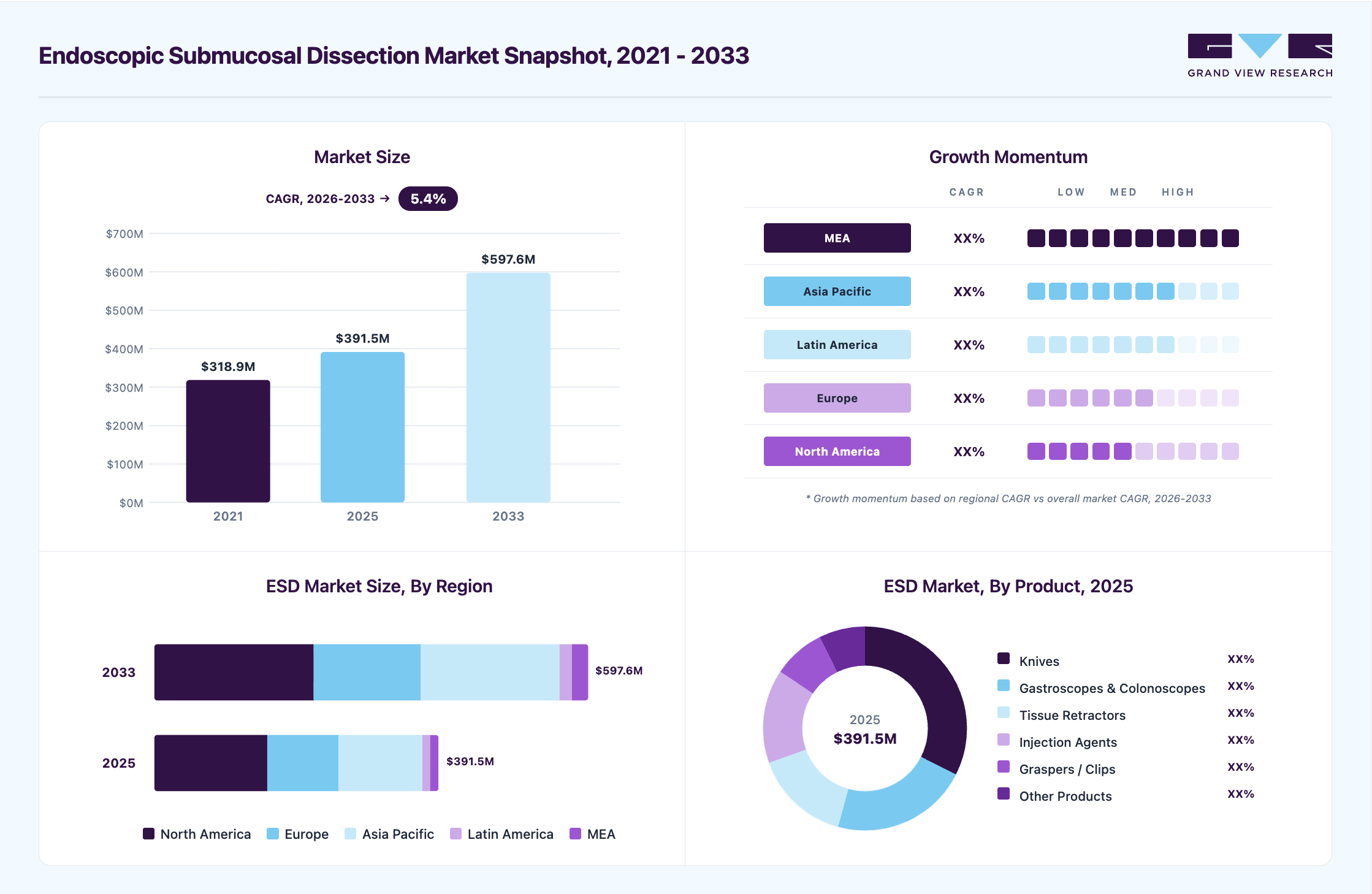
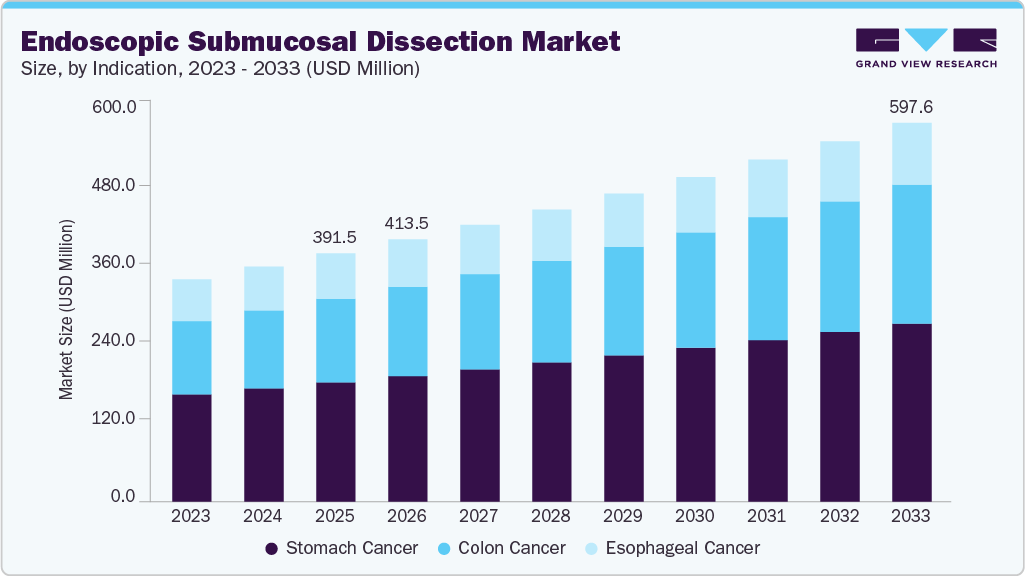
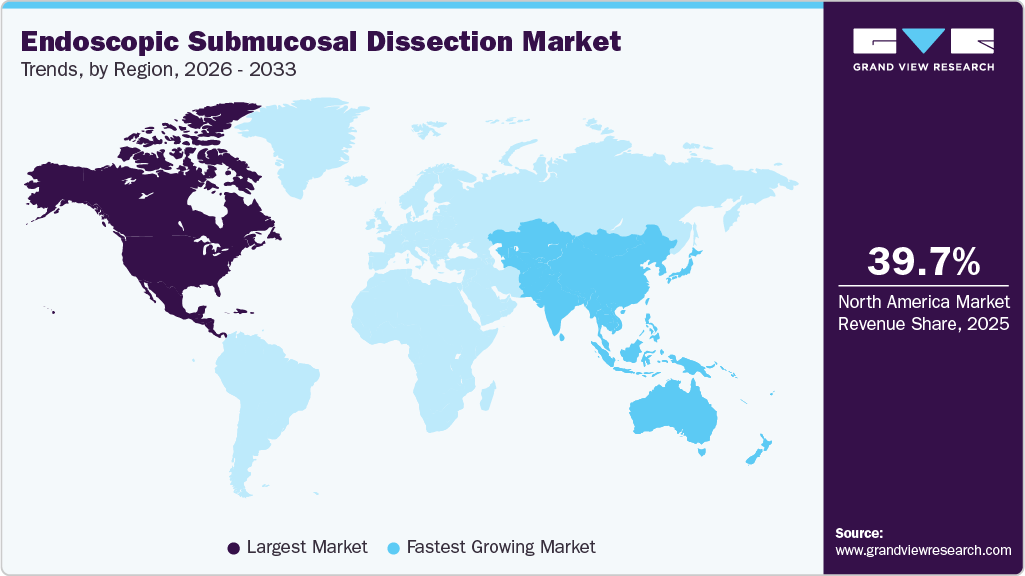
The global endoscopic submucosal dissection market size was valued at USD 391.5 million in 2025 and is projected to grow from USD 413.5 million in 2026 to USD 597.6 million by 2033, at a CAGR of 5.4% from 2026 to 2033. The North America held the largest share of 39.7% of the global market in 2025. The increasing prevalence of gastrointestinal cancers and other related disorders, and advancements in endoscopic technology & instrumentation, drive the demand for diagnostic and therapeutic procedures such as ESD.
Key Market Trends & Insights
- By product: Knives segment held the largest share of 32.4% in 2025.
- By indication: Stomach cancer segment held the largest share of 48.0% in 2025.
- By end use: Hospitals segment held the largest share of 56.7% in 2025.
Regional Highlights
- Largest regional market: North America (39.7% revenue share, 2025)
- Fastest-growing regional market: Asia Pacific (highest CAGR, 2026-2033)
- By country: The U.S. led the North America market in 2025.
Market Size & Forecast
- Market size in 2025: USD 391.5 Million
- Estimated market size in 2026: USD 413.5 Million
- Projected market size by 2033: USD 597.6 Million
- CAGR (2026-2033): 5.4%
Three ways to get this report
Buy it, customize it, or ask a question.Get the Full Report
What the study covers
- FormatsPDF · Excel · Dashboard
- Timeline2026–2033 annual, 2025 base
- Coverage20+ countries, 5 regions
- Companies10+ key players profiled
Customize the Report
20% free customization
- IncludeCountries, segments, points
- TailorTo your product definition
- ExtendDeeper competitor detail
- OrA fully bespoke study
- Turnaround5–10 working days
Ask an Analyst
A direct answer, usually in 1 working day
- AccessReport author, directly
- Reply timeWithin 1 working day
- No sales callDirect answer only
- FormatEmail reply
- CostFree, no cost
For instance, the American Cancer Society estimates that in January 2026, there will be 31,510 new cases of stomach cancer, with 13,610 cases in women and 17,900 cases in men. As esophageal, gastric, and colorectal cancer rates continue to rise globally, the need for advanced procedures, such as ESD, is increasing.The endoscopic submucosal dissection (ESD) market encompasses an advanced endoscopic procedure used mainly for en bloc removal of superficial neoplastic lesions within the gastrointestinal (GI) tract, particularly in the esophagus, stomach, and colon. In contrast to endoscopic mucosal resection (EMR), which is generally suited for smaller lesions, ESD allows for the complete resection of larger and more complex lesions through precise dissection of the submucosal layer. The procedure relies on specialized tools, including ESD knives, submucosal injection solutions, hemostatic devices, and high-definition endoscopes. ESD plays a critical role in the management of early-stage GI cancers, offering higher curative resection rates, improved pathological evaluation, and preservation of organ integrity.
The aging population worldwide is boosting the demand for ESD. As the global population ages, age-related gastrointestinal conditions, including cancers, are expected to rise. According to the American Cancer Society in January 2026, gastric cancer predominantly affects older individuals, with an average age of 68 when diagnosed, and 6 out of 10 diagnosed annually are 65 or older. Many older patients also have other health conditions, which make traditional surgery riskier, further contributing to the rising demand for ESD procedures.
The growth of the endoscopic submucosal dissection (ESD) market is driven by the rising burden of gastrointestinal (GI) cancers. Key GI cancer types include colorectal, gastric, esophageal, and pancreatic cancers. Factors such as long-standing gastroesophageal reflux disease (GERD), hereditary conditions, gastric infections, chronic gastritis, and the presence of polyps increase the risk of stomach cancer. According to the American Cancer Society (ACS), 152,810 new colorectal cancer cases are expected in the U.S. in 2024, including 106,590 colon cancer cases and 46,220 rectal cancer cases. Colorectal cancer also remains the second leading cause of cancer-related deaths in the country, with an estimated 53,010 deaths projected in 2024. This growing prevalence of GI cancers is significantly driving the demand for advanced, minimally invasive treatments such as ESD, which offer higher curative resection rates and better patient outcomes.
The growing awareness and training programs for healthcare professionals in ESD techniques contribute to market growth. The proficiency of gastroenterologists and surgeons in ESD has been increasing, enhancing both the reach and feasibility of this advanced procedure, particularly in areas that previously had limited access to such treatments. Various medical organizations offer specialized training and certification programs, which are important in gaining knowledge and expertise in ESD. For instance, in April 2024, FUJIFILM Healthcare Europe GmbH introduced EndoGel, an innovative training model designed for performing Peroral Endoscopic Myotomy (POEM) and Endoscopic Submucosal Dissection (ESD) procedures. This simulator is available in two versions such as EndoGel for ESD/POEM and EndoGel for ESD. It is designed to be cost effective for endoscopy professionals and healthcare institutions, aiming to enhance proficiency and patient outcomes through realistic simulation training.
Artificial intelligence (AI) is expected to play an increasingly important role in the future of the ESD market by enhancing lesion detection, characterization, and procedural planning. AI-powered image analysis and real-time decision-support systems can assist endoscopists in accurately identifying lesion margins, assessing invasion depth, and optimizing resection strategies. Furthermore, AI integration with robotic and endoscopic platforms can improve procedural precision, consistency, and outcomes, while supporting training and reducing operator dependency. As AI-enabled endoscopy continues to mature, it is likely to improve clinical efficiency, reduce variability in outcomes, and further expand the adoption of advanced ESD procedures.
Market Dynamics
The growth of the endoscopic submucosal dissection (ESD) market is driven by the rising burden of gastrointestinal (GI) cancers. Key GI cancer types include colorectal, gastric, esophageal, and pancreatic cancers. Factors such as long-standing gastroesophageal reflux disease (GERD), hereditary conditions, gastric infections, chronic gastritis, and the presence of polyps increase the risk of stomach cancer. According to the American Cancer Society (ACS), 152,810 new colorectal cancer cases are expected in the U.S. in 2024, including 106,590 colon cancer cases and 46,220 rectal cancer cases. Colorectal cancer also remains the second leading cause of cancer-related deaths in the country, with an estimated 53,010 deaths projected in 2024. This growing prevalence of GI cancers is significantly driving the demand for advanced, minimally invasive treatments such as ESD, which offer higher curative resection rates and better patient outcomes.
The high procedural complexity associated with endoscopic submucosal dissection (ESD) remains a major barrier to broader market adoption. ESD requires highly specialized endoscopic skills, precise submucosal dissection techniques, and extensive physician training, resulting in a steep learning curve compared to conventional endoscopic mucosal resection (EMR). Studies indicate that achieving procedural proficiency in ESD may require experience with approximately 30–80 supervised cases, depending on lesion type and anatomical location. Procedure durations are also significantly longer, particularly for gastric and colorectal lesions, often ranging from 1 to 3 hours in complex cases. In addition, the availability of trained ESD specialists remains concentrated in high-volume academic centers, particularly in Japan, South Korea, and select tertiary care hospitals in Europe and North America, limiting adoption across community hospitals and emerging healthcare markets. The risk of complications such as perforation and intraoperative bleeding further restricts routine utilization, especially in lower-volume centers lacking advanced therapeutic endoscopy expertise.
The growing preference for minimally invasive and organ-preserving treatment approaches for gastrointestinal cancers is creating significant growth opportunities for the ESD market. Increasing incidence of early-stage gastrointestinal malignancies, expanding colorectal cancer screening programs, and rising demand for procedures that reduce hospital stays and preserve gastrointestinal function are accelerating ESD adoption globally. According to global cancer estimates, colorectal cancer remains among the most commonly diagnosed cancers globally, supporting demand for advanced therapeutic endoscopy procedures. Technological advancements in high-definition imaging, AI-assisted lesion detection, electrosurgical knives, traction systems, and robotic-assisted endoscopy are further enhancing procedural precision and clinical outcomes. For instance, in May 2026, Olympus Corporation entered into an exclusive global distribution agreement with EndoRobotics Co., Ltd. to commercialize robot-assisted technologies for advanced endoscopic procedures, including ESD. In addition, increasing investments in endoscopy training programs and expansion of ambulatory endoscopy centers are expected to support wider procedural adoption across developed and emerging healthcare markets.
Despite its clinical advantages, the risk of complications associated with ESD continues to challenge broader clinical adoption. Common adverse events include bleeding, perforation, post-procedural strictures, and infection, particularly during large or technically complex gastrointestinal resections. Clinical studies report perforation rates ranging between 1% and 10% depending on lesion location and operator experience, while delayed bleeding remains a notable concern in colorectal and gastric ESD procedures. These complications can increase hospitalization duration, procedural costs, and the need for surgical intervention or intensive post-procedure monitoring. Furthermore, reimbursement limitations and the requirement for highly experienced therapeutic endoscopists continue to restrict widespread integration of ESD into routine clinical practice, particularly in low-resource healthcare settings and smaller hospitals.
Market Concentration & Characteristics
The global endoscopic submucosal dissection industry is characterized by a high degree of innovation, owing to rising investments and growing research activities to advance research in the endoscopy field. Moreover, the application of artificial intelligence (AI) in many gastroenterology fields is becoming more widespread, especially in endoscopic image processing. These significant technological advancements are anticipated to boost market growth.
The endoscopic submucosal dissection (ESD) market continues to see medium merger and acquisition activity, particularly as larger medical device companies expand their portfolios in therapeutic endoscopy tools such as gastroscopes & colonoscopes, knives, graspers/clips, and other products used in gastrointestinal procedures. For instance, in November 2022, Boston Scientific Corporation acquired Apollo Endosurgery Inc. for approximately USD 615 million, strengthening Boston Scientific’s offerings in endoluminal surgery and advanced endoscopy devices that support procedures like ESD and related polypectomy treatments.
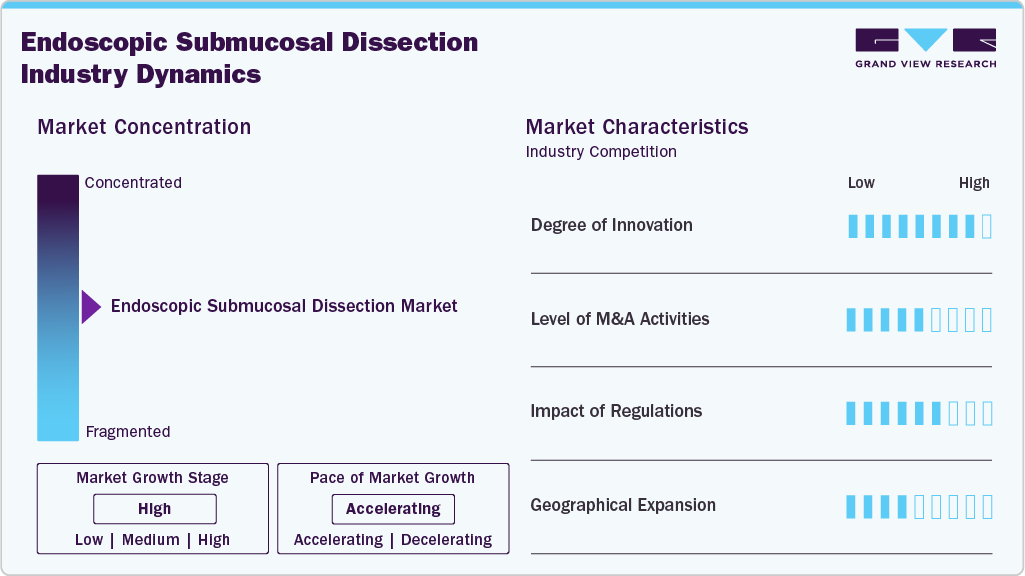
Endoscopic instruments must meet strict regulatory requirements to ensure high quality, safety, and effectiveness standards, positively impacting market growth. For instance, In the U.S., the FDA regulates the endoscopic instruments used in ESD, including the endoscope, knives, and injectors.
Several market players are expanding their business by entering new geographical regions to strengthen their market position and expand their product portfolio. Increased funding opens up more opportunities for market participants to expand into new regions. For instance, in January 2025, KARL STORZ SE & Co. KG, a major global manufacturer of endoscopy and minimally invasive surgical instruments, acquired its long‑standing Swiss distributor ANKLIN, bringing direct sales, product support, and service operations in Switzerland fully inhouse.
Product Insights
By product, the knives segment held the largest market share of 32.44% in 2025 and is expected to grow at the fastest CAGR during the forecast period. The market growth is attributed to their essential role in the precision and accuracy of sample preparation and handling during chromatographic procedures. Moreover, the increasing investment in research and development across various industries supports adopting advanced chromatographic tools, including knives. While laboratories seek to enhance their analytical capabilities and efficiency, the demand for high-performance knives continues to rise. For instance, in August 2023, Erbe Elektromedizin launched the HYBRIDknife flex, a CE-marked instrument designed for colorectal endoscopic submucosal dissection.
The gastroscopes and colonoscopes segment is expected to grow at a significant CAGR during the forecast period. Technological advancements have significantly impacted the field of endoscopic devices, driving innovation and enhancing patient care. For instance, in January 2024, Docrates Cancer Center, a private cancer clinic in Helsinki, strengthened its early cancer detection and diagnostics service package by introducing stomach, esophagus, and colon endoscopy services at its own premises. Moreover, several industry players in the market are increasingly funding the development of new products and constantly improving existing products.
Indication Insights
The stomach cancer segment held the largest market share of 48.02% share in 2025. The growing prevalence of stomach cancer and the rising awareness and early detection of conditions globally have necessitated the development and adoption of advanced treatment techniques such as ESD, which allows for the precise removal of cancerous lesions from the stomach lining with minimal invasiveness. For instance, Guts UK Charity, a non-profit organization in the UK that works to treat digestive diseases, reported that around 6,700 individuals (approximately one individual in every 10,000 people) in the UK are diagnosed with stomach cancer annually.
The colon cancer segment is expected to grow at the fastest CAGR during the forecast period. The incidence of colon cancer is increasing globally, mainly due to factors such as aging populations, lifestyle changes, and dietary habits such as high consumption of processed meats, obesity, smoking, and excessive alcohol intake. For instance, colorectal cancer is projected to be the fourth most frequently diagnosed cancer in Australia in 2024. In 2024, there is an estimated risk that 1 in 21 people are expected to be diagnosed with colorectal cancer by the time they are 85 (1 in 23 for females and 1 in 19 for males).
End Use Insights
By end use, the hospitals segment held the largest market share of 56.72% in 2025 and is expected to grow at the fastest CAGR during the forecast period. Hospitals generally have the advanced infrastructure and cutting-edge medical equipment necessary for complex procedures such as ESD. This encompasses high-definition endoscopic systems, advanced imaging techniques, and specialized surgical instruments, all of which are necessary to ensure ESD's accuracy and effectiveness. They provide extensive healthcare services, access to advanced technologies, collaborative care teams from various disciplines, inpatient monitoring facilities, multidisciplinary care teams, and a supportive environment for research and innovation. This enables them to deliver high-quality, specialized care that enhances patient outcomes and contributes to segment growth.
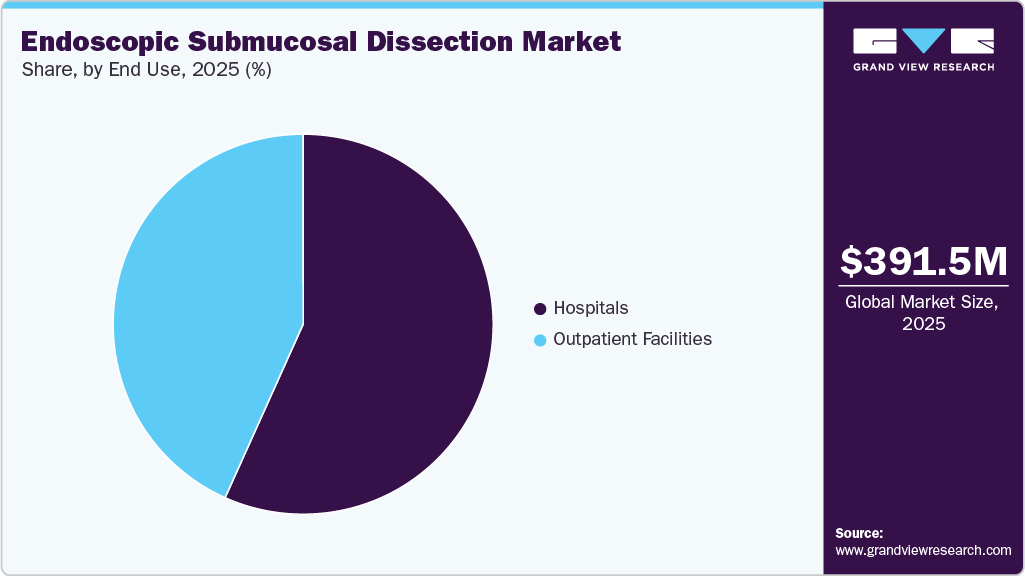
The outpatient facilities segment is expected to grow at the fastest CAGR during the forecast period, owing to the increasing demand for outpatient procedures and patient preference for less invasive treatments. Outpatient facilities align with the growing preference for patient-centric care models, prioritizing convenience and minimizing daily life disruption. Patients prefer outpatient procedures because they typically involve shorter waiting times, reduced hospital stays, and lower costs than inpatient care.
Regional Insights
North America Endoscopic Submucosal Dissection Market Trends
North America dominated the market with a revenue share of 39.73% in 2025 owing to the advanced healthcare infrastructure, high healthcare expenditure, and a strong focus on technological innovation. The region, with a large patient pool and high rates of GI disorders and cancers, drives demand for advanced diagnostics and treatments, while collaborations among providers, researchers, and industry advance continuous surgical innovation. For instance, in October 2024, GI Alliance one of the nation’s largest networks of gastroenterology practices partnered with Medtronic to introduce Medtronic’s GI Genius AI‑powered intelligent endoscopy modules across more than 400 GI Alliance site locations. This collaboration expands the use of AI‑assisted colonoscopy across GI Alliance sites, improving access to advanced screening tools. The AI system has shown up to a 50 % reduction in missed polyps with high detection sensitivity, highlighting its potential to enhance early disease detection across a larger patient population.
“AI-enabled GI Genius helps doctors detect and address lesions of various sizes, shapes, and morphologies while significantly improving early detection rates and potentially helping to stop colorectal cancer before it starts,” - Raj Thomas, President of Medtronic Endoscopy.
U.S. Endoscopic Submucosal Dissection Market Trends
The endoscopic submucosal dissection (ESD) market in the U.S. held the largest market share owing to the high prevalence of gastrointestinal cancers and the region’s advanced healthcare infrastructure, strong investment in novel endoscopy technologies, and supportive reimbursement landscape. Reflecting broader adoption of advanced tools in gastroenterology. For instance, in February 2023, U.S. Digestive Health recently announced the largest installation of AI‑assisted colonoscopy systems in the U.S., rolling out GI Genius intelligent endoscopy modules across its network to enhance colorectal cancer screening with real‑time polyp detection. This initiative expands access to stateoftheart diagnostic technologies but also demonstrates how clinical demand and technological investment are driving adoption of advanced endoscopic solutions that support early detection and therapeutic decision‑making in gastroenterology.
The Europe endoscopic submucosal dissection market is anticipated to register considerable growth during the forecast period. Rapid technological advancements, leading to the development of new and innovative endoscopic devices and accessories, are fueling the market. In addition, the rising preference for minimally invasive surgeries fuels market growth.
UK endoscopic submucosal dissection market is anticipated to register considerable growth during the forecast period. The increasing number of patients suffering from chronic diseases that require minimally invasive surgical procedures for diagnosis & treatment is contributing to market growth in the country. Key players are undertaking various initiatives to strengthen their market presence. For instance, in July 2023, Penlon Limited launched a new endoscopic accessories division in the UK, partnering with Vedkang Medical to provide clinicians with high quality products for Endoscopic Submucosal Dissection (ESD), Endoscopic Mucosal Resection (EMR), and Gastrointestinal (GI) tract endoscopic treatments.
Asia Pacific Endoscopic Submucosal Dissection Market Trends
The Asia Pacific endoscopic submucosal dissection market is anticipated to witness the fastest growth over the forecast period, owing to rising healthcare expenditures, a less stringent regulatory framework, and economic development that attracts foreign investments. Moreover, changes in lifestyle and demographics and a growing geriatric population suffering from chronic diseases, such as cancer and GI disorders, are factors driving the market.
Thailand endoscopic submucosal dissection market is anticipated to register considerable growth during the forecast period. Market growth in the country is expected to be driven by favorable initiatives undertaken by private players, such as training healthcare professionals and increasing R&D investments to develop advanced endoscopes. For instance, Olympus Corporation started the Thai Training and Education Centre in Thailand to increase awareness about surgical & Gastrointestinal (GI) endoscopes and provide training to healthcare professionals in Southeast Asia.
Latin America Endoscopic Submucosal Dissection Market Trends
The Latin America endoscopic submucosal dissection market is anticipated to witness considerable growth over the forecast period. Growing preference for minimally invasive surgeries over open surgeries and increasing awareness about the use of endoscopy for various diagnostic and therapeutic procedures are expected to drive the market. The rising disposable income, rapid technological advancements in endoscopes, and implementation of pivotal screening programs for effective cancer diagnosis are key factors boosting market growth.
The Argentina endoscopic submucosal dissection market is anticipated to witness the fastest growth over the forecast period. The presence of organizations, such as the Argentine Federation of Digestive Endoscopy (FAAED) and the Argentine Society of Gastroenterology (SAGE), dedicated to generating awareness about endoscopy techniques drives market growth.
MEA Endoscopic Submucosal Dissection Market Trends
The MEA endoscopic submucosal dissection market is anticipated to witness considerable growth over the forecast period. Increase in geriatric population & prevalence of cancer and growing demand for early disease diagnosis are key factors boosting the market. Government initiatives to increase reimbursement coverage is one of the key factors expected to boost market growth during the forecast period.
The South Africa endoscopic submucosal dissection market is anticipated to witness the fastest growth over the forecast period. South Africa has a well-developed healthcare sector focused on providing advanced medical services and technologies to its population. The need to deliver high-quality healthcare services, accurate diagnoses, and minimally invasive treatments is increasing the market growth in South Africa.
Key Endoscopic Submucosal Dissection Company Insights
Key participants in the endoscopic submucosal dissection market are focusing on devising innovative business growth strategies in the form of partnerships & collaborations, product portfolio expansions, mergers & acquisitions, and geographical expansions.
Key Endoscopic Submucosal Dissection Companies:
The following key companies have been profiled for this study on the endoscopic submucosal dissection market
- Olympus Corporation
- Boston Scientific Corporation
- PENTAX Medical (Hoya Corporation)
- FUJIFILM Holdings Corporation
- Karl Storz GmbH & Co. KG
- Micro-Tech Endoscopy
- Medtronic
- CONMED Corporation
- STERIS plc.
- Cook Group
- Creo Medical
Competitive Benchmarking
Operating Strategies
Competitive Edge
Weaknesses
Mature Players: FUJIFILM Holdings Corporation
- Mature players focus on expanding advanced ESD device portfolios, AI-enabled endoscopy systems, and integrated therapeutic endoscopy solutions.
- Strong global distribution networks, established physician trust, and technologically advanced imaging platforms support high procedural adoption
- High product costs and slower responsiveness to rapidly evolving regional and outpatient endoscopy demands.
Emerging Players: Creo Medical
- Emerging players focus on affordable ESD accessories, minimally invasive technologies, regional partnerships, and ambulatory endoscopy expansion.
- Agile innovation, competitive pricing, and increasing penetration in Asia-Pacific and emerging healthcare markets.
- Limited global market presence, narrower ESD portfolios, and lower clinician adoption compared to established leaders.
Recent Developments
-
In September 2025, Olympus launched its new OLYSENSE CAD/AI portfolio, bringing cloud based, artificial intelligence‑powered computer‑aided detection tools to the U.S. and European markets to assist in earlier and more accurate detection of gastrointestinal lesions during endoscopic procedures. The system supports lesion detection and characterization throughout the upper and lower GI tract, reflecting growing adoption of AI‑enhanced technologies that improve diagnostic confidence and workflow efficiency for complex endoscopic interventions.
-
In May 2025, Olympus demonstrated its new OLYSENSE Platform with CADDIE AI‑assisted endoscopy solution at the Digestive Disease Week (DDW) annual meeting in San Diego, showcasing how cloud‑based AI technology can aid gastroenterologists in detecting suspect polyps during colonoscopy and strengthen clinical decision‑making. This launch highlights the trend toward integrating AI into routine endoscopic screening and therapeutic planning.
-
In April 2024, Fujifilm launched Tracmotion, an endoscopic submucosal dissection (ESD) device, at a gastroenterology event. The device, designed for single operator use, has a 360° rotatable retraction capability, allowing precise tissue manipulation.
Endoscopic Submucosal Dissection Market Report Scope
Report Attribute
Details
Market size in 2025
USD 391.5 million
Estimated market size in 2026
USD 413.5 million
Projected market size by 2033
USD 597.6 million
Growth rate
CAGR of 5.4% from 2026 to 2033
Actual data
2021 - 2025
Forecast data
2026 - 2033
Quantitative units
Revenue in USD million/billion and CAGR from 2026 to 2033
Report coverage
Revenue forecast, company ranking, competitive landscape, growth factors, and trends
Segments covered
Product, indication, end use, region
Regional scope
North America; Europe; Asia Pacific; Latin America; MEA
Country scope
U.S.; Canada; Mexico; Germany; UK; Spain; Italy; France; Norway; Denmark; Sweden; Japan; China; India; Australia; Thailand; South Korea; Brazil; Argentina; South Africa; Saudi Arabia; UAE; Kuwait
Key companies profiled
Olympus Corporation, Boston Scientific Corporation, PENTAX Medical (Hoya Corporation), FUJIFILM Holdings Corporation, Karl Storz GmbH & Co. KG,Micro-Tech Endoscopy, Medtronic, CONMED Corporation, STERIS plc., Cook Group,Creo Medical
Customization scope
Free report customization (equivalent up to 8 analysts working days) with purchase. Addition or alteration to country, regional & segment scope.
Pricing and purchase options
Avail customized purchase options to meet your exact research needs. Explore purchase options
Global Endoscopic Submucosal Dissection Market Report Segmentation
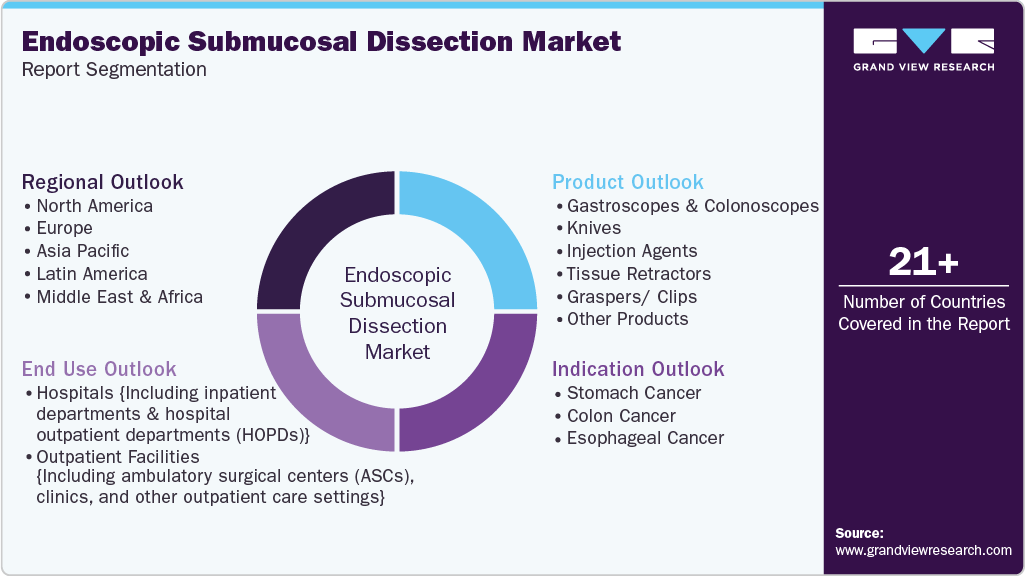
This report forecasts revenue growth and provides an analysis on the latest trends in each of the sub-segments from 2021 to 2033. For the purpose of this report, Grand View Research has segmented the endoscopic submucosal dissection market on the basis of product, indication, end use, and regions.
-
Product Outlook (Revenue, USD Million, 2021 - 2033)
-
Gastroscopes and Colonoscopes
-
Knives
-
Injection Agents
-
Tissue Retractors
-
Graspers/ Clips
-
Other Products
-
-
Indication Outlook (Revenue, USD Million, 2021 - 2033)
-
Stomach Cancer
-
Colon Cancer
-
Esophageal Cancer
-
-
End Use Outlook (Revenue, USD Million, 2021 - 2033)
-
Hospitals {Including inpatient departments and hospital outpatient departments (HOPDs)}
-
Outpatient Facilities {Including ambulatory surgical centers (ASCs), clinics, and other outpatient care settings}
-
-
Regional Outlook (Revenue, USD Million, 2021 - 2033)
-
North America
-
U.S.
-
Canada
-
Mexico
-
-
Europe
-
UK
-
Germany
-
France
-
Italy
-
Spain
-
Denmark
-
Sweden
-
Norway
-
-
Asia Pacific
-
Japan
-
China
-
India
-
South Korea
-
Australia
-
Thailand
-
-
Latin America
-
Brazil
-
Argentina
-
-
Middle East & Africa
-
South Africa
-
Saudi Arabia
-
UAE
-
Kuwait
-
-
Delivered Customizations
This report has been delivered with the following In-depth customizations
Client Request
Customization Delivered
Value Adds
Product-Level Demand & Procedure Utilization Analysis
Developed a detailed product segmentation assessment of the Endoscopic Submucosal Dissection (ESD) market covering gastroscopes & colonoscopes, ESD knives, injection agents, tissue retractors, graspers/clips, and ancillary products. The analysis evaluated product adoption trends across gastrointestinal oncology procedures, pricing dynamics, procedure-volume contribution, technological advancements in electrosurgical knives and traction systems, and procurement trends across hospitals and ambulatory care settings.
Enables stakeholders to identify high-revenue product categories, assess recurring demand opportunities for disposable accessories and clips, evaluate innovation trends in minimally invasive endoscopy tools, and optimize product portfolio strategies aligned with growing gastrointestinal cancer screening and treatment volumes.
Gastrointestinal Oncology Screening & Early Detection Impact Analysis
Evaluated the influence of increasing colorectal, gastric, and esophageal cancer screening programs on ESD procedure demand across developed and emerging markets. The study assessed correlations between early-stage lesion detection rates, screening penetration, aging population trends, and the shift toward organ-preserving minimally invasive treatment approaches.
Enables long-term forecasting of ESD procedure growth, highlights regions with expanding cancer screening initiatives, supports investment decisions linked to preventive oncology trends, and strengthens strategic planning around future therapeutic endoscopy demand generation.
Competitive Intelligence & Technology Positioning Assessment
Conducted a focused assessment of veterinary care demand for exotic animals, including specialty treatment requirements, disease burden, hospitalization trends, emergency care needs, and expenditure patterns across exotic pet owners. The analysis also evaluated gaps in specialized veterinary infrastructure and service availability.
Supports investment planning for specialty veterinary hospitals and exotic medicine departments by quantifying market demand, identifying underserved care segments, evaluating revenue potential from specialized services, and strengthening the business case for infrastructure expansion and funding allocation.
Frequently Asked Questions About This Report
The knives segment led with a 32.4% revenue share in 2025.
Stomach cancer held the largest revenue share 48.0% in 2025, while colon cancer is the fastest-growing area.
Hospitals held the largest share (over 56.7%) in 2025 and outpatient facilities is the fastest-growing market.
The increasing prevalence of gastrointestinal cancers and other related disorders and advancements in endoscopic technology & instrumentation drive the demand for diagnostic and therapeutic procedures such as ESD
The global endoscopic submucosal dissection market size was estimated at USD 391.5 million in 2025 and is expected to reach USD 413.5 million in 2026.
The global endoscopic submucosal dissection market is expected to grow at a compound annual growth rate of 5.4% from 2026 to 2033 to reach USD 597.6 million by 2033.
North America dominated the market with a revenue share of over 39.7% in 2025.
Some key players operating in the market include Olympus Corporation; Boston Scientific Corporation;PENTAX Medical (Hoya Corporation); FUJIFILM Holdings Corporation; Karl Storz GmbH & Co. KG; Micro-Tech Endoscopy; Medtronic; CONMED Corporation; STERIS plc.; Cook Group; Creo Medical.
About the Author(s)
Medical Devices Research Team
Healthcare · Medical DevicesThis report was authored by the medical devices research team at Grand View Research - comprising two research analysts, one senior research analyst, and one industry expert - with specialized expertise in the medical devices segment of the healthcare industry. All findings are based on proprietary healthcare databases, executive interviews, and regulatory analysis, subject to internal peer review prior to publication.
Last Updated:
Speak to Analyst


Customize this report to your needs - add regions, segments, or data points, with 20% free customization.
Or view our licence options:


ISO 9001:2015 & 27001:2022 Certified
We are GDPR and CCPA compliant! Your transaction & personal information is safe and secure. For more details, please read our privacy policy.


