
- Home
- »
- Medical Devices
- »
-
Endoscopic Ultrasound Market Size And Share Report, 2033GVR Report cover

Endoscopic Ultrasound Market (2026 - 2033)
Size, Share & Trends Analysis Report By Product (Needle, Endoscope), By Application (Gastrointestinal Cancer, Lung Cancer), By End Use (ASCs, Hospitals), By Region, And Segment Forecasts
Market Size, 2025
$1.6BMarket Estimate, 2026
$1.7BMarket Forecast, 2033
$2.8BCAGR, 2026–2033
7.1%Endoscopic Ultrasound Market Summary
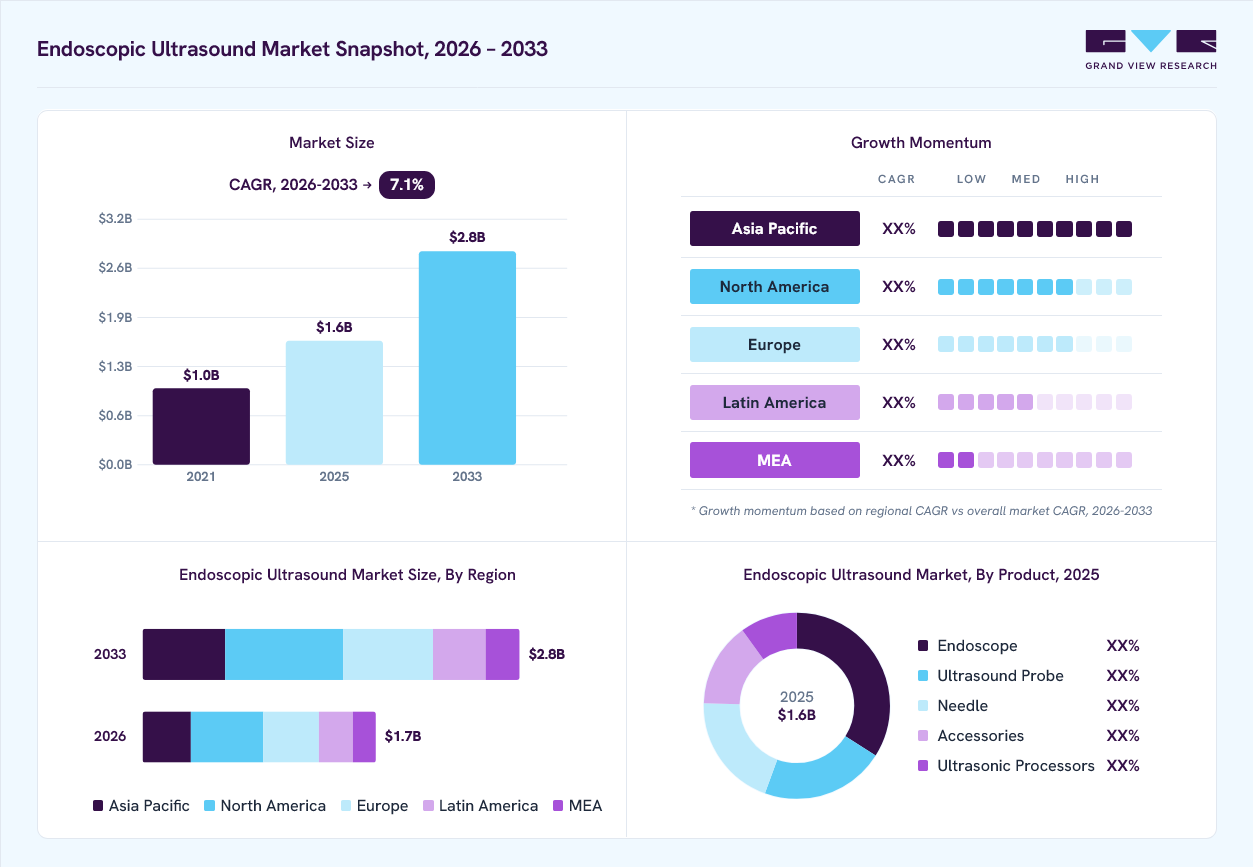
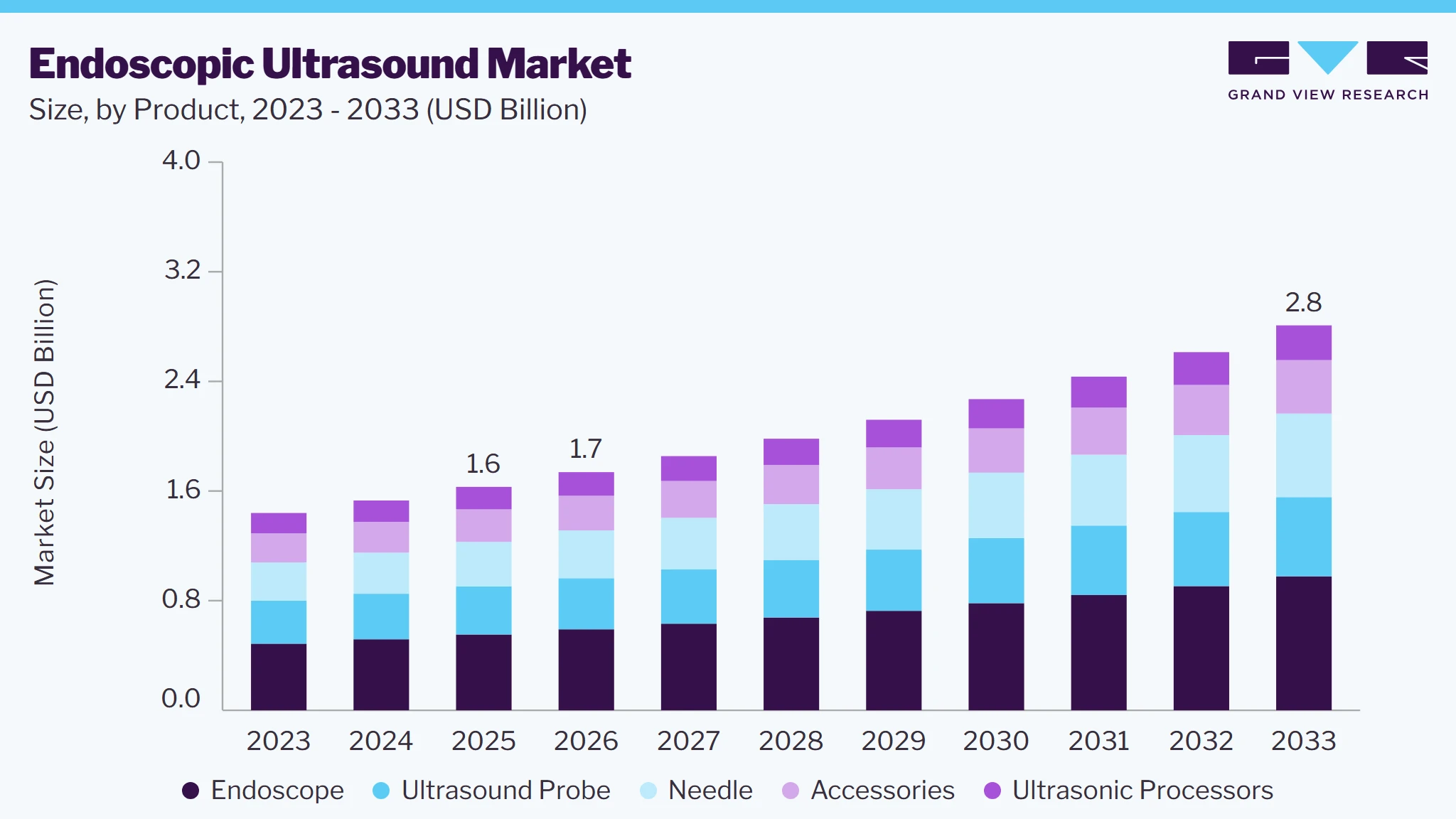
The global endoscopic ultrasound market size was valued at USD 1.6 billion in 2025 and is projected to grow from USD 1.7 billion in 2026 to USD 2.8 billion by 2033, at a CAGR of 7.1% from 2026 to 2033. North America dominated the market, accounting for a revenue share of 31.0% in 2025. The market growth is driveb by various factors, such as the rising prevalence of gastrointestinal cancer, technological advancements, and increasing instances of pancreaticobiliary malignancies.
 Source: Grand View Research, IR Documents, Primary Interviews, Paid DatabasesTo learn more about this report,
 Download Free Sample Report
 Key Market Trends & Insights
- By product: Endoscope segment dominated the market, with a revenue share of 33.9% in 2025.
- By application: Lung cancer segment led the market with the largest revenue share of 42.1% in 2025.
- By end use: Hospitals segment led the market with the largest revenue share of 39.6% in 2025.
Regional Highlights
- Largest regional market: North America (31.0% revenue share, 2025)
- Fastest-growing regional market: Asia Pacific (highest CAGR, 2026-2033)
- By country: The U.S. held the largest market share in 2025.
Market Size & Forecast
- Market size in 2025: USD 1.6 Billion
- Estimated market size in 2026: USD 1.7 Billion
- Projected market size by 2033: USD 2.8 Billion
- CAGR (2026-2033): 7.1%
Three ways to get this report
Buy it, customize it, or ask a question.Ask an Analyst
Analyst response in 1 business day
- AccessReport author, directly
- Reply timeWithin 1 working day
- No sales callDirect answer only
- FormatEmail reply
- CostFree, no cost
Get the Full Report
What the study covers
- FormatsPDF · Excel · Dashboard
- Timeline2026–2033 annual, 2025 base
- Coverage20+ countries, 5 regions
- Companies10+ key players profiled
Customize the Report
20% free customization
- IncludeCountries, segments, points
- TailorTo your product definition
- ExtendDeeper competitor detail
- OrA fully bespoke study
- Turnaround5–10 working days
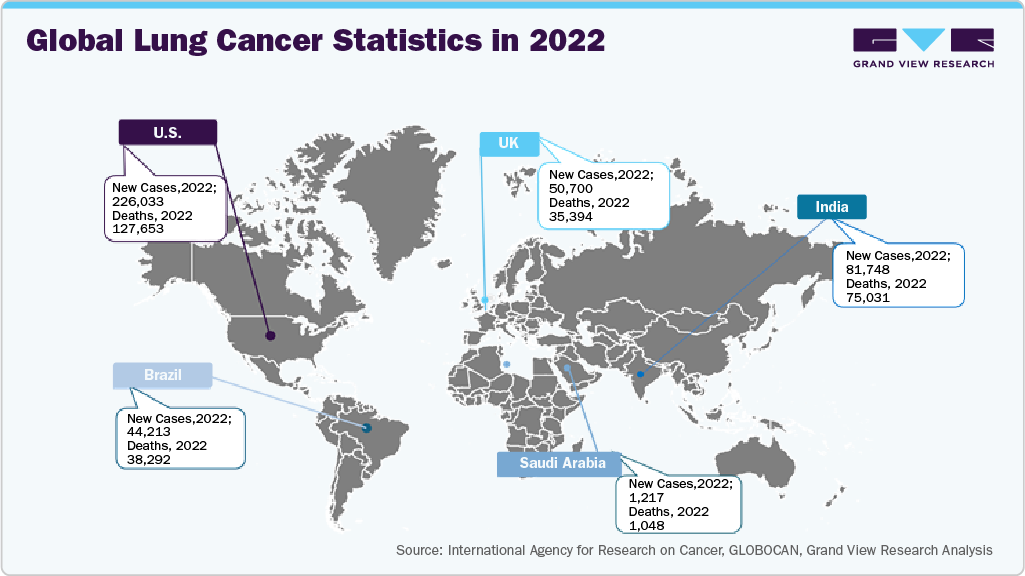
For instance, as per the American Cancer Society’s estimates for 2023, about 64,050 new cases of pancreatic cancer will be diagnosed in the U.S., and around 50,550 deaths are expected due to pancreatic cancer. Lung cancer is the major cause of cancer deaths worldwide; according to the Lung Cancer Research Foundation, 1 in 16 people will be diagnosed with lung cancer in their lifespan.
 To learn more about this report, Download Free Sample Report
 As reported by Cancer.Net in March 2023, about 238,340 new lung cancer cases were diagnosed in the U.S., while globally, around 2,206,771 individuals were diagnosed with lung cancer in 2020. Colorectal cancer (CRC) is the second-leading cause of cancer deaths worldwide; according to the American Cancer Society, nearly 153,020 new CRC cases are anticipated in the U.S. for 2023, resulting in approximately 52,550 deaths. These figures underscore the potential for market growth during the forecast period, and together with increasing investments in endoscopic ultrasound research and development, they are expected to propel market expansion in the upcoming years.
 To learn more about this report, Download Free Sample Report
 Similarly, an article published by NIH in June 2023 reported that, according to the American Society for Gastrointestinal Endoscopy, a new ultrasound capsule endoscopy (USCE) combining white light and ultrasound imaging has been developed for superficial and submucosal imaging of the esophagus. In addition, various interventional endoscopic ultrasound devices, such as puncture needles, guidewires, tract dilation devices, stents, and troubleshooting tools, have been introduced. Moreover, increasing R&D efforts in advanced endoscopic ultrasound (EUS) technologies by major companies are expected to propel market growth; for instance, in October 2022, Olympus launched the EU-ME3 endoscopic ultrasound processor platform, enhancing diagnostics for pancreatitis, pancreatic cancer, and stomach and esophageal cancer invasion detection.
Market Dynamics
The endoscopic ultrasound market is witnessing robust growth due to the increasing adoption of advanced minimally invasive diagnostic and interventional procedures for gastrointestinal, pancreatic, hepatobiliary, and pulmonary diseases. Endoscopic ultrasound combines high-resolution endoscopic visualization with real-time ultrasound imaging, enabling accurate assessment of the gastrointestinal wall, surrounding organs, lymph nodes, and vascular structures while facilitating tissue sampling and therapeutic interventions. EUS systems comprise echoendoscopes, ultrasound processors, imaging platforms, fine-needle aspiration (FNA) and fine-needle biopsy (FNB) needles, and other interventional accessories. These technologies are widely utilized for the diagnosis and staging of gastrointestinal cancers, pancreatic disorders, submucosal lesions, biliary diseases, esophageal conditions, lung cancer staging, and other complex digestive diseases.
The rising prevalence of gastrointestinal malignancies, pancreatic cancer, chronic pancreatitis, liver diseases, and inflammatory gastrointestinal disorders, coupled with increasing preference for minimally invasive diagnostic procedures, is driving market growth globally. Furthermore, continuous advancements in high-frequency ultrasound imaging, AI-assisted image interpretation, contrast-enhanced EUS, elastography, therapeutic EUS procedures, and improved biopsy needle technologies are enhancing diagnostic accuracy, procedural safety, and clinical outcomes, thereby supporting widespread adoption across hospitals, specialty gastroenterology centers, cancer institutes, and ambulatory surgical centers.
The increasing prevalence of gastrointestinal disorders and the rising demand for minimally invasive diagnostic technologies are major factors driving the global endoscopic ultrasound market. The growing incidence of pancreatic cancer, gastrointestinal cancers, biliary tract diseases, chronic pancreatitis, subepithelial lesions, and digestive disorders has significantly increased the need for highly accurate diagnostic procedures capable of providing detailed anatomical visualization and precise tissue sampling. Healthcare providers are increasingly adopting endoscopic ultrasound because it enables early disease detection, accurate tumor staging, real-time fine-needle aspiration and biopsy, and improved treatment planning while minimizing patient discomfort compared with traditional surgical diagnostic methods. Expanding cancer screening programs, growing awareness regarding early diagnosis, increasing availability of advanced endoscopy services, and continuous technological innovations in echoendoscopes, ultrasound processors, elastography, and contrast-enhanced imaging are further accelerating market growth. These advancements are improving diagnostic confidence and supporting wider adoption across hospitals, specialty gastroenterology clinics, oncology centers, and ambulatory surgical facilities.
Despite continuous technological advancements, the endoscopic ultrasound market remains constrained by the high cost of advanced imaging systems and the requirement for highly skilled endoscopists. Modern EUS platforms incorporate sophisticated echoendoscopes, high-resolution ultrasound processors, specialized biopsy needles, and advanced imaging software, resulting in significant capital investment and maintenance costs for healthcare providers. In addition, hospitals and specialty centers must invest in dedicated endoscopy suites, equipment servicing, infection control protocols, and extensive physician training to ensure safe and effective procedures. Accurate interpretation of EUS findings and successful performance of interventional procedures require considerable clinical expertise and experience, limiting adoption in regions facing shortages of trained gastroenterologists and endoscopic specialists. Furthermore, limited reimbursement for certain advanced EUS procedures, budget constraints among smaller healthcare facilities, and disparities in access to specialized endoscopy services, particularly in developing economies, may restrict broader market penetration and growth.
Market Concentration & Characteristics
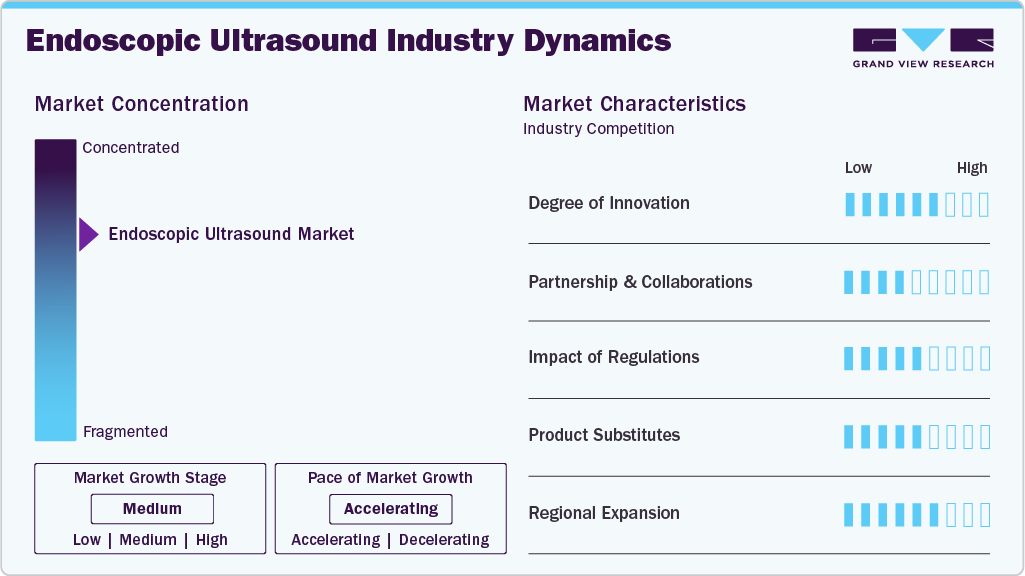
The industry is in a medium growth stage, with an accelerating pace of expansion. The endoscopic ultrasound industry is driven by the rising prevalence of gastrointestinal and pancreatic disorders, technological advancements, and a growing preference for minimally invasive procedures. In addition, the increasing geriatric population and rising global healthcare spending are anticipated to fuel market growth further throughout the forecast period.
The endoscopic ultrasound industry is experiencing substantial innovations as industry leaders unveil advanced systems and products to cater to the growing demand and enhance patient outcomes. For example, in March 2025, FUJIFILM Healthcare Europe introduced the EG-740UT Interventional Ultrasonic Endoscope across Europe. This cutting-edge device incorporates miniaturized single-crystal technology, offering improved imaging quality characterized by reduced noise and increased resolution. Aimed at therapeutic applications, it features a 4.0 mm working channel and enhanced maneuverability, which reduces blind spots during procedures. Furthermore, the endoscope is designed to work with sophisticated imaging techniques like Detective Flow Imaging and Contrast Harmonic Imaging, showcasing its superior diagnostic capabilities.
 To learn more about this report, Download Free Sample Report
 The endoscopic ultrasound industry is expected to witness significant partnership and collaboration activities from companies to enhance technological innovation and expand their market presence. For instance, in January 2024, Canon Medical Systems Corporation and Olympus Corporation announced a collaboration on Endoscopic Ultrasound Systems (EUS). Canon Medical develops and manufactures diagnostic ultrasound systems for EUS, leveraging technologies such as Aplio i800, while Olympus manages sales and marketing using its Ultrasound Endoscopes. This partnership aims to deliver advanced EUS equipment offering high-quality image diagnoses and enhanced diagnostic performance, contributing to early disease detection and minimally invasive treatment.
Regulations play a pivotal role in shaping the growth and innovation landscape of the endoscopic ultrasound industry. Regulatory frameworks, including device approvals, safety standards, and reimbursement policies, directly impact manufacturers’ ability to bring new products to market and influence clinicians’ adoption rates. Stringent approval processes by agencies such as the FDA or EMA ensure patient safety, extend product development timelines, and increase costs, which may restrain smaller companies or startups from entering the market. However, well-structured regulatory pathways and faster approval mechanisms, such as breakthrough device designations, can accelerate innovation and competitive dynamics.
The threat of substitutes in the endoscopic ultrasound industry is moderate. Key substitutes include advanced imaging modalities such as magnetic resonance imaging (MRI), computed tomography (CT), and positron emission tomography (PET), which can offer non-invasive diagnostic capabilities for many of the same indications as endoscopic ultrasound (EUS), including gastrointestinal and pancreatic diseases. However, despite these alternatives, EUS retains a strong position due to its unique ability to combine high-resolution imaging with fine-needle aspiration or biopsy, enabling diagnostic and therapeutic interventions in a single procedure.
The endoscopic ultrasound industry's regional expansion is driven by rising disease prevalence, technological innovation, and increasing healthcare investments across emerging economies. This expansion is also driven by the companies’ strategic efforts to diversify their market presence, reduce dependence on mature regions, and tap into new growth opportunities. Manufacturers focus on strengthening local distribution networks, establishing partnerships with healthcare providers, and investing in training programs to enhance procedural adoption. In addition, the shift toward value-based care and the growing emphasis on early disease detection fuel demand for EUS across both developed and developing markets.
Analyst Perspective
The endoscopic ultrasound market is positioned at the intersection of several transformative healthcare trends, including the rising prevalence of gastrointestinal and pancreatic disorders,
increasing incidence of gastrointestinal malignancies, expanding adoption of minimally invasive diagnostic procedures, and continuous advancements in endoscopic imaging technologies. Healthcare providers are increasingly utilizing advanced endoscopic ultrasound systems that offer high-resolution real-time imaging, precise lesion characterization, accurate tumor staging, and image-guided tissue sampling to improve diagnostic accuracy and treatment planning. Technological innovations in high-frequency ultrasound imaging, AI-assisted image analysis, contrast-enhanced EUS, elastography, fine-needle aspiration (FNA), fine-needle biopsy (FNB), and therapeutic endoscopic ultrasound procedures are reshaping the competitive landscape.Product Insights
Based on product, the endoscope segment led the market with the largest revenue share of 33.9% in 2025. This growth can be linked to the increasing number of echo-endoscopy procedures, heightened awareness of the advantages of early disease detection, and improvements in endoscope technology. For example, in May 2023, Olympus Corp. gained FDA approval for the EVIS X1 endoscopy system, alongside two gastrointestinal endoscopes: the GIF-1100 gastrointestinal videoscope and the CF-HQ1100DL/I colonovideoscope. Healthcare professionals utilize Olympus GI endoscopy instruments to diagnose, treat, and monitor conditions affecting the upper and lower GI tract, including acid reflux, ulcers, Crohn's disease, celiac disease, and colon cancer.
The needle segment will register the fastest CAGR of 8.1% from 2025 to 2033. Needles are typically employed to collect tissue samples from various gastrointestinal organs and lesions, including the pancreas, liver, lymph nodes, and GI wall. Moreover, fine-needle aspiration of lymph nodes and nearby structures assists in accurately staging tumors. The growing incidence of gastrointestinal diseases is also anticipated to drive market expansion. For instance, according to the American Cancer Society Journal, as of January 2023, approximately 21,560 new esophageal cancer cases and 26,500 stomach cancer cases were estimated in the U.S.
Application Insights
Based on application, the lung cancer segment led the market with the largest revenue share of 42.1% in 2025. The increasing incidence of lung cancer is the key factor driving market expansion. According to the American Cancer Society, approximately 21,560 new lung cancer cases are expected to be diagnosed in the U.S. in 2023. Lung cancer may develop due to multiple factors, including tobacco use, prior radiation exposure, and contact with radon gases. As reported by the Centers for Disease Control and Prevention in May 2023, about 28.3 million U.S. adults smoked cigarettes, roughly 3.08 million middle and high school students in the U.S. use at least one tobacco product, including e-cigarettes, and nearly 1,600 U.S. youth try their first cigarette every day. Each year, almost 500,000 individuals in the U.S. die prematurely due to smoking or exposure to second-hand smoke. In addition, around 16 million people are living with serious health conditions caused by smoking.
The gastrointestinal cancer segment is projected to register the fastest CAGR of 7.7% from 2025 to 2033. The rising prevalence of gastrointestinal cancer is expected to propel market growth. Cancers of the GI tract encompass anal cancer, bile duct cancer, colon cancer, esophageal cancer, gallbladder cancer, liver cancer, rectal cancer, gastrointestinal stromal tumors, small intestine cancer, and stomach cancer. For example, the American Cancer Society Journal from January 2023 forecasts approximately 348,840 new cases of digestive system cancer in the U.S. for 2023. Each year, stomach cancer accounts for 1.5% of all new cancer cases in the U.S. Most stomach cancer diagnoses occur in older adults, typically those aged 68 and above. Annually, 60% of stomach cancer cases are found in patients aged 65 and older. The lifetime risk of developing stomach cancer is higher for men (about 1 in 96) compared to women (approximately 1 in 152).
End Use Insights
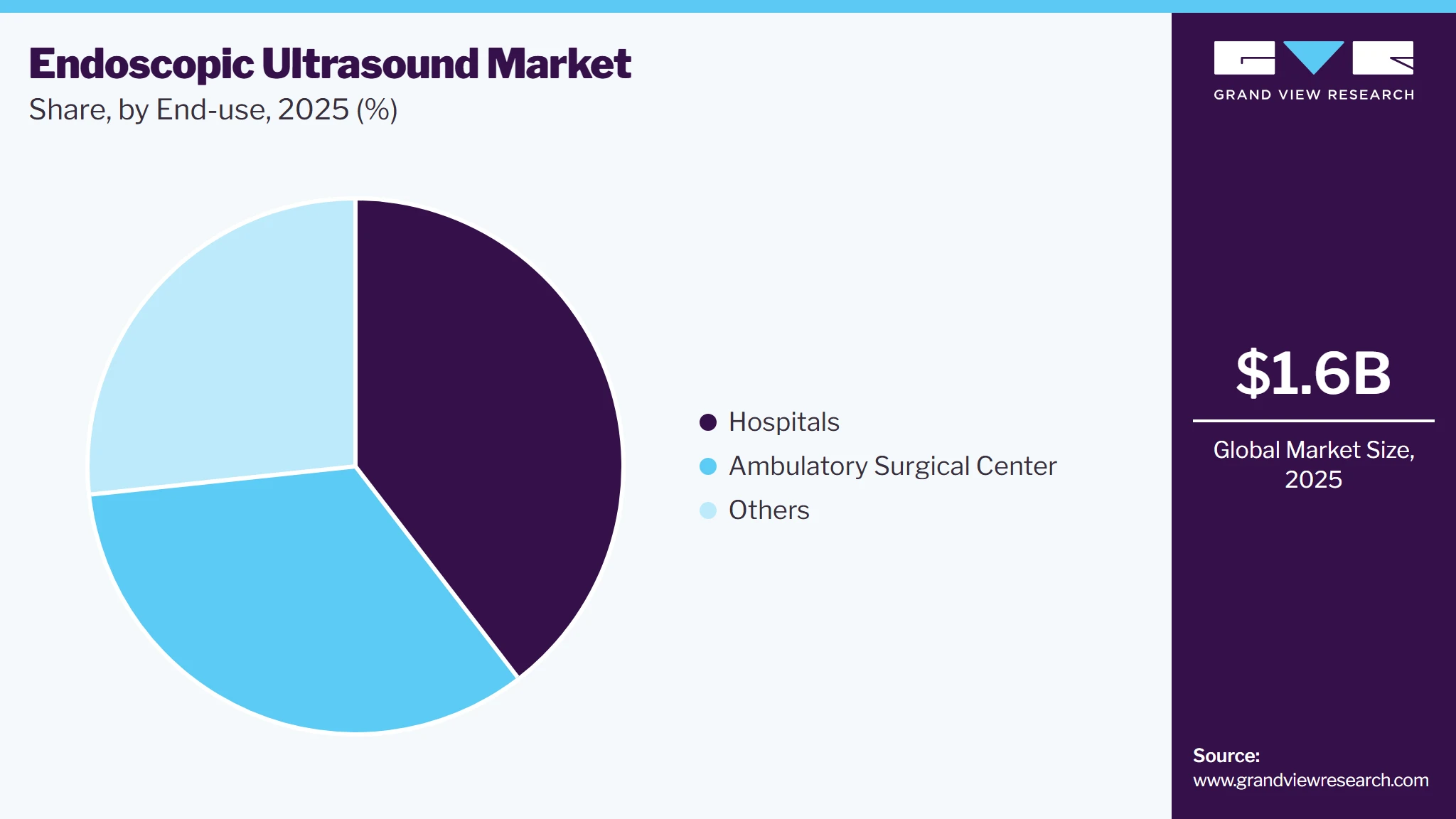
Based on end use, the hospitals segment led the market with the largest revenue share of 39.6% in 2025. This expansion is driven by favourable health reimbursement for minimally invasive procedures, well-developed healthcare infrastructure, and a growing number of skilled and qualified endoscopists. For example, according to the American Hospital Association, there were 6,129 hospitals in the U.S. as of May 2023. In addition, the increasing geriatric population is anticipated to propel the growth of the hospital segment, as most hospital admissions in the United States involve individuals aged 65 years and older.
 To learn more about this report, Download Free Sample Report
 The ambulatory surgical center segment is projected to register the fastest CAGR from 2025 to 2033. The rising prevalence of gastrointestinal disorders, including esophageal cancer, stomach (gastric) cancer, colorectal cancer, liver cancer, and pancreaticobiliary conditions, such as gallbladder, pancreas, and bile duct diseases, is anticipated to drive segment expansion. For instance, according to Cancer.Net, around 26,500 new cases of stomach cancer are expected to be diagnosed in the U.S. Furthermore, ASCs offer patients a more convenient and comfortable setting, which can result in higher patient satisfaction and growing demand for EUS procedures.
Regional Insights
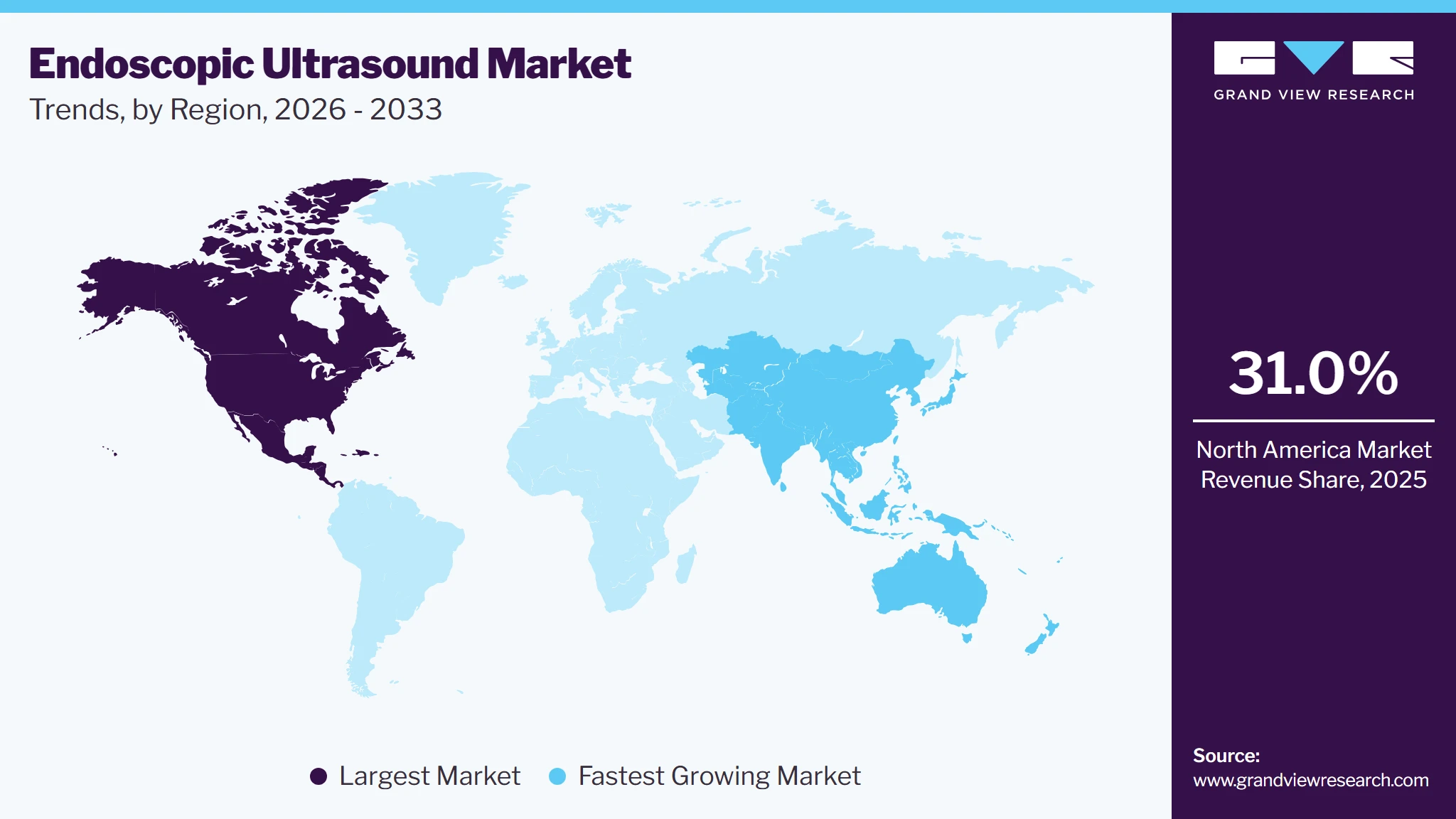
North America dominated the endoscopic ultrasound market with the largest revenue share of 31.0% in 2025. Rising R&D investments by the government and leading regional companies, advanced healthcare infrastructure, and progress in endoscopic ultrasound technology are driving growth in North America. For instance, in July 2023, Cook Medical introduced the EchoTip ProCore. This high-resolution ultrasound biopsy needle enables clinicians to obtain larger tissue samples from hard-to-reach areas through minimally invasive endoscopic ultrasound procedures.
 To learn more about this report, Download Free Sample Report
 U.S. Endoscopic Ultrasound Market Trends
The endoscopic ultrasound market in the U.S. held the largest share in the North America region in 2025. The endoscopic ultrasound industry in the U.S. is being driven by rising demand for minimally invasive diagnostic and therapeutic procedures for gastrointestinal and pancreatic diseases. The increasing incidence of gastrointestinal cancers, coupled with the growing elderly population, is fueling the adoption of EUS, as it offers superior accuracy over conventional imaging techniques. The rising awareness among healthcare professionals and patients about early cancer detection also contributes to the increasing demand.
Europe Endoscopic Ultrasound Market Trends
The endoscopic ultrasound industry in Europe is driven by increasing demand for diagnostic procedures for minimally invasive gastrointestinal (GI) and pancreatic diseases. Countries such as Germany, the UK, and France are at the forefront of this expansion, where high standards of healthcare infrastructure and advanced medical technologies support the widespread adoption of endoscopic ultrasounds. In addition, the regulatory environment in Europe is conducive to integrating advanced imaging technologies, which helps enhance diagnostic accuracy, particularly in oncology and gastroenterology.
The endoscopic ultrasound industry in the UK has witnessed significant growth, fueled by the increasing prevalence of gastrointestinal cancers, such as pancreatic and esophageal cancers. Endoscopic ultrasound offers superior imaging capabilities, enabling early detection and precise staging of these cancers, which is crucial for effective treatment planning. In addition, the UK's aging population contributes to a higher incidence of gastrointestinal disorders, further increasing the demand for EUS procedures.
Germany endoscopic ultrasound industry has witnessed significant growth in the European market, driven by strong healthcare infrastructure, high disease burden, and continuous innovation. Germany’s well-developed network of hospitals and specialized medical centers ensures that advanced diagnostic tools such as EUS are widely available and integrated into routine clinical practice.
Asia Pacific Endoscopic Ultrasound Market Trends
The endoscopic ultrasound industry in Asia Pacific is expected to witness the fastest CAGR over the forecast period, fueled by the rising prevalence of gastrointestinal disorders and cancers, particularly in countries such as China, Japan, and South Korea. Rapid urbanization, lifestyle changes, and dietary shifts across the region have contributed to a growing burden of digestive diseases, prompting healthcare systems to prioritize early detection and minimally invasive procedures. In addition, growing awareness among patients and clinicians about the benefits of EUS, along with increased investments in healthcare modernization by both governments and the private sector, is accelerating adoption.
The endoscopic ultrasound industry in Japan is driven by the country’s advanced healthcare system, aging population, and high prevalence of gastrointestinal cancers. Japan has one of the world’s oldest populations, leading to a greater incidence of age-related diseases, including pancreatic, esophageal, and gastric cancers, where endoscopic ultrasound plays a critical role in early detection and precise staging. The country’s well-established medical infrastructure and focus on innovation have supported the widespread integration of advanced EUS systems into clinical practice.
The endoscopic ultrasound industry in China is driven by the combination of factors that includes rising disease burden, healthcare reforms, and technological advancements. The increasing incidence of gastrointestinal cancers and digestive disorders, particularly among the aging population, has increased the demand for advanced diagnostic tools such as EUS. China’s ongoing healthcare reforms, which aim to improve access to high-quality care across urban and rural regions, have further supported the integration of endoscopic ultrasound into hospitals and specialty clinics.
Latin America Endoscopic Ultrasound Market Trends
The endoscopic ultrasound industry in Latin America is driven by improving healthcare infrastructure, rising disease prevalence, and increasing awareness of advanced diagnostic technologies. Countries like Brazil and Argentina are leading this growth, with a growing demand for minimally invasive procedures to diagnose gastrointestinal and pancreatic diseases. In addition, medical tourism is creating further opportunities to adopt endoscopic ultrasound procedures.
The endoscopic ultrasound industry in Brazil is driven by improvements in healthcare infrastructure, rising disease prevalence, and expanding private healthcare services. The country’s large network of both public and private hospitals has been progressively adopting endoscopic ultrasound systems. The growth of private healthcare and medical tourism in Brazil has further fueled investment in cutting-edge technologies, including endoscopic ultrasound.
MEA Endoscopic Ultrasound Market Trends
The endoscopic ultrasound industry in the MEA is witnessing significant growth, driven by improving healthcare systems, rising disease prevalence, and increased investment in medical technologies. Countries like the UAE and Saudi Arabia are at the forefront of adopting advanced diagnostic tools such as EUS, largely due to their strong healthcare infrastructure and government initiatives to modernize healthcare services.
The endoscopic ultrasound industry in Saudi Arabia is experiencing notable growth, driven by the country’s healthcare infrastructure developments and the increasing burden of chronic diseases. Saudi Arabia’s healthcare sector has made significant investments in advanced diagnostic technologies as part of the Vision 2033 initiative, which aims to enhance the quality of healthcare services and improve patient outcomes, which is also expected to fuel the market growth over the forecast period.
Key Endoscopic Ultrasound Company Insights
Key participants in the endoscopic ultrasound industry are implementing numerous initiatives to enhance their market presence and broaden their product reach. Strategies such as product launches, partnerships, and expansions are crucial for driving market growth.
Key Endoscopic Ultrasound Companies:
The following key companies have been profiled for this study on the endoscopic ultrasound market.
-
Boston Scientific Corporation
-
Medtronic
-
ConMed
-
Olympus Corporation
-
Steris
-
SonoScape Medical Corp.
-
PENTEX Medical
-
FUJIFILM India Private Limited
-
Cook Medical
- Medi-Globe GmbH
Competitive Benchmarking
Category
Operating Strategies
Competitive Edge
Weakness
Established Players (Boston Scientific Corp.; Medtronic; ConMed; Olympus Corp, FUJIFILM India Pvt. Ltd.; Cook Medical )
Established companies focus on expanding comprehensive endoscopic ultrasound (EUS) portfolios comprising echoendoscopes, ultrasound processors, EUS-guided fine-needle aspiration (FNA) and fine-needle biopsy (FNB) needles, therapeutic accessories, and advanced imaging platforms. They emphasize continuous innovation in high-resolution imaging, AI-assisted visualization, contrast-enhanced EUS, elastography, physician training programs, strategic collaborations with hospitals and gastroenterology centers, and global distribution expansion to strengthen market leadership.
Strong global distribution networks, established relationships with gastroenterologists, endoscopists, oncology centers, hospitals, and ambulatory surgical centers support sustained market leadership. Broad product portfolios, proven clinical performance, advanced manufacturing capabilities, regulatory expertise, and significant R&D investments enable continuous innovation and widespread adoption across diagnostic and interventional endoscopic ultrasound procedures.
Dependence on premium endoscopic imaging systems may create pricing challenges in cost-sensitive healthcare markets. Strict regulatory requirements, lengthy product approval processes, and high R&D investments can increase commercialization timelines and operational costs. Large organizational structures may also reduce agility in responding rapidly to emerging endoscopic technologies and evolving clinical requirements.
Emerging Players (Steris, SonoScape; Medical Corp.; PENTEX Medical, Medi-Globe GmbH )
Emerging companies prioritize the development of cost-effective endoscopic ultrasound systems, advanced imaging technologies, innovative biopsy needles, and specialized accessories for diagnostic and therapeutic EUS procedures. They focus on expanding regional distribution, strengthening collaborations with gastroenterologists and endoscopy centers, enhancing imaging performance, and addressing unmet clinical needs through innovative, minimally invasive endoscopic solutions.
Agile product development, competitive pricing strategies, and the ability to rapidly introduce advanced imaging platforms and interventional accessories enable emerging companies to strengthen market presence. Their specialization in endoscopy technologies, flexible manufacturing capabilities, and focus on underserved regional markets provide opportunities to gain market share and respond quickly to evolving physician requirements.
Limited global brand recognition and comparatively smaller distribution infrastructures may restrict international expansion. Lower financial resources can constrain large-scale clinical validation, regulatory approvals, manufacturing scale-up, and commercialization activities. Dependence on distributor partnerships and strong competition from established endoscopy device manufacturers may challenge long-term market penetration and revenue growth.
Recent Developments
- In May 2024, Cook Medical launched the EchoTip AcuCore EUS Biopsy Needle, designed for precision biopsies of gastrointestinal lesions using endoscopic ultrasound (EUS). The needle aims to improve core sample acquisition for accurate diagnosis and staging of challenging-to-reach lesions, enhancing diagnostic yield in EUS-guided procedures.
-
In February 2024, Fujifilm India introduced the ALOKA ARIETTA 850 Diagnostic Ultrasound System, with its inaugural installation at Fortis Hospital, Bengaluru. This state-of-the-art endoscopic ultrasound device provides exceptional image quality and an improved user interface, allowing for accurate diagnosis and treatment of gastrointestinal issues. It supports non-invasive procedures, including pancreatic pseudocyst drainage and cancer therapies, to enhance healthcare outcomes in the area.
-
In January 2024, EndoSound received 510(k) clearance for its innovative Endoscopic Ultrasound (EUS) technology, designed to enhance diagnostic capabilities in gastrointestinal procedures. This breakthrough device aims to improve the accuracy and efficiency of EUS examinations, potentially leading to better patient outcomes.
Endoscopic Ultrasound Market Report Scope
Report Attribute
Details
Market size in 2025
USD 1.6 billion
Estimated market size in 2026
USD 1.7 billion
Projected market size by 2033
USD 2.8 billion
Growth rate
CAGR of 7.1% from 2026 to 2033
Historical data
2021 - 2024
Forecast period
2026 - 2033
Quantitative units
Revenue in USD million/billion and CAGR from 2026 to 2033
Report coverage
Revenue forecast, company ranking, competitive landscape, growth factors, and trends
Segments covered
Product, application, end-use, region
Regional scope
North America; Europe; Asia Pacific; Latin America; MEA
Country scope
U.S.; Canada; Mexico; Germany; UK; France; Italy; Spain; Denmark; Sweden; Norway; China; Japan; India; South Korea; Thailand; Australia; Brazil; Argentina; South Africa; Saudi Arabia; UAE; Kuwait
Key companies profiled
Boston Scientific Corp.; Medtronic; ConMed; Olympus Corp.; Steris, SonoScape; Medical Corp.; PENTEX Medical; FUJIFILM India Pvt. Ltd.; Cook Medical; Medi-Globe GmbH
Customization scope
Free report customization (equivalent up to 8 analysts' working days) with purchase. Addition or alteration to country, regional & segment scope.
Pricing and purchase options
Avail customized purchase options to meet your exact research needs. Explore purchase options
Global Endoscopic Ultrasound Market Report Segmentation
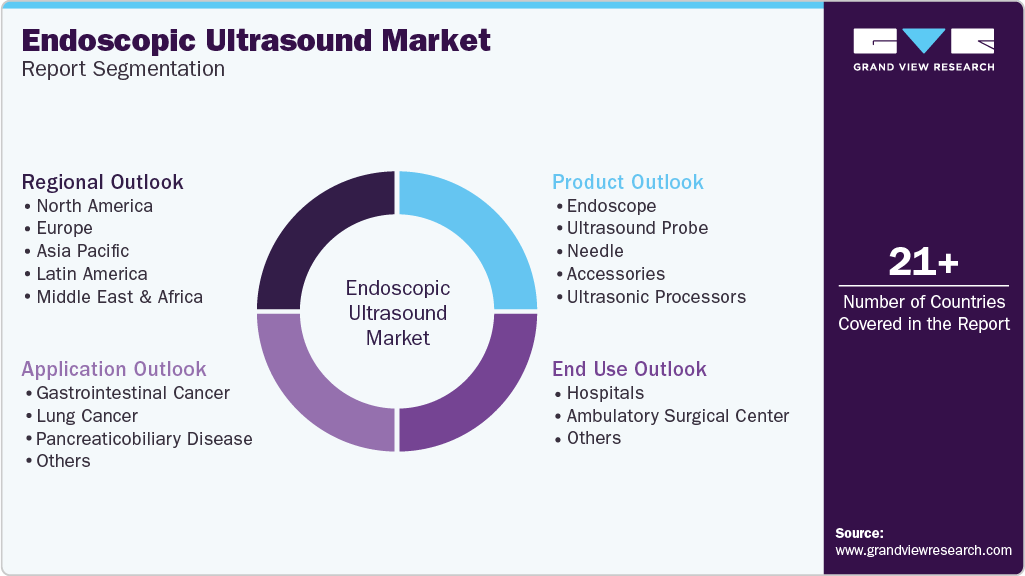
This report forecasts revenue growth at the global, regional, and country levels and provides an analysis of the latest industry trends in each of the sub-segments from 2021 to 2033. For this study, Grand View Research has segmented the global endoscopic ultrasound market report based on product, application, end use, and region.
 To learn more about this report, Download Free Sample Report
 Product Outlook (Revenue, USD Million, 2021 - 2033)
-
Endoscope
-
Ultrasound Probe
-
Needle
-
Accessories
-
Ultrasonic Processors
Application Outlook (Revenue, USD Million, 2021 - 2033)
-
Gastrointestinal Cancer
-
Lung Cancer
-
Pancreaticobiliary Disease
-
Others
End Use Outlook (Revenue, USD Million, 2021 - 2033)
-
Hospitals
-
Ambulatory Surgical Center
-
Others
Regional Outlook (Revenue, USD Million, 2021 - 2033)
-
North America
-
U.S.
-
Canada
-
Mexico
-
-
Europe
-
Germany
-
UK
-
France
-
Italy
-
Spain
-
Denmark
-
Sweden
-
Norway
-
-
Asia Pacific
-
China
-
Japan
-
India
-
South Korea
-
Australia
-
Thailand
-
-
Latin America
-
Brazil
-
Argentina
-
-
MEA
-
South Africa
-
Saudi Arabia
-
UAE
-
Kuwait
-
Research Methodology
The endoscopic ultrasound market figures in this report are based on a proven research process that combines executive interviews with secondary research from proprietary databases, company filings, and recognized regulatory and institutional sources. Market size is built through value-chain sizing - reconciling supply-side and demand-side estimates - and triangulated with bottom-up and top-down approaches. Every estimate passes multiple levels of expert validation before publication, with each endoscopic ultrasound segment quantified using the revenue-capture definitions in the table below.
Segment Definition
Segment - Product
Revenue capture definition
Endoscope
Revenue captured from ophthalmic sutures manufactured using naturally derived materials such as silk and collagen. These sutures are primarily used in selected ophthalmic procedures requiring excellent handling characteristics, flexibility, and secure knot performance while ensuring adequate tissue support during healing.
Ultrasound Probe
Revenue includes ultrasound transducers integrated within endoscopic ultrasound systems that generate high-resolution images of gastrointestinal and surrounding structures. Market revenue is driven by demand for advanced imaging quality, replacement cycles, and adoption of next-generation probe technologies.
Needle
Revenue is derived from EUS-guided fine-needle aspiration (FNA), fine-needle biopsy (FNB), therapeutic needles, and other disposable needle systems used for tissue sampling, drainage procedures, and targeted interventions. Increasing cancer diagnosis and minimally invasive biopsy procedures support recurring revenue growth.
Accessories
Revenue comprises guidewires, balloons, dilators, stents, biopsy forceps, irrigation devices, cytology brushes, sheaths, and other consumables used during EUS procedures. Continuous utilization of disposable accessories creates recurring revenue opportunities across healthcare facilities.
Ultrasonic Processors
Revenue is generated from ultrasound processor units that convert ultrasound signals into high-resolution diagnostic images during endoscopic procedures. Growth is supported by technological upgrades, AI-enabled imaging software, enhanced visualization capabilities, and replacement demand from healthcare institutions.
Segment - Application
Revenue capture definition
Gastrointestinal Cancer
Revenue includes EUS systems and consumables used for diagnosis, staging, biopsy, and treatment planning of esophageal, gastric, colorectal, and other gastrointestinal cancers. Rising cancer incidence and increasing emphasis on early diagnosis continue to drive this application segment.
Lung Cancer
Revenue is generated from EUS procedures performed for mediastinal lymph node evaluation, tumor staging, and tissue sampling in lung cancer patients. Increasing adoption of minimally invasive cancer staging techniques supports market expansion in this segment.
Pancreaticobiliary Disease
Revenue includes products utilized for diagnosing and managing pancreatic cancer, pancreatic cysts, chronic pancreatitis, biliary obstruction, gallbladder disorders, and other hepatopancreatobiliary diseases. Growing prevalence of pancreatic disorders and increasing use of therapeutic EUS contribute significantly to market demand.
Others
Revenue is generated from EUS applications in subepithelial lesions, neuroendocrine tumors, inflammatory bowel disease, liver disorders, cyst drainage, vascular interventions, and other emerging diagnostic and therapeutic procedures. Continuous expansion of EUS indications supports growth in this segment.
Segment - End Use
Revenue capture definition
Hospitals
Revenue is derived from procurement of complete EUS systems, echoendoscopes, processors, needles, and accessories by tertiary hospitals, academic medical centers, and multispecialty healthcare institutions performing high volumes of advanced endoscopic procedures.
Ambulatory Surgical Centers (ASCs)
Revenue includes EUS equipment and disposable products used in outpatient endoscopy centers and ambulatory surgical facilities. Growth is driven by increasing preference for minimally invasive outpatient procedures, lower treatment costs, and shorter patient recovery times.
Others
Revenue is generated from specialty gastroenterology clinics, cancer centers, diagnostic imaging centers, physician-owned endoscopy facilities, and research institutions utilizing endoscopic ultrasound for specialized diagnostic and therapeutic applications. These facilities contribute to expanding adoption outside traditional hospital settings.
Estimation Model
Title
Guiding Question
Process Steps
Data Sources
Scope Definition
What is being done?
1. Define the market scope covering endoscopic ultrasound systems 2. Identify end users 3. Establish Geographic Coverage (Global/Regional) 4. Align base year & forecast horizon (2022-2033)
Company Annual Reports, FDA Data, EMA, MFDS, Hospital Imaging Database
Build the Install Base
How large is the addressable EUS procedure volume?
1. Estimate annual EUS procedures 2. Analyze disease prevalence, screening programs, aging population 3. Incorporate healthcare infrastructure, reimbursement coverage, and technology enhancement 4. Forecast procedural growth based on historical trends and healthcare expenditure per capita
Company Annual Reports, Hospital Procurement Database, Distributor Sales Data
Estimate Utilization & Procedure
What proportion utilizes endoscopic ultrasound technologies?
1. Assess utilization rates of diagnostic and interventional EUS procedures by indication, setting, and physician expertise 2. Evaluate physician adoption of advanced EUS technologies (radial imaging, fine-needle aspiration, fine-needle biopsy) 3. Validate penetration assumptions through physician interviews, hospital procurement data, and literature review 4. Analyze procedure volumes, clinical indications, patient wellness, clinical benefits, and healthcare outcomes
Company Interviews, OECD Database, Clinical Surveys, Industry Reports
Revenue Conversion
How are procedure volumes converted into market revenue?
1. Determine average selling prices (ASPs) of EUS systems 2. Calculate market revenues by product type, application, and end user 3. Validate revenue estimates using company financial reports 4. Cross-check final market estimates through triangulation of company revenues
Company Annual Reports, Distributor Pricing Sheets, Procurement Bids, Expert Interviews
Delivered Customizations
This report has been delivered with the following In-depth customizations
Client Request
Customization Delivered
Value Adds
Technology and Product Assessment
Conducted a comprehensive assessment of endoscopic ultrasound (EUS) technologies, including radial and linear echoendoscopes, ultrasound processors, EUS needles, imaging systems, and interventional accessories. The study evaluated imaging performance, procedural capabilities, product innovations, AI integration, clinical applications, and adoption trends across gastrointestinal and pulmonary diagnostics.
Enables stakeholders to identify emerging technologies, evaluate product differentiation, benchmark device performance, and prioritize investments in next-generation EUS platforms and interventional solutions.
Competitive Landscape and Strategic Benchmarking
Performed a detailed competitive analysis of leading manufacturers based on product portfolios, technological capabilities, regulatory approvals, pricing strategies, manufacturing capacity, geographic footprint, distribution networks, partnerships, acquisitions, and recent product launches across the global EUS market.
Provides actionable competitive intelligence by identifying market leaders, benchmarking commercialization strategies, evaluating competitive positioning, and highlighting partnership and expansion opportunities. Supports strategic planning and investment decisions.
Regional Market and Clinical Adoption Analysis
Conducted an in-depth regional assessment across North America, Europe, Asia Pacific, Latin America, and the Middle East & Africa by evaluating gastrointestinal disease prevalence, pancreatic cancer incidence, healthcare infrastructure, reimbursement policies, physician adoption, regulatory environments, and availability of advanced endoscopy services.
Supports regional expansion strategies by identifying high-growth markets, evolving clinical adoption trends, healthcare investment opportunities, and unmet diagnostic needs. Enables optimal market entry, distribution planning, and resource allocation across developed and emerging regions.
Frequently Asked Questions About This Report
Asia Pacific is the fastest-growing region over the forecast period.
Based on product, the endoscope segment led the market with the largest revenue share of 33.9% in 2025.This growth can be linked to the increasing number of echo-endoscopy procedures, heightened awareness of the advantages of early disease detection, and improvements in endoscope technology.
Lung cancer segment led the market with the largest revenue share of 42.1% in 2025 while gastrointestinal cancer segment is expected to be the fastest-growing market.
The global endoscopic ultrasound market is expected to grow at a compound annual growth rate of 7.1% from 2026 to 2033, reaching USD 2.8 billion by 2033.
North America dominated the endoscopic ultrasound market with a share of 31.0% in 2025.
The global endoscopic ultrasound market size was valued at USD 1.6 billion in 2025 and is estimated at USD1.7 billion in 2026.
Some key players operating in the endoscopic ultrasound market include Boston Scientific Corporation; Medtronic, ConMed; Olympus Corporation; Steris; SonoScape; Medical Corp.; PENTEX Medical; FUJIFILM India Private Limited; Cook Medical.
Key factors that are driving the endoscopic ultrasound market growth include the increasing prevalence of gastrointestinal cancer, the growing geriatric population, rapid technological advancements, and the rise in demand for minimally invasive procedures.
About the Author(s)
Medical Devices Research Team
Healthcare · Medical DevicesThis report was authored by the medical devices research team at Grand View Research - comprising two research analysts, one senior research analyst, and one industry expert - with specialized expertise in the medical devices segment of the healthcare industry. All findings are based on proprietary healthcare databases, executive interviews, and regulatory analysis, subject to internal peer review prior to publication.
Last Updated:
Speak to Analyst

Customize this report to your needs - add regions, segments, or data points, with 20% free customization.
Or view our licence options:


ISO 9001:2015 & 27001:2022 Certified
We are GDPR and CCPA compliant! Your transaction & personal information is safe and secure. For more details, please read our privacy policy.


