
- Home
- »
- Pharmaceuticals
- »
-
Erectile Dysfunction Drugs Market Size & Share Report, 2033GVR Report cover

Erectile Dysfunction Drugs Market (2026 - 2033)
Size, Share & Trends Analysis Report By Product (Viagra, Cialis, Levitra/Staxyn, Stendra/Spedra (avanafil)), By Mode of Administration (Oral, Injectable, Other Modes), By Region (North America, Asia Pacific), And Segment Forecasts
Market Size, 2025
$3.2BMarket Estimate, 2026
$3.4BMarket Forecast, 2033
$6.6BCAGR, 2026–2033
9.8%Erectile Dysfunction Drugs Market Summary
The global erectile dysfunction drugs market size was estimated at USD 3.2 billion in 2025 and is projected to grow from USD 3.4 billion in 2026 to USD 6.6 billion by 2033, growing at a CAGR of 9.8% from 2026 to 2033. North America dominated the Erectile Dysfunction Drugs market with the largest revenue share of 50.17% in 2025. The market is significantly influenced by several factors, including a rising geriatric population, increasing R&D efforts, and a growing prevalence of Erectile Dysfunction (ED).
 Source: Grand View Research, IR Documents, Primary Interviews, Paid DatabasesTo learn more about this report,
 Download Free Sample Report
 Key Market Trends & Insights
- By product: the Viagra (sildenafil citrate) segment led the market with the largest revenue share of 57.18% in 2025.
- By mode of administration: the Oral Mode of Administration segment led the market with the largest revenue share of 83.92% in 2025.
Regional Highlights
- Largest regional market: North America (50.17% revenue share, 2025)
- Fastest-growing regional market: Asia Pacific (highest CAGR, 2026-2033)
- By country: The U.S. held the largest market share in 2025
Market Size & Forecast
- Market size in 2025: USD 3.2 Billion
- Estimated Market size in 2026: 3.4 Billion
- Projected market size by 2033: USD 6.6 Billion
- CAGR (2026-2033): 9.8%
Three ways to get this report
Buy it, customize it, or ask a question.Ask an Analyst
Analyst response in 1 business day
- AccessReport author, directly
- Reply timeWithin 1 working day
- No sales callDirect answer only
- FormatEmail reply
- CostFree, no cost
Get the Full Report
What the study covers
- FormatsPDF · Excel · Dashboard
- Timeline2026–2033 annual, 2025 base
- Coverage20+ countries, 5 regions
- Companies10+ key players profiled
Customize the Report
20% free customization
- IncludeCountries, segments, points
- TailorTo your product definition
- ExtendDeeper competitor detail
- OrA fully bespoke study
- Turnaround5–10 working days
For instance, the WHO reports that approximately 15% of males are affected by ED annually, a number projected to reach 320 million by 2025. These trends highlight the significant market opportunities and challenges in the healthcare sector, particularly in areas related to aging demographics and advancements in medical research.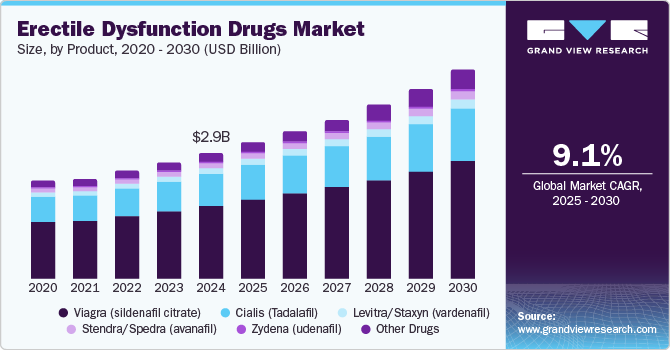 To learn more about this report, Download Free Sample Report
 The increasing prevalence of Erectile Dysfunction (ED) is one of the key factors driving market growth over the forecast period. ED is a condition where men are unable to maintain a penile erection due to physical and psychological health issues, including diabetes, high cholesterol, smoking, stress, and mental health issues. According to a WHO report, approximately 15% of men are affected by ED each year, which is projected to reach 320 million by 2025. ED is closely linked to both physical and psychological health. Major risk factors include diabetes mellitus, heart disease, hypertension, and increased HDL levels. In addition, medications for hypertension, diabetes, depression, and cardiovascular disease can contribute to erectile difficulties.
ED is a highly prevalent condition in geriatric men. Natural decline in testosterone levels, reduced blood flow, and other age-related physiological changes contribute to the higher incidence of ED among older men. This disease has a significant impact on a patient’s quality of life and healthcare resources. The geriatric population is more likely to have chronic conditions such as diabetes, cardiovascular disease, and hypertension, which are major risk factors for ED. Thus, the increasing geriatric population is a major factor in the prevalence of ED in men in the coming years.
Technological advancement in drug delivery, the high burden of disease, and strong healthcare infrastructure are some of the factors that drive market growth. Growing demand for robust pharmaceutical medicines to address the increase in ED prevalence is one of the key contributors to the growth in the adoption of ED medicines. Furthermore, increasing investment in R&D of novel drugs to treat patients with ED is expected to drive market growth. As per a recent research study published by Dove Express, in 2023, a significant rise in research studies on ED was recorded over the last 20 years. The leading countries in ED research included the UK, Italy, and the U.S. Recommendations focus on fostering interdisciplinary collaborations, exploring innovative therapeutic strategies, addressing psychological & relational aspects, conducting long-term studies, and publishing findings in reputable journals.
Market Dynamics
The erectile dysfunction drugs market is experiencing steady growth, driven by the rising global prevalence of erectile dysfunction across aging male populations, increasing patient awareness and willingness to seek treatment, and continuous advancements in pharmacological therapies offering improved efficacy, tolerability, and convenience. The widespread adoption of oral PDE5 inhibitors, including branded and generic formulations of sildenafil, tadalafil, and vardenafil, has established a broad treatment foundation, while newer agents such as avanafil and udenafil continue to expand the therapeutic options available to patients and physicians. However, market growth is tempered by significant generic erosion following the expiration of key patents for branded products, persistent social stigma associated with sexual health conditions, and stringent regulatory oversight governing direct-to-consumer advertising and prescription practices. Despite these challenges, expanding access to sexual health services across emerging markets, growing telehealth adoption, and ongoing clinical development of novel non-PDE5 therapies continue to support long-term market expansion.
The erectile dysfunction drugs market is fundamentally driven by the increasing global burden of erectile dysfunction, which is closely associated with the rising prevalence of key risk factors including diabetes mellitus, cardiovascular disease, obesity, hypertension, and psychological disorders. As the global male population ages and lifestyle-related comorbidities become more widespread, the number of men experiencing some degree of erectile dysfunction continues to grow across both developed and developing regions. Advances in patient education, the destigmatization of sexual health discussions in clinical and public settings, and improved access to urological care have collectively increased the rate of formal diagnosis and treatment-seeking behavior among affected individuals.
In 2025, growing awareness campaigns promoted by healthcare organizations and pharmaceutical companies further contributed to increased patient engagement with erectile dysfunction treatment options. Telehealth platforms and digital health services played a particularly important role in expanding access to diagnosis and prescription-based therapies, enabling patients in geographies with limited access to specialist care to initiate PDE5 inhibitor treatment through online consultations. The mainstreaming of sexual wellness as a component of men's overall health management, supported by primary care physicians increasingly integrating erectile dysfunction screening into routine health assessments, has sustained strong demand for both branded and generic erectile dysfunction pharmacotherapies. These converging trends continue to reinforce the market's foundational growth driver across all major geographies.
The erectile dysfunction drugs market faces a significant structural restraint in the form of generic competition following the expiration of patents on major branded products. The loss of exclusivity for sildenafil citrate (Viagra) and tadalafil (Cialis) has led to the widespread availability of lower-cost generic equivalents in major markets including the United States, Europe, and select Asia Pacific countries, substantially eroding the revenue contribution of branded formulations. Generic manufacturers have aggressively priced their products at significant discounts to branded counterparts, accelerating substitution rates and compelling originator companies to recalibrate their commercial strategies, pricing structures, and market positioning efforts.
The impact of generic erosion is further compounded by payer-driven formulary policies and pharmacy-level substitution practices that prioritize cost-effective generics over branded alternatives. In markets with robust generic utilization programs, branded erectile dysfunction therapies have experienced sustained volume and revenue declines that are unlikely to reverse in the absence of meaningful product differentiation or new clinical indications. Regulatory authorities in multiple jurisdictions have additionally approved over-the-counter access to low-dose sildenafil in select markets, further reducing the prescription-linked revenue base for branded manufacturers. These dynamics collectively represent an ongoing structural challenge for companies dependent on branded product revenues within the erectile dysfunction segment.
A significant growth opportunity exists for the erectile dysfunction drugs market through the expansion of therapeutic access in emerging economies across Asia Pacific, Latin America, the Middle East, and Africa, where large and growing male populations remain substantially underdiagnosed and undertreated due to limited healthcare infrastructure, social stigma, and restricted access to specialist care. As healthcare systems in these regions continue to develop and disposable incomes rise, demand for both branded and generic erectile dysfunction therapies is expected to accelerate. Pharmaceutical companies are increasingly directing market development efforts toward these geographies through localized promotional strategies, tiered pricing structures, and partnerships with regional distributors and healthcare providers.
In parallel, the development of non-PDE5 therapeutic approaches represents a strategically important opportunity for market differentiation and premium pricing in patient populations where existing PDE5 inhibitor therapies are ineffective or contraindicated. In 2025, several clinical-stage companies advanced programs targeting novel mechanisms of action, including melanocortin receptor agonists, soluble guanylate cyclase stimulators, and Rho-kinase inhibitors, with the objective of addressing unmet clinical needs in diabetic patients, post-prostatectomy populations, and men with refractory erectile dysfunction. Additionally, the integration of combination therapies incorporating hormonal treatments, psychological support, and pharmacological agents has gained traction in clinical practice. The convergence of digital health platforms offering discreet prescription access, coupled with growing physician and patient openness to exploring a broader range of treatment modalities, is expected to create sustained commercial opportunities for both established and emerging manufacturers throughout the forecast period.
Analyst Perspective
The erectile dysfunction drugs market is undergoing a structural transformation, shifting from a predominantly branded pharmaceutical landscape to one increasingly defined by generic competition, digital health-enabled access, and therapeutic diversification. The loss of exclusivity for sildenafil and tadalafil has fundamentally reshaped revenue dynamics for market leaders Pfizer and Eli Lilly, compelling both companies to adapt their commercial strategies while continuing to leverage strong brand recognition and established physician relationships. Bayer and GlaxoSmithKline maintain their presence through vardenafil-based Levitra and Staxyn, while Vivus and Metuchen Pharmaceuticals differentiate their portfolios through avanafil and specialized delivery formats targeting patients seeking faster-onset or more tolerable treatment options. Across the competitive landscape, innovation focus is increasingly directed toward underserved patient populations, next-generation non-PDE5 mechanisms, and digital health platforms that enhance treatment accessibility and patient adherence, trends that are expected to define the next phase of market evolution through the forecast period.
Product Insights
Based on product, the Viagra (sildenafil citrate) segment led the market with the largest revenue share of 57.18% in 2025. Viagra (sildenafil citrate) was the first Phosphodiesterase 5 (PDE5) inhibitor drug approved for Erectile Dysfunction (ED). This drug was developed and commercialized by Pfizer Inc. The patent for the branded version of Viagra expired in 2020, and therefore, to fill the demand gap in the market, Pfizer Inc. launched a generic version of Viagra at half the retail price-USD 65. Generic version of Viagra has been available in Canada and Europe since 2012 and 2013. Some of the key companies offering generic versions of Viagra under different brands are Aurobindo Pharma USA, Lupin, Sunshine Lake Pharma, and Torrent Pharmaceuticals. Moreover, there are strategic initiatives such as research collaboration, partnerships, and agreements undertaken by key local players to expand their business footprint. Furthermore, the availability of supportive reimbursement policies for Viagra positively impacts market growth. For instance, Viagra is eligible for reimbursement through Flexible Spending Accounts (FSA), Health Reimbursement Accounts (HRA), and Health Savings Accounts (HSA), provided there is a prescription.
The other drugs segment is expected to emerge as the most lucrative segment and is likely to grow at a CAGR of 8.9% over the forecast period. Other medicines, such as Mirodenafil (Mvix), Helleva (lodenafil Carbonate), MAXON Forte, and Maxon Active, are also used to treat adult patients with ED. Helleva was developed by Cristalia and is prescribed to men suffering from ED. Initially, it was approved in Brazil. MAXON Forte and Maxon Active are OTC products of Adamed indicated for the treatment of adult patients with ED. These are composed of 25 mg sildenafil citrate and cost around USD 311.75 for ten tablets. Moreover, the approval of products for OTC sales is anticipated to fuel market growth.
Mode of Administration Insights
Based on mode of administration, the Oral Mode of Administration segment led the market with the largest revenue share of 83.92% in 2025. The oral mode of administration is a dominant segment in the market, driven by its convenience, non-invasive nature, and widespread patient preference. Oral ED drugs, including phosphodiesterase type 5 (PDE5) inhibitors such as sildenafil, tadalafil, and vardenafil, offer effective symptom management with proven clinical efficacy. The ease of administration, combined with rapid onset and extended duration of action in some formulations, enhances patient adherence and market demand. In addition, the continuous development of novel formulations, such as sublingual tablets and chewable tablets, further expands this segment’s appeal. However, market players must address potential side effects and drug interactions to maintain consumer confidence and regulatory compliance, ensuring sustained growth within the segment.
 To learn more about this report, Download Free Sample Report
 The other modes segment is projected to grow at a CAGR of 10.4% over the forecast period. Other modes of administration include topical and intraurethral. The rising incidence of erectile dysfunction and growing awareness about new topical and intraurethral drugs are anticipated to boost market growth during the forecast period. Some of the available topical drugs for the treatment of ED are alprostadil cream (Vitaros), nitroglycerin-based ointments, and Eroxon. In June 2023, the U.S. FDA granted permission to Future Medical for marketing and OTC selling of Eroxon medicine indicated to treat patients with ED in the U.S. Eroxon is a topical gel that offers an erection within 10 minutes compared to other drugs. Thus, the high safety and efficacy of the drug are anticipated to boost the demand for this topical gel for ED treatment over the forecast period.
Regional Insights
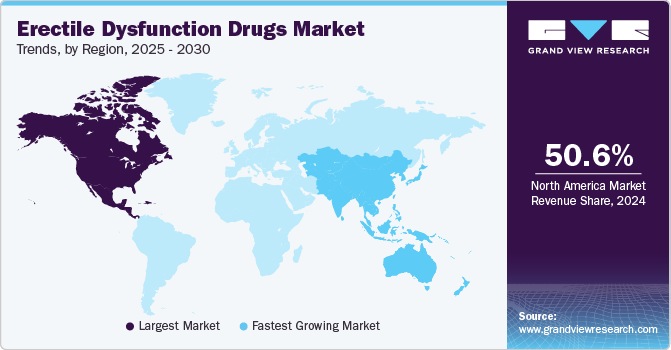
North America dominated the Erectile Dysfunction Drugs market with the largest revenue share of 50.17% in 2025. The market is driven by the high burden of disease, robust healthcare infrastructure, and rapid approval of new products for treatment in the region. Furthermore, advances in medical technology have led to the development of more effective and convenient treatment options for ED. This has encouraged more individuals to seek treatment and has expanded the market for ED drugs.
 To learn more about this report, Download Free Sample Report
 U.S. Erectile Dysfunction Drugs Market Trends
The Erectile Dysfunction Drugs market in the U.S. held the largest share in the North America region in 2025, fueled by the high burden of disease, robust healthcare infrastructure, and rapid approval of new products for treatment in the region. Sedentary lifestyles, stress, unhealthy dietary habits, and other lifestyle factors contribute to the prevalence of ED. Furthermore, advances in medical technology have led to the development of more effective and convenient treatment options for ED. This has encouraged more individuals to seek treatment and has expanded the market for ED drugs. Moreover, the increasing prevalence of ED and the growing demand for personalized nutrition contribute to market growth.
Europe Erectile Dysfunction Drugs Market Trends
The erectile dysfunction drugs market in Europe is anticipated to experience significant growth over the forecast period. The increasing incidence of ED in Europe due to factors like aging populations, lifestyle changes, and chronic diseases is a significant driver for market growth. Moreover, factors such as established healthcare infrastructure, increasing preference for personalized medication, and increased investments in pharmaceutical R&D are driving market growth.
The erectile dysfunction drugs market in the UK is likely to show significant growth over the forecast period owing to various factors, such as the high prevalence of Erectile Dysfunction (ED), increasing awareness about available treatment options, technological advancements in drug development, and the presence of key pharmaceutical companies specializing in these medications. One of the primary drivers of the market in the U.S. is the rising prevalence of ED among men. Factors such as sedentary lifestyles, stress, the aging population, and chronic conditions like diabetes & heart disease contribute to the increasing incidence of ED.
The erectile dysfunction drugs market in Germany is anticipated to experience significant growth over the forecast period. The market in Germany is a significant part of the global market. Germany, being one of the largest economies in Europe, has a well-established healthcare system and a high level of awareness regarding health issues, including ED. The market for ED drugs in Germany is driven by factors such as an aging population, the increasing prevalence of lifestyle diseases, and the growing adoption of sedentary lifestyles.
Asia Pacific Erectile Dysfunction Drugs Market Trends
The erectile dysfunction drugs market in Asia Pacific is anticipated to experience rapid growth over the forecast period due to the increasing prevalence of ED in Asian countries due to various factors such as aging populations, changing lifestyles, and the presence of comorbid conditions like diabetes & hypertension, which is fueling the demand for ED medications. Moreover, the rapidly increasing geriatric population in countries like China and Japan is expected to fuel market growth.
The erectile dysfunction drugs market in China is anticipated to grow at a lucrative growth rate over the forecast period. The demand for erectile dysfunction drugs in China is increasing due to factors such as an aging population, lifestyle changes, and chronic health conditions. Continuous innovation in the pharmaceutical industry, including the development of new and more effective ED drugs, contributes to the expansion of the market in China. Furthermore, in China, the regulation of pharmaceuticals, including drugs for ED, falls under the oversight of the China Food and Drug Administration (CFDA). The CFDA has recently been restructured into the National Medical Products Administration (NMPA), which is responsible for ensuring the safety, effectiveness, and quality of pharmaceutical products in China.
Latin America Erectile Dysfunction Drugs Market Trends
The erectile dysfunction drugs market in Latin America is anticipated to experience significant progress over the forecast period. As disposable incomes rise across Latin America, individuals are more willing to spend on healthcare services, including treatments for conditions like erectile dysfunction. Furthermore, the aging population in many Latin American countries is a significant driver of market growth, as age is a common risk factor for erectile dysfunction.
Middle East and Africa Erectile Dysfunction Drugs Market Trends
The erectile dysfunction drugs market in MEA is anticipated to experience steady growth over the forecast period. Conditions like diabetes, cardiovascular diseases, obesity, and hypertension are on the rise in the Middle East and Africa, all of which are risk factors for ED. Diabetes is recognized as a silent killer in the African continent. Furthermore, the launch and approval of new drug formulations in the region impacts market growth. For instance, in August 2023, Labatec Pharma obtained regulatory approval to distribute Futura Medical's gel-based topical medicine in Saudi Arabia.
The erectile dysfunction drugs market in Saudi Arabia is driven by instances such as the Saudi Arabian Monetary Agency (SAMA) reports that the number of people aged 60 years and more is projected to grow to 10 million by the end of 2050, contributing 25% to the total population, leading to a rise in healthcare expenditure. Furthermore, the advancement of healthcare infrastructure in Saudi Arabia has enhanced accessibility to medical care and treatment for erectile dysfunction.
Key Erectile Dysfunction Drugs Company Insights
The competitive scenario in the market for erectile dysfunction drugs is high, with key players holding significant positions. The market is notably fragmented, featuring numerous large and small companies. Key strategies employed by these market participants include the adoption of innovative diagnostic methods, partnerships, mergers, and geographical expansion. For example, in February 2024, Petros Pharmaceuticals and 23andMe company partnered with a major AI software provider to integrate advanced technology into its Self-Selection Study for STENDRA (avanafil) OTC approval. The AI-driven tool aimed to improve screening accuracy, ensure safe access to medication under FDA & ACNU guidelines, and enhance Petros' pathway toward OTC status.
Key Erectile Dysfunction Drugs Companies:
The following key companies have been profiled for this study on the erectile dysfunction drugs market.
-
Bayer AG
-
Lilly
-
GlaxoSmithKline PLC
-
Petros Pharmaceuticals, Inc.
-
Pfizer Inc.
-
Teva Pharmaceutical
-
Industries Ltd
-
Lupin Limited
-
Futura Medical
-
Cure Pharmaceutical
-
23andMe
-
Hims & Hers Health, Inc.
-
RO
-
BlueChew
-
GoodRx, Inc.
Competitive Benchmarking
Operating Strategies
Competitive Edge
Weaknesses
Large Integrated Pharmaceutical Companies (Pfizer, Inc.; Eli Lilly and Company; Bayer AG; GlaxoSmithKline plc; Sanofi S.A.; Johnson & Johnson)
- Pursue lifecycle management strategies through product line extensions, new dosage formulations, and combination therapy developments.
- Invest in brand reinforcement, direct-to-consumer marketing, and physician engagement programs to sustain market leadership.
- Expand global presence through strategic licensing, distribution agreements, and regulatory approvals across emerging markets.
- Extensive global commercial infrastructure, strong brand equity built through decades of market presence, established relationships with urology and primary care physician networks, and robust manufacturing capabilities.
- Financial resources enable sustained investment in clinical research, brand protection, and market development across multiple geographies.
- Significant exposure to generic competition following patent expiration, which has materially eroded revenues from flagship branded products such as Viagra and Cialis.
- Pricing pressures from reimbursement authorities, increasing generic substitution rates, and heightened regulatory scrutiny across major markets represent ongoing challenges to long-term revenue sustainability.
Specialty and Emerging Pharmaceutical Companies (Vivus, Inc.; Dong-A Pharmaceutical Co., Ltd.; Metuchen Pharmaceuticals LLC; Auxilium Pharmaceuticals, Inc.)
- Focus on niche differentiation through novel pharmacological mechanisms, unique drug delivery platforms, and next-generation PDE5 inhibitors or non-PDE5 therapeutic approaches.
- Pursue strategic partnerships, co-promotion agreements, and licensing arrangements to expand geographic reach and commercial scale.
- Target underserved patient populations, including those with comorbidities or treatment-resistant erectile dysfunction.
- Greater organizational agility enabling faster adaptation to evolving clinical evidence and regulatory landscapes.
- Specialized expertise in sexual medicine and men's health allows for targeted clinical development and market positioning.
- Ability to differentiate through formulation innovation, faster-onset profiles, and patient-centric delivery formats.
- More limited financial resources, smaller commercial infrastructure, and narrower geographic reach compared to large multinational pharmaceutical companies.
- Greater dependence on a concentrated product portfolio, increasing vulnerability to competitive and regulatory risks.
- Reliance on partnerships for global distribution and manufacturing scale-up may constrain long-term commercial growth.
Recent Developments
-
In January 2024, Hims & Hers' partnered with Hartford HealthCare (HHC) to enhance access to in-person healthcare services. The collaboration allowed seamless referrals from Hims & Hers' platform to HHC's extensive network for complex medical needs. This expanded Hims & Hers' reach across 14 states and Washington, D.C., supporting personalized treatments.
-
In May 2024, Petros Pharmaceuticals and 23andMe partnered with Lemonaid Health, a subsidiary of 23andMe, to offer all strengths of STENDRA (avanafil) for ED on Lemonaid's telehealth platform. This collaboration aimed to enhance access to STENDRA nationwide, increase brand awareness, and support Petros' goal to switch STENDRA to OTC status, pending FDA approval potentially.
-
In May 2023, Hims & Hers' launched Hard Mints, chewable mint-flavored tablets for treating sexual dysfunction, in the U.S. They will be available in the UK starting in June. Leveraging active ingredients such as Viagra, Cialis, & Levitra, they aim to offer a personalized and discreet solution backed by positive customer feedback and facilitated through their telehealth platform.
Erectile Dysfunction Drugs Market Report Scope
Report Attribute
Details
Market size value in 2025
USD 3.2 billion
Estimated Market size in 2026
USD 3.4 billion
Projected market size by 2033
USD 6.6 billion
Growth rate
CAGR of 9.8% from 2026 to 2033
Historical data
2021 - 2024
Forecast period
2026 - 2033
Quantitative units
Revenue in USD million/billion and CAGR from 2026 to 2033
Report coverage
Revenue forecast, company ranking, competitive landscape, growth factors, and trends
Segments covered
Product, Mode of Administration, Region
Regional scope
North America; Europe; Asia Pacific; Latin America; MEA
Country scope
U.S.; Canada; Mexico; Germany; UK; France; Italy; Spain; Norway; Denmark; Sweden; Russia; Iceland; Finland; China; Japan; India; South Korea; Australia; Thailand; Singapore; Brazil; Argentina; Saudi Arabia; South Africa; UAE; Kuwait; Israel
Key companies profiled
Pfizer, Inc.; Eli Lilly and Company; Bayer AG; GlaxoSmithKline plc; Vivus, Inc.; Dong-A Pharmaceutical Co., Ltd.; Metuchen Pharmaceuticals LLC; Sanofi S.A.; Johnson & Johnson; Auxilium Pharmaceuticals, Inc.
Customization scope
Free report customization (equivalent up to 8 analysts' working days) with purchase. Addition or alteration to country, regional & segment scope.
Pricing and purchase options
Avail customized purchase options to meet your exact research needs. Explore purchase options
Global Erectile Dysfunction Drugs Market Report Segmentation
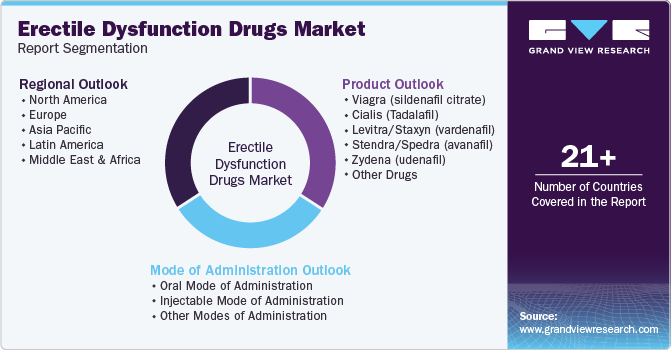
This report forecasts revenue growth at country levels and provides an analysis on the latest industry trends and opportunities in each of the sub-segments from 2021 to 2033. For this study, Grand View Research has segmented the global erectile dysfunction drugs market report based on product, mode of administration, and region.
 To learn more about this report, Download Free Sample Report
 -
Product Outlook (Revenue, USD Million, 2021 - 2033)
-
Viagra (sildenafil citrate)
-
Cialis (Tadalafil)
-
Levitra/Staxyn (vardenafil)
-
Stendra/Spedra (avanafil)
-
Zydena (udenafil)
-
Other Drugs
-
-
Route of Administration Outlook (Revenue, USD Million, 2021 - 2033)
-
Oral Mode of Administration
-
Injectable Mode of Administration
-
Other Modes of Administration
-
-
Regional Outlook (Revenue, USD Million, 2021 - 2033)
-
North America
-
U.S.
-
Canada
-
Mexico
-
-
Europe
-
Germany
-
UK
-
France
-
Italy
-
Spain
-
Denmark
-
Sweden
-
Norway
-
-
Asia Pacific
-
China
-
Japan
-
India
-
South Korea
-
Australia
-
Thailand
-
-
Latin America
-
Brazil
-
Argentina
-
-
MEA
-
South Africa
-
Saudi Arabia
-
UAE
-
Kuwait
-
-
Research Methodology
(a) Segment Definition
Segment – Product
Revenue capture definition
Viagra (sildenafil citrate)
Revenue generated from Viagra (sildenafil citrate), a PDE5 inhibitor developed by Pfizer and indicated for the treatment of erectile dysfunction in adult males. This segment includes all branded Viagra sales across approved indications as well as any revenues associated with physician-directed sildenafil prescriptions explicitly attributed to the Viagra brand. Revenue from generic sildenafil formulations marketed under non-branded labels is excluded from this segment and classified within the Others category.
Cialis (tadalafil)
Revenue generated from Cialis (tadalafil), a long-acting PDE5 inhibitor developed by Eli Lilly and Company and indicated for the treatment of erectile dysfunction, including both on-demand and once-daily dosing regimens. This segment captures all commercial sales of branded Cialis across approved erectile dysfunction indications and geographies. Revenue associated with generic tadalafil formulations not marketed under the Cialis brand name is classified within the Others segment.
Levitra/Staxyn (vardenafil)
Revenue generated from Levitra and Staxyn, both vardenafil-based PDE5 inhibitors developed by Bayer AG and GlaxoSmithKline for the treatment of erectile dysfunction. Levitra is available as a conventional film-coated tablet, while Staxyn is formulated as an orally disintegrating tablet. All sales associated with branded vardenafil products under the Levitra and Staxyn trade names are captured within this segment, irrespective of dosage strength or market geography.
Stendra/Spedra (avanafil)
Revenue generated from Stendra (marketed as Spedra in Europe), an avanafil-based PDE5 inhibitor developed by Vivus, Inc. and indicated for the treatment of erectile dysfunction. Avanafil is distinguished by its faster onset of action and improved selectivity profile relative to earlier-generation PDE5 inhibitors. This segment encompasses all commercial revenues from branded avanafil products marketed under the Stendra and Spedra trade names across all approved geographies and dosage strengths.
Zydena (udenafil)
Revenue generated from Zydena (udenafil), a PDE5 inhibitor developed by Dong-A Pharmaceutical Co., Ltd. and approved for the treatment of erectile dysfunction, primarily in South Korea and select Asian markets. Udenafil offers a distinct pharmacokinetic profile with an intermediate duration of action compared to other PDE5 inhibitors. All commercial revenues attributable to the Zydena brand and udenafil-based products are classified exclusively within this segment.
Other Drugs
Revenue generated from all erectile dysfunction pharmacological treatments not individually classified under Viagra, Cialis, Levitra/Staxyn, Stendra/Spedra, or Zydena. This segment includes generic sildenafil, tadalafil, vardenafil, and avanafil formulations marketed under non-branded labels, topical alprostadil preparations, testosterone replacement therapies indicated for erectile dysfunction, combination drug products, and any novel pharmaceutical agents receiving regulatory approval during the forecast period. Revenue is allocated to this segment only when it does not belong to the individually reported branded product categories.
Segment – Product
Revenue capture definition
Oral Mode of Administration
Revenue generated from erectile dysfunction drug products formulated for oral delivery, including conventional film-coated tablets, orally disintegrating tablets, and oral liquid formulations. This segment encompasses all PDE5 inhibitors and other pharmacological agents administered via the oral route, including branded and generic formulations across all dosage strengths. Oral administration represents the predominant route of delivery for erectile dysfunction therapy, and revenue from all orally administered products is classified exclusively within this segment.
Injectable Mode of Administration
Revenue generated from erectile dysfunction drug products formulated for parenteral administration, including intracavernosal injections and intraurethral suppositories. This segment captures revenues from alprostadil (prostaglandin E1) injections, papaverine, phentolamine, and vasoactive combination injectable therapies used in the management of erectile dysfunction, particularly in patients who are non-responsive to or contraindicated for oral PDE5 inhibitor therapy. Revenue is attributed to this segment when the product is specifically formulated and indicated for injectable or intraurethral delivery.
Other Modes of Administration
Revenue generated from erectile dysfunction drug products delivered via routes other than oral or injectable administration. This segment includes topical formulations such as alprostadil topical cream applied directly to penile tissue, transdermal drug delivery systems, intranasal formulations, and any novel delivery platforms or combination device-drug systems that do not fall within the oral or injectable categories. Revenue is assigned to this segment only when the product's primary approved route of administration is neither oral nor injectable.
(b) Estimation Model
The study incorporated a combination of primary and secondary research methodologies to evaluate the global erectile dysfunction drugs market. Secondary research involved the review of company annual reports, investor presentations, regulatory filings, clinical trial databases, scientific publications, industry journals, and publicly available information from pharmaceutical companies and healthcare agencies. Primary research included interviews and discussions with industry stakeholders, including pharmaceutical manufacturers, urologists, sexual health specialists, business development executives, and key opinion leaders, to validate market trends, therapy adoption patterns, competitive developments, and future growth opportunities.
Market estimates were developed using a combination of top-down and bottom-up approaches. Revenue analysis was conducted at the product, mode of administration, and regional levels. The competitive landscape assessment evaluated product portfolios, pipeline assets, strategic collaborations, acquisitions, regulatory approvals, and commercial strategies. All findings were triangulated through multiple data sources and validated against real-world industry developments to ensure accuracy, consistency, and reliability of the market forecasts and strategic insights.
Delivered Customizations
This report has been delivered with the following In-depth customizations
Client Request
Customization Delivered
Value Adds
ED Drugs Competitive Landscape & Pipeline Assessment
Conducted a targeted assessment of the global erectile dysfunction drugs landscape, evaluating approved products, late-stage pipeline assets, pharmacological mechanisms, drug delivery innovations, and competitive positioning. The study analyzed key players including Pfizer, Eli Lilly and Company, Bayer AG, GlaxoSmithKline, Vivus, Metuchen Pharmaceuticals, Dong-A Pharmaceutical, and emerging specialty companies, along with new therapeutic targets and innovation trends across PDE5 inhibitor and non-PDE5 drug development.
Helped the client identify high-potential therapeutic opportunities, evaluate competitive threats, benchmark product differentiation strategies across branded and generic segments, and prioritize licensing, acquisition, and partnership opportunities within the rapidly evolving erectile dysfunction treatment market.
ED Drug Technology & Formulation Benchmarking Study
Delivered a comprehensive benchmarking analysis of erectile dysfunction drug technologies, focusing on pharmacological mechanisms, drug delivery platforms, dosage formulation approaches, onset-of-action profiles, and clinical performance. The assessment compared established oral PDE5 inhibitor platforms with next-generation formulations, evaluating patient compliance, tolerability, intellectual property positioning, and formulation differentiation across leading erectile dysfunction drug developers.
Enabled the client to assess technology competitiveness, identify formulation platform gaps, benchmark innovation strategies across oral, injectable, and topical delivery modalities, and prioritize investments in next-generation erectile dysfunction drug development programs and proprietary platform technologies.
ED Drugs Market Access & Distribution Feasibility Assessment
Conducted a strategic assessment of the erectile dysfunction drugs commercial ecosystem, evaluating prescription access channels, pharmacy distribution networks, telehealth prescription platforms, reimbursement frameworks, and direct-to-consumer access pathways. The study analyzed branded versus generic substitution dynamics, over-the-counter reclassification opportunities, contract manufacturing capabilities, and regional market access strategies supporting commercial-scale erectile dysfunction drug distribution.
Supported strategic commercial planning by identifying qualified distribution partners, mitigating generic substitution risks, evaluating telehealth channel strategies, and strengthening long-term erectile dysfunction drug market access, reimbursement positioning, and commercialization readiness across global markets.
Frequently Asked Questions About This Report
Key factors driving the erectile dysfunction drugs market growth include increasing disease burden of ED, increasing product approval & launches, and supportive reimbursement policies.
Some key players operating in the erectile dysfunction drugs market include Pfizer, Inc.; Eli Lilly and Company; Teva Pharmaceutical Industries Ltd; Sanofi; Sun Pharmaceutical Industries Ltd; Bayer AG; Petros Pharmaceuticals, Inc., VIVUS, Inc., Auxilium Pharmaceuticals, Inc., and Adamed among others
North America dominated the Erectile Dysfunction Drugs market with the largest revenue share of 50.17% in 2025..
Asia Pacific is the fastest-growing region over the forecast period.
Based on mode of administration, the Oral Mode of Administration segment led the market with the largest revenue share of 83.92% in 2025.
The global Erectile Dysfunction Drugs market size was estimated at USD 3.2 billion in 2025 and is projected to grow from USD 3.4 billion in 2026
The global erectile dysfunction drugs market is expected to witness a compound annual growth rate of 9.8% from 2026 to 2033 to reach USD 6.6 billion in 2030.
Based on product, the Viagra (sildenafil citrate) segment led the market with the largest revenue share of 57.18% in 2025.
About the Author(s)
Pharmaceuticals Research Team
Healthcare · PharmaceuticalsThis report was authored by the pharmaceuticals research team at Grand View Research - comprising two research analysts, one senior research analyst, and one industry expert - with specialized expertise in the pharmaceuticals segment of the healthcare industry. All findings are based on proprietary healthcare databases, executive interviews, and regulatory analysis, subject to internal peer review prior to publication.
Last Updated:
Speak to Analyst

Customize this report to your needs - add regions, segments, or data points, with 20% free customization.
Or view our licence options:


ISO 9001:2015 & 27001:2022 Certified
We are GDPR and CCPA compliant! Your transaction & personal information is safe and secure. For more details, please read our privacy policy.


