
- Home
- »
- Medical Devices
- »
-
Europe Surgical Instruments & Consumables Market Report, 2033GVR Report cover

Europe Surgical Instruments And Consumables Market (2026 - 2033)
Size, Share & Trends Analysis Report By Product (Surgical Forceps, Scissors, Clamps), By Usability (Disposable, Reusable), By Application, By End Use, By Country, And Segment Forecasts
Market Size, 2025
$1.7BMarket Estimate, 2026
$1.8BMarket Forecast, 2033
$2.2BCAGR, 2026–2033
3.2%Europe Surgical Instruments and Consumables Market Summary
The Europe surgical instruments and consumables market size was valued at USD 1.7 billion in 2025 and is projected to grow from USD 1.8 billion in 2026 to USD 2.2 billion by 2033, at a CAGR of 3.2% from 2026 to 2033. Germany market held the largest share of 32.5% of the global market in 2025. The market is experiencing steady growth due to rising volumes of surgical procedures, an aging population, the increasing prevalence of chronic diseases requiring surgical intervention, and the growing demand for minimally invasive and advanced surgical techniques.
Key Market Trends & Insights
- By product: The surgical forceps segment held the highest market share of 46.8% in 2025.
- By usability: The disposable segment held the highest market share of 95.9% in 2025.
- By application: The gynecological surgery segment held a leading market share of 18.9% in 2025.
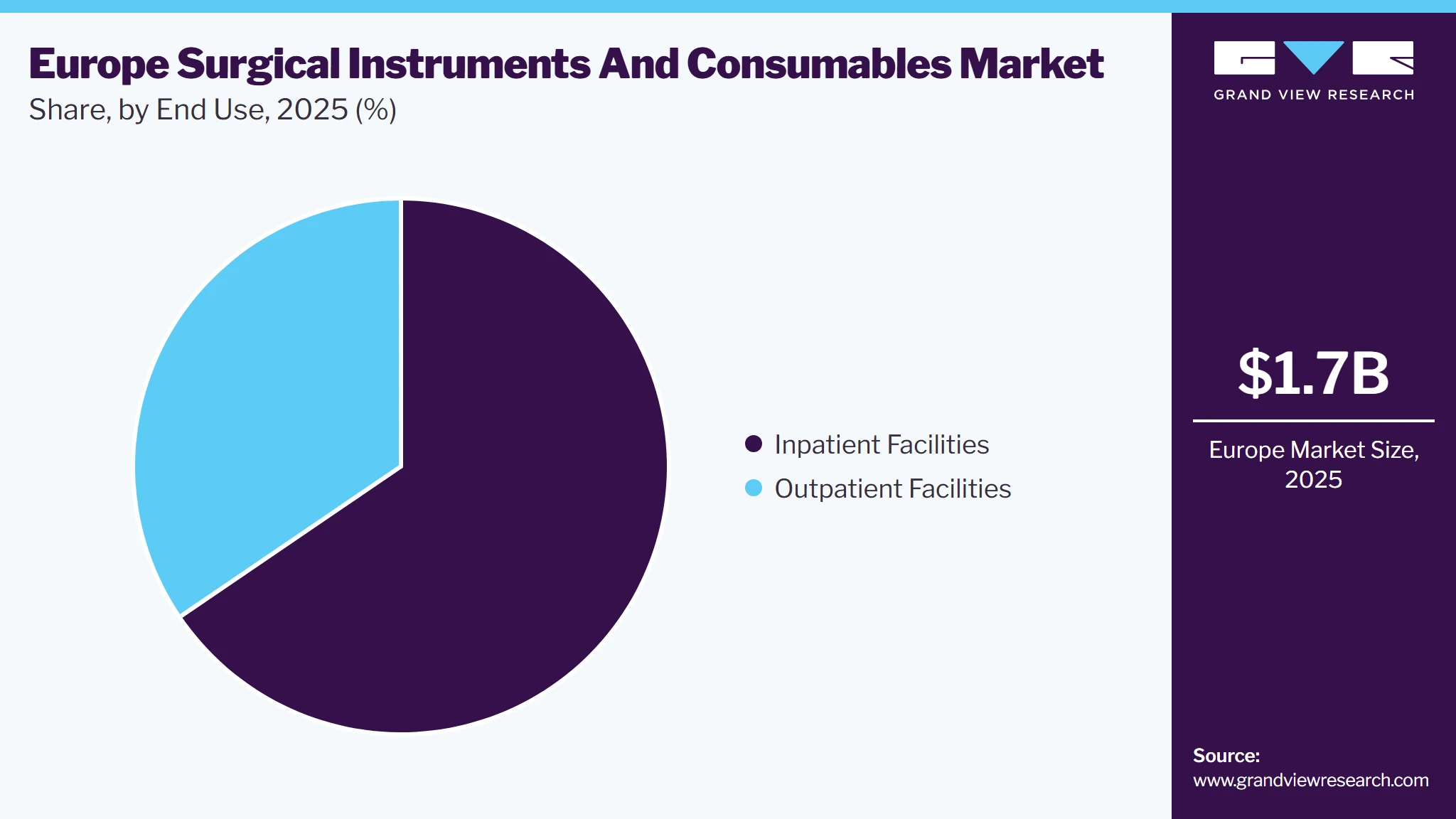
- By end use: The inpatient facilities segment held a leading market share of 65.5% in 2025.
Regional Highlights
- Largest country market: Germany (32.5% revenue share, 2025)
- Fastest-growing country market: France (highest CAGR, 2026-2033)
Market Size & Forecast
- Market size in 2025: USD 1.7 Billion
- Estimated market size in 2026: USD 1.8 Billion
- Projected market size by 2033: USD 2.2 Billion
- CAGR (2026-2033): 3.2%
Prism AI by Grand View Research Free to tryAsk a question about the europe surgical instruments and consumables marketTry asking✓Every figure cited from GVR research Prefer the report? Download free sample →
The increasing adoption of laparoscopic, robotic-assisted, and other minimally invasive procedures is driving the demand for specialized surgical instruments and consumables. Moreover, the expansion and modernization of hospitals, increasing investments in surgical infrastructure, and rising healthcare expenditure across European countries are supporting market growth. Continuous product innovation, including the development of advanced energy-based instruments, disposable surgical instruments, surgical staplers, and specialized consumables, is further contributing to market expansion. Further, the growing emphasis on infection prevention, operating-room efficiency, and the use of single-use and sterile surgical products is expected to create additional opportunities throughout the forecast period.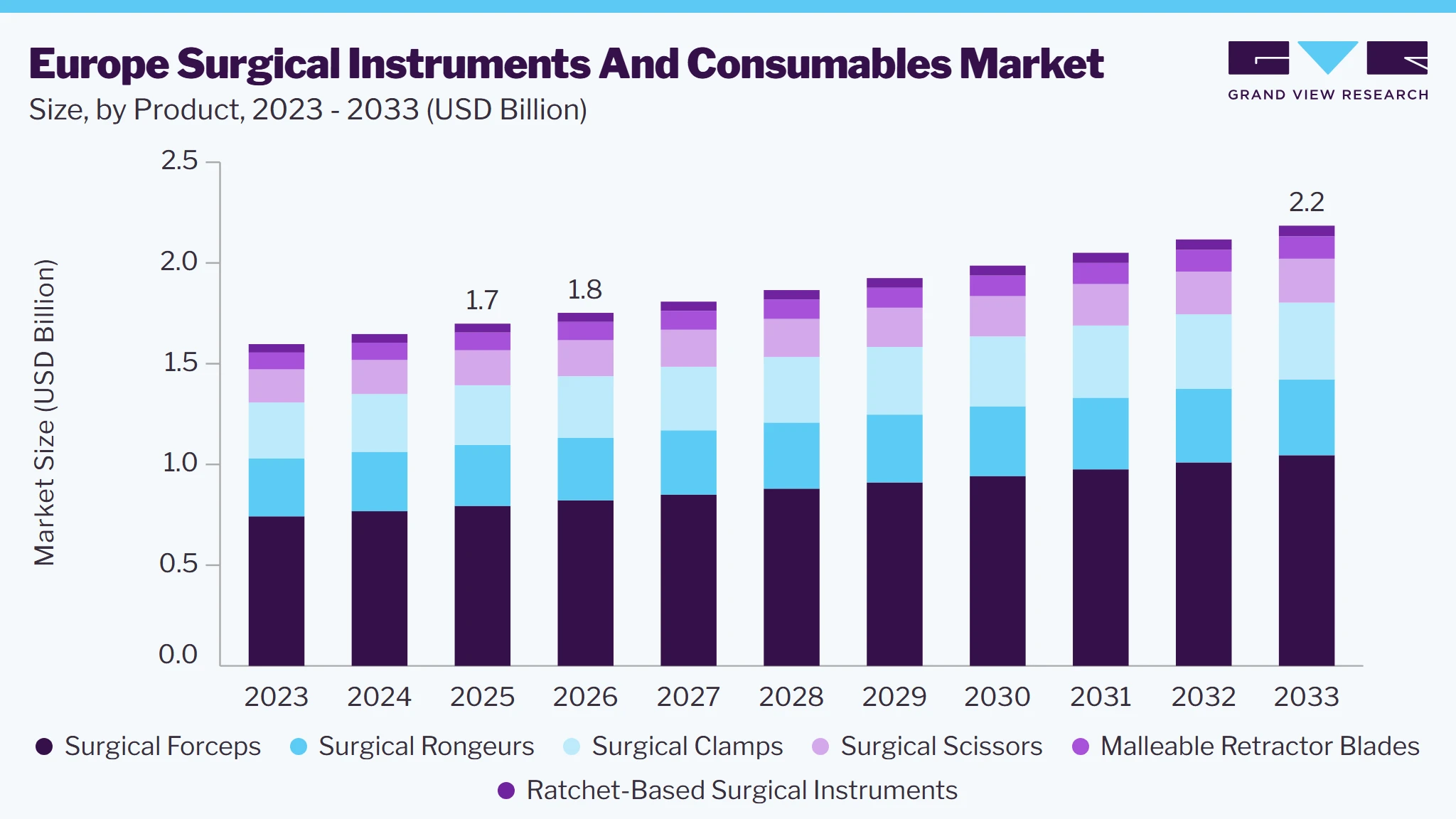 Source: Grand View Research, IR Documents, Primary Interviews, Paid DatabasesTo learn more about this report,
 Download Free Sample Report
The demographic profile of the region remains a major structural driver, with people aged 65 years and above accounting for 22.0% of the EU population in 2025, equivalent to approximately 99 million people, increasing the need for orthopedic, cardiovascular, ophthalmic, general, and other age-related surgical interventions.
Approximate Number of Surgical Procedures in 2024, by Country
Country
Number of Procedures (In Million)
UK
36.07
Germany
54.78
France
41.62
Italy
19.89
Spain
31.49
Source: CDC
Growth is further supported by the increasing adoption of minimally invasive, laparoscopic, robotic-assisted, and same-day surgical procedures, which are driving demand for specialized instruments, energy devices, stapling systems, and other disposable consumables. The shift toward ambulatory care is particularly relevant. For instance, according to data by the Organization for Economic Co-operation and Development (OECD), 90% or more of cataract surgeries are performed as day cases, to 94% in 2023-24, illustrating the broader transition toward shorter hospital stays and more efficient surgical pathways. At the same time, European healthcare systems continue to face elective surgery backlogs. For instance, in 2024, more than 70% of patients waited over three months for cataract surgery in Finland and Norway, creating pressure to improve operating-room throughput and surgical capacity.
Infection-prevention requirements, operating-room efficiency, and the growing use of single-use and sterile products are also influencing product demand. WHO/Europe identifies surgical-site infections as a substantial patient-safety and cost burden and reported 19,680 surgical-site infections among 1.26 million monitored surgical procedures across participating European countries. In parallel, regulatory requirements under the EU Medical Device Regulation (MDR) continue to shape product development, certification, and market access, with the European Commission strengthening oversight of notified bodies and advancing the implementation of EUDAMED. The Notified Bodies & Certificates module became mandatory from 28 May 2026. These factors are expected to favor manufacturers offering high-quality, sterile, cost-efficient, and procedure-specific instruments and consumables, while continued investment in hospital infrastructure and surgical capacity is likely to sustain market expansion through 2033.
Market Dynamics
The market is characterized by the increasing demand for reliable, procedure-specific, and cost-efficient products across hospitals, ambulatory surgical centers, specialty clinics, and other healthcare facilities. The market encompasses a broad range of products, including general surgical instruments, electrosurgical devices, laparoscopic instruments, surgical staplers, sutures, wound closure products, surgical drapes, gowns, gloves, and other operating-room consumables. The increasing complexity of surgical procedures is driving demand, a growing preference for technologically advanced instruments, an emphasis on operating-room efficiency, and the need to reduce procedure-related complications. In addition, hospitals are increasingly evaluating products based on clinical performance, durability, sterilization requirements, total cost of ownership, and compatibility with existing surgical systems. The growing presence of specialized surgical centers and increasing focus on standardized operating-room protocols are also shaping purchasing patterns across European healthcare systems.
The growing focus on improving operating room efficiency is a key market driver. Hospitals and surgical centers are seeking instruments and consumables that can simplify surgical workflows, reduce procedure time, minimize instrument changes, and improve consistency across surgical teams. Advanced energy devices, ergonomic instruments, integrated surgical systems, and procedure-specific instrument sets are gaining attention for their ability to support more efficient tissue dissection, cutting, coagulation, and closure. The use of standardized instrument trays and customized procedure-specific kits is also becoming increasingly important as healthcare providers seek to simplify preparation and inventory management. In addition, manufacturers are developing instruments with improved ergonomics, tactile feedback, precision, and handling characteristics to reduce surgeon fatigue and facilitate complex procedures. These developments are encouraging healthcare facilities to upgrade conventional instruments and adopt higher-value products that can improve surgical workflow and resource utilization.
Pricing pressure and stringent healthcare procurement requirements remain significant market restraints. Hospitals, particularly publicly funded healthcare institutions, operate under strict budgetary constraints and frequently use competitive tendering and centralized procurement processes to control expenditure. Although advanced instruments can provide clinical and operational benefits, their higher acquisition costs can limit adoption when healthcare providers prioritize immediate purchasing prices over longer-term efficiency gains. The availability of lower-cost products from regional and international manufacturers further intensifies competition and pressures established manufacturers to maintain competitive pricing. For consumables such as sutures, surgical drapes, gowns, gloves, and disposable instruments, recurring purchasing requirements make per-unit pricing particularly important for hospitals. Consequently, manufacturers increasingly need to demonstrate measurable clinical, operational, and economic benefits to justify premium pricing and secure long-term procurement contracts.
Market Concentration & Characteristics
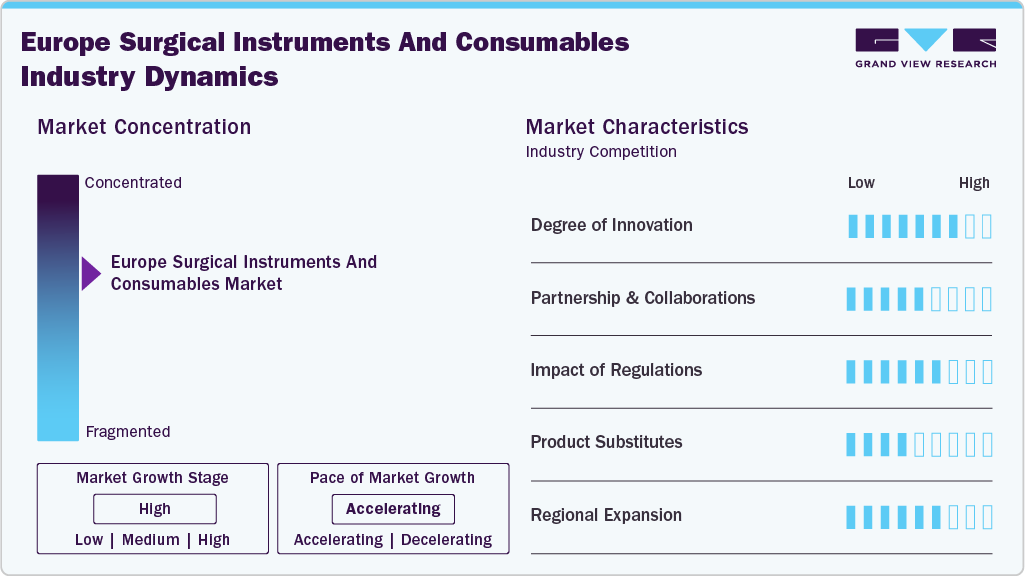
The Europe surgical instruments and consumables industry is relatively consolidated across several major product categories, with prominent companies such as Johnson & Johnson MedTech (Ethicon), Medtronic, Stryker, B. Braun, Becton Dickinson, Olympus, KARL STORZ, Smith+Nephew, CONMED, and Zimmer Biomet maintaining strong positions across surgical instruments, energy devices, laparoscopic products, sutures, stapling systems, wound-closure products, and other operating-room consumables. Competition is increasingly shifting beyond product availability toward clinical performance, instrument ergonomics, procedural efficiency, sterilization compatibility, and integration with broader surgical platforms. Manufacturers are also expanding procedure-specific portfolios and strengthening relationships with hospitals, surgeons, distributors, and healthcare procurement organizations. Increasing demand for specialized products in minimally invasive, orthopedic, cardiovascular, gynecological, and general surgery is encouraging companies to broaden their product offerings and strengthen their presence across European healthcare systems.
The European surgical instruments and consumables industry is experiencing continuous innovation as manufacturers seek to improve surgical precision, procedural efficiency, ergonomics, and patient safety. Innovation is increasingly centered on advanced energy-based instruments, articulating and powered laparoscopic instruments, next-generation stapling systems, atraumatic instruments, visualization technologies, and disposable or single-use alternatives. Integration with robotic and digitally enabled surgical platforms is also becoming an important area of development, with manufacturers increasingly designing instruments that can operate within connected surgical ecosystems. In addition, improvements in coatings, materials, handle designs, and instrument geometry are supporting greater durability, precision, and ease of use. The growing use of data and digital technologies in operating rooms is also encouraging manufacturers to develop products that integrate with surgical visualization, navigation, and workflow management systems.
 To learn more about this report, Download Free Sample Report
Partnerships and collaborations are playing an increasingly important role in the European surgical instruments market by enabling manufacturers to combine complementary technologies, expand distribution capabilities, and accelerate the development of procedure-specific solutions. Collaborations among surgical device manufacturers, hospitals, research institutions, technology companies, and robotic surgery developers are increasingly focused on integrating instruments with advanced visualization, navigation, imaging, and robotic platforms. Such collaborations also support surgeon training and clinical evaluation, helping manufacturers generate real-world evidence and improve product adoption. In Europe, partnerships are particularly relevant for companies entering new countries or expanding specialized portfolios because local distributors and clinical partners can provide access to hospital procurement networks and surgeon communities.
Regulatory requirements significantly affect the development, commercialization, and lifecycle management of surgical instruments and consumables in Europe. The EU Medical Device Regulation (MDR) has increased the requirements for clinical evidence, technical documentation, post-market surveillance, traceability, quality management, and conformity assessment. A major recent development occurred on 28 May 2026, when the first four EUDAMED modules, including Actor Registration, UDI/Device Registration, Notified Bodies & Certificates, and Market Surveillance, became mandatory. The UDI framework is particularly relevant to surgical instruments and consumables because it strengthens device identification and traceability throughout the supply chain. The regulatory environment can increase development and compliance costs, particularly for smaller manufacturers, while simultaneously creating opportunities for established companies with mature regulatory, quality, and post-market surveillance capabilities.
Substitution within the market is primarily driven by changes in surgical techniques and the transition between reusable and disposable technologies. Conventional reusable instruments can be replaced with single-use or limited-use instruments when hospitals prioritize convenience, standardized performance, and reduced reprocessing requirements. Similarly, conventional manual instruments may be replaced by powered or energy-based devices that combine cutting, coagulation, sealing, or tissue dissection functions. In some procedures, open surgical instruments can be replaced by laparoscopic, endoscopic, robotic, or image-guided technologies that enable alternative approaches to tissue access and manipulation. For wound closure, traditional sutures may be replaced with surgical staplers, tissue adhesives, and advanced closure systems, depending on the procedure and clinical preference. Consequently, substitution is increasingly determined by clinical outcomes, workflow requirements, infection-control considerations, and total procedure economics rather than by the initial product price alone.
Regional expansion in the market is being driven by manufacturers seeking to increase penetration in Central and Eastern Europe while strengthening established positions in Western European markets. Companies are using direct sales organizations, local distributors, strategic partnerships, and specialized clinical training programs to expand access to hospitals and surgical centers. Markets such as Germany, France, the UK, Italy, and Spain remain important commercial markets because of their established healthcare infrastructure, while countries in Central and Eastern Europe provide opportunities associated with healthcare modernization and increasing adoption of advanced surgical technologies. Expansion is also increasingly focused on specialized surgical segments rather than broad geographic coverage alone, with manufacturers targeting high-growth applications such as minimally invasive surgery, orthopedics, cardiovascular procedures, and robotic-assisted surgery.
Analyst Perspective
The European surgical instruments market is steadily evolving, driven by high surgical volumes, an aging population, and growing demand for minimally invasive procedures. Rising investments in hospitals and ambulatory surgical centers are further supporting market growth. Healthcare providers are increasingly adopting advanced energy devices, surgical staplers, disposable instruments, laparoscopic and robotic accessories, and wound-closure products. The growing preference for minimally invasive and day-care procedures is also boosting demand for specialized and single-use surgical products.
Product Insights
The surgical forceps segment dominated the market in 2025, accounting for 46.8% of overall revenue, and is expected to witness the fastest CAGR of 3.5% over the forecast period. Demand for forceps is driven by their extensive use across general surgery, orthopedics, cardiovascular procedures, gynecology, urology, ENT, and minimally invasive surgery, where they are required for tissue handling, grasping, dissection, and hemostasis. The broad product range offered by European suppliers also supports demand across segments; for example, B. Braun’s Aesculap portfolio includes anatomical, surgical, atraumatic, dissecting, tissue, dressing, hemostatic, and other specialized forceps, demonstrating their wide application across surgical specialties. In addition, the increasing use of minimally invasive procedures is creating demand for specialized forceps designed for smaller access points, including reusable and single-use laparoscopic grasping, dissecting, and biopsy forceps.
The surgical clamps segment is expected to witness a significant CAGR over the forecast period. The growth is attributed to routine use for vessel occlusion, tissue handling, and hemostasis across general, gynecological, cardiovascular, and minimally invasive procedures. Demand is also being driven by the shift toward laparoscopic and robotic surgery, in which surgeons increasingly require specialized clamping and vessel-sealing instruments that provide controlled tissue handling, reduce bleeding, and improve procedural efficiency. For example, in July 2025, Medtronic received CE Mark approval for its LigaSure™ RAS vessel-sealing technology for use with the Hugo™ robotic-assisted surgery system in Europe, covering gynecologic, general, and urologic procedures; the instrument is designed to seal and cut vessels, thick tissue, and lymphatics up to 7 mm. The European Commission also specifically identifies clamps as reusable surgical instruments under its medical-device guidance, highlighting their established role within the European reusable-instrument ecosystem.
Usability Insights
The disposable segment dominated the market in 2025, accounted for the largest share of overall revenue, and is expected to witness the fastest CAGR over the forecast period. Demand for disposable surgical instruments is supported by their convenience, ready-to-use format, and ability to reduce the need for cleaning, sterilization, inspection, and instrument turnaround between procedures. This is particularly relevant in high-volume surgical settings, where hospitals aim to streamline operating-room workflows and reduce the workload of processing reusable instruments. The European Commission states that single-use devices are intended for single use, while any reprocessing and reuse are subject to specific requirements under the EU Medical Device Regulation and, importantly, national rules; several European countries do not permit reprocessing of single-use devices. In addition, the NHS Supply Chain maintains a dedicated procurement category for single-use instruments and packs, alongside reusable surgical instruments, indicating continued institutional procurement of disposable products in European healthcare systems.
The reusable segment is expected to witness a significant CAGR over the forecast period. The growth is driven by growing efforts by European healthcare providers to reduce surgical waste, control long-term procurement costs, and improve the environmental sustainability of operating rooms. Reusable instruments such as forceps, scissors, and clamps can be used repeatedly after appropriate cleaning, disinfection, inspection, and sterilization, allowing hospitals to spread the acquisition cost over multiple procedures. The European Commission specifically defines reusable devices as products intended to be reused after appropriate cleaning, disinfection, packaging, and, where applicable, validated re-sterilization. Sustainability initiatives are further supporting this shift: NHS Supply Chain highlights reusable surgical instruments as an opportunity to reduce product consumption, potentially lower carbon emissions, and achieve long-term cost savings, while its surgical-instrument framework includes reusable forceps, scissors, and clamps.
Application Insights
The gynecological surgery segment dominated the market and held the largest revenue share in 2025. The growth is supported by the wide range of procedures performed for conditions such as uterine fibroids, endometriosis, ovarian disorders, cervical cancer, and other reproductive-health conditions. Gynecological procedures require a broad portfolio of instruments, including surgical forceps, scissors, clamps, retractors, and specialized laparoscopic and hysteroscopic instruments, creating recurring demand across European hospitals and surgical centers. The European Society for Gynecological Endoscopy (ESGE) continues to support the use of minimally invasive techniques, such as laparoscopy and hysteroscopy, for gynecological procedures, including hysterectomy, myomectomy, and the treatment of endometriosis. For example, ESGE conducted an advanced total laparoscopic hysterectomy program in March 2026, featuring live procedures at hospitals in Portugal and Belgium, demonstrating the continued development and use of laparoscopic gynecological surgery in Europe. In addition, Eurostat reported approximately 1.10 million cesarean sections across the EU in 2023, underscoring the substantial volume of gynecological and obstetric surgical activity requiring surgical instruments and consumables.
The bariatric surgery segment is expected to witness the fastest CAGR over the forecast period, mainly due to the growing burden of obesity across Europe and increasing recognition of metabolic and bariatric surgery as an established treatment option for patients with severe obesity and obesity-related complications. The European Association for the Study of Obesity (EASO) updated its European framework in 2024 and specifically recognizes metabolic/bariatric surgical and endoscopic procedures as part of comprehensive obesity management. The framework recommends considering metabolic/bariatric procedures for individuals with BMI ≥40 kg/m², those with BMI ≥35 kg/m² with obesity-related disease or complications, and selected patients with BMI ≥30 kg/m² and poorly controlled type 2 diabetes despite optimal medical therapy. The increasing use of laparoscopic and minimally invasive approaches in bariatric procedures is also creating demand for specialized graspers, scissors, retractors, stapling and tissue-sealing instruments, while hospitals require a broad range of reusable and disposable instruments for these procedures. As obesity management becomes more structured across European healthcare systems, the expansion of eligibility for surgical treatment and greater focus on long-term management of obesity-related complications are expected to support faster demand growth for bariatric surgical instruments and consumables.
End Use Insights
The inpatient segment held the largest revenue share in 2025. The growth is supported by the continued need for hospital-based care for complex, emergency, and major surgical procedures that require overnight monitoring or longer postoperative care. Inpatient procedures typically require a broader range of instruments, including forceps, scissors, clamps, retractors, and other surgical devices, as well as higher instrument utilization during complex operations. Eurostat reported 68.2 million inpatient hospital discharges in the EU in 2023, compared with 46.9 million hospital day-case discharges, demonstrating the substantial volume of inpatient healthcare activity across Europe. In addition, inpatient care remains important for procedures involving higher clinical risk, multiple surgical teams, longer recovery periods, or patients with significant comorbidities. Although European healthcare systems are increasingly shifting suitable procedures toward day care, the OECD continues to identify inpatient hospital activity as an important component of surgical care, with substantial differences in the use of ambulatory surgery across European countries.
 To learn more about this report, Download Free Sample Report
The outpatient segment is anticipated to grow at a significant CAGR over the forecast period. The growth is driven by the increasing shift toward minimally invasive and same-day surgical procedures across Europe. Improvements in surgical techniques, anesthesia, postoperative monitoring, and instrument design are allowing more procedures to be performed without overnight hospitalization, increasing the need for compact, specialized, and often disposable surgical instruments in ambulatory and outpatient facilities. This trend is already visible in several European countries; for example, the share of cataract procedures performed as day cases increased to 94% in Poland and 96% in Lithuania in 2023, while day-case rates for tonsillectomy increased substantially in countries such as the UK and France. The OECD also reports that minimally invasive procedures such as cataract surgery, tonsillectomy, and increasingly gall-bladder removal are being performed in outpatient or same-day settings, supporting continued demand for surgical instruments suitable for faster procedures and shorter patient stays.
Country Insights
The Europe surgical instruments and consumables market is being shaped by a large and well-developed healthcare system, continued demand for elective and emergency surgeries, an aging population, and increasing adoption of minimally invasive and technologically advanced surgical procedures. The region has a strong base of hospitals, ambulatory surgical centers, specialized surgical facilities, and medical-device manufacturers, supporting consistent demand for surgical instruments, sutures, staplers, electrosurgical devices, trocars, wound-closure products, and other procedure-specific consumables. At the same time, healthcare systems are focusing on improving operating-room productivity and reducing procedure backlogs, which is encouraging investment in efficient surgical technologies and disposable products. Europe's medical-technology sector also remains highly innovative, with more than 15,700 patents filed in 2024, supporting the continued introduction of advanced surgical technologies. These factors collectively drive market growth.
The UK surgical instruments and consumables market is steadily growing, supported by the continued need to address elective surgery backlogs, the expansion of surgical capacity, and the increasing use of dedicated surgical hubs within the NHS. NHS England reported that 18.4 million treatments and operations were delivered in 2025, the highest annual level recorded, while the waiting list declined to 7.29 million. The NHS has also continued expanding elective surgical hubs, with 116 hubs operational in England by April 2025, designed to increase capacity for high-volume procedures such as cataract surgery and other planned operations. These developments support the recurring demand for surgical instruments and single-use consumables, as higher procedure volumes require greater quantities of products such as scalpels, forceps, retractors, electrosurgical accessories, sutures, staplers, drapes, and wound-care products. The NHS's focus on improving theatre productivity and shifting suitable procedures toward outpatient and ambulatory settings is also supporting demand for cost-efficient, procedure-specific, and disposable surgical products.
Spain surgical instruments and consumables market is experiencing significant growth, supported by a high volume of surgical activity, an aging population, continued demand for elective procedures, and efforts by the Spanish healthcare system to reduce surgical waiting times. Spain's public hospitals performed more than 3.7 million surgeries in 2024, underscoring the substantial underlying demand for surgical instruments and consumables. In December 2025, approximately 853,509 patients were on the national surgical waiting list, including 172,974 awaiting ophthalmic surgery, highlighting continued pressure on hospitals to increase surgical capacity. Spain is also expanding the use of ambulatory major surgery, which accounted for approximately 49.4% of surgical interventions in the national health system, supporting demand for efficient, procedure-specific instruments and single-use consumables suitable for shorter hospital stays and outpatient procedures. In addition, Spain's population exceeded 49.1 million in January 2025, with people aged over 64 representing 20.7% of the population, supporting long-term demand for surgeries related to ophthalmology, orthopedics, cardiovascular disease, and other age-associated conditions.
Key Europe Surgical Instruments and Consumables Company Insight
The market is highly competitive, with leading manufacturers focusing on developing advanced instruments and consumables that improve surgical precision, procedural efficiency, patient safety, and clinical outcomes. Market participants are increasingly investing in minimally invasive and robotic-assisted surgical technologies, ergonomic and energy-efficient instruments, advanced wound-closure products, infection-control solutions, and single-use consumables to meet the growing demand for safer, less invasive, and cost-effective surgical procedures across European healthcare systems.
Key Europe Surgical Instruments and Consumables Companies:
-
B Braun
-
Medtronic
-
Johnson & Johnson MedTech
-
KARL STORZ
-
Olympus
-
Stryker
-
Integra LifeSciences
-
Teleflex
-
KLS Martin
-
STERIS Plc
Competitive Benchmarking
Category
Operating Strategies
Competitive Edge
Weakness
Established Players (B Braun, Medtronic, Johnson & Johnson MedTech, KARL STORZ)
- Focus on broadening portfolios across surgical instruments, sutures, wound-closure products, stapling systems, electrosurgical devices, energy-based instruments, and other procedure-specific consumables.
- Strengthen relationships with hospitals, surgical centers, and healthcare procurement organizations through integrated product portfolios, clinical education, surgeon training, and long-term supply agreements.
- Strong brand recognition, extensive product portfolios, established surgeon relationships, and broad distribution networks provide a significant competitive advantage across European healthcare systems.
- Large companies benefit from substantial R&D capabilities and the ability to combine surgical instruments with complementary consumables and procedure-specific solutions, supporting integrated purchasing by hospitals.
- Large multinational organizations face higher regulatory, quality-management, clinical-evaluation, and post-market surveillance costs, particularly under the EU MDR framework.
- Complex product portfolios and extensive compliance processes can increase the time and resources required to introduce product modifications or new surgical technologies.
Emerging Players (Teleflex, KLS Martin, STERIS Plc)
- Focus on specialized surgical categories and procedure-specific products such as sutures, wound closure, surgical sealing, minimally invasive accessories, and other high-value consumables.
- Differentiate through product innovation, surgeon-focused solutions, customization, and faster development of specialized products for underserved surgical applications.
- Greater specialization allows these companies to respond quickly to specific surgeon requirements and niche surgical applications.
- Smaller and more focused organizations can often introduce product modifications and specialized solutions faster than large diversified manufacturers.
- Smaller scale generally results in lower financial resources for large clinical programs, extensive R&D pipelines, marketing, and international distribution compared with multinational competitors.
- Dependence on a narrower product portfolio can increase exposure to demand fluctuations within specific surgical procedures or product categories.
Recent Development
-
In July 2025, Teleflex completed the acquisition of substantially all of BIOTRONIK’s Vascular Intervention business for approximately USD 878.0 million (€760 million). The acquisition added a broad portfolio of coronary and peripheral intervention products to Teleflex’s existing interventional access portfolio, strengthening its presence in the European and global cath-lab market.
-
In January 2025, KARL STORZ announced the acquisition of its long-standing Swiss distributor ANKLIN to expand its direct sales network in Switzerland. The transaction included ANKLIN’s product sales and service operations, with around 80 employees transferring to KARL STORZ accounts, strengthening customer relationships and local service capabilities. The acquisition supports KARL STORZ’s broader European direct-sales strategy and strengthens its position in the Swiss surgical and endoscopic instruments market.
Europe Surgical Instruments and Consumables Market Report Scope
Report Attribute
Details
Market size in 2025
USD 1.7 billion
Estimated market size in 2026
USD 1.8 billion
Projected market size by 2033
USD 2.2 billion
Growth rate
CAGR of 3.2% from 2026 to 2033
Historical data
2021 - 2025
Forecast period
2026 - 2033
Quantitative units
Revenue in USD billion and CAGR from 2026 to 2033
Report coverage
Revenue forecast, company ranking, competitive landscape, growth factors, and trends
Segments covered
Product, usability, application, end use, country
Country scope
UK; Germany; France; Italy; Spain; Sweden
Key companies profiled
B Braun; Medtronic; Johnson & Johnson MedTech; KARL STORZ; Olympus; Stryker; Integra LifeSciences; Teleflex; KLS Martin; STERIS Plc
Customization scope
Free report customization (equivalent up to 8 analyst’s working days) with purchase. Addition or alteration to country, regional, and segment scope
Pricing and purchase options
Avail customized purchase options to meet your exact research needs. Explore purchase options
Europe Surgical Instruments and Consumables Market Report Segmentation
This report forecasts revenue growth at regional and country levels and provides an analysis of the latest industry trends in each of the sub-segments from 2021 to 2033. For this study, Grand View Research has segmented the Europe surgical instruments and consumables market report based on product, usability, application, end use, and country:
-
Product Outlook (Revenue, USD Billion, 2021 - 2033)
-
Surgical Rongeurs
-
Surgical Forceps
-
Hemostatic Forceps
-
Laparoscopic Forceps
-
Other Surgical Forceps
-
-
Surgical Scissors
-
Open Surgical Scissors
-
Laparoscopic Scissors
-
-
Surgical Clamps
-
Ratchet-Based Surgical Instruments
-
Malleable Retractor Blades
-
-
Usability Outlook (Revenue, USD Billion, 2021 - 2033)
-
Disposable
-
Reusable
-
-
Application Outlook (Revenue, USD Billion, 2021 - 2033)
-
Urological Surgery
-
Gynecological Surgery
-
General Surgery
-
Colorectal Surgery
-
Neurosurgery
-
Plastic Surgery
-
Cardiac Surgery
-
Others
-
-
End Use Outlook (Revenue, USD Billion, 2021 - 2033)
-
Inpatient Facilities
-
Outpatient Facilities
-
-
Country Outlook (Revenue, USD Billion, 2021 - 2033)
-
UK
-
Germany
-
France
-
Italy
-
Spain
-
Sweden
-
Research Methodology
The Europe surgical instruments and consumables market figures in this report are based on a proven research process that combines executive interviews with secondary research from proprietary databases, company filings, and recognized regulatory and institutional sources. Market size is built through value-chain sizing-reconciling supply-side and demand-side estimates-and triangulated with bottom-up and top-down approaches. Every estimate passes multiple levels of expert validation before publication, with eachEurope surgical instruments and consumables segment quantified using the revenue-capture definitions in the table below.
Segment Definition
Segment - Product
Revenue capture definition
Surgical Rongeurs
Revenue is generated through the commercialization of specialized, heavy-duty biting instruments designed to cut, gouge, or resect dense bone and tough fibrotic tissue. Manufacturers earn revenue from initial capital or contract-based tool set purchases, alongside recurring income from high-grade sharpening, tip re-conditioning, joint recalibration, and specialized replacement parts required following rigorous sterile processing cycles.
Surgical Forceps
Revenue flows from the high-volume sale of grasping, holding, and tissue-manipulation instruments spanning thumb forceps, tissue forceps, and specialized locking variants. Market participants derive income through broad institutional supply arrangements, tray-bundling contracts, and ongoing replacement orders for damaged or worn units across both micro-surgical and general operative procedures.
Surgical Scissors
Revenue is captured through the distribution of precision cutting instruments engineered for fine tissue dissection or suture/dressing removal. Companies generate steady revenue through bulk sales of standalone instruments, specialized tungsten carbide blade insert upgrades, and routine maintenance/re-sharpening service contracts that extend tool lifespan across European hospital systems.
Surgical Clamps
Revenue is generated through the supply of occlusive instruments used to temporarily obstruct fluid flow, secure surgical drapes, or hold tissue structures firmly in place. Income is driven by initial instrument tray placements, modular replacement orders, and maintenance services focused on ratchet mechanism alignment and jaw serration integrity.
Ratchet-Based Surgical Instruments
Revenue flows from self-retaining or locking mechanisms that utilize incremental ratchet stops to hold target tissues, vessels, or retractor blades open under continuous tension. Manufacturers monetize this segment through direct instrument sales, locking mechanism repair kits, and preventive maintenance agreements designed to ensure mechanical lock reliability during extended surgical routines.
Malleable Retractor Blades
Revenue is captured through the sale of highly ductile, hand-formable retractor blades that allow surgeons to customize tissue retraction angles according to specific anatomical contours. Income is generated through direct-to-hospital sales of reusable metal alloy blades and recurring orders for single-use, specialized malleable blades that eliminate metal fatigue risks over repeated bends.
Segment - Usability
Revenue capture definition
Disposable
Revenue is derived from the high-volume distribution of single-use, sterile-packaged surgical instruments and consumable components designed to be discarded immediately following a single surgical case. This segment captures highly predictable, recurring income driven by procedure volumes, capitalizing on European healthcare mandates aimed at eliminating hospital cross-contamination, surgical site infections (SSIs), and reprocessing labor costs.
Reusable
Revenue is generated through upfront capital or contract procurement of durable, medical-grade stainless steel or titanium surgical instruments engineered to endure hundreds of high-temperature autoclave sterilization cycles. Manufacturers monetize this segment through primary instrument kit sales, long-term replacement cycles, and ongoing revenue streams from repair, re-passivation, and maintenance service agreements.
Segment - Application
Revenue capture definition
Bariatric Surgery
Revenue flows from specialized, extra-long, high-durability surgical instruments designed to navigate deep abdominal corridors and manipulate thick adipose tissue during weight-loss procedures (e.g., gastric bypass, sleeve gastrectomy). Manufacturers capture premium pricing margins on extended-length hand instruments, single-use trocars, and heavy-duty retractor systems tailored to complex laparoscopic and open bariatric workflows.
Urological Surgery
Revenue is captured through the supply of delicate, highly specialized instruments engineered for retroperitoneal, kidney, bladder, and prostate interventions. Income is driven by targeted product lines, including specialized cystoscopic forceps, fine tissue clamps, and dedicated micro-dissection tools utilized across both traditional open and robot-assisted urological cases.
Gynecological Surgery
Revenue is generated through the deployment of specialized instruments optimized for pelvic, uterine, and cervical surgical procedures. Market participants earn steady revenue from standard and specialized instrument sets such as uterine elevators, vaginal speculums, and cervical biopsy forceps distributed via regional European healthcare procurement channels.
General Surgery
Revenue is derived from massive, high-volume procurement contracts for foundational surgical instrumentation across mainstream abdominal, thyroid, and soft-tissue procedures. Medtech suppliers capture broad market value through standardized multi-instrument operating room trays and high-turnover disposable consumables.
Colorectal Surgery
Revenue flows from specialized long-reach clamps, atraumatic intestinal forceps, and deep-pelvic retractor systems optimized for lower gastrointestinal interventions. Companies capitalize on high procedure complexity by offering specialized ergonomic instruments that preserve delicate nerve and vascular structures in tight pelvic spaces.
Neurosurgery
Revenue is captured by supplying ultra-precision, high-grade micro-surgical instruments including micro-rongeurs, delicate forceps, bayonet scissors, and self-retaining cranial retractors designed for microsurgical dissection of brain and spinal tissue. Manufacturers command high profit margins due to stringent manufacturing tolerances, specialized material coatings, and rigorous quality compliance required for neurosurgical care.
Plastic Surgery
Revenue is generated through fine, lightweight micro-instrumentation, delicate tissue elevators, and precision dissecting scissors tailored for reconstructive and aesthetic procedures. Value is captured by offering premium, ergonomically balanced hand instruments that minimize tissue trauma and promote optimal scar formation, supported by targeted direct-to-clinic distribution networks.
Cardiac Surgery
Revenue flows from heavy-duty, highly specialized cardiothoracic instrument sets including sternal retractors, vascular clamps, micro-coronary forceps, and specialized needle holders engineered to perform in open-heart and vascular bypass procedures. Income is sustained through high-value instrument placements backed by strict institutional calibration and maintenance contracts.
Others
Revenue encompasses alternative surgical specialties, including orthopedic trauma/reconstruction, pediatric surgery, ophthalmic interventions, and ear, nose, and throat (ENT) procedures requiring specialized, domain-specific hand tools and consumables.
Segment - End Use
Revenue capture definition
Inpatient Facilities
Revenue is generated through large-scale, centralized institutional procurement frameworks, public hospital group tenders, and private healthcare network supply contracts servicing multi-specialty acute care hospitals. Equipment and instrument suppliers capture high-volume, long-term revenue commitments for complete surgical tray assemblies, capital instrument replacements, and comprehensive maintenance, repair, and sterile processing support programs.
Outpatient Facilities
Revenue flows through streamlined, high-throughput procurement networks supplying Ambulatory Surgery Centers (ASCs), day-surgery clinics, and independent specialty surgical suites. Market participants capture growth by delivering cost-effective, high-turnover instrument sets and ready-to-use disposable consumable packs optimized for rapid patient turnaround, low overhead costs, and high-frequency day-case surgical procedures.
Estimation Model
Methodology Area
Key Question
Process Steps
Data Sources
Scope Definition
What constitutes the GenZ aesthetic injectables market?
1. Define the product categories included in the market.
2. Segment the market by product type, application, end use and geography.
3. Define the target consumer population as GenZ seeking minimally invasive aesthetic procedures.
4. Establish geographic coverage, base year, forecast period, and inclusion/exclusion criteria.FDA, ASPS, AAPS, dermatology and aesthetic medicine associations
Build the Product Base
Who are the potential GenZ consumers for aesthetic injectables?
1. Estimate the GenZ adult population eligible for cosmetic injectable procedures across each country.
2. Analyze consumer awareness, disposable income, beauty spending, and willingness to undergo preventive aesthetic treatments.
3. Evaluate procedure accessibility through dermatology clinics, medical spas, plastic surgery clinics, and aesthetic chains.
4. Estimate the addressable consumer pool by considering socioeconomic factors, urbanization, and availability of qualified injectors.National population statistics, consumer expenditure surveys, beauty industry reports
Estimate Penetration
How rapidly are GenZ consumers adopting aesthetic injectables?
1. Measure adoption of preventive Botox, lip fillers, skin boosters, and other injectable treatments among Gen Z consumers.
2. Evaluate the influence of social media platforms, beauty influencers, digital education, and aesthetic education on treatment adoption.
3. Assess procedure penetration by application and end use.
4. Forecast future adoption considering changing beauty standards, increasing acceptance of minimally invasive procedures, and new product launches.Primary interviews with dermatologists, plastic surgeons, aesthetic physicians, med spas, consumer surveys, aesthetic clinic databases
Revenue Conversion
How do aesthetic procedure volumes translate into market revenue?
1. Estimate annual procedure volumes by injectable type across each geography.
2. Determine average selling price (ASP) per treatment, including product cost and physician/service fees where applicable.
3. Calculate market revenues by product category, application, product type, and geography.
4. Validate estimates through manufacturer revenues, distributors, sales, company annual reports, industry experts, and procedure statistics using bottom-up and top-down triangulation.Company Financial Reports, Procurement Databases, Distributor Pricing Data
Delivered Customizations
This report has been delivered with the following In-depth customizations
Client Request
Customization Delivered
Value Adds
Consumer Behavior Analysis
Conducted a comprehensive consumer behavior assessment of the global GenZ aesthetic injectables market, focusing on individuals aged approximately 18-30 years. The study analyzed evolving beauty standards, preventive aesthetics adoption, treatment motivations, purchasing behavior, brand awareness, social media influence, digital engagement patterns, disposable income trends, treatment frequency, product preferences, and willingness to adopt minimally invasive aesthetic procedures. The analysis further examined demographic variations, gender-specific preferences, cultural influences, price sensitivity, preferred treatment settings, consultation pathways, and the growing importance of personalized aesthetic outcomes, safety, natural-looking results, and influencer-driven decision-making across key global markets.
Enables stakeholders to understand the evolving preferences and purchasing behavior of GenZ consumers, allowing companies to develop targeted products, optimize pricing strategies, refine marketing campaigns, and strengthen customer engagement. The study supports strategic decision-making by identifying emerging consumer trends, treatment adoption drivers, digital communication opportunities, and unmet customer needs.
Key Player Analysis
Conducted a detailed competitive assessment of leading companies operating in the global GenZ aesthetic injectables market, covering manufacturers of botulinum toxin products, hyaluronic acid dermal fillers, collagen stimulators, regenerative injectables, and next-generation aesthetic solutions. The analysis evaluated company portfolios, product positioning, innovation strategies, regulatory approvals, pricing approaches, geographic presence, partnerships, mergers & acquisitions, R&D investments, commercialization strategies, digital marketing initiatives, physician education programs, and expansion into younger consumer segments. The study also benchmarked companies based on technological advancements, brand recognition, treatment offerings, and competitive differentiation within the rapidly evolving aesthetic injectables landscape.
Enables stakeholders to gain a comprehensive understanding of the competitive landscape, benchmark key market participants, and identify strategic growth opportunities. The analysis supports informed decision-making related to product portfolio optimization, competitive positioning, partnership evaluation, investment prioritization, and market expansion.
Macroeconomic Analysis
Conducted a detailed macroeconomic assessment of the global factors influencing the GenZ aesthetic injectables market. The study evaluated the impact of disposable income growth among younger consumers, employment trends, inflation, healthcare expenditure, consumer confidence, beauty and wellness spending, financing options for aesthetic procedures, urbanization, digital commerce expansion, demographic shifts, regulatory environments, international trade dynamics, supply chain conditions, manufacturing costs, and economic conditions affecting aesthetic treatment accessibility across major global markets. The analysis further assessed how economic fluctuations influence treatment affordability, consumer spending priorities, premium aesthetic product demand, and investment across the medical aesthetics ecosystem.
Enables stakeholders to evaluate macroeconomic opportunities and potential risks affecting market growth and consumer spending on aesthetic injectables. The study provides actionable insights for regional expansion strategies, pricing optimization, investment planning, supply chain resilience, and demand forecasting. It also helps organizations anticipate economic shifts, optimize resource allocation, assess affordability trends among GenZ consumers, and align commercial strategies with evolving global beauty, healthcare, and wellness expenditure patterns to support sustainable long-term growth.
Frequently Asked Questions About This Report
The European surgical instruments and consumables market size was valued at USD 1.7 billion in 2025 and is estimated at USD 1.8 billion in 2026.
The European surgical instruments and consumables market is expected to grow at a compound annual growth rate of 3.2% from 2026 to 2033, reaching USD 2.2 billion by 2033.
By product, surgical forceps dominated the European surgical instruments and consumables market with a share of 46.8% in 2025. This is supported by their extensive use across general surgery, orthopedics, cardiovascular procedures, gynecology, urology, ENT, and minimally invasive surgery, where they are required for tissue handling, grasping, dissection, and hemostasis.
Germany dominated the Europe sugical instruments and consumables market with a share of 32.5% in 2025. This is attributable to the rising number of surgical procedures, the country's growing healthcare infrastructure, and a strong base of hospitals, ambulatory surgical centers, specialized surgical facilities, and medical-device manufacturers, which supports consistent demand for surgical instruments.
Key factors driving market growth include the rising volume of surgical procedures, an aging population, the increasing prevalence of chronic diseases requiring surgical intervention, and the growing demand for minimally invasive and advanced surgical techniques.
Some key players operating in the European surgical instruments and consumables market include B Braun, Medtronic, Johnson & Johnson MedTech, KARL STORZ, Olympus, Stryker, Integra LifeSciences, Teleflex, KLS Martin, and STERIS Plc
About the Author(s)
Medical Devices Research Team
Healthcare · Medical DevicesThis report was authored by the medical devices research team at Grand View Research - comprising two research analysts, one senior research analyst, and one industry expert - with specialized expertise in the medical devices segment of the healthcare industry. All findings are based on proprietary healthcare databases, executive interviews, and regulatory analysis, subject to internal peer review prior to publication.
Last Updated:
Speak to Analyst

Customize this report to your needs - add regions, segments, or data points, with 20% free customization.
Or view our licence options:


ISO 9001:2015 & 27001:2022 Certified
We are GDPR and CCPA compliant! Your transaction & personal information is safe and secure. For more details, please read our privacy policy.


