
- Home
- »
- Medical Devices
- »
-
Exoskeleton Market Size, Share & Growth Report, 2026-2033GVR Report cover

Exoskeleton Market (2026 - 2033)
Size, Share & Trends Analysis Report By Mobility (Mobile, Fixed/Stationary), By Technology (Powered, Non-powered), By Extremity (Upper Body, Lower Body), By End Use (Healthcare), By Region, And Segment Forecasts
Market Size, 2025
$590.0MMarket Estimate, 2026
$694.5MMarket Forecast, 2033
$1,790.0MCAGR, 2026–2033
14.5%Exoskeleton Market Summary
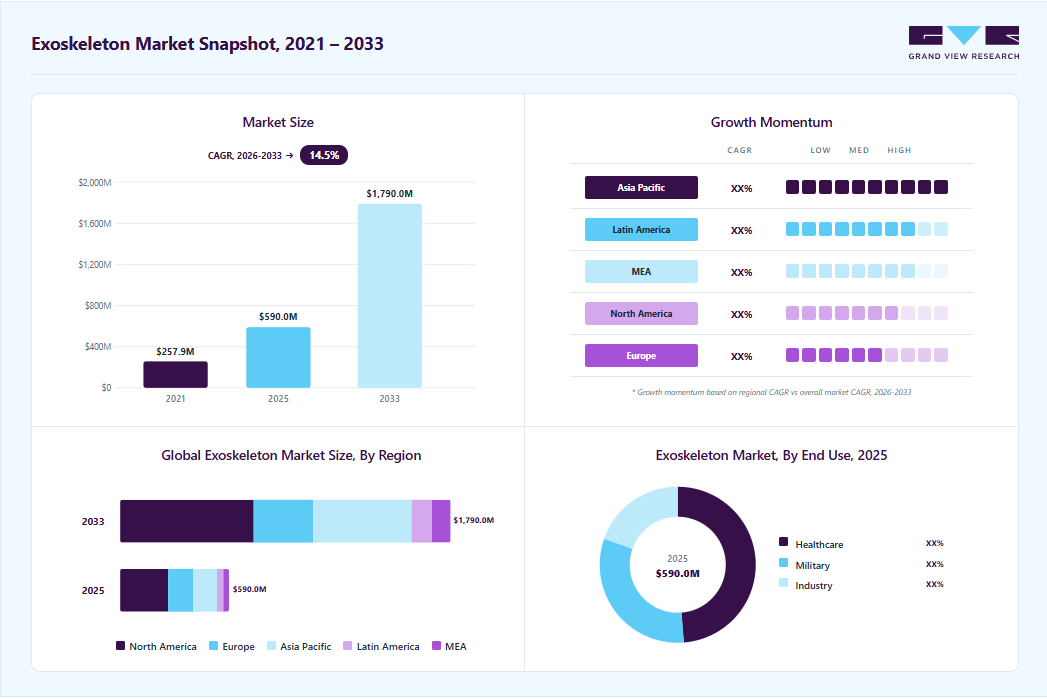
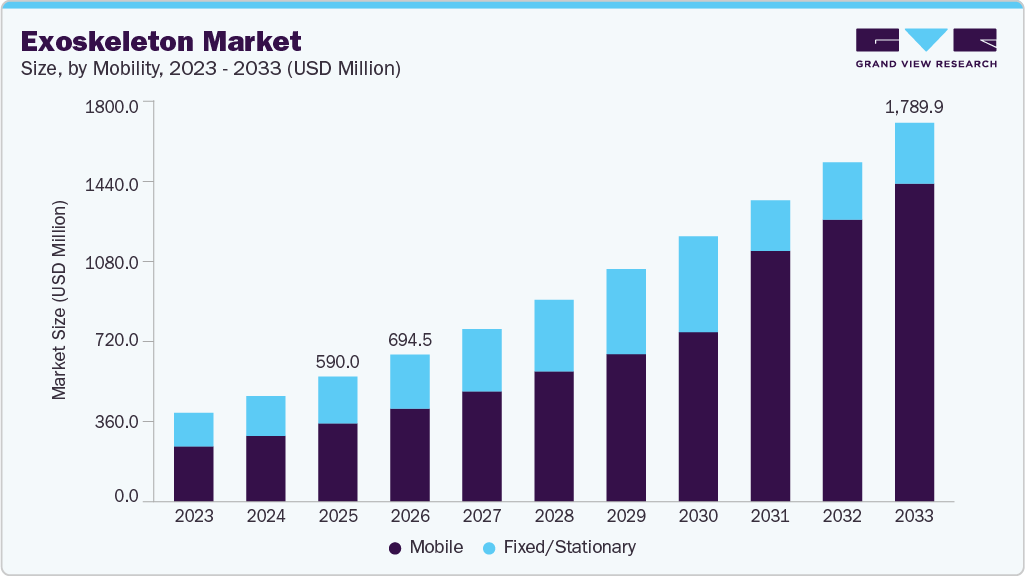
The global exoskeleton market size was valued at USD 590.0 million in 2025 and is projected to grow from USD 694.5 million in 2026 to USD 1,790.0 million by 2033, at 14.5% CAGR from 2026 to 2033. North America dominated the market, accounting for a revenue share of 44.1% in 2025. The consistent rise in the global geriatric population, increasing adoption of exoskeletons across industries such as automotive, military and defense, and construction, and the rising incidence of stroke are among the key factors driving the market growth.
 Source: Grand View Research, IR Documents, Primary Interviews, Paid DatabasesTo learn more about this report,
 Download Free Sample Report
 Key Market Trends & Insights
- By mobility: Mobile segment held the largest share of 62.6% in 2025
- By technology: Powered segment held the largest revenue share of 71.4% in 2025
- By extremity: Lower body segment held the largest revenue share of 40.7% in 2025
- By end use: Healthcare segment held the largest revenue share of 48.8% in 2025
Regional Highlights
- Largest regional market: North America (44.1% revenue share, 2025)
- Fastest-growing regional market: Asia Pacific (fastest CAGR, 2026 - 2033)
Market Size & Forecast
- Market size in 2025: USD 590.0 Million
- Estimated market size in 2026: USD 694.5 Million
- Projected market size by 2033: USD 1,790.0 Million
- CAGR (2026-2033):14.5%
Three ways to get this report
Buy it, customize it, or ask a question.Ask an Analyst
A direct answer, usually in 1 working day
- AccessReport author, directly
- Reply timeWithin 1 working day
- No sales callDirect answer only
- FormatEmail reply
- CostFree, no cost
Get the Full Report
What the study covers
- FormatsPDF · Excel · Dashboard
- Timeline2026–2033 annual, 2025 base
- Coverage20+ countries, 5 regions
- Companies10+ key players profiled
Customize the Report
20% free customization
- IncludeCountries, segments, points
- TailorTo your product definition
- ExtendDeeper competitor detail
- OrA fully bespoke study
- Turnaround5–10 working days
The rising incidence of spinal cord injuries (SCI) is expected to drive demand for exoskeleton solutions across global markets. According to data published by the World Health Organization (WHO) in 2024, more than 15 million people globally are living with spinal cord injuries. In addition, in September 2025, the United Spinal Association reported that approximately 250,000 to 390,000 people in the U.S. are living with spinal cord injuries, with around 18,000 new cases reported annually, commonly resulting from vehicle accidents and falls. The organization also highlighted several common secondary complications, including depression, chronic pain, spasticity, pressure injuries, bowel, bladder, and respiratory problems.The increasing prevalence of spinal cord injuries is supporting the growth of the exoskeleton segment within the wearable robot market, as robotic wearables are increasingly being used to support mobility and improve functional outcomes among individuals with mobility impairments. Technological advancements are further expanding the application of exoskeletons in rehabilitation and mobility assistance. For instance, in May 2025, Wandercraft initiated clinical trials of its AI-powered Personal Exoskeleton, leveraging NVIDIA AI and simulation technologies to provide real-time adaptive assistance. The system is designed to help individuals with spinal cord injuries, stroke, and severe mobility impairments stand and walk, highlighting the growing integration of artificial intelligence into next-generation exoskeleton solutions.
 To learn more about this report, Download Free Sample Report
 In January 2026, RoboCT introduced its lightweight GoGo Exoskeleton series at CES 2026, marking the company's expansion from clinical rehabilitation applications into consumer-focused daily mobility solutions. Weighing approximately 2.3 kg, the AI-powered wearable provides multi-mode, real-time adaptive assistance for activities such as walking, sitting, and balance support. The product is designed to address mobility needs associated with post-stroke recovery, neurodegenerative conditions, and everyday movement, highlighting the industry's shift toward lightweight, intelligent, and more accessible exoskeleton solutions. Such technological developments are expected to support the increasing adoption of exoskeletons among patients and healthcare providers.
In addition to the healthcare applications, industries are also increasingly adopting exoskeletons to support employee safety, reduce physical strain, and enhance productivity. Expanding applications across manufacturing, logistics, automotive, and construction are increasing the significance of exoskeletons in industrial environments and creating new opportunities for market growth. Rising demand for wearable robots and exoskeletons is also contributing to the emergence of specialized startups focused on exoskeleton development, rehabilitation, and mobility assistance. As the technology continues to evolve, market participants are increasing investments in product innovation and application-specific solutions to expand the use of exoskeletons and accelerate adoption across healthcare and industrial settings over the forecast period.
Market Dynamics
The exoskeleton market is showcasing promising growth across healthcare rehabilitation, industrial, and military applications. Key drivers such as rising cases of spinal cord injuries, increasing prevalence of musculoskeletal disorders, and the integration of modern technologies, including composite materials, AI for mobility, and advanced sensors for better actuation, are expected to boost demand for exoskeletons. However, the high cost of procuring a customized exoskeleton can discourage rehabilitating patients and industries. Limited awareness and a more limited number of patients capable of procuring an exoskeleton might hinder the growth of the market to some extent. To overcome such issues, companies are using affordable materials and technology to facilitate home-based and community-based rehabilitation. Such developments are expected to offer growth opportunities for the overall market.
The increasing incidence of spinal cord injuries (SCIs) is expected to drive demand for exoskeleton technologies, particularly across rehabilitation, mobility assistance, and assistive care applications. Spinal cord injury can result in partial or complete loss of motor and sensory function, substantially affecting an individual's mobility, independence, and quality of life. As the number of people living with SCI increases, the need for advanced rehabilitation technologies to support gait training, standing, and assisted walking is growing. Exoskeletons are increasingly being evaluated as complementary rehabilitation tools that can provide repetitive, controlled movement while supporting patients with significant lower-extremity impairments.
The growing global burden of SCI is creating a substantial addressable population for exoskeleton manufacturers. Traumatic causes, particularly road traffic accidents and falls, account for a significant proportion of injuries, while non-traumatic conditions such as tumors, infections, and degenerative disorders also contribute to the overall burden. The long-term functional limitations associated with SCI frequently require ongoing rehabilitation and mobility support, creating sustained demand for technologies that can improve movement and functional independence.
Technological advancements are further strengthening the role of exoskeletons in SCI rehabilitation. Modern systems increasingly incorporate motorized actuation, sensors, artificial intelligence, and adaptive control technologies to detect user movement and provide assistance according to individual mobility needs. For instance, Wandercraft's Personal Exoskeleton is being developed to enable individuals with severe mobility impairments, including those resulting from SCI, to stand and walk through self-balancing robotic technology. Such innovations are expanding the potential applications of exoskeletons beyond controlled clinical rehabilitation toward daily mobility and community-based use.
In addition, rising regulatory approvals, clinical research, healthcare provider awareness, and investments in rehabilitation infrastructure are driving market penetration. As healthcare systems seek technologies to improve rehabilitation outcomes and enhance independence for individuals with mobility impairments, exoskeletons are expected to gain broader acceptance as complementary solutions. Consequently, the rising incidence and long-term impact of SCI are likely to remain a key demand driver for the global exoskeleton market throughout the forecast period.
The high procurement cost of exoskeleton systems is a major restraint on market growth, particularly in healthcare and industrial applications where organizations may require customized solutions. Exoskeletons incorporate advanced actuators, sensors, control systems, batteries, artificial intelligence, and lightweight structural materials, resulting in significantly higher acquisition costs than conventional rehabilitation and ergonomic equipment. In healthcare settings, the cost burden can be particularly substantial for hospitals and rehabilitation centers with limited capital budgets, restricting the adoption of exoskeletons, especially in emerging economies.
In addition to the initial purchase price, organizations may incur costs associated with installation, customization, maintenance, software upgrades, training, and technical support, further increasing the total cost of ownership. Healthcare providers may also require trained therapists and operators to safely integrate these systems into rehabilitation programs. Similarly, industrial users may need to conduct workplace assessments and provide employee training before deploying exoskeletons at scale.
Although technological advancements and increasing competition are expected to gradually improve affordability, the relatively high upfront investment continues to limit adoption among small and medium-sized enterprises, smaller healthcare facilities, and individual users. Furthermore, uncertainty regarding reimbursement coverage for rehabilitation exoskeletons in several markets can increase the financial burden on healthcare providers and patients. Consequently, high procurement and associated operating costs are expected to remain a key barrier to the widespread commercialization and large-scale adoption of exoskeleton technologies during the forecast period.
The incorporation of exoskeleton technologies into home-based and community rehabilitation represents a significant growth opportunity for the exoskeleton market. At present, exoskeleton systems have been concentrated in hospitals, rehabilitation centers, and specialized clinical facilities, where trained therapists and controlled environments are available. However, advances in lightweight design, battery technology, sensors, artificial intelligence, and adaptive control systems are enabling the development of more portable and user-friendly devices suitable for use beyond clinical settings.
The growing population living with spinal cord injuries, stroke, and other neurological and mobility disorders is increasing the demand for long-term mobility assistance and rehabilitation. Home-based exoskeletons can potentially enable users to continue movement training and assisted walking after completing intensive clinical rehabilitation, thereby improving access to therapy and supporting greater independence in daily activities. The ability to use these systems in community settings may also benefit patients who face geographical or financial barriers to frequent visits to specialized rehabilitation facilities.
In addition, the development of self-balancing, lightweight, and AI-enabled exoskeletons is expanding the potential user base beyond highly supervised clinical environments. Manufacturers are increasingly focusing on intuitive controls, personalized assistance, and improved comfort to facilitate independent or minimally supervised use.
As healthcare systems increasingly emphasize remote care, decentralized rehabilitation, and patient-centered treatment, the commercialization of home-use exoskeletons could create new revenue streams for manufacturers. Expanding reimbursement coverage, improving affordability, and increasing clinical evidence could further accelerate adoption. Consequently, the transition from facility-based rehabilitation toward home and community-based mobility assistance is expected to present substantial opportunities for exoskeleton manufacturers during the forecast period.
Market Concentration & Characteristics
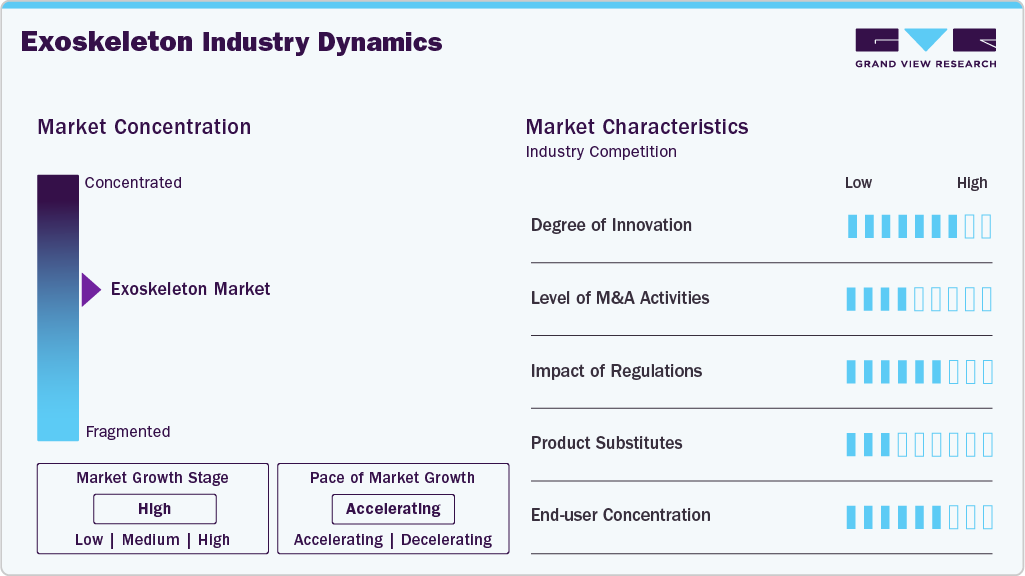
The wearable robots and exoskeleton market is characterized by a high degree of innovation, driven by rapid advancements in robotics, artificial intelligence (AI), sensors, and motion-control technologies. Continuous technological development is enabling the introduction of novel exoskeleton applications across healthcare and industrial end users, creating new growth opportunities for market participants. For instance, in May 2025, German Bionic unveiled Exia, an AI-powered exoskeleton trained using real-world motion data. The system provides adaptive lift assistance of up to 38 kg and dynamically adjusts support in real time to help reduce the risk of musculoskeletal injuries and improve productivity across industries, including manufacturing, logistics, retail, and healthcare. Such innovations are expanding the functional capabilities of exoskeletons and supporting their adoption across a broader range of applications.
The market is also witnessing frequent strategic merger and acquisition (M&A) activity, as companies seek to access advanced robotic technologies, expand their product portfolios, and strengthen their competitive positions in the rapidly evolving market. M&A transactions can also enable companies to accelerate commercialization and capitalize on the growing adoption of next-generation exoskeleton solutions. For instance, in January 2026, EKSO Bionics announced a proposed merger with Applied Digital, which could result in the separation or sale of its exoskeleton business, including the Indego Personal system. The proposed transaction reflects the evolving competitive and financial dynamics within the exoskeleton industry, as companies seek to optimize their portfolios and strengthen long-term growth prospects.
 To learn more about this report, Download Free Sample Report
 A well-established regulatory framework and increasing regulatory approvals for exoskeleton products are expected to positively influence market growth. Certifications, safety standards, and regulatory guidelines governing the manufacture, deployment, and use of exoskeletons can enhance user confidence and facilitate their adoption in workplace and healthcare settings. For instance, in January 2026, Baltimore-based NextStep Robotics announced that it was seeking additional FDA authorization through a De Novo submission to expand the application of its AMBLE lower-body exoskeleton beyond exercise therapy for stroke rehabilitation. The company cited results from an NIH-funded clinical trial demonstrating sustained improvements in walking several months after therapy, and is also advancing a subscription-based business model to improve affordability for community clinics. Such regulatory and commercialization initiatives are expected to support the broader adoption of exoskeleton technologies.
Conventional rehabilitation methods remain widely used, while exoskeletons are emerging as complementary technologies for patients with spinal cord injuries and neurological disorders. These systems can provide benefits such as improved mobility, physical assistance, and greater independence, particularly among individuals with significant mobility impairments. However, high acquisition costs, specialized training requirements, and the need for trained operators may limit their widespread adoption. Consequently, exoskeletons are currently positioned primarily as complementary solutions rather than direct replacements for conventional rehabilitation therapies.
In addition, market participants are expanding into new geographic regions to strengthen their market presence, diversify product portfolios, and access emerging growth opportunities. Increasing investments in research and development and product innovation are supporting the introduction of exoskeleton solutions across new applications and markets. For instance, in January 2026, NAVEE announced its expansion from Europe into the U.S. as part of its global intelligent mobility strategy unveiled at a Silicon Valley event. The company introduced five AI-enabled products, including Exo-Fit, a full-terrain wearable exoskeleton designed to support human mobility, as well as solutions for land, air, and water transportation. Such geographic expansion and product diversification are expected to strengthen competition and accelerate the adoption of exoskeleton technologies globally.
Analyst Perspective
The exoskeleton market is transitioning from an emerging technology segment toward broader commercial adoption, supported by increasing demand for rehabilitation, mobility assistance, and workplace ergonomics. Healthcare remains a core application, particularly for individuals with spinal cord injuries, stroke, and other mobility impairments, while industrial adoption is expanding as companies seek to reduce musculoskeletal strain and improve worker productivity. The market also indicates strong growth prospects, supported by advances in artificial intelligence, sensors, lightweight materials, battery technologies, and adaptive control systems.
Furthermore, market growth is expected to be driven by the development of lighter, more affordable, and user-friendly systems, enabling applications beyond hospitals and specialized facilities. The expansion of exoskeletons into home-based rehabilitation, logistics, manufacturing, construction, and defense could significantly broaden the addressable market. However, high procurement costs, regulatory requirements, limited long-term clinical evidence, and the need for trained users remain key challenges. Overall, increasing technological maturity, expanding applications, and greater investment from healthcare and industrial stakeholders are expected to support sustained market expansion and a gradual shift toward mainstream adoption over the forecast period.
Mobility Insights
The mobile segment dominated the exoskeleton industry, accounting for a revenue share of 62.6% in 2025, and is expected to grow at the fastest CAGR during the forecast period. Segment growth is supported by increasing research and development activities and rising demand for motorized robotic systems that assist human movement and body mechanics. For instance, in January 2026, Sumbu unveiled its Exo-S3 consumer exoskeleton lineup at CES 2026, featuring AI-powered, lightweight leg assistance designed for everyday mobility, injury prevention, and outdoor activities. The Exo-S3 series incorporates dual-vector drive technology and human-intent recognition AI to dynamically adjust support across different terrains. The system is designed to reduce fatigue, improve movement efficiency, and support broader consumer adoption of wearable mobility technologies.
The fixed/stationary segment is expected to experience consistent growth at 1.7% CAGR during the forecast period, driven by increasing demand for rehabilitation and assisted-living solutions. These systems are designed to support individuals with limited mobility by assisting with standing, posture correction, and gait training in controlled environments. Their adoption is further supported by increasing use in hospitals and rehabilitation centers, where stationary systems are well-suited for repetitive therapy, controlled clinical monitoring, and extended-duration rehabilitation programs. For instance, the NX A3-M is a fixed-frame exoskeleton designed for gait rehabilitation, offering enhanced capabilities compared with the earlier NX-A3 model. Such advancements are expected to strengthen the role of stationary exoskeletons in clinical rehabilitation and assisted-mobility applications.
Technology Insights
The powered segment accounted for the largest revenue share of 71.4% in 2025, driven by the increasing adoption of powered exoskeleton solutions across industries to enhance worker safety, reduce physical strain, and improve productivity. Segment growth is further supported by continuous product innovation and the functional benefits offered by powered systems, including smoother lifting movements, reduced physical exertion, increased strength, force amplification, and enhanced productivity. For instance, in August 2024, Arc’teryx and Skip collaborated to introduce a powered pants system, a wearable exoskeleton designed to enhance human mobility by providing powered assistance during movement. Such product innovations are expanding the applications of powered exoskeletons and supporting their adoption across industrial and consumer settings.
The non-powered technology segment is expected to grow at the fastest CAGR of 17.4% during the forecast period, driven by growing demand for cost-effective, lightweight, and easy-to-use solutions that provide lifting and mobility assistance without requiring external power sources. These systems typically rely on mechanical components, such as springs and elastic mechanisms, to support movement, reduce physical fatigue, and minimize strain on users. Their adoption is particularly relevant in logistics, construction, manufacturing, and healthcare, where workers frequently perform physically demanding tasks or handle heavy loads. For instance, the UPLIFT exoskeleton uses elastic mechanisms to provide lifting assistance, highlighting the growing availability of affordable and energy-independent exoskeleton solutions for workplace applications. As organizations increasingly seek practical solutions to reduce worker fatigue and improve occupational safety, demand for non-powered exoskeletons is expected to increase over the forecast period.
Extremity Insights
The lower body segment dominated the exoskeleton industry with a revenue share of 40.7% in 2025, driven by increasing investments in exoskeleton technologies, the growing prevalence of lower-body disabilities, and rising adoption among geriatric individuals and patients with paralysis seeking improved weight-bearing capabilities and mobility. Regulatory approvals are also supporting segment growth. For instance, in April 2024, ABLE Human Motion’s ABLE Exoskeleton, a lightweight and affordable hip-knee-powered device, received CE Mark approval under the new Medical Device Regulation (MDR), enabling its commercial sale in the European Union for spinal cord injury rehabilitation.
The upper body segment is expected to grow at the fastest CAGR of 16.7% during the forecast period, supported by the increasing use of upper-extremity exoskeletons for rehabilitation, mobility assistance, and support for individuals with physical disabilities. These devices can assist patients recovering from stroke and neurological or musculoskeletal disorders by supporting upper-limb movement and improving functional capabilities. In addition, the rising prevalence of neurological and musculoskeletal conditions is increasing the need for rehabilitation and assistive technologies, thereby creating further growth opportunities for upper-body exoskeleton solutions.
End Use Insights
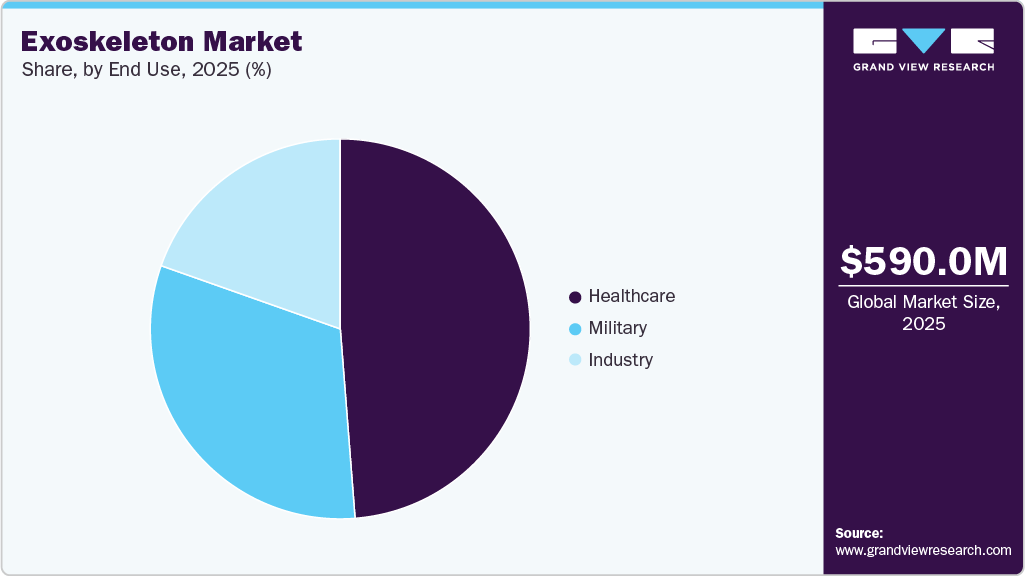
The healthcare segment dominated the exoskeleton market with a revenue share of 48.8% in 2025, driven by the rising incidence of spinal cord injuries (SCIs), increasing adoption of exoskeleton products and solutions in rehabilitation centers, and a significant increase in the number of patients undergoing treatment. In addition, the growing number of regulatory approvals and increasing awareness of technologically advanced rehabilitation systems are supporting demand for exoskeleton technologies across the healthcare sector.
 To learn more about this report, Download Free Sample Report
 The industry segment is anticipated to grow at the fastest CAGR of 17.1% during the forecast period, supported by growing awareness of the benefits of exoskeleton technologies across industrial applications and the increasing incidence of occupational injuries. Rising demand for innovative workplace technologies and expanding adoption across construction, manufacturing, distribution, and other physically demanding industries are further contributing to segment growth. For instance, in August 2024, Festool launched its ExoActive powered exoskeleton in the U.S. for construction tradespeople, designed to reduce shoulder and arm strain during overhead and forward-facing tasks by up to 30% while providing up to 11 pounds of arm support. Such solutions are helping improve worker productivity, reduce physical strain, and mitigate the risk of work-related injuries, thereby accelerating the adoption of exoskeletons across industrial environments.
Regional Insights
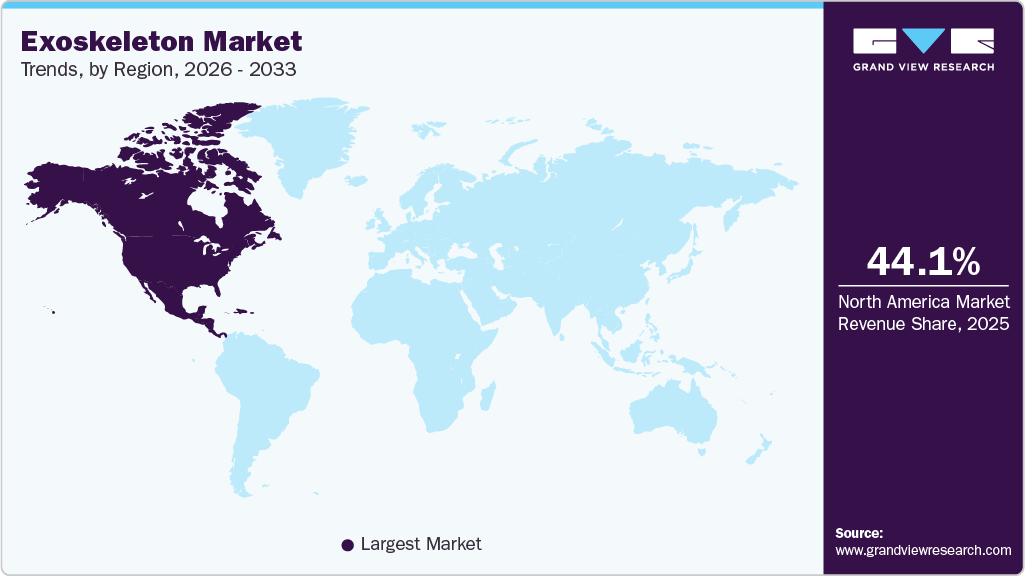
North America dominated the global exoskeleton market in 2025, accounting for a revenue share of 44.10%, supported by increasing investments in research and development, a growing population with disabilities, expanding strategic partnerships among key market players, and the availability of advanced technologies. Strong public and private sector support, particularly across healthcare and rehabilitation, is further contributing to regional market growth. For instance, in June 2025, Wandercraft raised USD 75 million in Series D funding to support the launch of its self-balancing personal exoskeleton, Eve, targeted for 2026 to assist individuals with disabilities in daily mobility. The funding also supported the expansion of the company's Atalante X rehabilitation system, which had received FDA clearance and was deployed in more than 100 U.S. hospitals and clinics, and enabled further development of the Calvin-40 humanoid robot. Such investments are expected to strengthen innovation and accelerate the adoption of exoskeleton technologies across the region.
 To learn more about this report, Download Free Sample Report
 Within North America, the U.S. dominated the regional exoskeleton industry, driven by its strong focus on technological innovation, substantial investments in the healthcare and military sectors, and the presence of leading exoskeleton manufacturers. The country's advanced healthcare infrastructure and increasing adoption of robotic rehabilitation and mobility-assistance technologies are further supporting market growth. For instance, in April 2025, Lifeward Ltd. announced the nationwide U.S. launch of the ReWalk 7 Personal Exoskeleton, representing the company's latest advancement in personal exoskeleton technology. Continued product launches and investments in next-generation robotic systems are expected to further strengthen the U.S. market over the forecast period.
Europe Exoskeleton Market Trends
Europe is expected to witness continued growth at 11.6% CAGR over the forecast period, supported by well-established regulatory frameworks and increasing adoption across medical and industrial applications. Stringent safety and efficacy requirements for medical devices are supporting the integration of exoskeleton technologies into healthcare systems, while growing demand for ergonomic solutions is driving their use in industrial environments. Germany represents a key market within Europe, supported by its strong industrial base, technological capabilities, and established regulatory environment for the development and deployment of exoskeleton technologies. Increasing investments in wearable robotics and growing emphasis on worker safety, ergonomics, and productivity are further supporting market expansion. Product innovation is also contributing to adoption across physically demanding workplaces. For instance, in December 2025, German Bionic expanded its Exia exoskeleton portfolio with new vest designs specifically designed for women, aimed at improving ergonomics, comfort, and long-term wearability during physically demanding tasks. Such advancements are expected to support broader adoption of exoskeleton technologies across Germany's industrial and occupational applications.
Asia Pacific Exoskeleton Market Trends
The Asia Pacific exoskeleton industry is anticipated to grow at the fastest CAGR of 18.6% during the forecast period, driven by the growing patient population requiring rehabilitation and mobility support, increasing government funding and support, and ongoing improvements in healthcare infrastructure. Rising investments in advanced medical technologies and increasing awareness of robotic rehabilitation solutions are further supporting the development and adoption of exoskeleton technologies across the region. For instance, in February 2025, Kia and Hyundai unveiled the X-ble Shoulder, a lightweight carbon-fiber exoskeleton designed to reduce shoulder strain and enhance industrial productivity. The system was initially deployed across the companies' facilities in South Korea, highlighting the expanding use of wearable robotic technologies in industrial applications.
China is emerging as a key market for exoskeleton technologies, supported by increasing investments in robotics and wearable mobility solutions aimed at enhancing human strength, endurance, and mobility. The country is also advancing the development of exoskeleton systems for specialized applications, including space exploration and defense. Chinese engineers are developing exoskeleton suits designed to assist astronauts, reflecting the country's growing focus on advanced robotic technologies. In addition, in January 2025, the Chinese military showcased exoskeleton systems for logistics operations, designed to improve soldier endurance and load-carrying capacity. Such developments highlight the expanding adoption of exoskeletons across defense, logistics, healthcare, and other specialized applications, supporting the region's overall market growth.
Latin America Exoskeleton Market Trends
The Latin America exoskeleton industry is expected to grow at a significant CAGR of 15.3% over the forecast period, supported by increasing adoption of wearable robotic technologies in healthcare and rehabilitation applications. Hospitals and research institutions are increasingly evaluating exoskeletons to improve mobility outcomes and enable more active patient participation during rehabilitation. For instance, in November 2024, Einstein Hospital in São Paulo initiated clinical trials to evaluate the effectiveness of exoskeleton technology in rehabilitation, becoming the first hospital in Latin America to use a system capable of detecting a patient's movement intentions, amplifying neurological micro-signals, and assisting in movement execution.
Brazil is emerging as a key market for exoskeleton technologies, supported by growing innovation from local startups, research institutions, and industry collaborations. Companies such as Exy Innovation are developing wearable exoskeleton solutions tailored to the needs of the Brazilian workforce, with the aim of improving productivity and reducing workplace injuries. In addition, research initiatives are focused on developing cost-effective, adaptable solutions suited to local operating conditions, including tropical environments. Exoskeleton concepts are also being explored in architectural and structural applications.
Middle East & Africa Exoskeleton Market Trends
The Middle East and Africa (MEA) exoskeleton industry is anticipated to grow at a CAGR of 15.3%, supported by increasing investments in healthcare infrastructure, rehabilitation facilities, and advanced mobility solutions. Countries such as Saudi Arabia, the UAE, and South Africa are expanding rehabilitation capabilities and adopting exoskeleton technologies to support individuals with mobility impairments. Rising investments from both the public and private sectors are further contributing to the development of advanced rehabilitation ecosystems across the region. For instance, in December 2025, Lifeward expanded access to its ReWalk Personal Exoskeleton in the UAE through an exclusive distribution agreement with Verita Neuro, integrating the device into inpatient neurorehabilitation programs. Such initiatives are strengthening the adoption of exoskeleton technologies and reinforcing the UAE's position as a regional hub for advanced rehabilitation solutions.
South Africa is emerging as a key market for exoskeleton technologies, supported by growing adoption across industrial and occupational safety applications. Local initiatives and research collaborations are increasingly focused on developing cost-effective, adaptable wearable robotic solutions to improve worker productivity, reduce physical strain, and minimize workplace injuries. The mining industry, in particular, is exploring exoskeletons to address physically demanding and high-risk activities. For instance, in February 2024, Minerals Council South Africa announced the testing of wearable exoskeletons as part of its fall-of-ground prevention strategy, aimed at improving miner safety during high-risk underground barring activities. The technology is designed to reduce physical strain, improve worker endurance, and limit exposure to unstable rock conditions, highlighting the growing adoption of exoskeletons for mining safety and occupational applications in the region.
Key Exoskeleton Company Insights
Key players operating in the exoskeleton industry are Ekso Bionics; Lockheed Martin Corporation; Suit X; Rex Bionics Plc.; Lifeward Ltd.; Cyberdyne, Inc.; and ActiveLink (Panasonic Corporation). The market is highly competitive and moderately fragmented, with established global players competing alongside specialized technology providers. Companies are focusing on various strategic initiatives, including new product development by making significant investments in the new product development to gain a competitive advantage over their rivals. For instance, in February 2025, Wandercraft launched a landmark clinical trial for the Personal Exoskeleton, the world’s first self-balancing device designed to restore natural standing, walking, bending, and reaching abilities for individuals with severe mobility impairments.
Additionally, strategic partnerships, acquisitions, and ecosystem development are also becoming important competitive strategies as vendors seek to offer customized solutions for healthcare, industrial, and military applications. The growing emphasis on customized solutions is further creating opportunities for specialized exoskeleton developers and thus, intensifying competition across the market.
Key Exoskeleton Companies
The following key companies have been profiled for this study of the exoskeleton market.
-
ActiveLink (Panasonic Corporation)
- DIH Medical
Recent Developments
-
In January 2026, Ascentiz unveiled a modular exoskeleton at CES 2026, featuring swappable hip and knee modules optimized with distinct drive technologies for natural movement assistance. The system integrates AI trained on over 690,000 gait cycles to deliver rapid mode switching and significant reductions in leg effort, knee cartilage pressure, and energy loss during dynamic and load-bearing activities.
-
In January 2026, OYMotion Technology and Melexis formed a partnership to advance robot perception and control, combining OYMotion’s system integration with Melexis’s sensor technology. The collaboration targets the commercialization of dexterous hands and rehabilitation exoskeletons, leveraging OYMotion’s EMG/EEG AI, lightweight designs, and global supply chain to grow in medical, industrial, and humanoid robotics.
-
In February 2025, Chulalongkorn University introduced the “Exoskeleton Wheelchair,” a robotic suit designed to assist people with disabilities in sitting, standing, and walking.
-
In January 2025, German Bionic unveiled the Apogee ULTRA, which offers 80 lbs (36 kg) of lifting support. It is designed to enhance worker safety and productivity in industries such as logistics, manufacturing, and healthcare.
Exoskeleton Market Report Scope
Report Attribute
Details
Market size in 2025
USD 590.0 million
Estimated market size in 2026
USD 694.5 million
Projected market size by 2033
USD 1,790.0 million
Growth rate
CAGR of 14.5% from 2026 to 2033
Base year for estimation
2025
Historical data
2021 - 2024
Forecast period
2026 - 2033
Quantitative units
Revenue in USD million, volume in 000' Units, and CAGR from 2026 to 2033
Report coverage
Revenue forecast, volume forecast, company market position analysis, competitive landscape, growth factors, and trends
Segments covered
Mobility, technology, extremity, end use, region
Regional scope
North America; Europe; Asia Pacific; Latin America; Middle East & Africa
Country scope
U.S.; Canada; Mexico; Germany; UK; Spain; Italy; France; Denmark; Norway; Sweden; Japan; China; India; Australia; Thailand; South Korea; Brazil; Argentina; South Africa; Saudi Arabia; UAE; Kuwait
Key companies profiled
Ekso Bionics; ARMASTEC PTE. LTD; Lockheed Martin Corporation; Suit X; Rex Bionics Plc.; RB3D; Lifeward Ltd.; Cyberdyne, Inc.; ActiveLink (Panasonic Corporation); DIH Medical
Customization scope
Free report customization (equivalent to up to 8 analysts working days) with purchase. Addition or alteration to country, regional & segment scope.
Pricing and purchase options
Avail of customized purchase options to meet your exact research needs. Explore purchase options
Global Exoskeleton Market Report Segmentation
This report forecasts revenue & volume growth at the global, regional & country levels and provides an analysis of the latest industry trends in each of the sub-segments from 2021 to 2033. For this study, Grand View Research has segmented the global exoskeleton market report based on mobility, technology, extremity, end use, and region:
-
Mobility Outlook (Volume, 000' Units; Revenue USD Million 2021 - 2033)
-
Mobile
-
Fixed/Stationary
-
-
Technology Outlook (Volume, 000' Units; Revenue USD Million 2021 - 2033)
-
Powered
-
Upper Body
-
Lower Body
-
Full Body
-
-
Non-powered
-
Upper Body
-
Lower Body
-
Full Body
-
-
-
Extremity Outlook (Volume, 000' Units; Revenue USD Million 2021 - 2033)
-
Upper Body
-
Lower Body
-
Full Body
-
-
End Use Outlook (Volume, 000' Units; Revenue USD Million 2021 - 2033)
-
Healthcare
-
Military
-
Industry
-
-
Regional Outlook (Volume, 000' Units; Revenue USD Million 2021 - 2033)
-
North America
-
U.S.
-
Canada
-
Mexico
-
-
Europe
-
Germany
-
U.K.
-
Spain
-
Italy
-
France
-
Denmark
-
Norway
-
Sweden
-
-
Asia Pacific
-
Japan
-
China
-
India
-
Australia
-
Thailand
-
South Korea
-
-
Latin America
-
Brazil
-
Argentina
-
-
MEA
-
South Africa
-
Saudi Arabia
-
UAE
-
Kuwait
-
-
Exoskeleton Market By Country
- U.S. Exoskeleton Market
- Canada Exoskeleton Market
- Germany Exoskeleton Market
- France Exoskeleton Market
- Italy Exoskeleton Market
- Spain Exoskeleton Market
- Denmark Exoskeleton Market
- Sweden Exoskeleton Market
- Norway Exoskeleton Market
- Japan Exoskeleton Market
- China Exoskeleton Market
- India Exoskeleton Market
- Australia Exoskeleton Market
- South Korea Exoskeleton Market
- Singapore Exoskeleton Market
- Thailand Exoskeleton Market
- Mexico - Latin America Exoskeleton Market
- Argentina Exoskeleton Market
- Brazil Exoskeleton Market
- South Africa Exoskeleton Market
- Saudi Arabia Exoskeleton Market
- Uae Exoskeleton Market
- Kuwait Exoskeleton Market
- U.K. Exoskeleton Market
About the Author(s)
Medical Devices Research Team
Healthcare · Medical DevicesThis report was authored by the medical devices research team at Grand View Research - comprising two research analysts, one senior research analyst, and one industry expert - with specialized expertise in the medical devices segment of the healthcare industry. All findings are based on proprietary healthcare databases, executive interviews, and regulatory analysis, subject to internal peer review prior to publication.
Last Updated:
Speak to Analyst

Customize this report to your needs - add regions, segments, or data points, with 20% free customization.
Or view our licence options:


ISO 9001:2015 & 27001:2022 Certified
We are GDPR and CCPA compliant! Your transaction & personal information is safe and secure. For more details, please read our privacy policy.


