
- Home
- »
- Medical Devices
- »
-
External Catheters Market Size & Share Report, 2026-2033GVR Report cover
![External Catheters Market (2026 - 2033)Report]()
External Catheters Market (2026 - 2033)
Size, Share & Trends Analysis Report By Product (Self-Adhesive, Non-adhesive), By Material (Silicone, Latex), By Gender (Male, Female), By End Use (Hospitals, Home Healthcare), By Region, And Segment Forecasts
Market Size, 2025
$3.0BMarket Estimate, 2026
$3.2BMarket Forecast, 2033
$5.0BCAGR, 2026–2033
6.5%External Catheters Market Summary
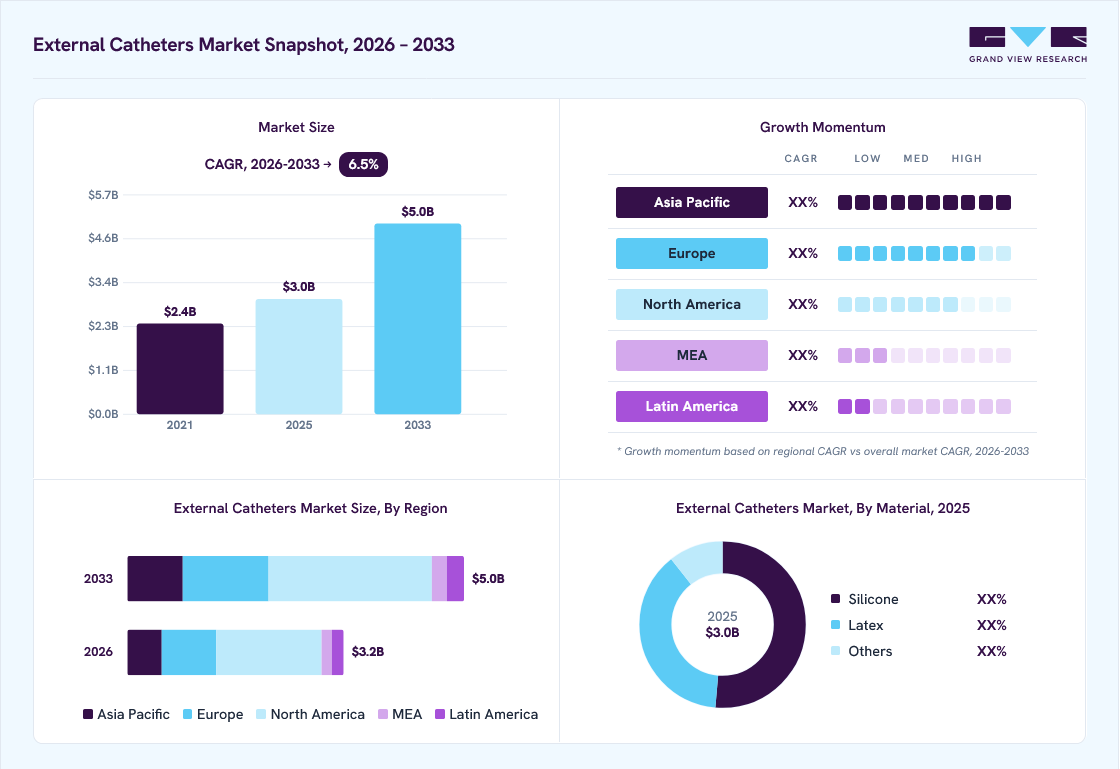
The global external catheters market size was valued at USD 3.0 billion in 2025 and is projected to grow from USD 3.2 billion in 2026 to USD 5.0 billion by 2033, at a CAGR of 6.5% from 2026 to 2033. North America dominated the market, accounting for a revenue share of 48.7% in 2025. This growth is driven by the rising geriatric population and increasing prevalence of urological disorders such as urinary incontinence and prostate-related conditions.
Key Market Trends & Insights
- By product: Self-adhesive segment led the market with the largest revenue share of 64.5% in 2025.
- By material: Silicone segment led the market with the largest revenue share of 51.3% in 2025.
- By gender: Male segment led the market with the largest revenue share of 62.6% in 2025.
- By end use: Home healthcare segment led the market with the largest revenue share of 58.3% in 2025.
Regional Highlights
- Largest regional market: North America (48.7% revenue share in 2025)
- By country: The U.S. held the largest market share in 2025.
Market Size & Forecast
- Market size in 2025: USD 3.0 Billion
- Estimated market size in 2026: USD 3.2 Billion
- Projected market size by 2033: USD 5.0 Billion
- CAGR (2026-2033): 6.5%
Moreover, the growing adoption of home healthcare and technological advancements in catheter design and materials are further boosting market demand. The increasing prevalence of urological disorders is a key factor driving growth in the external catheters market. In 2025, OU Health reported that nearly 80 million women in the U.S. experience urinary incontinence (UI), affecting 1 in 2 women. Additionally, data from City of Hope in November 2024 revealed that 11% to 34% of older men experience UI, with 2% to 11% reporting daily occurrences. This substantial burden highlights a growing need for non-invasive urinary management solutions, supporting the continued expansion of the external catheters segment in the coming years.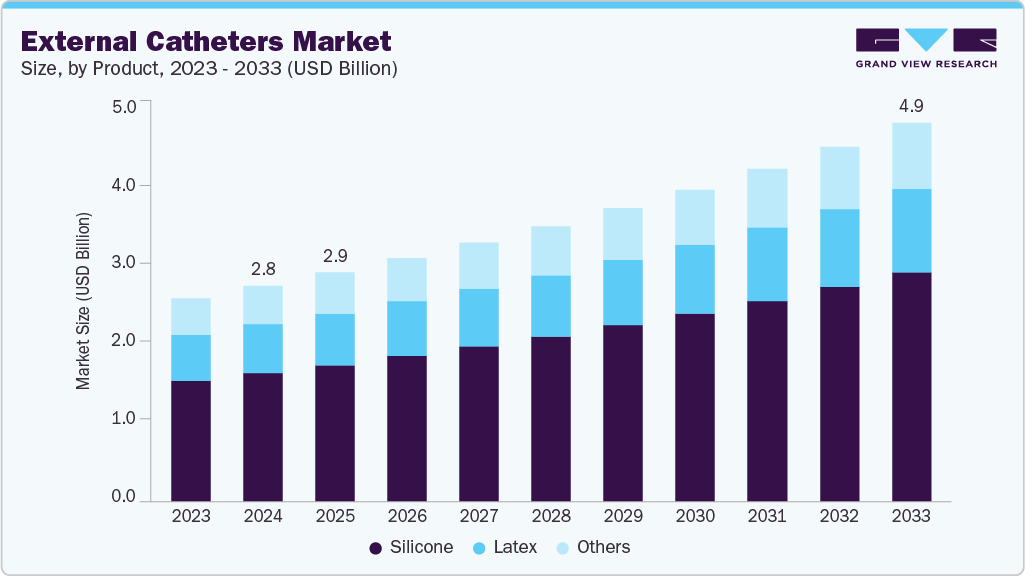
In addition to the rising burden of urinary incontinence, the increasing prevalence of cancers-such as bladder cancer, prostate cancer, and ovarian cancer-is further contributing to the growing demand for external catheters. Patients undergoing treatment for these cancers often experience urinary complications or require temporary catheterization due to surgery. External catheters, also known as condom catheters, offer a less invasive and more comfortable solution for managing urinary output in such cases, particularly for patients with limited mobility or sensitivity post-treatment. As these cancers continue to rise globally, the need for reliable, non-invasive urinary management options like external catheters is expected to increase, driving sustained market growth.
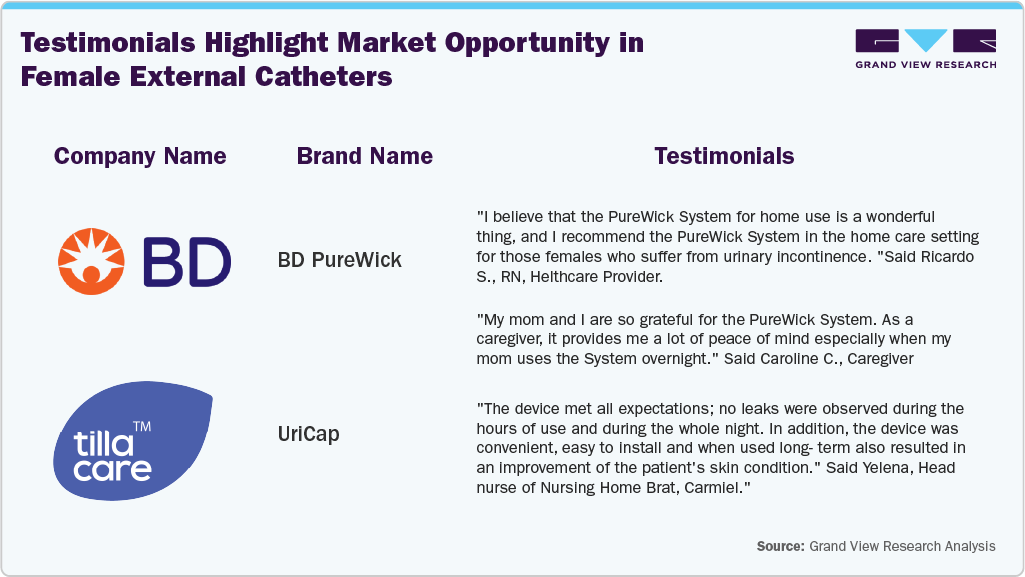
The increasing preference for external catheters or condom catheters, particularly among female patients, is anticipated to create significant growth opportunities in the market. Several companies in the industry have already reported encouraging feedback, reinforcing the market potential.
Furthermore, the availability of reimbursement for external catheters for both male and female patients is expected to support market adoption significantly. Reimbursement policies reduce the financial burden on patients and healthcare providers, encouraging wider usage and accessibility. This support is particularly crucial in long-term care and chronic condition management settings.
Product Name
Reimbursement HCPCS Code
Meatal cup female external urinary collection device
A4327
A pouch type female external collection device
A4328
Male external catheter with an integrated collection chamber that does not require the use of an additional leg bag
A4326
MALE EXTERNAL CATHETER, WITH OR WITHOUT ADHESIVE, DISPOSABLE, EACH
A4349
An external catheter that contains a barrier for attachment
A4335
Source: Centers for Medicare & Medicaid Services
In addition, companies are receiving reimbursement approvals for external catheters. For instance, in April 2023, Ur24 Technology, Inc., a privately held medical device company, achieved a significant milestone by securing Medicare reimbursement approval for its TrueClr external catheter system. Such reimbursement approvals are anticipated to support the market expansion in the coming years
Key Opinion Leaders
Company Name
KOLs
Growth Opportunities
Dan Moyer, Vice President of Sales & Marketing at RA Fischer Co.
"This is a breakthrough we've all been waiting for. We know that for many patients, the cost of the external wicks was a major hurdle. Now more will have the confidence to get started. With PureWick, we've found that patients can reduce their reliance on traditional incontinence aids and minimize other costs associated with things like unexpected ER visits. These benefits represent a proactive approach to healthcare, and we're excited to get the word out. This announcement from CMS is a big step forward in urology patient care.”
- Increased Accessibility through CMS Coverage
- Encourages early adoption by new users previously deterred by out-of-pocket costs.
David Jin, M.D., Ph.D., President and Chief Executive Officer of Avalon GloboCare.
"The GeeWhiz External Condom Catheter represents a significant advancement in managing male incontinence. Not only is this device FDA-registered and approved for reimbursement by Medicare, but it is also supported by several private insurance providers. The GeeWhiz External Condom Catheter is meticulously engineered to address the needs of men with urinary incontinence and bladder control issues. Its innovative design aims to provide enhanced comfort, security, and ease of use, ultimately improving the quality of life for users.
- Design-Driven Differentiation
- Private Insurance Support = Competitive Edge
Victoria Suarez, chief operating officer of Ur24Technology
“This is a major financial step for hospitals, nursing homes, assisted-living facilities and at-home patients who will now be reimbursed for a large portion of the cost of this system - the only catheter of its kind in the world - which delivers the highest level of safety, efficiency, comfort and dignity to patients.”
- Medicare Reimbursement Unlocks Market Expansion
Source: Grand View Research Analysis
Market Dynamics
The external catheters market is driven by the increasing prevalence of urinary incontinence, urinary retention, benign prostatic hyperplasia (BPH), neurogenic bladder disorders, spinal cord injuries, and other urological conditions requiring non-invasive urinary management. The growing geriatric population, which is at a higher risk of bladder dysfunction and mobility-related urinary complications, is further supporting market growth. Rising adoption of external catheters in hospitals, long-term care facilities, rehabilitation centers, and home healthcare settings, driven by their ease of use, lower risk of catheter-associated urinary tract infections (CAUTIs) compared with indwelling catheters, and improved patient comfort, is contributing to market expansion.
Conditions such as urinary incontinence, neurogenic bladder, benign prostatic hyperplasia (BPH), spinal cord injuries, multiple sclerosis, and stroke frequently impair normal bladder function, creating a growing need for non-invasive urine management solutions. External catheters are preferred because they offer improved patient comfort and reduce the risk of catheter-associated urinary tract infections (CAUTIs) compared to indwelling catheters.
In June 2025, according to the Centers for Disease Control and Prevention, 15–25% of hospitalized patients receive urinary catheters, and approximately 75% of hospital-acquired urinary tract infections (UTIs) are associated with urinary catheters, highlighting the importance of alternatives that can reduce catheter-related complications. The growing number of patients requiring long-term urinary management due to aging populations and chronic neurological conditions is encouraging healthcare providers to adopt external catheter systems in hospitals, rehabilitation centers, and home care settings, thereby supporting sustained market growth.
Product recalls continue to restrain the external catheters market by affecting manufacturer reputation, increasing regulatory scrutiny, and delaying purchasing decisions by healthcare providers. Device recalls related to performance failures, labeling errors, leakage, or manufacturing defects can reduce clinician confidence and require hospitals to replace existing inventory. The U.S. Food and Drug Administration (FDA) regularly monitor medical device safety and has expanded its Medical Device Recall Program to strengthen oversight of high-risk devices. In April 2025, several catheter-related medical devices have been subject to FDA recalls due to safety concerns, demonstrating the strict regulatory environment for catheter manufacturers. These recalls often increase compliance costs, disrupt supply chains, and prolong regulatory review for new products. As manufacturers must invest additional resources in quality assurance and post-market surveillance, product recalls remain an important challenge that limits the growth of the external catheters market.
Manufacturers, research institutions, and healthcare organizations are increasingly conducting studies to evaluate improvements in catheter design, skin compatibility, leakage prevention, patient comfort, and infection control. These clinical investigations help generate evidence that supports regulatory approvals, strengthens product claims, and encourages the adoption of advanced external catheter systems in hospitals, long-term care facilities, and home healthcare settings. In addition, clinical trials enable manufacturers to assess new materials, adhesive technologies, and user-friendly designs that improve patient outcomes and quality of life. The growing focus on evidence-based healthcare is also encouraging healthcare providers to adopt products with proven clinical performance. As more clinical research validates the benefits of external catheters over conventional urinary management methods, manufacturers are expected to introduce innovative products, creating new growth opportunities and supporting the long-term expansion of the global external catheters market.
Market Concentration & Characteristics
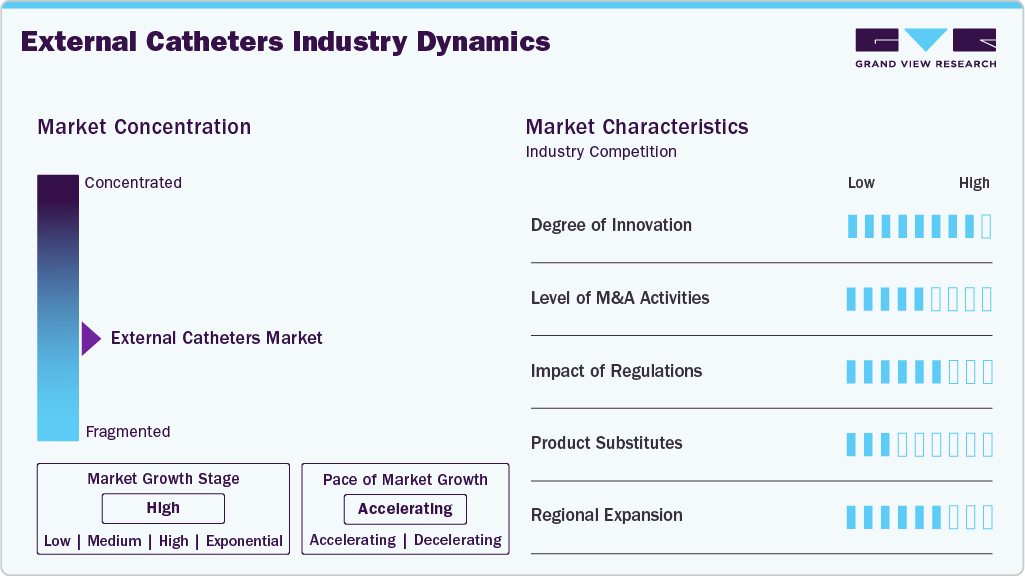
The market growth stage is high, and the pace is accelerating. The external catheters market is characterized by high growth owing to the rising burden of urological disorders, increasing reimbursement, regulatory approvals from authorities, and the development of novel products.
-
Industry participants and researchers are increasingly focusing on developing advanced external catheters. Several companies have launched new or improved versions of male and female external catheters, focusing on enhanced comfort, wear time, and ease of use. For instance, in January 2022, Stryker launched an improved version of its PrimaFit External Urine Management System, designed to deliver greater comfort and adaptability. Key improvements include longer, more flexible tubing to support a broader range of suction angles particularly advantageous for larger patients-a 14% increase in ultra-soft core fabric, and a newly tapered end to optimize skin protection and overall patient comfort.
-
Regulatory approvals play a vital role in driving innovation and market expansion within the external catheter industry. By overseeing the classification and authorization of these devices, regulatory bodies help ensure safety, effectiveness, and quality, ultimately improving patient access to advanced, reliable catheterization solutions.
Table 1 Regulatory Classification of External Catheters by the U.S. FDA
FDA Classification
Product Name
Brands Approved
Class I Devices
Female external urinary catheters (FEUCs)
PureWick Catheter
Class I Devices
Male external catheters
CONVEENOPTIMA
Source: U.S. FDA, Grand View Research Analysis
- External catheter companies are actively pursuing regional and global expansion to meet growing demand for innovative urinary care solutions. For example, Ur24 Technology has partnered with Miami-based DemeTECH Corp. to manufacture and distribute its TrueClr external catheter system across the U.S. and international markets. Additionally, Ur24 has secured distribution agreements with BKG Medical Supplies, Vitality Medical, Inc., and Biolabs International LLC-further enhancing its domestic presence and global market reach.
Analyst Perspective
The external catheters market is expected to grow over the forecast period, supported by favorable long-term demand fundamentals and the increasing need for non-invasive urinary management solutions across home care, long-term care, and hospital settings. Growth is being driven by the rising prevalence of urinary incontinence, expanding geriatric populations, growing preference for external catheterization over indwelling alternatives, and the continued expansion of home healthcare services. Manufacturers with comprehensive product portfolios spanning male and female external catheters, accessories, and skin protection solutions are expected to be best positioned to capitalize on market opportunities. As adoption continues to increase globally, market leadership will increasingly depend on product comfort, skin-friendly materials, supply reliability, distribution reach, and the ability to provide integrated continence care solutions across the patient care continuum.
Product Insights
Based on product, the self-adhesive segment led the market with the largest revenue share of 64.5% in 2025 and is also expected to grow at the fastest CAGR over the forecast period. It is also anticipated to grow fastest in the coming years. These catheters feature a skin-safe adhesive coating that allows for secure placement without needing tape or additional securing adhesives, offering patients greater comfort and ease of use. Their simple application and removal make them especially well-suited for home care and long-term care settings, where ease and efficiency are critical. The secure fit provided by the adhesive reduces the risk of leakage and accidental dislodgement. Thus, such benefits associated with self-adhesive external catheters are anticipated to propel the segment growth over the forecast period.
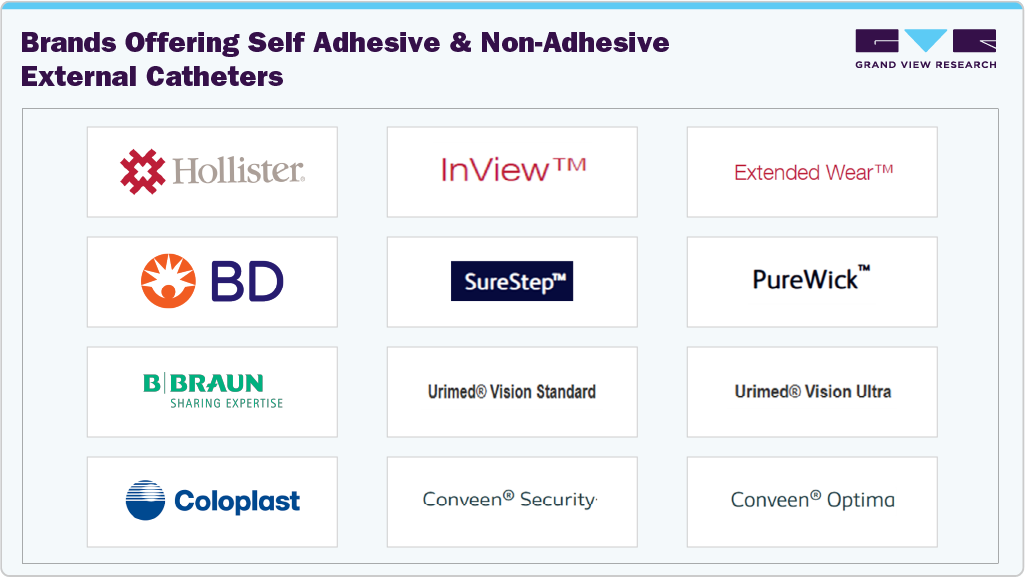
The non-adhesive segment is projected to experience moderate growth in the external catheters market. Designed for use with tape or specialized securement glues, these catheters are well-suited for patients with sensitive skin or adhesive sensitivities. Their adoption in clinical settings-where frequent catheter changes are required-continues to support the segment’s steady growth.
Material Insights
Based on material, the silicone segment led the market with the largest revenue share of 51.3% in 2025. It is also anticipated to grow fastest over the forecast period. Silicone catheters are particularly beneficial for individuals with latex allergies or sensitive skin. Known for being non-allergenic, silicone’s smooth texture and flexibility enhance ease of insertion while minimizing urethral irritation. Compared to latex, silicone catheters exhibit lower encrustation and are more tissue-friendly, making them a preferred choice for long-term use. These advantages are expected to drive increased adoption of silicone catheters in the coming years.
The other segment is projected to witness significant growth over the forecast period. This growth is driven by increasing demand for alternative catheter materials that cater to specific patient needs. Innovations in biocompatible materials, improved ease of use, and enhanced patient comfort are key drivers, alongside the growing burden of urological disorders.
Gender Insights
Based on gender, the male segment led the market with the largest revenue share of 62.6% in 2025. This dominance is driven by the widespread availability of male external catheters or condom catheters from players like BD, B. Braun SE, Coloplast, and Hollister Incorporated. Additionally, strategic partnerships aimed at expanding distribution networks further fuel segment growth. For example, in April 2024, Medline and Consure Medical entered an exclusive agreement for Medline to distribute the QiVi MEC male external urine management device, designed to reduce the risk of incontinence-associated dermatitis (IAD) and catheter-associated urinary tract infections (CAUTI). These distribution agreements are expected to continue driving growth in the segment.
The female external catheter segment is expected to be the fastest-growing segment in the external catheters market from 2025 to 2033. This growth is driven by the increasing prevalence of urinary incontinence (UI) among women and the development of innovative products like UriCap Female for managing UI. A December 2023 study published by Springer Nature reported that 11.2% of women experience UI, significantly higher than the 5.5% prevalence in men. This rising burden of UI among females is anticipated to fuel the segment's growth in the coming years.
End Use Insights
Based on end use, the home healthcare segment led the market with the largest revenue share of 58.3% in 2025. It is also anticipated to grow fastest over the forecast period. This growth is attributed to the growing preference for at-home care among aging populations and individuals with chronic conditions. External catheters offer a non-invasive, easy-to-use solution that supports greater independence and comfort for patients managing urinary incontinence outside clinical settings. The increasing availability of reimbursable products and caregiver-friendly designs further contributes to the segment’s strong growth. As healthcare systems continue to shift toward cost-effective, home-based care models, demand for external catheters in the home healthcare setting is expected to remain robust.
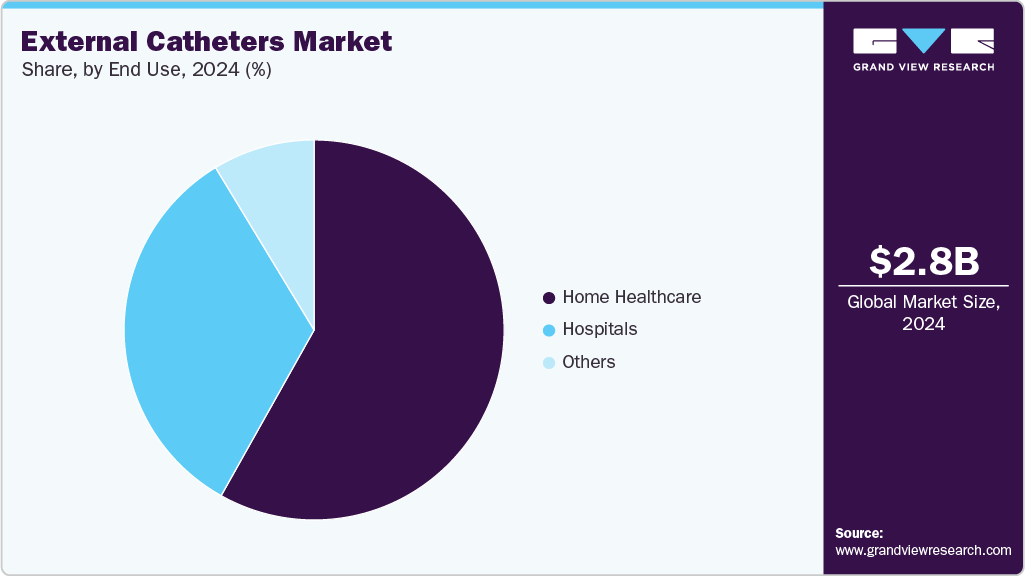
The hospital segment is projected to experience significant growth in the external catheters market from 2026 to 2033. This growth is driven by the increasing adoption of external urinary management devices in hospital settings. Hospitals are shifting toward non-invasive solutions as part of infection prevention strategies and enhanced patient care protocols. Additionally, rising surgical procedures, longer hospital stays among elderly patients, and greater clinical awareness of external catheter benefits are expected to further support the segment’s expansion during the forecast period.
Regional Insights
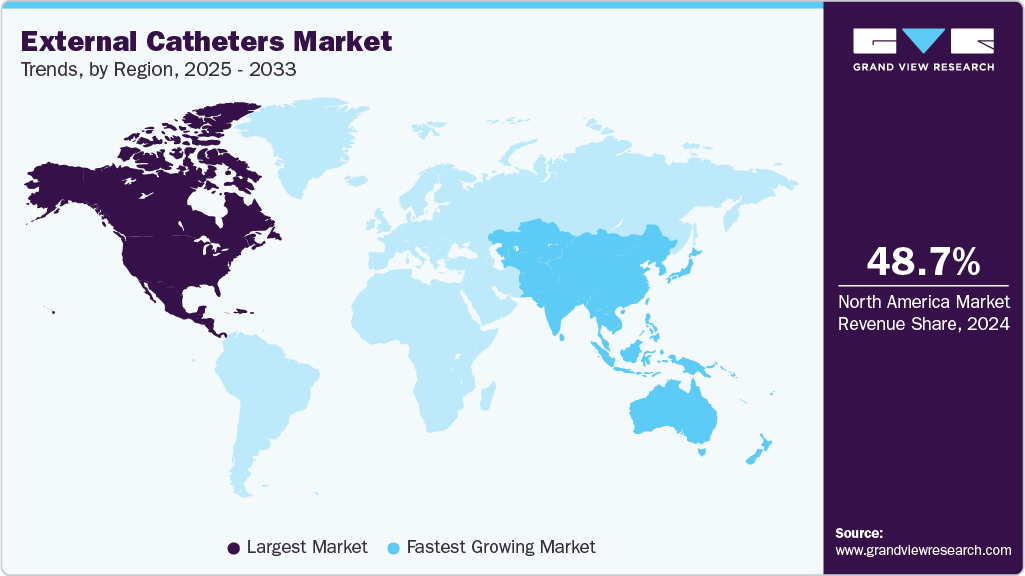
North America dominated the external catheters market with the largest revenue share of 48.7% in 2025. This dominance is primarily driven by the strong presence of players such as BD, Hollister Incorporated, and others, along with ongoing product innovations in the urinary care space. Additionally, rising awareness of urinary incontinence (UI) and the growing availability of treatment options continue to support market growth. Public education efforts are playing a crucial role, such as the “We Count” initiative launched by the National Association for Continence (NAFC) in May 2025, which focused on raising awareness of Stress Urinary Incontinence (SUI) nationwide.
U.S. External Catheters Market Trends
The external catheters market in the U.S. held the largest share in the North America region in 2025. The external catheter market in the U.S. is set for strong growth, driven by key industry players and novel product launches. For instance, in November 2022, Ur24Technology Inc. launched its TrueClr catheter product line, the first external catheter system designed to actively empty the bladder.
Europe External Catheters Market Trends
The Europe external catheters market is expected to witness significant growth in the coming years, driven by a rapidly aging population and the increasing prevalence of urological disorders. According to data published by ScienceDirect in June 2025, the economic burden of urinary incontinence (UI) in the EU reached USD 80.46 billion in 2023 excluding caregiver costs with women accounting for four times the burden compared to men. This growing healthcare demand and the need for effective, non-invasive urinary management solutions are anticipated to accelerate market expansion across the region.
The external catheters market in the UK is expected to witness substantial growth in the coming years, driven by a rising aging population, increasing cases of urinary incontinence, and growing adoption of home-based care. Enhanced NHS support for non-invasive urinary solutions and awareness campaigns further boosts the market’s steady growth.
Germany external catheter market is expected to grow significantly, driven by the increasing burden of an aging population. According to Statistisches Bundesamt (Destatis), as of December 2022, the number of individuals aged 67 and over is projected to rise by approximately 4 million, reaching at least 20 million by the mid-2030s. This demographic shift, coupled with a rise in surgical procedures and hospital admissions, is fueling demand for non-invasive urinary management solutions, such as external catheters, to support patient comfort and reduce infection risks in acute and long-term care settings.
Asia Pacific External Catheters Market Trends
The external catheters market in the Asia Pacific is emerging as the fastest-growing market for external catheters, fueled by multiple key drivers. The rising incidence of urinary incontinence and other urological disorders particularly among aging populations in India, China, and Japan is increasing demand for external urinary management devices. Government-backed awareness campaigns and growing healthcare investments are accelerating adoption.
India external catheters market is projected to witness significant growth over the forecast period, driven by the country’s expanding elderly population and rising incidence of urinary disorders. According to a November 2024 publication in the Istanbul Medical Journal, the International Continence Society estimates that 10-20% of Indians experience some form of urinary incontinence (UI), with notably higher prevalence among women, particularly postmenopausal women. This growing clinical need, combined with increasing awareness and healthcare access, is expected to fuel demand for non-invasive urinary management solutions such as external catheters across hospital and home care settings.
Latin America External Catheters Market Trends
The external catheters market in Latin America is witnessing steady growth, driven by the rising prevalence of urinary disorders, increasing surgical procedures, and expanding healthcare access especially in Brazil, which is driving adoption. External catheter solutions are gaining traction as a preferred non-invasive management option, supported by demographic trends, improved healthcare infrastructure, and heightened regional awareness.
Middle East and Africa External Catheters Market Trends
The Middle East and Africa (MEA) external catheter market is witnessing significant growth, fueled by a high prevalence of urological disorders, an increasing aging population, and investment in healthcare infrastructure. Furthermore, heightened awareness of urological health further fuels demand for non-invasive urinary incontinence management devices.
The external catheter market in UAE is expected to grow substantially in the coming years, primarily driven by the increasing prevalence of urinary incontinence (UI). According to a 2023 publication in the Medicine Journal, one in five nulliparous women in the UAE is affected by UI, highlighting a significant unmet clinical need. Growing awareness, rising healthcare expenditure, and the shift toward non-invasive urinary management solutions are further expected to accelerate nationwide market expansion.
Key External Catheters Company Insights
Stryker, BD, Consure Medical, Bravida Medical, TillaCare Ltd, Coloplast Corp, Hollister Incorporated, Ur24Technology, Inc., Cardinal Health, Boehringer Laboratories, LLC, Medline Industries, LP, B. Braun SE, Ribbel International Limited, Sterimed Group., Apothecaries Sundries Mfg. Pvt. Ltd., Medilivescare Manufacturing Pvt. Ltd., Hangzhou Rollmed Co., Ltd, and Ningbo GreatCare Trading Co., Ltd. are some major players in the external catheters market. Companies are launching condom catheters and female external catheters. Furthermore, the ongoing partnerships and collaborations for distributing condom catheters and female external catheters are expected to drive the market growth.
Key External Catheters Companies:
The following key companies have been profiled for this study on the external catheters market.
-
Stryker
-
BD
-
Consure Medical
-
Bravida Medical
-
TillaCare Ltd
-
Coloplast Corp
-
Hollister Incorporated
-
Ur24Technology, Inc.
-
Cardinal Health
-
Boehringer Laboratories, LLC
-
Medline Industries, LP.
-
B. Braun SE
-
Ribbel International Limited
-
Sterimed Group.
-
Apothecaries Sundries Mfg. Pvt. Ltd.
-
Medilivescare Manufacturing Pvt. Ltd.
-
Hangzhou Rollmed Co., Ltd.
-
Ningbo GreatCare Trading Co., Ltd
Competitive Benchmarking
Category
Operating Strategies
Competitive Edge
Weakness
Established Players (Stryker, BD, Coloplast Corp, Hollister Incorporated, Cardinal Health, B. Braun SE, Medline Industries, LP.)
- Focus on expanding external catheter portfolios through continuous product innovation, including silicone-based catheters, self-adhesive designs, skin-friendly materials, anti-leak technologies, and improved drainage systems.
- Strengthen market presence through strategic partnerships with hospitals, long-term care facilities, distributors, and home healthcare providers while expanding global distribution networks and regulatory approvals.
- Strong brand recognition, extensive global distribution networks, well-established relationships with healthcare providers, and comprehensive urology product portfolios.
- Significant R&D capabilities, manufacturing expertise, regulatory experience, and financial resources enable continuous product development and international expansion.
- Intense competition leading to pricing pressure and the need for continuous product innovation to maintain market share.
- High costs associated with regulatory compliance, product development, manufacturing, clinical validation, and maintaining global supply chains.
Emerging Players (Consure Medical, Bravida Medical, TillaCare Ltd, Ur24Technology, Inc., Ribbel International Limited, Sterimed Group)
- Focus on developing cost-effective, comfortable, and easy-to-use external catheters with improved skin protection, leak prevention, and patient comfort.
- Expand market presence through regional distribution partnerships, direct sales, online channels, and collaborations with healthcare providers, home care agencies, and medical distributors.
- Strong focus on niche customer requirements, affordable pricing, product customization, and faster product development cycles.
- Greater operational flexibility enables rapid response to customer feedback and emerging market opportunities.
- Limited global presence, smaller distribution networks, and lower brand recognition compared to multinational companies.
- Limited financial resources and narrower product portfolios create challenges in scaling operations, obtaining regulatory approvals, and expanding into international markets.
Recent Developments
-
In August 2024, Avalon GloboCare Corp. reported that Laboratory Services MSO, LLC (LSM) has officially commenced manufacturing of the GeeWhiz External Condom Catheter. This development marks a key milestone in scaling production and meeting the growing demand for advanced, reimbursable solutions in the male urinary external catheter segment.
-
In April 2024, Medline and Consure Medical entered an exclusive agreement for Medline to distribute the QiVi MEC male external urine management device, designed to reduce the risk of incontinence-associated dermatitis (IAD) and catheter-associated urinary tract infections (CAUTI).
-
In January 2023, Ur24Technology Inc. launched a latex-free external product line, the TrueClr catheter, designed to actively drain bladders in children and adults.
External Catheters Market Report Scope
Report Attribute
Details
Market size in 2025
USD 3.0 billion
Estimated market size in 2026
USD 3.2 billion
Projected market size by 2033
USD 5.0 billion
Growth rate
CAGR of 6.5% from 2026 to 2033
Base year for estimation
2025
Historical data
2021 - 2024
Forecast period
2026 - 2033
Quantitative units
Revenue in USD million/billion and CAGR from 2026 to 2033
Report coverage
Revenue forecast, company ranking, competitive landscape, growth factors, and trends
Segments covered
Product, Material, gender, end use, region
Regional scope
North America; Europe; Asia Pacific; Latin America; MEA
Country scope
U.S.; Canada; Mexico; Germany; UK; France; Italy; Spain; Norway; Denmark; Sweden; China; Japan; India; South Korea; Australia; Thailand; Brazil; Argentina; Saudi Arabia; South Africa; UAE; Kuwait
Key companies profiled
Stryker; BD; Consure Medical; Bravida Medical; TillaCare Ltd; Coloplast Corp; Hollister Incorporated; Ur24Technology, Inc.; Cardinal Health; Boehringer Laboratories, LLC; Medline Industries, LP.; B. Braun SE; Ribbel International Limited; Sterimed Group.; Apothecaries Sundries Mfg. Pvt. Ltd.; Medilivescare Manufacturing Pvt. Ltd.; Hangzhou Rollmed Co., Ltd.; and Ningbo GreatCare Trading Co., Ltd.
Customization scope
Free report customization (equivalent up to 8 analysts' working days) with purchase. Addition or alteration to country, regional & segment scope.
Pricing and purchase options
Avail customized purchase options to meet your exact research needs. Explore purchase options
Global External Catheters Market Report Segmentation
This report forecasts revenue growth at global, regional, and country levels and provides an analysis on the latest industry trends in each of the sub-segments from 2021 to 2033. For this study, Grand View Research has segmented the global external catheters market report based on product, material, gender, end use, and region:
-
Product Outlook (Revenue, USD Million, 2021 - 2033)
-
Self-Adhesive
-
Non-adhesive
-
-
Material Outlook (Revenue, USD Million, 2021 - 2033)
-
Silicone
-
Latex
-
Others
-
-
Gender Outlook (Revenue, USD Million, 2021 - 2033)
-
Male
-
Female
-
-
End Use Outlook (Revenue, USD Million, 2021 - 2033)
-
Hospitals
-
Home Healthcare
-
Others
-
-
Regional Outlook (Revenue, USD Million, 2021 - 2033)
-
North America
-
U.S.
-
Canada
-
Mexico
-
-
Europe
-
Germany
-
UK
-
France
-
Italy
-
Spain
-
Denmark
-
Sweden
-
Norway
-
-
Asia Pacific
-
Japan
-
China
-
India
-
South Korea
-
Australia
-
Thailand
-
-
Latin America
-
Brazil
-
Argentina
-
-
Middle East & Africa
-
South Africa
-
Saudi Arabia
-
UAE
-
Kuwait
-
-
Research Methodology
The external catheters market figures in this report are based on a proven research process that combines executive interviews with secondary research from proprietary databases, company filings, and recognized regulatory and institutional sources. Market size is built through value-chain sizing - reconciling supply-side and demand-side estimates - and triangulated with bottom-up and top-down approaches. Every estimate passes multiple levels of expert validation before publication, with each external catheters segment quantified using the revenue-capture definitions in the table below.
Segment Definition
Segment - Product
Revenue capture definition
Self-Adhesive
Revenue is generated from the sales of external catheters with integrated adhesive systems that securely attach to the body without requiring additional adhesive tapes or straps. This segment includes silicone and latex self-adhesive external catheters used in hospitals, long-term care facilities, rehabilitation centers, and home healthcare settings to manage urinary incontinence and other urinary disorders.
Non-adhesive
Revenue is generated from the sales of external catheters that require external fixation devices, such as straps, tapes, or reusable support systems, to remain securely in place during use. This segment includes non-adhesive silicone and latex external catheters used primarily in clinical and home care settings, where patients require alternative fixation methods due to skin sensitivity, clinical preference, or caregiver requirements.
Estimation Model
Bottom-Up Estimation
Top-Down Approach
Supply-Side Analysis
Data Triangulation & Validation
Final Market Size & Forecasting
Revenue generated from external catheter product categories is aggregated at country, regional, and global levels. Procedure volumes across continence management, urinary drainage, and other applications are analyzed. Average selling prices (ASPs) are mapped to each product type and adjusted based on product mix, utilization rates, reimbursement, and treatment penetration. Market size is derived by multiplying volume by ASP and summing across all countries.
The overall urology and continence care market expenditure is identified at global, regional, and country levels. The percentage contribution of external catheters within the continence management segment is estimated through secondary research and expert validation. Market size is calculated by applying the estimated share of external catheters to the total relevant market.
Key manufacturers, private-label suppliers, and distributors of external catheters are identified. Revenue is mapped based on product portfolios, sales regions, and reporting segments. Production capacities, capacity utilization rates, and shipment data are analyzed. Aggregated revenue from supply-side is used to validate overall market size.
Bottom-up, top-down, and supply-side estimates are compared and triangulated. Discrepancies are evaluated through primary interviews with industry experts, manufacturers, distributors, and key opinion leaders. Final market size is validated by cross-referencing multiple data sources to ensure accuracy and reliability.
The validated base-year market size for external catheters is established. Future market growth is forecasted using key drivers such as aging population, prevalence of incontinence, product innovation, and healthcare infrastructure development. Market size is projected from the base year to the forecast period at global, regional, and country levels.
Delivered Customizations
This report has been delivered with the following In-depth customizations
Client Request
Customization Delivered
Value Adds
Product Type & Technology Analysis
Conducted a detailed assessment of male external catheters, female external catheters, and accessories, including analysis of material types (silicone, latex, other), product innovations, utilization trends, and adoption across care settings.
Helps stakeholders identify high-growth product segments, evaluate technology adoption trends, and understand competitive differentiation opportunities across external urinary management solutions.
Patient Population & Utilization Trends
Evaluated patient volumes and usage patterns across urinary incontinence, neurogenic bladder, post-operative urinary management, and mobility-impaired populations. Assessed replacement frequency, average duration of use, and product utilization across home care, long-term care, and hospital settings.
Provides insights into recurring demand drivers, patient adoption trends, and consumption patterns to support market sizing, forecasting, and commercial strategy development.
Competitive Landscape & Market Share Analysis
Benchmarked leading manufacturers based on product portfolio, geographic presence, pricing strategies, distribution partnerships, innovation pipeline, and estimated market share across product categories and regions.
Enables stakeholders to understand competitive positioning, identify whitespace opportunities, and formulate strategies for market entry or expansion.
Frequently Asked Questions About This Report
The self-adhesive segment led with a 64.5% revenue share in 2025 and is the fastest-growing segment.
The silicone segment led with a 51.3% revenue share in 2025 and is the fastest-growing segment.
The male held the largest share of 62.6% in 2025, while the female is the fastest-growing segment.
The home healthcare held the largest share of 58.3% in 2025 and is the fastest-growing segment.
Key factors include the rising geriatric population and increasing prevalence of urological disorders such as urinary incontinence and prostate-related conditions.
Key players include Stryker; BD; Consure Medical; Bravida Medical; TillaCare Ltd; Coloplast Corp; Hollister Incorporated; Ur24Technology, Inc.; Cardinal Health; Boehringer Laboratories, LLC; Medline Industries, LP.; B. Braun SE; Ribbel International Limited; Sterimed Group.; Apothecaries Sundries
The global external catheters market size was valued at USD 3.0 billion in 2025 and is estimated at USD 3.2 billion for 2026.
The global external catheters market is expected to grow at a CAGR of 6.5% from 2026 to 2033, reaching USD 5.0 billion.
North America dominated with a 48.7% revenue share in 2025.
Asia Pacific is the fastest-growing region over the forecast period.
About the Author(s)
Medical Devices Research Team
Healthcare · Medical DevicesThis report was authored by the medical devices research team at Grand View Research - comprising two research analysts, one senior research analyst, and one industry expert - with specialized expertise in the medical devices segment of the healthcare industry. All findings are based on proprietary healthcare databases, executive interviews, and regulatory analysis, subject to internal peer review prior to publication.
Last Updated:
Speak to Analyst


Customize this report to your needs — add regions, segments, or data points, with 20% free customization.
Or view our licence options:


ISO 9001:2015 & 27001:2022 Certified
We are GDPR and CCPA compliant! Your transaction & personal information is safe and secure. For more details, please read our privacy policy.


