
- Home
- »
- Medical Devices
- »
-
External Counterpulsation Devices Market Report 2027-2035GVR Report cover

External Counterpulsation Devices Market (2027 - 2035)
Size, Share & Trends Analysis Report By Product (Pneumatic ECP Devices), By Device (Fixed, Portable), By Component, By Application, By End-use, By Region, And Segment Forecasts
Market Size, 2026
$463.5MMarket Estimate, 2027
$482.6MMarket Forecast, 2035
$670.7MCAGR, 2027–2035
4.2%External Counterpulsation Devices Report Summary
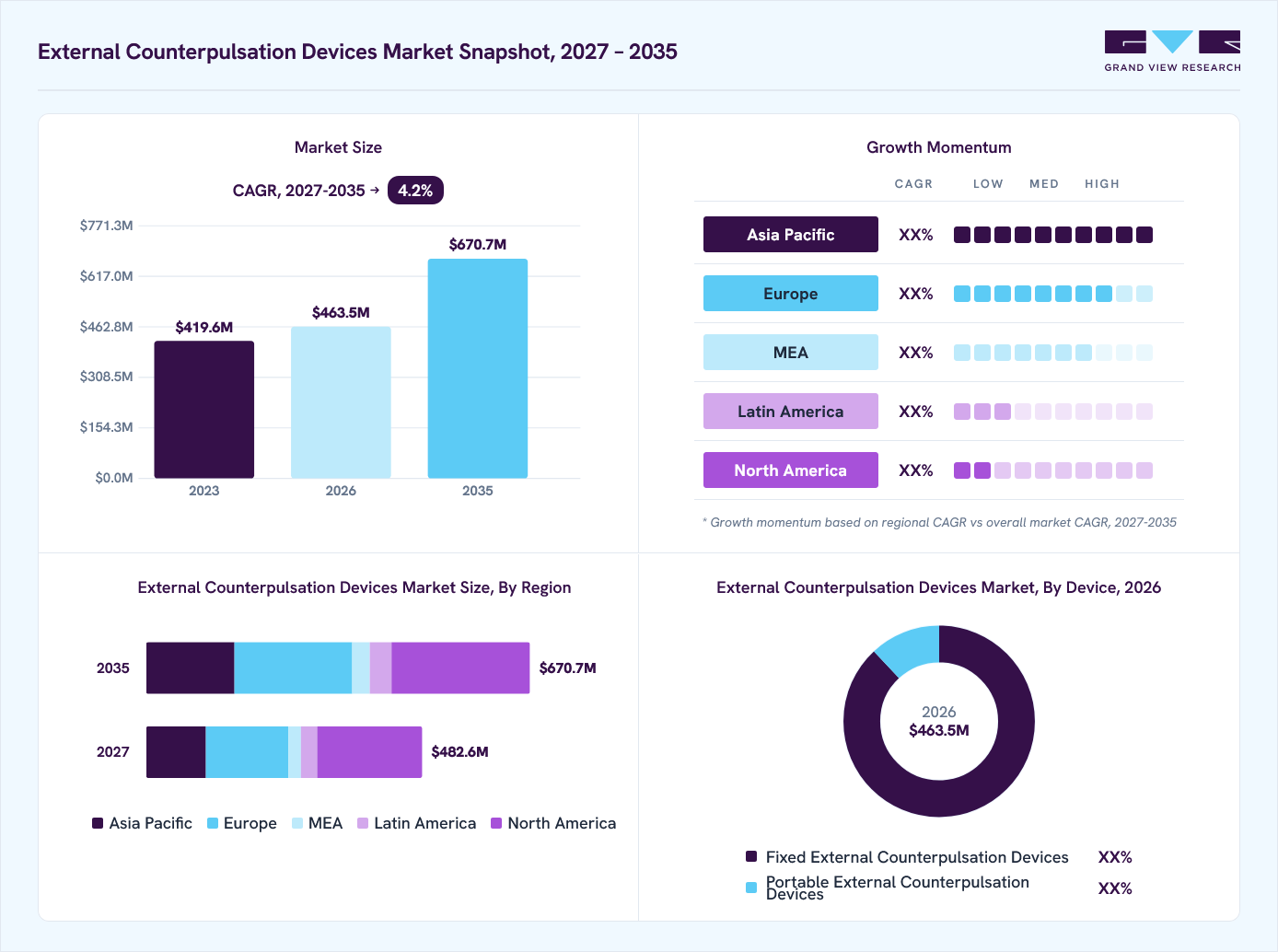
The global external counterpulsation devices market size was valued at USD 463.5 million in 2026 and is projected to grow from USD 482.6 million in 2027 to USD 670.7 million by 2035, at a CAGR of 4.2% from 2027 to 2035. North America dominated the market, accounting for a revenue share of 38.3% in 2026. This growth is driven by the rising prevalence of cardiovascular diseases, increasing demand for non-invasive treatment options for refractory angina, and growing adoption of enhanced external counterpulsation (EECP) therapy across specialized cardiac centers and outpatient facilities.
 Source: Grand View Research, IR Documents, Primary Interviews, Paid DatabasesTo learn more about this report,
 Download Free Sample Report
Key Market Trends & Insights
- By product: Pneumatic ECP devices segment held the largest market share of 34.7% in 2026.
- By device: Fixed external counterpulsation devices segment held the largest market share in 2026.
- By component: Systems/equipment segment held the largest market share of 60.6% in 2026.
- By application: Refractory angina segment held the largest market share of 41.6% in 2026.
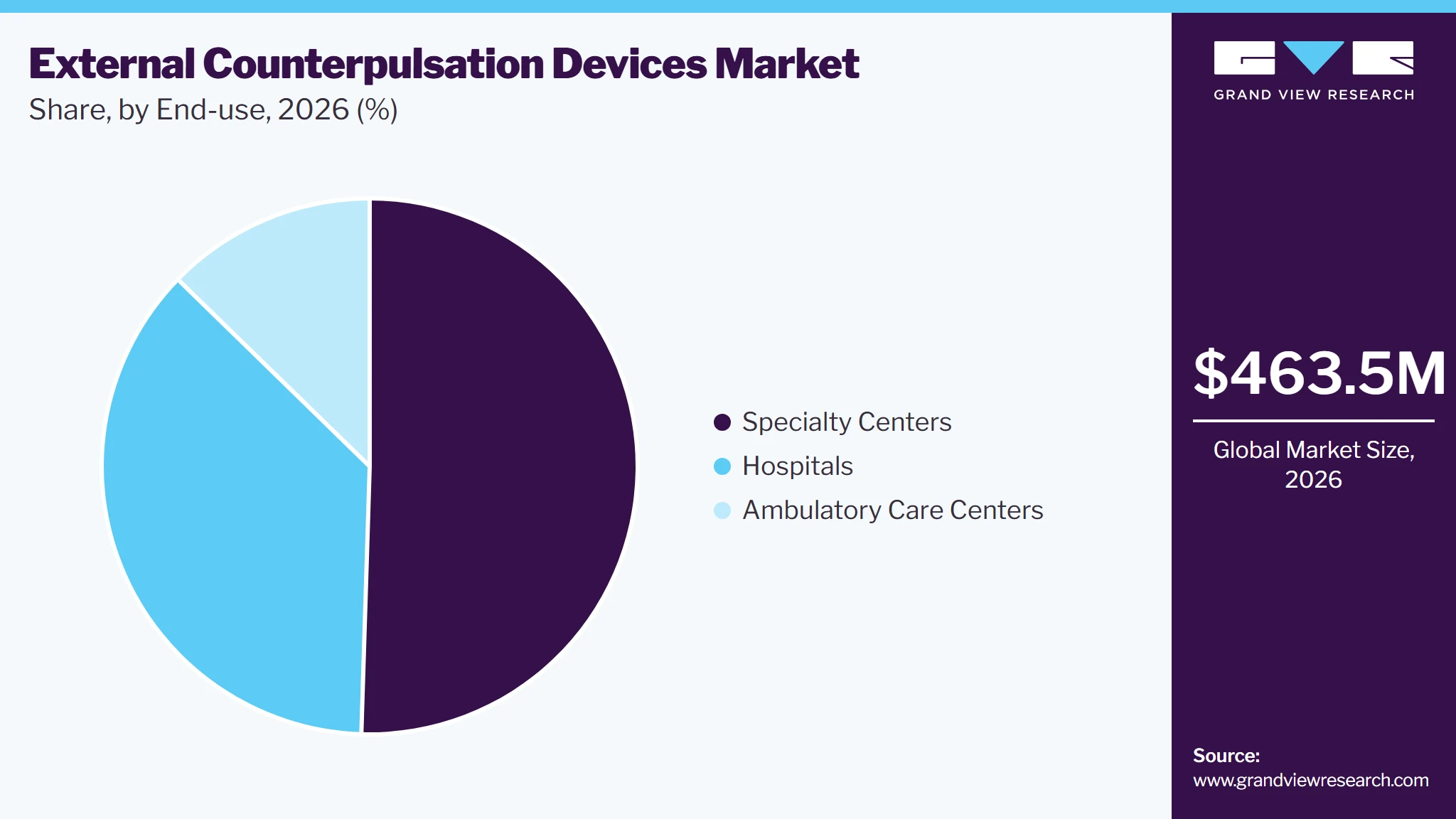
- By end use: Specialty centers segment held the largest market share of 50.5% in 2026.
Regional Highlights
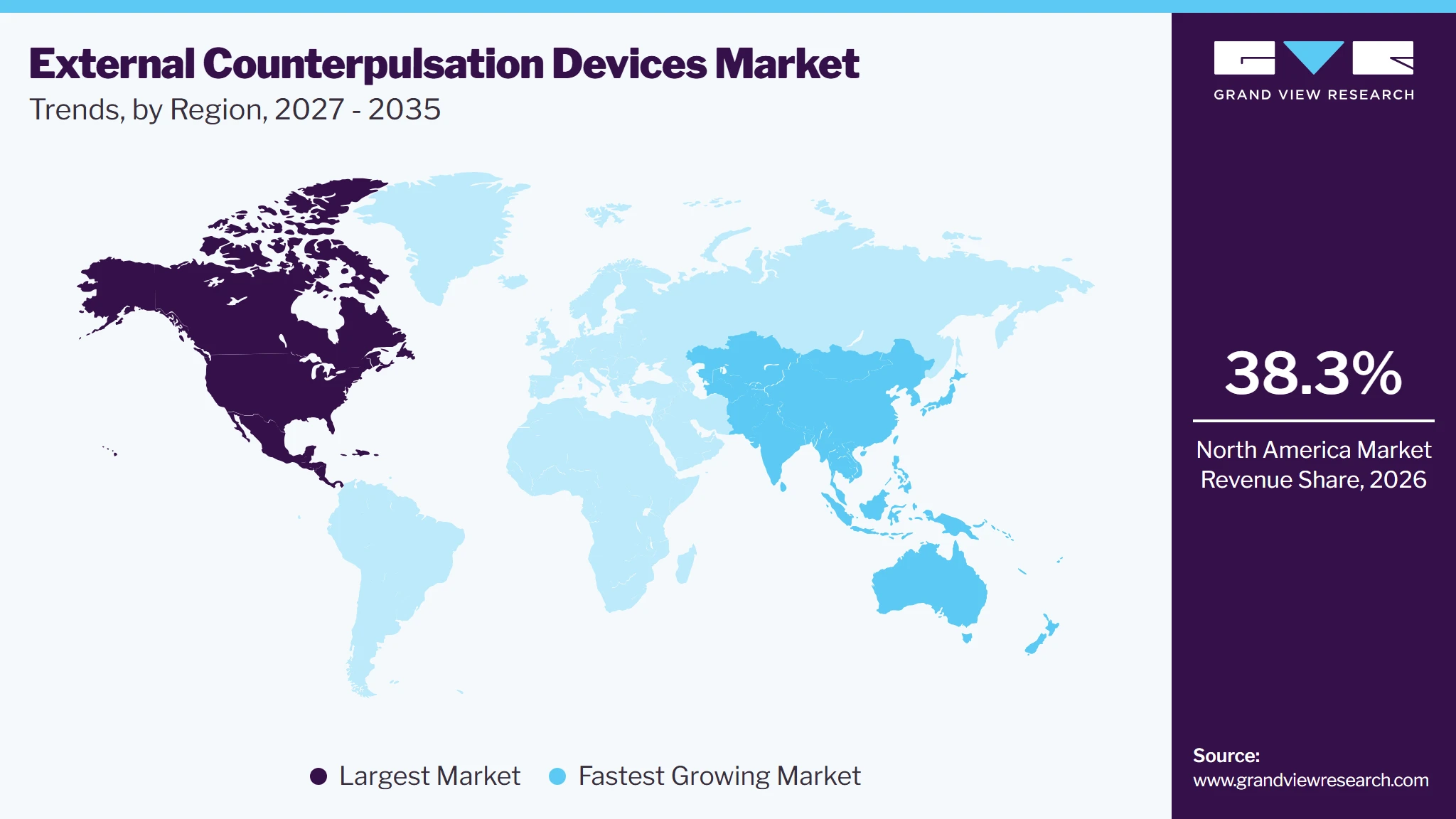
- Largest regional market: North America (38.3% revenue share, 2026)
- Fastest-growing regional market: Asia Pacific (highest CAGR, 2027-2035)
Market Size & Forecast
- Market Size in 2026: USD 463.5 Million
- Estimated Market Size in 2027: USD 482.6 Million
- 2035 Projected Market Size: USD 670.7 Million
- CAGR (2027-2035): 4.2%
Prism AI by Grand View Research Free to tryAsk a question about the external counterpulsation devices marketTry asking✓Every figure cited from GVR research Prefer the report? Download free sample →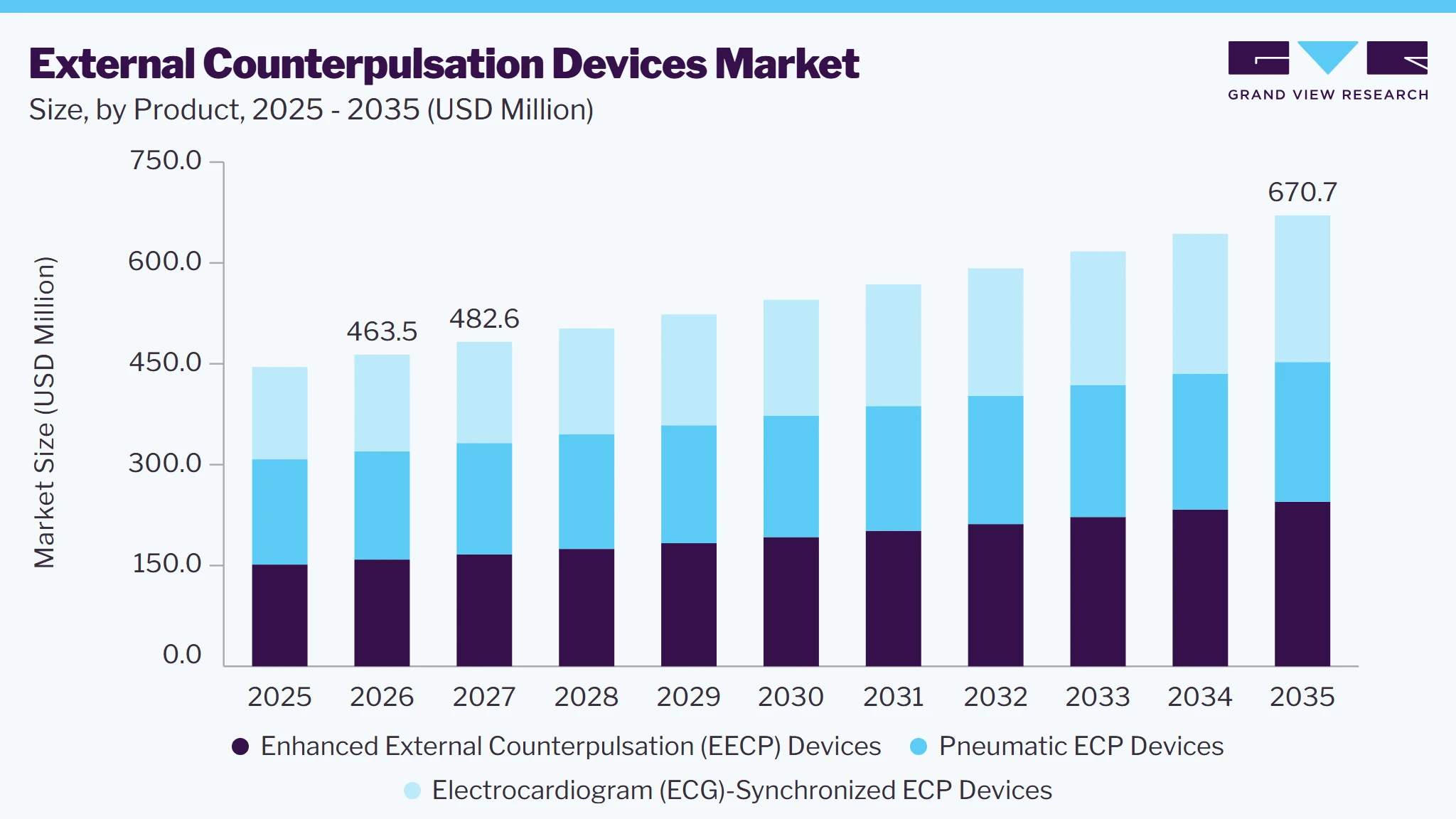 To learn more about this report, Download Free Sample Report
In addition, greater clinical recognition of EECP and expanding access to structured cardiac rehabilitation services are expected to support market expansion.
Market Dynamics
The market is driven by the rising prevalence of refractory angina and chronic coronary syndromes among patients who remain symptomatic despite medical therapy and revascularization. The non-invasive nature of ECP therapy, which uses ECG-gated sequential leg-cuff inflation to improve coronary perfusion, supports its adoption in outpatient settings. However, limited reimbursement coverage, strict patient eligibility criteria, and the time-intensive treatment course of 35 one-hour sessions restrain market growth. Expanding research into heart failure, peripheral artery disease, and cardiac rehabilitation, along with the development of portable and lightweight systems, is expected to create growth opportunities across patient groups and healthcare settings.
The growing population of patients with coronary artery disease (CAD) who continue to experience angina despite optimal medical therapy, percutaneous coronary intervention, or bypass surgery is increasing the need for alternative treatment options, including external counterpulsation (ECP). Improved survival following coronary events and population aging are further expanding the number of people living with chronic symptomatic ischemic heart disease. According to a 2025 review published in the European Heart Journal, an estimated 600,000-1.8 million people in the U.S. have refractory angina, while Europe records approximately 30,000-50,000 new cases annually.
Furthermore, the Report on Cardiovascular Health and Diseases in China 2023, published in September 2024, estimated that approximately 330 million people were living with cardiovascular disease, including 11.39 million with coronary heart disease and 8.9 million with heart failure. The rising burden of cardiovascular disease is expected to support demand for non-invasive treatment options, including ECP therapy, across hospitals and specialized cardiac centers.
Growing Preference for Non-Invasive, Outpatient Cardiac Therapies
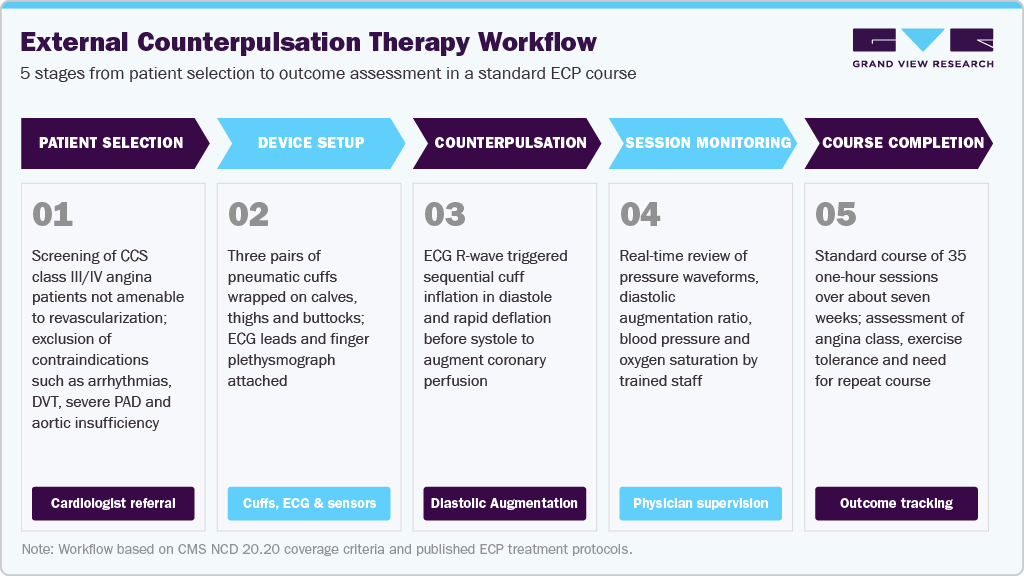
The growing preference for non-invasive cardiac treatment options, particularly among elderly patients and individuals with comorbidities that increase surgical risks, is supporting market growth. According to the 2024 ESC Guidelines, approximately 2%-24% of patients with coronary artery disease (CAD) continue to experience daily or weekly angina despite anti-anginal medication, PCI, or bypass surgery, highlighting the need for alternative treatment options. ECP therapy is delivered in outpatient settings without anesthesia or hospitalization and typically involves 35 one-hour sessions over seven weeks. In the U.S., Medicare's National Coverage Determination (NCD 20.20) covers ECP for eligible patients with disabling Class III or IV angina who are not readily amenable to surgical intervention.
Furthermore, the 2024 ESC Guidelines identify enhanced external counterpulsation (EECP) as a promising option for patients with refractory angina after conventional treatment options have been exhausted, supporting its clinical consideration across European healthcare settings.
The external counterpulsation devices market is restrained by limited reimbursement coverage and strict patient eligibility requirements. Coverage is primarily focused on patients with chronic stable angina who remain symptomatic despite optimal medical therapy and are unsuitable for further revascularization. Treatment eligibility also depends on clinical assessments and the absence of contraindications, including significant aortic insufficiency, deep vein thrombosis, uncontrolled hypertension, and certain cardiac arrhythmia.
In addition, reimbursement for repeat treatment courses may require documented clinical improvement following the initial course. These restrictions limit the use of ECP therapy across other cardiovascular indications, including heart failure and peripheral artery disease, thereby constraining its broader market adoption.
Expanding clinical research into additional cardiovascular indications and technological advancements in external counterpulsation devices present growth opportunities for market participants. Clinical investigations evaluating ECP in patients with chronic heart failure, peripheral artery disease, and intermediate-risk chronic coronary syndromes may support broader clinical adoption and expand potential patient groups, subject to further evidence and regulatory approvals. For instance, in March 2026, a multicenter randomized controlled trial published in the Journal of the American College of Cardiology involving 81 patients across nine centers reported a 5.9% improvement in CT-derived fractional flow reserve following EECP treatment compared with the control group, indicating potential benefits in coronary functional improvement.
Furthermore, in September 2026, Pression, Inc. began commercial introduction of its FDA-cleared Wave PRO system, featuring simplified setup, automated operation, and flexibility across healthcare settings. These developments may improve treatment accessibility, reduce operational requirements, and create opportunities for ECP adoption across outpatient and specialized cardiac care facilities.
External Counterpulsation Technologies and Clinical Parameters
ECP Parameter
Details
Treatment Protocol
Standard course of 35 one-hour sessions, administered 5 days a week over approximately 7 weeks
Triggering Method
ECG R-wave gated inflation and deflation; photoplethysmography (PPG)-based timing in newer systems
Cuff Configuration
Three pairs of pneumatic cuffs on calves, lower thighs, and upper thighs/buttocks; calf-only sleeves in compact systems
Hemodynamic Monitoring
Finger plethysmography for diastolic augmentation, blood pressure, and optional pulse oximetry (SpO2)
Reimbursement Code (U.S.)
HCPCS G0166 - External counterpulsation, per treatment session
Source:CMS National Coverage Determination and FDA - 510(k) Premarket Notification Database
External Counterpulsation Therapy Workflow
 To learn more about this report, Download Free Sample Report
Market Concentration & Characteristics
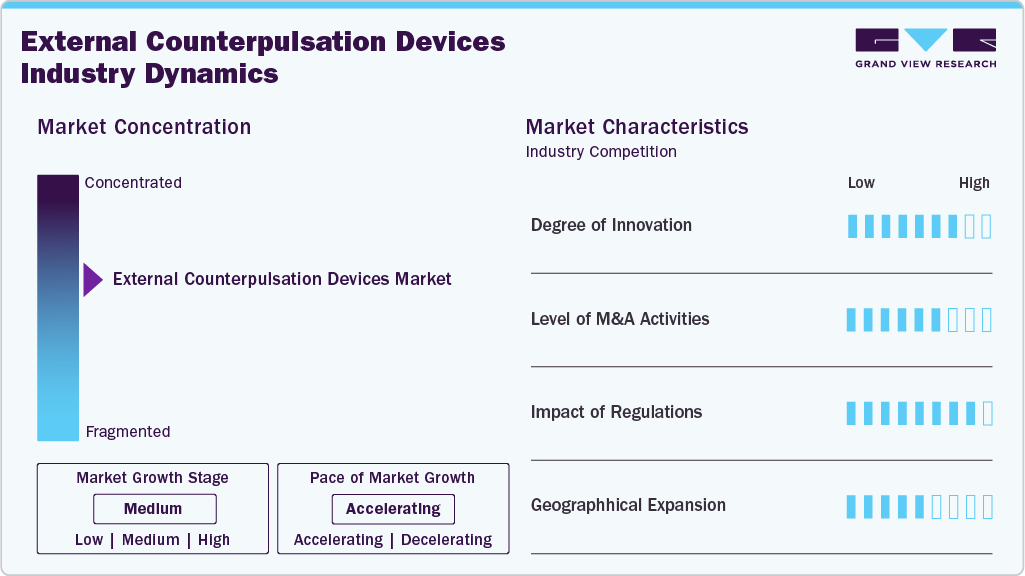
The market is characterized by a moderate to high degree of innovation, with manufacturers focusing on device design, portability, and improvements in system usability. For instance, in January 2026, Chongqing PSK-Health Sci-Tech Development Co., Ltd. published a Chinese design patent for an external counterpulsation device (CN309757349S), reflecting continued product design development in the market. Such developments indicate manufacturers' efforts to refine device form factors and strengthen product differentiation.
The market is characterized by increasing partnership and collaboration activities. Manufacturers, specialized ECP providers, and healthcare systems are entering into joint ventures and strategic agreements to expand access to external counterpulsation therapy. For instance, in July 2026, Northeast Georgia Health System (NGHS) and Flow Therapy established a joint venture to expand access to counterpulsation therapy in Gainesville, Georgia, through a dedicated outpatient clinic.
 To learn more about this report, Download Free Sample Report
“We are proud to partner with Northeast Georgia Health System to bring counterpulsationtherapy to Gainesville and the surrounding area, there is a meaningful population of patients who continue to experience symptoms despite current care. This model is designed to meet that need in a way that is accessible, coordinated, aligned with the broader care team.”
- Michael Gratch, CEO and founder of Flow Therapy.
Regulations have a high impact on the market. In the U.S., external counterpulsation devices are regulated under 21 CFR 870.5225 as Class II devices with special controls for chronic stable angina, requiring performance testing for applied pressure, synchronization with the cardiac cycle, alarm functionality, software validation, biocompatibility, and electrical safety. Indications such as heart failure, acute myocardial infarction, and cardiogenic shock require PMA, which shapes product labeling and clinical development strategies.
Companies are focusing on expanding their geographical presence by obtaining regulatory approvals, strengthening distributor networks, and establishing partnerships across emerging and developed markets. Compliance with regional regulatory requirements enables manufacturers to commercialize their products in additional countries, improve market access, and reach a broader customer base. These expansion strategies support international sales growth and strengthen the competitive positioning of ECP device manufacturers.
Analyst Perspective
The market is witnessing steady growth, driven by the increasing demand for non-invasive treatment options among patients with refractory angina and chronic coronary syndromes. Established reimbursement in the U.S., guideline support in Europe, and widespread clinical adoption in China provide a strong demand base. Emerging applications in heart failure, cardiac rehabilitation, and cerebrovascular diseases are expected to create new growth opportunities. Manufacturers are focusing on expanding service networks, international registrations, and developing compact, portable systems. Future growth will depend on stronger clinical evidence, broader insurance coverage, and reduced system costs to support wider adoption in outpatient settings.
Product Insights
By product, the pneumatic ECP devices segment held the largest market share of 34.7% in 2026. This dominance is attributed to the established use of pneumatic compression technology, which relies on compressed air to sequentially inflate lower-limb cuffs and improve diastolic blood flow. The availability of systems from multiple manufacturers, established clinical use, and relatively lower acquisition costs support their adoption across hospitals and cardiac centers, particularly in cost-sensitive markets.
The enhanced external counterpulsation (EECP) devices segment is anticipated to grow at the fastest CAGR of 4.9% over the forecast period. Growth is driven by clinical evidence supporting EECP therapy for refractory angina, including findings from the MUST-EECP trial and the International EECP Patient Registry. Medicare coverage for eligible patients in the U.S. and increasing integration of EECP into specialized cardiac rehabilitation services are further expected to support segment growth.
Device Insights
The fixed external counterpulsation devices segment held the largest market share of 88.0% in 2026. This dominance is due to dominance the widespread installation of fixed systems in hospitals and specialized cardiac centers, where dedicated treatment rooms accommodate compressors, treatment beds, and monitoring consoles. Their durability established clinical use, and suitability for handling high patient volumes support segment growth.
The portable external counterpulsation devices segment is expected to grow at the fastest CAGR over the forecast period from 2026 to 2033. Growth is driven by increasing demand for compact systems that can be moved between treatment areas and deployed in space-constrained outpatient facilities. For instance, in December 2025, the U.S. FDA cleared Pression, Inc.'s Wave PRO External Counter-Pulsation System (K250756), a 34-kg system featuring calf-only compression sleeves and fingertip photoplethysmography (PPG)-based synchronization. Its compact design supports portability and use across different healthcare settings.
Component Insights
By component, the systems / equipment segment held the largest market share of 60.6% in 2026. This dominance is attributed to the high initial cost of ECP systems, including consoles, compressors, treatment beds, and monitoring units. New installations across hospitals and specialized cardiac centers, along with the replacement of aging equipment, further support segment revenue.
The treatment cuffs segment is anticipated to register the fastest CAGR of 6.1% over the forecast period. Growth is driven by the recurring replacement requirements of cuffs due to wear from repeated inflation cycles and regular clinical use. Increasing ECP treatment volumes, infection prevention practices, and the availability of different cuff sizes to accommodate patient requirements are expected to support segment growth.
Application Insights
The refractory angina segment held the largest market share of 41.6% in 2026. This dominance is driven by the established clinical use of enhanced external counterpulsation (EECP) for patients with persistent angina who remain symptomatic despite optimal medical therapy and are unsuitable for revascularization procedures. Medicare coverage for eligible patients with severe angina in the U.S. also supports treatment access and segment revenue.
The peripheral artery disease (PAD) segment is expected to register the fastest CAGR of 7.1% over the forecast period from 2026 to 2033. Growth is driven by increasing research into the use of external counterpulsation to improve peripheral blood circulation, walking capacity, and symptoms associated with limb ischemia. Rising PAD prevalence and demand for non-invasive treatment approaches are expected to support segment expansion.
End Use Insights
The specialty centers (cardiac centers, cardiac rehabilitation centers) segment held the largest market share of 50.5% in 2026 and is expected to grow at the fastest CAGR over the forecast period. This growth is driven by the increasing use of specialized outpatient facilities for delivering external counterpulsation therapy to patients with refractory angina who continue to experience symptoms despite conventional medical treatment. These centers provide dedicated ECP equipment, trained technicians, and cardiologist supervision, supporting structured treatment programs that typically involve 35 one-hour sessions over seven weeks. The growing establishment of specialized cardiac care facilities and partnerships between healthcare systems and ECP service providers is expected to further support segment growth.
 To learn more about this report, Download Free Sample Report
The hospitals segment accounted for a significant market share in 2026. This is driven by the availability of advanced cardiac care infrastructure, specialized cardiology departments, trained healthcare professionals, and established patient referral networks. Hospitals also support ECP therapy through cardiologist-led patient evaluation and monitoring, particularly for individuals with refractory angina and complex cardiovascular conditions.
Regional Insights
North America's external counterpulsation devices market dominated with a 38.3% share in 2026. The region benefits from established Medicare and commercial payer coverage for disabling angina, a large population of patients with chronic coronary artery disease, and the presence of multiple FDA-cleared ECP manufacturers.
 To learn more about this report, Download Free Sample Report
The region also has an active ECP provider ecosystem comprising hospitals, cardiology practices, and specialty ECP clinic operators. Specialty providers are also expanding their clinic networks. For instance, in October 2023, Flow Therapy announced a new 2,680-square-foot outpatient clinic in McKinney, Texas, expanding its network to 10 clinics across three states.
U.S. External Counterpulsation Devices Market Trends
In the U.S., ECP therapy is covered by Medicare for patients with Class III or Class IV angina who are not readily amenable to surgical intervention, and sessions are reimbursed under HCPCS code G0166. The availability of multiple FDA-cleared systems from companies such as Vasomedical, Inc., Stage 2 Innovations, Inc. (Renew NCP-5), Applied Cardiac Systems, Inc., CardioMedics, Inc., and Pression, Inc. supports competitive supply. For instance, in December 2025, Pression, Inc. received FDA 510(k) clearance for its portable Wave PRO External Counter-Pulsation System for chronic stable angina refractory to optimal medical therapy.
Europe External Counterpulsation Devices Market Trends
In Europe, the market held significant share in 2026 driven by the high prevalence of chronic coronary syndromes and an estimated 30,000-50,000 new cases of refractory angina annually. The 2024 European Society of Cardiology (ESC) Guidelines for the management of chronic coronary syndromes, published in September 2024, recognize enhanced external counterpulsation (EECP) as a treatment option for refractory angina (Class IIb), supporting its clinical consideration across European healthcare settings.
The UK external counterpulsation devices market is at an early stage of adoption, with demand supported by an estimated 50,000 people living with refractory angina in 2025, according to Royal Brompton and Harefield Hospitals. Treatment availability remains concentrated in specialist cardiac centers; for instance, Bradford Teaching Hospitals NHS Foundation Trust provides enhanced external counterpulsation (EECP) through its dedicated refractory angina clinic. Furthermore, the 2024 European Society of Cardiology guidelines recognize EECP as a promising treatment option for patients with refractory angina after medical therapy and revascularization options have been exhausted, supporting its clinical relevance in the UK market.
Germany's market is driven by its large cardiology infrastructure, aging population, and strong clinical research base. German investigators have contributed to the evidence base for ECP, including the Art.Net.-2 trial, which reported improvements in fractional flow reserve and coronary collateral flow following external counterpulsation. Growing interest in cardiac rehabilitation and non-invasive therapies for patients with chronic coronary syndromes is expected to support market growth.
Asia Pacific External Counterpulsation Devices Market Trends
Asia Pacific is expected to grow at the fastest CAGR of 5.0% over the forecast period from 2027 to 2035. The region benefits from widespread clinical use of ECP in China, domestic manufacturing capacity, and a rapidly growing cardiovascular patient population across China and India. Regional manufacturers such as Chongqing PSK Sci-Tech Development Co., Ltd., Vamed Medical Instrument Co., Ltd., and Omay (Guangzhou) Med Technologies Co., Ltd. have also obtained U.S. FDA clearances, supporting exports from the region. In addition, Renew Group's NCP-5 system is listed on the Australian Register of Therapeutic Goods (ARTG).
China represents a key market owing to the widespread clinical use of ECP in hospitals and cardiac rehabilitation centers and the presence of domestic manufacturers such as Chongqing PSK-Health. The country has an estimated 330 million people with cardiovascular disease, including 11.39 million with coronary heart disease and 8.9 million with heart failure. Chinese clinical centers are also leading research on new ECP applications. For instance, in 2026, Chinese researchers published studies evaluating EECP-based cardiac rehabilitation in acute coronary syndrome patients, EECP efficacy prediction in HFpEF patients, and EECP for functional recovery after ischemic stroke.
Latin America External Counterpulsation Devices Market Trends
The Latin America market is driven by the rising prevalence of cardiovascular disease and the gradual adoption of non-invasive therapies in private hospitals and cardiology clinics in Brazil and Argentina. Regulatory approvals from Brazil's National Health Surveillance Agency (ANVISA) for ECP-related medical devices, such as those reported by Vaso Corporation (Vasomedical), are enabling manufacturers to serve the regional market.
Middle East & Africa External Counterpulsation Devices Market Trends
The Middle East and Africa market is expected to grow at significant CAGR over the forecast period. Growth is supported by healthcare infrastructure investments in Gulf Cooperation Council countries, a high prevalence of diabetes and cardiovascular risk factors, and increasing demand for advanced outpatient cardiac care. Manufacturer registrations with regulators such as the Saudi Food and Drug Authority (SFDA), reported by Vaso Corporation (Vasomedical) for its medical devices, support product availability in Saudi Arabia.
Key External Counterpulsation Devices Company Insights
Key companies in the external counterpulsation devices market are focusing on product innovation, portable system development, regulatory clearances, and strategic partnerships to strengthen their market position. Manufacturers are developing systems with improved triggering methods, automated pressure control, compact designs, and user-friendly interfaces, while expanding distribution networks and service capabilities across hospitals and specialty cardiac centers.
Key External Counterpulsation Devices Companies
The following key companies have been profiled for this study on the external counterpulsation devices market:
-
Vasomedical, Inc.
-
Pression, Inc.
-
Vamed Medical Instrument Co., Ltd.
-
Omay (Guangzhou) Med Technologies Co., Ltd.
-
Xtreem Pulse, LLC
-
Chongqing PSK Sci-Tech Development Co., Ltd.
-
Stage 2 Innovations, Inc.
-
ScottCare Corporation
-
CardioMedics, Inc.
-
Applied Cardiac Systems, Inc.
-
Circulator Boot Corp.
-
ECP Health, Inc.
-
Living Data Technologies Corporation
-
S-TCT Health, Inc.
-
CPCA2000, Inc.
-
External Counterpulsation Lab
-
Sola Medical Devices, LLC
Competitive Benchmarking
Category
Operating Strategies
Competitive Edge
Weakness
Established Players (e.g., Vasomedical, Inc., Chongqing PSK Sci-Tech Development Co., Ltd., Applied Cardiac Systems, Inc., CardioMedics, Inc., ScottCare Corporation, Stage 2 Innovations, Inc.)
- Strengthen installed base and service networks across hospitals and specialty cardiac centers.
- Expand regulatory registrations and distributor partnerships in international markets.
- Long clinical track record and established brand recognition among cardiologists.
- Broad regulatory clearances and recurring consumables revenue.
- High system cost and large footprint of stationary units.
- Dependence on narrow reimbursed indications.
Emerging / Specialized Players (e.g., Pression, Inc., Vamed Medical Instrument Co., Ltd., Omay (Guangzhou) Med Technologies Co., Ltd., Xtreem Pulse, LLC, ECP Health, Inc.
- Develop compact, portable, and cost-competitive ECP systems.
- Target outpatient clinics, export markets, and new care settings.
- Lower-cost manufacturing and innovative form factors.
- Flexibility to address underserved and space-constrained facilities.
- Limited clinical evidence and brand awareness.
- Smaller sales and service networks.
Recent Developments
- In July 2026, Northeast Georgia Health System (NGHS) and Flow Therapy established a joint venture to expand access to external counterpulsation (ECP) therapy in Gainesville, Georgia. The partnership introduced outpatient counterpulsation treatment for patients experiencing persistent symptoms of ischemic heart disease, including angina, shortness of breath, and fatigue despite standard therapies. The new clinic, located at 1650 Jesse Jewell Parkway, opened in June 2026, with initial patient onboarding coordinated through the NGHS cardiology team.
“We are proud to partner with Northeast Georgia Health System to bring counterpulsationtherapy to Gainesville and the surrounding area, There is a meaningful population of patients who continue to experience symptoms despite current care. This model is designed to meet that need in a way that is accessible, coordinated, aligned with the broader care team.”
- Michael Gratch, CEO and founder of Flow Therapy.
-
In March 2026, Vaso Corporation, the parent company of Vasomedical, reported in its FY2025 annual report that its Management Service Agreement with EECP Global Corporation, in which Chongqing PSK-Health holds a 51% majority stake, remained in effect through April 2026, with automatic one-year renewals thereafter. Under the agreement, Vaso provides management services for EECP Global's U.S. operations, including reimbursement of direct expenses and payment of a monthly management fee.
-
In January 2026, Pression, Inc. announced U.S. FDA 510(k) clearance (granted on December 22, 2025) for its Wave PRO External Counter-Pulsation System, indicated for chronic stable angina refractory to optimal anti-anginal medical therapy and without options for revascularization. The portable 34 kg system uses calf-only compression sleeves and finger-tip PPG timing.
“Receiving 510(k) Clearance for the Pression Wave PRO is a definitive turning point for our company and, more importantly, for the millions of patients living with chronic stable angina. This technology began as a way to enhance performance in the military, and today, it is a cleared medical solution that brings the benefits of cardiac-gated compression out of the clinic and directly to outpatient care. Our mission has always been to make life-enhancing circulation therapy accessible, comfortable, and smart. With this clearance, we are ready to begin the next chapter of cardiovascular care in the United States.”
External Counterpulsation Devices Market Report Scope
Report Attribute
Details
Market size in 2026
USD 463.5 million
Estimated market size in 2027
USD 482.6 million
Revenue forecast in 2035
USD 670.7 million
Growth Rate
CAGR of 4.2% from 2027 to 2035
Base year for estimation
2026
Historical data
2023 - 2025
Forecast period
2027 - 2035
Quantitative units
Revenue in USD million and CAGR from 2027 to 2035
Report coverage
Revenue forecast, company ranking, competitive landscape, growth factors, and trends
Segments covered
Product, device, component, application, end use, region
Regional scope
North America; Europe; Asia Pacific; Latin America; and MEA
Country scope
U.S.; Canada; Mexico; UK; Germany; France; Italy; Spain; Denmark; Sweden; Norway; China; Japan; India; Australia; South Korea; Thailand; Brazil; Argentina; Saudi Arabia; South Africa; UAE; Kuwait
Key companies profiled
Vasomedical, Inc.; Pression, Inc.; Vamed Medical Instrument Co., Ltd.; Omay (Guangzhou) Med Technologies Co., Ltd.; Xtreem Pulse, LLC; Chongqing PSK Sci-Tech Development Co., Ltd.; Stage 2 Innovations, Inc.; ScottCare Corporation; CardioMedics, Inc.; Applied Cardiac Systems, Inc.; Circulator Boot Corp.; ECP Health, Inc.; Living Data Technologies Corporation; S-TCT Health, Inc.; CPCA2000, Inc.; External Counterpulsation Lab; Sola Medical Devices, LLC
Customization scope
Free report customization (equivalent up to 8 analyst's working days) with purchase. Addition or alteration to country, regional & segment scope
Pricing and purchase options
Avail customized purchase options to meet your exact research needs. Explore purchase options
Global External Counterpulsation Devices Market Report Segmentation
This report forecasts revenue growth at global, regional, and country levels and provides an analysis of the latest industry trends in each of the sub-segments from 2023 to 2035. For this study, Grand View Research has segmented the global external counterpulsation devices market report based on product, device, component, application, end use, and region:
-
Product Outlook (Revenue, USD Million, 2023 - 2035)
-
Pneumatic ECP Devices
-
Electrocardiogram (ECG)-Synchronized ECP Devices
-
Enhanced External Counterpulsation (EECP) Devices
-
-
Device Outlook (Revenue, USD Million, 2023 - 2035)
-
Fixed External Counterpulsation Devices
-
Portable External Counterpulsation Devices
-
-
Component Outlook (Revenue, USD Million, 2023 - 2035)
-
Systems / Equipment
-
Treatment Cuffs
-
ECG Monitoring and Synchronization Systems
-
Pressure and Physiological Sensors
-
Other Accessories and Consumables
-
-
Application Outlook (Revenue, USD Million, 2023 - 2035)
-
Refractory Angina
-
Chronic Stable Angina
-
Coronary Artery Disease (CAD)
-
Heart Failure
-
Left Ventricular Dysfunction
-
Peripheral Artery Disease (PAD)
-
Other Cardiovascular Conditions
-
-
End Use Outlook (Revenue, USD Million, 2023 - 2035)
-
Specialty Centers (Cardiac Centers, Cardiac Rehabilitation Centers)
-
Hospitals
-
Ambulatory Care Centers
-
-
Regional Outlook (Revenue, USD Million, 2023 - 2035)
-
North America
-
U.S.
-
Canada
-
Mexico
-
-
Europe
-
Germany
-
UK
-
France
-
Italy
-
Spain
-
Denmark
-
Sweden
-
Norway
-
-
Asia Pacific
-
China
-
Japan
-
India
-
South Korea
-
Australia
-
Thailand
-
-
Latin America
-
Brazil
-
Argentina
-
-
Middle East and Africa (MEA)
-
South Africa
-
Saudi Arabia
-
UAE
-
Kuwait
-
-
Research Methodology
The external counterpulsation devices market figures in this report are based on a proven research process that combines executive interviews with secondary research from proprietary databases, company filings, and recognized regulatory and institutional sources. Market size is built through value-chain sizing-reconciling supply-side and demand-side estimates-and triangulated with bottom-up and top-down approaches. Every estimate passes multiple levels of expert validation before publication, with each external counterpulsation devices segment quantified using the revenue-capture definitions in the table below.
Segment Definition
Segment
Segment Definition
By Product:
Pneumatic ECP Devices
Pneumatic external counterpulsation devices use compressed air to inflate cuffs wrapped around the lower limbs in synchrony with the cardiac cycle, increasing diastolic pressure and venous return.
Electrocardiogram (ECG)-Synchronized ECP Devices
ECG-synchronized ECP devices use the R-wave of the patient's electrocardiogram to time cuff inflation during diastole and deflation before systole, ensuring precise hemodynamic augmentation.
Enhanced External Counterpulsation (EECP) Devices
EECP devices deliver sequential, high-pressure compression from the calves to the thighs and buttocks, producing diastolic augmentation and systolic unloading, and are primarily used for refractory angina.
By Device:
Fixed External Counterpulsation Devices
Fixed ECP devices are stationary systems installed in dedicated treatment rooms, typically comprising an integrated treatment bed, compressor, and control console.
Portable External Counterpulsation Devices
Portable ECP devices are mobile or foldable systems that can be moved between treatment areas or installed in space-constrained clinics and outpatient facilities.
By Component:
Systems / Equipment
Includes ECP consoles, air compressors, control software, and treatment beds that form the core capital equipment of an ECP system.
Treatment Cuffs
Inflatable cuffs or sleeves wrapped around the calves, thighs, and buttocks that deliver sequential compression and require periodic replacement.
ECG Monitoring and Synchronization Systems
Includes ECG leads, electrodes, and trigger modules used to synchronize cuff inflation and deflation with the patient's cardiac cycle.
Pressure and Physiological Sensors
Includes finger plethysmographs, pressure transducers, and pulse oximetry sensors used to monitor diastolic augmentation and patient status during therapy.
Other Accessories and Consumables
Includes air hoses, cuff liners, patient garments, and other ancillary items used in ECP treatment sessions.
By Application:
Refractory Angina
Chronic angina that persists despite optimal medical therapy and revascularization, which is the primary indication for ECP therapy.
Chronic Stable Angina
Predictable chest pain triggered by exertion or stress in patients with stable coronary artery disease, treated with ECP to reduce angina frequency and improve exercise tolerance.
Coronary Artery Disease (CAD)
Use of ECP in patients with coronary artery disease to improve myocardial perfusion, endothelial function, and collateral circulation.
Heart Failure
Use of ECP as an adjunctive therapy in patients with stable heart failure to improve exercise capacity and functional status.
Left Ventricular Dysfunction
Use of ECP in patients with reduced left ventricular function, often with coexisting angina, to support cardiac performance.
Peripheral Artery Disease (PAD)
Use of ECP to improve limb perfusion and vascular function in patients with atherosclerotic narrowing of peripheral arteries.
Other Cardiovascular Conditions
Includes other conditions such as cerebrovascular disease and microvascular dysfunction for which ECP is being evaluated.
By End Use:
Specialty Centers (Cardiac Centers, Cardiac Rehabilitation Centers)
Dedicated cardiac and cardiac rehabilitation centers that provide structured outpatient ECP treatment courses delivered by trained therapists.
Hospitals
Public and private hospitals offering ECP as part of cardiology and rehabilitation services, with direct access to cardiologists for supervision.
Ambulatory Care Centers
Outpatient facilities and clinics providing ECP therapy without hospital admission, increasingly supported by compact and portable systems.
Estimation Model
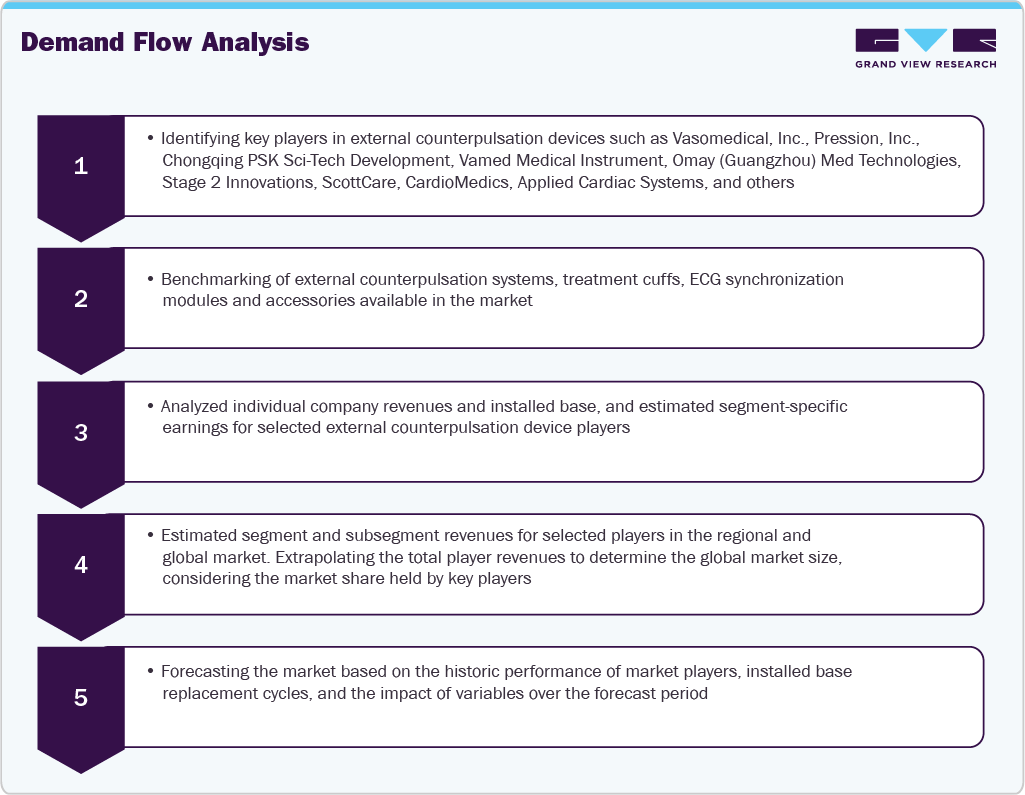
The market size of the external counter pulsation devices was estimated using a bottom-up approach, supported by company-level revenue analysis, installed base assessment, product benchmarking, and segment-level revenue estimation. Key market participants were identified, and their external counterpulsation systems, treatment cuffs, and accessories were benchmarked to assess their presence in the market. Company revenues attributable to external counterpulsation devices were analyzed to estimate segment-specific revenues, followed by extrapolation of regional and global market size based on the estimated market shares of key players. The market forecast was developed by evaluating historical company performance, installed base replacement cycles, and key market variables over the forecast period.
 To learn more about this report, Download Free Sample Report
Delivered Customizations
This report has been delivered with the following In-depth customizations
Client Request
Customization Delivered
Value Adds
Installed base and utilization analysis
Estimated installed ECP systems by country and care setting, average sessions per system, treatment course volumes, and replacement cycles for fixed and portable systems.
Helps manufacturers size replacement demand, prioritize high-utilization accounts, and plan service and consumables revenue.
Reimbursement and coverage assessment
Reviewed public and private payer coverage for ECP across target markets, including covered indications, session-based payment codes, prior authorization criteria, and repeat-course rules.
Helps clients identify markets and indications with favorable reimbursement and build evidence plans for coverage expansion.
Competitive pricing and product benchmarking
Compared system list prices, cuff and accessory pricing, service contracts, portability, triggering methods, and regulatory clearances across leading ECP vendors.
Supports competitive positioning, tender bidding strategies, and identification of premium features for new product development.
About the Author(s)
Medical Devices Research Team
Healthcare · Medical DevicesThis report was authored by the medical devices research team at Grand View Research - comprising two research analysts, one senior research analyst, and one industry expert - with specialized expertise in the medical devices segment of the healthcare industry. All findings are based on proprietary healthcare databases, executive interviews, and regulatory analysis, subject to internal peer review prior to publication.
Last Updated:
Speak to Analyst

Customize this report to your needs - add regions, segments, or data points, with 20% free customization.
Or view our licence options:


ISO 9001:2015 & 27001:2022 Certified
We are GDPR and CCPA compliant! Your transaction & personal information is safe and secure. For more details, please read our privacy policy.


