
- Home
- »
- Biotechnology
- »
-
Extractable And Leachable Testing Services Market Report 2033GVR Report cover

Extractable And Leachable Testing Services Market (2026 - 2033)
Size, Share & Trends Analysis Report By Product Type (Container Closure Systems, Drug Delivery Systems), By Application (Parenteral Drug Products, Ophthalmic), By Region, And Segment Forecasts
Market Size, 2025
$1.2BMarket Estimate, 2026
$1.3BMarket Forecast, 2033
$3.6BCAGR, 2026–2033
14.9%Extractable And Leachable Testing Services Market Summary
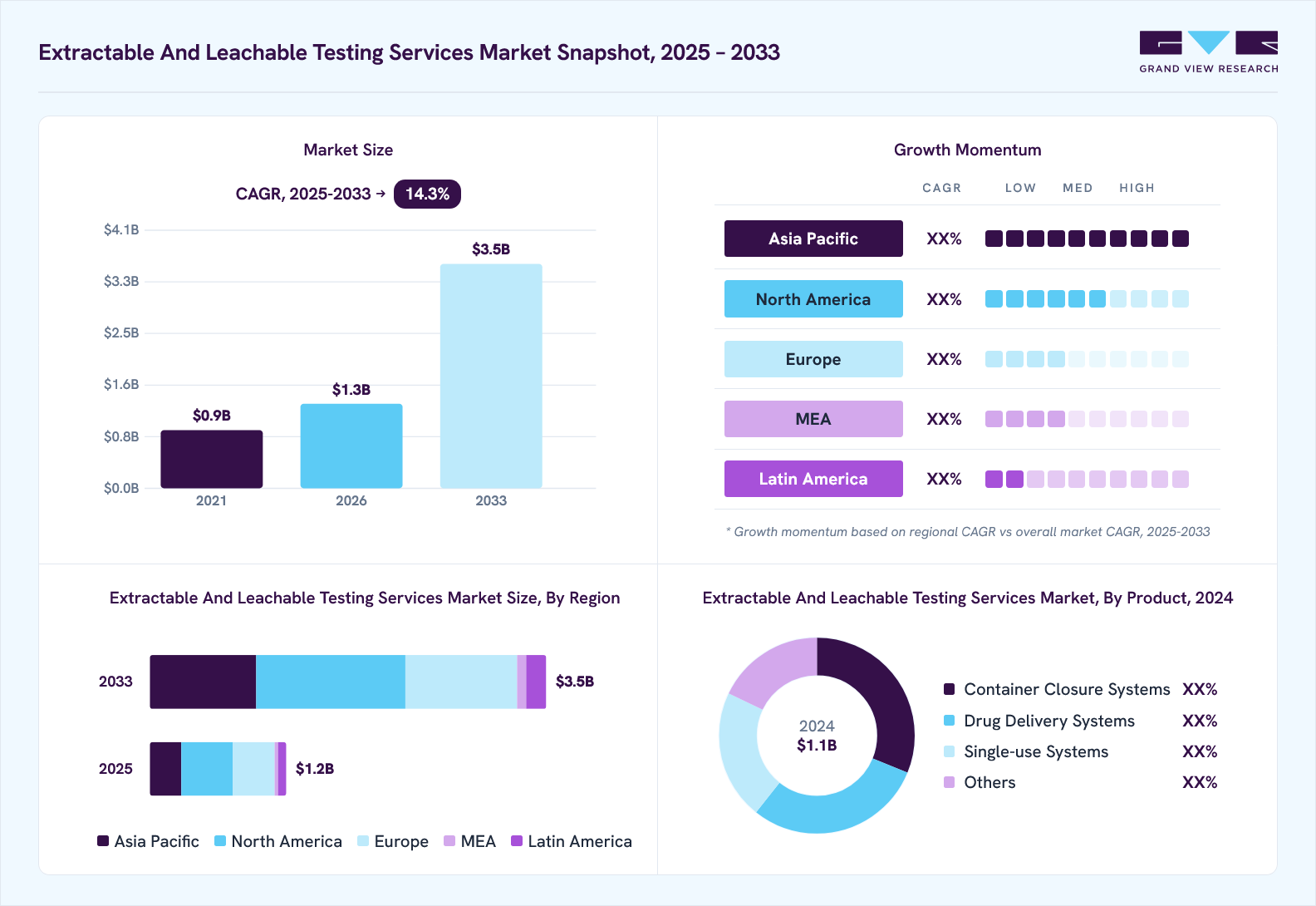
The global extractable and leachable testing services market size was valued at USD 1.2 billion in 2025 and is projected to grow from USD 1.3 billion in 2026 to USD 3.6 billion by 2033, at a CAGR of 14.9% from 2026 to 2033. North America dominated the market, accounting for a revenue share of 37.8% in 2025. The expanding pharmaceutical and biotechnology sectors across the world are fueling the demand for E&L testing services.
 Source: Grand View Research, IR Documents, Primary Interviews, Paid DatabasesTo learn more about this report,
 Download Free Sample Report
 Key Market Trends & Insights
- By product type: Container closure systems segment dominated the market, with a revenue share of 31.1% in 2025.
- By application: Orally inhaled and nasal drug products (OINDP) segment held the largest market share of 41.9% in 2025.
Regional Highlights
- Largest regional market: North America (37.8% revenue share, 2025)
- Fastest-growing regional market: Asia Pacific (highest CAGR, 2026-2033)
- By country: The U.S. held the largest market share in 2025.
Market Size & Forecast
- Market size in 2025: USD 1.2 Billion
- Estimated market size in 2026: USD 1.3 Billion
- Projected market size by 2033: USD 3.6 Billion
- CAGR (2026-2033): 14.9%
Three ways to get this report
Buy it, customize it, or ask a question.Ask an Analyst
Analyst response in 1 business day
- AccessReport author, directly
- Reply timeWithin 1 working day
- No sales callDirect answer only
- FormatEmail reply
- CostFree, no cost
Get the Full Report
What the study covers
- FormatsPDF · Excel · Dashboard
- Timeline2026–2033 annual, 2025 base
- Coverage20+ countries, 5 regions
- Companies10+ key players profiled
Customize the Report
20% free customization
- IncludeCountries, segments, points
- TailorTo your product definition
- ExtendDeeper competitor detail
- OrA fully bespoke study
- Turnaround5–10 working days
Moreover, increasing regulatory scrutiny on the quality of healthcare products, the rise of complex drug formulations, such as biologics and combination products, and rising emphasis on product safety are further anticipated to propel the market growth. The COVID-19 pandemic had positively impacted extractable and leachable testing services. With the heightened focus on healthcare and pharmaceuticals during the pandemic, there has been an increased awareness of the importance of rigorous testing to ensure the safety and efficacy of medical products. As a result, extractable and leachable testing services have gained more recognition and investment, leading to advancements in testing methodologies, equipment, and expertise. The pharmaceutical and medical device industries have been able to accelerate their research and development efforts to deliver innovative products while maintaining a strong commitment to safety and compliance. According to a WHO article, nearly 16 billion vaccine doses worth USD 141 billion were supplied in 2021, nearly thrice the market volume of 2019 (5.8 billion) and nearly three-and-a-half times the market value of 2019 (USD 38 billion). Thus, the increased demand for vaccines during the pandemic boosted the demand for extractable and leachable testing services.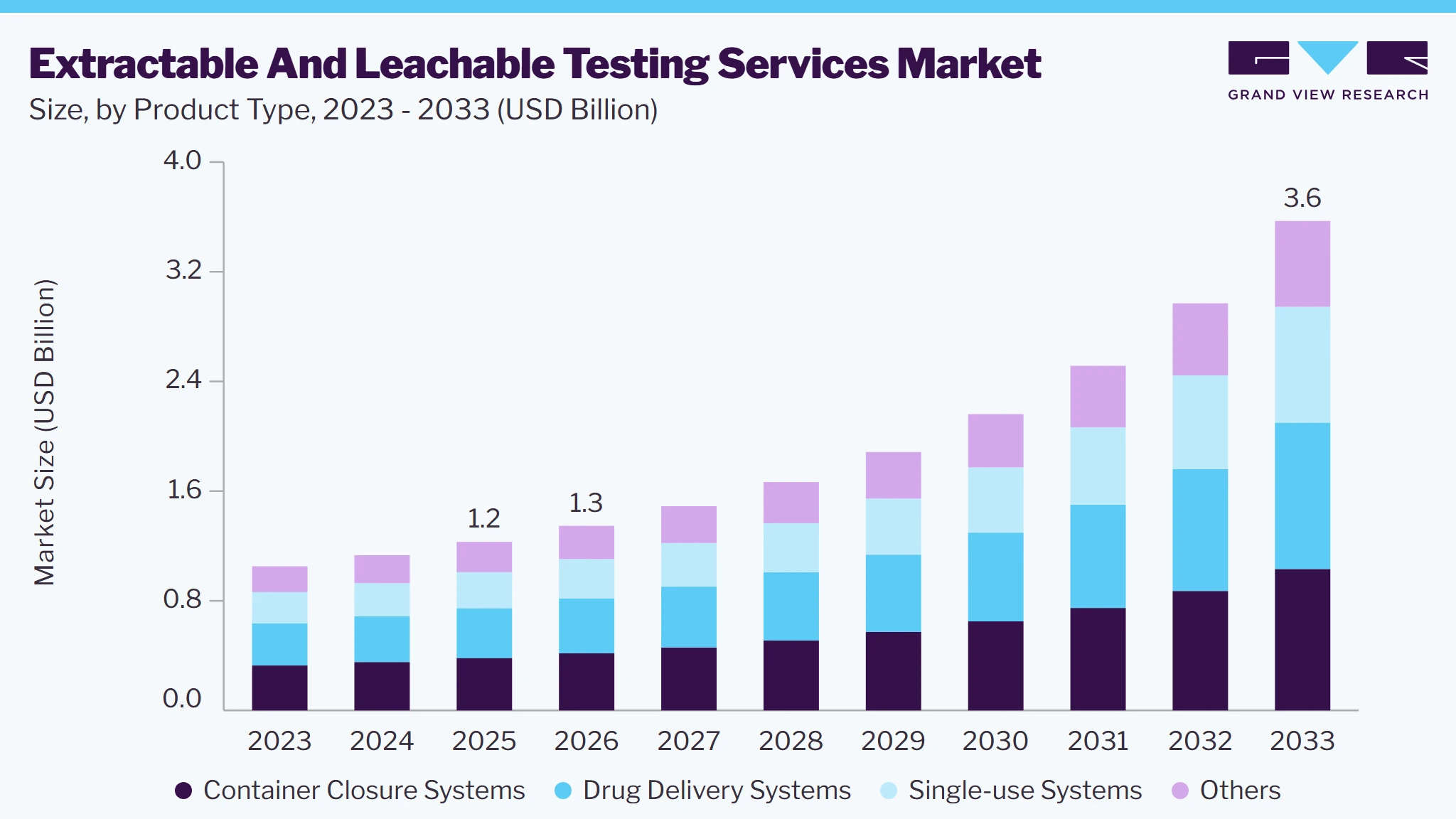 To learn more about this report, Download Free Sample Report
 The pharmaceutical and biotechnology industry has been rapidly growing in recent years due to advancements in technology, increased demand for novel drugs, and a growing incidence & prevalence of chronic diseases. This has also led to increased R&D activities for the creation of novel therapeutics. For instance, in 2022, the U.S. FDA’s Center for Drug Evaluation and Research (CDER) approved 37 new drugs, either as new molecular entities or as new therapeutic biological products. Thus, high product development and commercialization by pharmaceutical industries created a higher demand for extractable and leachable testing services.
Furthermore, patient safety is the top priority for medical devices and pharmaceutical industries and they are making significant efforts to safeguard the final product. Pharmaceutical companies are investing largely to develop robust methods for leachable and extractable testing. According to Merck KGaA, leachable and extractable are compounds that can migrate from the container to the formulation and can produce serious adverse effects such as toxicity and adverse drug reactions. To mitigate this, the company developed its pre-qualified secondary Certified Reference Materials (CRMs) and ready-to-use CRM mixtures. This reference material is certified ISO 17025 and 17034. This guidance material from the company can act as SOP for analytical laboratories providing extractable & leachable testing services. Thereby increasing the demand for extractable and leachable testing services over the forecast period.
Moreover, the presence of regulatory authorities, such as the FDA and the U.S. Pharmacopeia (USP), is pushing manufacturers to test their products for E&L substances. In addition, the rising use of single-use technologies for scaling up the process and various strategic initiatives undertaken by market players will likely create lucrative growth opportunities for the market. For instance, in May 2022, Pacific BioLabs launched In Vitro Services to support the biopharma, pharmaceuticals, and medical device industries. This service aided in the expansion of the company’s testing capabilities in analytical/bioanalytical and in vivo departments. Hence, the above-mentioned factors support the country’s market.
Market Dynamics
The extractable and leachable testing services market is witnessing steady growth, driven by increasing regulatory requirements for product safety and quality across the pharmaceutical, biopharmaceutical, and medical device industries. The growing adoption of complex drug delivery systems, biologics, and single-use manufacturing components has heightened the need for comprehensive extractables and leachables assessments. Moreover, advancements in analytical testing technologies, expanding biopharmaceutical R&D activities, and increased regulatory compliance focus are expected to support market growth over the forecast period.
Supportive regulatory frameworks and the growing emphasis on patient safety are major drivers of the global Extractable and Leachable (E&L) testing services market. Regulatory authorities such as the U.S. Food and Drug Administration, European Medicines Agency, and the U.S. Pharmacopeia have established stringent guidelines for evaluating chemical contaminants that may migrate from packaging materials, medical devices, and single-use systems into pharmaceutical products. These regulations require pharmaceutical and biotechnology companies to conduct comprehensive E&L studies to ensure product quality, efficacy, and safety, thereby increasing demand for specialized testing services.
In addition, the growing use of biologics, injectable therapies, vaccines, and advanced drug-delivery systems has raised concerns about contamination risks and patient exposure to harmful compounds. Manufacturers are increasingly focusing on risk assessment, toxicological evaluation, and material compatibility studies to meet regulatory expectations and avoid product recalls or approval delays. For instance, in November 2025, the U.S. FDA released the draft ICH Q3E Guideline for extractables and leachables, introducing a comprehensive risk-based framework for assessing and controlling extractables and leachables in pharmaceutical products. The guideline supports the importance of E&L studies in ensuring product quality and patient safety, thereby increasing the need for specialized testing services across pharmaceutical and biopharmaceutical manufacturing. As a result, the growing emphasis on regulatory compliance and contamination control is expected to continue driving demand for extractable and leachable testing services.
The high cost and complexity of extractable and leachable (E&L) studies act as a major restraint on the global E&L testing services market. These studies require advanced analytical instruments, such as GC-MS, LC-MS, and ICP-MS, and highly skilled professionals to identify and quantify trace-level contaminants in packaging materials, medical devices, and single-use systems. The testing process is often time-consuming and involves extensive toxicological risk assessments, method development, and regulatory documentation, significantly increasing overall project costs.
In addition, the complexity of regulatory requirements and the need for customized testing protocols for different drug products further add to operational challenges for pharmaceutical and biotechnology companies. Small- and mid-sized manufacturers may face budget constraints when conducting comprehensive E&L studies, particularly for biologics and combination products that require extensive compatibility evaluations. These factors can delay product development timelines and restrict broader adoption of advanced E&L testing services.
Market Concentration & Characteristics
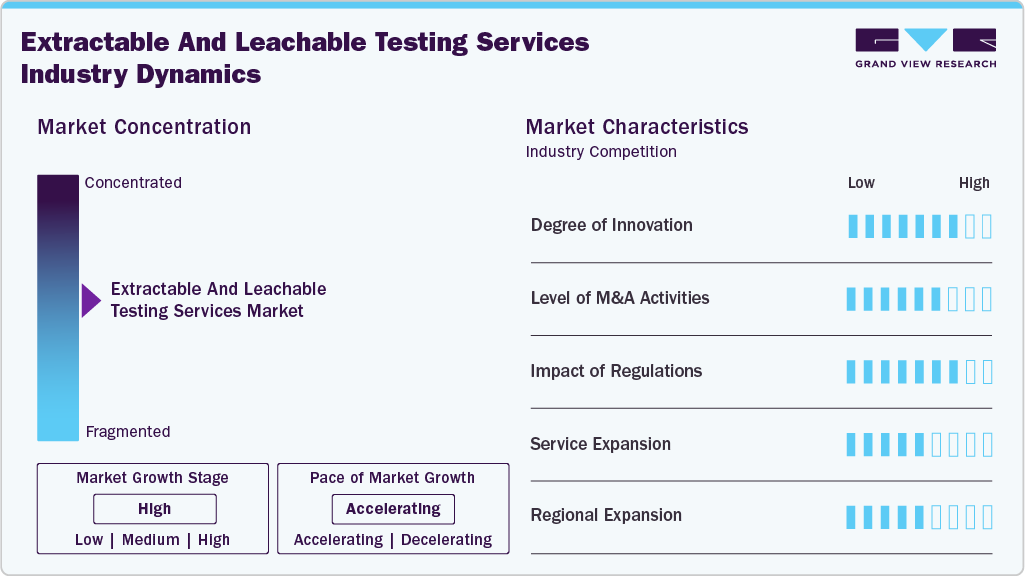
E&L testing is being driven hard by analytical innovation: high-resolution LC-MS/HRMS workflows, advanced GC-MS, ICP-MS for elemental impurities, and better sample-prep automations are pushing detection limits down and turning previously “unknowns” into identifiable, reportable signals, which in turn expands the types of studies sponsors need and the value labs can charge for. These technical gains are also being paired with informatics (automated data pipelines, spectral libraries, AET-based decision tools) so labs can deliver faster, more defensible risk assessments to clients.
Consolidation and partnering across testing, CRO and analytical-instrument spaces are reshaping capacity and capability: large analytical service providers and CROs are buying specialized labs or forming alliances to rapidly add E&L expertise (and client pipelines), while strategic buyers in life sciences continue to acquire upstream/downstream capabilities to offer end-to-end services, a dynamic that raises scale, compresses lead times, and concentrates pricing power in the mid-to-large lab players.
 To learn more about this report, Download Free Sample Report
 FDA guidance and the recent momentum toward an ICH Q3E harmonized guideline are increasing sponsor expectations for formal, documented E&L risk assessments across drugs, biologics and devices, which drives more studies, more repeat testing, and higher technical bar for labs.
Service portfolios are broadening as labs add complementary offerings, from volatile/non-volatile screening and elemental impurity panels to PFAS screening, extractables profile libraries, and tox-interpretation packages, enabling single-vendor solutions for upstream material selection through final product release.
North America and Europe remain largest markets thanks to mature pharma and tight regulation, but APAC is the fastest-growing region as local manufacturing ramps up and sponsors increasingly outsource to regional specialists; that drives investments in local lab capacity, regional compliance knowledge and supply-chain E&L programs, meaning global labs must either partner locally or scale footprints to capture growth.
Analyst Perspective
The extractable and leachable (E&L) testing services market is expected to experience steady growth, driven by increasing regulatory scrutiny and the need to ensure the safety, quality, and compatibility of pharmaceutical products, medical devices, and packaging systems. The rising adoption of biologics, combination products, and single-use systems is driving demand for comprehensive E&L assessments to identify potential contaminants and mitigate patient safety risks. Advancements in analytical testing technologies, coupled with expanding outsourcing of pharmaceutical testing services, are expected to support long-term market growth. Market participants are focusing on enhancing analytical capabilities, regulatory expertise, and service portfolios to address evolving industry requirements.
Product Type Insights
Based on product type, the container closure systems segment held the largest revenue share of 31.1% in 2025. The container closure systems (CCS) is dominating due to their capability to offer long-term stability in formulations. CCS includes various package and delivery systems, which can leach substances over time, making extractable and leachable (E & L) testing crucial. Ensuring adequate container closure systems is vital to uphold the safety, sterility, and overall quality of drugs. Several instances have been noted where the safety of pharmaceutical products was compromised or harmful contaminants formed as a result of impurities transferring from container closure systems to the drugs. Regulatory agencies have released guidelines to govern container closure systems and packaging materials in the pharmaceutical industry. For instance, the Food and Drug Administration (FDA) provided guidance in the Code of Federal Regulations Title 21, which emphasizes that container closure systems must safeguard drug products from potential external factors that could lead to contamination or degradation during storage and use.
The single-use systems segment is expected to grow at the fastest growth rate during the forecast period. The use of single-use components and systems in commercial and clinical biopharmaceutical manufacturing has witnessed a substantial rise. These components are typically composed of polymers or plastics. Single-use systems offer numerous advantages, such as enhanced speed, flexibility, and operational efficiency compared to reusable components. However, a significant concern associated with these single-use systems is the potential leaching of compounds from the polymeric materials, which can negatively affect the quality of pharmaceutical products or the efficiency of the manufacturing process. Consequently, the importance of extractable and leachable testing has grown significantly to address this issue for single-use systems.
Application Insights
Based on application, the orally inhaled and nasal drug products (OINDP) segment held the largest revenue share of 41.9% in 2025. This dominance can be attributed to the growing service launches for this high-risk category of drugs and the presence of guidelines and best practices for the E&L testing of OINDP. Orally inhaled and nasal drug products include nasal sprays, metered dose inhalers, dry powder inhalers, nebulizers, and inhalers. These products are widely used for systemic delivery of various therapeutics. Thus, increasing the demand for extractable and leachable testing services for this segment over the forecast period.
 To learn more about this report, Download Free Sample Report
 The parenteral drug products segment is projected to witness the fastest growth over the forecast period. Parenteral drugs are administered into the muscles, veins, or specialized tissues, such as the spinal cord or under the skin. The extractable & leachable testing of parenteral drug products of injectable ensure efficacy and safety of parenteral drug products. Thus companies, authorities, and regulatory bodies emphasize extractable and leachable testing for parenteral drugs. They are undertaking initiatives to enhance awareness about E&L testing and its applications for parenteral drug products. For instance, in August 2021, the Parenteral Drug Association presented a webinar series for extractable and leachable parenteral applications. This webinar covered various topics, including analytical E/L methodologies and large-volume parenteral. Moreover, in October 2021, the Parenteral and Ophthalmic Drug Products (PODP) L&E Working Group of the Product Quality Research Institute (PQRI) presented recommendations for E&Ls in parenteral drug products (PDP) to the US Food and Drug Administration (FDA). Thus, extractable and leachable testing is essential for parenteral drug products to improve the quality of drugs.
Regional Insights
North America dominated the extractable and leachable testing services market with the largest revenue share of 37.8% in 2025. The significant share of this region in the market is primarily due to the increasing adoption of novel technologies and biopharmaceuticals for the analysis and treatment of clinical conditions. Moreover, a large number of market players in the region are actively involved in continuously improving advanced tools for biopharmaceutical research. In addition, government funding for research has played a crucial role in boosting the extractable and leachable testing services market. For instance, in June 2021, the U.S. Department of Agriculture’s (USDA) National Institute of Food and Agriculture (NIFA) invested USD 5.4 million in research related to bioengineering, bioprocessing, biofuels, and other biobased products, further supporting the growth of the industry.
 To learn more about this report, Download Free Sample Report
 U.S Extractable And Leachable Testing Services Market Trends
The extractable and leachable testing services market in the U.S. held the largest share in the North America region in 2025. The U.S. is leading largely due to the combination of very tight regulatory enforcement (FDA, USP, etc.), growth in biologics, complex drug delivery systems (especially single-use systems, inhalables, pre-filled devices), and high demand for speed & risk mitigation in product pipelines. Sponsors here don’t want surprises late in development, so earlier and more comprehensive E&L studies are becoming standard, especially for advanced formulations. The presence of many CROs/labs with high analytical capabilities also means capability is increasing, which in turn raises expectations.
Europe Extractable And Leachable Testing Services Market Trends
In Europe, regulators such as EMA & national authorities are sharpening guidance and oversight, especially for devices, combination products, and materials in contact with drugs; harmonization is creeping in via ICH, but diverse national requirements means companies want to ensure compliance across multiple markets.
UK extractable and leachable testing services market is witnessing growth due toregulatory expectations post-Brexit have remained largely aligned with EMA standards but with increasing emphasis on local compliance, patient safety, and risk-based material assessments. Also, the UK has a strong biotech / pharma innovation sector, so newer delivery systems, device-drug combinations, and more demanding packaging options are pushing up E&L testing demand.
Extractable and leachable testing services market in Germany is growing, supported by the presence of a substantial number of local providers of biotechnology and pharmaceutical tools, along with strong government research funding, advanced laboratory infrastructure, and rising demand for sustainability in packaging materials choices now require more testing up front. In the UK, despite Brexit, regulatory expectations remain high, and there’s increasing focus on patient safety, risk management, and newer delivery technologies.
Asia Pacific Extractable and Leachable Testing Services Market Trends
The Asia Pacific region is anticipated to have a fastest CAGR during the forecast period. The notable advancements in the pharmaceutical and biotechnology sectors in the region are key drivers propelling the growth of single-use technology. Specifically, countries such as China, India, and Japan are expected to experience substantial expansion due to increased government investments in research and development centers. This, in turn, is driving the widespread adoption of single-use systems in vaccine production and various other research & therapy areas. For instance, in March 2023, Hetero Drugs made a USD 122 million investment in Andhra Pradesh to grow the state's pharmaceutical sector. Furthermore, according to statistics from the state industrial division, Andhra Pradesh's pharma sector garnered around USD 2 billion in investment in 2022.
China extractable and leachable testing services market is witnessing rapid growth in both pharma manufacturing and medical devices, and increasing regulatory tightening by the NMPA (formerly CFDA) especially in packaging, excipients, and material safety. Local companies are under pressure to match international standards, so they increasingly outsource or build up E&L capability.
Extractable and leachable testing services market in Japanis experiencing growth due toJapan’s oversight (via PMDA / MHLW) requires strong compliance to safety, non-clinical data, and GLP for submissions, plus tightening in how data integrity, safety, and performance are documented. This raises demand for high quality E&L testing, especially for medical devices and combined products. Japanese companies, and overseas companies seeking access to Japan, must align with Japanese standards (and translate data, sometimes conduct local studies), which increases the need for robust E&L services.
MEA Extractable And Leachable Testing Services Market Trends
In the Middle East (including Kuwait), the driver is regulatory modernization, import reliance, increasing healthcare spending, and the need to assure safety of imported medical devices and pharmaceuticals. Authorities are progressively demanding that imported products meet international safety standards, and local test or certification labs are under pressure/extensions to have appropriate analytical testing capacity.
Kuwait extractable and leachable testing services market is witnessing demand due to in Kuwait specifically, medical device testing and certification markets are growing because of strong hospital networks, significant imports of medical technologies, and mandates from the Ministry of Health that imported devices must undergo safety/performance verification to international norms.
Key Extractable And Leachable Testing Services Company Insights
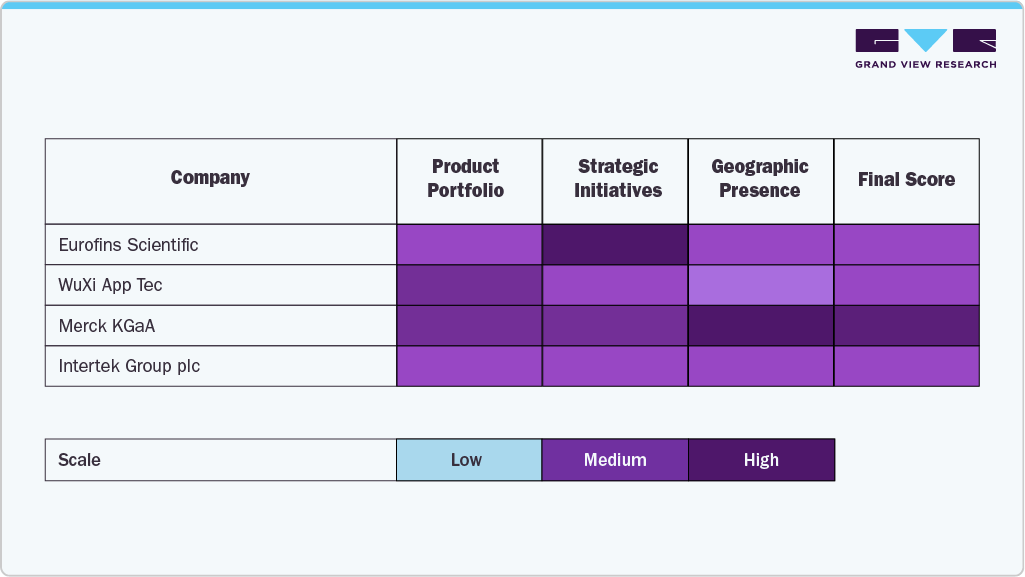
The Extractables & Leachables (E&L) Testing Services market is characterized by a mix of specialized analytical service providers and large multi-service CROs, each leveraging deep technical expertise and regulatory experience to capture share. Leading companies such as Eurofins Scientific, Intertek Group, Merck KGaA, WuXi AppTec and others dominate through global lab networks, extensive E&L method libraries, and toxicological risk assessment capabilities that support both pharma and medtech clients. These players are investing in advanced analytical technologies (such as high-resolution LC-MS and GC-MS platforms), automation, and data management tools to deliver faster turnaround and regulatory-compliant results.
 To learn more about this report, Download Free Sample Report
 Mid-tier and regional firms are differentiating via niche expertise and customer-centric services for early-stage biotech and device manufacturers. Overall, the competitive landscape is moderately consolidated but becoming more integrated, with increasing M&A activity aimed at expanding global reach, adding GLP/GMP-certified capacity, and combining extractables testing with complementary offerings such as container closure integrity, elemental impurity testing, and biocompatibility assessments.
Key Extractable And Leachable Testing Services Companies
The following key companies have been profiled for this study on the extractable and leachable testing services market.
-
Eurofins Scientific
-
Intertek Group plc
-
SGS Société Générale de Surveillance SA
-
WuXi AppTec
-
Merck KGaA
-
West Pharmaceutical Services, Inc
-
Wickham Micro Limited (Medical Engineering Technologies Ltd.)
-
Pacific Biolabs
-
Boston Analytical
-
Sotera Health (Nelson Laboratories, LLC)
Recent Developments
-
In October 2025, Intertek Pharmaceutical Services launched expert extractables and leachable testing services to support compliance with the new Korean Pharmacopeia requirements.
-
In March 2023, Nelson Laboratories, LLC – A Sotera Health Europe collaborated with Nemera, a drug delivery device solutions provider, to offer integrated services including E & L services to their customers.
Extractable And Leachable Testing Services Market Report Scope
Report Attribute
Details
Market size in 2025
USD 1.2 billion
Estimated market size in 2026
USD 1.3 billion
Projected market size by 2033
USD 3.6 billion
Growth rate
CAGR of 14.9% from 2026 to 2033
Historical data
2021 - 2025
Forecast period
2026 - 2033
Quantitative units
Revenue in USD million/billion, and CAGR from 2026 to 2033
Report coverage
Revenue forecast, company ranking, competitive landscape, growth factors, and trends
Segments covered
Product type, application, region
Regional scope
North America; Europe; Asia Pacific; Latin America; MEA
Country scope
U.S., Canada, Mexico, UK, Germany, France, Italy, Spain, Norway, Denmark, Sweden, China, Japan, India, South Korea, Australia, Thailand, Brazil, Argentina, Saudi Arabia, South Africa, UAE, and Kuwait
Key companies profiled
Eurofins Scientific; Intertek Group plc; SGS Société Générale de Surveillance SA; WuXi AppTec; Merck KGaA; West Pharmaceutical Services; Pacific Biolabs; Wickham Micro Limited (Medical Engineering Technologies Ltd.); Boston Analytical; Sotera Health (Nelson Laboratories, LLC)
Customization scope
Free report customization (equivalent up to 8 analysts' working days) with purchase. Addition or alteration to country, regional & segment scope.
Pricing and purchase options
Avail customized purchase options to meet your exact research needs. Explore purchase options
Global Extractable And Leachable Testing Services Market Report Segmentation
This report forecasts revenue growth and provides an analysis of the latest trends in each of the sub-segments from 2021 to 2033. For this study, Grand View Research has segmented the global extractable and leachable testing services market based on product type, application, and region:
 To learn more about this report, Download Free Sample Report
 -
Product Type Outlook (Revenue, USD Million, 2021 - 2033)
-
Container Closure Systems
-
Single-use Systems
-
Drug Delivery Systems
-
Others
-
-
Application Outlook (Revenue, USD Million, 2021 - 2033)
-
Parenteral Drug Products
-
Orally Inhaled and Nasal Drug Products (OINDP)
-
Ophthalmic
-
-
Regional Outlook (Revenue, USD Million, 2021 - 2033)
-
North America
-
U.S.
-
Canada
-
Mexico
-
-
Europe
-
UK
-
Germany
-
France
-
Italy
-
Spain
-
Denmark
-
Sweden
-
Norway
-
-
Asia Pacific
-
Japan
-
China
-
India
-
Australia
-
South Korea
-
Thailand
-
-
Latin America
-
Brazil
-
Argentina
-
-
MEA
-
South Africa
-
Saudi Arabia
-
UAE
-
Kuwait
-
-
Research Methodology
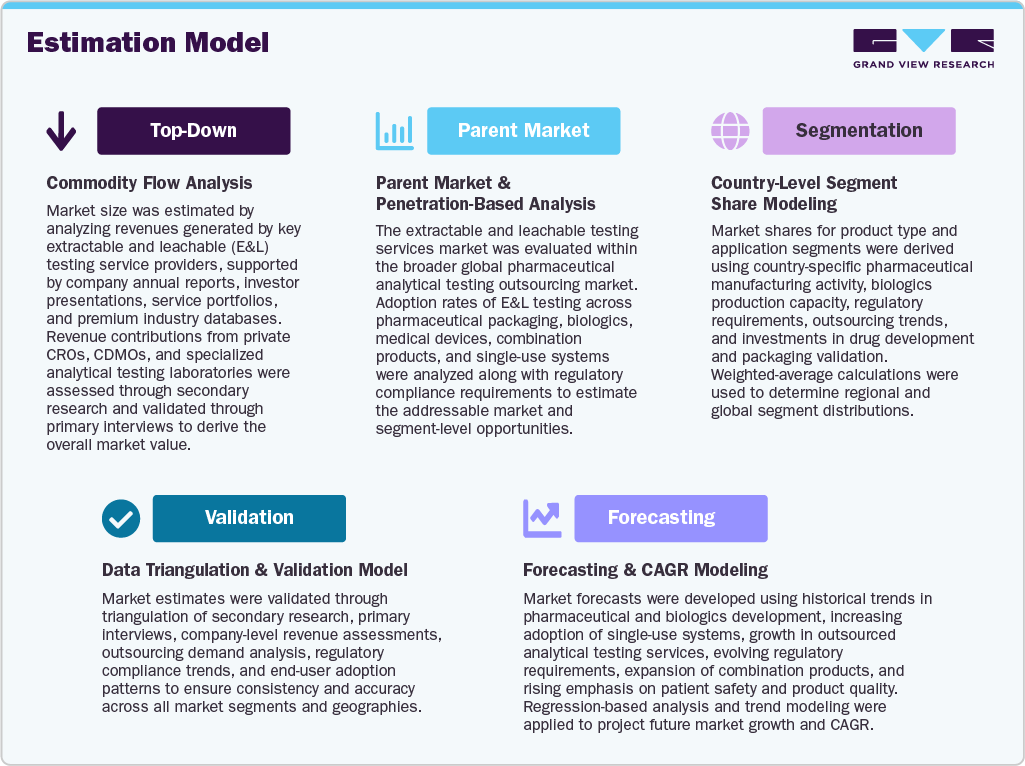
The lextractable and leachable testing services market figures in this report are based on a proven research process that combines executive interviews with secondary research from proprietary databases, company filings, and recognized regulatory and institutional sources. Market size is built through value-chain sizing - reconciling supply-side and demand-side estimates - and triangulated with bottom-up and top-down approaches. Every estimate passes multiple levels of expert validation before publication, with each lextractable and leachable testing services segment quantified using the revenue-capture definitions in the table below.
Segment Definition
Segment- Product Type
Revenue Capture Definition
Container Closure Systems
Revenue generated from extractable and leachable (E&L) testing services performed on packaging components that come into direct contact with pharmaceutical and biopharmaceutical products. This segment includes testing of vials, ampoules, bottles, prefilled syringes, stoppers, seals, caps, closures, elastomeric components, and associated packaging materials to identify and characterize chemical compounds that may migrate into drug products during manufacturing, storage, and use.
Single-use Systems
This segment captures income from E&L testing services conducted on disposable bioprocessing components used in pharmaceutical and biotechnology manufacturing. The scope includes single-use bags, tubing, connectors, filters, bioreactor assemblies, sampling systems, transfer lines, and other polymer-based fluid handling systems evaluated for potential chemical leachates that could impact product quality, process performance, or patient safety.
Drug Delivery Systems
Revenue originates from testing services for drug-device combination products and delivery platforms that administer therapeutics to patients. This category encompasses inhalers, autoinjectors, infusion systems, transdermal delivery devices, prefilled delivery systems, nasal delivery devices, and other administration components, all of which are assessed for extractable and leachable contaminants under intended-use conditions.
Others
This segment reflects earnings from E&L testing services performed on additional materials, components, and manufacturing systems that may interact with pharmaceutical products. These include processing equipment, filters, laboratory disposables, medical device components, packaging accessories, and other product-contact materials requiring regulatory compliance and contamination risk assessment.
Segment- Application
Revenue Capture Definition
Parenteral Drug Products
Revenue derived from extractable and leachable testing services supporting injectable and infusion-based pharmaceutical products. Testing activities focus on evaluating potential chemical migration from container closure systems, manufacturing components, filtration systems, and delivery devices into drug formulations administered through intravenous, intramuscular, subcutaneous, and other parenteral routes.
Orally Inhaled and Nasal Drug Products (OINDP)
This segment captures income from E&L testing services performed for inhalation and intranasal therapies, where stringent regulatory requirements necessitate a comprehensive assessment of product-contact materials. The scope includes inhalers, nebulizers, nasal sprays, metered-dose inhalers, dry powder inhalers, and associated packaging and delivery components to ensure product safety and performance.
Ophthalmic
Revenue originates from testing services for ophthalmic drug products and delivery systems intended for ocular administration. These studies evaluate the potential release of chemical compounds from packaging materials, container closure systems, dispensing mechanisms, and manufacturing components that could affect product stability, efficacy, or patient safety.
 To learn more about this report, Download Free Sample Report
 Frequently Asked Questions About This Report
The global extractable and leachable testing services market size was valued at USD 1.2 billion in 2025 and is estimated at USD 1.3 billion for 2026.
The global extractable and leachable testing services market is expected to grow at a CAGR of 14.9% from 2026 to 2033, reaching USD 3.6 billion.
The container closure systems segment led with a 31.1% revenue share in 2025.
Key players include Eurofins Scientific, Intertek Group plc, SGS Société Générale de Surveillance SA; WuXi AppTec, Merck KGaA, West Pharmaceutical Services, Pacific Biolabs etc.
The orally inhaled and nasal drug products (OINDP) segment led with a 41.9% revenue share in 2025.
North America dominated with a 37.8% revenue share in 2025.
Asia Pacific is the fastest-growing region over the forecast period.
The extractables and leachables testing services market is driven by increasing regulatory requirements, growth in biologics and combination products, rising use of complex packaging and delivery systems, and greater focus on product safety and quality assurance in the pharmaceutical and medical device industries.
About the Author(s)
Biotechnology Research Team
Healthcare · BiotechnologyThis report was authored by the biotechnology research team at Grand View Research - comprising two research analysts, one senior research analyst, and one industry expert - with specialized expertise in the biotechnology segment of the healthcare industry. All findings are based on proprietary healthcare databases, executive interviews, and regulatory analysis, subject to internal peer review prior to publication.
Last Updated:
Speak to Analyst

Customize this report to your needs - add regions, segments, or data points, with 20% free customization.
Or view our licence options:


ISO 9001:2015 & 27001:2022 Certified
We are GDPR and CCPA compliant! Your transaction & personal information is safe and secure. For more details, please read our privacy policy.


