
- Home
- »
- Smart Textiles
- »
-
Face Shields Market Size, Share, Trends Report, 2026-2033GVR Report cover
![Face Shields Market (2026 - 2033)Report]()
Face Shields Market (2026 - 2033)
Share & Trends Analysis Report By Product (Full Face Shield, Half Face Shield), By End-use (Healthcare, Chemical, Manufacturing, Construction, Oil & gas), By Region (North America, Europe, Asia Pacific, Latin America), And Segment Forecasts
Market Size, 2025
$893.5MMarket Estimate, 2026
$950.0MMarket Forecast, 2033
$1,490.8MCAGR, 2026–2033
6.6%Face Shields Market Summary
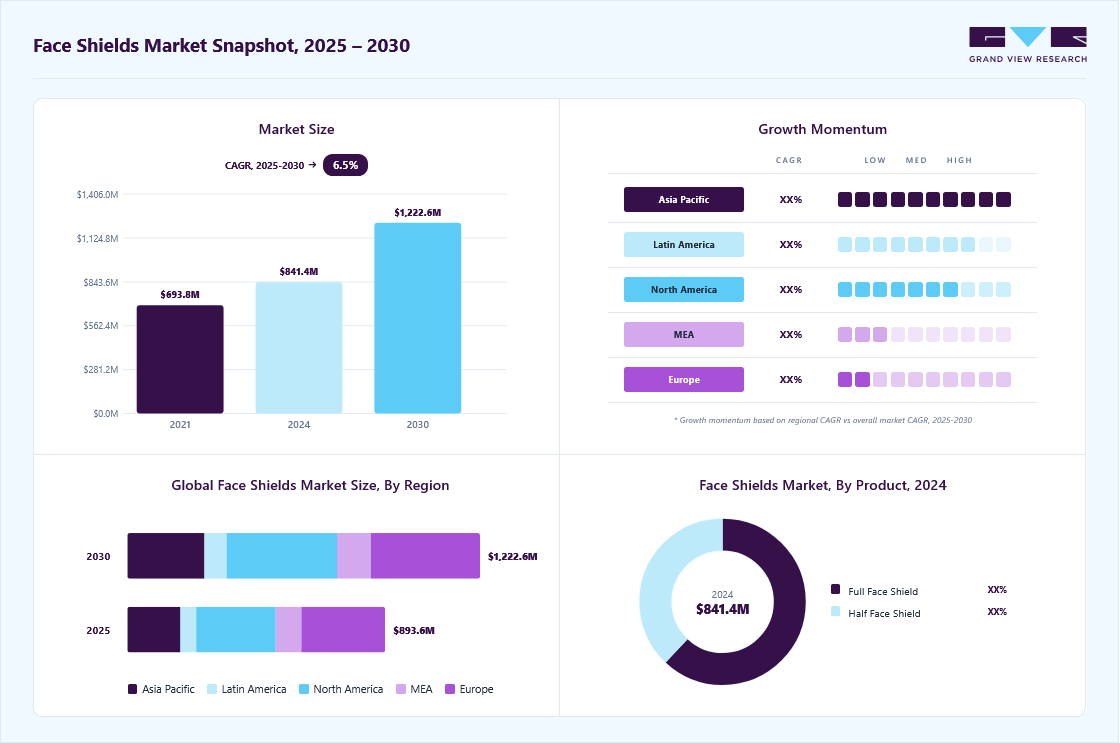
The global face shields market size was valued at USD 893.5 million in 2025 and is projected to grow from USD 950.0 million in 2026 to USD 1,490.8 million by 2033, at a CAGR of 6.6% from 2026 to 2033. The Europe held the largest share of 32.5% of the global market in 2025. Rising awareness of healthcare-associated infections, along with the effects of the pandemic, has increased the demand for face shields.
Key Market Trends & Insights
- By product: Full face shield segment led the market with the largest share of 62.0% in 2025.
- By end-use: Healthcare segment led the market with the largest share of 28.6% in 2025.
Regional Highlights
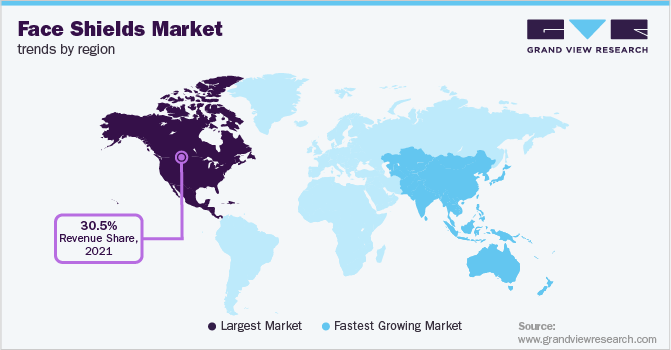
- Largest regional market: Europe (32.5% revenue share, 2025)
- Fastest-growing regional market: Asia Pacific (highest CAGR, 2026-2033)
- By country: The Germany led the Europe market in 2025.
Market Size & Forecast
- Market size in 2025: USD 893.5 Million
- Estimated market size in 2026: USD 950.0 Million
- Projected market size by 2033: USD 1,490.8 Million
- CAGR (2026-2033): 6.6%
The increasing demand for the product across various end-use industries, driven by stricter workplace safety regulations, is expected to fuel the market's growth. The healthcare industry's demand for protective gear for workers handling infectious diseases is a major driver, as face shields offer an additional layer of protection. Industries such as healthcare, automotive, manufacturing, and others are progressively incorporating face shields into their personal protective equipment (PPE) due to heightened awareness of workplace safety. Ongoing innovations in the design, comfort, and durability of face shields, including features such as anti-fog and anti-glare technology, are enhancing their appeal to end-users.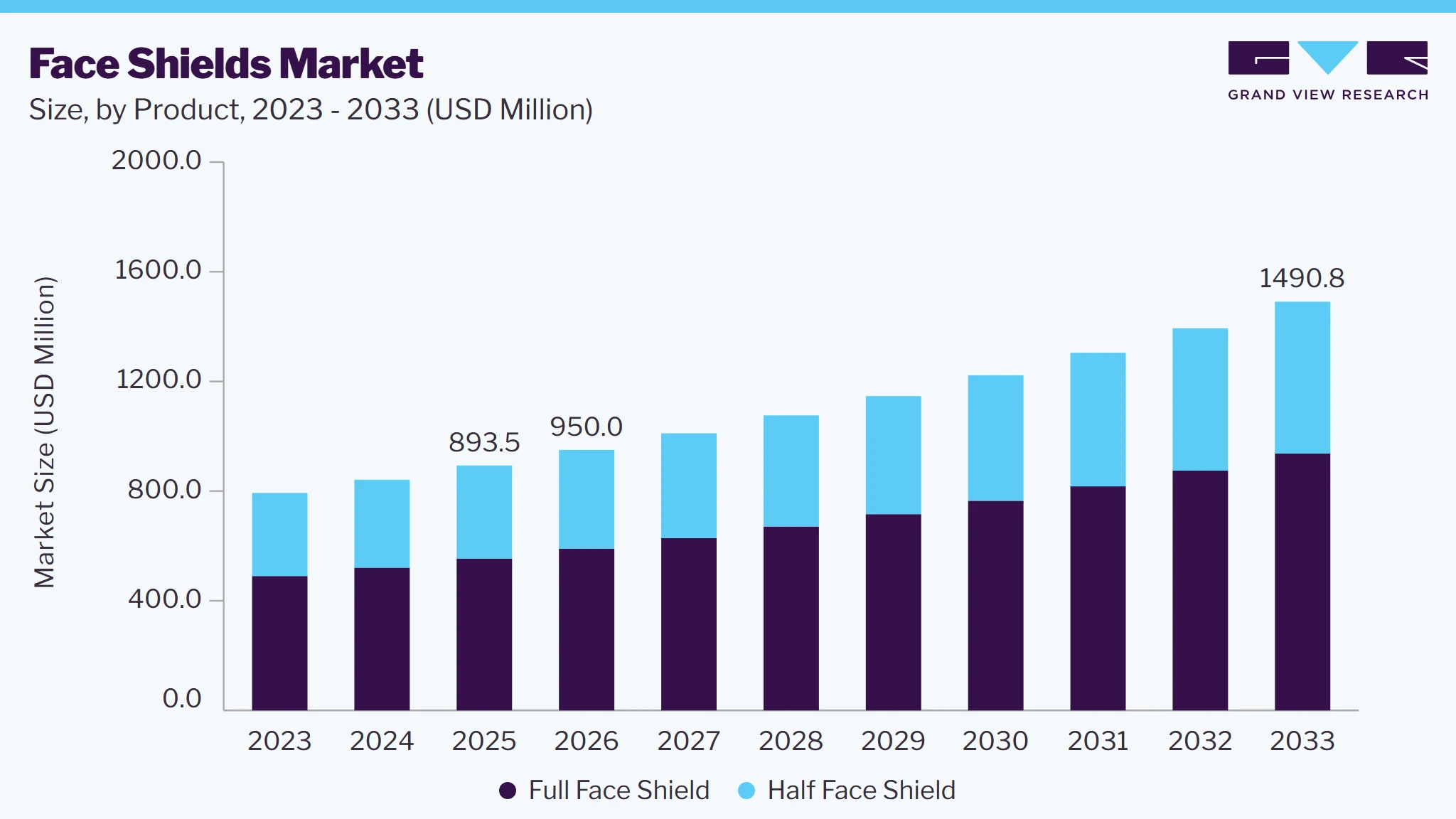
Maintaining high hygiene standards is crucial in the food industry to prevent contamination. Face shields offer additional protection for workers interacting with products and customers, especially against splash hazards during food preparation. Similarly, face shields are a vital barrier between practitioners and patients in dental settings, preventing cross-contamination during close-contact procedures. These protective measures improve safety and ensure compliance with hygiene regulations, reducing risks and fostering a safer working environment in the food and healthcare industries.
Market Dynamics
The face shields market is driven by increasing awareness of personal protective equipment (PPE), stringent workplace safety regulations, and rising demand from healthcare, industrial, and manufacturing sectors. Face shields provide protection against splashes, airborne particles, and hazardous materials, supporting their adoption in medical, chemical, construction, and laboratory environments. Growing emphasis on employee safety and infection control further contributes to market growth. However, fluctuating raw material costs and the availability of alternative protective equipment may restrain demand. Opportunities are emerging from product innovations, reusable and lightweight designs, anti-fog technologies, and increasing investments in occupational safety programs across developed and emerging economies.
Governments and regulatory agencies are implementing stricter occupational health and safety standards to protect workers from chemical splashes, flying debris, biological hazards, and other workplace risks. Healthcare facilities, manufacturing plants, construction sites, laboratories, and chemical processing industries are increasingly adopting face shields as part of comprehensive protective equipment programs. Rising awareness of infection prevention and worker safety has further strengthened demand for reliable facial protection solutions. Employers are investing in high-quality protective equipment to reduce workplace injuries, improve employee safety, and comply with regulatory standards. Technological advancements such as lightweight materials, anti-fog coatings, impact-resistant visors, and ergonomic designs are enhancing product performance and user comfort. As industrial activities expand and workplace safety regulations become more stringent, the demand for face shields is expected to continue growing across multiple end-use sectors.
Depending on workplace requirements, organizations may choose safety goggles, protective glasses, respirators, welding helmets, or full-face respirators instead of standalone face shields. In some applications, face shields must be used in combination with other protective equipment, increasing overall safety costs for employers. Price-sensitive industries and smaller businesses may prioritize lower-cost protective solutions, limiting demand for advanced face shield products with premium features. Fluctuations in the prices of plastics, polycarbonate materials, and specialty coatings can increase manufacturing costs and affect product pricing. In addition, reduced emergency demand following large-scale public health events may lead to market fluctuations in certain regions. Product replacement cycles and varying regulatory standards across industries can also influence purchasing decisions and moderate overall market growth.
Manufacturers are developing advanced face shields with anti-fog coatings, anti-scratch surfaces, lightweight materials, improved ventilation, and enhanced impact resistance to meet evolving user requirements. Reusable and environmentally sustainable designs are gaining attention as organizations seek to reduce long-term operating costs and environmental impact. Industrial sectors such as construction, mining, oil and gas, metal fabrication, and chemical processing are increasingly adopting specialized face shields for protection against heat, sparks, chemicals, and mechanical hazards. Growth in healthcare infrastructure and laboratory research activities is creating additional demand for high-performance protective equipment. Integration of face shields with helmets, respiratory protection systems, and smart wearable safety technologies offers new product development opportunities. Emerging economies investing in workplace safety programs and industrial modernization are expected to provide long-term growth prospects for face shield manufacturers.
Analyst Perspective
Increasing emphasis on occupational safety, infection control, and regulatory compliance across healthcare and industrial sectors is fueling the face shield demand across globe. Demand is expanding beyond traditional medical applications into construction, chemical processing, oil and gas, manufacturing, and laboratory environments, where enhanced facial protection is essential. Product innovation, including lightweight materials, anti-fog coatings, reusable designs, and improved ergonomic features, is strengthening market competitiveness and user adoption. Established players are leveraging certified product portfolios and global distribution networks, while emerging companies focus on cost-effective and specialized solutions. Although demand fluctuations and competition from alternative protective equipment may present challenges, rising workplace safety investments, industrialization in emerging economies, and stricter personal protective equipment standards are expected to support sustained market growth and product development opportunities.
Product Insights
Based on product, the full face shield segment led the market with the largest revenue share of 62.0% in 2025. Full-face shields are the preferred choice for eye and face protection in a wide range of end-use industries. They protect from splashes, debris, and optical and heat radiation. In food processing, cosmetics, and dental care industries, face shields help prevent contamination and ensure hygiene and safety. Ongoing pandemic preparedness efforts maintain a high demand for face shields as a preventive measure. Additionally, increasing awareness of personal safety in public spaces drives the use of face shields alongside masks for added protection.
The half face shield segment of the face shields market is estimated to grow significantly at a CAGR of 6.3% over the forecast due to increased product adoption by pre-hospital emergency medical professionals, laboratory employees, veterinary care staff, dentistry providers, and healthcare workers. These shields are generally more affordable than full-face versions, making them attractive for companies seeking cost-effective PPE solutions without compromising protection. Half-face shields are lightweight and offer more comfort than full-face shields, making them ideal for extended wear in healthcare, manufacturing, and food processing industries.
End Use Insights
Based on end-use, the healthcare segment led the market with the largest revenue share of 28.6% in 2025. Healthcare systems are strengthening safety protocols, increasing the use of personal protective equipment (PPE) such as face shields to prevent cross-contamination. The need for comprehensive protection, combining masks, gloves, and face shields, is rising. Face shields offer greater comfort for long shifts, making them essential for healthcare workers. Stricter regulations from health organizations have made face shields mandatory while growing awareness of worker safety has led to greater investment in high-quality protective gear to safeguard healthcare professionals.
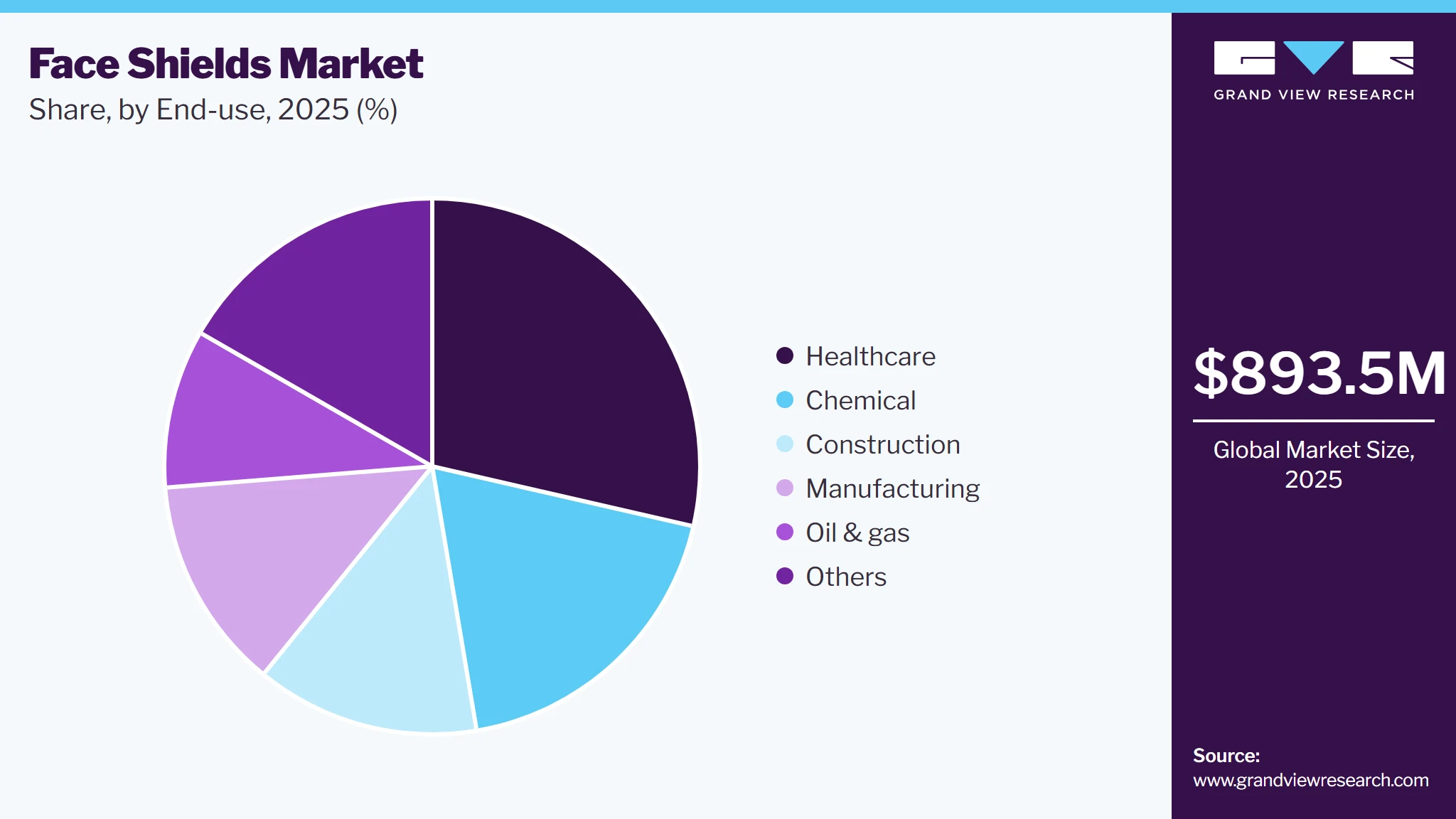
The face shields market in the chemical industry is expected to grow significantly at a CAGR of 7.0% over the forecast period. In environments where toxic vapors, gases, or fumes are present, face shields help provide an extra layer of protection alongside respiratory protection such as masks or respirators. As chemical production rises, the need for protective gear such as face shields to protect workers from splashes, burns, and fumes increases. The chemical industry's expansion in emerging markets, where safety standards are tightening, drives demand. Additionally, a growing focus on employee well-being and insurance and liability concerns encourages chemical companies to invest in face shields to reduce accidents and injuries.
Regional Insights
Europe dominated the face shields market with the largest revenue share of 32.5% in 2025. Stringent safety regulations in construction, manufacturing, and chemical processing industries require face shields to protect workers from hazards, driving the market growth. Europe’s strong economic performance, supported by policies, wage growth, and job creation, has boosted demand for face shields across various sectors. Additionally, increased construction activities, fueled by favorable economic conditions and lower mortgage rates, are expected to further drive the use of face shields in new construction and renovation projects.
Germany Face Shields Market Trends
The face shields market in the Germany held the largest share in the Europe region in 2025. Germany's growing chemical manufacturing sector is driving increased demand for face shields to protect workers from chemical hazards. Rising chemical production amplifies the need for enhanced safety measures, including face shields. Furthermore, Germany’s emphasis on workplace safety regulations is promoting the widespread adoption of personal protective equipment (PPE), especially in healthcare settings, ensuring better protection for workers across industries.
Asia Pacific Face Shields Market Trends
The Asia Pacific face shields industry is expected to grow at the fastest CAGR of 7.9% over the forecast period. The rising number of occupational fatalities, coupled with rising face shield requirements, the need for high durability, mechanical wear resistance, and high utility in the majority of core industries such as oil and gas, refining, metal manufacturing, and automotive, is expected to drive market growth. The expansion of industrial activities in the Asia Pacific region necessitates enhanced safety measures, including the use of face shields, to protect workers from potential hazards.
The face shields market in China led the Asia Pacific market with the largest revenue share in 2025. The COVID-19 pandemic has heightened the awareness of healthcare-associated infections, leading to increased demand for personal protective equipment (PPE), including face shields. The expansion of industrial activities in China necessitates enhanced safety measures, including the use of face shields, to protect workers from potential hazards. Additionally, stringent safety regulations across various industries, such as manufacturing and chemical processing, mandate the use of face shields.
North America Face Shields Market Trends
The North America face shield market held a substantial market share in 2025. The healthcare sector significantly drives face shield demand, especially in hospitals and clinics, where protection from infectious diseases is vital. The aging population and increased awareness of healthcare-acquired infections further boost this need. In construction, face shields protect workers from injuries caused by tools, machinery, and environmental hazards. North America's strict workplace safety regulations have also contributed to the widespread adoption of face shields across industries.
The face shields market in the U.S. led the North America market, with a revenue share of 81.8% in 2025. The U.S. aging population has led to more age-related health issues, increasing demand for healthcare services, and protective equipment such as face shields to safeguard patients and healthcare workers. Strict workplace safety regulations in industries such as manufacturing, construction, and oil & gas also require the use of PPE, including face shields, to protect workers from hazards. This combination of factors is driving the growing demand for face shields in the U.S. market.
Key Face Shields Company Insights
Some key face shield market companies include 3M, Honeywell International Inc., ALPHAPROTECH, and CASCO BAY MOLDING. Companies are advancing face shield materials and designs to improve comfort, wearability, and functionality, incorporating features such as anti-fog and anti-glare to enhance usability across different environments. Additionally, they are establishing partnerships and collaborations to broaden market reach and refine product offerings. Expanding into emerging markets enables access to new customer bases, diversifying revenue streams and mitigating risks associated with market saturation in established regions.
-
3M is a face shield manufacturer, offering products for various industries, including healthcare, manufacturing, and construction. Their offerings include the 3M W Series and PELTOR face shields, designed for protection and comfort. It is headquartered in St. Paul, Minnesota, U.S.
-
Honeywell International Inc. is headquartered in Charlotte, North Carolina, U.S. Their face shields are designed to protect users from hazards such as flying objects, chemicals, and sparks, and are utilized across industries such as manufacturing, construction, and healthcare.
Key Face Shields Companies
The following key companies have been profiled for this study on the face shields market.
-
3M
-
Honeywell International Inc.
-
ALPHAPROTECH
-
CASCO BAY MOLDING
-
KCWW
-
Lakeland Inc.
-
MSA
-
Aspen Surgical Products, Inc.
-
Prestige Ameritech
-
Pyramex
Competitive Benchmarking
Category
Operating Strategies
Competitive Edge
Weakness
Established Players (e.g., 3M, PIP, MSA, Lakeland Inc.
- Established face shield manufacturers focus on expanding certified PPE portfolios, strengthening distribution partnerships, improving manufacturing efficiency, and serving healthcare and industrial customers through reliable supply agreements.
- They also invest in product innovation and regional market expansion.
- These players benefit from recognized brands, proven product quality, regulatory compliance expertise, extensive distribution networks, and diversified customer bases.
- Their established supply chains and technical capabilities support large-volume orders and long-term customer relationships.
- Established players encounter higher operating expenses, complex organizational structures, and slower adaptation to niche market opportunities.
- Dependence on traditional distribution channels and established product lines reduce responsiveness to changing customer preferences.
Emerging & Regional Players (e.g Alpha Pro Tech, Aspen Surgical Products, Inc., Pyramex, Prestige Ameritech)
- These players emphasize affordable products, localized manufacturing, flexible production capabilities, and niche application development.
- They pursue strategic collaborations, online sales channels, and customized solutions to penetrate regional markets and address evolving customer requirements.
- Emerging players gain competitive advantages through lower operating costs, faster product development, customization capabilities, and greater flexibility in responding to changing market needs.
- Their focused approach enables them to serve specialized applications and underserved regional markets.
- These players often face limited financial resources, smaller production capacities, and lower brand recognition.
- Challenges in meeting international certification requirements, expanding distribution networks, and competing with established suppliers may constrain long-term growth.
Recent Developments
-
In February 2025, Aspen Surgical announced that Andau Medical will serve as the exclusive distributor of its surgical products in Canada since February 2025. This encompasses a comprehensive range of products, including Bard-Parker Blades, Symmetry Surgical Instrumentation, and others. This transition has been a key component of Aspen Surgical’s strategic initiative to optimize distribution channels and enhance the customer experience for healthcare professionals across the region.
-
In August 2024, Medline completed the possession of Ecolab Inc.'s global surgical solutions business, which includes the Microtek product lines as well. This acquisition enhances Medline’s portfolio with innovative, high-quality surgical solutions. Additionally, Medline has integrated around 3,500 new team members, improving service delivery and fostering collaboration with healthcare providers and medical device companies.
Face Shields Market Report Scope
Report Attribute
Details
Market size in 2025
USD 893.5 million
Estimated market size in 2026
USD 950.0 million
Projected market size by 2033
USD 1,490.8 million
Growth rate
CAGR of 6.6% from 2026 to 2033
Base year for estimation
2025
Historical data
2021 - 2024
Forecast period
2026 - 2033
Quantitative units
Revenue in USD million and CAGR from 2026 to 2033
Report coverage
Revenue forecast, company ranking, competitive landscape, growth factors, and trends
Segments covered
Product, application, region
Regional scope
North America; Europe; Asia Pacific; Latin America; Middle East & Africa
Country scope
U.S.; Canada; Mexico; UK; Germany; France; Spain; Italy; Russia; China; Japan; India ; South Korea; Australia, Thailand; Malaysia; Indonesia; Brazil; Argentina; Saudi Arabia; UAE; South Africa
Key companies profiled
3M; PIP; ALPHAPROTECH; CASCO BAY MOLDING; KCWW; Lakeland Inc.; MSA; Aspen Surgical Products, Inc.; Prestige Ameritech; and Pyramex
Customization scope
Free report customization (equivalent up to 8 analysts' working days) with purchase. Addition or alteration to country, regional & segment scope.
Pricing and purchase options
Avail customized purchase options to meet your exact research needs. Explore purchase options
Global Face Shields Market Report Segmentation
This report forecasts revenue growth at global, regional, and country levels and analyzes the latest industry trends in each sub-segment from 2021 to 2033. For this study, Grand View Research has segmented the global face shields market report based on product, end use, and region.
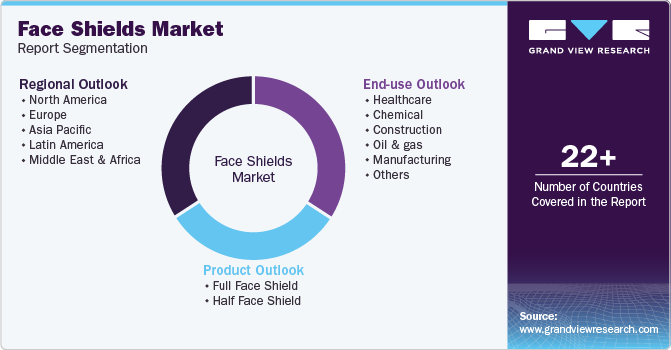
-
Product Outlook (Revenue, USD Million; 2021 - 2033)
-
Full Face Shield
-
Half Face Shield
-
-
End Use Outlook (Revenue, USD Million; 2021 - 2033)
-
Healthcare
-
Chemical
-
Construction
-
Oil & gas
-
Manufacturing
-
Others
-
-
Regional Outlook (Revenue, USD Million; 2021 - 2033)
-
North America
-
U.S.
-
Canada
-
Mexico
-
-
Europe
-
France
-
Germany
-
Italy
-
Russia
-
Spain
-
UK
-
-
Asia Pacific
-
China
-
India
-
Japan
-
South Korea
-
Indonesia
-
Australia
-
Thailand
-
Malaysia
-
-
Latin America
-
Brazil
-
Argentina
-
-
Middle East & Africa
-
Saudi Arabia
-
UAE
-
South Africa
-
-
Research Methodology
The face shields market figures in this report are based on a proven research process that combines executive interviews with secondary research from proprietary databases, company filings, and recognized regulatory and institutional sources. Market size is built through value-chain sizing - reconciling supply-side and demand-side estimates - and triangulated with bottom-up and top-down approaches. Every estimate passes multiple levels of expert validation before publication, with each face shields segment quantified using the revenue-capture definitions in the table below.
Segment Definition
Segment - Product
Revenue Capture Definition
Full Face Shield
Revenue is generated through the sale of full face shields providing complete facial protection against chemical splashes, flying debris, biological hazards, heat, and impact. Demand is driven by healthcare, industrial manufacturing, oil and gas, and hazardous work environments.
Half Face Shield
Revenue is captured through half face shields designed to protect specific facial areas while ensuring visibility and comfort. Demand is supported by construction, manufacturing, laboratory, and general industrial applications requiring lightweight protective equipment.
Segment - End Use
Revenue Capture Definition
Healthcare
Revenue is generated through face shields used by healthcare professionals for protection against infectious agents, bodily fluids, and splashes during medical procedures. Demand is driven by infection control protocols and healthcare safety standards.
Chemical
Revenue is captured through face shields used in chemical manufacturing, laboratories, and processing facilities to protect workers from hazardous chemical splashes and airborne particles. Demand is supported by stringent occupational safety regulations.
Construction
Revenue is generated through face shields used to protect workers from dust, debris, sparks, and impact hazards during construction and infrastructure projects. Demand is driven by workplace safety requirements and expanding construction activities.
Oil & Gas
Revenue is captured through face shields used in drilling, refining, maintenance, and processing operations to protect against heat, flying particles, chemical exposure, and workplace hazards. Demand is supported by stringent industrial safety standards.
Manufacturing
Revenue is generated through face shields used in metal fabrication, welding, machining, assembly, and industrial processing operations. Demand is driven by increasing automation, worker safety initiatives, and compliance with occupational health regulations.
Others
Revenue is captured through face shields used across mining, agriculture, food processing, education, research laboratories, emergency services, and public utilities. Demand is supported by diverse workplace safety requirements and protective equipment programs.
Estimation Model
Layer Name
Key Question
Description
End-use Industry Demand Layer
Which industries generate demand for face shields?
The estimation begins by evaluating face shield requirements across healthcare, chemical, construction, oil & gas, manufacturing, and other industrial sectors. Workforce size, workplace hazards, and occupational safety regulations establish the base market demand.
Product Adoption Layer
Which face shield types drive market consumption?
This layer refines demand by assessing the adoption of full face shields and half face shields across different applications. Protection requirements, comfort, visibility, durability, and industry-specific safety standards influence product penetration.
Safety Compliance and Replacement Demand Layer
What determines annual face shield purchases?
Market demand is estimated through workplace safety regulations, PPE replacement cycles, industrial activity, healthcare procurement, and investments in employee protection programs. Product wear, hygiene requirements, and workforce expansion support recurring demand.
Revenue Layer
How is total market revenue calculated?
Revenue is estimated by aggregating face shield sales across product types, end-use industries, and regional markets. Product pricing, distribution channels, industrial employment trends, regulatory compliance spending, and manufacturer revenues are incorporated to validate the total market size.
Delivered Customizations
This report has been delivered with the following In-depth customizations
Client Request
Customization Delivered
Value Adds
Regional Segmentation
Detailed regional analysis was conducted across North America, Europe, Asia Pacific, Latin America, and the Middle East & Africa, including country-level assessment for key markets such as the U.S., Germany, China, India, Brazil, and Saudi Arabia. The study evaluated healthcare infrastructure, industrial safety regulations, manufacturing activities, construction projects, oil and gas operations, and workplace safety standards influencing face shield adoption across regional markets.
Helped identify high-growth regional markets, country-specific opportunities, and evolving demand trends across healthcare, chemical, construction, oil and gas, and manufacturing sectors. The analysis also supported market entry strategies, regional expansion planning, and identification of emerging industrial safety equipment hubs.
Competitive Benchmarking
Comprehensive benchmarking was carried out for major market participants based on product portfolio, face shield technologies, material innovation, regulatory certifications, regional presence, manufacturing capabilities, and distribution network strength. The assessment also compared established and emerging players operating in the face shields market.
Assisted clients in understanding competitor positioning, product capabilities, and competitive gaps within the market. The study supported strategic planning, partnership evaluation, product differentiation, and investment decisions across healthcare and industrial personal protective equipment applications.
Opportunity Assessment
In-depth opportunity assessment was conducted by analyzing workplace safety regulations, healthcare expansion, industrial automation, construction growth, oil and gas investments, and increasing adoption of advanced personal protective equipment. The study also identified emerging opportunities in reusable face shields, lightweight materials, anti-fog coatings, integrated protective systems, and sustainable PPE solutions.
Enabled clients to identify high-growth investment areas, prioritize regional expansion strategies, and evaluate future revenue opportunities across healthcare, chemical, construction, oil and gas, manufacturing, and industrial safety sectors. The analysis also supported product development planning, technology adoption strategies, and long-term business growth initiatives in the face shields market.
Frequently Asked Questions About This Report
The global face shields market, in terms of revenue, is expected to grow at a compound annual growth rate of 6.6% from 2026 to 2033 to reach USD 1,490.8 million by 2033.
Europe dominated the face shields market with the largest revenue share of 32.5% in 2025.
Asia Pacific is anticipated to be one of the fastest-growing regional markets over the forecast period, driven by expanding healthcare infrastructure, increasing industrial activities, and growing emphasis on worker safety.
The full face shield segment led the market with the largest revenue share of 62.0% in 2025.
The healthcare segment accounted for the largest revenue share of 28.6% in 2025.
Key trends include increasing adoption of reusable face shields, advancements in lightweight and anti-fog materials, growing demand for integrated PPE solutions, and rising focus on healthcare and workplace safety standards.
The global face shields market size was estimated at USD 893.5 million in 2025 and is expected to be USD 950.0 million in 2026.
Some of the key players operating in the face shields 3M, PIP, Alpha Pro Tech, MSA, KARAM, Gateway Safety Inc, Key Surgical, Sanax Protective Products, Medline Industries, Inc., Pyramex Safety Products, LLC, Casco Bay Molding.
Key factors include increasing workplace safety requirements, growing awareness of personal protective equipment (PPE), rising healthcare expenditure, stringent occupational safety regulations, and expanding use of face protection across industrial and healthcare settings.
About the Author(s)
Smart Textiles Research Team
Advanced Materials · Smart TextilesThis report was authored by the smart textiles research team at Grand View Research - comprising two research analysts, one senior research analyst, and one industry expert - with specialized expertise in the smart textiles segment of the advanced materials industry. All findings are based on proprietary advanced materials databases, executive interviews, and regulatory analysis, subject to internal peer review prior to publication.
Last Updated:
Speak to Analyst


Customize this report to your needs — add regions, segments, or data points, with 20% free customization.
Or view our licence options:


ISO 9001:2015 & 27001:2022 Certified
We are GDPR and CCPA compliant! Your transaction & personal information is safe and secure. For more details, please read our privacy policy.


