
- Home
- »
- Beauty & Personal Care
- »
-
Facial Massager Market Size & Share Report, 2026-2033GVR Report cover

Facial Massager Market (2026 - 2033)
Size, Share & Trends Analysis Report By Type (Manual, Electric), By End Use (Women, Men), By Application (Face Lifting, Anti-Wrinkle, Anti-Aging, Skin Tightening), By Distribution Channel, By Region, And Segment Forecasts
Market Size, 2025
$2.1BMarket Estimate, 2026
$2.3BMarket Forecast, 2033
$5.2BCAGR, 2026–2033
12.4%Facial Massager Market Summary
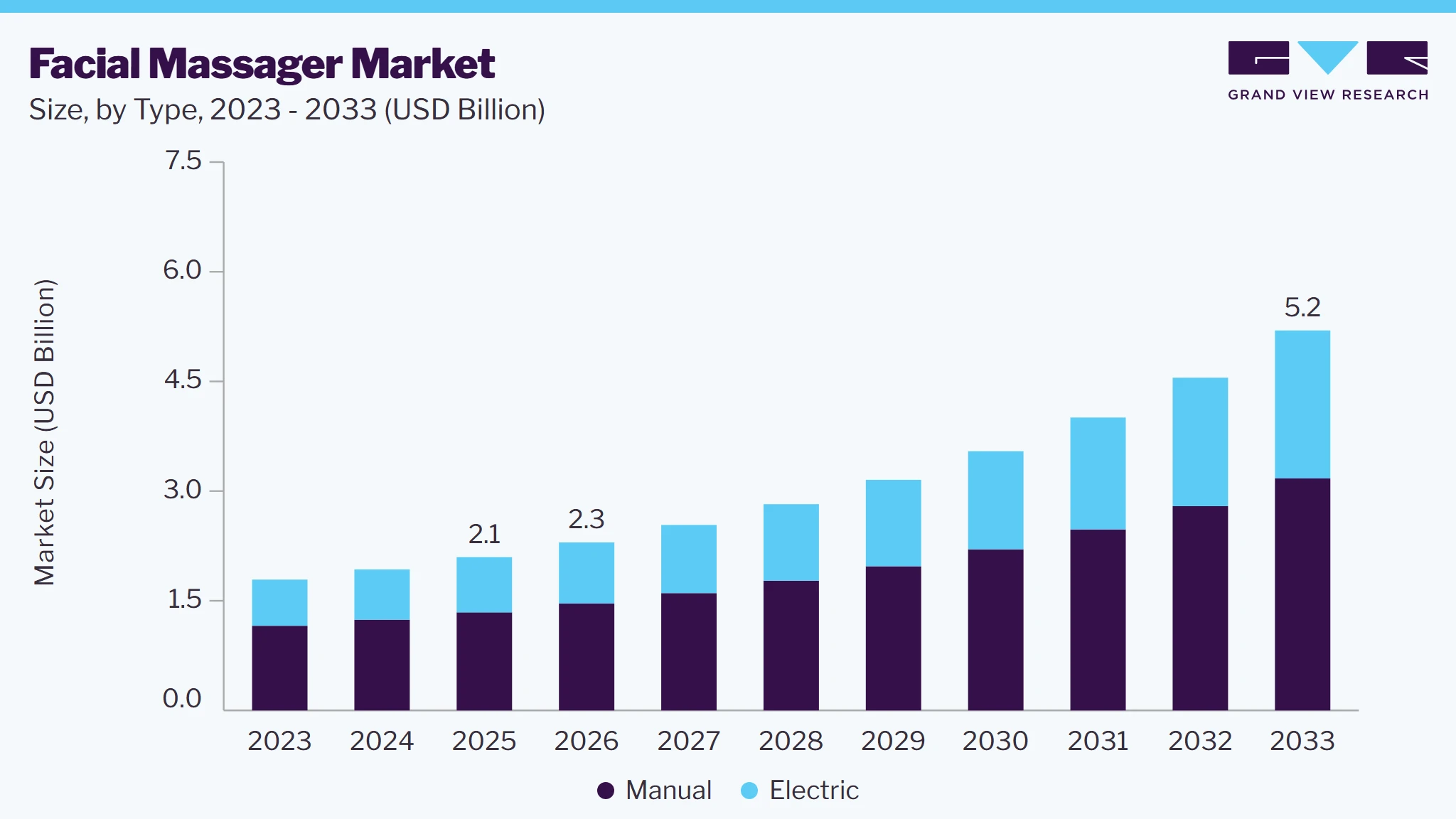
The global facial massager market size was valued at USD 2.1 billion in 2025 and is projected to grow from USD 2.3 billion in 2026 to USD 5.2 billion by 2033, at a CAGR of 12.4% from 2026 to 2033. The market in North America dominated with a revenue share of 35.2% in 2025. The growing awareness of skincare, anti-aging, and overall facial health is significantly boosting the facial massager market.
 Source: Grand View Research, IR Documents, Primary Interviews, Paid DatabasesTo learn more about this report,
 Download Free Sample Report
Key Market Trends & Insights
- By type: Manual segment held the largest market share of 64.0% in 2025.
- By end use: Women segment held the largest market share of 79.1% in 2025.
- By application: Face lifting segment held the largest market share of 30.3% in 2025.
- By distribution channel: Online segment held the largest market share of 34.0% in 2025.
Regional Highlights
- Largest regional market: North America (35.2% revenue share, 2025)
- Fastest-growing regional market: Asia Pacific (highest CAGR, 2026-2033)
- By country: The U.S. held the largest market share in 2025
Market Size & Forecast
- Market size in 2025: USD 2.1 Billion
- Estimated market size in 2026: USD 2.3 Billion
- Projected market size by 2033: USD 5.2 Billion
- CAGR (2026-2033): 12.4%
Three ways to get this report
Buy it, customize it, or ask a question.Ask an Analyst
Analyst response in 1 business day
- AccessReport author, directly
- Reply timeWithin 1 working day
- No sales callDirect answer only
- FormatEmail reply
- CostFree, no cost
Get the Full Report
What the study covers
- FormatsPDF · Excel · Dashboard
- Timeline2026–2033 annual, 2025 base
- Coverage20+ countries, 5 regions
- Companies10+ key players profiled
Customize the Report
20% free customization
- IncludeCountries, segments, points
- TailorTo your product definition
- ExtendDeeper competitor detail
- OrA fully bespoke study
- Turnaround5–10 working days
Consumers are increasingly recognizing the benefits of facial massagers in promoting blood circulation, reducing puffiness, and enhancing skin tone, which complements the rising demand for non-invasive, at-home beauty solutions. This shift in consumer preferences is especially evident among younger generations, who are more proactive about preventative skincare measures, favoring the market growth.The demand for youthful, glowing skin has led to an increased focus on products that enhance skin vitality and elasticity, which is driving innovation in the facial massager market. Advanced technologies such as heat therapy, microcurrent, and vibration are becoming essential features as consumers seek effective, non-invasive skincare tools. These innovations improves blood circulation and collagen production but also provide solutions that mimic professional treatments at home. As a result, facial massagers are becoming more appealing to tech-savvy, beauty-conscious consumers who are willing to invest in premium products that offer multiple benefits, further expanding the market and increasing competition among brands.
 To learn more about this report, Download Free Sample Report
Social media and beauty influencers play a pivotal role in the facial massager market by showcasing these products as essential tools in skincare routines. With influencers frequently sharing personal experiences, tutorials, and results using facial massagers, they create strong consumer demand, especially among younger, beauty-conscious audiences. Platforms such as Instagram, TikTok, and YouTube amplify product visibility, while influencer endorsements lend credibility, making facial massagers more desirable. This trend fuels market growth as consumers, influenced by online trends and reviews, are more such asly to purchase and experiment with these devices, driving both awareness and sales for facial massager brands globally.
The increasing focus on anti-aging products, particularly among aging populations, is positively impacting the growth of the facial massager market. As consumers seek non-invasive solutions to maintain youthful skin, facial massagers are gaining popularity for their perceived ability to improve skin elasticity, reduce wrinkles, and enhance facial contours. This rising interest in anti-aging care drives demand for these devices, as they offer an accessible and cost-effective alternative to professional treatments. The market benefits from this trend as more brands introduce advanced facial massagers with targeted features, appealing to a broader demographic looking for at-home solutions to combat visible signs of aging, thereby fueling market expansion.
Market Dynamics
The facial massager market is witnessing steady growth as consumers increasingly adopt at-home beauty devices that support skincare, facial rejuvenation, and overall wellness. Facial massagers offer benefits such as improved blood circulation, lymphatic drainage, enhanced absorption of skincare products, reduced puffiness, and temporary skin tightening through technologies including microcurrent, sonic vibration, LED light therapy, EMS, and thermal therapy. Growing awareness of preventive skincare, rising demand for non-invasive anti-aging solutions, and the increasing influence of social media beauty trends are encouraging consumers to incorporate facial massagers into their daily skincare routines. Additionally, continuous product innovation, expanding e-commerce penetration, and increasing investments in beauty technology are expected to further drive the growth of the facial massager market.
The increasing consumer preference for at-home beauty treatments and non-invasive skincare solutions is a key driver of the facial massager market. Rising awareness of skincare routines, coupled with growing concerns regarding skin aging, puffiness, facial muscle tension, and reduced skin elasticity, has accelerated the adoption of facial massagers. Consumers are increasingly incorporating manual tools such as jade rollers and gua sha stones, along with electric devices featuring microcurrent, sonic vibration, LED light therapy, EMS, and thermal technologies, into their daily skincare regimens. The expansion of social media beauty trends, influencer marketing, and the growing availability of premium skincare devices through e-commerce platforms are further supporting market growth. Additionally, rising disposable incomes and increasing spending on personal grooming and wellness continue to drive demand globally.
The facial massager market faces challenges due to the relatively high prices of technologically advanced devices incorporating microcurrent, radiofrequency, and LED therapies. While premium products offer multiple skincare benefits, their affordability remains limited in price-sensitive markets, restricting widespread adoption. Furthermore, despite strong consumer interest, the clinical evidence supporting the long-term efficacy of many facial massagers remains limited. Varying product quality, the presence of counterfeit devices, and consumer skepticism regarding advertised performance may reduce purchase confidence. Regulatory differences for beauty devices across countries also create compliance challenges for manufacturers introducing innovative technologies.
The convergence of beauty technology, artificial intelligence (AI), and connected skincare devices presents significant growth opportunities for the facial massager market. Manufacturers are increasingly developing smart facial massagers equipped with app connectivity, personalized treatment modes, skin analysis capabilities, and AI-driven recommendations to enhance user experience. Growing consumer demand for customized skincare routines, coupled with rising adoption of beauty tech and connected wellness devices, is expected to accelerate innovation. In addition, expanding penetration of e-commerce, increasing investments in premium beauty devices, and rising demand from male grooming and aging populations are creating new avenues for market expansion across both developed and emerging economies.
Analyst Perspective
The facial massager market is positioned at the convergence of beauty technology, preventive skincare, and the growing consumer preference for at-home self-care solutions. Demand is increasingly shifting beyond traditional manual tools toward technology-enabled devices incorporating microcurrent, LED light therapy, EMS, sonic vibration, and thermal functions that deliver salon-inspired treatments at home. While product innovation and premiumization continue to drive value creation, the strongest competitive advantage will belong to companies that integrate smart connectivity, personalized skincare recommendations, and multifunctional treatment capabilities into a single device. As consumers increasingly invest in long-term skin health rather than reactive cosmetic treatments, brands that combine clinical credibility, technological differentiation, and strong digital engagement are expected to capture premium market positioning and sustain long-term growth.
Type Insights
Based on type, the manual segment led the market with the largest revenue share of 64.0% in 2025. Manual face massagers come in various types, including jade rollers, gua sha tools, facial rollers with textured surfaces, and acupressure point tools. These devices are designed to stimulate blood circulation, reduce puffiness, and promote lymphatic drainage, providing natural skin revitalization without electricity or batteries. The growth of manual face massagers is driven by their simplicity, affordability, and the increasing consumer preference for natural, non-invasive beauty treatments. In addition, the rise of holistic skincare trends, sustainability awareness, and the influence of social media showcasing the benefits of traditional beauty tools such as jade rollers and gua sha, have further boosted their popularity, expanding the market.
The demand for electric facial massager is expected to grow at the fastest CAGR of 13.5% from 2026 to 2033. The growth of electric facial massagers among consumers is primarily driven by their advanced features and perceived efficacy in delivering professional-grade skincare results at home. These devices often include functionalities such as microcurrent stimulation, heat therapy, and vibration, which enhance blood circulation, boost collagen production, and improve skin texture. Companies such as Foreo exemplify this trend with their popular LUNA series, which combines silicone cleansing brushes with T-Sonic pulsations to offer a multi-functional skincare tool. The appeal of such innovative technology, coupled with the convenience of automated treatments, fuels consumer interest and market expansion for electric facial massagers.
End Use Insights
Based on end use, the women segment led the market with the largest revenue share of 79.1% in 2025. Facial massagers are used more among women due to strong focus on skincare and beauty routines, which often emphasize maintaining youthful, radiant skin. Women are generally more invested in beauty regimens that include tools designed to enhance skin health and appearance, such as facial massagers that help with anti-aging, relaxation, and overall skincare. This heightened interest and dedication to personal care drive higher demand for facial massagers among women, as they seek out products that offer visible improvements and complement their beauty routines.
The demand for facial massager for men is anticipated to grow at the fastest CAGR of 14.5% from 2026 to 2033. The growth of facial massagers among men is driven by a growing awareness and interest in skincare and grooming. As societal norms shift and men increasingly prioritize personal care, there is a rising demand for products that address skincare concerns such as aging, stress, and fatigue. In addition, marketing campaigns targeting men and the influence of celebrities and influencers who endorse skincare products contribute to this trend. This evolving perception of skincare as essential rather than optional is expanding the market for facial massagers among men.
Application Insights
Based on application, the face lifting segment led the market with the largest revenue share of 30.3% in 2025. Facial massagers are majorly used for face lifting as they offer a non-invasive method to enhance skin firmness, reduce sagging, and improve facial contours. The demand for these devices is driven by its ability to stimulate blood circulation, promote collagen production, and reduce puffiness, all of which contribute to a more youthful and lifted appearance. As consumers increasingly seek alternatives to surgical procedures, facial massagers provide a convenient and affordable solution for achieving aesthetic improvements. The rise in popularity of at-home beauty treatments and the influence of beauty trends emphasizing youthful, contoured looks further fuel the demand for facial massagers designed specifically for face lifting, making them a sought-after tool in personal skincare routines.
The demand for facial massager for skin tightening is anticipated to grow at the highest CAGR of 13.6% from 2026 to 2033. Facial massagers are increasingly used for skin tightening due to its ability to enhance skin elasticity and firmness through targeted stimulation. The growth in skin tightening application is driven by consumers' desire for non-invasive solutions to combat skin sagging and improve overall skin texture without resorting to surgical procedures. These devices often incorporate features such as microcurrent technology, heat therapy, or vibration to stimulate collagen production and tighten the skin. As awareness of the benefits of skin tightening grows and more people seek effective at-home treatments to maintain a youthful appearance, the demand for facial massagers that offer visible, tightening effects continues to rise.
Distribution Channel Insights
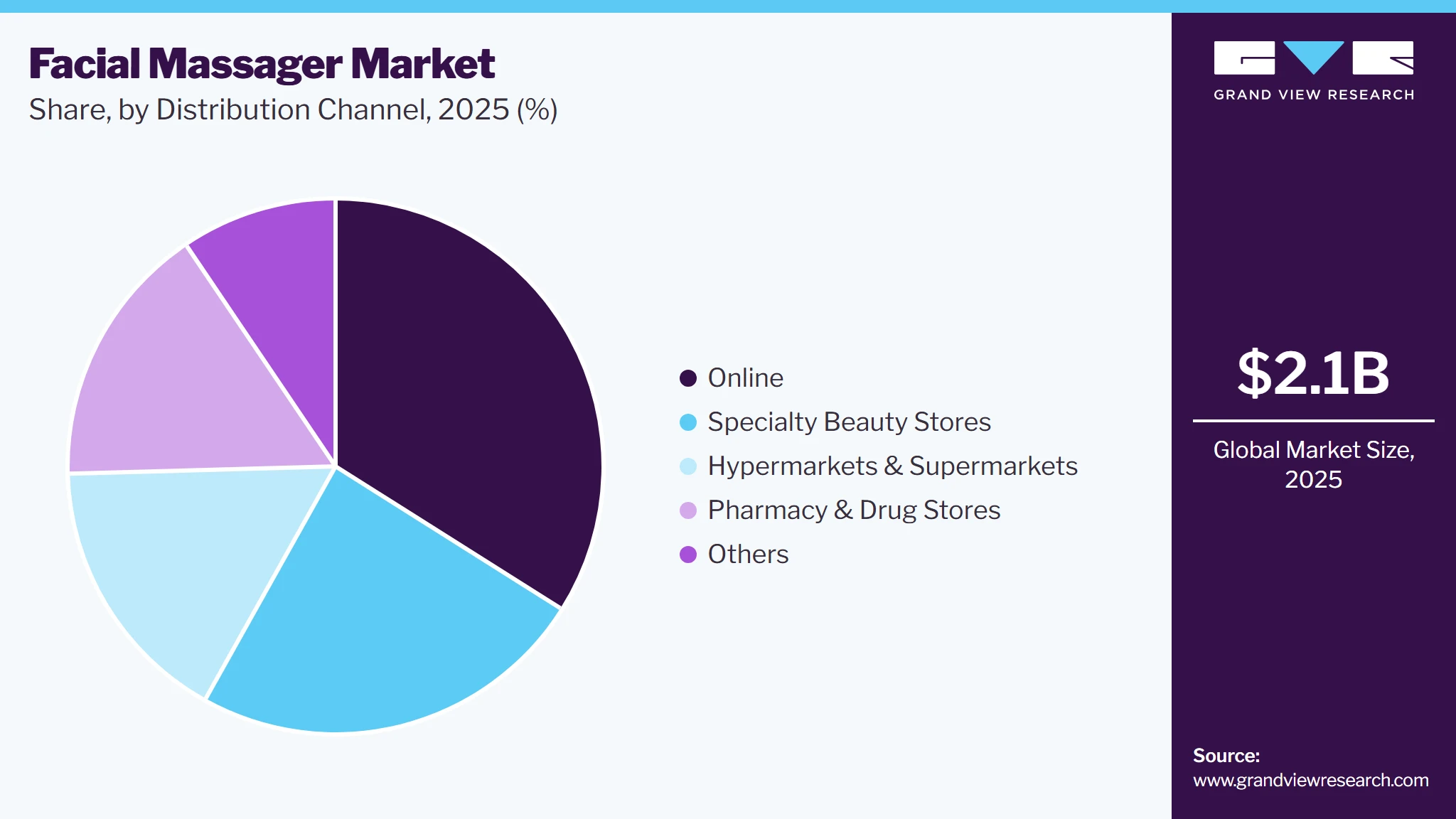
Based on distribution channel, the online segment led the market with the largest revenue share of 34.0% in 2025. Online shopping offers detailed product information, customer reviews, and comparisons, enabling informed purchasing decisions. The ability to access exclusive deals, promotions, and a broad selection of brands also appeals to consumers seeking the best options. In addition, the rise of social media and digital marketing strategies helps drive online traffic and sales by showcasing product benefits and user testimonials. This seamless and informative shopping experience, combined with the growing trend of digital purchases, significantly contributes to the rise in online sales of facial massagers.
 To learn more about this report, Download Free Sample Report
Specialty beauty stores segment is anticipated to grow at a significant CAGR of 11.2% from 2026 to 2033. Specialty beauty stores often offer a carefully selected range of facial massagers, providing consumers with access to premium, innovative options that may not be available in general retail outlets. These stores typically employ knowledgeable staff who can offer expert advice and demonstrations, enhancing the shopping experience and helping customers make informed choices. In addition, the store environment often emphasizes a luxury or specialized skincare focus, attracting consumers who are willing to invest in high-end beauty tools. This combination of expertise, exclusivity, and tailored service helps drive the sales of facial massagers through specialty beauty stores.
Regional Insights
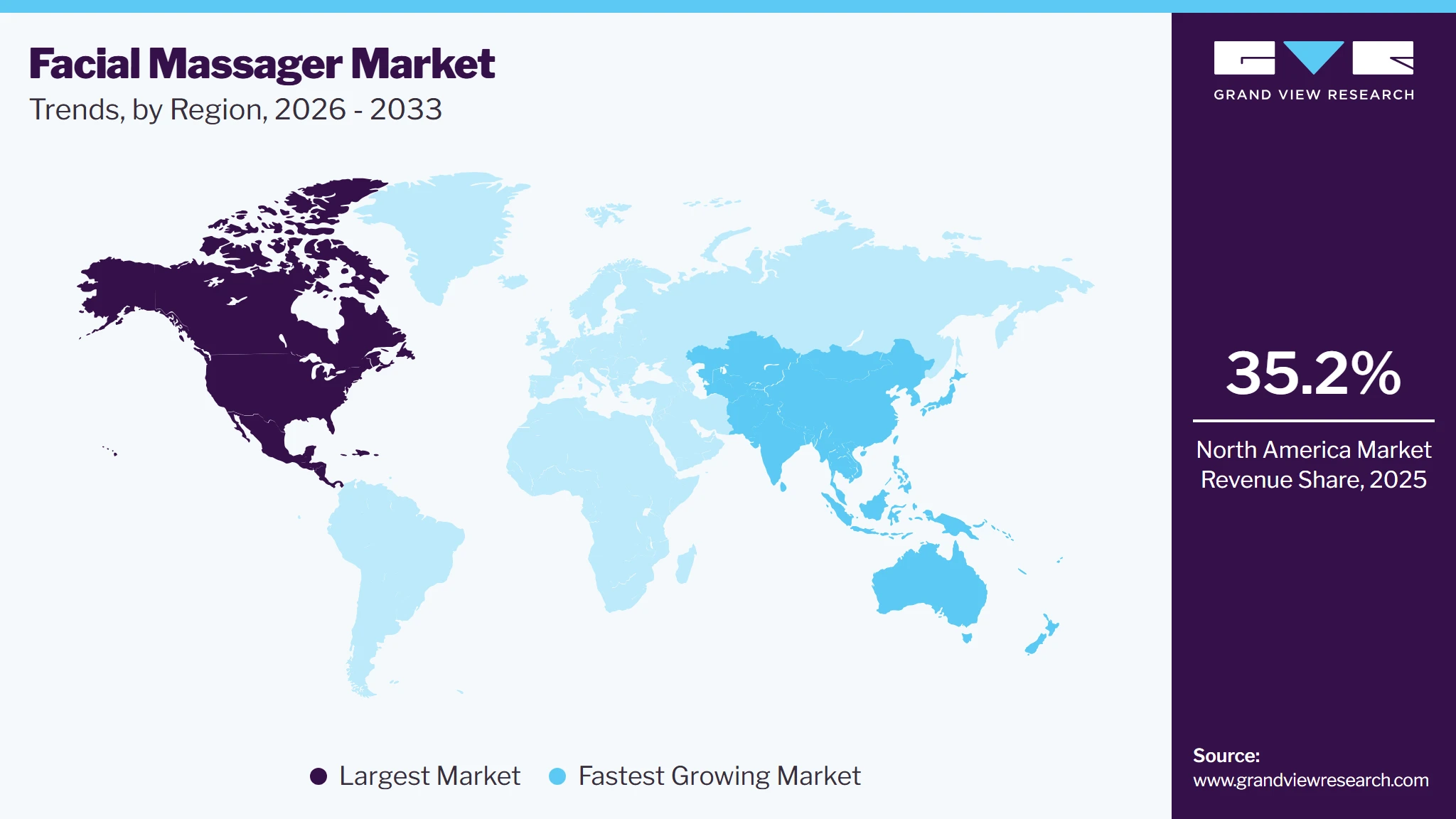
North America dominated the facial massager market with the largest revenue share of 35.2% in 2025. In North America, the demand for facial massagers is driven by a growing emphasis on skincare and wellness, with consumers increasingly seeking at-home solutions that enhance their beauty routines. The rise of social media and influencer endorsements has amplified awareness and interest in facial massagers, as they are perceived as essential tools for achieving youthful, radiant skin. In addition, the convenience of using these devices at home, combined with their ability to provide relaxation and improve blood circulation, has made them popular among individuals looking for effective, non-invasive skincare treatments. Advances in technology and product innovation, such as the integration of heat and vibration features, also contribute to their appeal.
 To learn more about this report, Download Free Sample Report
U.S. Facial Massager Market Trends
The facial massager market in the U.S. accounted for a market share of around 75.0% in 2025 in the North American market. The market is characterized by a diverse range of products, from manual tools to advanced electronic devices with features such as vibration and heating. Major companies driving the market include Foreo, known for its LUNA series; NuFace, with its popular microcurrent devices; and Rodan + Fields, which offers a range of skincare tools. In addition, brands such as Shani Darden and Dr. Dennis Gross contribute to the competitive landscape with their high-performance facial massagers. The combination of technological advancements, influencer endorsements, and a growing focus on self-care is propelling the demand for facial massagers in the U.S.
Asia Pacific Facial Massager Market Trends
The facial massager market in Asia Pacific is anticipated to grow at the fastest CAGR of 14.3% over the forecast period. The facial massager market in the Asia Pacific region is expanding rapidly due to increasing awareness of skincare and the growing popularity of beauty tech innovations. The market is influenced by trends in Korean and Japanese beauty routines, where facial massagers are a common component. Leading companies in the region include Panasonic, known for its advanced beauty devices; Foreo, which has a strong presence with its LUNA series; and local brands such as LG and Foryou, which offer a range of affordable and technologically advanced options. The proliferation of e-commerce and social media in Asia Pacific further fuels market growth by making these products more accessible and popular among a broader audience.
Europe Facial Massager Market Trends
The Europe facial massager market is expected to grow a CAGR of 11.8% from 2026 to 2033. The market benefits from a heightened focus on self-care and the adoption of advanced beauty technologies. Major countries contributing to this market include the UK, Germany, France, and Italy, where there is a strong demand for both high-end and accessible facial massagers. Trends in European skincare routines emphasize the importance of non-invasive treatments, further boosting market expansion. The growing influence of beauty influencers and a rising trend towards at-home spa experiences are key factors propelling the demand for facial massagers across the region.
Key Facial Massager Company Insights
The facial massager market is dynamic, characterized by a blend of established global brands and emerging players. Leading companies compete on the basis of product innovation, technological advancements, and marketing strategies to capture consumer interest. The market sees competition from major brands offering high-tech devices with features such as microcurrent technology, vibration, and heat, alongside those emphasizing affordability and ease of use. Brand differentiation is also driven by factors such as design, effectiveness, and integration with skincare routines. In addition, companies are leveraging online platforms and social media to enhance visibility and engage with a broader audience, intensifying competition in this growing sector.
Key Facial Massager Companies:
The following key companies have been profiled for this study on the facial massager market.
- FEREO
- NuFACE
- ReFa
- L'Oreal S.A. (Clarisonic)
- SHANI DARDEN SKIN CARE
- Jade Roller
- KORA Organics
- Herbivore Botanicals
- Yeamon Beauty
- YA-MAN Ltd.
Market Participant Categorization
Category
Operating Strategies
Competitive Edge
Weakness
Established Players (FOREO; NuFACE; ReFa; L'Oréal S.A. (Clarisonic); YA-MAN Ltd.)
- Invest in product innovation with microcurrent, sonic, and LED technologies, expand premium skincare device portfolios, strengthen omnichannel and global retail distribution, and collaborate with beauty professionals and skincare brands to enhance consumer engagement.
- Strong global brand recognition, extensive distribution networks, advanced R&D capabilities, premium product positioning, and high customer loyalty driven by proven product performance.
- Premium pricing restricts adoption among price-sensitive consumers, high marketing and operational costs, and slower response to emerging niche beauty trends compared to smaller brands.
Emerging Players (SHANI DARDEN SKIN CARE; Jade Roller; KORA Organics; Herbivore Botanicals; Yeamon Beauty)
- Focus on natural beauty and wellness positioning, expand through e-commerce and influencer marketing, offer affordable facial massage tools, and introduce multifunctional products targeting at-home skincare routines.
- Strong appeal among wellness-conscious consumers, agile product development, competitive pricing, and effective digital-first marketing strategies that build brand awareness quickly.
- Limited global distribution, lower brand recognition compared to established players, smaller R&D budgets, and intense competition from leading beauty technology companies with broader product portfolios.
Recent Developments
-
In July 2024, Foreo launched its latest microcurrent skin-firming device, the BEAR. This advanced facial massager is designed to enhance skin elasticity and firmness through the use of microcurrent technology. The BEAR features a patented Anti-Shock System to ensure safe and effective treatments, adjustable intensity settings for personalized use, and a unique T-Sonic pulsation function that aims to improve overall skin tone and texture. This launch underscores Foreo’s commitment to innovation in the beauty tech sector, aiming to meet the growing consumer demand for high-performance, at-home skincare solutions.
-
In January 2024, NuFace introduced its new Fitness for Your Face facial and accompanying in-app treatment, designed to support wellness goals for the new year. This innovative offering combines the company's renowned microcurrent technology with a personalized app experience, allowing users to customize their facial treatments and track their progress. The device aims to enhance facial contours, reduce signs of aging, and promote overall skin health through targeted microcurrent stimulation. This launch reflects NuFace's strategy to integrate cutting-edge technology with user-centric features, catering to the increasing consumer demand for effective and personalized at-home skincare solutions.
Facial Massager Market Report Scope
Report Attribute
Details
Market size in 2025
USD 2.1 billion
Estimated market size in 2026
USD 2.3 billion
Projected market size by 2033
USD 5.2 billion
Growth rate
CAGR of 12.4% from 2026 to 2033
Base year for estimation
2025
Historical data
2021 - 2024
Forecast period
2026 - 2033
Quantitative units
Revenue in USD million/billion and CAGR from 2026 to 2033
Report coverage
Revenue forecast, company ranking, competitive landscape, growth factors, and trends
Segments covered
Type, End Use, Application, Distribution Channel, Region
Regional scope
North America; Europe; Asia Pacific; Latin America; MEA
Country scope
U.S.; Canada; Mexico; UK; Germany; France; Italy; Spain; Japan; China; India; Brazil; Argentina; Saudi Arabia; and South Africa
Key companies profiled
FEREO; NuFACE; ReFa; L'Oreal S.A. (Clarisonic); SHANI DARDEN SKIN CARE; Jade Roller; KORA Organics; Herbivore Botanicals; Yeamon Beauty; and YA-MAN Ltd.
Customization scope
Free report customization (equivalent up to 8 analysts' working days) with purchase. Addition or alteration to country, regional & segment scope.
Pricing and purchase options
Avail customized purchase options to meet your exact research needs. Explore purchase options
Global Facial Massager Market Report Segmentation
This report forecasts revenue growth at the regional and country levels and provides an analysis of the latest industry trends and opportunities in each of the sub-segments from 2021 to 2033. For the purpose of this study, Grand View Research has segmented the global facial massager market report on the basis of type, end use, application, distribution channel, and region:
-
Type Outlook (Revenue, USD Billion, 2021 - 2033)
-
Manual
-
Electric
-
-
End Use Outlook (Revenue, USD Billion, 2021 - 2033)
-
Women
-
Men
-
-
Application Outlook (Revenue, USD Billion, 2021 - 2033)
-
Face Lifting
-
Anti-Wrinkle
-
Anti-Aging
-
Skin-Tightening
-
Others
-
-
Distribution Channel Outlook (Revenue, USD Billion, 2021 - 2033)
-
Hypermarkets & Supermarkets
-
Specialty Beauty Stores
-
Pharmacy & Drug Stores
-
Online
-
Others
-
-
Regional Outlook (Revenue, USD Billion, 2021 - 2033)
-
North America
-
U.S.
-
Canada
-
Mexico
-
-
Europe
-
UK
-
Germany
-
France
-
Italy
-
Spain
-
-
Asia Pacific
-
China
-
Japan
-
India
-
-
Central & South America
-
Brazil
-
Argentina
-
-
Middle East & Africa
-
South Africa
-
Saudi Arabia
-
-
Research Methodology
The facial massager market figures in this report are based on a proven research process that combines executive interviews with secondary research from proprietary databases, company filings, and recognized regulatory and institutional sources. Market size is built through value-chain sizing - reconciling supply-side and demand-side estimates - and triangulated with bottom-up and top-down approaches. Every estimate passes multiple levels of expert validation before publication, with each facial massager segment quantified using the revenue-capture definitions in the table below.
Segment Definition
Segment - Type
Revenue capture definition
Manual
This segment covers the revenues generated through the sales of manual facial massagers, including non-powered tools such as jade rollers, gua sha stones, facial rollers, and massage sticks that help improve blood circulation, reduce puffiness, and promote skin relaxation through manual application.
Electric
This segment covers the revenues generated through the sales of electric facial massagers, including battery-operated and rechargeable devices that use vibration, microcurrent, sonic pulsation, LED light therapy, or thermal technology to enhance skin toning, improve product absorption, and support facial rejuvenation.
Estimation Model
Layer Name
Key Question
Description
Epidemiology Layer
Who has a relevant beauty concern?
Estimate the population with skincare concerns such as aging, facial puffiness, acne, poor circulation, and skin dullness that drive demand for facial massagers.
Digital Access Layer
Who can be reached digitally?
Apply smartphone, internet, and e-commerce penetration to identify consumers who can access and purchase facial massagers through online channels.
Behavioural Layer
Who actively uses beauty devices?
Estimate the share of consumers adopting at-home skincare devices, driven by rising beauty awareness, social media influence, and preference for non-invasive treatments.
Monetisation Layer
How much revenue is generated?
Multiply the active user base by the average selling price (ASP) and replacement/upgrade purchases to estimate total market revenue.
Delivered Customizations
This report has been delivered with the following In-depth customizations
Client Request
Customization Delivered
Value Adds
Facial Rejuvenation, Anti-Aging & Skincare Device Trends
Conducted a focused analysis of facial massagers covering anti-aging devices, facial sculpting tools, microcurrent technology, vibration and thermal therapy, skincare integration, and at-home beauty device adoption trends.
Helps stakeholders identify high-growth product categories, evaluate evolving consumer beauty preferences, and assess commercialization opportunities in the premium skincare device market.
Beauty Tech & At-Home Skincare Adoption Trends
Evaluated adoption trends for facial massage devices across home-use and professional applications, including smart beauty devices, wearable skincare technologies, e-commerce penetration, and personalized skincare routines.
Provides insights into emerging beauty technology trends, consumer purchasing behavior, and attractive market segments to support product innovation and go-to-market strategies.
Smart Beauty Devices & Personalized Skincare Opportunity Assessment
Assessed demand for AI-enabled skincare devices, connected facial massagers, app-integrated beauty solutions, and personalized skincare technologies, along with regulatory, sustainability, and product differentiation factors.
Supports investment and expansion strategies by identifying innovation opportunities, technology readiness, competitive positioning, and long-term growth potential in the facial massager market.
Frequently Asked Questions About This Report
The global facial massager market size was valued at USD 2.1 billion in 2025 and is estimated at USD 2.3 billion for 2026.
The global facial massager market is expected to grow at a CAGR of 12.4% from 2026 to 2033, reaching USD 5.2 billion by 2033.
Key factors that are driving the facial massager market growth include increasing consumer awareness of skincare, technological innovations, rising disposable incomes, the influence of social media, and the convenience of online shopping.
The manual segment led with a 64.0% revenue share in 2025, while the electric segment is the fastest-growing.
North America dominated with a 35.2% revenue share in 2025. The facial massager by a heightened focus on skincare and wellness, coupled with a strong preference for innovative, at-home beauty solutions and the influence of social media and beauty influencers.
Asia Pacific is the fastest-growing region over the forecast period.
The women segment led with a 79.1% revenue share in 2025.
The face lifting segment led with a 30.3% revenue share in 2025.
Online segment held the largest share (over 34.0%) in 2025, and is the fastest-growing distribution channel.
Key players include FEREO; NuFACE; ReFa; L'Oreal S.A. (Clarisonic); SHANI DARDEN SKIN CARE; Jade Roller; KORA Organics; Herbivore Botanicals; Yeamon Beauty; and YA-MAN Ltd.
About the Author(s)
Beauty & Personal Care Research Team
Consumer Goods · Beauty & Personal CareThis report was authored by the beauty & personal care research team at Grand View Research - comprising two research analysts, one senior research analyst, and one industry expert - with specialized expertise in the beauty & personal care segment of the consumer goods industry. All findings are based on proprietary consumer goods databases, executive interviews, and regulatory analysis, subject to internal peer review prior to publication.
Last Updated:
Speak to Analyst

Customize this report to your needs - add regions, segments, or data points, with 20% free customization.
Or view our licence options:


ISO 9001:2015 & 27001:2022 Certified
We are GDPR and CCPA compliant! Your transaction & personal information is safe and secure. For more details, please read our privacy policy.


