
- Home
- »
- Medical Devices
- »
-
Fluoride-Free Toothpaste Market Size, Industry Report, 2033GVR Report cover

Fluoride-Free Toothpaste Market (2026 - 2033) Size, Share & Trends Analysis Report By Formulation (Remineralizing, Mechanical Cleansers, Biological Actives), By Application, By End Use, By Distribution Channel, By Region, And Segment Forecasts
Market Size, 2025
$3.6BMarket Estimate, 2026
$3.9BMarket Forecast, 2033
$8.1BCAGR, 2026–2033
10.8%Fluoride-Free Toothpaste Market Summary
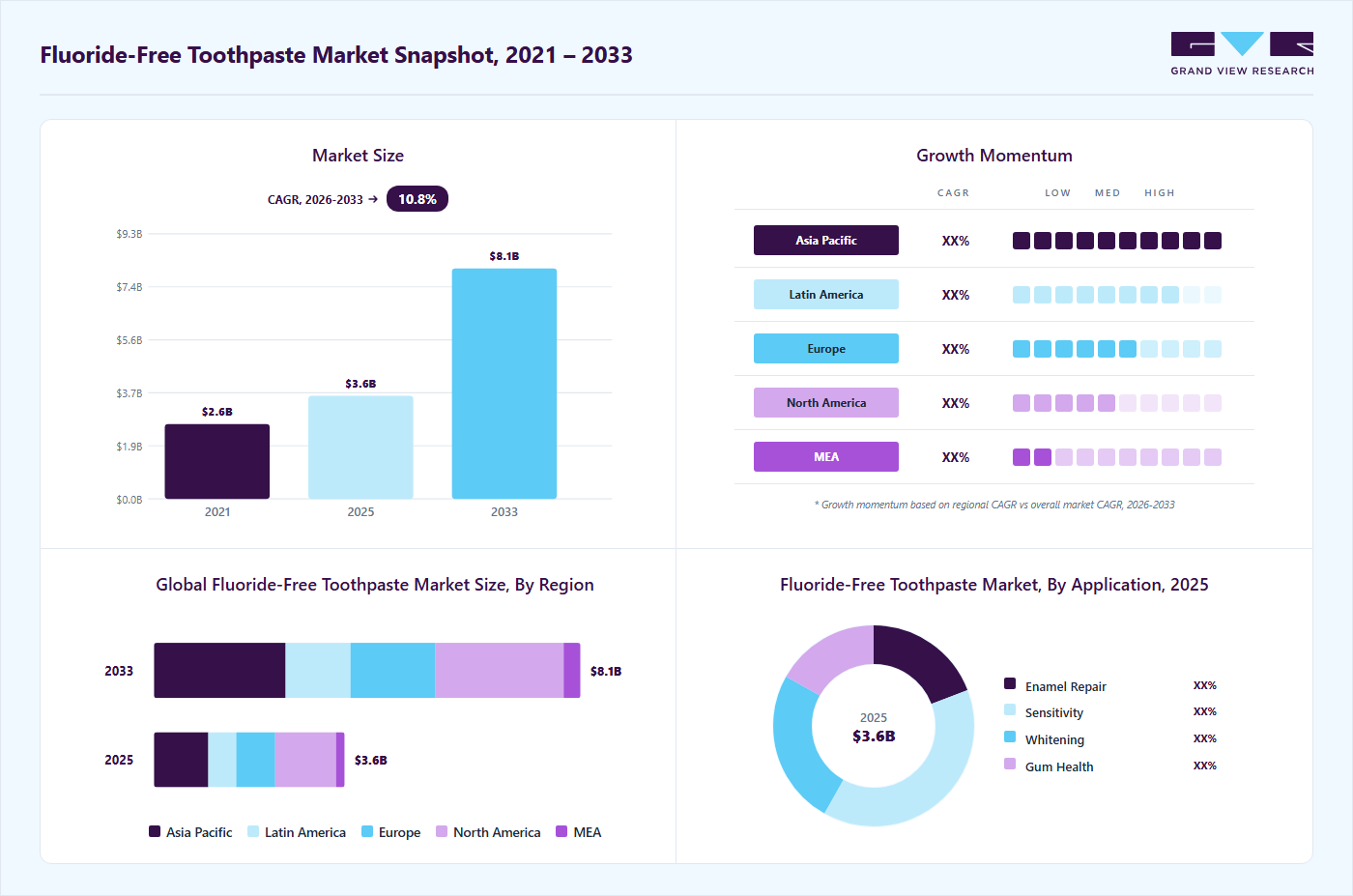
The global fluoride-free toothpaste market size was valued at USD 3.6 billion in 2025 and is projected to grow from USD 3.9 billion in 2026 to USD 8.1 billion by 2033, at a CAGR of 10.8% from 2026 to 2033. The market in North America dominated with a revenue share of 31.8% in 2025. The industry is experiencing steady growth driven by rising consumer awareness of oral health and an increasing preference for products perceived as safer and more natural.
 Source: Grand View Research, IR Documents, Primary Interviews, Paid DatabasesTo learn more about this report,
 Download Free Sample Report
 Key Market Trends & Insights
- By formulation: The remineralizing (non-fluoride) segment led the market with the largest revenue share in 2025.
- By application: The sensitivity segment led the market with the largest revenue share in 2025.
- By end use: The adult segment led the market with the largest revenue share in 2025.
- By distribution channel: The offline segment led the market with the largest revenue share in 2025.
Regional Highlights
- Largest regional market: North America (31.8% revenue share, 2025)
- Fastest-growing regional market: Asia Pacific (highest CAGR, 2026-2033)
- By country: The U.S. held the largest market share in 2025.
Market Size & Forecast
- Market size in 2025: USD 3.6 Billion
- Estimated market size in 2026: USD 3.9 Billion
- Projected market size by 2033: USD 8.1 Billion
- CAGR (2026-2033): 10.8%
Three ways to get this report
Buy it, customize it, or ask a question.Ask an Analyst
A direct answer, usually in 1 working day
- AccessReport author, directly
- Reply timeWithin 1 working day
- No sales callDirect answer only
- FormatEmail reply
- CostFree, no cost
Get the Full Report
What the study covers
- FormatsPDF · Excel · Dashboard
- Timeline2026–2033 annual, 2025 base
- Coverage20+ countries, 5 regions
- Companies10+ key players profiled
Customize the Report
20% free customization
- IncludeCountries, segments, points
- TailorTo your product definition
- ExtendDeeper competitor detail
- OrA fully bespoke study
- Turnaround5–10 working days
Many consumers are becoming cautious about fluoride use, particularly for children, and are shifting toward fluoride-free alternatives to avoid concerns such as dental fluorosis and sensitivity. For instance, in September 2024, a U.S. federal court reportedly ruled that fluoridation chemicals added to public water systems may pose an unreasonable risk to human health. The ruling particularly highlighted potential concerns regarding the developing brains of children. At the same time, there is a strong global trend toward natural, organic, and clean-label personal care products, which is encouraging demand for toothpaste made with herbal and plant-based ingredients. Even in the 21st century, poor oral health remains a significant global health burden, with dental caries being the most common condition among both children and adults, and periodontal disease being a leading cause of tooth loss in industrialized countries. Although these conditions are largely preventable through good oral hygiene, consumers are looking beyond conventional fluoride-based formulations toward alternatives that better align with modern lifestyle and wellness trends.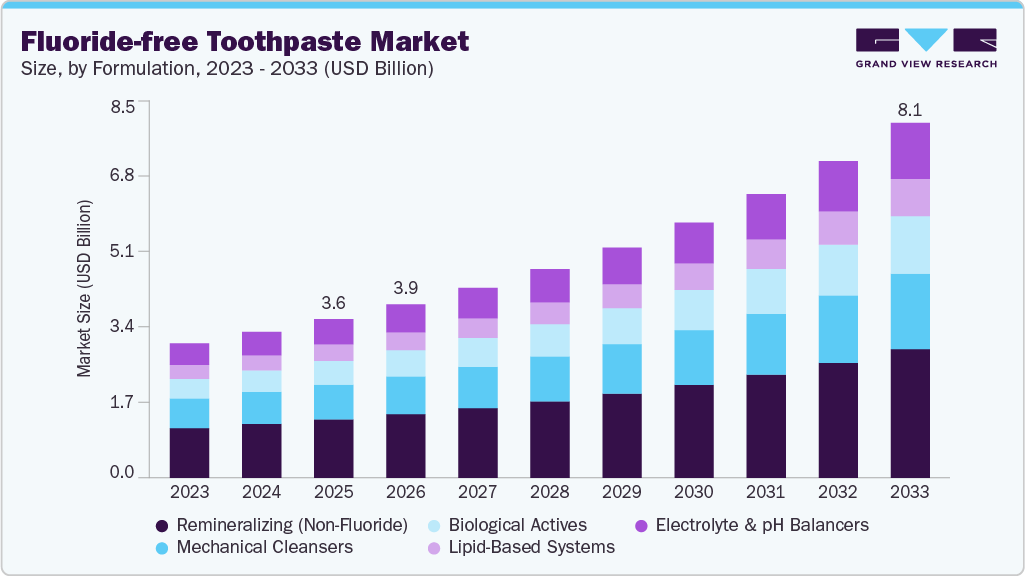 To learn more about this report, Download Free Sample Report
 In recent years, consumers have become more informed and cautious about the ingredients used in daily hygiene products, leading to a shift toward “clean label” and “natural” oral care solutions. This trend is strongly supported by the growing popularity of fluoride-free campaigns, which have expanded their efforts to educate the public about the potential risks of excessive fluoride intake, particularly in children, including dental fluorosis and other long-term health concerns. For instance, in July 2025, Dabur Red Paste strengthened its fluoride-free positioning through a nationwide campaign developed with Mixed Route Juice, expanding its #SwitchToFluorideFree initiative. The campaign aims to increase awareness about excessive fluoride exposure and encourage consumers to choose fluoride-free toothpaste alternatives. It is supported by findings from the Ministry of Jal Shakti, which reported high fluoride levels in groundwater across multiple districts in India. The campaign highlights potential health concerns linked to excess fluoride intake, such as dental fluorosis, brittle bones, and reduced cognitive development in children. These developments are accelerating consumer preference toward fluoride-free oral care products and driving sustained growth in the global fluoride-free toothpaste market.
“As a brand that has always believed in offering natural, safe, and effective oral care solutions, we felt it was our responsibility to bring this issue to the forefront.” saidPrashant Agarwal, head of marketing, oral care, Dabur India “#SwitchToFluorideFree is more than a campaign, it’s a public health message, urging families to check their toothpaste labels and make the informed choice towards fluoride-free alternatives like Dabur Red Paste.”
Market Concentration & Characteristics
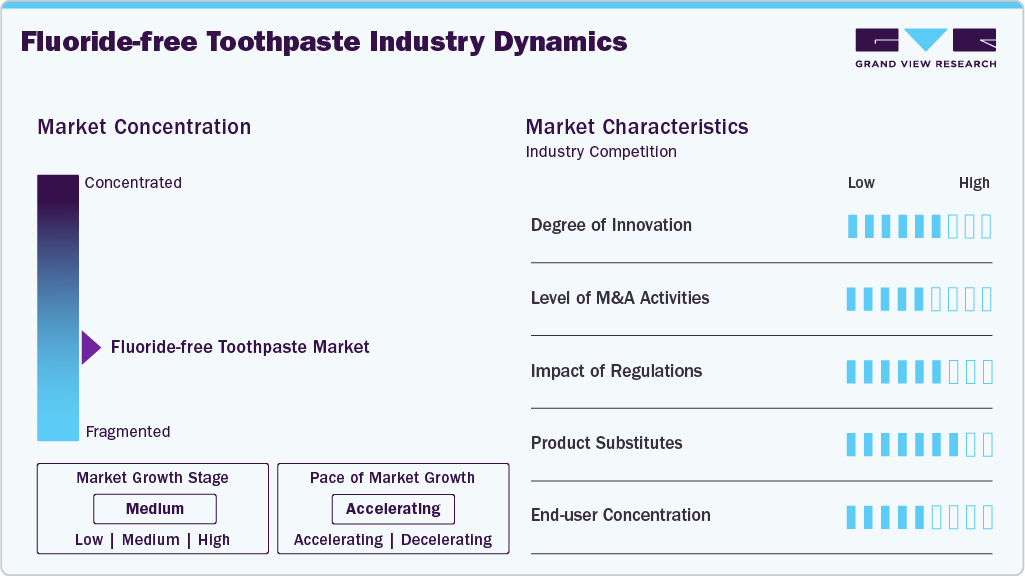
The fluoride-free toothpaste market shows a moderate to high level of innovation, driven by rising demand for natural, herbal, and chemical-free oral care products. Brands introduce ingredients such as activated charcoal, hydroxyapatite, coconut oil, and herbal extracts to differentiate offerings. Baidyanath offers its Herbal Toothpaste, a fluoride-free and SLS-free Ayurvedic oral care solution enriched with neem and clove. The formulation is positioned to support strong teeth and healthy gums using traditional herbal ingredients. This reflects a steady shift in the market toward natural and Ayurveda-based formulations, strengthening consumer preference for safer and more holistic oral care solutions.
The industry experiences a moderate level of mergers and acquisitions, driven by large oral care and FMCG companies acquiring niche natural or organic brands. Major players such as Colgate-Palmolive, Procter & Gamble, and Unilever often expand their portfolios by integrating smaller herbal or clean-label brands. However, the overall M&A intensity remains limited compared to other personal care segments, as many fluoride-free brands operate independently or as D2C startups. Strategic partnerships and distribution deals are more common than large-scale acquisitions.
 To learn more about this report, Download Free Sample Report
 Regulations moderately influence the fluoride-free toothpaste industry, mainly through safety, labeling, and ingredient compliance standards. While fluoride-free products are not heavily restricted, manufacturers must still follow cosmetic regulations and ensure ingredient safety approvals. In some regions, dental associations strongly recommend fluoride use, thereby indirectly creating market resistance to fluoride-free alternatives. However, growing acceptance of natural and herbal products is easing regulatory pressure in many countries. The market is also influenced by claims regulation, requiring brands to substantiate benefits such as “anti-cavity” or “whitening.”
The market faces a high threat from substitutes, making it a competitive segment. Traditional fluoride toothpaste remains the primary alternative due to strong dentist recommendations and proven effectiveness in cavity prevention. Other substitutes include mouthwashes, dental powders, charcoal powders, oil pulling products, and advanced oral care devices such as electric toothbrushes. Also, combination oral care routines reduce reliance on standalone toothpaste products. The presence of low-cost conventional toothpaste further intensifies substitution pressure.
The industry has a moderate level of end-use concentration, driven by individual consumers seeking natural, chemical-free oral care. Key end users include health-conscious adults, parents choosing safer options for their children, and consumers with fluoride sensitivity or lifestyle preferences such as vegan or organic living. Demand is higher in urban and developed regions where awareness of clean-label products is strong. However, penetration in rural and price-sensitive markets remains limited.
Formulation Insights
The remineralizing (non-fluoride) segment dominated the fluoride-free toothpaste market in 2025. Rising consumer preference for natural and fluoride-free oral care products has driven interest in hydroxyapatite-based formulations. Every day, teeth are exposed to acids, bacteria, and mechanical wear, which can gradually weaken enamel. Tooth enamel, the outermost protective layer, is composed of approximately 92–96% minerals, primarily crystalline calcium phosphate known as hydroxyapatite. This mineral plays a critical role in maintaining enamel strength and structure. As a result, hydroxyapatite has gained recognition as an effective ingredient for enamel repair and protection.
The biological actives segment is expected to grow at the fastest rate during the forecast period. Ingredients such as fruit enzymes, salivary enzymes, and botanical extracts offer effective cleaning and therapeutic benefits without the use of synthetic chemicals. Fruit enzymes such as papain help break down plaque and remove surface stains, supporting gentle whitening. Salivary enzymes enhance the mouth’s natural defense system by promoting antibacterial activity and maintaining oral balance. In addition, botanical extracts such as neem and clove are widely recognized for their antimicrobial, anti-inflammatory, and soothing properties, making them highly appealing to health-conscious consumers. The growing awareness of oral microbiome health and demand for plant-based formulations further supports this trend.
Application Insights
The sensitivity application segment dominated the market for fluoride-free toothpaste in 2025 due to rising consumer demand for effective relief from tooth sensitivity without the use of fluoride. Many market players are offering fluoride-free toothpaste products targeted at sensitivity relief, significantly expanding product availability and consumer choice. These products often include natural and soothing ingredients such as herbal extracts and mineral-based compounds, appealing to health-conscious buyers. For instance, Kiss My Face offers its Sensitive Citrus Mint Gel Fluoride-Free Toothpaste, targeting consumers seeking natural and gentle oral care solutions. The product is vegan, cruelty-free, and free from fluoride, triclosan, and SLS, while helping reduce sensitivity and prevent tartar build-up. Formulated with natural ingredients such as tea tree oil and aloe vera, it offers a refreshing orange mint flavor for an enhanced user experience.
The enamel repair segment is expected to grow at the fastest rate during the forecast period due to rising concerns about dental erosion. Dental erosion, defined as the irreversible loss of tooth structure due to non-bacterial acid exposure, commonly begins in enamel and may progress to dentin if untreated. According to the Indian Dental Association, it is one of the most prevalent chronic conditions among children aged 5–17, highlighting a significant target population. The rising consumption of acidic foods and beverages with pH levels below 5.0–5.7, such as soft drinks, fruit juices, and wine (pH 3.0–3.8), is a major contributing factor. Also, exposure to gastric acids and chlorinated water further accelerates enamel degradation. Growing consumer awareness of these risks is increasing demand for fluoride-free formulations focused on enamel repair, thereby supporting segment growth in the application category.
End Use Insights
The adult segment dominated the fluoride-free toothpaste market in 2025. Adults are more likely to read product labels and prefer natural or chemical-free formulations, driving demand for fluoride-free options. Growing concerns about potential fluoride side effects, along with a rising preference for herbal and organic products, have also influenced purchasing behavior. In addition, higher disposable incomes among adults enable them to spend on premium personal care products. The influence of social media, wellness trends, and recommendations from dental professionals further supports market growth in this segment. Adults are also more consistent in maintaining daily oral hygiene routines, leading to repeat purchases.
The pediatric segment in the fluoride-free toothpaste industry is expected to grow at a robust CAGR during the forecast period. Many parents are becoming cautious about the potential risks associated with excessive fluoride intake, particularly in younger children who may accidentally swallow toothpaste. As a result, there is a growing preference for safer, non-toxic, and natural oral care products. In the end-use segment, rising demand is also supported by the increasing availability of child-friendly formulations, such as mild flavors and attractive packaging, which encourage regular brushing habits. Further, the trend toward organic and chemical-free personal care products is influencing purchasing decisions among parents.
Distribution Channel Insights
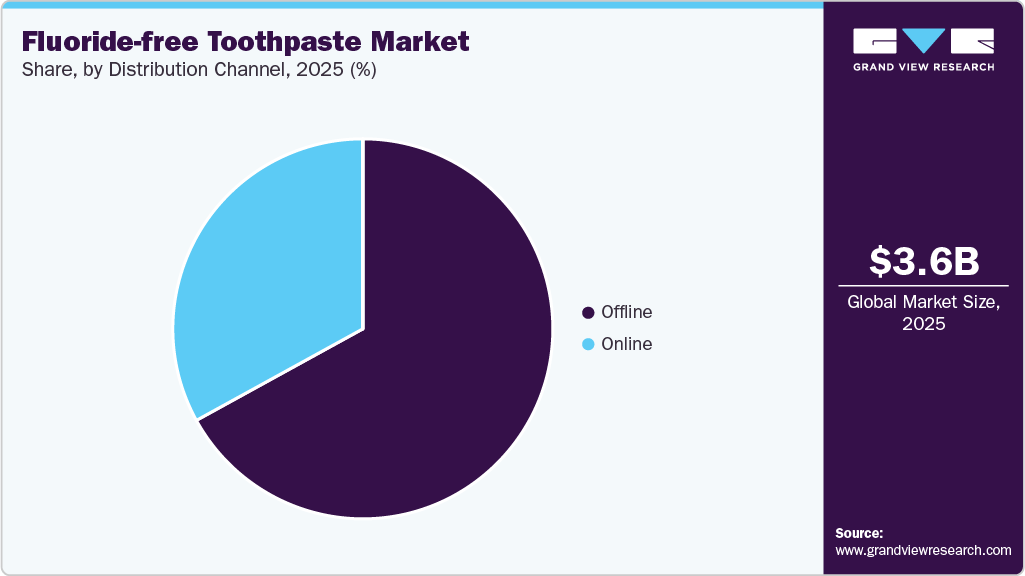
The offline segment dominated with the largest market revenue share in 2025. Many consumers prefer purchasing oral care products from physical stores such as supermarkets, pharmacies, and specialty health stores, where they can directly examine product labels, ingredients, and packaging before making a decision. This is particularly important for fluoride-free toothpaste, as buyers are often more conscious about natural ingredients and safety claims. For instance, in January 2025, according to a research paper published by Elsevier B.V., over 70% of global retail sales still occur through offline channels, highlighting the continued importance of brick-and-mortar stores. This trend underscores the sustained relevance of offline distribution channels, which continue to play a critical role in driving consumer trust, product visibility, and overall market growth in the fluoride-free toothpaste segment.
 To learn more about this report, Download Free Sample Report
 The online distribution channel of fluoride-free toothpaste is expected to grow at the fastest rate during the forecast period. Consumers prefer convenient and contactless shopping options, which has accelerated the shift toward online platforms. Direct-to-Consumer (DTC) channels allow brands to establish a direct relationship with customers, offering personalized products, targeted marketing, and better pricing control. This approach also helps companies gather valuable consumer insights and build brand loyalty. Rising internet penetration, smartphone usage, and digital payment adoption are also supporting the growth of online channels. For instance, in 2025, according to the International Telecommunication Union (ITU), global internet penetration reached 74%, up from 71% in 2024, with total users increasing to 6 billion from 5.8 billion. Year-on-year growth rose slightly to 3.3%, indicating steady digital expansion. The continued expansion of digital infrastructure and increasing consumer reliance on online shopping are expected to further drive the growth of online distribution channels in the fluoride-free toothpaste sector.
Regional Insights
The North America fluoride-free toothpaste industry is growing mainly due to rising consumer preference for natural, clean-label, and sensitivity-friendly oral care products, along with increasing health awareness about ingredient transparency and potential concerns around fluoride. A major growth driver is the rapid expansion of e-commerce and digital retail channels, where consumers can easily compare products, read reviews, and access niche fluoride-free brands that are not widely available in traditional stores. Online platforms also support subscription models, encouraging repeat purchases and long-term customer retention.
 To learn more about this report, Download Free Sample Report
 U.S. Fluoride-Free Toothpaste Market Trends
The fluoride-free toothpaste industry in the U.S. is witnessing significant growth, driven by strategic initiatives such as partnerships for the donation of hygiene kits to help provide underserved children access to essential oral care and educate on tooth decay prevention, which are also strengthening brand trust and encouraging adoption. For instance, in 2025, Boka partnered with America's ToothFairy to improve access to oral care for underserved children. Through this initiative, 2,000 dental hygiene kits were donated to support tooth decay prevention and promote better oral health education. The collaboration aims to strengthen preventive care awareness among children in underserved communities.
Europe Fluoride-Free Toothpaste Market Trends
The fluoride-free toothpaste industry in Europe is growing due to changing consumer preferences and regulatory frameworks under the European Union's cosmetic and chemical safety rules. The EU enforces strict regulations on oral care ingredients under regulations such as EC Cosmetic Regulation 1223/2009 and related safety directives, which tightly control fluoride concentration limits and require detailed safety assessments for any formulation changes. These compliance requirements encourage manufacturers to reformulate products and expand into “clean label,” natural, and alternative oral care solutions.
The UK fluoride-free toothpaste industry is growing due to rising health consciousness and increasing consumer preference for natural oral care products. A growing number of consumers are becoming more aware of the potential concerns associated with synthetic ingredients and are actively seeking safer, plant-based, and chemical-free alternatives for daily use. This shift is strongly influenced by wellness trends, preventive healthcare awareness, and demand for holistic personal care solutions.
The fluoride-free toothpaste industry in France is steadily expanding, driven by the increasing prevalence of dental sensitivity and other oral health issues among consumers. A rising number of individuals are experiencing tooth sensitivity caused by enamel erosion, dietary habits, and lifestyle changes, which has led to greater demand for gentle oral care alternatives that avoid fluoride. In addition, growing awareness about potential concerns associated with excessive fluoride intake has encouraged consumers to explore natural and fluoride-free formulations.
Asia Pacific Fluoride-Free Toothpaste Market Trends
The fluoride-free toothpaste industry in the Asia Pacific is gaining momentum, driven by the rising middle-class incomes, which are increasing consumer spending on premium and specialized oral care products. For instance, according to People Research on India’s Consumer Economy (PRICE), India’s economy is set for significant transformation, shifting from an aspirer-led to a middle-class driven model. Total income is projected to grow from USD 2.2 trillion in 2021 to USD 7.1 trillion by 2031, while consumer spending is expected to rise from USD 1.9 trillion to nearly USD 5.2 trillion. This strong economic transformation is expected to significantly boost demand for premium, health-focused oral care products such as fluoride-free toothpaste across the Asia Pacific region.
The China fluoride-free toothpaste industry is growing rapidly, driven by rising health awareness, strong digital influence, and active participation of local brands. Social media platforms such as WeChat, Xiaohongshu (RED), & Douyin, and digital marketing campaigns play a key role in educating consumers, building trust, and promoting product benefits, making niche brands more visible and accessible. Influencers and online reviews further accelerate adoption by shaping consumer perceptions and purchase decisions.
Latin America Fluoride-Free Toothpaste Market Trends
The fluoride-free toothpaste industry in Latin America is growing at a moderate pace, largely driven by the expansion of retail and pharmacy distribution channels, thereby improving product availability and consumer access. Across the region, supermarkets, hypermarkets, pharmacies, and convenience stores are stocking a wider range of oral care products. This broader retail penetration allows consumers to easily compare brands, explore natural and herbal alternatives, and purchase products during routine shopping trips.
Middle East And Africa Fluoride-Free Toothpaste Market Trends
The fluoride-free toothpaste industry in the Middle East and Africa is gradually emerging, driven by rising preference for herbal, natural, and halal-compliant personal care products, particularly in Gulf Cooperation Council (GCC) countries such as the UAE and Saudi Arabia. Consumers look for oral care products that align with religious guidelines and avoid ingredients perceived as synthetic or questionable.
Key Fluoride-Free Toothpaste Company Insights
Some of the key companies in the fluoride-free toothpaste market include Colgate-Palmolive Company, Dabur, Hello Products LLC, Dr Bronner's, JĀSÖN Natural Products, Inc., Redmond Life, DESERT ESSENCE, and Viccolabs. Organizations are focusing on increasing their customer base to gain a competitive edge in the industry. Therefore, key players are taking several strategic initiatives, such as product launches and partnerships with other major companies.
Key Fluoride-Free Toothpaste Companies:
The following key companies have been profiled for this study on the fluoride-free toothpaste market.
- Colgate-Palmolive Company
- Dabur
- Hello Products LLC
- Dr Bronner's
- JĀSÖN Natural Products, Inc.
- Redmond Life
- DESERT ESSENCE
- Viccolabs
- Green People
- Tom’s of Maine, Inc.
- Aesop
- Davids Health Sciences, Inc.
- Kiss My Face
- Revitin
- Salt Oral Care
- Dente91
- Perfora
- Georganics
- Kingfisher Natural Toothpaste
- Boka
Recent Developments:
-
In March 2026, Dr. Whiten launched its 7.5% Nano Hydroxyapatite (nHAp) toothpaste, a dentist-formulated, fluoride-free oral care product focused on enamel repair and oral health support. The product is designed to address common consumer concerns, such as tooth sensitivity and enamel wear, as well as the growing demand for gentler, science-backed oral care solutions.
-
In March 2026, Boka introduced a new fluoride-free toothpaste for sensitive teeth, strengthening its oral care range. The product uses a clinically supported formulation with nano-hydroxyapatite and 5% potassium nitrate in a Mint Cream flavor to help reduce and prevent tooth sensitivity. It is targeted at consumers looking for effective sensitivity relief without the use of fluoride.
-
In September 2025, MySmile, a Los Angeles-based oral care company, launched its Nano-Hydroxyapatite Toothpaste. The fluoride-free formula is designed to help remineralize enamel, reduce tooth sensitivity, and provide long-lasting freshness. The product reflects the company’s focus on innovative and advanced oral care solutions.
-
In June 2025, ORALPEACE launched a fluoride-free tooth gel for babies and children worldwide, focusing on safe and gentle oral care solutions. The launch responds to evolving U.S. fluoride regulations and aims to provide parents with a safer choice for children’s oral hygiene.
Fluoride-Free Toothpaste Market Report Scope
Report Attribute
Details
Market size in 2025
USD 3.6 billion
Estimated market size in 2026
USD 3.9 billion
Projected market size by 2033
USD 8.1 billion
Growth rate
CAGR of 10.8% from 2026 to 2033
Base year for estimation
2025
Actual estimates/Historical data
2021 - 2024
Forecast period
2026 - 2033
Market representation
Revenue in USD million/billion and CAGR from 2026 to 2033
Segments covered
Formulation, application, end use, distribution channel, region
Regional scope
North America; Europe; Asia Pacific; Latin America; Middle East & Africa
Country scope
U.S.; Canada; Mexico; UK; Germany; France; Italy; Spain; Denmark; Sweden; Norway; Japan; China; India; Thailand; Australia; South Korea; Brazil; Argentina; South Africa; Saudi Arabia; UAE; Kuwait
Key companies profiled
Colgate-Palmolive Company; Dabur; Hello Products LLC; Dr Bronner's; JĀSÖN Natural Products, Inc.; Redmond Life; DESERT ESSENCE; Viccolabs; Green People; Tom’s of Maine, Inc.; Aesop; Davids Health Sciences, Inc.; Kiss My Face; Revitin; Salt Oral Care; Dente91; Perfora; Georganics; Kingfisher Natural Toothpaste; Boka
Customization scope
Free report customization (equivalent up to 8 analyst’s working days) with purchase. Addition or alteration to country, regional & segment scope
Pricing and purchase options
Avail customized purchase options to meet your exact research needs. Explore purchase options
Global Fluoride-Free Toothpaste Market Report Segmentation
This report forecasts revenue growth at global, regional & country levels and provides an analysis of the latest industry trends in each of the sub-segments from 2021 to 2033. For this study, Grand View Research has segmented the global fluoride-free toothpaste market report based on formulation, application, end use, distribution channel, and region:
 To learn more about this report, Download Free Sample Report
 -
Formulation Outlook (Revenue, USD Billion, 2021 - 2033)
-
Remineralizing (Non-Fluoride)
-
Hydroxyapatite (HAp)
-
Bioactive Glass
-
Calcium Phosphates
-
-
Mechanical Cleansers
-
Mineral Clays (Bentonite)
-
Carbon/Charcoal
-
Bicarbonate (Soda)
-
-
Biological Actives
-
Fruit Enzymes (Papain)
-
Salivary Enzymes
-
Botanical Extracts (Neem, Clove)
-
-
Lipid-Based Systems
-
Oil-Based (Coconut/Sesame)
-
Essential Oil Concentrates
-
-
Electrolyte & pH Balancers
-
Sea Salts
-
Mineral Salts
-
Alkaline Buffers
-
-
-
Application Outlook (Revenue, USD Billion, 2021 - 2033)
-
Enamel Repair
-
Hard Tissue Repair
-
Caries Prevention
-
-
Sensitivity
-
Tubule Occlusion
-
Nerve Desensitization
-
-
Whitening
-
Extrinsic (Surface)
-
Intrinsic (Brightening)
-
-
Gum Health
-
Antiseptic/Bacteriostatic
-
Anti-Inflammatory
-
-
-
End Use Outlook (Revenue, USD Billion, 2021 - 2033)
-
Adult
-
General Health
-
Pregnancy/Maternity
-
-
Pediatric
-
Infant (0–2 yrs)
-
Child (3–12 yrs)
-
-
Geriatric
-
Root Exposure Care
-
Dry Mouth (Xerostomia)
-
-
-
Distribution Channel Outlook (Revenue, USD Billion, 2021 - 2033)
-
Online
-
Direct-to-Consumer (DTC)
-
E-Marketplaces
-
-
Offline
-
Mass Retail
-
Pharmacy/Health Stores
-
Professional/Clinical
-
-
-
Regional Outlook (Revenue, USD Billion, 2021 - 2033)
-
North America
-
U.S.
-
Canada
-
Mexico
-
-
Europe
-
UK
-
Germany
-
France
-
Italy
-
Spain
-
Denmark
-
Sweden
-
Norway
-
-
Asia Pacific
-
Japan
-
China
-
India
-
Thailand
-
Australia
-
South Korea
-
-
Latin America
-
Brazil
-
Argentina
-
-
Middle East & Africa
-
South Africa
-
Saudi Arabia
-
UAE
-
Kuwait
-
-
Frequently Asked Questions About This Report
North America dominated with a 31.8% revenue share in 2025.
Asia Pacific is the fastest-growing region over the forecast period.
The adult held the largest share in 2025.
The sensitivity application held the largest revenue share in 2025, while enamel repair is the fastest-growing area.
Based on formulation, remineralizing (non-fluoride) segment dominated the market in 2025.
Key players include Colgate-Palmolive Company, Dabur, Hello Products LLC, Dr Bronner's, JĀSÖN Natural Products, Inc., Redmond Life, DESERT ESSENCE, Viccolabs, Green People, Tom’s of Maine, Inc., Aesop, Davids Health Sciences, Inc., Kiss My Face, Revitin, Perfora, Georganics, and Boka are some of the major players in the fluoride-free toothpaste market.
The growth of fluoride-free toothpastes is driven by the rising consumer awareness of oral health and increasing preference for products perceived as safer and more natural. Many consumers are becoming cautious about fluoride use, particularly for children, and are shifting toward fluoride-free alternatives to avoid concerns such as dental fluorosis and sensitivity.
The global fluoride-free toothpaste market size was estimated at USD 3.6 billion in 2025 and is expected to reach USD 3.9 billion in 2026.
The global fluoride-free toothpaste market is projected to grow at a CAGR of 10.8% from 2026 to 2033 to reach USD 8.1 billion by 2033.
About the Author(s)
Medical Devices Research Team
Healthcare · Medical DevicesThis report was authored by the medical devices research team at Grand View Research - comprising two research analysts, one senior research analyst, and one industry expert - with specialized expertise in the medical devices segment of the healthcare industry. All findings are based on proprietary healthcare databases, executive interviews, and regulatory analysis, subject to internal peer review prior to publication.
Last Updated:
Speak to Analyst

Customize this report to your needs - add regions, segments, or data points, with 20% free customization.
Or view our licence options:


ISO 9001:2015 & 27001:2022 Certified
We are GDPR and CCPA compliant! Your transaction & personal information is safe and secure. For more details, please read our privacy policy.


