
- Home
- »
- Consumer F&B
- »
-
Fruit Beverages Market Size & Share Report, 2025-2030GVR Report cover
![Fruit Beverages Market (2025 - 2033)Report]()
Fruit Beverages Market (2025 - 2033)
Size, Share & Trends Analysis Report By Type (Canned & Fresh, Non-carbonated Drinks, Frozen Juices), By Distribution Channel (Hypermarket/Supermarket, Convenience Stores), By Region, And Segment Forecasts
Market Size, 2024
$156.5BMarket Estimate, 2026
$171.2BMarket Forecast, 2033
$242.8BCAGR, 2025–2033
5.0%Fruit Beverages Market Summary
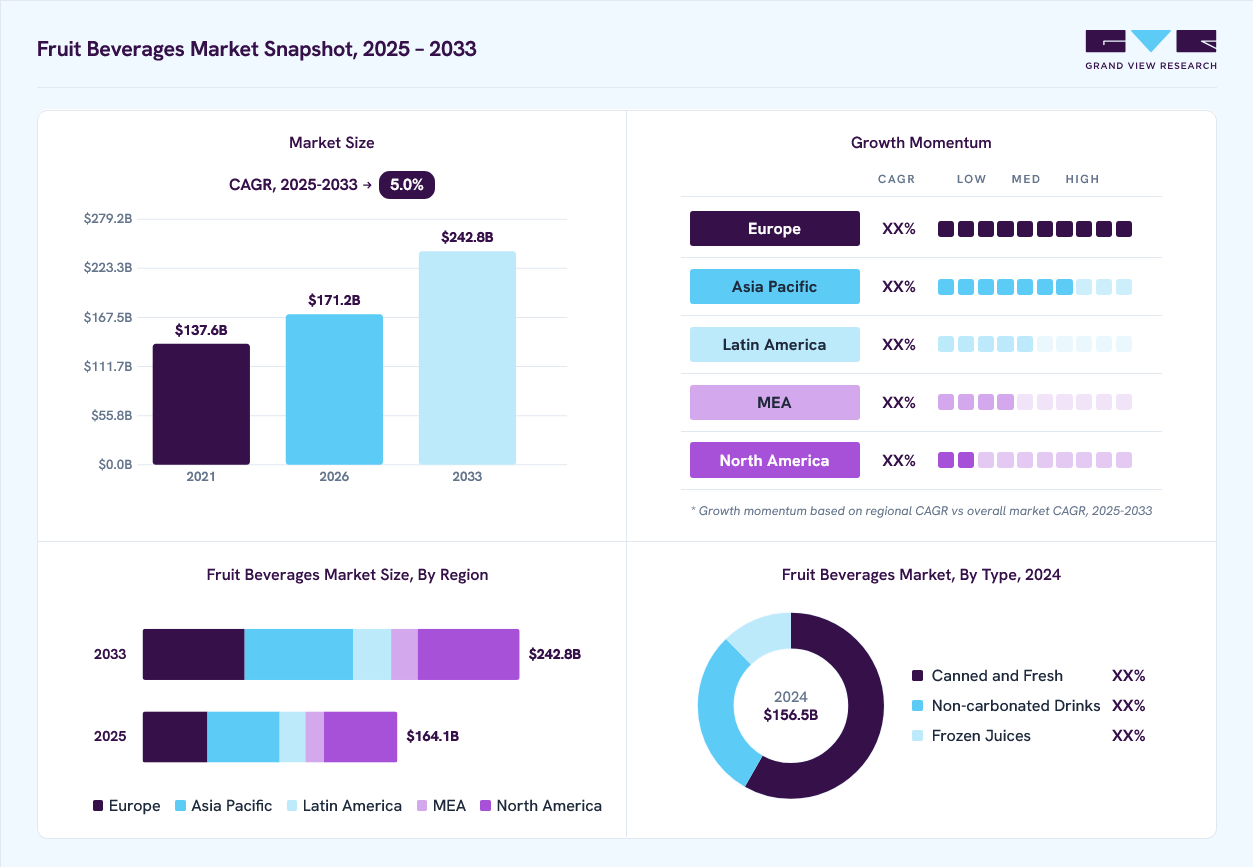
The global fruit beverages market size was valued at USD 156.5 billion in 2024 and is projected to grow from USD 171.2 billion in 2026 to USD 242.8 billion by 2033, at a CAGR of 5.0% from 2025 to 2033. North America dominated the market, accounting for a revenue share of 29.1% in 2024. The global fruit beverages market is primarily driven by increasing consumer demand for healthier, natural drink options rich in vitamins, antioxidants, and functional benefits.
Key Market Trends & Insights
- The Europe fruit beverage market is experiencing significant growth, projecting a CAGR of 5.8%.
- The canned and fresh market in the global fruit beverages market held the largest market share, accounting for 58.1%.
- By type, the non-carbonated drinks market is expected to witness the fastest CAGR of 4.4% during the forecast period.
- By distribution channel, the hypermarket/supermarket led the market and accounted for a share of 49.7% in 2024.
Key Market Trends & Insights
- 2024 Market Size: USD 156.52 Billion
- 2033 Projected Market Size: USD 242.77 Billion
- CAGR (2025-2033): 5.0%
- North America: Largest market in 2024
- Europe: Fastest growing market
In addition, rising urbanization, disposable incomes, and the popularity of convenient, ready-to-drink formats are accelerating market growth. As health awareness and disposable incomes rise globally, consumers are increasingly opting for fruit beverages as nutritious and convenient alternatives to sugary soft drinks. In addition, the growing demand for natural ingredients, functional health benefits, and sustainable packaging, combined with the expanding reach of digital marketing and e-commerce, continues to reshape the global fruit beverages market and drive its rapid evolution.The global fruit beverages market is driven by increasing consumer demand for healthier, natural, and functional drinks, alongside rapid innovation in product development. Advancements such as cold-pressed technology, enhanced nutritional formulations, and sustainable packaging are attracting health-conscious and eco-aware consumers, offering greater value and convenience. For instance, according to the MetaBrand data published in March 2025, biodegradable and compostable materials are increasingly being adopted in the beverage/ juice industry to minimize the negative environmental impact.

Moreover, collaborations between fruit beverage brands and health-focused influencers or wellness companies are enhancing brand value and expanding market reach. In addition, social media platforms and influencer marketing are playing a crucial role in shaping consumer preferences and driving online sales. Leading companies are increasingly adopting sustainable sourcing, eco-friendly packaging, and digital tools to meet evolving consumer expectations and stay competitive in the dynamic global fruit beverages market. For instance, in December 2024, Dabur India collaborated with Ball Corporation to launch Réal Bites juice, with real fruit chunks, in India, now available in fully recyclable 185 ml aluminum cans that offer an extended shelf life of up to one year compared to traditional packaging.
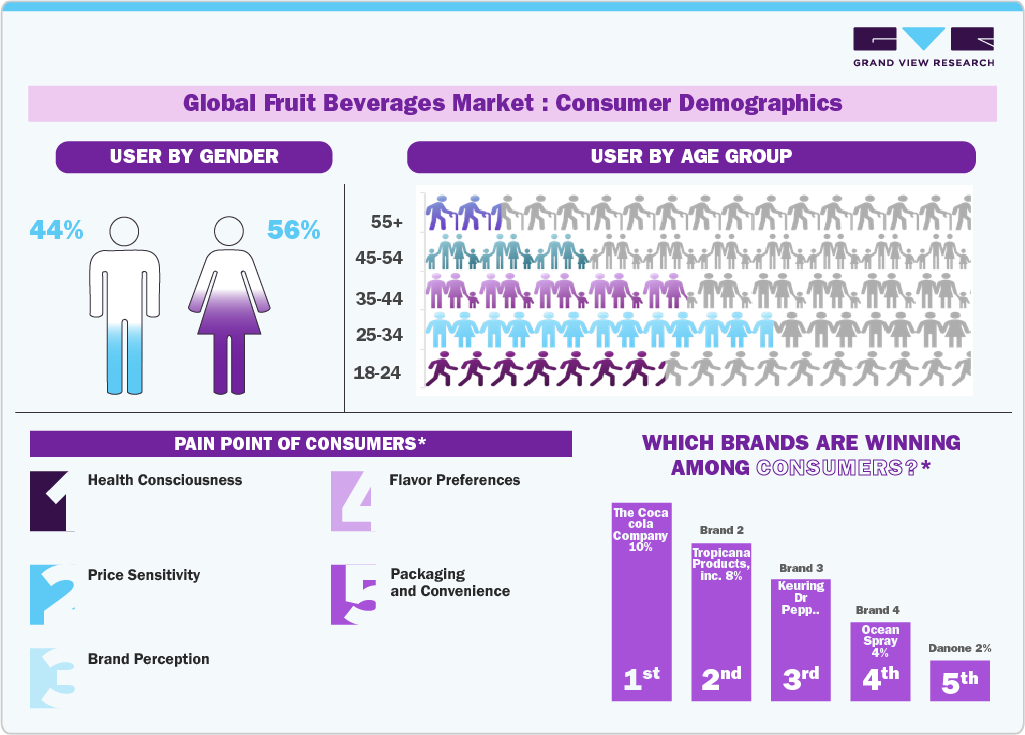
Consumer Insights For Fruit Beverages
Type Insights
The canned and fresh fruit beverages in the global fruit beverages market accounted for the largest share of 58.1% of the revenue in 2024. Canned fruit beverages are largely favored for their long shelf life, cost-effectiveness, and ease of storage, especially in areas with limited refrigeration or for households buying in bulk. Although they may be seen as less premium compared to fresh alternatives due to processing, their affordability and constant availability appeal to budget-conscious consumers looking for a quick, accessible fruit-flavored option. In addition, demand is supported by nostalgic value among certain groups and their practicality in emergency kits or institutional use. According to the data published in February 2024, CANPACK Brazil partnered with São Geraldo to launch the regional favorite Cajuína, a cashew-fruit soda with 5% juice, in 350 ml infinitely recyclable aluminum cans, replacing its previous glass and PET formats.
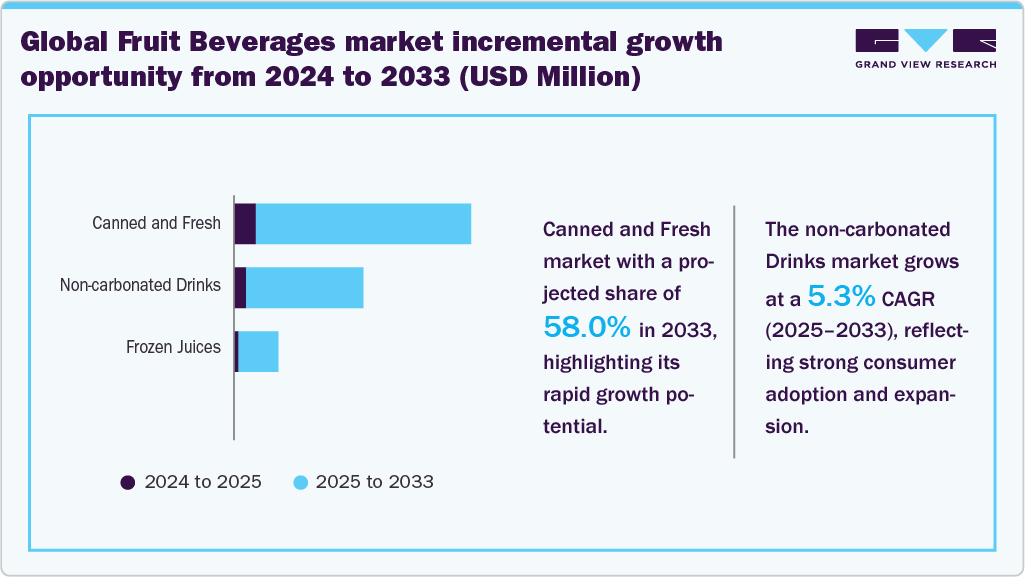
The non-carbonated drinks market is projected to grow at the fastest CAGR of 5.3% from 2025 to 2033. Non-carbonated fruit drinks, ranging from 100% juices to nectars and low-fruit-content beverages, are primarily driven by their perceived health advantages over carbonated soft drinks and their appeal as everyday beverages for all age groups. Rising health awareness among consumers fuels demand for drinks made with "natural" ingredients and fewer artificial additives or added sugars, making these products a popular, versatile choice for hydration and refreshment. Companies are innovating new formulations to attract a wider base of consumers. For instance, in July 2025, Leuca, an Australian ready-to-drink beverage brand, launched non-carbonated fruity vodka drinks in new flavors, including Apple & Blackcurrant and Watermelon Lime & Mint, infused with 4% alcohol by volume (ABV), and available in 330 ml of canned packaging.
Distribution Channel Insights
The fruit beverage sales through the hypermarket/supermarket accounted for the largest share of around 49.7% of the global revenue in 2024. Hypermarkets and supermarkets remain the leading distribution channels, thanks to their expansive retail space that accommodates a wide selection of brands, pack sizes, and promotional offers. These outlets thrive on high-volume sales, catering to consumers who shop in bulk during weekly or bi-weekly grocery trips, drawn by variety and competitive pricing. They also facilitate easy price comparisons and prominently feature private label fruit beverages, which are often marketed as budget-friendly alternatives to national brands, appealing to price-sensitive buyers. In addition, the strategic placement of value packs, multi-buy deals, and bulk discounts in these stores has played a key role in driving fruit beverage sales.
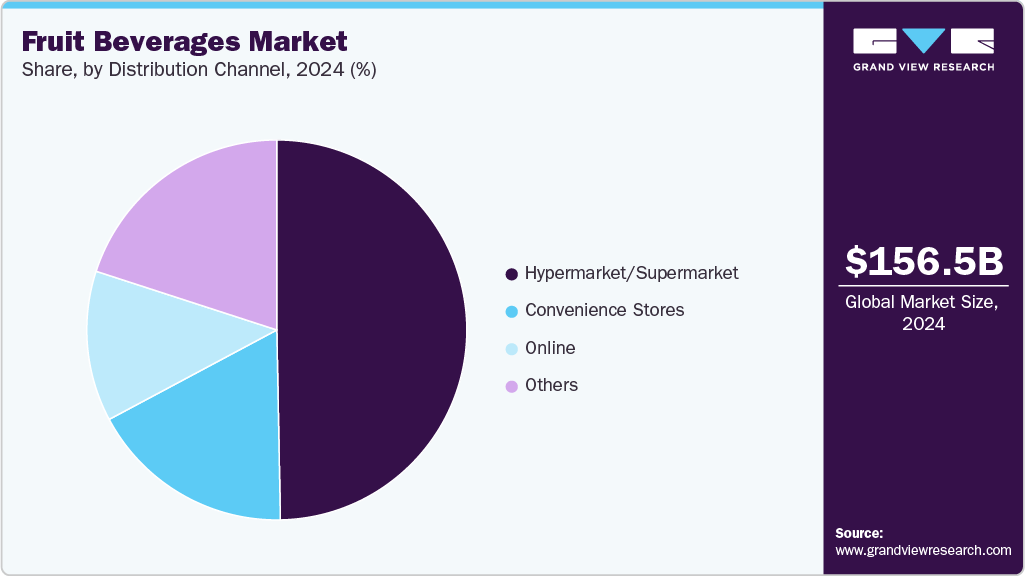
The fruit beverage sales through the online distribution channel are projected to grow at the fastest CAGR of 6.0% from 2025 to 2033. The expansion of the online channel is largely fueled by convenience, broader product variety, and attractive pricing, especially for bulk purchases. Consumers favor e-commerce platforms for the home delivery of heavier items such as fruit juice packs, reducing the need to carry them from physical stores. Online shopping also enables easy price comparisons across retailers and brands, helping shoppers find cost-effective options such as multi-packs and subscription-based offerings for everyday fruit beverages. Moreover, digital platforms make it easier to access large-format products, private labels, and value bundles that may not be as visible or readily available in brick-and-mortar stores.
Regional Insights
North America accounted for the largest market share of 29.1% in 2024. In North America, the fruit beverages market is driven by a growing focus on functional health drinks, such as those fortified with vitamins, probiotics, or antioxidants. Consumers are increasingly seeking products that support immunity, digestion, and energy, prompting innovation in formulations. Plant-based and organic certifications also influence purchasing decisions. The popularity of low-calorie and no-sugar-added options is rising, in line with wellness trends. In addition, premiumization and clean-label products are shaping product development and marketing strategies.

U.S. Fruit Beverages Market Trends
The U.S. led the North American fruit beverage market in 2024, holding the largest market share with 79.8% of the region’s total revenue. In the U.S., demand is being fueled by a strong snacking culture and the preference for convenient, on-the-go beverage formats. There's growing interest in ethnic and exotic fruit blends, reflecting the country’s multicultural palate and expanding flavor preferences. Cold-pressed juices and beverages with functional claims, such as detox or energy, are gaining traction. Direct-to-consumer and subscription models are also expanding, especially among digitally engaged shoppers. Sustainability practices, such as recyclable packaging and reduced food waste, are influencing both brand loyalty and product selection.
Europe Fruit Beverages Market Trends
The fruit beverage market in Europe is projected to grow at the fastest CAGR of 5.8% from 2025 to 2033. The European market is propelled by consumer demand for natural, locally sourced fruit beverages that align with regional sustainability values. There’s significant emphasis on transparency, with detailed labeling and traceability influencing buying behavior. Innovation in reduced-sugar formulations is key due to regulatory pressures and public health initiatives. The rise of flexitarian and vegan lifestyles supports the growth of plant-based and organic juice offerings. In addition, functional drinks tailored to specific wellness goals, such as sleep, skin health, or mental focus, are emerging across European markets.
The fruit beverage market in Spain is projected to grow at the fastest CAGR of 7.2% from 2025 to 2033. In Spain, the fruit beverage market benefits from a Mediterranean diet culture, where natural fruit-based drinks are commonly consumed as part of a balanced lifestyle. Warm climate conditions support year-round demand for refreshing, hydrating beverages, particularly those served chilled. There is a growing popularity of traditional Spanish fruit drinks such as zumo natural and horchata, adapted into modern ready-to-drink formats. Consumers also favor beverages with lighter textures and citrus-forward flavor profiles, aligning with local taste preferences.
Asia Pacific Fruit Beverages Market Trends
The Asia Pacific accounted for a market share of 28.2% in 2024. In Asia Pacific, rapid urbanization and a growing middle class are driving demand for ready-to-drink fruit beverages that offer both taste and perceived health benefits. Local fruits such as mango, lychee, and calamansi are widely used, blending tradition with modern convenience. Functional ingredients such as collagen, ginseng, and dietary fiber are popular among health-conscious consumers. The rise of modern retail formats and digital grocery platforms is improving product accessibility. Seasonal marketing and limited-edition flavors also play a big role in capturing consumer interest.
Key Fruit Beverages Company Insights
Many brands in the global fruit beverages market have recognized untapped opportunities within their product portfolios and are actively working to capitalize on these gaps. This includes launching innovative designs, expanding customization options, and tailoring marketing strategies to align with evolving consumer tastes and cultural trends. By addressing niche segments and emerging preferences, these brands aim to increase their market share and strengthen their competitive positioning worldwide.
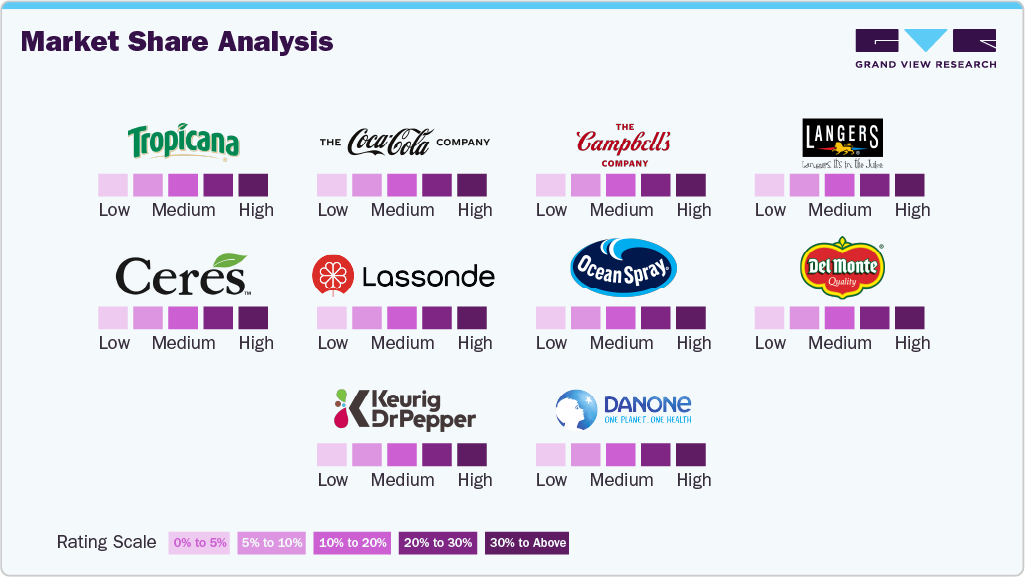

Key Fruit Beverages Companies:
The following are the leading companies in the fruit beverages market. These companies collectively hold the largest market share and dictate industry trends.
- Tropicana Products, Inc.
- The Coca‑Cola Company
- The Campbell's Company
- Langer Juice Company, Inc.
- Ceres Fruit Juices Pty Ltd.
- Industries Lassonde Inc.
- Ocean Spray
- Fresh Del Monte
- Keurig Dr Pepper Inc.
- Danone S.A.
Recent Developments
-
In June 2025, V8 Energy, a brand under Campbell’s, launched a new drink mix, designed for on-the-go convenience. The mix featured fruit-based energy blends with natural caffeine, targeting busy consumers seeking portable, health-oriented beverage options without compromising taste or functionality.
-
In April 2025, Tropicana launched its Fresh + Light reduced-sugar juice range in the UK. The new line targeted health-conscious consumers by offering fruit juices with 40% less sugar, no artificial sweeteners, and a refreshing taste, aligning with the growing demand for healthier beverage alternatives.
-
In February 2025, Agro Tech Foods completed the acquisition of Del Monte’s India business. The strategic move aimed to strengthen Agro Tech’s presence in the packaged food and beverage sector, leveraging Del Monte’s brand equity, distribution network, and portfolio of fruit-based products to accelerate growth in the Indian market.
Fruit Beverages Market Report Scope
Report Attribute
Details
Market size in 2024
USD 156.5 billion
Estimated market size in 2026
USD 171.2 billion
Projected market size by 2033
USD 242.8 billion
Growth rate
CAGR of 5.0% from 2025 to 2033
Actuals
2021 - 2024
Forecast period
2025 - 2033
Quantitative (Revenue) units
Revenue in USD million/billion, and CAGR from 2025 to 2033
Report coverage
Revenue forecast, company ranking, competitive landscape, growth factors, and trends
Segments covered
Type, distribution channel, region
Regional Scope
North America; Europe; Asia Pacific; Latin America; Middle East & Africa
Country scope
U.S.; Canada; Mexico; Germany; UK; France; Italy; Spain; China; India; Japan; Brazil; Argentina; South Africa
Key companies profiled
Tropicana Products, Inc.; The Coca‑Cola Company; The Campbell's Company; Langer Juice Company, Inc.; Ceres Fruit Juices Pty Ltd.; Industries Lassonde Inc.; Ocean Spray; Fresh Del Monte; Keurig Dr Pepper Inc.; Danone S.A.
Customization scope
Free report customization (equivalent up to 8 analysts’ working days) with purchase. Addition or alteration to country, regional & segment scope.
Pricing and purchase options
Avail customized purchase options to meet your exact research needs. Explore purchase options
Global Fruit Beverages Market Report Segmentation
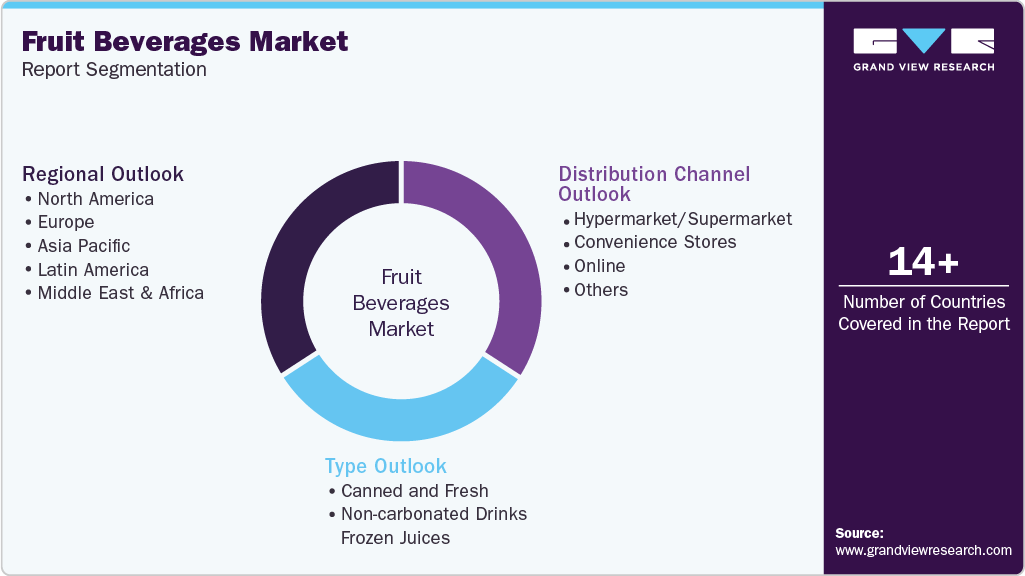
This report forecasts revenue growth at the regional and country levels and provides an analysis of the latest industry trends and opportunities in each of the sub-segments from 2021 to 2033. For the purpose of this study, Grand View Research has segmented the global fruit beverages market report on the basis of type, distribution channel, and region:
-
Type Outlook (Revenue, USD Million, 2021 - 2033)
-
Canned and Fresh
-
Non-carbonated Drinks
-
Frozen Juices
-
-
Distribution Channel Outlook (Revenue, USD Million, 2021 - 2033)
-
Hypermarket/Supermarket
-
Convenience Stores
-
Online
-
Others
-
-
Regional Outlook (Revenue, USD Million, 2021 - 2033)
-
North America
-
U.S.
-
Canada
-
Mexico
-
-
Europe
-
UK
-
Germany
-
France
-
Italy
-
Spain
-
-
Asia Pacific
-
China
-
India
-
Japan
-
-
Latin America
-
Brazil
-
-
Middle East & Africa
-
South Africa
-
-
Frequently Asked Questions About This Report
The global fruit beverages market size was estimated at USD 156.52 billion in 2024 and is expected to reach USD 164.15 billion in 2025.
The canned and fresh fruit beverages market accounted for a revenue share of 58.1% in 2024, driven by increasing health consciousness among consumers and the rising demand for natural, convenient drink options, growing urbanization, and disposable incomes, further fueling market expansion globally.
Some key players operating in the global fruit beverages market include Tropicana Products, Inc., The Coca‑Cola Company, The Campbell's Company, Langer Juice Company, Inc., Ceres Fruit Juices Pty Ltd., Industries Lassonde Inc., Ocean Spray, Fresh Del Monte, Keurig Dr Pepper Inc., and Danone S.A.
Key factors driving growth in the global fruit beverages market include rising consumer demand for healthier and natural drink alternatives, along with increasing awareness of the benefits of fruit-based hydration. Innovations in flavor combinations, packaging, and preservation technologies are enhancing product appeal and shelf life. Moreover, the growing popularity of ready-to-drink and low-sugar beverages, coupled with expanding distribution channels such as e-commerce and convenience stores, is fueling market expansion.
The global fruit beverages market is expected to grow at a compound annual growth rate (CAGR) of 5.0 % from 2025 to 2033 to reach USD 242.77 billion by 2033.
About the Author(s)
Consumer F&B Research Team
Consumer Goods · Consumer F&BThis report was authored by the consumer f&b research team at Grand View Research - comprising two research analysts, one senior research analyst, and one industry expert - with specialized expertise in the consumer f&b segment of the consumer goods industry. All findings are based on proprietary consumer goods databases, executive interviews, and regulatory analysis, subject to internal peer review prior to publication.
Last Updated:
Speak to Analyst

Need a Tailored Report?
Customize this report to your needs — add regions, segments, or data points, with 20% free customization.
Or view our licence options:


ISO 9001:2015 & 27001:2022 Certified
We are GDPR and CCPA compliant! Your transaction & personal information is safe and secure. For more details, please read our privacy policy.












