
- Home
- »
- Pharmaceuticals
- »
-
Full Spectrum CBD Market Size And Share Report, 2033GVR Report cover

Full Spectrum CBD Market (2026 - 2033)
Size, Share & Trends Analysis Report By Source (Hemp-derived Full-Spectrum CBD, Marijuana-derived Full-Spectrum CBD), By Product, By Application, By Distribution Channel, By Region, And Segment Forecasts
Market Size, 2025
$6.4BMarket Estimate, 2026
$7.5BMarket Forecast, 2033
$19.2BCAGR, 2026–2033
14.5%Full Spectrum CBD Market Summary
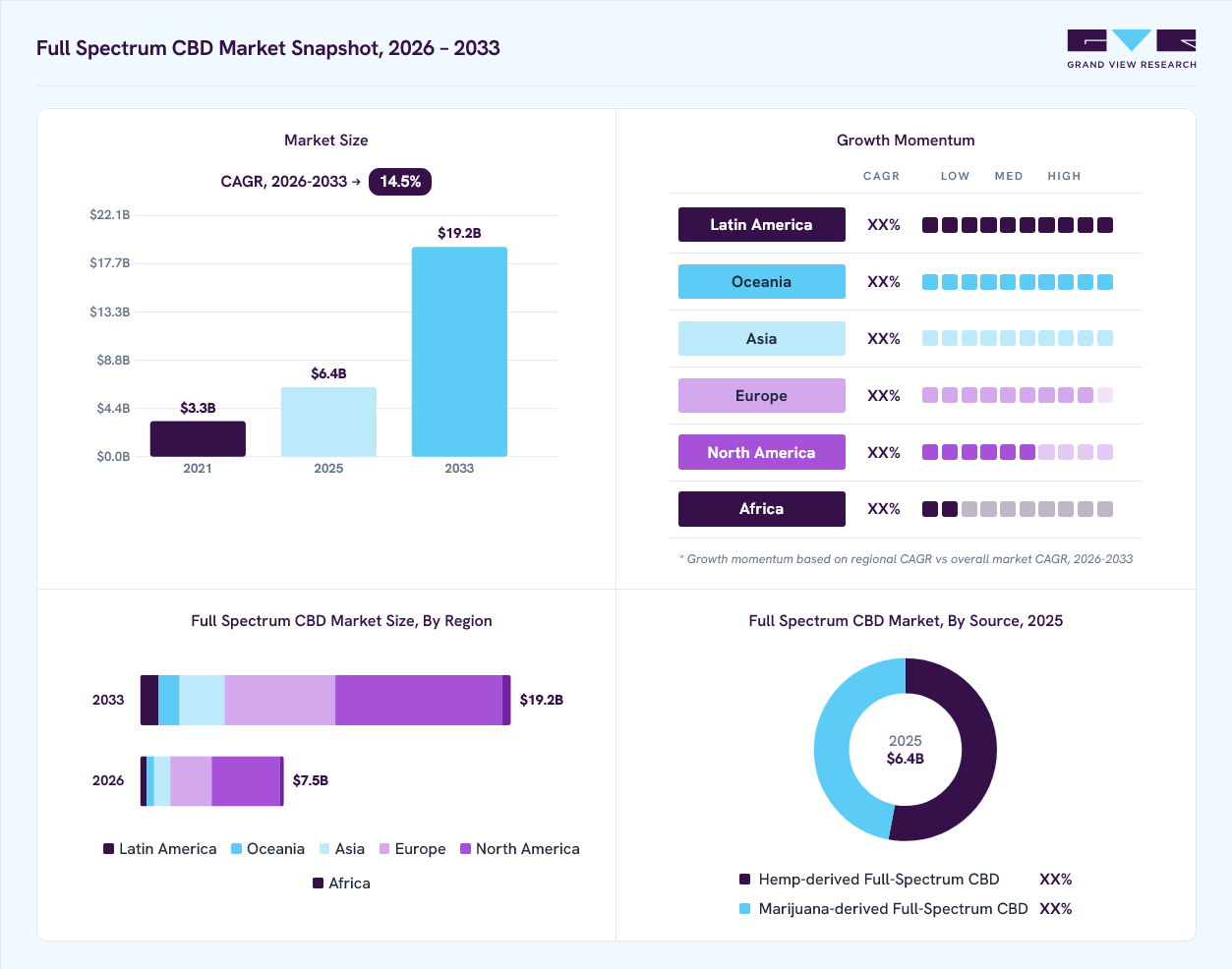
The global full spectrum CBD market size was valued at USD 6.4 billion in 2025 and is projected to grow from USD 7.5 billion in 2026 to USD 19.2 billion by 2033, growing at a CAGR of 14.5% from 2026 to 2033. North America dominated the market, accounting for the largest revenue share of 42.7% in 2025. Increasing consumer awareness of CBD, growing preference for natural and plant-derived wellness products, and rising demand for alternative wellness solutions are expected to drive market growth over the forecast period.
 Source: Grand View Research, IR Documents, Primary Interviews, Paid DatabasesTo learn more about this report,
 Download Free Sample Report
 Key Market Trends & Insights
- By source: The hemp-derived full-spectrum CBD segment held the largest market share of over 50.0% in 2025
- By application: The pain management segment held the largest revenue share of 38.5% in 2025.
- By product: The OTC CBD products segment held the largest revenue share in 2025.
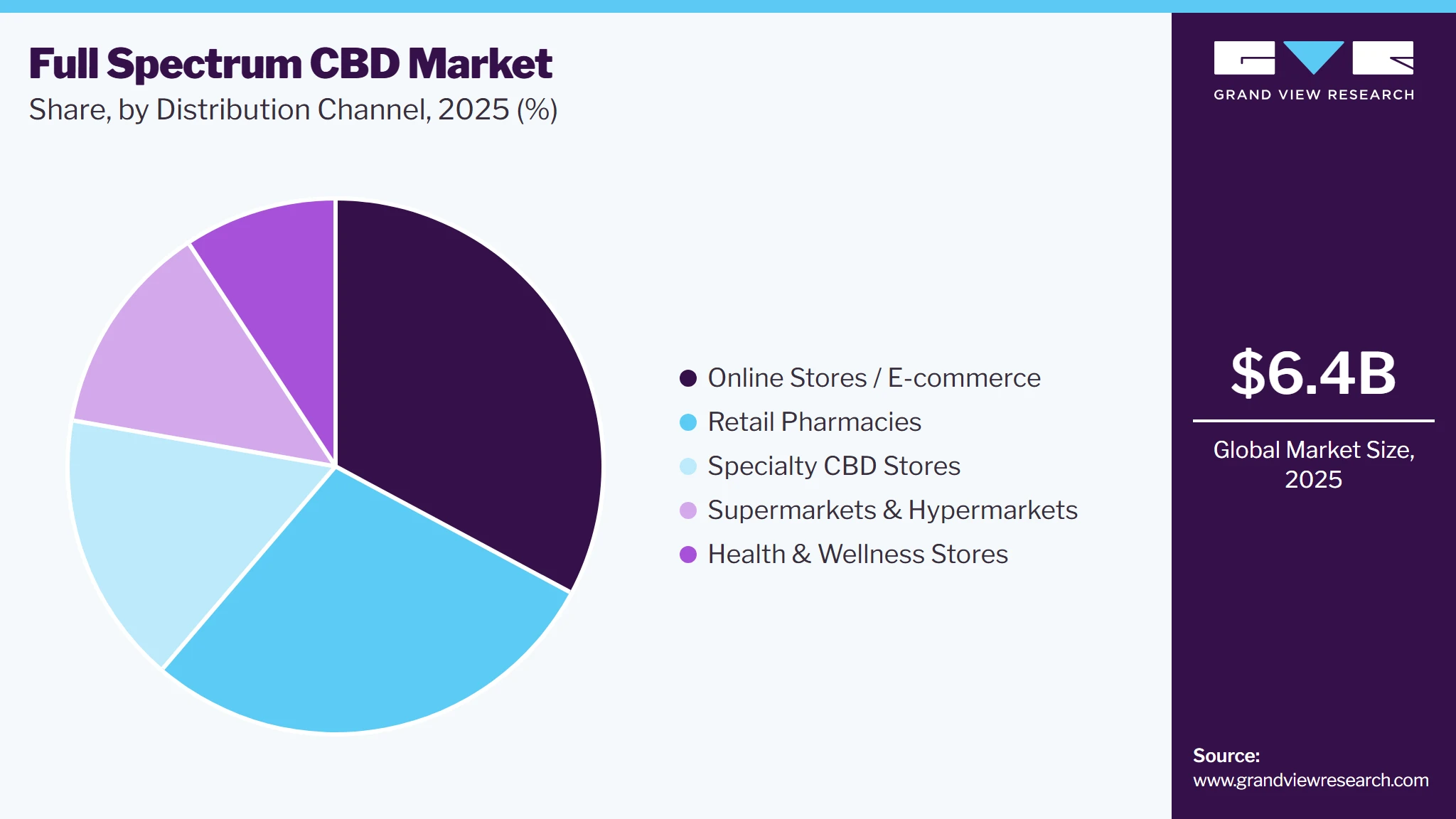
- By distribution channel: The online stores/e-commerce segment held the largest revenue share of 32.8% in 2025.
Regional Highlights
- Largest regional market: North America (42.7% revenue share, 2025)
- Fastest-growing regional market: Latin America & Caribbean (highest CAGR, 2026-2033)
- By country: Canada held the largest market share in 2025
Market Size & Forecast
- Market size in 2025: USD 6.4 Billion
- Estimated market size in 2026: USD 7.5 Billion
- Projected market size by 2033: USD 19.2 Billion
- CAGR (2026-2033): 14.5%
Three ways to get this report
Buy it, customize it, or ask a question.Ask an Analyst
Analyst response in 1 business day
- AccessReport author, directly
- Reply timeWithin 1 working day
- No sales callDirect answer only
- FormatEmail reply
- CostFree, no cost
Get the Full Report
What the study covers
- FormatsPDF · Excel · Dashboard
- Timeline2026–2033 annual, 2025 base
- Coverage20+ countries, 5 regions
- Companies10+ key players profiled
Customize the Report
20% free customization
- IncludeCountries, segments, points
- TailorTo your product definition
- ExtendDeeper competitor detail
- OrA fully bespoke study
- Turnaround5–10 working days
Moreover, increasing consumer interest in pain management, sleep, and relaxation applications, expanding availability of full-spectrum CBD across oils, capsules, gummies, beverages, and topical formulations, rising adoption of hemp-derived products, and growing preference for multi-compound cannabis extracts are further contributing to market growth. To learn more about this report, Download Free Sample Report
 The section below outlines the key factors driving market growth, focusing on increasing consumer adoption of CBD products for wellness and self-care applications. It examines the growing demand for natural and plant-derived wellness solutions, rising consumer interest in pain management, sleep, and relaxation, expanding availability of full-spectrum CBD products across multiple formats, and increasing adoption of hemp-derived products, supported by greater consumer awareness and the expanding accessibility of CBD through online and specialty retail channels.
Market Dynamics
Market growth is driven by increasing consumer adoption of CBD for wellness and self-care, supported by rising demand for natural, plant-derived solutions for pain management, sleep, stress, and relaxation. Growing awareness of CBD benefits, wider availability of full-spectrum, broad-spectrum, and isolate products across multiple formats, and increasing adoption of hemp-derived CBD are further supporting demand. The expanding access through online platforms, specialty retailers, pharmacies, and other channels, alongside continued product innovation and targeted formulations, is encouraging consumer trial and repeat purchases.
The growing adoption of CBD products for health and wellness applications is expected to drive market growth as consumers increasingly seek plant-derived products for pain management, relaxation, sleep, and general wellness. For instance, in April 2025, CBD Life Sciences Inc. launched a 100 mg full-spectrum CBD gummy in crisp green apple and wild blueberry flavors, formulated to support mental health, focus, and emotional well-being, with laboratory testing and Certificates of Analysis confirming product quality.
The increasing adoption of advanced extraction, filtration, and formulation technologies is expected to drive market growth by enabling manufacturers to develop differentiated products that retain naturally occurring hemp compounds while improving product quality and consumer convenience. For instance, in June 2025, Terra Pro launched its full-spectrum, THC-free CBD Gummies, developed using cold-pressed techniques, proprietary Triple Filtration Technology, and advanced CO2 extraction methods. The product launch demonstrates the growing focus on extraction and processing innovation to enhance the quality and consistency of full-spectrum CBD formulations.
Products such as CBD+CBN Sleep Tincture, CBD+CBN Sleep Capsules, CBD Calm Capsules, CBD Calm Gummies, Unwind Gummies, and calming pet products demonstrate strong positioning around sleep, relaxation, and stress management, highlighting the growing emphasis on function-specific formulations designed to address targeted consumer wellness needs and expand the applications of full-spectrum CBD products.
Increasing regulatory scrutiny and evolving safety requirements for CBD products are expected to restrain market growth by limiting permissible concentrations, increasing compliance requirements, and creating uncertainty for manufacturers operating across product categories and geographies. For instance, in April 2026, the European Commission’s Scientific Committee on Consumer Safety (SCCS) concluded that CBD was considered safe in cosmetic products at concentrations of up to 0.19%, while THC impurities were considered safe only up to 0.00025% in dermal and oral cosmetic products. The SCCS also highlighted limitations arising from the paucity of available safety data, indicating the need for further evidence to support the safety assessment of CBD and related cannabinoids.
In the U.S., the FDA continues to enforce regulatory requirements for cannabis-derived products by issuing warning letters to products that violate federal requirements. The FDA maintains a dedicated database of warning letters issued to companies marketing cannabis-derived products, reflecting continued regulatory oversight of CBD-related products and their marketing claims.
The expansion of full-spectrum CBD into pet wellness represents a significant market opportunity as pet owners increasingly seek convenient, plant-derived products addressing calming, stress, and joint-support needs. The U.S. has a large underlying pet population, providing a substantial consumer base for CBD pet products. Some of the products include full-spectrum CBD calming pet tincture, full-spectrum CBD joint support pet tincture, CBD dog chews calming support, CBD dog chews joint support, unruffled dog bites lamb, and unruffled CBD oil for pets, demonstrating the diversification of full-spectrum CBD products across calming, stress management, and joint support applications.
Case Study: Full-Spectrum Cannabis Oil for Knee Osteoarthritis
Study Overview
According to a 2025 clinical study published in PubMed, the CANOA trial evaluated the safety and efficacy of a CBD-rich, full-spectrum Cannabis sativa oil in patients with knee osteoarthritis. In this double-blind, randomized, placebo-controlled trial, participants were monitored for 60 days, with the cannabis group receiving 45 mg of oral CBD daily. The study found that the treatment was well tolerated, with no serious adverse events; however, it did not demonstrate a statistically significant advantage over placebo in reducing pain or improving secondary outcomes.
Study Design
-
Study product: Double-blind, randomized, placebo-controlled clinical trial
-
Population: Human patients with knee osteoarthritis
-
Formulation: CBD-rich full-spectrum Cannabis sativa oil
-
Administration: Oral
-
CBD dose: 45 mg/day
-
Treatment duration: 60 days
-
Primary outcome: Pain intensity measured using the WOMAC scale
-
Secondary outcomes: Visual Analog Scale (VAS), depression, sleep quality, and quality of life
Key Findings
After 60 days of treatment, both the full-spectrum cannabis oil and placebo groups showed improvements in pain scores. However, the researchers reported no statistically significant difference in pain intensity between the cannabis oil and placebo groups. This means that while improvements were observed during the study, the trial did not demonstrate a statistically significant pain-relieving advantage of the full-spectrum formulation over placebo.
Market Characteristics
The chart below illustrates the relationship between industry concentration, market characteristics, and key market participants. The market is highly fragmented, with participation from CBD manufacturers, hemp extract producers, cannabinoid wellness companies, pharmaceutical and nutraceutical companies, consumer wellness brands, and specialized CBD product providers.
Increasing product and formulation innovation is driving market growth, as companies develop products that combine full-spectrum CBD with other cannabinoids and functional ingredients to address specific consumer needs. In October 2023, Cornbread Hemp launched USDA organic CBD Sleep Gummies containing up to 2 mg of THC per serving, formulated without melatonin and featuring full-spectrum CBD alongside botanical ingredients such as valerian root, chamomile, lavender, and rose petals, targeting sleep and wellness applications.
 To learn more about this report, Download Free Sample Report
 The level of merger and acquisition activity in the market is low to moderate, as companies pursue acquisitions, partnerships, and licensing agreements to expand cannabinoid product portfolios, manufacturing capabilities, and distribution networks. Market participants are increasingly using strategic collaborations to enter new product categories and geographic markets, particularly as regulatory frameworks for hemp-derived cannabinoids continue to evolve.
The market is significantly influenced by evolving regulatory requirements governing CBD and THC concentrations, permissible THC thresholds, product safety and testing, labeling, manufacturing standards, and marketing claims. Since full-spectrum products contain multiple naturally occurring cannabinoids, including trace amounts of THC, compliance with applicable THC limits is particularly important. Regulatory differences across countries and states also affect product formulation, testing requirements, distribution channels, and market access. In addition, restrictions on therapeutic or disease-related claims can limit how manufacturers position full-spectrum CBD products and require companies to substantiate product safety, quality, and efficacy.
The market is witnessing significant product expansion, as manufacturers diversify beyond conventional CBD oils and tinctures into gummies, softgels, capsules, topicals, pet products, and combination cannabinoid formulations. Companies are also introducing products targeting specific applications, including sleep, relaxation, stress management, recovery, inflammation, skin care, and joint support, enabling full-spectrum CBD manufacturers to address a broader range of consumer wellness requirements.
Analyst Perspective
The market is witnessing steady growth, driven by increasing consumer awareness of cannabidiol, growing demand for natural and plant-based wellness products, and expanding acceptance of hemp-derived CBD across permitted applications. Rising consumer interest in pain management, stress relief, sleep support, recovery, and general wellness is encouraging the adoption of full-spectrum CBD products. In addition, expanding e-commerce channels, product innovation, improved availability of third-party-tested formulations, and the development of clearer regulatory frameworks are improving consumer access and market confidence, supporting the expansion of full-spectrum CBD across developed and emerging markets.
Source Insights
The hemp-derived full-spectrum CBD accounted for the largest market revenue share of over 50.0% in 2025. These products contain CBD alongside naturally occurring cannabinoids, terpenes, flavonoids, and trace amounts of THC, subject to applicable regulatory limits. The hemp-derived market is driven by growing consumer preference for plant-based wellness products, increasing awareness of the potential entourage effect from consuming multiple hemp-derived compounds, expanding product availability across oils, gummies, capsules, beverages, and topicals, and improving regulatory clarity and product standardization. For instance, brands such as Charlotte’s Web offer full-spectrum hemp CBD oils and gummies, while Lazarus Naturals markets full-spectrum CBD tinctures and capsules, and Medterra offers hemp-derived CBD products across oils, gummies, and topical formats. The segment is supported by growing consumer interest in plant-based wellness products and multi-compound formulations, although product availability and formulations vary across markets due to differences in THC thresholds, testing, labeling, and regulatory requirements.
The marijuana-derived full-spectrum CBD segment is expected to register the fastest CAGR over the forecast period from 2026 to 2033. The segment is expected to grow rapidly, supported by the expansion of medical and adult-use cannabis legalization, increasing consumer acceptance of cannabis-derived wellness products, and growing interest in full-spectrum formulations containing CBD alongside other cannabinoids and terpenes. Rising availability through licensed dispensaries and cannabis-specialty retailers, coupled with product innovation across oils, tinctures, capsules, edibles, beverages, and topicals, is further expanding consumer access and supporting market growth.
Product Insights
The OTC CBD products segment accounted for the largest market revenue share of over 70.0% in 2025. The segment's growth is driven by broad consumer accessibility and expanding product availability across oils, gummies, capsules, beverages, and topicals. Recent product innovation continues to expand the category; for example, Charlotte’s Web and other consumer CBD brands have continued introducing new CBD wellness formats, while the broader market is seeing increasing emphasis on convenient, consumer-friendly formulations. The wide variety of products and distribution across e-commerce, specialty wellness stores, and other retail channels continue to support the segment’s leading position.
The pharmaceutical-grade CBD segment is expected to be the fastest-growing during the forecast period, driven by increasing clinical research, formulation innovation, and the development of standardized CBD medicines. For instance, in February 2025, DSM-Firmenich announced clinical data for CBtru, a solid oral CBD drug product intermediate designed to provide bioavailability comparable to Epidiolex, potentially enabling more convenient tablet-based CBD therapies. In addition, Artelo Biosciences reported new data on its ART12.11 CBD tablet in February 2025, highlighting the ongoing development of solid oral CBD formulations for pharmaceutical applications. The continued development of evidence-based formulations and drug-delivery technologies is expected to accelerate pharmaceutical CBD adoption.
Application Insights
The pain management segment accounted for the largest market revenue share of 38.5% in 2025. Growing consumer interest in CBD-based products for managing everyday aches, muscle soreness, and joint discomfort is driving the segment growth. The wide availability of CBD oils, capsules, gummies, creams, balms, and roll-ons, together with growing consumer adoption of non-opioid, plant-based alternatives, continues to support segment growth.
Skin care and cosmetics is expected to be the fastest-growing application segment during the forecast period from 2026-2033, driven by increasing interest in CBD-infused creams, serums, lotions, balms, and facial products positioned for moisturizing, soothing, and antioxidant benefits. Product innovation and growing integration of CBD into premium beauty and wellness lines are expanding the segment. For instance, in March, Yon-Ka Paris, a wellness and skincare brand, launched a CBD-focused serum and treatment line. The portfolio included Serum CBD, a nighttime serum formulated to address stress-related skin concerns, complemented by a calming massage treatment designed to promote relaxation and support restorative sleep. This launch highlights the growing integration of CBD into premium skincare and wellness offerings.
Distribution Channel Insights
The online stores/e-commerce segment dominated the distribution channel segment, with the largest market share of 32.8% in 2025. supported by broad product selection, consumer convenience, direct-to-consumer brand models, and increasing consumer familiarity with purchasing wellness products online. Digital channels allow CBD brands to reach consumers across geographic markets while offering detailed product information, subscription options, and recurring purchase programs, thereby supporting continued channel dominance. Some of the major online sellers and direct-to-consumer platforms include Charlotte’s Web, Lazarus Naturals, CBDistillery, Medterra, and NuLeaf Naturals, which offer products such as CBD oils, tinctures, gummies, capsules, and topicals through their online stores. For example, Lazarus Naturals currently offers a broad portfolio of full-spectrum CBD tinctures, softgels, gummies, balms, and other products through its website, while Charlotte’s Web provides online access to full-spectrum CBD across gummies, oils, capsules, and topicals.
 To learn more about this report, Download Free Sample Report
 Supermarkets and hypermarkets are expected to experience the fastest growth over the forecast period, driven by increasing mainstream acceptance of CBD products, expanding retail availability, and growing consumer preference for purchasing wellness products through established brick-and-mortar retailers. Increasing shelf presence of CBD beverages, gummies, topicals, and other compliant hemp-derived products in major retail chains is improving product visibility and accessibility, supporting rapid channel expansion. For instance, CVS offers selected CBD personal-care products through its online and physical-store network, with an assortment varying by state.
Regional Insights
The increasing prevalence of conditions associated with stress, anxiety, and chronic pain is creating a large underlying consumer population for full-spectrum CBD products for relaxation, stress management, sleep, and pain relief. According to the U.S. CDC's National Center for Health Statistics, 24.3% of U.S. adults experienced chronic pain in 2023, while 8.5% experienced high-impact chronic pain that frequently limited life or work activities. This represents a significant underlying population for products positioned around pain management and recovery. Growing consumer interest in plant-based wellness solutions, increasing product availability across oils, gummies, capsules, beverages, and topicals, and greater awareness of the potential benefits of multi-cannabinoid formulations are expected to support market penetration. The evolving regulatory frameworks, improved product standardization, and increasing emphasis on third-party testing and product quality are likely to strengthen consumer confidence and support the continued expansion of the North American market.
 To learn more about this report, Download Free Sample Report
 Canada Full Spectrum CBD Market Trends
The full spectrum CBD market in Canada is experiencing an increasing preference for CBD-predominant products, indicating growing consumer awareness and acceptance of CBD-based formulations, creating opportunities for full-spectrum CBD products across pain management, stress and anxiety management, sleep, and general wellness. The share increased from 13% in 2019 to 19% in 2024, representing a 6-percentage-point increase and indicating rising consumer interest in CBD-focused products. This trend is expected to support product innovation and broader adoption of full-spectrum CBD across consumer wellness categories.
Europe Full Spectrum CBD Market Trends
The full spectrum CBD market in Europe is growing due to the availability of CBD products across the region, including oils, tinctures, capsules, gummies, cosmetics, and other wellness products. The established presence of these products through pharmacies, specialty retailers, cafés, and online channels indicates increasing consumer familiarity and accessibility. Growing interest in natural wellness products, combined with evolving regulatory frameworks across European countries, is expected to create opportunities for full-spectrum CBD manufacturers to expand product portfolios and distribution networks.
The UK full spectrum CBD market is expected to witness growth as regulatory clarity surrounding CBD products improves and consumer interest in cannabinoid-based wellness products increases. In Great Britain, CBD food products are classified as novel foods and require authorization before being placed on the market. The Food Standards Agency (FSA) maintains a register of CBD products linked to novel food applications, with the latest register updated in April 2026. The presence of a formal regulatory pathway and a growing number of products progressing through the novel food process is expected to support greater product standardization and consumer confidence.
The full spectrum CBD market in Germany is expected to witness significant growth over the forecast period. Growing consumer adoption of CBD products, combined with the increasing preference for online purchasing, is expected to drive market growth in Germany. The established use of CBD oil and strong e-commerce penetration provide consumers with convenient access to CBD formulations and create opportunities for manufacturers to expand full-spectrum offerings through digital channels. Increasing product variety and consumer awareness are also expected to support market development as regulatory requirements become clearer.
Asia Full Spectrum CBD Market Trends
The full spectrum CBD market in Asia is expected to grow significantly due to increasing regulatory development and the commercialization of cannabinoid-based products, particularly in countries with established medicinal cannabis frameworks. Australia is emerging as a key market, supported by the availability of CBD-dominant and balanced cannabinoid products. In 2026, Australia's TGA listed multiple medicinal cannabis products containing CBD alongside other naturally occurring cannabinoids, supporting the development and commercialization of multi-cannabinoid formulations in the region.
China full spectrum CBD market is expected to be driven by increasing interest in hemp-derived ingredients across permitted industrial and wellness applications. Growing investment in hemp cultivation and processing capabilities, together with advancements in cannabinoid research, could support the development of compliant CBD-related products. However, market expansion will remain highly dependent on the applicable regulatory framework and permitted uses of cannabinoids.
The full spectrum CBD market in India is expected to benefit from rising interest in natural and plant-based wellness solutions, supported by the country's large consumer base and expanding nutraceutical, personal care, and wellness industries. Increasing awareness of CBD-based products and the development of compliant formulations could create opportunities for manufacturers. However, regulatory clarity and product-specific approvals will remain important factors influencing commercialization and broader consumer adoption.
Latin America & Caribbean Full Spectrum CBD Market Trends
The full spectrum CBD market in Latin America & Caribbean is expected to be driven by the gradual development of medical cannabis and hemp regulations across major countries. Increasing awareness of cannabinoid-based products, growing healthcare and wellness expenditure, and expanding availability of regulated cannabis-derived products are creating new market opportunities. Countries with clearer regulations and established distribution channels are expected to support faster commercialization of full-spectrum CBD products.
Brazil full spectrum CBD market is expected to witness significant growth in the region. Brazil's large population, increasing awareness of cannabidiol, and established regulatory pathway for certain cannabis-based products are supporting market development. Growing physician and patient awareness, combined with expanding access to regulated cannabinoid products, is expected to strengthen demand. Further development of product approvals and distribution channels could enable broader adoption across therapeutic and wellness applications.
The full spectrum CBD market in Africais growing due to the rising healthcare expenditure, increasing interest in alternative therapeutic products, and investments in healthcare infrastructure, which are creating potential opportunities for compliant cannabinoid-based products. Regulatory reforms in countries such as South Africa, Lesotho, and Zimbabwe are expected to support the gradual development of the regional market.
Key Full Spectrum CBD Company Insights
The market players are focusing on devising innovative business growth strategies, including service portfolio expansions, partnerships & collaborations, mergers & acquisitions, and business footprint expansions.
Key Full Spectrum CBD Companies
The following key companies have been profiled for this study on the full spectrum CBD market:
-
Charlotte's Web
-
Etz Hayim Holdings, SPC (Lazarus Naturals)
-
cbdMD
-
CBDistillery
-
Cornbread Hemp
-
Curaleaf Hemp
-
Canopy Growth
-
Joy Organics
-
Bluegrass Hemp Oil
-
NuLeaf Naturals
-
Hempstrol
-
ProMED Wellness LLC
-
CBD Wellness
Competitive Benchmarking
Category
Operating Strategies
Competitive Edge
Weakness
Established Players (e.g., Charlotte’s Web, CBDistillery, Lazarus Naturals, Joy Organics)
Expand full-spectrum CBD portfolios through new formulations across oils, tinctures, gummies, capsules, and topicals. Strengthen market presence through direct-to-consumer channels, retail partnerships, e-commerce expansion, product innovation, and broader wellness positioning.
Strong brand recognition, established consumer bases, diversified product portfolios, extensive online presence, and established distribution networks. Experience in hemp sourcing, product formulation, testing, and regulatory compliance supports market positioning.
Exposure to changing CBD regulations, THC restrictions, product-claim limitations, and varying requirements across geographic markets. Competition and pricing pressure can also affect margins and customer acquisition.
Emerging Players (e.g., Cornbread Hemp, Bluegrass Hemp Oil, NuLeaf Naturals, Hempstrol, ProMED Wellness LLC, CBD Wellness)
Focus on specialized full-spectrum CBD formulations, quality-focused hemp sourcing, product transparency, and targeted wellness applications. Expand through online channels, specialty retailers, wellness partnerships, and regional distribution networks while introducing differentiated product formats.
Greater operational flexibility, focused product portfolios, specialized formulations, and closer consumer engagement enable faster responses to changing preferences. Emphasis on natural ingredients, product quality, and third-party testing can strengthen consumer trust.
Smaller geographic presence, limited distribution networks, lower financial resources, and lower brand visibility compared with major CBD companies. Regulatory compliance costs and challenges in securing large-scale retail distribution may constrain expansion.
Recent Developments
-
In August 2026, CV Sciences launched PlusHLTH.com, a direct-to-consumer source supporting its expansion beyond cannabinoids. The source offered science-backed nutritional products and educational resources focused on healthy aging, performance, and everyday health, strengthening the company’s presence in the broader health and nutrition market.
-
In October 2025, Releaf expanded its operations into Germany, strengthening its presence in the European market. The expansion was aimed at increasing patient access and supporting the distribution of cannabis-based therapies, reflecting the growing geographic expansion of cannabis companies across Europe.
-
In June 2024, Rodedawg International Industries, Inc. introduced its Nutrient CBD product line, comprising five SKUs, including two CBD oil tinctures, two CBD creams, and one CBD roll-on. The launch expanded the company’s CBD portfolio across oral and topical formats to address diverse consumer wellness needs.
-
In May 2024, CV Sciences, Inc. acquired Elevated Softgels LLC, a company specializing in encapsulated softgels and tinctures. The acquisition was aimed at strengthening CV Sciences’ product portfolio and capabilities in the CBD nutraceuticals market.
-
In April 2025, The Cannabist Company expanded its retail footprint in New Jersey by commencing adult-use cannabis sales at Cannabist Mays Landing, its third dispensary in the state. The expansion reflects the continued growth of regulated cannabis retail infrastructure and consumer access.
-
In September 2023, Cornbread Hemp acquired its manufacturing partner, achieving vertical integration across its full-spectrum CBD supply chain. The acquisition enhanced quality control, traceability, proprietary hemp genetics, and product innovation while enabling the company to reduce prices and expand access to full-spectrum CBD products.
Full Spectrum CBD Market Report Scope
Report Attribute
Details
Market size in 2025
USD 6.4 billion
Estimated market size in 2026
USD 7.5 billion
Projected market size by 2033
USD 19.2 billion
Growth rate
CAGR of 14.5% from 2026 to 2033
Actual data
2021 - 2025
Forecast data
2026 - 2033
Quantitative units
Revenue in USD billion, and CAGR from 2026 to 2033
Report coverage
Revenue forecast, company ranking, competitive landscape, growth factors, and trends
Segments covered
Product, source, application, distribution channel, region
Regional scope
North America; Europe; Asia; Oceania; Latin America & Caribbean; Africa
Country scope
U.S.; Canada; Mexico; Germany; UK; Italy; France; Netherlands; Switzerland; Spain; Poland; Czech Republic; Croatia; China; India; Japan; Thailand; Australia; New Zealand; Brazil; Uruguay; Colombia
Key companies profiled
Charlotte's Web; Etz Hayim Holdings, SPC (Lazarus Naturals); cbdMD; CBDistillery; Cornbread Hemp; Curaleaf Hemp; Canopy Growth; Joy Organics; Bluegrass Hemp Oil; NuLeaf Naturals; Hempstrol; ProMED Wellness LLC; CBD Wellness
Customization scope
Free report customization (equivalent up to 8 analysts working days) with purchase. Addition or alteration to country, regional & segment scope.
Pricing and purchase options
Avail customized purchase options to meet your exact research needs. Explore purchase options
Global Full Spectrum CBD Market Report Segmentation
This report forecasts revenue growth at global, regional, and country levels and provides an analysis of industry trends in each of the segments from 2021 to 2033. For this study, Grand View Research, Inc. has segmented the global full spectrum CBD market report based on product, source, application, distribution channel, and region:
-
Product Outlook (Revenue in USD Billion, 2021 - 2033)
-
OTC CBD Products
-
CBD Oil & Tinctures (Drops)
-
CBD Capsules
-
Topicals (Creams, Balms, Skincare)
-
Edibles (Gummies, Beverages, Functional Foods)
-
Vape Products
-
-
Pharmaceutical-grade CBD (Rx formulations)
-
Oral solutions (CBD Oils, Tinctures/Drops)
-
Capsules
-
-
-
Source Outlook (Revenue in USD Billion, 2021 - 2033)
-
Hemp-derived Full-Spectrum CBD
-
Marijuana-derived Full-Spectrum CBD
-
-
Application Outlook (Revenue in USD Billion, 2021 - 2033)
-
Pain Management
-
Anxiety & Stress Management
-
Sleep Disorders
-
Skin Care & Cosmetics
-
Others
-
-
Distribution Channel Outlook (Revenue in USD Billion, 2021 - 2033)
-
Online Stores / E-commerce
-
Retail Pharmacies
-
Specialty CBD Stores
-
Supermarkets & Hypermarkets
-
Health & Wellness Stores
-
-
Regional Outlook (Revenue in USD Billion, 2021 - 2033)
-
North America
-
U.S.
-
Canada
-
Mexico
-
-
Europe
-
Germany
-
UK
-
Italy
-
France
-
Netherlands
-
Switzerland
-
Spain
-
Poland
-
Czech Republic
-
Croatia
-
-
Asia
-
China
-
India
-
Japan
-
Thailand
-
-
Oceania
-
Australia
-
New Zealand
-
-
Latin America & Caribbean
-
Brazil
-
Uruguay
-
Colombia
-
-
Africa
-
Research Methodology
The full spectrum CBD market figures in this report are based on a proven research process that combines executive interviews with secondary research from proprietary databases, company filings, and recognized regulatory and institutional sources. Market size is built through value-chain sizing—reconciling supply-side and demand-side estimates—and triangulated with bottom-up and top-down approaches. Every estimate passes multiple levels of expert validation before publication, with each full spectrum CBD segment quantified using the revenue-capture definitions in the table below.
Segment Definition
By Product
Segment
Definition
OTC CBD Products
Includes CBD products available to consumers without a prescription, such as oils, tinctures, capsules, gummies, beverages, and topical products. These products are primarily marketed for general wellness and consumer health applications.
CBD Oil & Tinctures (Drops)
Includes liquid CBD formulations intended for oral use, typically administered directly under the tongue or added to food and beverages.
CBD Capsules
Includes CBD products enclosed in softgel or hard-shell capsules, providing a pre-measured dose for convenient and consistent oral consumption.
Topicals (Creams, Balms, Skincare)
Includes CBD-infused creams, balms, lotions, and skincare products applied directly to the skin for localized wellness and cosmetic applications.
Edibles (Gummies, Beverages, Functional Foods)
Includes ingestible CBD products such as gummies, beverages, and functional foods formulated with CBD for convenient consumption and wellness applications.
Vape Products
Includes CBD formulations designed for vaporization and inhalation through vape pens, cartridges, or other vaporizing devices.
Pharmaceutical-grade CBD (Rx formulations)
Includes standardized, pharmaceutical-grade CBD formulations that are developed, tested, and prescribed for specific medical conditions. These products are manufactured under stricter quality and regulatory requirements and are typically dispensed through prescription channels.
Oral Solutions (CBD Oils, Tinctures/Drops)
Includes liquid CBD formulations designed for oral administration, typically consumed directly or mixed with food or beverages. These products are available in measured drops or doses and are used for wellness and therapeutic applications.
Capsules
Includes CBD formulations enclosed in soft gel or hard-shell capsules for oral consumption. Capsules provide a pre-measured CBD dose and offer convenient, consistent, and discreet administration.
By Source
Segment
Definition
Hemp-derived Full-Spectrum CBD
Refers to full-spectrum CBD extracted from legally cultivated hemp containing CBD and other naturally occurring cannabinoids, including permitted trace amounts of THC.
Marijuana-derived Full-Spectrum CBD
Refers to full-spectrum CBD extracted from cannabis plants classified as marijuana, generally containing higher concentrations of THC and subject to stricter cannabis regulations.
By Application
Segment
Definition
Pain Management
Includes the use of full-spectrum CBD products by consumers seeking support for the management of acute or chronic pain and associated discomfort.
Anxiety & Stress Management
Includes the use of full-spectrum CBD products for relaxation, stress reduction, and management of anxiety-related symptoms.
Sleep Disorders
Includes the use of full-spectrum CBD products by consumers seeking to support sleep quality, sleep duration, or management of sleep-related difficulties.
Skin Care & Cosmetics
Includes topical full-spectrum CBD products incorporated into skincare and cosmetic formulations intended to support skin hydration, appearance, and overall skin wellness.
Others
Includes applications not covered above, such as neurological wellness, post-exercise support, and other emerging consumer or therapeutic applications.
By Distribution Channel
Segment
Definition
Online Stores / E-commerce
Includes sales of full-spectrum CBD products through brand-owned websites, online marketplaces, and other digital commerce sources.
Retail Pharmacies
Includes full-spectrum CBD products distributed through physical pharmacy chains, independent pharmacies, and pharmacy-based retail outlets where permitted.
Specialty CBD Stores
Includes dedicated physical retail stores primarily focused on CBD, hemp-derived products, and related cannabinoid products.
Supermarkets & Hypermarkets
Includes distribution through large-format grocery and general merchandise retailers offering CBD products through designated retail sections.
Health & Wellness Stores
Includes specialty health-food stores, nutrition retailers, wellness outlets, and other stores focused on health, fitness, and natural products.
Estimation Model
Model Details
This research methodology outlines the process for estimating the global market size from 2021 to 2033. The study covers key product segments including CBD oil, tinctures, capsules and softgels, gummies and edibles, topicals, beverages, pet products, vape products, and others; source segments including hemp-derived and marijuana-derived full-spectrum CBD; applications such as pain management, anxiety and stress management, sleep disorders, general wellness, inflammation and recovery, and skin care and cosmetics; distribution channels; and end uses across major geographic regions including North America, Europe, Asia, Oceania, Latin America & Caribbean, and the Africa.
Market Estimation Model
Bottom-Up Analysis
-
Collected country-level data on population, CBD awareness, consumer adoption, and full-spectrum CBD usage across key markets.
-
Assessed the addressable consumer population based on relevant demographic, wellness, healthcare, and cannabis-use indicators.
-
Estimated CBD penetration rates and the proportion of CBD users consuming full-spectrum products across countries and applications.
-
Determined average annual spending per full-spectrum CBD use based on product, purchase frequency, dosage, and prevailing retail prices.
-
Assessed product-level pricing across CBD oils, tinctures, capsules, gummies, topicals, beverages, pet products, and other formulations.
-
Incorporated differences in product adoption, regulatory availability, distribution channels, and consumer spending patterns across countries.
-
Calculated country-level full-spectrum CBD revenue by multiplying estimated full-spectrum CBD uses by annual spending per use.
-
Aggregated country-level estimates to derive regional and global market values and segment-level revenue.
Commodity Flow Analysis
-
Evaluated the full-spectrum CBD value chain from hemp and cannabis cultivation and extraction to manufacturers, distributors, retailers, and end consumers.
-
Analyzed company revenues, product portfolios, production capabilities, and commercial sales of full-spectrum CBD products across major manufacturers and brands.
-
Assessed regional distribution networks, e-commerce penetration, specialty CBD stores, pharmacies, health and wellness retailers, and other sales channels.
-
Evaluated product availability and adoption across CBD oils, tinctures, capsules, gummies, topicals, beverages, pet products, and vape products.
-
Analyzed source composition, including hemp-derived and marijuana-derived full-spectrum CBD, based on applicable regulations and market availability.
-
Assessed retail pricing, average selling prices (ASPs), product mix, purchase frequency, and consumer spending to estimate revenue across countries and market segments.
-
Validated market estimates through triangulation of consumer demand, company sales, product pricing, distribution data, regulatory conditions, and regional adoption patterns, ensuring consistency across country, regional, and global estimates.
Primary Research
-
Conducted interviews with CBD manufacturers, brand owners, distributors, retailers, and industry specialists to assess product adoption and market development trends.
-
Interviewed consumers and wellness industry participants to understand purchasing behavior, product preferences, consumption frequency, and willingness to spend on full-spectrum CBD products.
-
Engaged with manufacturers and distributors to validate product pricing, sales volumes, distribution practices, and regional demand.
-
Consulted regulatory experts and industry stakeholders to understand regulations governing CBD, THC limits, hemp-derived products, product registration, and permitted applications.
-
Gathered insights on consumer awareness, emerging product formats, distribution trends, pricing dynamics, and future demand.
-
Used primary research findings to validate secondary data, refine country-level adoption assumptions, and improve historical market estimates and forecast projections.
Delivered Customizations
This report has been delivered with the following In-depth customizations
Client Request
Customization Delivered
Value Adds
Market Assessment, Sizing & Segmentation Analysis
Developed a comprehensive assessment of the full-spectrum CBD market covering market size, volume, ASP/pricing analysis, growth trends, source, product type, application, distribution channel, and regional adoption. The study evaluates hemp-derived and marijuana-derived full-spectrum CBD across key product formats, including oils, tinctures, gummies, capsules, beverages, topicals, and pet products.
Enables stakeholders to quantify market opportunity, identify high-growth segments, understand volume and value dynamics, benchmark pricing, and prioritize attractive product and regional opportunities.
Product-Level & Pricing Analysis
Conducted product-level assessment across leading full-spectrum CBD offerings, including product formats, CBD concentration, pack sizes, pricing, price-per-mg of CBD, formulation characteristics, claims, and distribution channels. The analysis also benchmarks pricing across major brands and product categories.
Helps stakeholders identify pricing white spaces, competitive price points, premiumization opportunities, and product attributes that influence consumer positioning and purchase decisions.
Company-Level Ecosystem & Competitive Benchmarking
Mapped the broader company ecosystem, including cultivators/hemp suppliers, CBD extractors, ingredient providers, finished-product manufacturers, brands, distributors, retailers, and pharmaceutical players. Leading companies were benchmarked across product portfolio, source, formulation, pricing, distribution footprint, partnerships, and strategic positioning.
Provides visibility into the end-to-end value chain, competitive intensity, potential partners/acquisition targets, emerging brands, and areas of differentiation across the full-spectrum CBD ecosystem.
Frequently Asked Questions About This Report
The full spectrum CBD market was valued at USD 6.4 billion in 2025 and is projected to reach USD 7.5 billion by 2026.
The full spectrum CBD market is projected to reach USD 19.2 billion by 2033, growing at a CAGR of 14.5% from 2026 to 2033.
In terms of source, the hemp-derived full-spectrum CBD accounted for the largest market revenue share of over 50% in 2025, driven by growing consumer preference for plant-based wellness products, increasing awareness of the potential entourage effect from consuming multiple hemp-derived compounds, expanding product availability, and improving regulatory clarity and product standardization.
North America dominated global market in 2025 and accounted for the largest revenue share of 42.7%. The increasing prevalence of conditions associated with stress, anxiety, and chronic pain is creating a large underlying consumer population for full-spectrum CBD products for relaxation, stress management, sleep, and pain relief which is driving the market growth in the region.
Increasing consumer awareness of CBD, growing preference for natural and plant-derived wellness products, and rising demand for alternative wellness solutions are expected to drive the growth of the full-spectrum CBD market over the forecast period.
Some of the key players in the market include Charlotte's Web, Etz Hayim Holdings, SPC (Lazarus Naturals), cbdMD, CBDistillery, Cornbread Hemp, Curaleaf Hemp, Canopy Growth, Joy Organics, Bluegrass Hemp Oil, NuLeaf Naturals, Hempstrol, and ProMED Wellness LLC.
The online stores / E-commerce segment dominated the distribution channel segment with the largest market share of 32.8% in 2025. supported by broad product selection, consumer convenience, direct-to-consumer brand models, and increasing consumer familiarity with purchasing wellness products online.
The OTC CBD products segment accounted for the largest market revenue share in 2025. The growth of the segment is driven by broad consumer accessibility and expanding product availability across oils, gummies, capsules, beverages, and topicals.
The pain management segment accounted for the largest market revenue share of 38.5% in 2025. Growing consumer interest in CBD-based products for managing everyday aches, muscle soreness, and joint discomfort is driving the segment growth.
About the Author(s)
Pharmaceuticals Research Team
Healthcare · PharmaceuticalsThis report was authored by the pharmaceuticals research team at Grand View Research - comprising two research analysts, one senior research analyst, and one industry expert - with specialized expertise in the pharmaceuticals segment of the healthcare industry. All findings are based on proprietary healthcare databases, executive interviews, and regulatory analysis, subject to internal peer review prior to publication.
Last Updated:
Speak to Analyst

Customize this report to your needs - add regions, segments, or data points, with 20% free customization.
Or view our licence options:


ISO 9001:2015 & 27001:2022 Certified
We are GDPR and CCPA compliant! Your transaction & personal information is safe and secure. For more details, please read our privacy policy.


