
- Home
- »
- Food Safety & Processing
- »
-
Grain Processing Equipment Market Size Report, 2026-2033GVR Report cover
![Grain Processing Equipment Market (2026 - 2033)Report]()
Grain Processing Equipment Market (2026 - 2033)
Size, Share & Trends Analysis Report By Mode of Operation (Semi-automatic, Automatic), By Machine (Pre Processing, Processing), By Region (North America, Europe, Asia Pacific, Latin America, MEA), And Segment Forecasts
Market Size, 2025
$5.9BMarket Estimate, 2026
$6.2BMarket Forecast, 2033
$10.5BCAGR, 2026–2033
7.8%Grain Processing Equipment Market Summary
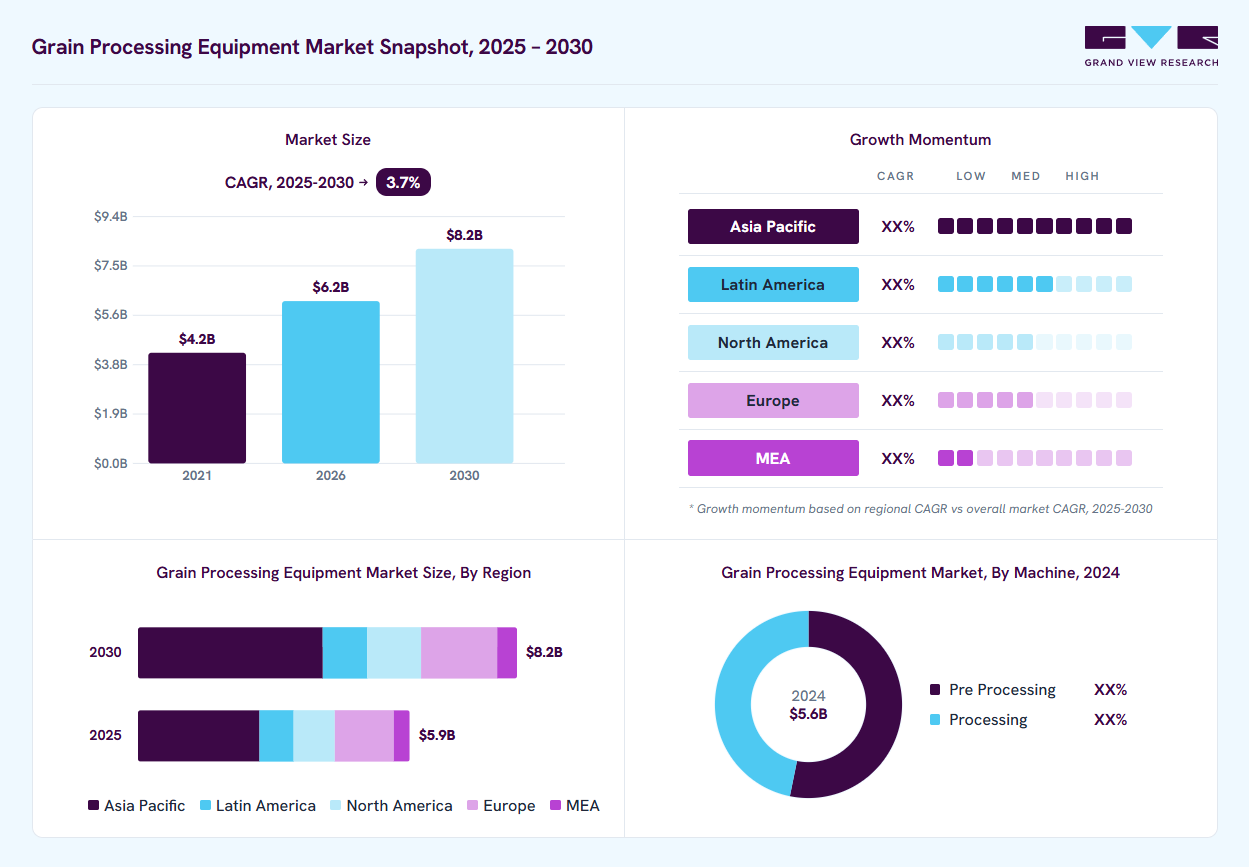
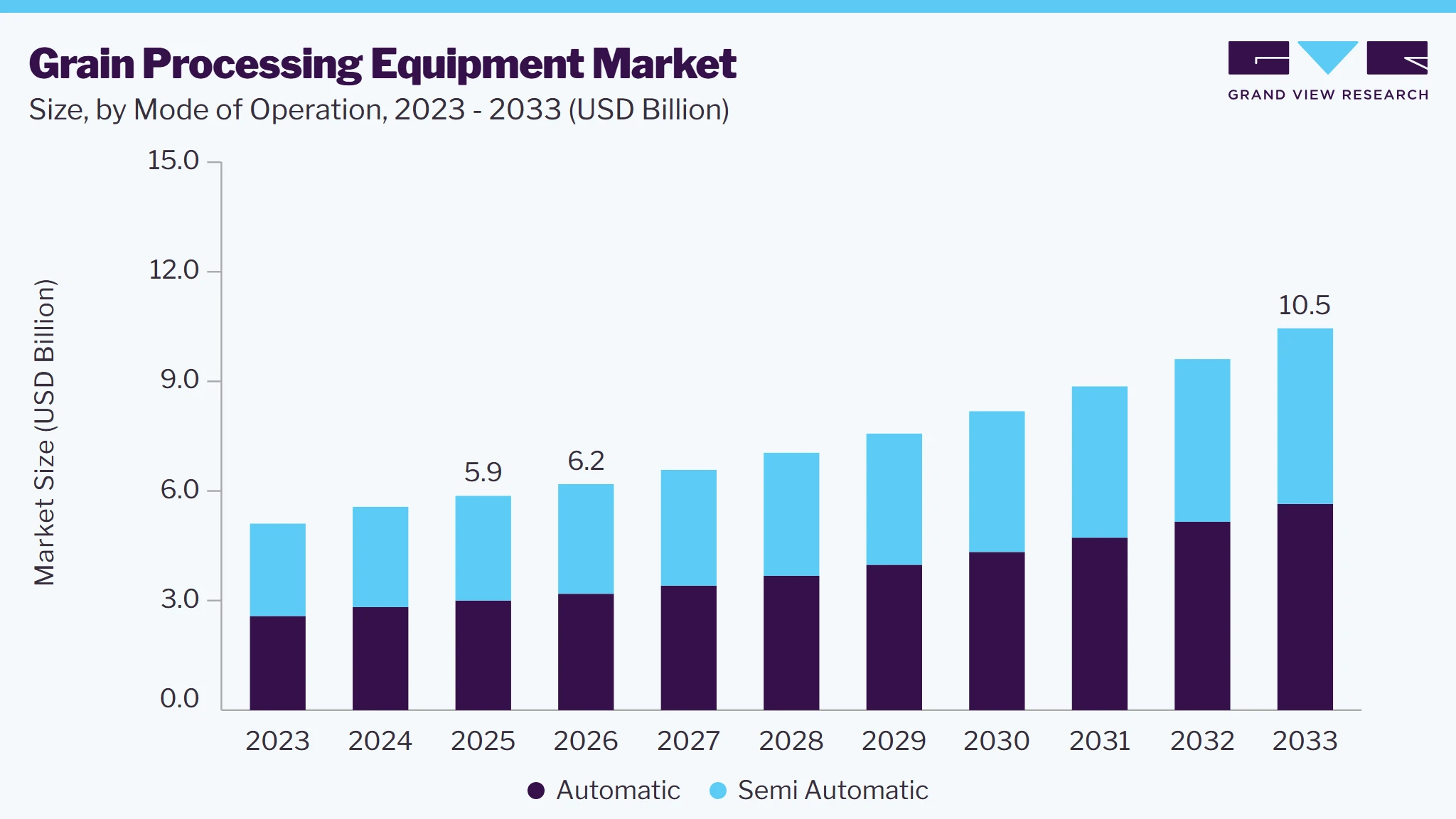
The global grain processing equipment market size was valued at USD 5.9 billion in 2025 and is projected to grow from USD 6.2 billion in 2026 to USD 10.5 billion by 2033, at a CAGR of 7.8% from 2026 to 2033. Asia Pacific dominated the market, accounting for a revenue share of 44.7% in 2025. This growth is attributed to the increasing population, and food demand significantly boosts the need for efficient grain processing solutions.
Key Market Trends & Insights
- By mode of operation: Automatic segment led the market with the largest revenue share of 51.1% in 2025.
- By machine: Pre-processing segment led the market with the largest revenue share of 53.4% in 2025.
Regional Highlights
- Largest regional market: Asia Pacific (44.7% revenue share, 2025)
- By country: China held the largest market share in 2025.
Market Size & Forecast
- Market size in 2025: USD 5.9 Billion
- Estimated market size in 2026: USD 6.2 Billion
- Projected market size by 2033: USD 10.5 Billion
- CAGR (2026-2033): 7.8%
Three ways to get this report
Buy it, customize it, or ask a question.Ask an Analyst
A direct answer, usually in 1 working day
- AccessReport author, directly
- Reply timeWithin 1 working day
- No sales callDirect answer only
- FormatEmail reply
- CostFree, no cost
Get the Full Report
What the study covers
- FormatsPDF · Excel · Dashboard
- Timeline2026–2033 annual, 2025 base
- Coverage20+ countries, 5 regions
- Companies10+ key players profiled
Customize the Report
20% free customization
- IncludeCountries, segments, points
- TailorTo your product definition
- ExtendDeeper competitor detail
- OrA fully bespoke study
- Turnaround5–10 working days
In addition, the rise in ready-to-eat food consumption, lifestyle changes, and higher family incomes further accelerates market growth. Furthermore, advancements in automation and robotics and integrating IoT technologies enhance operational efficiency and are expected to drive the market’s growth. Moreover, expanding the food and beverage industry and focusing on sustainable practices also contribute to the growing demand for grain processing equipment.Grain processing equipment refers to machinery utilized for processing various grains, involving procedures such as cleaning, adjusting moisture content, and sizing to produce products for human and animal consumption. The growth of the global grain processing machinery market is significantly influenced by rising demand and technological advancements, particularly in urban areas. As populations increase and more people migrate from rural to urban settings, a growing market for processed and convenience foods is growing. This trend notably boosts the demand for grain-processing machinery.
In addition, advancements in technology such as automation, IoT integration, and energy-efficient designs enhance the efficiency and productivity of grain processing operations. These innovations allow manufacturers to streamline their processes and meet consumers' evolving needs. Furthermore, government support plays a crucial role in expanding this market. Various initiatives and subsidies to modernize agriculture and food processing encourage the adoption of advanced grain processing equipment.
Moreover, an increasing awareness of health and nutrition among consumers drives demand for high-quality processed grains. This heightened focus on fitness and dietary needs necessitates superior processing solutions to meet these requirements effectively. Consequently, the combination of growing consumer demand for convenience foods, technological innovations, supportive government policies, and a heightened emphasis on health collectively contribute to the robust expansion of the grain processing machinery market globally.
Market Dynamics
Rising global grain production, increasing demand for processed food products, and expanding investments in modern milling and food processing facilities is fueling the grain processing equipment market. Technological advancements in automated and energy-efficient equipment are improving operational efficiency and product quality. Growth in animal feed production and cereal consumption further supports market expansion. However, high equipment costs and maintenance requirements may restrain adoption among smaller processors. Emerging economies continue to offer significant opportunities through industrialization and agricultural modernization initiatives.
Rising urbanization, changing dietary habits, and increasing disposable incomes are encouraging food manufacturers to expand processing capacity. Modern grain processing equipment improves efficiency, minimizes product losses, and ensures consistent product quality. In addition, expanding animal feed production and investments in food processing industries are increasing demand for advanced milling, cleaning, sorting, and handling equipment across developed and emerging markets.
Advanced processing systems require significant capital investment, making adoption challenging for small and medium-sized grain processors. Regular maintenance, spare parts replacement, and skilled technical support further increase operational expenses. In developing regions, limited access to financing and budget constraints often delay equipment modernization. These factors can restrict market penetration despite the long-term productivity and efficiency benefits offered by advanced processing technologies.
Food manufacturers are adopting smart processing technologies to improve production efficiency, reduce labor dependency, and maintain consistent product quality. Automation, digital monitoring, and integrated process control systems enable better resource utilization and operational performance. Expanding food processing industries in emerging economies, supported by government initiatives promoting agricultural value addition and food security, are expected to accelerate demand for advanced grain processing equipment during the forecast period.
Analyst Perspective
The grain processing equipment market is expected to witness growth, driven by rising global grain production, increasing demand for processed food products, and modernization of milling and food processing facilities. Manufacturers are investing in automation, energy-efficient technologies, and digital process control systems to improve productivity and product quality. Growing investments in food security, grain storage infrastructure, and value-added agricultural processing are creating new opportunities. Asia Pacific is expected to lead market growth, while North America and Europe continue to benefit from technological advancements and equipment replacement demand.
Mode of Operation Insights
Based on mode of operation, the automatic segment led the market with the largest revenue share of 51.1% in 2025. This growth is attributed to technological advancements and the demand for increased efficiency. Automation minimizes human intervention, leading to enhanced precision and consistency in processing. In addition, the rising focus on productivity and the need for high-quality grain products further propel this segment. Furthermore, integrating IoT technologies allows for real-time monitoring and control, making automatic systems more appealing to manufacturers seeking to optimize their operations.
The semi-automatic mode of operation is expected to grow at a CAGR of 3.0% over the forecast period, owing to its cost-effectiveness and ease of use. In addition, this segment benefits from the availability of labor, making it a practical choice for many producers. Semi-automatic systems require less capital investment than fully automated solutions, appealing to smaller operations. Furthermore, the adaptability of semi-automatic equipment allows for flexibility in processing various grain types, catering to diverse market needs while ensuring efficient production processes.
Machine Insights
Based on machine, the pre-processing segment led the market with the largest revenue share of 53.4% in 2025, driven by the increasing demand for efficient grain cleaning and sorting. In addition, as the food and beverage industry expands, there is a growing need to remove impurities such as stones, straw, and other unwanted materials from harvested grains. Furthermore, rising awareness among farmers about modern grain processing technologies and the need for high-quality raw materials further propel the demand for pre-processing equipment, enhancing overall productivity.
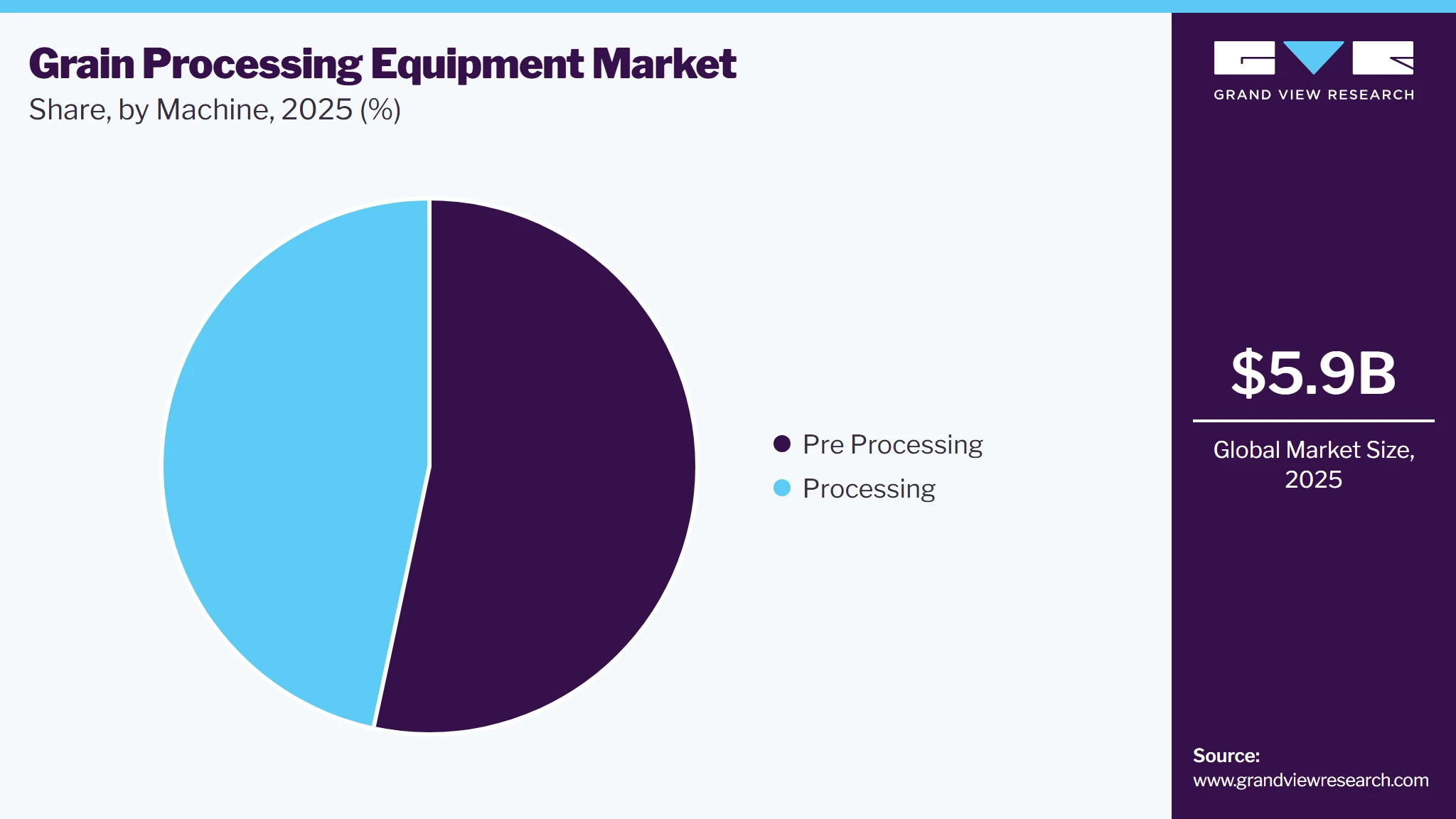
The processing machine segment is expected to grow at a CAGR of 3.4% from 2025 to 2030, owing to the rising demand for processed grain products in various food applications. As consumer preferences shift towards convenience foods and ready-to-eat meals, manufacturers require advanced processing equipment to meet these needs efficiently. Furthermore, technological advancements in processing machinery, such as automation and IoT integration, enhance operational efficiency and product quality. This trend is supported by the expansion of commercial bakeries and flour mills, driving significant investments in processing machines.
Regional Insights
Asia Pacific dominated the grain processing equipment market with the largest revenue share of 44.7% in 2025 attributed to the increasing urbanization and rising disposable incomes, leading to higher demand for processed food. In addition, the rapid expansion of the food and beverage industry and changing consumer preferences for convenience foods significantly boost market growth. Furthermore, technological advancements and government initiatives promoting modern agricultural practices further enhance the adoption of grain processing equipment across developing countries such as India and China.
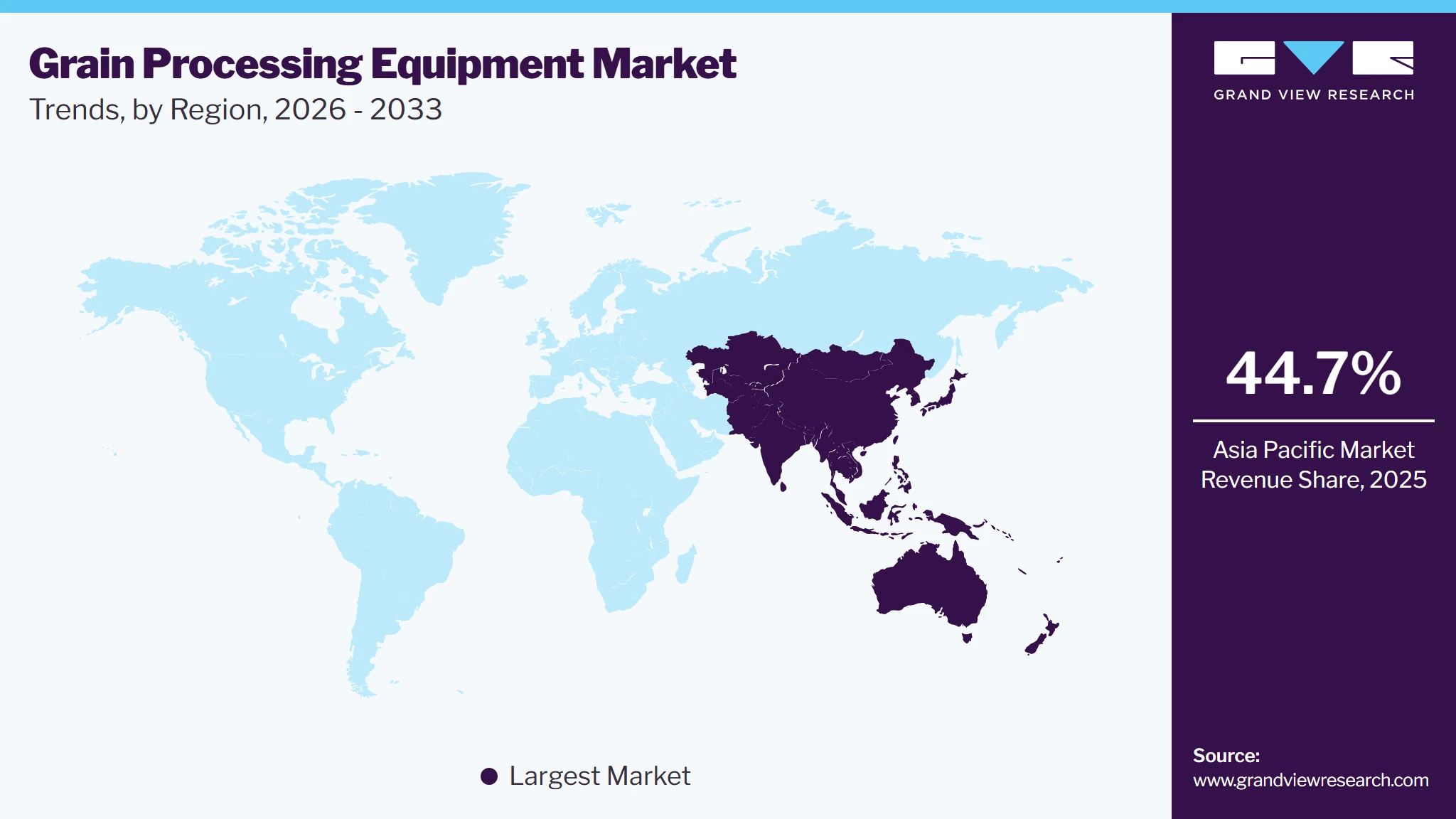
The grain processing equipment market in the China held the largest share in the Asia Pacific region in 2025, driven by the country's large population and the corresponding demand for food security. In addition, the government's focus on enhancing agricultural productivity through modernization and technological innovation plays a crucial role. Furthermore, urbanization trends are shifting consumer habits toward processed and convenience foods, which increases the need for efficient grain processing solutions. Investments in research and development by local manufacturers also contribute to market growth.
Latin America Grain Processing Equipment Market Trends
The Latin America grain processing equipment market is expected to grow at a CAGR of 2.4% over the forecast period, owing to rising agricultural production and a growing middle class demanding processed food products. Furthermore, increased investments in infrastructure and technology to improve food processing capabilities are significant drivers. Moreover, government policies to enhance food security and promote sustainable agricultural practices foster an environment conducive to adopting advanced grain processing equipment across countries such as Brazil and Argentina.
North America Grain Processing Equipment Market Trends
The grain processing equipment market in North America is expected to grow significantly over the forecast period, driven by high consumer awareness regarding food safety and quality. In addition, the region's established food and beverage industry demands advanced processing technologies to meet stringent regulations and consumer expectations. Furthermore, increasing investments in automation and robotics enhance operational efficiency within processing facilities. Moreover, the growing trend toward organic and specialty grains further stimulates demand for innovative grain processing solutions.
The U.S. grain processing equipment market dominated the North American market and accounted for the largest revenue share in 2024, owing to its position as one of the largest producers of grains such as maize, wheat, and sorghum. The government's supportive policies for agriculture and substantial investments in research and development promote advancements in processing technologies. Furthermore, a strong focus on sustainability and eco-friendly practices among U.S. consumers drives the demand for efficient grain processing equipment that meets modern standards.
Europe Grain Processing Equipment Market Trends
The Europe grain processing equipment market is expected to experience substantial growth over the forecast period, driven by stringent food safety regulations and a strong emphasis on quality assurance in food production. In addition, the region's advanced agricultural practices and high levels of mechanization contribute to increased efficiency in grain processing operations. Furthermore, consumer demand for organic and locally sourced products encourages manufacturers to adopt innovative technologies that enhance product quality while maintaining sustainability.
The growth of the grain processing equipment market in Germany is driven by its robust industrial base and emphasis on technological innovation. The country's commitment to sustainability drives investments in energy-efficient machinery that meets environmental standards. Furthermore, Germany's strong export orientation in processed food products necessitates high-quality grain processing solutions to maintain competitiveness in international markets. Moreover, the combination of advanced engineering capabilities and a focus on research further drives growth in this sector.
Key Grain Processing Equipment Company Insights
Some key global grain processing equipment industry companies include Bühler Group, WESTRUP A/S, Golfetto Sangati S.r.l., and others. These companies adopt various strategies, such as new product launches, forming strategic partnerships for enhanced distribution, investing in research and development to innovate products, focusing on sustainability and energy efficiency, and expanding their presence in emerging markets to capture growth opportunities and gain a competitive edge.
-
Osaw Agro Industries Private Limited manufactures a wide range of grain processing equipment, focusing on solutions that enhance efficiency and productivity in the agricultural sector. The company produces machinery for various applications, including grain cleaning, grading, and milling. Operating primarily in the grain processing segment, Osaw Agro is known for its innovative designs and robust equipment tailored to meet the diverse needs of grain processors, ensuring high-quality output and operational reliability.
-
Lewis M. Carter Manufacturing, LLC manufactures various equipment, including air/screen cleaners, designers, gravity separators, and packaging systems. Operating in the grain processing segment, the company focuses on delivering tailored solutions that maximize product purity and efficiency throughout the cleaning and separation processes, catering to each customer's unique requirements.
Key Grain Processing Equipment Companies:
The following key companies have been profiled for this study on the grain processing equipment market.
- Bühler Group
- Alvan Blanch Development Company Limited
- Osaw Agro Industries Private Limited
- WESTRUP A/S
- Golfetto Sangati S.r.l.
- PETKUS Technologie GmbH
- Lewis M. Carter Manufacturing, LLC
- Satake USA, Inc.
- Forsberg Agritech (India) Pvt. Ltd.
- Lianyungang Huantai Machinery Co., Ltd.
Competitive Benchmarking
Category
Operating Strategies
Competitive Edge
Weakness
Established Players (e.g. Bühler Group; Satake USA, Inc.; PETKUS Technologie GmbH; Golfetto Sangati S.r.l.; Alvan Blanch Development Company Limited)
- Focus on expanding comprehensive grain processing equipment portfolios covering cleaning, grading, sorting, milling, dehulling, polishing, and handling systems for food, feed, and grain processing industries.
- Invest in automation, digital monitoring, energy-efficient processing technologies, and integrated grain handling solutions to improve productivity and product quality.
- Strengthen partnerships with flour mills, rice mills, feed manufacturers, grain processors, agricultural cooperatives, and EPC contractors to support large-scale processing facility projects.
- Strong engineering expertise in grain handling, milling, and processing technologies.
- Broad product portfolios with advanced automation capabilities, high processing efficiency, and compliance with international food safety and quality standards.
- Well-established global manufacturing, distribution, and after-sales service networks with strong customer relationships and brand recognition.
- High manufacturing, installation, and product development costs associated with advanced processing equipment.
- Dependence on agricultural production, grain harvest volumes, and food processing investments.
- Long equipment replacement cycles and significant capital investment requirements may limit purchasing decisions.
Emerging & Regional Players (e.g Osaw Agro Industries Private Limited; WESTRUP A/S; Lewis M. Carter Manufacturing, LLC; Forsberg Agritech (India) Pvt. Ltd.; Lianyungang Huantai Machinery Co., Ltd.)
- Focus on specialized and application-specific grain processing equipment tailored for regional crops, processing capacities, and customer requirements.
- Expand market presence through customized equipment development, regional dealer networks, and partnerships with local grain processors and agricultural organizations.
- Emphasize cost-effective designs, operational flexibility, and simplified maintenance to serve small and medium-sized grain processing facilities.
- Competitive pricing and greater flexibility in providing customized grain processing solutions.
- Ability to address regional crop varieties, local processing practices, and country-specific food processing requirements.
- Agile operations enabling faster response to changing agricultural trends and customer needs.
- Limited financial resources for large-scale research, technology development, and global expansion.
- Smaller manufacturing capacity, distribution networks, and after-sales service capabilities compared to global market leaders.
- Lower participation in large multinational grain processing and integrated food manufacturing projects due to limited international presence and production scale.
Recent Developments
-
In October 2024, Bühler Group unveiled its Grain Innovation Center, a state-of-the-art facility for advancing grain processing equipment and technologies. This center is a hub for innovation, focusing on developing sustainable solutions for the grain industry. It aims to enhance efficiency and productivity in grain handling and processing, fostering collaboration with industry partners. The initiative underscores Bühler's commitment to driving progress in grain processing, ultimately benefiting global food production and supply chains.
-
In March 2023, Mathews Company announced the launch of a new line of grain handling products designed to enhance efficiency in grain processing equipment. This innovative product line aims to address the evolving needs of the grain industry, providing advanced solutions for handling and processing grain. The company's commitment to quality and performance is evident in these new offerings, which are expected to improve operational productivity for grain processors and operators across various sectors.
Grain Processing Equipment Market Report Scope
Report Attribute
Details
Market size in 2025
USD 5.9 billion
Estimated market size in 2026
USD 6.2 billion
Projected market size by 2033
USD 10.5 billion
Growth rate
CAGR of 7.8% from 2026 to 2033
Base year for estimation
2025
Historical data
2021 - 2024
Forecast period
2026 - 2033
Quantitative units
Revenue in USD billion and CAGR from 2026 to 2033
Report coverage
Revenue forecast, company ranking, competitive landscape, growth factors, and trends
Segments covered
Mode of operation, machine, region
Regional scope
North America; Europe; Asia Pacific; Latin America; Middle East & Africa
Country scope
U.S., Canada, Mexico, Germany, Russia, UK, Italy, China, India, Japan, South Korea, Australia, Brazil, Argentina, South Africa, Saudi Arabia
Key companies profiled
Bühler Group; Alvan Blanch Development Company Limited; Osaw Agro Industries Private Limited; WESTRUP A/S; Golfetto Sangati S.r.l.; PETKUS Technologie GmbH; Lewis M. Carter Manufacturing, LLC; Satake USA, Inc.; Forsberg Agritech (India) Pvt. Ltd.; Lianyungang Huantai Machinery Co., Ltd.
Customization scope
Free report customization (equivalent up to 8 analysts' working days) with purchase. Addition or alteration to country, regional & segment scope.
Pricing and purchase options
Avail customized purchase options to meet your exact research needs. Explore purchase options
Global Grain Processing Equipment Market Report Segmentation
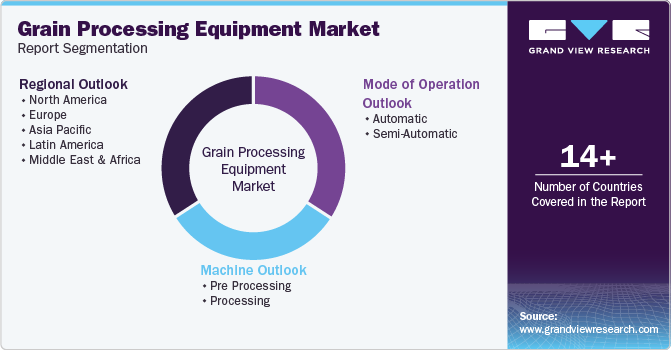
This report forecasts revenue growth at global, regional, and country levels and analyzes the latest industry trends in each sub-segment from 2021 to 2033. For this study, Grand View Research has segmented the global grain processing equipment market report based on mode of operation, machine, and region.
-
Mode of Operation Outlook (Revenue, USD Million, 2021 - 2033)
-
Automatic
-
Semi-Automatic
-
-
Machine Outlook (Revenue, USD Million, 2021 - 2033)
-
Pre Processing
-
Processing
-
-
Regional Outlook (Revenue, USD Million, 2021 - 20332021 - 2033)
-
North America
-
U.S.
-
Canada
-
Mexico
-
-
Europe
-
Germany
-
Russia
-
UK
-
Italy
-
-
Asia Pacific
-
China
-
India
-
Japan
-
South Korea
-
Australia
-
-
Latin America
-
Brazil
-
Argentina
-
-
Middle East and Africa
-
South Africa
-
Saudi Arabia
-
-
Research Methodology
The grain processing equipment market figures in this report are based on a proven research process that combines executive interviews with secondary research from proprietary databases, company filings, and recognized regulatory and institutional sources. Market size is built through value-chain sizing - reconciling supply-side and demand-side estimates - and triangulated with bottom-up and top-down approaches. Every estimate passes multiple levels of expert validation before publication, with each grain processing equipment segment quantified using the revenue-capture definitions in the table below.
Segment Definition
Segment - Mode of Operation
Revenue Capture Definition
Automatic
Revenue generated from sales of fully automated grain processing equipment designed to perform cleaning, milling, sorting, grading, and handling operations with minimal human intervention.
Semi Automatic
Revenue captured from sales of semi-automatic grain processing equipment requiring partial manual operation while improving processing efficiency, productivity, and product consistency.
Segment - Machine
Revenue Capture Definition
Pre Processing
Revenue generated from sales of grain pre-processing equipment used for cleaning, drying, de-stoning, grading, sorting, and conditioning grains before primary processing.
Processing
Revenue captured from sales of grain processing equipment used for milling, grinding, polishing, dehulling, flaking, crushing, and other value-added grain processing operations.
Estimation Model
Layer Name
Key Question
Description
Grain Production and Agricultural Output Layer
Which sectors generate demand for grain processing equipment?
The estimation begins by evaluating grain production across wheat, rice, corn, barley, oats, sorghum, and other cereal crops. Demand is supported by rising agricultural output, increasing food consumption, government initiatives to improve food security, expanding grain storage infrastructure, and investments in agricultural modernization.
Equipment Type and Processing Technology Layer
Which equipment types drive market demand?
This layer refines demand by assessing the adoption of pre-processing and processing equipment across grain milling and food processing facilities. Automation trends, processing efficiency, product quality requirements, energy-efficient technologies, and modernization of grain handling operations influence equipment adoption across automatic and semi-automatic systems.
End-user and Processing Deployment Layer
What determines grain processing equipment demand?
Market demand is estimated through the deployment of grain processing equipment across flour mills, rice mills, feed manufacturers, food processing companies, grain storage facilities, and agricultural cooperatives. Increasing grain production, processing capacity expansion, replacement of aging equipment, food safety regulations, and demand for value-added grain products further support equipment purchase.
Revenue Layer
How is total market revenue calculated?
Revenue is estimated by aggregating sales of grain processing equipment across machine types, operating modes, end-user industries, and regional markets. Grain production volumes, food processing investments, equipment pricing, automation adoption, replacement demand, government support for agricultural modernization, and manufacturer revenues are incorporated to validate the total market size.
Delivered Customizations
This report has been delivered with the following In-depth customizations
Client Request
Customization Delivered
Value Adds
Regional Segmentation
Detailed regional analysis covered North America, Europe, Asia Pacific, Latin America, and the Middle East & Africa, with country-level assessment of key markets. The study evaluated grain production, agricultural output, food processing capacity, milling infrastructure, government support for agricultural modernization, investments in grain storage and handling facilities, and demand from flour mills, rice mills, feed manufacturers, and food processing industries influencing grain processing equipment demand.
Helped identify high-growth regions, country-specific opportunities, and evolving agricultural and food processing trends, supporting market entry strategies, regional expansion planning, and identification of emerging grain processing and milling hubs.
Competitive Benchmarking
Comprehensive benchmarking assessed major participants based on product portfolio, grain processing technologies, automation capabilities, manufacturing strength, processing efficiency, product quality, regional presence, pricing strategies, aftermarket services, and distribution networks. The study also compared established and emerging players operating in the grain processing equipment market.
Assisted clients in evaluating competitor positioning, technological capabilities, and market gaps while supporting strategic planning, partnership opportunities, product differentiation, and investment decisions across grain milling, food processing, and feed manufacturing applications.
Opportunity Assessment
In-depth opportunity assessment analyzed agricultural modernization initiatives, food security programs, expansion of grain milling and food processing facilities, automation adoption, investments in grain storage infrastructure, and government support for value-added agricultural processing. The study identified emerging opportunities in automated grain processing equipment, digital process monitoring systems, energy-efficient milling technologies, and integrated grain handling solutions designed to improve productivity, product quality, and operational efficiency.
Enabled clients to identify high-growth investment areas, prioritize regional expansion, and evaluate future revenue opportunities while supporting product development, technology adoption, and long-term growth strategies in the grain processing equipment market.
Frequently Asked Questions About This Report
The global grain processing equipment market size was USD 5.9 billion in 2025 and is projected to grow at USD 6.2 billion in 2026.
The global grain processing equipment market is expected to grow at a compound annual growth rate of 7.8% from 2026 to 2033 to reach USD 10.5 billion by 2033.
Asia Pacific dominated the grain processing equipment market with a share of 44.7% in 2025. This is attributable to region’s large agricultural base, high grain production volumes, growing food processing industry, increasing demand for processed food products, and rising investments in modern processing infrastructure across major markets such as China and India..
Some key players operating in the grain processing equipment market include Alvan Blanch Development Company Limited, Osaw Agro Industries Private Limited, WESTRUP A/S, Golfetto Sangati S.r.l., PETKUS Technologie GmbH, Lewis M. Carter Manufacturing, LLC, Satake USA, Inc., Forsberg Agritech (India) Pvt. Ltd., and Lianyungang Huantai Machinery Co., Ltd.
Key factors that are driving the market growth include growing demand for processed and ready-to-eat food products in food & beverage processing industry.
Which mode of operation segment in grain processing equipment market held the largest revenue share?Based on mode of operation, the automatic segment held largest revenue share of 51.1% in 2025.
Based on machine, the pre processing segment held largest revenue share of 53.4% in 2025.
The grain processing equipment market in the China held the largest share in the Asia Pacific region in 2025.
About the Author(s)
Food Safety & Processing Research Team
Consumer Goods · Food Safety & ProcessingThis report was authored by the food safety & processing research team at Grand View Research - comprising two research analysts, one senior research analyst, and one industry expert - with specialized expertise in the food safety & processing segment of the consumer goods industry. All findings are based on proprietary consumer goods databases, executive interviews, and regulatory analysis, subject to internal peer review prior to publication.
Last Updated:
Speak to Analyst


Customize this report to your needs - add regions, segments, or data points, with 20% free customization.
Or view our licence options:


ISO 9001:2015 & 27001:2022 Certified
We are GDPR and CCPA compliant! Your transaction & personal information is safe and secure. For more details, please read our privacy policy.


