
- Home
- »
- Advanced Interior Materials
- »
-
Hazmat Suits Market Size And Share Report, 2026-2033GVR Report cover

Hazmat Suits Market (2026 - 2033)
Size, Share & Trends Analysis Report By Application (Biohazard & Infection Control, Chemical Protection, Radioactive Protection), By Type (Level A, Level B, Level C, Level D), By End Use, By Region, And Segment Forecasts
Market Size, 2025
$8.9BMarket Estimate, 2026
$9.5BMarket Forecast, 2033
$15.6BCAGR, 2026–2033
7.3%Hazmat Suits Market Summary
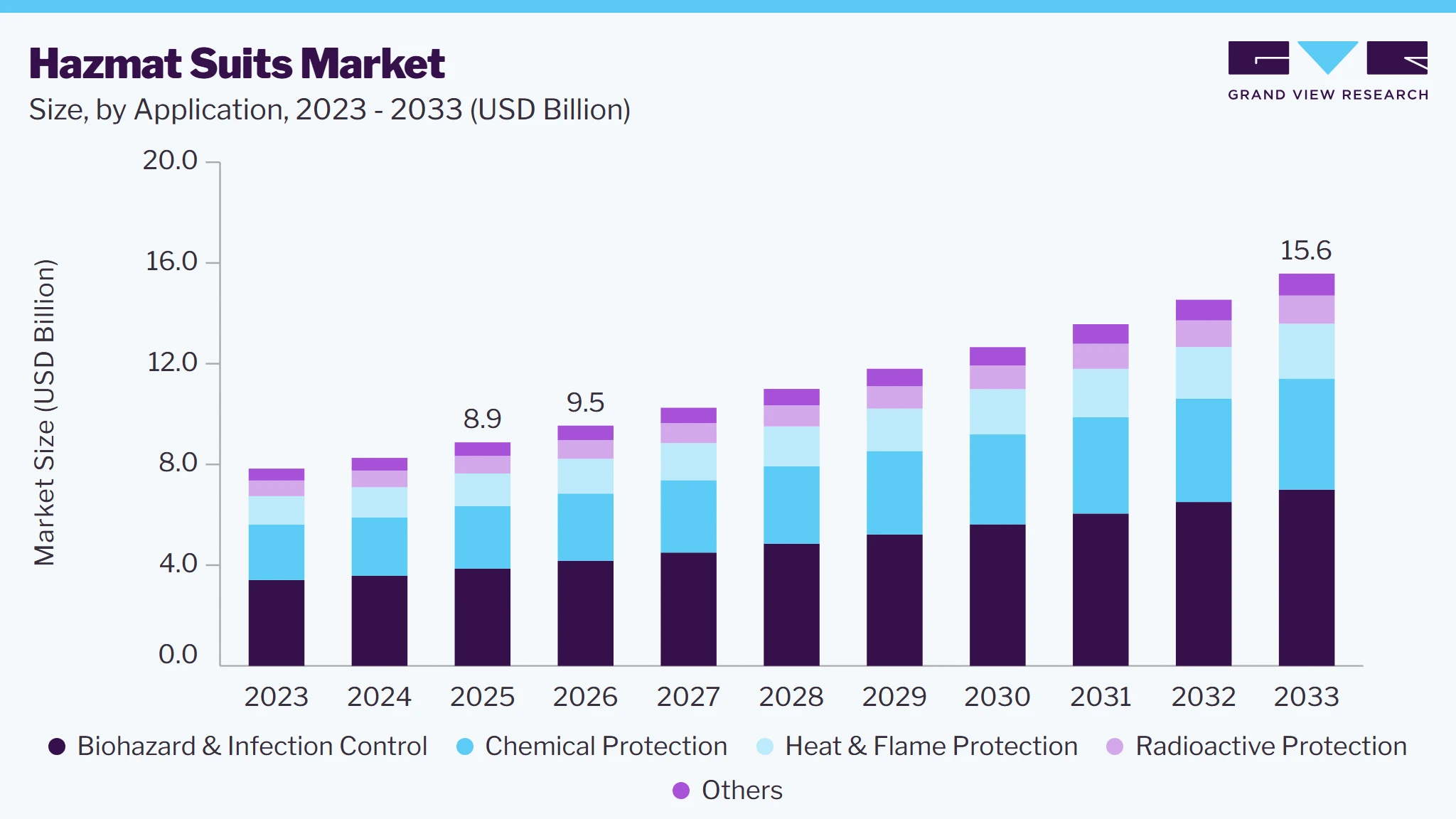
The global hazmat suits market size was valued at USD 8.9 billion in 2025 and is projected to grow from USD 9.5 billion in 2026 to USD 15.6 billion by 2033, at a CAGR of 7.3% from 2026 to 2033. North America dominated the hazmat suits market with the largest revenue share of 33.0% in 2025. Stringent government regulations and safety standards across various industries are compelling organizations to invest in protective gear, including hazmat suits, to ensure worker safety and compliance.
 Source: Grand View Research, IR Documents, Primary Interviews, Paid DatabasesTo learn more about this report,
 Download Free Sample Report
 Key Market Trends & Insights
- By application: Biohazard & infection control segment held the largest market share of 43.6% in 2025.
- By type: Level c segment held the largest market share of 36.8% in 2025.
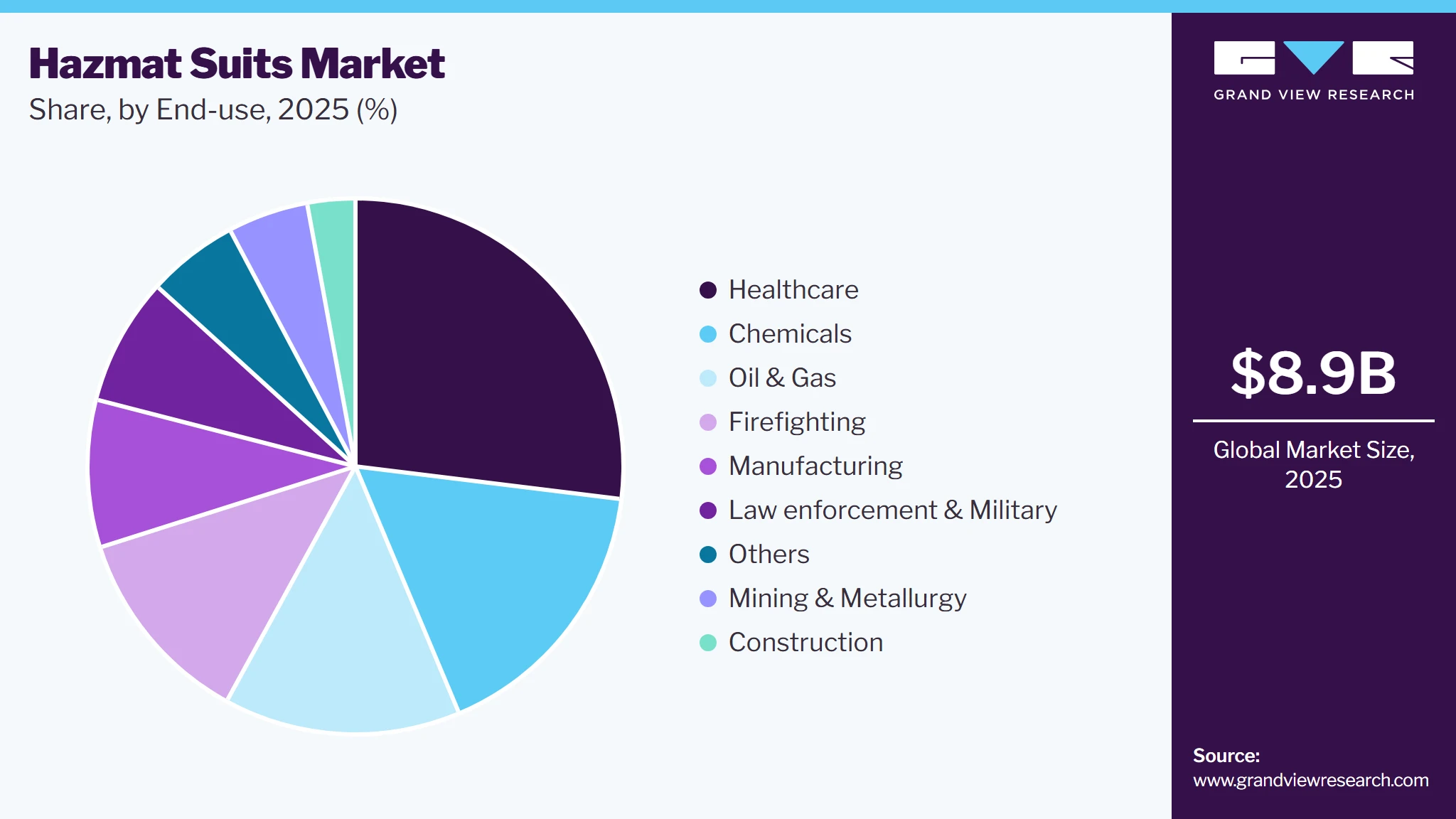
- By end use: Healthcare segment held the largest market share of 27.0% in 2025.
Regional Highlights
- Largest regional market: North America (33.0% revenue share, 2025)
- By country: The U.S. held the largest market share in 2025
Market Size & Forecast
- Market size in 2025: USD 8.9 Billion
- Estimated market size in 2026: USD 9.5 Billion
- Projected market size by 2033: USD 15.6 Billion
- CAGR (2026-2033): 7.3%
Three ways to get this report
Buy it, customize it, or ask a question.Ask an Analyst
A direct answer, usually in 1 working day
- AccessReport author, directly
- Reply timeWithin 1 working day
- No sales callDirect answer only
- FormatEmail reply
- CostFree, no cost
Get the Full Report
What the study covers
- FormatsPDF · Excel · Dashboard
- Timeline2026–2033 annual, 2025 base
- Coverage20+ countries, 5 regions
- Companies10+ key players profiled
Customize the Report
20% free customization
- IncludeCountries, segments, points
- TailorTo your product definition
- ExtendDeeper competitor detail
- OrA fully bespoke study
- Turnaround5–10 working days
 To learn more about this report, Download Free Sample Report
Technological advances have led to the development of lighter, more comfortable, and chemically resistant materials, enhancing the effectiveness and wearability of hazmat suits. Moreover, the rising awareness of occupational health and safety risks, coupled with the implementation of stricter safety protocols, has further driven the demand for hazmat suits. To learn more about this report, Download Free Sample Report
 Market Dynamics
The hazmat suits market is witnessing steady growth due to increasing emphasis on worker safety across high-risk industries such as healthcare, chemical processing, oil & gas, manufacturing, and emergency response. Rising regulatory compliance requirements, growing awareness of occupational hazards, and investments in disaster preparedness are driving the adoption of advanced protective apparel. Technological advancements in lightweight, breathable, and reusable suit materials are improving wearer comfort while maintaining high protection standards. Also, increasing industrialization, expansion of hazardous material handling activities, and the need for effective infection control continue to create sustained demand for hazmat suits worldwide.
Governments and occupational safety agencies across major economies are strengthening regulations to protect workers exposed to hazardous chemicals, infectious agents, and other dangerous substances. Industries handling toxic materials are required to provide certified personal protective equipment (PPE), including hazmat suits, to comply with workplace safety standards and minimize health risks. This regulatory environment has encouraged organizations to replace outdated protective gear with higher-performance suits that meet evolving safety requirements.
In addition, industries such as chemicals, pharmaceuticals, oil & gas, and healthcare are investing more heavily in employee safety programs and emergency preparedness. Frequent safety audits, stricter compliance requirements, and growing awareness of occupational health have increased procurement of both reusable and disposable hazmat suits. As industrial operations become more complex and hazardous material handling expands, regulatory compliance is expected to remain a key driver of long-term market growth.
Advanced hazmat suits offering protection against chemical vapors, biological hazards, and radioactive contaminants often involve high manufacturing costs due to specialized materials, certification requirements, and rigorous testing. Reusable suits also require regular inspection, decontamination, maintenance, and periodic replacement to maintain protective performance, increasing the overall cost of ownership. These factors can limit adoption among small and medium-sized enterprises and organizations with constrained safety budgets, particularly in developing regions.
The increasing focus on worker comfort, operational efficiency, and sustainability is creating opportunities for manufacturers to develop next-generation hazmat suits using lightweight composite fabrics, breathable barrier materials, and ergonomic designs. Demand is rising for reusable suits that reduce long-term operating costs while maintaining high levels of protection. Furthermore, the integration of wearable technologies such as environmental sensors, physiological monitoring, and wireless communication systems is opening new opportunities in industrial safety, emergency response, and defense applications. These innovations are expected to enhance user safety and operational effectiveness while supporting the market's future growth.
Market Concentration & Characteristics
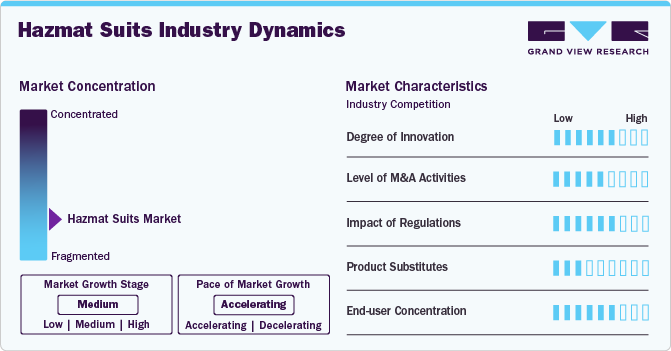
The global hazmat suits industry is characterized by a moderate level of market concentration, with both multinational companies and regional players vying for market share. Leading manufacturers focus on providing highly specialized hazmat suits that cater to the needs of industries such as healthcare, chemical manufacturing, and emergency response. Companies invest in the development of advanced materials and technology, aiming to improve comfort, durability, and chemical resistance, which is crucial for high-risk environments.
The market’s competitive dynamics are heavily influenced by regulatory standards, including those set by organizations like the Occupational Safety and Health Administration (OSHA) and other health and safety bodies. Manufacturers must comply with these stringent safety and performance standards to ensure the protection of workers and meet legal requirements across different regions.
 To learn more about this report, Download Free Sample Report
 As the demand for personal protective equipment (PPE) grows due to heightened concerns over public health and safety, particularly in the wake of pandemics and industrial accidents, manufacturers are leveraging innovation to differentiate themselves. Companies are investing in hazmat suits that offer better breathability, reduced weight, and more flexibility while maintaining the highest levels of protection. There is also a growing trend toward incorporating eco-friendly materials, driven by increasing awareness of environmental impacts. Moreover, the rising demand for safety equipment in developing regions and industries dealing with hazardous chemicals is creating significant growth opportunities. However, the market is also challenged by the availability of alternative protective solutions and the high cost of advanced suits, which may hinder wider adoption among smaller businesses and certain sectors.
In terms of market characteristics, the hazmat suits industry benefits from a growing emphasis on worker health and safety, especially in sectors like healthcare, oil and gas, and chemical processing. With ongoing advancements in protective technologies and materials, manufacturers must continue to focus on delivering high-performance, cost-effective solutions that meet the evolving needs of end users. In addition, the integration of new materials that provide better resistance to chemical agents, biological threats, and environmental hazards is driving innovation. As the market becomes more competitive, companies will need to stay ahead by offering customized solutions, adhering to the evolving regulatory framework, and responding to global safety concerns to ensure sustainable growth.
Analyst Perspective
The hazmat suits market is expected to witness steady growth, driven by increasing regulatory focus on occupational safety, expanding chemical and pharmaceutical industries, and rising investments in emergency preparedness and disaster response. Demand is shifting toward lightweight, breathable, reusable, and high-performance protective suits that enhance worker comfort without compromising safety. While premium product costs and stringent certification requirements remain key challenges, ongoing advancements in protective materials, smart wearable technologies, and sustainable PPE solutions are creating new growth opportunities. Manufacturers that prioritize innovation, regulatory compliance, and expansion into high-growth industrial and healthcare markets are expected to strengthen their competitive position and capture a larger share of the global market.
Drivers, Opportunities & Restraints
The increasing prevalence of infectious diseases and pandemics has heightened the demand for personal protective equipment (PPE), including hazmat suits, to safeguard healthcare workers and first responders. Furthermore, the expansion of industries such as chemical manufacturing, pharmaceuticals, oil and gas, mining, and construction has increased the need for protective clothing to handle hazardous materials safely.
A key restraint for the growth of the global hazmat suits industry is the high cost of advanced protective suits. Many smaller businesses or industries with lower safety budgets may find it difficult to invest in high-quality hazmat suits, limiting widespread adoption. Furthermore, the availability of alternative protective measures could slow the market growth.
On the other hand, an opportunity for market growth lies in the increasing global focus on environmental safety and health risks, especially in industries dealing with hazardous materials or biological threats. As regulations continue to tighten, the demand for advanced protective gear is likely to rise. In addition, innovations in materials and designs, improving comfort and functionality, can also drive adoption across various sectors.
Application Insights
Based on application, biohazard & infection control segment led the market with the largest revenue share of 43.6% in 2025, driven by global health concerns, particularly due to the rising spread of viruses. The demand for high-quality protective suits to shield workers from biological agents and infections in healthcare settings and emergency response teams is growing significantly.
The increasing demand for hazmat suits for chemical protection is being propelled by industries like chemicals, oil & gas, and pharmaceuticals, where workers are often exposed to hazardous chemicals. Stringent safety regulations and heightened awareness of chemical hazards are boosting the demand for specialized protection.
Type Insights
Based on type, level C segment led the market with the largest revenue share of 36.8% in 2025. The growing adoption of Level C hazmat suits is attributed to their affordability and effective protection in environments where the risk of hazardous exposure is less severe but still present. Industries like manufacturing and healthcare are increasingly adopting these suits due to their balance of protection and comfort.
The growth of the Level A hazmat suit segment is driven by its high protective standards, offering complete protection against dangerous materials, including toxic chemicals and biological agents. The increasing frequency of industrial accidents and hazardous material spills in sectors like oil & gas and chemicals is a key factor fueling demand for Level A suits.
End Use Insights
Based on end use, healthcare segment led the market with the largest revenue share of 27.0% in 2025, due to heightened concerns over infectious diseases and the need for strict infection control measures. The rise in healthcare emergencies and global pandemics has further fueled the demand for protective gear, especially in hospitals and laboratories.
 To learn more about this report, Download Free Sample Report
 The chemicals segment sees strong growth due to the rising number of hazardous materials used in manufacturing and chemical production. As regulatory requirements become stricter and safety concerns increase, there is a growing need for protective clothing that can safeguard workers from exposure to harmful substances.
Regional Insights
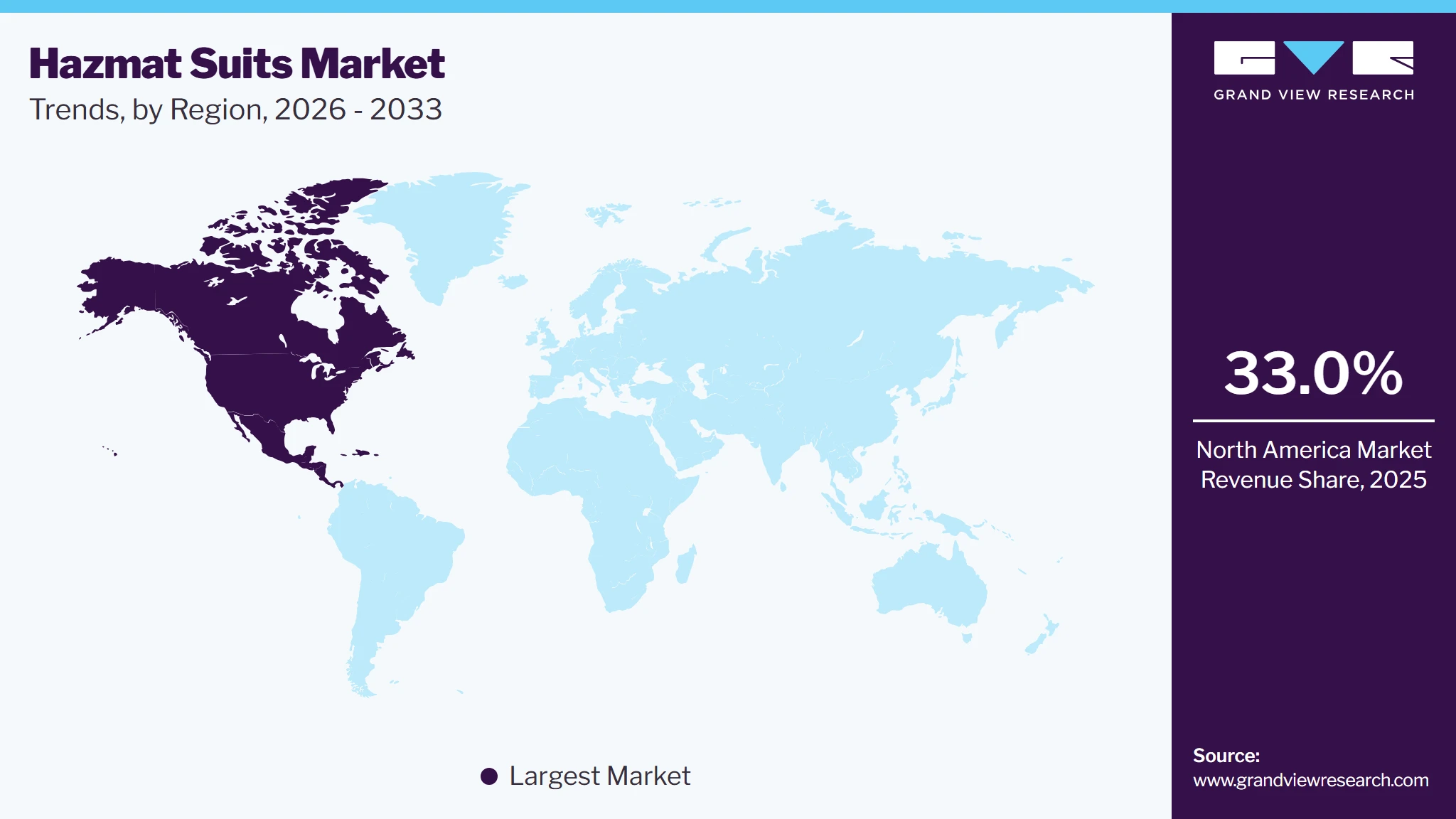
North America dominated the hazmat suits market with the largest revenue share of 33.0% in 2025. The market growth is driven by stringent occupational safety regulations, particularly in industries like healthcare, oil & gas, and chemicals. Increased awareness of worker safety and health, along with the rising frequency of industrial accidents, further boosts demand for protective gear.
 To learn more about this report, Download Free Sample Report
 U.S. Hazmat Suits Market Trends
The hazmat suits market in the U.S. held the largest share in the North America region in 2025. The U.S. market is driven by stringent safety regulations across industries like healthcare, oil & gas, and chemicals. Increased awareness of occupational safety, the need for protective equipment in healthcare due to pandemics, and regulatory enforcement contribute to growth.
Europe Hazmat Suits Market Trends
The hazmat suits market in Europe benefits from strict safety standards and regulations enforced by bodies like the European Union. The region's focus on environmental sustainability and the increasing need for protection against chemical, biological, and radiological hazards, particularly in healthcare and manufacturing, are key drivers.
The Germany hazmat suits market is projected to expand at a significant CAGR of 7.0% over the forecast period. In Germany, the market benefits from rigorous industrial safety standards and a strong focus on environmental sustainability. Growth is supported by the chemical, healthcare, and manufacturing sectors, along with a commitment to worker protection and advanced technologies.
The hazmat suits market in Spain is projected to expand at the fastest CAGR of 7.2% over the forecast period, fueled by heightened awareness of workplace safety, especially in the chemical and manufacturing industries. Regulatory compliance and the rising demand for PPE due to healthcare and industrial risks contribute to the expanding market.
Asia Pacific Hazmat Suits Market Trends
The hazmat suits market in the Asia Pacific is experiencing growth due to rapid industrialization, particularly in chemical manufacturing, mining, and healthcare. Increasing government focus on safety regulations, rising environmental concerns, and the region's high vulnerability to pandemics further fuel demand for hazmat suits.
The China hazmat suits market is projected to expand at a significant CAGR of 8.5% over the forecast period. China’s rapid industrialization, combined with a focus on improving occupational safety standards, drives demand for hazmat suits. The growing chemical, manufacturing, and healthcare sectors, along with rising health and environmental concerns, contribute to the market's expansion.
The hazmat suits market in India is expected to grow at the fastest CAGR of 9.9% over the forecast period. In India, industrial growth, particularly in chemicals, mining, and healthcare, is a key driver. Government initiatives to improve workplace safety and increase awareness of the risks associated with hazardous materials are fueling market demand.
Middle East & Africa Hazmat Suits Market Trends
The hazmat suits market in the Middle East and Africa is propelled by high-risk industries such as oil & gas, mining, and chemical processing. The growing focus on worker safety, coupled with stricter regulations and the need for protection in extreme environmental conditions, is driving demand for hazmat suits in the region.
The Saudi Arabia hazmat suits market is expected to grow at a substantial CAGR of 5.9% over the forecast period, driven by the region’s focus on worker safety, combined with increasing government regulations on occupational health and environmental protection, supports market growth.
Latin America Hazmat Suits Market Trends
The hazmat suits market in Latin America growth is driven by the expansion of industrial sectors, including mining and chemicals, and the increasing need for safety equipment in high-risk environments. Rising awareness of workplace safety, combined with improving economic conditions, supports the growing demand for protective gear.
The Brazil hazmat suits market is projected to grow at a significant CAGR of 6.2% over the forecast period. Brazil's market growth is driven by industrial expansion in chemicals, oil & gas, and mining. Increasing regulatory pressure and the need for protective equipment in high-risk environments further stimulate demand for hazmat suits.
Key Hazmat Suits Company Insights
Some of the key players operating in the market include Engis Corporation and Komatsu NTC among others.
-
3M The company operates through four business segments, including safety & industrial, healthcare, consumer, and transportation & electronics. The company has a robust distribution network and its products are distributed globally through a wide distribution network that includes retailers, wholesalers, dealers, distributors, and jobbers. It is publicly traded on the New York Stock Exchange.
-
Ansell Ltd. is a global safety company with prominent global market positions in single and multi-use hand protection products for industrial and medical needs. They also have fast-growing positions in industrial Chemical Protective Clothing products and safety solutions for surgical clean room laboratory environments.
Key Hazmat Suits Companies:
The following are the leading companies in the hazmat suits market.
- 3M
- ANSELL LTD
- Dragerwerk AG & Co. KGaA
- DuPont
- Kimberly-Clark Worldwide, Inc.
- Kappler
- Lakeland Inc.
- Respirex International
- MIRA CORPORATION
- MALLCOM INDIA LIMITED
Competitive Benchmarking
Category
Operating Strategies
Competitive Edge
Weakness
Established Players (e.g., DuPont, 3M, ANSELL LTD, Drägerwerk AG & Co. KGaA, MSA Safety, Lakeland Inc.)
- Invest in advanced material innovation and certified Level A-D hazmat suit development.
- Expand global distribution through industrial safety partners and direct sales channels.
- Strengthen market position through acquisitions, product launches, and compliance with international safety standards.
- Strong global brand recognition and long-standing customer relationships.
- Comprehensive PPE portfolios offering integrated head-to-toe protection solutions.
- Robust manufacturing capacity with well-established global supply chains.
- Premium product pricing limits adoption in cost-sensitive markets.
- High R&D, manufacturing, and regulatory compliance costs.
- Longer product development cycles due to extensive certification requirements.
Emerging & Regional Players (e.g., Kappler, Alpha Pro Tech, Respirex International, MIRA Safety, International Enviroguard, Protective Industrial Products (PIP), Uvex Group, ASATEX AG)
- Focus on niche applications such as chemical, CBRN, and disposable protective apparel.
- Expand through regional distribution networks and partnerships with industrial safety suppliers.
- Compete by offering cost-effective, application-specific, and customizable hazmat suits.
- Greater flexibility in product customization and faster response to customer requirements.
- Competitive pricing with strong presence in regional and specialized markets.
- Expertise in specialized protective clothing for targeted industrial applications.
- Limited global market presence and lower brand recognition.
- Smaller production capacity compared to multinational competitors.
- Lower investment in advanced R&D and next-generation protective technologies.
Recent Developments
-
In July 2024, Lakeland Industries, Inc. acquired LHD Group Deutschland GmbH, along with its subsidiaries in Australia and Hong Kong. This acquisition allows LHD Group Deutschland GmbH to tap into Lakeland Industries, Inc.’s global network and resources, enhancing its growth and position in the protective clothing market.
-
In May 2022, Kappler and Lakeland Inc., announced their collaboration in India to improve chemical worker safety. This partnership aims to serve a broader range of workers in India's large chemical production market, offering Kappler's safety training and NFPA-certified garments, which provide more stringent protection than the European CE mark often used in India.
Hazmat Suits Market Report Scope
Report Attribute
Details
Market size in 2025
USD 8.9 billion
Estimated market size in 2026
USD 9.5 billion
Projected market size by 2033
USD 15.6 billion
Growth rate
CAGR of 7.3% from 2026 to 2033
Base year for estimation
2025
Historical data
2021 - 2024
Forecast period
2026 - 2033
Quantitative units
Revenue in USD billion and CAGR from 2026 to 2033
Report coverage
Revenue forecast, company ranking, competitive landscape, growth factors, and trends
Segments covered
Application, type, end use, region
Regional scope
North America; Europe; Asia Pacific; Latin America; Middle East & Africa
Country scope
U.S.; Canada; Mexico; UK; Germany; France; Italy; Spain; Russia; China; India; Japan; Australia; South Korea; Brazil; Argentina; South Africa; Saudi Arabia; and UAE
Key companies profiled
DuPont; 3M; ANSELL LTD; Drägerwerk AG & Co. KGaA; MSA Safety; Lakeland Inc.; Kappler; Alpha Pro Tech; Respirex International; MIRA Safety; International Enviroguard; Protective Industrial Products (PIP); Uvex Group; and ASATEX AG.
Customization scope
Free report customization (equivalent up to 8 analysts' working days) with purchase. Addition or alteration to country, regional & segment scope.
Pricing and purchase options
Avail customized purchase options to meet your exact research needs. Explore purchase options
Global Hazmat Suits Market Report Segmentation
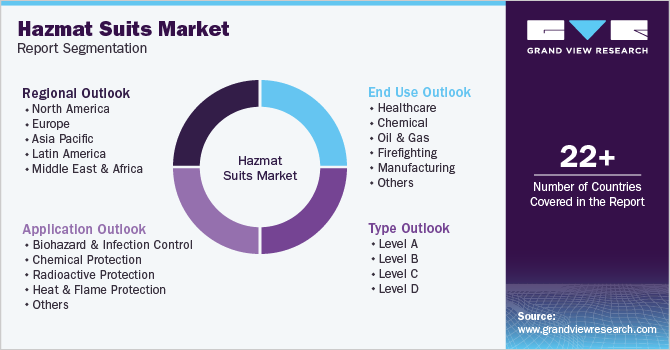
This report forecasts revenue growth at global, regional & country levels and provides an analysis on the industry trends in each of the sub-segments from 2021 to 2033. For this study, Grand View Research has segmented the global hazmat suits market report based on the application, type, end use, and region:
 To learn more about this report, Download Free Sample Report
 -
Application Outlook (Revenue, USD Million; 2021 - 2033)
-
Biohazard & Infection Control
-
Chemical Protection
-
Radioactive Protection
-
Heat & Flame Protection
-
Others
-
-
Type Outlook (Revenue, USD Million; 2021 - 2033)
-
Level A
-
Level B
-
Level C
-
Level D
-
-
End Use Outlook (Revenue, USD Million; 2021 - 2033)
-
Healthcare
-
Chemical
-
Oil & Gas
-
Firefighting
-
Manufacturing
-
Law enforcement & Military
-
Mining & Metallurgy
-
Construction
-
Others
-
-
Regional Outlook (Revenue, USD Million; 2021 - 2033)
-
North America
-
U.S.
-
Canada
-
Mexico
-
-
Europe
-
UK
-
Germany
-
France
-
Italy
-
Spain
-
Russia
-
-
Asia Pacific
-
China
-
India
-
Japan
-
South Korea
-
Australia
-
-
Latin America
-
Brazil
-
Argentina
-
-
Middle East & Africa
-
South Africa
-
Saudi Arabia
-
UAE
-
-
Research Methodology
The hazmat suits market figures in this report are based on a proven research process that combines executive interviews with secondary research from proprietary databases, company filings, and recognized regulatory and institutional sources. Market size is built through value-chain sizing - reconciling supply-side and demand-side estimates - and triangulated with bottom-up and top-down approaches. Every estimate passes multiple levels of expert validation before publication, with each hazmat suits segment quantified using the revenue-capture definitions in the table below.
Segment Definition
Application
Revenue Capture Definition
Biohazard & Infection Control
Revenue generated from the sale of hazmat suits designed to protect against biological agents, infectious diseases, viruses, bacteria, and contaminated bodily fluids in healthcare, laboratories, and emergency response applications.
Chemical Protection
Revenue generated from the sale of hazmat suits that protect workers from hazardous chemicals, toxic liquids, gases, vapors, and corrosive substances across chemical, oil & gas, and industrial facilities.
Radioactive Protection
Revenue generated from the sale of hazmat suits used to prevent contamination from radioactive particles in nuclear power plants, research facilities, radioactive waste management, and emergency response operations.
Heat & Flame Protection
Revenue generated from the sale of hazmat suits engineered to provide protection against high temperatures, flames, radiant heat, and molten metal exposure in firefighting and heavy industrial environments.
Others
Revenue generated from the sale of hazmat suits used for applications such as asbestos removal, environmental remediation, hazardous waste handling, paint spraying, and other specialized industrial operations.
Type
Revenue Capture Definition
Level A
Revenue generated from the sale of fully encapsulated, vapor-tight hazmat suits offering the highest level of respiratory and skin protection for unknown or highly hazardous environments.
Level B
Revenue generated from the sale of splash-resistant hazmat suits with maximum respiratory protection used during chemical spill response, hazardous waste handling, and emergency rescue operations.
Level C
Revenue generated from the sale of chemical-resistant hazmat suits used with air-purifying respirators in environments where hazardous substances are identified and controlled.
Level D
Revenue generated from the sale of basic protective garments that provide minimal hazard protection for general industrial, construction, and maintenance applications where respiratory hazards are absent.
End Use
Revenue Capture Definition
Healthcare
Revenue generated from the sale of hazmat suits to hospitals, diagnostic laboratories, pharmaceutical manufacturers, biotechnology companies, and infectious disease response teams.
Chemicals
Revenue generated from the sale of hazmat suits to chemical manufacturing, processing, storage, and hazardous material handling facilities.
Oil & Gas
Revenue generated from the sale of hazmat suits used in exploration, refining, petrochemical processing, pipeline maintenance, and emergency response operations.
Firefighting
Revenue generated from the sale of hazmat suits used by fire departments and hazardous materials response teams during chemical, biological, and industrial fire incidents.
Manufacturing
Revenue generated from the sale of hazmat suits to manufacturing facilities involved in electronics, automotive, battery production, pharmaceuticals, and industrial processing.
Law enforcement & Military
Revenue generated from the sale of hazmat suits for CBRN operations, homeland security, defense applications, tactical response, and emergency preparedness.
Mining & Metallurgy
Revenue generated from the sale of hazmat suits used in mining, mineral processing, smelting, metal refining, and hazardous material handling activities.
Construction
Revenue generated from the sale of hazmat suits for asbestos abatement, lead paint removal, demolition, hazardous waste cleanup, and environmental remediation projects.
Others
Revenue generated from the sale of hazmat suits to industries including waste management, utilities, agriculture, food processing, marine, aviation, and environmental services.
Estimation Model
Layer Name
Key Question
Description
Hazard Exposure Industries
Which industries require hazmat suits for worker protection?
Identify industries with hazardous exposure requiring certified protective clothing, including healthcare, chemical processing, oil & gas, firefighting, manufacturing, mining, construction, and defense. Assess workforce size, hazardous operations, and safety compliance requirements.
Product & Protection Level Assessment
Which hazmat suit types and applications are most widely adopted?
Analyze demand across Level A, Level B, Level C, and Level D suits and applications such as chemical protection, biohazard & infection control, radioactive protection, and heat & flame protection. Evaluate adoption based on risk level, regulatory standards, and replacement frequency.
Procurement & Adoption Analysis
How are hazmat suits procured across end-use industries?
Assess procurement patterns by end-use sector, including purchase frequency, disposable versus reusable suit preference, replacement cycles, safety regulations, emergency preparedness programs, and industrial expansion influencing product demand.
Revenue Estimation
What is the revenue generated from hazmat suit sales?
Estimate market revenue by combining unit sales, product mix (Level A-D), application-wise demand, end-use industry adoption, replacement rates, regional penetration, and manufacturer sales across global markets.
Delivered Customizations
This report has been delivered with the following In-depth customizations
Client Request
Customization Delivered
Value Adds
Regional Segmentation
Delivered a comprehensive regional analysis covering North America, Europe, Asia Pacific, Latin America, and Middle East & Africa, with country-level market sizing, growth forecasts, regulatory landscape, demand trends, end-use adoption, and competitive presence. The report also includes regional market share analysis, import-export dynamics, and key growth drivers influencing hazmat suit demand.
Enables clients to identify high-growth regions, prioritize market entry strategies, optimize regional investments, and align expansion plans with evolving industrial safety regulations and end-user demand.
Competitive Benchmarking
Delivered an in-depth competitive assessment of leading manufacturers, including product portfolio analysis, protection level offerings (Level A-D), application focus, strategic developments, regional presence, certifications, and market participant categorization. The report also evaluates competitive strategies and technological differentiation.
Helps clients benchmark competitors, identify market gaps, evaluate strategic positioning, understand product differentiation, and support partnership, acquisition, or product development decisions.
Opportunity Assessment
Delivered a detailed evaluation of current and emerging market opportunities by analyzing high-growth applications, expanding end-use industries, technological advancements in lightweight and reusable protective suits, regulatory developments, sustainability trends, and regional investment opportunities. The assessment includes future demand outlook and untapped market potential across major industries.
Assists clients in identifying new revenue streams, prioritizing investment opportunities, developing targeted product strategies, and capitalizing on evolving industrial safety requirements and emerging market trends.
Frequently Asked Questions About This Report
The global hazmat suits market size was estimated at USD 8.9 billion in 2025 and is projected to grow from USD 9.5 billion in 2026 .
The global hazmat suits market, in terms of revenue, is expected to grow at a compound annual growth rate of 7.3% from 2026 to 2033 to reach USD 15.6 billion by 2033.
North America dominated the global hazmat suits market with a 33.0% revenue share in 2025, driven by stringent workplace safety regulations, strong healthcare infrastructure, and significant investments in industrial and emergency response safety.
The biohazard & infection control segment dominated the hazmat suits market, accounting for 43.6% of the global revenue share in 2025, driven by rising demand from healthcare facilities, laboratories, pharmaceutical manufacturing, and infectious disease response operations.
The Level C segment held the largest market share, capturing 36.8% of revenue in 2025, owing to its widespread use in industrial environments where known hazardous substances require chemical-resistant protection with air-purifying respirators.
The healthcare segment led the market with a 27.0% revenue share in 2025, supported by increasing infection control measures, hospital safety protocols, and the growing need for protective apparel in medical and pharmaceutical settings.
Asia Pacific is projected to be the fastest-growing regional market, expanding at a CAGR of 8.1% during the forecast period due to rapid industrialization, expanding healthcare infrastructure, increasing chemical manufacturing, and strengthening occupational safety regulations.
Some of the key players operating in the hazmat suits market are DuPont; 3M; ANSELL LTD; Drägerwerk AG & Co. KGaA; MSA Safety; Lakeland Inc.; Kappler; Alpha Pro Tech; Respirex International; MIRA Safety; International Enviroguard; Protective Industrial Products (PIP); Uvex Group; and ASATEX AG.
The hazmat suits market is primarily driven by stringent workplace safety regulations, increasing demand for infection control in healthcare, expanding chemical and hazardous material handling industries, growing investments in emergency preparedness and disaster response, and continuous advancements in lightweight, durable, and high-performance protective suit technologies.
About the Author(s)
Advanced Interior Materials Research Team
Advanced Materials · Advanced Interior MaterialsThis report was authored by the advanced interior materials research team at Grand View Research - comprising two research analysts, one senior research analyst, and one industry expert - with specialized expertise in the advanced interior materials segment of the advanced materials industry. All findings are based on proprietary advanced materials databases, executive interviews, and regulatory analysis, subject to internal peer review prior to publication.
Last Updated:
Speak to Analyst

Customize this report to your needs - add regions, segments, or data points, with 20% free customization.
Or view our licence options:


ISO 9001:2015 & 27001:2022 Certified
We are GDPR and CCPA compliant! Your transaction & personal information is safe and secure. For more details, please read our privacy policy.


