
- Home
- »
- Medical Devices
- »
-
Heart Valve Devices Market Size & Share Report, 2026-2033GVR Report cover

Heart Valve Devices Market (2026 - 2033)
Size, Share & Trends Analysis Report By Product (Surgical Heart Valves, Transcatheter Heart Valves, Heart Valve Repair Devices, Accessories), By Procedure, By Application, By End-use, By Region, And Segment Forecasts
Market Size, 2025
$12.2BMarket Estimate, 2026
$13.3BMarket Forecast, 2033
$22.8BCAGR, 2026–2033
8.0%Heart Valve Devices Market Summary
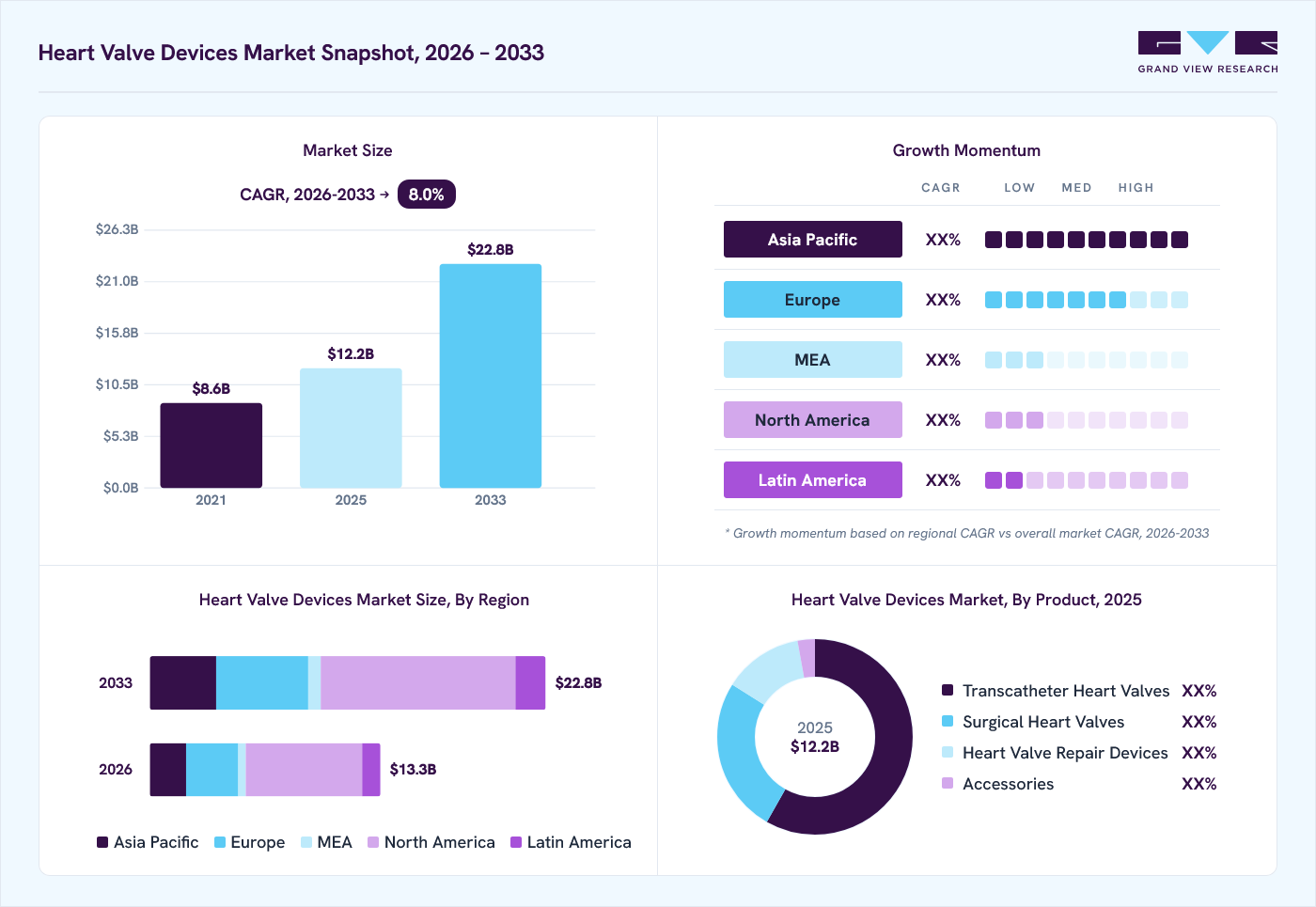
The global heart valve devices market size was valued at USD 12.2 billion in 2025 and is projected to grow from USD 13.3 billion in 2026 to USD 22.8 billion by 2033, at a CAGR of 8.0% from 2026 to 2033. North America dominated the market, accounting for a revenue share of 50.6% in 2025. This growth is attributed to the rising prevalence of valvular heart disease in the aging population, the rapid shift toward minimally invasive transcatheter procedures, and expanding clinical indications and reimburseent coverage for transcatheter valve therapies.
 Source: Grand View Research, IR Documents, Primary Interviews, Paid DatabasesTo learn more about this report,
 Download Free Sample Report
Key Market Trends & Insights
- By product: Transcatheter heart valves segment dominated the market with a revenue share of 58.1% in 2025.
- By procedure: Transcatheter segment held the largest revenue share of 80.7% in 2025.
- By application: Valve replacement segment held the largest revenue share of 84.9% in 2025.
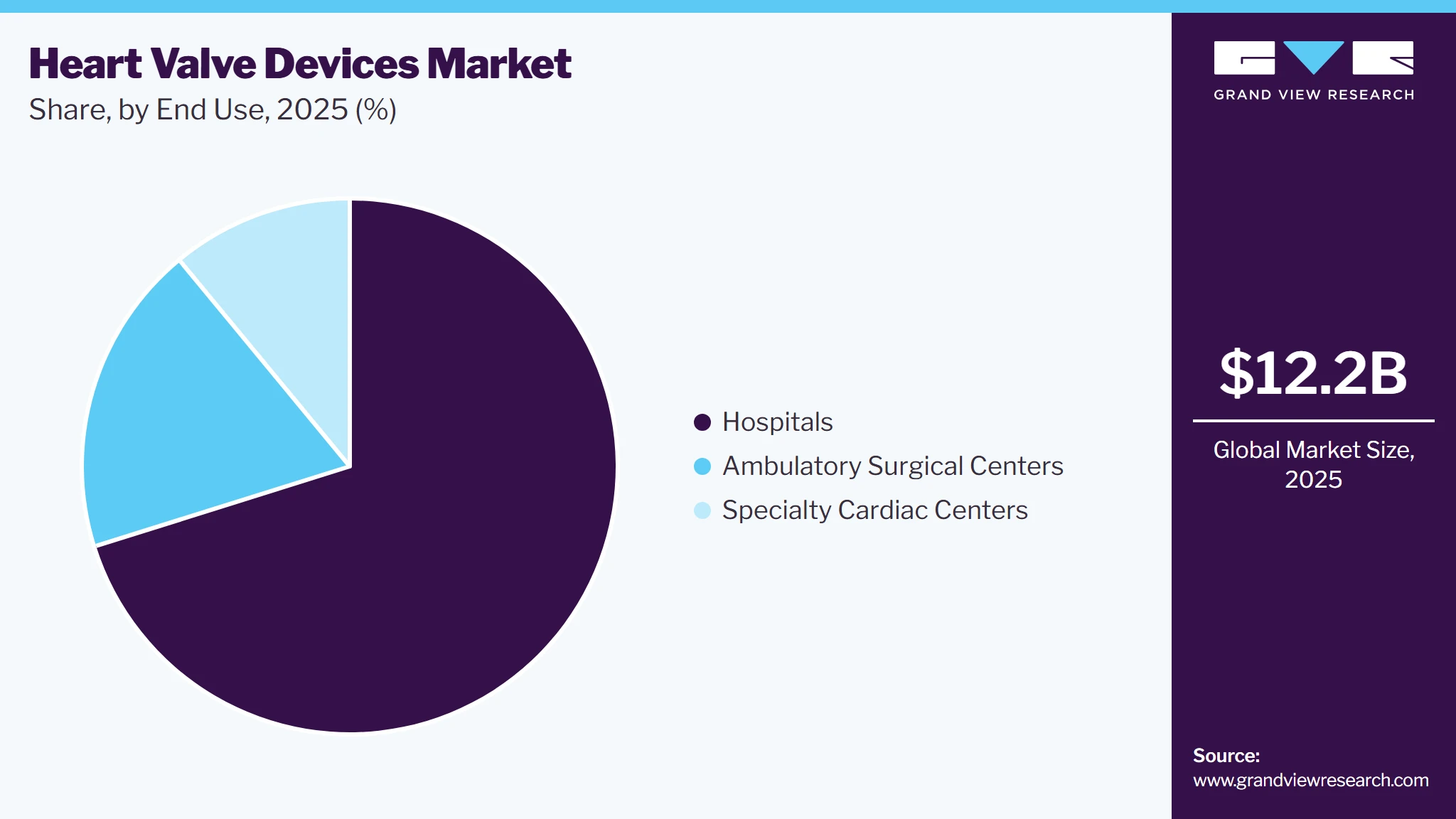
- By end use: Hospitals segment accounted for the largest revenue share of 70.2% in 2025.
Regional Highlights
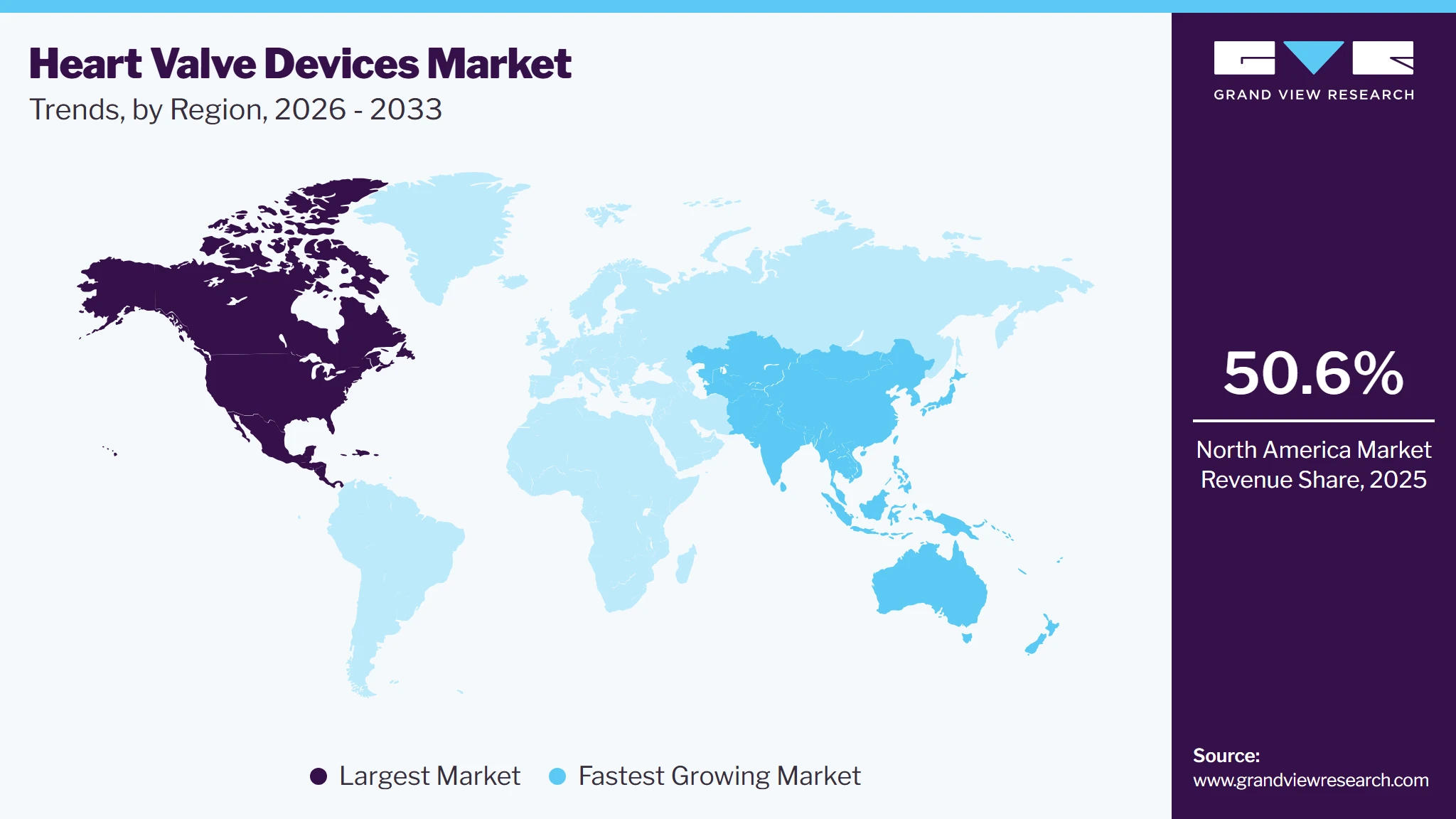
- Largest regional market: North America (50.6% revenue share, 2025)
- Fastest growing regional market: Asia Pacific (highest CAGR, 2026-2033)
Market Size & Forecast
- Market size in 2025: USD 12.2 Billion
- Estimated market size in 2026: USD 13.3 Billion
- Projected market size by 2033: USD 22.8 Billion
- CAGR (2026-2033): 8.0%
Prism AI by Grand View Research Free to tryAsk a question about the heart valve devices marketTry asking✓Every figure cited from GVR research Prefer the report? Download free sample →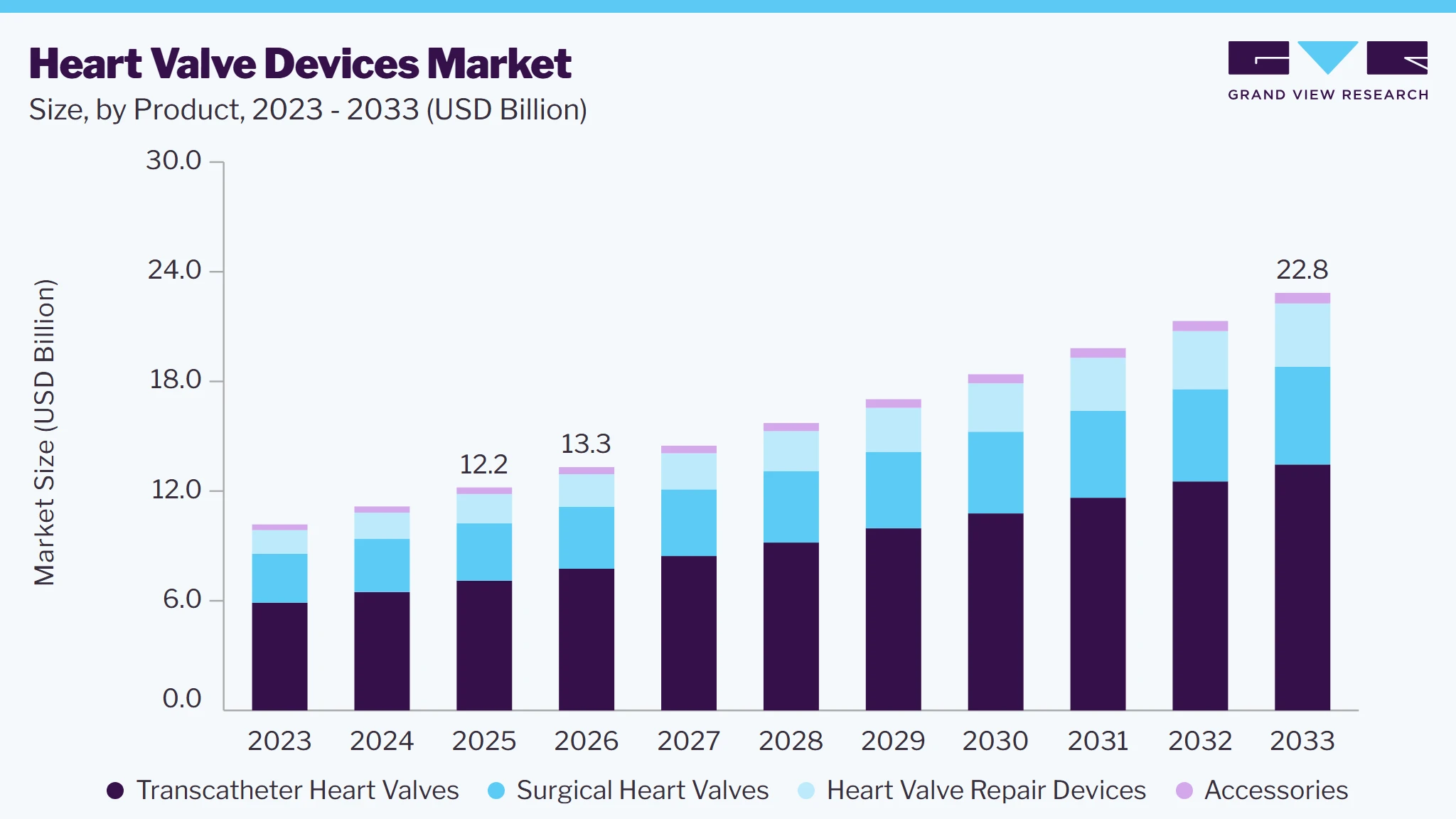 To learn more about this report, Download Free Sample Report
Market Dynamics
The market is driven by the growing burden of aortic stenosis, mitral regurgitation, and tricuspid regurgitation among older adults, along with the increasing adoption of transcatheter aortic valve replacement (TAVR) and transcatheter edge-to-edge repair (TEER) as fewer invasive alternatives to open-heart surgery. Advances in valve design, delivery systems, imaging-guided procedural planning, and device durability, along with expanded regulatory indications and reimbursement coverage, are increasing treatment access and broadening the eligible patient population across hospitals and specialized cardiac centers.
Valvular heart disease (VHD) prevalence increases with age, and the growing elderly population is driving demand for surgical heart valves, transcatheter heart valves, and valve repair devices. Degenerative aortic stenosis is a major cause of valve intervention among older adults, with disease prevalence increasing with age. According to the PREVUE-VALVE study published in the Journal of the American College of Cardiology in June 2026, 8.2% of people aged 65-85 years in the U.S. had moderate or severe VHD, rising to 14.7% among those aged 80-85 years. The study estimated that approximately 4.7 million people in this age group had moderate or severe VHD.
Furthermore, the study projected that the number of people aged 65-85 years with moderate or severe VHD in the U.S. could increase to 6.5 million by 2060, reflecting the growing burden associated with population aging. The prevalence of clinically significant VHD, including mild-to-moderate regurgitant disease, was estimated at 10.6 million people and projected to reach 14.7 million by 2060. This growing disease burden, combined with improved echocardiographic screening and expanding minimally invasive treatment options, is expected to support demand for transcatheter and surgical heart valve replacement and repair procedures.
The high cost of transcatheter heart valve devices and associated procedures remains a significant restraint, particularly in price-sensitive and emerging markets. These procedures require premium-priced implants, specialized delivery systems, advanced imaging, hybrid catheterization laboratories, and trained multidisciplinary heart teams, increasing overall treatment costs and creating financial barriers for healthcare providers and patients.
Affordability challenges are more pronounced in countries with limited reimbursement coverage. For instance, Egypt's Ministry of Health and Population reported in 2025 that TAVI procedures at Sheikh Zayed Specialized Hospital cost approximately EGP 1 million per case, with access supported through state-funded initiatives to reduce waiting lists. Such high costs can restrict access for self-paying patients and limit adoption in smaller healthcare facilities, slowing the penetration of transcatheter heart valve technologies outside major tertiary centers.
The development of next-generation heart valve technologies is a key opportunity for manufacturers to improve valve durability, simplify implantation, and expand treatment options for patients with complex valve disease. Innovations in tissue engineering, sutureless surgical valves, robotic-assisted implantation, and improved valve designs can enhance procedural precision and support less invasive treatment approaches. For instance, in April 2026, Medtronic received U.S. FDA approval for its Mosaic Neo mitral bioprosthesis, designed for conventional, minimally invasive, and robotic-assisted surgical implantation. The next-generation valve incorporates design enhancements intended to improve implant handling and accommodate challenging mitral valve anatomy.
Furthermore, in April 2026, CORCYM received U.S. FDA clearance for its TriMemo semi-rigid annuloplasty ring, specifically designed for tricuspid valve repair. Its three-dimensional shape and nitinol-based structure are intended to support the unique anatomy of the tricuspid valve. These developments highlight opportunities for manufacturers to differentiate their portfolios through improved device design and expanded surgical treatment options.
Market Concentration & Characteristics
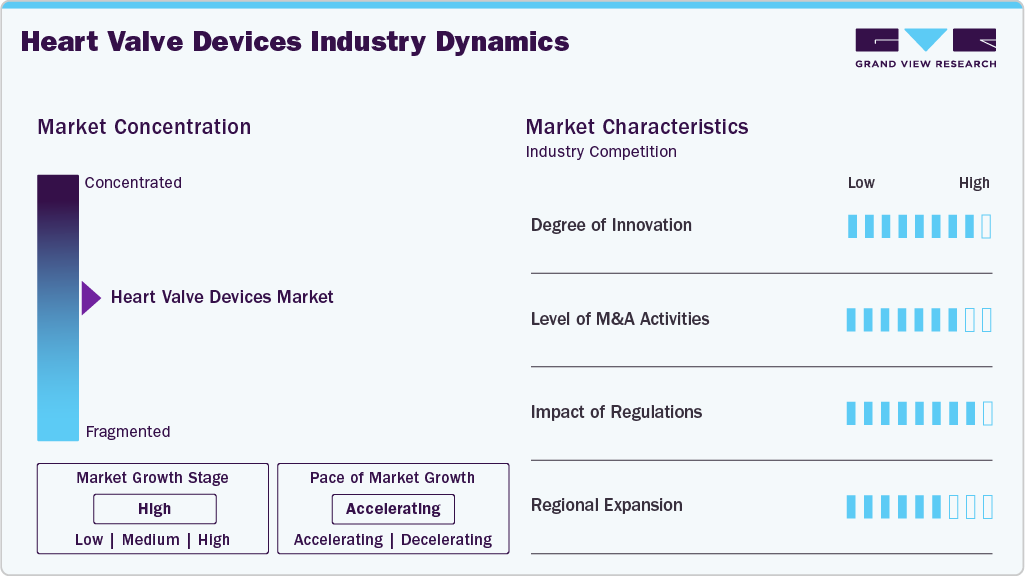
The degree of innovation in the heart valve devices market is high, driven by next-generation valve designs, new transcatheter delivery approaches, and the expansion of therapies to previously undertreated valve diseases. For instance, in March 2026, JenaValve Technology received FDA approval for its Trilogy Transcatheter Heart Valve System, the first transcatheter device approved in the U.S. for symptomatic, severe aortic regurgitation in patients at high or greater surgical risk, demonstrating the industry's shift toward dedicated platforms for complex valve anatomies.
“This FDA approval is the defining moment for JenaValve and, more importantly, those patients in the United States who have suffered from severe aortic regurgitation with nowhere to turn,” “For too long, high-risk AR patients were left with limited options. Our Trilogy valve changes that reality. Today marks the beginning of a new era in the treatment of aortic regurgitation in America, and we are grateful to the FDA, our investigators, the patients who participated in our clinical program, our investors and the entire JenaValve team whose years of extraordinary commitment made this possible.”
- John Kilcoyne, Chief Executive Officer of JenaValve.
The heart valve devices industry demonstrates moderate-to-high M&A activity as companies seek to expand their structural heart portfolios and gain access to differentiated transcatheter technologies. Strategic investments and acquisitions enable manufacturers to strengthen their technology pipelines and enter adjacent cardiovascular treatment areas. For instance, in May 2026, Boston Scientific announced a USD 1.5 billion investment in MiRus LLC for an approximately 34% equity stake, alongside an exclusive option to acquire MiRus’s investigational SIEGEL transcatheter aortic valve replacement (TAVR) business, subject to clinical and regulatory milestones. The agreement provides Boston Scientific with a potential route to expand its TAVR portfolio and access a differentiated valve technology.
 To learn more about this report, Download Free Sample Report
Regulations significantly influence the heart valve devices market, as implantable heart valves are high-risk medical devices requiring regulatory approval, clinical evidence, and post-market surveillance. Reimbursement policies also affect market adoption. For instance, in September 2026, the U.S. Centers for Medicare & Medicaid Services (CMS) finalized an updated national coverage determination for transcatheter aortic valve replacement (TAVR), removing coverage with evidence development (CED) requirements for symptomatic severe aortic stenosis and extending coverage to asymptomatic severe aortic stenosis under CED. These changes are expected to improve access to TAVR for eligible Medicare beneficiaries while maintaining evidence-generation requirements for asymptomatic patients.
Regional expansion in the heart valve devices market is moderate, with companies strengthening their presence in high-growth Asian markets through local regulatory approvals, distribution partnerships, and product launches. Manufacturers are expanding access to advanced surgical and transcatheter heart valve technologies to address the growing burden of valvular heart disease, aging populations, and improving cardiac care infrastructure. However, differences in reimbursement policies, regulatory requirements, healthcare spending, and access to specialized cardiac centers influence the pace of expansion across regions.
Analyst Perspective
The market is transitioning from a predominantly surgical, aortic-focused market toward a transcatheter-led market addressing aortic, mitral, and tricuspid valve diseases. Growth is driven by the aging population, persistent undertreatment of severe aortic stenosis, expanding TAVR indications into asymptomatic and lower-risk patients, and the commercialization of first-of-their-kind therapies for mitral regurgitation, tricuspid regurgitation, and aortic regurgitation. Updated reimbursement frameworks, such as the revised CMS national coverage determination for TAVR, are expected to further support procedure growth.
Companies are focusing on long-term valve durability, hemodynamic performance, ease of delivery, lifetime management including redo procedures, and the breadth of clinical evidence. Established players such as Edwards Lifesciences, Medtronic, and Abbott continue to lead the transcatheter segment, while companies such as JenaValve, Meril Life Sciences, Venus Medtech, Peijia Medical, and Cardiac Dimensions are gaining traction through dedicated aortic regurgitation devices, cost-competitive TAVR platforms, and transcatheter mitral repair technologies.
Product Insights
The transcatheter heart valves segment dominated the market with a revenue share of 58.1% in 2025. This dominance is driven by the increasing adoption of minimally invasive valve replacement procedures, shorter recovery times, and expanding treatment options for patients at elevated surgical risk. For instance, in December 2025, the U.S. FDA approved Edwards Lifesciences’ SAPIEN M3 Transcatheter Mitral Valve Replacement System, expanding transcatheter treatment options for selected patients with mitral regurgitation and mitral annular calcification who are unsuitable for surgery or transcatheter edge-to-edge repair.
The heart valve repair devices segment is expected to grow at the fastest rate over the forecast period from 2026-2033. This is driven by increasing adoption of transcatheter edge-to-edge repair (TEER) and demand for minimally invasive treatment of mitral and tricuspid regurgitation. in October 2026, Edwards Lifesciences received U.S. FDA approval for its PASCAL Precision system for tricuspid valve repair, expanding its transcatheter repair portfolio to address symptomatic severe tricuspid regurgitation in eligible patients at intermediate or greater surgical risk.
Procedure Insights
The transcatheter segment held the largest revenue share of 80.7% in 2025 and is expected to grow at the fastest CAGR from 2026 to 2033. Growth is driven by the advantages of catheter-based procedures, including avoiding sternotomy, shorter hospital stays, and treatment options for elderly and high-risk patients. Expanding applications across aortic, mitral, and tricuspid valves are further supporting segment growth. For instance, in September 2026, the U.S. Centers for Medicare & Medicaid Services (CMS) finalized an updated National Coverage Determination (NCD) for TAVR, ending coverage-with-evidence-development requirements for symptomatic severe aortic stenosis and expanding coverage for asymptomatic severe cases under evidence-development conditions. These changes are expected to improve access to TAVR and support the adoption of transcatheter heart valve technologies.
The surgical segment is expected to hold a significant share in 2025, as transcatheter approaches gain adoption for eligible aortic valve patients. However, surgical valve replacement and repair remain important options for younger patients, those with complex anatomy, and patients requiring concomitant cardiac surgery. Innovations in sutureless valves and robotic-assisted surgery are supporting continued advances in surgical procedures. For instance, in April 2026, CORCYM reported the first human use of its RelyON-R robotic delivery system, designed to implant its Perceval Plus LANCELOT sutureless aortic valve using a surgical robot. The procedure used Intuitive's da Vinci 5 system, demonstrating progress in robotic-assisted surgical valve replacement. The RelyON-R system remains investigational and is not approved for commercial sales.
Application Insights
The valve replacement segment held the largest share of 84.9% in 2025. This dominance is due to the driven by the high prevalence of aortic stenosis and the widespread adoption of surgical and transcatheter aortic valve replacement procedures. Furthermore, advancements in transcatheter tricuspid valve replacement (TTVR) technologies and Medicare coverage for eligible TTVR procedures performed using FDA-approved devices are expected to support segment growth.
The valve repair segment is expected to witness the fastest growth at a CAGR of 10.8% over the forecast period, driven by increasing preference for native valve preservation, expanding transcatheter repair options, and the CMS national coverage determination for transcatheter tricuspid edge-to-edge repair (T-TEER), finalized in 2025. For instance, in March 2026, CORCYM announced the first U.S. implantation of its Perceval Plus LANCELOT sutureless aortic valve, highlighting ongoing innovation in surgical heart valve replacement technologies. However, this product relates to valve replacement rather than valve repair.
"The introduction of next-generation sutureless valve technology represents an important step forward in surgical options for patients with aortic valve disease, Innovations like this can help surgeons perform procedures efficiently while supporting strong valve performance and long-term outcomes for patients."
- Dr. Robert Gallegos, Chief of Cardiac Surgery at CHI Health and proctor for the procedure.
End Use Insights
The hospitals segment held the largest revenue share of 70.2% in 2025, as most surgical and transcatheter valve procedures are performed in hospitals equipped with hybrid operating rooms, cardiac catheterization laboratories, on-site cardiac surgery, and intensive care facilities. Hospitals also serve as the primary sites for structural heart programs that meet institutional and operator volume requirements set by payers and professional societies, reinforcing their dominant position. For instance, in September 2025, Ascension Saint Thomas Rutherford launched a dedicated Structural Heart and Valve Center in Tennessee, U.S., expanding access to transcatheter aortic valve replacement (TAVR) and other minimally invasive structural heart procedures. The center builds investments in cardiac catheterization and imaging infrastructure, highlighting how hospitals are expanding specialized services to support the diagnosis and treatment of valvular heart diseases.
 To learn more about this report, Download Free Sample Report
The ambulatory surgical centers segment is expected to grow at the fastest CAGR of 9.6% from 2026 to 2033, driven by the increasing shift toward minimally invasive cardiac procedures, improvements in transcatheter heart valve technologies, and the growing emphasis on cost-effective healthcare delivery. Advancements in procedural techniques, patient selection, and post-procedure monitoring are expanding opportunities for selected valve interventions in outpatient and short-stay settings. Furthermore, the potential to reduce hospital stays and healthcare costs is expected to support the gradual adoption of heart valve procedures in ambulatory surgical centers, subject to clinical suitability and infrastructure availability.
Regional Insights
North America dominated the global heart valve devices market, accounting for the largest revenue share of 50.6% in 2025, driven by the high prevalence of aortic stenosis in the aging population, early adoption of transcatheter valve technologies, favorable reimbursement, and the presence of leading manufacturers such as Edwards Lifesciences, Medtronic, and Abbott. The region also benefits from many established structural heart programs and early regulatory approvals for novel devices, including transcatheter mitral replacement, tricuspid repair and replacement, and aortic regurgitation therapies.
 To learn more about this report, Download Free Sample Report
U.S. Heart Valve Devices Market Trends
The U.S. dominated the North America heart valve devices market with a revenue share in 2025, supported by high TAVR procedure volumes, a strong pipeline of FDA approvals, and broad Medicare coverage. For instance, in September 2026, CMS finalized its updated national coverage determination for TAVR, removing coverage with evidence development requirements for symptomatic severe aortic stenosis and covering TAVR for asymptomatic severe aortic stenosis under CED. Industry analysts expect these changes to remove access barriers and support higher TAVR procedure volumes over the forecast period.
Europe Heart Valve Devices Market Trends
Europe market driven by the high burden of degenerative valve disease, well-established cardiac surgery infrastructure, and early adoption of transcatheter valve therapies through CE marking. Europe is often the first market for innovative valve devices; for instance, in April 2025, Edwards Lifesciences' SAPIEN M3 system received CE Mark approval, becoming the world's first approved transfemoral transcatheter mitral valve replacement system.
The competitive landscape in the region is also evolving. For instance, in May 2025, Boston Scientific discontinued global sales of its ACURATE neo2 and ACURATE Prime TAVR systems, which had been commercially available in Europe, creating share opportunities for other TAVR manufacturers in the region.
The UK heart valve devices market is expected to grow at the fastest CAGR in Europe from 2026 to 2033, driven by the substantial unmet need for treatment of severe aortic stenosis and efforts to expand transcatheter aortic valve implantation (TAVI) capacity within the NHS. Limited diagnosis and treatment rates among eligible patients create opportunities to increase the adoption of surgical and transcatheter heart valve replacement procedures.
Furthermore, initiatives to improve referral pathways, reduce waiting times, and expand access to specialized cardiac centers are expected to support the uptake of advanced heart valve devices. The growing preference for minimally invasive procedures among eligible patients, particularly older adults and those at elevated surgical risk, is also expected to contribute to market growth in the UK
Germany held a significant share of the Europe heart valve devices market in 2025, driven by its well-established network of cardiac surgery and interventional cardiology centers, comprehensive statutory health insurance coverage, and high adoption of transcatheter aortic valve implantation (TAVI). Furthermore, the country's aging population and increasing use of advanced transcatheter technologies for aortic, mitral, and tricuspid valve replacement and repair are expected to support market growth.
Asia Pacific Heart Valve Devices Market Trends
Asia Pacific is expected to grow at the fastest CAGR of 9.0% over the forecast period from 2026 to 2033. Market growth is driven by rapidly aging populations, improving access to cardiac care, an increasing number of structural heart centers, and the growing availability of domestically manufactured transcatheter valves in China and India. Furthermore, rising awareness of valvular heart diseases and improvements in diagnostic capabilities are supporting earlier detection and treatment, increasing demand for surgical and transcatheter heart valve procedures.
In addition, investments in healthcare infrastructure, the expansion of specialized cardiac hospitals, and the growing availability of minimally invasive treatment options are expected to improve access to valve replacement and repair procedures. Local manufacturers are also expanding their product portfolios, helping address regional clinical needs and price sensitivities.
Japan's heart valve devices market is driven by its aging population, the prevalence of degenerative valvular heart disease, and an established reimbursement framework for transcatheter valve therapies. Market growth is expanding beyond transcatheter aortic valve replacement (TAVR) toward mitral and tricuspid valve interventions, creating demand for minimally invasive repair technologies.
For instance, in July 2025, Abbott received marketing approval in Japan for its TriClip system, the country's first approved transcatheter tricuspid valve repair system for patients with symptomatic severe tricuspid regurgitation who are unsuitable for surgery. In March 2026, a post-approval clinical study began enrolling patients to assess the device's safety and effectiveness in routine Japanese clinical practice, supporting the expansion of transcatheter valve repair in Japan.
China's heart valve devices market is driven by its large and aging patient population, government support for domestic medical device innovation, and increasing adoption of locally developed transcatheter aortic valve replacement (TAVR), mitral valve repair, and tricuspid valve replacement technologies. The development and commercialization of domestically manufactured devices are expanding treatment options for patients with structural heart diseases and supporting market growth. For instance, in June 2025, China's NMPA publicized the marketing approval of Hangzhou Dawneo Medical Technology's transcatheter mitral valve clip system for patients with severe degenerative mitral regurgitation who are at high surgical risk.
Latin America Heart Valve Devices Market Trends
The Latin America heart valve devices market is driven by the rising burden of degenerative and rheumatic valvular heart diseases, improving access to cardiac surgery, and the gradual adoption of transcatheter procedures in Brazil, and Argentina, Brazil represents a key regional market, supported by its large population, established cardiac surgery infrastructure, and domestic manufacturing of surgical heart valves.
However, limited public reimbursement for transcatheter procedures, high device costs, and disparities in access to specialized cardiac care continue to restrict the broader adoption of advanced valve technologies. Consequently, surgical heart valves remain important treatment options across the region, particularly in healthcare systems where affordability and access to transcatheter interventions remain challenging.
Middle East & Africa Heart Valve Devices Market Trends
The Middle East & Africa heart valve devices market is emerging, driven by increasing healthcare investments, expanding cardiac care capacity in Gulf countries, and a growing elderly population. In Africa, access to advanced valve interventions remains concentrated in a limited number of specialized cardiac centers. For instance, in December 2024, Egypt's National Heart Institute reached 100 transcatheter aortic valve implantation (TAVI) procedures, marking progress in expanding access to minimally invasive heart valve treatment despite challenges in procuring medical supplies.
Key Heart Valve Devices Company Insights
Key players in the heart valve devices market are strengthening their positions through product launches, indication expansions, clinical evidence generation, and geographic expansion.
Key Heart Valve Devices Companies
The following key companies have been profiled for this study on the heart valve devices market.
-
Edwards Lifesciences Corporation
-
Medtronic plc
-
Abbott
-
Artivion, Inc.
-
Meril Life Sciences Pvt. Ltd.
-
MicroPort CardioFlow Medtech Corporation
-
Boston Scientific Corporation
-
LivaNova PLC
-
CORCYM S.r.l.
-
JenaValve Technology, Inc.
-
Venus Medtech (Hangzhou) Inc.
-
TTK Healthcare Limited
-
Peijia Medical Limited
-
Cardiac Dimensions, Inc.
-
NVT GmbH
Competitive Benchmarking
Category
Operating Strategies
Competitive Edge
Weakness
Established Players (Edwards Lifesciences Corporation, Medtronic plc, Abbott, Boston Scientific Corporation, Artivion, Inc., LivaNova PLC)
- Expand transcatheter aortic, mitral, and tricuspid portfolios, pursue indication expansions through large clinical trials, strengthen reimbursement and market access, and selectively acquire next-generation valve technologies.
- Strong brand recognition, extensive long-term clinical evidence, broad portfolios across replacement and repair, a large base of trained heart teams, and global distribution networks.
- High device prices, dependence on reimbursement decisions, increasing antitrust scrutiny of acquisitions, and exposure to recalls and stringent post-market requirements.
Emerging & Specialized Players (CORCYM S.r.l., JenaValve Technology, Inc., Meril Life Sciences Pvt. Ltd., MicroPort CardioFlow Medtech Corporation, Venus Medtech (Hangzhou) Inc., TTK Healthcare Limited, Peijia Medical Limited, Cardiac Dimensions, Inc., NVT GmbH)
- Develop differentiated valves for niche indications such as aortic regurgitation and tricuspid disease, offer cost-competitive platforms for emerging markets, pursue CE Mark and local approvals, and expand through regional distribution partnerships.
- Focused innovation, faster development cycles, cost advantages in domestic markets, and strong positions in specific indications or geographies.
- Limited long-term clinical data, smaller commercial infrastructure, lower brand recognition outside home markets, and dependence on regulatory approvals and funding for global expansion.
Recent Developments
-
In March 2026, JenaValve Technology, Inc. received FDA premarket approval for the Trilogy Transcatheter Heart Valve System for patients with symptomatic, severe aortic regurgitation at high or greater risk for surgical aortic valve replacement. The approval made Trilogy the first and only transcatheter device in the U.S. with a dedicated aortic regurgitation indication.
-
In January 2026, Edwards Lifesciences announced that it would not proceed with its proposed acquisition of JenaValve Technology after a U.S. federal court granted the FTC's request for a preliminary injunction. The ruling preserved competition in the emerging market for transcatheter aortic regurgitation devices.
-
In December 2025, Edwards Lifesciences received FDA approval for its SAPIEN M3 transcatheter mitral valve replacement system, the first transcatheter therapy using a transseptal approach approved for mitral regurgitation in the U.S. The approval expanded Edwards' transcatheter mitral and tricuspid portfolio, which also includes the PASCAL Precision and EVOQUE systems.
Heart Valve Devices Market Report Scope
Report Attribute
Details
Market size value in 2025
USD 12.2 billion
Revenue forecast in 2026
USD 13.3 billion
Revenue forecast in 2033
USD 22.8 billion
Growth Rate
CAGR of 8.0% from 2026 to 2033
Actual data
2021 - 2025
Forecast period
2026 - 2033
Quantitative units
Market Value in USD million, market volume in thousand units, ASP in USD per Unit, and CAGR from 2026 to 2033
Report coverage
Revenue forecast, company ranking, competitive landscape, growth factors, and trends
Segments covered
Product, procedure, application, end use, region
Regional scope
North America; Europe; Asia Pacific; Latin America; MEA
Country scope
U.S.; Canada; Mexico; Germany; UK; France; Italy; Spain; Norway; Denmark; Sweden; China; Japan; India; South Korea; Australia; Thailand; Brazil; Argentina; Saudi Arabia; South Africa; UAE; Kuwait
Key companies profiled
Edwards Lifesciences Corporation; Medtronic plc; Abbott; Artivion, Inc.; Meril Life Sciences Pvt. Ltd.; MicroPort CardioFlow Medtech Corporation; Boston Scientific Corporation; LivaNova PLC; CORCYM S.r.l.; JenaValve Technology, Inc.; Venus Medtech (Hangzhou) Inc.; TTK Healthcare Limited; Peijia Medical Limited; Cardiac Dimensions, Inc.; NVT GmbH
Customization scope
Free report customization (equivalent up to 8 analysts working days) with purchase. Addition or alteration to country, regional & segment scope.
Pricing and purchase options
Avail customized purchase options to meet your exact research needs. Explore purchase options
Global Heart Valve Devices Market Report Segmentation
This report forecasts revenue growth at global, regional, and country levels and provides an analysis of the latest industry trends in each of the sub-segments from 2021 to 2033. For this study, Grand View Research has segmented the global heart valve devices market report based on product, procedure, application, end use, and region:
-
Product Outlook (Revenue, USD Million, Unit 000, ASP USD per Unit) 2021 - 2033)
-
Surgical Heart Valves
-
Tissue Valves (Xenografts)
-
Aortic Stented
-
Aortic Stentless
-
Aortic Sutureless
-
Mitral and Other Positions
-
-
Allografts
-
Mechanical Heart Valves
-
Aortic Stentless
-
Aortic Stented
-
-
-
Transcatheter Heart Valves
-
Transcatheter Aortic Valve Replacement (TAVR)
-
Transcatheter Mitral Valve Replacement (TMVR)
-
Transcatheter Pulmonary Valve Replacement (TPVR)
-
Transcatheter Tricuspid Valve Replacement (TTVR)
-
-
Heart Valve Repair Devices
-
Annuloplasty Rings
-
Annuloplasty Bands
-
Transcatheter Mitral Repair (TEER)
-
Transcatheter Tricuspid Repair (T-TEER)
-
-
Accessories
-
Valvuloplasty Balloons
-
Cerebral Embolic Protection Devices
-
-
-
Procedure Outlook (Revenue, USD Million, 2021 - 2033)
-
Transcatheter
-
Surgical
-
-
Application Outlook (Revenue, USD Million, 2021 - 2033)
-
Valve Replacement
-
Aortic Valve Replacement
-
Mitral Valve Replacement
-
Pulmonary Valve Replacement
-
Tricuspid Valve Replacement
-
-
Valve Repair
-
Mitral Valve Repair
-
Annuloplasty and Other Valve Repair Procedures
-
Tricuspid Valve Repair
-
-
-
End Use Outlook (Revenue, USD Million, 2021 - 2033)
-
Hospitals
-
Ambulatory Surgical Centers
-
Specialty Cardiac Centers
-
-
Regional Outlook (Revenue, USD Million, 2021 - 2033)
-
North America
-
U.S.
-
Canada
-
Mexico
-
-
Europe
-
UK
-
Germany
-
France
-
Italy
-
Spain
-
Norway
-
Sweden
-
Denmark
-
-
Asia Pacific
-
Japan
-
China
-
India
-
Australia
-
South Korea
-
Thailand
-
-
Latin America
-
Brazil
-
Argentina
-
-
Middle East and Africa (MEA)
-
South Africa
-
Saudi Arabia
-
UAE
-
Kuwait
-
-
Research Methodology
The heart valve devices market figures in this report are based on a proven research process that combines executive interviews with secondary research from proprietary databases, company filings, and recognized regulatory and institutional sources. Market size is built through value-chain sizing-reconciling supply-side and demand-side estimates-and triangulated with bottom-up and top-down approaches. Every estimate passes multiple levels of expert validation before publication, with each heart valve devices segment quantified using the revenue-capture definitions in the table below.
Segment Definition
Product
Revenue Capture Definition
Surgical Heart Valves
Revenue generated from the sale of heart valves implanted during open or minimally invasive surgical valve replacement, including tissue valves (xenografts), allografts, and mechanical heart valves.
Transcatheter Heart Valves
Revenue generated from the sale of catheter-delivered replacement valves, including transcatheter aortic, mitral, pulmonary, and tricuspid valve replacement systems.
Heart Valve Repair Devices
Revenue generated from the sale of devices used to repair native heart valves, including surgical annuloplasty rings and bands and transcatheter edge-to-edge repair systems for the mitral and tricuspid valves.
Accessories
Revenue generated from the sale of ancillary devices used in valve procedures, including valvuloplasty balloons and cerebral embolic protection devices.
Procedure
Revenue Capture Definition
Transcatheter
Revenue generated from heart valve devices used in catheter-based procedures performed without opening the chest, such as TAVR, TMVR, TTVR, TPVR, and TEER.
Surgical
Revenue generated from heart valve devices implanted or used during conventional open-heart or minimally invasive surgical valve replacement and repair procedures.
Application
Revenue Capture Definition
Valve Replacement
Revenue generated from heart valve devices used to replace diseased aortic, mitral, pulmonary, or tricuspid valves through surgical or transcatheter approaches.
Valve Repair
Revenue generated from heart valve devices used to repair and preserve native valves, including mitral and tricuspid repair and annuloplasty procedures.
End Use
Revenue Capture Definition
Hospitals
Revenue generated from heart valve devices used in public and private hospitals with cardiac surgery, catheterization laboratory, and hybrid operating room facilities.
Ambulatory Surgical Centers
Revenue generated from heart valve devices and accessories used in ambulatory surgical centers and outpatient procedural settings.
Specialty Cardiac Centers
Revenue generated from heart valve devices used in dedicated cardiac and structural heart centers specializing in cardiovascular procedures.
Estimation Model
Estimation Model
Methodology
Top-Down Market Sizing
Market size was estimated by assessing the overall heart valve devices market and allocating revenues across product types, procedures, applications, and end-use settings. The analysis incorporated company-level revenues, device sales, procedure volumes, average selling prices (ASPs), and the adoption of surgical and transcatheter heart valve therapies.
Country-Level Segment Share Modeling
Country-level segment shares were derived using valvular heart disease prevalence, population aging, procedure volumes, treatment patterns, healthcare infrastructure, reimbursement coverage, regulatory approvals, and product availability. The model accounted for differences in surgical valve replacement, TAVR, TEER, and emerging transcatheter mitral and tricuspid valve therapies to establish country- and region-level segment distributions.
Data Triangulation & Validation Model
Market estimates were validated by triangulating company-level revenue assessments, product sales, procedure volumes, ASPs, clinical registries, regulatory databases, hospital data, and epidemiological indicators. Supply-side estimates were cross-checked against procedure-based demand estimates and device utilization patterns to validate market estimates across segments and geographies.
Forecasting & CAGR Modeling
Market forecasts were developed using disease prevalence, population aging, diagnosis and treatment rates, procedure growth, healthcare expenditure, technological advancements, product launches, indication expansions, reimbursement developments, and transcatheter therapy adoption. Segment-specific assumptions were applied to surgical and transcatheter valve replacement and repair devices to estimate future market growth and CAGR.
Delivered Customizations
This report has been delivered with the following In-depth customizations
Client Request
Customization Delivered
Value Adds
Pricing Benchmarks and ASP Analysis
Analysis of average selling prices (ASP), pricing benchmarks, and price variations for surgical heart valves, transcatheter heart valves, repair devices, and accessories across key countries and care settings.
Supports competitor price benchmarking, product positioning, pricing strategy development, and identification of revenue opportunities across customer segments.
Competitive Positioning & Market Share Analysis
Company market share analysis, product portfolio benchmarking, clinical evidence comparison, recent approvals and launches, strategic initiatives, partnerships, and mergers & acquisitions across key heart valve device manufacturers.
Enables benchmarking of established and emerging players, identification of technology and indication gaps, and development of market expansion and partnership strategies.
Strategic Recommendations
Development of actionable recommendations based on market growth drivers, procedure trends, emerging indications, competitive positioning, regional potential, reimbursement dynamics, and unmet clinical needs across the heart valve devices market.
Supports strategic decision-making by identifying priority growth areas, suitable market-entry strategies, product development opportunities, partnership priorities, and geographic expansion pathways.
About the Author(s)
Medical Devices Research Team
Healthcare · Medical DevicesThis report was authored by the medical devices research team at Grand View Research - comprising two research analysts, one senior research analyst, and one industry expert - with specialized expertise in the medical devices segment of the healthcare industry. All findings are based on proprietary healthcare databases, executive interviews, and regulatory analysis, subject to internal peer review prior to publication.
Last Updated:
Speak to Analyst

Customize this report to your needs - add regions, segments, or data points, with 20% free customization.
Or view our licence options:


ISO 9001:2015 & 27001:2022 Certified
We are GDPR and CCPA compliant! Your transaction & personal information is safe and secure. For more details, please read our privacy policy.


