
- Home
- »
- Medical Devices
- »
-
Home Blood Pressure Monitoring Devices Market Report 2033GVR Report cover

Home Blood Pressure Monitoring Devices Market (2026 - 2033)
Size, Share & Trends Analysis Report By Product (Sphygmomanometers, Digital/Smart BP Monitor, Ambulatory BP Monitors), By Region, And Segment Forecasts
Market Size, 2025
$1.5BMarket Estimate, 2026
$1.7BMarket Forecast, 2033
$4.0BCAGR, 2026–2033
13.6%Home Blood Pressure Monitoring Devices Market Summary
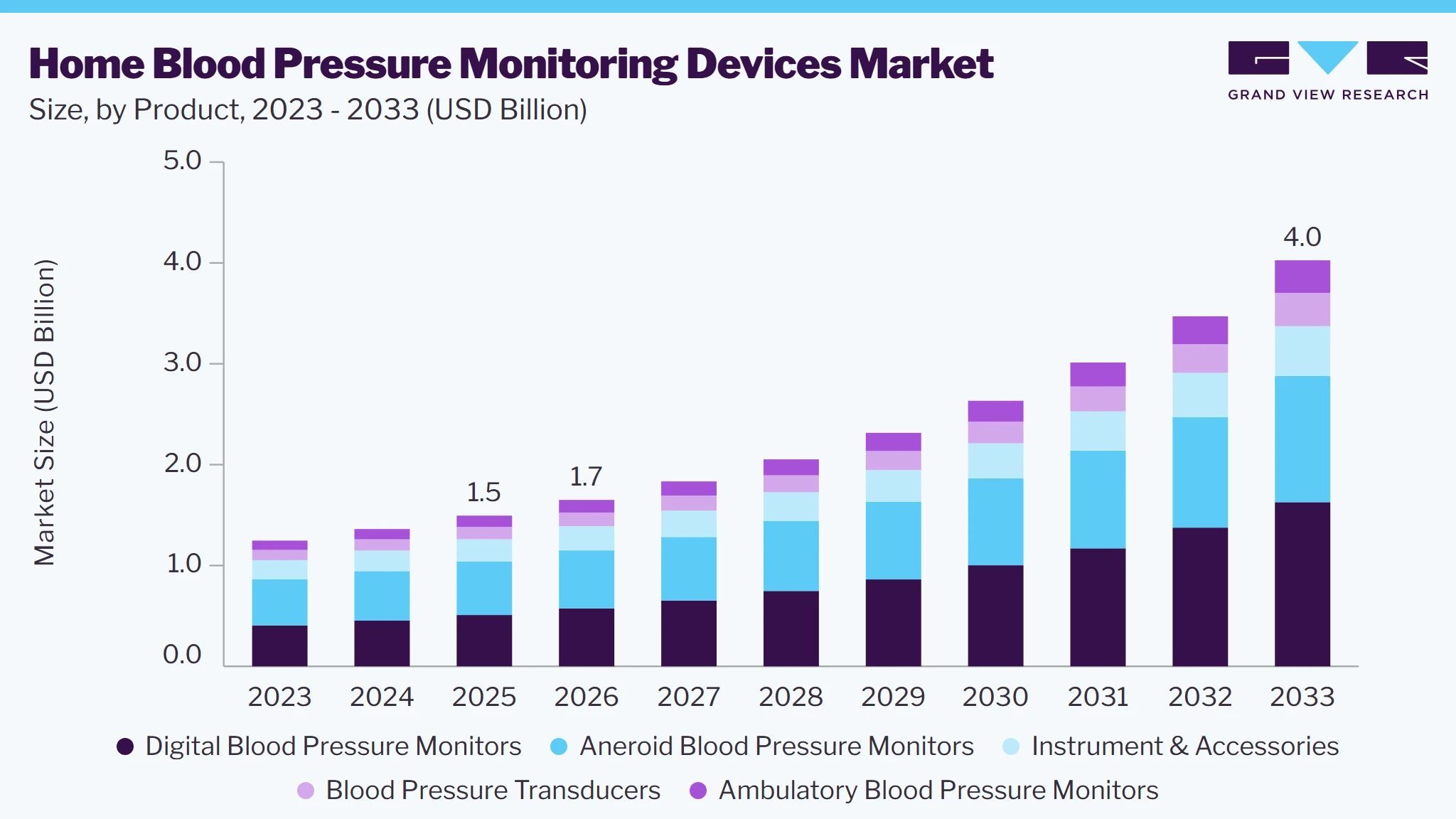
The global home blood pressure monitoring devices market size was valued at USD 1.5 billion in 2025 and is projected to grow from USD 1.7 billion in 2026 to USD 4.0 billion by 2033, at a CAGR of 13.6% from 2026 to 2033. North America market dominated, with a revenue share of 41.2% in 2025. This can be attributed to the easy usage and probability of devices and the need to reduce healthcare expenditure, increasing the demand for home-based monitoring devices. Moreover, research has demonstrated that home blood pressure monitoring can enhance medication adherence, patient involvement and lower healthcare expenses.
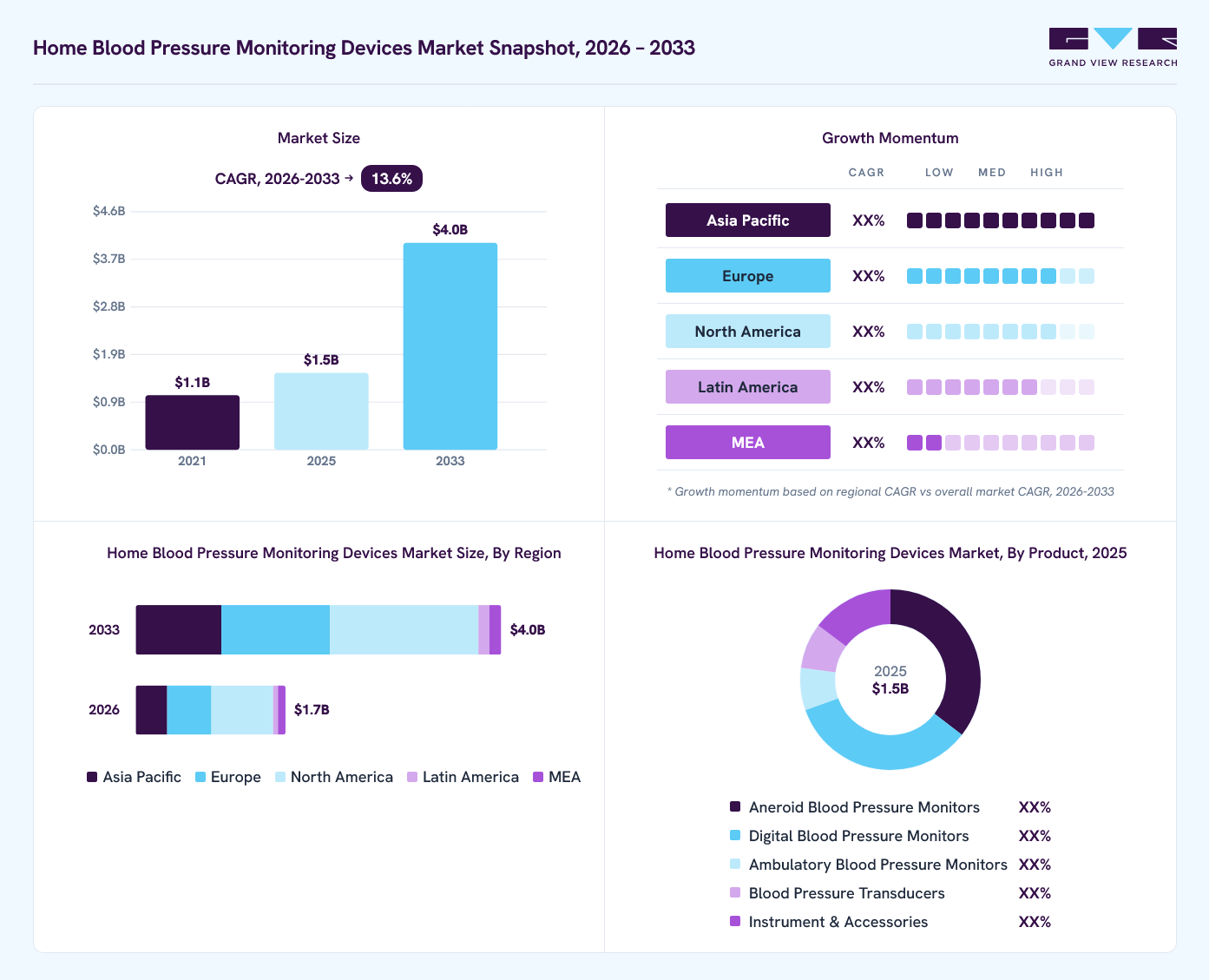 Source: Grand View Research, IR Documents, Primary Interviews, Paid DatabasesTo learn more about this report,
 Download Free Sample Report
Key Market Trends & Insights
- By product: Aneroid blood pressure monitors segment held the largest market share of 35.4% in 2025.
Regional Highlights
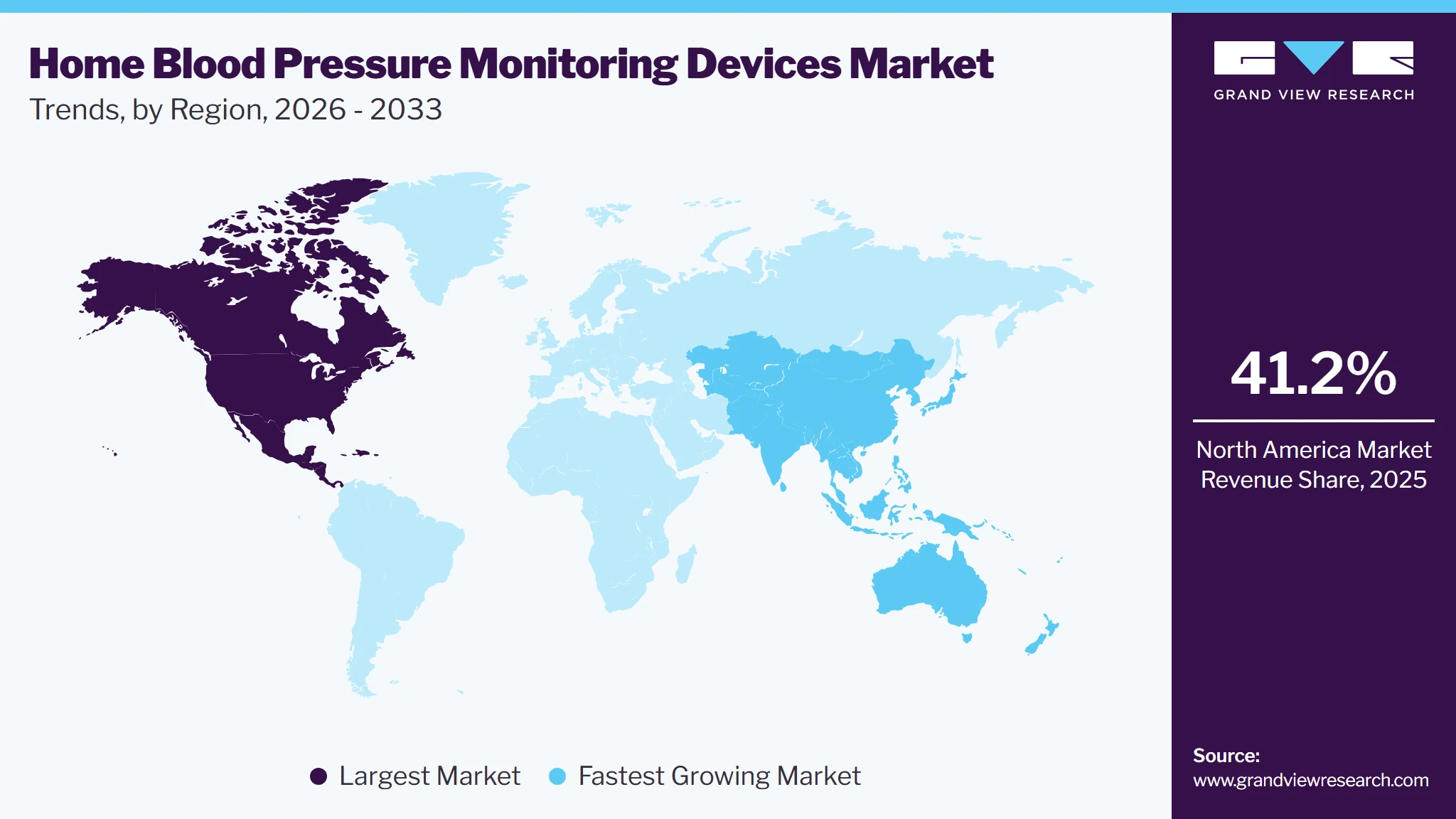
- Largest regional market: North America (41.2% revenue share, 2025)
- Fastest-growing regional market: Asia Pacific (highest CAGR, 2026-2033)
- By country: The U.S. held the largest market share in 2025.
Market Size & Forecast
- Market size in 2025: USD 1.5 Billion
- Estimated market size in 2026: USD 1.7 Billion
- Projected market size by 2033: USD 4.0 Billion
- CAGR (2026-2033): 13.6%
Prism AI by Grand View Research Free to tryAsk a question about the home blood pressure monitoring devices marketTry asking✓Every figure cited from GVR research Prefer the report? Download free sample →Moreover, research has demonstrated that home blood pressure monitoring can enhance medication adherence, patient involvement and lower healthcare expenses. According to the estimates published by the United Nations in 2020, the number of individuals aged above 65 globally will be twice the number of children under five and almost equivalent to the number of children under 12 years by 2050. In the U.S., nearly half of the population-a staggering 48.1%-suffer from hypertension, as per the National Center for Health Statistics. While the incidence of hypertension has decreased in some high-income countries, the National Library of Medicine reported the prevalence of the condition in low- and middle-income countries to be just over 31% in 2020. The increasing demographic prevalence of hypertension is a key factor driving market growth.
 To learn more about this report, Download Free Sample Report
Furthermore, blood pressure monitoring devices in homecare settings rose during the COVID-19 pandemic due to the incidence of comorbidities and the remote applicability of these products. According to the American Medical Association, the necessity of self-measuring blood pressure (SMBP) increased due to disruptions in conventional healthcare settings caused by lockdowns and social distancing guidelines. Despite an overall upsurge in SMBP devices, some surveys pointed to a decline in manual, automated, and pharmacy BP measurements. The shift towards remote monitoring methods like SMBPs represents an attempt to control COVID-19 spread while maintaining effective hypertension management.
The improvement in devices for measuring blood pressure, such as digital sphygmomanometer, contributes to market growth. In addition, the rising adoption of digital sphygmomanometer technology for the measurement of blood pressure is expected to fuel growth. Portable or remote blood pressure measuring devices are drawing focus due to their associated benefits, such as wireless transmission of patient information and large data storage space for patient management.
Market Dynamics
The home blood pressure monitoring devices market is driven by the rising prevalence of hypertension and cardiovascular diseases, increasing adoption of home-based healthcare, and growing demand for remote patient monitoring. The expanding elderly population, wider use of telehealth services, and favorable clinical guidelines supporting home blood pressure monitoring are further accelerating market growth.
Advancements in digital blood pressure monitors, Bluetooth and Wi-Fi connectivity, mobile health applications, AI-enabled health insights, and cloud-based data sharing are improving monitoring accuracy and enabling remote care. However, concerns regarding device accuracy, improper usage, data privacy and cybersecurity risks, limited reimbursement in some regions, and the high cost of advanced connected devices are expected to restrain market growth.
Healthcare providers are increasingly encouraging patients with hypertension and cardiovascular diseases to monitor their blood pressure at home, enabling continuous tracking, early intervention, and virtual consultations. Connected blood pressure monitors that integrate with mobile applications and digital health platforms improve patient engagement and support long-term disease management.
For instance, in April 2026, OMRON Healthcare strengthened its collaboration with Tricog Health to integrate its ECG-enabled home blood pressure monitors with the AI-powered Tricog CardioCheck platform. The solution enables cloud-based cardiac risk assessment and real-time remote monitoring, supporting the expansion of home healthcare and digital cardiovascular care.
The accuracy of home blood pressure monitoring devices remains a significant challenge for the market. Incorrect cuff size, improper cuff placement, poor body posture, movement during measurement, and failure to follow recommended measurement procedures can result in inaccurate blood pressure readings. These errors may lead to misdiagnosis, inappropriate treatment decisions, or unnecessary medical consultations.
In addition, low-cost or non-validated devices may not meet established clinical accuracy standards, reducing confidence among patients. As a result, concerns regarding measurement reliability and proper device usage continue to limit the adoption of home blood pressure monitoring devices.
The integration of home blood pressure monitoring devices with telehealth and digital health platforms is creating significant growth opportunities for the market. Modern blood pressure monitors can automatically sync readings with smartphone applications and cloud-based health platforms, enabling physicians to remotely monitor patients, identify abnormal blood pressure trends, and provide timely clinical interventions. This is improving hypertension management while reducing the need for frequent hospital visits./
The growing use of connected healthcare ecosystems is encouraging manufacturers to introduce smart blood pressure monitors with mobile app integration, cloud connectivity, and remote data sharing capabilities. For instance, in January 2025, Withings introduced BPM Vision at CES 2025, a Wi-Fi-enabled home blood pressure monitor that integrates with the Withings mobile application, allowing users to store, track, and share blood pressure readings digitally. The launch highlights the growing integration of home blood pressure monitoring devices with connected digital health platforms and remote patient management solutions.
Market Concentration & Characteristics
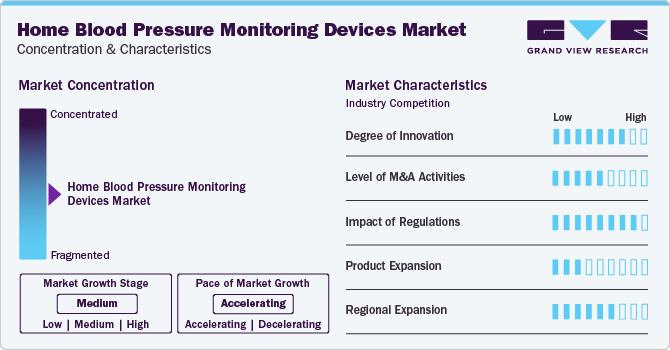
The market growth is moderate and pace of market growth is accelerating. The market is moderately competitive, and key players contribute to this competitive landscape with strategic initiatives, product development, research and development, and regional expansion to propel market growth.
 To learn more about this report, Download Free Sample Report
The home blood pressure monitoring devices market is characterized by a high degree of innovation owing to the rising technological developments in the field and increasing prevalence of oral conditions. Manufacturers are focused on developing cost-effective, innovative, and easy-to-use products. Moreover, advanced technologies such as mHealth, which support treatment and medication compliance in patients for chronic disease management, are expected to fuel market growth.
The market is characterized by a moderate-to-high degree of merger and acquisition activity. Notably, some firms may form alliances with established local distributors to leverage existing sales channels and customer bases, thus expediting market entry and reducing operational expenses. This approach allows them to capitalize on the growing demand for home blood pressure monitoring devices. For instance, in February 2021, Hillrom announced that it acquired the contact-free continuous monitoring technology from EarlySense for USD 30 million. This acquisition will help the company develop next-gen AI-based sensing technologies, specifically for the remote patient care market.
The regulatory framework for home blood pressure monitoring devices varies across different regions and jurisdictions. Global regulatory bodies are amending and adding regulations to aid the proper implementation of medical devices in homecare systems, aiding market growth. Furthermore, in 2021, the EU granted approval to a wrist-worn cuff less BP monitoring system developed by Aktiia SA. Such patent grants and approvals are indicative of a supportive regulatory environment, which is likely to boost production and market entry of novel as well as innovative products in the region.
Collaborations and the competitive environment across the market have led to product innovations by several prominent players. For instance, in May 2021, Biobeat announced the launch of its continuous Ambulatory Blood Pressure Monitoring (ABPM) chest-monitoring device.
The market is experiencing considerable regional expansion, with significant growth in various parts of the world. Growth in certain regions may be higher due to the higher preference for self-measurement and higher prevalence of diseases.
Analyst Perspective
The increasing prevalence of hypertension, growing adoption of home healthcare, and expanding use of remote patient monitoring are driving the home blood pressure monitoring devices market. Rising awareness of preventive healthcare, the growing elderly population, and wider adoption of telehealth services are further driving demand for connected, easy-to-use blood pressure monitoring devices. Market participants are focusing on developing smart blood pressure monitors with Bluetooth and Wi-Fi connectivity, AI-enabled health insights, and mobile application integration. Companies are also pursuing product innovations, strategic partnerships, and geographic expansion to strengthen their market presence and meet the growing demand for digital home health monitoring solutions.
Product Insights
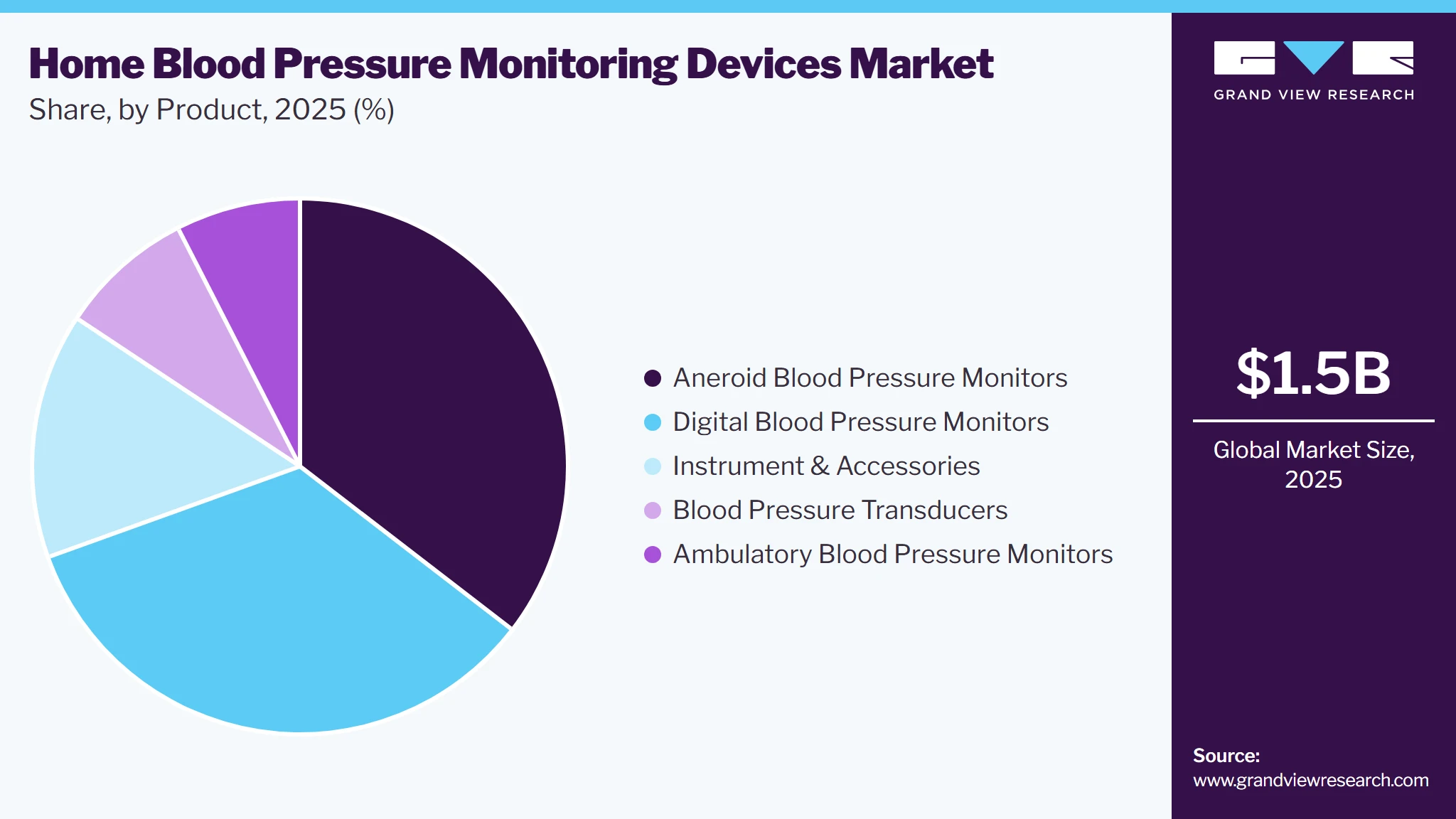
Based on product, the aneroid blood pressure monitors segment held the largest market share of 35.4% in 2025, owing to their higher durability and widespread usage. Furthermore, their lower cost in comparison aids home-based monitoring settings by a larger margin. For geriatric patients or patients with chronic illnesses, having a home blood pressure monitoring system is essential due to their regular usage. Aneroid sphygmomanometers require lesser maintenance, and are thus favored.
 To learn more about this report, Download Free Sample Report
Digital home blood pressure monitoring devices are expected to register the fastest CAGR over the forecast period. The rising demand for digital monitors can be attributed to the growing awareness among patients about cardiovascular disease, hypertension, and blood pressure monitoring devices, as well as the increasing prevalence of hypertension worldwide. Furthermore, the market is driven by continuous technological advancements, such as improvements in wearable technology, apps, and mobile devices in the consumer healthcare segment, as well as a decrease in the average selling price for retailers and manufacturers, and an increase in penetration in the professional market. Some examples of technologically advanced digital blood pressure monitors available in the market include Microlife WatchBP home A, QardioArm, and iHealth blood pressure monitors from Omron.
Regional Insights
North America dominated the home blood pressure monitoring devices market with the largest revenue share of 41.2% in 2025. Growth in the region is driven by a high disease prevalence, rising consumer awareness, proactive government measures, technological advancements, and improvements in healthcare infrastructure.
 To learn more about this report, Download Free Sample Report
U.S. Home Blood Pressure Monitoring Devices Market Trends
The home blood pressure monitoring devices market in the U.S. held the largest share in the North America region in 2025. The country is at the forefront of technological developments, specifically in healthcare. Hence, the continuous advancements noted in medical devices, particularly in blood pressure monitoring systems, nurtures innovation and adoption of new technologies.
Europe Home Blood Pressure Monitoring Devices Market Trends
The home blood pressure monitoring devices market in Europe was the second-largest regional market in 2023. The imminent implementation of In-vitro Diagnostics Regulation (IVDR) and new Medical Device Regulation (MDR) in the European Union is anticipated to change the medical devices regulatory scenario drastically and encourage the incorporation of advanced technologies in medical devices.
The UK home blood pressure monitoring devices market is estimated to grow at a significant CAGR from 2025 to 2033. This can be attributed to growing population and increasing number of people suffering from several chronic disorders. Moreover, rising number of hypertension patients in this region is expected to boost the market growth. Furthermore, high BP is estimated to cost the government annually. The high cost and increasing prevalence of high BP are anticipated to fuel market growth. Moreover, hypertension is one of the main causes of stroke, with nearly 55% of stroke patients having high BP. In January 2021, Omron Healthcare supported the national campaign led by The Stroke Association, UK, to increase awareness related to stroke and its causes.
The home blood pressure monitoring devices market in Germany is anticipated to register the faster growth in the Europe market over the forecast period, registering a staggering 13.04% CAGR. Ongoing advancements in technology, coupled with improving healthcare infrastructure, drive the market growth significantly. Germany is the largest market for medical devices in Europe. Furthermore, the nation’s strong foundation in holistic healthcare, encompassing conventional medicine and complementary therapies, fosters a culture where individuals are encouraged to monitor their blood pressure as a vital component of a comprehensive approach to promote overall health and well-being.
The Russia home blood pressure monitoring devices market occupied a significant 11.22% of the total market revenue in 2023. The high prevalence of hypertension, coupled with high mortality from strokes, is anticipated to aid segment growth. Russia has mandatory state health insurance program for all its residents. However, over the past few years, the public healthcare system has been facing several challenges that are anticipated to increase patient preference for home care over public health hospitals, boosting market demand for home-based BP monitors.
Asia Pacific Home Blood Pressure Monitoring Devices Market Trends
The home blood pressure monitoring devices in Asia Pacific is anticipated to witness lucrative growth from 2025 to 2033. Major factors boosting growth are favorable government initiatives supporting adoption of advanced medical devices, growing geriatric population, and increasing healthcare expenditure. The region is home to two countries leading world population metrics, with higher geriatric population and disease incidence. Thus, the region sees higher demand for blood pressure monitoring devices in homecare settings.
China home blood pressure monitoring devices market recorded the largest revenue share in Asia pacific in 2023, and is expected to grow at a lucrative CAGR over the forecast period. According to WHO, as of 2021, nearly 270 million Chinese individuals had hypertension, with around 13.8% of the patients having their condition under control, indicating need for constant monitoring and high growth potential for BP monitors in the country.
The home blood pressure monitoring devices market in Japan is expected to grow over the forecast period due to an increase in the ongoing research initiatives in the country for the development of novel technologies and products. In Japan, nearly 43 million individuals were estimated to suffer from hypertension, while around 14 million were unaware that they had hypertension, in 2020. These factors are anticipated to increase emphasis on hypertension awareness and favor market growth. Presence of market leaders, such as Omron healthcare and Nihon Kohden, in country is anticipated to drive market growth.
Latin America Home Blood Pressure Monitoring Devices Market Trends
The home blood pressure monitoring devices in Latin America is estimated to witness steady growth during the forecast period, owing to rising number of people living with chronic diseases and cardiac disorders. Furthermore, the proportion of aging population is growing in Latin America, due to increase in the average life expectancy and demographic changes. The aging population in Latin America is expected to reach 18.5% by 2050. This is expected to increase prevalence of age-associated diseases, driving demand for home BP monitoring devices.
Brazil home blood pressure monitoring devices market dominated the Latin America region and is expected to grow at a significant growth rate due to positive economic growth following financial and political stability in the country. Due to the growing presence of manufacturers within the country, cost for components has reduced, leading to in-house manufacturing of affordable and technologically updated devices. Wrist-worn products are predicted to hold majority share due to introduction of smart watches capable of monitoring multiple parameters. These factors are anticipated to fuel market growth.
Middle East & Africa Home Blood Pressure Monitoring Devices Market Trends
The home blood pressure monitoring devices market in Middle East & Africa is anticipated to witness a steady growth over the forecast period. The key driving forces include presence of supportive government initiatives, increasing health care expenditure, and growing awareness. Moreover, according to World Health Observatory report by the WHO, nine Middle Eastern countries have the highest obesity statistics ranking among adults aged 18 and above. Obesity is one of the risk factors for developing hypertension, and the high prevalence of obesity is, thus, anticipated to fuel market growth.
Saudi Arabia home blood pressure monitoring devices market is expected to grow at a lucrative rate due to high unmet clinical needs, rising disposable income, and an increasing number of collaborative agreements with international organizations, such as WHO & UN. In Saudi Arabia, the government initiatives and lifestyle-based disorders mainly drive demand for healthcare-related products. In 2019, approximately 35% of adults in the country were obese, while more than 6.5% of them had high blood pressure. These lifestyle disorders have, thereby, increased demand for diagnostic equipment, hospital beds, & rehabilitation equipment in the country
Key Home Blood Pressure Monitoring Devices Company Insights
The market is fragmented, with prominent players accounting for a significant percentage of the market. Some key players companies in the global home blood pressure monitoring devices market include GE Healthcare; A&D Medical Inc.; Omron Healthcare Inc.; and Philips Healthcare.
Global companies in the home blood pressure monitoring devices market are leveraging diverse strategic approaches to bolster their market position, including mergers, collaborations, product development, and expansion through local and international networks.
Key Home Blood Pressure Monitoring Devices Companies:
The following key companies have been profiled for this study on the home blood pressure monitoring devices market.
-
Omron Healthcare Welch Allyn, Inc.
-
A&D Medical Inc.
-
SunTech Medical, Inc.
-
American Diagnostics Corporation
-
Withings
-
Briggs Healthcare
-
GE Healthcare
-
Kaz Inc.
-
Microlife AG
-
Rossmax International Ltd.
-
GF Health Products Inc.
-
Spacelabs Healthcare Inc.
-
Philips Healthcare; B. Braun
Competitive Benchmarking
Category
Operating Strategies
Competitive Edge
Weakness
Established Players (Omron Healthcare, GE HealthCare, Philips Healthcare, A&D Medical Inc., Microlife AG, B. Braun SE)
Invest in connected blood pressure monitors, Bluetooth and Wi-Fi-enabled devices, AI-powered health insights, telehealth integration, product innovation, and expansion through partnerships and regional distribution networks.
Strong brand recognition, clinically validated devices, broad product portfolios, global distribution networks, advanced digital health capabilities, and established relationships with healthcare providers.
Premium product pricing, dependence on mature markets, regulatory compliance requirements, and intense competition from low-cost manufacturers.
Emerging Players (Withings, Rossmax International Ltd., SunTech Medical, Inc., American Diagnostic Corporation, Briggs Healthcare)
Focus on smart home monitoring devices, mobile app integration, consumer-centric product innovation, expansion in emerging markets, e-commerce sales, and strategic collaborations with digital health providers.
Innovative connected devices, competitive pricing, user-friendly designs, faster product development, and growing presence in home healthcare.
Limited global market presence, smaller distribution networks, lower brand recognition, and comparatively lower investment capacity for large-scale R&D and commercialization.
Recent Developments
-
In January 2023, Biobeat received FDA clearance for their remote stroke volume and cardiac output monitoring devices. The company’s remote patient monitoring devices are the first-ever to receive FDA clearance for cuffless blood pressure monitoring from photoplethysmography (PPG) only.
-
In January 2022, Aktiaa announced a hypertension trial of the world’s first automated and 24/7 blood pressure monitor along with a U.S. hypertension center. Such initiatives are expected to help the market grow post-pandemic.
-
In June 2021, CardieX Limited, an Australian medical technology company, announced that its subsidiary, ATCOR, completed a world-first algorithm for a wearable optical sensor which is able to provide a unique range of cardiovascular health parameters based around ATCOR’s patented SphygmoCor technology.
Home Blood Pressure Monitoring Devices Market Report Scope
Report Attribute
Details
Market size in 2025
USD 1.5 billion
Estimated market size in 2026
USD 1.7 billion
Projected market size by 2033
USD 4.0 billion
Growth rate
CAGR of 13.6% from 2026 to 2033
Historical data
2021 - 2025
Forecast period
2026 - 2033
Quantitative units
Revenue in USD billion and CAGR from 2026 to 2033
Report coverage
Revenue forecast, company ranking, competitive landscape, growth factors, and trends
Segments covered
Product, region
Regional scope
North America; Europe; Asia Pacific; Latin America; MEA
Country scope
U.S., Canada, Mexico, UK, Germany, France, Italy, Spain, Norway, Denmark, Sweden, China, Japan, India, South Korea, Australia, Thailand, Singapore, Brazil, Argentina, Saudi Arabia, South Africa, UAE, and Kuwait
Key companies profiled
Omron Healthcare, A&D Medical Inc., SunTech Medical, Inc., American Diagnostic Corporation (ADC), Withings, Briggs Healthcare, GE HealthCare, Microlife AG, Rossmax International Ltd., GF Health Products, Inc., Philips Healthcare, B. Braun SE.
Customization scope
Free report customization (equivalent up to 8 analysts' working days) with purchase. Addition or alteration to country, regional & segment scope.
Pricing and purchase options
Avail customized purchase options to meet your exact research needs. Explore purchase options
Global Home Blood Pressure Monitoring Devices Market Report Segmentation
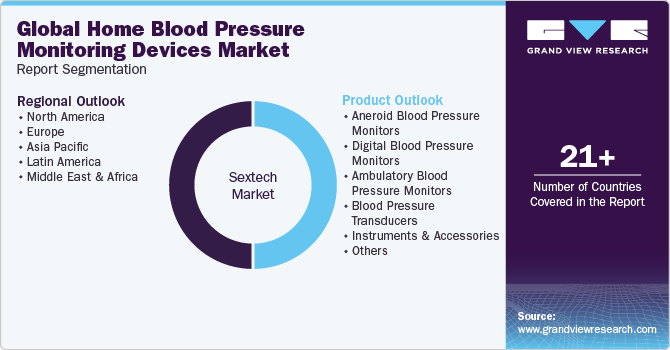
This report forecasts revenue growth at the country level and provides an analysis of the latest industry trends in each of the sub-segments from 2021 to 2033. For this study, Grand View Research has segmented the global home blood pressure monitoring devices market report based on product and region.
 To learn more about this report, Download Free Sample Report
-
Product Outlook (Revenue, USD Million, 2021 - 2033)
-
Aneroid Blood Pressure Monitors
-
Digital Blood Pressure Monitors
-
Arm
-
Wrist
-
Finger
-
-
Ambulatory Blood Pressure Monitors
-
Blood Pressure Transducers
-
Disposable
-
Reusable
-
-
Instruments and Accessories
-
Blood Pressure Cuffs
-
Reusable
-
Disposable
-
-
-
Others (Bladders, Bulbs and Valves, Manometers)
-
-
Regional Outlook (Revenue, USD Million, 2021 - 2033)
-
North America
-
U.S.
-
Canada
-
-
Europe
-
UK
-
Germany
-
France
-
Italy
-
Spain
-
Russia
-
Belgium
-
The Netherlands
-
Nordics
-
-
Asia Pacific
-
Japan
-
China
-
India
-
Australia
-
South Korea
-
Thailand
-
-
Latin America
-
Brazil
-
Mexico
-
Argentina
-
-
The Middle East and Africa
-
South Africa
-
Saudi Arabia
-
UAE
-
Kuwait
-
-
Research Methodology
The home blood pressure monitoring devices market figures in this report are based on a proven research process that combines executive interviews with secondary research from proprietary databases, company filings, and recognized regulatory and institutional sources. Market size is built through value-chain sizing-reconciling supply-side and demand-side estimates-and triangulated with bottom-up and top-down approaches. Every estimate passes multiple levels of expert validation before publication, with each home blood pressure monitoring devices segment quantified using the revenue-capture definitions in the table below.
Segment Definition
Segment - Product
Revenue Capture Definition
Aneroid Blood Pressure Monitors
Revenue generated from manual, non-digital blood pressure monitors that use a mechanical gauge and inflatable cuff to measure blood pressure in home settings.
Digital/ Smart Blood Pressure Monitors
Revenue generated from automatic electronic blood pressure monitors, including upper-arm and wrist devices, designed for home-based blood pressure measurement with digital displays and optional connectivity features.
This segment also includes:
- Arm
- Wrist
- Finger
Ambulatory Blood Pressure Monitors
Revenue generated from portable blood pressure monitoring devices that automatically record blood pressure at regular intervals over 24 hours or longer for home and outpatient use.
Blood Pressure Transducers
Revenue generated from pressure transducers used to convert blood pressure signals into electrical signals for measurement and monitoring applications, including compatible home monitoring systems where applicable.
This segment also includes:
- Disposable
- Reusable
Instruments and Accessories
Revenue generated from blood pressure monitoring accessories and replacement components, including cuffs, inflation bulbs, tubing, power adapters, batteries, carrying cases, and calibration equipment.
This segment also includes:
- Blood Pressure Cuffs
o Disposable
o Reusable
Others (Bladders, Bulbs and Valves, Manometers)
Revenue generated from individual blood pressure monitor components and replacement parts, including bladders, inflation bulbs, valves, manometers, connectors, and other maintenance accessories used with blood pressure monitoring devices.
Estimation Model
Category
Methodology
Description
Top-Down
Commodity Flow Analysis
Market size was estimated by analyzing revenues generated by key home blood pressure monitoring device manufacturers, supported by company annual reports, investor presentations, distributor insights, and premium databases. Revenue contributions from private companies were assessed using industry databases and validated through primary research to derive the overall market value.
Segmentation
Country-Level Segment Share Modeling
Market shares for product type, connectivity, and end-user segments were estimated using country-specific hypertension prevalence, aging population, healthcare infrastructure, telehealth adoption, reimbursement policies, and home monitoring device penetration. Weighted average calculations were applied to determine regional and global segment distributions.
Validation
Data Triangulation & Validation Model
Market estimates were validated through triangulation of secondary research, primary interviews, company-level revenue assessments, product shipment analysis, and demand-side adoption trends to ensure consistency and accuracy across all market segments and geographies.
Forecasting
Forecasting & CAGR Modeling
Market forecasts were developed using historical adoption trends, hypertension prevalence, home healthcare utilization, remote patient monitoring adoption, technological advancements in connected devices, healthcare expenditure, and regulatory developments. Regression-based analysis and trend modeling were applied to project future market growth and CAGR.
Delivered Customizations
This report has been delivered with the following In-depth customizations
Client Request
Customization Delivered
Value Adds
Pricing Analysis
Comprehensive analysis of pricing for home blood pressure monitoring devices, including manual, digital, connected, and ambulatory monitors, along with average selling prices (ASP), and regional pricing trends.
Supports pricing strategy, product positioning, revenue forecasting, competitive benchmarking, and identification of premium and value-based market opportunities.
Company Landscape & Market Share Analysis
Detailed market share analysis of leading home blood pressure monitoring device manufacturers at the global and regional levels, including revenue contribution, product portfolio, geographic presence, distribution network, and strategic initiatives.
Helps identify market leaders, benchmark competitors, assess competitive intensity, and support strategic planning and investment decisions.
Regional Opportunity and Trends Analysis
In-depth assessment of regional growth opportunities, hypertension prevalence, home healthcare adoption, telehealth expansion, connected device penetration, reimbursement landscape, and regulatory developments across major regions.
Enables identification of high-growth markets, emerging technology trends, investment opportunities, and region-specific market expansion strategies.
Frequently Asked Questions About This Report
Asia Pacific is the fastest-growing region over the forecast period.
Aneroid blood pressure monitors segment held the largest market share of 35.4% in 2025.
Key players include Omron Healthcare, A&D Medical Inc., SunTech Medical, Inc., American Diagnostic Corporation (ADC), Withings, Briggs Healthcare, GE HealthCare, Microlife AG, Rossmax International Ltd., GF Health Products, Inc., Philips Healthcare, B. Braun SE
The global home blood pressure monitoring devices market size was valued at USD 1.5 billion in 2025 and is estimated at USD 1.7 billion in 2026.
The home blood pressure monitoring devices market is driven by the rising prevalence of hypertension and cardiovascular diseases, increasing adoption of home-based healthcare, and growing demand for remote patient monitoring.
The global home blood pressure monitoring devices market is expected to grow at a CAGR of 13.6% from 2026 to 2033, reaching USD 4.0 billion by 2033.
North America market dominated, with a revenue share of 41.2% in 2025.
About the Author(s)
Medical Devices Research Team
Healthcare · Medical DevicesThis report was authored by the medical devices research team at Grand View Research - comprising two research analysts, one senior research analyst, and one industry expert - with specialized expertise in the medical devices segment of the healthcare industry. All findings are based on proprietary healthcare databases, executive interviews, and regulatory analysis, subject to internal peer review prior to publication.
Last Updated:
Speak to Analyst

Customize this report to your needs - add regions, segments, or data points, with 20% free customization.
Or view our licence options:


ISO 9001:2015 & 27001:2022 Certified
We are GDPR and CCPA compliant! Your transaction & personal information is safe and secure. For more details, please read our privacy policy.


