
- Home
- »
- Medical Devices
- »
-
Humidifier Market Size, Share & Growth Report, 2026-2033GVR Report cover

Humidifier Market (2026 - 2033)
Size, Share & Trends Analysis Report By Product (Heated Humidifiers, Passover Humidifiers, Bubble Humidifier), By Distribution Channel, By End Use (Hospitals, Outpatient Facilities, Home care), By Region And Segment Forecasts
Market Size, 2025
$5.1BMarket Estimate, 2026
$5.4BMarket Forecast, 2033
$9.5BCAGR, 2026–2033
8.3%Humidifier Market Summary
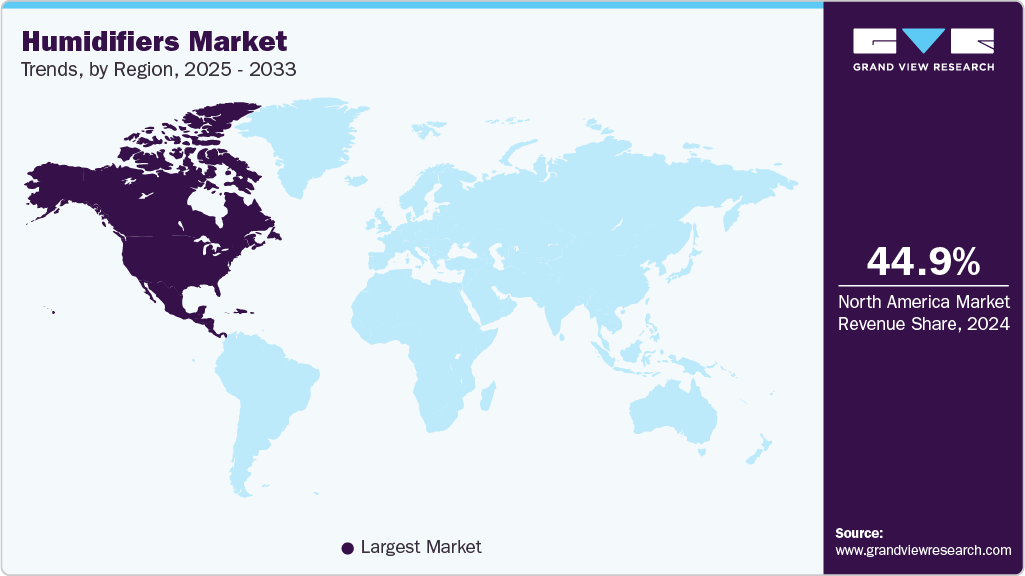
The global humidifier market size was valued at USD 5.1 billion in 2025 and is projected to grow from USD 5.4 billion in 2026 to USD 9.5 billion by 2033, at a CAGR of 8.3% from 2026 to 2033. The market in North America dominated with a revenue share of 44.7% in 2025. Increasing awareness about the health benefits of maintaining optimal humidity levels, such as reducing the incidence of respiratory issues, viruses, infections, dry skin, and sinus problems, is driving demand for humidifiers.
 Source: Grand View Research, IR Documents, Primary Interviews, Paid DatabasesTo learn more about this report,
 Download Free Sample Report
Key Market Trends & Insights
- By product: Heated humidifier segment held the largest market share of 35.0% in 2025.
- By distribution channel: Online segment held the largest market share of 59.6% in 2025.
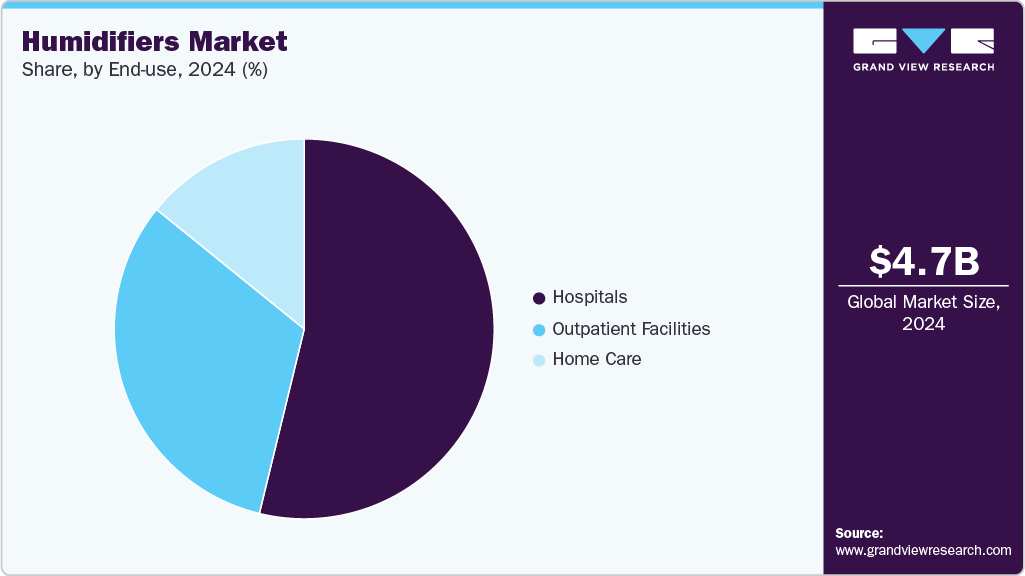
- By end use: Hospitals segment held the largest market share of 54.6% in 2025.
Regional Highlights
- Largest regional market: North America (44.7% revenue share, 2025)
- By country: The U.S. held the largest market share in 2025
Market Size & Forecast
- Market size in 2025: USD 5.1 Billion
- Estimated market size in 2026: USD 5.4 Billion
- Projected market size by 2033: USD 9.5 Billion
- CAGR (2026-2033): 8.3%
Three ways to get this report
Buy it, customize it, or ask a question.Ask an Analyst
Analyst response in 1 business day
- AccessReport author, directly
- Reply timeWithin 1 working day
- No sales callDirect answer only
- FormatEmail reply
- CostFree, no cost
Get the Full Report
What the study covers
- FormatsPDF · Excel · Dashboard
- Timeline2026–2033 annual, 2025 base
- Coverage20+ countries, 5 regions
- Companies10+ key players profiled
Customize the Report
20% free customization
- IncludeCountries, segments, points
- TailorTo your product definition
- ExtendDeeper competitor detail
- OrA fully bespoke study
- Turnaround5–10 working days
This is particularly evident in regions with dry and arid climates or significant seasonal variations, where dry indoor air is a common issue. The increasing incidence of respiratory diseases such as asthma and allergies has led to a greater emphasis on maintaining optimal humidity levels, thereby driving the market for humidifiers. According to the American Lung Association, Asthma affects around 24.8 million people in America, including over 5.5 million children, causing millions of emergency department visits and tens of billions in healthcare costs annually.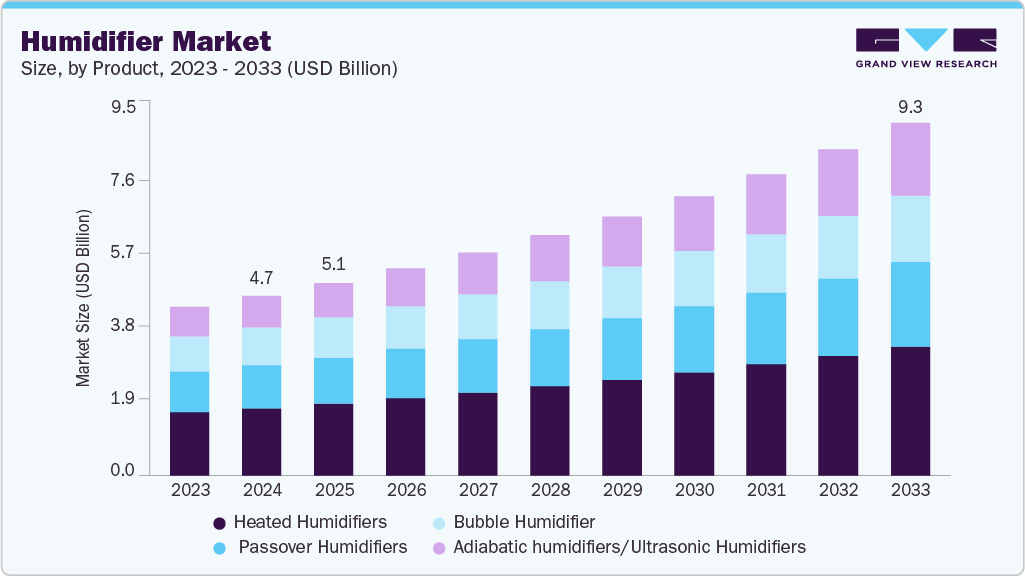 To learn more about this report, Download Free Sample Report
The humidity level in the air can affect the survival and transmission of pathogens, including viruses and bacteria. When the air is too dry, some pathogens can remain viable for longer periods, making it easier for them to spread. Maintaining humidity within the recommended range, typically between 40% and 60%, reduces the viability and transmission of infectious agents. This is because, in air with relative humidity (RH) above 40%, airborne viruses within droplets become less stable and are more likely to deactivate quickly, making them less infectious. Thus, the ability of humidifiers to play a vital role in infection control in hospitals by helping to maintain the appropriate levels of humidity in healthcare environments drives the overall market growth.
Smart Humidifiers: An Emerging Trend in the Humidifiers Market
Smart humidifiers are rapidly gaining traction worldwide as consumers seek advanced solutions for maintaining optimal indoor air quality and improving comfort across diverse climates. Equipped with features such as app connectivity, voice control, and customizable humidity settings, these devices allow users to monitor and adjust their environment remotely. The rising penetration of smart home technologies, coupled with growing awareness of health and wellness, is fueling global demand for intelligent, automated humidifiers that deliver enhanced convenience, energy efficiency, and health benefits.
Company
Launch Date
Product Name
Key Features
Xiaomi
August 2025
Mijia Mistless Humidifier
Mist-free design, smart sensors, antibacterial washable filters, quiet (~30 dB), app control
Blueair
June 2025
2-in-1 Purify + Humidify DH3i
Combines air purification and humidification, app-controlled, HEPASilent and InvisibleMist
InvisibleMist Humidifier
Mist-free / top-fill design, 3.5 L tank, runs up to 48 h, 500 sq ft coverage, antimicrobial wick filter, UV-powered pump, app & touchscreen control, quiet operation
Arovast Corporation.
March 2025
OasisMist 450S Smart Humidifier
Warm and cool mist settings, top-fill design, dual 360° nozzles, smart control via app
January 2025
Sprout Evaporative Humidifier (CES 2025)
Kid- and parent-friendly design, evaporative humidification, part of CES 2025 wellness lineup
March 2023
OasisMist 1000S Smart Humidifier
Smart control via app, 100-hour runtime, top-fill design, dual 360° nozzles
Market Concentration & Characteristics
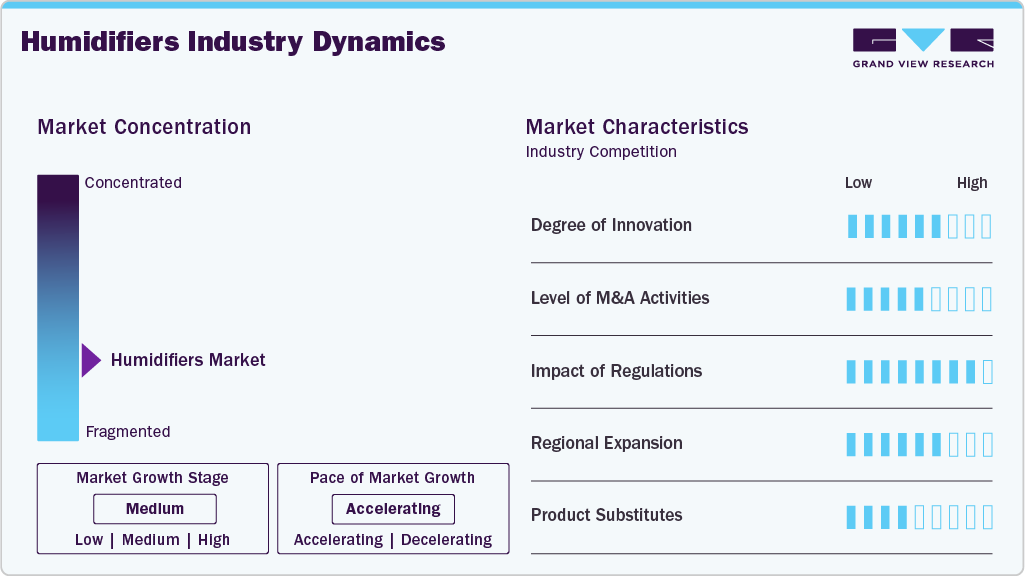
The humidifiers market is experiencing moderate growth, driven by accelerating market demand. Key factors include increasing product innovation by market players, a growing geriatric population, a rising prevalence of respiratory diseases, and technological advancements.
The humidifiers market is characterized by high innovation, with companies developing advanced products to expand their offerings and stay competitive. Innovations in humidifier technology, including the development of smart humidifiers that can be controlled via mobile apps, improved energy efficiency, and quieter operation, are attracting consumers. For instance, in June 2025, Proteomics launched the Magma, a 2-in-1 cool mist humidifier and night lamp featuring dual mist modes, adjustable lighting, and silent Type-C operation, designed to improve indoor air quality and ambiance.
 To learn more about this report, Download Free Sample Report
The market players are using various strategies such as mergers and acquisitions, partnerships, collaborations, new software developments, and geographical expansion, which has significantly contributed to the level of M&A activities in the market. For instance, in June 2021, Teleflex Incorporated completed the divestiture of its respiratory business to Medline Industries, Inc. The transaction, valued at USD 286 million in cash, took into account a reduction of USD 12 million related to working capital that would not be transferred to Medline. Teleflex's divested respiratory product lines encompass Hudson RCI offerings for oxygen & active humidification, noninvasive ventilation, aerosol therapy, and incentive spirometers.
Regulations and regulatory frameworks significantly impact the global humidifiers market. Health organizations and regulatory bodies, such as the Environmental Protection Agency (EPA) and the Consumer Product Safety Commission (CPSC), set standards for indoor air quality and safety, driving the demand for compliant humidifiers. In June 2022, U.S. EPA launched a revised guidelines for the use and care of home humidifiers on their website. According to the CFR-Code of Federal Regulation, therapeutic humidifiers for home use are classified as Class I (general controls) and are exempt from premarket notification procedures subject to the limitations in § 868.9. Maintaining indoor relative humidity within the range of 30% to 60% is suggested by the American Society of Heating, Refrigerating, and Air-Conditioning Engineers (ASHRAE) to promote health and ensure comfort.
The threat of substitution in the humidifiers market is expected to remain low over the forecast period. Humidifiers play a crucial role in healthcare settings, such as clinics and hospitals, as well as in homes, by maintaining optimal humidity levels that support the health of patients and medical professionals. While medications for conditions like COPD can offer external relief and serve as partial substitutes for therapeutic respiratory devices, the range of effective alternatives remains limited. Vaporizers, or steam humidifiers, offer another method by boiling water to release steam, and houseplants like peace lilies and ferns can naturally enhance humidity through transpiration. Despite these options, the comprehensive benefits provided by humidifiers in managing indoor air quality and supporting respiratory health are not easily matched by substitutes.
The humidifier market exhibits regional concentration, with significant demand and growth observed in North America, Europe, and Asia-Pacific. North America leads the market, driven by high awareness of indoor air quality, advanced healthcare infrastructure, and a robust consumer base. Europe follows closely, with stringent regulations on indoor air standards and a growing emphasis on respiratory health driving the adoption of humidifiers. In the Asia-Pacific region, rapid urbanization, increasing pollution levels, and rising health consciousness are fueling market expansion. In addition, the presence of key manufacturers and technological advancements in these regions further contribute to their dominant positions in the global humidifier market.
Case Study Insights
Dr. Jennifer Reiman, Ph.D., from the Mayo Clinic, conducted a study monitoring the presence of influenza virus particles in the air and on surfaces within four nursery school classrooms. Among these classrooms, two were equipped with humidifiers while the other two were not.
 To learn more about this report, Download Free Sample Report
Market Dynamics
The increasing prevalence of respiratory diseases is driving the demand for humidification systems, as airway humidification is essential for improving patient comfort and supporting respiratory therapies such as oxygen therapy, CPAP/BiPAP, and mechanical ventilation. Conditions including asthma, chronic obstructive pulmonary disease (COPD), bronchitis, and sleep apnea continue to rise globally, increasing the need for effective respiratory care in both hospital and home healthcare settings. According to the World Health Organization (WHO), asthma affected an estimated 363 million people globally in 2023 and caused approximately 442,000 deaths. The growing burden of respiratory disorders, coupled with expanding home healthcare services and increasing awareness of respiratory disease management, is accelerating the adoption of heated, bubble, passover, and integrated humidifiers across healthcare settings.
The high cost of advanced humidification systems is limiting the adoption of medical humidifiers, particularly in cost-sensitive healthcare settings and emerging economies. Modern heated humidifiers equipped with features such as automatic temperature regulation, heated-wire breathing circuits, integrated monitoring systems, and advanced safety mechanisms require substantial upfront investment compared with conventional humidification solutions. In addition to the initial equipment cost, recurring expenses associated with consumables such as humidifier chambers, breathing circuits, sterile water, and routine maintenance further increase the total cost of ownership. These financial constraints can discourage hospitals, ambulatory care centers, and home healthcare providers from upgrading to advanced humidification systems, thereby restraining market growth, especially in regions with limited healthcare budgets and reimbursement support.
The increasing shift toward home-based respiratory care is creating significant opportunities for the humidifiers market. Rising adoption of home mechanical ventilation, non-invasive ventilation (NIV), high-flow oxygen therapy, and CPAP/BiPAP devices is driving demand for advanced humidification systems that improve patient comfort and therapy effectiveness. Leading market participants are expanding their portfolios with innovative humidification solutions for home healthcare. For instance, in August 2024, Fisher & Paykel Healthcare launched the F&P my820 System in the U.S., a respiratory humidification system for adult and pediatric homecare patients receiving invasive ventilation, NIV, and humidified high-flow therapy. The system features intelligent temperature adaptation to minimize circuit condensation and simplify therapy management. Such innovations are expected to support the adoption of advanced humidification systems and create growth opportunities for the market over the forecast period.Analyst Perspective
The healthcare humidifier market is expected to witness steady growth over the forecast period, driven by the increasing prevalence of chronic respiratory diseases, expanding adoption of home healthcare, and rising utilization of respiratory support devices, including ventilators, CPAP/BiPAP systems, and high-flow oxygen therapy. Growing demand for effective airway humidification in critical care, neonatal care, and long-term respiratory disease management is further supporting market expansion. Technological advancements in humidification systems, increasing investments in home respiratory care, and expanding healthcare infrastructure are expected to create significant growth opportunities. However, the high cost of advanced humidification systems and the availability of lower-cost alternatives, such as heat and moisture exchangers (HMEs), may restrain market growth, particularly in price-sensitive markets. Despite these challenges, continued product innovation is expected to support long-term market expansion.
Product Insights
The heated humidifier segment accounted for the largest revenue share of 35.0% in 2025. The demand for heated humidifiers, specifically in children with tracheostomies who receive continuous mechanical ventilation, is driven by the need to prevent the drying of secretions. This is particularly crucial for infants who are more susceptible to respiratory complications. Heated humidifiers are sophisticated humidification systems widely employed in respiratory therapy to provide patients with warm and moist air. These humidifiers incorporate a heating element that warms the water before it is delivered as humidity. The demand for heated humidifiers stems from their ability.
The adiabatic segment is expected to grow at the fastest CAGR over the forecast period. Adiabatic humidification methods, including high-pressure atomizing, air/water atomizing, ultrasonic, and wetted media evaporative systems, offer efficient moisture addition. Among these, ultrasonic humidifiers have gained significant popularity due to their effectiveness in enhancing home wellness. Recent technological advancements have further bolstered this segment, leading to the development of ultrasonic humidifiers with enhanced features.
Distribution Channel Insights
The online channel segment held the largest revenue share of 59.6% in 2025 and is also expected to grow at the fastest CAGR over the forecast period. This growth is driven by an increasingly shifting toward e-commerce platforms, competitive pricing, and access to customer reviews. The surge in smartphone penetration, targeted digital marketing, and subscription-based delivery models further contributes to the segment's growth.
The offline channel segment is expected to grow at a significant CAGR over the forecast period, driven by consumer preference for physically inspecting products before purchase, specifically medical devices such as humidifiers. In addition, the immediate availability of products in offline sales channels, in-store demonstrations, and personalized assistance are further contributing to the segment's large share.
End Use Insights
The hospitals segment accounted for the largest revenue share of over 54.6% in 2025. Factors such as increasing awareness of the benefits of humidification in patient care and the adoption of advanced humidifier technologies are driving the segment growth. Hospitals are increasingly recognizing the importance of maintaining optimal humidity levels to improve patient comfort, prevent complications such as dry skin and respiratory issues, and support faster recovery times. In addition, the integration of sophisticated humidifier technologies into hospital settings allows for efficient and precise humidification. As a result, the hospital segment is expected to experience robust growth, contributing significantly to the overall expansion of the humidifier market.
 To learn more about this report, Download Free Sample Report
The home care segment is expected to register the fastest CAGR in the humidifiers market, driven by increasing consumer preference for convenient at-home respiratory and wellness solutions, rising awareness of the benefits of maintaining optimal indoor humidity levels, and growing adoption of humidifiers to alleviate discomfort associated with dry air, particularly during colder and drier seasons.
Regional Insights
North America dominated the humidifier market with the largest revenue share of 44.7% in 2025, driven by several key factors. Increased awareness of indoor air quality and a rising rate of respiratory diseases have greatly contributed to market growth. In addition, the region's growing elderly population has boosted demand for humidification solutions that support respiratory health. At the same time, the American Lung Association's creation of its Research Institute, with a goal to increase annual lung disease research funding to USD 25 million, emphasizes this focus. Their initiatives to safeguard public health from air pollution include advocating for the Clean Air Act and urging the U.S. Environmental Protection Agency to ensure widespread access to safe and healthy air. These efforts reflect the region's preference for advanced technologies, seen in the rising use of smart home devices and the integration of humidifiers with HVAC systems, further driving market growth in North America.
 To learn more about this report, Download Free Sample Report
U.S. Humidifiers Market Trends
The humidifier market in the U.S. held the largest share in the North America region in 2025. The growth is propelled by the country's robust healthcare infrastructure, stringent regulatory standards, and a high prevalence of respiratory conditions. According to the article published by the American Lung Association in April 2024, Over 34 million U.S. residents suffer from chronic lung diseases such as COPD and asthma.
Europe Humidifier Market Trends
Humidifiers market in Europe is driven by factors such as cold weather conditions, strict regulations, and a growing focus on health and wellness. The European Environment Agency's recent air quality health assessment, released in November 2023, indicated that meeting WHO guidelines for fine particulate matter concentrations could have prevented 253,000 deaths in Europe. Updated estimates show that exposure to air pollution can worsen conditions like asthma and lung cancer. The region's strong healthcare infrastructure, the enforcement of energy efficiency standards for appliances, and the increasing adoption of hybrid humidification systems demonstrate its commitment to sustainability and technological progress. For example, in 2023, CAREL installed adiabatic humidification systems at the new Paideia International Hospital, a private hospital in Italy.
The humidifier market in UK is expected to grow significantly over the forecast period. Factors such as variable climate, combined with concerns about indoor air quality, contribute to the demand for humidifiers. In addition, the emphasis on home wellness and comfort drives consumer interest in humidification solutions, particularly during colder seasons.
The humidifier market in Germany held the largest market share in 2024. This can be attributed to factors such as the country's strong emphasis on environmental regulations and sustainability, as well as its high standards of living. The demand for humidifiers in Germany is also driven by concerns about respiratory health, particularly among the aging population. The German Centers for Health Research reports that one person dies every four minutes due to lung or respiratory diseases in Germany. Technological advancements and the presence of innovation contribute to manufacturing industries further contributes to the market growth.
Asia Pacific Humidifiers Market Trends
Humidifier market in the Asia Pacific region is expected to grow significantly over the coming years. Rapid urbanization and industrialization in countries like China and India have led to increased pollution levels, exacerbating respiratory problems and driving demand for air quality improvement solutions such as humidifiers. Moreover, the growing awareness of the health benefits of maintaining optimal indoor humidity levels, especially in combating respiratory ailments and enhancing comfort, further fuels this demand. Advancements in technology and the availability of innovative humidifier models tailored to the needs of the Asia Pacific market, along with the increasing prevalence of smart home trends, contribute to the robust growth prospects in this segment.
The humidifier market in China is expanding due to increased air pollution, dry seasonal conditions, and a growing awareness of health and wellness. A rising middle class with higher disposable income, combined with widespread adoption of smart home technologies, is driving demand for connected, feature-rich humidifiers. Expanding e-commerce platforms and ongoing innovation from domestic brands like Xiaomi, Smartmi, and Midea are further fueling market growth.
The humidifier market in Japan is experiencing steady growth, driven by several key factors. Increasing consumer awareness of indoor air quality and its impact on health is fueling demand for air humidifiers. Technological advancements, such as the integration of artificial intelligence and smart connectivity, are enhancing the appeal of these devices.
Latin America Humidifier Market Trends
The humidifiers market in Latin America is fueled by several factors, including seasonal dry and cold conditions in countries like Brazil and Argentina, increasing urban pollution, and rising consumer awareness of respiratory health. Growing adoption of smart home technologies and connected devices, along with the demand for energy-efficient and low-maintenance appliances, is further boosting the market.
Middle East and Africa Humidifier Market Trends
The humidifiers market in the Middle East and Africa is growing due to harsh, dry climates, rising urbanization, and increasing awareness of indoor air quality and health. Demand is further driven by smart, energy-efficient, and low-maintenance devices, with innovations like evaporative and mist-free humidifiers reflecting consumers’ preference for advanced, health-conscious solutions. For instance, in November 2024, DriSteem showcased its High-Pressure Atomization system, RTS Humidifier RX series, and Ultra-sorb Model MP steam dispersion panel at The Big 5 Saudi Arabia International Building and Construction Show, highlighting the region’s interest in advanced commercial and industrial humidification solutions.
Key Humidifiers Company Insights
The market is fragmented, with many small and large players operating in this space. This leads to intense competition between smaller players to sustain their position. Strategies such as new product launches and partnerships are playing a key role in propelling the market growth.
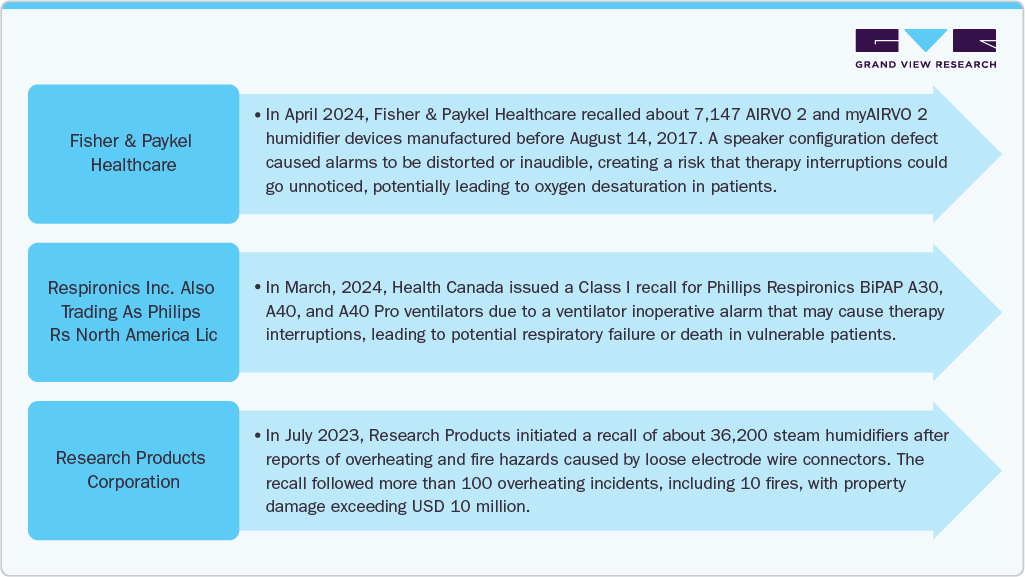
Recent Product Recalls in the Humidifier Market
Product recalls in the humidifier market due to issues such as overheating or malfunctioning alarms have raised concerns about safety and reliability. These recalls can lead to financial losses for manufacturers and reduce consumer confidence in certain products.
 To learn more about this report, Download Free Sample Report
Key Humidifiers Companies Companies:
The following key companies have been profiled for this study on the humidifier market.
- Fisher & Paykel Healthcare Limited
- Resmed
- Drägerwerk AG & Co. KGaA
- Koninklijke Philips N.V.
- Medline Industries, LP
- Hamilton Medical
- Armstrong Medical Ltd
- Intersurgical Ltd
- Teleflex Incorporated
- Medical Depot, Inc. dba Drive DeVilbiss Healthcare
- Precision Medical, Inc.
- acehealthcare
- CAREL INDUSTRIES S.p.A.
- Vapotherm
- Humidifirst, Inc.
- MEDICOP Medical Devices
Competitive Benchmarking
Category
Operating Strategies
Competitive Edge
Weakness
Established Players (Fisher & Paykel Healthcare Limited, ResMed, Drägerwerk AG & Co. KGaAetc.)
- Focus on continuous product innovation, strategic partnerships, global distribution expansion, regulatory compliance, and integration of humidification systems with ventilators, CPAP/BiPAP devices, and high-flow oxygen therapy platforms. Investments are also directed toward R&D, digital connectivity, and home healthcare solutions.
- Strong global brand recognition, comprehensive respiratory care portfolios, extensive distribution networks, established relationships with hospitals and healthcare providers, robust R&D capabilities, and broad regulatory approvals across major markets.
- High product development and regulatory compliance costs, premium pricing limiting adoption in price-sensitive markets, and dependence on mature healthcare markets for a significant share of revenue.
Emerging Players (Flexicare Medical Limited, .Vapothermetc.)
- Emphasize niche product development, cost-effective respiratory humidification solutions, regional market expansion, distributor partnerships, and targeted product launches addressing home healthcare and respiratory therapy applications.
- Competitive pricing, specialized respiratory care expertise, operational flexibility, faster product customization, and growing presence in emerging markets and home healthcare segments.
- Limited global distribution and brand recognition, narrower product portfolios, comparatively lower R&D investments, and greater dependence on third-party distributors for international market penetration.
Recent Developments
In November 2024, Homedics launched the Natura humidifier, a 1.3-gallon top-fill ultrasonic model that delivers warm or cool mist for spaces up to 402 sq. ft., runs up to 60 hours, features Clean Tank Technology, auto-shutoff, programmable humidity, and doubles as a planter with a removable compartment for plants.
“Natura has truly become one of my favorite products. It's not just a humidifier-it's a blend of wellness and design that we've carefully crafted to elevate any home. What makes it special is how it seamlessly merges top-tier performance with a modern, elegant aesthetic, plus the added touch of greenery that brings life into your space.”
-Daniel Kaufman, Head of Corporate Strategy at FKA Brands.
- In April 2024, Condair announced that Konvekta, an energy recovery specialist, is utilizing the Condair ME evaporative humidifier as a standard adiabatic cooling solution in its exhaust air cooling systems. The company aims to achieve up to 92% annual energy recovery for its clients' buildings.
“A single Condair ME humidifier contributed more than 60,000kWh/a of cooling during this period from just 3,800kwh/a of consumed electricity.”
-Amir Ibrahimagic, Group Business Development Manager, Konvekta
-
In February 2024, Canopy, a beauty and wellness brand, launched its Canopy Portable Humidifier, a dermatologist-approved hybrid cool mist humidifier. The humidifier's 500-milliliter tank can run for up to 24 hours without needing a refill. It has three adjustable settings, and Canopy's proprietary dry-out mode technology prevents mold growth by keeping air flowing until there's no water left, ensuring hydration.
-
In September 2023, Smartmi introduced its High-Capacity Evaporative Humidifier 3, designed to improve air quality and convenience. This product offers mist-free natural humidification, a 350ml/h humidity output, and a large 5L tank. It features smart controls and ultra-quiet operation, making it ideal for individuals with respiratory issues, the elderly, infants, vocal performers, and those in homes with dry climates and forced air heating.
-
In October 2022, Medtronic separated its Patient Monitoring and Respiratory Interventions businesses into a new entity, NewCo. This strategic move aimed to enhance value for Medtronic and its shareholders by allowing the company to concentrate on long-term strategies for innovation-driven growth. The separation was expected to optimize focus and capital allocation, positioning NewCo to unlock its value.
-
In March 2022, Hamilton Medical announced the production of a HAMILTON-H900 humidifier at its facility in Reno, Nevada, catering to the U.S. market. The facility would expand its manufacturing capabilities to include heated breathing circuit sets and chambers. This strategic initiative was expected to enhance efficiency in delivering products to customers in the U.S.
Humidifiers Market Report Scope
Report Attribute
Details
Market size in 2025
USD 5.1 billion
Market size value in 2026
USD 5.4 billion
Revenue forecast in 2033
USD 9.5 billion
Growth rate
CAGR of 8.3% from 2026 to 2033
Historical data
2021 - 2025
Forecast period
2026 - 2033
Quantitative units
Revenue in USD million/billion, Volume in units (000’), and CAGR from 2026 to 2033
Report coverage
Revenue forecast, company ranking, competitive landscape, growth factors, and trends
Segments covered
Product, distribution channel, end use, region
Regional scope
North America; Europe; Asia Pacific; Latin America; MEA
Country scope
U.S., Canada, Mexico, UK, Germany, France, Italy, Spain, Norway, Denmark, Sweden, Japan, China, India, Australia, Thailand, South Korea, Brazil, Argentina, Saudi Arabia, South Africa, UAE, and Kuwait
Key companies profiled
Fisher & Paykel Healthcare Limited; Resmed; Drägerwerk AG & Co. KGaA; Koninklijke Philips N.V.; Medline Industries, LP; Hamilton Medical; Armstrong Medical Ltd; Intersurgical Ltd; Teleflex Incorporated; Medical Depot, Inc. dba Drive DeVilbiss Healthcare; Precision Medical, Inc.; acehealthcare; CAREL INDUSTRIES S.p.A.; Vapotherm; Humidifirst, Inc.; MEDICOP Medical Devices.
Customization scope
Free report customization (equivalent up to 8 analysts' working days) with purchase. Addition or alteration to country, regional & segment scope.
Pricing and purchase options
Avail customized purchase options to meet your exact research needs. Explore purchase options
Global Humidifiers Market Report Segmentation
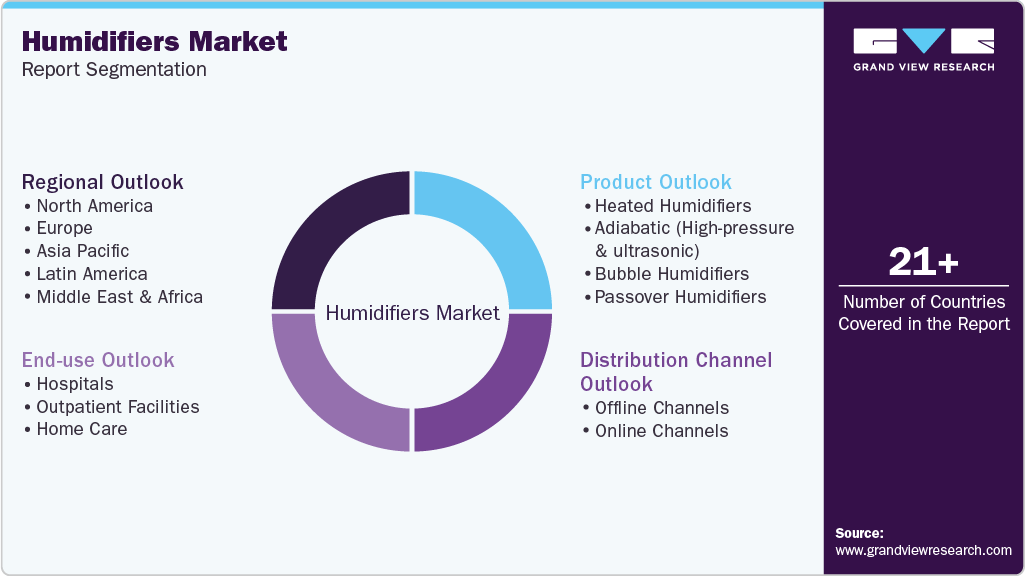
This report forecasts revenue growth at country levels and provides an analysis of the latest industry trends in each of the sub-segments from 2021 to 2033. For this study, Grand View Research has segmented the humidifiers market report based on product, distribution channel, end use, and region.
 To learn more about this report, Download Free Sample Report
-
Product Outlook (Revenue, USD Million; Unit Volume 000'; 2021 - 2033)
-
Heated Humidifiers
-
Integrated or Built-in
-
Standalone
-
-
Adiabatic (High-pressure & ultrasonic)
-
Bubble Humidifiers
-
Passover Humidifiers
-
-
Distribution Channel Outlook (Revenue, USD Million; Unit Volume 000'; 2021 - 2033)
-
Offline Channels
-
Retail Stores
-
Supermarkets & Hypermarkets
-
Pharmacy & Health Stores
-
Exclusive Brand Stores / Showrooms
-
-
Online Channels
-
E-commerce Platforms
-
Company-owned Online Stores
-
Specialized Wellness & Home Appliance E-retailers
-
-
-
End Use Outlook (Revenue, USD Million; Unit Volume 000'; 2021 - 2033)
-
Hospitals
-
Outpatient Facilities
-
Home Care
-
-
Regional Outlook (Revenue, USD Million; Unit Volume 000'; 2021 - 2033)
-
North America
-
U.S.
-
Canada
-
Mexico
-
-
Europe
-
UK
-
Germany
-
France
-
Italy
-
Spain
-
Denmark
-
Sweden
-
Norway
-
-
Asia Pacific
-
Japan
-
China
-
India
-
Australia
-
Thailand
-
South Korea
-
-
Latin America
-
Brazil
-
Argentina
-
-
Middle East and Africa
-
South Africa
-
Saudi Arabia
-
UAE
-
Kuwait
-
-
Research Methodology
The humidifier market figures in this report are based on a proven research process that combines executive interviews with secondary research from proprietary databases, company filings, and recognized regulatory and institutional sources. Market size is built through value-chain sizing - reconciling supply-side and demand-side estimates - and triangulated with bottom-up and top-down approaches. Every estimate passes multiple levels of expert validation before publication, with each humidifier segment quantified using the revenue-capture definitions in the table below.
Segment Definition
Segment - Product
Revenue Capture Definition
Heated Humidifiers
Includes active humidification systems that heat and humidify inspired gases for patients receiving respiratory support through mechanical ventilation, CPAP/BiPAP, oxygen therapy, and high-flow nasal oxygen systems.
a) Integrated or Built-in: Includes heated humidifiers integrated into ventilators, anesthesia machines, CPAP/BiPAP devices, and other respiratory support equipment, with revenues generated from OEM-installed systems.
b) Standalone: Includes independent heated humidification units used with ventilators, oxygen therapy devices, and respiratory circuits in hospital and home healthcare settings.
Adiabatic (High-pressure & ultrasonic)
Includes high-pressure and ultrasonic humidification systems that generate cool humidified air without heating, primarily used in healthcare facilities, cleanrooms, laboratories, and specialized clinical environments.
Bubble Humidifiers
Includes bubble-type humidifiers attached to oxygen concentrators, cylinders, and flowmeters to humidify supplemental oxygen delivered to patients.
Passover Humidifiers
Includes passive humidifiers that deliver moisture by passing respiratory gases over a water reservoir without active heating, commonly used in oxygen therapy and respiratory care applications.
Segment - Distribution Channel
Revenue Capture Definition
Offline Channels
Accounts for revenues generated through physical distribution networks, including retail outlets, pharmacies, and authorized brand stores.
a) Retail Stores: Covers sales through medical equipment retailers, specialty respiratory care stores, home healthcare suppliers, and healthcare distributors.
b) Supermarkets & Hypermarkets: Represents purchases made through large-format retail chains offering selected humidification products and respiratory care accessories.
c) Pharmacy & Health Stores: Captures revenues generated through retail pharmacies, hospital pharmacies, and health & wellness stores offering respiratory humidifiers and oxygen therapy accessories.
d) Exclusive Brand Stores / Showrooms: Encompasses manufacturer-operated outlets and authorized showrooms providing product sales, demonstrations, and after-sales support.
Online Channels
Reflects revenues generated through digital commerce platforms and online sales channels.
a) E-commerce Platforms: Covers third-party online marketplaces such as Amazon, Alibaba, Flipkart, and other regional e-commerce platforms.
b) Company-owned Online Stores: Represents direct sales completed through manufacturers' official websites and proprietary online storefronts.
c) Specialized Wellness & Home Appliance E-retailers: Includes online retailers specializing in respiratory care devices, medical equipment, home healthcare products, and wellness appliances.
Segment- End Use
Revenue Capture Definition
Hospitals
Represents humidification systems utilized across ICUs, operating rooms, emergency departments, neonatal intensive care units (NICUs), and other inpatient care settings.
Outpatient Facilities
Covers demand from ambulatory surgical centers, pulmonary clinics, sleep centers, physician offices, and other outpatient healthcare facilities.
Home Care
Encompasses humidifiers used in residential settings for home oxygen therapy, CPAP/BiPAP therapy, home mechanical ventilation, and long-term respiratory disease management.
Estimation Model
Stage
Description
Top Down
Commodity Flow Analysis: The humidifiers market was estimated using a top-down approach by analyzing the revenues, product portfolios, and geographic presence of the top 10 market participants. The revenues generated from heated humidifiers, bubble humidifiers, passover humidifiers, adiabatic humidification systems, and integrated respiratory humidification solutions were assessed to estimate the overall market size. Regional revenue contributions, product portfolios, and adoption across hospitals, outpatient facilities, and home care settings were incorporated into the analysis.
Segmentation
Country-Level Segment Share Modeling: The market was segmented by product, distribution channel, end use, and geography. Revenue allocation was conducted across heated humidifiers (integrated/built-in and standalone), adiabatic humidifiers, bubble humidifiers, and passover humidifiers. Country-level estimates were derived by evaluating healthcare infrastructure, respiratory disease prevalence, adoption of respiratory support devices, healthcare expenditure, and product penetration across key end-use settings.
Validation
Data Triangulation & Validation Model: Market estimates and segment shares were validated through primary interviews with humidifier manufacturers, respiratory device companies, healthcare providers, distributors, and industry experts. Secondary findings were cross-verified using company annual reports, investor presentations, regulatory filings, product catalogs, government publications, and respiratory care literature to ensure the accuracy and consistency of market estimates.
Forecasting
Forecasting & CAGR Modeling: Market forecasts were developed by evaluating trends in the prevalence of chronic respiratory diseases, increasing adoption of home healthcare, growing use of oxygen therapy, CPAP/BiPAP devices, and mechanical ventilation, and technological advancements in respiratory humidification systems. The analysis also considered expanding healthcare infrastructure, rising healthcare expenditure, increasing awareness of respiratory care, product innovation, and evolving regulatory and reimbursement landscapes across key markets.
Delivered Customizations
This report has been delivered with the following In-depth customizations
Client Request
Customization Delivered
Value Adds
Global & Regional Market Share Analysis
Detailed market share analysis of leading manufacturers at the global level and across key regions (North America, Europe, Asia Pacific, Latin America, and Middle East & Africa), including competitive positioning and regional revenue contribution.
Enables benchmarking of competitive intensity, identification of regional market leaders, and supports strategic planning and expansion initiatives.
Average Selling Price (ASP) Analysis by Product
Comprehensive analysis of the average selling price (ASP) across each product category, including heated humidifiers (integrated/built-in and standalone), adiabatic humidifiers, bubble humidifiers, and passover humidifiers.
Supports pricing strategy, product positioning, profitability assessment, and competitive pricing analysis across product categories.
Country-level Volume Analysis by Product
Detailed volume analysis (Units) for each product category across 23 countries, covering historical and forecast demand by product segment.
Provides granular demand insights, supports production and inventory planning, identifies high-growth markets, and facilitates country-level opportunity assessment.
Frequently Asked Questions About This Report
The online segment led with a 59.6% revenue share in 2025, and is the fastest-growing distribution channel.
The global humidifier market size was valued at USD 5.1 billion in 2025 and is estimated at USD 5.4 billion for 2026.
The global humidifier market is expected to grow at a CAGR of 8.3% from 2026 to 2033, reaching USD 9.5 billion by 2033.
North America dominated the humidifier market with a share of 44.7% in 2025.
Some key players operating in the humidifier market include Fisher & Paykel Healthcare Limited; Resmed; Drägerwerk AG & Co. KGaA; Koninklijke Philips N.V.; Medline Industries, LP; Hamilton Medical; Armstrong Medical Ltd; Intersurgical Ltd; Teleflex Incorporated; Medical Depot, Inc. dba Drive DeVilbiss Healthcare; Precision Medical, Inc.; acehealthcare; CAREL INDUSTRIES
Key factors that are driving the market growth include the rise in the prevalence of allergies, respiratory disease and increased concerns about harmful health effects from dry air.
Asia Pacific is the fastest-growing region over the forecast period.
The heated humidifier segment accounted for the largest revenue share of 35.0% in 2025.
The hospitals segment accounted for the largest revenue share of over 54.6% in 2025.
About the Author(s)
Medical Devices Research Team
Healthcare · Medical DevicesThis report was authored by the medical devices research team at Grand View Research - comprising two research analysts, one senior research analyst, and one industry expert - with specialized expertise in the medical devices segment of the healthcare industry. All findings are based on proprietary healthcare databases, executive interviews, and regulatory analysis, subject to internal peer review prior to publication.
Last Updated:
Speak to Analyst

Customize this report to your needs - add regions, segments, or data points, with 20% free customization.
Or view our licence options:


ISO 9001:2015 & 27001:2022 Certified
We are GDPR and CCPA compliant! Your transaction & personal information is safe and secure. For more details, please read our privacy policy.


