
- Home
- »
- Pharmaceuticals
- »
-
Humira Market Size, Share & Trends Report, 2026-2033GVR Report cover

Humira Market (2026 - 2033)
Size, Share & Trends Analysis Report By Product (Branded, Biosimilar), By Application (Rheumatoid Arthritis, Psoriatic Arthritis, Crohn’s Disease), By Distribution Channel, By Region, And Segment Forecasts
Market Size, 2025
$7.5BMarket Estimate, 2026
$5.9BMarket Forecast, 2033
$3.2BCAGR, 2026–2033
-8.3%Humira Market Summary
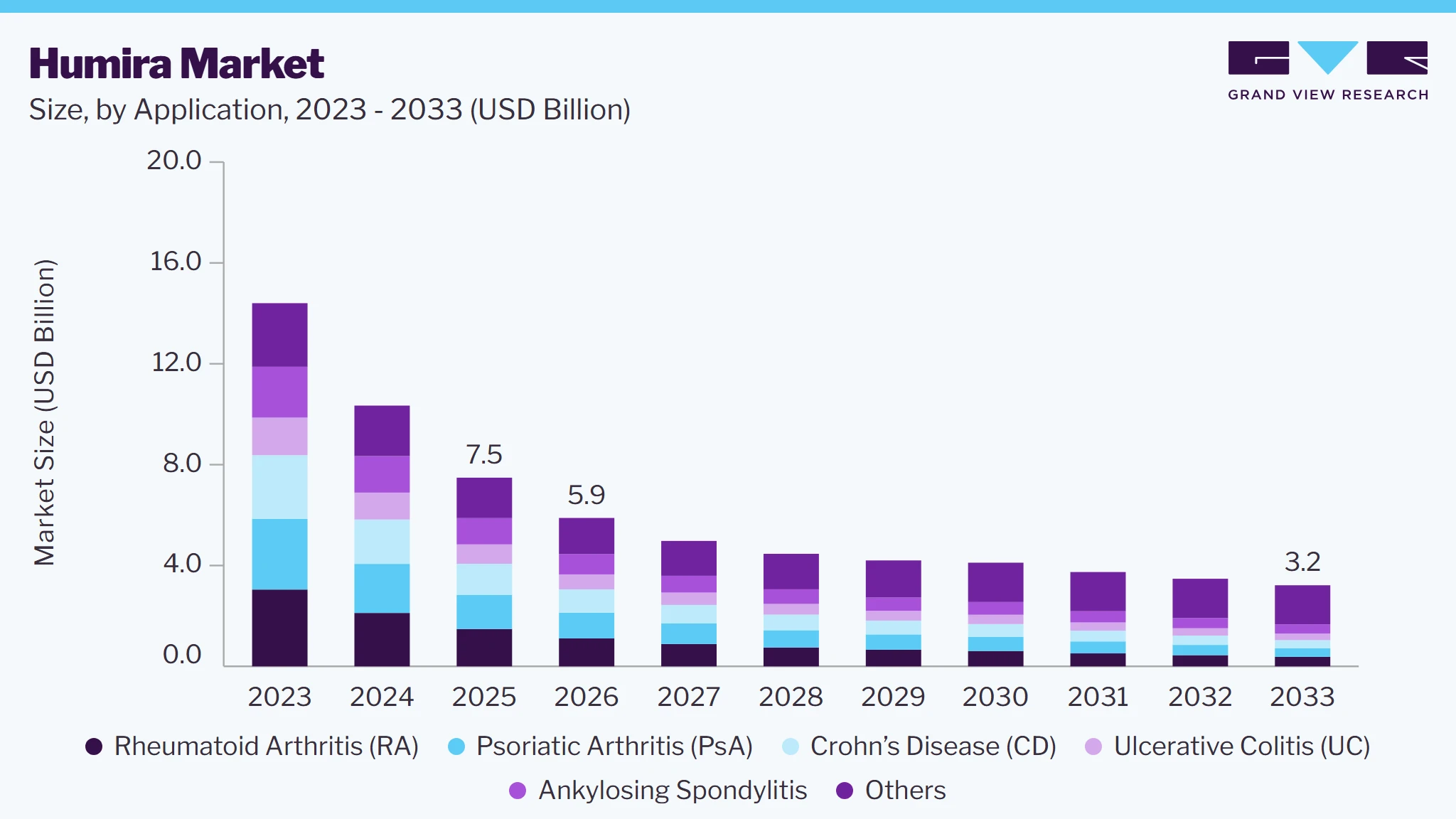
The global humira market size was valued at USD 7.5 billion in 2025 and is projected to decline from USD 5.9 billion in 2026 to USD 3.2 billion by 2033, at a CAGR of -8.3% from 2026 to 2033. The market in North America dominated with a revenue share of 84.4% in 2025. The market decline is primarily attributed to the increasing availability of biosimilars following patent expirations.
 Source: Grand View Research, IR Documents, Primary Interviews, Paid DatabasesTo learn more about this report,
 Download Free Sample Report
 Key Market Trends & Insights
- By product: Branded segment held the largest market share of 80.9% in 2025.
- By application: Rheumatoid arthritis (RA) segment held the largest market share of 19.8% in 2025.
- By distribution channel: Hospital pharmacy segment held the largest market share of 41.2% in 2025.
Regional Highlights
- Largest regional market: North America (84.4% revenue share, 2025)
- By country: The U.S. held the largest market share in 2025.
Market Size & Forecast
- Market size in 2025: USD 7.5 Billion
- Estimated market size in 2026: USD 5.9 Billion
- Projected market size by 2033: USD 3.2 Billion
- CAGR (2026-2033): -8.3%
Three ways to get this report
Buy it, customize it, or ask a question.Ask an Analyst
A direct answer, usually in 1 working day
- AccessReport author, directly
- Reply timeWithin 1 working day
- No sales callDirect answer only
- FormatEmail reply
- CostFree, no cost
Get the Full Report
What the study covers
- FormatsPDF · Excel · Dashboard
- Timeline2026–2033 annual, 2025 base
- Coverage20+ countries, 5 regions
- Companies10+ key players profiled
Customize the Report
20% free customization
- IncludeCountries, segments, points
- TailorTo your product definition
- ExtendDeeper competitor detail
- OrA fully bespoke study
- Turnaround5–10 working days
Despite a continued prevalence of autoimmune diseases such as rheumatoid arthritis, psoriasis, and Crohn's disease, the competitive landscape intensifies with the entry of cost-effective alternatives. Although pharmaceutical companies continue investing in R&D and pursuing geographic expansion and collaborations, pricing pressures and shifts in patient preference toward newer therapies are expected to further impact Humira’s market share.The expansion of biosimilars is reshaping the Humira market by increasing accessibility and affordability. In 2024, the U.S. Food and Drug Administration (FDA) approved numerous biosimilars, such as Amjevita, Hyrimoz, and Yuflyma, which have introduced significant pricing competition, reducing treatment costs and expanding patient access. Healthcare providers and insurers are increasingly adopting biosimilars, driving broader use of adalimumab in autoimmune disease management. In response, AbbVie has introduced innovations, such as citrate-free formulations, to maintain product differentiation. The growing presence of biosimilars enhances overall adalimumab utilization, supporting market volume despite price erosion. However, the market's growth is declining, even as the increasing disease prevalence supports sustained demand for biologic therapies like Humira.
 To learn more about this report, Download Free Sample Report
 The rising global prevalence of autoimmune diseases remains a structural driver for the Humira market. A 2023 study published by The Lancet, involving 22 million individuals, estimated that autoimmune diseases affect approximately one in ten people worldwide. Genetic predisposition, environmental triggers, and improved healthcare access drive this growth. Higher prevalence rates are reported in Northern Europe and North America, where advanced diagnostics and disease awareness are well established. In emerging markets across Asia, Africa, and Australia, industrialization and lifestyle changes contribute to a sharp increase in incidence rates. The expanding global autoimmune patient pool supports sustained demand for biologic therapies such as Humira.
The rising burden of Crohn’s disease further contributes to Humira demand. Data from Minnesota indicates that 19% of Crohn’s patients present with complications within 90 days of diagnosis, and 50% develop intestinal complications over 20 years. Crohn’s disease typically affects the ileum, the ileocolonic region, or the colon, with limited migration over time. Humira remains a long-term treatment option across all disease locations. Incidence is highest among Northern Europeans and individuals of Jewish descent, but emerging markets in Asia, Africa, and Australasia are witnessing increasing rates due to industrialization. The chronic and progressive nature of Crohn’s disease supports ongoing therapeutic demand.
While Humira faces a declining revenue trajectory due to biosimilar competition and loss of exclusivity, these underlying drivers continue to stabilize market volumes. The global expansion of autoimmune diseases, broader biosimilar adoption, and the increasing burden of Crohn’s disease maintain demand for adalimumab therapies. Additionally, biosimilars are unlocking previously untapped markets by making biologic treatment accessible at lower costs. As a result, although the market value is contracting, the overall volume of adalimumab utilization remains supported by fundamental growth factors.
Market Dynamics
The humira market is in a mature stage and is undergoing significant changes due to the loss of market exclusivity across major regions. The entry of biosimilar products in the United States, Europe, and several other countries has increased competition and reduced the market share of the reference product. Healthcare providers, payers, and government healthcare systems are encouraging the use of lower-cost biosimilars to improve access and manage treatment costs. Despite this shift, Humira continues to maintain a presence in the market because of its established clinical profile, physician familiarity, and broad range of approved indications, including rheumatoid arthritis, Crohn's disease, ulcerative colitis, psoriasis, and hidradenitis suppurativa. Market demand remains supported by the growing burden of chronic autoimmune diseases and the need for long-term biologic therapy. At the same time, pricing pressure, formulary changes, and biosimilar adoption are reshaping market dynamics. Manufacturers are also focusing on patient support programs, supply reliability, and lifecycle management strategies to maintain their position in an increasingly competitive market.
The humira market is being driven by the increasing adoption of adalimumab biosimilars across major healthcare markets. The availability of multiple biosimilars has expanded treatment options while improving access to biologic therapy through lower treatment costs. Healthcare providers, payers, and government agencies are increasingly supporting the use of biosimilars to manage healthcare spending without compromising clinical outcomes. Regulatory agencies have also established clear approval pathways, increasing physician confidence in prescribing biosimilars across approved indications. The broad use of adalimumab for rheumatoid arthritis, Crohn's disease, ulcerative colitis, psoriasis, hidradenitis suppurativa, and other autoimmune disorders continues to support stable demand. At the same time, manufacturers are expanding production capacity and strengthening distribution networks to improve product availability. Increasing acceptance of biosimilar switching and substitution in several countries is further supporting market growth. For instance, in February 2025, Celltrion announced that the U.S. Food and Drug Administration approved an interchangeability designation for YUFLYMA (adalimumab-aaty), allowing pharmacy-level substitution with Humira across all approved indications. The approval covered 8 presentations of YUFLYMA, including high-concentration 40 mg/0.4 mL and low-concentration 20 mg/0.2 mL, 20 mg/0.4 mL, 40 mg/0.8 mL, and 80 mg/0.8 mL formulations. This approval supported broader biosimilar adoption and improved patient access to adalimumab therapy.
The humira market continues to face pressure from increasing biosimilar competition following the loss of product exclusivity across major regions. The launch of several adalimumab biosimilars has intensified price competition, leading to lower average selling prices and reduced market share for the reference product. Many insurance providers and pharmacy benefit managers have revised reimbursement policies and formularies to prioritize lower-cost biosimilars, encouraging physicians and patients to switch from the originator product where appropriate. Competitive contracting among manufacturers has further increased pricing pressure across hospitals, specialty pharmacies, and healthcare systems. Although Humira continues to benefit from strong physician familiarity and a long clinical history across multiple autoimmune diseases, maintaining market share has become more challenging as additional biosimilars enter the market. Manufacturers are therefore required to invest in patient support services, contracting strategies, and supply reliability while operating in a market with lower pricing levels. For instance, in April 2025, Fresenius Kabi announced the launch of Otulfi (ustekinumab-aauz) in the United States following U.S. Food and Drug Administration approval. The product became available in 45 mg/0.5 mL and 90 mg/mL prefilled syringe presentations and entered the U.S. immunology market with a list price approximately 85% lower than the reference product. This launch highlighted the increasing pricing pressure across biologic therapies and reinforced the competitive environment faced by reference biologic products such as Humira.
Manufacturers continue to expand their biosimilar portfolios to strengthen their position in the Humira market as healthcare systems increase the adoption of lower-cost biologic therapies. Regulatory pathways for biosimilars have become more established across major markets, enabling companies to introduce new products and expand into additional countries. This has created opportunities for manufacturers with strong biologics development and manufacturing capabilities to increase their presence in autoimmune disease treatment. The growing preference for self-administered biologics, wider reimbursement support for biosimilars, and increasing physician confidence in switching eligible patients from reference biologics are supporting broader market adoption. Companies are also investing in manufacturing capacity, supply chain reliability, and patient support programs to improve product availability and maintain long-term market presence. In addition, expanding approvals across multiple indications allows biosimilar manufacturers to address a larger patient population using a single product platform. As healthcare providers continue to focus on cost-effective treatment options without compromising clinical outcomes, the Humira market offers opportunities for companies that can provide consistent supply, competitive pricing, and broad regulatory coverage across established and emerging markets.
Market Concentration & Characteristics
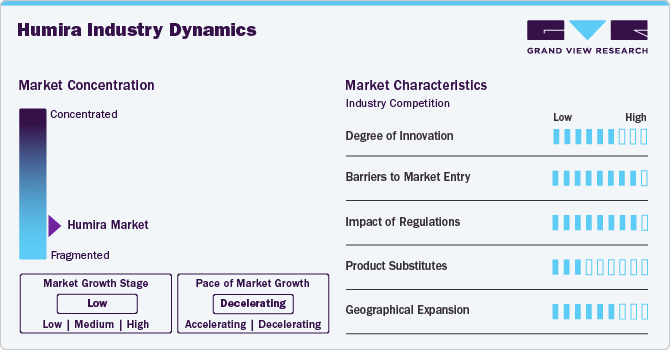
The Humira market is advancing with innovations driven by the expanding biosimilar landscape. The approval of SIMLANDI (adalimumab-ryvk) introduces a significant leap forward, as it becomes the first high-concentration, citrate-free biosimilar to Humira with FDA-approved interchangeable status. This innovation facilitates pharmacy-level substitution, eliminating the need for prescriber approval, akin to generic drugs. Additionally, SIMLANDI’s citrate-free formulation reduces common injection site reactions, improving patient experience and adherence. These advancements contribute to increased affordability and access, positioning biosimilars as a transformative force in the biologics market.
The Humira market sets a high participation threshold due to complex biologic drug development requirements, rigorous regulatory pathways, and AbbVie's historically strong patent portfolio. Biosimilar development involves heavy R&D expenditures, advanced manufacturing capabilities, and extensive clinical testing to demonstrate similarity in safety and efficacy. Additionally, the production of monoclonal antibodies like Humira demands elaborate operations that come with high expenses and limited replicability. AbbVie's established global market presence, brand recognition, and long-standing relationships with healthcare providers and payers further solidify its market leadership, making it challenging for new entrants to gain significant market share quickly.
 To learn more about this report, Download Free Sample Report
 Rigorous compliance standards significantly impact the Humira market. These bodies mandate comprehensive clinical trials and rigorous pharmacovigilance to ensure long-term safety and efficacy, especially given Humira’s wide range of autoimmune indications. Pricing and reimbursement policies significantly influence market access, as high treatment costs necessitate favorable insurance coverage. Regulatory harmonization across regions is essential for global adoption, particularly in emerging markets.
Humira competes with a variety of other biologic treatments and small-molecule medications, specifically in the management of autoimmune diseases like rheumatoid arthritis, psoriasis, and inflammatory bowel disease. Amjevita, Hadlima, and Hyrimoz biosimilars provide affordable options, and Enbrel (etanercept), Remicade (infliximab), and Stelara (ustekinumab) biologics are also therapeutic alternatives. In the face of this competition, however, Humira's established effectiveness, wide range of therapeutic use, and unwavering trust among physicians sustain its usage. Patient familiarity, ease of administration, and ample clinical support additionally secure its stronghold in the marketplace.
AbbVie has expanded its Humira portfolio into high-growth markets such as Asia-Pacific, Latin America, and Europe, driven by rising autoimmune disease prevalence and improving healthcare infrastructure. For instance, Humira is also approved in Japan for treating intestinal Behçet’s disease, generalized pustular psoriasis, and pyoderma gangrenosum. The company focuses on securing regulatory approvals, optimizing pricing strategies, and strengthening reimbursement frameworks to enhance patient access. Strategic partnerships with healthcare providers and government initiatives support market penetration, while investments in local manufacturing and distribution networks address supply chain challenges.
Analyst Perspective
The humira market is transitioning from being dominated by a single branded biologic to a competitive market supported by multiple adalimumab biosimilars. Market growth is increasingly shaped by pricing strategies, regulatory approvals, payer policies, and broader biosimilar adoption across major regions. AbbVie continues to maintain its position through the established clinical profile of Humira and patient support programs, while companies such as Amgen, Celltrion, Samsung Bioepis, Sandoz, Boehringer Ingelheim, and Pfizer are expanding their presence with approved biosimilars and broader geographic reach. The market is expected to remain competitive as manufacturers focus on product availability, market access, and long-term supply capabilities across approved autoimmune disease indications.
Pipeline Analysis
The following analysis outlines key developments in the pipeline for autoimmune and inflammatory conditions, focusing on drugs targeting diseases such as rheumatoid arthritis, ulcerative colitis, and plaque psoriasis. Notable highlights include several promising treatments advancing through Phase 3 trials, including adalimumab for plaque psoriasis and ulcerative colitis, with launches expected between 2027 and 2030. Upadacitinib, aimed at rheumatoid arthritis, and Ixekizumab, for juvenile psoriatic arthritis, also show strong potential, with anticipated launches during the forecast period. The progress across various phases underscores the ongoing innovation in the autoimmune therapeutics market, with several therapies poised to address unmet clinical needs.
Condition
Drug
Company
Phase
Estimated Launch
Plaque Psoriasis
Adalimumab
Mabscale, LLC
PHASE3
2027
Healthy Volunteers
PBP1502
Prestige Biopharma Limited
PHASE1
2026
Ulcerative Colitis
Adalimumab
AbbVie
PHASE3
2027
Crohn's Disease
Adalimumab
Centre Hospitalier Universitaire de Saint Etienne
PHASE4
2029
Juvenile Psoriatic Arthritis
Adalimumab
AbbVie
PHASE3
2030
Rheumatoid Arthritis
Upadacitinib
AbbVie
PHASE3
2028
Rheumatoid Arthritis
Abatacept
Bristol-Myers Squibb
PHASE3
2029
Juvenile Psoriatic Arthritis / Enthesitis Related Arthritis
Ixekizumab
Eli Lilly and Company
PHASE3
2030
Source: Clinical Trial
Biosimilar Market Growth
The introduction of Humira biosimilars is poised to disrupt the autoimmune and inflammatory disease treatment market significantly. Following Humira’s patent expiration, biosimilars like Amgen’s Amjevita, Samsung Bioepis’ Renflexis, and Celltrion’s Remsima are offering 20-30% lower costs, making them an attractive alternative for healthcare providers and payers seeking cost containment. This shift reduces healthcare expenditures and increases patient access to essential biologics, particularly in cost-sensitive regions. Biosimilars are expected to drive a more competitive market, forcing pricing pressure on biologic therapies and opening up opportunities in emerging markets.
As biosimilars continue to enter the market, they present significant revenue opportunities for pharmaceutical companies. The growing demand for cost-effective biologic treatments across therapeutic areas like rheumatology, gastroenterology, and oncology drives the market's expansion. The transition to biosimilars is especially impactful in regions with high healthcare costs and limited access to biologic therapies, making biosimilars a critical solution to improving patient access and reducing healthcare burdens.
Furthermore, the competition introduced by biosimilars is leading to innovation in pricing strategies and the development of new biologic therapies. Companies are encouraged to invest in advanced manufacturing technologies to enhance production efficiency and meet the growing demand for biologics. With the increased focus on value-based care, biosimilars offer a sustainable path forward by maintaining clinical efficacy while delivering cost savings, making them a compelling option for healthcare systems globally.
Product Insights
Based on product, the branded segment led the market with the largest revenue share of 80.9% in 2025, driven by its strong brand recognition, proven efficacy, and long-standing presence. Since its initial approval, Humira has built a robust reputation across multiple therapeutic areas, including rheumatoid arthritis, psoriatic arthritis, Crohn’s disease, ulcerative colitis, and ankylosing spondylitis. Its broad range of indications and extensive clinical trial data have contributed to deep market penetration and widespread physician and patient trust. AbbVie has reinforced its market dominance through strategic life-cycle management tactics, including introducing new formulations such as citrate-free versions and enhanced auto-injectors for improved patient comfort. For instance, according to AbbVie’s Full-Year 2024 financial report, Humira remains a significant contributor to the company’s immunology portfolio. In 2024, global Humira net revenues totaled USD 8.993 billion, while the total global net revenues from AbbVie’s immunology portfolio reached USD 26.682 billion. This indicates Humira has accounted for approximately 33.7% of AbbVie’s total immunology revenue for the year.
Biosimilar products are projected to grow at the fastest rate in the Humira market, driven by cost-effectiveness, regulatory approvals, and increasing acceptance among healthcare providers and patients. With the expiration of Humira’s patents in major markets, biosimilars such as Amjevita (Amgen) and Hyrimoz (Sandoz) have gained traction. For example, in April 2024, Evernorth Health Services announced an initiative to provide a Humira biosimilar at zero out-of-pocket cost for eligible patients through its specialty pharmacy, Accredo. Supported by Quallent Pharmaceuticals, Evernorth’s private-label distributor, the program is enabled through partnerships with multiple manufacturers offering both high- and low-concentration interchangeable biosimilars.
Application Insights
Based on application, the rheumatoid arthritis segment led the market with the significant revenue share of 19.8% in 2025. The study "Global, regional, and national burden of rheumatoid arthritis, 1990-2020," published in The Lancet Rheumatology, estimates global RA prevalence, mortality, and disability-adjusted life-years (DALYs) from 1990 to 2020, with forecasts through 2050. In 2020, 17.6 million people had RA, marking a 14.1% increase in age-standardized global prevalence since 1990. While RA mortality declined by 23.8%, DALYs, primarily driven by years lived with disability, increased. RA cases are projected to reach 31.7 million by 2050, highlighting the growing need for early diagnosis and treatment access.
The Ulcerative Colitis (UC) disease segment is projected to experience moderate growth in the Humira market, driven by the rising prevalence of inflammatory bowel diseases (IBD), particularly in North America and Northern Europe. These regions report the highest global incidence and prevalence rates of IBD, highlighting the growing need for effective biologic therapies. UC affects approximately 156 to 291 individuals per 100,000, with an annual incidence ranging from 9 to 20 cases per 100,000 persons. It exhibits a bimodal age distribution, with peak onset between 15-30 years and a smaller secondary peak between 50-70 years, emphasizing the long-term therapeutic needs of a diverse patient population. While UC shows no strong gender preference, it is more commonly observed in non-smokers and those who have recently quit smoking.
Distribution Channel Insights
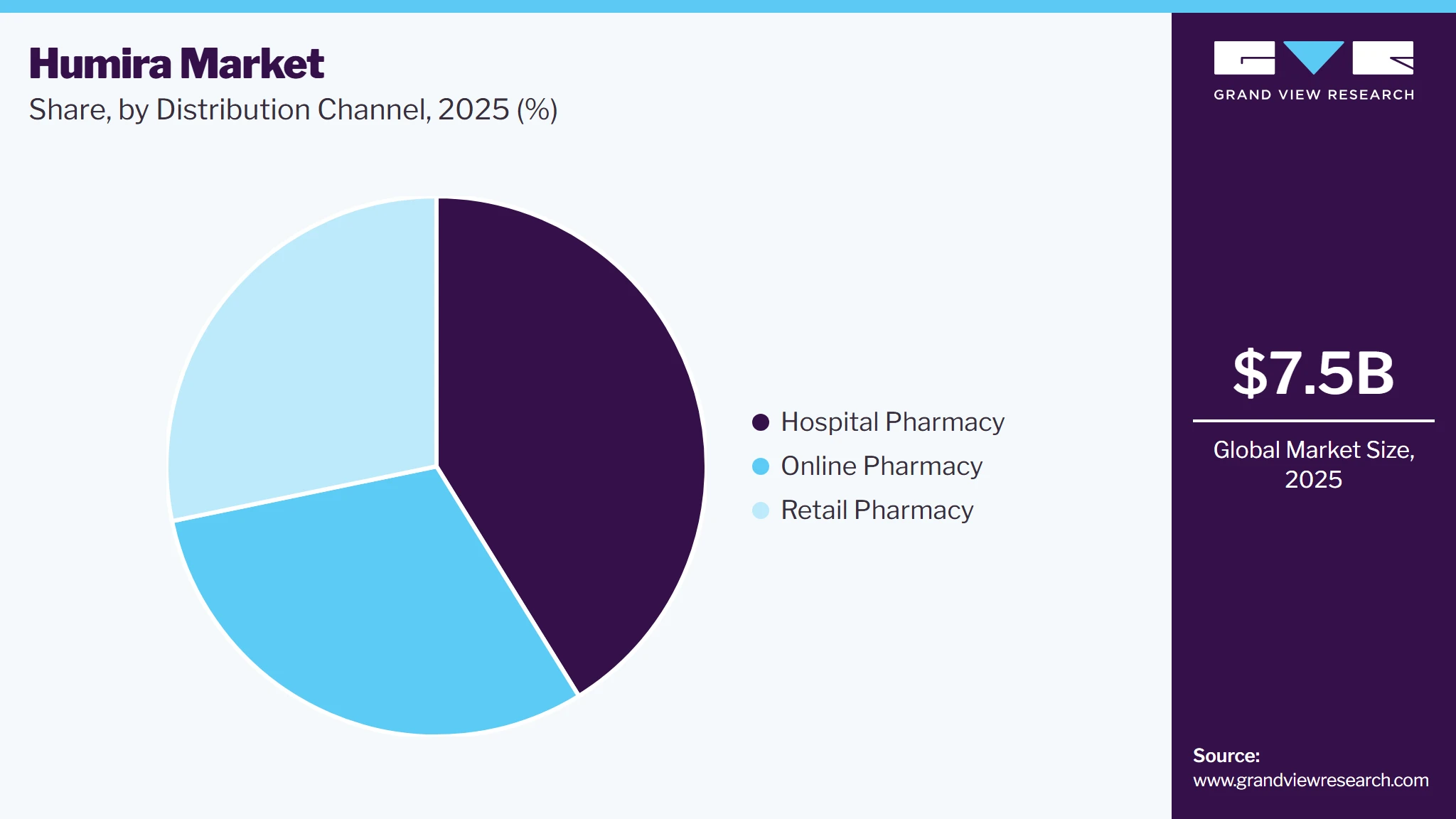
Based on distribution channel, the hospital pharmacy segment led the market with the largest revenue share of 41.2% in 2025, driven by the increasing prevalence of diseases that require specialist oversight typically available in hospital settings. Hospitals provide comprehensive care, ensuring patients receive timely and coordinated treatment, which is crucial for biologic therapies like Humira. Hospitals maintain strong, well-coordinated supply chain networks through long-standing partnerships with pharmaceutical manufacturers and distributors. These integrated systems help ensure a reliable and uninterrupted supply of Humira, enabling consistent access for patients who rely on the medication for chronic autoimmune conditions. This streamlined logistics framework reduces the risk of stock shortages and delays in treatment delivery. Their infrastructure and trained staff support the proper storage, temperature control, and handling protocols required for drugs like Humira, ensuring adherence to safety and quality regulations throughout the supply process.
 To learn more about this report, Download Free Sample Report
 Online pharmacies are experiencing the significant growth in the Humira market due to increasing consumer preference for digital healthcare solutions, driven by technological advancements and changing consumer preferences. Enhanced telemedicine services and direct-to-consumer sales models have further accelerated adoption. Regulatory approvals for online prescription fulfillment and expanding insurance coverage contribute to market penetration. While retail pharmacies remain dominant, online platforms benefit from accessibility, competitive pricing, and discreet purchasing options, positioning them as the fastest-growing distribution channel for Humira-based therapies.
Regional Insights
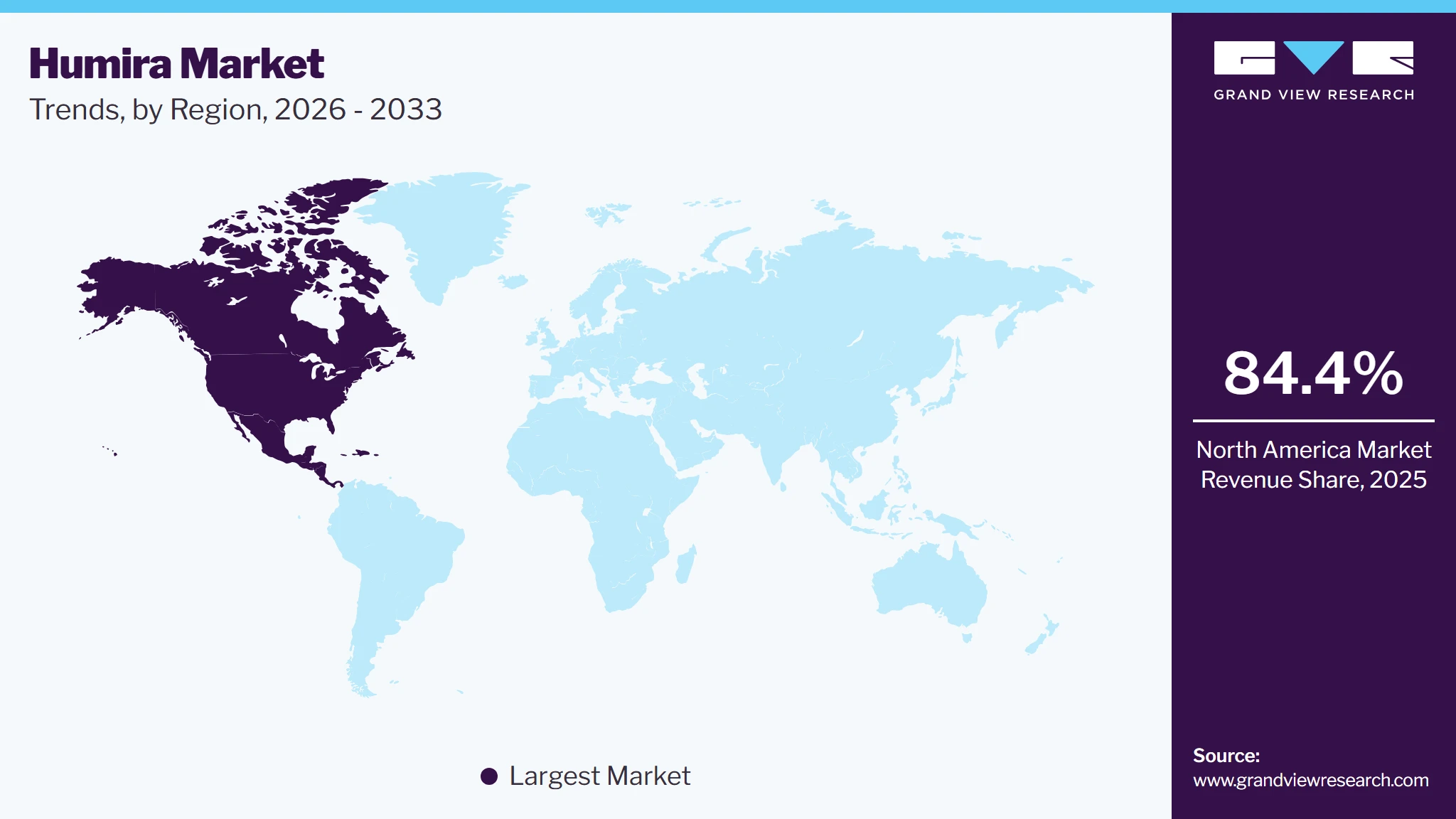
North America dominated the humira market with the largest revenue share of 84.4% in 2025. The region benefits from favorable reimbursement policies, increasing weight management awareness, and rising prescriptions for off-label use. The U.S. dominates due to robust pharmaceutical regulations, active patient engagement, and significant investments in autoimmune therapeutics. Additionally, market growth is fueled by ongoing clinical advancements, including oral Humira formulations. With continuous regulatory oversight and expanding treatment accessibility, North America remains the largest market for Humira-based therapies.
 To learn more about this report, Download Free Sample Report
 U.S. Humira Market Trends
The humira market in the U.S. held the largest share in the North America region in 2025. This is due to a high autoimmune prevalence and strong healthcare infrastructure. For instance, according to the Report of the Office of Autoimmune Disease Research by NIH, Autoimmune diseases are estimated to affect 7% to 8% of the United States population, with more than 23.5 million Americans living with autoimmune diseases. Early regulatory approvals and extensive R&D activities contribute to market expansion. The rising adoption of Humira for chronic diseases is reshaping prescribing trends.
Europe Humira Market Trends
Europe exhibits steady Humira market growth, led by Germany, France, and the UK. The region benefits from increased biosimilar adoption post-patent expiry, updated EMA guidelines on immunomodulators, and emphasis on pharmacoeconomics. National health services promote switching programs to reduce costs, while local manufacturers are boosting biosimilar production capacity.
The UK Humira market is expanding due to NHS-backed biosimilar rollout programs and personalized treatment pathways for chronic inflammatory diseases. For instance, in January 2024, the UK government introduced the 2024 Voluntary Scheme for Branded Medicines Pricing and Access (VPAG), a USD 500 million joint initiative with the pharmaceutical industry. It supports clinical trials, health technology assessment, and manufacturing, aiming to boost access to biosimilars and personalized treatments. Government funding for biopharmaceutical R&D and accelerated approval pathways for biosimilars are enhancing market competitiveness. The role of community pharmacies in biosimilar dispensing is also increasing.
The Germany Humira market leads the Europe market due to its advanced biopharmaceutical manufacturing and robust healthcare system. Hospital formularies have been optimized to include cost-effective biosimilar versions, supported by government incentives and electronic prescription systems that streamline biologic therapies.
The France Humira market is witnessing rapid expansion, driven by rising prevalence of inflammatory bowel disease. According to NIH 2024 epidemiology data, in France, a total number of 22,879 new cases of inflammatory bowel disease (IBD) were recorded over the study period, with 59% being Crohn’s disease, 38% ulcerative colitis, and 3% unclassified IBD. The overall incidence rates were 12.7 per 100,000 people per year for IBD, 7.2 for CD, and 5.1 for UC. Notably, the incidence of Crohn’s disease rose from 5.1 in 1988-1990 to 7.9 in 2015-2017, showing an average annual growth rate of 1.9%. Ulcerative colitis cases increased from 4.5 to 6.1, with a 1.3% annual growth rate. This trend in disease incidence underscores the growing demand for effective biologic therapies like Humira, positioning France as a key market for continued investment and therapeutic innovation.
Asia Pacific Humira Market Trends
The Asia-Pacific Humira market is rapidly expanding, driven by increasing access to biologics, government funding for chronic disease treatment, and growing partnerships with multinational biopharma companies. For instance, in October 2024, representatives from various Asia-Pacific nations formally adopted strategic frameworks focused on health financing and digital health, as part of a collective push toward achieving universal health coverage. These initiatives, supported by the World Health Organization (WHO), are designed to enhance the efficiency of public healthcare expenditures and elevate the role of digital technologies in managing chronic diseases more effectively. The region is experiencing increasing Humira adoption in hospital settings.
The Japan market for Humira is expanding due to initiatives such as the “Healthy Aging” strategy, emphasizing chronic disease control in the elderly. Biologics are increasingly used in outpatient care, and local pharmaceutical firms are introducing biosimilar options tailored to the Japanese market. Digital health platforms are also enabling better treatment tracking.
The China Humira market is rapidly becoming a biosimilar powerhouse, with government policies encouraging fast-track approval and pricing regulation of biologics. Humira biosimilars are included in public insurance plans, while e-commerce health platforms and hospital-private partnerships enhance distribution.
Latin America Humira Market Trends
Latin America shows moderate but steady growth, with Brazil and Argentina leading. Biosimilar penetration is increasing due to economic constraints and updated public health procurement policies. Collaborations with global pharma companies are helping local firms scale production and improve quality standards.
The Brazil Humira market is expanding amid high autoimmune disorder incidence and support for biosimilar adoption. The government has prioritized chronic disease treatments under the SUS (Unified Health System), boosting availability in public hospitals. Local production and international licensing deals are further driving market accessibility.
Middle East & Africa Humira Market Trends
The Middle East and Africa are emerging markets for Humira, led by Saudi Arabia and the UAE. Government initiatives like Vision 2030 (Saudi Arabia) and healthcare digitalization (UAE) support biologics infrastructure. Local distributors are increasingly partnering with global biosimilar producers to ensure affordability and access.
The Saudi Arabia Humira market is expanding due to significant biopharma investments and rising rates of autoimmune and metabolic diseases. Health insurance reforms and government funding are facilitating biosimilar uptake. E-pharmacy platforms and telemedicine services are broadening access across urban and rural areas.
Key Humira Company Insights
The Humira market has entered a phase of rapid evolution following the drug’s loss of exclusivity in key global markets. In 2024, the competitive intensity has grown considerably, with a surge of biosimilars securing regulatory approvals and launching across various regions. This progression is significantly altering the competitive landscape by lowering treatment costs for healthcare systems and improving access for patients with autoimmune and inflammatory disorders.
New entrants in the biosimilar segment are employing advanced strategies, including high-concentration, citrate-free formulations and interchangeable approvals, to distinguish their offerings. Many companies are forming strategic alliances with multinational pharmaceutical firms to leverage established manufacturing infrastructure, global supply chains, and in-market expertise. These developments are contributing to a more diversified and accessible biologics market worldwide.
Key Humira Companies:
The following key companies have been profiled for this study on the humira market.
-
Alvotech
-
Amgen Inc.
-
Boehringer Ingelheim Pharmaceuticals, Inc.
-
CELLTRION INC.
-
Coherus BioSciences, Inc.
-
Fresenius Kabi AG
-
FUJIFILM KYOWA KIRIN BIOLOGICS Co., Ltd.
-
Pfizer Inc.
-
Samsung Bioepis
-
Sandoz Inc.
Competitive Benchmarking
Category
Operating Strategies
Competitive Edge
Weakness
Established Players (AbbVie, Amgen Inc., Boehringer Ingelheim Pharmaceuticals Inc., Celltrion Inc., Pfizer Inc., Samsung Bioepis, Sandoz Inc.)
- Focus on maintaining market presence through lifecycle management, biosimilar portfolio expansion, regulatory approvals, and geographic expansion. Strengthen relationships with healthcare providers, payers, and pharmacy benefit managers through long-term supply agreements, patient support programs, and broad distribution networks.
- Strong manufacturing capabilities, established regulatory experience, and broad commercial presence across major markets. Well-developed distribution networks, proven biologics expertise, and long-standing relationships with hospitals, specialty pharmacies, and healthcare providers support market access.
- Increasing pricing pressure due to biosimilar competition and payer negotiations affects profit margins. Large operational structures, high manufacturing costs, and complex regulatory requirements may slow product portfolio expansion and market response.
Emerging Players (Alvotech, Coherus Biosciences Inc., Fresenius Kabi AG, Fujifilm Kyowa Kirin Biologics Co., Ltd.)
- Focus on expanding biosimilar portfolios through strategic partnerships, licensing agreements, and entry into new regional markets. Invest in cost-efficient manufacturing, regulatory approvals, and competitive pricing strategies to increase adoption of adalimumab biosimilars.
- Flexible business models enable faster market entry and targeted expansion in regions with growing biosimilar demand. Competitive pricing, focused biologics portfolios, and collaboration with commercialization partners support market penetration.
- Limited product portfolios and lower brand recognition compared with established biologic manufacturers. Smaller commercial infrastructure and distribution networks may limit market reach in highly competitive and regulated markets.
Recent Developments
-
In April 2025, the U.S. Food and Drug Administration granted interchangeable status to YUFLYMA, a high-concentration, citrate-free biosimilar of Humira, developed by Celltrion, Inc. The designation applies across multiple inflammatory indications and allows pharmacists to substitute YUFLYMA for Humira without requiring a new prescription.
-
In October 2024, Prime Therapeutics introduced new biosimilar strategies to expand access to cost-effective Humira alternatives. Starting in 2025, Prime will recommend biosimilars from four manufacturers: Organon (Hadlima), Teva (Simlandi), Sandoz (adalimumab-adaz), and Celltrion (adalimumab-aaty), offering flexible plan options including biosimilars-first or biosimilars-only models. These offerings include low-list-price biosimilars, with net monthly costs as low as USD 500-USD 600. They are supported through Prime’s conflict-free specialty pharmacy network, helping ensure broader access and affordability for millions of Americans.
-
In December 2023, Biocon Biologics Ltd. (BBL), a global biosimilars company and subsidiary of Biocon, entered into a strategic distribution agreement with Sandoz. Under this agreement, Sandoz was granted exclusive rights to promote, sell, and distribute Adalimumab BS for subcutaneous injection (a biosimilar to Humira) in Japan.
Humira Market Report Scope
Report Attribute
Details
Market size in 2025
USD 7.5 billion
Estimated market size in 2026
USD 5.9 billion
Projected market size by 2033
USD 3.2 billion
Growth rate
CAGR of -8.3% from 2026 to 2033
Historical data
2021 - 2024
Forecast period
2026 - 2033
Quantitative units
Revenue in USD million/billion and CAGR from 2026 to 2033
Report coverage
Revenue forecast, company ranking, competitive landscape, growth factors, and trends
Segments covered
Product, application, distribution channel, region
Regional scope
North America; Europe; Asia Pacific; Latin America; MEA
Country scope
U.S.; Canada; Mexico; UK; Germany; France; Italy; Spain; Denmark; Norway; Sweden; Japan; China; India; South Korea; Australia; Thailand; Brazil; Argentina; South Africa; Saudi Arabia; UAE; Kuwait.
Key companies profiled
AbbVie, Alvotech, Amgen Inc., Boehringer Ingelheim Pharmaceuticals Inc., Celltrion Inc., Coherus Biosciences Inc., Fresenius Kabi AG, Fujifilm Kyowa Kirin Biologics Co., Ltd., Pfizer Inc., Samsung Bioepis, and Sandoz Inc.
Customization scope
Free report customization (equivalent up to 8 analysts' working days) with purchase. Addition or alteration to country, regional & segment scope.
Pricing and purchase options
Avail customized purchase options to meet your exact research needs. Explore purchase options
Global Humira Market Report Segmentation
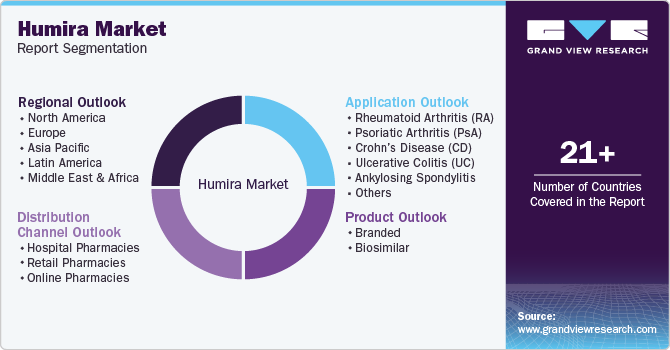
This report forecasts revenue growth at global, regional, and country levels and provides an analysis of the latest industry trends in each of the sub-segments from 2021 to 2033. For this study, Grand View Research has segmented the global Humira market report based on product, application, distribution channel, and region:
 To learn more about this report, Download Free Sample Report
 -
Product Outlook (Revenue, USD Million; 2021 - 2033)
-
Branded
-
Biosimilar
-
-
Application Outlook (Revenue, USD Million; 2021 - 2033)
-
Rheumatoid Arthritis (RA)
-
Psoriatic Arthritis (PsA)
-
Crohn’s Disease (CD)
-
Ulcerative Colitis (UC)
-
Ankylosing Spondylitis
-
Others
-
-
Distribution Channel Outlook (Revenue, USD Million; 2021 - 2033)
-
Hospital Pharmacies
-
Retail Pharmacies
-
Online Pharmacies
-
-
Regional Outlook (Revenue, USD Million; 2021 - 2033)
-
North America
-
U.S.
-
Canada
-
Mexico
-
-
Europe
-
UK
-
Germany
-
France
-
Italy
-
Spain
-
Denmark
-
Sweden
-
Norway
-
-
Asia Pacific
-
Japan
-
China
-
India
-
Australia
-
South Korea
-
Thailand
-
-
Latin America
-
Brazil
-
Argentina
-
-
Middle East & Africa
-
South Africa
-
Saudi Arabia
-
UAE
-
Kuwait
-
-
Research Methodology
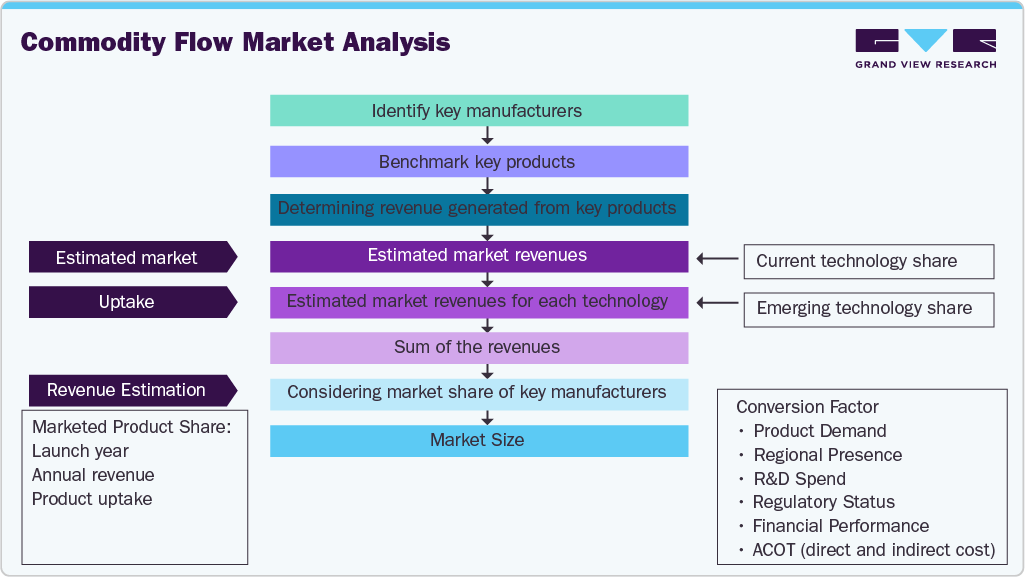
The humira market figures in this report are based on a proven research process that combines executive interviews with secondary research from proprietary databases, company filings, and recognized regulatory and institutional sources. Market size is built through value-chain sizing - reconciling supply-side and demand-side estimates - and triangulated with bottom-up and top-down approaches. Every estimate passes multiple levels of expert validation before publication, with each humira segment quantified using the revenue-capture definitions in the table below.
Segment Definition
Segment - Product
Revenue capture definition
Branded
Includes revenue generated from the originator Humira (adalimumab) marketed by AbbVie across all approved formulations, strengths, and therapeutic indications. This segment excludes all adalimumab biosimilars, regardless of manufacturer or distribution channel.
Biosimilar
Includes revenue generated from all regulatory-approved adalimumab biosimilars marketed by manufacturers other than AbbVie. This segment covers interchangeable and non-interchangeable biosimilars across all approved formulations, strengths, and therapeutic indications but excludes the branded Humira product.
Segment - Application
Revenue capture definition
Rheumatoid Arthritis (RA)
Includes revenue generated from Humira and adalimumab biosimilars prescribed exclusively for the treatment of rheumatoid arthritis. Revenue is allocated only to this indication and excludes use for all other approved autoimmune or inflammatory diseases.
Psoriatic Arthritis (PsA)
Includes revenue generated from Humira and adalimumab biosimilars prescribed exclusively for the treatment of psoriatic arthritis. Revenue is attributed only to this indication and excludes prescriptions for rheumatoid arthritis, psoriasis, or any other approved condition.
Crohn's Disease (CD)
Includes revenue generated from Humira and adalimumab biosimilars prescribed exclusively for the treatment of Crohn's disease in adult and pediatric patients. Revenue captured under this segment excludes ulcerative colitis and all other approved therapeutic indications.
Ulcerative Colitis (UC)
Includes revenue generated from Humira and adalimumab biosimilars prescribed exclusively for the treatment of ulcerative colitis. Revenue is assigned only to this indication and excludes Crohn's disease and all other approved autoimmune or inflammatory disorders.
Ankylosing Spondylitis
Includes revenue generated from Humira and adalimumab biosimilars prescribed exclusively for the treatment of ankylosing spondylitis. Revenue under this segment excludes prescriptions associated with all other approved musculoskeletal, autoimmune, or inflammatory conditions.
Others
Includes revenue generated from Humira and adalimumab biosimilars prescribed for all remaining approved therapeutic indications not included under rheumatoid arthritis, psoriatic arthritis, Crohn's disease, ulcerative colitis, or ankylosing spondylitis. These include plaque psoriasis, hidradenitis suppurativa, juvenile idiopathic arthritis, non-infectious uveitis, and other approved indications.
Segment - Distribution Channel
Revenue capture definition
Hospital Pharmacies
Includes revenue generated from Humira and adalimumab biosimilars dispensed through hospital pharmacies for inpatient and outpatient use. This segment excludes products supplied through retail pharmacies and licensed online pharmacy platforms.
Retail Pharmacies
Includes revenue generated from Humira and adalimumab biosimilars dispensed through community, chain, and independent retail pharmacies based on valid prescriptions. This segment excludes products distributed through hospital pharmacies and online pharmacy channels.
Online Pharmacies
Includes revenue generated from Humira and adalimumab biosimilars dispensed through licensed online and mail-order pharmacy platforms directly to patients. This segment excludes products supplied through hospital pharmacies and physical retail pharmacy outlets.
Estimation Model
 To learn more about this report, Download Free Sample Report
 The humira market was estimated primarily using a commodity flow market analysis supported by epidemiology-based validation. The study identified key manufacturers of branded Humira and approved adalimumab biosimilars, followed by benchmarking products based on approved indications, launch year, regional availability, formulation, and distribution footprint. Revenue generated from Humira and biosimilars was assessed using company annual reports, investor presentations, regulatory filings, and official company disclosures. Product-level revenues were aggregated and adjusted based on manufacturer market share, regional presence, pricing trends, and distribution channels to estimate the overall market size. The estimates were further validated using epidemiology data, including the prevalence of autoimmune diseases, diagnosed and treated patient populations, adalimumab prescription share across approved indications, and average annual treatment cost. Primary interviews with industry participants and healthcare experts were conducted to validate assumptions, while triangulation techniques ensured consistency across regional and global market estimates.
Delivered Customizations
This report has been delivered with the following In-depth customizations
Client Request
Customization Delivered
Value Adds
Humira Competitive Landscape & Biosimilar Assessment
Conducted a targeted assessment of the global Humira market, evaluating the branded product, approved adalimumab biosimilars, regulatory approvals, market access strategies, pricing approaches, and competitive positioning. The study analyzed key participants including AbbVie, Amgen, Celltrion, Sandoz, Samsung Bioepis, Boehringer Ingelheim, Alvotech, Fresenius Kabi, Pfizer, Coherus Biosciences, and Fujifilm Kyowa Kirin Biologics, along with market trends across major regions and approved autoimmune disease indications.
Helped the client assess the competitive position of branded and biosimilar manufacturers, benchmark market access strategies, identify expansion opportunities, and evaluate product differentiation across the adalimumab market.
Humira Market Access & Biosimilar Benchmarking Study
Delivered a detailed benchmarking analysis of branded Humira and approved adalimumab biosimilars, focusing on formulation profiles, interchangeability status, approved indications, pricing strategies, geographic availability, distribution channels, and patient support programs. The assessment compared product positioning and regulatory progress across leading manufacturers operating in the global adalimumab market.
Enabled the client to compare biosimilar positioning, identify market gaps, evaluate regional expansion opportunities, support pricing strategy decisions, and strengthen product positioning across key healthcare markets.
Humira Supply Chain & Manufacturing Assessment
Conducted a strategic assessment of the Humira manufacturing and supply ecosystem, evaluating biologics manufacturing capabilities, fill-finish operations, supply chain networks, regulatory compliance, contract manufacturing partnerships, and regional production capacity supporting branded and biosimilar adalimumab products. The study also assessed manufacturing expansion initiatives and supply continuity across major markets.
Supported manufacturing and supply planning by identifying production capabilities, assessing supply chain strengths, evaluating manufacturing partnerships, and providing insights into regional capacity that support long-term product availability and market expansion.
Frequently Asked Questions About This Report
The global humira market size was valued at USD 7.5 billion in 2025 and is estimated at USD 5.9 billion for 2026.
North America dominated the Humira market with an 84.4% revenue share in 2025.
The global humira market is expected to decline at a CAGR of -8.3% from 2026 to 2033, reaching USD 3.2 billion by 2033.
The Rheumatoid Arthritis segment accounted for the largest revenue share of 19.8% in 2025, driven by the widespread use of adalimumab in managing chronic inflammatory diseases.
The Hospital Pharmacy segment led the market with a 41.2% revenue share in 2025, supported by the extensive use of biologic therapies through hospital-based treatment settings.
Major trends include rapid expansion of adalimumab biosimilars, increasing interchangeability approvals, pricing pressure on the originator product, stronger payer preference for lower-cost biologics, and continued investment in patient support programs and manufacturing capacity by biosimilar manufacturers.
Key players in the Humira market include AbbVie, Alvotech, Amgen Inc., Boehringer Ingelheim Pharmaceuticals Inc., Celltrion Inc., Coherus Biosciences Inc., Fresenius Kabi AG, Fujifilm Kyowa Kirin Biologics Co., Ltd., Pfizer Inc., Samsung Bioepis, and Sandoz Inc.
Key factors include increasing adoption of adalimumab biosimilars, rising prevalence of autoimmune diseases, expanding regulatory support for biosimilars, broader patient access through lower-cost treatment options, and growing acceptance of biosimilar switching and substitution across major healthcare markets.
The Branded segment led the market with the largest revenue share of 80.9% in 2025, although biosimilars are expected to gain market share over the forecast period.
About the Author(s)
Pharmaceuticals Research Team
Healthcare · PharmaceuticalsThis report was authored by the pharmaceuticals research team at Grand View Research - comprising two research analysts, one senior research analyst, and one industry expert - with specialized expertise in the pharmaceuticals segment of the healthcare industry. All findings are based on proprietary healthcare databases, executive interviews, and regulatory analysis, subject to internal peer review prior to publication.
Last Updated:
Speak to Analyst

Customize this report to your needs - add regions, segments, or data points, with 20% free customization.
Or view our licence options:


ISO 9001:2015 & 27001:2022 Certified
We are GDPR and CCPA compliant! Your transaction & personal information is safe and secure. For more details, please read our privacy policy.


