
- Home
- »
- Advanced Interior Materials
- »
-
HVAC Insulation Market Size & Share, Report, 2026-2033GVR Report cover
![HVAC Insulation Market (2026 - 2033)Report]()
HVAC Insulation Market (2026 - 2033)
Size, Share & Trends Analysis Report By Product (Pipe, Ducts) By Material, By Application (Commercial, Industrial), By Distribution Channel (Online, Offline), By End Use, By Region (North America, Europe, Asia Pacific, MEA), And Segment Forecasts
Market Size, 2025
$7.4BMarket Estimate, 2026
$7.7BMarket Forecast, 2033
$10.5BCAGR, 2026–2033
4.6%HVAC Insulation Market Summary
The global HVAC insulation market size was valued at USD 7.4 billion in 2025 and is projected to grow from USD 7.7 billion in 2026 to USD 10.5 billion by 2033, at a CAGR of 4.6% from 2026 to 2033. North America dominated the HVAC insulation market and accounted for 35.2% share in 2025. The market is primarily driven by the increasing demand for energy-efficient buildings across residential, commercial, and industrial sectors.
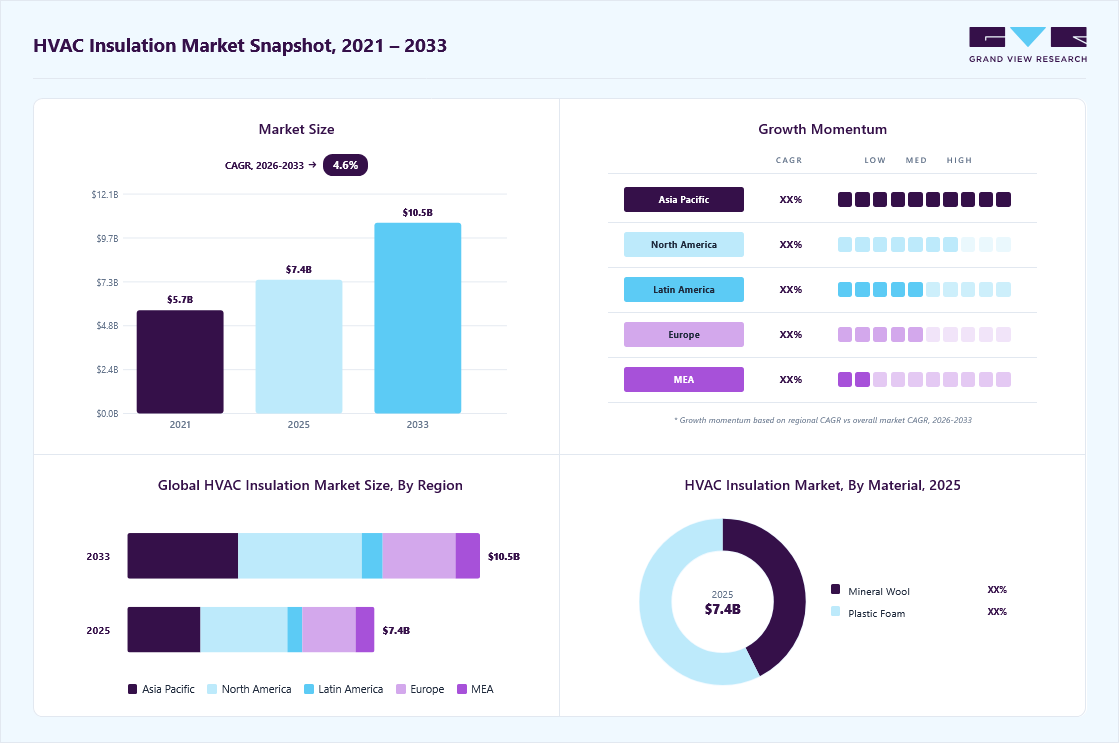
Key Market Trends & Insights
- By product: Pipe insulation segment dominated the market in 2025 and accounted for 29.6% share.
- By application: Commercial segment accounted for the largest revenue share of 56.8% in 2025.
- By distribution channel: Offline segment held the largest revenue share of 82.1% in 2025.
- By end use: Building contractors segment accounted for the largest revenue share of 51.2% in 2025.
Regional Highlights
- Largest regional market: North America (35.2% revenue share, 2025)
- Fastest-growing regional market: Asia Pacific (highest CAGR, 2026-2033)
- By country: The U.S. HVAC insulation market held the largest share in North America.
Market Size & Forecast
- Market size in 2025: USD 7.4 Billion
- Estimated market size in 2026: USD 7.7 Billion
- Projected market size by 2033: USD 10.5 Billion
- CAGR (2026-2033): 4.6%
Three ways to get this report
Buy it, customize it, or ask a question.Ask an Analyst
A direct answer, usually in 1 working day
- AccessReport author, directly
- Reply timeWithin 1 working day
- No sales callDirect answer only
- FormatEmail reply
- CostFree, no cost
Get the Full Report
What the study covers
- FormatsPDF · Excel · Dashboard
- Timeline2026–2033 annual, 2025 base
- Coverage20+ countries, 5 regions
- Companies10+ key players profiled
Customize the Report
20% free customization
- IncludeCountries, segments, points
- TailorTo your product definition
- ExtendDeeper competitor detail
- OrA fully bespoke study
- Turnaround5–10 working days
Rising electricity costs and stringent government regulations related to energy conservation are encouraging the adoption of insulated HVAC systems that minimize heat loss and improve operational efficiency. Rapid urbanization, growing construction activities, and expanding commercial infrastructure such as offices, hospitals, airports, shopping malls, and data centers are further supporting market growth. Another major growth driver is the rising focus on indoor comfort, fire safety, and sustainable building solutions. HVAC insulation helps reduce noise levels, control condensation, and improve indoor air quality, making it an essential component in modern buildings. Growing awareness regarding green buildings and LEED-certified infrastructure is also accelerating the use of advanced insulation materials such as elastomeric foam, mineral wool, and PIR/PUR foam. Furthermore, technological advancements in lightweight and high-performance insulation products, along with increasing retrofit activities in older buildings, are expected to continue driving the market.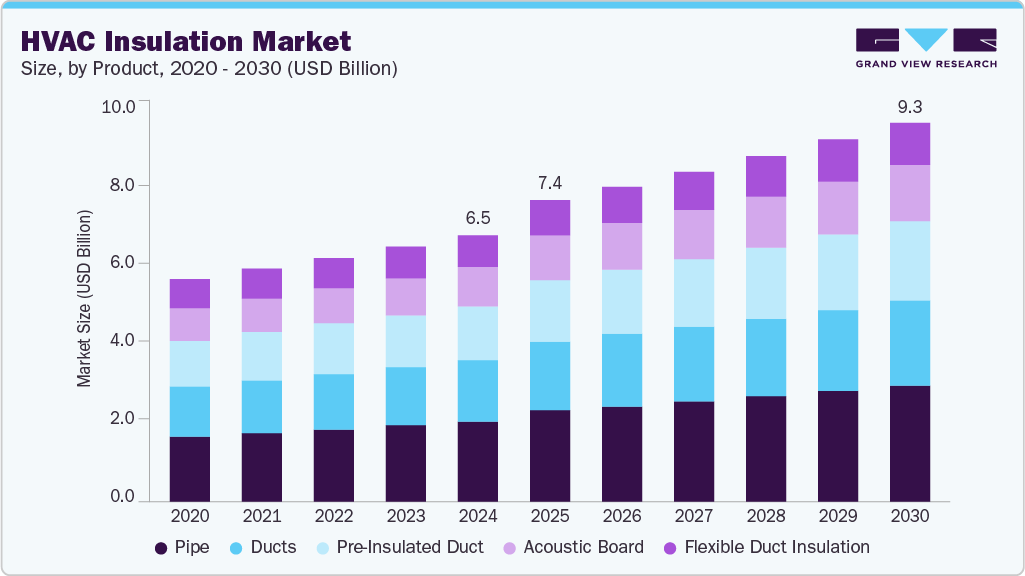
Market Dynamics
The increasing focus on energy efficiency in residential, commercial, and industrial buildings is one of the major market drivers. Rising electricity costs and stringent government regulations related to energy conservation are encouraging the adoption of insulated HVAC systems that reduce heat loss and improve cooling efficiency. HVAC insulation materials help maintain indoor temperatures, lower energy consumption, and reduce operational costs, making them essential in modern infrastructure projects.
In addition, the growing development of green buildings and sustainable construction practices is accelerating demand for advanced insulation materials such as mineral wool and elastomeric foam. Rapid urbanization, increasing installation of air conditioning systems, and expanding commercial infrastructure, including offices, hospitals, airports, and data centers, are further contributing to the growth of HVAC insulation solutions globally.
Fluctuating prices of raw materials such as crude oil derivatives, plastic foam, glass fibers, and mineral wool pose a major challenge for HVAC insulation manufacturers. Variations in raw material and transportation costs directly impact production expenses and profit margins, particularly for companies operating in highly competitive markets. In addition, rising costs may increase the overall price of insulation products, affecting their adoption in price-sensitive construction and residential sectors.
Market Concentration & Characteristics
The HVAC insulation industry is fragmented, with the presence of several global and regional players competing based on product performance, pricing, material innovation, and distribution networks. Major companies such as ROCKWOOL A/S, Saint-Gobain, Kingspan Group, Owens Corning, and Armacell hold significant market shares due to their strong product portfolios and global presence. However, the market also includes numerous regional manufacturers and local suppliers, particularly in Asia-Pacific and the Middle East, which increases competitive intensity.
The HVAC insulation industry is witnessing continuous innovation focused on improving thermal efficiency, fire resistance, moisture protection, and acoustic performance. Manufacturers are increasingly developing lightweight, eco-friendly, and high-performance insulation materials such as elastomeric foam, PIR/PUR foam, and advanced mineral wool products. The market is also experiencing growing adoption of pre-insulated ducts and sustainable insulation solutions designed to support green building standards and energy-efficient HVAC systems.
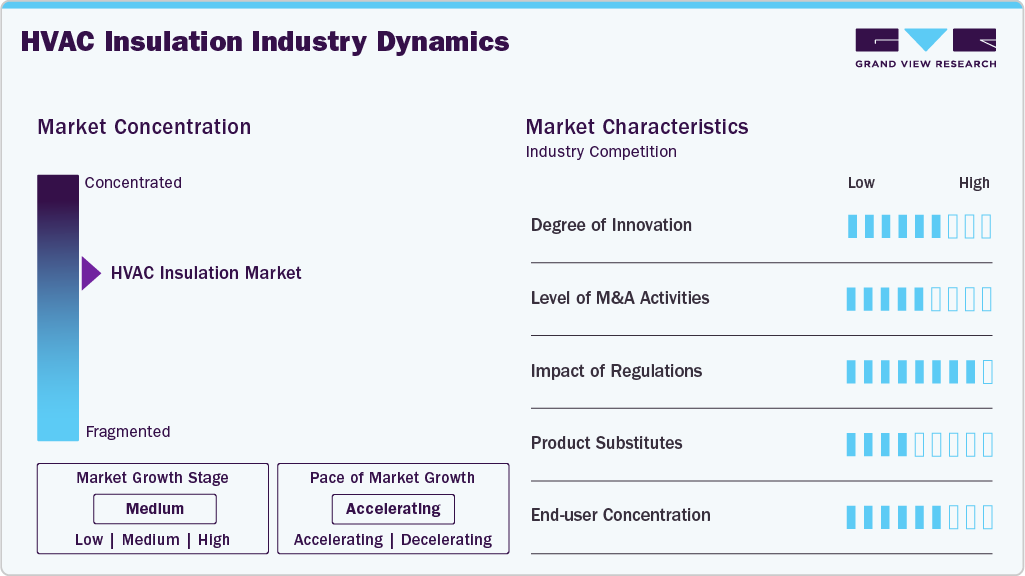
Government regulations related to energy efficiency, building safety, and carbon emission reduction play a major role in shaping the HVAC insulation industry. Building energy codes and green construction standards, such as LEED and energy conservation regulations, are encouraging the use of insulated HVAC systems in residential, commercial, and industrial buildings. In addition, fire safety standards and indoor air quality requirements are increasing the demand for certified insulation materials with enhanced thermal and acoustic properties.
The commercial sector represents the largest end-user segment in the HVAC insulation industry due to extensive HVAC installations in offices, hospitals, airports, shopping malls, hotels, and data centers. Industrial facilities also account for a significant share owing to the need for temperature control and energy management in manufacturing plants and processing industries. Meanwhile, the residential sector is witnessing steady growth supported by rising urbanization, increasing air-conditioner penetration, and growing awareness regarding energy-efficient homes.
Product Insights
The pipe insulation segment dominated the market in 2025 and accounted for 29.6% share, due to its extensive usage in chilled water systems, refrigerant pipelines, and heating applications across commercial, residential, and industrial buildings. Pipe insulation plays a critical role in minimizing heat loss, preventing condensation, improving energy efficiency, and protecting HVAC systems from corrosion and moisture damage. Rising installation of air conditioning systems, district cooling infrastructure, and energy-efficient building solutions further supported the growth of this segment.
The pre-insulated duct segment is expected to witness the fastest growth during the forecast period at 4.9% CAGR, owing to increasing demand for lightweight, energy-efficient, and easy-to-install HVAC duct systems. These ducts offer improved thermal performance, reduced air leakage, faster installation, and lower maintenance costs compared to conventional duct systems. Growing adoption in commercial complexes, airports, hospitals, data centers, and green building projects is driving the demand for pre-insulated ducts globally.
Material Insights
The plastic foam segment accounted for the largest revenue share in 2025 due to its excellent thermal insulation performance, moisture resistance, and wide application in pipe and duct insulation systems. Materials such as phenolic foam, elastomeric foam, and polyurethane are increasingly preferred in modern HVAC systems because of their lightweight structure, easy installation, energy efficiency, and enhanced fire resistance. Growing demand for energy-efficient residential and commercial buildings is further driving the adoption of plastic foam insulation materials.
The mineral wool segment is expected to witness significant growth at 4.4% CAGR during the forecast period, owing to its superior thermal resistance, fire protection, and sound absorption capabilities. Mineral wool materials, including glass wool and stone wool, are widely used in commercial and industrial HVAC applications where fire safety and acoustic insulation are critical requirements. Increasing implementation of stringent building safety regulations and rising demand for sustainable insulation materials are supporting the growth of this segment globally.
Application Insights
The commercial segment accounted for the largest revenue share of 56.8% in 2025, driven by the increasing construction of offices, shopping malls, hospitals, airports, hotels, and educational institutions. Growing emphasis on reducing energy consumption, improving HVAC efficiency, and complying with environmental and building regulations is accelerating the adoption of advanced HVAC insulation solutions in commercial buildings. In addition, rising demand for acoustic insulation, indoor comfort, and improved air quality further supports segment growth.
The residential segment is the fastest growing at a CAGR of 5.3%, due to increasing awareness regarding energy efficiency, indoor thermal comfort, and cost savings among homeowners. Rising residential construction activities, renovation projects, and growing adoption of air conditioning systems are boosting demand for HVAC insulation materials such as glass wool and elastomeric foam. Government initiatives promoting green buildings and energy-efficient housing are also contributing to the expansion of this segment.
Distribution Channel Insights
The offline segment accounted for the largest revenue share of 82.1% in 2025 due to its strong presence across the construction and industrial sectors. Authorized dealers, distributors, and HVAC contractors remain the preferred purchasing channels as they provide technical guidance, customized solutions, immediate product availability, and installation support for large commercial and industrial projects. The offline channel is particularly important for projects requiring professional consultation and on-site expertise.
The online distribution channel is witnessing the fastest growth at 5.2% CAGR, driven by the increasing digitalization of procurement processes and growing adoption of B2B e-commerce platforms. Online platforms enable contractors, builders, and facility managers to compare product specifications, pricing, and availability more efficiently while offering access to a wider range of insulation products. Increasing digital awareness, convenience in purchasing, and direct manufacturer-to-customer engagement are expected to further support the growth of the online segment, especially in urbanizing and developed regions.
End Use Insights
The building contractors segment accounted for the largest revenue share of 51.2% in 2025, driven by increasing residential and commercial construction activities globally. Building contractors are increasingly adopting high-performance HVAC insulation materials to meet energy-efficiency standards, sustainability targets, and green building requirements. Rising renovation and retrofit projects are also supporting demand for HVAC insulation solutions in this segment.
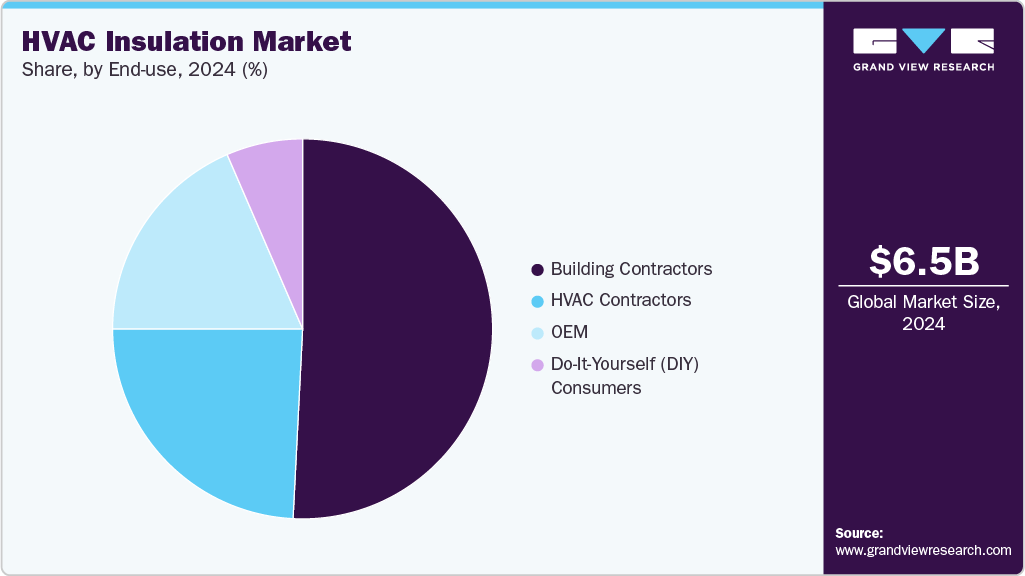
The HVAC contractors segment is expected to witness the fastest growth during the forecast period, owing to rising installation and maintenance of energy-efficient HVAC systems across residential and commercial buildings. Increasing adoption of advanced insulation materials, stricter building regulations, and growing demand for sustainable HVAC solutions are encouraging HVAC contractors to integrate high-performance insulation systems. In addition, the expansion of smart HVAC technologies and retrofit activities is further contributing to segment growth.
Regional Insights
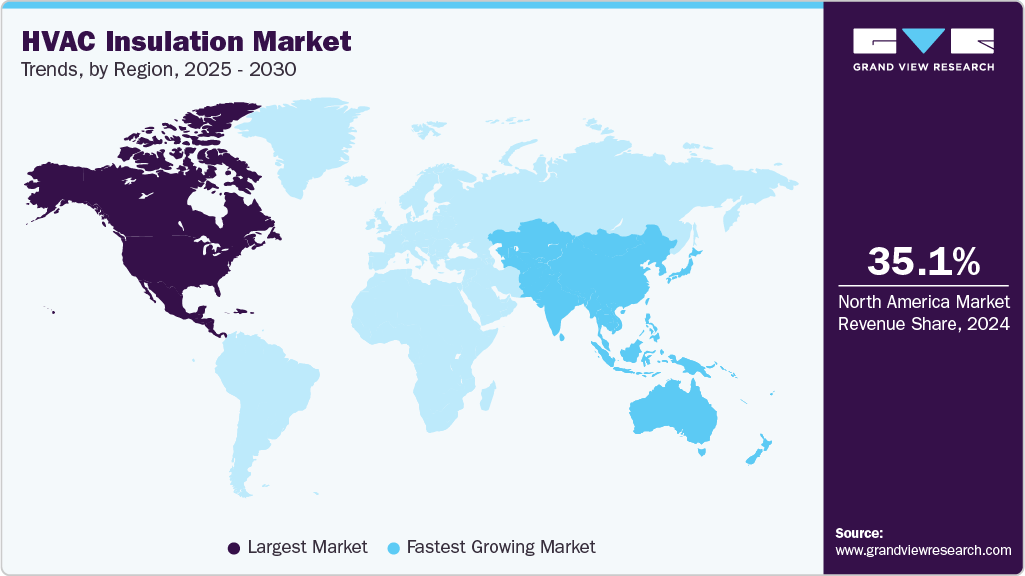
North America dominated the HVAC insulation market and accounted for 35.2% share in 2025, due to the strong presence of advanced commercial infrastructure, high adoption of energy-efficient HVAC systems, and stringent building energy regulations across the U.S. and Canada. Growing investments in green buildings, data centers, healthcare facilities, and residential renovation projects are driving demand for high-performance insulation materials.
U.S. HVAC Insulation Market Trends
The HVAC insulation market in the U.S. led North America, supported by strong demand from commercial construction, large-scale retrofit projects, and widespread adoption of advanced HVAC systems across offices, healthcare facilities, educational institutions, and data centers. Increasing emphasis on reducing building energy consumption and improving indoor environmental quality has accelerated the use of high-performance insulation materials in duct and piping applications. In addition, ongoing investments in smart buildings, sustainable infrastructure, and modernization of aging HVAC systems continue to create favorable growth opportunities for HVAC insulation manufacturers across the country.
Europe HVAC Insulation Market Trends
The HVAC insulation market in Europe is witnessing steady growth due to stringent energy-efficiency regulations, a strong focus on sustainable construction, and increasing renovation of old buildings. Countries such as Germany, the UK, France, and Italy are investing significantly in green building projects and low-carbon infrastructure, driving demand for advanced insulation materials. The region also benefits from growing adoption of fire-resistant and acoustic insulation solutions in commercial and residential applications.
Germany HVAC insulation market dominated Europe owing to its strong industrial base, advanced construction sector, and early adoption of energy-efficient building technologies. According to the ITA, Germany is Europe's leader in the data center industry, with over 500 operational data centers, which is significantly driving demand for HVAC insulation solutions to improve cooling efficiency and thermal management. Increasing modernization of commercial buildings, industrial facilities, and sustainable infrastructure projects is further supporting market growth across the country.
The HVAC insulation market in Italy is emerging as a growing market due to increasing renovation activities, rising demand for efficient cooling systems, and expanding hospitality and commercial infrastructure sectors. The country is witnessing higher adoption of insulation materials in residential and mixed-use buildings to improve thermal comfort and reduce energy expenses.
Asia Pacific HVAC Insulation Market Trends
The HVAC insulation market in the Asia Pacific is expected to be the fastest-growing region owing to rapid urbanization, expanding construction activities, and rising installation of air conditioning systems in countries such as China, India, Japan, and Australia. Increasing disposable income, infrastructure development, and growing awareness regarding energy-efficient buildings are accelerating the adoption of HVAC insulation products. Government initiatives supporting smart cities and sustainable construction are further contributing to regional market expansion.
China HVAC insulation market led the Asia Pacific, supported by rapid urban development, large-scale infrastructure expansion, and strong growth in commercial and industrial construction activities. The country continues to represent the largest construction industry globally, with the sector reaching an estimated value of around USD 4.82 trillion in 2025, which has significantly increased the demand for HVAC insulation products in buildings, transportation hubs, and industrial facilities. Rising emphasis on energy-efficient construction practices and modern HVAC systems is further contributing to market growth across China.
The HVAC insulation market in India is emerging as a high-growth market due to increasing urban population, rising residential and commercial construction, and growing demand for air-conditioning systems. Expansion of infrastructure projects such as smart cities, airports, healthcare facilities, metro networks, and IT parks is driving the need for efficient HVAC insulation solutions. In addition, increasing awareness regarding energy savings and supportive government initiatives for sustainable building development are positively influencing market demand in the country.
Middle East & Africa HVAC Insulation Market Trends
The HVAC insulation market in MEA is experiencing growing demand due to extreme climatic conditions, increasing infrastructure projects, and rising adoption of air conditioning systems in commercial and residential buildings. Rapid development of smart cities, airports, hotels, and healthcare facilities in countries such as the UAE and Saudi Arabia is driving the need for energy-efficient HVAC systems and insulation materials.
Saudi Arabia HVAC insulation market is witnessing strong growth due to increasing investments in large-scale infrastructure, commercial construction, and smart city developments across the country. Rising demand for energy-efficient cooling systems in extreme climatic conditions is driving the adoption of advanced HVAC insulation materials in residential, hospitality, healthcare, and retail sectors. Major projects under Vision 2030, including airports, tourism infrastructure, and mixed-use developments, are further supporting the demand for high-performance insulation solutions to improve energy efficiency and indoor comfort.
Latin America HVAC Insulation Market Trends
The Latin America HVAC insulation market is growing gradually, supported by increasing commercial construction activities, urban development, and rising demand for energy-efficient cooling systems. Countries such as Brazil and Argentina are experiencing growing investments in residential complexes, retail infrastructure, and industrial facilities, creating opportunities for HVAC insulation manufacturers.
Brazil HVAC insulation market is experiencing steady growth owing to increasing commercial construction activities, expanding industrial infrastructure, and rising demand for energy-efficient cooling systems. Growth in sectors such as retail, healthcare, hospitality, and residential housing is supporting the installation of modern HVAC systems, thereby increasing the need for effective insulation materials.
Key HVAC Insulation Company Insights
Some of the key players operating in the market include ROCKWOOL A/S, Saint-Gobain Technical Insulation, and Johns Manville.
-
ROCKWOOL A/S is a Denmark-based multinational company engaged in the manufacturing of stone wool insulation solutions designed to improve energy efficiency, fire protection, and acoustic comfort in buildings. The company operates across major regions, including Europe, North America, and Asia, serving residential, commercial, industrial, and marine sectors. Its stone wool products are widely recognized for their thermal insulation performance, durability, sustainability, and fire-resistant properties, making them suitable for a wide range of construction applications.
-
Saint-Gobain Technical Insulation, part of the Saint-Gobain Group, provides advanced insulation solutions for industrial, commercial, and HVAC applications. The company offers a broad range of products focused on enhancing thermal efficiency, operational safety, and sustainability while supporting energy conservation goals. With a strong international presence and diversified insulation portfolio, Saint-Gobain Technical Insulation serves multiple industries with high-performance solutions that comply with modern efficiency and safety requirements.
Key HVAC Insulation Companies:
The following key companies have been profiled for this study on the HVAC insulation market.
- ROCKWOOL A/S
- Saint-Gobain Technical Insulation
- Johns Manville
- Armacell
- Knauf Insulation
- Thermaflex
- Panasonic Industry Co., Ltd.
- American Flexible Products
- Climatech International
- Kingspan Group
- Glassrock Insulation Co.
- Owens Corning
- Lindner SE
- Durkee(Wuhan) Insulation Material Co., Ltd
- Xiamen UNT Duct Technology Co., Ltd.
Competitive Benchmarking
Operating Strategies
Competitive Edge
Weaknesses
Mature Players: ROCKWOOL A/S; Saint-Gobain Technical Insulation; Johns Manville; Armacell; Knauf Insulation; Kingspan Group
- Focus on product innovation and high-performance insulation materials
- Expansion through acquisitions, partnerships, and global manufacturing facilities
- Strong emphasis on sustainable and energy-efficient HVAC insulation solutions
- Established global brand presence and extensive distribution networks
- Broad product portfolios covering pipe, duct, acoustic, and foam insulation
- Strong R&D capabilities with compliance to international fire and energy standards
- High operational and manufacturing costs compared to regional players
- Dependence on raw material price fluctuations affecting profit margins
Emerging Players: American Flexible Products; Climatech International; Glassrock Insulation Co.; Durkee(Wuhan) Insulation Material Co., Ltd; Conamix; Xiamen UNT Duct Technology Co., Ltd.
- Focus on cost-effective and region-specific insulation solutions
- Expansion in developing markets through local distribution channels
- Increasing investments in pre-insulated ducts and customized HVAC products
- Competitive pricing and faster response to local customer requirements
- Strong presence in regional construction and industrial projects
- Flexibility in offering customized insulation systems for specific applications
- Limited global presence and lower brand recognition
- Smaller product portfolio and comparatively lower R&D investments
Recent Developments
-
In February 2025, Panasonic Industry Co., Ltd. introduced its AR-T Series BLDC Motors and Vacua Series Vacuum Insulation Panels for HVAC applications during ACREX India 2025. These products are developed to enhance thermal efficiency, lower operational noise, and support energy-saving HVAC systems used in modern commercial and residential infrastructure.
-
In February 2025, Johns Manville revealed plans to add a new production line for its Climate Pro blown-in fiberglass insulation at the company’s manufacturing facility in Winder, Georgia. The expansion is intended to strengthen production capabilities and address rising demand for energy-efficient insulation solutions in the residential sector.
HVAC Insulation Market Report Scope
Report Attribute
Details
Market size in 2025
USD 7.4 billion
Estimated Market size in 2026
USD 7.7 billion
Projected Market size by 2033
USD 10.5 billion
Growth rate
CAGR of 4.6% from 2026 to 2033
Historical data
2021 - 2025
Forecast period
2026 - 2033
Quantitative units
Revenue in USD million/billion and CAGR from 2026 to 2033
Report coverage
Revenue forecast, company ranking, competitive landscape, growth factors, and trends
Segments covered
Product, material, application, distribution channel, end use region
Regional scope
North America; Europe; Asia Pacific; Latin America; MEA
Country scope
U.S.; Canada; Mexico; UK; Germany; France; Spain; Italy; China; Japan; India; Australia; South Korea; Brazil; Argentina; Saudi Arabia; South Africa; UAE
Key companies profiled
ROCKWOOL A/S; Saint-Gobain Technical Insulation; Johns Manville; Armacell; Knauf Insulation; Thermaflex; Panasonic Industry Co., Ltd.; American Flexible Products; Climatech International; Kingspan Group; Glassrock Insulation Co.; Owens Corning; Lindner SE; Durkee (Wuhan) Insulation Material Co., Ltd.; Xiamen UNT Duct Technology Co., Ltd.
Customization scope
Free report customization (equivalent up to 8 analysts working days) with purchase. Addition or alteration to country, regional & segment scope.
Pricing and purchase options
Avail customized purchase options to meet your exact research needs. Explore purchase options
Global HVAC Insulation Market Report Segmentation
This report forecasts revenue growth at global, regional, and country levels and provides an analysis of the latest industry trends in each of the sub-segments from 2021 to 2033. For this study, Grand View Research has segmented the global HVAC insulation market report based on product, material, application, distribution channel, end use, and region:
-
Product Outlook (Revenue, USD Billion, 2021 - 2033)
-
Pipe
-
Ducts
-
Acoustic Board
-
Pre-Insulated Duct
-
Flexible Duct Insulation
-
-
Material Outlook (Revenue, USD Billion, 2021 - 2033)
-
Mineral Wool
-
Glass Wool
-
Stone Wool
-
-
Plastic Foam
-
Phenolic, PIR & PUR
-
Elastomeric Foam
-
Polyethylene
-
-
-
Application Channel Outlook (Revenue, USD Billion, 2021 - 2033)
-
Commercial
-
Residential
-
Industrial
-
-
Distribution Channel Outlook (Revenue, USD Billion, 2021 - 2033)
-
Offline
-
Online
-
-
End Use Outlook (Revenue, USD Billion, 2021 - 2033)
-
OEM
-
Building Contractors
-
HVAC Contractors
-
Do-It-Yourself (DIY) Consumers
-
-
Regional Outlook (Revenue, USD Billion, 2021 - 2033)
-
North America
-
U.S.
-
Canada
-
Mexico
-
-
Europe
-
Germany
-
France
-
Italy
-
Spain
-
UK
-
-
Asia Pacific
-
China
-
India
-
Japan
-
South Korea
-
Australia
-
-
Latin America
-
Brazil
-
Argentina
-
-
Middle East and Africa
-
Saudi Arabia
-
South Africa
-
UAE
-
-
Delivered Customizations
This report has been delivered with the following In-depth customizations
Client Request
Customization Delivered
Value Adds
Regional Segmentation
Detailed regional analysis was conducted across North America, Europe, Asia Pacific, Latin America, and the Middle East & Africa, including country-level assessment for key markets such as the U.S., Germany, China, India, Brazil, and Saudi Arabia. The study evaluated regional demand patterns, construction activities, HVAC adoption trends, and the regulatory landscape influencing HVAC insulation demand.
Helped identify high-growth regional markets, country-specific opportunities, and evolving demand trends across developed and emerging economies. The analysis also supported market entry strategies and regional expansion planning.
Competitive benchmarking
Comprehensive benchmarking was carried out for major market participants based on product portfolio, regional presence, pricing strategy, innovation focus, manufacturing capabilities, and distribution network strength. The assessment also compared mature and emerging players operating in the market.
Assisted clients in understanding competitor positioning, market strengths, and potential competitive gaps. The study supported strategic planning, partnership evaluation, and differentiation opportunities in the market.
Opportunity assessment
In-depth opportunity assessment was conducted by analyzing regional demand trends, infrastructure development, green building initiatives, retrofit projects, and growth potential across commercial and industrial sectors. The study also identified emerging opportunities in data centers, healthcare facilities, and smart building projects.
Enabled clients to identify attractive investment areas, prioritize target markets, and evaluate future revenue opportunities. The analysis also supported expansion planning and long-term growth strategy development.
Frequently Asked Questions About This Report
The global HVAC insulation market size was estimated at USD 7.4 billion in 2025 and is expected to be USD 7.7 billion in 2026.
The global HVAC Insulation Market, in terms of revenue, is expected to grow at a compound annual growth rate of 4.6% from 2026 to 2033 to reach USD 10.5 billion by 2033.
North America dominated the HVAC insulation market and accounted for 35.2% share in 2025, due to the strong presence of advanced commercial infrastructure, high adoption of energy-efficient HVAC systems, and stringent building energy regulations across the U.S. and Canada.
Some of the key players operating in the global HVAC Insulation Market include ROCKWOOL A/S; Saint-Gobain Technical Insulation; Johns Manville; Armacell; Knauf Insulation; Thermaflex; Panasonic Industry Co., Ltd.; American Flexible Products; Climatech International; Kingspan Group; Glassrock Insulation Co.; Owens Corning; Lindner SE; Durkee (Wuhan) Insulation Material Co., Ltd.; Xiamen UNT Duct Technology Co., Ltd.
Key factors include the rising demand for energy-efficient buildings, increasing HVAC installations, and growing construction activities across residential, commercial, and industrial sectors. Stringent energy conservation regulations and the rising focus on indoor comfort, fire safety, and sustainable
The pipe insulation segment dominated the market in 2025, accounting for 29.6% of the revenue.
The plastic foam segment accounted for the largest revenue share in 2025.
The commercial segment accounted for the largest revenue share of 56.8% in 2025.
The offline segment accounted for the largest revenue share of 82.1% in 2025.
The building contractors segment accounted for the largest revenue share of 51.2% in 2025.
About the Author(s)
Advanced Interior Materials Research Team
Advanced Materials · Advanced Interior MaterialsThis report was authored by the advanced interior materials research team at Grand View Research - comprising two research analysts, one senior research analyst, and one industry expert - with specialized expertise in the advanced interior materials segment of the advanced materials industry. All findings are based on proprietary advanced materials databases, executive interviews, and regulatory analysis, subject to internal peer review prior to publication.
Last Updated:
Speak to Analyst


Customize this report to your needs - add regions, segments, or data points, with 20% free customization.
Or view our licence options:


ISO 9001:2015 & 27001:2022 Certified
We are GDPR and CCPA compliant! Your transaction & personal information is safe and secure. For more details, please read our privacy policy.


