
- Home
- »
- Advanced Interior Materials
- »
-
HVAC Rental Services Market Size, Share Report 2026-2033GVR Report cover

HVAC Rental Services Market (2026 - 2033)
Size, Share & Trends Analysis Report By Product (Heating, Ventilation, Cooling, Cooling), By Application (Residential, Commercial), By Region (North America, Europe, APAC, Latin America, MEA), And Segment Forecasts
Market Size, 2025
$2.3BMarket Estimate, 2026
$2.5BMarket Forecast, 2033
$3.6BCAGR, 2026–2033
5.7%HVAC Rental Services Market Summary
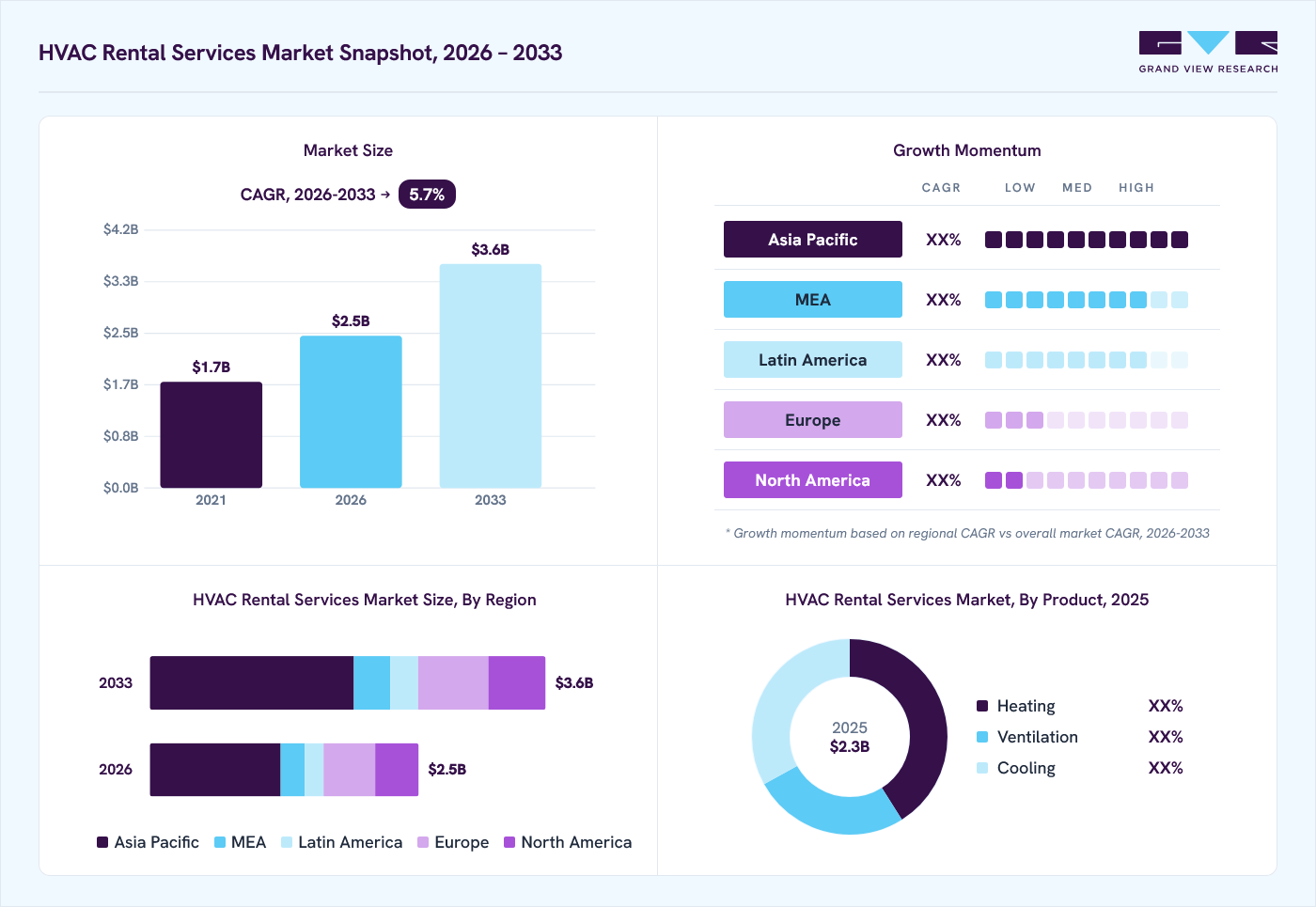
The global HVAC rental services market size was valued at USD 2.3 billion in 2025 and is projected to grow from USD 2.5 billion in 2026 to USD 3.6 billion by 2033, at a CAGR of 5.7% from 2026 to 2033. Asia Pacific dominated the market, accounting for a revenue share of 48.2% in 2025. Cost-effectiveness plays a crucial role in driving market growth.
 Source: Grand View Research, IR Documents, Primary Interviews, Paid DatabasesTo learn more about this report,
 Download Free Sample Report
Key Market Trends & Insights
- By product: Heating segment led the market with the largest revenue share of 41.0% in 2025.
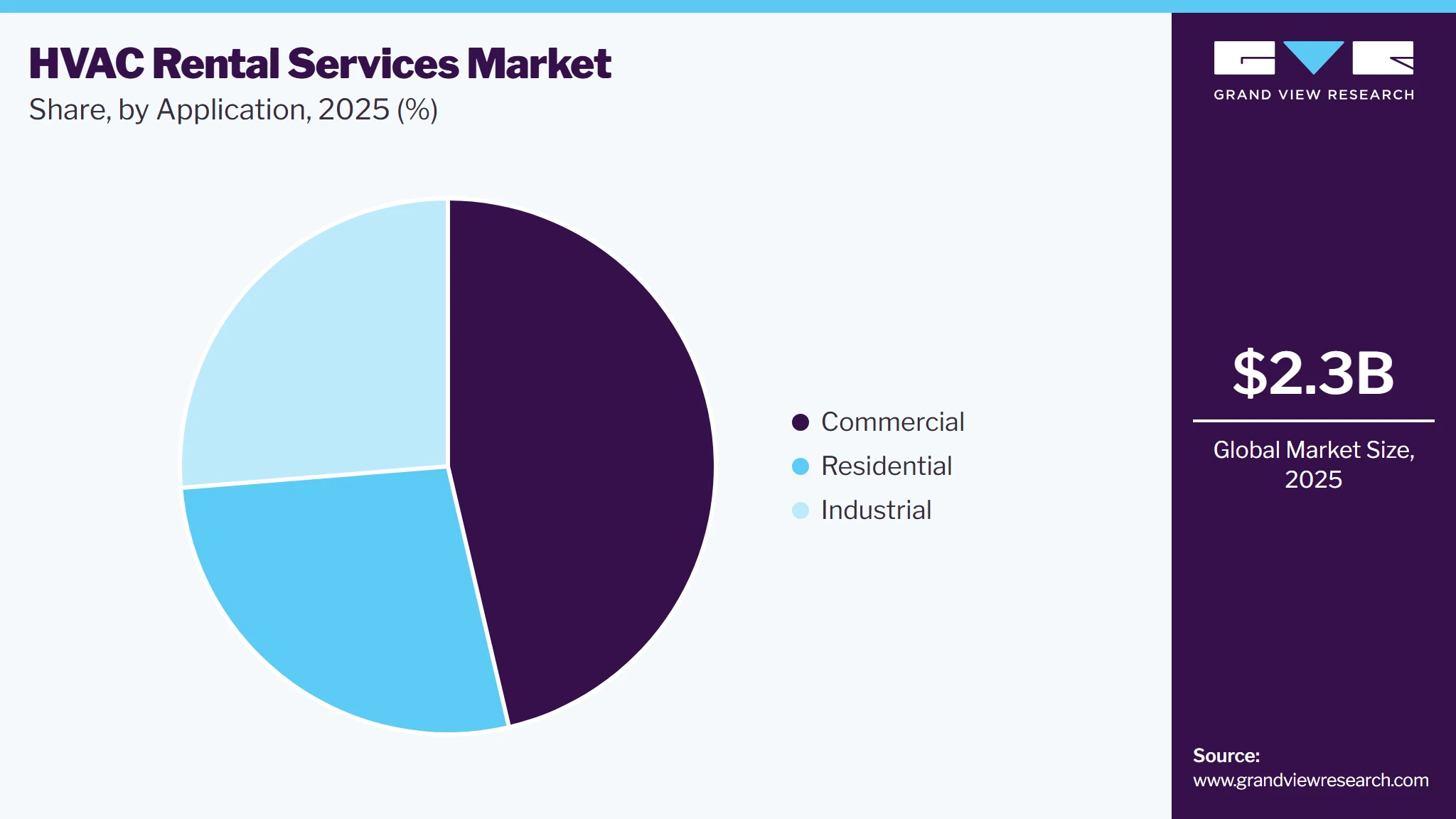
- By application: Commercial segment led the market with the largest revenue share of 46.3% in 2025
Regional Highlights
- Largest regional market: Asia Pacific (48.2% revenue share, 2025)
- By country: China held the largest market share in 2025.
Market Size & Forecast
- Market size in 2025: USD 2.3 Billion
- Estimated market size in 2026: USD 2.5 Billion
- Projected market size by 2033: USD 3.6 Billion
- CAGR (2026-2033): 5.7%
Prism AI by Grand View Research Free to tryAsk a question about the HVAC rental services marketTry asking✓Every figure cited from GVR research Prefer the report? Download free sample →
Renting Heating, Ventilation, and Air Conditioning (HVAC) equipment allows businesses to avoid the high upfront costs of purchasing new systems and instead pay for rental services only when needed. This approach can be more financially manageable, particularly for short-term requirements.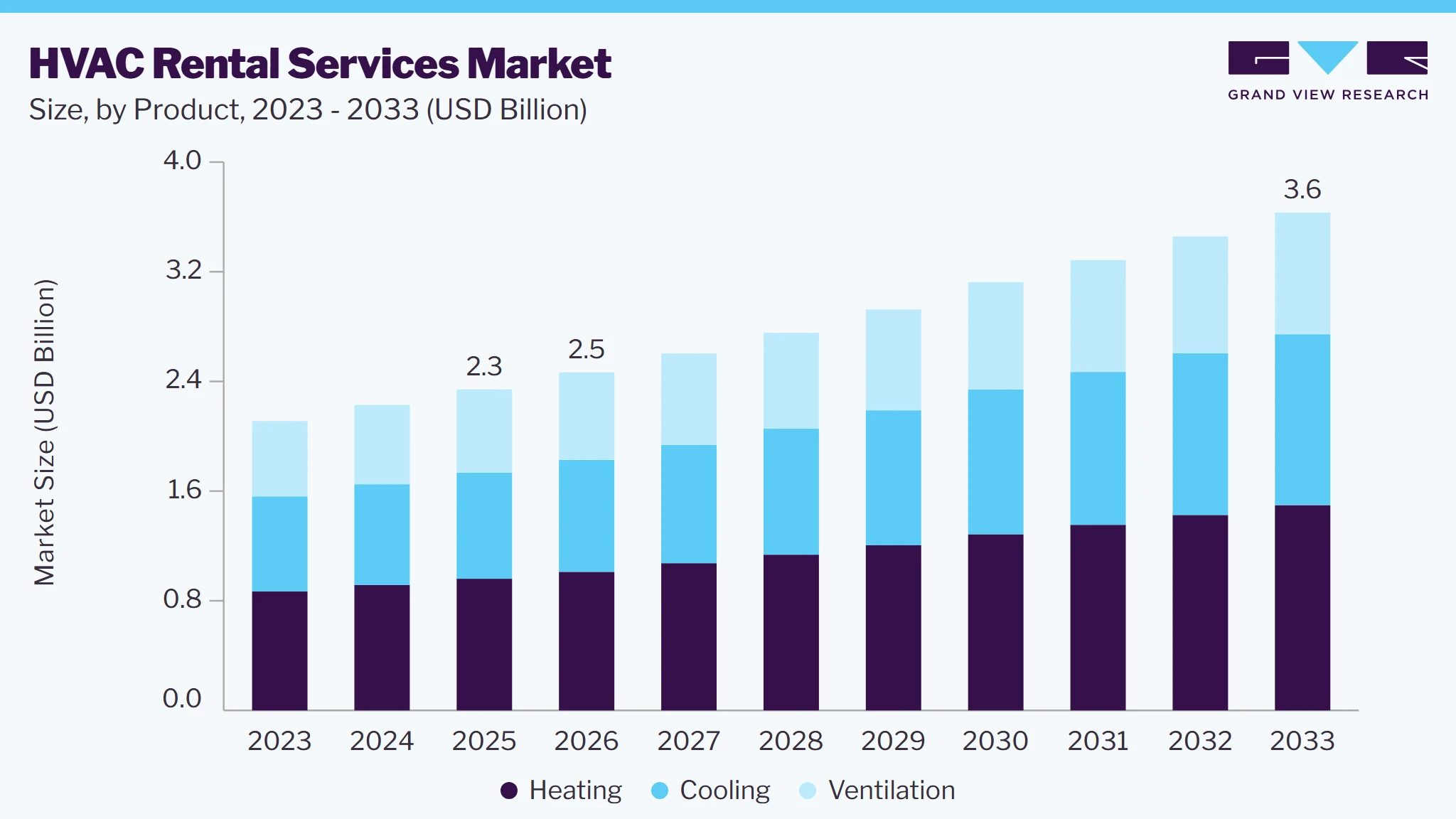 To learn more about this report, Download Free Sample Report
Technological advancements further enhance the attractiveness of HVAC rentals. Modern rental units often incorporate the latest energy-efficient technology, providing superior performance and cost savings. Businesses are increasingly drawn to these advanced systems, which offer both temporary solutions and high efficiency.
Market Dynamics
The HVAC rental services market is expanding as businesses increasingly seek temporary, scalable, and cost-effective heating, ventilation, and air conditioning solutions for construction projects, industrial shutdowns, commercial facilities, healthcare institutions, events, and emergency response applications. Growing investments in infrastructure development, data centers, manufacturing facilities, and commercial real estate are strengthening demand for rental HVAC equipment that can be deployed quickly without significant capital expenditure. Advances in energy-efficient and digitally monitored rental systems are improving equipment performance and attracting customers focused on operational efficiency. However, fleet maintenance, transportation, installation, and equipment replacement costs continue to place pressure on service providers, while seasonal demand fluctuations can impact asset utilization.
The growing need for temporary heating, cooling, and ventilation solutions across construction sites, industrial facilities, commercial buildings, healthcare institutions, and event venues is driving the HVAC rental services market. Organizations are increasingly opting for rental equipment to address planned maintenance, seasonal demand, emergency breakdowns, and short-term projects without investing in permanent systems. The ability to deploy equipment quickly while minimizing capital expenditure makes rental services an attractive option for a wide range of end users.
HVAC rental providers face considerable costs related to equipment procurement, maintenance, transportation, storage, and installation. Large rental fleets require continuous servicing to ensure reliability and compliance with environmental regulations, while logistics costs can increase significantly for remote or complex project locations. These ongoing operational expenses can reduce profit margins and make it challenging for providers to maintain competitive rental pricing.
HVAC rental providers face considerable costs related to equipment procurement, maintenance, transportation, storage, and installation. Large rental fleets require continuous servicing to ensure reliability and compliance with environmental regulations, while logistics costs can increase significantly for remote or complex project locations. These ongoing operational expenses can reduce profit margins and make it challenging for providers to maintain competitive rental pricing.
Analyst Perspective
The HVAC rental services market is witnessing steady growth due to rising demand for temporary and emergency cooling and heating solutions across industrial, healthcare, construction, data center, and event applications. Increasing investments in manufacturing facilities, infrastructure projects, and commercial buildings are driving demand for rental HVAC equipment during maintenance shutdowns, equipment failures, and temporary capacity expansion. Businesses are increasingly opting for rental solutions to avoid high upfront capital investments while ensuring operational continuity. Industrial production, construction activity, and extreme weather conditions continue to influence market demand. Rising energy costs and the need for greater operational flexibility are further supporting rental adoption. Additionally, the adoption of energy-efficient, low-emission rental equipment and digital fleet monitoring technologies is enhancing service capabilities and improving market competitiveness
Drivers, Opportunities & Restraints
The growth of the construction and event management sectors also drives demand for HVAC rentals. As construction projects become more frequent and events more elaborate, the need for temporary climate control solutions rises. Similarly, emergency response and disaster recovery efforts benefit from rapid deployment of rental HVAC systems, which help maintain operations and support recovery.
Rental services may be limited to remote or less accessible locations, where logistical challenges and higher transportation costs can affect the availability and timeliness of rental units. This can restrict market growth in such areas.
The expansion of urban areas and infrastructure development in emerging markets presents new opportunities for HVAC rental services. As these regions grow, they require temporary climate control solutions, creating a potential growth avenue for rental providers.
Product Insights
Based on product, the heating segment led the market with the largest revenue share of 41.0% in 2025. During construction and renovation projects, heating systems are essential to maintain appropriate working conditions and ensure the proper curing of materials, which boosts demand for rental services. The appeal of modern, energy-efficient heating technologies also plays a role, as they offer better performance and lower operating costs. In addition, heating rentals are crucial in emergencies, such as system failures or power outages, where rapid and reliable solutions are needed.
The growing demand for cooling systems within the global market is significantly influenced by rising global temperatures and more frequent heatwaves, which increase the demand for effective cooling solutions. As urbanization expands and high-density buildings create heat retention in cities, the need for efficient cooling becomes more pronounced. In addition, advancements in cooling technologies, including energy-efficient and environmentally friendly systems, make rental options more attractive.
Application Insights
Based on application, the commercial segment led the market with the largest revenue share of 46.3% in 2025. Increasing commercial real estate development contributes significantly to this growth. As businesses expand and new commercial spaces are constructed or renovated, there is a heightened need for temporary HVAC solutions to ensure comfort and meet building codes during these phases. This trend is particularly prominent in sectors such as retail, office spaces, and hospitality.
 To learn more about this report, Download Free Sample Report
The industrial segment experiences growth driven by the expansion of industrial activities and the establishment of new facilities, which creates a demand for systems that maintain optimal working conditions and equipment efficiency. Compliance with strict regulations regarding workplace conditions and environmental controls necessitates the use of advanced HVAC systems, and rental services offer a flexible solution for meeting these requirements.
Regional Insights
“India to witness fastest market growth at 7.4% CAGR”
The HVAC rental services market in North America benefits from a combination of technological advancements and regulatory requirements. The region's emphasis on energy efficiency and environmental sustainability drives the demand for modern, energy-efficient rental HVAC systems that help businesses meet stringent regulations and reduce their carbon footprints. Seasonal extremes in temperature-such as hot summers and cold winters-also create a steady need for temporary heating and cooling solutions.
U.S. HVAC Rental Services Market Trends
The HVAC rental service market in the U.S. is experiencing robust growth driven by increased demand for temporary climate control solutions across various sectors. This growth is fueled by factors such as rising construction activities, emergency repair needs, and seasonal temperature fluctuations that necessitate flexible HVAC solutions. Additionally, the trend towards shorter project timelines and the need for cost-effective, scalable solutions further bolster the market. Companies are expanding their rental fleets and enhancing service offerings to meet the evolving needs of industries ranging from construction to events, contributing to the sector's dynamic expansion.
Asia Pacific HVAC Rental Services Market Trends
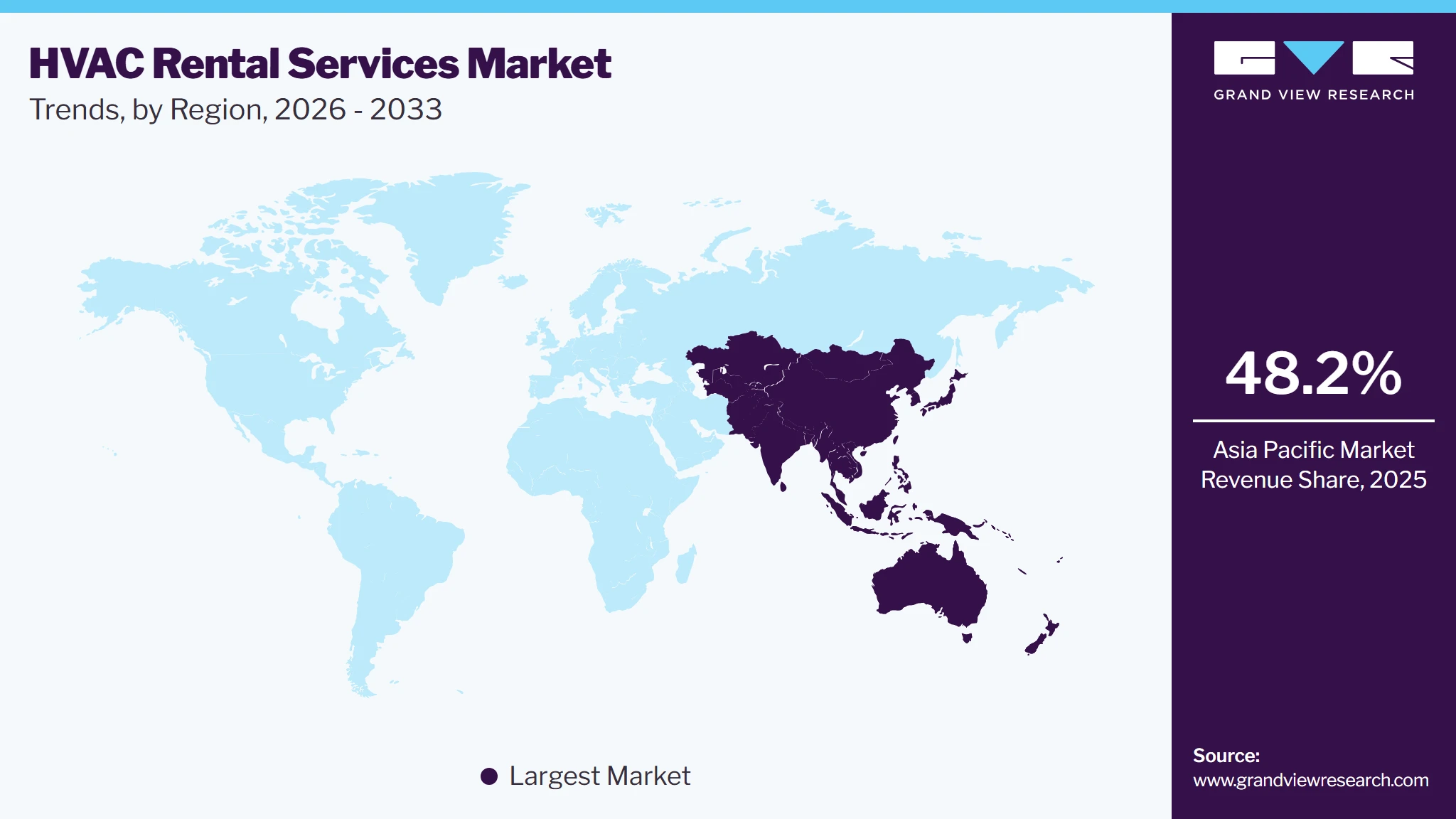
Asia Pacific dominated the HVAC rental services market with the largest revenue share of 48.2% in 2025. The market growth is primarily driven by rapid urbanization and industrial expansion. As cities across Asia Pacific experience significant population growth and infrastructure development, the demand for temporary HVAC solutions for construction projects, commercial spaces, and events increases. The region's diverse climate conditions, ranging from extreme heat in some areas to cold temperatures in others, further fuels the need for adaptable and efficient HVAC systems. In addition, the economic growth in emerging markets within Asia Pacific contributes to rising construction activities and increased investment in temporary HVAC solutions for both short-term and seasonal needs.
 To learn more about this report, Download Free Sample Report
China HVAC Rental Services Market Trends
The HVAC rental services market in China held the largest share in the Asia Pacific region in 2025.
The HVAC rental services market in India is estimated to grow at the fastest CAGR of 7.4% over the forecast period. Rapid urbanization and infrastructure development across cities increase the demand for temporary climate control solutions for construction projects, commercial spaces, and events. Seasonal temperature extremes necessitate adaptable HVAC systems to manage heating and cooling needs. The growing industrial sector further fuels demand for temporary HVAC solutions during peak periods and for specialized applications. In addition, the rise in disposable incomes and the expansion of the event and hospitality industries contribute to the need for flexible and cost-effective HVAC rental options.
Europe HVAC Rental Services Market Trends
The HVAC rental services market in Europe is influenced by a strong focus on regulatory compliance and sustainability. European countries have rigorous standards for indoor air quality and energy efficiency, which prompts businesses to seek rental solutions that align with these regulations. The region's emphasis on reducing greenhouse gas emissions and promoting eco-friendly technologies drives interest in advanced, energy-efficient rental systems. In addition, Europe’s fluctuating climate conditions, with cold winters and hot summers in various parts, contribute to the need for temporary HVAC solutions to address seasonal demands and ensure optimal conditions for commercial and industrial activities.
Key HVAC Rental Services Company Insights
Some of the key players operating in the market include Caterpillar, and Carrier among others.
-
Caterpillar is a global manufacturing company that specializes in construction and mining equipment, diesel-electric locomotives, natural gas engines, industrial gas turbines, and diesel engines for marine applications. The company's products are sold in more than 190 countries. Caterpillar's HVAC rental service business offers a wide range of heating, ventilation, and air conditioning equipment for rent, including chillers, air conditioners and different types of heaters. This service is particularly valuable for temporary heating and cooling needs, such as construction sites, events, and emergency situations
-
Carrier is a global provider of heating, ventilation, air conditioning, and refrigeration systems. The company offers a wide range of products and services, including commercial and residential HVAC systems, refrigeration equipment, building automation systems, and aftermarket parts and services. Carrier is known for its innovative products and solutions and has a long history of technological advancements in the HVAC industry
Key HVAC Rental Services Companies:
The following are the leading companies in the HVAC rental services market.
- Carrier.
- Aggreko
- Air on Location Inc. (Dex Media.)
- HVAC Rentals
- Air Solutions LLC.
- Andrews Sykes Group Plc
- Johnson Controls International Plc.
- Big Ten Rentals
- Brookfield Business Partners LP
- Caterpillar Inc.
- City Air Toronto Air Conditioning and Heating
- Trane Technologies Plc
- United Rentals Inc.
- Herc Holdings Inc.
Competitive Benchmarking
Category
Operating Strategies
Competitive Edge
Weakness
Established Players (e.g., Carrier; Aggreko; Trane Technologies Plc; Johnson Controls International Plc (YORK Rental Solutions); Andrews Sykes Group Plc)
- Expand energy-efficient HVAC rental fleets and strengthen regional service networks.
- Focus on long-term contracts, 24/7 emergency response, and turnkey climate control solutions.
- Extensive rental fleets and broad geographic service coverage.
- Strong engineering expertise, established customer relationships, and rapid deployment capabilities.
- High capital investment for fleet expansion and maintenance.
- Seasonal demand fluctuations and logistics costs can affect profitability.
Emerging & Regional Players (e.g., nited Rentals Inc.; Herc Holdings Inc.; Sunbelt Rentals, Inc.; Atlas Copco AB (Specialty Rental); Air on Location Inc.)
- Expand climate control rental offerings within diversified equipment rental portfolios.
- Enhance digital fleet management, local branch networks, and rapid delivery services.
- Large rental networks with diversified equipment and strong logistics capabilities.
- Ability to cross-sell HVAC rentals with other equipment rental services.
- HVAC rentals are not the primary business for most providers.
- HVAC rentals are not the primary business for most providers
Recent Developments
-
In January 2024, ClimateCare, Canada’s prominent cooperative of residential HVAC contractors announced an update to its Consolidated Purchasing Program. With this upgrade, ClimateCare member companies will now have access to the full range of residential equipment distributed by Carrier (Canada branch). This partnership aids Carrier in deeper market penetration in Canada
-
In November 2023, Andrews Sykes Group Plc, a provider of temporary climate control and energy solutions, announced its expansion into Germany. The company has established a new branch in Hamburg, marking its entry into the German market. This strategic move is aimed at enhancing their service capabilities and expanding their customer base in the region
HVAC Rental Services Market Report Scope
Report Attribute
Details
Market size in 2025
USD 2.3 billion
Estimated market size in 2026
USD 2.5 billion
Projected market size by 2033
USD 3.6 billion
Growth rate
CAGR of 5.7% from 2026 to 2033
Base year for estimation
2025
Historical data
2021 - 2024
Forecast period
2026 - 2033
Quantitative units
Revenue in USD billion and CAGR from 2026 to 2033
Report coverage
Revenue forecast, company ranking, competitive landscape, growth factors, and trends
Segments covered
Product, application, region
Regional scope
North America; Europe; Asia Pacific; Latin America; Middle East & Africa
Country scope
U.S.; Canada; Mexico; UK; Germany; France; Italy; Spain; China; India; Japan; South Korea; Australia; Brazil; Argentina; South Africa; Saudi Arabia; UAE
Key companies profiled
Carrier; Aggreko; Andrews Sykes Group Plc; Trane Technologies Plc; United Rentals Inc.; Herc Holdings Inc.; Johnson Controls International Plc (YORK Rental Solutions); Air on Location Inc.
Customization scope
Free report customization (equivalent up to 8 analysts' working days) with purchase. Addition or alteration to country, regional & segment scope.
Pricing and purchase options
Avail customized purchase options to meet your exact research needs. Explore purchase options
Global HVAC Rental Services Market Report Segmentation
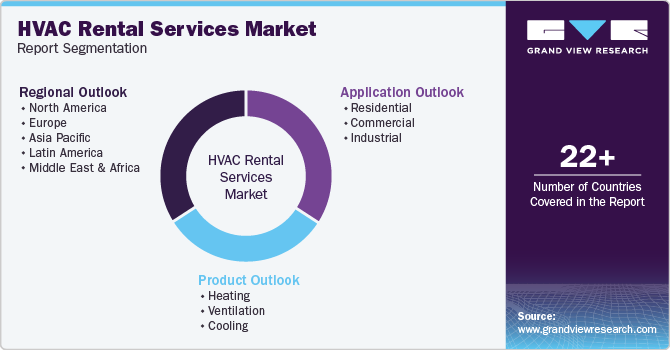
This report forecasts revenue growth at global, regional & country levels and provides an analysis on the industry trends in each of the sub-segments from 2021 to 2033. For this study, Grand View Research has segmented the global HVAC rental services market report based on the product, application, and region:
 To learn more about this report, Download Free Sample Report
-
Product Outlook (Revenue, USD Million, 2021 - 2033)
-
Heating
-
Ventilation
-
Cooling
-
-
Application Outlook (Revenue, USD Million, 2021 - 2033)
-
Residential
-
Commercial
-
Industrial
-
-
Regional Outlook (Revenue, USD Million, 2021 - 2033)
-
North America
-
U.S.
-
Canada
-
Mexico
-
-
Europe
-
UK
-
Germany
-
France
-
Italy
-
Spain
-
-
Asia Pacific
-
China
-
India
-
Japan
-
South Korea
-
Australia
-
-
Latin America
-
Brazil
-
Argentina
-
-
Middle East & Africa
-
South Africa
-
Saudi Arabia
-
UAE
-
-
Research Methodology
The HVAC rental services market figures in this report are based on a proven research process that combines executive interviews with secondary research from proprietary databases, company filings, and recognized regulatory and institutional sources. Market size is built through value-chain sizing - reconciling supply-side and demand-side estimates - and triangulated with bottom-up and top-down approaches. Every estimate passes multiple levels of expert validation before publication, with each HVAC rental services segment quantified using the revenue-capture definitions in the table below.
Segment Definition
Segment - Product
Revenue Capture Definition
Heating
The segment refers to HVAC rental services that provide temporary heating equipment for residential, commercial, and industrial applications. The segment captures revenue generated from the rental of heaters, boilers, heat pumps, and other heating systems, including associated installation, maintenance, transportation, and support services.
Ventilation
The segment refers to HVAC rental services that provide temporary ventilation equipment to maintain indoor air quality and airflow. The segment captures revenue generated from the rental of air handling units, exhaust systems, ducting, and related support services across all end-use industries.
Cooling
The segment refers to HVAC rental services that provide temporary cooling equipment for climate control and process cooling applications. The segment captures revenue generated from the rental of chillers, portable air conditioners, cooling towers, spot coolers, and other cooling systems, including installation and maintenance services.
Segment - Application
Revenue Capture Definition
Residential
The segment captures revenue generated from HVAC rental services supplied to residential buildings, including single-family homes, apartments, and residential complexes for temporary heating, cooling, and ventilation requirements.
Commercial
The segment captures revenue generated from HVAC rental services supplied to commercial establishments, including offices, retail facilities, hospitals, hotels, educational institutions, event venues, and data centers requiring temporary climate control solutions.
Industrial
The segment captures revenue generated from HVAC rental services supplied to industrial facilities, including manufacturing plants, oil & gas facilities, power plants, chemical plants, mining sites, warehouses, and construction projects for temporary heating, cooling, ventilation, maintenance shutdowns, and emergency operations.
Estimation Model
Layer Name
Key Question
Description
Temporary HVAC Demand Layer
Where are HVAC rental services required?
Assess demand across commercial buildings, industrial facilities, construction sites, healthcare facilities, data centers, events, hospitality, retail, manufacturing plants, and emergency response applications. Evaluate temporary heating, cooling, ventilation, and humidity control requirements arising from planned maintenance, equipment failures, seasonal demand, and short-term capacity needs.
Infrastructure & Industrial Activity Layer
Where is rental demand being created?
Analyze construction activity, industrial expansion, infrastructure development, commercial projects, manufacturing facilities, utilities, plant shutdowns, maintenance schedules, disaster recovery projects, temporary facilities, and seasonal operations that generate demand for HVAC rental equipment.
Rental Equipment Adoption Layer
Which HVAC rental solutions are being deployed?
Segment demand by equipment type, cooling capacity, fuel type, application, rental duration, and end-use industry. Evaluate adoption based on project duration, energy efficiency, mobility, installation flexibility, and operational requirements, including modular and remotely monitored HVAC rental systems.
Revenue Generation Layer
How much market revenue is generated?
Estimate revenue from short- and long-term HVAC equipment rental contracts by equipment type, application, end-use industry, and region. The market includes rental revenue from chillers, air conditioners, heaters, air handlers, cooling towers, dehumidifiers, and related equipment, while excluding new equipment sales, non-rental maintenance services, spare parts, and aftermarket sales.
Delivered Customizations
This report has been delivered with the following In-depth customizations
Client Request
Customization Delivered
Value Adds
Competitive Benchmarking
A competitive benchmarking analysis was conducted by evaluating mature market participants based on product portfolio, technological capabilities, manufacturing footprint, strategic initiatives, financial strength, innovation focus, and competitive positioning within the HVAC rental services market.
This benchmarking enabled stakeholders to assess competitive strengths, identify technology and product differentiation opportunities, understand evolving industry strategies, and develop informed positioning and growth strategies in an increasingly competitive market.
Regional Segmentation
A comprehensive regional analysis was provided across key markets, highlighting regional demand patterns, technology adoption, manufacturing ecosystems, regulatory environments, and growth drivers influencing the HVAC rental services market. The assessment also evaluated the contribution of major countries to regional market performance.
The regional insights helped stakeholders identify high-growth geographies, optimize market entry and expansion strategies, allocate resources effectively, and tailor product offerings to region-specific industry requirements and regulatory frameworks.
Opportunity assessment
A detailed opportunity assessment was conducted by evaluating emerging end-use applications, evolving customer demand, equipment technology advancements, regulatory developments, and investment trends across the HVAC rental services market. The analysis identified high-growth opportunities across industrial, commercial, construction, healthcare, events, and data center applications, supporting strategic decision-making for equipment manufacturers and rental service providers.
This assessment enabled stakeholders to prioritize high-potential investment areas, optimize rental fleet expansion strategies, align service offerings with evolving customer requirements, and capitalize on emerging opportunities across industrial facilities, data centers, commercial buildings, construction projects, healthcare facilities, and temporary event applications.
Frequently Asked Questions About This Report
Asia Pacific dominated the HVAC rental services market with the largest revenue share of 48.2% in 2025.
Which product segment is expected to register the highest growth in the HVAC rental services market?Based on product, the cooling segment is expected to lead the HVAC rental services market, registering the highest revenue CAGR of 6.2% from 2026 to 2033.
Based on application, the residential segment is expected to lead the HVAC rental services market, registering the highest revenue CAGR of 6.5% from 2026 to 2033.
Some of the key players operating in the HVAC rental services market are Carrier., Aggreko, Air on Location Inc. (Dex Media.), HVAC Rentals, Air Solutions LLC., Andrews Sykes Group Plc, Johnson Controls International Plc., Big Ten Rentals, Brookfield Business Partners LP, Caterpillar Inc., City Air Toronto Air Conditioning and Heating, Trane Technologies Plc, United Rentals Inc., and Herc Holdings Inc.
The HVAC rental service market is growing due to rising demand for temporary climate control in construction and events. Key drivers include the cost-effectiveness of renting over buying, flexibility to scale solutions, and advancements in energy-efficient technologies. Regulatory compliance also plays a role, as businesses seek rental options to meet standards without significant investment.
The global HVAC rental services market size was estimated at USD 2.3 billion in 2025 and is expected to reach USD 2.5 billion in 2026.
The global HVAC rental services market, in terms of revenue, is expected to grow at a compound annual growth rate of 5.7% from 2026 to 2033 to reach USD 3.6 billion by 2033.
About the Author(s)
Advanced Interior Materials Research Team
Advanced Materials · Advanced Interior MaterialsThis report was authored by the advanced interior materials research team at Grand View Research - comprising two research analysts, one senior research analyst, and one industry expert - with specialized expertise in the advanced interior materials segment of the advanced materials industry. All findings are based on proprietary advanced materials databases, executive interviews, and regulatory analysis, subject to internal peer review prior to publication.
Last Updated:
Speak to Analyst

Customize this report to your needs - add regions, segments, or data points, with 20% free customization.
Or view our licence options:


ISO 9001:2015 & 27001:2022 Certified
We are GDPR and CCPA compliant! Your transaction & personal information is safe and secure. For more details, please read our privacy policy.


