
- Home
- »
- Catalysts & Enzymes
- »
-
Hydrodesulfurization Catalysts Market Report, 2026-2033GVR Report cover

Hydrodesulfurization Catalysts Market (2026 - 2033)
Size, Share & Trends Analysis Report By Type (Load Type, Non-load Type), By Application (Diesel, Naphtha), By Region (North America, Europe, Asia Pacific), And Segment Forecasts
Market Size, 2025
$3.1BMarket Estimate, 2026
$3.2BMarket Forecast, 2033
$4.6BCAGR, 2026–2033
5.2%Hydrodesulfurization Catalysts Market Trends
The global hydrodesulphurization catalyst market size was valued at USD 3.1 billion in 2025 and is projected to grow from USD 3.2 billion in 2026 to USD 4.6 billion by 2033, at a CAGR of 5.2% from 2026 to 2033. Asia Pacific dominated the market, accounting for a revenue share of 29.3% in 2025. The market growth can be attributed to stringent regulatory standards promoting cleaner and low-sulfur fuels. In addition, increasing demand for ultra-low sulfur fuels, particularly in the transportation and marine sectors, is also significant. Furthermore, the expansion of refineries and advancements in catalyst technologies enhance efficiency and performance, further stimulating market growth.
 Source: Grand View Research, IR Documents, Primary Interviews, Paid DatabasesTo learn more about this report,
 Download Free Sample Report
 Key Market Trends & Insights
- By type: Load segment accounted for the highest market share, representing 89.6% of total revenue in 2025.
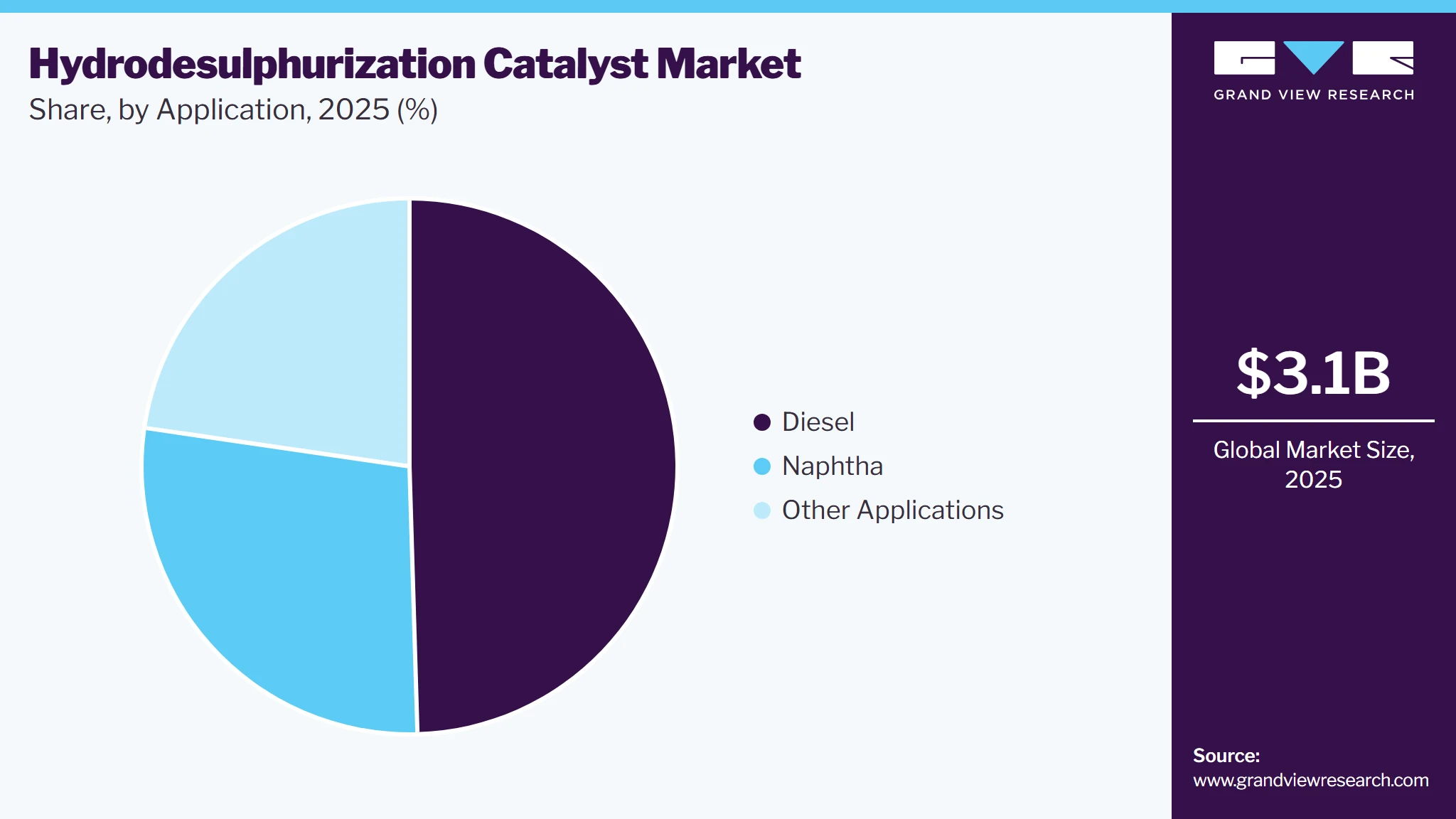
- By application: Diesel held a dominant position, contributing 49.8% of total revenue in 2025.
Regional Highlights
- Largest regional market: Asia Pacific (29.3% revenue share, 2025)
- By country: China held the largest market share in 2025.
Market Size & Forecast
- Market size in 2025: USD 3.1 Billion
- Estimated market size in 2026: USD 3.2 Billion
- Projected market size by 2033: USD 4.6 Billion
- CAGR (2026-2033): 5.2%
Three ways to get this report
Buy it, customize it, or ask a question.Ask an Analyst
A direct answer, usually in 1 working day
- AccessReport author, directly
- Reply timeWithin 1 working day
- No sales callDirect answer only
- FormatEmail reply
- CostFree, no cost
Get the Full Report
What the study covers
- FormatsPDF · Excel · Dashboard
- Timeline2026–2033 annual, 2025 base
- Coverage20+ countries, 5 regions
- Companies10+ key players profiled
Customize the Report
20% free customization
- IncludeCountries, segments, points
- TailorTo your product definition
- ExtendDeeper competitor detail
- OrA fully bespoke study
- Turnaround5–10 working days
Hydrodesulfurization (HDS) is a vital process in petroleum refining and natural gas processing, designed to eliminate harmful pollutants such as hydrogen sulfide (H2S) and sulfur dioxide (SO2). By converting these sulfur compounds into less harmful substances, HDS plays a crucial role in producing cleaner fuels, including ultra-low-sulfur diesel and sulfur-free petrochemicals. These cleaner fuels are essential for various combustion applications, including motor vehicles, industrial facilities, and marine vessels. The process employs noble metal catalysts such as cobalt-molybdenum and nickel to facilitate the conversion of sulfur-containing compounds, ensuring compliance with stringent environmental regulations aimed at reducing air pollution.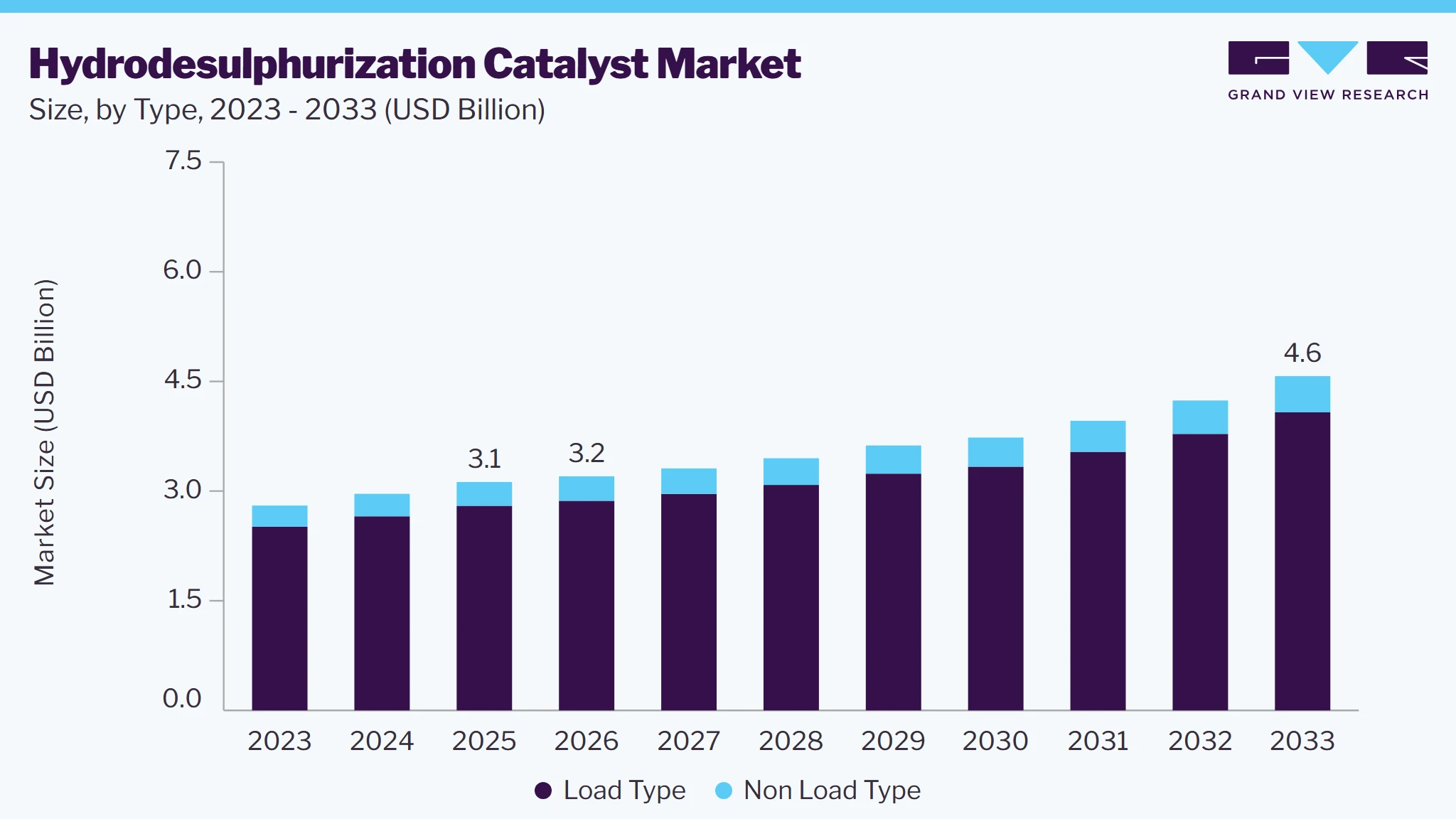 To learn more about this report, Download Free Sample Report
 The hydrodesulfurization catalysts industry is experiencing significant growth, driven by increasing regulatory pressures for low-sulfur fuels and rising demand across multiple industries. As countries implement stricter emission reduction standards, the need for cleaner fuels becomes more pronounced. HDS is also used to desulfurize jet fuels and gasoline to meet environmental requirements. This growing focus on sustainability addresses health concerns related to air quality and aligns with global climate initiatives, making HDS an integral part of the transition toward greener energy solutions.
Market Dynamics
The hydrodesulphurization (HDS) catalyst market is experiencing steady growth, driven by increasingly stringent environmental regulations governing sulfur emissions in transportation fuels and industrial products. Refineries across developed and emerging economies are investing in advanced hydroprocessing technologies to comply with ultra-low sulfur fuel standards, thereby increasing demand for high-performance HDS catalysts. The growing global consumption of diesel, gasoline, jet fuel, and other refined petroleum products continues to support catalyst replacement cycles and capacity expansion projects. In addition, the modernization of aging refinery infrastructure and the processing of heavier crude oil feedstocks have intensified the need for catalysts that offer higher sulfur removal efficiency, longer operating life, and improved product yields. Market participants are focusing on technological advancements, catalyst formulation improvements, and strategic collaborations to strengthen their competitive position.
The primary driver of the hydrodesulphurization catalyst market is the implementation of increasingly stringent environmental regulations aimed at reducing sulfur emissions from transportation fuels. Governments and regulatory authorities across major economies have introduced ultra-low sulfur fuel standards to address air pollution and improve environmental sustainability. As a result, refiners are required to adopt advanced hydroprocessing technologies and high-performance catalysts capable of achieving deeper sulfur removal while maintaining operational efficiency. This regulatory push has significantly increased the demand for hydrodesulphurization catalysts across gasoline, diesel, kerosene, and other refined fuel applications.
The growing public awareness regarding environmental protection and the need to reduce harmful emissions has encouraged refiners to invest in cleaner fuel production processes. Hydrodesulphurization catalysts play a critical role in enabling refineries to comply with evolving fuel specifications without compromising product quality or throughput. Continuous catalyst replacement requirements and refinery modernization initiatives further contribute to market growth, creating a stable demand environment for catalyst manufacturers and technology providers.
The key restraint affecting the hydrodesulphurization catalyst market is the gradual global transition toward renewable energy sources and lower-carbon transportation solutions. Governments and industries are increasingly investing in electric vehicles, biofuels, hydrogen technologies, and other sustainable energy alternatives to reduce greenhouse gas emissions and dependence on conventional petroleum products. As the adoption of these alternatives increases, long-term growth prospects for traditional refining activities may face pressure, potentially limiting future demand for hydrodesulphurization catalysts. The evolving energy policies and decarbonization strategies could influence refinery investment decisions, creating uncertainty regarding the pace of market expansion over the coming years.
Continuous advancements in catalyst science present significant opportunities for market participants. Refiners are increasingly seeking catalyst solutions that deliver higher sulfur conversion rates, extended operating cycles, and improved resistance to contaminants. This demand is encouraging manufacturers to invest in research and development activities focused on enhancing catalyst formulations and improving overall process efficiency. Innovative catalyst technologies can help refiners reduce operating costs while achieving stricter environmental compliance requirements.
The growing emphasis on operational optimization and profitability is driving interest in catalysts that support higher throughput and improved product yields. Companies capable of offering customized catalyst solutions and technical expertise are well positioned to capitalize on this trend. Strategic partnerships between catalyst developers, technology licensors, and refinery operators are also expected to accelerate innovation and create new revenue opportunities within the hydrodesulphurization catalyst market.
Analyst Perspective
The hydrodesulphurization catalyst market is positioned for steady growth, supported by increasingly stringent global fuel sulfur regulations and ongoing refinery modernization initiatives. Demand remains closely tied to the production of ultra-low sulfur transportation fuels and the processing of heavier crude feedstocks, which require advanced catalyst technologies for efficient desulfurization. Market participants are focusing on catalyst innovation, longer operating cycles, and enhanced sulfur removal performance to strengthen their competitive positioning. Asia-Pacific and the Middle East continue to emerge as key growth regions due to expanding refining capacities and rising energy demand. While the long-term transition toward alternative energy sources may moderate future growth prospects, sustained investments in refining infrastructure and fuel quality compliance are expected to maintain stable demand for hydrodesulphurization catalysts over the forecast period.
Type Insights
Based on type, the load segment accounted for the highest market share, representing 89.6% of total revenue in 2025, primarily driven by the effectiveness of supported catalysts in enhancing hydrodesulfurization activity. In addition, key elements such as the type of support, active components, and sulfidation conditions significantly influence catalyst performance. As refineries increasingly focus on producing ultra-low sulfur fuels, the demand for load-type catalysts is expected to rise, supporting regulatory compliance and cleaner fuel production.
The non-load type segment is expected to grow at a CAGR of 6.2% over the forecast period, owing to its high activity levels, which are approximately 2.5 to 3 times greater than those of supported catalysts. In addition, the segment growth is fueled by stringent environmental regulations requiring refineries to produce low-sulfur fuels. Eco-friendly synthesis methods, such as hydrothermal and precipitation techniques, further enhance its appeal. Furthermore, the increasing regulatory pressures and demand for cleaner fuels propel the non-load type catalysts market forward.
Application Segment
By application, diesel held a dominant position, contributing 49.8% of total revenue in 2025. This growth can be attributed to increasing regulatory pressures for low-sulfur diesel fuels. Governments worldwide, including the U.S. Environmental Protection Agency, have established stringent sulfur content limits, mandating a reduction to as low as 15 parts per million. This has compelled refineries to invest in hydrodesulfurization technologies to meet these standards. Furthermore, the rising demand for high-performance diesel engines, which require cleaner fuels to operate efficiently and reduce emissions, further propels the market for diesel hydrodesulfurization catalysts.
 To learn more about this report, Download Free Sample Report
 The naphtha application segment is expected to grow at a CAGR of 5.8% from 2025 to 2033, driven by the need for cleaner fuels and compliance with environmental regulations. Hydrodesulfurization effectively removes sulfur compounds from naphtha, enhancing its quality in gasoline production and other applications. In addition, as countries implement stricter emission standards, the demand for desulfurized naphtha is increasing. Furthermore, advancements in catalyst technologies improve efficiency and effectiveness in sulfur removal, making naphtha hydrodesulfurization an essential process in refining operations to produce environmentally friendly fuels.
Regional Insights
Asia Pacific dominated the hydrodesulphurization catalyst market with the highest revenue share of 29.3% in 2025. This growth can be attributed to stringent regulations regarding sulfur emissions. In addition, the region has established strict limits on sulfur content in fuels, compelling refineries to adopt advanced hydrodesulfurization technologies. The expansion of natural gas processing facilities also contributes to the growing demand for these catalysts. Furthermore, a strong focus on cleaner transportation fuels aligns with regulatory mandates, enhancing market opportunities throughout North America.
 To learn more about this report, Download Free Sample Report
 U.S. Hydrodesulfurization Catalysts Market Trends
The hydrodesulfurization catalysts market in the U.S. dominated North America and accounted for the largest revenue share in 2024, owing to rigorous environmental regulations aimed at reducing sulfur emissions from fuels. In addition, the Environmental Protection Agency's stringent standards require refineries to produce ultra-low sulfur diesel and gasoline, driving investments in hydrodesulfurization technologies. Furthermore, the increasing demand for cleaner fuels in transportation further propels catalyst adoption.
Middle East & Africa Hydrodesulfurization Catalysts Market Trends
The hydrodesulfurization catalysts market in the Middle East and Africa is expected to grow at a CAGR of 6.4% over the forecast period, owing to the need for low-sulfur crude oil and distillates. Countries in this region are investing heavily in refining capabilities to comply with international sulfur regulations. In addition, the presence of major oil producers encourages technological advancements in hydrodesulfurization processes, leading to increased catalyst demand. Furthermore, a growing focus on sustainable practices and environmental compliance further propels the market's expansion across these regions.
Asia Pacific Hydrodesulfurization Catalysts Market Trends
The Asia Pacific hydrodesulfurization catalysts market is expected to grow significantly over the forecast period, driven by rapid industrialization and increasing demand for refined petroleum products. In addition, countries such as India and China are expanding their refining capacities to comply with stringent environmental regulations aimed at reducing sulfur emissions. Furthermore, the rise in the automotive sector and government initiatives promoting cleaner fuels further drive the demand for hydrodesulfurization catalysts. Moreover, advancements in catalyst technologies enhance efficiency, making them essential for producing ultra-low sulfur fuels in the region.
China accounted for 48.2% of the Asia Pacific hydrodesulphurization catalyst market in 2025. owing to the booming transportation industry and stringent environmental policies. In addition, the government’s commitment to reducing air pollution has led to increased investments in refining technologies that support sulfur removal processes. As China aims to produce larger quantities of low-sulfur fuels, the demand for advanced hydrodesulfurization catalysts is expected to rise. Furthermore, the expansion of refineries equipped with hydrodesulfurization units enhances the market's growth potential.
Europe Hydrodesulfurization Catalysts Market Trends
The growth of the Europe hydrodesulfurization catalysts marketis driven by strict EU regulations mandating low-sulfur fuels to combat air pollution. In addition, the region's commitment to sustainability and cleaner energy sources has led to increased investments in refining technologies that utilize advanced hydrodesulfurization processes. Furthermore, Europe's robust automotive sector requires low-sulfur fuels, boosting catalyst demand. The ongoing transition towards greener fuels and compliance with environmental directives ensures sustained growth in this market segment.
Key Hydrodesulfurization Catalysts Company Insights
Key players in the global hydrodesulfurization catalysts industry include Albemarle Corporation, Advanced Refining Technologies, Sinopec Corp., and others. These companies are adopting various strategies to enhance their market position. Strategies include launching innovative products that improve efficiency and reduce costs. In addition, mergers and acquisitions are being utilized to expand capabilities and market reach. Furthermore, strategic partnerships are also common, enabling companies to leverage complementary technologies and share resources for better market penetration.
-
Haldor Topsoe A/S manufactures a range of hydrodesulfurization catalysts that facilitate the removal of sulfur from various petroleum products, ensuring compliance with stringent environmental regulations. Operating primarily in the refining segment, the company focuses on providing innovative solutions that enhance efficiency and sustainability in fuel production, catering to the growing demand for cleaner fuels globally.
-
Royal Dutch Shell PLC produces catalysts that remove sulfur from fuels and other petroleum products. The company manufactures advanced hydrodesulfurization catalysts designed to optimize refining processes and meet regulatory requirements for low-sulfur fuels. Shell operates in the energy and petrochemical segments, leveraging its extensive expertise to develop innovative catalyst technologies that support cleaner fuel production and contribute to environmental sustainability initiatives across its global operations.
Key Hydrodesulfurization Catalysts Companies
The following key companies have been profiled for this study on the hydrodesulfurization catalysts market.
-
Albemarle Corporation
-
Advanced Refining Technologies
-
Sinopec Corp.
-
Haldor Topsoe A/S
-
Royal Dutch Shell PLC
-
PetroChina Company Limited (CNPC)
-
Axens SA
-
JGC C&C
-
Honeywell International Inc
-
Johnson Matthey Plc
Competitive Benchmarking
Operating Strategies
Competitive Edge
Weaknesses
Established Players (Albemarle Corporation, Advanced Refining Technologies, Haldor Topsoe A/S, Shell plc, Axens SA, Honeywell International Inc., Johnson Matthey Plc.)
- Invest heavily in R&D to develop high-activity catalysts with improved sulfur removal efficiency.
- Maintain long-term supply agreements with global refiners and integrated oil companies.
- Offer integrated catalyst, licensing, and technical service packages to strengthen customer relationships.
- Expand manufacturing and service networks globally to ensure reliable catalyst supply and support.
- Strong proprietary technologies and extensive intellectual property portfolios.
- Established global brand recognition and longstanding relationships with major refineries.
- Broad product portfolios covering multiple hydroprocessing and refining applications.
- Significant financial resources enabling continuous innovation and capacity expansion.
- High operational and research costs compared to regional competitors.
- Dependence on refinery capital expenditure cycles and fuel demand trends.
- Exposure to fluctuations in raw material prices, particularly strategic metals such as molybdenum and nickel.
- Slower adaptability to niche regional requirements due to large organizational structures.
Emerging Players (Sinopec Corp., PetroChina Company Limited (CNPC), JGC C&C)
- Focus on serving domestic and regional refinery markets with cost-competitive catalyst solutions.
- Leverage partnerships with local refineries and government-supported energy projects.
- Increase investments in catalyst development to improve product performance and expand application capabilities.
- Gradually expand exports and international presence through strategic collaborations and technology upgrades.
- Strong access to regional customer bases and growing refinery investments.
- Competitive pricing is supported by localized manufacturing and supply chains.
- Ability to customize products according to regional crude oil characteristics and operating conditions.
- Support from integrated refining operations, enabling direct application testing and product validation.
- Lower global market penetration compared to established multinational catalyst suppliers.
- Limited brand recognition outside domestic and regional markets.
- Smaller international technical service and distribution networks.
- Greater dependence on regional economic conditions, refinery investments, and regulatory developments.
Hydrodesulfurization Catalysts Market Report Scope
Report Attribute
Details
Market size in 2025
USD 3.1 billion
Estimated market size in 2026
USD 3.2 billion
Projected market size by 2033
USD 4.6 billion
Growth rate
CAGR of 5.2% from 2026 to 2033
Base year for estimation
2025
Historical data
2021 - 2024
Forecast period
2026 - 2033
Quantitative units
Revenue in USD million/million, Volume in Kilotons and CAGR from 2026 to 2033
Report coverage
Revenue forecast, company ranking, competitive landscape, growth factors, and trends
Segments covered
Type, application, region
Regional scope
North America; Europe; Asia Pacific; Latin America; MEA
Country scope
U.S.; Canada; Germany; UK; France; Italy; Russia; China; Japan; India; South Korea; Taiwan; Brazil; Mexico; South Africa;
Key companies profiled
Albemarle Corporation; Advanced Refining Technologies; Sinopec Corp.; Haldor Topsoe A/S; Royal Dutch Shell PLC; PetroChina Company Limited (CNPC); Axens SA; JGC C&C; Honeywell International Inc; Johnson Matthey Plc.
Customization scope
Free report customization (equivalent up to 8 analysts' working days) with purchase. Addition or alteration to country, regional & segment scope.
Pricing and purchase options
Avail customized purchase options to meet your exact research needs. Explore purchase options
Global Hydrodesulfurization Catalysts Market Report Segmentation
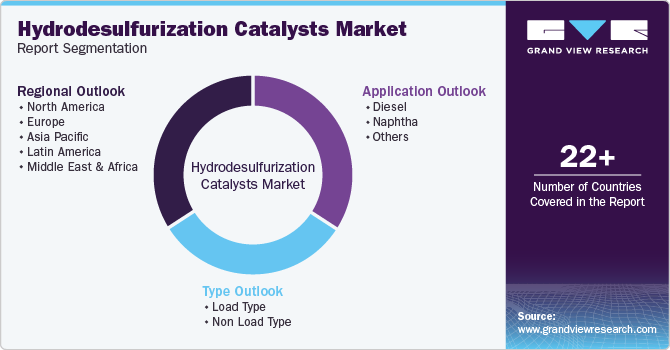
This report forecasts revenue growth at global, regional, and country levels and analyzes the latest industry trends in each sub-segment from 2021 to 2033. For this study, Grand View Research has segmented the global hydrodesulfurization catalysts market report based on type, application, and region.
 To learn more about this report, Download Free Sample Report
 -
Type Outlook (Volume, Kilotons; Revenue, USD Million, 2021 - 2033)
-
Load Type
-
Non Load Type
-
-
Application Outlook (Volume, Kilotons; Revenue, USD Million, 2021 - 2033)
-
Diesel
-
Naphtha
-
Others
-
-
Regional Outlook (Volume, Kilotons; Revenue, USD Million, 2021 - 2033)
-
North America
-
U.S.
-
Canada
-
-
Europe
-
Germany
-
UK
-
France
-
Italy
-
Russia
-
-
Asia Pacific
-
China
-
Japan
-
India
-
South Korea
-
Taiwan
-
-
Latin America
-
Brazil
-
Mexico
-
-
Middle East and Africa
-
South Africa
-
-
Research Methodology
The hydrodesulphurization catalyst market figures in this report are based on a proven research process that combines executive interviews with secondary research from proprietary databases, company filings, and recognized regulatory and institutional sources. Market size is built through value-chain sizing-reconciling supply-side and demand-side estimates-and triangulated with bottom-up and top-down approaches. Every estimate passes multiple levels of expert validation before publication, with each hydrodesulphurization catalyst segment quantified using the revenue-capture definitions in the table below.
Segment Definition
Segment – Type
Revenue capture definition
Load Type
Revenue is generated through the sale of fresh hydrodesulphurization catalysts loaded into refinery hydrotreating and hydro processing units for sulfur removal from petroleum feedstocks. Demand is driven by catalyst replacement cycles, refinery capacity expansions, and increasingly stringent fuel sulfur regulations requiring efficient desulfurization performance.
Non-Load Type
Revenue is derived from catalyst regeneration services, catalyst additives, performance enhancement solutions, and related technical support offerings. Growth is supported by refiners seeking to extend catalyst life, optimize operational efficiency, reduce maintenance costs, and improve overall hydro processing unit performance.
Segment – Application
Revenue capture definition
Diesel
Revenue from the diesel application segment is generated through the hydrodesulfurization of diesel fuel streams to reduce sulfur content and meet ultra-low sulfur diesel (ULSD) standards. Refineries utilize hydrodesulfurization units to enhance fuel quality, comply with environmental regulations, and support cleaner combustion. Increasing diesel consumption across transportation, industrial, and commercial sectors continues to drive processing demand and revenue generation in this segment.
Naphtha
Revenue is generated from the use of hydrodesulphurization catalysts in naphtha hydrotreating units, where sulfur compounds are removed prior to catalytic reforming and gasoline production. Demand is supported by stringent gasoline sulfur specifications and the need to protect downstream refining processes from catalyst poisoning.
Other Applications
Revenue is supported by the deployment of hydrodesulphurization catalysts in diesel, kerosene, jet fuel, vacuum gas oil, residual oil, and FCC feed pretreatment applications. Market growth is driven by global demand for cleaner transportation fuels, refinery modernization initiatives, and regulatory requirements for ultra-low sulfur petroleum products.
Estimation Model
Layer Name
Key Question
Description
Raw Material & Production Layer
What forms the supply base?
Identify the global production of hydrodesulphurization catalysts manufactured using active metals such as cobalt, nickel, molybdenum, and tungsten supported on carriers including alumina, silica-alumina, and other advanced catalyst substrates. Evaluate the availability of key raw materials, metal precursor supply chains, catalyst manufacturing technologies, impregnation and activation processes, production capacities, regulatory requirements, and major manufacturing hubs supporting catalyst supply to petroleum refineries and hydroprocessing facilities worldwide.
Application Adoption Layer
Where are hydrodesulphurization catalyst consumed?
Assess the deployment of hydrodesulphurization catalysts across major refinery applications including naphtha, diesel, kerosene, jet fuel, vacuum gas oil, residual oil, and FCC feed pretreatment. Demand patterns are influenced by stringent fuel sulfur regulations, refinery modernization projects, increasing processing of heavier crude feedstocks, growing transportation fuel demand, and investments in hydroprocessing capacity to produce cleaner petroleum products.
Consumption Intensity Layer
How much hydrodesulphurization catalyst are utilized?
Analyze hydrodesulphurization catalyst consumption volumes by evaluating refinery throughput, catalyst loading requirements, operating severity, sulfur content of feedstocks, catalyst replacement cycles, and unit capacity utilization rates. This includes catalyst usage across hydrotreating and hydroprocessing units for naphtha, middle distillates, heavy gas oils, and other refinery streams. The layer determines annual catalyst demand intensity across refinery configurations, application segments, and regional markets.
Revenue Layer
How is market revenue generated?
Market revenue is generated through the production, sale, replacement, regeneration, and technical servicing of hydrodesulphurization catalysts used in refinery hydroprocessing operations. Revenue growth is influenced by refinery operating rates, catalyst performance requirements, environmental compliance standards, fuel quality regulations, technological advancements in catalyst formulations, refinery expansion projects, and increasing demand for ultra-low sulfur fuels across global energy markets.
Delivered Customizations
This report has been delivered with the following In-depth customizations
Client Request
Customization Delivered
Value Adds
Regional Segmentation
The study delivers detailed country-level analysis across major hydrodesulphurization catalyst production and consumption markets including the Australia, UAE, and other key countries. The assessment covers catalyst manufacturing capacities, availability of critical raw materials such as cobalt, nickel, molybdenum, tungsten, and catalyst supports, trade dynamics, refining infrastructure, environmental regulations, fuel sulfur standards, and demand outlook across naphtha, diesel, kerosene, jet fuel, vacuum gas oil, and other hydroprocessing applications.
Enables stakeholders to identify high-growth markets, evaluate refinery expansion trends, understand regulatory compliance requirements, assess raw material sourcing opportunities, and prioritize investments in countries experiencing growth in refining capacity, fuel production, and clean fuel initiatives.
Trade Assessment
The report delivers comprehensive historical trade analysis covering hydrodesulphurization catalyst imports, exports, major producing and consuming countries, trade flows, supply chain networks, pricing trends, and evolving market developments influencing catalyst availability and competitiveness. The assessment further evaluates production concentration, strategic metal sourcing patterns, refinery demand trends, and cross-border supply dependencies affecting catalyst distribution and procurement.
Provides valuable insights into sourcing strategies, export opportunities, procurement risks, and international trade patterns, enabling companies to optimize supply chains, strengthen market positioning, diversify supplier networks, and mitigate disruptions associated with raw material price volatility, geopolitical factors, and regulatory changes.
Opportunity Assessment
The study delivers a detailed assessment of growth opportunities across refinery hydrotreating and hydroprocessing applications including naphtha, diesel, jet fuel, kerosene, vacuum gas oil, and residual oil processing. The analysis further evaluates opportunities arising from tightening fuel sulfur regulations, refinery modernization projects, increasing processing of heavier crude feedstocks, catalyst technology advancements, and refining capacity expansions across emerging economies.
Helps companies identify high-potential investment areas, assess long-term demand prospects, align product development and expansion strategies with evolving fuel quality standards, and capitalize on emerging opportunities in advanced hydroprocessing technologies, refinery upgrades, and ultra-low sulfur fuel production.
Frequently Asked Questions About This Report
Based on type, the load segment accounted for the highest market share, representing 89.6% of total revenue in 2025. The dominance of the load type segment is attributed to the recurring need for fresh catalyst loading during refinery operations, supported by periodic replacement cycles and sustained investments in hydro processing units to meet stringent fuel sulfur regulations.
By application, diesel held a dominant position, contributing 49.8% of total revenue in 2025. The segment's dominance was supported by stringent global ultra-low sulfur diesel regulations and sustained demand from transportation, industrial, and commercial sectors requiring effective sulfur removal during the refining process.
The global hydrodesulfurization catalysts market size was estimated at USD 3.1 billion in 2025 and is expected to reach USD 3.2 billion in 2026.
The global hydrodesulfurization catalysts market is expected to grow at a compound annual growth rate of 5.2% from 2026 to 2033 to reach USD 4.6 billion by 2033.
By type, the load segment held the largest revenue share of 89.6% in 2025. The segment's leading position was reinforced by routine catalyst replacement cycles in refinery operations and sustained investments in hydrotreating capacity upgrades to meet increasingly stringent fuel sulfur specifications.
Some key players operating in the hydrodesulfurization catalysts market include Albemarle Corporation; Advanced Refining Technologies; Sinopec Corp.; Haldor Topsoe A/S; Royal Dutch Shell PLC; PetroChina Company Limited (CNPC); Axens SA; JGC C&C; Honeywell International Inc; Johnson Matthey Plc.
Asia Pacific dominated the hydrodesulphurization catalyst market with the highest revenue share of 29.3% in 2025. This growth can be attributed to stringent regulations regarding sulfur emissions.
The hydrodesulfurization catalysts market is driven by increasingly stringent environmental regulations that require refiners to produce ultra-low sulfur fuels and comply with evolving emission standards. Rising refinery modernization initiatives, increased processing of heavier crude oils, and ongoing investments in hydro processing infrastructure are fueling demand for high-performance hydrodesulfurization catalysts.
About the Author(s)
Catalysts & Enzymes Research Team
Specialty & Chemicals · Catalysts & EnzymesThis report was authored by the catalysts & enzymes research team at Grand View Research - comprising two research analysts, one senior research analyst, and one industry expert - with specialized expertise in the catalysts & enzymes segment of the specialty & chemicals industry. All findings are based on proprietary specialty & chemicals databases, executive interviews, and regulatory analysis, subject to internal peer review prior to publication.
Last Updated:
Speak to Analyst

Customize this report to your needs - add regions, segments, or data points, with 20% free customization.
Or view our licence options:


ISO 9001:2015 & 27001:2022 Certified
We are GDPR and CCPA compliant! Your transaction & personal information is safe and secure. For more details, please read our privacy policy.


