
- Home
- »
- Pharmaceuticals
- »
-
Hyperhidrosis Treatment Market Size & Share Report, 2033GVR Report cover
![Hyperhidrosis Treatment Market (2026 - 2033)Report]()
Hyperhidrosis Treatment Market (2026 - 2033)
Size, Share & Trends Analysis Report By Type (Primary Hyperhidrosis, Secondary Hyperhidrosis), By Treatment (Prescription Antiperspirants, Topical Medications, Oral Medications), By Region, And Segment Forecasts
Market Size, 2025
$1.7BMarket Estimate, 2026
$1.8BMarket Forecast, 2033
$3.2BCAGR, 2026–2033
8.4%Hyperhidrosis Treatment Market Summary
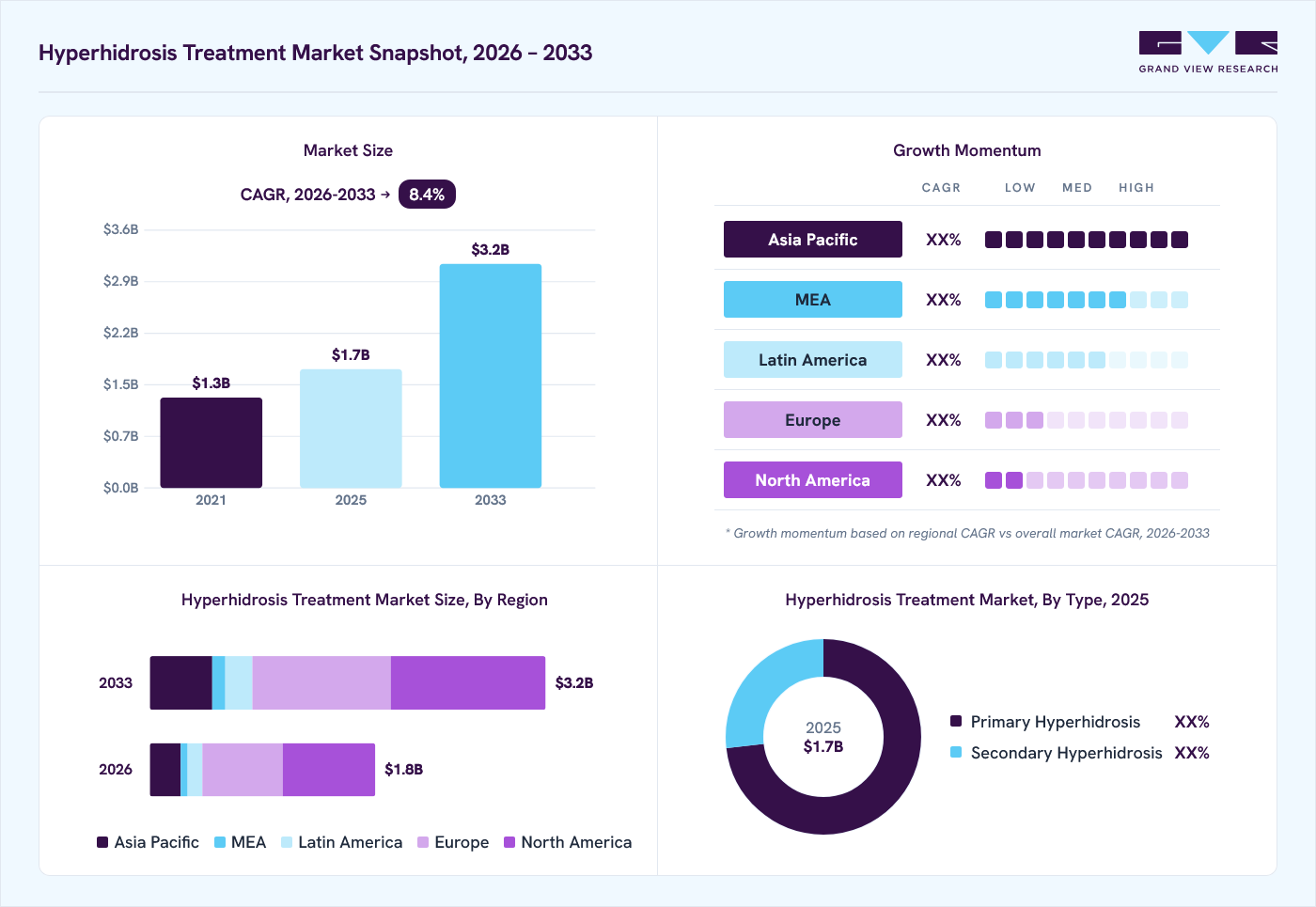
The global hyperhidrosis treatment market size was valued at USD 1.7 billion in 2025 and is projected to grow from USD 1.8 billion in 2026 to USD 3.2 billion by 2033, at a CAGR of 8.4% from 2026 to 2033. North America dominated the market, accounting for the largest revenue share of 41.3% in 2025. The industry is driven by the need to manage excessive sweating affecting areas such as the underarms, palms, feet, and face.
Key Market Trends & Insights
- By type: Primary hyperhidrosis segment held the highest market share of 73.1% in 2025.
- By treatment: Botulinum toxin injections segment held the highest market share of 25.6% in 2025.
Regional Highlights
- Largest regional market: North America (41.3% revenue share, 2025)
- Fastest-growing regional market: Asia Pacific (highest CAGR, 2026-2033)
- By country: The U.S. held the largest share of North America in 2025.
Market Size & Forecast
- Market size in 2025: USD 1.7 Billion
- Estimated market size in 2026: USD 1.8 billion
- Projected market size by 2033: USD 3.2 Billion
- CAGR (2026-2033): 8.4%

Hyperhidrosis can interfere with daily activities, personal interactions, work performance, and quality of life, creating a need for effective and convenient treatment options. The market includes prescription antiperspirants, topical anticholinergic products, iontophoresis, botulinum toxin injections, oral medications, energy-based treatments, and surgical procedures. Treatment selection varies based on the affected body area, symptom severity, treatment response, and patient preference. Topical therapies have gained attention as non-invasive options, particularly for axillary hyperhidrosis, while procedural treatments continue to be used for patients who require longer-lasting symptom control. The market is also supported by improving recognition of hyperhidrosis as a medical condition rather than only a cosmetic concern. However, delayed diagnosis and limited patient awareness remain barriers to access to treatment. Overall, the market continues to develop through broader treatment availability and growing clinical attention.Market Dynamics
The market is supported by the availability of topical prescription treatments that provide patients with non-invasive options for managing excessive sweating. Topical anticholinergic therapies are primarily used for axillary hyperhidrosis and can be applied at home, thereby improving treatment access and reducing the need for clinic-based procedures. Product availability in additional countries can also improve physician awareness and provide more options for patients who do not achieve adequate symptom control with antiperspirants. The expansion of prescription topical therapies supports a shift from general antiperspirant use toward medical treatment among patients with persistent symptoms. As awareness among dermatologists and patients improves, demand for prescription treatment can increase. Product launches in new markets can further support the market by improving access to drug-based treatment and increasing treatment choices. This is particularly relevant in markets where treatment options for hyperhidrosis remain limited and patients may not seek medical care. Companies can also benefit from established topical formulations because these products can be distributed through existing dermatology and pharmacy channels. The continued introduction of prescription therapies into new geographic markets can therefore support treatment adoption and directly drive market growth.
The market is constrained by the limited availability of drug treatments addressing different forms of hyperhidrosis. Many prescription topical products are designed for axillary hyperhidrosis, whereas patients with palmar, plantar, facial, or generalized hyperhidrosis may require alternative treatment approaches. These patients may depend on iontophoresis, botulinum toxin injections, oral medicines, or surgical procedures, depending on symptom severity and treatment response. Differences in treatment administration, duration of effect, tolerability, and clinical requirements can complicate treatment selection. The lack of a broad range of approved products across affected body areas can also limit physicians options when existing therapies do not provide adequate symptom control. This issue is more relevant for patients who experience sweating in multiple body areas or have symptoms that are not suitable for topical treatment. The market also remains dependent on established treatment classes, while the development of new products specifically targeting less-addressed forms of hyperhidrosis has been limited. Without additional treatment options covering different body areas and patient needs, some patients may continue with existing therapies or delay medical treatment. This can restrict the expansion of the treated patient population and remain a constraint on broader market development.
Geographic expansion of established treatment technologies offers companies an opportunity to reach patients in countries where medical treatment for excessive sweating remains underdeveloped. Home-based treatment options can support this opportunity by allowing patients to manage symptoms without frequent visits to specialized clinics. Iontophoresis is particularly relevant for patients with excessive sweating of the hands, feet, and underarms, and home-use devices can provide an alternative to drug-based and clinic-administered treatments. Product improvements can also support wider use by addressing factors such as treatment comfort, device handling, portability, and ease of use. Companies can expand their presence by introducing updated devices through direct-to-consumer channels, healthcare professionals, and specialized treatment networks. Greater availability of these devices can also support awareness of hyperhidrosis as a condition that can be treated through medical interventions rather than only through personal care products. Expansion into additional markets can therefore increase access to non-invasive treatment and provide companies with opportunities to serve patients who prefer home-based care.
Market Concentration & Characteristics
The degree of innovation is high in the hyperhidrosis treatment market, supported by continued development of prescription therapies, medical devices, and treatment delivery approaches. Innovation is focused on improving symptom control while making treatment easier for patients to use. Topical therapies have expanded treatment choices for axillary hyperhidrosis, while iontophoresis devices provide home-based treatment options for patients with sweating of the hands, feet, and underarms. Device manufacturers have also worked on product design, portability, electrode structure, and ease of operation to support home treatment. Pharmaceutical companies are developing and introducing topical treatments that target excessive sweating without requiring injections or surgical procedures. Innovation also involves extending treatment options to patients who have limited responses to existing approaches. The availability of different treatment technologies supports competition across the market and provides physicians with more options based on affected body area, symptom severity, treatment response, and patient preference.
Barriers to market entry are moderate to high because companies entering the hyperhidrosis treatment market must meet regulatory, clinical, manufacturing, and distribution requirements. Prescription drug manufacturers need to generate evidence supporting product safety and effectiveness before receiving approval from regulatory authorities. Medical device companies also need to meet applicable requirements related to product performance, safety, manufacturing quality, and labeling. These requirements increase development costs and can extend the time needed to introduce new products. Companies also need suitable manufacturing capabilities and distribution channels to make products available to healthcare providers and patients. Physician awareness and acceptance can affect the use of prescription treatments and procedure-based products, creating an additional requirement for companies entering the market. Established companies may also benefit from existing relationships with dermatologists, pharmacies, distributors, and healthcare providers. As a result, new entrants can face challenges in gaining visibility, building distribution networks, and competing with established treatment options.
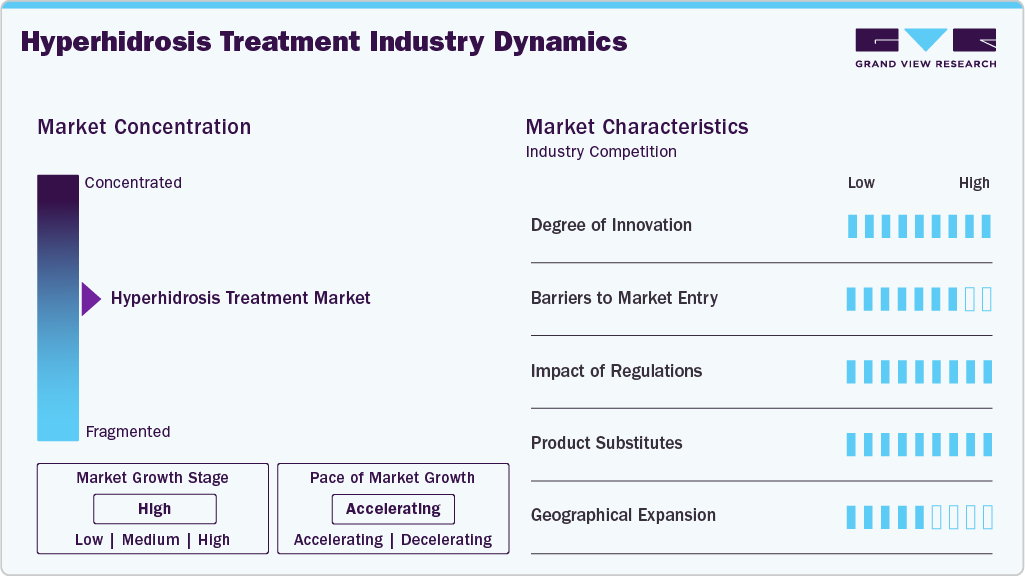
The impact of regulations is high in the hyperhidrosis treatment market because prescription drugs, medical devices, and injectable treatments are subject to regulatory requirements. Pharmaceutical products require regulatory review of safety, effectiveness, manufacturing processes, labeling, and proposed use before commercial distribution. Medical devices used for iontophoresis and other treatment approaches are also subject to requirements related to safety and performance. Regulatory differences between countries can affect product development plans, approval timelines, labeling requirements, and market entry strategies. Companies expanding established products into new countries may need to complete additional regulatory procedures before commercial launch. Regulatory requirements can also affect product claims and promotional activities, particularly when companies communicate treatment benefits to healthcare professionals and patients. Changes in regulatory requirements may increase development and compliance costs for manufacturers. At the same time, regulatory oversight supports product quality and patient safety. Therefore, regulations remain an important factor affecting product launches, geographic expansion, and competition in the market.
Product substitutes are high in the hyperhidrosis treatment market because patients have access to several treatment options to address excessive sweating. Prescription antiperspirants and topical medicines can be used to treat localized sweating, while iontophoresis offers a non-drug treatment option for the hands, feet, and underarms. Botulinum toxin injections are also used for patients who require treatment via a clinical procedure. Oral medicines may be considered when sweating affects multiple areas, while energy-based treatments and surgical procedures provide additional options for selected patients. These alternatives allow physicians and patients to change treatment when a particular approach does not provide adequate symptom control or causes tolerability concerns. Differences in treatment duration, administration method, cost, convenience, and affected body area also influence treatment selection. The availability of several alternatives reduces dependence on individual products and increases competition between treatment categories. Companies therefore need to provide clear treatment benefits and patient convenience to maintain demand.
Geographical expansion is moderate in the hyperhidrosis treatment market because companies have opportunities to introduce established treatments into countries where awareness and access to medical treatment remain limited. Prescription therapies, medical devices, and procedure-based treatments can be expanded through local distributors, dermatology practices, pharmacies, and direct sales channels. However, expansion can take time because companies must meet country-specific regulatory requirements and establish appropriate distribution networks. Differences in physician awareness and patient recognition of hyperhidrosis can also affect demand for medical treatment. Home-use devices and topical products may provide opportunities for companies to enter markets where access to specialized treatment centers is limited. Product launches following regulatory approval can also improve treatment availability and support local market development. Asia Pacific and other emerging markets can provide opportunities as awareness of hyperhidrosis increases and patients gain access to more treatment options. Overall, geographic expansion has potential, but regulatory and commercial requirements can limit the speed of market entry.
Analyst Perspective
The hyperhidrosis treatment market is supported by rising diagnosis, wider treatment access, and continued product development. Prescription topical therapies, botulinum toxin injections, iontophoresis, and energy-based treatments provide options across different patient needs. North America remains a key regional market, while Asia Pacific shows faster growth as awareness and access to dermatology care increase. Competition remains spread across pharmaceutical products and medical devices. Expansion of home-use treatments and new prescription therapies will continue to shape market development.
Type Insights
The primary hyperhidrosis segment held the dominant position in 2025, accounting for a 73.1% market share. Its position is supported by the higher focus on focal sweating affecting the underarms, palms, feet, and face, established diagnosis in dermatology practice, availability of prescription treatments, use of botulinum toxin injections, access to iontophoresis devices, and demand for long-term symptom management. Primary hyperhidrosis also has a direct treatment focus, as management targets excessive sweating rather than an underlying medical condition. The availability of topical medicines and device-based treatments gives physicians several options based on the affected body area and symptom severity. Patient awareness of the social and occupational effects of excessive sweating also supports treatment demand.
The secondary hyperhidrosis segment is growing significantly, with a projected CAGR of 7.5% over the forecast period. Its growth is supported by growing recognition of sweating as a symptom of underlying medical conditions, medication use, hormonal changes, infections, and neurological disorders. The segment benefits from greater attention to identifying the cause of excessive sweating before selecting treatment. Growth also reflects treatment needs among patients managing chronic diseases, where sweating is an associated symptom. Physicians use topical therapies, oral medicines, botulinum toxin, and other approaches based on the underlying cause and affected body area. Improved differentiation between primary and secondary hyperhidrosis also supports the selection of more appropriate treatments. The segment has a broader clinical relevance across multiple disease areas, creating demand across diverse patient groups.
Treatment Insights
The botulinum toxin injections segment led the market with a 25.6% share in 2025. Its position is supported by established clinical use, suitability for localized sweating, use across multiple body areas, treatment by trained healthcare professionals, physician familiarity, and established treatment protocols. Botulinum toxin injections are used for axillary, palmar, plantar, and other focal forms of hyperhidrosis. The treatment also provides an option for patients who do not achieve adequate control with topical products or antiperspirants. Availability through dermatology and specialty clinics supports access to treatment. Established clinical use and physician experience further support demand for this treatment. The presence of approved botulinum toxin products also supports its use within hyperhidrosis treatment plans.
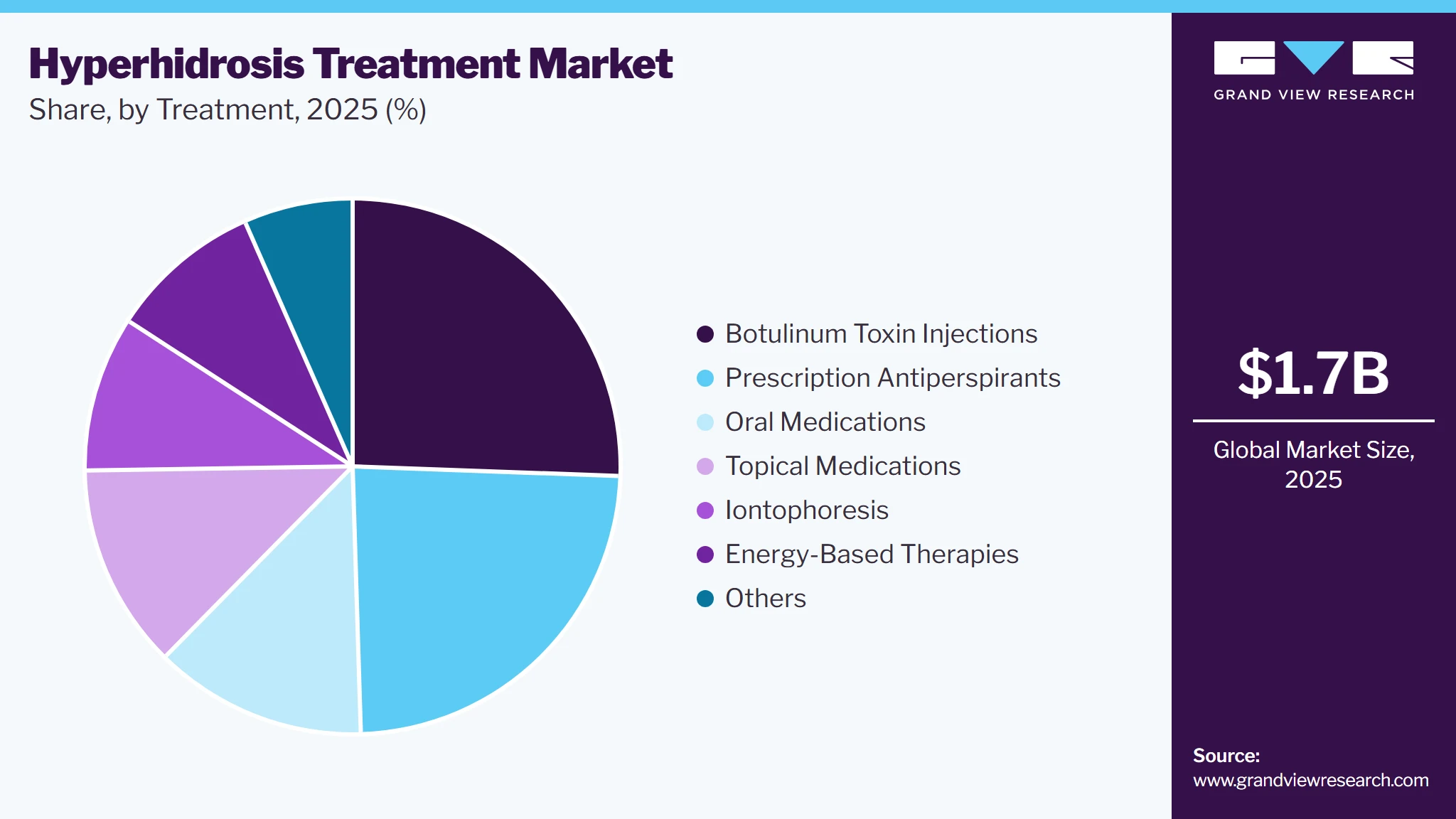
The topical medications segment is expected to exhibit the fastest CAGR of 12.1% over the forecast period. Growth is supported by increasing demand for localized treatment, home use, non-invasive administration, and alternatives to injections or oral medicines. Topical medications are applied directly to affected areas, supporting targeted symptom control. New formulations also provide physicians with options beyond traditional prescription antiperspirants. The segment benefits from simple application, access to prescriptions, and use in outpatient care. Increasing diagnosis of hyperhidrosis also supports demand for prescription topical treatment. Product development focused on anticholinergic mechanisms is expanding treatment choices for patients requiring pharmacological management. The availability of topical therapies for axillary hyperhidrosis further supports segment growth.
Regional Insights
North America dominated the hyperhidrosis treatment market with a 41.3% revenue share in 2025. The region benefits from established diagnosis and treatment practices across dermatology and specialty care. A broad range of prescription therapies, botulinum toxin treatments, iontophoresis, and energy-based procedures supports treatment access. High patient awareness also supports consultation for excessive sweating and continued treatment use. The region has a strong presence of pharmaceutical and medical device companies developing treatment options for localized hyperhidrosis. Established distribution through pharmacies, dermatology clinics, and medical practices further supports product availability.

U.S. Hyperhidrosis Treatment Market Trends
The U.S. is a major contributor to the North American hyperhidrosis treatment market. Hyperhidrosis affects a sizable patient population, while many affected individuals remain undiagnosed or untreated. Prescription topical therapies provide treatment options for axillary sweating, while botulinum toxin, iontophoresis, oral medicines, and procedures address other patient needs. Dermatologists have access to multiple treatment approaches based on the affected body area and symptom severity. Product development has also expanded prescription options for axillary hyperhidrosis. Strong healthcare infrastructure and established dermatology services support diagnosis and treatment. These factors continue to support demand for medical management of hyperhidrosis in the U.S.
Europe Hyperhidrosis Treatment Market Trends
The hyperhidrosis treatment market in Europe is well-positioned in the global industry due to established dermatology services and access to prescription therapies. Treatment options include topical products, botulinum toxin, iontophoresis, oral medicines, and surgical procedures. Clinical recognition of hyperhidrosis supports diagnosis across dermatology and other specialties. Differences in healthcare access between European countries create variation in treatment use and product availability. Germany, the UK, and France provide important markets due to their established healthcare systems and specialist care networks. Patient quality-of-life concerns also support demand for medical treatment when excessive sweating affects work and social activities. Continued clinical attention and availability of several treatment approaches support market development across Europe.
The UK hyperhidrosis treatment market is supported by established dermatology care and clinical guidance for diagnosis and treatment. Patients receive treatment through primary care and specialist dermatology services, with treatment choices based on the affected area and symptom severity. Topical antiperspirants remain an accessible treatment option, while iontophoresis, botulinum toxin, and oral medicines serve patients requiring additional management. Clinical guidance also supports more consistent identification and referral of patients with excessive sweating. Awareness of the social and occupational effects of hyperhidrosis supports patient consultations. Availability of specialist services provides access to procedural treatment for patients with persistent symptoms. These factors support continued demand for hyperhidrosis treatment across the UK.
The hyperhidrosis treatment market in Germany represents an important European market, supported by established dermatology and hospital services. Clinical data show that hyperhidrosis affects patients across different regions and severity levels, creating demand for diagnosis and treatment. Treatment approaches include topical products, iontophoresis, botulinum toxin, oral medicines, and surgical procedures. Dermatologists and other specialists assess patients based on disease type, affected body area, and underlying causes. The availability of specialist healthcare facilities supports access to procedural treatments for patients with persistent symptoms. Patient quality-of-life concerns also contribute to treatment demand, as hyperhidrosis can create social and occupational limitations.
The France hyperhidrosis treatment market has gained ground from a developed dermatology sector that supports diagnosis and treatment of hyperhidrosis. Patients have access to topical antiperspirants, iontophoresis, botulinum toxin, oral medicines, and surgical approaches based on clinical needs. Dermatology services provide an important channel for identifying patients with persistent excessive sweating. Treatment demand is supported by the impact of hyperhidrosis on daily activities, professional interactions, and social life. The availability of both drug-based and procedure-based options gives physicians flexibility when selecting treatment. Clinical awareness also supports differentiation between primary and secondary hyperhidrosis, which helps guide treatment selection. Continued access to specialist dermatology care supports the French market for hyperhidrosis treatment.
Asia Pacific Hyperhidrosis Treatment Market Trends
Asia Pacific is the fastest-growing region in the hyperhidrosis treatment market, with a projected CAGR of 10.5% over the forecast period. Growth is supported by the expansion of dermatology services, rising awareness of excessive sweating, and increasing access to medical treatment. Large urban populations across China, Japan, India, and other Asian countries provide a broad patient base. The growing use of minimally invasive and device-based procedures supports demand for treatment in urban healthcare centers. Improved access to prescription therapies also expands treatment choices for patients with localized sweating. Japan and China have active clinical interest in procedural and drug-based management of hyperhidrosis. These factors support the region's faster market growth compared with mature treatment markets.
The Japan hyperhidrosis treatment market has a developed treatment environment for hyperhidrosis, supported by strong dermatology services and access to prescription therapies. Treatment options include topical medicines, botulinum toxin, iontophoresis, and surgical procedures. Clinical use of minimally invasive treatments supports demand among patients seeking symptom control with limited treatment disruption. High awareness of dermatological conditions also supports patient consultations and treatment selection. Urban healthcare centers provide access to specialist dermatologists and hospitals with experience in hyperhidrosis management. The availability of multiple treatment approaches supports continued use across different patient groups.
The hyperhidrosis treatment market in China is an important growth market due to its large population and expanding access to dermatology services. Clinical treatment includes topical agents, iontophoresis, microwave therapy, and surgical procedures. Palmar hyperhidrosis receives particular clinical attention, with treatment patterns covering both medical and procedural approaches. Urban hospitals provide specialist care for patients with severe symptoms and treatment needs. Increasing awareness of quality-of-life effects supports patient demand for medical management. Clinical research is also expanding understanding of treatment preferences and gaps in pharmacotherapy. These factors support continued development of the Chinese market and create demand for a wider range of treatment options.
Latin America Hyperhidrosis Treatment Market Trends
The hyperhidrosis treatment market in Latin America is supported by growing access to dermatology services and established use of procedural treatments for hyperhidrosis. Treatment options include topical antiperspirants, oral medicines, botulinum toxin, iontophoresis, and surgical procedures. Brazil serves as a key market due to its established clinical experience in hyperhidrosis management. Patient demand is supported by the effect of excessive sweating on social activities, work, and daily routines. Greater awareness among dermatologists supports diagnosis and treatment selection across different disease types. Access to treatment varies between countries, which creates differences in product availability and treatment use. Overall, the region provides a steady market for both medical and procedure-based hyperhidrosis treatment.
The Brazil hyperhidrosis treatment market is a promising hub for hyperhidrosis treatment, supported by established clinical experience in dermatology and thoracic surgery. Treatment approaches include topical products, oral medicines, botulinum toxin, iontophoresis, and surgical procedures. Brazilian clinical guidelines address diagnosis and treatment of hyperhidrosis, supporting structured clinical management. Patients with severe palmar or axillary symptoms represent an important treatment group for specialist services. The availability of procedure-based treatment supports demand among patients with persistent symptoms. Dermatology and surgical practices provide channels for diagnosis, treatment selection, and follow-up care. These factors support continued demand for hyperhidrosis treatment in Brazil and maintain its role within the Latin American market.
Middle East & Africa Hyperhidrosis Treatment Market Trends
The hyperhidrosis treatment market in the Middle East and Africa is supported by increasing access to dermatology services and demand for treatments addressing excessive sweating. High temperatures across many countries increase the clinical attention given to sweating symptoms and their effect on daily activities. Topical products provide an accessible treatment option, while botulinum toxin, iontophoresis, and surgical procedures serve patients requiring specialist care. Urban healthcare centers provide greater access to dermatologists and procedure-based treatments. Growing awareness of hyperhidrosis as a medical condition supports patient consultations and treatment selection. Differences in healthcare infrastructure across countries result in varied access to advanced treatment options. These factors shape treatment demand across the region.
The Saudi Arabia hyperhidrosis treatment market represents a growing market in the Middle East. High temperatures and prolonged warm seasons increase the relevance of sweating-related symptoms in daily life. Dermatology clinics provide access to topical treatments, botulinum toxin, and other procedure-based options. Increasing use of specialized dermatology services supports diagnosis and treatment among patients with persistent symptoms. Urban healthcare centers provide greater access to physicians experienced in managing localized and generalized hyperhidrosis. Patient demand also relates to the social and professional effects associated with excessive sweating. These factors support continued demand for medical and procedural treatment of hyperhidrosis in Saudi Arabia.
Key Hyperhidrosis Treatment Company Insights
The hyperhidrosis treatment market is moderately fragmented, with competition across prescription medicines, botulinum toxin treatments, and medical devices. AbbVie Inc., Botanix Pharmaceuticals Ltd., Journey Medical Corporation, and Kaken Pharmaceutical Co., Ltd. have positions in prescription-based treatment, while Merz Pharma GmbH & Co. KGaA and Medytox Inc. compete in botulinum toxin treatment. Miramar Labs, Inc., Dermadry Laboratories Inc., and Hidrex GmbH focus on device-based treatment, while August Wolff GmbH & Co. KG Arzneimittel adds competition in topical therapies. Kaken identifies its hyperhidrosis treatment as a key dermatology product, while Botanix has commercialized a prescription topical treatment in the U.S.
Key Hyperhidrosis Treatment Companies
The following key companies have been profiled for this study on the hyperhidrosis treatment market.
-
AbbVie Inc.
-
Botanix Pharmaceuticals Ltd.
-
Journey Medical Corporation
-
Kaken Pharmaceutical Co., Ltd.
-
Miramar Labs, Inc. (miraDry)
-
Dermadry Laboratories Inc.
-
Merz Pharma GmbH & Co. KGaA
-
Medytox Inc.
-
August Wolff GmbH & Co. KG Arzneimittel
-
Hidrex GmbH
Competitive Benchmarking
Operating Strategies
Competitive Edge
Weaknesses
- Mature Players: AbbVie Inc.
- Mature players focus on established prescription treatments, botulinum toxin therapies, clinical use, physician relationships, and established dermatology channels.
- Their strategies include product development, clinical studies, regulatory approvals, licensing arrangements, and expansion across treatment categories.
- They also use established manufacturing and distribution networks to maintain product availability.
- Mature players benefit from established treatment portfolios, physician familiarity, regulatory experience, manufacturing capabilities, clinical data, and broad distribution networks.
- Their presence across drug-based and procedure-based treatment gives them access to different patient groups and treatment needs.
- Mature players face competition from newer topical therapies, home-use devices, and alternative procedures.
- Established products also face pressure from treatment options that offer different administration methods, convenience, or treatment duration.
- Emerging Players: Hidrex GmbH
- Emerging players focus on prescription topical therapies, home-use devices, and treatment technologies for specific forms of excessive sweating.
- Their strategies include product launches, device improvements, clinical development, direct patient access, and expansion into new treatment channels.
- They also focus on treatment convenience and localized symptom management.
- Emerging players gain a competitive edge through focused product portfolios, home-based treatment, simple administration, and products designed for specific patient needs.
- Their focus on selected treatment areas supports differentiation from broader pharmaceutical and procedure-based portfolios.
- Emerging players face challenges related to brand recognition, distribution reach, clinical adoption, regulatory requirements, and access to healthcare providers.
- Limited commercial resources can also make it difficult to compete with established companies across multiple markets.
Recent Developments
-
In September 2025, Kaken Pharmaceutical and Dong-Wha Pharm received approval in South Korea for sofpironium bromide for the treatment of primary axillary hyperhidrosis.
-
In March 2025, Dr. August Wolff GmbH & Co. KG Arzneimittel submitted an extension of indication for its 1% glycopyrronium bromide cream to include adolescents aged 12 years and older with severe primary axillary hyperhidrosis, supported by Phase II study results in 42 adolescents.
-
In January 2025, Dermadry Laboratories Inc. launched a revamped range of iontophoresis devices for treating excessive sweating of the hands, feet, and underarms, with updated silicone electrodes, perforated silicone mats, a compact case, and an ergonomic wrist support.
Hyperhidrosis Treatment Market Report Scope
Report Attribute
Details
Market size in 2025
USD 1.7 billion
Estimated market size in 2026
USD 1.8 billion
Projected market size by 2033
USD 3.2 billion
Growth rate
CAGR of 8.4% from 2026 to 2033
Base year for estimation
2025
Historical data
2021 - 2024
Forecast period
2026 - 2033
Quantitative units
Revenue in USD billion, and CAGR from 2026 to 2033
Report coverage
Revenue forecast, company ranking, competitive landscape, growth factors, trends
Segments covered
Type, treatment, region
Regional scope
North America; Europe; Asia Pacific; Latin America; Middle East & Africa
Country scope
U.S.; Canada; Mexico; UK; Germany; France; Italy; Spain; Denmark; Sweden; Norway; China; Japan; India; Australia; South Korea; Thailand; Brazil; Argentina; South Africa; Saudi Arabia; UAE; Kuwait
Key company profiled
AbbVie Inc.; Botanix Pharmaceuticals Ltd.; Journey Medical Corporation; Kaken Pharmaceutical Co., Ltd.; Miramar Labs, Inc. (miraDry); Dermadry Laboratories Inc.; Merz Pharma GmbH & Co. KGaA; Medytox Inc.; August Wolff GmbH & Co. KG Arzneimittel; Hidrex GmbH.
Customization scope
Free report customization (equivalent up to 8 analysts working days) with purchase. Addition or alteration to country, regional & segment scope.
Pricing and purchase options
Avail customized purchase options to meet your exact research needs. Explore purchase options
Global Hyperhidrosis Treatment Market Report Segmentation
This report forecasts revenue growth at global, regional, and country levels and provides an analysis of the latest industry trends in each of the sub-segments from 2021 to 2033. For this study, Grand View Research has segmented the global hyperhidrosis treatment market report based on type, treatment, and region:

-
Type Outlook (Revenue, USD Billion, 2021 - 2033)
-
Primary Hyperhidrosis
-
Secondary Hyperhidrosis
-
-
Treatment Outlook (Revenue, USD Billion, 2021 - 2033)
-
Prescription Antiperspirants
-
Topical Medications
-
Oral Medications
-
Botulinum Toxin Injections
-
Iontophoresis
-
Energy-Based Therapies
-
Others
-
-
Regional Outlook (Revenue, USD Billion, 2021 - 2033)
-
North America
-
U.S.
-
Canada
-
Mexico
-
-
Europe
-
UK
-
Germany
-
France
-
Italy
-
Spain
-
Denmark
-
Sweden
-
Norway
-
-
Asia Pacific
-
Japan
-
China
-
India
-
Australia
-
South Korea
-
Thailand
-
-
Latin America
-
Brazil
-
Argentina
-
-
Middle East & Africa
-
South Africa
-
Saudi Arabia
-
UAE
-
Kuwait
-
-
Research Methodology
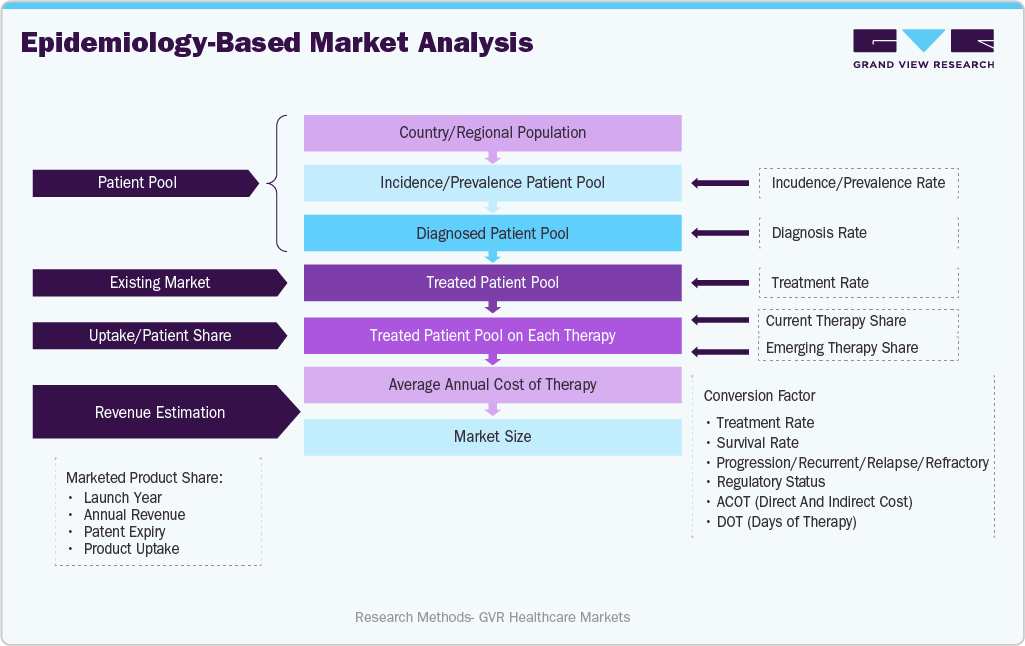
The hyperhidrosis treatment market is estimated using an epidemiology-based approach, as treatment demand is linked to the diagnosed and treated patient pool across primary and secondary hyperhidrosis. The methodology begins with country-level population data, followed by hyperhidrosis prevalence and incidence rates to determine the patient pool. The diagnosed population is calculated using diagnosis rates from epidemiological studies and clinical literature. The treated patient pool is then determined using treatment rates. Patients are segmented by disease type, affected body area, treatment, and geography. Treatment uptake is assessed across prescription antiperspirants, topical medications, oral medications, botulinum toxin, iontophoresis, energy-based devices, and surgery. Average annual treatment costs are derived from product prices, procedure costs, treatment frequency, and treatment duration. The market size is calculated by multiplying the treated patient pool for each therapy by the corresponding annual treatment cost and aggregating the results across countries and treatment categories.
Segment Definition
Segment - Type
Revenue capture definition
Primary Hyperhidrosis
Includes treatment for excessive sweating that occurs without an identifiable underlying medical condition or medication-related cause. This segment covers focal sweating affecting the underarms, palms, feet, face, or other localized body areas and includes treatment used specifically for primary hyperhidrosis.
Secondary Hyperhidrosis
Includes treatment for excessive sweating resulting from an underlying medical condition, hormonal changes, infection, neurological disorder, or medication use. This segment covers treatment of sweating associated with an identified secondary cause and excludes primary hyperhidrosis.
Segment - Treatment
Revenue capture definition
Prescription Antiperspirants
Includes prescription topical products that reduce excessive sweating through sweat gland blockage or reduction in sweat production, mainly using aluminum-based compounds. This segment covers prescription antiperspirants used for hyperhidrosis and excludes topical medicines with a pharmacological mechanism.
Topical Medications
Includes prescription medicines applied directly to the skin that reduce excessive sweating through a pharmacological mechanism. This segment covers topical anticholinergic and other prescription medicines used for localized hyperhidrosis and excludes prescription antiperspirants.
Oral Medications
Includes medicines taken orally to reduce excessive sweating through systemic action. This segment covers oral anticholinergic and other systemic medicines prescribed for hyperhidrosis and excludes topical, injectable, and device-based treatments.
Botulinum Toxin Injections
Includes clinical injections of botulinum toxin into targeted areas to reduce excessive sweating by blocking nerve signals that activate sweat glands. This segment covers injections used for areas such as the underarms, palms, feet, and face.
Iontophoresis
Includes device-based treatment that delivers a controlled electrical current through water or conductive pads to reduce excessive sweating. This segment covers iontophoresis treatment for areas such as the hands, feet, and underarms and excludes other energy-based technologies.
Energy-Based Therapies
Includes non-iontophoresis device-based procedures that use controlled energy to reduce sweat gland activity. This segment covers technologies such as microwave and thermal treatments used for localized hyperhidrosis and excludes iontophoresis.
Others
Includes treatment approaches for hyperhidrosis that do not fall under prescription antiperspirants, topical medications, oral medications, botulinum toxin injections, iontophoresis, or energy-based therapies. This segment primarily covers surgical procedures, including endoscopic thoracic sympathectomy, and other treatment approaches used to manage excessive sweating.
Estimation Model
Customization Table
This report has been delivered with the following In-depth customizations
Client Request
Customization Delivered
Value Adds
Hyperhidrosis Treatment Market Opportunity Assessment (U.S., Europe & Asia Pacific)
Conducted a detailed assessment of hyperhidrosis treatment demand across the U.S., Germany, France, the UK, Japan, China, and other key markets. The study evaluated patient prevalence, diagnosis rates, treatment patterns, prescription therapy use, procedure adoption, treatment costs, and access to dermatology services.
Helped the client identify high-growth treatment markets, assess patient treatment gaps, compare therapy adoption, evaluate geographic expansion opportunities, and support product launch and commercial planning across key hyperhidrosis markets.
Hyperhidrosis Treatment Pipeline & Competitive Benchmarking
Delivered a benchmarking analysis of prescription therapies, topical treatments, botulinum toxin products, iontophoresis devices, energy-based treatments, and surgical approaches. The assessment covered product portfolios, regulatory approvals, clinical development, product launches, treatment areas, distribution approaches, and competitive positioning.
Enabled the client to assess treatment gaps, compare competing therapies, identify product development opportunities, evaluate competitive strengths, and support decisions related to pipeline development, partnerships, licensing, and market entry.
Emerging Market Hyperhidrosis Treatment & Patient Access Assessment
Conducted a country-level assessment of hyperhidrosis diagnosis and treatment access across Brazil, Saudi Arabia, Japan, China, and selected emerging markets. The study analyzed patient awareness, diagnosis rates, dermatology infrastructure, treatment availability, prescription access, device adoption, pricing factors, and treatment preferences.
Supported market entry planning by identifying treatment access gaps, patient groups with limited treatment options, distribution opportunities, and areas for product expansion. The study also supported resource planning and commercial strategies for expanding hyperhidrosis treatment access.
About the Author(s)
Pharmaceuticals Research Team
Healthcare · PharmaceuticalsThis report was authored by the pharmaceuticals research team at Grand View Research - comprising two research analysts, one senior research analyst, and one industry expert - with specialized expertise in the pharmaceuticals segment of the healthcare industry. All findings are based on proprietary healthcare databases, executive interviews, and regulatory analysis, subject to internal peer review prior to publication.
Last Updated:
Speak to Analyst


Customize this report to your needs — add regions, segments, or data points, with 20% free customization.
Or view our licence options:


ISO 9001:2015 & 27001:2022 Certified
We are GDPR and CCPA compliant! Your transaction & personal information is safe and secure. For more details, please read our privacy policy.


