
- Home
- »
- Pharmaceuticals
- »
-
Immune Health Supplements Market Size Report, 2026-2033GVR Report cover

Immune Health Supplements Market (2026 - 2033)
Size, Share & Trends Analysis Report By Product (Vitamin & Mineral Supplements, Amino Acids), By Formulation (Capsules, Tablets), By Source, By Mode of Medication, By Distribution Channel, By Region, And Segment Forecasts
Market Size, 2025
$38.1BMarket Estimate, 2026
$41.1BMarket Forecast, 2033
$76.2BCAGR, 2026–2033
9.2%Immune Health Supplements Market Overview
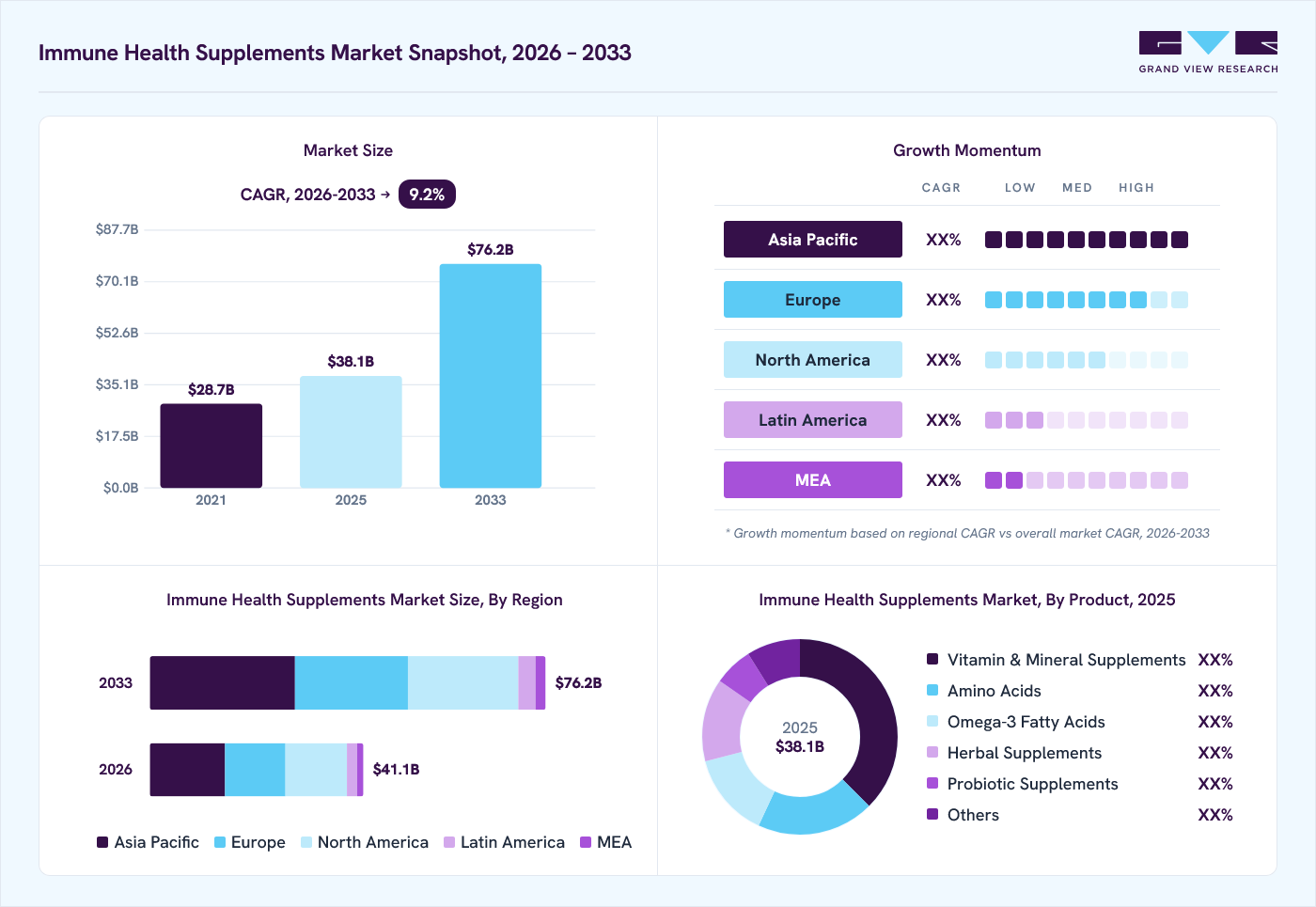
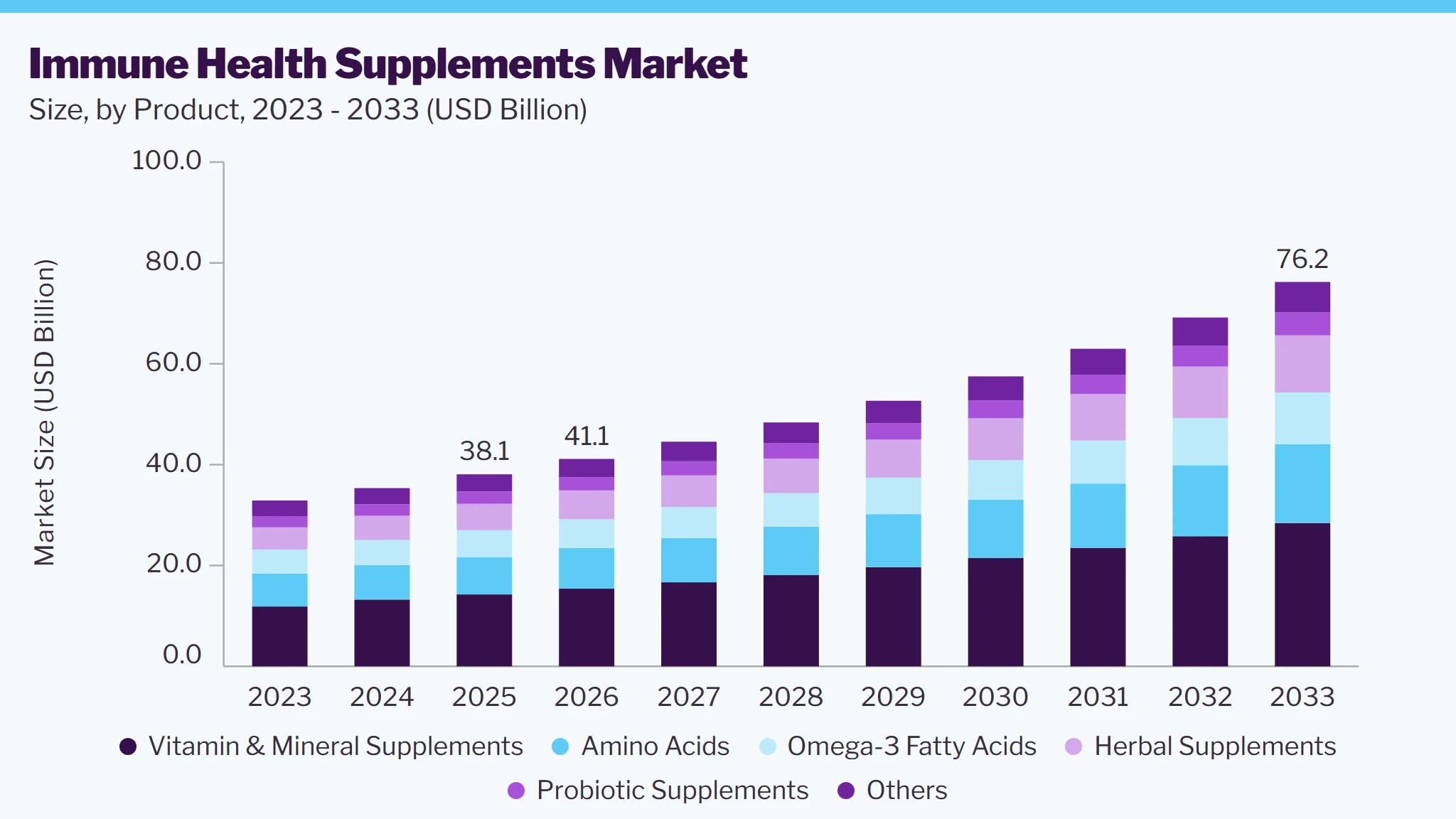
The global immune health supplements market size was valued at USD 38.1 billion in 2025 and is projected to grow from USD 41.1 billion in 2026 to USD 76.2 billion by 2033, at a CAGR of 9.2% from 2026 to 2033. The market in Asia Pacific dominated with a revenue share of 35.1% in 2025. The key factors driving market growth include the increasing prevalence of infectious diseases, diabetes, and other disorders resulting from a weakened immune system.
 Source: Grand View Research, IR Documents, Primary Interviews, Paid DatabasesTo learn more about this report,
 Download Free Sample Report
Key Market Trends & Insights
- By product: Vitamin & mineral supplements segment held the largest market share of 37.5% in 2025.
- By formulation: Capsules segment held the largest market share of 32.3% in 2025.
- By source: Synthetic segment held the largest market share of 62.7% in 2025.
- By mode of medication: Self-medication segment held the largest market share of 60.5% in 2025.
- By distribution channel: Offline segment held the largest market share of 70.9% in 2025.
Regional Highlights
- Largest regional market: Asia Pacific (35.1% revenue share, 2025)
- By country: China held the largest market share in 2025
Market Size & Forecast
- Market size in 2025: USD 38.1 Billion
- Estimated market size in 2026: USD 41.1 Billion
- Projected market size by 2033: USD 76.2 Billion
- CAGR (2026-2033): 9.2%
Three ways to get this report
Buy it, customize it, or ask a question.Ask an Analyst
Analyst response in 1 business day
- AccessReport author, directly
- Reply timeWithin 1 working day
- No sales callDirect answer only
- FormatEmail reply
- CostFree, no cost
Get the Full Report
What the study covers
- FormatsPDF · Excel · Dashboard
- Timeline2026–2033 annual, 2025 base
- Coverage20+ countries, 5 regions
- Companies10+ key players profiled
Customize the Report
20% free customization
- IncludeCountries, segments, points
- TailorTo your product definition
- ExtendDeeper competitor detail
- OrA fully bespoke study
- Turnaround5–10 working days
The market for immune health supplements is expanding, largely due to growing awareness of health and preventive care. Instead of relying solely on treatment, consumers are increasingly adopting a proactive approach to wellness, emphasizing disease prevention. The demand for immune health supplements has increased because of this shift, as people seek easy, research-backed ways to enhance resilience, energy, and overall well-being.
 To learn more about this report, Download Free Sample Report
With the help of wellness campaigns, fitness applications, and digital media, consumers of all ages are purchasing supplements as part of their preventive healthcare regimen. In response, producers are launching clean-label, plant-based, scientifically developed, immune-boosting products that meet consumer demand for all-natural, holistic health solutions. In the coming years, market demand is expected to continue to be driven by the ongoing emphasis on preventive healthcare and immune system enhancement.
Market Dynamics
The growing preference for preventive healthcare and proactive wellness management is supporting demand for immune-health supplements. According to Glanbia, around one in five consumers globally are increasing their supplement consumption, with immune support emerging as a key factor influencing purchasing decisions. Moreover, one in four consumers value immune-support benefits in food and beverages, demonstrating that immunity is becoming an integral part of broader nutrition and wellness choices. This evolving consumer mindset is encouraging manufacturers to broaden immune-health offerings and develop convenient, everyday solutions focused on maintaining immunity, supporting resilience, and promoting overall well-being. For instance, in September 2025, Lemme launched Lemme Immunity, a daily gummy formulated with postbiotic vitamins C and D, zinc, and astragalus root. The product was positioned for year-round immune support, reflecting the shift toward convenient, everyday supplementation rather than using immune products only during periods of seasonal illness.
Strict regulatory standards in the U.S. influence how immune-health supplements can be positioned and promoted. Manufacturers cannot make claims that their products prevent, treat, cure, or mitigate diseases. However, structure/function claims such as “supports immune health” are permitted when they are truthful, adequately supported by scientific evidence, and accompanied by the required FDA disclaimer. These restrictions can limit the strength of consumer-facing claims and require manufacturers to invest in scientific substantiation and regulatory compliance before introducing or promoting immune-focused products. As competition increases, the need to balance compelling health messaging with regulatory requirements may also make product positioning more complex and costly.
The growing consumer interest in both immune resilience and digestive wellness creates an opportunity for supplement manufacturers to develop integrated gut-immune health propositions. Brands can differentiate through formulations that combine probiotics, prebiotics, postbiotics, and selected micronutrients, while clearly communicating their complementary benefits. Simplifying these health claims and providing easy-to-understand education can improve consumer confidence, encourage regular usage, and support the development of multifunctional supplements positioned around broader, preventive wellness.
Analyst Perspective
The immune health supplements market is evolving from seasonal, reactive consumption toward year-round preventive health and wellness. Demand is expanding across vitamins, minerals, probiotics, botanicals, and multifunctional formulations as consumers seek convenient solutions for daily immune support. Product innovation is increasingly focused on clean-label ingredients, targeted formulations, convenient delivery formats, and science-backed positioning. Growing interest in gut health, healthy aging, and overall wellness is creating opportunities for brands to broaden immune-health propositions. Going forward, product differentiation, ingredient transparency, formulation efficacy, and consumer trust are expected to remain key factors shaping competitive positioning and market growth.
Consumer Insights
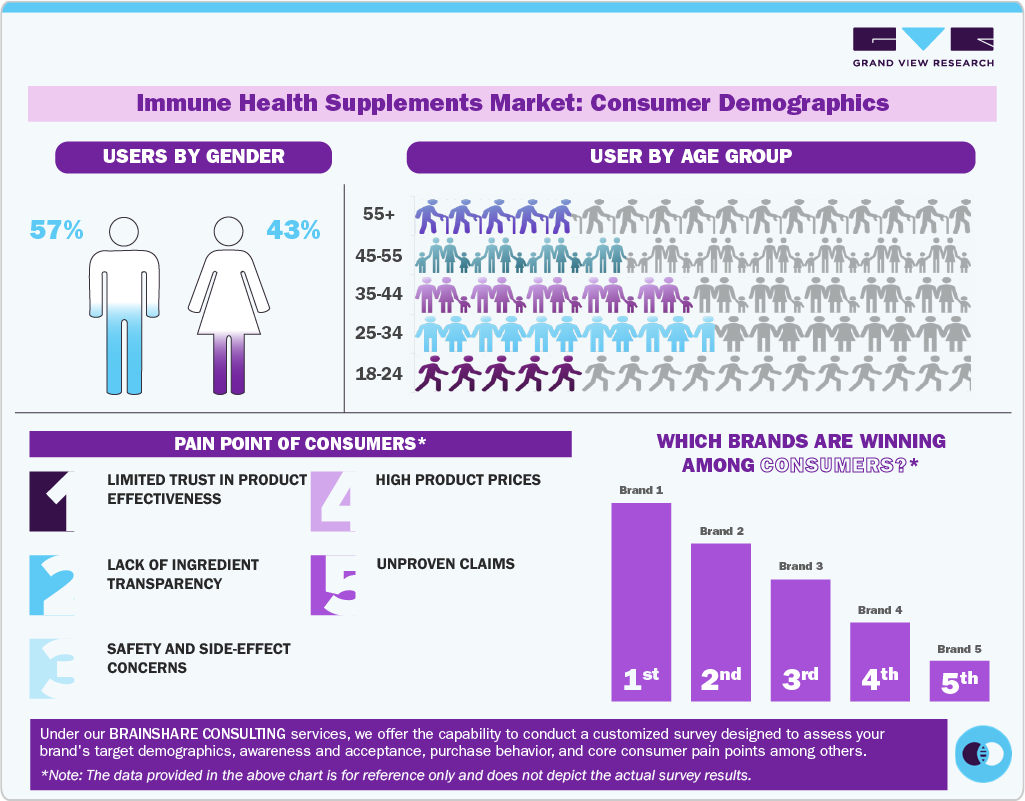
According to Glanbia, consumers are increasingly taking a proactive and holistic approach to immune health, with 30.0% of global consumers identifying immunity as a key physical health concern and 39.0% using supplements primarily for immune support. The trend is particularly pronounced in Asia, where consumers show a greater propensity to use immune-focused supplements regularly. These consumption patterns are encouraging manufacturers to develop daily-use, preventive health solutions that combine immune support with broader wellness benefits, while tailoring formulations to regional consumer preferences. For instance, In March 2026, Singapore-based MIRIQA entered the immune-health category with Immunity Builder, a family-oriented jelly supplement combining elderberry, vitamin C, zinc, perilla extract, and postbiotics. The launch illustrates manufacturers' increasing focus on convenient formats, multifunctional formulations, and everyday immune support as consumers adopt more proactive approaches to wellness.
 To learn more about this report, Download Free Sample Report
Product Insights
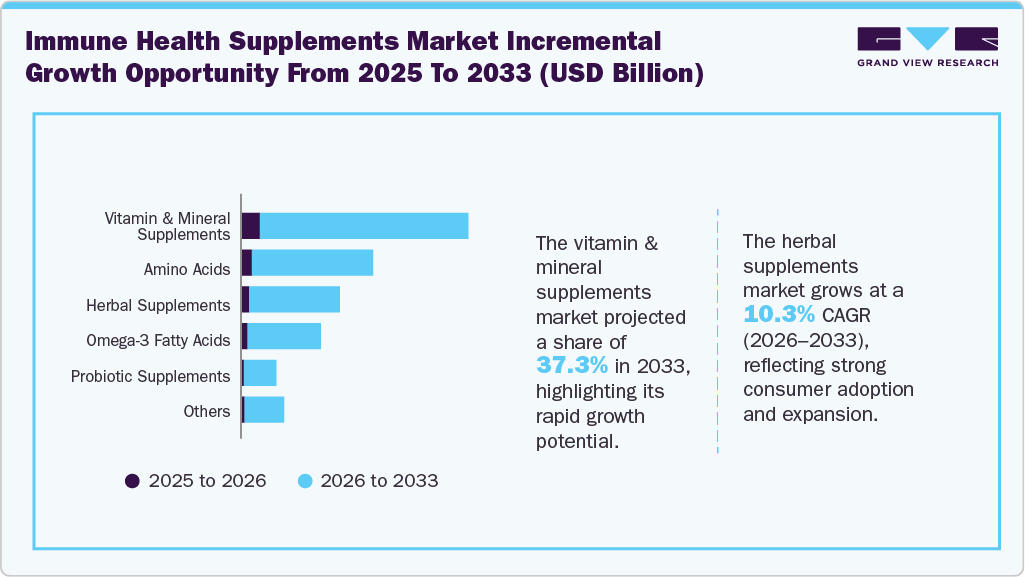
The vitamin & mineral supplements segment held the largest share of 37.5% of market revenue in 2025. Increasing preference for supplements among consumers across the globe to boost their immunity is driving the segment. The proven health benefits and wide availability of vitamin C, D, B complex, multivitamins, and minerals, such as zinc and selenium, in supporting the immune system are propelling the segment growth.
 To learn more about this report, Download Free Sample Report
The herbal supplements are projected to grow fastest at a CAGR of 10.3% from 2026 to 2033. The herbal supplement segment is expected to witness the fastest CAGR during the forecast period. High demand among consumers for herbal supplements over nutraceuticals to enhance the body’s immune health without side effects is driving the segment. Moreover, the rise in the vegan population is expected to drive the segment over the forecast period.
Formulation Insights
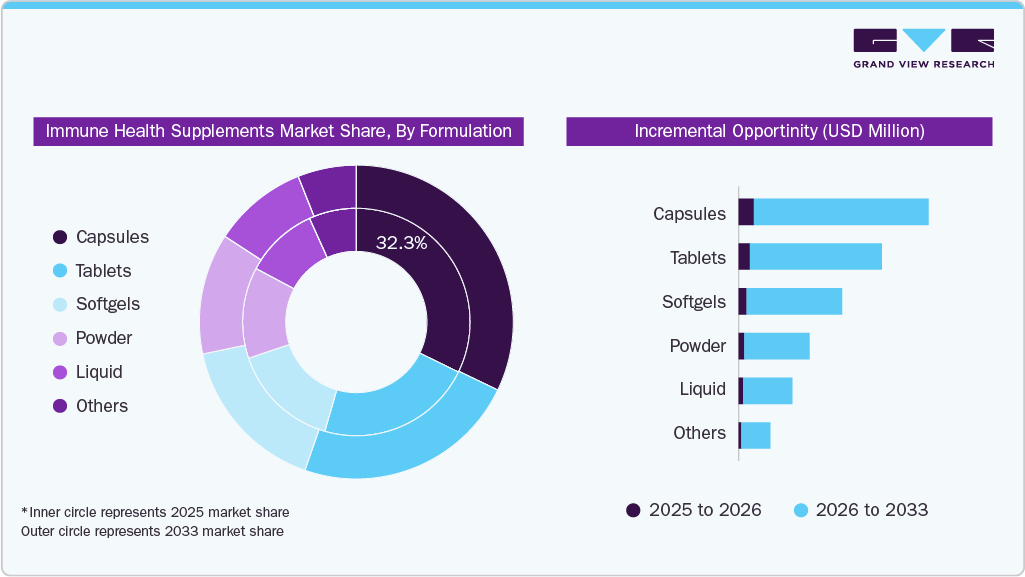
The capsules segment accounted for the largest share of 32.3% in 2025 in the immune health supplements industry. This dominance is attributed to several factors, including their convenience, ease of consumption, precise dosage, and longer shelf life compared to other forms such as powders and liquids. Consumers often prefer capsules for their portability and the ability to mask the taste of certain ingredients, which drives the segment growth.
 To learn more about this report, Download Free Sample Report
By formulation, softgels are projected to grow at the fastest CAGR of 10.1% from 2026 to 2033, driven by their superior bioavailability, ease of swallowing, and ability to encapsulate both oil- and fat-soluble ingredients. Their appealing format with extended shelf life and suitability for clean-label and customized formulations is fueling consumer preference and further supporting segment growth.
Source Insights
The synthetic immune health supplements segment accounted for the largest share of 62.7% in 2025 in the immune health supplements industry. This is primarily attributed to its cost-effectiveness, consistency in quality, and scalability in production. Synthetic supplements offer precise formulations and standardized dosages, making them a preferred choice for both consumers and manufacturers seeking reliable and affordable options.
Natural immune health supplements are projected to grow at a CAGR of 9.5% from 2026 to 2033. Increasing awareness of the potential health benefits and reduced side effects associated with natural supplements is driving demand for these products. Moreover, the rise in health consciousness and the increasing demand for products free from synthetic additives are driving the segment's rapid growth.
Mode of Medication Insights
The self-medication segment accounted for the largest share, at 60.5%, in the immune health supplements industry in 2025. The growing availability of information on health and wellness, coupled with easier access to a wide variety of supplements through online and offline channels, empowers consumers to make informed choices about their health, which drives the segment growth.
By mode of medication, prescription-based supplements are projected to grow at a CAGR of 10.1% from 2026 to 2033. Increasing awareness of the benefits of tailored, medically supervised supplementation is driving demand for prescription-based immune health supplements. Healthcare professionals are increasingly recommending these supplements to patients with specific health conditions or deficiencies, ensuring a more targeted and effective approach to boosting immune health.
Distribution Channel Insights
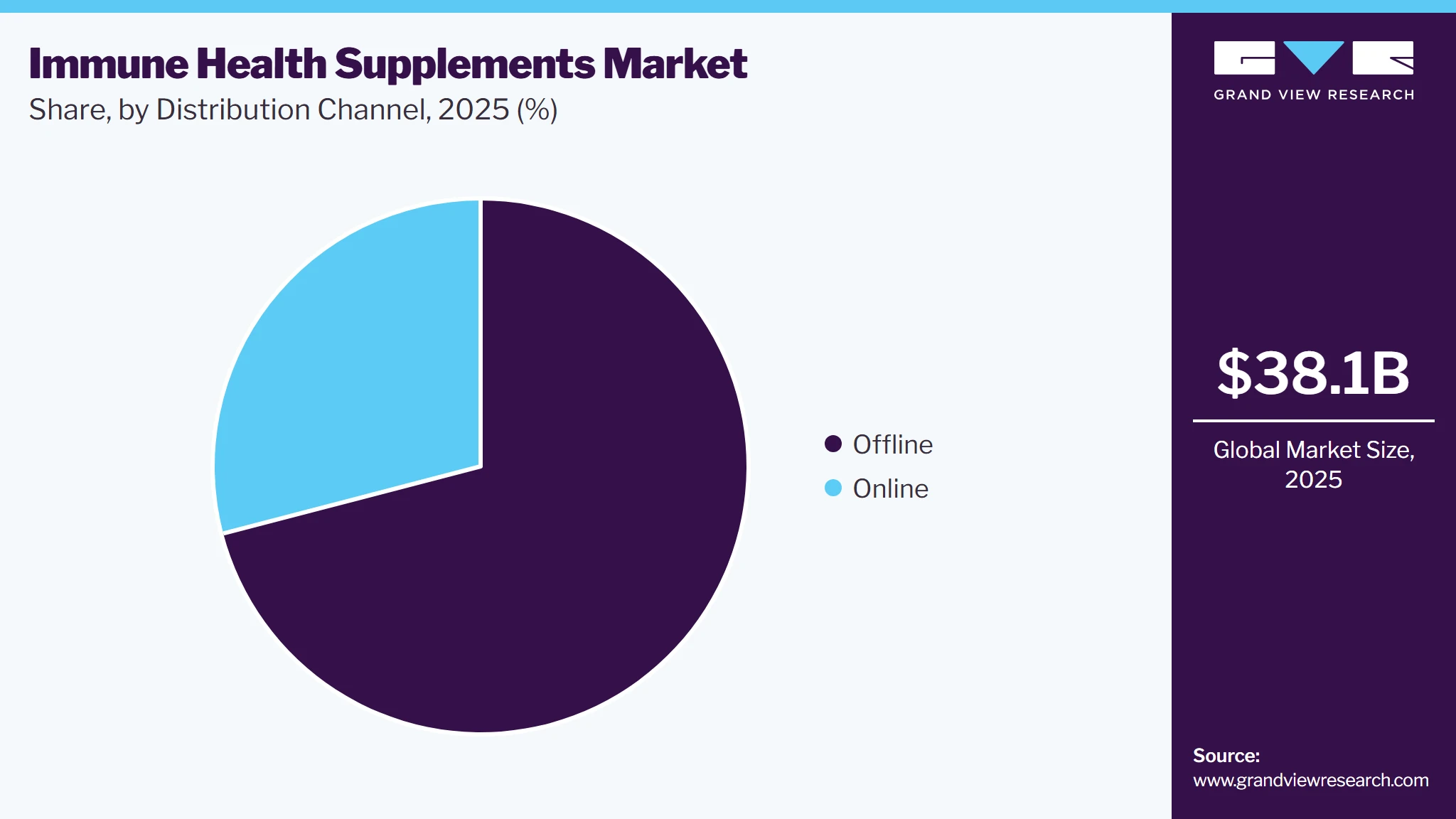
The offline channel in the immune health supplements industry accounted for the largest share of 70.9% of global revenue in 2025. Rising consumer preference and the availability of a wide variety of products are expected to drive the highest sales of these products in offline stores, such as pharmacies, drugstores, and supermarkets.
 To learn more about this report, Download Free Sample Report
The online channel in the immune health supplements market is projected to grow at the fastest CAGR of 10.3% from 2026 to 2033. owing to the growing use of e-commerce channels for purchasing supplements. Moreover, the rapid increase in the number of e-commerce vendors following the pandemic supported the market demand for this segment.
Regional Insights
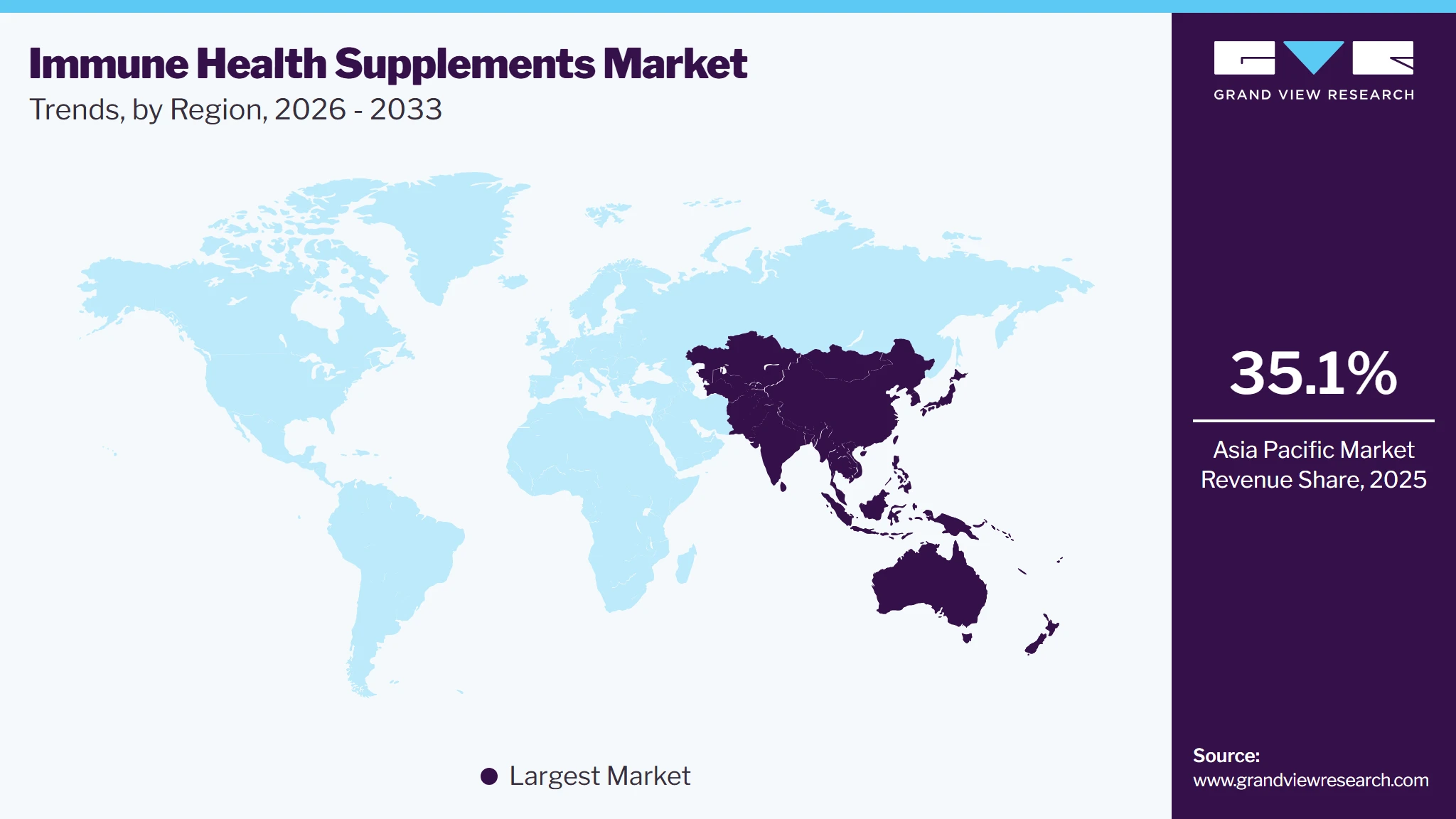
The Asia Pacific immune health supplements market accounted for the largest market share of 35.1% in 2025. Several factors, including increasing health awareness and a rising focus on preventive healthcare among consumers in the region, drive this growth. The market is further bolstered by advancements in supplement formulations and the growing popularity of natural and traditional remedies, which resonate well with consumers in the Asia Pacific region. For instance, in June 2025, Amway India launched Nutrilite Triple Protect, a plant-based supplement in India, formulated with Acerola Cherry, Turmeric, and Licorice to enhance immunity, gut health, and skin health.
 To learn more about this report, Download Free Sample Report
China Immune Health Supplements Market Trends
China led the Asia Pacific immune health supplements market in 2025, holding the largest market share with 25.7% of the region’s total revenue. The market is shifting toward science-led and multifunctional immune-health solutions, with consumers increasingly seeking products that combine immunity with gut health and broader wellness benefits. This is encouraging greater adoption of probiotics, herbal ingredients, vitamins, and specialized formulations, while modern formats such as gummies, powders, and oral liquids are improving convenience.
North America Immune Health Supplements Market Trends
The North America immune health supplements market accounted for a market share of 28.8% in 2025. Owing to region’s high awareness of health and wellness, coupled with a strong focus on preventive healthcare, has led to increased consumption of immune health supplements. Moreover, the presence of key market players, robust distribution channels, and a well-established regulatory framework for dietary supplements all contribute to the market's growth.
U.S. Immune Health Supplements Market Trends
The U.S. led the North American immune health supplements market in 2025, holding the largest market share with 86.9% of the region’s total revenue. The U.S. immune health supplements market is moving toward targeted, multifunctional, and microbiome-focused solutions, as consumers increasingly connect immune wellness with digestive health and overall well-being. This shift is encouraging brands to explore differentiated ingredients and convenient formats beyond traditional vitamin and mineral supplements. For instance, in January 2025, Vital Proteins introduced Colostrum Capsules in the U.S., using bovine colostrum to support gut and immune health in a convenient capsule format. The launch highlights the growing use of colostrum and gut-health-oriented formulations within the broader immune-support category.
Europe Immune Health Supplements Market Trends
The immune health supplements industry in Europe is projected to grow at a CAGR of 9.4% from 2026 to 2033. Demand is moving beyond conventional single-ingredient products toward multifunctional formulations that combine immune support with gut health and overall wellness, while convenient formats are gaining importance. For instance, in October 2025, NutriLeads launched WECARROT in the Netherlands, combining its prebiotic Benicaros with vitamin C and zinc to support gut balance and immune health, highlighting the region’s shift toward science-led, multifunctional, and microbiome-focused immune-health solutions.
The UK immune health supplements market led the Europe market in 2025, holding the largest market share with 15.7% of the region’s total revenue. The market is being supported by increasing emphasis on preventive healthcare, everyday wellness, and year-round immune support, encouraging consumers to incorporate vitamins, minerals, probiotics, and multifunctional supplements into their daily routines. Product innovation is increasingly focused on convenience and broader health benefits; for instance, in August 2025, Phizz launched Daily Immune+, an effervescent formulation combining vitamins and minerals, including vitamins C and D, and distributed through major retail and online channels. The launch highlights the shift toward convenient, multifunctional immune-health solutions designed for regular consumption.
Latin America Immune Health Supplements Market Trends
The Latin America immune health supplements market is projected to grow at a CAGR of 7.6% from 2026 to 2033. The immune health supplements market is gaining traction as consumers place greater emphasis on preventive health and year-round immune support. Demand is supported by growing awareness of vitamins, minerals, probiotics, and herbal supplements, with herbal formulations emerging as a particularly attractive area for future expansion. Increasing online availability is also improving access to immune-support products across the region.
Middle East & Africa Immune Health Supplements Market Trends
The Middle East & Africa immune health supplements market is expected to grow at a CAGR of 7.4% from 2026 to 2033. The immune health supplements market in the Middle East and Africa is expected to grow significantly owing to the increasing health consciousness and rising demand for preventive healthcare in the region. The growing prevalence of chronic diseases and an aging population are driving consumers to seek supplements that enhance their immune systems.
Key Immune Health Supplements Company Insights
Several leading players with strong product portfolios, a global reach, and a history of consistent innovation characterize the immune health supplements market. Key companies, including Nature’s Bounty, NOW Foods, Glanbia plc, Amway, and Herbalife Nutrition Ltd., dominate the market through trusted brands, diversified supplement ranges, and ongoing investments in research, formulation, and quality assurance.
 To learn more about this report, Download Free Sample Report
Key Immune Health Supplements Companies:
The following key companies have been profiled for this study on the immune health supplements market.
-
Nature's Bounty
-
NOW Foods
-
Glanbia plc
-
Amway
-
Herbalife Nutrition Ltd.
-
Jarrow Formulas, Inc.
-
Life Extension
-
Nature's Way
-
Metagenics, Inc.
-
Garden of Life, Inc.
Competitive Benchmarking
Category
Operating Strategies
Competitive Edge
Weakness
Established Players (Nature's Bounty, NOW Foods, Amway, Herbalife Nutrition Ltd., Jarrow Formulas, Inc.,)
- Maintain broad immune-health portfolios spanning vitamins, minerals, botanicals, probiotics, antioxidants, and combination formulas. Companies are expanding gummies, capsules, powders, and targeted formulations while emphasizing science-backed ingredients, clean-label positioning, and everyday immune support.
- Strong brand recognition, established distribution, broad product portfolios, consumer trust, and extensive experience across dietary supplements. Several players differentiate through specialized formulations, botanical ingredients, probiotics, or science-led positioning.
- High competition across standardized ingredients such as vitamin C, vitamin D, zinc, and elderberry; dependence on consumer trust and regulatory-compliant claims; and limited differentiation for basic single-ingredient products.
Emerging Players (Life Extension, Nature's Way, Metagenics, Inc., Garden of Life, Inc. Glanbia plc)
- Expands its nutrition portfolio through science-led innovation, functional ingredients, and health-focused nutrition platforms, with opportunities to extend its capabilities into immune-health applications and multifunctional formulations.
- Strong ingredient expertise, R&D capabilities, manufacturing scale, and access to established nutrition brands and formulation technologies.
- Immune health is less central to its consumer-facing portfolio than performance nutrition, requiring stronger category-specific positioning and consumer awareness.
Recent Developments
-
In September 2025, Lemme launched Lemme immunity, a daily gummy combining a postbiotic with vitamin C, vitamin D, zinc, and astragalus root. The product initially launched online before expanding into Target stores, demonstrating the increasing adoption of multifunctional, gummy-based immune supplements designed for year-round consumption.
-
In April 2025, Big Bold Health launched HTB immune energy chews, combining Himalayan Tartary Buckwheat with zinc, magnesium, vitamins C and D, and cocoa. The launch illustrates the shift toward multi-benefit formulations that connect immune support with energy, metabolic health, and everyday wellness.
Immune Health Supplements Market Report Scope
Report Attribute
Details
Market size in 2025
USD 38.1 Billion
Estimated market size in 2026
USD 41.1 Billion
Projected market size by 2033
USD 76.2 Billion
Growth rate
CAGR of 9.2% from 2026 to 2033
Actual data
2021 - 2025
Forecast period
2026 - 2033
Quantitative units
Revenue in USD Billion, and CAGR from 2026 to 2033
Report coverage
Revenue forecast, company ranking, competitive landscape, growth factors, and trends
Segments covered
Product, formulation, source, mode of medication, distribution channel, and region
Regional Scope
North America; Europe; Asia Pacific; Latin America; Middle East & Africa
Country scope
U.S.; Canada; Mexico; UK; Germany; France; Italy; Spain; Denmark; Sweden; Norway; China; India; Japan; Australia; Thailand; South Korea; Brazil; Argentina; Saudi Arabia; UAE; South Africa; Kuwait
Key companies profiled
Nature's Bounty; NOW Foods; Glanbia plc; Amway; Herbalife Nutrition Ltd.; Jarrow Formulas, Inc.; Life Extension; Nature's Way; Metagenics, Inc.; Garden of Life, Inc.
Customization scope
Free report customization (equivalent up to 8 analysts’ working days) with purchase. Addition or alteration to country, regional & segment scope.
Pricing and purchase options
Avail customized purchase options to meet your exact research needs. Explore purchase options
Global Immune Health Supplements Market Report Segmentation
This report forecasts revenue growth at the regional and country levels and provides an analysis of the latest industry trends and opportunities in each of the sub-segments from 2021 to 2033. For the purpose of this study, Grand View Research has segmented the immune health supplements market report on the basis of product, formulation, source, mode of medication, distribution channel, and region.
-
Product Outlook (Revenue, USD Billion, 2021 - 2033)
-
Vitamin & Mineral Supplements
-
Vitamin C Supplements
-
Vitamin D Supplements
-
Vitamin B Complex Supplements
-
Multivitamins
-
Selenium Supplements
-
Zinc Supplements
-
Others
-
-
Amino Acids
-
Omega-3 Fatty Acids
-
Herbal Supplements
-
Probiotic Supplements
-
Others
-
-
Formulation Outlook (Revenue, USD Billion, 2021 - 2033)
-
Capsules
-
Tablets
-
Powder
-
Liquid
-
Softgels
-
Others
-
-
Source Outlook (Revenue, USD Billion, 2021 - 2033)
-
Natural
-
Synthetic
-
-
Mode Of Medication Outlook (Revenue, USD Billion, 2021 - 2033)
-
Prescription-based
-
Self-medication
-
-
Distribution Channel Outlook (Revenue, USD Billion, 2021 - 2033)
-
Online
-
Offline
-
Pharmacies & Drug Stores
-
Hypermarkets/Supermarkets
-
Others
-
-
-
Regional Outlook (Revenue, USD Billion, 2021 - 2033)
-
North America
-
U.S.
-
Canada
-
Mexico
-
-
Europe
-
UK
-
Germany
-
France
-
Italy
-
Spain
-
Denmark
-
Sweden
-
Norway
-
-
Asia Pacific
-
China
-
India
-
Japan
-
Australia
-
Thailand
-
South Korea
-
-
Latin America
-
Brazil
-
Argentina
-
-
Middle East & Africa
-
South Africa
-
Saudi Arabia
-
UAE
-
Kuwait
-
-
Research Methodology
The immune health supplements market figures in this report are based on a proven research process that combines executive interviews with secondary research from proprietary databases, company filings, and recognized regulatory and institutional sources. Market size is built through value-chain sizing-reconciling supply-side and demand-side estimates-and triangulated with bottom-up and top-down approaches. Every estimate passes multiple levels of expert validation before publication, with each immune health supplements segment quantified using the revenue-capture definitions in the table below.
Segment Definition
Source
Revenue capture definition
Natural
This segment includes the sales of immune health supplements made from natural ingredients such as herbs, botanicals, vitamins, and minerals.
Synthetic & Blend
This segment includes the sales of immune health supplements made with synthetic ingredients or a combination of natural and synthetic ingredients.
Estimation Model
Layer Name
Key Question
Description
Target Consumer Base
Who can potentially use immune health supplements?
Identify the adult population within the target market who may potentially use immune health supplements to support immunity, overall wellness, nutritional needs, or preventive health.
Consumer Need & Interest Layer
Who has an immune wellness need or interest?
Narrow the population using consumer awareness, immune-health concerns, wellness priorities, and willingness to consider supplementation for immune support.
Purchasing & Usage Layer
Who converts into supplement users?
Apply consideration, trial, purchase, and repeat-use rates to determine the consumers likely to purchase and regularly use immune health supplements through pharmacies, supermarkets, health stores, e-commerce platforms, and other channels.
Revenue Realization Layer
How much revenue is generated?
Estimate revenue by combining the addressable consumer base with purchase frequency, average quantity purchased, average selling price, and product mix across formats, age groups, and distribution channels.
Customization Table
Client Request
Customization Delivered
Value Adds
Immune Health Supplements Market - Product Structure Assessment
Analyzed the market by product type, formulation, ingredient, dosage form, and application, covering vitamins, minerals, botanicals, probiotics, antioxidants, combination formulations, and formats such as capsules, tablets, gummies, powders, soft gels, and liquids.
Provides a detailed view of the product landscape and identifies high-potential ingredients, formulations, and delivery formats driving market opportunities.
Immune Health Supplements Market - Competitive Landscape Assessment
Evaluated established and emerging market participants based on immune-health product portfolios, brand positioning, ingredient focus, product innovation, distribution presence, and strategic initiatives.
Enables comparison of competitors based on portfolio breadth, product differentiation, innovation, market positioning, and distribution capabilities, highlighting areas of competitive opportunity.
Immune Health Supplements Market - Consumer & Distribution Assessment
Assessed consumer segments, purchasing behavior, product preferences, usage patterns, and accessibility across pharmacies, specialty stores, supermarkets, e-commerce platforms, and other retail channels.
Identifies consumer-driven growth opportunities, purchasing trends, preferred product formats, and the most relevant distribution channels for market expansion.
Frequently Asked Questions About This Report
The synthetic segment led with a 62.7% revenue share in 2025.
The global immune health supplements market size was valued at USD 38.1 billion in 2025 and is estimated at USD 41.1 billion for 2026.
The vitamin & mineral supplements dominated the immune health supplements market, accounting for a 37.5% revenue share in 2025, while the herbal supplements is expected to register the fastest growth during the forecast period.
Self-medication accounted for the largest revenue share in 2025, while prescribed-based are expected to be the fastest-growing segment.
capsules accounted for the largest revenue share in 2025 while softgels are expected to be the fastest-growing therapeutic area.
Key players include Nature's Bounty; NOW Foods; Glanbia plc; Amway; Herbalife Nutrition Ltd.; Jarrow Formulas, Inc.; Life Extension; Nature's Way; Metagenics, Inc.; Garden of Life, Inc.
The global immune health supplements market is expected to grow at a CAGR of 9.2% from 2026 to 2033, reaching USD 76.2 billion by 2033.
The key factors driving market growth include the increasing prevalence of infectious diseases, diabetes, and other disorders resulting from a weakened immune system.
Asia Pacific dominated the global immune health supplements market, accounting for a 35.1% revenue share in 2025.
The offline segment led with a 70.9% revenue share in 2025, while the online segment is the fastest-growing.
About the Author(s)
Pharmaceuticals Research Team
Healthcare · PharmaceuticalsThis report was authored by the pharmaceuticals research team at Grand View Research - comprising two research analysts, one senior research analyst, and one industry expert - with specialized expertise in the pharmaceuticals segment of the healthcare industry. All findings are based on proprietary healthcare databases, executive interviews, and regulatory analysis, subject to internal peer review prior to publication.
Last Updated:
Speak to Analyst

Customize this report to your needs - add regions, segments, or data points, with 20% free customization.
Or view our licence options:


ISO 9001:2015 & 27001:2022 Certified
We are GDPR and CCPA compliant! Your transaction & personal information is safe and secure. For more details, please read our privacy policy.


