
- Home
- »
- Plastics, Polymers & Resins
- »
-
In Vitro Diagnostic Packaging Market Size Report, 2026-2033GVR Report cover

In Vitro Diagnostic Packaging Market (2026 - 2033)
Size, Share & Trends Analysis Report By Product Type (Bottles And Vials, Tubes, Petri Dishes, Labels & Stickers), By Application (Hospitals, Laboratories, Academic Institutes), By Region (North America, MEA), And Segment Forecasts
Market Size, 2025
$9.8BMarket Estimate, 2026
$10.3BMarket Forecast, 2033
$14.3BCAGR, 2026–2033
4.9%In Vitro Diagnostic Packaging Market Summary
The global in vitro diagnostic packaging market size was valued at USD 9.8 billion in 2025 and is projected to grow from USD 10.3 billion in 2026 to USD 14.3 billion by 2033, at a CAGR of 4.9% from 2026 to 2033. North America dominated the market with the largest revenue share of 35.0% in 2025. Rising demand for diagnostic testing, driven by the increasing prevalence of chronic and infectious diseases and the adoption of molecular and point-of-care diagnostics, is expected to support market growth by increasing the need for packaging that ensures product integrity, sterility, and contamination prevention.
 Source: Grand View Research, IR Documents, Primary Interviews, Paid DatabasesTo learn more about this report,
 Download Free Sample Report
 Key Market Trends & Insights
- By product type: Bottles and vials segment led the market with the largest revenue share of 31.8% in 2025.
- By application: Hospital segment led the market with the largest revenue share of 45.9% in 2025.
Regional Highlights
- Largest regional market: North America (35.0% revenue share, 2025)
- Fastest-growing regional market: Asia Pacific (highest CAGR, 2026-2033)
- By country: The U.S. held the largest market share in 2025.
Market Size & Forecast
- Market size in 2025: USD 9.8 Billion
- Estimated market size in 2026: USD 10.3 Billion
- Projected market size by 2033: USD 14.3 Billion
- CAGR (2026-2033): 4.9%
Three ways to get this report
Buy it, customize it, or ask a question.Ask an Analyst
Analyst response in 1 business day
- AccessReport author, directly
- Reply timeWithin 1 working day
- No sales callDirect answer only
- FormatEmail reply
- CostFree, no cost
Get the Full Report
What the study covers
- FormatsPDF · Excel · Dashboard
- Timeline2026–2033 annual, 2025 base
- Coverage20+ countries, 5 regions
- Companies10+ key players profiled
Customize the Report
20% free customization
- IncludeCountries, segments, points
- TailorTo your product definition
- ExtendDeeper competitor detail
- OrA fully bespoke study
- Turnaround5–10 working days
Additionally, stringent regulatory requirements for safe sample handling and transportation further fuel market growth. The in vitro diagnostic (IVD) packaging industry is driven by the expanding demand for diagnostic testing, especially due to global health concerns such as the COVID-19 pandemic. The rising incidence of infectious diseases, chronic illnesses, and the growing emphasis on preventive healthcare are prompting increased investments in diagnostics. As test volumes surge, manufacturers are scaling up production of diagnostic kits and reagents, necessitating reliable, contamination-proof, and easy-to-use packaging solutions. For example, during the COVID-19 pandemic, the rapid development and deployment of PCR and antigen test kits required innovative packaging that could support mass distribution while maintaining sample integrity.The increasing trend toward point-of-care (POC) testing and home diagnostics also contributes to the market growth. These applications require compact, intuitive packaging formats that support user-friendly handling without professional supervision. This pushes packaging companies to innovate in tamper-evident seals, sterile blister packs, and smart labels that provide usage instructions or track product authenticity. For instance, IVD tests for diabetes (like blood glucose monitoring kits) are increasingly being packaged in convenient, travel-ready formats that appeal to healthcare professionals and patients.
 To learn more about this report, Download Free Sample Report
 Regulatory compliance and safety considerations also significantly influence packaging requirements in the IVD sector. Packaging must ensure chemical stability, protect against contamination, and meet labeling mandates. This has led to a rise in high-barrier materials such as multilayer films and medical-grade plastics. In regions like the U.S. and EU, strict regulatory environments, such as the FDA's 21 CFR and the EU's IVDR, demand packaging that ensures traceability and minimizes the risk of diagnostic errors. As a result, IVD packaging has evolved to integrate serialized barcodes and RFID tags to facilitate tracking and compliance.
Moreover, sustainability concerns are shaping the future of IVD packaging. Medical waste management is scrutinized, and healthcare providers seek environmentally responsible solutions. This encourages the development of recyclable, biodegradable, or reusable packaging components without compromising sterility. For example, some companies are piloting recyclable PCR tube trays and using plant-based polymers for packaging blister cards. This shift toward sustainable practices is becoming a competitive differentiator for packaging providers in the IVD space, particularly as hospitals and labs seek to align with global sustainability goals.
Market Dynamics
The in vitro diagnostic (IVD) packaging market is experiencing significant growth driven by the increasing demand for diagnostic testing, expanding adoption of point-of-care diagnostics, rising prevalence of chronic and infectious diseases, and growing investments in healthcare infrastructure worldwide. Packaging plays a critical role in protecting diagnostic reagents, test kits, specimen collection devices, and diagnostic instruments from contamination, moisture, temperature fluctuations, and physical damage throughout storage and transportation. The market is also benefiting from advancements in sterile packaging technologies, temperature-controlled packaging solutions, and sustainable packaging materials that support product integrity and regulatory compliance. However, stringent regulatory requirements, high validation costs, and complex packaging specifications continue to pose challenges for manufacturers. Despite these challenges, increasing demand for personalized medicine, home-based diagnostic testing, and sustainable healthcare packaging solutions is creating substantial opportunities for market growth.
The increasing demand for diagnostic testing is a major driver of the in vitro diagnostic packaging market. Rising incidences of chronic diseases, infectious diseases, cancer, cardiovascular disorders, and diabetes have significantly increased the volume of laboratory and point-of-care diagnostic tests performed globally. As a result, demand for secure, sterile, and high-performance packaging solutions for diagnostic reagents, test kits, sample collection devices, and consumables continues to rise.
Furthermore, the expansion of healthcare infrastructure, growing awareness of preventive healthcare, and increasing adoption of molecular diagnostics and rapid testing technologies are fueling market growth. Packaging solutions that ensure product stability, contamination prevention, traceability, and regulatory compliance are becoming increasingly important as diagnostic products are distributed through increasingly complex global supply chains. Consequently, the need for reliable and specialized IVD packaging solutions is expected to grow steadily.
A major restraint for the in vitro diagnostic packaging market is the stringent regulatory framework governing diagnostic products and healthcare packaging. Packaging materials used for IVD applications must comply with rigorous quality, safety, sterility, labeling, and traceability standards established by regulatory authorities across different regions. Manufacturers are required to conduct extensive testing and validation procedures to demonstrate packaging performance, product compatibility, transportation stability, and contamination control. These requirements often increase development timelines, operational complexity, and compliance costs. Additionally, frequent updates to healthcare regulations and quality standards can create challenges for packaging suppliers seeking to maintain regulatory compliance across multiple markets. Such factors may slow product development and increase barriers to market entry.
The rapid growth of home-based diagnostic testing and personalized healthcare presents a significant opportunity for the in vitro diagnostic packaging market. Increasing consumer adoption of self-testing kits, remote patient monitoring solutions, and decentralized diagnostic services is driving demand for user-friendly, lightweight, tamper-evident, and protective packaging formats. At the same time, sustainability is becoming an important focus area within the healthcare sector. Diagnostic manufacturers and healthcare providers are increasingly seeking recyclable materials, reduced-plastic packaging formats, bio-based materials, and environmentally responsible packaging solutions without compromising product safety or performance. Advances in sustainable healthcare packaging, smart labeling technologies, and temperature-controlled packaging systems are expected to create new growth opportunities for market participants. Companies that successfully balance regulatory compliance, product protection, usability, and sustainability will be well-positioned to capitalize on the evolving needs of the global IVD industry.
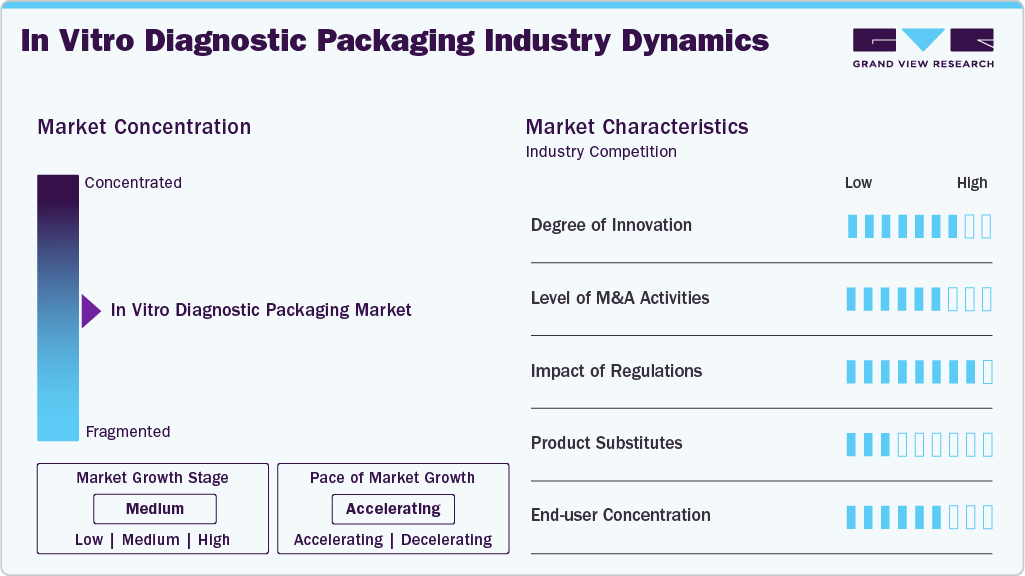
Market Concentration & Characteristics
The market exhibits several defining industry characteristics reflecting its integration with the broader healthcare system and specialized packaging technologies. One of the primary characteristics is its high regulatory oversight. Since IVD products directly impact patient diagnosis and treatment, packaging must comply with stringent medical standards concerning sterility, traceability, and labeling. Agencies such as the U.S. FDA, European Medicines Agency (EMA), and the International Organization for Standardization (ISO) govern materials used, shelf-life claims, and tamper-evidence features. As such, manufacturers in this space operate in a compliance-intensive environment, which is a significant entry barrier for new players.
Another key characteristic is the link between packaging innovation and diagnostic technology development. Packaging must evolve to accommodate more delicate and complex components as diagnostic tools become more sophisticated, especially with the rise of molecular diagnostics, microfluidics, and lab-on-a-chip systems. This creates a high demand for customized, often single-use, packaging solutions that can support automation, preserve sample integrity, and offer user-friendly formats. As a result, there is a strong emphasis on R&D, with collaboration between diagnostic device manufacturers and specialized packaging suppliers being a common industry practice.
 To learn more about this report, Download Free Sample Report
 Moreover, the industry demonstrates strong global interconnectivity, with supply chains often stretching across continents. Raw materials such as medical-grade polymers, foils, and adhesives are sourced globally, while manufacturing and packaging operations occur in different regions. This global footprint is both a strength and a vulnerability; it enables cost efficiencies and scalability and exposes the market to geopolitical instability, shipping disruptions, or pandemics. Companies that invest in supply chain resilience and regional diversification often gain a competitive edge in the IVD packaging market.
Analyst Perspective
The In Vitro Diagnostic (IVD) Packaging Market is expected to experience strong and sustained growth over the forecast period, driven by increasing global diagnostic testing volumes, expanding healthcare infrastructure, and rising demand for accurate and reliable disease detection. As diagnostic technologies continue to evolve, packaging has become a critical component in maintaining the integrity, sterility, stability, and traceability of diagnostic reagents, specimen collection devices, test kits, and laboratory consumables throughout the supply chain. The growing prevalence of chronic diseases, infectious diseases, and personalized medicine initiatives is accelerating the adoption of advanced diagnostic solutions across hospitals, laboratories, research institutions, and point-of-care settings. Consequently, demand for specialized packaging formats capable of protecting sensitive diagnostic products from contamination, environmental exposure, and transportation-related damage is increasing. In addition, stringent regulatory requirements governing healthcare products are compelling manufacturers to invest in high-quality packaging solutions that support product safety, compliance, and operational efficiency.
Product Type Insights
Based on product type, the bottles and vials segment led the market with the largest revenue share of 31.8% in 2025. Bottles and vials are essential primary packaging components that contain reagents, specimens, and solutions required for IVD testing. They are typically made of glass or plastic and designed to ensure the chemical stability of their contents. These packaging types offer airtight sealing, sterility, and precise volumetric control, which are critical for accurate diagnostics. The rising demand for liquid-based diagnostic reagents and sample preservation drives the use of bottles and vials.
Tubes are commonly used in IVD settings for blood collection, centrifugation, sample storage, and reagent handling. Depending on the application, these may include vacuum blood collection or PCR tubes. Tubes come in various capacities and closures to maintain sample integrity during testing and transport. The growing number of diagnostic procedures involving blood or biological fluids, such as blood glucose, cholesterol, and infectious disease tests, drives demand for tubes. Increased healthcare expenditure, especially in preventive diagnostics, and expanding clinical laboratories further stimulate the market for IVD tubes.
Application Insights
Based on application, the hospital segment led the market with the largest revenue share of 45.9% in 2025. Hospitals use various diagnostic tests for patient monitoring, disease detection, and emergency diagnostics. These institutions require sterile, tamper-evident, and durable packaging to ensure safety and reliability in test kits and reagents. The growth in hospital-based diagnostics is driven by rising chronic disease prevalence, increasing hospital admissions, and the integration of diagnostic services into treatment workflows. Additionally, growing investments in hospital infrastructure in emerging economies support demand for high-quality IVD packaging.
 To learn more about this report, Download Free Sample Report
 The academic institutes segment is projected to grow at the fastest CAGR of 5.4% during the forecast period. Universities and research institutions rely on IVD packaging for experimental diagnostics, teaching purposes, and research applications. They require flexible, often small-batch packaging solutions that ensure sample integrity and reproducibility of results. The key drivers for academic institutes include increased funding for biomedical research, collaborations with industry for R&D, and growing interest in molecular biology and genomics. These institutions often pilot next-generation diagnostics, stimulating demand for innovative packaging formats.
Regional Insights
Asia Pacific in vitro diagnostic packaging market is expected to register the fastest CAGR over the forecast period. This dominance can be attributed to its rapidly expanding healthcare infrastructure, increasing diagnostic testing demand, and growing biotechnology investments. Countries such as China, India, and Japan are leading due to rising chronic diseases, government initiatives to improve healthcare access, and the expansion of diagnostic laboratories. For example, China’s 14th Five-Year Plan emphasizes strengthening its domestic IVD industry, boosting demand for high-quality packaging solutions.
China In Vitro Diagnostic Packaging Market Trends
The China IVD packaging market is growing due to its massive diagnostics industry, government support, and increasing healthcare expenditure. The country’s focus on local manufacturing (Made in China 2025) has reduced import dependency, fostering growth in domestic IVD packaging suppliers. The post-pandemic demand for PCR and rapid antigen tests has also driven innovations in lightweight and durable packaging to meet global supply chain needs.
North America In Vitro Diagnostic Packaging Market Trends
North America dominated the in vitro diagnostic packaging market with the largest revenue share of 35.0% in 2025. The region’s growth in the IVD Packaging market is primarily due to its advanced healthcare systems, stringent regulatory standards, and high adoption of innovative diagnostic technologies. The U.S. and Canada have well-established IVD industries that strongly focus on automation and sustainable packaging solutions. For instance, the FDA’s strict regulations on IVD packaging ensure high barrier protection and sterility, pushing companies to develop advanced materials like high-performance films and tamper-evident seals. The rise of personalized medicine and point-of-care testing (POCT) also fuels demand.
 To learn more about this report, Download Free Sample Report
 The in vitro diagnostic packaging market in the U.S. held the largest share in the North America region in 2025. The demand for in-vitro diagnostic (IVD) packaging in the U.S. is increasing steadily, driven by the expanding use of diagnostic tests for chronic disease management, infectious disease detection, oncology screening, and personalized medicine. Rising adoption of molecular diagnostics, point-of-care testing, and at-home diagnostic kits is creating greater need for specialized packaging solutions that ensure sample integrity, sterility, contamination prevention, and regulatory compliance throughout storage and transportation. Additionally, the growing volume of reagents, test kits, specimen collection devices, and diagnostic consumables used by hospitals, laboratories, and home-care settings is fueling demand for high-performance packaging formats such as vials, tubes, bottles, blister packs, and temperature-controlled packaging. The continued expansion of the U.S. IVD market, supported by an aging population, increasing prevalence of chronic diseases, and advancements in diagnostic technologies, is further strengthening the requirement for reliable, protective, and sustainable diagnostic packaging solutions.
Europe In Vitro Diagnostic Packaging Market Trends
Europe’s growth in the IVD packaging market is driven by strict EU regulations, an aging population, and increasing diagnostic testing. Countries such as Germany, France, and the UK lead due to their strong medical device industries and emphasis on sustainable packaging solutions. The European In Vitro Diagnostic Regulation (IVDR) mandates high safety standards, pushing manufacturers to adopt recyclable and biocompatible materials. For example, Germany’s Roche Diagnostics and Siemens Healthineers use advanced polymer-based packaging to ensure product integrity. The growing prevalence of chronic and infectious diseases has also increased demand for IVD tests, further boosting the packaging sector.
Key In Vitro Diagnostic Packaging Company Insights
The IVD packaging market has a competitive environment characterized by several global and regional players striving to meet stringent regulatory standards, ensure product safety, and enhance user convenience. Key players compete on innovation, quality, and sustainability of primary and secondary packaging materials. The market is moderately consolidated, with companies investing in eco-friendly packaging solutions, tamper-evident features, and advanced barrier properties to cater to the growing demand for reliable diagnostics, particularly in point-of-care and molecular testing. Strategic partnerships, mergers, and acquisitions are also prevalent, as firms seek to expand their geographic reach and technological capabilities in an evolving healthcare landscape.
Key In Vitro Diagnostic Packaging Companies
The following key companies have been profiled for this study on the in vitro diagnostic packaging market.
-
Amcor plc
-
AptarGroup Incorporated
-
Thermo Fisher Scientific Incorporated
-
Corning Incorporated
-
Greiner Holding AG
-
COMAR, LLC
-
WS Packaging Group
-
DWK Life Sciences
-
SCHOTT Poonawalla
-
SGD Pharma
-
Stevanato
Competitive Benchmarking
Category
Operating Strategies
Competitive Edge
Weakness
Established Players (Amcor plc, AptarGroup Incorporated, Thermo Fisher Scientific Incorporated, Corning Incorporated, Greiner Holding AG, DWK Life Sciences, SCHOTT Poonawalla, SGD Pharma, and Stevanato Group)
- Invest in advanced healthcare and diagnostic packaging technologies, sterile packaging solutions, high-purity materials, and global manufacturing capabilities to strengthen market position.
- Focus on product innovation, strategic partnerships with diagnostic and pharmaceutical companies, capacity expansion, and regulatory-compliant packaging solutions to address evolving healthcare requirements.
- Extensive global manufacturing networks, strong relationships with healthcare, pharmaceutical, and diagnostic companies, and diversified product portfolios enable broad market penetration
- Strong technical expertise, regulatory knowledge, and R&D capabilities support the development of high-performance, sterile, traceable, and compliant packaging solutions for critical diagnostic applications.
- High investment requirements for quality systems, cleanroom manufacturing, regulatory compliance, and product validation can increase operating costs.
- Exposure to stringent healthcare regulations, lengthy product qualification cycles, and fluctuations in healthcare spending may impact profitability and operational flexibility.
Emerging Players (COMAR, LLC and WS Packaging Group)
- Focus on customized packaging solutions, customer-specific product development, and specialized healthcare and diagnostic packaging applications to expand market presence.
- Emphasize operational flexibility, responsive customer service, and niche packaging capabilities to serve regional and mid-sized diagnostic manufacturers.
- Faster decision-making processes and greater flexibility enable rapid adaptation to customer requirements, regulatory changes, and emerging diagnostic technologies.
- Strong customization capabilities and specialized packaging expertise help secure contracts in niche healthcare and diagnostic applications where tailored solutions are required.
- Limited global presence, manufacturing scale, and financial resources may restrict expansion into new geographic markets and advanced technology investments.
- Smaller customer portfolios and lower brand visibility can reduce competitiveness when bidding for large-scale contracts with multinational diagnostic and healthcare companies.
Recent Developments
-
In October 2024, Nipro launched its innovative D2F (Direct-to-Fill) glass vials featuring Stevanato Group’s advanced EZ-fill technology, providing a high-quality ready-to-use (RTU) solution for the pharmaceutical industry. These vials are washed, depyrogenated, sterilized, and packaged in nest and tub formats that prevent glass-to-glass contact, reducing breakage, cosmetic defects, and particulate generation during handling and transport. This collaboration underscores Stevanato Group’s technological leadership and strengthens Nipro’s position in delivering premium primary pharma packaging solutions.
-
In February 2024, SGD Pharma launched a new range of high-quality Type I injectable vials made from tubular glass, featuring an external low-friction coating developed in partnership with Corning called Velocity Vial technology. This innovative coating significantly reduces friction caused by glass-to-glass and glass-to-metal contact during pharmaceutical filling processes, which helps prevent vial tip-overs, jams, and breakages, thereby improving filling line efficiency by 20-50%.
In Vitro Diagnostic Packaging Market Report Scope
Report Attribute
Details
Market size in 2025
USD 9.8 billion
Estimated market size in 2026
USD 10.3 billion
Projected market size by 2033
USD 14.3 billion
Growth rate
CAGR of 4.9% from 2026 to 2033
Base year for estimation
2025
Historical data
2021 - 2024
Forecast period
2026 - 2033
Quantitative units
Revenue in USD million/billion and CAGR from 2026 to 2033
Report coverage
Revenue forecast, company ranking, competitive landscape, growth factors, and trends
Segments covered
Product Type, application, region
Regional scope
North America; Europe; Asia Pacific; Latin America; MEA
Country scope
U.S.; Canada; Mexico; Germany; UK; France; Italy; Spain; China; Japan; India; South Korea; Australia; Brazil; Argentina; Saudi Arabia; South Africa; UAE
Key companies profiled
Amcor plc; AptarGroup Incorporated; Thermo Fisher Scientific Incorporated; Corning Incorporated; Greiner Holding AG; COMAR, LLC; WS Packaging Group; DWK Life Sciences; SCHOTT Poonawalla; SGD Pharma; Stevanato
Customization scope
Free report customization (equivalent up to 8 analysts' working days) with purchase. Addition or alteration to country, regional & segment scope.
Pricing and purchase options
Avail customized purchase options to meet your exact research needs. Explore purchase options
Global In Vitro Diagnostic Packaging Market Report Segmentation
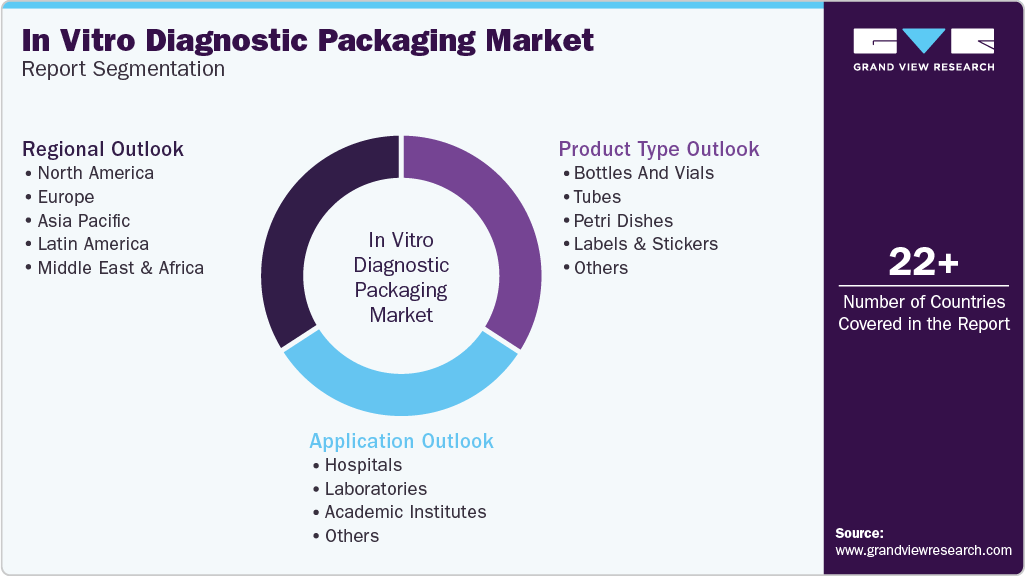
This report forecasts revenue growth at a global level and provides an analysis of the latest industry trends in each of the sub-segments from 2021 to 2033. For this study, Grand View Research has segmented the global in vitro diagnostic (IVD) packaging market report based on product type, application, and region:
 To learn more about this report, Download Free Sample Report
 -
Product Type Outlook (Revenue, USD Million, 2021 - 2033)
-
Bottles and Vials
-
Tubes
-
Petri Dishes
-
Labels & Stickers
-
Others
-
-
Application Outlook (Revenue, USD Million, 2021 - 2033)
-
Hospitals
-
Laboratories
-
Academic institutes
-
Others
-
-
Region Outlook (Revenue, USD Million, 2021 - 2033)
-
North America
-
U.S.
-
Canada
-
Mexico
-
-
Europe
-
Germany
-
France
-
UK
-
Italy
-
Spain
-
-
Asia Pacific
-
China
-
India
-
Japan
-
South Korea
-
Australia
-
-
Latin America
-
Brazil
-
Argentina
-
-
Middle East & Africa
-
South Africa
-
Saudi Arabia
-
UAE
-
-
Research Methodology
Segment Definition
Segment - Product Type
Revenue capture definition
Bottles and Vials
Revenue generated from the sale of bottles, vials, reagent containers, sample storage containers, and related packaging solutions used for storing, transporting, and dispensing diagnostic reagents, controls, calibrators, buffers, and biological samples in IVD applications.
Tubes
Revenue generated from packaging products such as specimen collection tubes, blood collection tubes, centrifuge tubes, transport tubes, test tubes, and other tubular packaging formats used for sample collection, handling, storage, and diagnostic testing procedures.
Petri Dishes
Revenue generated from sterile petri dishes and culture containers used in microbiology testing, pathogen detection, cell culture applications, laboratory research, and diagnostic procedures requiring controlled sample cultivation and analysis.
Labels & Stickers
Revenue generated from diagnostic packaging labels, barcode labels, RFID-enabled labels, identification stickers, tracking labels, and regulatory compliance labeling solutions used for specimen identification, traceability, inventory management, and product authentication in IVD applications.
Other Products
Revenue generated from all other IVD packaging products, including trays, pouches, blister packs, cartons, specimen transport containers, secondary packaging solutions, kit packaging components, inserts, and specialty packaging formats used across diagnostic workflows.
Segment - Applications
Revenue capture definition
Hospitals
Revenue generated from IVD packaging products utilized by hospitals for diagnostic testing, disease screening, patient monitoring, pathology services, emergency diagnostics, and clinical laboratory operations. Includes packaging used for diagnostic reagents, sample collection systems, and test kits within hospital settings.
Laboratories
Revenue generated from packaging solutions used by independent diagnostic laboratories, reference laboratories, clinical laboratories, and specialized testing facilities. Includes packaging for sample collection, storage, transportation, reagent management, and laboratory testing workflows.
Academic Institutes
Revenue generated from IVD packaging products supplied to universities, medical schools, research institutes, biotechnology centers, and academic laboratories for educational, research, clinical investigation, and diagnostic development activities.
Other Applications
Revenue generated from IVD packaging solutions used in applications outside hospitals, laboratories, and academic institutes, including pharmaceutical companies, biotechnology firms, point-of-care testing centers, public health organizations, contract research organizations (CROs), diagnostic manufacturers, and government healthcare agencies.
Estimation Model
Layer Name
Key Question
Description
IVD Testing & Diagnostic Demand Layer
What forms the demand base?
Identify global volumes of diagnostic tests, specimen collection procedures, laboratory analyses, point-of-care testing activities, and research-based diagnostic applications across hospitals, laboratories, academic institutes, and other healthcare settings. This layer establishes the total addressable demand for IVD packaging based on the production, storage, transportation, and usage of diagnostic reagents, kits, samples, and consumables.
IVD Packaging Penetration Layer
Where is IVD packaging utilized?
Estimate the penetration of specialized IVD packaging solutions across different diagnostic products and healthcare applications. Assess adoption rates of bottles & vials, tubes, petri dishes, labels & stickers, and other packaging formats based on sterility requirements, sample protection needs, regulatory compliance standards, traceability requirements, transportation conditions, and diagnostic workflow requirements.
IVD Packaging Volume Layer
How much IVD packaging is consumed?
Analyze packaging consumption volumes by product type, diagnostic application, and end-user category. Evaluate demand for reagent bottles, specimen collection tubes, petri dishes, labeling solutions, transport containers, kit packaging, and secondary packaging formats. Volume demand is influenced by diagnostic testing volumes, disease prevalence, healthcare expenditure, laboratory expansion, research activities, and growth in point-of-care and home-based diagnostics.
Revenue Layer
How is market revenue generated?
Market revenue is quantified through the sale of primary, secondary, and tertiary packaging solutions used across the IVD industry. Revenue generation includes standard and customized packaging products such as bottles & vials, tubes, petri dishes, labels & stickers, and other specialized packaging components. Market growth is supported by increasing diagnostic testing volumes, stringent regulatory requirements, growing demand for sample integrity and traceability, expansion of molecular diagnostics, and the adoption of sustainable and high-performance healthcare packaging solutions.
Delivered Customizations
This report has been delivered with the following In-depth customizations
Client Request
Customization Delivered
Value Adds
Regional Segmentation Analysis
Delivered detailed market sizing, growth forecasts, diagnostic testing trends, healthcare expenditure analysis, regulatory developments, and end-user demand assessment across North America, Europe, Asia Pacific, Central & South America, and Middle East & Africa, including key country-level evaluations within major In Vitro Diagnostic (IVD) Packaging markets.
Enabled identification of high-growth healthcare markets, diagnostic testing hubs, evolving regulatory environments, and region-specific demand drivers to support expansion strategies, investment planning, and market prioritization.
Cross-Segmentation Analysis
Provided comprehensive analysis across Product Type (Bottles & Vials, Tubes, Petri Dishes, Labels & Stickers, Other Products), Application (Hospitals, Laboratories, Academic Institutes, Other Applications), and Region. Assessed market size, growth potential, adoption trends, and application-level demand across each segment combination.
Delivered granular insights into the most attractive product-application combinations, helping clients identify high-growth diagnostic segments, emerging demand clusters, technology adoption trends, and portfolio optimization opportunities.
Opportunity Assessment
Identified emerging opportunities across molecular diagnostics, point-of-care testing, home-based diagnostic kits, specimen collection systems, smart labeling and traceability solutions, sustainable healthcare packaging, temperature-controlled packaging, and growth in diagnostic testing infrastructure across developing markets.
Enabled prioritization of high-potential investment areas, product innovation initiatives, regulatory-compliant packaging developments, and long-term growth strategies aligned with evolving healthcare and diagnostic industry requirements.
Frequently Asked Questions About This Report
The bottles and vials segment led the market with a 31.8% revenue share in 2025.
Hospital segment held the largest revenue share of 45.9% in 2025.
Asia Pacific is the fastest-growing region over the forecast period.
Key players in the in vitro diagnostic packaging market include Amcor plc; AptarGroup Incorporated; Thermo Fisher Scientific Incorporated; Corning Incorporated; Greiner Holding AG; COMAR, LLC; WS Packaging Group; DWK Life Sciences; SCHOTT Poonawalla; SGD Pharma; Stevanato
The global in vitro diagnostic packaging market size was valued at USD 9.8 billion in 2025 and is estimated at USD 10.3 billion for 2026.
The global in vitro diagnostic packaging market is expected to grow at a CAGR of 4.9% from 2026 to 2033, reaching USD 14.3 billion by 2033.
Key factors driving the in vitro diagnostic packaging market include increasing global diagnostic testing volumes, rising prevalence of chronic and infectious diseases, expanding healthcare infrastructure, growing adoption of point-of-care and home-based diagnostic testing, and increasing demand for secure, sterile, and regulatory-compliant packaging solutions. Additionally, advancements in diagnostic technologies, greater emphasis on sample integrity and traceability, and the expansion of pharmaceutical and biotechnology research activities are further supporting market growth.
North America dominated the in vitro diagnostic packaging market with the largest revenue share of 35.0% in 2025.
About the Author(s)
Plastics, Polymers & Resins Research Team
Bulk Chemicals · Plastics, Polymers & ResinsThis report was authored by the plastics, polymers & resins research team at Grand View Research - comprising two research analysts, one senior research analyst, and one industry expert - with specialized expertise in the plastics, polymers & resins segment of the bulk chemicals industry. All findings are based on proprietary bulk chemicals databases, executive interviews, and regulatory analysis, subject to internal peer review prior to publication.
Last Updated:
Speak to Analyst

Customize this report to your needs - add regions, segments, or data points, with 20% free customization.
Or view our licence options:


ISO 9001:2015 & 27001:2022 Certified
We are GDPR and CCPA compliant! Your transaction & personal information is safe and secure. For more details, please read our privacy policy.


