
- Home
- »
- Biotechnology
- »
-
In Vivo Toxicology Market Size And Share Report, 2026-2033GVR Report cover

In Vivo Toxicology Market (2026 - 2033)
Size, Share & Trends Analysis Report By Product (Instruments & Equipment, Consumables), By Toxicology Testing, By Animal Model (Rodent, Non-Rodent Mammals), By Application, By Region, And Segment Forecasts
Market Size, 2025
$5.3BMarket Estimate, 2026
$5.7BMarket Forecast, 2033
$9.9BCAGR, 2026–2033
8.2%In Vivo Toxicology Market Summary
The global in vivo toxicology market size was valued at USD 5.3 billion in 2025 and is projected to grow from USD 5.7 billion in 2026 to USD 9.9 billion by 2033, at a CAGR of 8.2% from 2026 to 2033. North America dominated the market, accounting for the largest revenue share of 41.2% in 2025. The market growth is driven by the increasing demand for in vivo toxicology industry in preclinical safety and toxicity assessment across pharmaceutical and biotechnology development.
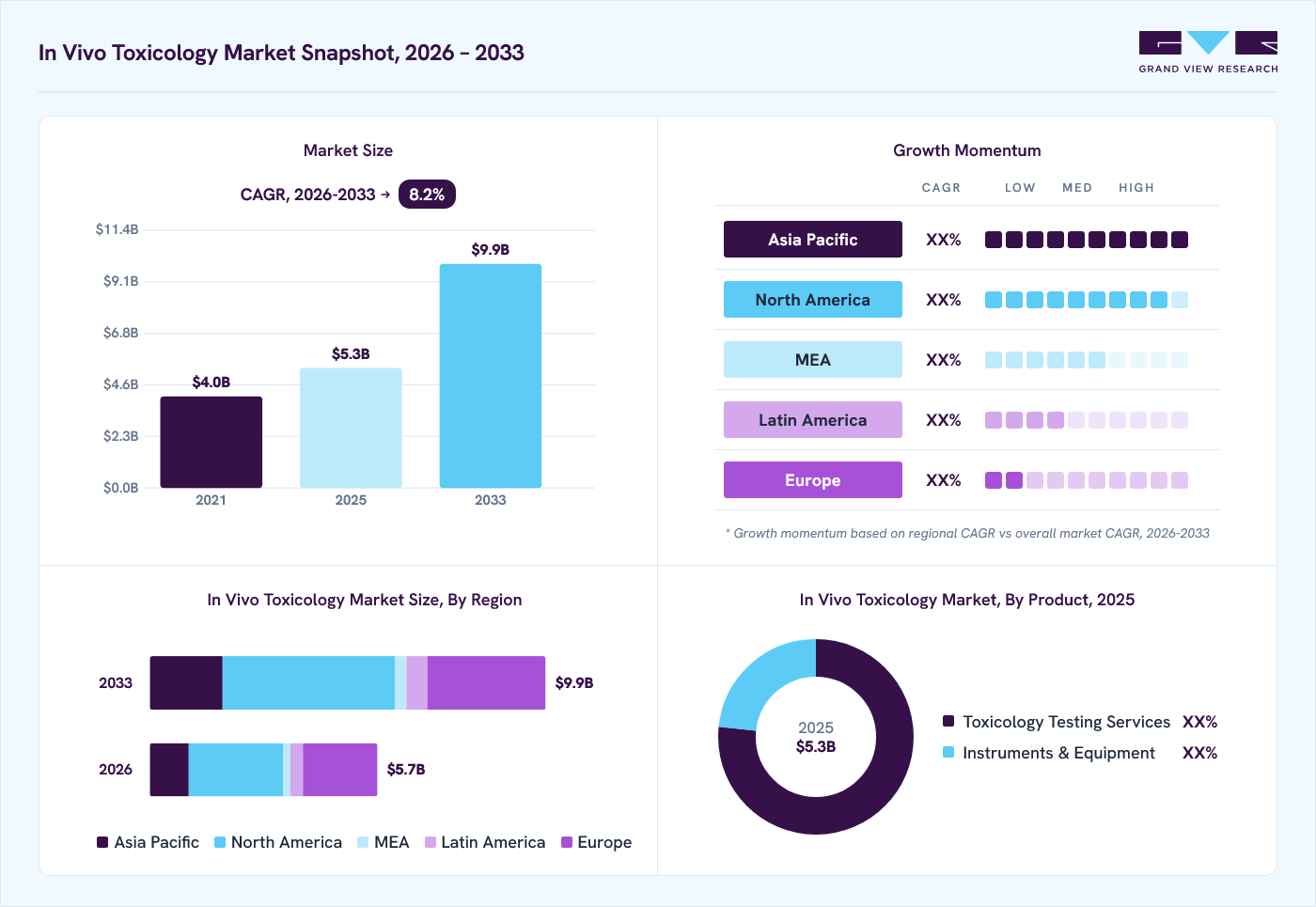 Source: Grand View Research, IR Documents, Primary Interviews, Paid DatabasesTo learn more about this report,
 Download Free Sample Report
Key Market Trends & Insights
- By product: The toxicology testing services segment held the highest market share of 53.4% in 2025.
- By toxicology testing: The repeated dose/systemic toxicity segment held the highest market share of 30.6% in 2025.
- By animal model: The rodents held the highest market share of 69.6% in 2025.
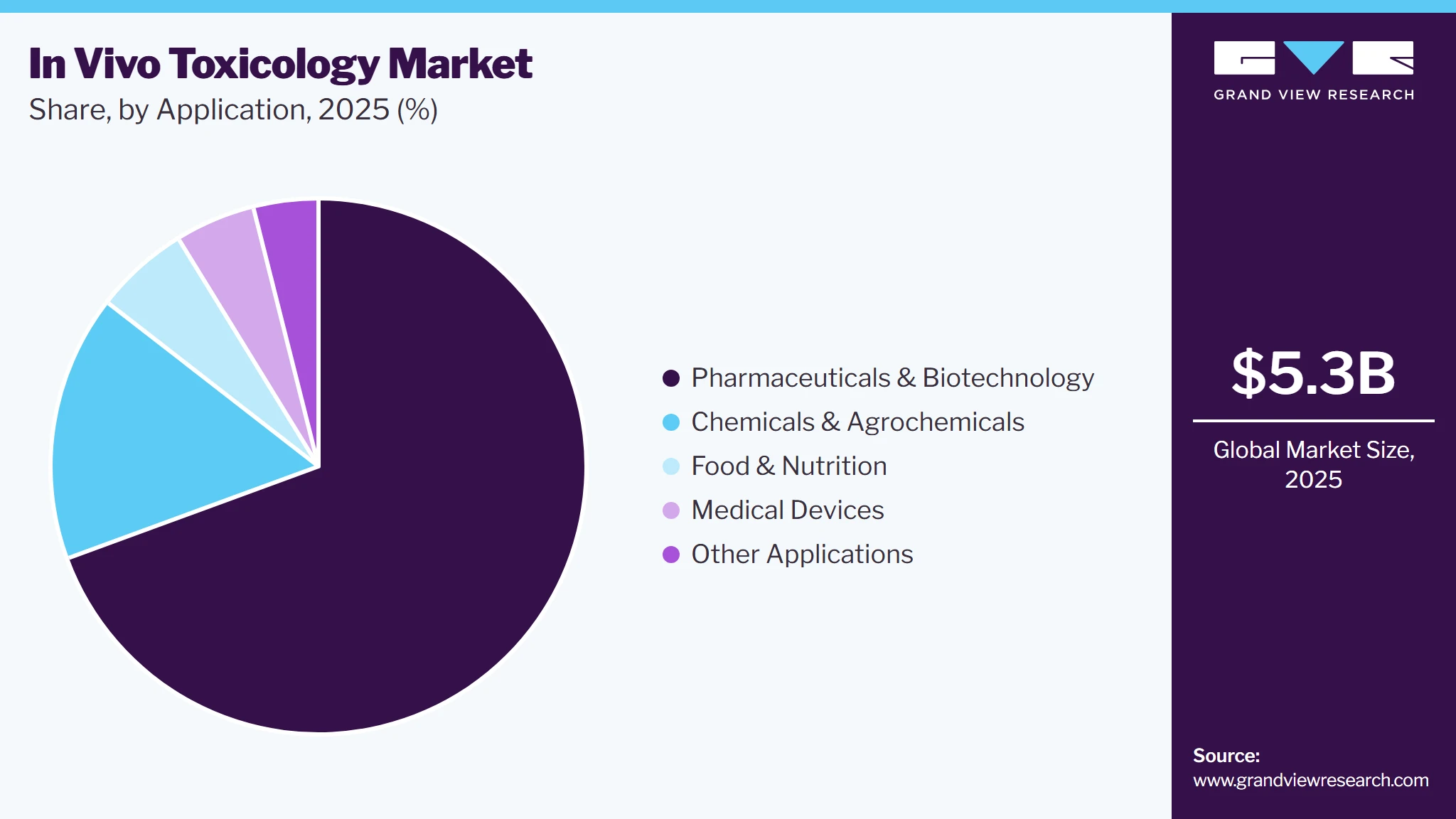
- By application: The pharmaceutical & biotechnology companies segment held the highest revenue share of 69.4% in 2025.
Regional Highlights
- Largest regional market: North America (41.2% revenue share, 2025)
- Fastest-growing regional market: Asia Pacific (highest CAGR, 2026-2033)
- By country: The U.S. held the largest market share in 2025.
Market Size & Forecast
- Market size in 2025: USD 5.3 Billion
- Estimated market size in 2026: USD 5.7 Billion
- Projected Market Size in 2033: USD 9.9 Billion
- CAGR (2026-2033): 8.2%
Prism AI by Grand View Research Free to tryAsk a question about the in vivo toxicology marketTry asking✓Every figure cited from GVR research Prefer the report? Download free sample →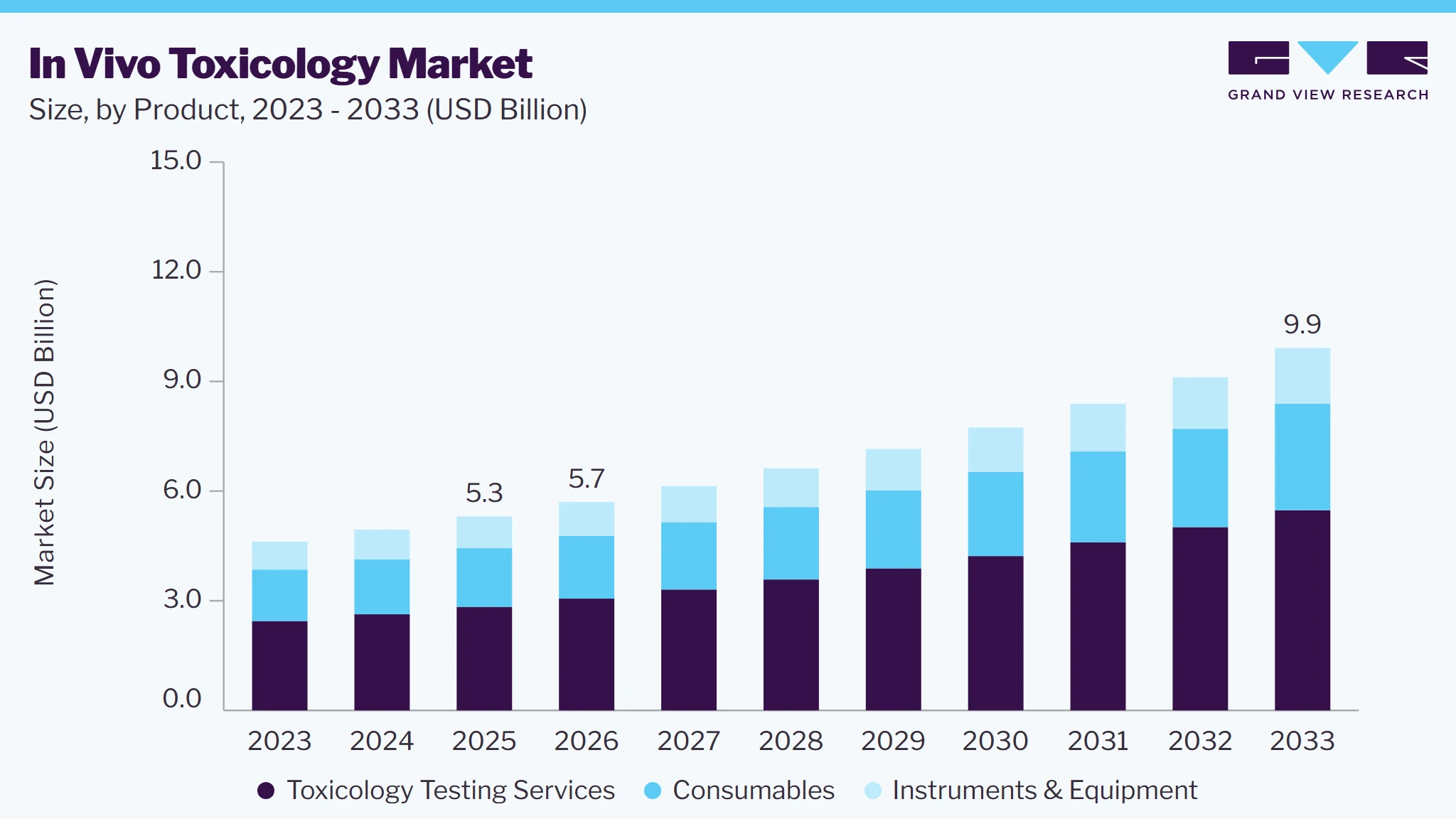 To learn more about this report, Download Free Sample Report
Market Dynamics
The in vivo toxicology industry is witnessing significant growth, driven by increasing demand for preclinical safety assessment in pharmaceutical and biopharmaceutical drug development. Growing investment in drug discovery, expanding pipelines of novel therapeutics, and the need to evaluate toxicity and potential adverse effects before clinical trials are supporting market expansion. Continuous advancements in digital animal monitoring, sensor technologies, artificial intelligence, and machine learning are also improving the efficiency and effectiveness of in vivo toxicology studies, supporting market growth over the forecast period.
Increasing adoption of digital technologies in preclinical animal studies is driving growth in the global market for in vivo toxicology by improving efficiency, analytical power, translational relevance, and reproducibility. Sensor technologies, continuous behavioral and physiological monitoring, AI, and machine learning enable more objective toxicity assessment, supporting earlier identification of safety liabilities and better drug-development decisions. For instance, an article published in Frontiers in March 2024 highlighted how sensor and computational technologies can enhance animal study efficiency, while digital measures and AI/ML can improve toxicity characterization and preclinical study effectiveness.
Growing regulatory and ethical restrictions on animal experimentation remain a key restraint for the in vivo toxicology industry, as concerns surrounding animal welfare and the relevance of animal models to human outcomes are reducing reliance on conventional testing methods. According to an article published in BMC Medical Education in October 2024, ethical and efficacy concerns have led to increasing restrictions on animal experiments, while differences between animal models and humans can limit the applicability of results. These factors are encouraging the adoption of alternative and computational approaches, potentially limiting demand for conventional in vivo toxicology testing.
The growing development of pharmaceutical products is creating opportunities for the in vivo toxicology industry, as preclinical safety assessment remains an essential component of drug development before candidate’s progress to human clinical trials. In vivo toxicology studies provide critical information on potential adverse effects, dose-related toxicity, target-organ toxicity, and overall safety profiles. As pharmaceutical companies continue to develop new drug candidates and evaluate their safety and tolerability, the need for comprehensive preclinical toxicology testing is expected to increase, supporting demand for in vivo toxicology studies and related testing services.
Market Concentration & Characteristics
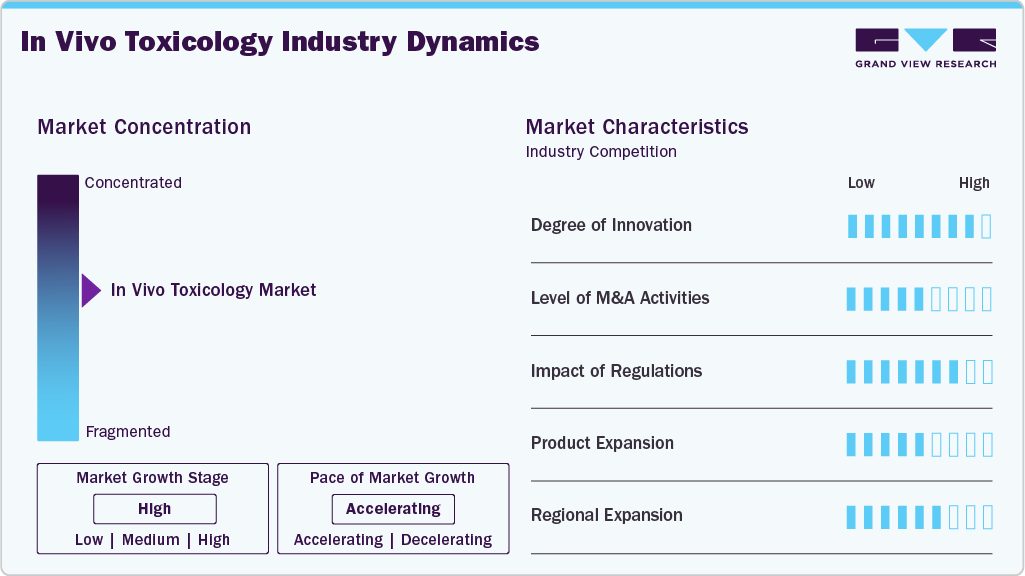
The in vivo toxicology industry is characterized by a high degree of innovation, driven by continuous advancements in digital pathology, automated tissue analysis, computational toxicology, and technologies that improve the sensitivity and efficiency of preclinical safety assessment. Companies and research organizations are increasingly developing novel tools and workflows to enhance the detection, characterization, and interpretation of toxicological changes in animal studies. For instance, according to an article published in the journal Scientific Reports in June 2026, reported an innovative approach for detecting both known and previously unseen tissue abnormalities in mouse liver histopathology from preclinical toxicology studies. The approach enhanced tissue assessment alongside conventional pathology, enabling more sensitive detection of subtle or unexpected toxicological changes.
 To learn more about this report, Download Free Sample Report
The in-vivo toxicology industry is witnessing strategic acquisitions focused on strengthening access to specialized animal models and supporting preclinical safety assessment. For instance, in January 2026, Charles River Laboratories completed the acquisition of K.F. (Cambodia) Ltd., a supplier of non-human primates used in biomedical, pharmaceutical, and toxicological research, for approximately USD 510 million. The acquisition strengthens Charles River’s control over its non-human primate supply, supporting greater supply security, operational control, biosecurity, and regulatory oversight across its Discovery and Safety Assessment operations. The transaction strengthens access to specialized animal models for in-vivo toxicology and preclinical studies, supporting greater market consolidation and vertical integration.
The in vivo toxicology industry is significantly influenced by regulatory requirements for nonclinical safety evaluation. For instance, in March 2026, the U.S. FDA stated that IND applications are expected to include pharmacology and toxicology information from laboratory animal and/or in vitro studies, with GLP generally expected for pivotal in vivo studies. These requirements sustain demand for standardized, validated, and regulatory-compliant in vivo toxicology studies, while supporting consistent safety assessment throughout pharmaceutical development and clinical progression.
The in-vivo toxicology industry is expanding as companies develop new products, platforms, and digital solutions that enhance the efficiency and management of preclinical studies. These developments integrate research models, equipment, data management, and study-support services, helping researchers streamline in-vivo workflows and improve study execution. The growing availability of integrated solutions is also supporting greater efficiency, scalability, and accessibility across preclinical toxicology programs.
The in vivo toxicology industry is witnessing regional expansion, supported by increasing pharmaceutical and biotechnology R&D, growing drug-development pipelines, and demand for nonclinical safety evaluation. Regulatory requirements from organizations such as the FDA, ICH, and EMA continue to support toxicology testing, while expanding preclinical research capabilities and outsourcing are driving broader adoption of in vivo toxicology services globally.
Analyst Perspective
The in vivo toxicology industry is expected to witness high growth, driven by increasing demand for preclinical safety assessment across pharmaceutical and biotechnology development. Expanding drug pipelines, rising development of biologics and innovative therapies, and stringent regulatory requirements are supporting the adoption of in vivo toxicology studies. Advancements in digital monitoring, sensor technologies, artificial intelligence, and computational tools are further enhancing study efficiency, analytical capabilities, and safety evaluation. Market participants are focusing on specialized testing services, advanced animal models, digital platforms, and innovative consumables to address evolving requirements for comprehensive and regulatory-compliant preclinical safety assessment.
Product Insights
The toxicology testing services segment accounted for the largest revenue share, over 53.4% in 2025 and is expected to register the fastest CAGR during 2026-2033. The market growth is supported by increasing demand for safety assessment of pharmaceuticals, biologics, and other therapeutic products during preclinical development. Services include general, genetic, reproductive, immunotoxicology, and safety pharmacology studies using rodent and non-rodent models. Growing pharmaceutical R&D, increasing outsourcing of preclinical studies, and demand for GLP-compliant toxicology data are expected to support segment growth over the forecast period.
The consumables segment is expected to grow at a significant CAGR during 2026-2033, supported by rising demand for assay kits, reagents, and other consumable products used in vivo toxicology studies. The increasing use of application-specific and high-throughput testing methods is also driving demand for these products. For instance, in June 2025, the U.S. FDA’s National Center for Toxicological Research procured Litron’s In Vivo PLUS-R and In Vivo PLUS-RBM MicroFlow kits for an in vivo micronucleus testing protocol. This development reflects growing use of specialized consumables in in-vivo toxicology testing.
Toxicology Testing Insights
The repeated dose/systemic toxicity segment dominated the market with a revenue share of 30.6% in 2025, driven by increasing demand for comprehensive safety assessments during preclinical drug development. These studies help evaluate the effects of repeated exposure, establish dose-response relationships, and identify systemic and target-organ toxicity that may not be detected through single-dose testing. Growing pharmaceutical R&D activity and the need for longer-duration safety data are increasing the use of repeated-dose studies.
The immunotoxicity segment is expected to register a significant CAGR during 2026-2033, driven by increasing development of biologics, immunotherapies, and immune-modulating drugs that require preclinical safety assessment. Growing pharmaceutical R&D and regulatory focus on immune-related effects are supporting demand for immunotoxicity testing. Increasing use of complex therapeutic products is further driving the need for specialized immune safety assessments during drug development.
Animal Model
The rodents segment accounted for approximately 69.6% of the animal model segment in 2025, making it the leading segment, mainly due to their frequent use in preclinical toxicology studies. Rats and mice are commonly used for acute, repeated dose, and systemic toxicity testing across different dosing periods. According to article published in the Journal of Toxicological Sciences in 2025, more than 400 repeated-dose toxicity studies covering over 350 pesticides in rats were analyzed. The continued use of rodents in pharmaceutical and chemical safety studies supports their leading position in the segment.
The non-mammalian models segment is projected to witness the fastest CAGR during 2026-2033, driven by increasing use of zebrafish and other alternative models for toxicity screening and drug development. These models support early safety assessment and help reduce reliance on conventional mammalian studies. For instance, an article published by Elsevier in 2026 highlighted the use of non-mammalian models for toxicological assessment, supporting their application in in vivo safety studies.
Application Insights
The pharmaceutical & biotechnology segment accounted for approximately 69.4% in 2025 and is expected to grow at the fastest CAGR during 2026-2033. Growth is driven by the use of in vivo toxicology studies in preclinical drug development. These studies help companies assess dose-related toxicity, identify target-organ effects, and establish safety margins before clinical trials. The growing development of small-molecule drugs, biologics, and other therapeutic candidates requires safety data at different stages of development. The continued need for preclinical animal testing supports the leading position of pharmaceutical and biotechnology applications in the in vivo toxicology industry.
 To learn more about this report, Download Free Sample Report
The medical devices segment is projected to grow at a significant CAGR during 2026-2033, driven by increasing development of implantable, drug-delivery, and combination devices that require preclinical safety assessment. In vivo studies help evaluate biocompatibility, tissue response, local effects, and systemic toxicity associated with medical devices. Growing demand for advanced medical devices and regulatory requirements for biological safety evaluation are expected to support segment growth.
Regional Insights
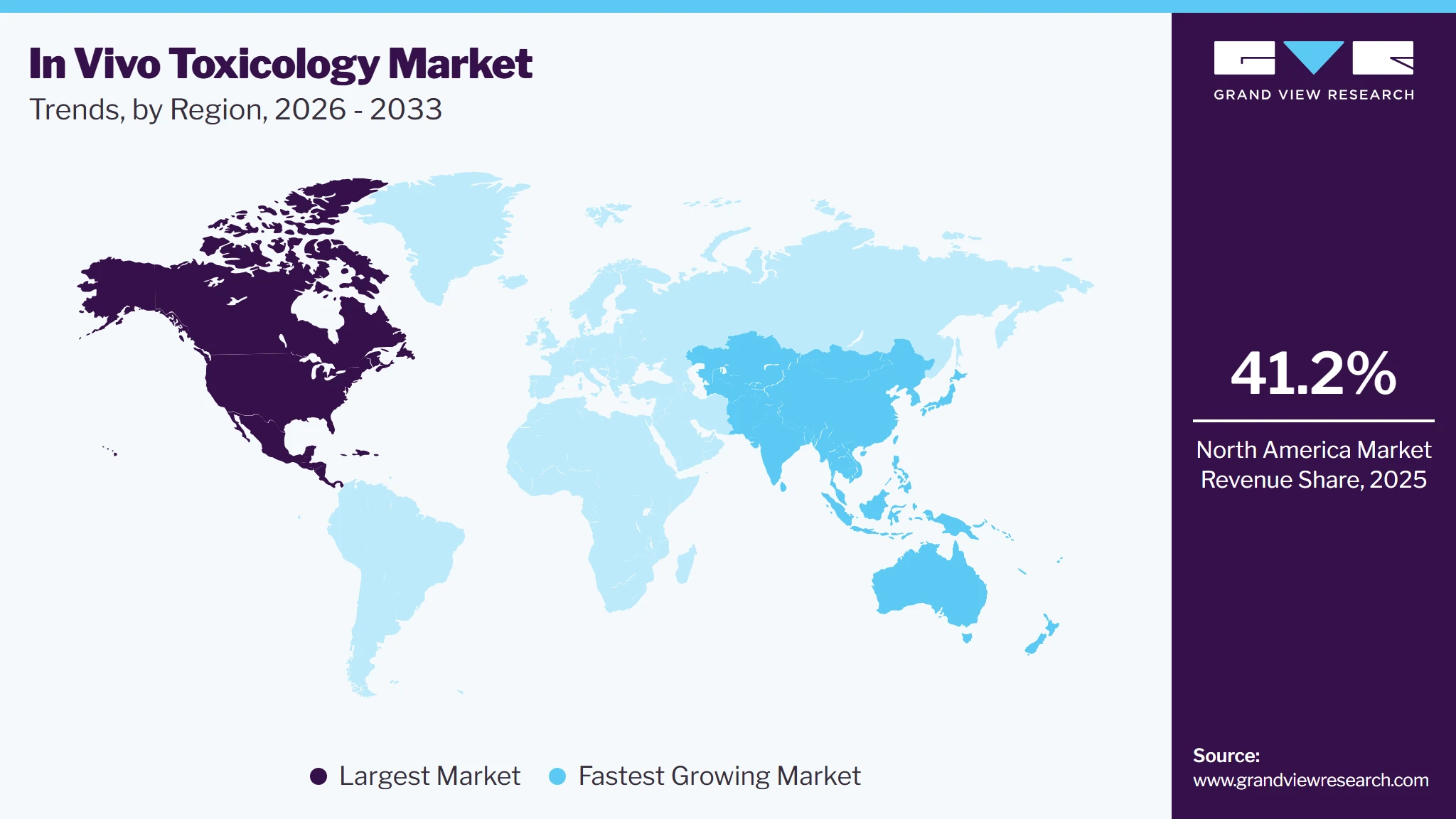
North America in-vivo toxicology industry dominated the market with the largest revenue share of 41.2% in 2025, driven by its strong pharmaceutical and biotechnology sectors and high investment in drug development. The presence of major drug manufacturers, research institutions, and contract research organizations supports extensive preclinical testing. Demand for acute, repeat-dose, chronic, reproductive, developmental, and specialized toxicity studies remains strong as drug candidates advance toward clinical trials, supporting the region’s leading market position.
 To learn more about this report, Download Free Sample Report
U.S. In Vivo Toxicology Market Trends
The U.S. in vivo toxicology industry is expected to grow over the forecast period, supported by its strong pharmaceutical, biotechnology, and chemical industries. According to an article published by the U.S. Environmental Protection Agency (EPA) in July 2026, micronucleus and comet assays can be integrated into repeat-dose animal studies to assess genetic damage alongside systemic toxicity. This supports broader use of in-vivo toxicology and genotoxicity testing in rodent models.
Europe In Vivo Toxicology Market Trends
Europe in vivo toxicology industry was identified as a lucrative market, supported by its established pharmaceutical research base and well-developed preclinical testing capabilities. The region is also moving toward more targeted animal safety studies. According to the paper published by the European Medicines Agency (EMA) in October 2025, new approaches to non-human primate safety testing included the use of rodent-only studies for repeat-dose toxicity were scientifically justified. These approaches are encouraging more targeted in vivo toxicology study designs while retaining animal studies where they remain necessary for drug safety assessment.
The UK in vivo toxicology industry held a significant share, supported by an established pharmaceutical research and development ecosystem and continued use of animal-based safety assessments. According to UK Government statistics published in July 2026, approximately 246,000 regulatory procedures involving animals were conducted in Great Britain in 2025. Toxicity and other safety testing accounted for 54% of these regulatory procedures. Rats represented 32% of regulatory procedures (approximately 77,700 procedures), and 96% of rat regulatory procedures were conducted for toxicity and other safety testing, including pharmacology. These figures highlight the continued role of in-vivo toxicology in regulatory safety assessment in Great Britain.
The in vivo toxicology industry in Germany is anticipated to grow significantly over the forecast period, supported by its established pharmaceutical and preclinical research infrastructure, which supports demand for regulatory toxicology services. For instance, in August 2026, InnoSer International acquired Vivo Science GmbH, a GLP-certified preclinical CRO in Gronau, Germany, adding regulatory-grade safety testing capabilities across toxicology, immunotoxicology, and in vivo assays. The acquisition strengthens Germany’s specialized CRO infrastructure and expands access to GLP-compliant safety assessment, supporting the continued development of the country’s in vivo toxicology industry.
“This acquisition is a direct extension of our growth strategy: broadening InnoSer’s footprint across Europe, deepening our technology platforms, and strengthening our regulatory and safety-testing capabilities for sponsors. We’re proud to welcome Vivo Science’s excellent team into the InnoSer group, and to give sponsors an even more complete partner from early discovery through regulatory submission”
- Dr. Kris Motmans, CEO, InnoSer International bv
Asia Pacific In Vivo Toxicology Market Trends
Asia Pacific in vivo toxicology industry is expected to grow at the fastest CAGR of 9.3% during the forecast period, supported by expanding pharmaceutical and biotechnology R&D, increasing drug-development activities, and rising demand for preclinical safety assessments. The region is also strengthening its pharmaceutical research and regulatory infrastructure, while collaboration across countries is supporting the development of preclinical capabilities. These factors are expected to increase demand for in vivo toxicology services and support the continued growth of the Asia Pacific market.
China’s in vivo toxicology industry is growing significantly, characterized by expanding pharmaceutical R&D, increasing development of innovative medicines, and strengthening preclinical research capabilities. The country’s growing drug-development pipeline and evolving regulatory environment are increasing the need for nonclinical safety assessment across different stages of pharmaceutical development. These developments are expected to sustain demand for in vivo toxicology services and support continued market growth in China.
Japan’s in vivo toxicology industry is witnessing rapid growth driven by its established pharmaceutical sector, continued investment in innovative drug development, and growing focus on biopharmaceuticals and advanced therapies. Government support for drug discovery, regenerative medicine, and gene therapy is strengthening the pharmaceutical research ecosystem. These developments are expected to sustain preclinical safety assessment and support demand for in vivo toxicology services in Japan.
Latin America In Vivo Toxicology Market Trends
Latin America’s in vivo toxicology industry is growing steadily, supported by expanding pharmaceutical research, strengthening healthcare manufacturing, and growing investment in local drug development. Efforts to improve research, production, and regulatory capabilities are increasing regional capacity for medicines and health technologies. These developments are expected to support demand for preclinical safety assessment and in vivo toxicology services.
MEA In Vivo Toxicology Market Trends
The MEA in vivo toxicology industry is expected to grow gradually, driven by increasing pharmaceutical manufacturing, expanding clinical research capabilities, and efforts to strengthen local healthcare and life-science infrastructure. Growing investment in pharmaceutical production, research capacity, and regulatory systems is creating a stronger foundation for drug development and preclinical safety assessment. These developments are expected to gradually increase demand for in vivo toxicology services across the region.
Key In Vivo Toxicology Company Insights
The in vivo toxicology industry includes established companies offering preclinical testing services, animal models, and specialized technologies used in safety assessment. Key players strengthen their market positions through expanded toxicology capabilities, specialized models, advanced equipment, and continued investment in preclinical safety testing.
Key In Vivo Toxicology Companies:
The following key companies have been profiled for this study on the in vivo toxicology market.
-
Charles River Laboratories
-
Labcorp
-
WuXi AppTec
-
Inotiv
-
Pharmaron
-
Altasciences
-
Eurofins
-
Evotec
-
Aragen Life Sciences Ltd.
-
Jubilant Biosys Limited
-
The Jackson Laboratory
-
Taconic Biosciences, Inc.
-
Bruker
-
Data Sciences International
Competitive Benchmarking
Category
Operating Strategies
Competitive Edge
Weakness
Established Players (Charles River Laboratories; Labcorp; WuXi AppTec; Inotiv; Pharmaron; Altasciences, etc.)
Expanding preclinical toxicology services, strengthening GLP capabilities, and adding specialized studies and animal models to support drug development.
Broad toxicology portfolios, multiple animal species, regulatory expertise, and integrated preclinical capabilities.
High facility and compliance costs, complex animal-study requirements, and increasing pressure to reduce animal use.
Emerging Players (The Jackson Laboratory; Taconic Biosciences, Inc.; Bruker)
Focusing on specialized animal models, in vivo research, preclinical imaging, and physiological monitoring used in toxicology studies.
Specialized animal models, imaging systems, and telemetry technologies provide focused solutions for in vivo safety assessment.
More focused portfolios and greater dependence on specific applications and research programs.
Recent Developments
-
In January 2025, Charles River Laboratories expanded its Apollo ecosystem with Apollo for CRADL, streamlining in-vivo research and safety assessment through digital data and study-management tools.
-
In June 2024, Charles River Laboratories and Sanofi collaborated to develop Virtual Control Groups (VCGs) for nonclinical toxicology. The approach uses historical toxicology data to reduce the number of control animals needed in vivo toxicology studies.
In Vivo Toxicology Market Report Scope
Report Attribute
Details
Market size in 2025
USD 5.3 billion
Market size value in 2026
USD 5.7 billion
Revenue forecast in 2033
USD 9.9 billion
Growth rate
CAGR of 8.2% from 2026 to 2033
Historical data
2021 - 2025
Forecast period
2026 - 2033
Quantitative units
Revenue in USD million/billion, and CAGR from 2026 to 2033
Report coverage
Revenue forecast, company ranking, competitive landscape, growth factors, and trends
Segments covered
Product, toxicology testing, animal model, application, region
Regional scope
North America; Europe; Asia Pacific; Latin America; MEA
Country scope
U.S.; Canada; Mexico; UK; Germany; France; Italy; Spain; Norway; Denmark; Sweden; China; Japan; India; South Korea; Australia; Thailand; Brazil; Argentina; Saudi Arabia; South Africa; UAE; Kuwait
Key companies profiled
Charles River Laboratories; Labcorp; WuXi AppTec; Inotiv; Pharmaron; Altasciences; Eurofins; Evotec; Aragen Life Sciences Ltd.; Jubilant Biosys Limited; The Jackson Laboratory; Taconic Biosciences, Inc.; Bruker; Data Sciences International
Customization scope
Free report customization (equivalent up to 8 analysts' working days) with purchase. Addition or alteration to country, regional & segment scope.
Pricing and purchase options
Avail customized purchase options to meet your exact research needs. Explore purchase options
Global In Vivo Toxicology Market Report Segmentation
This report forecasts revenue growth and provides an analysis on the latest trends in each of the sub-segments from 2021 to 2033. For this report, Grand View Research has segmented the global in vivo toxicology market report based on product, toxicology testing, animal model, application, and region.
-
Product Outlook (Revenue, USD Billion, 2021 - 2033)
-
Instruments & Equipment
-
Consumables
-
Toxicology Testing Services
-
-
Toxicology Testing Outlook (Revenue, USD Billion, 2021 - 2033)
-
Acute Toxicity
-
Repeated-Dose/Systemic Toxicity
-
Reproductive & Developmental Toxicity
-
Genotoxicity
-
Carcinogenicity
-
Immunotoxicity
-
Other Specialized & Target-Organ Toxicity
-
-
Animal Model Outlook (Revenue, USD Billion, 2021 - 2033)
-
Rodents
-
Non-Rodents Mammals
-
Non-Mammalian Models
-
-
Application Outlook (Revenue, USD Billion, 2021 - 2033)
-
Pharmaceuticals & Biotechnology
-
Chemicals & Agrochemicals
-
Food & Nutrition
-
Medical Devices
-
Other Applications
-
-
Regional Outlook (Revenue, USD Billion, 2021 - 2033)
-
North America
-
U.S.
-
Canada
-
Mexico
-
-
Europe
-
UK
-
Germany
-
France
-
Italy
-
Spain
-
Denmark
-
Sweden
-
Norway
-
-
Asia Pacific
-
Japan
-
China
-
India
-
Australia
-
Thailand
-
South Korea
-
-
Latin America
-
Brazil
-
Argentina
-
-
Middle East and Africa (MEA)
-
South Africa
-
Saudi Arabia
-
UAE
-
Kuwait
-
-
Research Methodology
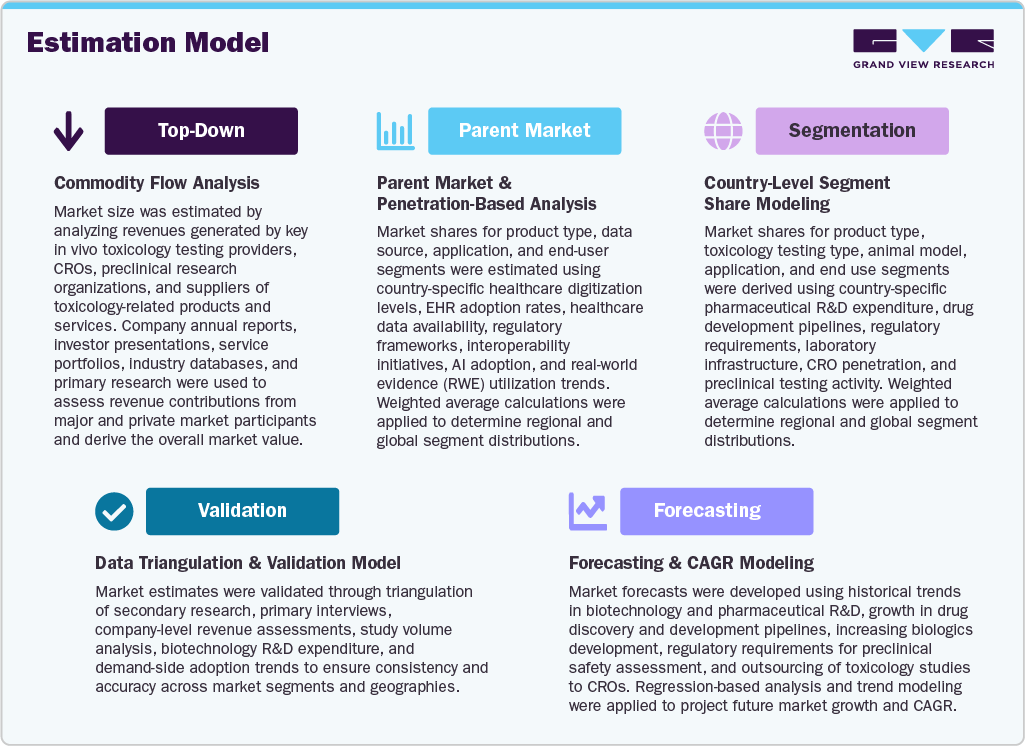
The in vivo toxicology market figures in this report are based on a proven research process that combines executive interviews with secondary research from proprietary databases, company filings, and recognized regulatory and institutional sources. Market size is built through value-chain sizing-reconciling supply-side and demand-side estimates-and triangulated with bottom-up and top-down approaches. Every estimate passes multiple levels of expert validation before publication, with each in vivo toxicology segment quantified using the revenue-capture definitions in the table below.
Segment Definition
Segment - Product
Revenue Capture Definition
Instruments & Equipment
Revenue generated from instruments and equipment used to conduct, monitor, measure, and analyze in vivo toxicology studies, including animal dosing systems, monitoring equipment, imaging platforms, pathology analyzers, flow cytometers, and necropsy systems.
Consumables
This segment captures income from consumable products used throughout in vivo toxicology workflows, including dosing supplies, assay kits, reagents, sample-collection materials, antibodies, histology products, tissue-processing supplies, and other study-specific laboratory consumables.
Toxicology Testing Services
Market value in this category stems from outsourced in vivo toxicology services provided by CROs and laboratories, including study design, animal dosing, clinical observations, toxicokinetic, pathology, histopathology, data analysis, reporting, and regulatory support.
Segment - Toxicology Testing
Revenue Capture Definition
Acute Toxicity
Revenue generated from in vivo studies assessing adverse effects following single or short-term exposure to test substances, including dose-ranging, clinical observations, mortality assessment, gross pathology, and characterization of acute toxic responses.
Repeated-Dose/Systemic Toxicity
This segment captures income from repeated-exposure animal studies evaluating cumulative and systemic effects through clinical observations, body-weight monitoring, hematology, clinical chemistry, toxicokinetic, necropsy, and histopathological examination of target organs.
Reproductive & Developmental Toxicity
Market value in this category stems from animal studies evaluating effects on fertility, reproductive performance, pregnancy, embryo-fetal development, parturition, postnatal development, and offspring health following exposure to pharmaceutical or chemical substances.
Genotoxicity
Revenue generated from in vivo assessments of genetic and chromosomal damage caused by test substances, including micronucleus, transgenic rodent mutation, comet, and other validated genotoxicity studies supporting pharmaceutical and chemical safety evaluation.
Carcinogenicity
This segment captures income from long-term animal studies evaluating tumor development and neoplastic lesions following repeated exposure, including animal monitoring, necropsy, histopathology, tumor assessment, and interpretation of carcinogenic responses for regulatory purposes.
Immunotoxicity
Market value in this category stems from in vivo studies evaluating adverse effects on immune-system structure or function, including immune suppression, immune stimulation, altered immune-cell populations, antibody responses, hypersensitivity, and other immune-mediated toxic effects.
Other Specialized & Target-Organ Toxicity
Revenue generated from specialized in vivo studies assessing toxicity affecting specific organs or biological systems, including hepatotoxicity, nephrotoxicity, neurotoxicity, cardiotoxicity, respiratory toxicity, ocular toxicity, dermal toxicity, and gastrointestinal toxicity.
Segment - Animal Model
Revenue Capture Definition
Rodents
Revenue generated from toxicology studies, products, and services using laboratory rodents, primarily rats and mice, to evaluate acute, repeated-dose, reproductive, developmental, genetic, carcinogenic, systemic, and target-organ toxicity for safety assessment.
Non-Rodents
This segment captures income from toxicology programs using non-rodent mammals, including nonhuman primates, dogs, minipigs, and other relevant species for regulatory safety assessment, toxicokinetic evaluation, systemic toxicity, and specialized toxicological investigations.
Non-Mammalian Models
Market value in this category stems from in vivo toxicology studies using zebrafish, amphibians, and other validated non-mammalian organisms for developmental, environmental, mechanistic, early-stage screening, and specialized toxicity assessments.
Segment - Application
Revenue Capture Definition
Pharmaceutical & Biotechnology Companies
Revenue generated from in vivo toxicology products and services supporting pharmaceutical and biologics development, including candidate safety assessment, dose selection, toxicokinetic, target-organ evaluation, IND-enabling studies, and regulatory nonclinical safety programs.
Chemicals & Agrochemicals
This segment captures income from animal-based safety testing of industrial chemicals, pesticides, herbicides, fungicides, and other agrochemical substances for hazard characterization, systemic toxicity, reproductive toxicity, carcinogenicity, environmental safety, and regulatory requirements.
Food & Nutrition
Market value in this category stems from animal-based safety assessments of food ingredients, additives, nutritional compounds, novel foods, contaminants, and other ingestible substances, including acute, repeated-dose, reproductive, developmental, and target-organ toxicity studies where applicable.
Medical Devices
Revenue generated from in vivo toxicological and biological-safety assessments of medical devices, device materials, extracts, degradation products, and leachables, including systemic toxicity and other applicable animal-based safety evaluations.
Other Applications
This segment captures income from in vivo toxicology activities across cosmetics, personal-care products, veterinary products, environmental substances, academic research, government programs, and other specialized safety-assessment applications requiring animal-based toxicological evaluation.
Estimation Model
To learn more about this report, Download Free Sample Report Customization Table
Client Request
Customization Delivered
Value Adds
Analytical Workflow & Laboratory Adoption Assessment
Assessment of key in vivo toxicology workflows, including animal models, study types, safety assessment methods, and commonly used testing technologies across pharmaceutical, biotechnology, CRO, and research laboratories.
Enables clients to understand laboratory adoption patterns, identify key workflow requirements, and assess opportunities for relevant products and services.
Biopharmaceutical Pipeline & In vivo toxicology Research Opportunity Analysis
Assessment of in vivo toxicology requirements across major therapeutic categories, supported by analysis of biopharmaceutical R&D activity, clinical pipeline trends, and preclinical development needs.
Helps clients to identify therapeutic areas with potential demand for toxicology testing and align business opportunities with pharmaceutical R&D activity.
Regional Research Funding & Laboratory Infrastructure Assessment
Assessment of research funding, pharmaceutical and biotechnology presence, toxicology research infrastructure, CRO activity, and regulatory environment across selected countries or regions.
Supports identification of attractive geographic markets and helps clients prioritize regional expansion and business development opportunities.
Frequently Asked Questions About This Report
The rodents segment accounted for approximately 69.6% of the animal model segment in 2025 while non-mammalian models segment is expected to be the fastest-growing market.
The global in vivo toxicology market size was valued at USD 5.3 billion in 2025 and is estimated at USD 5.7 billion for 2026.
The global in vivo toxicology market is expected to grow at a CAGR of 8.2% from 2026 to 2033, reaching USD 9.9 billion by 2033.
The North America in vivo toxicology market held the largest share of 41.2% of the global market in 2025
Asia Pacific is the fastest-growing region over the forecast period.
Market growth is driven by increasing pharmaceutical and biopharmaceutical R&D expenditure, expanding drug development pipelines, stringent regulatory requirements for preclinical safety assessment, rising outsourcing of toxicology studies, and the increasing complexity of advanced therapeutics such as biologics, gene therapies, and cell therapies.
Key players include Charles River Laboratories, Labcorp, WuXi AppTec, Inotiv, Pharmaron, Altasciences, Eurofins, Evotec, Aragen Life Sciences Ltd., Jubilant Biosys Limited, and The Jackson Laboratory etc.
The toxicology testing services segment held the highest market share of 53.4% in 2025.
The repeated dose/systemic toxicity segment dominated the market with a share of 30.6% in 2025, driven by increasing demand for comprehensive safety assessments during preclinical drug development.
About the Author(s)
Biotechnology Research Team
Healthcare · BiotechnologyThis report was authored by the biotechnology research team at Grand View Research - comprising two research analysts, one senior research analyst, and one industry expert - with specialized expertise in the biotechnology segment of the healthcare industry. All findings are based on proprietary healthcare databases, executive interviews, and regulatory analysis, subject to internal peer review prior to publication.
Last Updated:
Speak to Analyst

Customize this report to your needs - add regions, segments, or data points, with 20% free customization.
Or view our licence options:


ISO 9001:2015 & 27001:2022 Certified
We are GDPR and CCPA compliant! Your transaction & personal information is safe and secure. For more details, please read our privacy policy.


