
- Home
- »
- Biotechnology
- »
-
Integrated Drug Discovery Market Size Report, 2026-2033GVR Report cover

Integrated Drug Discovery Market (2026 - 2033)
Size, Share & Trends Analysis Report By Type (Software and Services), By Capability (Data Integration & Management, Molecular Modeling & Simulation), By Therapeutic Area, By Application, By End Use, By Region, And Segment Forecasts
Market Size, 2025
$7.0BMarket Estimate, 2026
$7.8BMarket Forecast, 2033
$15.8BCAGR, 2026–2033
10.6%Integrated Drug Discovery Report Summary
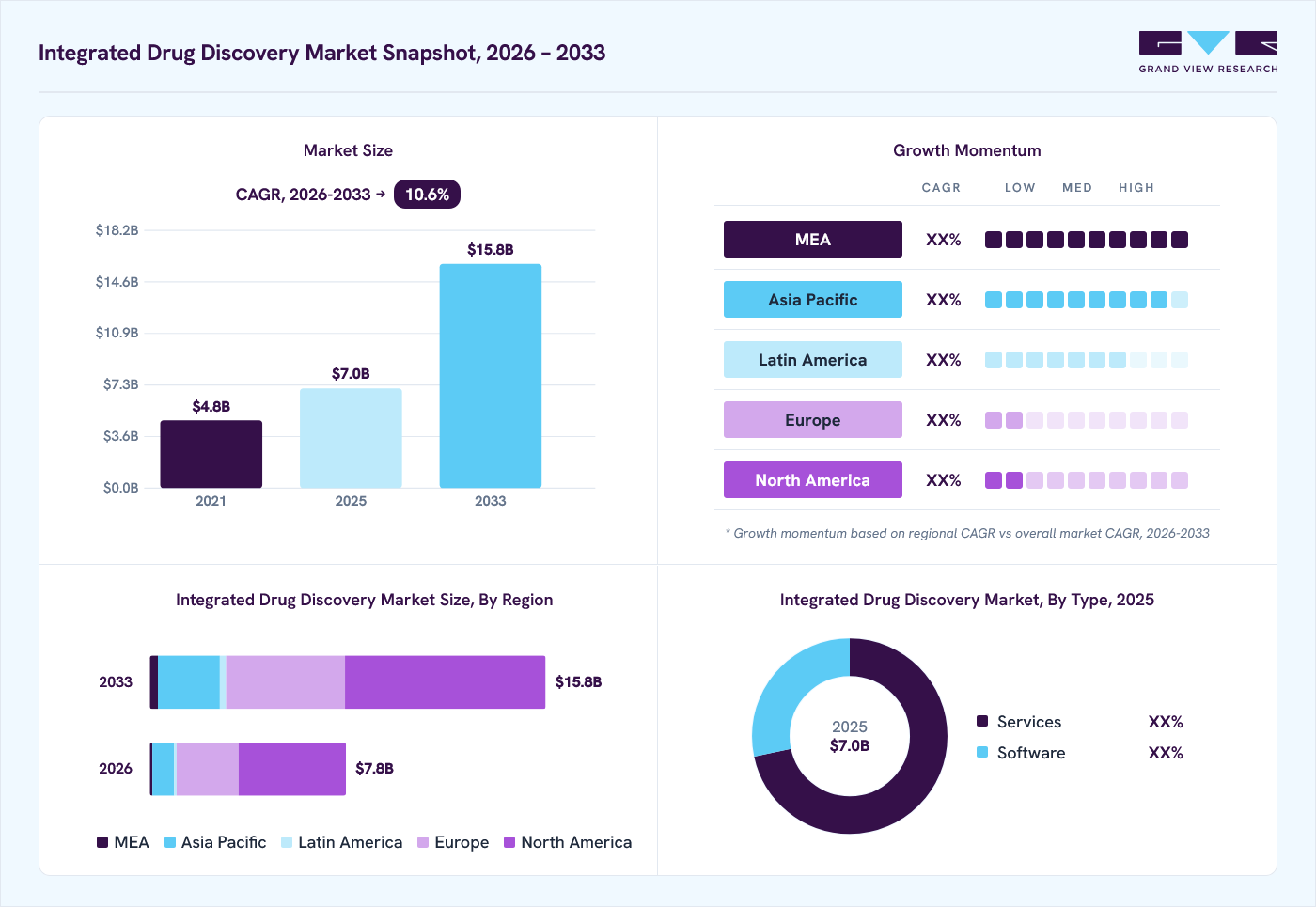
The global integrated drug discovery market size was valued at USD 7.0 billion in 2025 and is projected to grow from USD 7.8 billion to USD 15.8 billion by 2033, at a CAGR of 10.6% from 2026 to 2033. North America dominated the market, accounting for a revenue share of 55.3% in 2025. The market growth is driven by the increasing adoption of AI in drug discovery, rising pharmaceutical and biotechnology R&D expenditure, growing demand for integrated drug discovery platforms and outsourced services, and the increasing complexity of drug development workflows. In addition, the growing use of computational chemistry, molecular modeling, high-throughput screening, multi-omics, and data-driven approaches is supporting the integration of biological and chemical research activities, contributing to market expansion.
 Source: Grand View Research, IR Documents, Primary Interviews, Paid DatabasesTo learn more about this report,
 Download Free Sample Report
Key Market Trends & Insights
- By type: Services segment held the largest revenue share of 71.6% in 2025.
- By capability: Lead optimization segment held the largest revenue share of 20.1% in 2025.
- By therapeutic area: Oncology segment held the largest revenue share of 36.3% in 2025.
- By application: Lead optimization segment held the largest revenue share in 2025.
- By end use: Pharmaceutical companies segment held the largest revenue share in 2025.
Regional Highlights
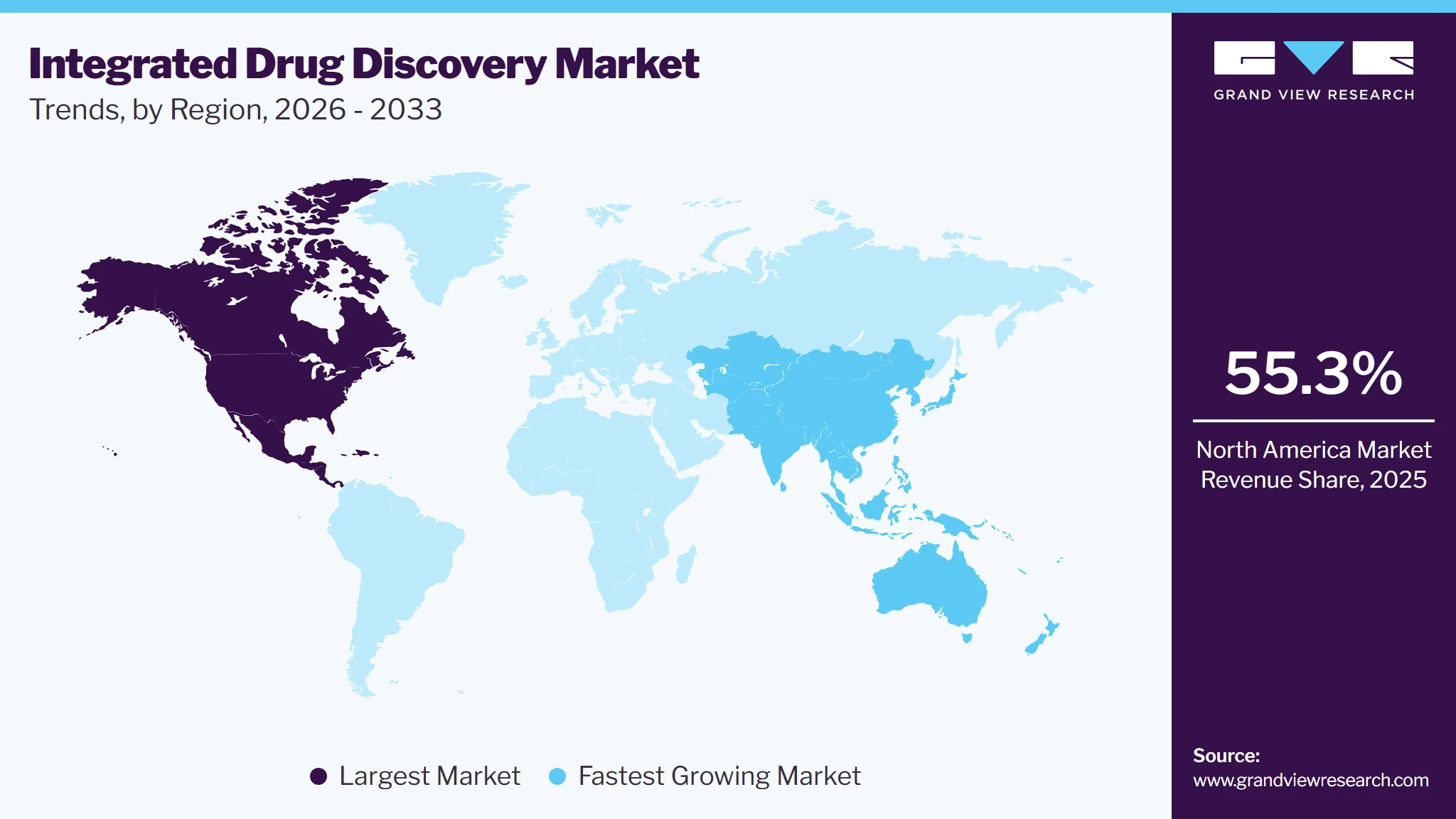
- Largest regional market: North America (55.3% revenue share, 2025)
- Fastest-growing regional market: Asia Pacific (highest CAGR, 2026-2033)
- By country: The U.S. held the largest market share in 2025.
Market Size & Forecast
- Market size in 2025: USD 7.0 Billion
- Estimated market size in 2026: USD 7.8 Billion
- Projected market size by 2033: USD 15.8 Billion
- CAGR (2026-2033): 10.6%
Prism AI by Grand View Research Free to tryAsk a question about the integrated drug discovery marketTry asking✓Every figure cited from GVR research Prefer the report? Download free sample →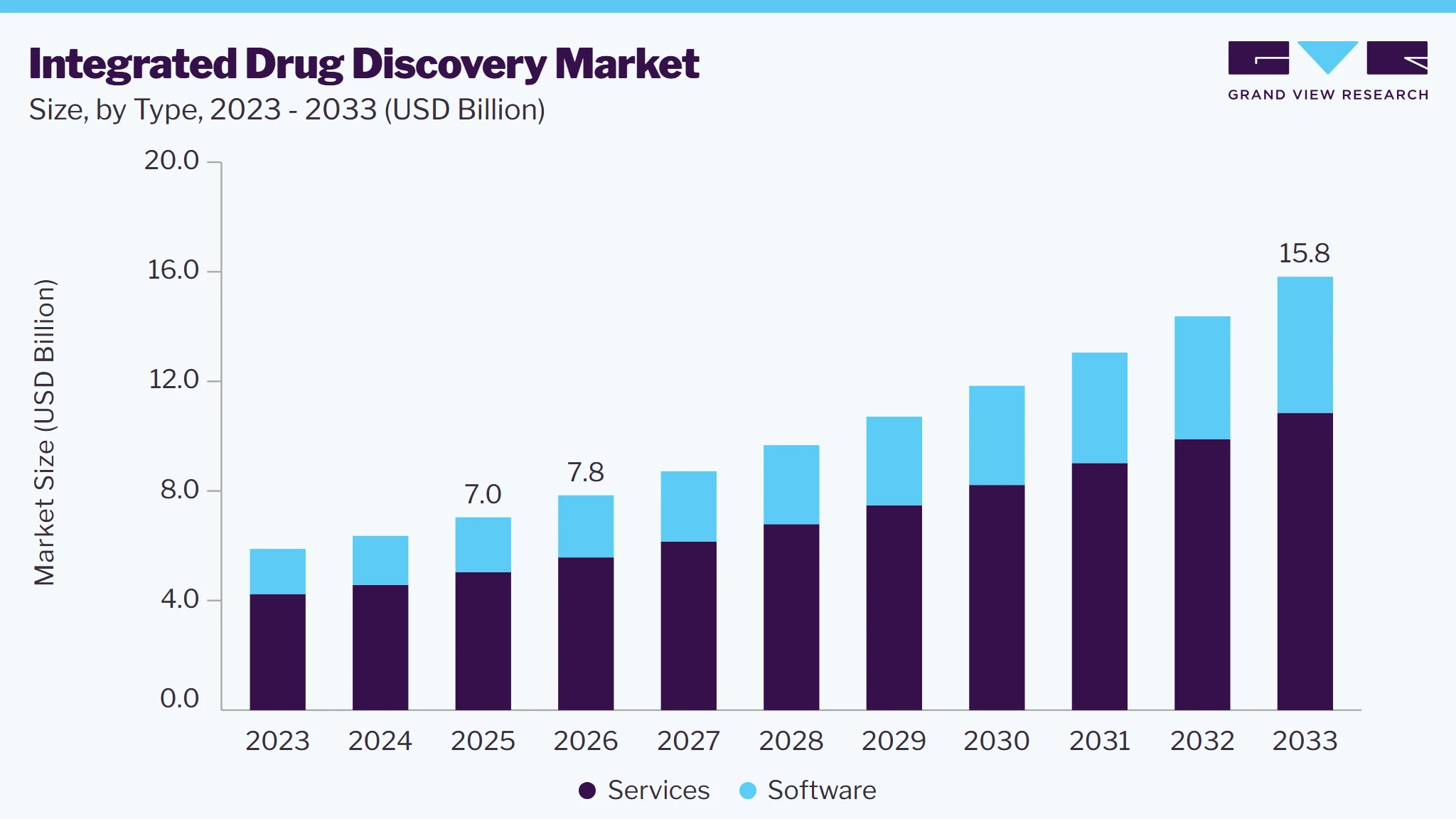 To learn more about this report, Download Free Sample Report
Market Dynamics:
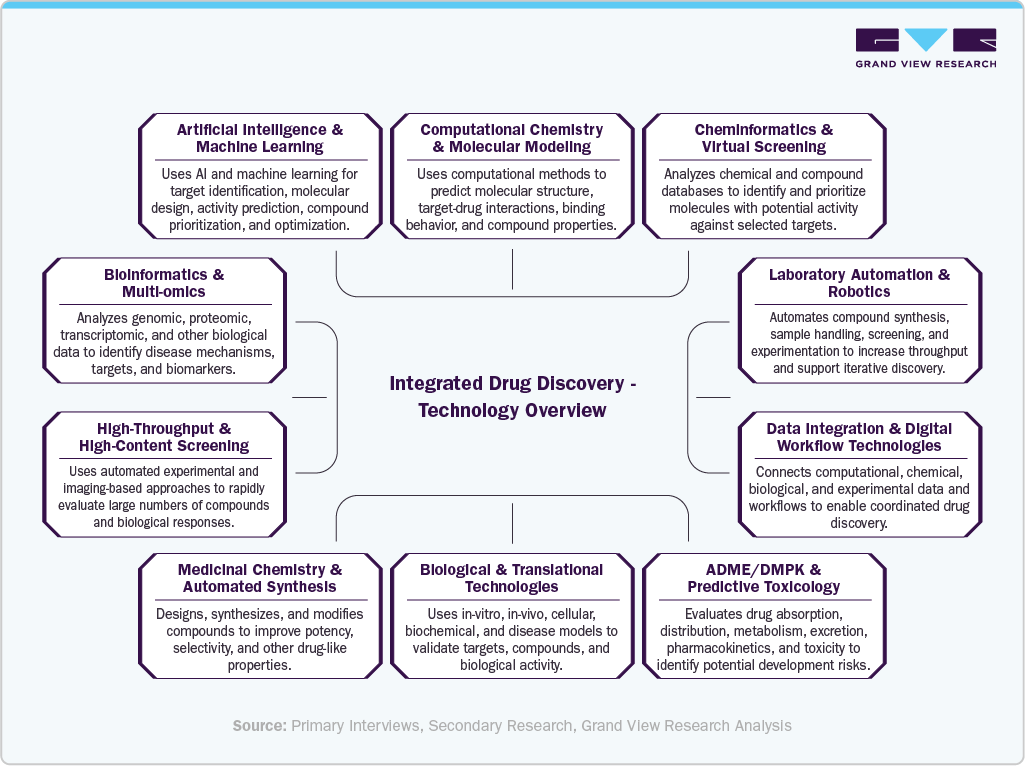
The integrated drug discovery (IDD) market is driven by growing demand for faster, cost-efficient drug development, rising R&D investment, and increasing adoption of AI, machine learning, and computational modeling in early-stage discovery. Integrated platforms combining target identification, virtual screening, molecular modeling, and lead optimization help streamline research workflows and improve collaboration across multidisciplinary teams. However, high implementation costs, data quality and interoperability challenges, and uncertainty in translating computational predictions into experimental outcomes constrain adoption. Strategic partnerships between technology providers, pharmaceutical companies, biotechnology firms, and research institutions are strengthening the market by advancing integrated discovery capabilities and accelerating innovation.
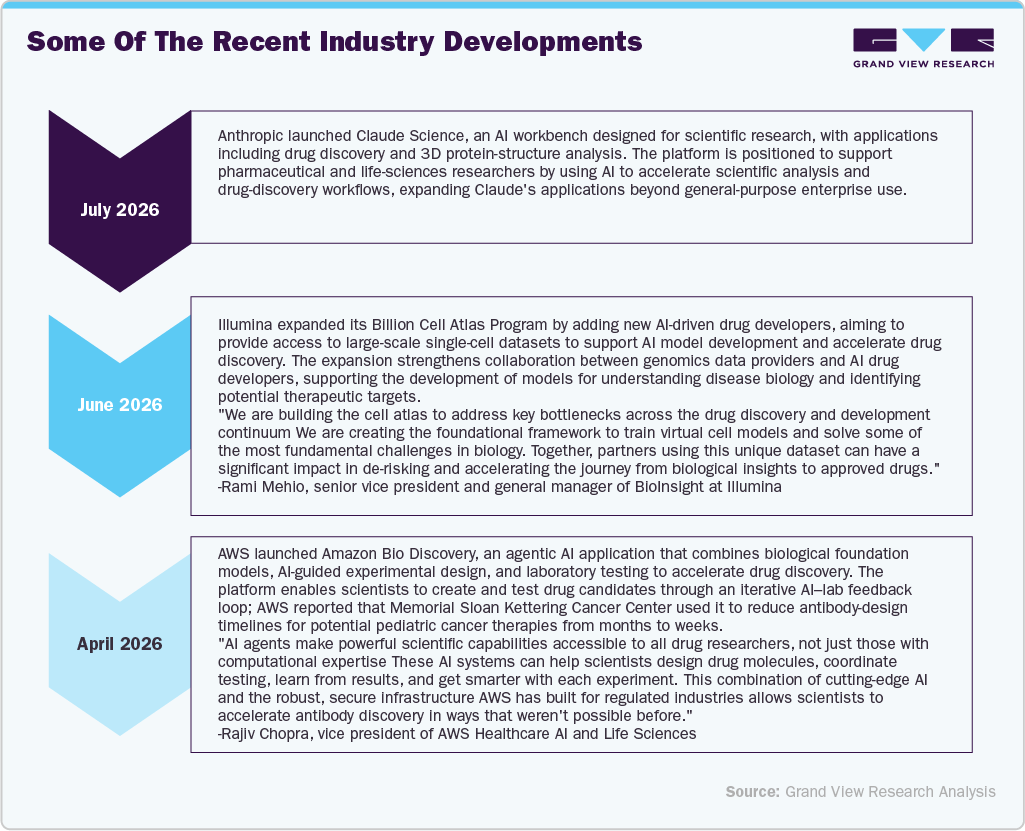
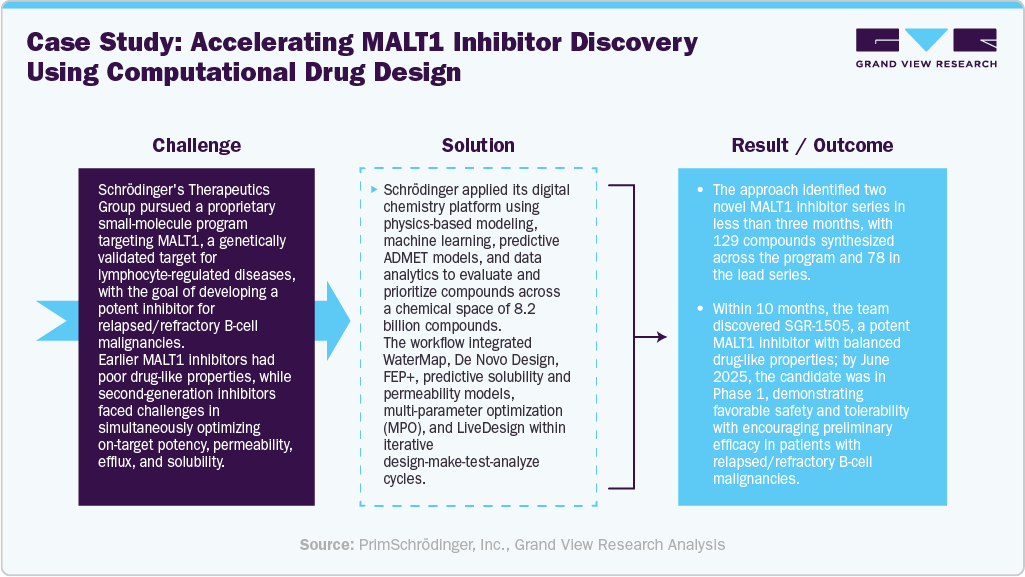
The growing adoption of AI/ML and computational technologies is transforming drug discovery by enabling faster analysis of complex datasets, improving molecular design and screening, and supporting data-driven decision-making across discovery workflows. According to an FDA article published in January 2026, the agency recognizes increased use of AI throughout the drug product life cycle and across multiple therapeutic areas, with CDER reporting a significant increase in drug application submissions incorporating AI components in recent years. FDA also noted that it had experience with more than 500 submissions containing AI components from 2016 to 2023.
 To learn more about this report, Download Free Sample Report
Shift toward In-Silico and Non-Animal Drug Discovery Methods
Pharmaceutical and biotechnology companies are increasingly exploring these approaches to reduce reliance on conventional animal-based research, improve the efficiency of early-stage candidate assessment, and evaluate larger numbers of potential molecules before advancing them to laboratory and preclinical studies. The integration of computational and experimental capabilities within IDD platforms supports a more streamlined discovery process by enabling rapid prediction, prioritization, and validation of drug candidates.
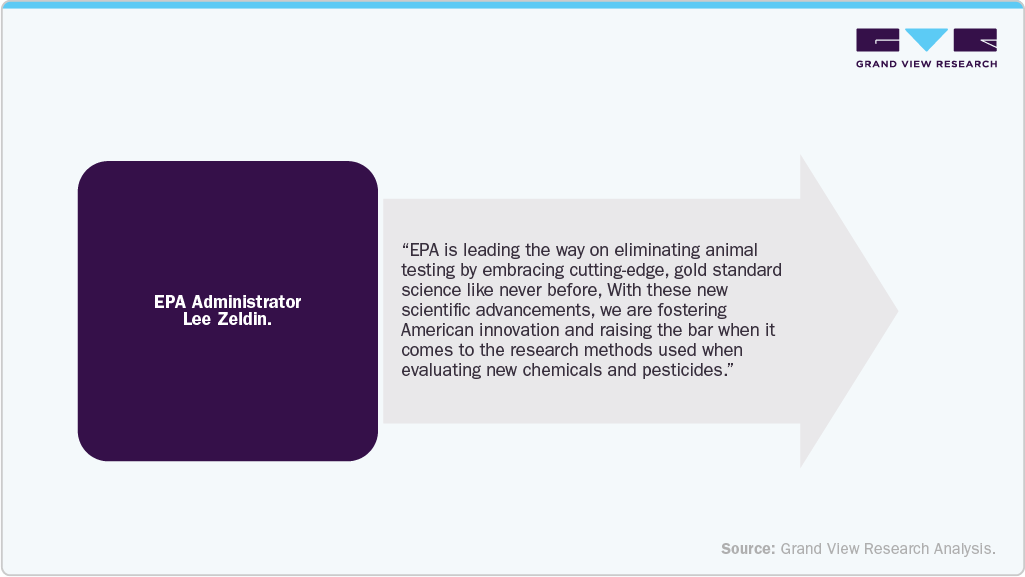
Investment and research initiatives focused on developing alternatives to animal-based drug discovery are further supporting the adoption of these technologies. For instance, in June 2026, the U.S. EPA announced two major actions to accelerate the replacement of animal testing: it expanded its accepted list of New Approach Methodologies (NAMs) and introduced a streamlined pathway for companies to submit novel non-animal approaches for chemical and pesticide assessments. The measures support the EPA’s goal of eliminating mammalian animal testing by 2035 and encourage greater adoption of human-relevant, non-animal methods, including molecular, cellular, and computational approaches.
 To learn more about this report, Download Free Sample Report
Advanced integrated drug discovery platforms require significant upfront investment across computational infrastructure, specialized software, high-throughput screening systems, laboratory automation, compound libraries, and data management systems. Organizations developing in-house capabilities also need to invest in high-performance computing resources and AI/ML infrastructure to support molecular modeling, virtual screening, generative molecular design, predictive analytics, and other computational workflows. The investment becomes more substantial when these capabilities are integrated with experimental functions such as medicinal chemistry, assay development, pharmacology, DMPK, and automated laboratory systems.
These requirements create a high entry and adoption barrier, particularly for small and emerging biotechnology companies, which often operate with limited R&D budgets and lack the infrastructure required to deploy comprehensive IDD capabilities internally. In addition to initial capital expenditure, companies incur recurring costs related to software licenses, computational resources, equipment maintenance, data acquisition, platform upgrades, and specialized personnel. Consequently, organizations with limited financial resources often rely on outsourced IDD services or individual point solutions rather than investing in comprehensive in-house platforms, restricting the adoption of advanced IDD infrastructure.
The growing integration of artificial intelligence, laboratory automation, and robotic technologies is creating opportunities for IDD providers to develop autonomous and closed-loop drug discovery workflows. Conventional integrated workflows still involve manual intervention between computational design, compound synthesis, biological testing, and data analysis, which can slow iterative candidate optimization. Connecting these activities through automated workflows can enable experimental results to feed directly into subsequent computational design and compound selection, reducing cycle times and improving the efficiency of drug discovery programs.
Advances in AI agents, automated synthesis, high-throughput screening, and laboratory robotics are further expanding the scope for automation across integrated drug discovery workflows. Market participants can leverage these technologies to develop platforms that automate successive design-make-test-analyze cycles, allowing compounds to be generated, evaluated, and refined with reduced manual intervention. The development of such closed-loop capabilities is expected to create opportunities for IDD providers to differentiate their offerings, increase discovery throughput, and support more scalable drug discovery programs.
 To learn more about this report, Download Free Sample Report
 To learn more about this report, Download Free Sample Report
Market Concentration & Characteristics
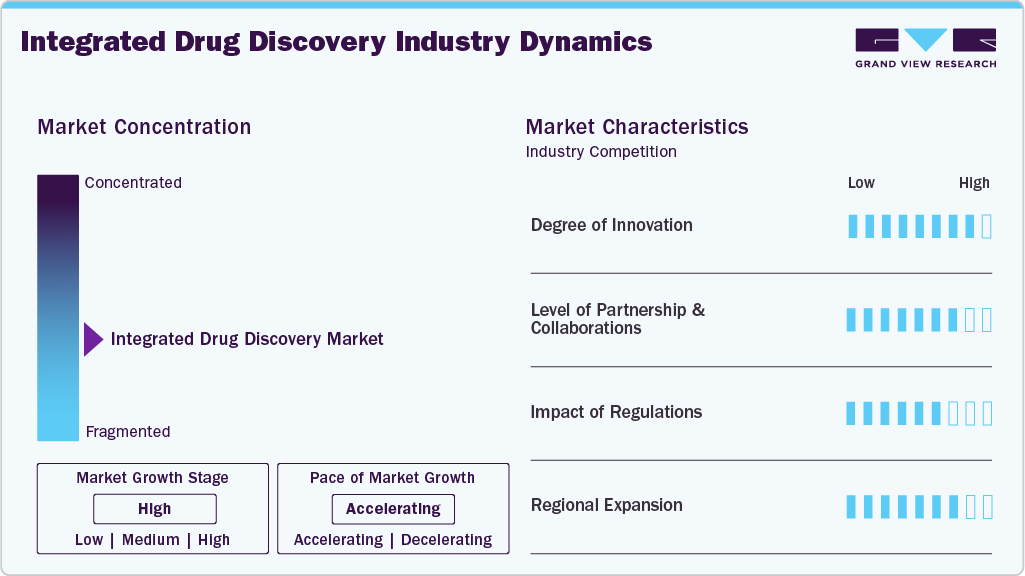
Innovation in the IDD market is high, driven by the integration of AI, machine learning, computational chemistry, and advanced biological models into drug discovery workflows. Providers are developing platforms that connect target identification, virtual screening, lead optimization, and early safety assessment to improve research efficiency. For instance, Insilico Medicine’s AI-driven platform integrates target discovery, molecular design, and preclinical development, demonstrating how computational tools are being applied across multiple stages of drug discovery.
 To learn more about this report, Download Free Sample Report
Partnership and collaborations help providers combine specialized technologies, scientific expertise, and data with broader R&D infrastructure. For instance, in July 2026, Certara partnered with NVIDIA to advance its integrated AI platform by combining its scientific software, proprietary datasets, biosimulation models, and scientific expertise with AI-driven agentic frameworks, including the NVIDIA BioNeMo Agent Toolkit.
“Agentic AI combined with Certara's world-class scientists, validated models, and data keeps the scientist in the loop while delivering the speed, scale, and reproducibility our clients need to generate integrated evidence for regulators. Our collaboration with NVIDIA intends to bring frontier AI to life sciences responsibly, at scale, and with the scientific rigor the industry demands.”
-Jon Resnick, Chief Executive Officer.
Regulatory developments are shaping IDD workflows by encouraging validated, human-relevant methods and clearer evidence standards for nonclinical testing. In March 2026, the U.S. FDA issued draft guidance outlining validation considerations for NAMs used in drug development, including context of use, human biological relevance, technical reliability, and fitness for purpose. This supports the development and regulatory evaluation of in vitro and computational approaches, while maintaining the need for rigorous validation.
IDD providers are expanding their geographic footprints to access scientific talent, serve clients closer to research hubs, and integrate discovery capabilities across regions. In June 2025, Eurofins Discovery expanded its global chemistry services by integrating Eurofins Advinus in India into its network, strengthening capabilities across the U.S., UK, Europe, and India. The expansion combines chemistry, biology, and robotic automation expertise to support drug discovery programs across a broader regional network.
Type Insights
By component, the services segment held the highest market share of 71.6% in 2025. Increasing specialization across biological and chemical research is driving the expansion of integrated service capabilities. Service providers are increasingly combining complementary technologies and expertise to address multiple discovery requirements through coordinated service models. For instance, in October 2025, Charles River Laboratories and X-Chem entered a strategic collaboration combining Charles River's drug discovery and assay-development expertise with X-Chem's DNA-encoded library platform containing more than 15 billion compounds.
The software segment in the integrated drug discovery market is anticipated to grow at the fastest CAGR over the forecast period. Advancements in intelligent automation are creating new capabilities within integrated drug discovery software. Software providers are incorporating AI agents to support hypothesis generation, analytical workflows, simulations, and scientific decision-making across discovery and development activities. For instance, in July 2026: Certara partnered with NVIDIA to advance its integrated AI platform by combining biosimulation software, proprietary datasets, scientific expertise, and AI-driven agents. The platform supports drug discovery and development workflows including early discovery hypotheses, ADMET evaluation, systems pharmacology, and clinical simulations, highlighting the integration of agentic AI into drug discovery software.
Capability Insights
By application, the lead optimization segment held the largest market share of 20.1% in 2025. The need to convert promising lead compounds into candidates with a balanced drug-like profile is increasing the importance of lead optimization within integrated drug discovery platforms. The capability focuses on refining lead molecules to improve potency, selectivity, safety, pharmacokinetic properties, and overall developability before progression to preclinical development. Optimization requires balancing multiple properties because improvements in one characteristic can influence other aspects of a compound's performance.
The AI driven drug design segment is anticipated to register the fastest CAGR over the forecast period. Integration of AI-based molecular design with downstream development workflows is expanding the scope of AI-driven drug discovery platforms. Connecting molecule generation and optimization with formulation, development, and manufacturing activities creates greater continuity between early discovery and subsequent stages of drug development. For instance, in July 2026, Insilico Medicine and Bora Pharmaceuticals announced a strategic alliance combining Insilico's Pharma.AI platform with Bora's drug development, manufacturing, quality, and commercialization capabilities.
“AI is already transforming drug discovery, but its full potential will only be realized when that transformation extends across the entire development and manufacturing value chain. This is not simply about adding AI to existing processes; it is about reimagining how pharmaceutical products are developed, manufactured, and brought to patients. Together, we aim to build a scalable and repeatable model that can advance promising drug candidates more efficiently, positioning Bora at the forefront of AI-enabled pharmaceutical development and manufacturing, and establish a long-term growth platform through the development and commercialization of high-value proprietary assets.”
-Bobby Sheng, founder, Chairman of Bora Group and CEO of Bora Pharmaceuticals
Therapeutic Area Insights
By therapeutic area, the oncology segment dominated the market, with a revenue share of 36.3% in 2025. IDD platforms are being applied in oncology to connect target biology, therapeutic discovery, screening, and molecular optimization within coordinated workflows. For instance, in April 2026, Kazia Therapeutics in-licensed a first-in-class SETDB1-targeted oncology platform from QIMR Berghofer, incorporating an AI-integrated epigenetic drug discovery engine used to identify and optimize the lead candidate MSETC. The platform targets SETDB1-driven immune resistance and is designed to restore tumor immune signaling, expanding Kazia’s oncology pipeline into chromatin-level regulation alongside its transcriptional reprogramming and PD-L1 degrader programs.
“SETDB1 represents a compelling emerging target in oncology, with this acquisition, we are extending our strategy to target how cancer controls its own behavior by addressing immune resistance at the chromatin level, one of the earliest layers of tumor immune regulation, alongside transcriptional reprogramming with paxalisib and targeted protein degradation with our PD-L1 platform.”
- Dr. John Friend, CEO of Kazia Therapeutics.
The neurology segment is anticipated to register the fastest CAGR over the forecast period. Market players are increasingly developing discovery approaches that bring together multiple sources of neurological evidence to improve understanding of disease mechanisms and therapeutic response. These approaches are helping researchers move beyond isolated target or compound assessment by connecting information generated across different stages of CNS research, supporting earlier identification of viable therapeutic opportunities and better-informed preclinical decisions. In June 2025, Bexorg and Biohaven announced a multi-program research collaboration using Bexorg’s AI-driven whole-brain discovery platform to support two preclinical CNS programs.
Application Insights
By application, the lead optimization segment held the largest market share in 2025. Balancing efficacy with selectivity, pharmacokinetics, safety, and other drug-like properties is a central challenge during lead optimization. Integrated drug discovery connects medicinal chemistry with biological screening, structural analysis, ADME/DMPK, and pharmacological evaluation, allowing the effects of chemical modifications to be assessed across multiple parameters rather than on potency alone. This helps researchers identify compounds with a more balanced profile and reduce the risk of advancing molecules with weaknesses in other important properties.
The target identification and validation segment is anticipated to register the fastest CAGR over the forecast period. The integration of these capabilities enables drug discovery teams to move from disease biology and target hypotheses to experimental validation within a connected workflow, reducing the need to manage separate discovery activities across multiple providers. Increasing use of AI and advanced computational approaches is further supporting the analysis of complex biological datasets and prioritization of targets, while experimental validation establishes target relevance, mechanism, and tractability before programs progress into downstream discovery stages.
End Use Insights
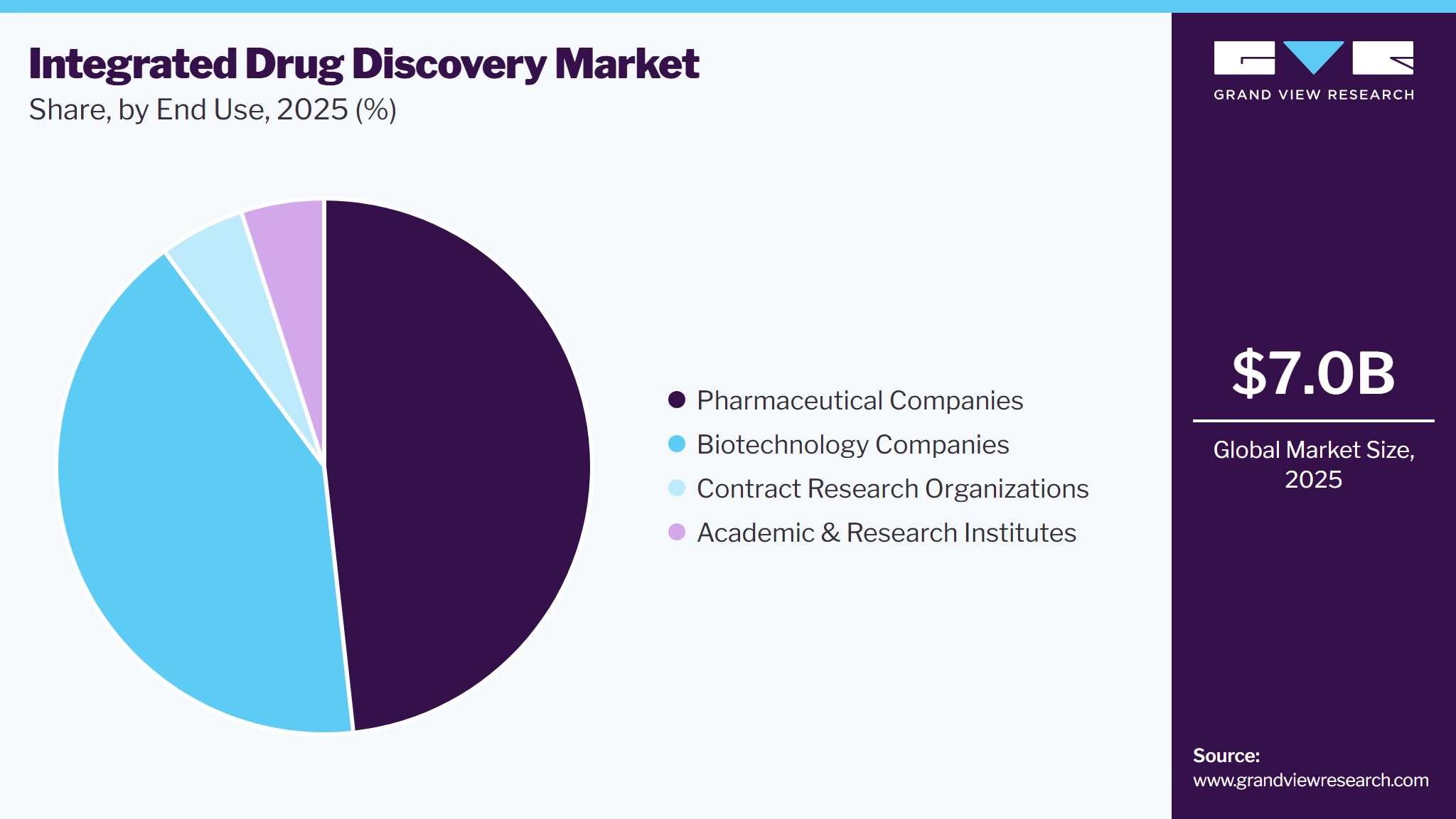
The pharmaceutical companies segment held the largest market share in 2025. Pharmaceutical companies are strengthening external collaborations to access specialized discovery capabilities and expand internal R&D capacity. For instance, in June 2025, AstraZeneca entered a strategic research collaboration with CSPC Pharmaceuticals to discover and develop preclinical candidates across multiple chronic disease indications. The collaboration uses CSPC’s AI-driven drug discovery platform for target-compound analysis and small-molecule optimization, illustrating the use of external discovery capabilities to support pharmaceutical R&D.
 To learn more about this report, Download Free Sample Report
The biotechnology companies’ segment is expected to register the fastest CAGR over the forecast period. The use of integrated discovery models is enabling biotechnology companies to combine computational and experimental capabilities across internal and external research activities. For instance, in June 2026, Insilico Medicine and SK Biopharmaceuticals entered a research and development collaboration for AI-enabled drug candidates in neuroimmune disorders, combining Insilico’s platform spanning target validation, generative chemistry, and molecule optimization with SK Biopharmaceuticals’ development and clinical capabilities.
Regional Insights
North America's integrated drug discovery market industry dominated the market with a 55.3% market share in 2025. North American pharmaceutical and biotechnology companies are increasingly using AI for target identification, virtual screening, de novo molecule generation, molecular optimization, and prediction of pharmacokinetic and toxicity properties. The FDA reported in April 2026 that it has seen a significant increase in drug application submissions containing AI components across nonclinical, clinical, manufacturing, and postmarketing activities.
 To learn more about this report, Download Free Sample Report
U.S. Integrated Drug Discovery Market Trends
The integrated drug discovery industry in the U.S. held the largest revenue share in 2025 and is driven by the need to make drug discovery faster, more data-driven, and more efficient by integrating target identification, computational biology, hit discovery, medicinal chemistry, in-vitro testing, ADME/Tox, and data analytics into a coordinated workflow. A major driver is the high cost and long timelines of conventional drug development. PhRMA estimates that developing a new medicine can take 10-15 years and cost approximately USD 2.6 billion, while only about 12% of drug candidates entering clinical trials ultimately receive FDA approval. This creates strong incentives for pharmaceutical and biotechnology companies to identify weak candidates earlier and prioritize molecules with better efficacy, safety, and developability profiles.
Europe Integrated Drug Discovery Market Trends
Europe’s market is expected to grow significantly over the forecast period. The expansion of precision medicine, biomarker discovery, genomics, and pharmacogenomics is encouraging European drug developers to integrate molecular and clinical information earlier in the discovery and development process. For instance, the European launch of Yourgene Health's Insight DPYD assay, which in September 2026 received EU In Vitro Diagnostic Regulation (IVDR) certification for use in clinical laboratories. The assay detects 19 clinically relevant DPYD variants associated with reduced metabolism of fluoropyrimidine chemotherapy and enables pre-treatment identification of patients at increased toxicity risk. The development illustrates how genomic testing, pharmacology, patient stratification, and treatment decisions are becoming increasingly interconnected.
The increasing application of AI, machine learning, computational modelling, robotics, and automated experimentation is one of the strongest drivers of the UK IDD market. These technologies allow researchers to analyse large biological datasets, identify and validate potential drug targets, predict molecular interactions, prioritize compounds, and automate laboratory experiments. A recent example is the opening of the UK’s first AI-robotic organoid laboratory in Liverpool in September 2026. The USD 23.25 million high-security facility combines AI, robotics, and human organoid technology within a Category 3 containment environment and is designed to accelerate drug and vaccine discovery.
AI is becoming an important driver of IDD in Germany as conventional drug discovery is lengthy, expensive, and has a high attrition rate. In March 2025, the German Federal Ministry of Research and Education launched a funding initiative specifically for the application of artificial intelligence in drug research, recognizing AI's potential to improve the identification and optimization of new active compounds. A strong example is Evotec, headquartered in Hamburg, which combines large-scale biological screening, multi-omics, computational approaches, and AI-supported analytics through its integrated drug-discovery platform. In 2025-2026, Evotec reported progress in its partnership with Bristol Myers Squibb, including advancement of a molecular-glue candidate into Phase I, supported by its PanOmics screening and PanHunter AI-supported analytics.
Asia Pacific Integrated Drug Discovery Market Trends
The integrated drug discovery industry in the Asia Pacific is anticipated to grow at the fastest CAGR from 2026 to 2033. Countries across the region are strengthening drug discovery capabilities through increased pharmaceutical R&D investment, government-backed research programs, development of advanced research infrastructure, and collaborations among pharmaceutical companies, biotechnology firms, academic institutions, and technology providers. China, Japan, India, South Korea, and Australia are increasingly supporting innovative drug development through investments in AI-enabled research, advanced screening technologies, biomedical datasets, and translational research infrastructure, creating demand for integrated capabilities across target identification, molecular research, screening, lead optimization, and preclinical development.
China’s expanding biopharmaceutical innovation ecosystem is creating strong demand for integrated drug discovery capabilities, supported by a large pharmaceutical R&D base, growing innovative-drug pipelines, and increasing participation of China based companies in global drug development. For instance, to an article published by Springer Nature Limited in July 2026, China ranked as the world’s second-largest hub for biopharmaceutical R&D in 2025, with its pharmaceutical pipeline accounting for approximately 30% of the global total, while licensing activity involving Chinese drug candidates has also increased.
The adoption of AI-enabled platforms is further expanding the technological capabilities available for early-stage drug discovery in India. For instance, in July 2026, Fischer Medical Ventures expanded its AI-enabled drug discovery activities through its Vecura molecular research platform, which uses AI and computational biology to support target identification, molecular interaction analysis, and compound optimization. The initiative is positioned to strengthen collaboration among pharmaceutical companies, biotech firms, and academic institutions and accelerate early-stage drug discovery in India.
"By introducing Vecura to the Indian market, FMVL is positioning itself at the intersection of healthcare, artificial intelligence and life sciences innovation. We believe this partnership marks an important milestone in strengthening India's capabilities in AI-enabled drug discovery and molecular research”.
-Ravi Govindan, Executive Chairman and Group Managing Director, Fischer Medical Ventures Limited.
Latin America Integrated Drug Discovery Market Trends
The Latin America integrated drug discovery market is being supported by growing efforts to strengthen regional pharmaceutical R&D, domestic technology development, and cross-country cooperation. Governments are placing emphasis on reducing dependence on imported medicines and technologies by expanding local research, production capabilities, technology transfer, and innovation programs. For instance, in July 2026, Brazil established the National Strategy for the Economic-Industrial Health Complex as a permanent policy framework, supporting national research, development, innovation, and the production of medicines, vaccines, and other strategic health technologies through mechanisms such as technology-transfer partnerships, local innovation programs, and technology development contracts. Such initiatives are creating opportunities for the adoption of drug discovery software and services.
“In Brazil, investments from the New PAC Health program and the strengthening of the Health Economic-Industrial Complex seek to expand the production capacity of vaccines, medicines, diagnostics, and medical devices. The strategy also includes strengthening research and the training of professionals.”
-Director of Management and Programs, Robert Matiru
Middle East & Africa Integrated Drug Discovery Market Trends
The Middle East and Africa market is witnessing increasing collaboration in drug discovery, clinical research, and scientific capacity building. For instance, in February 2026, Drugs for Neglected Diseases initiative (DNDi) and Dubai Health signed a memorandum of understanding to establish a framework for collaboration in medical education, research, and clinical training. The partnership combines DNDi’s expertise in needs-driven drug discovery and development with Dubai Health’s integrated academic health system to support research and capacity building in neglected infectious diseases, strengthening regional capabilities across drug discovery, translational research, and clinical research.
“This partnership represents a meaningful step forward in how we prepare our students and researchers to engage with the world’s most pressing and complex health challenges. By partnering with DNDi, we are giving our learners direct access to real-world drug development, clinical research, and global health practice. It reflects our commitment to advancing health for humanity by ensuring that innovation, learning, and discovery are driven by purpose and real-world impact.”
-Dr Hanan Al Suwaidi, Deputy CEO and Chief Academic Officer of Dubai Health
Key Integrated Drug Discovery Company Insights
Key companies in the integrated drug discovery market are pursuing strategic partnerships, collaborations, and acquisitions to access complementary technologies, scientific expertise, and specialized capabilities, while expanding services. In addition, players are integrating AI, machine learning, automation, multi-omics, molecular modeling, and data analytics into discovery workflows to support increasingly data-driven drug research.
Key Integrated Drug Discovery Companies
The following key companies have been profiled for this study on the integrated drug discovery market.
-
Schrödinger, Inc.
-
Dassault Systèmes (BIOVIA)
-
Revvity, Inc.
-
Collaborative Drug Discovery (CDD) Inc.
-
Insilico Medicine
-
Recursion Pharmaceuticals
-
Certara
-
BenevolentAI
-
Insitro
-
Isomorphic Labs
-
Elix, Inc.
-
Numerion Labs
Market Participant Categorization
Category
Operating Strategies
Competitive Edge
Weakness
Established Players (e.g., Schrödinger, Inc., Dassault Systèmes (BIOVIA), Revvity, Inc. Collaborative Drug Discovery (CDD), Certara)
Adding generative AI, predictive ML, agentic AI, and automation to established drug discovery software
Expanding standalone computational tools into integrated platforms covering multiple drug discovery activities
Using partnerships and licensing agreements to incorporate AI, cloud computing, and advanced infrastructure
Established scientific methodologies and expertise in computational chemistry, molecular modeling, and scientific informatics
Existing adoption within pharmaceutical R&D workflows and established enterprise customer relationships
Ability to combine physics-based modeling with AI and machine learning for molecular discovery and optimization
Legacy software architecture makes integration of rapidly evolving AI technologies more complex
Relatively lower specialization in AI-native areas such as causal biology, phenomics, and automated experimental feedback
Broad software portfolios require greater integration and configuration compared with focused AI-native platforms
Emerging / Specialized Players (e.g., Insilico Medicine, Recursion, Pharmaceuticals, BenevolentAI, insitro, Isomorphic Labs, Elix, Inc., Numerion Labs)
Developing AI-native platforms centered on generative AI, foundation models, and multimodal machine learning
Connecting computational drug design with automated experimentation through closed-loop Design-Make-Test-Learn workflows
Developing proprietary datasets and specialized AI models tailored to specific drug discovery applications and therapeutic areas
Proprietary biological and chemical data sets generated through computational and experimental workflows
Multimodal AI capabilities combining genomic, cellular, imaging, chemical, and other biological data
Integrated target-to-candidate workflows linking target identification, molecular design, optimization, and experimental testing
Limited commercial track records and fewer established enterprise deployments than mature software providers
High requirements for computing infrastructure, experimental automation, and large-scale data generation
AI-generated discoveries still face substantial experimental, preclinical, and clinical validation requirements
Recent Developments:
- In July 2026, Schrödinger, Inc. announced the launch of the early access version of Bunsen, an agentic AI co-scientist designed to help researchers understand scientific objectives, develop computational strategies, execute molecular discovery workflows, and interpret results.
“In an era where computation is fundamentally changing molecular discovery, Bunsen expands what research teams can accomplish. Bunsen removes friction from the discovery cycle, enabling greater throughput and expanding the user base for our computational platform. As our customers accelerate their discovery timelines, our throughput-based licensing model is ideally suited to capture the value of this expanding utilization.”
-Ramy Farid, Ph.D., president and CEO of Schrödinger.
-
In June 2026, Dassault Systèmes (BIOVIA) announced an upgrade to BIOVIA’s agentic AI capabilities through MARIE, an AI-powered virtual companion developed using NVIDIA’s BioNeMo Agent Toolkit and BioNeMo.
-
In September 2026, Revvity, Inc. announced the planned acquisition of Human Cell Design (HCD) to expand its human-relevant cell models for metabolic disease drug discovery.
“HCD brings differentiated human cell models that complement Revvity’s broad portfolio of technologies supporting drug discovery and development. As researchers continue to seek more human-relevant approaches to understanding biology, combining high-quality cell models with our capabilities in screening, detection, automation and analysis creates an opportunity to provide customers with more integrated solutions.”
-Prahlad Singh, president and CEO of Revvity.
Integrated Drug Discovery Market Report Scope
Report Attribute
Details
Market size in 2025
USD 7.0 Billion
Estimated market size in 2026
USD 7.8 Billion
Projected market size by 2033
USD 15.8 Billion
Growth Rate
CAGR of 10.6% from 2026 to 2033
Actual data
2021 - 2025
Forecast period
2026 - 2033
Quantitative units
Revenue in USD billion/million and CAGR from 2026 to 2033
Report coverage
Revenue forecast, company ranking, competitive landscape, growth factors, and trends
Segments covered
Type, capability, therapeutic area, application, end use, region
Regional scope
North America, Europe, Asia Pacific, Latin America, MEA
Country scope
U.S., Canada, Mexico, UK, Germany, France, Italy, Spain, Sweden, Denmark, Norway, China, Japan, India, Australia, South Korea, Thailand, Brazil, Argentina, Saudi Arabia, South Africa, UAE, Kuwait
Key companies profiled
Schrödinger, Inc., Dassault Systèmes (BIOVIA), Revvity, Inc., Collaborative Drug Discovery (CDD) Inc., Insilico Medicine, Recursion Pharmaceuticals, Certara, BenevolentAI, insitro, Isomorphic Labs, Elix, Inc., Numerion Labs
Customization scope
Free report customization (equivalent up to 8 analyst’s working days) with purchase. Addition or alteration to country, regional & segment scope
Pricing and purchase options
Avail customized purchase options to meet your exact research needs. Explore purchase options
Global Integrated Drug Discovery Market Report Segmentation
This report forecasts revenue growth at global, regional, and country levels and provides an analysis of the latest industry trends in each of the sub-segments from 2021 to 2033. For this study, Grand View Research has segmented global integrated drug discovery market report based on type, capability, therapeutic area, application, end use, and region
-
Type Outlook (Revenue, USD Million, 2021 - 2033)
-
Services
-
Biology Services
-
Chemistry Services
-
-
Software
-
-
Capability Outlook (Revenue, USD Million, 2021 - 2033)
-
Data Integration & Management
-
Molecular Modeling & Simulation
-
AI-Driven Drug Design
-
Hit Discovery & Virtual Screening
-
Lead Optimization
-
ADMET Prediction
-
Workflow Automation & Collaboration
-
Clinical Development Support
-
-
Therapeutic Area Outlook (Revenue, USD Million, 2021 - 2033)
-
Oncology
-
Neurology
-
Cardiovascular Diseases
-
Infectious & Immune System Diseases
-
Digestive System Diseases
-
Others
-
-
Application Outlook (Revenue, USD Million, 2021 - 2033)
-
Target Identification & Validation
-
Hit Discovery
-
Hit-to-Lead Optimization
-
Lead Optimization
-
Candidate Selection
-
Preclinical Studies
-
Clinical Studies Support
-
-
End Use Outlook (Revenue, USD Million, 2021 - 2033)
-
Pharmaceutical Companies
-
Biotechnology Companies
-
Contract Research Organizations
-
Academic & Research Institutes
-
-
Regional Outlook (Revenue, USD Million, 2021-2033)
-
North America
-
U.S.
-
Canada
-
Mexico
-
-
Europe
-
Germany
-
U.K.
-
France
-
Italy
-
Spain
-
Denmark
-
Sweden
-
Norway
-
-
Asia Pacific
-
China
-
Japan
-
India
-
South Korea
-
Australia
-
Thailand
-
-
Latin America
-
Brazil
-
Argentina
-
-
Middle East and Africa (MEA)
-
South Africa
-
Saudi Arabia
-
UAE
-
Kuwait
-
-
Research Methodology
The integrated drug discovery market figures in this report are based on a proven research process that combines executive interviews with secondary research from proprietary databases, company filings, and recognized regulatory and institutional sources. Market size is built through value-chain sizing-reconciling supply-side and demand-side estimates-and triangulated with bottom-up and top-down approaches. Every estimate passes multiple levels of expert validation before publication, with each integrated drug discovery segment quantified using the revenue-capture definitions in the table below.
Segment Definition
Segment
Segment Definition
Service
Covers outsourced scientific and computational activities delivered by specialized providers to support drug discovery programs from early target assessment through candidate development.
Biology Services
Encompasses experimental and computational biology activities supporting target identification, validation, assay development, screening, pharmacology, and biological characterization within drug discovery programs.
Chemistry Services
Covers chemistry-focused activities such as compound design, synthesis, optimization, medicinal chemistry, and related analytical work used to progress molecules through discovery stages.
Software
Refers to digital platforms and computational tools used across integrated drug discovery activities, including data management, molecular analysis, modeling, screening, optimization, and related discovery workflows.
Data integration & management
Platforms and services that unify discovery data, including assay results, omics, chemistry, and screening output, across systems into a single, searchable, analysis-ready environment.
Molecular modeling & simulation
Computational structure-based methods, including docking, molecular dynamics, and physics-based simulation, used to predict molecular behavior or binding before synthesis or testing.
AI-driven drug design
Machine-learning-native methods for generating, prioritizing, or optimizing novel molecules or targets, where the design step is model-generated rather than human- or rules-driven.
Hit discovery & virtual screening
Physical high-throughput screening and in-silico virtual screening used to identify initial active compounds against a validated target from a larger library or chemical space.
Lead optimization
Iterative medicinal chemistry and biology work to improve a hit or lead's potency, selectivity, and drug-like properties into a viable candidate.
ADMET prediction
In-silico and early in-vitro prediction of a compound's absorption, distribution, metabolism, excretion, and toxicity profile to identify liabilities before costly late-stage failure.
Workflow automation & collaboration
Lab automation, LIMS/ELN, and collaboration tools that orchestrate and accelerate discovery workflows between teams and instruments rather than generating scientific results themselves.
Clinical development support
Discovery-side handoff into IND-enabling and translational work, such as biomarker bridging and PK/PD supporting a filing. Phase I-IV trial management is excluded.
Oncology
Represents drug discovery activities focused on identifying and developing therapeutic candidates for cancers and related malignant conditions.
Neurology
Covers discovery programs targeting neurological disorders and diseases affecting the central or peripheral nervous systems.
Cardiovascular diseases
Encompasses drug discovery focused on diseases and disorders affecting the heart, blood vessels, and broader cardiovascular system.
Infectious & immune system diseases
Includes discovery programs addressing infectious diseases and conditions involving immune-system dysfunction or dysregulation.
Digestive system diseases
Covers drug discovery activities directed toward diseases and disorders affecting the gastrointestinal and broader digestive systems.
Others
Comprises drug discovery programs outside the specified therapeutic areas, including respiratory diseases and diabetes as defined within the market scope.
By Application:
Target identification & validation
Refers to activities used to identify potential biological targets and establish their relevance and suitability for therapeutic intervention.
Hit discovery
Covers approaches used to identify initial compounds with measurable activity against a selected biological target or disease mechanism.
Hit-to-lead optimization
Focuses on evaluating and refining identified hits to establish promising lead compounds with improved activity and development characteristics.
Lead optimization
Involves iterative modification and evaluation of lead molecules to enhance their efficacy, selectivity, pharmacokinetic properties, and safety profile.
Candidate selection
Represents the process of evaluating optimized compounds and selecting candidates with sufficient overall characteristics to progress toward development.
Preclinical studies
Encompasses activities used to characterize selected candidates before clinical testing, including pharmacology, toxicology, and related assessments.
Clinical studies support
Covers drug discovery and development capabilities that contribute to clinical-stage evaluation, including modeling, simulation, pharmacological analysis, and supporting scientific activities.
By End Use:
Pharmaceutical companies
Refers to pharmaceutical manufacturers and drug developers that use integrated drug discovery platforms and services to support internal and outsourced research programs.
Biotechnology companies
Comprises biotechnology-focused organizations using computational, experimental, and outsourced discovery capabilities to advance therapeutic research and development programs.
Contract research organizations
Represents organizations that provide outsourced research, computational, biology, chemistry, and drug discovery services to pharmaceutical and biotechnology companies.
Academic & research institutes
Covers universities, research organizations, and other academic institutions conducting basic, translational, and drug discovery research using integrated computational and experimental capabilities.
Estimation Model
The research methodology for the integrated drug discovery market combines primary and secondary research to assess market size, industry structure, competitive landscape, and growth prospects. Multiple research and validation approaches are used to evaluate market estimates, examine demand and supply dynamics, and develop a consistent view of the market. The methodology also incorporates market segmentation and forecasting to provide insights into current market conditions and future developments.
Supply-Side Top-Down
Provider-level revenue information was assessed to estimate the portion attributable to integrated drug discovery activities.
Supply-Side Bottom-Up
Provider delivery capacity, scientific workforce, and utilization were assessed to develop an independent capacity-based market estimate.
Demand-Side Top-Down
Sponsor R&D spending was evaluated to estimate the share allocated to outsourced integrated drug discovery services.
Demand-Side Bottom-Up
Outsourced discovery programs and associated annual costs were assessed to develop a program-based market estimate.
Customization Table
CLIENT REQUEST
CUSTOMIZATION DELIVERED
VALUE ADDS
Software Pricing and Licensing Models
Assessed pricing structures for IDD software, including subscription-based, perpetual licensing, usage-based, and enterprise agreement models, where applicable. Considered differences between standalone software and integrated platform offerings.
Helps clients understand software monetization approaches, compare vendor pricing structures, and assess suitable purchasing models.
Technology and Innovation Assessment
Examined the role of AI, computational chemistry, molecular modeling, data integration, and workflow automation across discovery activities.
Highlights emerging technology opportunities and areas where innovation can improve research productivity and integrated service delivery.
Regulatory and IP Considerations
Reviewed data security, intellectual property protection, and regulatory requirements affecting outsourced and integrated discovery programs.
Highlights compliance and IP risks early, so clients can structure partnerships and contracts with confidence.
About the Author(s)
Biotechnology Research Team
Healthcare · BiotechnologyThis report was authored by the biotechnology research team at Grand View Research - comprising two research analysts, one senior research analyst, and one industry expert - with specialized expertise in the biotechnology segment of the healthcare industry. All findings are based on proprietary healthcare databases, executive interviews, and regulatory analysis, subject to internal peer review prior to publication.
Last Updated:
Speak to Analyst

Customize this report to your needs - add regions, segments, or data points, with 20% free customization.
Or view our licence options:


ISO 9001:2015 & 27001:2022 Certified
We are GDPR and CCPA compliant! Your transaction & personal information is safe and secure. For more details, please read our privacy policy.


