
- Home
- »
- Medical Devices
- »
-
Intravitreal Drug Delivery Market Size Report, 2026-2033GVR Report cover

Intravitreal Drug Delivery Market (2026 - 2033)
Size, Share & Trends Analysis Report By Device Types (Drug-loaded Devices, Drug-free Delivery Devices), By Indication, By End-use, By Region, And Segment Forecasts
Market Size, 2025
$11.5BMarket Estimate, 2026
$12.6BMarket Forecast, 2033
$26.6BCAGR, 2026–2033
11.2%Intravitreal Drug Delivery Market Summary
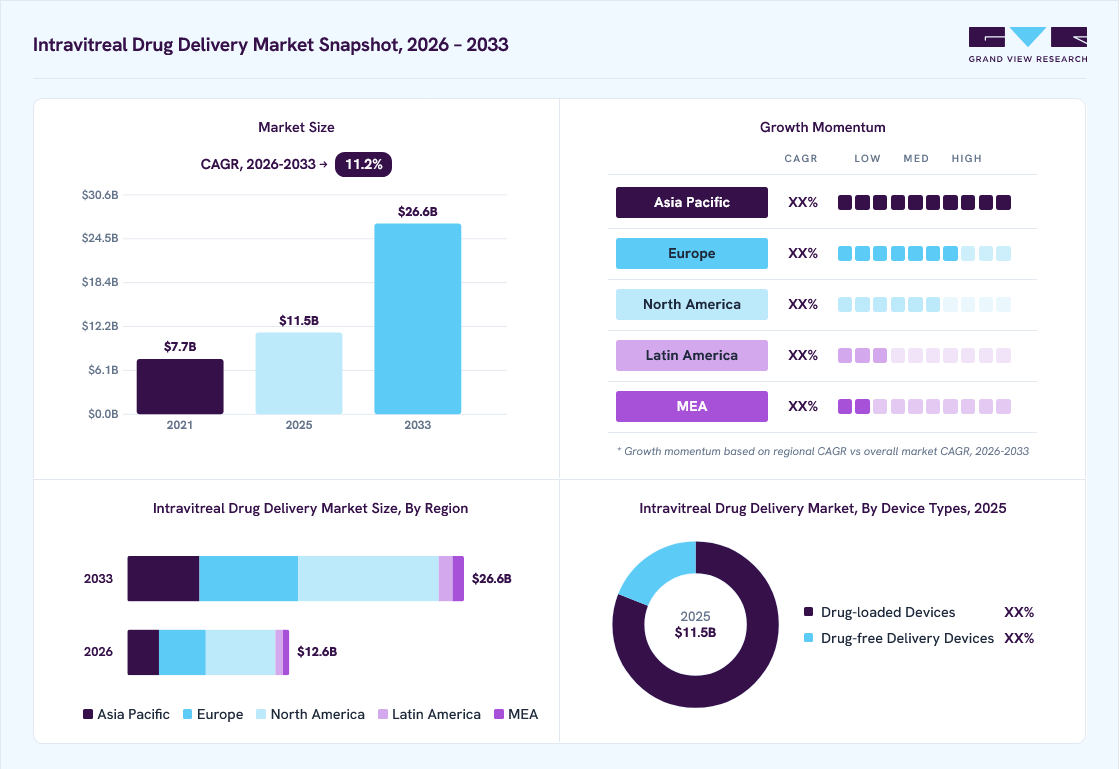
The global intravitreal drug delivery market size was valued at USD 11.5 billion in 2025 and is projected to grow from USD 12.6 billion in 2026 to USD 26.6 billion by 2033, at a CAGR of 11.2% from 2026 to 2033. North America dominated the market, accounting for the revenue share of 43.4% in 2025. The market is expected to experience sustained growth, supported by the increasing burden of retinal disorders, growing use of intravitreal therapies, and continued development of drug delivery systems designed to improve treatment duration, administration accuracy, safety, and patient convenience.
 Source: Grand View Research, IR Documents, Primary Interviews, Paid DatabasesTo learn more about this report,
 Download Free Sample Report
Key Market Trends & Insights
- By product: Drug-loaded devices segment held the largest market share of 81.1% in 2025.
- By indication: Diabetic macular edema (DME) segment dominated the market with the largest revenue share of 23.3% in 2025.
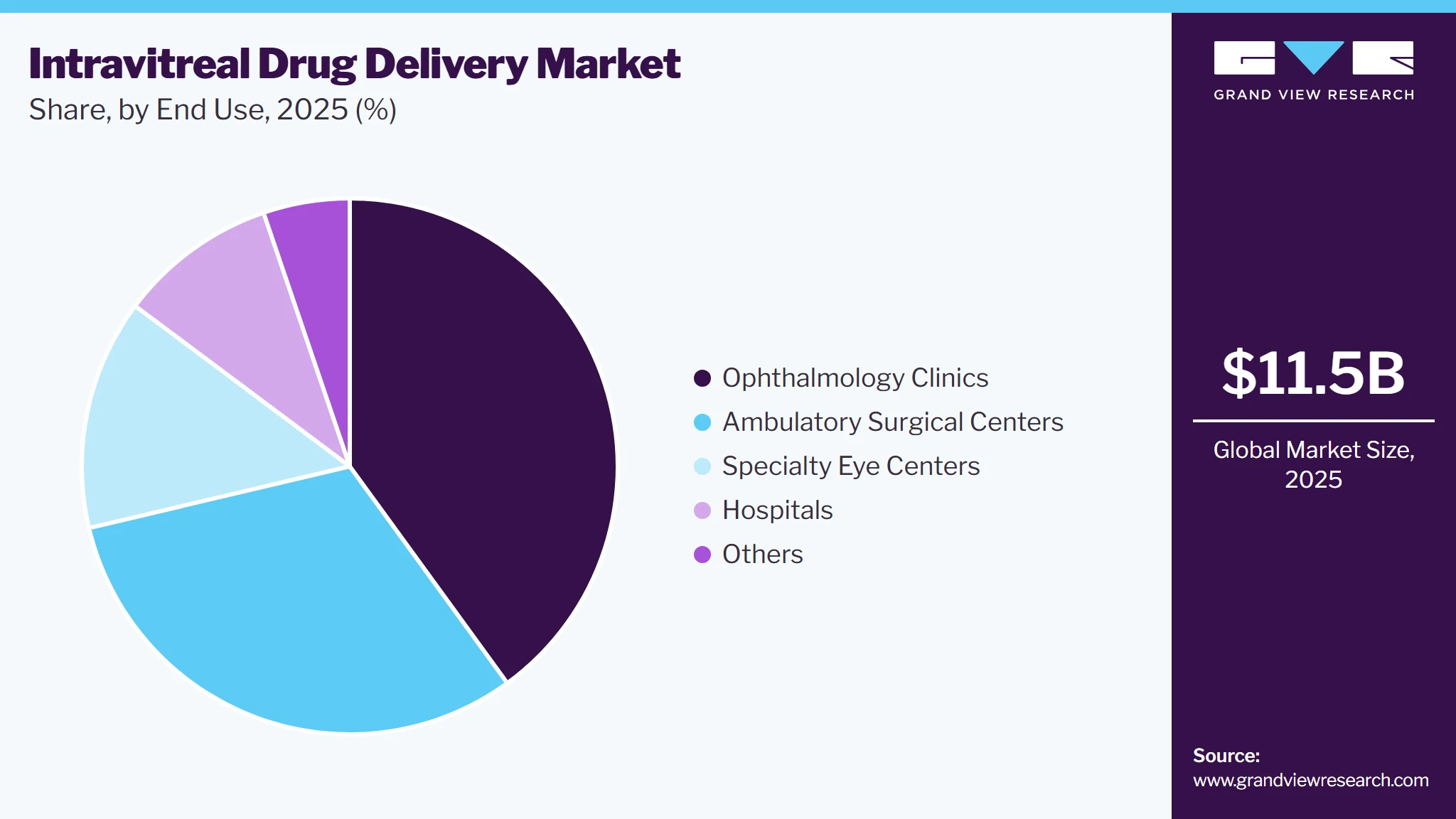
- By end use: Ophthalmology clinics segment led the market with the largest revenue share of 40.0% in 2025.
Regional Highlights
- Largest regional market: North America (43.4% revenue share, 2025)
- Fastest-growing regional market: Asia Pacific (highest CAGR, 2026-2033)
- By country: The U.S. dominated North America with the largest revenue share in 2025
Market Size & Forecast
- Market size in 2025: USD 11.5 Billion
- Estimated market size in 2026: USD 12.6 Billion
- Projected market size by 2033: USD 26.6 Billion
- CAGR (2026-2033): 11.2%
Three ways to get this report
Buy it, customize it, or ask a question.Ask an Analyst
Analyst response in 1 business day
- AccessReport author, directly
- Reply timeWithin 1 working day
- No sales callDirect answer only
- FormatEmail reply
- CostFree, no cost
Get the Full Report
What the study covers
- FormatsPDF · Excel · Dashboard
- Timeline2026–2033 annual, 2025 base
- Coverage20+ countries, 5 regions
- Companies10+ key players profiled
Customize the Report
20% free customization
- IncludeCountries, segments, points
- TailorTo your product definition
- ExtendDeeper competitor detail
- OrA fully bespoke study
- Turnaround5–10 working days
Wet age-related macular degeneration (AMD), diabetic macular edema (DME), retinal vein occlusion (RVO), ocular inflammation and uveitis, and geographic atrophy represent important clinical applications. Repeated intravitreal injections remain central to the treatment of several retinal diseases, creating recurring demand for drug-loaded delivery presentations, prefilled syringes, and injection-related devices.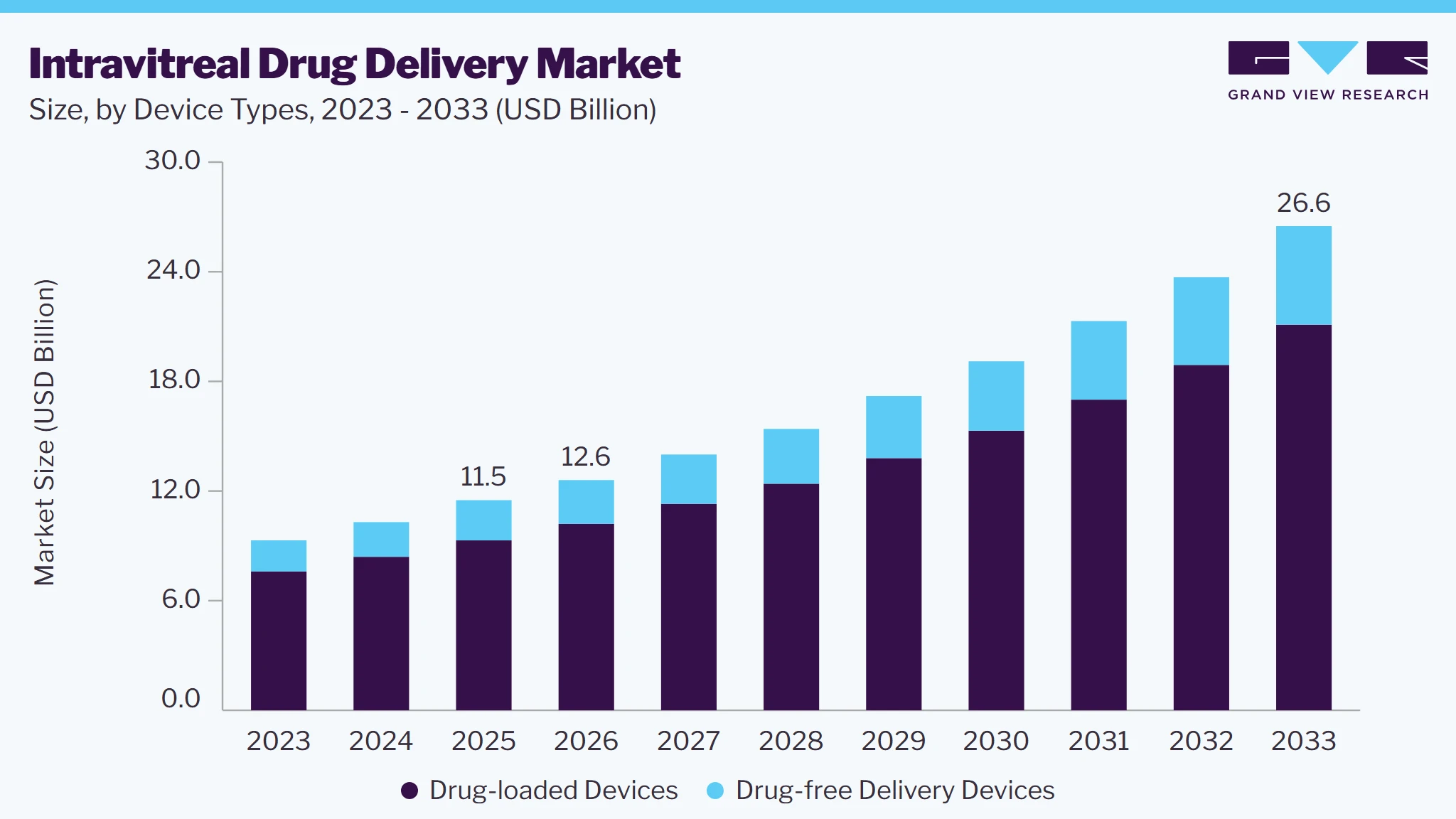 To learn more about this report, Download Free Sample Report
The market is also evolving beyond conventional single-use injection presentations toward sustained-release implants and refillable port delivery systems designed to reduce treatment frequency for eligible patients. The FDA-approved SUSVIMO refillable ocular implant for wet AMD, along with established intravitreal implants such as OZURDEX, illustrates the range of delivery approaches available for different clinical indications. At the same time, drug-free delivery devices, including injection guides, integrated needle-delivery systems, and safety needles, are gaining relevance as healthcare providers seek to standardize administration, improve handling, and reduce procedural risks.
The intravitreal drug delivery industry is shaped by two related demand pools. The first comprises drug-loaded delivery products, including prefilled syringes, biodegradable and non-biodegradable implants, and refillable port delivery systems. These products serve established therapeutic pathways and emerging long-acting treatment approaches. The second comprises drug-free delivery devices, including injection guides, integrated needle-delivery systems, and safety needles, which support the physical administration of intravitreal therapies. Market development therefore depends on both the evolution of retinal pharmacotherapy and improvements in the devices used to administer treatments.
Market Dynamics
The market is supported by the growing need for long-term management of retinal diseases, increasing use of anti-VEGF therapies, and the introduction of new treatments for previously underserved indications. Many patients with wet AMD and DME require repeated injections to maintain treatment response, creating recurring demand for drug delivery presentations. The market is also evolving as manufacturers develop higher-concentration formulations, prefilled presentations, sustained-release implants, and refillable delivery platforms intended to improve convenience or reduce administration frequency.
In parallel, healthcare providers are seeking efficient intravitreal injection workflows that can accommodate growing treatment volumes while maintaining procedural safety. Drug-free devices can help standardize needle positioning, handling, and administration, while safety-oriented designs may reduce the risk of accidental needlestick injuries. However, adoption depends on clinical usability, compatibility with existing products, reimbursement, regulatory clearance, and the willingness of ophthalmology practices to change established injection protocols.
The growing use of intravitreal therapy for retinal disorders is a primary driver of the market growth. Wet AMD and DME frequently require ongoing pharmacological management, and treatment schedules can involve repeated injections over extended periods. As a result, the continued use of intravitreal therapies generates recurring demand for drug-loaded presentations, including prefilled syringes and other injection-ready products. The FDA-approved Eylea product range and its approved prefilled-syringe presentations illustrate the established role of ready-to-administer intravitreal products. The availability of aflibercept biosimilars in intravitreal presentations also demonstrates the expansion of the therapeutic product landscape.
The introduction of treatments for geographic atrophy is creating an additional area of market development. Unlike wet AMD, geographic atrophy historically had fewer pharmacological options to slow disease progression. The approval of intravitreal treatments such as SYFOVRE and IZERVAY has established a new treatment pathway involving repeated administration. These developments support the potential for geographic atrophy to become a faster-growing indication, although actual growth will depend on diagnosis rates, treatment eligibility, adoption, reimbursement, and the utilization of associated delivery presentations.
The market is also benefiting from interest in sustained-release delivery technologies. Refillable port delivery systems and intravitreal implants are designed to provide prolonged drug delivery, potentially reducing the frequency of conventional injections for selected indications. Such systems may improve treatment convenience and reduce the burden associated with repeated clinic visits. However, these approaches involve different clinical, procedural, and economic considerations and should not be assumed to replace conventional injections across all patient groups.
High treatment costs and the financial burden of long-term retinal care may limit market expansion. The overall cost of intravitreal treatment can include the pharmaceutical product, delivery presentation, clinical administration, monitoring, and follow-up. Although prefilled syringes and integrated delivery systems can simplify certain workflow steps, their adoption may be constrained where procurement budgets, reimbursement, or patient affordability favor existing alternatives.
Procedural risks also remain relevant because intravitreal administration requires appropriate aseptic technique and careful handling. Potential complications, including endophthalmitis, retinal detachment, intraocular pressure changes, and injection-related injury, underscore the need for appropriate training and standardized procedures. A survey of retina specialists identified opportunities to improve intravitreal delivery practices, including the development of guarded needles for ocular drug administration.
The uptake of sustained-release implants and refillable port delivery systems may be limited by their more complex placement or refill procedures, indication-specific eligibility criteria, and device-related risks. Meanwhile, drug-free accessories must demonstrate sufficient clinical or operational benefit to justify the additional purchase cost when practices already have established injection protocols.
Market Concentration & Characteristics
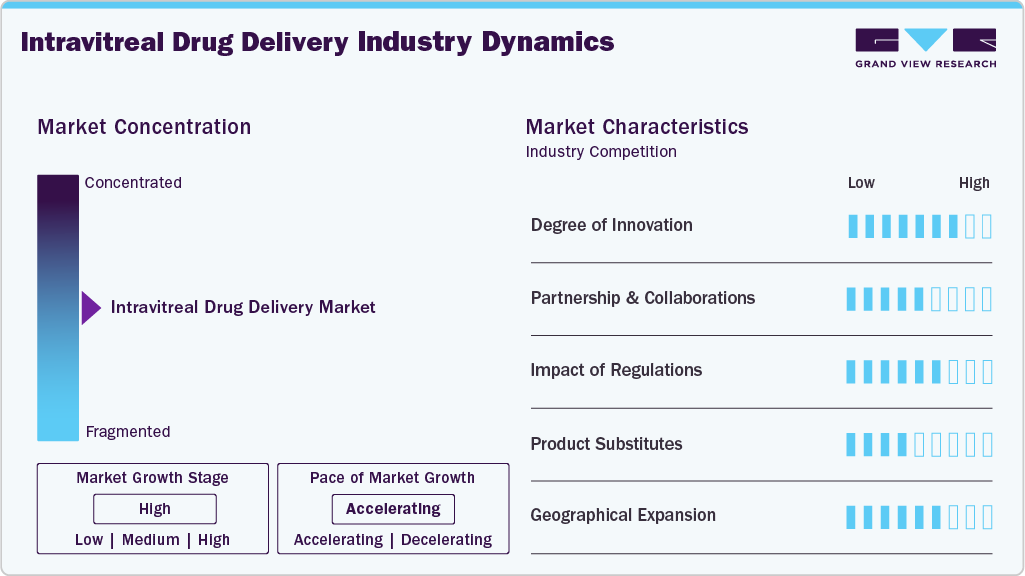
The intravitreal drug delivery industry comprises pharmaceutical manufacturers, drug-device developers, ophthalmic device manufacturers, contract manufacturers, and specialist distributors. Competition is shaped by therapeutic efficacy, dosing frequency, formulation stability, injection convenience, device reliability, safety, regulatory approval, and compatibility with clinical workflows. Drug-loaded products are heavily influenced by the availability of approved medicines and their delivery formats, while drug-free devices compete on usability, standardization, procedural efficiency, and safety features.
The market includes both mature, high-volume delivery formats and emerging technologies. Prefilled syringes and conventional injection presentations serve established treatment pathways, whereas sustained-release implants and refillable port delivery systems aim to reduce treatment burden by providing longer-duration delivery. Drug-free injection guides, integrated needle-delivery systems, and safety needles represent a separate but complementary segment of the market.
 To learn more about this report, Download Free Sample Report
Innovation is focused on reducing injection burden, improving drug-delivery duration, simplifying administration, and strengthening procedural safety. Sustained-release implants and refillable port delivery systems are designed to provide longer-duration delivery for eligible patients, while prefilled syringes can reduce the preparation steps involved in drawing up medication from a vial. Innovations in needle design, injection guides, and integrated delivery systems seek to support consistent positioning, handling, and administration.
The development of drug-free delivery devices is particularly relevant to the procedural side of the market. Injection guides can support repeatable needle positioning, while integrated needle-delivery systems may simplify the connection between the delivery component and the injection process. Safety needles and guarded designs seek to reduce accidental needlestick exposure. These technologies may be particularly valuable in high-volume ophthalmology practices, although adoption will depend on device usability, training requirements, clinical evidence, and compatibility with existing workflows.
Partnerships between pharmaceutical companies, ophthalmic device manufacturers, drug-delivery specialists, and contract manufacturing organizations are important to the development of intravitreal delivery technologies. Drug-loaded products require coordinated development of the formulation, primary container, delivery mechanism, sterilization process, and packaging. For sustained-release systems, collaboration may also be needed across implant engineering, drug-release performance, surgical or refill procedures, and long-term clinical evaluation.
For drug-free delivery devices, collaboration with ophthalmologists and retina specialists can help identify practical needs related to needle handling, positioning, injection consistency, and staff safety. Partnerships with distributors and specialist ophthalmic suppliers are also important for reaching hospitals, ophthalmology clinics, ASCs, and specialty eye centers. Commercial success depends on demonstrating a clear clinical or operational advantage rather than relying on device novelty alone.
Regulation has a high impact on the intravitreal drug delivery industry because drug-loaded products and drug-free delivery devices may follow different regulatory pathways. Drug-loaded products require appropriate authorization for the medicinal product and its delivery presentation, including evaluation of product quality, sterility, safety, efficacy, container compatibility, and labeling. Drug-device combination products may require additional assessment of the delivery system and its interaction with the drug.
Drug-free injection guides, safety needles, and integrated delivery devices are subject to medical-device requirements applicable in their target markets. Manufacturers must address design validation, biocompatibility where relevant, sterility, packaging integrity, usability, and risk management. Regulatory requirements differ across the U.S., Europe, China, Japan, and other markets, affecting launch timing and commercial access.
Regulation is particularly important for refillable port delivery systems and implants because these technologies involve device placement, ongoing maintenance or refill procedures, and potential device-related complications. Approved indications and labeling should therefore be evaluated on a product-by-product basis rather than generalized across the entire implant category.
Key substitutes include vial-based anti-VEGF drugs administered with a separate syringe and needle, compounded bevacizumab, aflibercept and ranibizumab biosimilars, longer-acting drugs that reduce injection frequency, repeated bolus injections in place of sustained-release implants and port delivery systems, suprachoroidal and corticosteroid injections, laser photocoagulation, vitrectomy, and, over the longer term, gene therapy. For drug-free devices, the main substitute is freehand injection using a standard speculum, calipers, and conventional needles and syringes, along with reusable surgical instruments and competing guide brands.
The primary substitution occurs when providers or payers choose lower-cost vials or compounded bevacizumab over branded prefilled syringes, or opt for treat-and-extend regimens with durable drugs such as Eylea HD and Vabysmo instead of implants and refillable systems. For drug-free devices, substitution occurs when clinics find that standard instruments are sufficient and see little added value in single-use guides or integrated needle systems. However, rising prefilled-syringe conversion, growth in nurse-led injection services, needlestick-safety requirements, and the added durability of port delivery systems and sustained-release implants can reduce direct substitution by positioning these devices as complementary to, rather than replacements for, existing injection practices.
Regional expansion is supported by the increasing burden of retinal disease, improvements in ophthalmic diagnostics, greater access to specialist eye care, and the availability of newer intravitreal therapies. Markets with established retinal services and reimbursement pathways are expected to drive demand for drug-loaded delivery products, while investment in ophthalmology infrastructure and outpatient procedural capacity may create opportunities for drug-free delivery devices.
North America benefits from an established ophthalmic pharmaceutical and medical-device ecosystem, while Europe combines mature specialist care with country-specific differences in reimbursement and service delivery. Asia Pacific presents opportunities associated with its large population base and expanding eye-care infrastructure, although affordability and access vary substantially by country. Latin America and the Middle East & Africa offer additional opportunities as specialist care expands, but adoption may be affected by reimbursement, product availability, and uneven distribution of ophthalmologists and retinal services.
Analyst Perspective
The intravitreal drug delivery market is expected to grow as retinal disease management relies on pharmacological treatments and manufacturers explore alternative delivery methods. Drug-loaded devices are likely to remain the largest segment due to established therapies and recurring treatment needs. Drug-free devices may grow faster by improving administration, workflow efficiency, and procedural safety. Diabetic macular edema (DME) is expected to remain the leading indication due to the established use of intravitreal treatments. Geographic atrophy may experience faster growth as approved therapies expand treatment options. Ophthalmology clinics are likely to remain the largest end-use segment, while ambulatory surgical centers (ASCs) may grow faster as suitable procedures shift to dedicated outpatient settings. These projections require validation using country-level procedure volumes, product mix, reimbursement patterns, and device-specific revenue.
Device Type Insights
The drug-loaded devices segment held the largest revenue share of 81.1% in 2025, supported by their direct role in delivering pharmacological treatments for wet AMD, DME, RVO, ocular inflammation, uveitis, and geographic atrophy. The segment includes prefilled syringes, biodegradable and non-biodegradable implants, and refillable port delivery systems. Prefilled syringes benefit from their role in established injection workflows, while implants and refillable systems provide alternative delivery approaches for selected indications. The recurring treatment needs associated with retinal disease support demand for injection-ready products. Prefilled presentations can simplify preparation and reduce certain handling steps, while sustained-release products aim to reduce the frequency of conventional injections. The mix of products will depend on approved indications, treatment protocols, pricing, reimbursement, and physician preference.
The drug-free delivery devices segment is anticipated to grow at the fastest CAGR during the forecast period, supported by increasing focus on improving intravitreal injection workflow, administration consistency, and procedural safety. This segment includes injection guides, integrated needle-delivery systems, and safety needles. These devices can support standardized needle positioning, simplify handling, and potentially reduce the risk of accidental needlestick injuries during repeated procedures. Intravitreal injection is a high-volume ophthalmic procedure, and practice-pattern research has identified the need for improved delivery tools, including guarded needle designs. This provides a rationale for further development and adoption of drug-free devices. Growth will nevertheless depend on clinical acceptance, device compatibility, evidence of practical benefit, procurement economics, and whether new products can be integrated into existing injection protocols without adding excessive complexity.
Indication Insights
The diabetic macular edema (DME) segment dominated the market, accounting for the largest revenue share of 23.3% in 2025, driven by the need for ongoing retinal treatment among eligible patients with diabetes-related macular edema. Intravitreal pharmacological therapies play an established role in DME management, creating demand for repeated injection presentations and related delivery devices. The need for ongoing monitoring and treatment supports continued use across ophthalmology clinics, hospitals, and specialty eye centers.
Demand is also supported by the established availability of multiple intravitreal therapeutic options, including anti-VEGF products and corticosteroid implants for selected patients. OZURDEX, for example, is indicated for DME, macular edema following RVO, and posterior-segment non-infectious uveitis. The segment's share will depend on treatment prevalence, clinical practice, reimbursement, and the extent to which delivery technologies are adopted in routine care. OZURDEX prescribing information.
The geographic atrophy segment is projected to grow at the fastest CAGR during the forecast period. Growth is expected to depend on diagnosis rates, patient eligibility, reimbursement, physician adoption, and treatment persistence. Since geographic atrophy has distinct clinical characteristics and treatment requirements compared with wet AMD, its delivery demand should be estimated separately rather than inferred directly from the much larger established wet AMD treatment population.
End Use Insights
The ophthalmology clinics segment led the market with the largest revenue share of 40.0% in 2025, owing to their capability for routine diagnosis, treatment, and longitudinal follow-up. As the procedures are minimally invasive and require limited hospital stay, these clinics account for the largest patient flow.
 To learn more about this report, Download Free Sample Report
The ambulatory surgical centers segment is expected to grow at the fastest CAGR during the forecast period, as healthcare systems seek to expand outpatient capacity and manage appropriate ophthalmic procedures outside traditional hospital settings. Dedicated procedure rooms and standardized workflows can support high-volume intravitreal administration, depending on local regulations, infrastructure, and clinical practice. The use of outpatient clean rooms and office-based settings for intravitreal injections has been documented across multiple countries, although requirements differ by jurisdiction.
ASCs may offer opportunities for efficient scheduling, procedure throughput, and standardized use of delivery devices. Adoption will depend on reimbursement, facility economics, local rules governing where injections may be performed, and the extent to which intravitreal treatment is shifted from hospital-based settings to dedicated outpatient facilities.
Regional Insights
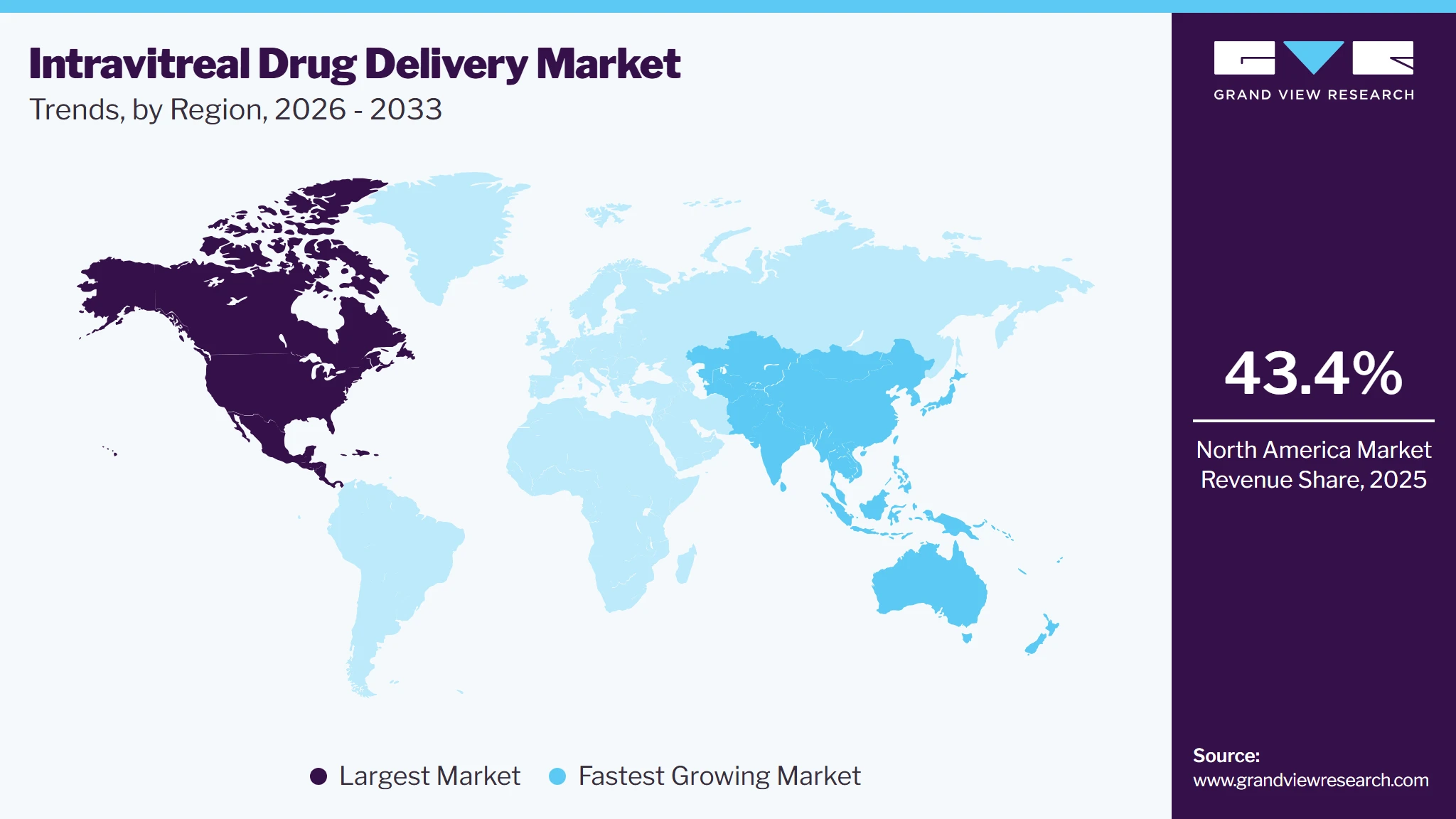
The North America intravitreal drug delivery market held the largest revenue share of 43.4% in 2025, supported by established ophthalmic pharmaceutical development, advanced retinal care infrastructure, and access to a broad range of intravitreal therapies. The region benefits from the presence of major pharmaceutical and medical-device companies and a relatively developed market for prefilled syringes, sustained-release implants, and specialty ophthalmic devices.
 To learn more about this report, Download Free Sample Report
U.S. Intravitreal Drug Delivery Market Trends
The intravitreal drug delivery marketin theU.S. accounted for the largest market revenue share in North America in 2025, supported by established treatment pathways for wet AMD, DME, RVO, ocular inflammation, and geographic atrophy. In the United States, the National Eye Institute estimates that approximately 11 million people have AMD. This highlights the sizeable population that may require retinal assessment and, in eligible cases, treatment. Furthermore, regulatory approvals for newer intravitreal therapies and the availability of prefilled presentations and biosimilar alternatives are shaping the delivery landscape. The market also offers opportunities for sustained-release systems and drug-free devices that address injection workflow and procedural safety.
Europe Intravitreal Drug Delivery Market Trends
The intravitreal drug delivery market inEurope is supported by mature ophthalmic services, aging populations, and the use of pharmacological treatments for retinal disease. However, adoption varies by country based on reimbursement, health technology assessment, treatment guidelines, procurement practices, and the organization of ophthalmology services. The region offers opportunities for prefilled presentations, sustained-release systems, and procedural devices that can support standardized injection workflows.
The UK intravitreal drug delivery marketis supported by established retinal services and the use of intravitreal treatment pathways within public and private ophthalmology care. Demand for efficient injection workflows is relevant as providers manage ongoing treatment and follow-up requirements. Adoption of newer delivery systems will depend on clinical evidence, commissioning and reimbursement decisions, and cost-effectiveness.
The intravitreal drug delivery market in Germany is characterized by an established healthcare system, specialist ophthalmology infrastructure, and access to advanced medical technologies. Demand for drug-loaded products is linked to treatment requirements for retinal disease, while adoption of delivery devices is influenced by clinical workflow, procurement decisions, and the benefits of standardized administration.
Asia Pacific Intravitreal Drug Delivery Market Trends
The intravitreal drug delivery marketin the Asia Pacificis expected to grow at the fastest CAGR during the forecast period, supported by the region's very large Type 2 diabetes population, increasing obesity prevalence, improving diagnosis, and expanding healthcare infrastructure. Adoption varies widely across countries, depending on healthcare expenditure, access to specialist ophthalmologists, reimbursement, local manufacturing, and affordability. Opportunities exist for both established drug-loaded products and drug-free delivery devices, particularly where treatment volumes and specialist capacity are expanding.
The China intravitreal drug delivery market is expanding alongside the country's large diabetes burden, increasing healthcare expenditure, increasing demand for retinal disease treatment, and the development of domestic pharmaceutical and medical-device capabilities. Local product availability, pricing, hospital procurement, and regulatory approval influence adoption. The market offers opportunities for injection-ready products and delivery devices that can support standardized administration across specialist settings.
The intravitreal drug delivery market in Japan is supported by an established healthcare system, an aging population, and advanced ophthalmic services. Clinical evidence, device reliability, product quality, and treatment convenience influence product selection. Sustained-release delivery technologies and injection-ready presentations may offer opportunities where their benefits align with local treatment protocols.
Latin America Intravitreal Drug Delivery Market Trends
The intravitreal drug delivery marketin theLatin America presents growth opportunities as ophthalmology services expand and access to retinal disease treatment improves. Market development is influenced by healthcare expenditure, reimbursement, imported product pricing, specialist availability, and public-private differences in access. Cost-effective drug-loaded products and delivery devices that support efficient clinical workflows may be particularly relevant.
The Brazil intravitreal drug delivery marketis supported by a large population and established public and private ophthalmology services. Access to intravitreal treatment varies according to geography, reimbursement, and healthcare setting. Product pricing, public procurement, and the availability of specialist retinal services influence adoption of newer delivery technologies.
Middle East & Africa Intravitreal Drug Delivery Market Trends
The intravitreal drug delivery market in theMiddle East & Africa (MEA) presents an unevenly developed opportunity, supported by high burdens of diabetes and obesity, disparities in healthcare access, and the concentration of specialist ophthalmology services in higher-investment healthcare systems. WHO Eastern Mediterranean regional material, drawing on the IDF Diabetes Atlas 2025, reported a 2024 age-standardized diabetes prevalence of 23.1% in Saudi Arabia and 25.6% in Kuwait. This represents a future opportunity for the intravitreal drug delivery market in the region, especially indicated for DME.
The Saudi Arabia intravitreal drug delivery marketis supported by healthcare investment and the development of specialist ophthalmology services. Demand for retinal treatment and access to advanced medical products create opportunities for injection-ready therapies, implants, and procedural devices. Reimbursement, procurement, and the distribution of specialist services influence adoption.
Key Intravitreal Drug Delivery Company Insights
The intravitreal drug deliveryindustry includes pharmaceutical companies developing drug-loaded products, manufacturers of sustained-release implants and refillable delivery systems, and specialist ophthalmic device manufacturers supplying injection guides and related accessories. Competitive positioning varies by device type: drug-loaded products compete on therapeutic presentation, delivery duration, safety, and treatment convenience, whereas drug-free devices compete on handling, procedural consistency, and usability.
Key Intravitreal Drug Delivery Companies
The following key companies have been profiled for this study on the intravitreal drug delivery market:
-
Surgitrac Instruments
-
FCI
-
Regeneron
-
Roche
-
Allergan/AbbVie
-
ANI Pharmaceuticals
-
Duckworth & Kent
-
BVI
-
Katalyst Surgical
-
OcuJect, LLC
Competitive Benchmarking
Category
Operating Strategies
Competitive Edge
Weakness
Established Players (Regeneron, Roche, Allergan/AbbVie)
Established players are shifting intravitreal therapy from vials toward prefilled syringes, longer-interval formulations, and sustained-delivery platforms. Roche reports prefilled-syringe conversion for Vabysmo at above 95% in the U.S. and above 70% in the EU, and Regeneron is moving patients from Eylea to Eylea HD. Roche is expanding Susvimo (port delivery) into DME and diabetic retinopathy, and has received CE mark approval for its Contivue platform, while Allergan/AbbVie supplies the Ozurdex corticosteroid implant. Commercialization is often split by territory (Regeneron with Bayer for Eylea outside the U.S.; Genentech with Novartis for Lucentis outside the U.S.).
Blockbuster franchises (Eylea and Eylea HD combined global net sales of about $7.9 billion in 2025; Vabysmo CHF 4.1 billion), global commercial and payer infrastructure, extensive clinical evidence, and the ability to develop the drug and the delivery device together. Owning the prefilled syringe and port platform lets them protect share through convenience and dosing durability, not price alone.
Eylea U.S. net sales fell 42% in 2025 due to biosimilar pressure, the shift to Eylea HD, and share loss to compounded bevacizumab amid patient affordability pressures. High drug prices, a heavy injection burden, and the early commercial stage of port delivery (Susvimo quarterly sales are still in the low millions of CHF after its earlier recall) limit the growth of sustained-delivery devices. The Ozurdex implant portfolio is mature.
Emerging Players (ANI Pharmaceuticals, FCI, Surgitrac Instruments, Duckworth & Kent, BVI, Katalyst Surgical, OcuJect, LLC)
This group splits into a specialty implant company and drug-free device suppliers. ANI acquired Alimera Sciences in 2024 and is consolidating its Iluvien and Yutiq fluocinolone implants under the Iluvien brand, which now includes a new chronic non-infectious posterior uveitis indication. The device suppliers sell injection guides (FCI’s Precivia, Duckworth & Kent’s Doi-Uematsu guide, BVI’s Malosa guide, Katalyst’s RAVI guide), safety needles (OcuJect’s VitreJect and SteriCap), and procedure packs and distribution (Surgitrac supplies injection packs and offers SP.eye). They typically sell through distributors, tenders, and hospital call-off contracts, and target nurse-led injection services.
Niche specialization, low-cost single-use or reusable products, and established relationships with clinics and hospital procurement. BVI and Katalyst benefit from broader ophthalmic portfolios. ANI brings an established retina sales team and a multi-year (up to 36-month) implant franchise.
Small revenue scale and limited product-level disclosure. Low switching costs and a free substitute (freehand injection with standard instruments) make guides and safety needles easy to skip or commoditize. Distributor dependence, tender price pressure, and limited clinical differentiation restrict pricing power. ANI cut its 2025 Iluvien and Yutiq guidance from $97–103 million to $73–77 million, citing Medicare access challenges and sales-team turnover.
Recent Development:
-
In February 2026, Sandoz, one of the global leaders in affordable medicines announced US Food and Drug Administration (FDA) approval for an expanded label for Enzeevu (aflibercept-abzv), to include multiple retinal indications. The most recent approval expands the Enzeevu label indications to include macular edema following retinal vein occlusion (RVO), diabetic retinopathy (DR) and diabetic macular edema (DME), along with the previously approved indication of neovascular (wet) age-related macular degeneration (nAMD).
-
In February 2025, Roche announced the US Food and Drug Administration (FDA) approval for its Susvimo (ranibizumab injection) 100 mg/mL for the treatment of diabetic macular edema (DME). In the company’s financial media release, the delegates claimed:
“Susvimo presents a unique, convenient treatment alternative to routine eye injections for people with a potentially blinding diabetic eye condition.”
– Chief Medical Officer and Head of Global Product Development, MD, PhD Levi Garraway
Intravitreal Drug Delivery Market Report Scope
Report Attribute
Details
Market size in 2025
USD 11.5 billion
Estimated market size in 2026
USD 12.6 billion
Projected market size by 2033
USD 26.6 billion
Growth rate
CAGR of 11.2% from 2026 to 2033
Base year for estimation
2025
Historical data
2021 - 2024
Forecast period
2026 - 2033
Quantitative units
Revenue in USD billion and CAGR from 2026 to 2033
Report coverage
Revenue forecast, company ranking, competitive landscape, growth factors, and trends
Segments covered
Device types, indication, end use, region
Regional scope
North America; Europe; Asia Pacific; Latin America; MEA
Country scope
U.S.; Canada; Mexico; UK; Germany; France; Italy; Spain; Denmark; Sweden; Norway; Japan; China; India; Australia; Thailand; South Korea; Brazil; Argentina; South Africa; Saudi Arabia; UAE; Kuwait.
Key companies profiled
Surgitrac Instruments, FCI, Regeneron, Roche, Allergan/AbbVie, ANI Pharmaceuticals, Duckworth & Kent, BVI, Katalyst Surgical, OcuJect, LLC.
Customization scope
Free report customization (equivalent up to 8 analysts’ working days) with purchase. Addition or alteration to country, regional, and segment scope
Pricing and purchase options
Avail customized purchase options to meet your exact research needs. Explore purchase options
Global Intravitreal Drug Delivery Market Report Segmentation
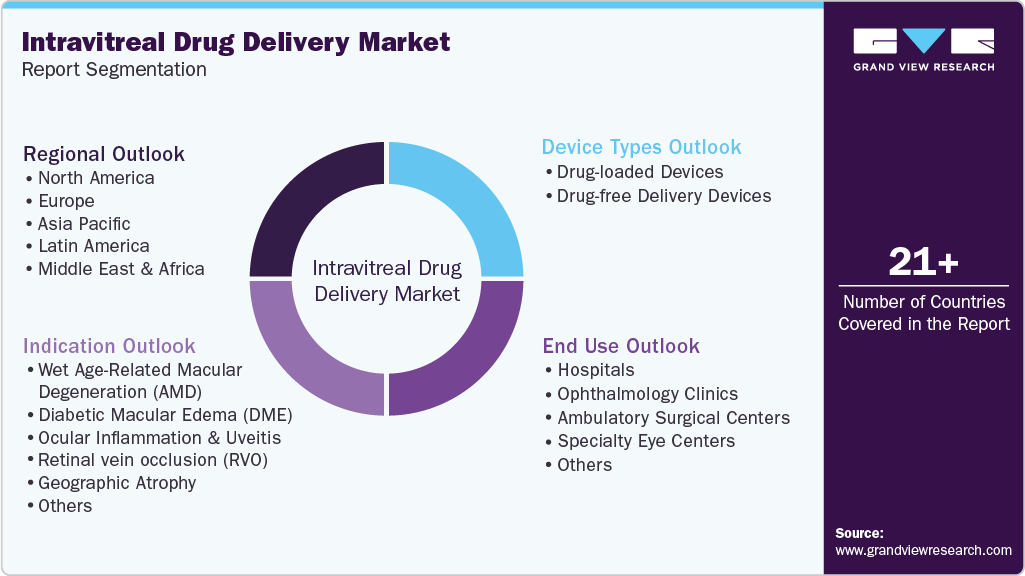
This report forecasts revenue growth at global, regional, and country levels and provides an analysis of the latest industry trends in each of the sub-segments from 2021 to 2033. For this study, Grand View Research has segmented the global intravitreal drug delivery market report based on device types, indication, end use, and region:
 To learn more about this report, Download Free Sample Report
-
Device Types Outlook (Revenue, USD Billion, 2021 - 2033)
-
Drug-loaded Devices
-
Prefilled syringes
-
Implants
-
Biodegradable implants
-
Non-biodegradable implants
-
-
Refillable port delivery systems
-
-
Drug-free Delivery Devices
-
Injection guides
-
Integrated needle-delivery systems
-
Safety needles
-
-
-
Indication Outlook (Revenue, USD Billion, 2021 - 2033)
-
Wet Age-Related Macular Degeneration (AMD)
-
Diabetic Macular Edema (DME)
-
Ocular Inflammation & Uveitis
-
Retinal vein occlusion (RVO)
-
Geographic Atrophy
-
Others
-
-
End Use Outlook (Revenue, USD Billion, 2021 - 2033)
-
Hospitals
-
Ophthalmology Clinics
-
Ambulatory Surgical Centers
-
Specialty Eye Centers
-
Others
-
-
Region Outlook (Revenue, USD Billion, 2021 - 2033)
-
North America
-
U.S.
-
Canada
-
Mexico
-
-
Europe
-
UK
-
Germany
-
France
-
Italy
-
Spain
-
Russia
-
Denmark
-
Sweden
-
Norway
-
-
Asia Pacific
-
China
-
Japan
-
South Korea
-
India
-
Australia
-
Thailand
-
-
Latin America
-
Brazil
-
Argentina
-
-
MEA
-
Saudi Arabia
-
South Africa
-
UAE
-
Kuwait
-
-
Research Methodology
The intravitreal drug delivery marketfigures in this report are based on a proven research process that combines executive interviews with secondary research from proprietary databases, company filings, and recognized regulatory and institutional sources. Market size is built through value-chain sizing—reconciling supply-side and demand-side estimates—and triangulated with bottom-up and top-down approaches. Every estimate passes multiple levels of expert validation before publication, with eachintravitreal drug delivery segment quantified using the revenue-capture definitions in the table below.
Segment Definition
Segment – Device Types
Revenue capture definition
Drug-loaded devices
Revenue attributable to in-scope intravitreal drug delivery products, including prefilled syringes, biodegradable implants, non-biodegradable implants, and refillable port delivery systems. The model must specify whether it captures the finished drug-device product or only the delivery component, and must avoid double-counting drug revenue.
Drug-free delivery devices
Revenue generated by standalone intravitreal delivery accessories or devices that do not contain the active pharmaceutical ingredient.
Segment - Indication
Revenue capture definition
Wet Age-Related Macular Degeneration (AMD)
Revenue attributable to in-scope delivery products used for intravitreal treatment of neovascular or wet AMD.
Diabetic Macular Edema (DME)
Revenue attributable to in-scope delivery products used for intravitreal treatment of diabetic macular edema.
Ocular Inflammation & Uveitis
Revenue attributable to in-scope delivery products used for eligible inflammatory eye conditions, including posterior-segment non-infectious uveitis.
Retinal vein occlusion (RVO)
Revenue attributable to in-scope delivery products used for treatment of macular edema associated with branch or central retinal vein occlusion.
Geographic Atrophy
Revenue attributable to in-scope delivery products used for intravitreal treatment of geographic atrophy secondary to AMD.
Others
Revenue attributable to in-scope delivery products used for other approved or defined indications, including inherited retinal disease and myopic choroidal neovascularization where applicable.
Segment – End Use
Revenue capture definition
Hospitals
Revenue attributable to in-scope delivery products utilized in hospital ophthalmology departments, retinal services, and hospital-based procedure settings.
Ophthalmology Clinics
Revenue attributable to in-scope delivery products utilized by independent or affiliated ophthalmology clinics providing retinal diagnosis, treatment, and follow-up.
Ambulatory Surgical Centers
Revenue attributable to in-scope delivery products utilized in eligible outpatient surgical or procedure centers.
Specialty Eye Centers
Revenue attributable to in-scope delivery products utilized by dedicated eye hospitals and specialized retinal or ophthalmic treatment centers not already classified under the other end-use categories.
Others
Revenue attributable to other relevant clinical or healthcare settings not covered by the preceding categories.
Estimation Model
Step
Stage
Key Question
Process Steps
Data Sources
01
Scope Definition
What exactly counts as an intravitreal drug delivery device?
1. Define device categories (drug-loaded and drug-free delivery devices).
2. Separate drug-loaded devices from drug-supplied systems with a separate syringe and needle, considering drug strength and geographical scope, including intravitreal injections and systems with implants and catheters.
3. Set inclusion/exclusion criteria. Include regulatory-cleared and approved products, exclude pipeline pre-sales devices and non-intravitreal devices.
4. Segment by device type, indication, and end use. Fit the geographic scope and the temporal scope (base year 2025, forecast 2026 to 2033).
FDA drug and device databases, EMA and MHRA registers, product labels and instructions for use, company filings.
02
Build the Product Base
How many commercial intravitreal drug delivery products are on the market?
1. Build a manufacturer- and brand-level database of profiling syringe brands, implants, and port delivery systems, guides, and delivery systems.
2. Map ownership and territorial rights, including which company books revenue in each region and recent changes in ownership.
3. Estimate the share of each drug sold in prefilled syringes versus vials and unit volumes for implants, pumps, and needles.
4. Check for upcoming approvals and launches, including new syringe presentations, biosimilars, and sustained-release products.
Company annual fillings, FDA and EMA registries, product catalogues, NHS contract registers, FOI responses, and tender notices.
03
Estimate Penetration
How widely are these devices used, and how intensively?
1. Estimate adoption across hospitals, ophthalmology clinics, ambulatory surgical centers, and specialty eye centers.
2. Quantify the shift from vials to prefilled syringes and from repeated bolus injections to implants and port delivery.
3. Estimate procedure volumes by indication (wet AMD, DME, RVO, geographic atrophy, others) and injection frequency, treatment-year, and patient dropouts.
4. Quantify utilization of drug-free devices per injection, including nurse-led injection services and guide adoption rates.
Primary interviews with healthcare providers and hospital procurement officials, along with NHS FOI responses, clinical literature, and registry data
04
Revenue Conversion
How does adoption translate into market revenue?
1. Determine average selling price by device type, list price, and reimbursement prices for drug-loaded products and unit prices for drug-free devices.
2. Calculate revenue from drug-loaded devices using reported net sales by brand, adjusted for distribution margins and from drug-free devices using unit volumes by region.
3. Calculate growth from new indications, conversions (for example, Eylea to Eylea HD and vial to prefilled syringe), biosimilar price erosion, and sustained-release launches.
4. Cross-validate sales by device type and region, and avoid double counting.
CMS average sales price files, BNF and NICE list prices, national reimbursement lists, company filings, distributor price lists, tender and contract values
Delivered Customizations
This report has been delivered with the following In-depth customizations
Client Request
Customization Delivered
Value Adds
Porter Analysis
Conducted a comprehensive Porter’s Five Forces analysis of the intravitreal drug delivery market, evaluating threat of new entrants, supplier power, buyer power, threat of substitutes, and competitive rivalry. The analysis considered FDA and EU MDR/CE regulatory requirements for drug-device combination products, clinical validation and manufacturing costs, dependence on specialized suppliers (glass and polymer syringe barrels, stoppers, needles, implant polymers, titanium and silicone), purchasing decisions of hospitals, retina clinics and ASCs, group purchasing and tender models, alternative treatments (vial-based administration, compounded bevacizumab, biosimilars, longer-acting drugs), product differentiation, pricing, and territorial licensing structures. It also incorporated reimbursement and payment limits, biosimilar price erosion, healthcare spending, and growth in the diabetic and aging populations influencing market entry and expansion decisions.
Enables stakeholders to understand the competitive structure, entry barriers, supplier dependencies (especially in fill-finish and combination-product manufacturing), and purchasing dynamics that shape the intravitreal drug delivery market. The analysis supports strategic decisions regarding partnerships and licensing, device-platform investment, pricing strategy, and market-entry timing.
Competitive Landscape
Conducted a detailed competitive landscape assessment of the intravitreal drug delivery market, comparing leading drug-loaded and drug-free players (Regeneron, Roche, Allergan/AbbVie, ANI Pharmaceuticals, FCI, Surgitrac Instruments, Duckworth & Kent, BVI, Katalyst Surgical, OcuJect) based on device type (prefilled syringes, implants, port delivery, injection guides, integrated needle systems, safety needles), indications, regulatory status, pricing, territorial commercial rights, distribution channels, and product launches. The analysis also evaluated strategies amid prefilled syringe conversion, biosimilar entry, and ownership changes, considering partner structures (such as Regeneron with Bayer and Genentech with Novartis), distributor networks, tender and NHS procurement models, and the competitive response to longer-acting and sustained-release products.
Enables stakeholders to gain a comprehensive understanding of the competitive landscape, benchmark key drug-loaded and drug-free players, and identify strategic growth opportunities. The analysis supports informed decision-making related to product portfolio positioning, licensing and co-development, distributor partnerships, and investment prioritization.
Geographic Analysis
Conducted a comprehensive geographic assessment of the intravitreal drug delivery market across North America, Europe, Asia Pacific, Latin America, and the Middle East & Africa, and the key countries within each, evaluating retinal disease prevalence, intravitreal injection volumes, retina specialist and nurse-led injection capacity, reimbursement and pricing frameworks (such as Medicare, NHS/NICE, and China’s national reimbursement list), biosimilar uptake, regulatory pathways, and procurement models. The analysis also assessed regional growth potential, distributor networks, registration timelines, and market entry opportunities amid evolving pricing and trade conditions.
Enables stakeholders to identify high-potential regions, regional adoption drivers, and market-entry opportunities, as well as pricing, reimbursement, and regulatory risks that influence demand for intravitreal delivery devices. The analysis supports decisions regarding regional expansion, distributor selection, localization, pricing, and resource allocation.
Frequently Asked Questions About This Report
The global intravitreal drug delivery market size was valued at USD 11.5 billion in 2025 and is estimated at USD 12.6 billion in 2026.
The global intravitreal drug delivery market is expected to grow at a CAGR of 11.2% from 2026 to 2033, reaching USD 26.6 billion by 2033.
Based on product, the drug-loaded devices segment held the highest market share of 81.1% in 2025.
North America intravitreal drug delivery market held the largest share of 43.4% of the global market in 2025.
Based on end use, the ophthalmology clinics segment held a leading market share in 2025.
Based on indication, the diabetic macular edema (DME) segment held a leading market share in 2025.
Key factors that are driving the market growth include increasing burden of retinal disorders, growing use of intravitreal therapies, and continued development of drug delivery systems designed to improve treatment duration.
Key companies operating in the market are Surgitrac Instruments, FCI, Regeneron, Roche, Allergan/AbbVie, ANI Pharmaceuticals, Duckworth & Kent, BVI, Katalyst Surgical, OcuJect, LLC.
About the Author(s)
Medical Devices Research Team
Healthcare · Medical DevicesThis report was authored by the medical devices research team at Grand View Research - comprising two research analysts, one senior research analyst, and one industry expert - with specialized expertise in the medical devices segment of the healthcare industry. All findings are based on proprietary healthcare databases, executive interviews, and regulatory analysis, subject to internal peer review prior to publication.
Last Updated:
Speak to Analyst

Customize this report to your needs - add regions, segments, or data points, with 20% free customization.
Or view our licence options:


ISO 9001:2015 & 27001:2022 Certified
We are GDPR and CCPA compliant! Your transaction & personal information is safe and secure. For more details, please read our privacy policy.


