
- Home
- »
- Medical Devices
- »
-
Investigational New Drug CDMO Market Report, 2026-2033GVR Report cover

Investigational New Drug CDMO Market (2026 - 2033)
Size, Share & Trends Analysis Report By Service (Contract Development, Contract Manufacturing), By End Use (Pharmaceutical Companies, Biotech Companies), By Region, And Segment Forecasts
Market Size, 2025
$5.4BMarket Estimate, 2026
$5.5BMarket Forecast, 2033
$10.4BCAGR, 2026–2033
8.7%Investigational New Drug CDMO Market Summary
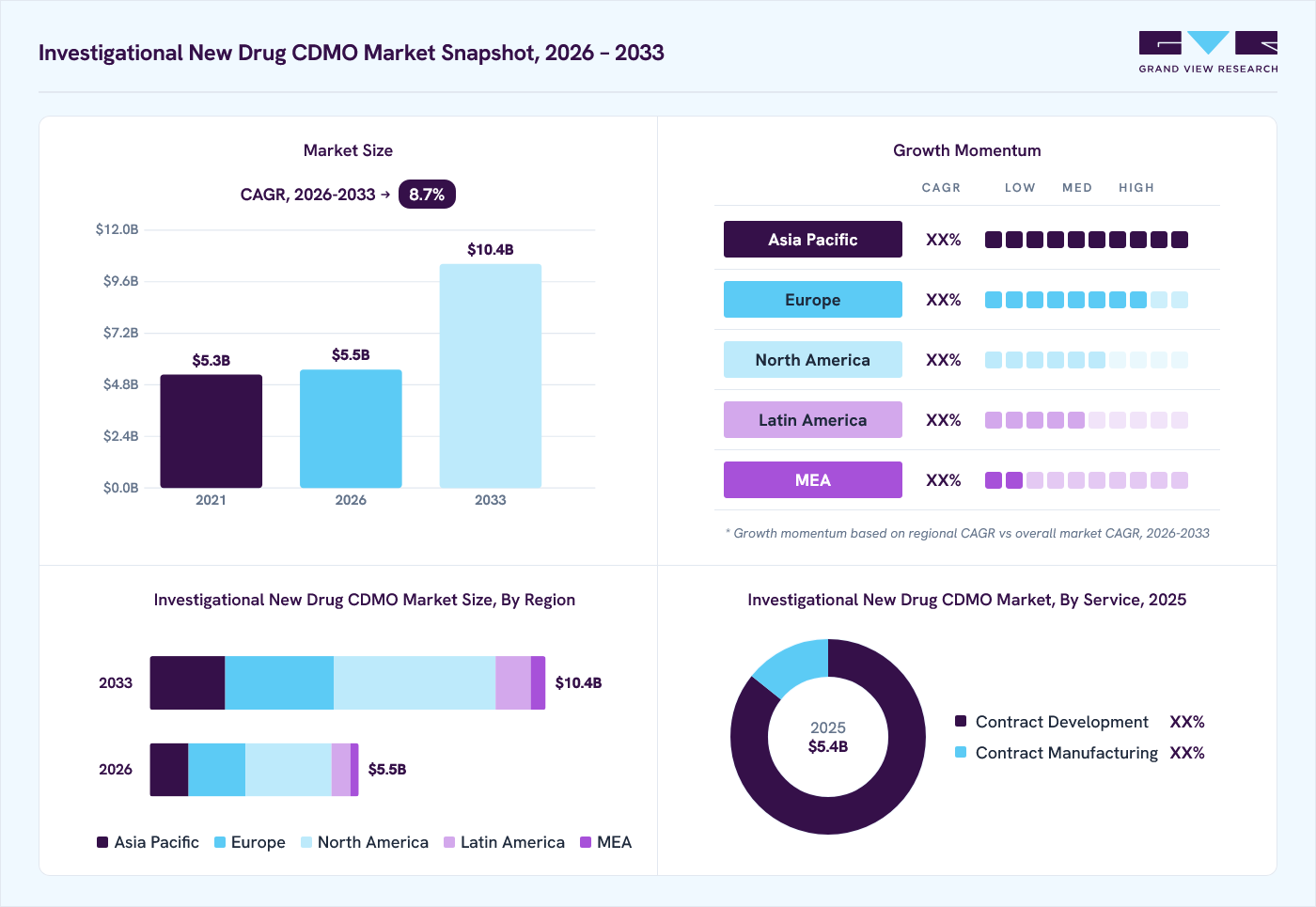
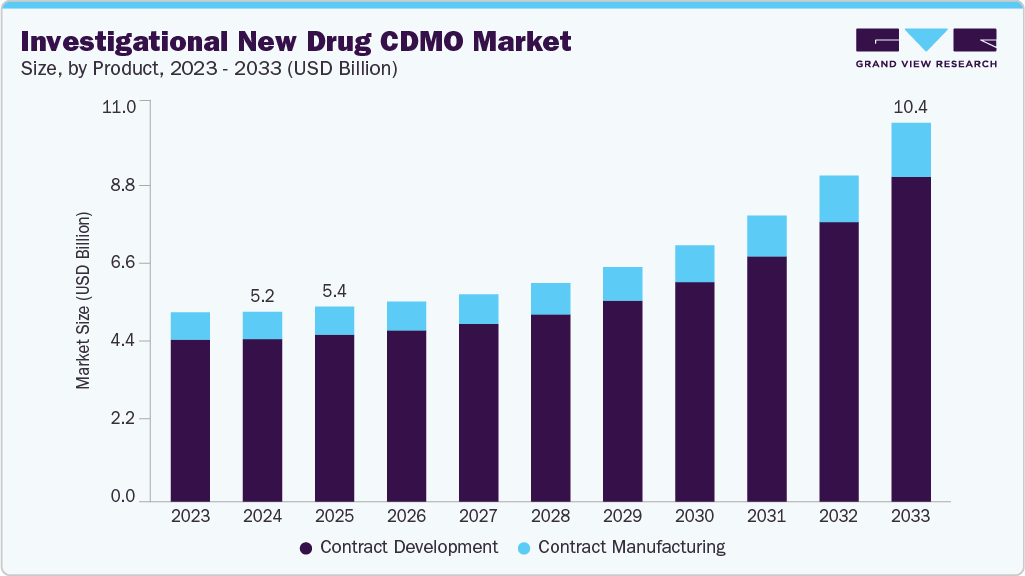
The global investigational new drug CDMO market size was valued at USD 5.4 billion in 2025 and is projected to grow from USD 5.5 billion in 2026 to USD 10.4 billion by 2033, at a CAGR of 8.7% from 2026 to 2033. North America dominated the market, accounting for a revenue share of 41.1% in 2025. The investigational new drug CDMO market is anticipated to witness strong growth over the forecast period, driven by the increasing clinical development of advanced therapies, rising investigational new drug applications, expanding outsourcing by biotechnology companies, growing demand for integrated CMC development and GMP manufacturing services, and increasing investments in specialized biomanufacturing infrastructure.
 Source: Grand View Research, IR Documents, Primary Interviews, Paid DatabasesTo learn more about this report,
 Download Free Sample Report
Key Market Trends & Insights
- By service: Contract development segment held the largest share of 85.6% in 2025.
- By end use: Pharmaceutical companies segment held the largest share of 70.3% in 2025.
Regional Highlights
- Largest regional market: North America (41.1% revenue share, 2025)
- Fastest-growing regional market: Asia Pacific (highest CAGR, 2026-2033)
- By country: The U.S. held the largest market share in 2025.
Market Size & Forecast
- Market size in 2025: USD 5.4 Billion
- Estimated market size in 2026: USD 5.5 billion
- 2033 Projected Market Size: USD 10.4 Billion
- CAGR (2026-2033): 8.7%
Prism AI by Grand View Research Free to tryAsk a question about the investigational new drug CDMO market✓Every figure cited from GVR research Prefer the report? Download free sample →The market growth is further supported by the rising complexity of biologics, cell and gene therapies, mRNA therapeutics, and viral vector-based products, which require specialized development, analytical, and regulatory expertise. The limited in-house manufacturing capabilities of emerging biotechnology companies are further increasing dependence on experienced CDMOs across preclinical and early clinical development.
The increasing clinical development of advanced therapies remains one of the primary factors driving the investigational new drug CDMO market. The growing pipeline of cell therapies, gene therapies, gene-editing products, and other advanced biologics has increased demand for specialized process development, analytical testing, GMP manufacturing, and regulatory support for investigational new drug submissions. The growing number of early-stage biotechnology companies developing innovative therapies has further increased the outsourcing of early development activities to specialized CDMOs. In addition, complex manufacturing requirements for viral vectors, plasmid DNA, and cell-based products necessitate advanced production platforms and specialized technical expertise, making outsourcing a preferred strategy to speed up clinical development while reducing infrastructure investment.
 To learn more about this report, Download Free Sample Report
Furthermore, the increasing outsourcing of investigational development and manufacturing activities by biotechnology companies is another significant factor supporting market growth. Early-stage biotechnology companies often operate with limited manufacturing infrastructure and internal CMC capabilities, encouraging collaboration with CDMOs that provide integrated development services from process optimization through GMP manufacturing and regulatory documentation. Furthermore, service providers continue to expand their early development capabilities to address growing customer demand. For instance, in January 2026, Aragen launched CHOMax, a platform designed to deliver DNA to an IND, enabling clinical supply within approximately 10 months. The platform integrates cell line development, process development, analytical development, GMP manufacturing, and CMC support, enabling biotechnology companies to accelerate early clinical development.
Market growth is moderated by manufacturing complexity, stringent GMP and regulatory compliance requirements, and limited availability of specialized manufacturing capacity for advanced therapeutics. The expanding pipeline of next-generation biologics, increasing investment in advanced therapy development, and expansion of specialized biomanufacturing infrastructure across emerging regions are expected to create significant opportunities for investigational new drug CDMOs over the coming years. Thus, the investigational new drug CDMO market is expected to experience sustained growth as pharmaceutical and biotechnology companies continue to accelerate early-stage biologic development while increasing reliance on specialized outsourcing partners. The growing demand for integrated IND-enabling services, the expanding advanced therapy pipeline, and continued investment in specialized manufacturing technologies are expected to strengthen the market's long-term growth outlook.
Market Dynamics
The growing number of investigational cell and gene therapies entering clinical development is a major driver of the investigational new drug CDMO market. Biotechnology companies are expanding development programs for CAR T-cell therapies, gene replacement therapies, gene editing products, and regenerative medicines, increasing demand for specialized manufacturing services during preclinical and clinical stages. The growing need for process development, analytical method development, technology transfer, GMP manufacturing, and regulatory documentation is encouraging developers to partner with experienced CDMOs. Furthermore, manufacturing viral vectors, including adeno-associated virus, lentiviral, and retroviral vectors, requires specialized production facilities, advanced analytical capabilities, and strict quality control, making outsourcing a preferred strategy for companies with limited internal manufacturing capacity. The increasing number of investigational new drug applications and expanding clinical trial activity are further increasing demand for flexible manufacturing capacity and specialized development services.
The manufacturing complexity associated with investigational biologics remains a major restraint for the investigational new drug CDMO market. The production of cell therapies, gene therapies, viral vectors, and plasmid DNA requires strict control of raw materials, biological materials, manufacturing processes, and storage conditions throughout development. Autologous cell therapies require patient-specific manufacturing and a chain of identity management, increasing operational complexity across manufacturing and distribution. Furthermore, viral vector production continues to face challenges related to production yield, process scalability, and availability of critical raw materials. Maintaining GMP-compliant manufacturing facilities, advanced analytical laboratories, and highly skilled personnel also increases operational expenditure for CDMOs. The limited availability of specialized manufacturing capacity may result in longer project timelines, higher manufacturing costs, and delays in clinical development programs, particularly for emerging biotechnology companies.
The expanding pipeline of next-generation biologics and advanced therapeutics is creating substantial growth opportunities for the investigational new drug CDMO market. The increasing development of CRISPR-based therapies, base editing technologies, allogeneic cell therapies, induced pluripotent stem cell therapies, and engineered immune cell therapies is increasing demand for specialized development and manufacturing services. Many emerging biotechnology companies continue to outsource process development, viral vector manufacturing, analytical testing, and regulatory support due to limited in-house manufacturing capabilities. Moreover, increasing investments in oncology, rare diseases, regenerative medicine, and in vivo gene editing programs are expected to increase manufacturing requirements across all phases of clinical development. The expansion of advanced biomanufacturing infrastructure across the Asia Pacific and the Middle East is further creating opportunities for regional manufacturing partnerships, capacity expansion, and broader service offerings, supporting the continued growth of investigational biologics and advanced therapy development worldwide.
Analyst Perspective
The investigational new drug CDMO market is experiencing strong growth, driven by rising investigational new drug applications, increasing pharmaceutical and biotechnology R&D investments, and the growing outsourcing of early-stage drug development activities. The expanding pipeline of biologics, cell and gene therapies, mRNA therapeutics, and other advanced modalities is increasing demand for process development, analytical testing, CMC development, GMP manufacturing, and regulatory support services. Furthermore, the continued growth in oncology, rare diseases, autoimmune disorders, and regenerative medicine programs, along with increasing investments in specialized biomanufacturing infrastructure and integrated CDMO capabilities, is expected to further support market growth.
Impact of U.S. Tariffs on the Global Investigational New Drug CDMO Market
The implementation of U.S. tariffs on selected laboratory equipment, bioprocessing components, specialty chemicals, single-use systems, and imported manufacturing equipment has increased capital and operating costs across the investigational new drug CDMO market. Higher procurement costs for bioreactors, filtration systems, analytical instruments, cleanroom equipment, and critical GMP raw materials have increased investment requirements for expanding early-stage development and clinical manufacturing capacity. CDMOs dependent on globally sourced consumables, viral vector production materials, plasmid DNA components, and specialized laboratory equipment may also experience longer procurement timelines and increased supply chain complexity, affecting project scheduling for investigational products.
Biotechnology and pharmaceutical companies may experience higher outsourcing costs for IND enabling development, process development, analytical testing, and GMP manufacturing services, particularly for cell therapies, gene therapies, mRNA therapeutics, and other advanced biologics that require specialized manufacturing technologies and imported production materials. Many CDMOs are responding by expanding regional supplier networks, increasing local sourcing of critical consumables, strengthening inventory management practices, and investing in domestic manufacturing infrastructure to improve supply continuity and reduce dependence on imported components.
Demand for investigational new drug CDMO services remains strong, supported by the expanding biologics and advanced therapy pipeline, increasing IND submissions, and continued outsourcing by emerging biotechnology companies with limited internal manufacturing capabilities. Furthermore, continued investment in regional biomanufacturing infrastructure, localized supply chains, and integrated early-stage development capabilities is expected to improve operational resilience and partially offset tariff-related cost pressures, supporting the long-term growth of the global investigational new drug CDMO market.
Technological Advancements
 To learn more about this report, Download Free Sample Report
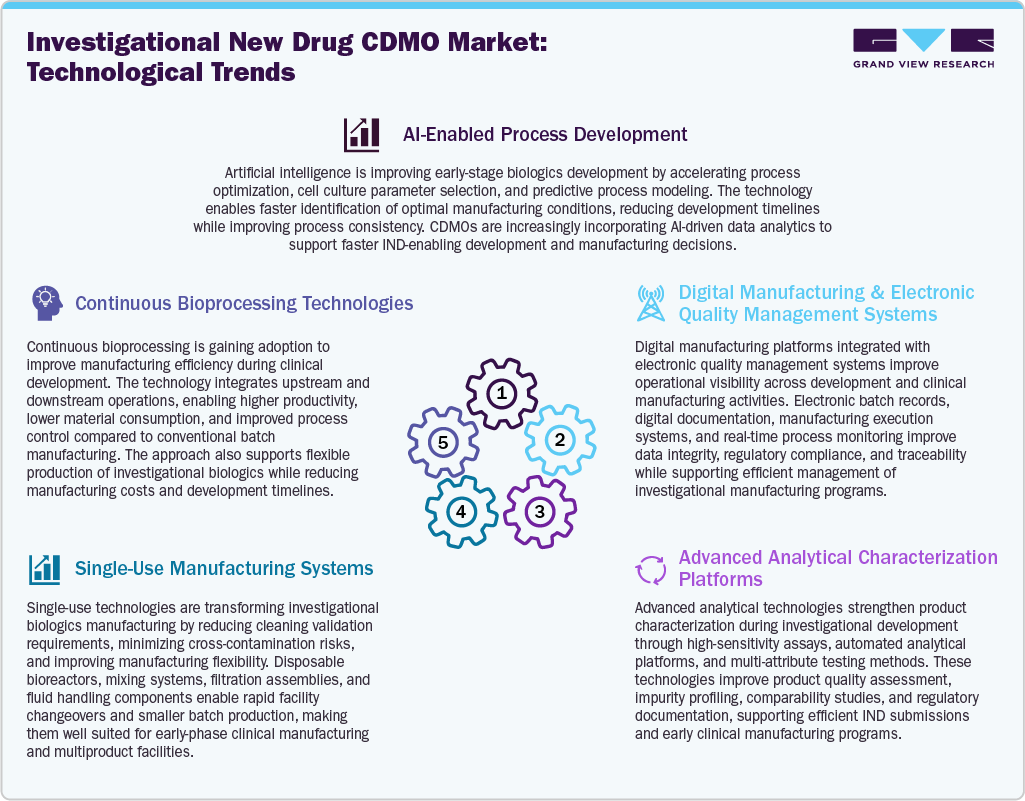
Technological advancements continue to reshape the investigational new drug CDMO market by improving development efficiency, manufacturing flexibility, and regulatory readiness across early-stage biologics programs. The increasing adoption of digital manufacturing platforms, advanced analytical technologies, artificial intelligence-based process optimization, continuous bioprocessing, and single-use manufacturing systems is enabling CDMOs to deliver faster and more integrated development services for investigational products. These technologies support efficient process development, improved product characterization, enhanced manufacturing consistency, and stronger quality management throughout preclinical and clinical development. Furthermore, technology investments are enabling service providers to accommodate increasingly complex modalities, including cell therapies, gene therapies, mRNA therapeutics, viral vectors, and other next-generation biologics. The growing need to accelerate IND submissions, reduce development risk, and improve manufacturing scalability is encouraging continued investment in advanced development platforms and digital infrastructure.
As biotechnology companies continue to outsource early-stage development to specialized partners, technological innovation is expected to strengthen service capabilities, improve operational efficiency, and support the expanding global pipeline of investigational biologics and advanced therapeutic products.
Pricing Model Analysis
 To learn more about this report, Download Free Sample Report
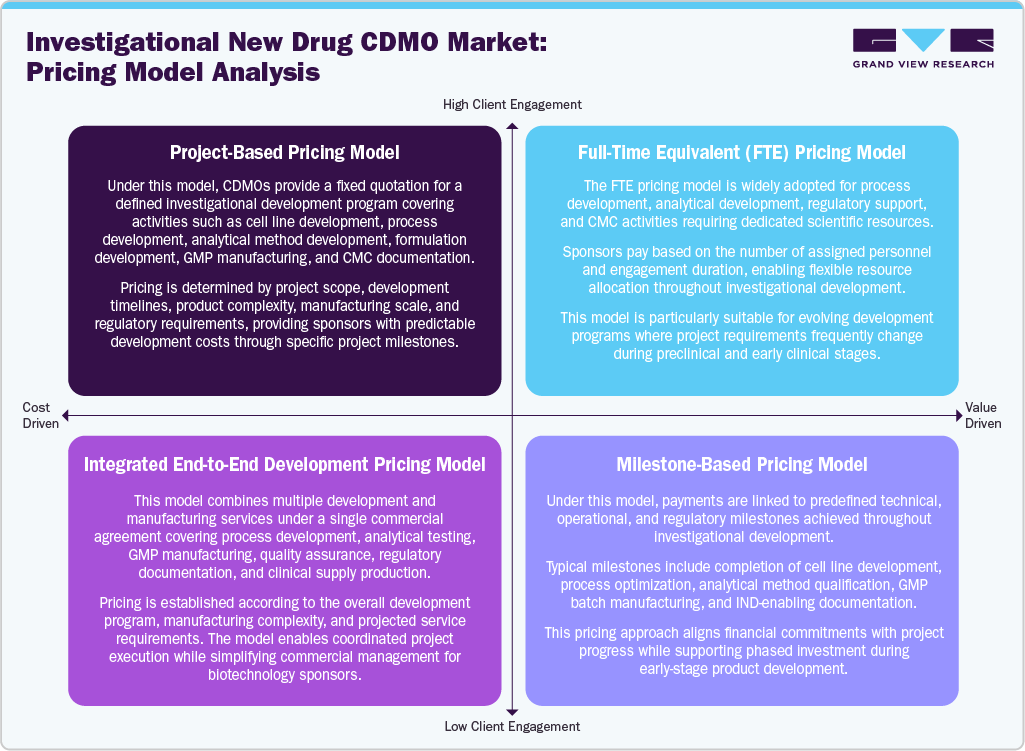
The investigational new drug CDMO market employs multiple pricing models to meet the diverse development needs of pharmaceutical and biotechnology companies during the preclinical and early clinical stages. Project-based pricing remains widely adopted for clearly defined development activities with established deliverables, while FTE based engagements provide flexibility for programs requiring continuous scientific support. Milestone-based agreements enable sponsors to allocate financial commitments based on technical and regulatory progress, thereby improving budget management throughout the investigational development process. Integrated end-to-end pricing is gaining wider adoption as biotechnology companies increasingly seek single service providers capable of delivering comprehensive IND enabling solutions, including process development, analytical characterization, GMP manufacturing, quality support, and regulatory documentation. The selection of an appropriate pricing model generally depends on development stage, manufacturing complexity, sponsor capabilities, and the scope of outsourced activities.
As biologics, cell therapies, gene therapies, and other advanced therapeutic modalities continue to expand, CDMOs are offering more flexible commercial structures that accommodate evolving project requirements while supporting long-term customer relationships. This trend is expected to strengthen collaborative development programs and improve operational efficiency across the investigational new drug CDMO market.
Market Concentration & Characteristics
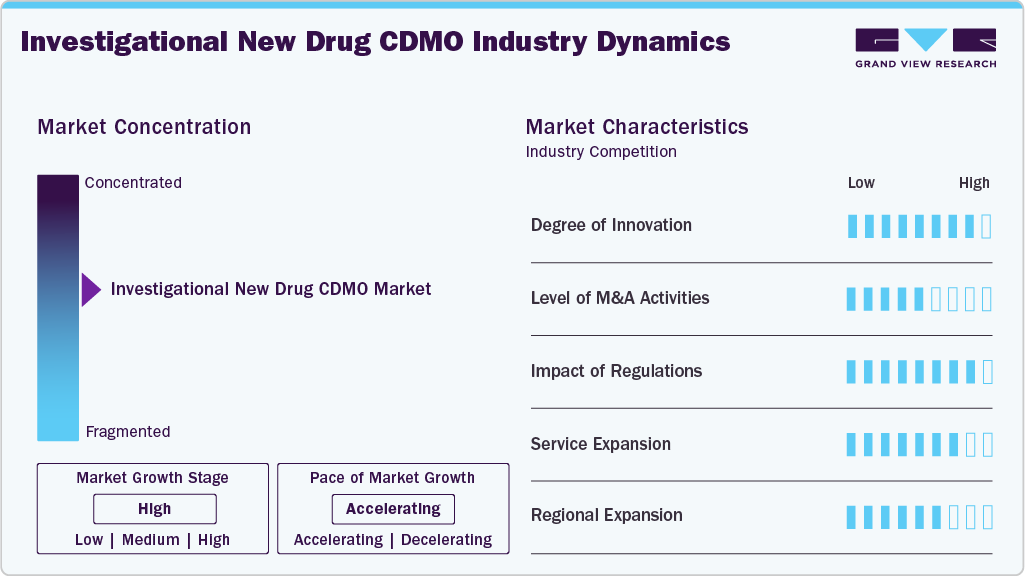
The investigational new drug CDMO market growth stage is high, and growth is accelerating. The market is characterized by the degree of innovation, level of M&A activities, regulatory impact, service expansion, and regional expansion.
Innovation remains a key competitive factor in the investigational new drug CDMO industry, with service providers investing in advanced process development platforms, single-use manufacturing technologies, artificial intelligence-enabled process optimization, digital manufacturing systems, and advanced analytical characterization capabilities. The growing development of biologics, cell therapies, gene therapies, mRNA therapeutics, and other advanced modalities is driving the adoption of integrated IND-enabling technologies that improve development efficiency, manufacturing flexibility, product quality, and regulatory readiness across preclinical and early clinical programs.
 To learn more about this report, Download Free Sample Report
Mergers and acquisitions continue to influence the market by expanding early-stage development capabilities, strengthening GMP manufacturing infrastructure, and broadening integrated IND enabling service offerings. Strategic acquisitions enable CDMOs to enhance expertise in process development, analytical testing, clinical manufacturing, viral vector production, and regulatory support while expanding their geographic presence. These transactions also improve operational capacity, diversify technology platforms, and strengthen competitive positioning within the growing biologics outsourcing market.
Regulatory compliance remains a major factor shaping the investigational new drug CDMO market. Service providers must comply with current Good Manufacturing Practices (cGMP), International Council for Harmonization (ICH) guidelines, Chemistry, Manufacturing, and Controls (CMC) requirements, Good Laboratory Practices (GLP), and regulations established by global health authorities for investigational products. Compliance with stringent quality management systems, documentation, process validation, and analytical standards increases operational complexity while supporting successful IND submissions and early clinical development.
Investigational new drug CDMOs are expanding their service portfolios to provide integrated IND enabling solutions across preclinical and early clinical development. Many service providers now offer cell line development, process development, formulation development, analytical method development, GMP manufacturing, CMC documentation, regulatory support, and clinical supply manufacturing through a unified platform. Integrated service offerings improve development efficiency, simplify project management, and enable pharmaceutical and biotechnology companies to accelerate investigational product development.
Regional expansion continues to strengthen the global footprint of investigational new drug CDMOs. Companies are establishing new development laboratories, GMP manufacturing facilities, analytical testing centers, and clinical manufacturing sites across North America, Europe, Asia Pacific, and the Middle East to address increasing demand for biologics and advanced therapeutics. Geographic expansion improves manufacturing capacity, strengthens supply chain resilience, supports regional regulatory compliance, and enables CDMOs to provide localized development and manufacturing services for global pharmaceutical and biotechnology companies.
Service Insights
Based on service, the contract development segment led the market with the largest revenue share of 85.6% in 2025. The segment growth is attributed to the increasing number of biologics, cell therapies, gene therapies, and other advanced therapeutics entering preclinical and early clinical development. Biotechnology companies are increasingly outsourcing cell line development, process development, analytical method development, formulation development, and Chemistry, Manufacturing, and Controls (CMC) activities to specialized CDMOs with established technical expertise. The growing number of emerging biotechnology companies with limited in-house development capabilities and the increasing complexity of IND-enabling requirements are further supporting demand for integrated contract development services.
The contract manufacturing segment is projected to register a significant CAGR during the forecast period. The increasing number of investigational biologics advancing into Phase I and Phase II clinical studies is driving demand for GMP manufacturing of clinical trial materials. Pharmaceutical and biotechnology companies are expanding the outsourcing of clinical manufacturing to access specialized production facilities, regulatory-compliant quality systems, and flexible manufacturing capacity without significant capital investment. Furthermore, increasing development of advanced modalities, including cell and gene therapies, mRNA therapeutics, and viral vectors, is expected to strengthen demand for specialized clinical manufacturing services throughout the forecast period.
End-use Insights
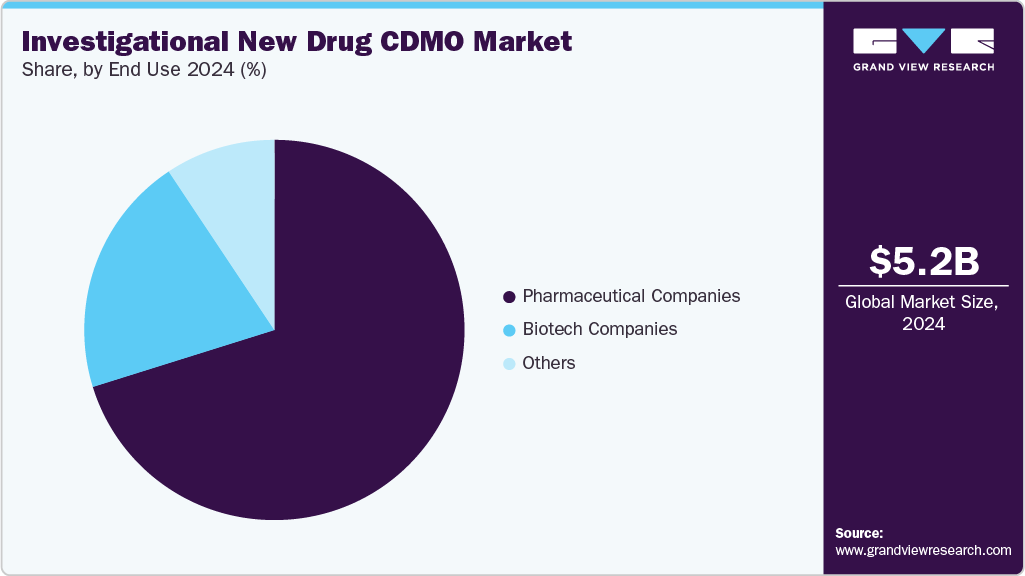
Based on end use, the pharmaceutical companies segment led the market with the largest revenue share of 70.3% in 2025. The segment's growth is attributed to increasing investments in biologics and specialty drug development, rising numbers of investigational new drug applications, and growing outsourcing of IND-enabling activities to accelerate clinical development. Pharmaceutical companies increasingly partner with CDMOs for process development, analytical testing, GMP manufacturing, CMC documentation, and regulatory support to improve development efficiency while reducing infrastructure and operational costs. The growing adoption of integrated development and manufacturing services for investigational biologics is further supporting the segment's market leadership.
 To learn more about this report, Download Free Sample Report
The biotech companies segment is projected to register the second-fastest CAGR during the forecast period. The segment growth is driven by the expanding pipeline of innovative biologics, cell therapies, gene therapies, mRNA therapeutics, and other advanced modalities developed by emerging biotechnology companies. Many biotechnology firms operate with limited internal development and manufacturing infrastructure, increasing reliance on CDMOs for IND-enabling services, clinical manufacturing, analytical development, and regulatory support. Furthermore, rising venture capital investments, strategic collaborations, and increasing formation of early-stage biotechnology companies are expected to support continued segment growth throughout the forecast period.
Regional Insights
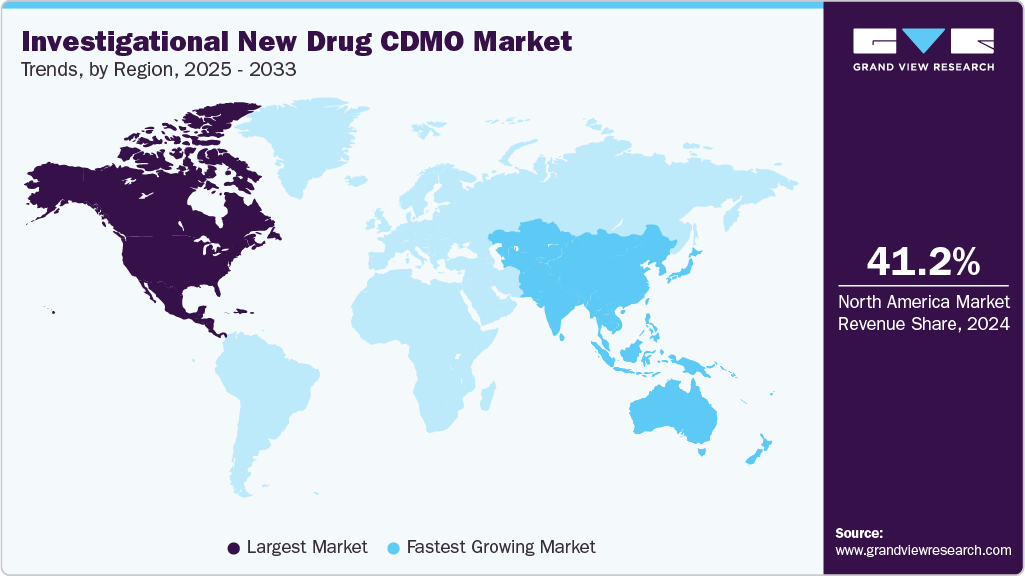
North America dominated the investigational new drug CDMO market with the largest revenue share of 41.1% in 2025. The market is supported by increasing biologics research, expanding clinical trial activity, and rising outsourcing of IND-enabling development and manufacturing services. The region benefits from a well-established pharmaceutical and biotechnology ecosystem, advanced GMP manufacturing infrastructure, and the presence of leading CDMOs offering integrated development capabilities. Growing investments in cell and gene therapies, mRNA therapeutics, and other advanced biologics are increasing demand for process development, analytical testing, clinical manufacturing, and regulatory support. Continued innovation in early-stage drug development and increasing collaborations between biotechnology companies and CDMOs are expected to support market growth over the forecast period.
 To learn more about this report, Download Free Sample Report
U.S. Investigational New Drug CDMO Market Trends
The investigational new drug CDMO industry in the U.S. held the largest share in the North America region in 2025. Market growth is supported by the country's large biotechnology industry, increasing investigational new drug submissions, and expanding pipeline of biologics and advanced therapeutics. Rising outsourcing of process development, GMP manufacturing, analytical services, and CMC activities is increasing demand for specialized CDMOs. Furthermore, the presence of leading pharmaceutical companies, strong venture capital investment, and continuous expansion of clinical development programs are expected to contribute to sustained market growth.
The Canada investigational new drug CDMO industryis expected to grow at a significant CAGR during the forecast period. The market is growing steadily owing to increasing investments in biotechnology research, expanding biologics development, and strengthening clinical research capabilities. Growing government support for life sciences, increasing academic research collaborations, and rising outsourcing of early-stage development activities are supporting demand for integrated CDMO services. The expansion of GMP manufacturing infrastructure is expected to further strengthen the country's role in the development of investigational biologics.
Europe Investigational New Drug CDMO Market Trends
The investigational new drug CDMO industry in Europe is experiencing steady growth, supported by a mature pharmaceutical industry, increasing biologics innovation, and a strong regulatory framework for investigational medicines. The growing development of cell therapies, gene therapies, monoclonal antibodies, and other advanced biologics is increasing demand for IND-enabling development, analytical characterization, and clinical manufacturing services. The presence of established CDMOs, advanced research infrastructure, and increasing cross-border clinical development programs is expected to support regional market expansion throughout the forecast period.
The Germany investigational new drug CDMO industry is witnessing steady growth owing to its strong pharmaceutical manufacturing base and increasing biologics development activities. Rising investments in biopharmaceutical innovation, advanced manufacturing technologies, and GMP production facilities are increasing demand for contract development and clinical manufacturing services. The country's established regulatory environment and expanding biotechnology sector are expected to support continued market growth.
The investigational new drug CDMO industry in the UKis expected to grow significantly over the forecast period. Market growth is supported by a strong biotechnology ecosystem, increasing clinical research activity, and rising investments in advanced therapeutics. The growing demand for integrated development services, expanding collaborations between biotechnology companies and CDMOs, and continued government support for life sciences are expected to strengthen demand for investigational development and manufacturing services.
Asia Pacific Investigational New Drug CDMO Market Trends
The investigational new drug CDMO industry in the Asia Pacific is anticipated to register the fastest growth during the forecast period. The market is supported by increasing pharmaceutical outsourcing, expanding biotechnology industries, lower development costs, and continuous investments in biomanufacturing infrastructure. Growing clinical research activities, increasing development of advanced biologics, and favorable government initiatives are encouraging global pharmaceutical and biotechnology companies to establish development partnerships with regional CDMOs.
The Japan investigational new drug CDMO industry is witnessing stable growth owing to increasing biologics research, expanding regenerative medicine programs, and strong pharmaceutical innovation. Rising investments in cell therapies, gene therapies, and biologics manufacturing are increasing demand for specialized development and clinical manufacturing services. Continued technological advancements and regulatory support for innovative therapeutics are expected to drive market expansion.
The investigational new drug CDMO industry in Chinais experiencing rapid growth, supported by a large biotechnology sector, increasing investigational biologics development, and significant investments in contract development and manufacturing infrastructure. Growing clinical trial activity, rising pharmaceutical research investments, and expanding biologics manufacturing capacity are strengthening demand for integrated IND-enabling services. The country's competitive manufacturing capabilities continue to attract global outsourcing programs.
The India investigational new drug CDMO industry is expected to witness significant growth over the forecast period. The market is driven by expanding pharmaceutical and biotechnology industries, increasing investments in biologics research, and a growing number of CDMOs offering integrated development and manufacturing services. Cost-competitive operations, a skilled scientific workforce, and expanding GMP manufacturing capabilities are further increasing India's attractiveness for early-stage outsourcing programs.
Latin America Investigational new drug CDMO Market Trends
The investigational new drug CDMO industry in Latin America is witnessing gradual growth, supported by increasing pharmaceutical research activities, expanding clinical trial participation, and rising investments in biotechnology. Growing collaborations with global pharmaceutical companies and improving research infrastructure are increasing the demand for contract development and clinical manufacturing services. Continued expansion of biologics development capabilities is expected to support regional market growth.
The Brazil investigational new drug CDMO industryaccounted for the largest share in Latin America in 2025. The market is expected to grow steadily, driven by increasing pharmaceutical manufacturing activities, expanding clinical research, and rising investments in biotechnology. The growing demand for outsourced development services and the strengthening of regulatory capabilities are driving the adoption of integrated CDMO solutions. The expansion of domestic biologics manufacturing initiatives is expected to further contribute to market growth.
Middle East & Africa Investigational new drug CDMO Market Trends
The investigational new drug CDMO industry in the Middle East & Africa is witnessing gradual growth, supported by increasing investments in life sciences, expanding pharmaceutical manufacturing infrastructure, and growing interest in biotechnology research. Governments across the region are strengthening healthcare and pharmaceutical capabilities while encouraging investments in advanced manufacturing and research facilities. These developments are expected to support future demand for investigational development and manufacturing services.
The UAE investigational new drug CDMO industry is expected to witness notable growth over the forecast period. Market expansion is supported by increasing investments in pharmaceutical manufacturing, biotechnology innovation, and healthcare infrastructure. Government initiatives to strengthen domestic biopharmaceutical production, attract international life sciences investments, and establish advanced research ecosystems are expected to increase demand for contract development and clinical manufacturing services in the coming years.
Key Investigational New Drug CDMO Company Insights
The key players operating across the market are adopting strategic initiatives such as service launches, mergers & acquisitions, partnerships & agreements, and expansions to gain a competitive edge in the market. For instance, in April 2025, Porton Advanced announced a CDMO collaboration with Tasly Pharmaceutical Co., Ltd. to develop the dual-targeting CAR T therapy, P134 Cell Injection, which received Investigational New Drug (IND) clearance from China's National Medical Products Administration (NMPA). The collaboration supports process development and manufacturing activities for the investigational therapy being developed for recurrent glioblastoma.
Key Investigational New Drug CDMO Companies
The following key companies have been profiled for this study on the investigational new drug CDMO market
-
Catalent, Inc.
-
Lonza
-
Recipharm AB
-
Siegfried Holding AG
-
Patheon Inc.
-
WuXi Biologics
-
Eurofins CDMO Alphora
-
Cambrex Corporation
-
Charles River Laboratories International, Inc.
-
FUJIFILM Diosynth Biotechnologies
-
Syngene International
-
Jubilant Pharmova
-
Piramal Pharma Solutions
-
Dr. Reddy’s CPS
-
Dishman Carbogen Amcis Ltd.
-
AGC Biologics
-
KBI Biopharma
Competitive Benchmarking
Category
Operating Strategies
Competitive Edge
Weakness
Established Players (Lonza Group, Catalent, Inc.)
- Established players focus on providing integrated investigational new drug (IND) enabling services covering cell line development, process development, analytical method development, formulation development, GMP manufacturing, CMC documentation, regulatory support, and clinical supply manufacturing. These companies continue to expand biologics, cell and gene therapy, and clinical manufacturing capabilities while investing in advanced bioprocessing technologies, digital manufacturing platforms, and global development infrastructure.
- Established players benefit from extensive global development and manufacturing networks, diversified technology platforms, advanced GMP facilities, and strong regulatory expertise. Their ability to support programs from preclinical development through Phase I and Phase II clinical manufacturing, together with established quality systems and broad modality expertise, enables them to secure long-term outsourcing partnerships with pharmaceutical and biotechnology companies.
- Established players face challenges associated with high capital investments required for biologics manufacturing infrastructure, increasing operational costs, and maintaining compliance with evolving global regulatory requirements. Large organizational structures may also lengthen project onboarding timelines and reduce operational flexibility for smaller, rapidly evolving investigational programs.
Emerging Players (Syngene International)
- Emerging players primarily focus on specialized IND-enabling services, including process development, analytical characterization, viral vector development, cell and gene therapy manufacturing, and early-phase GMP manufacturing. Many companies are expanding modular manufacturing facilities, strengthening CMC capabilities, and establishing strategic collaborations with biotechnology companies to accelerate investigational product development and clinical translation.
- Emerging players gain competitive advantages through specialized scientific expertise, flexible operating models, rapid technology transfer, and customized project execution. Their ability to provide responsive development support, shorter decision-making cycles, and dedicated technical teams makes them attractive partners for emerging biotechnology companies developing innovative biologics and advanced therapeutics.
- Emerging players often have limited large-scale manufacturing capacity, smaller global operational footprints, and comparatively lower financial resources. Many companies also face challenges expanding international regulatory capabilities, supporting multiple concurrent clinical programs, and competing with established CDMOs that offer fully integrated global development and manufacturing services.
Recent Developments
-
In June 2025, GenSight Biologics announced a significant milestone in its manufacturing partnership with Catalent following the successful completion of the upstream process transfer for its investigational gene therapy candidate GS030. The achievement supports clinical development, manufacturing scale-up, and future regulatory filings, demonstrating the growing role of specialized CDMOs in advancing investigational gene therapy programs.
-
In May 2025, Radyus Research and Eurofins CDMO Alphora announced a strategic collaboration to accelerate early-stage drug development for biotechnology companies globally. The partnership integrates discovery, preclinical development, CMC, and manufacturing capabilities to streamline development timelines, improve program continuity, and support successful progression toward investigational new drug (IND) applications.
Investigational New Drug CDMO Market Report Scope
Report Attribute
Details
Market size value in 2025
USD 5.4 billion
Market size value in 2026
USD 5.5 billion
Revenue forecast in 2033
USD 10.4 billion
Growth rate
CAGR of 8.7% from 2026 to 2033
Actual Data
2021 - 2025
Forecast period
2026 - 2033
Quantitative units
Revenue in USD billion, and CAGR from 2026 to 2033
Report coverage
Revenue forecast, company ranking, competitive landscape, growth factors, and trends
Segments covered
Service, end-use, region
Regional scope
North America; Europe; Asia Pacific; Latin America; MEA
Country scope
U.S.; Canada; Mexico; Germany; UK; France; Italy; Spain; Norway; Denmark; Sweden; China; Japan; India; South Korea; Australia; Thailand; Brazil; Argentina; Saudi Arabia; South Africa; UAE; Kuwait; Oman; Qatar.
Key companies profiled
Catalent, Inc.; Lonza; Recipharm AB; Siegfried Holding AG; Patheon Inc.; WuXi Biologics; Eurofins CDMO Alphora; Cambrex Corporation; Charles River Laboratories; FUJIFILM Diosynth Biotechnologies; Syngene International; Jubilant Pharmova; Piramal Pharma Solutions; Dr. Reddy’s CPS; Dishman Carbogen Amcis Ltd.; AGC Biologics; KBI Biopharma
Customization scope
Free report customization (equivalent up to 8 analysts working days) with purchase. Addition or alteration to country, regional & segment scope.
Pricing and purchase options
Avail customized purchase options to meet your exact research needs. Explore purchase options
Global Investigational New Drug CDMO Market Report Segmentation
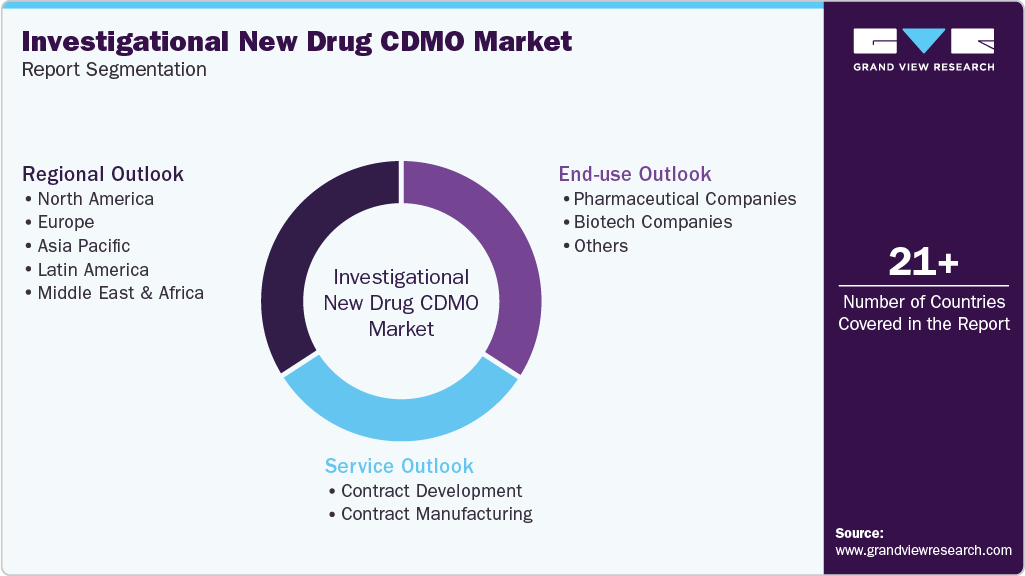
This report forecasts revenue growth at global, regional, and country levels and provides an analysis of the latest industry trends in each of the sub-segments from 2021 to 2033. For this study, Grand View Research has segmented the global investigational new drug CDMO market report based on service, end-use, and region.
 To learn more about this report, Download Free Sample Report
-
Service Outlook (Revenue, USD Billion, 2021 - 2033)
-
Contract Development
-
Small Molecule
-
Bioanalysis and DMPK Studies
-
Toxicology Testing
-
Pathology and Safety Pharmacology Studies
-
Drug Substance Development
-
Synthetic Route Development
-
Process Development
-
Form Selection Crystallization Process Development
-
Scale-up of Drug Substance
-
-
Formulation Development
-
Pre Formulation
-
Preclinical Formulation Selection
-
First In Man Formulation/ Process Development
-
-
Analytical & Quality Services
-
Analytical Method Development / Validation
-
Release Testing of Drug Substance and Drug Product
-
Formal Stability of Drug Substance and Drug Product
-
-
Process Optimization
-
Work Up Purification Steps
-
Telescoping & Process Refining
-
Initial Optimization
-
-
-
Large Molecule
-
Cell Line Development
-
Process Development
-
Upstream
-
Microbial
-
Mammalian
-
Others
-
-
Downstream
-
MABs
-
Recombinant Proteins
-
Others
-
-
-
-
-
Contract Manufacturing
-
Small Molecule
-
Oral Solids
-
Semi-Solids
-
Liquids & Injectables
-
Others
-
-
Large Molecule
-
MABs
-
Recombinant Proteins
-
Others
-
-
-
-
End-use Outlook (Revenue, USD Billion, 2021 - 2033)
-
Pharmaceutical Companies
-
Biotech Companies
-
Others
-
-
Regional Outlook (Revenue, USD Billion, 2021 - 2033)
-
North America
-
U.S.
-
Canada
-
Mexico
-
-
Europe
-
UK
-
Germany
-
France
-
Italy
-
Spain
-
Denmark
-
Sweden
-
Norway
-
-
Asia Pacific
-
Japan
-
China
-
India
-
Australia
-
Thailand
-
South Korea
-
-
Latin America
-
Brazil
-
Argentina
-
-
Middle East & Africa
-
South Africa
-
UAE
-
Saudi Arabia
-
Kuwait
-
Qatar
-
Oman
-
-
Research Methodology
The investigational new drug CDMO market figures in this report are based on a proven research process that combines executive interviews with secondary research from proprietary databases, company filings, and recognized regulatory and institutional sources. Market size is built through value-chain sizing—reconciling supply-side and demand-side estimates—and triangulated with bottom-up and top-down approaches. Every estimate passes multiple levels of expert validation before publication, with each investigational new drug CDMO segment quantified using the revenue-capture definitions in the table below.
Segment Definition
Segment - Service
Revenue capture definition
Contract Development
The segment captures revenue generated from contract development services provided for investigational new drug candidates. Services include drug discovery support, process development, formulation development, analytical testing, preclinical development, scale-up activities, and Chemistry Manufacturing and Controls support to advance small molecule and large molecule products through clinical development.
Small Molecule
The segment captures revenue generated from contract development services for investigational small molecule drug candidates. Services include synthetic route development, process development, formulation development, analytical testing, scale-up, process optimization, and regulatory support for preclinical and clinical stage programs.
Bioanalysis and DMPK Studies
The segment captures revenue generated from bioanalytical testing and drug metabolism and pharmacokinetics studies conducted for investigational drug candidates. Services include bioanalytical method development, pharmacokinetic analysis, metabolism studies, biomarker testing, and sample analysis to support preclinical and clinical development.
Toxicology Testing
The segment captures revenue generated from toxicology studies performed to evaluate the safety profile of investigational drug candidates. Services include acute, repeat dose, genetic, reproductive, and specialized toxicology studies conducted to support regulatory submissions and clinical development.
Pathology and Safety Pharmacology Studies
The segment captures revenue generated from pathology assessments and safety pharmacology studies conducted for investigational drugs. Services include histopathology evaluation, organ toxicity assessment, cardiovascular, respiratory, and central nervous system safety studies to support nonclinical development.
Drug Substance Development
The segment captures revenue generated from development services for investigational drug substances. Services include synthetic process development, impurity profiling, process optimization, scale-up, analytical support, and manufacturing process design for active pharmaceutical ingredients.
Synthetic Route Development
The segment captures revenue generated from designing and optimizing synthetic pathways for investigational small-molecule drug substances. Services include route selection, reaction optimization, impurity reduction, and process feasibility studies.
Process Development
The segment captures revenue generated from developing and optimizing manufacturing processes for investigational drug substances. Services include process characterization, process optimization, technology transfer support, and manufacturing readiness activities.
Form Selection Crystallization Process Development
The segment captures revenue generated from polymorph screening, salt selection, crystallization development, and solid-state characterization for investigational drug substances to improve product quality, stability, and manufacturability.
Scale-up of Drug Substance
The segment captures revenue generated from scaling manufacturing processes for investigational drug substances from laboratory to pilot and clinical production. Services include process validation support, engineering batches, and manufacturing optimization.
Formulation Development
The segment captures revenue generated from formulation development services for investigational drug products. Services include dosage form design, excipient selection, formulation optimization, manufacturing process development, and stability assessment.
Pre Formulation
The segment captures revenue generated from pre-formulation studies performed to evaluate the physicochemical properties of investigational drug candidates. Services include solubility, compatibility, stability, and dissolution studies supporting formulation design.
Preclinical Formulation Selection
The segment captures revenue generated from formulation selection services for investigational products intended for preclinical studies. Services include prototype formulation development, stability evaluation, and dosage form optimization for nonclinical testing.
First In Man Formulation Process Development
The segment captures revenue generated from formulation and manufacturing process development for first-in-human clinical studies. Services include clinical formulation design, manufacturing process optimization, analytical support, and clinical batch production preparation.
Analytical and Quality Services
The segment captures revenue generated from analytical testing and quality assurance services supporting investigational drug development. Services include analytical method development, validation, release testing, stability testing, quality control, and regulatory compliance activities.
Analytical Method Development Validation
The segment captures revenue generated from developing and validating analytical methods for investigational drug substances and drug products. Services include method qualification, validation, transfer, and regulatory documentation.
Release Testing of Drug Substance and Drug Product
The segment captures revenue generated from quality control testing performed before the release of investigational drug substances and finished drug products. Services include identity, purity, potency, microbiological, and specification testing.
Formal Stability of Drug Substance and Drug Product
The segment captures revenue generated from stability studies conducted under regulatory guidelines for investigational drug substances and drug products. Services include long-term, accelerated, and stress stability testing supporting product shelf life determination.
Process Optimization
The segment captures revenue generated from optimizing manufacturing processes for investigational drug candidates. Services include yield improvement, impurity reduction, process robustness studies, and manufacturing efficiency improvements.
Work Up Purification Steps
The segment captures revenue generated from purification process development for investigational drug substances. Services include extraction, filtration, crystallization, chromatography, and impurity removal to achieve product quality specifications.
Telescoping and Process Refining
The segment captures revenue generated from integrating multiple manufacturing steps and refining production processes to improve efficiency, reduce manufacturing time, and enhance process consistency for investigational drug candidates.
Initial Optimization
The segment captures revenue generated from early stage optimization activities performed during investigational drug development. Services include reaction optimization, process feasibility studies, analytical assessment, and manufacturing process improvement.
Large Molecule
The segment captures revenue generated from contract development services for investigational biologics. Services include cell line development, upstream and downstream process development, analytical characterization, formulation development, and manufacturing support for biological drug candidates.
Cell Line Development
The segment captures revenue generated from developing production cell lines for investigational biologics. Services include clone selection, cell banking, cell characterization, productivity optimization, and stability assessment.
Process Development
The segment captures revenue generated from process development services for biological drug candidates. Services include upstream and downstream process optimization, process characterization, scale up, and manufacturing readiness activities.
Upstream
The segment captures revenue generated from upstream development services for investigational biologics. Services include media development, cell culture optimization, fermentation process development, and bioreactor scale-up.
Microbial
The segment captures revenue generated from microbial expression process development for investigational biologics. Services include bacterial strain development, fermentation optimization, and microbial manufacturing process development.
Mammalian
The segment captures revenue generated from mammalian cell culture development services for investigational biologics. Services include cell culture optimization, bioreactor development, clone selection, and production process optimization.
Others (Upstream)
The segment captures revenue generated from upstream development services using alternative expression systems such as yeast, insect, or other specialized production platforms for investigational biologics.
Downstream
The segment captures revenue generated from downstream processing services for investigational biologics. Services include purification, filtration, chromatography, viral clearance, concentration, and formulation preparation.
mABs
The segment captures revenue generated from development services provided for investigational monoclonal antibodies. Services include cell line development, upstream and downstream process development, analytical characterization, and manufacturing support.
Recombinant Proteins
The segment captures revenue generated from development services for investigational recombinant protein therapeutics. Services include expression system development, purification, analytical testing, formulation development, and manufacturing process optimization.
Others (Downstream)
The segment captures revenue generated from downstream development services for other biological products, including fusion proteins, cytokines, enzymes, and emerging biologics.
Contract Manufacturing
The segment captures revenue generated from GMP manufacturing services provided for investigational drug substances and drug products. Services include clinical manufacturing, packaging, labeling, quality control testing, and manufacturing support for clinical trials.
Small Molecule
The segment captures revenue generated from contract manufacturing services for investigational small molecule drug products. Services include clinical batch manufacturing, packaging, labeling, quality testing, and supply for clinical studies.
Oral Solids
The segment captures revenue generated from manufacturing investigational oral solid dosage forms, including tablets, capsules, powders, and granules for clinical development.
Semi Solids
The segment captures revenue generated from manufacturing investigational semi-solid dosage forms, including creams, gels, ointments, and topical formulations for clinical studies.
Liquids and Injectables
The segment captures revenue generated from manufacturing investigational liquid formulations and sterile injectable products. Services include aseptic manufacturing, sterile filling, packaging, and quality testing.
Others (Small Molecule Manufacturing)
The segment captures revenue generated from manufacturing other investigational small molecule dosage forms, including inhalation, transdermal, ophthalmic, and specialized delivery systems.
Large Molecule
The segment captures revenue generated from contract manufacturing services for investigational biologics. Services include GMP production, fill finish, packaging, quality control, and clinical supply manufacturing for biological drug candidates.
MABs
The segment captures revenue generated from GMP manufacturing services for investigational monoclonal antibodies, including bulk drug substance production, purification, fill finish, and clinical supply.
Recombinant Proteins
The segment captures revenue generated from GMP manufacturing services for investigational recombinant protein therapeutics, including production, purification, formulation, and clinical packaging.
Others (Large Molecule Manufacturing)
The segment captures revenue generated from manufacturing services for other investigational biologics, including fusion proteins, enzymes, cytokines, vaccines, and emerging biological therapies.
Segment - End Use
Revenue capture definition
Pharmaceutical Companies
The segment captures revenue generated from investigational new drug CDMO services provided to pharmaceutical companies developing small molecule and biological drug candidates across preclinical and clinical development stages.
Biotech Companies
The segment captures revenue generated from investigational new drug CDMO services provided to biotechnology companies developing innovative therapeutics, including biologics, cell therapies, gene therapies, and precision medicines.
Others
The segment captures revenue generated from investigational new drug CDMO services provided to academic institutions, government research organizations, virtual biotechnology companies, nonprofit organizations, and other drug developers requiring outsourced development and manufacturing support.
Estimation Model
Bottom-Up Revenue Model
Capacity-Based Manufacturing Model
Drug Pipeline Demand Model
Outsourcing Penetration Model
Market size is estimated by identifying major and emerging contract development and manufacturing organizations providing investigational new drug services across small-molecule and large-molecule development programs.
Revenue attributable to investigational new drug CDMO activities is derived from annual reports, investor presentations, regulatory filings, manufacturing site disclosures, customer announcements, and management commentary.
Company-level revenues are aggregated and validated by comparing service portfolios, clinical manufacturing capabilities, customer mix, geographic presence, and industry benchmarks to estimate the overall market value.
The model captures revenue generated from contract development, analytical and quality services, process development, formulation development, bioanalysis, toxicology testing, and clinical manufacturing activities.
Market value is estimated using available clinical manufacturing capacity across facilities dedicated to investigational new drug development and manufacturing.
Key parameters evaluated include the number of manufacturing suites, bioreactor capacity, reactor volumes, annual batch throughput, facility utilization rates, and average contract manufacturing pricing for preclinical and clinical stage projects.
Total effective production capacity is translated into potential annual revenue and cross-checked against reported utilization levels, announced expansion projects, and long-term customer agreements.
The model incorporates both small molecule clinical manufacturing facilities and biologics manufacturing infrastructure for monoclonal antibodies, recombinant proteins, and other investigational biologics.
Market size is derived by evaluating the number of investigational drug candidates progressing through preclinical, Phase I, Phase II, and Phase III clinical development stages.
Average outsourcing expenditure is assigned to each development stage for services such as process chemistry, route optimization, formulation development, analytical testing, toxicology studies, GMP manufacturing, and clinical supply production.
The number of drug programs multiplied by the estimated outsourced development and manufacturing spend, and the result is aggregated across oncology, rare diseases, neurological disorders, metabolic diseases, infectious diseases, and other therapeutic areas.
The model also accounts for increasing development activity in biologics, cell therapies, gene therapies, monoclonal antibodies, and recombinant protein therapeutics.
Market size is estimated by assessing the proportion of pharmaceutical and biotechnology companies that outsource investigational new drug development and manufacturing activities rather than maintain fully integrated internal capabilities.
Outsourcing rates are determined through primary interviews, industry publications, CDMO partnership announcements, pharmaceutical company disclosures, and manufacturing investment trends.
The addressable market is calculated by applying outsourcing penetration rates to total spending on process development, formulation development, analytical services, preclinical testing, clinical manufacturing, and related development activities.
The model captures outsourcing demand from large pharmaceutical companies, emerging biotechnology firms, virtual drug development companies, and research-focused organizations.
Delivered Customizations
This report has been delivered with the following In-depth customizations
Client Request
Customization Delivered
Value Adds
Industry Outlook, Value Chain, and Business Model Assessment
Conducted a comprehensive evaluation of the Investigational New Drug CDMO ecosystem, covering raw material suppliers, contract research organizations, analytical testing laboratories, formulation development providers, clinical manufacturing facilities, packaging and labeling partners, clinical logistics providers, and pharmaceutical and biotechnology companies. Assessed prevailing business models, outsourcing trends, revenue streams, pricing dynamics, supply chain dependencies, and value creation opportunities across process development, analytical services, preclinical support, clinical manufacturing, and regulatory services.
Provides a comprehensive understanding of the industry structure, outsourcing trends, revenue opportunities, and critical success factors, enabling stakeholders to identify growth opportunities across the investigational new drug development and manufacturing value chain while supporting strategic investment decisions.
Competitive Benchmarking and Service Capability Analysis
Performed detailed benchmarking of leading Investigational New Drug CDMOs based on service portfolio, clinical manufacturing capacity, biologics capabilities, analytical and quality services, regulatory compliance, geographic presence, technology platforms, customer base, and strategic collaborations. Included comparative positioning of global CDMOs supporting small molecule, biologics, cell therapy, and gene therapy development programs.
Enables identification of competitive gaps, service differentiation opportunities, partnership targets, acquisition prospects, and leading development and manufacturing capabilities to support long term competitive positioning.
Frequently Asked Questions About This Report
The contract development segment led with a 85.6% revenue share in 2025.
The pharmaceutical companies segment led with a 70.3% revenue share in 2025.
Key players include Catalent, Inc.; Lonza; Recipharm AB; Siegfried Holding AG; Patheon Inc.; Covance; IQVIA Holdings Inc.; Cambrex Corporation; Charles River Laboratories International, Inc.; Syneos Health; Syngene International; Jubilant Pharmova; Piramal Pharma Solutions; Dr. Reddy’s CPS; Dishman Carbogen Amcis; Biocon Biologics; Laurus Labs, among others.
Key factors include an increasing number of investigational biologics, cell therapies, gene therapies, and advanced therapeutic candidates entering clinical development. The growing outsourcing activities among biotechnology and biopharmaceutical companies are increasing demand for specialized contract development and manufacturing services across process development, analytical testing, clinical manufacturing, and fill-finish operations. The rising complexity of viral vector production, plasmid DNA manufacturing, cell processing, and gene editing technologies has increased the requirement for CDMOs with specialized manufacturing capabilities and regulatory expertise.
The global investigational new drug CDMO market size was valued at USD 5.4 billion in 2025 and is estimated at USD 5.5 billion in 2026.
North America dominated with a 41.1% revenue share in 2025.
The global Investigational New Drug CDMO market is expected to grow at a CAGR of 8.7% from 2026 to 2033, reaching USD 10.4 billion.
Asia Pacific is the fastest-growing region over the forecast period.
About the Author(s)
Medical Devices Research Team
Healthcare · Medical DevicesThis report was authored by the medical devices research team at Grand View Research - comprising two research analysts, one senior research analyst, and one industry expert - with specialized expertise in the medical devices segment of the healthcare industry. All findings are based on proprietary healthcare databases, executive interviews, and regulatory analysis, subject to internal peer review prior to publication.
Last Updated:
Speak to Analyst

Customize this report to your needs - add regions, segments, or data points, with 20% free customization.
Or view our licence options:


ISO 9001:2015 & 27001:2022 Certified
We are GDPR and CCPA compliant! Your transaction & personal information is safe and secure. For more details, please read our privacy policy.


