
- Home
- »
- Medical Devices
- »
-
Kidney Preservation Market Size Report, 2026-2033GVR Report cover

Kidney Preservation Market (2026 - 2033)
Size, Share & Trends Analysis Report By Preservation Solution (University of Wisconsin Solution, Celsior Solution), By Technique (Static Cold Storage), By Donor Type, By End Use, By Region, And Segment Forecasts
Market Size, 2025
$66.6MMarket Estimate, 2026
$71.3MMarket Forecast, 2033
$114.9MCAGR, 2026–2033
7.1%Kidney Preservation Market Summary
The global kidney preservation market size was valued at USD 66.6 million in 2025 and is projected to grow from USD 71.3 million in 2026 to USD 114.9 million by 2033, at a CAGR of 7.1% from 2026 to 2033. North America dominated the market, accounting for a revenue share of 37.3% in 2025. The growth is driven by multiple factors, including the increasing prevalence of chronic kidney disease (CKD) and end-stage renal disease (ESRD), rising demand for organ transplantation, and advancements in preservation technologies.
 Source: Grand View Research, IR Documents, Primary Interviews, Paid DatabasesTo learn more about this report,
 Download Free Sample Report
 Key Market Trends & Insights
- By preservation solution: University of Wisconsin (UW) segment led the market with the largest revenue share of 75.3% in 2025.
- By technique: Normothermic machine perfusion segment led the market with the largest revenue share of 54.9% in 2025.
- By donor type: Living donor segment led the market with the largest revenue share of 26.6% in 2025.
- By end use: Transplant centers / hospitals segment led the market with the largest revenue share of 42.6% in 2025.
Regional Highlights
- Largest regional market: North America (37.3% revenue share, 2025)
- By country: The U.S. held the largest market share in 2025.
Market Size & Forecast
- Market size in 2025: USD 66.6 Million
- Estimated market size in 2026: USD 71.3 Million
- Projected market size by 2033: USD 114.9 Million
- CAGR (2026-2033): 7.1%
Three ways to get this report
Buy it, customize it, or ask a question.Ask an Analyst
Analyst response in 1 business day
- AccessReport author, directly
- Reply timeWithin 1 working day
- No sales callDirect answer only
- FormatEmail reply
- CostFree, no cost
Get the Full Report
What the study covers
- FormatsPDF · Excel · Dashboard
- Timeline2026–2033 annual, 2025 base
- Coverage20+ countries, 5 regions
- Companies10+ key players profiled
Customize the Report
20% free customization
- IncludeCountries, segments, points
- TailorTo your product definition
- ExtendDeeper competitor detail
- OrA fully bespoke study
- Turnaround5–10 working days
The growing number of patients awaiting kidney transplants is fueling the demand for effective preservation solutions. The aging global population further contributes to this demand, as kidney disease incidence rises with age, leading to a larger pool of potential transplant recipients. According to the World Health Organization (WHO), the global geriatric population is expected to increase from 1.2 billion in 2025 to around 2.1 billion in 2050. The growing awareness about kidney donation and transplantation is significantly influencing the kidney transplant organ preservation by expanding the donor pool and increasing transplant procedure volumes globally. Public health campaigns, media outreach, and advocacy by non-profits have contributed to increased understanding of the importance and safety of living and deceased kidney donation. For instance, in January 2024, a new campaign, "Make Your Mark," was launched to promote living kidney donation and save lives in the UK. The initiative, backed by Kidney Research UK, aimed to raise awareness about the benefits of living kidney donation and encouraged more people to consider donating. With over 7,000 people waiting for a kidney transplant in the UK, the campaign aimed to address the shortage of available kidneys. Such initiatives are expected to increase the kidney donation volumes over the forecast period. Hospitals and transplant centers are responding by adopting more reliable and advanced preservation technologies that ensure efficient organ viability during transport and storage.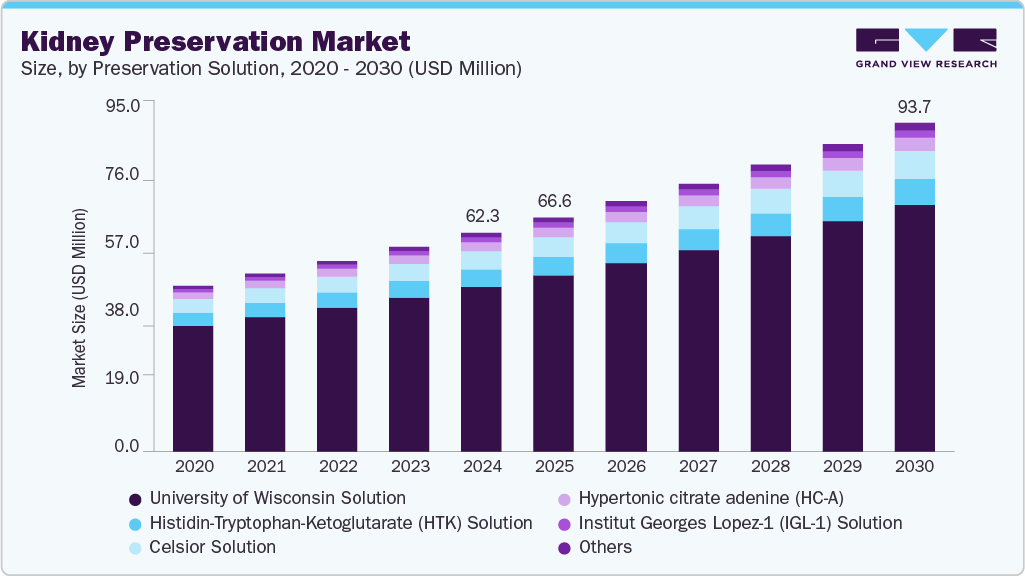 To learn more about this report, Download Free Sample Report
 The kidney transplant organ preservation is also driven by the rising global prevalence of chronic kidney disease (CKD), Stage Renal Disease (ESRD) and the subsequent increase in demand for kidney transplantation as the preferred treatment option for improved quality of life and survival rates compared to long-term dialysis. According to the American Kidney Fund, an estimated 35.5 million Americans have kidney disease, with about 815,000 living with kidney failure. Nearly 555,000 Americans are undergoing dialysis treatment. Moreover, the prevalence of kidney disease is on the rise, currently affecting more than 1 in 7 (or 14%) of American adults. Similarly, advancements in surgical techniques and immunosuppressive therapies have made transplantation a more viable and successful procedure, encouraging more patients and healthcare systems to choose kidney transplantation.
Below table indicates the cumulative annual kidney transplants in the U.S. (2018-2024):
 To learn more about this report, Download Free Sample Report
 Technological advancements and increased investment in the development of advanced kidney preservation technologies are also playing a crucial role in driving the kidney transplant organ preservation landscape. In February 2025, the National Kidney Foundation (NKF) Innovation Fund invested in NorthernLight, a medical device company, to advance next-generation kidney preservation technology. This investment aims to improve kidney transplantation outcomes by enhancing preservation techniques. NorthernLight's technology has the potential to increase the availability of transplantation of kidneys. The NKF Innovation Fund supports innovative solutions to improve kidney health and transplantation. Thus, the combination of technology, clinical utility, and financial backing is expected to drive innovation in the market, thereby fueling market growth.
Market Dynamics
Kidney preservation solutions and technologies are gaining significant traction as they enable transplant centers, hospitals, organ procurement organizations (OPOs), and healthcare providers to maintain renal graft viability, improve transplant success rates, and optimize patient outcomes through advanced preservation platforms. These solutions integrate technologies such as traditional static cold storage systems, hypothermic machine perfusion (HMP), normothermic machine perfusion (NMP), pulsatile oxygenated perfusion platforms, and real-time metabolic and pressure monitoring sensors to provide automated control over temperature regulation, oxygen delivery, and renal vascular resistance assessment. Kidney preservation technologies help healthcare providers address the rising global burden of end-stage renal disease (ESRD) and the desperate need to expand the available organ pool. By extending cold ischemia times, attenuating ischemia-reperfusion injury, and significantly reducing the incidence of delayed graft function (DGF), these platforms allow for the safe utilization of marginal or expanded criteria donor (ECD) kidneys that might otherwise be discarded.
The increasing incidence of kidney-related diseases such as chronic disease (CKD), end-stage renal disease (ESRD), diabetes, and hypertension is significantly driving demand for kidney transplantation and advanced preservation technologies. Rising transplant waiting lists, growing utilization of marginal donor kidneys, and the need to improve graft viability and transplant success rates are accelerating adoption of hypothermic and normothermic kidney preservation systems. Additionally, expanding awareness regarding organ donation and advancements in transplant infrastructure are further supporting market growth globally.
The significant gap between kidney demand and donor organ availability remains a major restraint for the kidney preservation market. The growing number of patients suffering from chronic kidney disease (CKD) and end-stage renal disease (ESRD) has substantially increased transplant waiting lists, while the supply of donor kidneys continues to remain limited. Organ shortages, high discard rates of marginal donor kidneys, and logistical challenges associated with organ retrieval and transportation restrict the overall number of transplant procedures globally. Additionally, regulatory ethical, and donor matching complexities further limit organ availability and hinder broader market growth.
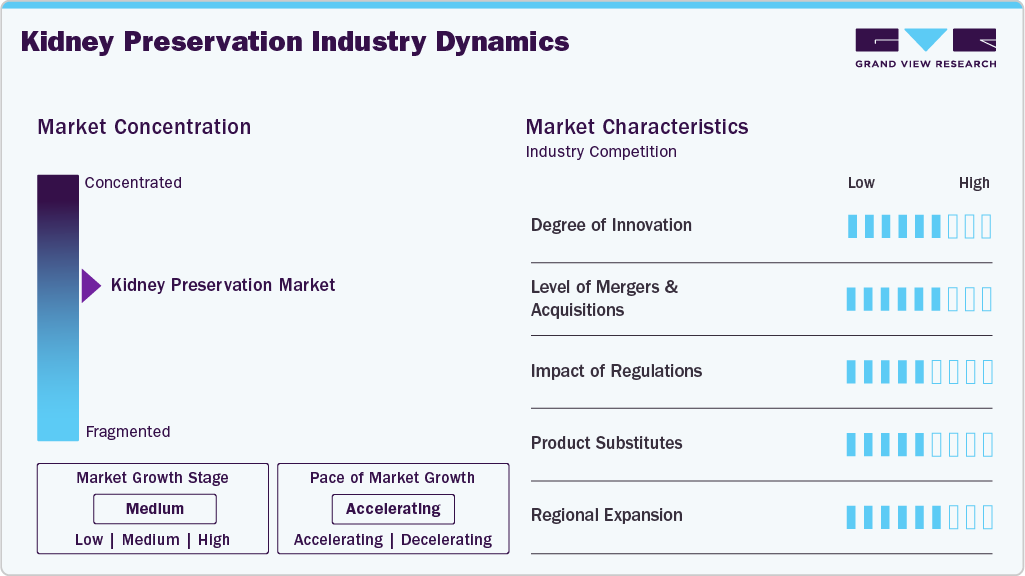
Market Concentration & Characteristics
The industry exhibits notable concentration and is characterized by a growing demand for organ transplantation, driven by an increasing prevalence of chronic kidney disease. The market is also influenced by advancements in preservation technologies, such as hypothermic machine perfusion and normothermic machine perfusion.
The industry has witnessed a significant degree of innovation, driven by the increasing demand for improved transplant outcomes and extended organ viability. Traditionally reliant on static cold storage, the industry is transitioning toward more advanced methods such as hypothermic and normothermic machine perfusion. These technologies offer dynamic preservation environments that better mimic physiological conditions, significantly enhancing graft function and post-transplant outcomes. For instance, in January 2025, Paragonix Technologies announced the world's first in-human use of its KidneyVault renal perfusion system (FDA cleared in October 2024), a device designed to preserve kidneys for transplantation. The system aims to improve kidney preservation and reduce the risk of delayed graft function. According to the company, the KidneyVault system has shown promising results in maintaining kidney function during preservation.
 To learn more about this report, Download Free Sample Report
 The industry has witnessed a significant level of mergers and acquisitions (M&A) activity, driven by the need to consolidate technological capabilities and expand global market reach. Key players are acquiring firms with proprietary preservation solutions to strengthen their R&D pipelines and address the rising demand for viable donor kidneys. For instance, in August 2024, Getinge announced the acquisition of Paragonix to significantly enhance its global healthcare portfolio and address critical needs in solid organ transplantation. This strategic move aims to expand access to Paragonix's advanced organ preservation systems. Integration is expected to foster new innovations by combining organ containment and blood perfusion technologies, ultimately redefining market standards and improving patient outcomes worldwide.
Regulations play a crucial role in the industry, with a high level of impact across product development, clinical use, and market adoption. The regulatory oversight from agencies such as the FDA, EMA, and regional bodies is stringent owing to the industry’s reliance on biologically sensitive solutions and advanced preservation technologies. Moreover, compliance with Good Manufacturing Practices (GMP), ISO certifications, and post-market surveillance protocols adds to operational costs, significantly affecting smaller players. However, regulatory clarity can enhance innovation by establishing safety benchmarks.
The threat of substitutes is primarily from alternative organ preservation and transplant techniques, which could diminish the reliance on traditional static cold storage (SCS) and hypothermic machine perfusion (HMP) methods. One emerging substitute is normothermic machine perfusion (NMP), which mimics physiological conditions and offers extended preservation time, better assessment of organ viability, and potentially improved post-transplant outcomes. Additionally, advancements in regenerative medicine, such as bioengineered kidneys and xenotransplantation (e.g., genetically modified pig kidneys), can present long-term substitute threats. These alternatives, though currently in experimental or early clinical phases, could significantly reduce demand for conventional kidney preservation solutions.
The industry is undergoing significant regional expansion, driven by rising incidences of end-stage renal disease (ESRD), growing organ transplant programs, and advancements in preservation technologies. Moreover, the increasing awareness about kidney transplantation and organ donation in the emerging regions, owing to government-backed healthcare reforms and improved transplant logistics, is significantly driving market expansion. Additionally, regional partnerships and the entry of global players into these markets are enhancing access to advanced preservation solutions.
Analyst Perspective
The kidney preservation market is positioned at the intersection of several long-term healthcare, nephrology, and biotechnological industry trends, including the growing global demand for renal transplantation, an increasing clinical focus on improving graft viability and long-term transplant outcomes, and continuous advancements in mechanical organ perfusion and specialized chemical preservation technologies. Rising global incidences of end-stage renal disease (ESRD) and chronic kidney disease (CKD) heavily fueled by escalating rates of diabetes and hypertension coupled with a persistent, severe shortage of available donor kidneys and an expanding transplant recipient waiting list, are creating significant opportunities for kidney preservation technology manufacturers, multi-specialty hospitals, and organ procurement organizations (OPOs). Healthcare providers are actively seeking more sophisticated solutions to extend renal viability, increase the clinical utilization of expanded criteria donor (ECD) or marginal kidneys, and improve post-transplant survival rates by mitigating the severe risk of delayed graft function (DGF).
Preservation Solution Insights
Based on preservation solution, the university of Wisconsin (UW) segment led the market with the largest revenue share of 75.3% in 2025, owing to its proven efficacy in maintaining organ viability during storage and transportation. The solution's unique composition, which includes a combination of antioxidants, energy substrates, and impermeable ions, helps to minimize cellular injury and maintain organ function during the preservation period. The solution's widespread adoption is also driven by its compatibility with a range of storage and transportation protocols, making it a versatile and reliable choice for kidney preservation.
The Institut Georges Lopez-1 (IGL-1) Solution is anticipated to experience significant growth due to its superior preservation capabilities and increasing adoption by transplant centers. IGL-1 Solution has been shown to reduce ischemia-reperfusion injury and improve graft function in kidney transplantation. The solution's ability to minimize cellular edema and maintain cellular homeostasis contributes to its growing popularity. Thus, the demand for IGL-1 Solution is expected to rise as transplant centers increasingly prioritize optimal organ preservation.
Technique Insights
Based on technique, the normothermic machine perfusion segment led the market with the largest revenue share of 54.9% in 2025 and is expected to witness the fastest growth owing to its ability to preserve kidneys at normal body temperature, thereby reducing ischemia-reperfusion injury. NMP allows for the assessment of kidney function and viability before transplantation, enabling better decision-making. As a result, NMP is expected to witness the fastest growth, driven by its potential to improve kidney transplant outcomes and increase the availability of donor kidneys. The increasing adoption of NMP can significantly contribute to the kidney preservation transplant industry, leading to better patient outcomes and improved graft survival rates.
The Static Cold Storage (SCS) segment is also expected to witness significant growth owing to its simplicity and cost-effectiveness. SCS involves cooling the kidney to a temperature of around 4°C, which slows down metabolic processes, reducing the demand for oxygen and nutrients. This technique has been widely adopted due to its ease of use and minimal requirement for specialized equipment. Moreover, the use of SCS also allows for a longer storage period, making it easier to transport kidneys over long distances, further increasing its demand for kidney preservation.
Donor Type Insights
Based on donor type, the living donor segment led the market with the largest revenue share of 26.6% in 2025, owing to the increasing number of living donor kidney transplants, which have become a preferred treatment option for patients with end-stage renal disease (ESRD). The advantages of living donor kidney transplants, such as better graft survival rates and reduced waiting times, have contributed to their growing popularity. Moreover, advancements in surgical techniques and immunosuppressive therapies have made living donor kidney transplants a safer and more effective option. The increasing demand for kidney transplants, coupled with the shortage of deceased donor kidneys, has further driven the growth of living donor kidney transplants.
The Donation after Circulatory Death (DCD) segment is expected to witness the fastest growth in the donor type segment owing to the increasing awareness about DCD and its benefits, such as increased organ availability. DCD donors, also known as non-heart-beating donors, are individuals who have suffered cardiac arrest and are declared dead based on circulatory criteria, rather than brain death. The growing acceptance of DCD kidneys is driving the growth of this segment, as it provides an alternative source of kidneys for transplantation, thereby addressing the shortage of available organs.
End Use Insights
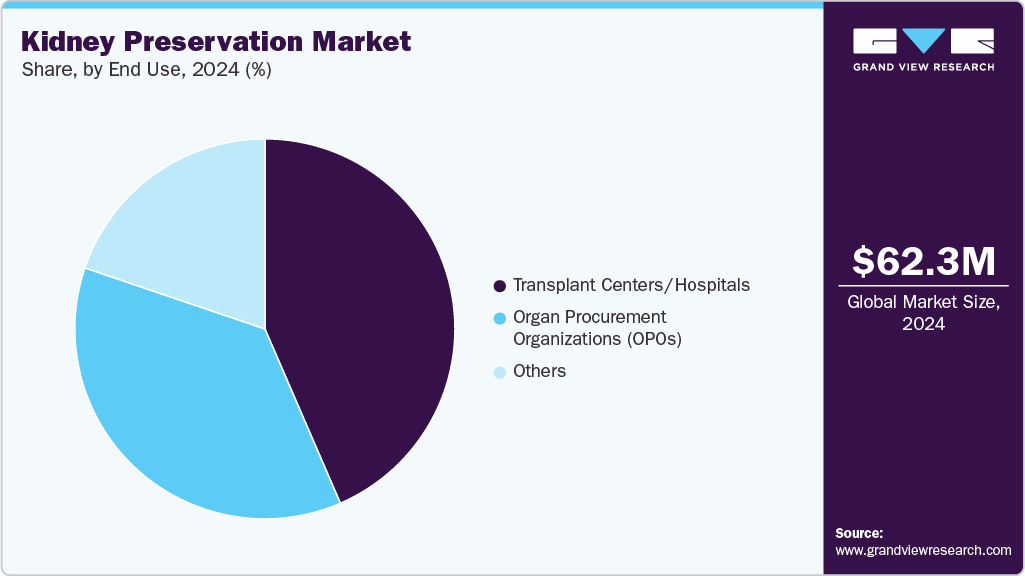
Based on end use, the transplant centers/hospitals segment led the market with the largest revenue share of 42.6% in 2025. This can be attributed to the complexity and specialized care required for kidney transplantation procedures. These centers have the necessary infrastructure, including trained personnel and equipment, to handle the complications of organ preservation and transplantation. The expertise and resources available at these centers enable them to effectively utilize kidney preservation technologies, thereby driving their dominance in the market.
 To learn more about this report, Download Free Sample Report
 The Organ Procurement Organizations (OPOs) segment is expected to witness the fastest growth owing to the increasing demand for organ transplants and the critical role OPOs play in managing the organ donation process. OPOs are responsible for coordinating organ donation, ensuring the quality of donated organs, and allocating them to transplant centers. The growing shortage of available kidneys for transplantation has led to an increased focus on optimizing organ procurement and preservation processes. Thus, OPOs are investing in advanced kidney preservation technologies to improve organ viability and increase transplant success rates, thereby fueling the segment growth.
Regional Insights
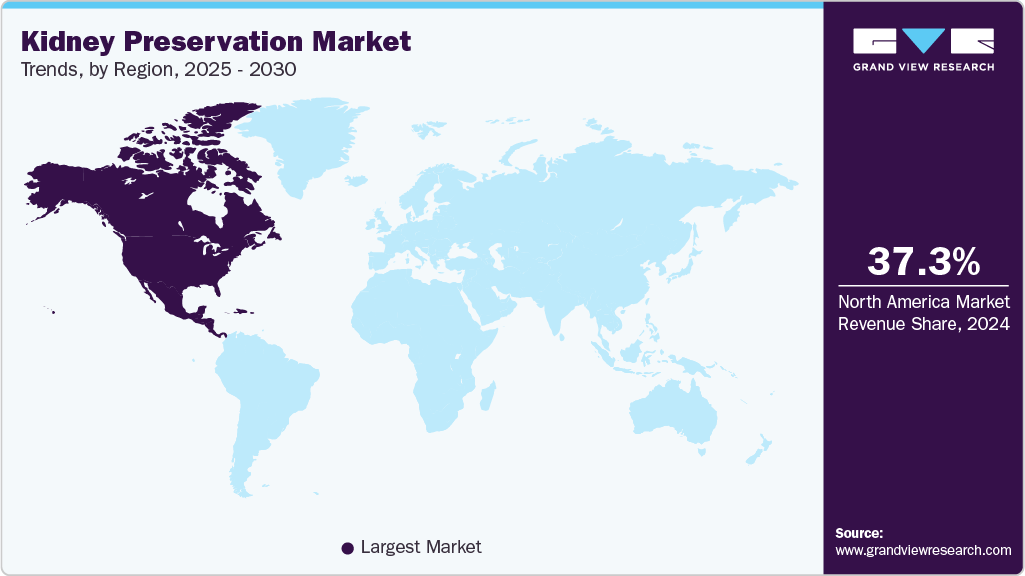
North America dominated the kidney preservation market with the largest revenue share of 37.3% in 2025. The North American industry is driven by a combination of robust organ transplantation infrastructure, rising incidences of end-stage renal disease (ESRD), and a well-established reimbursement landscape. The region benefits from advanced healthcare systems, which heavily invest in organ transplant research and innovative preservation technologies such as hypothermic machine perfusion and normothermic perfusion, further fueling market growth.
 To learn more about this report, Download Free Sample Report
 U.S. Kidney Preservation Market Trends
The kidney preservation market in the U.S. held the largest share in the North America region in 2025. This can be attributed to the high incidence of end-stage renal disease (ESRD) and a significant rise in kidney transplant procedures across the country. The U.S. healthcare ecosystem, supported by strong transplant networks such as UNOS, has been instrumental in streamlining donor-recipient matching and enhancing organ utilization rates. Regulatory backing from the FDA has further enabled quicker adoption of innovative devices and solutions in clinical practice.
Europe Kidney Preservation Market Trends
The kidney preservation market in Europe is driven by the increasing prevalence of end-stage renal disease and a rising effort to enhance organ transplantation outcomes. Moreover, the aging population in the region is expected to increase the overall demand for kidney transplantation in the region, thereby fueling the market growth. Collaborative initiatives like the Consortium on Organ Preservation in Europe (COPE) are also playing a crucial role in developing and trialing advanced preservation strategies, demonstrating improved organ function and survival rates.
The UK kidney preservation market is witnessing significant growth, owing to the increased demand for transplants and significant technological innovations. Moreover, the high prevalence of diseases such as chronic kidney disease is further increasing the demand for kidney preservation in the country. For instance, according to the NHS England, among adults aged 35 and over, 78% had normal kidney function while 22% had chronic kidney disease (CKD), with a higher prevalence among women (24%) than men (20%); 11% had severe CKD (stages 3-5).
The kidney preservation market in Germany is experiencing notable growth, driven by an increasing demand for organ transplants and advancements in preservation technologies. Government initiatives aimed at increasing organ donation rates, coupled with the country's emphasis on healthcare innovation, are expected to enhance the adoption of advanced preservation solutions in both academic and clinical settings.
Asia Pacific Kidney Preservation Market Trends
The kidney preservation market in the Asia Pacific region is driven by rising incidences of end-stage renal disease (ESRD), expanding transplantation programs, and increasing adoption of advanced preservation technologies. The region's healthcare infrastructure is evolving, with countries investing in modernizing transplant facilities and training programs to enhance organ donation and transplantation rates. Moreover, the ongoing investments and policy initiatives aimed at enhancing transplantation outcomes and addressing the growing burden of kidney diseases are further expected to fuel the market growth over the forecast period.
The Japan kidney preservation market is poised for rapid growth, driven by advancements in preservation technologies and increasing demand for organ transplants owing to the rising burden of kidney disease. Moreover, the country’s aging population is further expected to increase the demand for kidney transplantation over the forecast period. For instance, the number of elderly people in Japan surged to 36.25 million, accounting for a record high 29.3 percent of the population, according to the figures released by the Ministry of Internal Affairs and Communications.
The kidney preservation market in China is driven by the country’s expanding organ transplantation programs and government-led reforms aimed at increasing donor availability. The establishment of the China Organ Transplant Response System (COTRS) has streamlined donor allocation, improving organ utilization efficiency. Rising incidences of chronic kidney disease and a growing elderly population have further increased the demand for kidney transplants, further driving investment in preservation technologies.
The India kidney preservation market is driven by the rising incidence of chronic kidney disease and expanding transplant programs. Moreover, India’s heavy burden of diabetic nephropathy and hypertension drives a growing demand for kidney transplants, pushing investment in preservation technologies. Moreover, increasing government focus on improving rural healthcare infrastructure is expanding access to transplant services beyond urban centers.
Latin America Kidney Preservation Market Trends
The kidney preservation industry in Latin America is driven by increasing organ transplant procedures and advancements in preservation technologies. Countries such as Brazil are at the forefront, with a significant number of transplantation centers and a growing adoption of machine perfusion methods. However, the region faces challenges, including disparities in healthcare infrastructure, limited access to advanced preservation technologies in rural areas, and the need for standardized protocols across countries. Addressing these issues through regional collaborations and investments in healthcare infrastructure is crucial for optimizing kidney preservation and transplantation outcomes in Latin America.
Brazil’s kidney preservation market is driven by the country’s efficient organ procurement and allocation network, led by state-run transplant coordination centers, significantly boosting the utilization of preserved kidneys. The country is also witnessing a rising burden of end-stage renal disease linked to widespread diabetes and hypertension, further intensifying the need for reliable kidney preservation.
Middle East And Africa Kidney Preservation Market Trends
The kidney preservation market in the Middle East & Africa is witnessing significant growth, driven by diverse regional dynamics and healthcare advancements. In the Middle East, there are significant investments in transplantation infrastructure, driven by rising incidences of chronic diseases such as diabetes and cardiovascular conditions. Similarly, in Africa, there is a significant increase in transplantation activities, supported by international collaborations and efforts to improve healthcare systems.
The Saudi Arabia kidney preservation market is anticipated to expand in the forecast period. This can be attributed to the government-backed healthcare expansion and targeted reforms in the transplant sector. The Ministry of Health’s Vision 2030 initiative prioritizes organ transplantation as part of broader healthcare modernization, resulting in increased funding for transplant centers and preservation technology. Moreover, the rise in lifestyle-related kidney diseases, particularly diabetic nephropathy, is pushing demand for reliable preservation techniques to ensure successful transplantation outcomes.
Key Kidney Preservation Company Insights
The scenario in the kidney preservation market is highly competitive, with several players competing to enhance their positions. The major companies are undertaking various organic as well as inorganic strategies such as new product development, collaborations, acquisitions, mergers, and regional expansion for serving the unmet needs of their customers.
Key Kidney Preservation Companies
The following key companies have been profiled for this study on the kidney preservation market.
-
TransMedics Inc.
-
XVIVO
-
Bridge to Life Ltd.
-
Paragonix Technologies Inc.
-
OrganOx Limited
-
Organ Recovery Systems
-
Institut Georges Lopez (IGL)
-
Preservation Solutions, Inc.
-
Dr. Franz Köhler Chemie GmbH
-
Essential Pharmaceuticals LLC
Competitive Benchmarking
Category
Operating Strategies
Competitive Edge
Weakness
Established Players (TransMedics Inc., XVIVO, Bridge to Life Ltd., Paragonix Technologies Inc.)
- Mature companies focus on expanding kidney preservation portfolios across static cold storage, hypothermic machine perfusion, normothermic perfusion, and organ transport systems for deceased and living donor transplantation procedures.
- Companies emphasize advanced perfusion solutions, preservation fluids, automated monitoring technologies, and integrated organ assessment platforms that improve graft viability, reduce ischemic injury, and support extended donor utilization.
- Established manufacturers benefit from strong transplant center relationships, broad organ preservation product portfolios, extensive clinical validation, and established distribution networks across hospitals and transplant organizations.
- Advanced technologies such as hypothermic oxygenated perfusion, normothermic perfusion systems, real-time organ monitoring, and optimized preservation solutions improve transplant outcomes and organ utilization efficiency.
- High R&D investments, strict regulatory pathways, lengthy clinical validation timelines, and demanding post-transplant outcome requirements increase operational complexity for established players.
- Large organizations may face slower innovation cycles due to complex corporate structures, reimbursement challenges, and the need for extensive clinical evidence generation.
Emerging Players (Preservation Solutions, Inc., Dr. Franz Köhler Chemie GmbH, Essential Pharmaceuticals LLC)
- Emerging companies focus on niche kidney preservation technologies, portable perfusion devices, AI-enabled organ assessment tools, and cost-effective preservation systems for transplant centers and organ procurement organizations.
- These players prioritize innovation-driven strategies including transplant center collaborations, targeted technology launches, clinical partnerships, and development of portable or next-generation perfusion systems for marginal donor kidneys.
- Emerging companies benefit from faster innovation cycles and flexibility in developing specialized kidney preservation platforms tailored for extended criteria donor organs and high-risk transplantation procedures.
- Their ability to rapidly integrate digital monitoring, AI-based viability assessment, portable perfusion technologies, and novel preservation biomarkers strengthens differentiation in the competitive landscape.
- Emerging companies face limited financial resources, smaller commercial networks, and lower physician awareness compared to multinational transplant technology leaders.
- Challenges in obtaining regulatory approvals, generating large-scale transplant outcome data, and establishing long-term transplant surgeon confidence may restrict broader commercial adoption.
Recent Developments
-
In April 2025, the National Kidney Foundation (NKF) highlighted progress by Diatiro in advancing its Kidney Pod technology for kidney preservation during transplantation. Following prior FDA breakthrough designation, the company received FDA design approval and completed safety protocol requirements, supporting plans for FDA-approved clinical trials and future commercialization.
-
In January 2025, Paragonix Technologies announced the launch of the world’s first-in-human use of its KidneyVault Portable Renal Perfusion System following FDA clearance received in October 2024. The system enables hypothermic perfusion with real-time remote monitoring capabilities aimed at improving kidney preservation and transplant workflow efficiency.
-
In October 2024, Paragonix Technologies received FDA 510(k) clearance for its KidneyVault Portable Renal Perfusion System, a device designed to preserve kidneys for transplantation. The system aims to improve kidney preservation and transplantation outcomes. The clearance enables the use of the KidneyVault system in clinical settings.
Kidney Preservation Market Report Scope
Report Attribute
Details
Market size in 2025
USD 66.6 million
Estimated market size in 2026
USD 71.3 million
Projected market size by 2033
USD 114.9 million
Growth rate
CAGR of 7.1% from 2026 to 2033
Historical data
2021 - 2024
Forecast period
2026 - 2033
Quantitative units
Revenue in USD million/billion and CAGR from 2026 to 2033
Report coverage
Revenue forecast, company ranking, competitive landscape, growth factors, and trends
Segments covered
Preservation solution, technique, donor type, end-use and region
Regional scope
North America; Europe; Asia Pacific; Latin America; MEA
Country scope
U.S.; Canada; Mexico; Germany; UK; France; Italy; Spain; Norway; Denmark; Sweden; China; Japan; India; South Korea; Australia; Thailand; Brazil; Argentina; Saudi Arabia; South Africa; UAE; Kuwait;
Key companies profiled
TransMedics Inc.; XVIVO; Bridge to Life Ltd.; Paragonix Technologies Inc.; OrganOx Limited; Organ Recovery Systems; Institut Georges Lopez (IGL); Preservation Solutions, Inc.; Dr. Franz Köhler Chemie GmbH; Essential Pharmaceuticals LLC
Customization scope
Free report customization (equivalent up to 8 analysts' working days) with purchase. Addition or alteration to country, regional & segment scope.
Pricing and purchase options
Avail customized purchase options to meet your exact research needs. Explore purchase options
Global Kidney Preservation Market Report Segmentation
This report forecasts revenue growth at the global, regional and country levels and provides an analysis on the latest industry trends and opportunities in each of the sub-segments from 2021 to 2033. For this study, Grand View Research has segmented the global kidney preservation market report on the basis of preservation solution, technique, donor type, end use, and region:
-
Preservation Solution Outlook (Revenue, USD Million, 2021 - 2033)
-
University of Wisconsin
-
Histidin-Tryptophan-Ketoglutarat (HTK) Solution
-
Celsior Solution
-
Hypertonic Citrate Adenine (HC-A) Solution
-
Institute Georges Lopez (IGL-1) Solution
-
Others
-
-
Technique Outlook (Revenue, USD Million, 2021 - 2033)
-
Static Cold Storage
-
Hypothermic Machine Perfusion
-
Normothermic Machine Perfusion
-
-
Donor Type Outlook (Revenue, USD Million, 2021 - 2033)
-
Standard Criteria Donor (SCD)
-
Expanded Criteria Donor (ECD)
-
Donation after Brain Death (DBD)
-
Donation after Circulatory Death (DCD)
-
Living Donor
-
-
End Use Outlook (Revenue, USD Million, 2021 - 2033)
-
Transplant Centers / Hospitals
-
Organ Procurement Organizations (OPOs)
-
Others
-
-
Regional Outlook (Revenue, USD Million, 2021 - 2033)
-
North America
-
U.S.
-
Canada
-
Mexico
-
-
Europe
-
UK
-
Germany
-
France
-
Italy
-
Spain
-
Denmark
-
Sweden
-
Norway
-
-
Asia Pacific
-
Japan
-
China
-
India
-
Australia
-
South Korea
-
Thailand
-
-
Latin America
-
Brazil
-
Argentina
-
-
Middle East & Africa
-
South Africa
-
Saudi Arabia
-
UAE
-
Kuwait
-
-
Research Methodology
The kidney preservation market figures in this report are based on a proven research process that combines executive interviews with secondary research from proprietary databases, company filings, and recognized regulatory and institutional sources. Market size is built through value-chain sizing - reconciling supply-side and demand-side estimates - and triangulated with bottom-up and top-down approaches. Every estimate passes multiple levels of expert validation before publication, with each kidney preservation segment quantified using the revenue-capture definitions in the table below.
Segment Definition
Segment - Preservation Solution
Revenue capture definition
University of Wisconsin (UW)
Revenue is generated through the high-volume procurement and supply of the University of Wisconsin (UW) formulation, the established intracellular standard for multi-organ flushing and cold ischemic storage. Manufacturers derive recurring revenue from direct-to-hospital sales, multi-pack bag or canister shipments, and bulk distribution contracts with organ procurement networks specifically for renal preservation.
Histidin-Tryptophan-Ketoglutarat (HTK) Solution
Revenue is captured through the commercialization of Histidine-Tryptophan-Ketoglutarate (HTK) solution, a low-viscosity preservation and cardioplegic medium. Market participants earn revenue from the steady supply of multi-liter solution configurations required for rapid kidney cooling and extensive vascular bed flushing during organ harvesting.
Celsior Solution
Revenue flows from the sale of Celsior solution, an extracellular-type preservation fluid formulated to reduce cellular swelling and oxidative stress. Income is driven by specialized procurement contracts, specialized surgical pack inclusions, and routine liquid consumable sales to transplant networks.
Hypertonic Citrate Adenine (HC-A) Solution
Revenue is derived from the commercialization of Hypertonic Citrate Adenine (HC-A) solution lines, primarily utilized for the rapid flushing and cold storage of kidneys. Manufacturers capture value through generic-tier and proprietary formulation sales, bulk multi-pack distributions, and regional laboratory supply contracts.
Institute Georges Lopez (IGL-1) Solution
Revenue is generated through the distribution of IGL-1 preservation solution, an extracellular medium utilizing polyethylene glycol (PEG) as an oncotic agent. Income is captured through expanding regional hospital tender agreements, specialized regulatory approval pathways, and recurring single-use storage bag sales.
Others
Revenue flows from alternative, emerging, or regional kidney preservation liquids and chemical additives, such as Euro-Collins, Collins solution, or innovative gas-infused transport fluids. Manufacturers secure income via niche platform licensing, experimental laboratory agreements, and localized generic fluid supply channels.
Segment - Technique
Revenue capture definition
Static Cold Storage
Revenue flows through the traditional, high-volume baseline method of slowing organ metabolism by flushing the kidney with cold preservation solutions and placing it on ice. This segment drives massive, highly predictable consumable revenue for manufacturers through the recurring sale of baseline flushing fluids, sterile multi-layered organ storage bags, and ice-filled transplant transport containers.
Hypothermic Machine Perfusion
Revenue is derived from automated, active machine systems that continuously pump chilled, oxygenated preservation solutions through the kidney's vasculature ($0^\circ\text{C}$ to $10^\circ\text{C}$). Market participants generate revenue through a hybrid model combining specialized hardware capital console sales, multi-year engineering maintenance agreements, and high-volume recurring sales of single-use disposable perfusion cassettes, tubing sets, and specialized hypothermic perfusate media.
Normothermic Machine Perfusion
Revenue is captured through premium, next-generation ex-vivo perfusion systems that maintain kidneys at near-physiological body temperatures ($37^\circ\text{C}$) while supplying oxygen and essential nutrients. Companies command high profit margins via advanced multi-organ perfusion console sales, per-procedure software activation or "click" licensing fees, proprietary warm nutrient formulations, and automated real-time physiological parameter monitoring platforms.
Segment - Donor Type
Revenue capture definition
Standard Criteria Donor (SCD)
Revenue is generated through the standard, highly predictable procurement of preservation solutions and baseline transport consumables utilized for kidneys harvested from ideal, healthy deceased donors. Income is driven by traditional high-volume static cold storage kits, standard baseline solution shipments, and routine hospital tender cycles.
Expanded Criteria Donor (ECD)
Revenue is captured from specialized preservation technologies deployed for marginal kidneys harvested from older donors or those with pre-existing medical conditions. This segment drives high-margin revenue from advanced machine perfusion systems (HMP/NMP) and oxygenated solution setups required to dynamically assess, recondition, and validate organ viability before transplantation.
Donation after Brain Death (DBD)
Revenue flows from preservation devices and fluids utilized when organs are retrieved from neurologically deceased donors with intact cardiovascular function. Income is driven by standardized institutional procurement pathways, bulk solution shipments for immediate multiorgan flushing, and routine single-use perfusion circuit setups.
Donation after Circulatory Death (DCD)
Revenue is derived from advanced preservation solutions and warm/cold machine architectures allocated for kidneys harvested following cardiac arrest, which carry a high risk of warm ischemic injury. This segment generates significant high-value revenue through premium machine perfusion platforms, real-time vascular resistance software metrics, and specialized cellular repair perfusate mixtures necessary to minimize delayed graft function (DGF).
Living Donor
Revenue is captured from specialized, rapid-turnaround preservation consumables utilized during scheduled, living-donor kidney transplant surgeries. Income is driven by dedicated intraoperative flushing solutions, localized short-duration cold storage transport kits, and sterile surgical basin accessories.
Segment - End Use
Revenue capture definition
Transplant Centers / Hospitals
Revenue is generated through the direct institutional procurement, leasing, or public tendering of kidney preservation hardware and consumables to major medical networks and multi-specialty surgery centers. This segment drives massive capital inflows from high-end multi-platform machine perfusion installations, enterprise software networks, and long-term, high-margin preventive maintenance contracts.
Organ Procurement Organizations (OPOs)
Revenue is derived from bulk corporate purchasing and supply agreements with regional and national organ harvesting networks. OPOs drive massive, highly predictable recurring revenue for manufacturers through the large-scale acquisition of baseline cold storage preservation solutions, transportable perfusion machine kits, and bulk multi-pack single-use disposable consumables used immediately at the donor site.
Others
Revenue flows from secondary end-users, including academic nephrology research laboratories, independent bio-banking facilities, clinical trial support groups, and military medical institutes. Manufacturers capture revenue via low-footprint experimental perfusion configurations, raw-material solution components, and custom ad-hoc engineering support services.
Estimation Model
01 Scope Definition
02 Build the Product Base
03 Estimate Penetration
04 Revenue Conversion
What is being sized?
How large is total addressable market?
What portion of the market is migrating to next-gen tech?
How does volume become revenue?
PROCESS STEPS
PROCESS STEPS
PROCESS STEPS
PROCESS STEPS
Define Kidney Preservation Techniques Categories
Gather Facility Matrices
Survey Techniques Adoption Rates
Model Dual Revenue Streams
Scope Clinical Applications
Estimate Annual Transplant Volumes
Map Capital vs. Standalone Mix
Segment Value Tiers
Set Geographic Boundaries
Apply Product Mix Splits
Analyze Local Regulatory Approvals
Apply End-Use Channel and Sourcing Share
Align on base year & forecast horizon (2026-2033)
Project Macro Adjustments
Triangulate Vendor Shipments
Validate with Trade & Import Dynamics
DATA SOURCES
Global transplant networks, clinical nephrology journals, and international registry data.
DATA SOURCES
National health databases, institutional organ procurement registries, and prominent medical device manufacturer filings.
DATA SOURCES
Primary interviews with OPO Directors and Transplant Surgeons, global regulatory approval portals.
DATA SOURCES
Hospital tender archives, distributor pricing sheets, import/export databases, and expert consensus panel interviews.
Delivered Customizations
This report has been delivered with the following In-depth customizations
Client Request
Customization Delivered
Competitive Landscape Analysis
Conducted a comprehensive competitive landscape assessment for the global kidney preservation market, covering major manufacturers of preservation solutions, hypothermic and normothermic machine perfusion systems, organ transport devices, and transplant monitoring technologies. The study evaluated market positioning, product portfolios, strategic collaborations with transplant centers and organ procurement organizations (OPOs), regulatory approvals, innovation strategies, clinical trial activities, and regional expansion initiatives adopted by leading and emerging market participants.
Segment Analysis (Preservation Solution, Donor Type, Technique, and End-use)
Conducted a detailed segment-level assessment of the kidney preservation market across preservation solution, donor type, preservation technique, and end-use categories. The study analyzed utilization trends for static cold storage solutions, hypothermic machine perfusion, normothermic perfusion technologies, and emerging organ assessment platforms. It further evaluated donor segmentation including living donor, standard criteria donor, an extended criteria donor kidneys, along with adoption trends across transplant centers, hospitals, and organ procurement organizations. The analysis also assessed technological advancements, procedural preferences, reimbursement influences, and regional demand variations impacting segment growth.
Key Market Drivers Analysis
Conducted an in-depth driver analysis focused on the increasing incidence of kidney-related diseases and its impact on demand for kidney transplantation and preservation technologies. The study evaluated trends associated with chronic kidney diseases (CKD), end-stage renal disease (ESRD), diabetes, hypertension, and aging populations contributing to rising transplant requirements globally.
Frequently Asked Questions About This Report
The global kidney preservation market size was estimated at USD 66.6 million in 2025 and is expected to reach USD 71.3 million in 2026.
The global kidney preservation market is expected to grow at a compound annual growth rate of 7.1% from 2026 to 2033 to reach USD 114.9 million by 2033.
Some key players operating in the kidney preservation market include TransMedics Inc.; XVIVO; Bridge to Life Ltd.; Paragonix Technologies Inc.; OrganOx Limited; Organ Recovery Systems; Institut Georges Lopez (IGL); Preservation Solutions, Inc.; Dr. Franz Köhler Chemie GmbH; Essential Pharmaceuticals LLC
Key factors that are driving the market growth include the increasing prevalence of chronic kidney disease (CKD) and end-stage renal disease (ESRD), rising demand for organ transplantation, and advancements in preservation technologies. The growing number of patients awaiting kidney transplants is also fueling the demand for effective preservation solutions.
North America dominated the kidney preservation market with a 37.3% revenue share in 2025.
Asia Pacific is the fastest-growing region over the forecast period.
Normothermic machine perfusion held the largest revenue share in 2025 and is the fastest-growing area.
Living donor held the largest revenue share in 2025, while donation after circulatory death (DCD) is the fastest-growing area.
Transplant centers/hospitals held the largest revenue share in 2025, while organ procurement organizations (OPOs) is the fastest-growing area.
The University of Wisconsin (UW) solution segment accounted for the largest market share of 75.3% in 2025, owing to its proven efficacy in maintaining organ viability during storage and transportation.
About the Author(s)
Medical Devices Research Team
Healthcare · Medical DevicesThis report was authored by the medical devices research team at Grand View Research - comprising two research analysts, one senior research analyst, and one industry expert - with specialized expertise in the medical devices segment of the healthcare industry. All findings are based on proprietary healthcare databases, executive interviews, and regulatory analysis, subject to internal peer review prior to publication.
Last Updated:
Speak to Analyst

Customize this report to your needs - add regions, segments, or data points, with 20% free customization.
Or view our licence options:


ISO 9001:2015 & 27001:2022 Certified
We are GDPR and CCPA compliant! Your transaction & personal information is safe and secure. For more details, please read our privacy policy.


