
- Home
- »
- Homecare & Decor
- »
-
Kitchen Linen Market Size, Share, Trends Report, 2025-2030GVR Report cover

Kitchen Linen Market (2025 - 2030)
Size, Share & Trends Analysis Report By Type (Kitchen Towels, Oven Mitts & Gloves), By Material (Cotton, Terrycloth), By Application (Household, Commercial), By Distribution Channel (Offline, Online), By Region, And Segment Forecasts
Market Size, 2024
$12.2BMarket Estimate, 2026
$14.1BMarket Forecast, 2030
$19.6BCAGR, 2025–2030
8.4%Kitchen Linen Market Summary
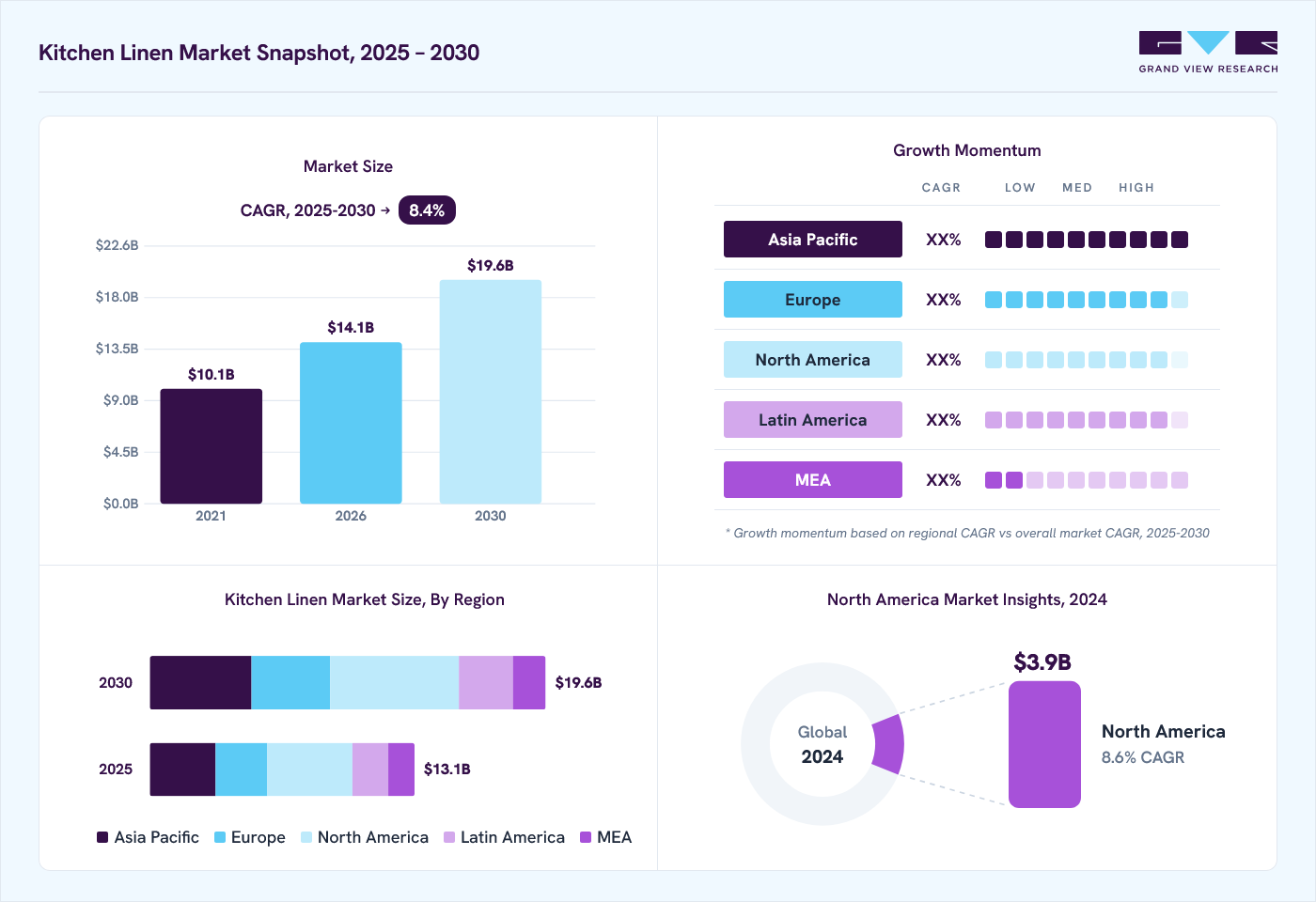
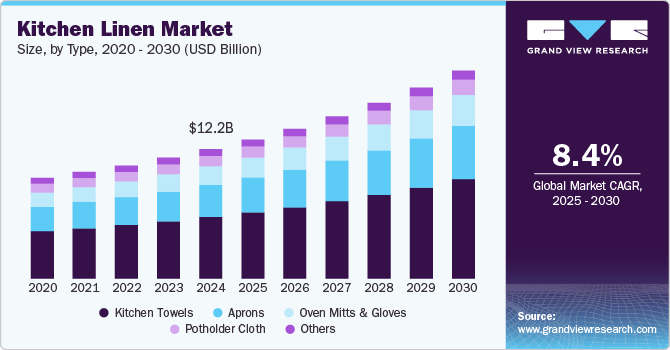
The global kitchen linen market size was valued at USD 12.2 billion in 2024 and is projected to grow from USD 14.1 billion in 2026 to USD 19.6 billion by 2030, at a CAGR of 8.4% from 2025 to 2030. North America dominated the market, accounting for a revenue share of 32.1% in 2024. The growing trend of home cooking and baking fuels the demand for kitchen linens. With more people preparing meals at home, especially after the COVID-19 pandemic, kitchen linens have become an everyday necessity.
 Source: Grand View Research, IR Documents, Primary Interviews, Paid DatabasesTo learn more about this report,
 Download Free Sample Report
 Key Market Trends & Insights
- In terms of type, kitchen towels segment accounted for a revenue of USD 13,115.0 million in 2024.
- Kitchen Towels is the most lucrative type segment registering the fastest growth during the forecast period.
Market Size & Forecast
- 2024 Market Size: USD 12.2 Billion
- 2030 Projected Market Size: USD 19.6 Billion
- CAGR (2025-2030): 8.4%
- North America: Largest market in 2024
Three ways to get this report
Buy it, customize it, or ask a question.Ask an Analyst
A direct answer, usually in 1 working day
- AccessReport author, directly
- Reply timeWithin 1 working day
- No sales callDirect answer only
- FormatEmail reply
- CostFree, no cost
Get the Full Report
What the study covers
- FormatsPDF · Excel · Dashboard
- Timeline2025–2030 annual, 2024 base
- Coverage20+ countries, 5 regions
- Companies10+ key players profiled
Customize the Report
20% free customization
- IncludeCountries, segments, points
- TailorTo your product definition
- ExtendDeeper competitor detail
- OrA fully bespoke study
- Turnaround5–10 working days
As cooking and baking become popular hobbies, consumers are investing in high-quality linens that enhance their experience in the kitchen while providing durability and ease of use.
 To learn more about this report, Download Free Sample Report
 The growing trend of home cooking and baking fuels the demand for kitchen linens. With more people preparing meals at home, especially after the COVID-19 pandemic, kitchen linens have become an everyday necessity. As cooking and baking become popular hobbies, consumers are investing in high-quality linens that enhance their experience in the kitchen while providing durability and ease of use.
Furthermore, there is a growing emphasis on kitchen aesthetics and interior design, which drives the demand for high-quality kitchen linen. Modern homeowners and renters pay greater attention to the look and feel of their kitchens, making stylish and well-coordinated kitchen linens a desirable addition. Social media platforms like Instagram and Pinterest showcase beautifully designed kitchens where linens play a key role in adding color, texture, and sophistication. This has led to an increased preference for decorative yet functional linens that complement the overall kitchen theme.
As people become more environmentally conscious, they are shifting away from disposable paper towels and opting for reusable fabric alternatives. Materials such as organic cotton, bamboo, and linen are gaining popularity because they are eco-friendly, durable, and biodegradable. Brands that focus on sustainable production practices, such as using natural dyes and ethically sourced materials, are attracting more consumers who prioritize environmental responsibility in their purchasing decisions.
In addition, hygiene concerns have played a role in increasing demand for kitchen linens. The importance of maintaining cleanliness in food preparation areas has led to increased use of antibacterial or antimicrobial-treated textiles. Many consumers are now choosing linens that can be washed frequently at high temperatures to eliminate germs and bacteria. This heightened awareness of hygiene, especially in households with children or elderly members, has contributed to the growing market for high-quality, easily washable kitchen linens.
The expanding variety and affordability of kitchen linens have made them accessible to a broader audience. Manufacturers are offering a wide range of products that cater to different budgets, from luxury designer linens to budget-friendly options. Customization, such as monogrammed towels or themed kitchen sets, has also contributed to the appeal, allowing consumers to personalize their kitchen spaces. With more choices available, people are increasingly incorporating kitchen linens into their daily routines, whether for practical use or decorative purposes.
Consumer Insights
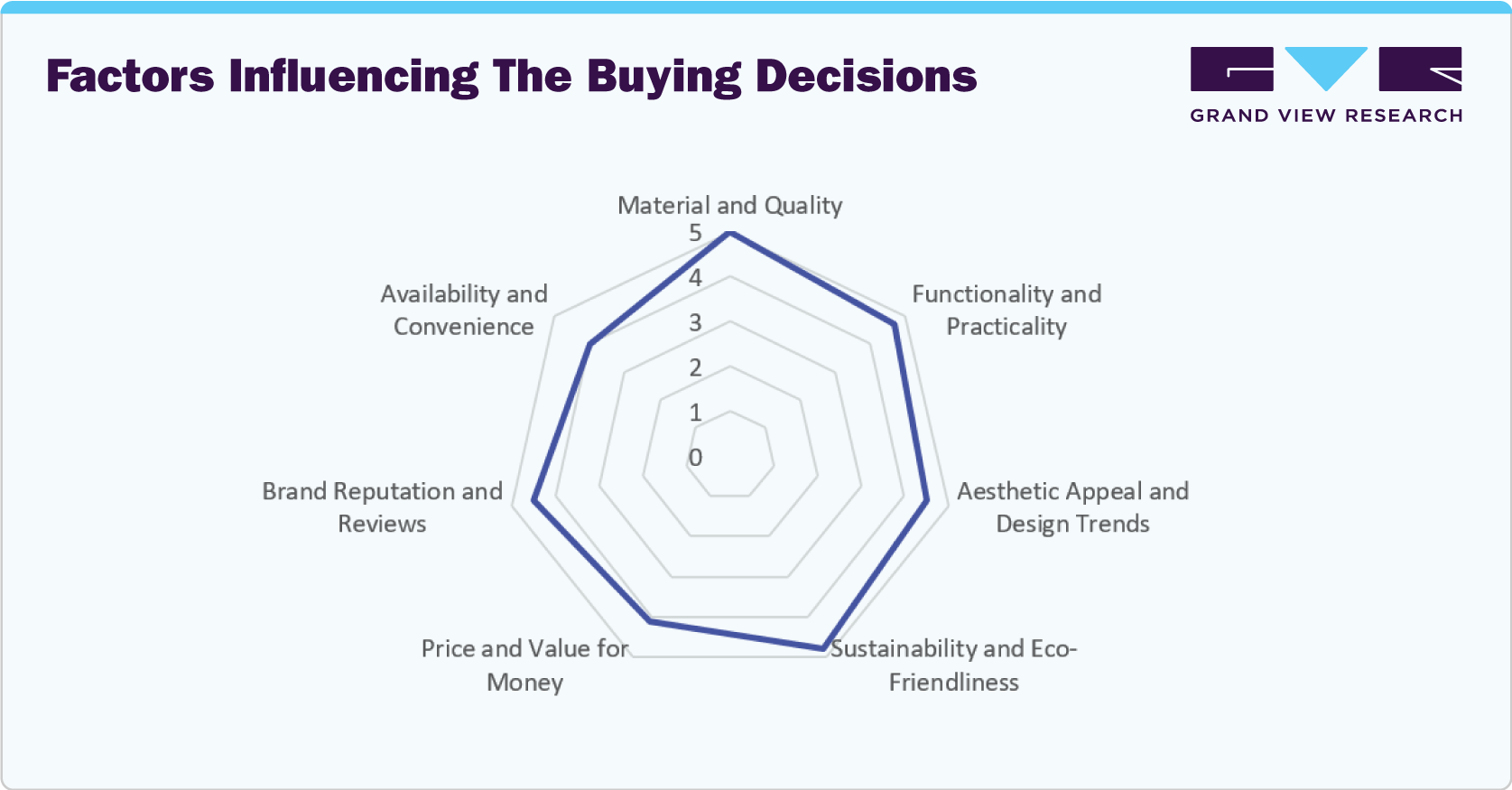
Consumer preferences in the kitchen linen industry are shaped by a combination of functionality, aesthetics, sustainability, and evolving lifestyle trends. Buyers seek kitchen textiles that not only enhance the look of their space but also offer durability, ease of maintenance, and eco-friendliness. The choice of fabric design plays a crucial role in purchasing decisions, as consumers look for products that align with their personal style and practical needs.
Consumers prioritize functionality when selecting kitchen linen, opting for fabrics that offer high absorbency, durability, and resistance to stains and odors. Quick-drying materials and antimicrobial treatments are particularly appealing to households looking for hygienic kitchen solutions. Many buyers seek multipurpose kitchen towels that can be used for drying hands, wiping spills, and cleaning surfaces without leaving streaks.
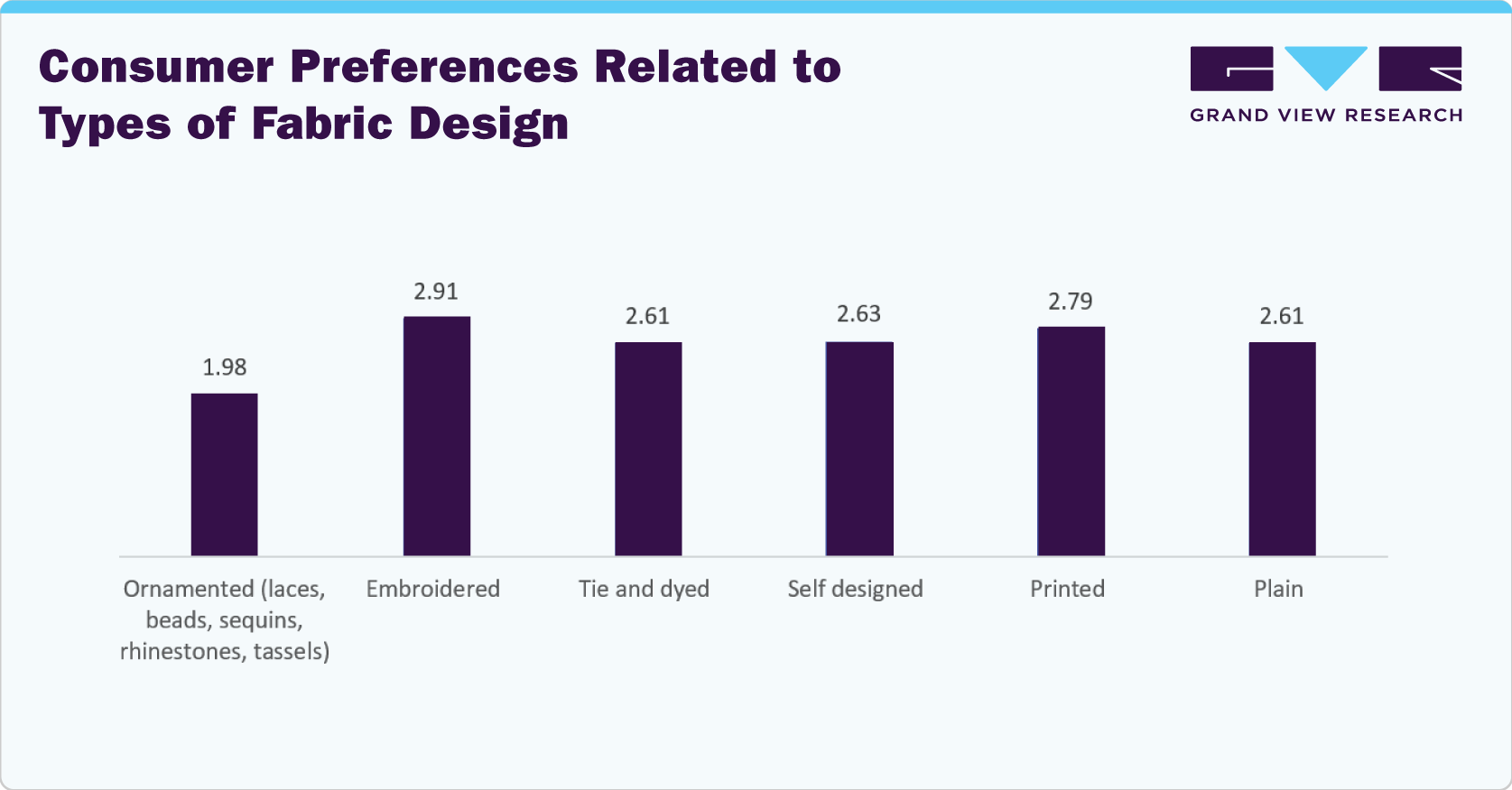
According to an article published in the International Journal of Pure and Applied Bioscience (IJPAB) in 2019, Consumer preferences for fabric designs indicate a strong inclination toward embroidered and printed textiles, followed by self-designed and tie-dyed options. In contrast, heavily ornamented fabrics rank the lowest. This suggests that consumers appreciate intricate yet practical designs that offer both aesthetic appeal and functionality. When it comes to purchasing kitchen linen, these preferences play a crucial role. Embroidered and printed kitchen textiles, such as tablecloths, napkins, and dish towels, are likely favored for their decorative yet durable nature, adding elegance without compromising usability. Self-designed and tie-dyed fabrics may appeal to those seeking uniqueness, while plain fabrics offer simplicity and versatility. However, heavily ornamented textiles, featuring embellishments like laces, beads, and sequins, may be less desirable for kitchen use due to their delicate nature and difficulty in maintenance.
 To learn more about this report, Download Free Sample Report
 Consumers are increasingly drawn to textured fabrics that add depth and a tactile experience to kitchen linens. Waffle-weave towels, honeycomb-textured dishcloths, and jacquard-woven table runners provide both visual appeal and improved functionality. These textures not only enhance the fabric’s absorbency but also give kitchen linens a more premium and decorative feel. Embroidered details, lace trims, and scalloped edges are popular among consumers looking for an elegant touch in their kitchen décor.
Budget-conscious buyers often look for multipack deals or promotions, while premium consumers prioritize high-end, durable fabrics. The perceived value of a product determined by longevity, functionality, and additional features impacts willingness to pay. While some shoppers opt for cost-effective solutions, others are willing to invest in long-lasting kitchen linens that provide superior performance and aesthetics.
Price is the primary consideration for consumers when purchasing home linens, with 68% prioritizing it in their decision-making. However, convincing buyers to opt for higher-priced options remains a challenge for brands. To encourage trade-ups, companies must highlight value-driven benefits, such as durability, which is a key factor for 55% of consumers.
 To learn more about this report, Download Free Sample Report
 Consumers prioritize convenience when purchasing kitchen linen, often opting for easily accessible products. While physical stores allow shoppers to feel and assess fabric quality, e-commerce platforms offer variety, competitive pricing, and home delivery. Subscription services for kitchen essentials and bulk-buying options also appeal to households seeking convenience. Retail availability, stock levels, and fast shipping times can influence purchasing behavior, particularly for buyers looking for immediate replacements or seasonal updates.
Type Insights
The kitchen towels in the kitchen linen industry accounted for about 47.4% of the revenue share in 2024. As households seek eco-friendly alternatives to disposable kitchen towels, reusable and highly absorbent kitchen towels have gained popularity. Additionally, the growing trend of home cooking and entertaining has driven the need for durable and stylish kitchen textiles. Consumers also prefer multifunctional kitchen towels that offer quick-drying, stain resistance, and aesthetic appeal, making them both practical and decorative. With advancements in fabric technology, such as antimicrobial treatments and enhanced durability, kitchen towels are becoming an essential part of modern kitchens, further fueling market growth.
Oven mitts & gloves in the kitchen linen industry are expected to grow at a CAGR of about 9.1% from 2025 to 2030. As more people engage in baking and meal preparation at home, the need for heat-resistant and durable protective gear has grown. Consumers seek high-quality oven mitts with enhanced insulation, non-slip grip, and ergonomic designs to prevent burns and improve the handling of hot cookware. Additionally, innovations such as silicone-coated and waterproof oven gloves are driving interest, offering better protection and versatility.
Material Insights
Cotton kitchen linen accounted for about 48.7% of revenue share in the kitchen linen industry in 2024. Cotton is highly preferred for kitchen textiles because it is soft, absorbent, and durable, making it ideal for towels, napkins, and oven mitts. Consumers are also becoming more environmentally conscious and gravitating towards natural, biodegradable materials like cotton, which aligns with the growing trend of sustainability. Additionally, cotton is easy to wash, maintain, and care for, which enhances its appeal for everyday kitchen use.
Demand for terrycloth kitchen linen is expected to grow at a CAGR of 9.0% from 2025 to 2030. Terrycloth's looped design enhances its ability to soak up moisture quickly, which is essential for tasks such as drying dishes, wiping surfaces, and cleaning spills. Additionally, terrycloth is soft and comfortable to use, which adds to its appeal in home kitchens. As consumers continue to prioritize practicality and long-lasting products, terrycloth’s functionality, coupled with its ease of maintenance, positions it as a go-to fabric for high-performance kitchen linens.
Application Insights
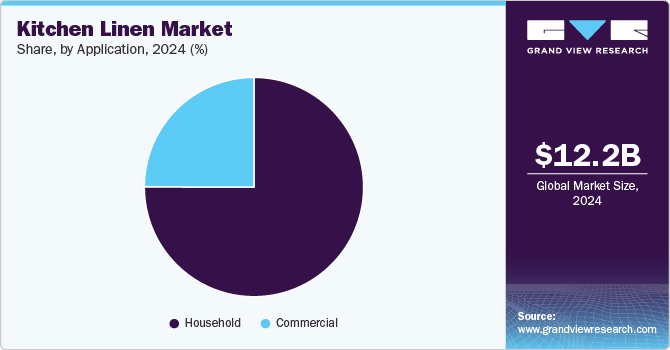
The household application accounted for a revenue share of about 75.04% of the kitchen linen industry in 2024. With the rise of cooking at home and the growing trend of kitchen design as a focal point of the home, consumers are investing more in high-quality kitchen linens like towels, napkins, and tablecloths to enhance both functionality and décor. Household kitchen linens are increasingly seen as essential items for maintaining hygiene, especially with a focus on health and sanitation. Additionally, products that are durable, absorbent, and easy to maintain are becoming more sought after.
 To learn more about this report, Download Free Sample Report
 Commercial applications in the kitchen linen industry are projected to grow at a CAGR of approximately 8.6% from 2025 to 2030. Restaurants, hotels, and catering businesses require high-quality kitchen linens such as towels, napkins, aprons, and tablecloths to maintain cleanliness, support food preparation, and enhance customer experiences. As food safety regulations become stricter, the demand for durable, easy-to-wash, and antimicrobial kitchen textiles is rising. Additionally, the increasing focus on creating a polished and consistent brand image in the hospitality sector is driving the need for stylish and coordinated linens. These factors combined are fueling the growing demand for kitchen linens in the commercial application segment.
Distribution Channel Insights
The offline sales for kitchen linen accounted for about 54.18% of the revenue share in 2024 through home improvement stores. Home improvement stores offer the advantage of allowing customers to see, touch, and feel the fabric quality of kitchen linens before making a purchase, which is particularly important for products like towels and oven mitts that rely on texture and durability. These stores also provide the convenience of immediate product access, catering to consumers who prefer to shop in person rather than wait for deliveries. Additionally, the growing trend of home renovation and kitchen remodeling has led to an increase in foot traffic to home improvement stores, where customers are also purchasing kitchen textiles to complement their updated spaces.
Online sales for kitchen linens are expected to grow at a significant CAGR from 2025 to 2030. Consumers are drawn to the ability to shop at any time, without the need to visit physical stores, and can have their kitchen linens delivered directly to their doorstep. Additionally, the ease of accessing detailed product information, such as fabric composition, care instructions, and user reviews, helps shoppers make more confident decisions from the comfort of their homes. The availability of a wider range of products, including unique and specialized items not always stocked in local stores, further drives online sales.
Regional Insights
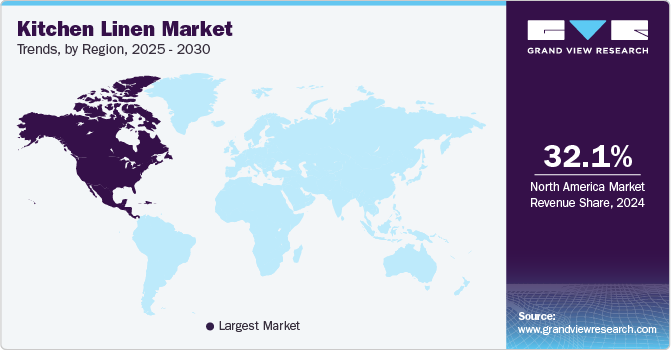
The kitchen linen market in North America accounted for a revenue share of 32.07% of the global market revenue in 2024. With more consumers spending time at home and preparing meals themselves, especially in light of the pandemic, the need for high-quality, durable kitchen linens has grown. Consumers are increasingly focusing on home aesthetics, looking for kitchen textiles that match modern, trendy interiors. The rise in eco-consciousness in the region has further contributed to the demand, as many buyers now prioritize sustainable fabrics like organic cotton and linen. Additionally, innovations in kitchen textiles, such as antimicrobial and stain-resistant products, are gaining popularity in North America as consumers seek practical yet stylish solutions to meet their everyday needs.
 To learn more about this report, Download Free Sample Report
 U.S. Kitchen Linen Market Trends
The U.S. kitchen linen market accounted for a significant revenue share in 2024. With more Americans cooking at home due to lifestyle changes and health-consciousness, there is a greater need for functional and high-quality kitchen textiles like towels, napkins, and dishcloths. Additionally, the U.S. market sees a significant focus on kitchen aesthetics, with consumers seeking kitchen linens that align with contemporary trends and enhance the overall look of their kitchens. There is also a growing preference for environmentally friendly materials, such as organic cotton and linen, driven by a heightened awareness of sustainability.
Europe Kitchen Linen Market Trends
The kitchen linen market in Europe accounted for a share of over 19.45% of the global market revenue in 2024. The rise in home cooking, particularly in countries like Italy, France, and Spain, has driven demand for high-quality kitchen textiles like dish towels, aprons, and table linens. The increasing popularity of home décor as a form of personal expression has also led to greater interest in stylish, well-designed kitchen linens that complement modern kitchens. Moreover, in countries with rich culinary traditions, kitchen linens are seen as essential tools for both functionality and aesthetics, further fueling market growth.
Asia Pacific Kitchen Linen Market Trends
The Asia Pacific kitchen linen market accounted for a revenue share of over 24.70% of the global market revenue in 2024. In countries like China, India, and Japan, where cooking at home remains a cultural staple, the demand for high-quality kitchen linens such as dish towels, aprons, and tablecloths is expanding. Additionally, there is a shift towards eco-consciousness, with consumers opting for sustainable materials like organic cotton and bamboo, which are gaining popularity in the region. The increasing influence of Western home décor trends is also shaping consumer preferences, leading to greater interest in kitchen linens that combine both functionality and design.
Key Kitchen Linen Company Insights
Some key companies include Williams-Sonoma Inc., Coyuchi., All Cotton and Linen, and Rough Linen.
-
Williams-Sonoma Inc. is an American retail company known for its high-quality home goods, including kitchen linens. The company offers an extensive selection of kitchen textiles, ranging from premium cotton and linen towels to aprons, oven mitts, and pot holders. Their kitchen linens are designed with both functionality and style in mind, with a focus on durability, absorbency, and aesthetic appeal. Williams-Sonoma is renowned for its luxurious offerings, such as monogrammed towels and limited-edition collections, catering to high-end consumers. The brand emphasizes craftsmanship and uses premium materials, making their products a staple for both professional chefs and home cooks. With a combination of traditional and contemporary designs, Williams-Sonoma’s kitchen linens cater to diverse tastes while maintaining a strong commitment to quality.
-
All Cotton and Linen is a brand that specializes in providing high-quality, sustainable kitchen linens, primarily made from natural fibers such as cotton and linen. Known for its commitment to eco-friendly and durable products, the company offers a wide range of kitchen textiles, including dish towels, napkins, aprons, tablecloths, and oven mitts. Their kitchen linens are praised for their absorbency, softness, and strength, designed to meet both functional and aesthetic needs. All Cotton and Linen emphasizes the use of organic materials, appealing to consumers who prioritize sustainability without compromising on quality.
Key Kitchen Linen Companies:
The following are the leading companies in the kitchen linen market. These companies collectively hold the largest market share and dictate industry trends.
- All-Clad
- Williams-Sonoma Inc.
- Coyuchi.
- All Cotton and Linen
- Rough Linen
- Stoffer Home
- Yves Delorme, Inc.
- McGee & Co.
- Kitchen Linen Company
- Maison d’Hermine
Recent Developments
-
In September 2023, Our Place expanded into kitchen linens with its Cookwear collection. The collection featured stylish and functional items like aprons, dish towels, and hot mitts designed to elevate home cooking experiences. Notably, it included a collaboration with popular singer Selena Gomez.
-
In November 2022, Tekla announced the launch of a new kitchen linen collection with a focus on quality and sustainability. The line features essentials such as tablecloths, napkins, and aprons, available in six colors. The collection is designed to be both functional and visually appealing, reflecting Tekla's commitment to durability and simplicity. The launch continues the brand's dedication to creating timeless and eco-friendly products for everyday use.
Kitchen Linen Market Report Scope
Report Attribute
Details
Market size in 2024
USD 12.2 billion
Estimated market size in 2026
USD 14.1 billion
Projected market size by 2030
USD 19.6 billion
Growth rate
CAGR of 8.4% from 2025 to 2030
Actual data
2018 - 2024
Forecast period
2025 - 2030
Quantitative units
Revenue in USD billion, and CAGR from 2025 to 2030
Report coverage
Revenue forecast, company ranking, competitive landscape, growth factors, and trends
Segments covered
Type, material, application, distribution channel, region
Regional scope
North America; Europe; Asia Pacific; Central & South America; Middle East & Africa
Country scope
U.S.; Canada; Mexico; Germany; UK; France; Italy; Spain; China; Japan; India; Australia; South Korea; Brazil; South Africa
Key companies profiled
All-Clad; Williams-Sonoma Inc.; Coyuchi.; All Cotton and Linen; Rough Linen; Stoffer Home; Yves Delorme, Inc.; McGee & Co.; Kitchen Linen Company; Maison d’Hermine
Customization
Free report customization (equivalent up to 8 analysts working days) with purchase. Addition or alteration to country, regional & segment scope.
Pricing and purchase options
Avail customized purchase options to meet your exact research needs. Explore purchase options Global Kitchen Linen Market Report Segmentation
This report forecasts revenue growth at the global, regional and country levels and provides an analysis of the latest industry trends and opportunities in each of the sub-segments from 2018 to 2030. For this study, Grand View Research has segmented the global kitchen linen market report based on the type, material, application, distribution channel, and region:
-
Type Outlook (Revenue, USD Billion, 2018 - 2030)
-
Kitchen Towels
-
Aprons
-
Oven Mints & Gloves
-
Potholder Cloth
-
Others
-
-
Material Outlook (Revenue, USD Billion, 2018 - 2030)
-
Cotton
-
Linen
-
Microfiber
-
Terrycloth
-
Others
-
-
Application Outlook (Revenue, USD Billion, 2018 - 2030)
-
Household
-
Commercial
-
-
Distribution Channel Outlook (Revenue, USD Billion, 2018 - 2030)
-
Offline
-
Home Improvement Stores
-
Hypermarkets Supermarkets
-
Specialty Stores
-
Others
-
-
Online
-
-
Regional Outlook (Revenue, USD Billion, 2018 - 2030)
-
North America
-
U.S.
-
Canada
-
Mexico
-
-
Europe
-
Germany
-
UK
-
France
-
Italy
-
Spain
-
-
Asia Pacific
-
China
-
India
-
Japan
-
Australia
-
South Korea
-
-
Central & South America
-
Brazil
-
-
Middle East & Africa
-
South Africa
-
-
Frequently Asked Questions About This Report
The global kitchen linen market size was valued at USD 12.2 billion in 2024 and is estimated at USD 14.1 billion for 2026.
The global kitchen linen market is expected to grow at a CAGR of 8.4% from 2025 to 2030, reaching USD 19.6 billion by 2030.
The kitchen towels in the kitchen linen industry accounted for about 47.4% of the market in 2024, rising due to increasing consumer preference for reusable, eco-friendly alternatives to paper towels and the growing trend of aesthetically designed kitchen textiles. Additionally, heightened hygiene awareness and home cooking trends are driving their frequent use.
Some key players operating in the kitchen linen market include All-Clad, Williams-Sonoma Inc., Coyuchi., All Cotton and Linen, Rough Linen, Stoffer Home, Yves Delorme, Inc., McGee & Co., Kitchen Linen Company, Maison d’Hermine
Key factors driving the kitchen linen market include, changing consumer preferences, rising hygiene awareness, sustainability trends, increasing home cooking, and advancements in fabric technology.
About the Author(s)
Homecare & Decor Research Team
Consumer Goods · Homecare & DecorThis report was authored by the homecare & decor research team at Grand View Research - comprising two research analysts, one senior research analyst, and one industry expert - with specialized expertise in the homecare & decor segment of the consumer goods industry. All findings are based on proprietary consumer goods databases, executive interviews, and regulatory analysis, subject to internal peer review prior to publication.
Last Updated:
Speak to Analyst

Customize this report to your needs - add regions, segments, or data points, with 20% free customization.
Or view our licence options:


ISO 9001:2015 & 27001:2022 Certified
We are GDPR and CCPA compliant! Your transaction & personal information is safe and secure. For more details, please read our privacy policy.


