
- Home
- »
- Medical Devices
- »
-
Lacrimal Cannula Market Size, Share & Trends Report, 2033GVR Report cover
![Lacrimal Cannula Market (2026 - 2033)Report]()
Lacrimal Cannula Market (2026 - 2033)
Size, Share & Trends Analysis Report By Product (Reusable Lacrimal Cannulas, Disposable Lacrimal Cannulas), By Design (Straight, Curved), By Gauge Size (19G-21G, 22G-24G), By Application, By End-use, By Region, And Segment Forecasts
Market Size, 2025
$21.0MMarket Estimate, 2026
$22.4MMarket Forecast, 2033
$36.7MCAGR, 2026–2033
7.3%Lacrimal Cannula Market Summary
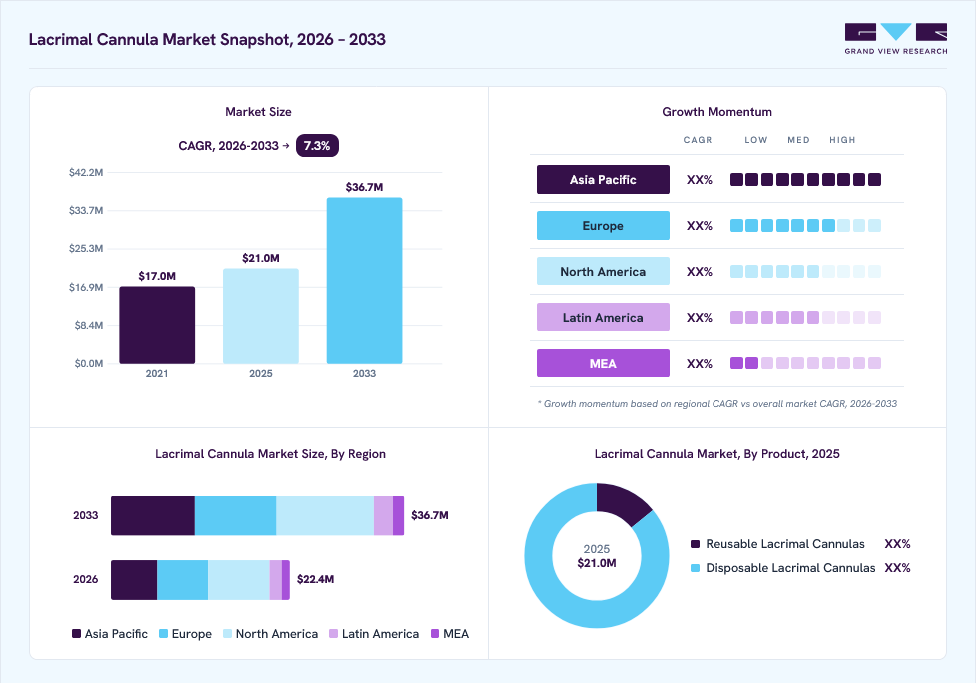
The global lacrimal cannula market size was valued at USD 21.0 million in 2025 and is projected to grow from USD 22.4 million in 2026 to USD 36.7 million by 2033, at a CAGR of 7.3% from 2026 to 2033. North America dominated the market, accounting for a revenue share of 34.5% in 2025. The rising burden of lacrimal drainage disorders, including nasolacrimal duct obstruction, canalicular stenosis, chronic dacryocystitis, and congenital tear duct obstruction, is driving demand for lacrimal cannulas.
Key Market Trends & Insights
- By product: The disposable lacrimal cannulas segment dominated with the largest share of 85.9% in 2025.
- By design: The curved bracelet segment held the largest revenue share of 70.1% in 2025.
- By gauge size: The 22G-24G segment led the market with the largest revenue share of 51.9% in 2025.
- By application: The lacrimal irrigation segment led the market with the largest revenue share in 2025.
- By end use: The hospitals segment led the market with the largest revenue share in 2025.
Regional Highlights
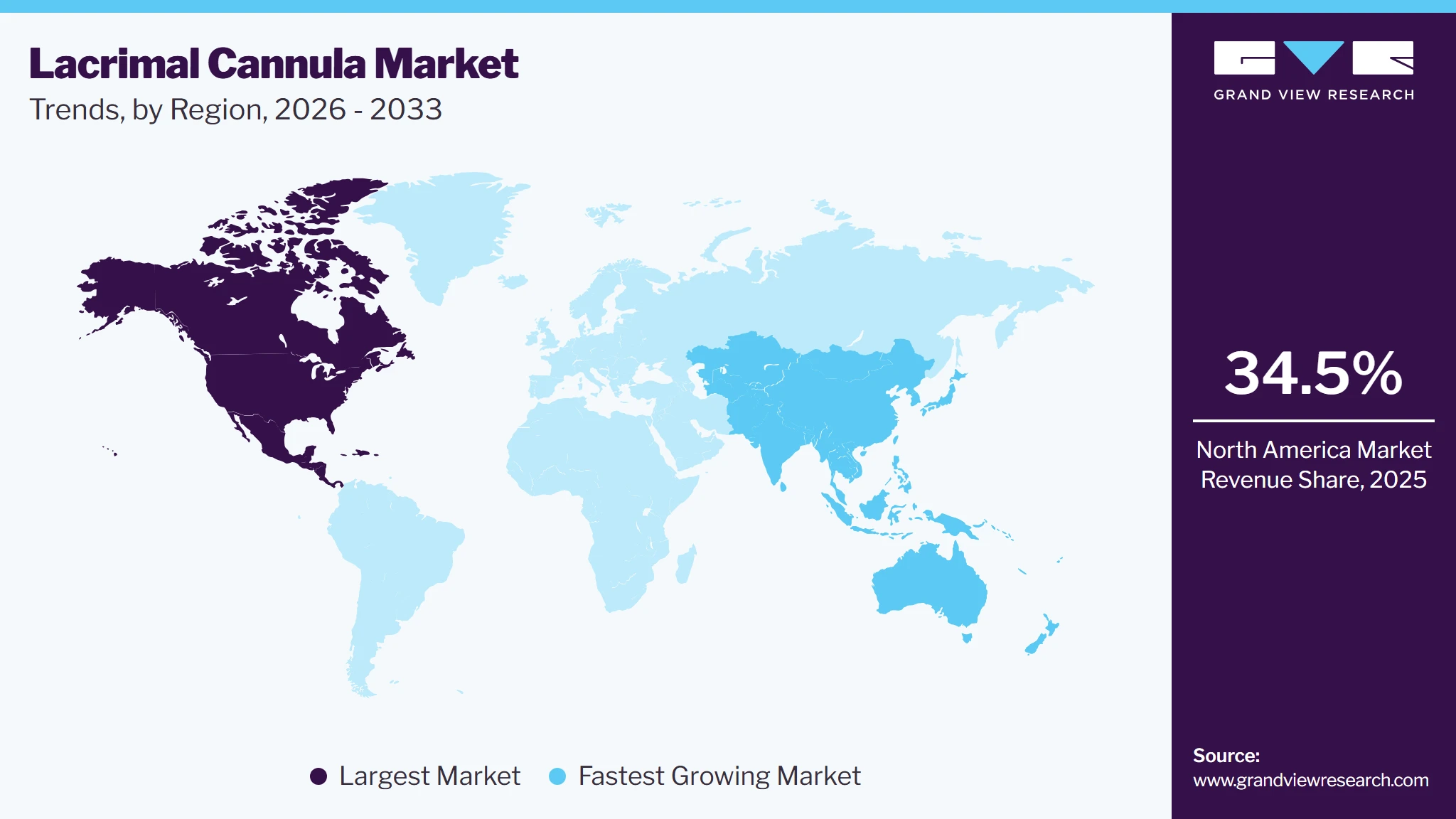
- Largest regional market: North America (34.5% revenue share, 2025)
- Fastest-growing regional market: Asia Pacific (highest CAGR, 2026-2033)
- By country: The U.S. held the largest market share in 2025.
Market Size & Forecast
- Market size in 2025: USD 21.0 Million
- Estimated market size in 2026: USD 22.4 Million
- Projected market size by 2033: USD 36.7 Million
- CAGR (2026-2033): 7.3%
Three ways to get this report
Buy it, customize it, or ask a question.Ask an Analyst
A direct answer, usually in 1 working day
- AccessReport author, directly
- Reply timeWithin 1 working day
- No sales callDirect answer only
- FormatEmail reply
- CostFree, no cost
Get the Full Report
What the study covers
- FormatsPDF · Excel · Dashboard
- Timeline2026–2033 annual, 2025 base
- Coverage20+ countries, 5 regions
- Companies10+ key players profiled
Customize the Report
20% free customization
- IncludeCountries, segments, points
- TailorTo your product definition
- ExtendDeeper competitor detail
- OrA fully bespoke study
- Turnaround5–10 working days
These disorders can impair normal tear drainage and cause symptoms such as excessive tearing, recurrent eye infections, irritation, and inflammation. Diagnosis requires assessment of the lacrimal drainage pathway to identify the location and extent of obstruction. Lacrimal irrigation and probing are commonly used for this purpose, with cannulas enabling controlled delivery of saline or other fluids through the canalicular system. In some cases, these procedures are also performed as part of therapeutic management to restore or evaluate drainage. Ophthalmologists manage a broader range of acquired and congenital lacrimal conditions, and the need for specialized instruments for examination and treatment increases. This supports the consumption of lacrimal cannulas across hospitals and ophthalmic clinics.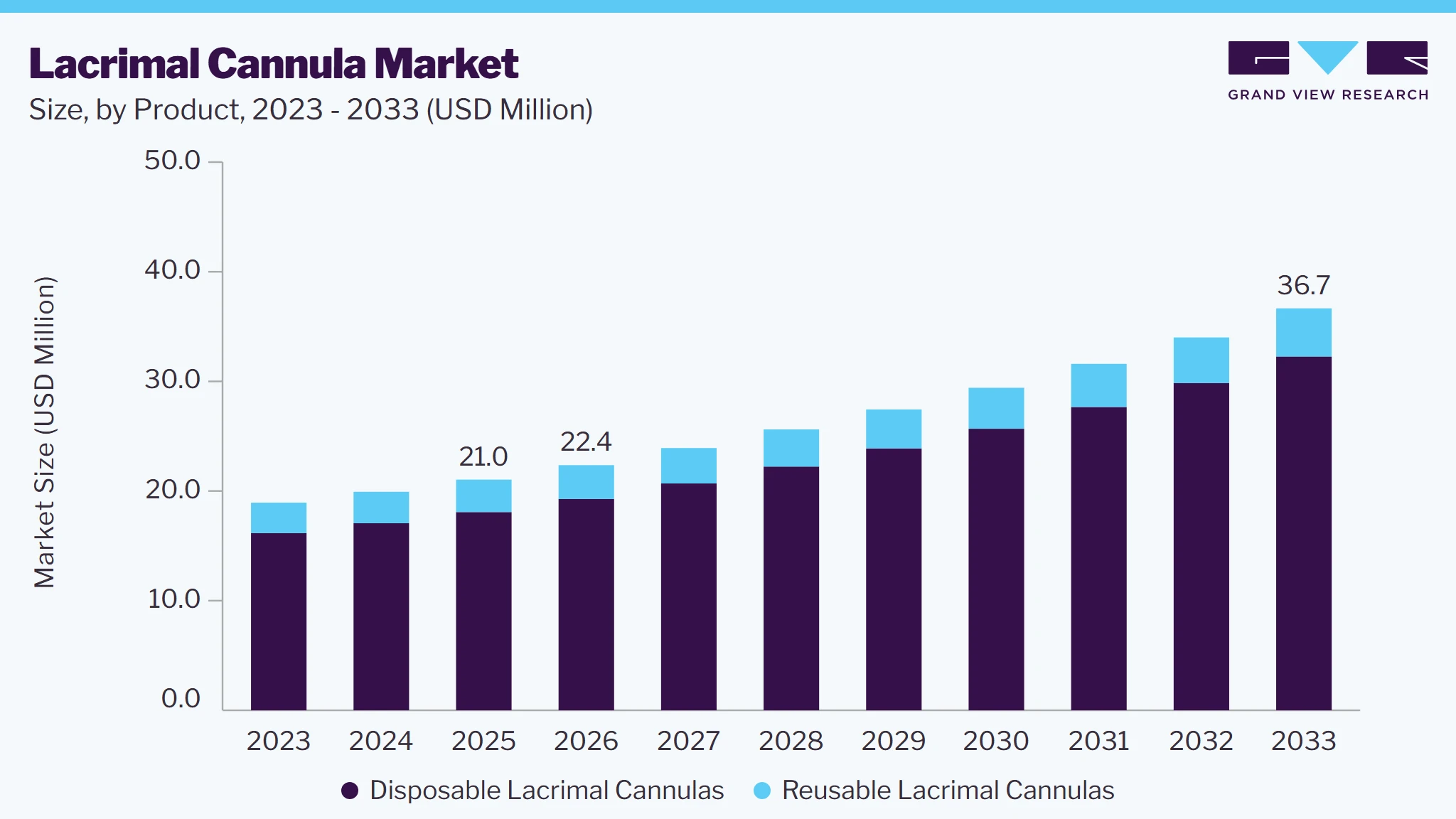
For instance, data published by the American Academy of Ophthalmology in 2025 indicate that epiphora is a very common complaint and that nasolacrimal duct obstruction (NLDO) is the most common cause of persistent epiphora. The incidence of NLDO is reported as 20.24 per 100,000. In this incidence study, NDLO accounted for 31.8% of all chronic epiphora and 67.6% of all tear drainage pathway obstructions.
The expansion of specialty eye-care infrastructure is supporting the market by increasing access to hospitals, dedicated ophthalmology centers, ambulatory surgical facilities, and subspecialty services for diagnosing and treating lacrimal drainage disorders. As more healthcare facilities develop capabilities in oculoplastic and lacrimal care, the number of settings performing procedures such as lacrimal irrigation, probing, nasolacrimal duct assessment, and canalicular interventions continues to expand. Lacrimal irrigation requires specialized cannulas to deliver saline in a controlled manner through the canalicular system, making these instruments an important component of lacrimal diagnostic practice. The development of specialized eye-care infrastructure also improves access to trained ophthalmologists and dedicated surgical teams, supporting the use of precision instruments. Expansion across emerging healthcare markets creates additional opportunities for manufacturers to supply reusable and disposable cannulas in different gauges, lengths, and configurations. As specialty facilities expand their diagnostic and surgical capabilities, the addressable base of healthcare providers using lacrimal cannulas also broadens, supporting market demand.
Expansion of Specialized Ophthalmic Care Networks, 2025
Month & Year
Company / Transaction
Description
Jan-25
Optegra Eye Health Care - Iris Eye Clinics
Optegra Eye Health Care acquired a 51% stake in Iris Eye Clinics in the Netherlands through a joint venture with Quadrum Capital. The transaction expanded Optegra’s European ophthalmology network and added Iris Eye Clinics to its operations in the Dutch eye-care market.
May-25
Unifeye Vision Partners - Brooks Eye Associates
Unifeye Vision Partners partnered with Brooks Eye Associates, an ophthalmology practice and surgery center in Texas, alongside a strategic growth investment from Morgan Stanley Private Credit and participation from PGIM Private Capital. The partnership expanded UVP’s ophthalmology network and supported further geographic and ambulatory surgical expansion.
Market Dynamics
The market is supported by the clinical need to diagnose and manage lacrimal drainage disorders, the expansion of ophthalmic surgical services, and the increased use of specialized lacrimal procedures. Lacrimal cannulas are used in irrigation and probing to assess nasolacrimal duct and canalicular patency, creating recurring demand across ophthalmology and oculoplastic settings. Product development is focused on different gauges, lengths, tip designs, straight or curved profiles, and reinforced structures to address varying procedural requirements. The need for specialized clinical skills, limited differentiation among standard cannulas, and reprocessing requirements for reusable instruments can restrict adoption in some healthcare settings.
The adoption of minimally invasive lacrimal procedures supports the market by increasing the use of specialized instruments for controlled access, irrigation, probing, and assessment of the lacrimal drainage system. Endoscopic dacryocystorhinostomy and other minimally invasive techniques require precise instruments that can access narrow and delicate lacrimal structures while supporting controlled fluid delivery. Recent clinical evidence shows continued development and refinement of endoscopic lacrimal procedures, with improvements in surgical techniques and procedural efficiency. This creates demand for lacrimal cannulas with appropriate gauges, lengths, tip designs, and flexibility, thereby expanding the use of specialized cannulas across ophthalmology and lacrimal surgery settings.
Lacrimal cannulas are used within the delicate lacrimal drainage system for procedures such as irrigation, probing, and assessment of nasolacrimal duct patency, requiring appropriate clinical technique and anatomical knowledge. The need for trained ophthalmic professionals can limit the use of lacrimal cannulas in healthcare settings with limited access to specialists or lacrimal surgery expertise. This factor slows adoption across smaller hospitals and facilities with limited ophthalmology capabilities, particularly in developing healthcare markets, thereby restraining broader market expansion.
Customization of surgeon requirements represents an opportunity for the lacrimal cannula industry, as lacrimal procedures require instruments with varying levels of access, flexibility, and fluid-delivery control. Manufacturers can expand their product offerings through variations in gauge, length, straight or curved profiles, malleable shafts, blunt tips, and side-port configurations to accommodate different procedural techniques and surgeon preferences. Existing portfolios already demonstrate this demand, with products available in multiple gauges and configurations for lacrimal procedures. Expanding customized options can improve procedural suitability and handling, encourage hospitals and ophthalmic centers to select specialized cannulas, and create additional product variants for manufacturers, supporting market expansion.
Market Concentration & Characteristics
The lacrimal cannula industry is evolving through product design improvements, broader configuration options, and greater focus on procedural precision. Manufacturers offer cannulas in different gauges, lengths, shaft structures, tip designs, and straight or curved configurations to address specific lacrimal irrigation, probing, and surgical requirements. Reinforced designs support controlled handling and durability, while disposable and reusable formats provide options for different clinical and infection-control requirements. Competition is shaped by product precision, atraumatic tip design, flexibility, durability, ease of syringe attachment, and availability across ophthalmology hospitals and specialty eye-care facilities. Market development is centered on procedure-specific cannula designs that provide controlled access, fluid delivery, and improved handling during lacrimal interventions.
The degree of innovation in the market is moderate, with innovation focused primarily on incremental improvements in product design rather than major technological changes. Manufacturers are developing reinforced shafts, malleable structures, atraumatic blunt tips, side-port configurations, and different straight or curved profiles to improve control and access within the delicate lacrimal drainage system. Product differentiation also includes variations in gauge, length, tip geometry, and syringe or Luer-lock compatibility to accommodate specific irrigation and probing procedures. The availability of reusable and disposable configurations further supports innovation around durability, infection control, and procedural convenience.
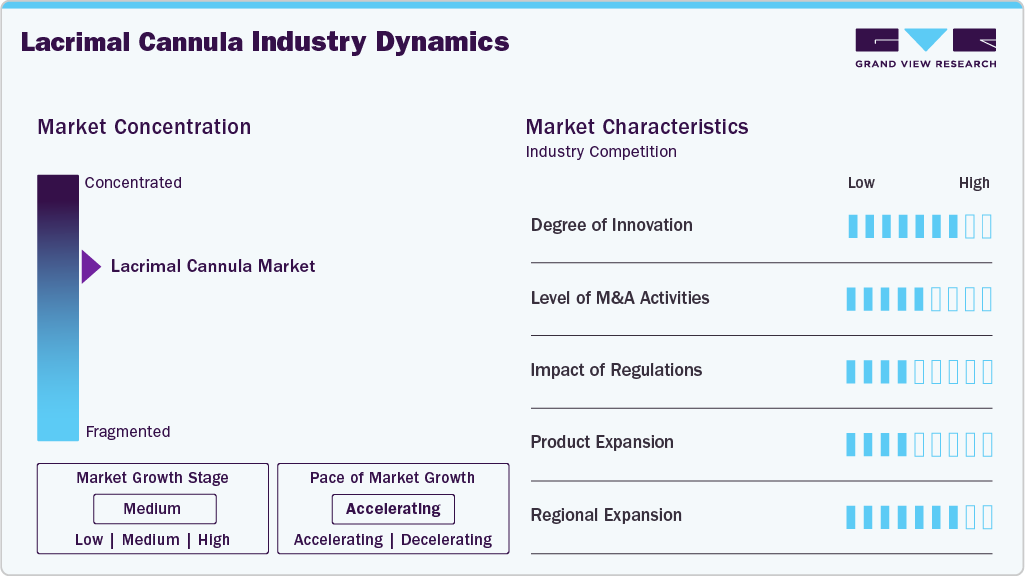
Mergers and acquisitions activity in the market is primarily driven by broader ophthalmology and surgical instrument portfolios rather than by lacrimal cannulas as standalone products. Manufacturers generally operate across multiple ophthalmic instrument categories, enabling acquisitions to expand product portfolios, manufacturing capabilities, distribution networks, or geographic reach. The specialized nature of lacrimal cannulas and their position within broader ophthalmic portfolios limit the scope for transactions focused exclusively on these products. Thus, portfolio expansion, access to complementary ophthalmic technologies, and broader surgical instrument capabilities are the main drivers of M&A activity in this market.
-
In July 2025, Innovia Medical acquired Grace Medical and Hurricane Medical, with Hurricane Medical adding ophthalmic surgical products to Innovia Medical’s portfolio. The transaction expanded Innovia Medical’s ophthalmology offering and strengthened its manufacturing and commercial capabilities across specialty surgical products.
Regulatory requirements shape the market through product safety, quality management, manufacturing controls, labeling, sterilization, and post-market surveillance. In the U.S., ophthalmic cannulas are included in the FDA framework for manual ophthalmic surgical instruments, with certain categories of cannulas classified as devices. In Europe, the Medical Device Regulation requires manufacturers to maintain technical documentation, risk management, conformity assessment, quality systems, and post-market surveillance. These requirements support consistent product quality and patient safety while establishing compliance criteria for manufacturers seeking to enter and maintain access to regulated markets.
The end use concentration of the market is centered on hospitals and specialized ophthalmic surgical facilities, where lacrimal irrigation, probing, lacrimal duct assessment, and surgical interventions are performed. Hospitals account for a substantial share of demand due to their broader capabilities in ophthalmology, oculoplasty, and lacrimal surgery, including both diagnostic and operative procedures. Specialty eye-care centers and ambulatory surgical facilities also contribute to product utilization as lacrimal procedures are performed in outpatient and day-care settings. Academic and teaching hospitals also support demand by offering specialist training and surgical programs that include lacrimal procedures.
Analyst Perspective
The market is characterized by competition among ophthalmic instrument manufacturers that differentiate through cannula design, tip configuration, material selection, flexibility, gauge options, and compatibility with lacrimal procedures. Established manufacturers serve ophthalmic surgeons through specialized surgical instrument portfolios and established distribution networks. Competition centers on products designed for lacrimal irrigation, probing, canalicular procedures, and drug or fluid delivery, with manufacturers offering variations in cannula length, diameter, tip geometry, and handling characteristics. Reusable stainless-steel cannulas remain important for surgical and diagnostic applications, while disposable options are well-suited to settings that prioritize convenience and infection-control practices.
Product Insights
The disposable lacrimal cannula segment dominated the market in 2025, accounting for 85.9% of the market share, and are expected to register the fastest CAGR over the forecast period. Their leading position is supported by the increasing preference for single-use ophthalmic instruments, which eliminate the need for cleaning, sterilization, and reprocessing while reducing the risk of cross-contamination. The growing adoption of standardized infection-control practices across healthcare facilities is expected to further support the shift toward disposable cannulas.
Reusable lacrimal cannulas held a significant market share in 2025, supported by their established use in hospitals, ophthalmic clinics, and surgical settings. Their durable stainless-steel construction allows repeated use after appropriate cleaning and sterilization, making them a cost-effective option for healthcare facilities with high procedure volumes and established instrument reprocessing infrastructure. Continued utilization in cost-sensitive markets and facilities with existing sterilization capabilities supported their significant market presence.
Design Insights
The curved segment dominated the market in 2025 with 70.1% and is expected to register the fastest growth over the forecast period, supported by its ability to facilitate access along the anatomical trajectory of the lacrimal drainage system. The curved configuration provides greater maneuverability during lacrimal irrigation, obstruction management, probing, and other procedures requiring controlled navigation through the punctum and canalicular pathway. Its ability to accommodate anatomical variations and facilitate access to narrower or more challenging portions of the lacrimal system makes it particularly suitable for procedures requiring precision and controlled instrument movement.
The straight segment held a significant market share in 2025. Straight cannulas remain widely used for routine lacrimal irrigation, diagnostic syringing, and selected obstruction-management procedures due to their simple configuration, ease of handling, and established familiarity among clinicians. Their availability across commonly used gauge sizes and compatibility with standard irrigation techniques support continued demand across hospitals, ophthalmic clinics, and ambulatory surgical settings.
Gauge Size Insights
The 22G-24G segment dominated the market in 2025, accounting for 51.9% revenue share, owing to its broad applicability in routine lacrimal irrigation, diagnostic syringing, assessment of nasolacrimal duct obstruction, and selected lacrimal procedures. Cannulas within this gauge range offer a practical balance between sufficient internal diameter for effective saline delivery and adequate structural rigidity for controlled advancement through the canalicular system. The widespread availability of 22G-24G products across manufacturers and their suitability for commonly performed lacrimal irrigation procedures further support their high utilization. 23G products are well represented across both straight and curved lacrimal cannula portfolios, underscoring the importance of this gauge range in routine ophthalmic practice.
The 25G-27G segment is expected to register the fastest growth over the forecast period, driven by increasing utilization of fine-gauge cannulas in pediatric lacrimal procedures, delicate canalicular interventions, and procedures requiring greater precision. The smaller diameter facilitates access to narrower lacrimal pathways and may help minimize tissue trauma during insertion, supporting increasing adoption among ophthalmic specialists.
Application Insights
The lacrimal irrigation segment dominated the market in 2025, accounting for 61.3% share, primarily due to its widespread use for evaluating lacrimal drainage patency and assessing patients presenting with epiphora, suspected nasolacrimal duct obstruction, or other drainage abnormalities. The procedure is routinely performed as part of ophthalmic examinations and diagnostic workups and involves introducing a lacrimal cannula through the canaliculus to assess the passage of saline through the lacrimal drainage system. The relatively high frequency of diagnostic irrigation and syringing procedures across ophthalmology practices, combined with their use before or alongside selected lacrimal interventions, has generated substantial underlying demand for lacrimal cannulas. The broad applicability of irrigation across routine diagnostic and follow-up procedures supported its leading market position.
Obstruction management is expected to register the fastest growth over the forecast period, supported by the increasing diagnosis and treatment of acquired nasolacrimal duct obstruction, age-related stenosis, dacryocystitis, and other conditions affecting the lacrimal drainage pathway. Lacrimal cannulas are utilized during procedures such as probing, irrigation, and targeted management of obstructed or stenotic drainage pathways, particularly when clinicians need to evaluate the location and severity of an obstruction or restore drainage patency. The growing aging population, increasing prevalence of lacrimal drainage disorders, and greater clinical attention to early diagnosis and intervention are expected to increase procedure volumes.
End-use Insights
Hospitals dominated the market in 2025 with a 49.2% share, supported by their large ophthalmology departments, higher patient throughput, and specialized infrastructure for diagnosing and treating lacrimal drainage disorders. Hospitals manage a substantial proportion of patients requiring lacrimal irrigation, nasolacrimal duct obstruction management, probing, and surgical interventions, including dacryocystorhinostomy and lacrimal system repair. The availability of operating rooms, ophthalmic specialists, sterilization facilities, and comprehensive postoperative care further supports the use of lacrimal cannulas in hospital settings. In addition, hospitals maintain established ophthalmic instrument inventories, including reusable cannulas, and are adopting disposable cannulas for selected procedures to meet infection-control requirements.
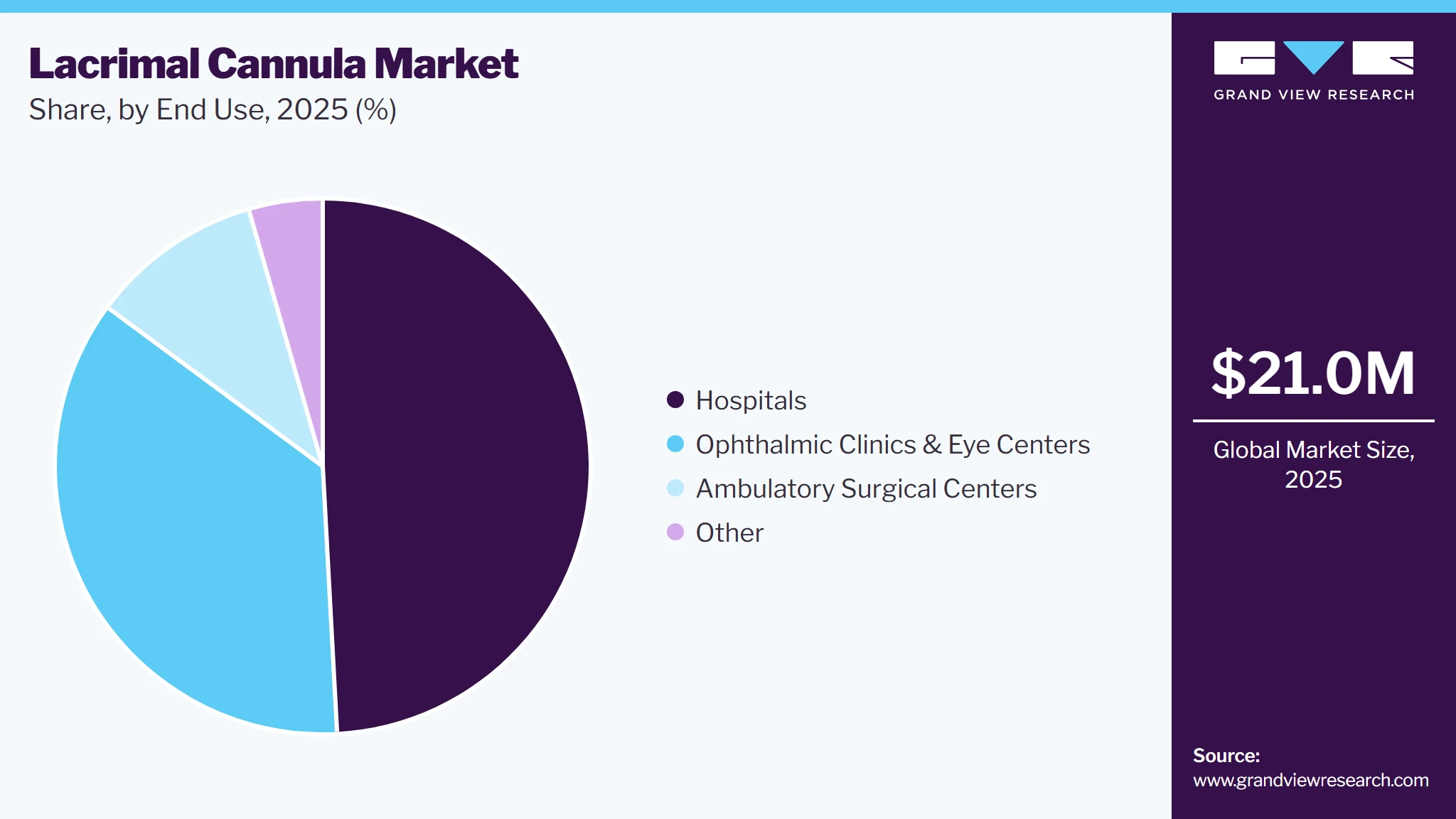
Ophthalmic clinics & eye centers are expected to experience the fastest growth over the forecast period, driven by the increasing concentration of routine eye care and lacrimal evaluations within specialized outpatient facilities. These centers commonly provide diagnostic assessment of epiphora and lacrimal drainage disorders, lacrimal irrigation, probing, and other minor lacrimal interventions without requiring hospital admission. The expansion of dedicated ophthalmic care networks, rising patient preference for outpatient treatment, and efforts to reduce procedure wait times and healthcare delivery costs are expected to drive greater utilization of lacrimal cannulas in these settings. Furthermore, the availability of ophthalmologists and dedicated ophthalmic equipment enables clinics and eye centers to perform a wider range of routine lacrimal procedures, supporting their increasing contribution to overall cannula demand.
Regional Insights
The North America lacrimal cannula market dominated the global market with the largest revenue share of 34.5% in 2025. The region’s established ophthalmic care infrastructure, high availability of specialized eye-care services, and adoption of advanced ophthalmic surgical instruments. The U.S. accounts for a substantial share of regional demand due to its extensive network of ophthalmologists, ambulatory surgical centers, hospitals, and specialty eye-care facilities that perform lacrimal procedures, including irrigation, probing, and canalicular interventions. Canada also contributes through its established ophthalmology and hospital networks. Demand is supported by the availability of specialized lacrimal cannulas from established manufacturers, along with continued preference for precision instruments that facilitate atraumatic insertion and controlled fluid delivery. The expansion of outpatient ophthalmic procedures and the availability of disposable and reusable cannula formats further support regional market development.
U.S. Lacrimal Cannulas Market Trends
The lacrimal cannula industry in the U.S. is supported by its well-developed ophthalmic care infrastructure, a large base of ophthalmologists, and an extensive network of hospitals, ambulatory surgical centers, and specialty eye care facilities. Demand for lacrimal cannulas is associated with procedures such as lacrimal irrigation, probing, canalicular surgery, and management of nasolacrimal duct obstruction. The availability of specialized ophthalmic instruments from established manufacturers supports product adoption, while the use of both reusable and disposable cannulas provides options for different clinical and infection-control requirements. Continued expansion of outpatient ophthalmic procedures and the availability of advanced surgical instruments further support demand for lacrimal cannulas across U.S. healthcare facilities.
For instance, data published by the National Library of Medicine in 2025 reported that a U.S. population-based cohort identified 1,998 infants with congenital nasolacrimal duct obstruction. Among these patients, 70 developed acute dacryocystitis, giving an incidence of 243 per 100,000 children. Patients with dacryocystitis also had a significantly higher likelihood of requiring probing, with an odds ratio of 8.50.
Europe Lacrimal Cannulas Market Trends
The lacrimal cannula industry in Europe is supported by well-established ophthalmic care systems and specialized lacrimal surgeries across major European countries. Demand is driven by procedures for nasolacrimal duct obstruction, canalicular stenosis, chronic dacryocystitis, and other lacrimal drainage disorders, where cannulas are used for irrigation, probing, and controlled fluid delivery. The region also has a well-developed network of hospitals, ophthalmology clinics, and ambulatory surgical facilities, supporting the use of specialized ophthalmic instruments. In addition, the availability of reusable and single-use lacrimal cannulas allows healthcare providers to select products based on procedural requirements and infection-control practices.
The UK lacrimal cannula industry is supported by strong demand for ophthalmic services and the need to expand the ophthalmology workforce. The growing workload across NHS eye-care services creates demand for ophthalmologists and specialized clinical staff capable of performing diagnostic and surgical lacrimal procedures. Lacrimal cannulas are used in procedures such as lacrimal irrigation, probing, assessment of nasolacrimal duct obstruction, and canalicular interventions. The continued development of ophthalmology capacity across hospitals, specialist eye-care centers, and outpatient facilities supports the use of specialized lacrimal instruments. In addition, the availability of reusable and disposable cannula options allows healthcare providers to select products according to procedural requirements, infection-control practices, and clinical preferences.
UK Eye-Care Workforce and Demand Indicators
Indicator
UK / England
Optometrists in England
Almost 15,000
Optometrists working in primary eye care
80%
NHS sight tests conducted annually
More than 13 million
Local practices
Approximately 5,000
Projected increase in eye-care demand
40% over the next two decades
Projected increase in glaucoma cases
16% by 2035
Source: The College of Optometrists 2025
The lacrimal cannula industry in Germany is supported by a well-developed ophthalmology infrastructure and established clinical capabilities for managing nasolacrimal duct obstruction, canalicular stenosis, and dacryocystitis. Demand for lacrimal cannulas is associated with diagnostic and therapeutic procedures such as lacrimal irrigation, probing, and lacrimal drainage surgery. The country’s extensive network of ophthalmology practices, hospitals, and ambulatory surgical facilities provide multiple settings for the use of specialized lacrimal instruments. In addition, the availability of precision ophthalmic instruments from established manufacturers supports product adoption, while reusable and disposable cannula formats accommodate different procedural and infection-control requirements.
Asia Pacific Lacrimal Cannulas Market Trends
The lacrimal cannula industry in Asia Pacific is supported by the expansion of ophthalmic care services, a large patient base with lacrimal drainage disorders, and the growing availability of specialized eye care facilities across countries such as China, Japan, India, South Korea, and Australia. Demand for lacrimal cannulas is associated with procedures including lacrimal irrigation, probing, canalicular interventions, and treatment of nasolacrimal duct obstruction. The region also has a broad base of ophthalmologists and tertiary eye-care centers, supporting the use of specialized ophthalmic instruments. In addition, the availability of both reusable and disposable lacrimal cannulas allows healthcare facilities to select products according to procedural requirements, cost considerations, and infection-control practices.
The India lacrimal cannula industry is supported by the country’s large ophthalmology network, expanding specialty eye-care infrastructure, and established practice of diagnosing and treating lacrimal drainage disorders. India has a broad base of hospitals, private eye-care centers, medical colleges, and specialty ophthalmology institutions, creating multiple settings for the use of lacrimal cannulas. The availability of oculoplasty and lacrimal services supports procedures such as lacrimal irrigation, probing, nasolacrimal duct assessment, and canalicular interventions. The country also has a sizeable ophthalmology workforce and a growing need to improve the distribution of specialized eye-care services across states, supporting demand for ophthalmic surgical instruments. In addition, domestic ophthalmic instrument manufacturers and established international suppliers offer reusable and disposable lacrimal cannula options, ensuring product availability across diverse healthcare settings.
The lacrimal cannula industry in Japanis driven by the rapidly aging population, which is an important factor supporting demand for ophthalmic care and specialized lacrimal procedures. The country has a well-developed healthcare system, a broad network of hospitals and ophthalmology clinics, and established capabilities in diagnosing and treating lacrimal drainage disorders. The growing elderly population creates additional demand for procedures addressing age-associated lacrimal conditions, including nasolacrimal duct obstruction, canalicular stenosis, and dacryocystitis. Lacrimal cannulas are used for irrigation, probing, duct assessment, and canalicular interventions. In addition, Japan’s advanced surgical infrastructure and availability of precision ophthalmic instruments support the adoption of specialized lacrimal cannulas across hospitals and ophthalmology centers.
-
According to the World Economic Forum, Japan's Ministry of Internal Affairs and Communications reported that, as of 2024, the country had a record 36.25 million people aged 65 and over, accounting for 29.3% of the total population. This share is projected to rise to 34.8% in 2040 and 36.3% in 2045. Japan's proportion of elderly residents is already far higher than second-ranked Martinique (25.3%), making it the world's most aged society.
Latin America Lacrimal Cannulas Market Trends
The lacrimal cannula industry in Latin America is supported primarily by the development of ophthalmic services in Brazil and Argentina, where established hospital networks, specialist eye-care centers, and ophthalmology practices provide treatment for lacrimal drainage disorders. Both countries have ophthalmology capabilities covering diagnostic and surgical procedures, supporting the use of lacrimal cannulas for irrigation, probing, nasolacrimal duct assessment, and canalicular interventions. Brazil benefits from its healthcare system and expanding access to specialized medical services, while Argentina has an established network of ophthalmology specialists and healthcare institutions. The continued development of eye-care infrastructure and specialist services in these two countries supports demand for precision ophthalmic instruments, including reusable and disposable lacrimal cannulas.
Middle East and Africa Lacrimal Cannulas Market Trends
The Middle East lacrimal cannula industry is supported by the development of specialized ophthalmology services, the expansion of private and tertiary healthcare facilities, and greater access to advanced eye care procedures. Saudi Arabia, UAE, and other Gulf countries have developed healthcare systems with dedicated ophthalmology departments and specialist services, creating demand for instruments used in lacrimal diagnosis and treatment. Lacrimal cannulas support procedures such as irrigation, probing, nasolacrimal duct assessment, and canalicular interventions. The region’s focus on improving specialist healthcare capacity, upgrading hospital infrastructure, and adopting advanced surgical techniques supports the use of precision ophthalmic instruments.
For instance, Saudi Arabia’s Vision 2030, particularly through the Health Sector Transformation Program (HSTP), is supporting the development of healthcare infrastructure, improved access to medical services, and higher standards of healthcare quality and safety. The HSTP is explicitly identified as one of the realization programs of Saudi Vision 2030 and focuses on restructuring the healthcare system, improving service quality and efficiency, and expanding access to healthcare services.
Key Lacrimal Cannula Company Insights
Key lacrimal cannula manufacturers are expanding the market by improving cannula design, materials, tip configurations, and procedural compatibility. Manufacturers are developing cannulas with precise dimensions, atraumatic tips, enhanced flexibility, and designs suited to specific lacrimal procedures, including irrigation, probing, and canalicular interventions. Established companies leverage their ophthalmic instrument expertise and distribution networks to offer a broad range of cannula configurations to meet different surgical requirements. In addition, the availability of disposable and reusable designs supports varying infection-control and procedural preferences across healthcare settings.
Key Lacrimal Cannula Companies
The following key companies have been profiled for this study on the lacrimal cannula market.
-
BEAVER VISITEC INTERNATIONAL (TPG Capital)
-
FCI
-
Surtex Instruments Limited
-
Madhu Instruments Pvt. Ltd.
-
Microtrack Surgicals
-
Corza Ophthalmology
-
RUMEX International Co.
-
Geuder
-
EAGLE LABS (INNOVIA MEDICAL)
-
Aspen Surgical Products, Inc. (Audax Private Equity)
-
Sterimedix (Synergetics USA)
-
Bausch + Lomb.
-
Reea carewell products
-
Tecfen Medical
Competitive Benchmarking
Category
Operating Strategies
Competitive Edge
Weakness
Established Players (BEAVER VISITEC INTERNATIONAL (TPG Capital), FCI, Corza Ophthalmology, RUMEX International Co., Geuder, Bausch + Lomb., Aspen Surgical Products, Inc. (Audax Private Equity), Sterimedix (Synergetics USA))
- Established manufacturers maintain broad ophthalmic instrument portfolios, using lacrimal cannulas alongside complementary lacrimal and surgical instruments to support cross-selling.
- Companies expand product availability through distributors and multiple configurations, including different gauges, lengths, tip designs, and reusable or disposable formats.
- Established brands benefit from relationships with established surgeons, recognized ophthalmic expertise, and broad distribution networks serving hospitals and ophthalmic surgical centers.
- Product breadth enables manufacturers to offer procedure-specific cannula configurations that support surgeons' preferences for precise handling and atraumatic lacrimal access.
- Product differentiation is limited across standard lacrimal cannulas, as competing manufacturers offer similar gauges, lengths, curved designs, and irrigation applications.
- Established portfolios include older instrument designs, limiting differentiation for surgeons seeking specialized configurations or newer single-use procedural solutions.
Emerging Players (Surtex Instruments Limited, Madhu Instruments Pvt. Ltd., Microtrack Surgicals, EAGLE LABS (INNOVIA MEDICAL), Reea carewell products, Tecfen Medical)
- Emerging manufacturers focus on specialized cannula configurations, flexible manufacturing, and customizable dimensions to address specific surgeon and procedural requirements.
- Companies leverage cost-efficient manufacturing and distributor networks to expand access to disposable and reusable lacrimal cannulas across international ophthalmic markets.
- Flexible production enables emerging manufacturers to offer procedure-specific designs, gauges, lengths, tip configurations, and reusable or disposable formats.
- Lower manufacturing costs allow emerging suppliers to compete on pricing while maintaining specialized ophthalmic instrument portfolios for hospitals and surgical centers.
- Limited brand recognition and smaller distribution networks restrict access to major ophthalmic hospitals and established international surgical instrument procurement channels.
- Smaller product portfolios and fewer clinical collaborations can limit differentiation from established manufacturers with broader ophthalmic instrument ranges and stronger surgeon relationships.
Recent Developments
-
In January 2026, Medline officially opened a new office in Riyadh, Saudi Arabia, strengthening its regional healthcare operations and customer support capabilities. The facility brings together management, business development, product management, regulatory affairs, and human resource functions, with initial support focused on surgical procedure trays, operating-room solutions, wound care, urology, and respiratory products.
-
In 2026, Corza Medical was recognized as Vendor of the Year 2026 by Medline. The recognition highlighted Corza Medical’s agility, responsiveness, collaboration, and commitment to delivering reliable medical solutions. The award reinforces the company’s commercial relationships and ability to support clinicians through its broader medical technology portfolio, including ophthalmology products.
-
In March 2025, BVI Medical secured a USD 1 billion strategic capital raise in partnership with TPG and new investors to refinance existing debt and support accelerated growth. The company stated that the funding would support new product launches, product innovation, and expansion of its global operations. BVI also highlighted the expansion of its ophthalmic product portfolio and manufacturing capabilities. The development strengthens BVI’s capacity to invest in ophthalmic surgical technologies and expand its product portfolio, which includes lacrimal and other ophthalmic surgical instruments.
Global Lacrimal Cannula Market Report Scope
Report Attribute
Details
Market value in 2025
USD 21.0 million
Estimated market size in 2026
USD 22.4 million
Revenue forecast in 2033
USD 36.7 million
Growth rate
CAGR of 7.3% from 2026 to 2033
Base year for estimation
2025
Historical data
2021 - 2024
Forecast period
2026 - 2033
Quantitative units
Revenue in USD million and CAGR from 2026 to 2033
Report coverage
Revenue forecast, company ranking, competitive landscape, growth factors, and trends
Segments covered
Product, design, gauge size, application, end-use, region
Regional scope
North America; Europe; Asia Pacific; Latin America; MEA
Country scope
U.S.; Canada; Mexico; Germany; UK; France; Italy; Spain; Norway; Denmark; Sweden; China; Japan; India; South Korea; Australia; Thailand; Brazil; Argentina; Saudi Arabia; South Africa; UAE; Kuwait
Key companies profiled
BEAVER VISITEC INTERNATIONAL (TPG Capital); FCI; Surtex Instruments Limited; Madhu Instruments Pvt. Ltd.; Microtrack Surgicals; Corza Ophthalmology; RUMEX International Co.; Geuder; EAGLE LABS (INNOVIA MEDICAL); Aspen Surgical Products, Inc. (Audax Private Equity); Sterimedix (Synergetics USA); Bausch + Lomb; Reea Carewell Products; Tecfen Medical; among others.
Customization scope
Free report customization (equivalent up to 8 analysts' working days) with purchase. Addition or alteration to country, regional & segment scope.
Pricing and purchase options
Avail customized purchase options to meet your exact research needs. Explore purchase options
Global Lacrimal Cannula Market Report Segmentation
This report forecasts revenue growth at the regional and country levels and provides an analysis of the latest industry trends across each sub-segment from 2021 to 2033. For this study, Grand View Research has segmented the global lacrimal cannula market report based on product, design, gauge size, application, end-use, and region:
-
Product Outlook (Revenue, USD Million, 2021 - 2033)
-
Reusable Lacrimal Cannulas
-
Disposable Lacrimal Cannulas
-
-
Design Outlook (Revenue, USD Million, 2021 - 2033)
-
Straight
-
Curved
-
-
Gauge Size Outlook (Revenue, USD Million, 2021 - 2033)
-
19G-21G
-
22G-24G
-
25G-27G
-
-
Application Outlook (Revenue, USD Million, 2021 - 2033)
-
Lacrimal Irrigation
-
Obstruction Management
-
Lacrimal Surgery & Repair
-
-
End-use Outlook (Revenue, USD Million, 2021 - 2033)
-
Hospitals
-
Ophthalmic Clinics & Eye Centers
-
Ambulatory Surgical Centers
-
Others
-
-
Regional Outlook (Revenue, USD Million, 2021 - 2033)
-
North America
-
U.S.
-
Canada
-
Mexico
-
-
Europe
-
Germany
-
UK
-
France
-
Italy
-
Spain
-
Norway
-
Denmark
-
Sweden
-
-
Asia Pacific
-
China
-
India
-
Japan
-
South Korea
-
Australia
-
Thailand
-
-
Latin America
-
Argentina
-
Brazil
-
-
Middle East & Africa
-
Saudi Arabia
-
South Africa
-
UAE
-
Kuwait
-
-
Research Methodology
The lacrimal cannula market figures in this report are based on a proven research process that combines executive interviews with secondary research from proprietary databases, company filings, and recognized regulatory and institutional sources. Market size is built through value-chain sizing - reconciling supply-side and demand-side estimates - and triangulated with bottom-up and top-down approaches. Every estimate passes multiple levels of expert validation before publication, with each lacrimal cannula segment quantified using the revenue-capture definitions in the table below.
Segment Definition
Product
Revenue capture definition
Reusable Lacrimal Cannulas
Revenue captures all global manufacturer-level sales of durable, sterilizable stainless steel or titanium lacrimal cannulas sold directly or through OEM channels to hospitals, surgical centers, and clinics. It measures original product invoice values, excluding secondary distributor markups, aftermarket sterilization equipment costs, and single-use disposable variants.
Disposable Lacrimal Cannulas
Revenue captures total direct sales value realized by original equipment manufacturers from sterile, single-use lacrimal cannulas supplied to healthcare facilities. It covers pre-packaged, individual, or bulk disposable units, excluding third-party logistics margins, resale price markups, and long-term reusable instruments or secondary intubation accessories.
Estimation Model
Layer No.
Layer Name
Key Question
Description
01
Healthcare Utilization & Procedure Volume Layer
What is the demand for lacrimal cannulas based on procedure volumes?
Estimating the demand for lacrimal cannulas by analyzing lacrimal procedure volumes (e.g., irrigation, probing, obstruction management, surgery and repair) across hospitals, ophthalmic clinics, ambulatory surgical centers and specialty eye-care facilities. Patient population data (including pediatric and adult segments) and procedure utilization rates are used to derive unit demand.
02
Revenue Triangulation Layer
How is the lacrimal cannula market value estimated and validated?
Analyzing revenues of related ophthalmic devices and surgical instruments, combined with historical pricing data, to estimate the lacrimal cannula market value. This approach incorporates procedure reimbursement trends, healthcare expenditure, and relevant market benchmarks to validate the bottom-up estimates and ensure market accuracy.
03
Care-Setting & End-User Demand Layer
Where is demand for lacrimal cannulas generated?
Assessing demand across care settings and end users by evaluating the number of hospitals, ophthalmic clinics, ambulatory surgical centers and other facilities. This includes estimating procedure mix, utilization rates, and purchasing patterns based on facility size, service portfolio and treatment guidelines.
04
Supply-Side Capacity & Utilization Layer
What is the available manufacturing capacity and supply for lacrimal cannulas?
Evaluating global and regional manufacturing capacity for lacrimal cannulas, including production lines, output volumes and facility utilization. Assessment of raw material availability (e.g., stainless steel, medical grade plastics), supplier base and distribution networks helps determine supply constraints and surplus potential.
05
Data Triangulation & Market Reconciliation Layer
How are market estimates reconciled and validated?
Integrating insights from primary research, secondary sources and model outputs to reconcile market size and validate assumptions. Cross-verification of procedure volumes, pricing, supply and demand ensures consistency and accuracy in the final market estimates across segments, regions and time periods.
Delivered Customizations
This report has been delivered with the following In-depth customizations
Client Request
Customization Delivered
Value Adds
ASP and Volume Analysis (Historical & Forecast)
Comprehensive ASP and volume analysis for lacrimal cannulas across the forecast period, segmented by product type (reusable and disposable), design (straight and curved), gauge size (19G-21G, 22G-24G, and 25G-27G), application, end user, and geography. The analysis covers historical pricing trends, unit volumes, replacement cycles, utilization rates, reusable versus disposable purchasing patterns, procedure requirements, sterilization considerations, and regional pricing differences. Forecasts are developed based on lacrimal procedure volumes, ophthalmic surgical activity, healthcare facility expansion, and demand for specialized lacrimal instruments.
Enables accurate revenue forecasting, pricing strategy development, procurement planning, assessment of reusable versus disposable demand, identification of premium product opportunities, evaluation of gauge and design preferences, and regional investment decision-making for manufacturers and investors.
Procedure Volume and Patient Population Analysis
Detailed assessment of procedures and patient populations associated with lacrimal cannula utilization, including lacrimal irrigation, lacrimal probing, nasolacrimal duct obstruction management, dacryocystitis treatment, canalicular obstruction procedures, and lacrimal surgery and repair. The analysis incorporates procedure volumes, pediatric and adult patient populations, ophthalmic surgery activity, hospitals, ophthalmic clinics, ambulatory surgical centers, and specialized eye-care facilities.
Supports demand forecasting, estimation of addressable procedure populations, identification of high-utilization clinical applications, capacity planning for ophthalmic facilities, assessment of pediatric and adult procedure demand, and long-term market sizing based on lacrimal procedure activity.
Competitive Benchmarking and Market Share Analysis
Comprehensive competitive assessment of lacrimal cannula manufacturers, including product portfolio benchmarking, ASP comparison, cannula design and gauge assessment, reusable and disposable configurations, tip design, material selection, product specifications, regulatory status, distribution networks, geographic reach, product launches, manufacturing capabilities, strategic partnerships, and competitive positioning across major geographic markets.
Enables competitive positioning, market-gap identification, product and technology benchmarking, pricing optimization, product differentiation, distribution strategy development, partnership and acquisition evaluation, commercialization planning, and geographic expansion assessment for established and emerging manufacturers.
Frequently Asked Questions About This Report
The curved bracelet segment led with a 70.1% revenue share in 2025, and it is the fastest-growing segment.
The global lacrimal cannula market size was valued at USD 21.0 million in 2025 and is estimated at USD 22.4 million for 2026.
The global lacrimal cannula market is expected to grow at a CAGR of 7.3% from 2026 to 2033, reaching USD 36.7 million in 2033
The disposable lacrimal cannulas segment led with an 85.9% revenue share in 2025 and is the fastest-growing segment.
North America dominated the lacrimal cannula market, accounting for 34.5% of revenue in 2025.
The lacrimal cannula market is driven by the rising burden of nasolacrimal duct obstruction, canalicular disorders, and dry-eye conditions; the increasing adoption of minimally invasive lacrimal procedures; growing ophthalmic surgical volumes; the demand for precise irrigation and drug delivery; and the continued use of disposable cannulas to support infection control during ophthalmic procedures.
BEAVER VISITEC INTERNATIONAL (TPG Capital), FCI, Surtex Instruments Limited, Madhu Instruments Pvt. Ltd., Microtrack Surgicals, Corza Ophthalmology, RUMEX International Co., Geuder, EAGLE LABS (INNOVIA MEDICAL), Aspen Surgical Products, Inc. (Audax Private Equity), Sterimedix (Synergetics USA), Bausch + Lomb, Reea Carewell Products, Tecfen Medical, among others.
Asia Pacific is the fastest-growing region over the forecast period.
Lacrimal irrigation held the largest revenue share in 2025, while obstruction management is the fastest-growing segment.
About the Author(s)
Medical Devices Research Team
Healthcare · Medical DevicesThis report was authored by the medical devices research team at Grand View Research - comprising two research analysts, one senior research analyst, and one industry expert - with specialized expertise in the medical devices segment of the healthcare industry. All findings are based on proprietary healthcare databases, executive interviews, and regulatory analysis, subject to internal peer review prior to publication.
Last Updated:
Speak to Analyst


Customize this report to your needs - add regions, segments, or data points, with 20% free customization.
Or view our licence options:


ISO 9001:2015 & 27001:2022 Certified
We are GDPR and CCPA compliant! Your transaction & personal information is safe and secure. For more details, please read our privacy policy.


