
- Home
- »
- Pharmaceuticals
- »
-
Latin America Parenteral Nutrition Market Report, 2026-2033GVR Report cover

Latin America Parenteral Nutrition Market (2026 - 2033)
Size, Share & Trends Analysis Report By Nutrient Type, By Formulation & Delivery Format (Premixed / Multi-Chamber Bags), By Stage Type, By Indication, By Sales Channel, By Region, And Segment Forecasts
Market Size, 2025
$272.6MMarket Estimate, 2026
$288.0MMarket Forecast, 2033
$414.4MCAGR, 2026–2033
5.3%Latin America Parenteral Nutrition Market Summary
The Latin America parenteral nutrition market size was valued at USD 272.6 million in 2025 and is projected to grow from USD 288.0 million in 2026 to USD 414.4 million by 2033, at a CAGR of 5.3% from 2026 to 2033. This growth is attributed to the high prevalence of hospital malnutrition, the increasing adoption of nutritional screening and medical nutrition therapy, the expansion of multidisciplinary nutrition-support services, and the growing clinical awareness of parenteral nutrition across Latin American hospitals.
Key Market Trends & Insights
- By nutrient type: Single dose amino acid solution segment held the largest market share of 30.0% in 2025.
- By formulation & delivery format: Compounded / hospital pharmacy-prepared PN segment held the largest market share in 2025.
- By stage: Adults segment dominated the market in 2025.
- By Indication: Malabsorption/GI disorder/diarrhea segment held the largest revenue share of 26.1% in 2025.
- By sales channel: Institutional segment held the largest revenue share of 98.5% in 2025.
Regional Highlights
- Largest regional market: Brazil (29.5% revenue share, 2025)
- Fastest-growing regional market: Caribbean (fastest CAGR of 5.9% 2026-2033)
Market Size & Forecast
- Market Size in 2025: USD 272.6 Million
- Estimated Market Size in 2026: USD 288.0 Million
- Projected Market Size by 2033: USD 414.4 Million
- CAGR (2026-2033): 5.3%
Prism AI by Grand View Research Free to tryAsk a question about the latin america parenteral nutrition marketTry asking✓Every figure cited from GVR research Prefer the report? Download free sample →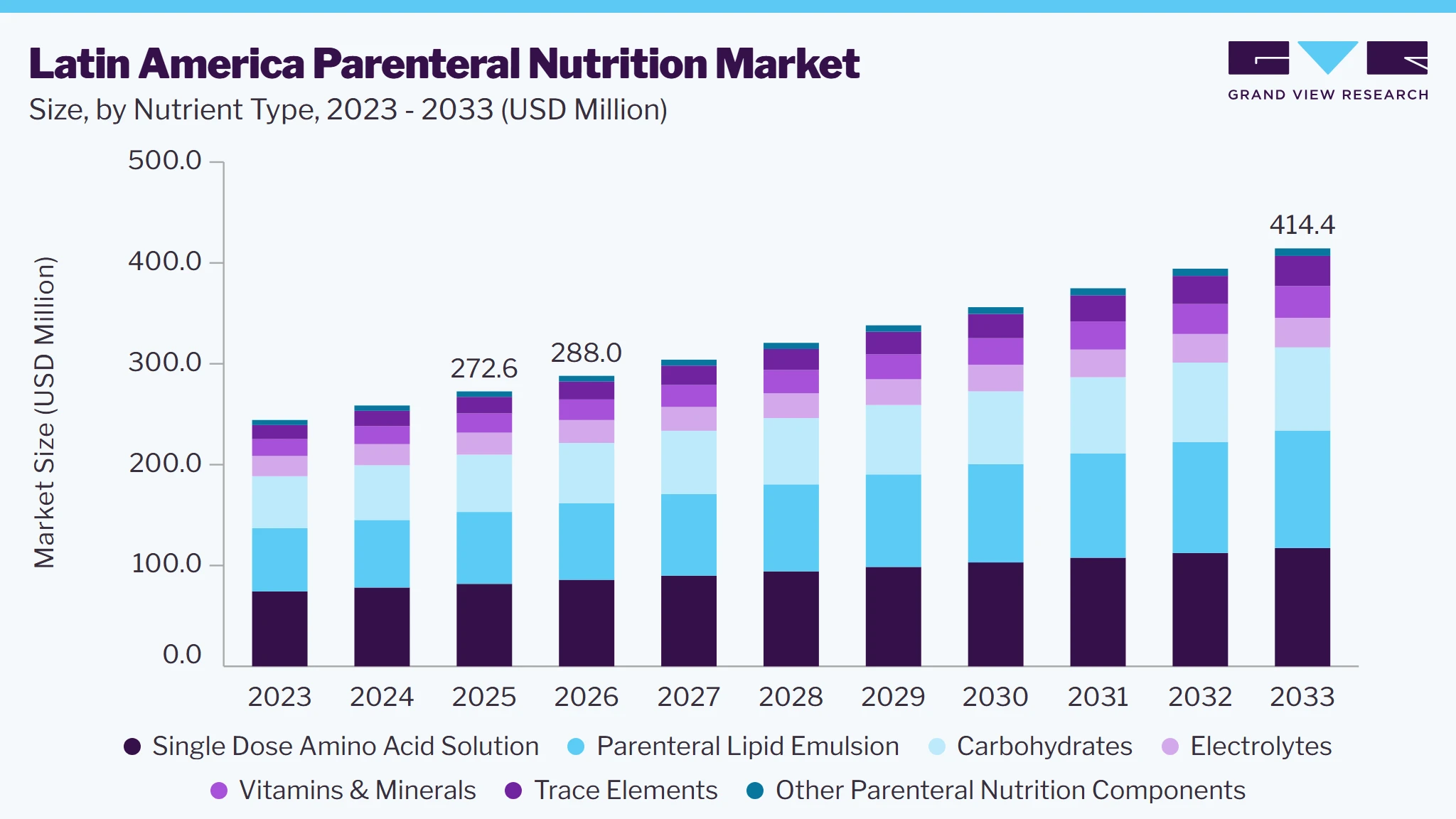 Source: Grand View Research, IR Documents, Primary Interviews, Paid DatabasesTo learn more about this report,
 Download Free Sample Report
Market Dynamics
The Latin America parenteral nutrition industry’s growth is driven by the high prevalence of hospital malnutrition, increasing adoption of medical nutrition therapy, and growing demand for specialized nutritional support. Rising use of nutritional screening, expanding critical care and oncology services, and increasing adoption of enteral feeding across hospitals and homecare settings are supporting market growth.
Hospital malnutrition is a major driver of the Latin America parenteral nutrition market, particularly among patients with severe illness, critical conditions, gastrointestinal disorders, and those undergoing major surgery. Disease-related malnutrition increases nutritional requirements while limiting the ability of patients to obtain adequate nutrients through normal oral intake. Parenteral nutrition therefore serves as an important medical nutrition therapy for patients who are unable to receive sufficient nutrition through the oral or enteral route, particularly when gastrointestinal function is compromised.
According to the 2025 ELANPE multicenter study, which evaluated 132 hospitals across 14 Latin American countries, the median prevalence of malnutrition at hospital admission was 33%, while parenteral nutritional support was used in a median of 3.4% of hospitalized patients. The study also found that 66% of participating hospitals systematically implemented nutritional screening, indicating increasing integration of nutritional assessment into hospital care. The high burden of malnutrition, combined with expanding nutritional screening and medical nutrition therapy practices, supports demand for parenteral nutrition products across hospitals and specialized care settings in Latin America.
Limited access to specialized parenteral nutrition training restrains the adoption and appropriate utilization of parenteral nutrition across Latin America. Parenteral nutrition requires specialized knowledge in patient selection, nutrient formulation, catheter management, metabolic monitoring, and adjustment of therapy based on clinical status. Gaps in formal nutrition-support education may therefore affect the confidence and preparedness of healthcare professionals involved in nutritional therapy.
According to a July 2024 article published in the Brazilian Journal of Parenteral and Enteral Nutrition, gaps in undergraduate clinical-nutrition education leave newly graduated physicians with limited training to identify nutritional risk, refer patients to specialists, and appropriately initiate nutritional therapy. The article further notes that specialized clinical-nutrition programs are not always sufficiently accessible to address these educational gaps. These limitations in specialized training contribute to uneven clinical expertise and may restrict the consistent integration of parenteral nutrition into routine hospital care across the region.
Industry investment in clinical nutrition research, education, and awareness is creating opportunities to strengthen the clinical adoption and integration of parenteral nutrition across Latin America. Investments in parenteral nutrition-focused research generate region-specific clinical evidence, improve understanding of appropriate parenteral nutrition use, and support the adoption of evidence-based nutritional practices. For instance, in May 2023, Fresenius Kabi announced a USD 115,820 (Euro 100,000) Parenteral Nutrition Research Grant for Latin America, focusing on improving outcomes among malnourished and critically ill hospitalized patients and advancing parenteral nutrition practices. The two-year grant also supports education and advocacy for improved hospital nutrition practices across the region.
Such industry-led investments strengthen clinical capabilities, evidence generation, professional education, and awareness of specialized nutrition therapy, supporting the integration of parenteral nutrition into hospital nutrition-care pathways. Continued investments in parenteral nutrition research and education therefore improve the clinical ecosystem surrounding parenteral nutrition and create opportunities for broader and more evidence-based utilization of parenteral nutrition across Latin America.
Market Concentration & Characteristics
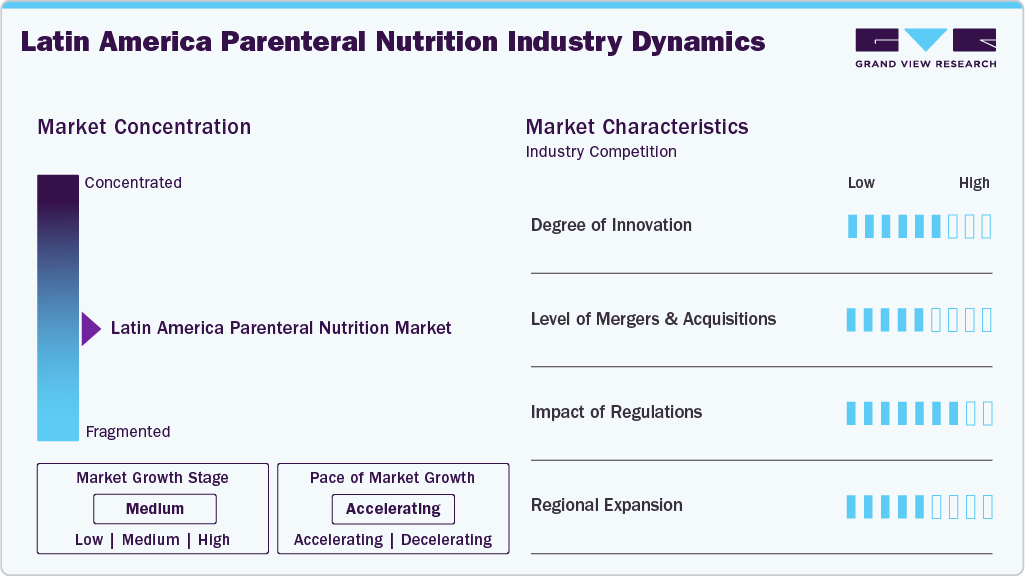
The degree of innovation in the market is moderate to high, supported by advancements in lipid emulsions, amino acid formulations, micronutrient preparations, and multi-chamber bag technologies. Manufacturers and healthcare providers are increasingly focused on improving formulation stability, nutrient delivery, preparation efficiency, and patient-specific nutritional management. The growing availability of standardized and ready-to-use PN solutions is also supporting greater consistency in nutritional therapy across hospital settings.
The level of mergers, acquisitions, and collaboration activities in the Latin America parenteral nutrition market is low to moderate. Companies and healthcare organizations are primarily pursuing collaborations to strengthen clinical nutrition services, expand access to specialized nutritional support, improve home-based PN delivery, and enhance regional distribution capabilities.
 To learn more about this report, Download Free Sample Report
The impact of regulations on the Latin America parenteral nutrition industry is high, as manufacturers must comply with country-specific requirements governing product registration, composition, quality, labeling, manufacturing, and patient safety. Regulatory requirements differ across individual Latin American markets, creating additional compliance considerations for companies operating across multiple countries. For instance, in Brazil, ANVISA introduced a revised food regulatory framework in 2024 that applies risk-based approaches to product regularization and maintains pre-market registration requirements for specified nutrition products, illustrating the importance of regulatory compliance in the regional nutrition market.
Country expansion presents an opportunity in the Latin America parenteral nutrition market, as manufacturers and nutrition-support providers can strengthen distribution networks and extend access to specialized PN products across underserved markets. Differences in healthcare infrastructure, hospital capacity, and adoption of specialized nutritional therapies create opportunities to expand beyond established markets such as Brazil and Mexico into Argentina and other Latin American countries, including through home-based nutritional support.
Analyst Perspective
The market is relatively consolidated, with a limited number of established manufacturers holding significant market shares. Market access is largely driven by hospital and institutional procurement processes, where product quality, regulatory compliance, supply reliability, and pricing influence supplier selection. The market also depends on established distribution networks and the ability to supply a broad range of PN formulations to meet varying clinical requirements. These factors create competitive advantages for established players, while new entrants face challenges in building institutional relationships, meeting procurement requirements, and ensuring consistent product availability across the region.
Nutrient Type Insights
The single dose amino acid solution segment dominated the Latin America parenteral nutrition market with a revenue share of 30.0% in 2025. This dominance is supported by the central role of amino acids as the primary protein source in parenteral nutrition and their broad use in patients unable to obtain adequate protein through oral or enteral nutrition. These solutions are available in different concentrations, allowing nutritional therapy to be adjusted according to patient requirements, fluid restrictions, clinical condition, and route of administration. Their use across critically ill, surgical, oncology, gastrointestinal, and nutritionally deficient patients supports demand across hospitals and other specialized care settings.
The trace elements segment is expected to grow at the fastest CAGR of 7.8% over the forecast period from 2026 to 2023. This growth is supported by the role of trace elements, including zinc, copper, selenium, manganese, and chromium, in immune function, antioxidant defense, and metabolic processes during long-term PN. Demand for multi-nutrient PN formulations containing trace elements is reflected in institutional procurement. For instance, in December 2025, the University Hospital of Ponta Grossa in Paraná, Brazil, issued a procurement for PN preparations containing amino acids, lipid emulsions, electrolytes, trace elements, vitamins, and other components.
Formulation & Delivery Format Insights
The compounded / hospital pharmacy-prepared PN segment dominated the Latin America parenteral nutrition industry in 2025. Segment growth is attributed to the flexibility to customize nutrient composition based on individual patient requirements, the increasing use of PN among critically ill and postoperative patients, the demand for tailored nutritional support for patients with complex clinical conditions, and the widespread availability of hospital pharmacy compounding services across acute care and long-term care settings.
The premixed / multi-chamber bags segment is expected to grow at the fastest CAGR from 2026 to 2033, driven by standardized formulations, reduced preparation requirements, and efficient PN administration across hospital and homecare settings. According to an April 2025 multicenter prospective study published in Nutrition in Clinical Practice, home parenteral nutrition was evaluated across several healthcare centers in Argentina, including Hospital Privado Universitario de Córdoba, Fundación Favaloro, Hospital Italiano La Plata, and Sanatorio Allende, with Fresenius Kabi Argentina as one of the participating organizations. The study compared home PN with hospital PN, highlighting the role of structured home-based PN delivery in Latin America.
Stage Insights
The adults segment dominated the Latin America parenteral nutrition market with a revenue share in 2025, driven by the high prevalence of chronic diseases and critical conditions among adults requiring nutritional support, increasing demand for parenteral nutrition during disease management and postoperative recovery, longer treatment requirements among patients with severe gastrointestinal dysfunction, and widespread use of PN across hospitals, intensive care units, and long-term care settings.
The pediatrics segment is expected to grow significantly over the forecast period, driven by the need for individualized PN formulations for children with critical illnesses, gastrointestinal disorders, intestinal failure, and nutritional deficiencies. For instance, a study published in January 2025 in the Journal of Parenteral and Enteral Nutrition by researchers at Universidade Estadual de Campinas, Brazil, evaluated 264 hospitalized children receiving PN, of whom 81.8% were intensive-care patients and 36.1% were malnourished. The study found that PN required customization in pediatric patients due to conditions such as renal or liver failure, inadequate energy-protein intake, and elevated mineral or triglyceride levels, highlighting the need for specialized pediatric PN formulations in Latin American clinical settings.
Indication Insights
The malabsorption/GI disorder/diarrhea segment dominated the market, accounting for a revenue share of 26.1% in 2025. This large share is driven by the need for intravenous nutritional support among patients with intestinal failure, severe malabsorption, short bowel syndrome, and gastrointestinal obstruction when oral or enteral nutrition is inadequate or inappropriate. For instance, the RESTORE Registry, published in October 2024, enrolled 167 patients with short-bowel-syndrome-related chronic intestinal failure across 20 specialized centers in Latin America. Among adults, postsurgical complications accounted for 37% of cases and intestinal ischemia for 25%, while 45.6% remained under follow-up, highlighting the ongoing need for specialized PN management across the region.
The pain management segment is expected to grow at the fastest CAGR over the forecast period. The segment growth is driven by nutritional challenges among patients undergoing major surgery, cancer treatment, or prolonged hospitalization. Pain-related conditions and intensive medical interventions can limit oral intake, increasing the need for PN when oral or enteral nutrition is inadequate. Growing integration of nutritional support into hospital care further supports segment growth.
Sales Channel Insights
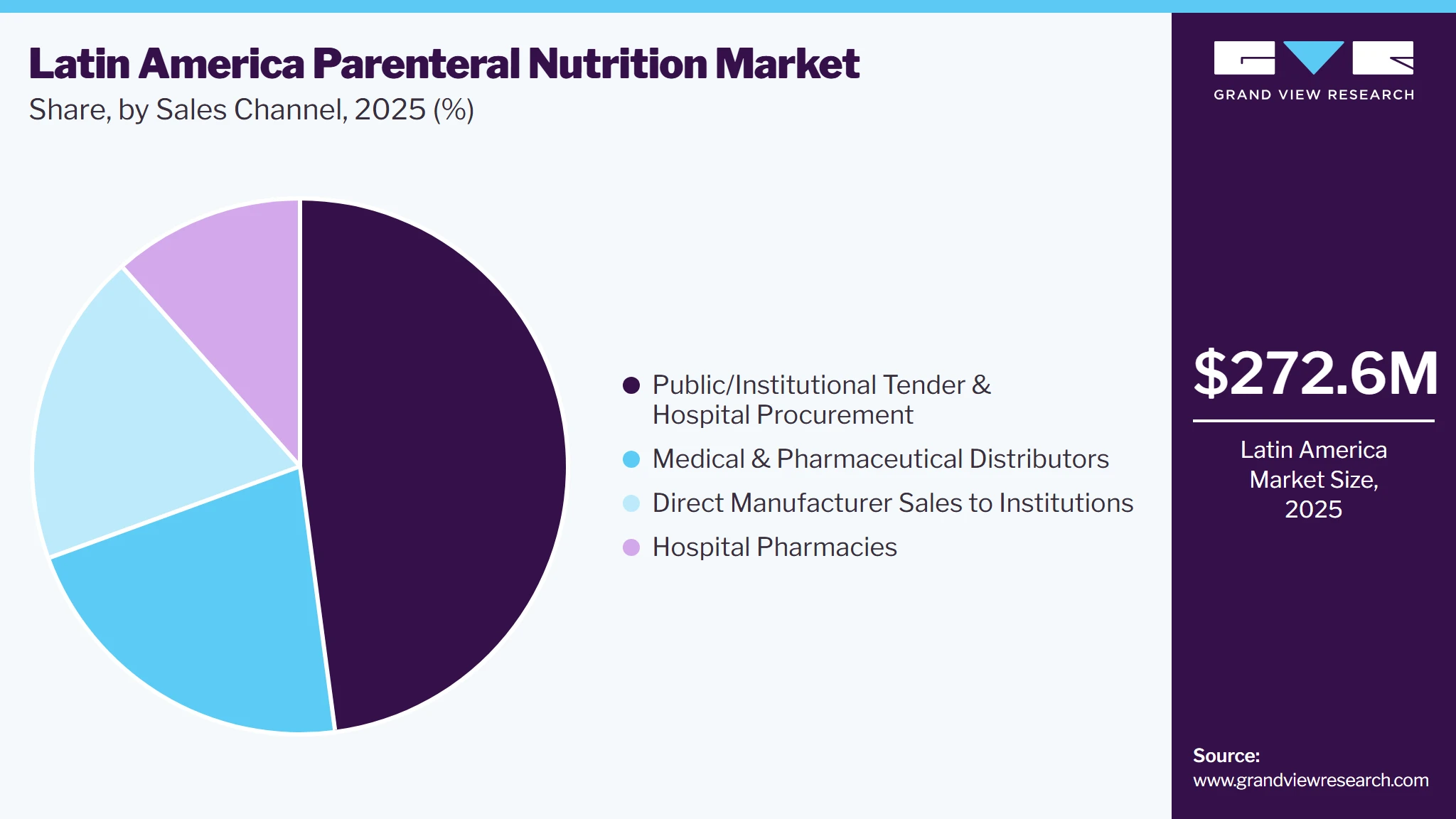
The institutional channel dominated the Latin America parenteral nutrition industry, accounting for a revenue share of 98.5% in 2025, driven by regular hospital procurement, clinical monitoring requirements, and demand for specialized nutritional support among critically ill and post-surgical patients. For instance, in July 2025, the Hospital das Clínicas of the Federal University of Minas Gerais (HC-UFMG) in Brazil opened an electronic procurement process for the periodic purchase of compounded PN formulations standardized by the institution over 12 months, highlighting recurring institutional demand for PN products.
 To learn more about this report, Download Free Sample Report
The online sales channel is expected to grow at the fastest CAGR of 9.9% during the forecast period, driven by the expansion of digital healthcare commerce and the increasing online purchase of healthcare products. According to VML’s Health Future Shopper 2025 LATAM report, 41% of consumers in Argentina purchase healthcare products from online supermarkets, while 65% of Latin American health shoppers report that products recommended by online marketplaces influence their purchasing decisions. This trend supports the development of digital distribution pathways for specialized nutrition products, particularly for home-based care.
Regional Insights
Brazil’s parenteral nutrition market held the largest regional share of 29.5% in 2025. The market growth is driven by demand for specialized nutritional support across hospitals and critical care settings, supported by the country’s established healthcare infrastructure and the need to manage complex clinical conditions. Institutional procurement and public-sector tenders influence purchasing patterns, while demand for customized nutrient formulations creates opportunities for specialized manufacturers. However, pricing pressures, affordability constraints, and regulatory requirements influence market access and competitive dynamics.
Mexico Parenteral Nutrition Market Trends
The Mexico parenteral nutrition market is driven by established hospital demand for intravenous nutritional therapy among critically ill and hospitalized patients who cannot meet nutritional requirements through oral or enteral feeding. The availability of standardized PN formulations in Mexico’s public health system supports institutional demand; the 2025 National Compendium of Health Supplies includes three-chamber PN bags in 1,000 mL, 1,500 mL, and 2,000 mL presentations containing lipids, amino acids, electrolytes, and glucose for patients when oral or enteral feeding is impossible, insufficient, or contraindicated.
South America Parenteral Nutrition Market Trends
Growth of the parenteral nutrition market in South America is driven by the increasing need for specialized nutritional support among hospitalized, critically ill, and nutritionally at-risk patients. The rising prevalence of chronic diseases, cancer, and gastrointestinal disorders is driving demand for PN products, including amino acids, lipid emulsions, vitamins, and trace elements. Expanding hospital infrastructure and clinical nutrition services further support PN adoption across inpatient, specialized care, and homecare settings.
Central America Parenteral Nutrition Market Trends
Central America is a developing region in the Latin America parenteral nutrition industry. The rising demand for clinical nutrition support in intensive care and other high-acuity hospital settings is driving market growth. Growing adoption of clinical nutrition practices and greater recognition of the role of nutritional support in patient management are supporting the use of parenteral nutrition across hospitals and intensive care settings.
Caribbean Parenteral Nutrition Market Trends
The Caribbean parenteral nutrition market is expected to grow at the fastest CAGR during the forecast period. The market growth is driven by the increasing need for specialized nutritional therapy among hospitalized, critically ill, and nutritionally vulnerable patients. The rising burden of chronic diseases, cancer, gastrointestinal disorders, surgical conditions, and other illnesses that affect adequate nutrient intake is contributing to demand for parenteral nutrition across hospital and specialized care settings.
Key Latin America Parenteral Nutrition Company Insights
Key players in the Latin America parenteral nutrition market are strengthening their positions through portfolio expansion, ready-to-use and multi-chamber PN solutions, specialized formulation development, regulatory approvals, manufacturing expansion, distribution partnerships, and geographic expansion.
Established companies such as Baxter, Fresenius Kabi AG, B. Braun Melsungen AG, and Grifols, S.A. leverage broad parenteral nutrition portfolios, established hospital relationships, manufacturing capabilities, and extensive distribution networks, while regional and emerging players such as Aculife, UNIDOSSIS, and SAFE (PiSA Farmacéutica) focus on specialized nutritional-support solutions, sterile compounding services, regional distribution, and country-specific hospital requirements.
Key Latin America Parenteral Nutrition Companies
-
Baxter
-
Grifols, S.A.
-
Fresenius Kabi AG
-
B. Braun Melsungen AG
-
Aculife
-
UNIDOSSIS
-
SAFE (PiSA Farmacéutica)
-
Cfarma
Competitive Benchmarking
Category
Operating Strategies
Competitive Edge
Weakness
Established Players (Baxter, Fresenius Kabi AG, B. Braun Melsungen AG, Grifols, S.A.)
- Expand parenteral nutrition portfolios across adult, pediatric, critical-care, and specialized applications; strengthen ready-to-use and multi-chamber PN offerings; expand clinical nutrition services and hospital relationships; and strengthen distribution and manufacturing capabilities across Latin America.
- Broad parenteral nutrition portfolios, strong brand recognition, established relationships with hospitals and healthcare professionals, extensive regional distribution networks, manufacturing capabilities, and experience across standardized and individualized PN therapy.
- Higher operating and compliance costs, complex country-specific regulatory requirements, dependence on institutional procurement, and exposure to pricing pressure from regional suppliers and specialized compounding providers.
Emerging Players (Aculife, UNIDOSSIS, Cfarma, SAFE (PiSA Farmacéutica))
- Strengthen regional parenteral nutrition supply capabilities, expand hospital and clinical-service relationships, target specialized nutritional-support requirements, and develop or broaden customized PN and sterile-compounding services in selected Latin American markets.
- Regional market knowledge, proximity to healthcare institutions, flexible service models, specialized sterile-compounding capabilities, and ability to address country- or hospital-specific nutritional requirements.
- Smaller geographic coverage, lower international brand recognition, comparatively narrower product portfolios, more limited resources for large-scale R&D and expansion, and greater dependence on local regulatory approvals and institutional contracts.
Recent Developments
-
In September 2025, Baxter reported that it had supplied more than 145,000 ready-to-use parenteral nutrition bags for adults and babies in Mexico over the preceding three years. The development highlights Baxter’s continued expansion and utilization of its ready-to-use parenteral nutrition portfolio across the Mexican hospital market.
-
In August 2025, Fresenius Kabi reported good development in its Nutrition business in Latin America, alongside continued expansion of its clinical-nutrition portfolio globally. The company identifies nutrition as a key growth vector and states that its portfolio includes parenteral nutrition products, supporting its continued commercial presence in the Latin American nutrition market.
Latin America Parenteral Nutrition Market Report Scope
Report Attribute
Details
Market size in 2025
USD 272.6 million
Estimated market size in 2026
USD 288.0 million
Projected market size by 2033
USD 414.4 million
Growth rate
CAGR of 5.3% from 2026 to 2033
Actual data
2021 - 2025
Forecast period
2026 - 2033
Quantitative units
Market value in USD million and CAGR from 2026 to 2033
Report coverage
Revenue forecast, company ranking, competitive landscape, growth factors, and trends
Segments covered
Nutrient type, formulation & delivery format, stage type, indication, sales channel, and region
Regional scope
Latin America; South America; Central America; Caribbean
Country scope
Brazil; Argentina; Mexico; Colombia; Peru; Chile; Ecuador; Venezuela; Rest of South America; Panama; Costa Rica; Guatemala; El Salvador; Honduras; Nicaragua; Dominican Republic
Key companies profiled
Baxter; Grifols, S.A.; Fresenius Kabi AG; B. Braun Melsungen AG; Aculife; UNIDOSSIS; Cfarma; SAFE (PiSA Farmacéutica)
Customization scope
Free report customization (equivalent up to 8 analysts working days) with purchase. Addition or alteration to country, regional & segment scope.
Pricing and purchase options
Avail customized purchase options to meet your exact research needs. Explore purchase options
Latin America Parenteral Nutrition Market Report Segmentation
This report forecasts revenue growth at the regional and country levels and provides an analysis of the latest industry trends in each of the sub-segments from 2021 to 2033. For this study, Grand View Research has segmented the Latin America parenteral nutritionmarket report based on nutrient type, formulation & delivery format, stage type, indication, sales channel, and region:
-
Nutrient Type Outlook (Revenue, USD Million, 2021 - 2033)
-
Carbohydrates
-
Parenteral Lipid Emulsion
-
Single Dose Amino Acid Solution
-
Trace Elements
-
Vitamins & Minerals
-
-
Stage Type Outlook (Revenue, USD Million, 2021 - 2033)
-
Adult
-
Other Pediatrics
-
Neonatal / Preterm
-
-
Pediatrics
-
-
Formulation & Delivery Format Outlook (Revenue, USD Million, 2021 - 2033)
-
Premixed / Multi-Chamber Bags
-
Compounded / Hospital Pharmacy-Prepared PN
-
-
Indication Outlook (Revenue, USD Million, 2021 - 2033)
-
Pediatrics Alzheimer’s
-
Nutrition Deficiency
-
Cancer Care
-
Diabetes
-
Chronic Kidney Diseases
-
Orphan Diseases
-
Dysphagia
-
Pain Management
-
Malabsorption/GI Disorder/Diarrhea
-
Others
-
-
Sales Channel Outlook (Revenue, USD Million, 2021 - 2033)
-
Online
-
Retail
-
Retail Pharmacies
-
Supermarkets & Other Retail Outlets
-
-
Institutional
-
Public/Institutional Tender & Hospital Procurement
-
Direct Manufacturer Sales to Institutions
-
Medical & Pharmaceutical Distributors
-
Hospital Pharmacies
-
-
-
Regional Outlook (Revenue, USD Million, 2021 - 2033)
-
Mexico
-
South America
-
Colombia
-
Peru
-
Chile
-
Ecuador
-
Venezuela
-
Rest of South America (including Bolivia, Paraguay, Uruguay, Guyana, Suriname)
-
-
Central America
-
Panama
-
Costa Rica
-
Guatemala
-
El Salvador
-
Honduras
-
Nicaragua
-
Rest of Central America (including Belize)
-
-
Caribbean
-
Dominican Republic
-
Rest of the Caribbean (including Jamaica, Trinidad and Tobago, the Bahamas, Barbados, and other Caribbean markets)
-
-
Brazil
-
Argentina
-
Research Methodology
The Latin America parenteral nutrition market figures in this report are based on a proven research process that combines executive interviews with secondary research from proprietary databases, company filings, and recognized regulatory and institutional sources. Market size is built through value-chain sizing-reconciling supply-side and demand-side estimates-and triangulated with bottom-up and top-down approaches. Every estimate passes multiple levels of expert validation before publication, with each Latin America parenteral nutrition segment quantified using the revenue-capture definitions in the table below.
Segment Definition
Segment - Nutrient Type
Revenue Capture Definition
Carbohydrates
Revenue generated from the sale of parenteral nutrition products containing carbohydrate sources, primarily dextrose/glucose, used to provide intravenous energy to patients requiring nutritional support.
Parenteral Lipid Emulsion
Revenue generated from the sale of intravenous lipid emulsions containing sources of fat and essential fatty acids, used as concentrated energy sources and to support essential fatty acid requirements in patients receiving parenteral nutrition.
Single Dose Amino Acid Solution
Revenue generated from the sale of single-dose amino acid solutions administered intravenously to provide protein-equivalent nitrogen and essential and non-essential amino acids for patients requiring parenteral nutritional support.
Trace Elements
Revenue generated from the sale of parenteral trace-element products containing essential micronutrients such as zinc, copper, manganese, selenium, and other trace minerals used to meet patients’ micronutrient requirements during parenteral nutrition.
Vitamins & Minerals
Revenue generated from the sale of parenteral vitamin and mineral products used to provide essential micronutrients and support metabolic functions in patients receiving intravenous nutritional support.
Electrolytes
Revenue generated from the sale of parenteral electrolyte products containing nutrients such as sodium, potassium, calcium, magnesium, phosphate, and chloride used to maintain or correct electrolyte requirements during parenteral nutrition.
Other Parenteral Nutrition Components
Revenue generated from the sale of other parenteral nutrition components not specifically included in the defined nutrient categories, including specialized additives and nutritional components used in the preparation or administration of PN solutions.
Segment- Formulation & Delivery Format
Revenue Capture Definition
Premixed / Multi-Chamber Bags (2-in-1 and 3-in-1)
Revenue generated from the sale of commercially manufactured parenteral nutrition products supplied in premixed or multi-chamber bag formats, including 2-in-1 formulations containing dextrose and amino acids and 3-in-1 formulations incorporating lipid emulsion.
Compounded / Hospital Pharmacy-Prepared PN
Revenue generated from the sale of parenteral nutrition preparations compounded by hospital pharmacies or specialized compounding facilities according to individualized patient nutritional requirements, including customized combinations of amino acids, dextrose, lipids, electrolytes, vitamins, and trace elements.
Segment- Stage
Revenue Capture Definition
Adults
Revenue generated from the sale of parenteral nutrition products formulated or primarily used to meet the nutritional requirements of adult patients requiring intravenous nutritional support.
Pediatrics
Revenue generated from the sale of parenteral nutrition products formulated or primarily used to meet the nutritional requirements of infants, children, and adolescents requiring intravenous nutritional support.
Segment- Indication
Revenue Capture Definition
Alzheimer’s
Revenue generated from the sale of parenteral nutrition products used to provide nutritional support to patients with Alzheimer’s disease who experience inadequate oral intake or require intravenous nutritional support due to advanced disease-related feeding difficulties.
Nutrition Deficiency
Revenue generated from the sale of parenteral nutrition products used to address inadequate nutrient intake, malnutrition, or increased nutritional requirements resulting in nutritional deficiencies and requiring intravenous nutritional support.
Cancer Care
Revenue generated from the sale of parenteral nutrition products used to support the nutritional requirements of patients with cancer who experience inadequate oral or enteral intake, treatment-related nutritional challenges, or disease-associated malnutrition.
Diabetes
Revenue generated from the sale of parenteral nutrition products used to provide nutritional support to patients with diabetes or impaired glucose regulation, including formulations managed according to patients’ glucose and metabolic requirements.
Chronic Kidney Diseases
Revenue generated from the sale of parenteral nutrition products used to support the nutritional requirements of patients with chronic kidney disease, including individualized nutritional formulations with adjusted protein, electrolyte, fluid, and mineral requirements.
Orphan Diseases
Revenue generated from the sale of specialized parenteral nutrition products used to provide nutritional support to patients with rare or orphan diseases requiring condition-specific nutritional management.
Dysphagia
Revenue generated from the sale of parenteral nutrition products used to provide intravenous nutritional support to patients with severe swallowing difficulties who are unable to safely or adequately meet nutritional requirements through oral intake.
Pain Management
Revenue generated from the sale of parenteral nutrition products used to support the nutritional requirements of patients experiencing pain-related conditions or treatment-related circumstances that result in inadequate oral nutritional intake and require intravenous nutritional support.
Malabsorption / GI Disorder / Diarrhea
Revenue generated from the sale of parenteral nutrition products used to provide nutritional support to patients with gastrointestinal disorders, severe malabsorption, prolonged diarrhea, intestinal dysfunction, or impaired nutrient absorption requiring intravenous nutrition.
Others
Revenue generated from the sale of parenteral nutrition products used for clinical indications.
Segment - Sales Channel
Revenue Capture Definition
Online
Revenue generated from the sale of parenteral nutrition products through online channels, including manufacturer websites, e-commerce platforms, online pharmacies, and other digital procurement channels.
Retail
Revenue generated from the sale of parenteral nutrition products through retail channels, including community pharmacies, medical stores, specialty nutrition outlets, and other physical retail establishments serving patients and caregivers.
Institutional
Revenue generated from the sale of parenteral nutrition products through institutional procurement channels, including hospitals, clinics, healthcare facilities, government healthcare institutions, and other organized healthcare purchasers.
Estimation Model
Top-Down Market Sizing
Market size is estimated by assessing the overall Latin America parenteral nutrition market and allocating revenues across nutrient type, formulation and delivery format, nutrition stage type, indication, and sales channel using company revenues, product portfolios, PN utilization data, hospital nutrition practices, healthcare expenditure, and country-level adoption patterns.
Bottom-Up Market Sizing
Market size is estimated by aggregating revenues from parenteral nutrition manufacturers and suppliers based on product-level sales, formulation volumes, average selling prices, nutrient-component demand, hospital and pharmacy procurement, and country-level consumption across major Latin American markets.
Country-Level Segment Share Modeling
Country-level market values are estimated using healthcare expenditure, hospital and intensive-care capacity, population size, disease burden, PN utilization, availability of medical nutrition products, local manufacturing and imports, reimbursement and procurement structures, and adoption of standardized versus compounded PN.
Data Triangulation & Validation Model
Market estimates are validated by triangulating company-level revenues, product portfolios, import and export data, healthcare statistics, hospital procurement information, pricing assessments, clinical utilization indicators, and country-level demand estimates to identify and reconcile discrepancies across datasets and market segments.
Forecasting & CAGR Modeling
Market forecasts are developed using current PN utilization, hospitalization trends, disease burden, healthcare expenditure, hospital infrastructure, medical nutrition adoption, product penetration, demographic changes, commercial PN availability, and regulatory and procurement developments. Trend-based and scenario-based models are applied to estimate market growth and CAGR across Latin America and individual countries.
Delivered Customizations
This report has been delivered with the following In-depth customizations
Client Request
Customization Delivered
Value Adds
Pricing Analysis
Country-wise pricing analysis by nutrient type across institutional and retail sales channels.
Enables comparison of pricing structures across countries and sales channels to support market access planning.
Reimbursement and procurement scenario
Country-level assessment of parenteral nutrition reimbursement frameworks and key tenders and procurement activities.
Provides insights into reimbursement mechanisms and institutional purchasing practices across the region.
Expanded company-level market share coverage across each region
Company-level market share and revenue analysis for 2025, covering
- Brazil
- Argentina
- Mexico
And Countries across
- South America
- Central America
- Caribbean.
Supports evaluation of competitive presence and market positioning across key Latin American markets.
White-space Mapping & Market Entry Proposition
Assessment of white spaces and unmet needs by product segment and country, with opportunities mapped and corresponding market-entry propositions developed by market type.
Helps identify underserved segments, prioritize product and country opportunities, and define suitable market-entry strategies to support targeted expansion across Latin America.
About the Author(s)
Pharmaceuticals Research Team
Healthcare · PharmaceuticalsThis report was authored by the pharmaceuticals research team at Grand View Research - comprising two research analysts, one senior research analyst, and one industry expert - with specialized expertise in the pharmaceuticals segment of the healthcare industry. All findings are based on proprietary healthcare databases, executive interviews, and regulatory analysis, subject to internal peer review prior to publication.
Last Updated:
Speak to Analyst

Customize this report to your needs - add regions, segments, or data points, with 20% free customization.
Or view our licence options:


ISO 9001:2015 & 27001:2022 Certified
We are GDPR and CCPA compliant! Your transaction & personal information is safe and secure. For more details, please read our privacy policy.


