
- Home
- »
- Clinical Diagnostics
- »
-
Liver Disease Diagnostics Market Size Report, 2026-2033GVR Report cover
![Liver Disease Diagnostics Market (2026 - 2033)Report]()
Liver Disease Diagnostics Market (2026 - 2033)
Size, Share & Trends Analysis Report By Diagnosis Technique (Imaging, Laboratory Tests, Endoscopy), By Disease (NAFLD, NASH, Fibrosis), By End Use (Hospitals, Laboratories), By Region, And Segment Forecasts
Market Size, 2025
$40.5BMarket Estimate, 2026
$43.2BMarket Forecast, 2033
$66.4BCAGR, 2026–2033
6.3%Liver Disease Diagnostics Market Summary
The global liver disease diagnostics market size was valued at USD 40.5 billion in 2025 and is projected to grow from USD 43.2 billion in 2026 to USD 66.4 billion by 2033, at a CAGR of 6.3% from 2026 to 2033. North America dominated the market, accounting for the largest revenue share of 43.1% in 2025. The growth is primarily driven by the increasing prevalence of chronic liver diseases, including metabolic dysfunction-associated steatotic liver disease (MASLD), viral hepatitis, liver fibrosis, cirrhosis, and hepatocellular carcinoma.

Key Market Trends & Insights
- By diagnosis technique: Imaging segment led the market with the largest revenue share of 30.7% in 2025.
- By disease: NAFLD segment led the market with the largest revenue share of 26.1% in 2025.
- By end use: Hospitals segment led the market with the largest revenue share of 44.8% in 2025.
Regional Highlights
- Largest regional market: North America (43.1% revenue share in 2025)
- Fastest-growing regional market: Asia Pacific (highest CAGR, 2026-2033)
- By country: The U.S. held the largest regional share in 2025
Market Size & Forecast
- Market size in 2025: USD 40.5 Billion
- Estimated market size in 2026: USD 43.2 Billion
- Projected market size by 2033: USD 66.4 Billion
- CAGR (2026-2033): 6.3%
The adoption of non-invasive diagnostic technologies, molecular diagnostics, biomarker-based assays, and artificial intelligence-enabled imaging is strengthening early disease detection, improving diagnostic accuracy, and supporting informed clinical decision-making. These advancements, coupled with expanding liver disease screening programs, increasing investments in precision medicine, and continued product innovation by leading market participants, are expected to strengthen diagnostic capabilities and support sustained market growth.
Market Dynamics
The growing prevalence of metabolic and chronic liver diseases is a key factor driving the expansion of the industry. Increasing rates of obesity, type 2 diabetes, metabolic syndrome, excessive alcohol consumption, and chronic viral hepatitis have significantly elevated the incidence of metabolic dysfunction-associated steatotic liver disease (MASLD), metabolic dysfunction-associated steatohepatitis (MASH), liver fibrosis, cirrhosis, and hepatocellular carcinoma (HCC) worldwide. These conditions often remain asymptomatic during their early stages, delaying diagnosis until irreversible liver damage has occurred. Consequently, healthcare systems are placing greater emphasis on routine liver screening, early risk stratification, and continuous disease monitoring, thereby accelerating the adoption of advanced laboratory tests, imaging technologies, biomarker assays, and other non-invasive diagnostic solutions across hospitals and diagnostic laboratories.
The escalating global burden of chronic liver diseases has intensified the need for accurate and timely diagnostic interventions. According to data published in May 2026 in Gastroenterology & Endoscopy, liver cirrhosis affected more than 185 million people globally in 2025, accounting for over 3% of the world's population. The study further reported that hepatitis B virus (HBV) remains the leading cause of cirrhosis worldwide, while hepatitis C virus (HCV), alcohol misuse, and non-alcoholic fatty liver disease (NAFLD) are the predominant contributors in Western countries. Furthermore, the increasing prevalence of obesity and diabetes continues to accelerate the progression of metabolic liver diseases, substantially expanding the population requiring routine screening, diagnosis, and long-term disease monitoring. As disease progression frequently leads to irreversible liver damage, complications such as portal hypertension, liver failure, and hepatocellular carcinoma, healthcare providers are placing greater emphasis on earlier disease identification and continuous monitoring to improve clinical outcomes and optimize treatment decisions.
The increasing burden of metabolic liver disorders has also prompted healthcare organizations and professional societies to strengthen recommendations for early disease detection among high-risk populations. Clinical guidelines are increasingly advocating routine liver risk assessment for individuals with obesity, type 2 diabetes, metabolic syndrome, and other metabolic risk factors to facilitate timely intervention and reduce disease progression. For instance, in November 2025, the American Association for the Study of Liver Diseases (AASLD) updated its Practice Guidance for metabolic dysfunction-associated steatotic liver disease (MASLD), recommending broader use of non-invasive fibrosis assessment and structured risk stratification in patients with metabolic risk factors. The updated guidance is expected to accelerate the adoption of advanced liver disease diagnostics across healthcare settings.
The high cost associated with advanced liver diagnostic technologies remains a significant restraint for the industry. Although innovations such as transient elastography, magnetic resonance elastography (MRE), AI-enabled imaging systems, molecular diagnostics, and specialized biomarker assays have substantially improved the accuracy of liver disease detection, their widespread adoption is often constrained by high capital investment and operational costs. Healthcare providers, particularly small hospitals, independent diagnostic laboratories, and healthcare facilities in low- and middle-income countries, frequently face financial challenges in procuring sophisticated diagnostic equipment and maintaining the specialized infrastructure required for these technologies. Consequently, many institutions continue to rely on conventional diagnostic approaches despite their comparatively lower diagnostic performance.
In addition to equipment costs, advanced liver diagnostic procedures often involve significant expenses related to instrument maintenance, software upgrades, laboratory accreditation, quality assurance programs, and personnel training. Many innovative biomarker assays and molecular diagnostic tests also require specialized reagents, automated laboratory platforms, and highly skilled professionals, further increasing the overall cost of diagnosis. In several countries, reimbursement policies for newer non-invasive liver diagnostic technologies remain inconsistent or limited, resulting in higher out-of-pocket expenses for patients. These financial barriers can discourage both healthcare providers and patients from adopting advanced diagnostic solutions, particularly for routine screening and long-term disease monitoring.
The affordability challenge is particularly pronounced in emerging economies, where healthcare budgets are constrained and access to specialized diagnostic infrastructure remains uneven. Limited reimbursement coverage, disparities in healthcare funding, and inadequate investment in diagnostic facilities restrict the availability of advanced liver disease testing beyond major urban centers. As a result, the delayed adoption of innovative diagnostic technologies continues to widen the gap between technological advancements and clinical implementation. Addressing these economic barriers through broader reimbursement policies, public healthcare investments, and cost-effective diagnostic innovations will be essential to achieving wider market penetration.
The growing transition toward precision medicine and the rapid development of targeted therapies for chronic liver diseases present a significant opportunity for the industry. Historically, treatment options for conditions such as metabolic dysfunction-associated steatotic liver disease (MASLD), metabolic dysfunction-associated steatohepatitis (MASH), liver fibrosis, and cirrhosis were largely limited to lifestyle modifications and supportive care. However, increasing investments in novel therapeutics, antifibrotic agents, and targeted drug development are transforming the clinical management of liver diseases. As pharmaceutical companies advance precision-based treatment strategies, the need for accurate diagnostic tools capable of identifying disease stage, monitoring progression, and selecting appropriate patient populations is expected to increase substantially, creating new growth opportunities for advanced liver diagnostics.
The expanding pipeline of innovative liver disease therapies is driving demand for highly sensitive biomarker assays, molecular diagnostics, quantitative liver function tests, and companion diagnostic solutions that enable personalized treatment decisions. Diagnostic technologies are becoming increasingly important throughout the therapeutic pathway, supporting patient stratification, treatment eligibility assessment, therapeutic response monitoring, and long-term disease management. Furthermore, advances in multi-omics research, artificial intelligence, and digital health platforms are facilitating the discovery of novel liver biomarkers and predictive diagnostic models, strengthening the role of precision diagnostics in hepatology. These developments are encouraging collaborations between pharmaceutical companies and diagnostic manufacturers to accelerate the development of integrated therapeutic and diagnostic solutions.
For instance, in February 2026, Hepion Pharmaceuticals entered into a licensing agreement with Cirna Diagnostics to integrate Cirna's AI-driven RNA biomarker platform into Hepion's liver disease drug development programs. The collaboration is intended to support patient selection, disease stratification, and treatment response monitoring for metabolic dysfunction-associated steatohepatitis (MASH) and other chronic liver diseases. By combining advanced biomarker discovery with precision therapeutics, the partnership highlights the growing importance of companion diagnostics in improving clinical outcomes and advancing personalized liver disease management. As the adoption of targeted therapies continues to expand, demand for innovative diagnostic solutions capable of supporting precision medicine is expected to create substantial long-term growth opportunities for the global industry.
Market Concentration & Characteristics
The industry demonstrates a high degree of innovation, driven by advancements in non-invasive diagnostics, molecular diagnostics, biomarker-based assays, AI-enabled imaging, and precision medicine. For instance, in May 2026, Roche launched the Liver Disease Panel to expand automated testing capabilities for liver disease assessment, improving biomarker analysis, diagnostic efficiency, and clinical decision-making. Ongoing investments in biomarker discovery and AI-enabled diagnostic technologies, along with strategic collaborations, are accelerating the development of precision diagnostic solutions and supporting earlier disease detection and personalized patient management.
The industry is witnessing moderate M&A activity, driven by efforts to strengthen capabilities in non-invasive diagnostics, biomarker discovery, and precision medicine. Companies are pursuing acquisitions to expand laboratory infrastructure, enhance diagnostic portfolios, and accelerate innovation in metabolic liver disease testing. For instance, in October 2025, Fibronostics acquired Stone Clinical Laboratories to expand its U.S. laboratory operations and strengthen its portfolio of non-invasive diagnostics for metabolic dysfunction-associated steatotic liver disease (MASLD) and metabolic dysfunction-associated steatohepatitis (MASH). The acquisition is expected to accelerate biomarker development, improve diagnostic accessibility, and reinforce Fibronostics' position in liver disease diagnostics.

Regulations have a high impact on the industry by ensuring the safety, accuracy, and clinical reliability of diagnostic tests. Regulatory frameworks governing in vitro diagnostics, companion diagnostics, and AI-enabled diagnostic solutions influence product development, validation, and commercialization. Evolving approval pathways and quality standards are encouraging innovation while supporting broader adoption of advanced liver disease diagnostic technologies in clinical practice.
The industry is witnessing continuous product expansion as companies strengthen their portfolios with advanced biomarker-based and non-invasive diagnostic solutions for chronic liver diseases. For instance, in May 2025, Roche expanded its liver diagnostics portfolio by launching the Elecsys PRO-C3 test, developed in partnership with Nordic Bioscience, to assess liver fibrosis severity in patients with metabolic dysfunction-associated steatotic liver disease (MASLD). The test, used with the ADAPT algorithm, enables rapid and accurate fibrosis assessment on Roche's cobas analyzers, supporting earlier diagnosis and improved clinical decision-making.
The industry is witnessing significant regional expansion as companies strengthen their global presence through strategic partnerships, distributor networks, and healthcare collaborations. Expansion into emerging markets, coupled with the increasing availability of non-invasive diagnostic technologies, is improving access to advanced liver disease testing. Furthermore, growing investments in healthcare infrastructure, diagnostic laboratory networks, and liver disease screening programs are supporting the broader adoption of innovative diagnostic solutions across developed and developing regions.
Analyst Perspective
The industry is supported by the increasing burden of metabolic dysfunction-associated steatotic liver disease (MASLD), viral hepatitis, liver fibrosis, and hepatocellular carcinoma. The market is undergoing a transition toward non-invasive, biomarker-based, and AI-enabled diagnostic solutions that improve diagnostic accuracy and facilitate earlier disease detection. Growing adoption of precision medicine, expansion of liver disease screening programs, and continuous technological advancements are accelerating innovation across the diagnostic landscape. Furthermore, strategic collaborations, regulatory approvals, and investments in advanced molecular and imaging technologies are expected to strengthen competitive positioning and create significant long-term growth opportunities.
Disease Insights
The NAFLD segment dominated the market with a 26.1% revenue share in 2025, driven by rising obesity, type 2 diabetes, dyslipidemia, and metabolic syndrome worldwide. The condition requires a combination of laboratory biomarkers, imaging modalities, and non-invasive fibrosis assessment tools for early detection, disease staging, and monitoring. Continuous adoption of non-invasive diagnostic pathways further supports market growth. According to a 2025 study published in Bioinformation, NAFLD affects over 25% of the global population and is projected to exceed 50% by 2040, highlighting the growing demand for early diagnosis, routine monitoring, and timely clinical intervention.
The NASH segment is expected to grow at a CAGR of 7.1% over the forecast period, driven by the increasing global burden of metabolic dysfunction-associated steatohepatitis (MASH/NASH), rising progression from NAFLD to advanced fibrosis and cirrhosis, and growing demand for accurate disease staging. The expanding adoption of non-invasive biomarkers, elastography, and AI-enabled diagnostic technologies is improving early detection and patient stratification. Furthermore, increasing clinical trial activity, regulatory support for MASH therapeutics, and the need to identify treatment-eligible patients are accelerating the adoption of advanced diagnostic solutions.
End Use Insights
The hospitals segment accounted for the largest revenue share of 44.8% in 2025 due to the availability of advanced diagnostic infrastructure, multidisciplinary clinical expertise, and integrated care pathways for the diagnosis, staging, and monitoring of acute and chronic liver diseases. Their ability to provide laboratory testing, advanced imaging, pathology, endoscopy, and molecular diagnostics within a single healthcare setting enables timely diagnosis and comprehensive patient management. Continuous investments in diagnostic technologies further strengthen their market position. For instance, in July 2025, Echosens partnered with United Digestive to expand FibroScan technology across 11 gastroenterology clinics in Georgia and Florida, improving access to non-invasive liver diagnostics, enabling earlier disease detection, and supporting standardized clinical decision-making.
The laboratories segment is anticipated to grow at a lucrative CAGR during the forecast period, driven by the increasing demand for high-throughput liver function testing, viral hepatitis screening, biomarker analysis, and molecular diagnostics. Growing adoption of automated analyzers, advanced immunoassays, next-generation sequencing, and AI-enabled laboratory workflows is improving diagnostic accuracy, operational efficiency, and turnaround times. Rising emphasis on early disease detection, large-scale screening programs, and precision medicine, coupled with expanding collaborations between diagnostic laboratories and healthcare providers, is expected to accelerate the adoption of advanced laboratory-based liver disease diagnostics throughout the forecast period.
Diagnosis Technique Insights
The imaging segment dominated the global market with a 30.7% share in 2025 due to its pivotal role in the non-invasive detection, characterization, staging, and longitudinal monitoring of liver diseases. Widespread adoption of ultrasound, CT, MRI, transient elastography, and magnetic resonance elastography enables comprehensive assessment of liver steatosis, fibrosis, cirrhosis, and hepatocellular carcinoma while reducing dependence on invasive liver biopsy. Continuous advancements in AI-assisted image interpretation and quantitative imaging further strengthen diagnostic accuracy and workflow efficiency. For instance, in July 2025, Siemens Healthineers partnered with Apollo Hospitals to advance AI-enabled quantitative ultrasound technologies for liver disease evaluation, supporting earlier detection, standardized assessment, and improved diagnostic confidence in routine clinical practice.

The biopsy segment is anticipated to grow at a lucrative CAGR during the forecast period, driven by its continued role as the reference standard for definitive histopathological evaluation of liver diseases, particularly in patients with inconclusive non-invasive findings or suspected advanced disease. The increasing burden of chronic liver diseases, including MASH, autoimmune liver disorders, and hepatic malignancies, is sustaining demand for accurate tissue-based diagnosis. Ongoing advancements in AI-enabled digital pathology are further enhancing diagnostic precision and workflow efficiency. For instance, in October 2025, HistoIndex launched FibroSIGHT Plus, an AI-enabled laboratory-developed test for quantitative liver fibrosis assessment in MASH patients, enabling standardi zed fibrosis evaluation, improved patient stratification, and more informed clinical decision-making.
Regional Insights
The North America liver disease diagnostics market dominated the global industry and accounted for a 43.1% share in 2025. The region leads due to its advanced healthcare infrastructure, widespread adoption of non-invasive diagnostic technologies, strong reimbursement framework, and high prevalence of MASLD, chronic viral hepatitis, cirrhosis, and hepatocellular carcinoma. Extensive use of molecular diagnostics, biomarker-based assays, elastography, and advanced imaging, supported by well-established diagnostic laboratory networks, further strengthens market growth. For instance, in July 2026, Roche launched the cobas Hepatitis D Virus (HDV) test, the first fully automated high-throughput molecular assay for HDV RNA detection and monitoring on the cobas 5800/6800/8800 systems, enhancing standardized viral hepatitis testing, laboratory efficiency, and clinical decision-making across the region. These advancements, with the region's strong focus on precision medicine, favorable reimbursement policies, and continuous investments in innovative diagnostic technologies, are expected to sustain North America's leadership.

U.S. Liver Disease Diagnostics Market Trends
The liver disease diagnostics market in the U.S. is driven by its advanced healthcare infrastructure, strong regulatory and reimbursement framework, and rapid adoption of innovative diagnostic technologies. The country benefits from widespread use of non-invasive diagnostics, including molecular assays, biomarker-based testing, elastography, and advanced imaging, supported by a well-established network of hospitals, diagnostic laboratories, and specialized hepatology centers. Continuous investments in research and development, precision medicine, and artificial intelligence-enabled diagnostic platforms, coupled with the growing burden of MASLD, viral hepatitis, cirrhosis, and hepatocellular carcinoma, continue to strengthen the U.S. position as the largest contributor.
Europe Liver Disease Diagnostics Market Trends
The liver disease diagnostics market in Europe is driven by well-established healthcare systems, comprehensive diagnostic laboratory networks, and widespread adoption of advanced non-invasive diagnostic technologies. The growing prevalence of MASLD, MASH, viral hepatitis, cirrhosis, and hepatocellular carcinoma, coupled with favorable reimbursement policies and evidence-based clinical guidelines, continues to support demand for molecular diagnostics, biomarker assays, elastography, and advanced imaging solutions. Furthermore, ongoing investments in precision medicine, laboratory automation, and digital health are accelerating innovation across the region. For instance, in May 2026, Roche introduced the Liver Disease Panel through the navify Algorithm Suite, integrating AI-enabled clinical decision support with biomarker-based solutions to enhance fibrosis risk assessment, disease staging, and hepatocellular carcinoma surveillance. Such advancements are expected to further strengthen Europe's position as a leading market for precision-driven, non-invasive liver disease diagnostics.
The UK liver disease diagnostics market is driven by its universal healthcare system, robust diagnostic infrastructure, and strong focus on early disease detection and preventive care. The increasing prevalence of MASLD, MASH, alcohol-related liver disease, viral hepatitis, cirrhosis, and hepatocellular carcinoma continues to drive demand for advanced diagnostic solutions. Widespread adoption of elastography, biomarker-based diagnostics, molecular testing, and advanced imaging, supported by standardized NHS clinical pathways and evidence-based guidance from NICE and the British Society of Gastroenterology, has strengthened early diagnosis and disease management.
The liver disease diagnostics market in Germany is supported by its advanced healthcare infrastructure, strong diagnostics manufacturing base, and extensive clinical research ecosystem. The increasing prevalence of MASLD, MASH, viral hepatitis, cirrhosis, and hepatocellular carcinoma continues to drive demand for non-invasive diagnostic solutions, including molecular diagnostics, biomarker-based assays, elastography, and advanced imaging technologies. Continuous investments in precision medicine, laboratory automation, digital pathology, and AI-enabled diagnostic platforms, along with collaborations between diagnostics companies and research institutions, are strengthening the country's innovation landscape. For instance, in February 2026, Roche inaugurated its €300 million Diagnostics Innovation Center in Penzberg, Germany, to accelerate research and development in next-generation molecular diagnostics, biomarker technologies, and digital health solutions.
Asia Pacific Liver Disease Diagnostics Market Trends
The liver disease diagnostics market in Asia Pacific is anticipated to witness the fastest growth in the global liver disease diagnostics market during the forecast period. The regional market is driven by the rising prevalence of MASLD, MASH, chronic hepatitis B and C, alcoholic liver disease, cirrhosis, and hepatocellular carcinoma, alongside increasing rates of obesity, diabetes, and aging populations. Expanding healthcare infrastructure, growing adoption of molecular diagnostics, biomarker-based assays, transient elastography, and advanced imaging technologies, together with government initiatives promoting early disease detection, are accelerating market growth. For instance, in January 2026, the Asian Pacific Association for the Study of the Liver (APASL) released updated Clinical Practice Guidelines for MASLD, recommending broader adoption of non-invasive diagnostic approaches, including transient elastography, serum biomarker panels, and structured risk assessment algorithms. These initiatives are expected to standardize diagnostic practices, improve early disease detection, and further accelerate the adoption of advanced liver disease diagnostics across Asia Pacific.
The China liver disease diagnostics market is driven by the high prevalence of MASLD, chronic hepatitis B and C, cirrhosis, and hepatocellular carcinoma, along with increasing government investments in healthcare infrastructure and early disease detection initiatives. The market is witnessing rapid adoption of molecular diagnostics, biomarker-based assays, elastography, advanced imaging systems, and AI-enabled diagnostic technologies to improve diagnostic accuracy and clinical decision-making. For instance, in February 2025, Mindray showcased its Resona A20 premium ultrasound system at the European Congress of Radiology (ECR) 2025, featuring Acoustic Intelligence Technology (AIT), Sound Touch Visco (STVi), and multi-parametric ultrasound capabilities for comprehensive non-invasive liver assessment. Such technological innovations are expected to strengthen China's position as one of the fastest-growing markets for precision liver disease diagnostics.
The liver disease diagnostics market in Japan is driven by its universal healthcare system, rapidly aging population, and strong emphasis on early disease detection and preventive healthcare. The increasing prevalence of MASLD, MASH, chronic hepatitis B and C, cirrhosis, and hepatocellular carcinoma continues to fuel demand for advanced diagnostic solutions. Widespread adoption of molecular diagnostics, biomarker-based assays, transient elastography, advanced imaging technologies, and automated laboratory platforms, supported by continuous investments in precision medicine and digital healthcare, is strengthening the country's diagnostic capabilities. For instance, in March 2026, Fujifilm introduced its Arietta DeepInsight x ultrasound platform featuring deep learning-based image optimization along with Shear Wave Measurement (SWM) and iATT technologies for non-invasive assessment of liver fibrosis and steatosis.
Latin America Liver Disease Diagnostics Market Trends
The liver disease diagnostics market in Latin America is driven by the increasing prevalence of MASLD, chronic hepatitis B and C, alcohol-related liver disease, and hepatocellular carcinoma. Expanding healthcare infrastructure, rising awareness of early disease detection, and improving access to diagnostic services are accelerating the adoption of molecular diagnostics, biomarker-based assays, transient elastography, and advanced imaging technologies across the region. For instance, in March 2025, Roche Diagnostics published its Decoding the Hepatitis Inaction Bubble report, highlighting gaps in hepatitis B and C awareness and testing across Latin American countries while advocating broader access to affordable, decentralized diagnostic services.
Middle East and Africa Liver Disease Diagnostics Market Trends
The liver disease diagnostics market in the Middle East & Africa is driven by the increasing burden of chronic liver diseases, expanding viral hepatitis screening initiatives, and continuous investments in healthcare infrastructure. Governments across the region are strengthening laboratory networks and improving access to non-invasive liver assessment tools, molecular diagnostics, biomarker-based assays, and AI-enabled imaging technologies to support earlier disease detection. For instance, in June 2025, the Africa Centres for Disease Control and Prevention (Africa CDC) launched the Africa Hepatitis Scorecard, a regional monitoring framework designed to strengthen hepatitis B and C screening, laboratory testing, surveillance, and linkage to care across African Union Member States.
Key Liver Disease Diagnostics Companies Insights
The liver disease diagnostics market is moderately consolidated, with leading players competing through product innovation, strategic collaborations, regulatory approvals, geographic expansion, and investments in precision diagnostics. Major companies are strengthening their portfolios by expanding non-invasive diagnostic technologies, molecular diagnostics, biomarker-based assays, and AI-enabled imaging solutions to improve early disease detection and clinical decision-making. Market participants are also focusing on integrating digital pathology, companion diagnostics, and automation to enhance workflow efficiency and support personalized liver disease management.
Key Liver Disease Diagnostics Companies
The following key companies have been profiled for this study on the liver disease diagnostics market.
-
Abbott
-
F. Hoffmann-La Roche Ltd.
-
Thermo Fisher Scientific Inc.
-
Randox Laboratories Ltd.
-
Boston Scientific Corporation
-
Laboratory Corporation of America Holdings
-
Fujifilm Corporation
-
Horiba Medical
-
Siemens Healthcare GmbH
-
Quest Diagnostics
Competitive Benchmarking
Operating Strategies
Competitive Edge
Weaknesses
Mature Players (Abbott; F. Hoffmann-La Roche Ltd.; Siemens Healthineers; Thermo Fisher Scientific Inc.; Quest Diagnostics; Laboratory Corporation of America Holdings)
- Leverage broad portfolios spanning clinical chemistry, immunoassays, molecular diagnostics, imaging, and laboratory services for comprehensive liver disease diagnosis.
- Invest in biomarker development, AI-enabled diagnostics, laboratory automation, and strategic collaborations to strengthen global market presence.
- Strong global brand recognition, extensive installed base, and well-established relationships with hospitals, laboratories, and healthcare providers.
- Comprehensive portfolios integrating laboratory diagnostics, imaging, molecular testing, software, and clinical services for end-to-end diagnostic workflows.
- Robust R&D capabilities, global manufacturing, and regulatory expertise support rapid commercialization and market expansion.
- Large organizational structures may reduce agility and slow innovation compared with specialized diagnostic companies.
- Premium-priced diagnostic platforms may limit adoption among smaller laboratories and healthcare facilities.
- Diversified healthcare businesses may dilute focus on liver-specific diagnostic innovations.
Emerging Players (Randox Laboratories Ltd.; Fujifilm Corporation; HORIBA Medical; Boston Scientific Corporation)
- Focus on specialized solutions including liver function testing, hepatobiliary imaging, endoscopy, and laboratory diagnostics.
- Expand through product innovation, regional expansion, and collaborations with hospitals and research institutions.
- Strong expertise in niche diagnostic technologies supporting liver disease detection and monitoring.
- Agile operations enable faster product development and quicker response to evolving clinical needs.
- Close partnerships with healthcare providers support technology adoption and clinical validation.
- Smaller commercial footprint and installed base compared with multinational market leaders.
- Narrower product portfolios limit the ability to offer fully integrated diagnostic solutions.
- Comparatively lower financial resources may constrain large-scale R&D and global expansion.
Recent Developments
-
In August 2026, Burnet Institute entered into an exclusive licensing agreement with Atomo Diagnostics to commercialize a rapid point-of-care liver function screening test that measures alanine aminotransferase (ALT), a key biomarker of liver injury. The Pascal platform-based test enables real-time liver function assessment outside conventional laboratory settings, supporting early detection and monitoring of conditions such as viral hepatitis, metabolic dysfunction-associated fatty liver disease (MAFLD), and drug-induced liver injury while expanding global access to decentralized liver diagnostics.
-
In August 2026, the Centers for Medicare & Medicaid Services (CMS), through MolDX, implemented the final Local Coverage Determination (LCD) establishing a Medicare reimbursement pathway for molecular and proteomic biomarker tests used in MASLD and MASH diagnosis. The decision is expected to expand patient access to non-invasive liver diagnostics, promote clinical adoption of advanced biomarker-based testing, and strengthen reimbursement support for precision liver disease management.
-
In November 2025, Echosens announced that the U.S. FDA accepted its Letter of Intent for the qualification of Liver Stiffness Measurement (LSM) using FibroScan as a reasonably likely surrogate endpoint in metabolic dysfunction-associated steatohepatitis (MASH) clinical trials. This regulatory milestone is expected to strengthen the clinical adoption of non-invasive liver diagnostics, support drug development, and improve liver fibrosis assessment in patients with chronic liver diseases.
Liver Disease Diagnostics Market Report Scope
Report Attribute
Details
Market size value 2025
USD 40.5 billion
Estimated market size in 2026
USD 43.2 billion
Projected market size by 2033
USD 66.4 billion
Growth rate
CAGR of 6.3% from 2026 to 2033
Actual data
2021 - 2025
Forecast period
2026 - 2033
Quantitative units
Revenue in USD billion and CAGR from 2026 to 2033
Report coverage
Revenue forecast, company ranking, competitive landscape, growth factors, and trends
Segments covered
Diagnosis technique, disease, end-use, region
Regional scope
North America; Europe; Asia Pacific; Latin America; MEA
Country scope
U.S.; Canada; Mexico; UK; Germany; France; Italy; Spain; Norway; Denmark; Sweden; China; Japan; India; Australia; Thailand; South Korea; Brazil; Argentina; South Africa; Saudi Arabia; UAE; Kuwait
Key companies profiled
Abbott; F. Hoffmann-La Roche Ltd.; Thermo Fisher Scientific Inc.; Randox Laboratories Ltd.; Boston Scientific Corporation; Laboratory Corporation of America Holdings; Fujifilm Corporation; Horiba Medical; Siemens Healthcare GmbH; Quest Diagnostics
Customization scope
Free report customization (equivalent up to 8 analyst working days) with purchase. Addition or alteration to country, regional & segment scope.
Pricing and purchase options
Avail customized purchase options to meet your exact research needs. Explore purchase options
Global Liver Disease Diagnostics Market Report Segmentation
This report forecasts revenue growth at global, regional and country levels and provides an analysis of the latest industry trends and opportunities in each of the sub-segments from 2021 to 2033. For this study, Grand View Research has segmented the global liver disease diagnostics market report on the basis of diagnosis technique, disease, end-use, and region:

-
Diagnosis Technique Outlook (Revenue, USD Billion, 2021 - 2033)
-
Laboratory Tests
-
Imaging
-
Endoscopy
-
Biopsy
-
Others
-
-
Disease Outlook (Revenue, USD Billion, 2021 - 2033)
-
NAFLD
-
NASH
-
Fibrosis
-
Cirrhosis
-
HCC
-
Others
-
-
End Use Outlook (Revenue, USD Billion, 2021 - 2033)
-
Hospitals
-
Laboratories
-
Others
-
-
Regional Outlook (Revenue, USD Billion, 2021 - 2033)
-
North America
-
U.S.
-
Canada
-
Mexico
-
-
Europe
-
UK
-
Germany
-
France
-
Italy
-
Spain
-
Norway
-
Denmark
-
Sweden
-
-
Asia Pacific
-
Japan
-
China
-
India
-
Australia
-
South Korea
-
Thailand
-
-
Latin America
-
Brazil
-
Argentina
-
-
Middle East & Africa
-
South Africa
-
Saudi Arabia
-
UAE
-
Kuwait
-
-
Research Methodology
The liver disease diagnostics market figures in this report are based on a proven research process that combines executive interviews with secondary research from proprietary databases, company filings, and recognized regulatory and institutional sources. Market size is built through value-chain sizing-reconciling supply-side and demand-side estimates-and triangulated with bottom-up and top-down approaches. Every estimate passes multiple levels of expert validation before publication, with each liver disease diagnostics segment quantified using the revenue-capture definitions in the table below.
Segment Definition
Segment - Diagnosis Technique
Revenue capture definition
Laboratory Tests
Includes blood, serum, molecular, immunoassay, and biomarker-based tests used to detect, monitor, and stage liver diseases. Revenue primarily flows from diagnostic assay kits, reagents, consumables, laboratory processing services, and specialized biomarker testing.
Imaging
Covers non-invasive imaging modalities such as ultrasound, elastography, CT, and MRI used for liver assessment, fibrosis staging, and lesion detection. Market value is derived from imaging procedures, equipment utilization, contrast agents, and associated diagnostic service fees.
Endoscopy
Encompasses endoscopic procedures performed to visualize the liver, biliary tract, and upper gastrointestinal system for diagnosing liver-related complications. Revenue is primarily captured through endoscopic procedures, disposable accessories, visualization systems, and procedure-related clinical services.
Biopsy
Includes tissue sampling procedures performed to confirm liver disease severity, fibrosis, inflammation, or malignancy through histopathological examination. Economic contribution comes from biopsy devices, tissue processing, pathology evaluation, and procedure-based healthcare services.
Others
Covers diagnostic techniques not classified under laboratory tests, imaging, endoscopy, or biopsy, including breath tests, emerging digital diagnostics, AI-assisted assessment tools, and specialized liver function evaluation methods. Revenue originates from novel diagnostic platforms, software solutions, and specialized testing services.
Segment - Disease
Revenue capture definition
NAFLD
Includes diagnostic tests used to identify and monitor non-alcoholic fatty liver disease before significant inflammation or fibrosis develops. Revenue primarily flows from liver function tests, imaging procedures, elastography, biomarker assays, and routine screening services.
NASH
Covers diagnostics used to detect and stage non-alcoholic steatohepatitis, including inflammation and liver injury assessment. Market value is driven by advanced biomarker panels, imaging-based fibrosis assessment, molecular diagnostics, biopsy procedures, and companion diagnostic testing.
Fibrosis
Encompasses diagnostic solutions used to assess the extent and progression of liver fibrosis. Revenue is primarily captured through elastography examinations, fibrosis biomarker assays, imaging services, liver biopsy evaluation, and disease monitoring tests.
Cirrhosis
Includes diagnostic techniques used to confirm advanced liver scarring, monitor disease progression, and identify associated complications. Economic contribution comes from imaging examinations, laboratory testing, endoscopic evaluations, biopsy services, and surveillance diagnostics.
HCC
Covers diagnostic products and procedures used to detect, confirm, and monitor hepatocellular carcinoma. Revenue streams originate from imaging modalities, tumor biomarker testing, molecular assays, biopsy-based pathology services, and cancer surveillance programs.
Others
Includes diagnostics for liver diseases not categorized under NAFLD, NASH, fibrosis, cirrhosis, or HCC, such as viral hepatitis, autoimmune liver diseases, alcoholic liver disease, and inherited hepatic disorders. Revenue is supported by disease-specific laboratory testing, imaging, molecular diagnostics, and specialized clinical evaluations.
Segment -End use
Revenue capture definition
Hospitals
Includes public, private, and specialty hospitals performing liver disease diagnosis across inpatient and outpatient settings. Revenue is primarily captured through diagnostic procedures, laboratory testing, imaging services, biopsy evaluations, and integrated patient management programs.
Laboratories
Comprises independent, reference, and hospital-affiliated diagnostic laboratories conducting liver function, biomarker, molecular, and pathology testing. Market value is derived from sample processing, specialized diagnostic assays, laboratory-developed tests, and high-volume testing services.
Others
Includes ambulatory surgical centers, specialty liver clinics, gastroenterology practices, academic research institutions, and community diagnostic centers providing liver disease evaluation. Economic contribution comes from outpatient diagnostic procedures, specialized testing, clinical research activities, and disease screening services.
Estimation Model
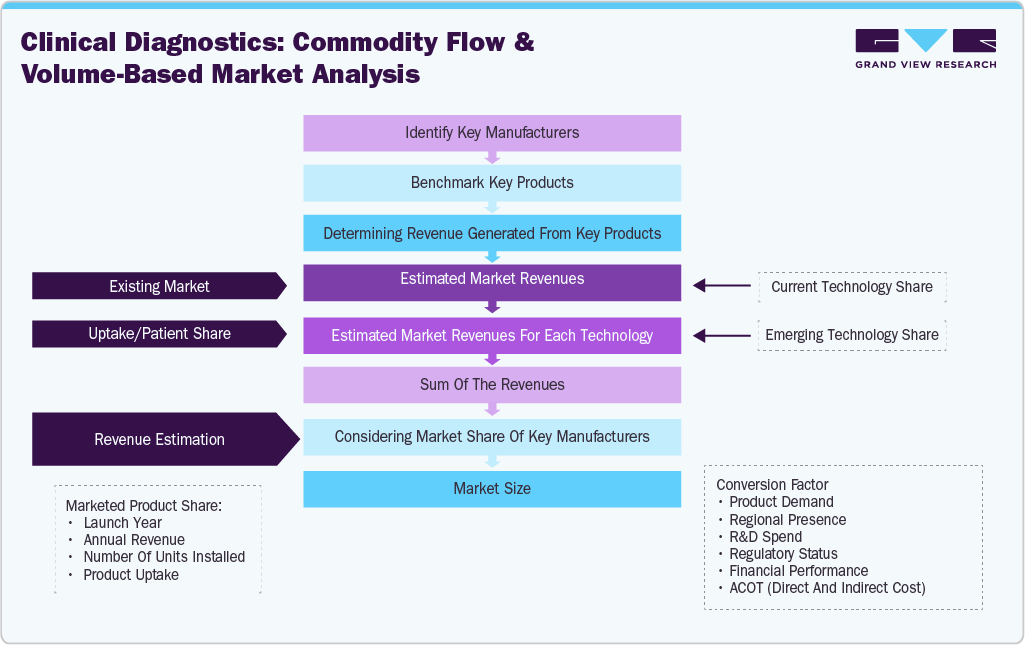
The liver disease diagnostics market was estimated using a bottom-up approach by identifying leading manufacturers, benchmarking their liver disease diagnostic product portfolios, and analyzing revenue contributions from these products. Market estimates were further refined by evaluating technology-wise adoption rates, disease prevalence, patient uptake, and the market shares of key companies, with the aggregated findings used to determine the overall market size.
Delivered Customizations
This report has been delivered with the following In-depth customizations
Client Request
Customization Delivered
Value Adds
Liver Disease Diagnostics Competitive Landscape & Technology Assessment
Assessed the global liver disease diagnostics market across laboratory tests, imaging, elastography, endoscopy, biopsy, molecular diagnostics, and AI-enabled diagnostic technologies. Analyzed leading manufacturers, competitive positioning, product portfolios, technology adoption trends, regulatory approvals, product launches, and regional commercialization strategies across hospitals, diagnostic laboratories, and specialty liver clinics.
Enabled the client to identify high-growth diagnostic technologies, benchmark competitors, evaluate product differentiation, prioritize investments in non-invasive liver diagnostics, and understand technology adoption trends shaping the liver disease diagnostics market.
Liver Disease Diagnostics Product Benchmarking Study
Delivered a comprehensive benchmarking assessment of liver disease diagnostic solutions based on diagnostic accuracy, sensitivity, specificity, workflow efficiency, automation, AI integration, ease of use, regulatory status, reimbursement potential, and product differentiation across leading diagnostic companies.
Helped the client evaluate product competitiveness, identify innovation opportunities, benchmark advanced biomarker, imaging, and molecular diagnostic platforms, and prioritize investments in next-generation liver disease diagnostic solutions.
Liver Disease Diagnostics Commercialization & Market Entry Assessment
Assessed commercialization strategies, regulatory pathways, reimbursement landscape, distribution networks, healthcare adoption trends, strategic collaborations, and market readiness across hospitals, diagnostic laboratories, gastroenterology clinics, and academic medical centers. Evaluated competitive intensity, procurement practices, and adoption barriers for advanced liver disease diagnostic technologies.
Supported commercialization planning by identifying high-potential market opportunities, evaluating partnership and distribution strategies, assessing regulatory and reimbursement requirements, mitigating commercialization risks, and strengthening long-term growth strategies within the liver disease diagnostics market.
Frequently Asked Questions About This Report
The global liver disease diagnostics market is expected to grow at a CAGR of 6.3% from 2026 to 2033, reaching USD 66.4 billion by 2033.
Imaging segment dominated the liver disease diagnostics market with a share of 30.7% in 2025. This is attributable to the high usage of techniques such as ultrasound, X-ray, Magnetic Resonance Imaging (MRI) scan, Computed Tomography (CT) scan, and others.
Some key players operating in the liver disease diagnostics market include Abbott, F. Hoffmann-La Roche Ltd., Thermo Fisher Scientific Inc., Randox Laboratories Ltd., Boston Scientific Corporation, Laboratory Corporation of America Holdings, Fujifilm Corporation, Horiba Medical, and Siemens Healthcare GmbH.
Key factors that are driving the liver disease diagnostics market growth include the rising prevalence of chronic liver diseases, including metabolic dysfunction-associated steatotic liver disease (MASLD), viral hepatitis, liver fibrosis, cirrhosis, and hepatocellular carcinoma.
Asia Pacific is anticipated to witness the fastest growth in the global liver disease diagnostics market during the forecast period. The regional market is driven by the rising prevalence of MASLD, MASH, chronic hepatitis B and C, alcoholic liver disease, cirrhosis, and hepatocellular carcinoma, alongside increasing rates of obesity, diabetes, and aging populations.
North America dominated the market with the largest revenue share of 43.1% in 2025
By disease, the NAFLD segment led the market with the largest revenue share of 26.1% in 2025.
The growing transition toward precision medicine and the rapid development of targeted therapies for chronic liver diseases present a significant opportunity for the liver disease diagnostics market. Historically, treatment options for conditions such as metabolic dysfunction-associated steatotic liver disease (MASLD), metabolic dysfunction-associated steatohepatitis (MASH), liver fibrosis, and cirrhosis were largely limited to lifestyle modifications and supportive care.
The global liver disease therapeutics market size was valued at USD 40.5 billion in 2024 and is estimated at USD 43.2 billion for 2026.
About the Author(s)
Clinical Diagnostics Research Team
Healthcare · Clinical DiagnosticsThis report was authored by the clinical diagnostics research team at Grand View Research - comprising two research analysts, one senior research analyst, and one industry expert - with specialized expertise in the clinical diagnostics segment of the healthcare industry. All findings are based on proprietary healthcare databases, executive interviews, and regulatory analysis, subject to internal peer review prior to publication.
Last Updated:
Speak to Analyst


Customize this report to your needs — add regions, segments, or data points, with 20% free customization.
Or view our licence options:


ISO 9001:2015 & 27001:2022 Certified
We are GDPR and CCPA compliant! Your transaction & personal information is safe and secure. For more details, please read our privacy policy.


