
- Home
- »
- Conventional Energy
- »
-
LNG Carriers Market Size, Share And Growth Report, 2033GVR Report cover

LNG Carriers Market (2026 - 2033)
Size, Share & Trends Analysis Report By Cargo Capacity, By Application (LNG Transportation, Floating LNG Storage, Floating LNG Regasification), By Region (North America, Europe, Asia Pacific, Latin America, Middle East & Africa), And Segment Forecasts
Market Size, 2025
$15.8BMarket Estimate, 2026
$18.4BMarket Forecast, 2033
$23.3BCAGR, 2026–2033
3.4%LNG Carriers Market Summary
The LNG carriers market size was valued at USD 15.8 billion in 2025 and is projected to grow from USD 18.4 billion in 2026 to USD 23.3 billion by 2033, at a CAGR of 3.4% from 2026 to 2033. Asia Pacific LNG carriers market held the largest share of 31.5% of the global market in 2025. The market is driven by increasing global LNG trade, rising demand for natural gas, and expanding LNG export and import infrastructure across key economies.
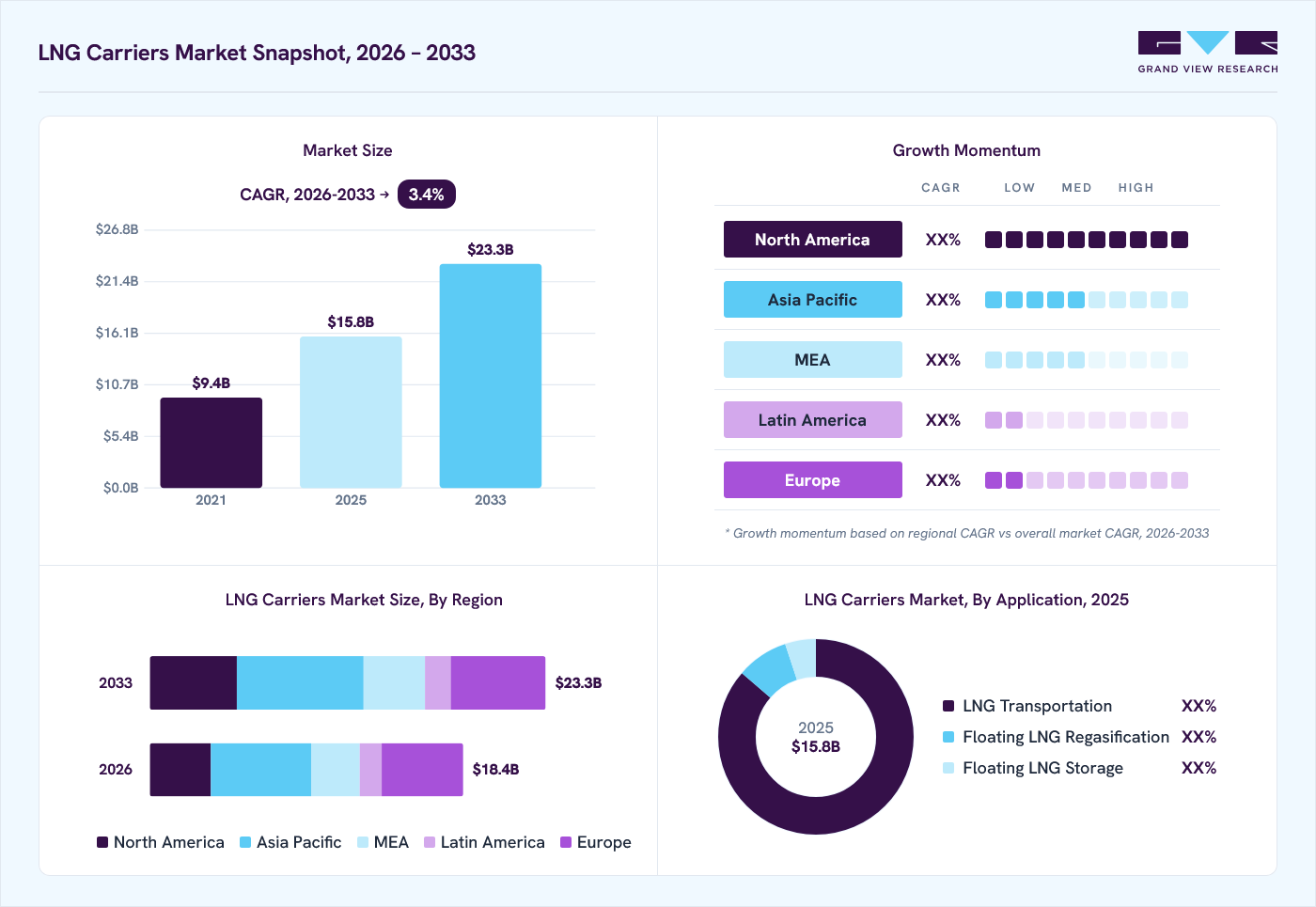 Source: Grand View Research, IR Documents, Primary Interviews, Paid DatabasesTo learn more about this report,
 Download Free Sample Report
Key Market Trends & Insights
- By cargo capacity: 150,000-179,999 m³ segment held the largest market share of 41.1% in 2025.
- By application: LNG transportation segment held the largest market share of 86.2% in 2025.
Regional Highlights
- Largest regional market: Asia Pacific (31.5% revenue share, 2025)
- Fastest-growing regional market: North America (highest CAGR, 2026-2033)
- By country: China held the largest market share in 2025
Market Size & Forecast
- Market size in 2025: USD 15.8 Billion
- Estimated market size in 2026: USD 18.4 Billion
- Projected market size by 2033: USD 23.3 Billion
- CAGR (2026-2033): 3.4%
GVR research-powered AIAsk Prism AI about the LNG carriers marketGet cited answers from GVR research on market growth, segments, regulations and forecasts.Start with✓ Source-linked answers ✓ Market-specific context ✓ Traceable figuresExplore Prism AI ↗Investments in new liquefaction terminals, regasification facilities, and long-distance LNG transportation are increasing the need for additional carrier capacity.
 To learn more about this report, Download Free Sample Report
Market Dynamics
The LNG carriers market is shaped by fluctuations in vessel construction costs, shipyard capacity, charter rates, and the availability of specialized containment technologies. High capital requirements and lengthy construction periods create entry barriers for new shipbuilders, while stringent safety and environmental standards influence vessel design and operating costs. The shift toward larger-capacity carriers and advanced propulsion systems is encouraging technological innovation and fleet modernization. Additionally, competition among shipbuilders in South Korea and China is influencing pricing, delivery schedules, and the global supply of LNG carriers.
The transition from coal and oil toward natural gas in several power generation and industrial applications supports demand for LNG transportation infrastructure. As countries seek to diversify energy supplies and reduce the emissions intensity of their energy mix, LNG imports and exports play an important role in connecting production centers with demand markets. This increases the need for specialized LNG carriers to transport gas over long distances, particularly where pipeline infrastructure is unavailable or uneconomical.
According to the International Energy Agency (IEA), global LNG supply increased by nearly 7% in 2025, driven largely by new liquefaction capacity in North America. The IEA expects global LNG supply to grow by more than 7% in 2026, supported by additional production capacity and rising demand, particularly in China and emerging Asian markets. This expansion is strengthening the need for LNG transportation capacity, encouraging shipowners to invest in new carriers to connect growing export volumes with international markets.
LNG carriers require substantial upfront investment due to specialized cryogenic cargo containment systems, advanced propulsion equipment, stringent safety requirements, and complex vessel engineering. Construction costs can reach hundreds of millions of dollars per vessel, while lengthy building timelines and limited availability of specialized shipyards increase financial and operational risks. These high capital requirements create barriers for new market entrants and smaller shipowners, potentially delaying fleet expansion and limiting investment in new LNG transportation capacity.
The expansion of small-scale LNG (SSLNG) infrastructure presents an emerging business opportunity for LNG carrier manufacturers and operators. Smaller LNG carriers can supply natural gas to remote industrial facilities, mining operations, island communities, and coastal markets that lack pipeline connectivity or access to large LNG terminals. Growing integration with city gas distribution networks and virtual pipeline systems is creating demand for flexible, short-distance LNG transportation solutions. Regulatory initiatives supporting SSLNG infrastructure development, including India's Petroleum and Natural Gas Regulatory Board's work on SSLNG, could further encourage investments in smaller vessels, coastal LNG distribution, and specialized transportation services.
Analyst Perspective
The LNG carriers market is transitioning from a capacity-driven shipping industry toward a technology-intensive market shaped by LNG trade growth, fleet renewal, and operational efficiency. The increasing adoption of larger-capacity vessels, advanced membrane containment systems, and dual-fuel propulsion is enabling shipowners to optimize cargo volumes and reduce fuel consumption and emissions. However, the potential mismatch between new vessel deliveries and LNG trade growth could create periods of oversupply, putting pressure on charter rates and vessel utilization. Meanwhile, the expansion of floating storage and regasification infrastructure and small-scale LNG distribution is creating opportunities for specialized vessel designs. Going forward, competitive advantage will increasingly depend on vessel efficiency, compliance with evolving environmental regulations, access to long-term charter contracts, and the ability to align fleet expansion with new LNG export capacity and changing global trade routes.
Cargo Capacity Insights
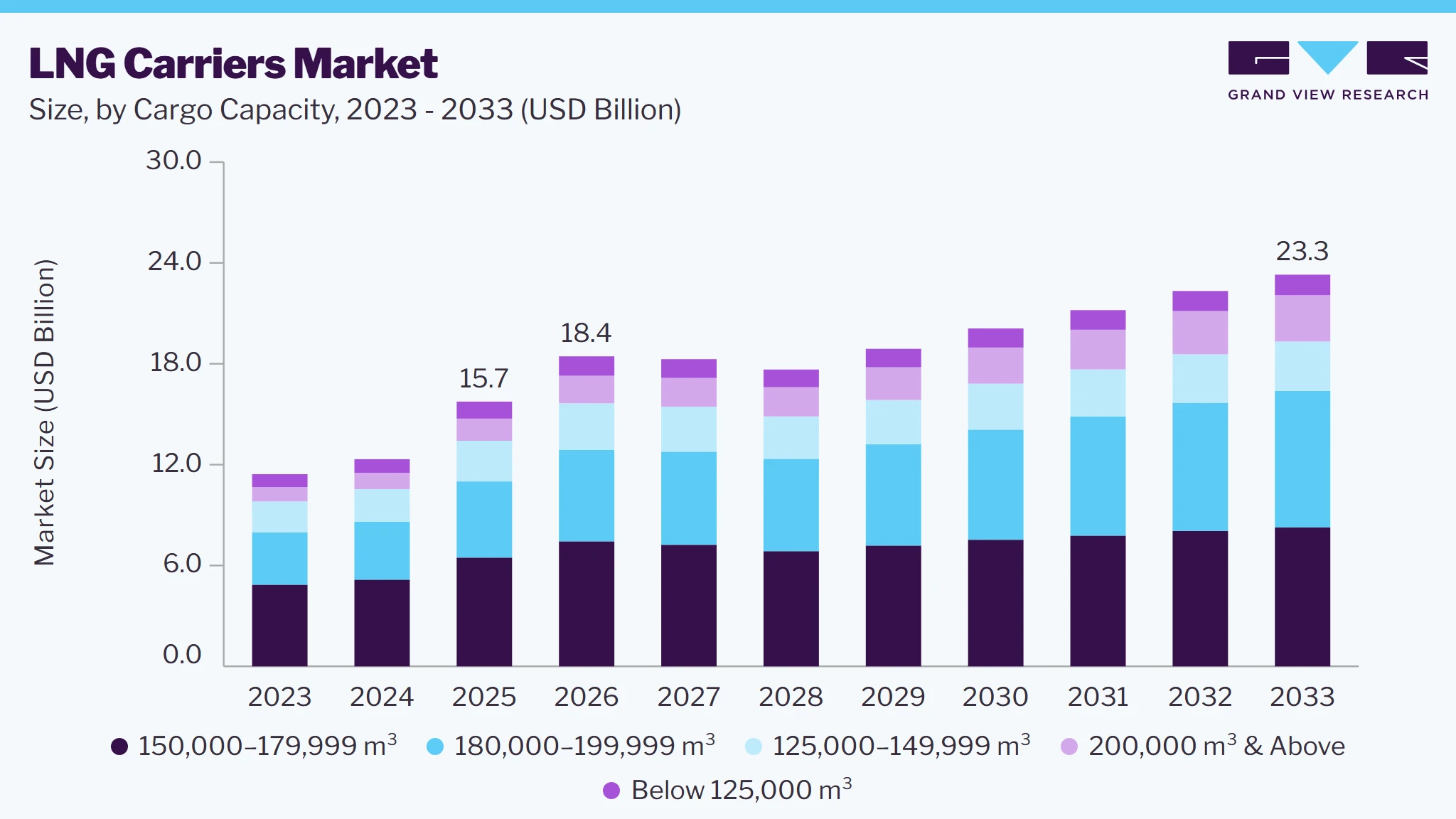
The 150,000-179,999 m³ segment held the largest revenue share of 41.1% in 2025. This growth is driven by the widespread adoption of large-capacity LNG carriers for transporting liquefied natural gas over long distances. Vessels within this capacity range offer an effective balance between cargo volume, operational flexibility, and transportation costs. Increasing global LNG trade, rising demand for natural gas, and expanding LNG export and import infrastructure are further supporting demand for these carriers.
The 200,000 m³ and above segment is growing at the fastest CAGR of 7.7% from 2026 to 2033. This is supported by the increasing demand for large-capacity LNG carriers to improve transportation efficiency and reduce shipping costs per unit of cargo. The growing global LNG trade, the expansion of LNG export facilities, and the rising demand from major importing countries are encouraging the adoption of larger vessels. Additionally, economies of scale and the need to transport higher LNG volumes across long distances are expected to support segment growth.
Application Insights
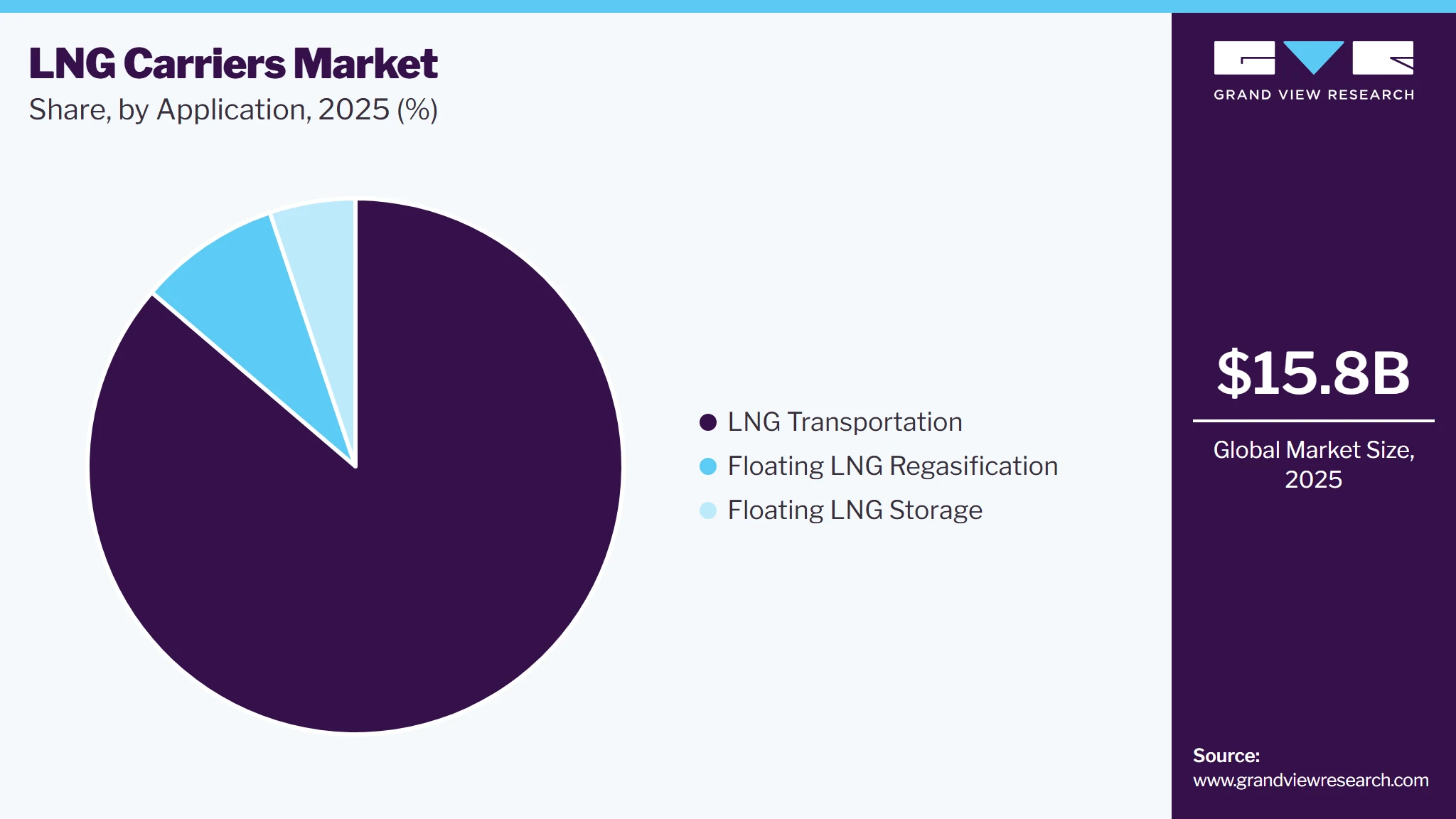
The LNG transportation dominated the global market with a revenue share of 86.2% in 2025. This is due to the growing global trade of liquefied natural gas and the increasing need for specialized carriers to transport LNG safely over long distances. Rising demand for natural gas in power generation, industrial applications, and residential consumption is driving cross-border LNG shipments. Additionally, expanding LNG export terminals and import infrastructure are supporting the deployment of LNG carriers, reinforcing the segment’s leading market position.
 To learn more about this report, Download Free Sample Report
The floating LNG regasification segment is anticipated to grow at the fastest CAGR of 3.9% during the forecast period. This is due to the increasing demand for flexible and cost-effective LNG import solutions that can be deployed faster than conventional onshore regasification terminals. Floating storage and regasification units (FSRUs) require comparatively lower initial investment and offer greater flexibility in location and capacity. Additionally, growing natural gas demand, limited land availability, and the need to diversify energy supplies are encouraging countries to adopt floating LNG infrastructure.
Regional Insights
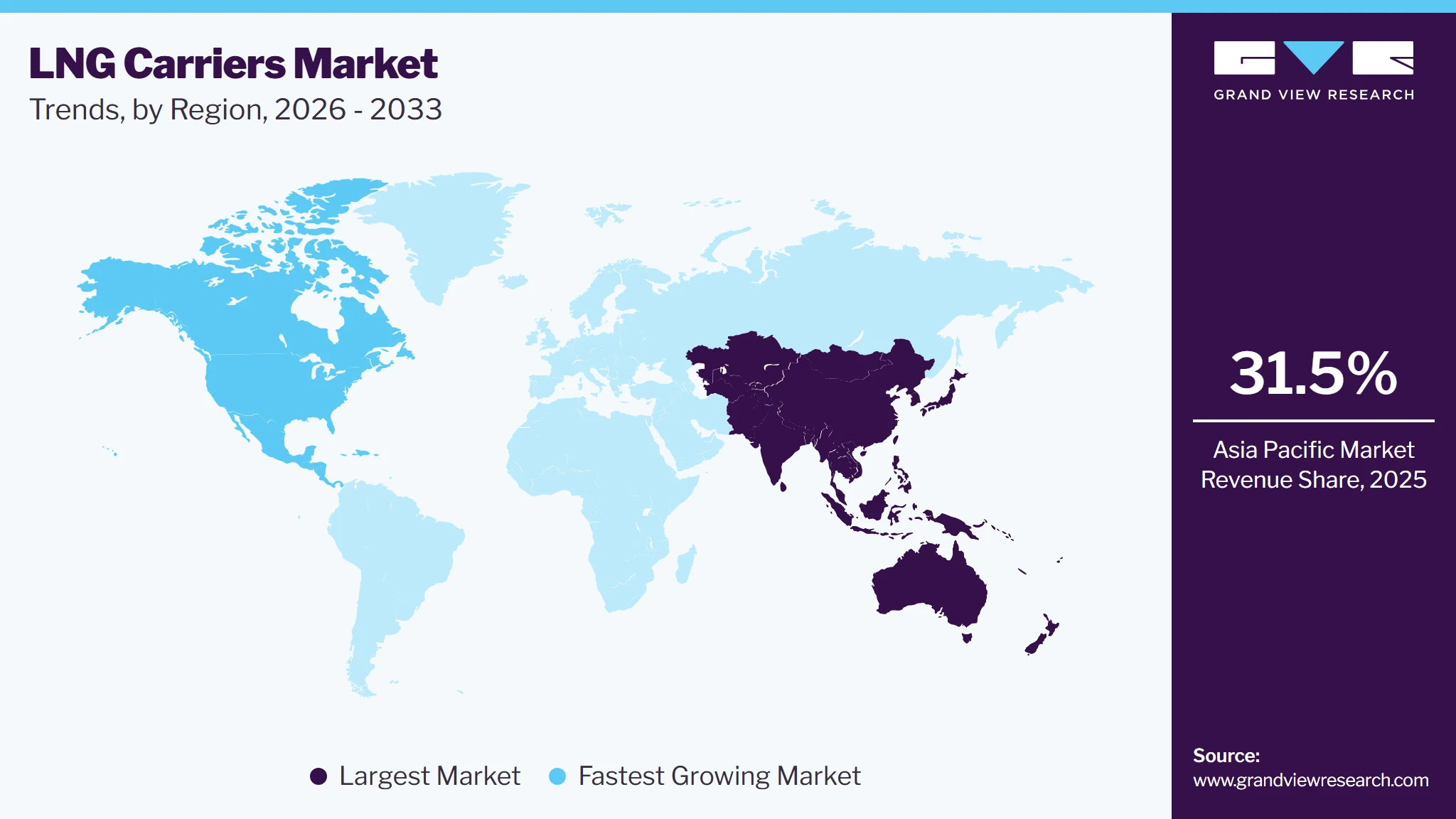
Asia Pacific dominated the global market with a revenue share of 31.5% in 2025. The region is a major demand center for LNG carriers, supported by LNG imports for power generation, industrial consumption, and energy security across China, Japan, South Korea, and India. According to the International Energy Agency (IEA), LNG imports into ASEAN member states more than tripled between 2015 and 2025, reflecting the region's growing reliance on seaborne gas supplies. In 2025-2026, changing import requirements and disruptions to shipping through the Strait of Hormuz have highlighted the importance of flexible vessel deployment, diversified sourcing, and reliable LNG transportation capacity.
 To learn more about this report, Download Free Sample Report
China LNG Carriers Market Trends
China's LNG carriers market is supported by rising shipbuilding capabilities, growing LNG import requirements, and government initiatives to strengthen domestic maritime manufacturing. Chinese shipyards, including Hudong-Zhonghua Shipbuilding and Jiangnan Shipyard, are expanding their capabilities in large-capacity LNG carrier construction, increasing competition with established South Korean shipbuilders. Government priorities around energy security, domestic shipbuilding technology, and expanding natural gas infrastructure are supporting industry development. Continued investment in LNG vessel construction and improvements in cargo containment technology are expected to strengthen China's position in the global LNG carrier supply chain.
North America LNG Carriers Market Trends
North America is anticipated to register the fastest CAGR of 5.2% from 2026 to 2033. The region is a major LNG carrier demand and supply hub, led by the expansion of U.S. liquefaction capacity and the emergence of Canadian LNG exports. According to the EIA, U.S. LNG exports increased by 26% to 15.1 billion cubic feet per day in 2025, while Canada began exporting LNG after LNG Canada entered operations in June 2025. Furthermore, U.S. LNG exports averaged 17.4 billion cubic feet per day in the first half of 2026, up 23% year over year, supported by new terminal capacity and expansions. These developments are strengthening demand for large-capacity carriers, long-term shipping contracts, and vessels serving trans-Pacific and trans-Atlantic trade routes.
The U.S. LNG carriers market is driven by expanding liquefaction capacity, rising LNG exports, and growing demand from international buyers seeking diversified gas supplies. According to the U.S. Energy Information Administration (EIA), U.S. LNG exports averaged 17.4 billion cubic feet per day in the first half of 2026, increasing 23% year over year as new terminals and existing facility expansions boosted production. This growth supports demand for large-capacity LNG carriers, long-term vessel charter agreements, and shipping services connecting U.S. Gulf Coast export terminals with Europe and Asia.
Europe LNG Carriers Market Trends
Europe's LNG carriers market is supported by efforts to diversify natural gas supplies and reduce reliance on pipeline imports. According to the EIA, European countries increased LNG imports by 29% in 2025, adding 3.8 billion cubic feet per day as reduced pipeline deliveries increased the need for seaborne gas. The IEA also identified Europe as a major driver of LNG demand growth in 2025, reflecting increased storage replenishment requirements and lower pipeline inflows. In 2026, competition with Asian buyers for flexible cargoes and shipping disruptions have further emphasized the importance of reliable carrier availability, flexible scheduling, and diversified supply routes.
Latin America LNG Carriers Market Trends
Latin America's LNG carriers market is influenced by seasonal gas demand, domestic production levels, hydropower availability, and the need to supplement pipeline supplies. The EIA reported that U.S. LNG exports to Caribbean destinations reached approximately 0.3 billion cubic feet per day in 2025, the second-highest level on record, highlighting the importance of vessel-based LNG supply to regional energy markets. In Argentina, the government announced in January 2026 that private-sector operators would handle LNG imports and commercialization to help ensure supply during periods of high demand, particularly winter. These developments support opportunities for flexible chartering, floating regasification infrastructure, and LNG transportation to markets with limited pipeline connectivity.
Middle East & Africa LNG Carriers Market Trends
The Middle East & Africa market is influenced by LNG export volumes from Qatar and other established producers, alongside rising import requirements in countries facing domestic gas shortages. According to the U.S. Energy Information Administration (EIA), Qatar's LNG exports increased by 3% to 10.6 billion cubic feet per day in 2025, reinforcing its importance in global LNG shipping. However, disruptions to the Strait of Hormuz in 2026 significantly affected Gulf LNG flows, highlighting the exposure of carrier operations to geopolitical risks and maritime chokepoints. Meanwhile, growing LNG imports in Egypt and new import activity in African markets are creating additional demand for international LNG transportation.
Key LNG Carriers Market Company Insights
Some of the key players operating in the global LNG carriers market include Hanwha Group and Kawasaki Heavy Industries, Ltd., among others.
-
Hanwha Group participates in the LNG carriers market through its subsidiary Hanwha Ocean, a major shipbuilder specializing in liquefied natural gas (LNG) carriers. The company designs and constructs large-capacity LNG vessels equipped with advanced cryogenic cargo containment systems, fuel-efficient propulsion technologies, and boil-off gas management solutions. Its capabilities also include LNG floating storage and regasification units (FSRUs) and other specialized gas carriers. Hanwha Ocean's shipbuilding expertise, technological capabilities, and focus on high-efficiency vessel designs position the group to benefit from expanding global LNG trade, fleet modernization, and demand for advanced LNG transportation solutions.
-
Kawasaki Heavy Industries participates in the LNG carriers market through its shipbuilding and marine engineering capabilities, including the development and construction of LNG transportation vessels. The company has experience with Moss-type spherical cargo containment systems and membrane-type LNG carrier technologies, supporting the safe transportation of liquefied natural gas at cryogenic temperatures. Its broader marine portfolio includes propulsion systems, gas handling technologies, and specialized equipment for energy transportation applications. Kawasaki's established engineering expertise and experience in LNG vessel construction position it within the market for specialized LNG carriers, particularly as shipowners evaluate vessel efficiency, cargo containment performance, and long-term operational reliability.
Key LNG Carriers Companies
The following key companies have been profiled for this study on the LNG carriers market.
-
COSCO SHIPPING Energy Transportation Co., Ltd.
-
Dalian Shipbuilding Industry Co., Ltd.
-
Hanwha Group
-
HD Hyundai Heavy Industries Engine & Machinery
-
Japan Marine United Corporation
-
Jiangsu Yangzijiang Shipbuilding Group Co., Ltd.
-
Kawasaki Heavy Industries, Ltd.
-
MITSUBISHI HEAVY INDUSTRIES, LTD.
-
MITSUI E&S Co., Ltd.
-
SAMSUNG HEAVY INDUSTRIES CO., LTD.
Competitive Benchmarking
Category
Operating Strategies
Competitive Edge
Weakness
Established Players (COSCO SHIPPING Energy Transportation Co., Ltd., Hanwha Group, HD Hyundai Heavy Industries Engine & Machinery, Japan Marine United Corporation, Kawasaki Heavy Industries, Ltd., MITSUBISHI HEAVY INDUSTRIES, LTD., MITSUI E&S Co., Ltd., SAMSUNG HEAVY INDUSTRIES CO., LTD.)
- Focus on large-capacity LNG carriers, advanced cargo containment systems, and energy-efficient vessel designs.
- Secure long-term shipbuilding contracts and strategic relationships with LNG producers, shipowners, and charter operators.
- Invest in technological improvements, including boil-off gas management, dual-fuel propulsion, and emissions reduction.
- Leverage established shipyard infrastructure, engineering expertise, and global after-sales service networks.
- Extensive experience in LNG carrier construction and proven vessel delivery capabilities.
- Strong technological expertise in membrane and Moss-type containment systems.
- Established relationships with global LNG project developers and shipping companies.
- Greater ability to manage complex vessel designs, quality requirements, and stringent maritime safety standards.
- High capital expenditure for shipyard infrastructure, research, and advanced manufacturing capabilities.
- Exposure to fluctuations in LNG shipping demand, shipbuilding cycles, and vessel order volumes.
- Long construction lead times and dependence on specialized equipment and skilled labor.
- Potentially higher production costs compared with newer competitors benefiting from expanding manufacturing capacity.
Emerging Players (Dalian Shipbuilding Industry Co., Ltd., Jiangsu Yangzijiang Shipbuilding Group Co., Ltd.)
- Expand LNG carrier construction capabilities by investing in specialized shipyard facilities, equipment, and workforce training.
- Compete through cost-effective vessel construction, competitive pricing, and shorter delivery schedules.
- Build technological capabilities through partnerships, licensed containment systems, and collaboration with established marine equipment suppliers.
- Leverage domestic LNG demand, government-backed shipbuilding initiatives, and local vessel orders to develop production experience.
- Potentially lower construction costs and competitive pricing, particularly among expanding Chinese shipyards.
- Opportunity to adopt newer manufacturing processes and modern production facilities.
- Growing domestic shipbuilding ecosystems and access to local suppliers.
- Ability to capture orders when established shipyards face capacity constraints or extended delivery schedules.
- Limited track records in delivering large LNG carriers at scale compared with established leaders.
- Dependence on external technology providers for specialized containment systems and critical equipment.
- Challenges in meeting demanding quality, safety, reliability, and international certification requirements consistently.
- Need to establish stronger relationships with international shipowners and demonstrate reliable delivery performance before securing repeat orders.
Recent Developments
-
In September 2026, Hanwha Ocean secured a contract worth approximately USD 500 million to construct two LNG carriers for an African shipowner, with delivery scheduled by November 2029. The order strengthens the company's LNG carrier portfolio and reflects continued demand for specialized vessels to support international LNG transportation. The development reinforces Hanwha Ocean's competitive position in high-value shipbuilding and supports its strategy of leveraging advanced cargo containment, propulsion, and boil-off gas management technologies to serve global LNG shipping requirements.
LNG Carriers Report Scope
Report Attribute
Details
Market Definition
The global LNG carriers market comprises the construction and sale of liquefied natural gas (LNG) carrier vessels designed to transport LNG in cryogenic conditions from liquefaction facilities to import terminals. The market includes revenue generated from newly constructed conventional LNG carriers, with market size estimated based on annual vessel deliveries and the corresponding average selling price. The market excludes LNG bunker vessels, floating storage and regasification units (FSRUs), floating storage units (FSUs), LNG production and regasification infrastructure, vessel chartering revenue, and the resale of existing vessels.
Market size in 2025
USD 15.8 billion
Estimated market size in 2026
USD 18.4 billion
Revenue forecast in 2033
USD 23.3 billion
Growth Rate
CAGR of 3.4% from 2026 to 2033
Base year for estimation
2025
Historical data
2021 - 2024
Forecast period
2026 - 2033
Quantitative Units
Revenue in USD Million and CAGR from 2026 to 2033
Report coverage
Revenue forecast, competitive landscape, growth factors, and trends
Segments covered
Cargo capacity, application, and region
Regional scope
North America, Europe, Asia Pacific, Latin America, Middle East & Africa
Country scope
U.S., Canada, Mexico, Germany, UK, France, Italy, China, India, Japan, Australia, Brazil, Saudi Arabia, UAE, South Africa
Key companies profiled
COSCO SHIPPING Energy Transportation Co., Ltd., Dalian Shipbuilding Industry Co., Ltd., Hanwha Group, HD Hyundai Heavy Industries Engine & Machinery, Japan Marine United Corporation, Jiangsu Yangzijiang Shipbuilding Group Co., Ltd., Kawasaki Heavy Industries, Ltd., MITSUBISHI HEAVY INDUSTRIES, LTD., MITSUI E&S Co., Ltd., SAMSUNG HEAVY INDUSTRIES CO., LTD.
Customization scope
Free report customization (equivalent up to 8 analysts working days) with purchase. Addition or alteration to country, regional & segment scope.
Pricing and purchase options
Avail customized purchase options to meet your exact research needs. Explore purchase options
Global LNG Carriers Market Report Segmentation
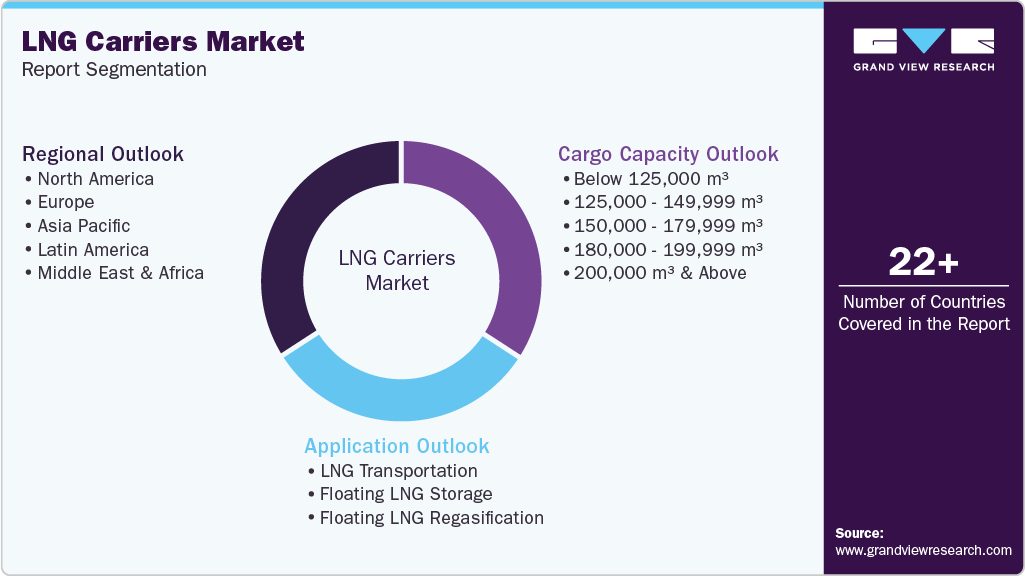
This report forecasts revenue growth at global, regional, and country levels and provides an analysis of the latest industry trends in each of the sub-segments from 2021 to 2033. For the purpose of this study, Grand View Research has segmented the global LNG carriers market report on the basis of cargo capacity, application, and region.
 To learn more about this report, Download Free Sample Report
-
Cargo Capacity Outlook (Revenue, USD Million; 2021 - 2033)
-
Below 125,000 m³
-
125,000-149,999 m³
-
150,000-179,999 m³
-
180,000-199,999 m³
-
200,000 m³ and Above
-
-
Application Outlook (Revenue, USD Million; 2021 - 2033)
-
LNG Transportation
-
Floating LNG Storage
-
Floating LNG Regasification
-
-
Regional Outlook (Revenue, USD Million; 2021 - 2033)
-
North America
-
U.S.
-
Canada
-
Mexico
-
-
Europe
-
UK
-
Italy
-
France
-
Germany
-
-
Asia Pacific
-
China
-
India
-
Japan
-
Australia
-
-
Latin America
-
Brazil
-
-
Middle East & Africa
-
Saudi Arabia
-
UAE
-
South Africa
-
-
Research Methodology
The LNG carriers market figures in this report are based on a proven research process that combines executive interviews with secondary research from proprietary databases, company filings, and recognized regulatory and institutional sources. Market size is built through value-chain sizing-reconciling supply-side and demand-side estimates-and triangulated with bottom-up and top-down approaches. Every estimate passes multiple levels of expert validation before publication, with each LNG carriers segment quantified using the revenue-capture definitions in the table below.
Segment Definition
Segment - Cargo Capacity
Revenue capture definition
Below 125,000 m³
Revenue generated from the sale of newly constructed LNG carriers with cargo capacities below 125,000 m³.
125,000-149,999 m³
Revenue generated from the sale of newly constructed LNG carriers with cargo capacities ranging from 125,000 m³ to 149,999 m³.
150,000-179,999 m³
Revenue generated from the sale of newly constructed LNG carriers with cargo capacities ranging from 150,000 m³ to 179,999 m³.
180,000-199,999 m³
Revenue generated from the sale of newly constructed LNG carriers with cargo capacities ranging from 180,000 m³ to 199,999 m³.
200,000 m³ and Above
Revenue generated from the sale of newly constructed LNG carriers with cargo capacities of 200,000 m³ and above.
Segment - Application
Revenue capture definition
LNG Transportation
Revenue generated from the sale of newly constructed LNG carriers designed to transport liquefied natural gas between production facilities, export terminals, and import terminals.
Floating LNG Storage
Revenue generated from the sale of newly constructed vessels designed to provide floating storage capacity for liquefied natural gas at offshore or nearshore locations.
Floating LNG Regasification
Revenue generated from the sale of newly constructed floating storage and regasification vessels (FSRUs) designed to store LNG and convert it into natural gas for delivery to onshore or offshore gas networks.
Estimation Model
Layer Name
Key Question
Description
Demand Layer
Which factors generate demand for LNG carriers?
Assess demand arising from increasing global LNG trade, expansion of LNG liquefaction and export capacity, growing LNG import requirements, development of floating LNG infrastructure, fleet replacement, and demand for reliable maritime transportation of liquefied natural gas.
Vessel Capacity Layer
Which cargo capacity segments generate market revenue?
Evaluate revenue across LNG carriers with cargo capacities below 125,000 m³, 125,000-149,999 m³, 150,000-179,999 m³, 180,000-199,999 m³, and 200,000 m³ and above, based on vessel specifications, construction costs, cargo capacity requirements, and demand for different vessel sizes.
Application Layer
Which LNG carrier applications generate market revenue?
Quantify revenue across LNG transportation, floating LNG storage, and floating LNG regasification based on vessel design, cargo handling requirements, storage capacity, regasification capabilities, and investments in LNG transportation and import infrastructure.
Revenue Layer
How is LNG carriers market revenue generated?
Market revenue is quantified through the sale of newly constructed LNG carriers and specialized floating LNG vessels to shipowners, LNG producers, shipping companies, and floating LNG facility operators. Revenue is estimated by vessel capacity and application, considering vessel order volumes, average selling prices, shipbuilding contracts, and delivery schedules. The analysis excludes chartering revenue, LNG cargo sales, vessel operating income, and standalone equipment or maintenance service revenues.
Delivered Customizations
This report has been delivered with the following In-depth customizations
Client Request
Customization Delivered
Value Adds
Competitive Benchmarking
Conducted a comparative assessment of key LNG carrier manufacturers and operators based on fleet capacity, vessel cargo capacity, containment technology, fleet size, fuel efficiency, vessel specifications, order book, and geographical presence.
Identified leading market participants and assessed their competitive positioning based on fleet expansion strategies, technological capabilities, new vessel orders, operational efficiency, and investments in advanced LNG carrier technologies.
Application Opportunity Assessment
Market analysis was performed across LNG transportation, floating LNG storage, and floating LNG regasification applications by assessing LNG trade volumes, storage requirements, regasification capacity, offshore infrastructure investments, and the role of LNG carriers in the global natural gas supply chain.
Identified high-growth application opportunities based on expanding international LNG trade, increasing demand for floating storage and regasification solutions, new LNG import terminal developments, and the need for flexible natural gas transportation and supply infrastructure.
Regional Opportunity Assessment
Country-level analysis was conducted to assess LNG carrier demand based on LNG export and import volumes, liquefaction and regasification infrastructure, LNG trade routes, fleet expansion, shipbuilding capabilities, and investments in floating LNG facilities across key markets.
Identified countries with strong market growth potential based on expanding LNG production and export capacity, rising natural gas import demand, development of floating storage and regasification infrastructure, and increasing investments in LNG transportation fleets.
About the Author(s)
Conventional Energy Research Team
Energy & Power · Conventional EnergyThis report was authored by the conventional energy research team at Grand View Research - comprising two research analysts, one senior research analyst, and one industry expert - with specialized expertise in the conventional energy segment of the energy & power industry. All findings are based on proprietary energy & power databases, executive interviews, and regulatory analysis, subject to internal peer review prior to publication.
Last Updated:
Speak to Analyst

Customize this report to your needs - add regions, segments, or data points, with 20% free customization.
Or view our licence options:


ISO 9001:2015 & 27001:2022 Certified
We are GDPR and CCPA compliant! Your transaction & personal information is safe and secure. For more details, please read our privacy policy.


