
- Home
- »
- Medical Devices
- »
-
Long-Term Care Market Size, Share & Trends Report, 2033GVR Report cover

Long-Term Care Market (2026 - 2033)
Size, Share & Trends Analysis Report By Service (Nursing Care, Hospice, Assisted Living Facilities, Home Healthcare), By Payer (Public, Private, Out-of-Pocket), By Region, And Segment Forecasts
Market Size, 2025
$1.2TMarket Estimate, 2026
$1.3TMarket Forecast, 2033
$2.1TCAGR, 2026–2033
7.0%Long-Term Care Market Summary
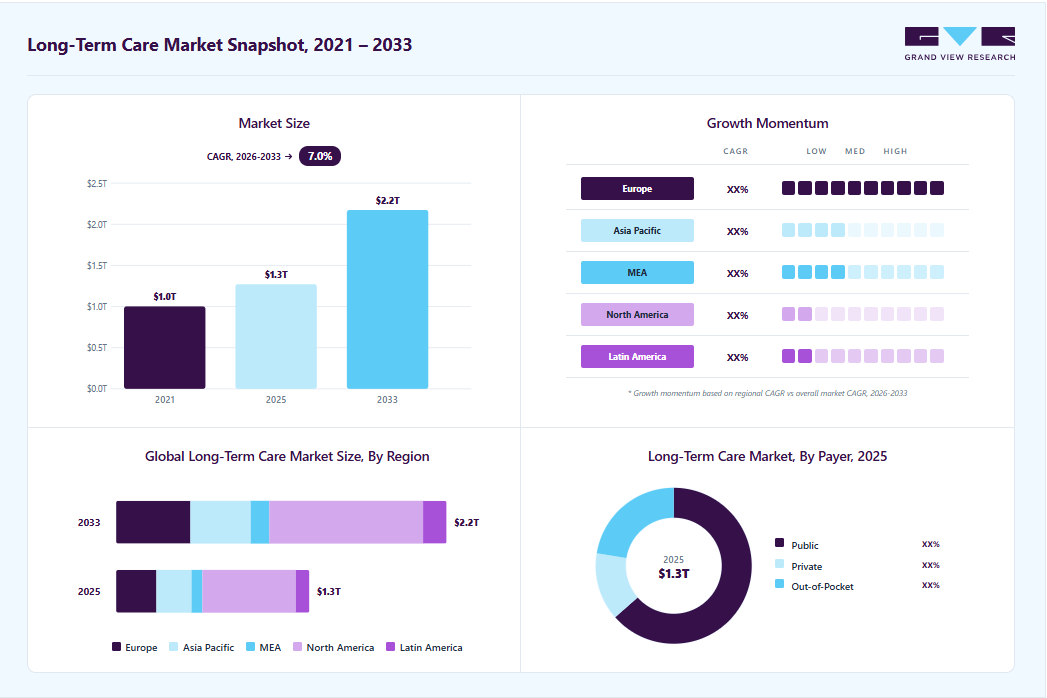
The global long-term care market size was valued at USD 1.2 trillion in 2025 and is projected to grow from USD 1.3 trillion in 2026 to USD 2.1 trillion by 2033, at a CAGR of 7.0% from 2026 to 2033. North America dominated the market, accounting for a revenue share of 48.2% in 2025. The expanding global geriatric population is a key driver of growth in the long-term care (LTC) services market.
 Source: Grand View Research, IR Documents, Primary Interviews, Paid DatabasesTo learn more about this report,
 Download Free Sample Report
 Key Market Trends & Insights
- By service: Nursing care segment held the largest revenue share of 30.6% in 2025.
- By payer: Public segment held the largest revenue share in 2025.
Regional Highlights
- Largest regional market: North America (48.2% revenue share, 2025)
- Fastest-growing regional market: Asia Pacific (fastest CAGR, 2026-2033)
- By country: The U.S. led North America with the largest share in 2025
Market Size & Forecast
- Market size in 2025: USD 1.2 Trillion
- Estimated market size in 2026: USD 1.3 Trillion
- Projected market size by 2033: USD 2.1 Trillion
- CAGR (2026-2033):7.0%
Three ways to get this report
Buy it, customize it, or ask a question.Ask an Analyst
A direct answer, usually in 1 working day
- AccessReport author, directly
- Reply timeWithin 1 working day
- No sales callDirect answer only
- FormatEmail reply
- CostFree, no cost
Get the Full Report
What the study covers
- FormatsPDF · Excel · Dashboard
- Timeline2026–2033 annual, 2025 base
- Coverage20+ countries, 5 regions
- Companies10+ key players profiled
Customize the Report
20% free customization
- IncludeCountries, segments, points
- TailorTo your product definition
- ExtendDeeper competitor detail
- OrA fully bespoke study
- Turnaround5–10 working days
Rising life expectancy, declining fertility rates, and improvements in healthcare are increasing the share of individuals aged 65 years and older, resulting in a larger population requiring ongoing support. As age-related health needs become more prevalent, demand is increasing for continuous, assisted, and specialized care services, contributing to the sustained expansion of the LTC services market. To learn more about this report, Download Free Sample Report
 The section below outlines the key factors driving growth in the long-term care industry, highlighting unmet needs among the elderly population and technological advancements. The reforms in the health system and government support also further drive demand.
Market Drivers
Rising global life expectancy is increasing demand for LTC services, particularly among older adults living with chronic conditions, disabilities, and functional limitations. A growing number of elderly individuals require ongoing assistance with daily activities and medical needs, while gaps in access to care continue to create unmet demand for both home-based and institutional services. This is placing additional pressure on healthcare systems and encouraging a shift toward home-based care models that can reduce avoidable hospital utilization, manage costs, and support quality of life. According to an OECD article published in November 2025, approximately 3.4% of the population across OECD countries reported unmet medical care needs, citing factors such as cost, waiting times, and difficulties accessing services.
Government Support and Healthcare System Reforms for Elderly Care Services
The growing global population of older adults is creating demographic and policy challenges for healthcare systems, increasing the need for affordable and accessible care. Governments are increasingly adapting healthcare policies and coverage frameworks to address the needs of aging populations, with greater emphasis on reducing financial barriers and expanding access to long-term care (LTC) services. In the U.S., Medicare and Medicaid play important roles in supporting healthcare and long-term services for older adults, particularly those with chronic conditions and functional limitations. According to the Centers for Medicare & Medicaid Services (CMS), Medicare covered approximately 66 million beneficiaries in 2025, while Medicaid provided long-term services and supports (LTSS) to more than 7 million older adults and individuals with disabilities. These programs support a range of institutional, home-based, and community-based services, helping reduce financial pressures and improve continuity of care for aging populations.
Rising Chronic Disease Burden Driving Demand for Long-Term Care Services
The growing prevalence of chronic diseases worldwide is increasing healthcare needs among older adults and strengthening demand for LTC services. Age-related health decline and conditions such as cancer, diabetes, dementia, and cardiovascular diseases often require continuous monitoring, assistance with daily activities, and specialized care. Managing these conditions through prolonged hospital-based care can place substantial pressure on healthcare resources and increase costs. LTC facilities and services provide structured, patient-centered support for older adults with complex and ongoing care needs, offering an alternative that can improve continuity of care and resource efficiency.
The World Health Organization reported in March 2025 that approximately 57 million people globally were living with dementia, with more than 60% residing in low- and middle-income countries. Dementia is also associated with approximately 10 million new cases each year, while Alzheimer’s disease accounts for an estimated 60-70% of dementia cases. The growing burden of dementia and Alzheimer’s disease is expected to increase demand for LTC services that provide ongoing supervision, daily living assistance, and individualized care. Greater recognition of the benefits of structured LTC compared with prolonged hospital-based care is further supporting the adoption of these services.
Technological Advancements in Long-Term Care Delivery
Advancements in healthcare technology are transforming the long-term care (LTC) services industry, shifting elderly care from conventional assistive devices toward more connected and digitally enabled models. Technologies such as remote patient monitoring, telemedicine, wearable sensors, mobile health applications, and AI-enabled software allow caregivers and healthcare professionals to monitor health conditions, identify changes in patient status, and support care delivery beyond traditional clinical settings. These solutions can improve care coordination and enable more continuous management of older adults with complex or chronic conditions.
For instance, in April 2025, Deacon Health launched a technology-driven care coordination platform designed to improve specialty care for patients with multiple chronic conditions. The platform uses evidence-based, clinician-led care pathways to connect patients with appropriate care while emphasizing non-surgical interventions where suitable. Such technology-enabled approaches are expected to support more coordinated and personalized LTC delivery, improve patient outcomes, and help healthcare providers manage costs.
The high cost associated with LTC services is a major restraint on market growth, particularly for older adults and families with limited financial resources. LTC often requires extended periods of assistance, including nursing care, rehabilitation, personal care, and support with daily activities, resulting in substantial cumulative expenses. In countries where LTC insurance coverage or government-funded programs are limited, households may need to bear a significant portion of these costs directly. Rising labor expenses and shortages of qualified healthcare professionals can further increase the cost of delivering LTC services, particularly in institutional and specialized care settings. These financial barriers can delay the adoption of formal LTC services and encourage families to rely on informal caregiving provided by relatives. As a result, affordability and limited coverage remain important challenges for broader access to organized LTC services.
The growing shift toward home-based care is creating new opportunities for the LTC services market. Older adults and their families are increasingly seeking care options that allow individuals to remain in familiar home environments while receiving medical assistance, rehabilitation, personal care, and routine monitoring. This trend is encouraging healthcare providers to expand home healthcare, telehealth, remote patient monitoring, and community-based care models. Technology-enabled solutions can support caregivers in tracking patients’ health conditions, coordinating care, and identifying changes that may require clinical intervention. In addition, home-based models can help healthcare systems manage demand for institutional care and improve continuity of support for individuals with chronic or age-related conditions. As governments and healthcare providers increasingly emphasize community-based and patient-centered care, expansion of home-based LTC services is expected to create additional opportunities for service providers and technology companies.
Market Characteristics & Concentration
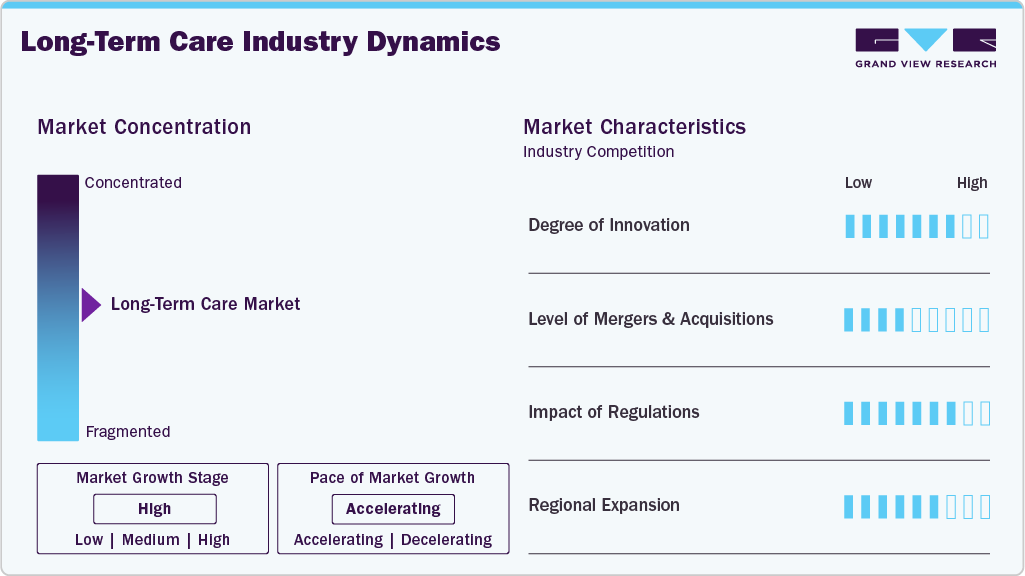
The chart below illustrates the relationships among industry concentration, industry characteristics, and industry participants, including industry competition, levels of partnerships & collaboration activities, degree of innovation, impact of regulations, and regional expansion. The degree of innovation is moderately high. The level of merger & acquisition activities is moderate. Moreover, the impact of regulations is high, and the regional expansion of industry is moderate.
Technological advancements are expected to support growth in the LTC services market by enabling more connected and efficient care models. The adoption of telemedicine and remote patient monitoring is expanding the use of digital solutions across LTC settings, while smart sensors, telehealth platforms, and medical monitoring devices enable continuous patient tracking outside traditional clinical environments. These technologies can improve care coordination, facilitate earlier identification of health changes, and support more efficient management of older adults with ongoing care needs. For instance, in August 2025, SoftWriters announced the launch of FrameworkInsight, a cloud-based business intelligence platform for LTC pharmacies designed to support data-driven decision-making and improve operational efficiency through advanced analytics and a SaaS-based architecture. Such digital solutions are expected to strengthen technology adoption and improve workflow management across the LTC ecosystem.
 To learn more about this report, Download Free Sample Report
 Several key players are actively engaging in partnerships and collaborations to foster growth & innovation and improve their competitiveness by combining the expertise & efforts of different organizations. For instance, in May 2025, Sunrise Senior Living partnered with Griffin Living, which resulted in the addition of two boutique-style communities in California, Varenita of Simi Valley and Varenita of Westlake Village, to Sunrise's portfolio.
“We have entered a new robust era of growth at Sunrise, one that’s grounded in strong, industry-leading operational performance, lifestyle, wellness, and hospitality-driven experiences, and a deep understanding of what seniors and their families are expecting going forward.”
- Jack R. Callison, Jr., CEO of Sunrise Senior Living.
The regulatory framework governing long-term care (LTC) includes licensing requirements, staffing standards, safety protocols, and quality control measures designed to protect vulnerable populations, including older adults and individuals with disabilities. These requirements influence the operational standards and quality of care provided across LTC facilities. For instance, in April 2024, the Centers for Medicare & Medicaid Services (CMS) introduced a final rule establishing minimum staffing standards for LTC facilities. Effective June 2024, the rule requires facilities to provide an average of 3.48 hours of direct nursing care per resident per day, including at least 0.55 hours provided by registered nurses (RNs) and 2.45 hours by nurse aides. The remaining 0.48 hours can be fulfilled by staff from different nursing categories, providing facilities with some flexibility in meeting overall staffing requirements.
Geographical expansion helps companies to increase their presence and maintain or strengthen their market presence. For instance, in March 2025, an article by Skilled Nursing News highlighted that Indiana-based Journey Skilled Nursing has grown to 22 facilities across six states in just under a year, with plans for more M&A in the spring of 2025.
Service Insights
The nursing care segment accounted for the largest market share of 30.6% in 2025. This dominance is supported by the continued need for specialized care among older adults and increasing demand for nursing services, particularly in developing countries. Home healthcare is also increasingly adopted among individuals aged 65 years and older, patients recently discharged from hospitals, adults with cognitive or functional limitations, mothers of newborns, and families seeking medical assistance for aging parents at home. According to a Rosewood article published in June 2025, approximately 15% of individuals aged 65 years and older in the U.S. reside in long-term care settings. The country has around 15,300 nursing care homes with nearly 1.6 million licensed beds, serving approximately 1.3 million residents. In addition, about 70.3% of these facilities are operated by for-profit organizations, indicating substantial private-sector participation in nursing care delivery.
The hospice segment is expected to register the fastest CAGR during the forecast period, supported by the growing prevalence of chronic diseases and increasing demand for continuous medical and supportive care. Rising preference for home-based hospice services is also contributing to segment growth, as these services enable patients to receive end-of-life care in familiar, comfortable surroundings. Home hospice can improve patient and family satisfaction, support emotional well-being, and reduce pressure on hospitals and intensive care units. It may also provide a more cost-efficient alternative to prolonged hospital stays, supporting its adoption among patients, families, and healthcare systems. For instance, a CMS hospice monitoring report published in April 2025 indicated that approximately 1.8-1.91 million Medicare beneficiaries received hospice care in 2024, highlighting the substantial demand for end-of-life care services in the U.S.
Payer Insights
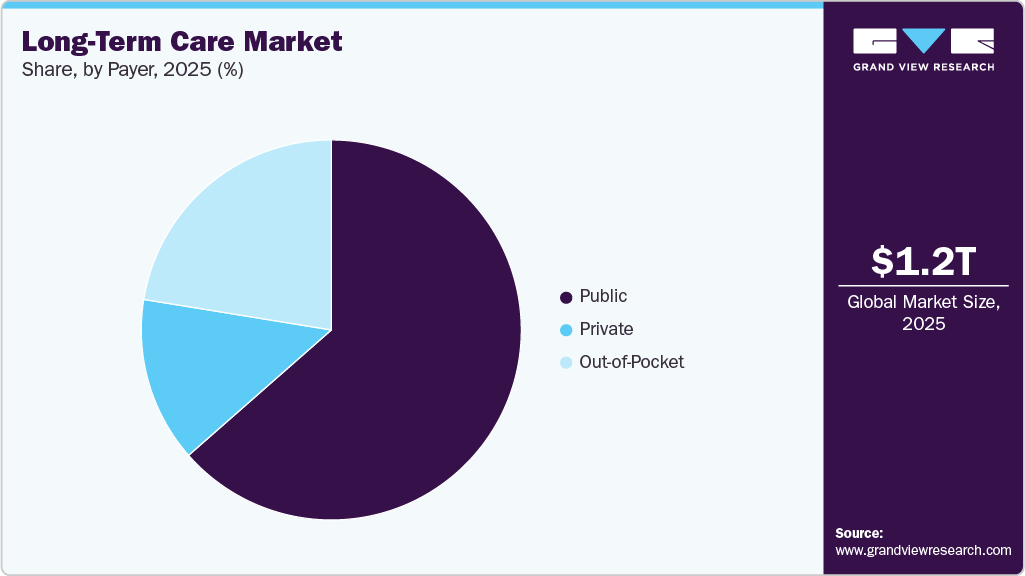
The public segment accounted for the largest revenue share of 63.5% in 2025. This dominance is largely supported by the growing number of older adults, particularly the Baby Boomer generation, who increasingly require long-term support for chronic conditions, disabilities, and age-related functional limitations. Dependence on government-funded programs such as Medicaid and Medicare has also increased as more individuals require extended care services. In addition, policy initiatives and federal incentives promoting home- and community-based services (HCBS) are encouraging a shift away from institutional care while helping address the associated costs. Socioeconomic factors, including stagnant wage growth and limited access to long-term care insurance, further contribute to reliance on publicly funded LTC services.
 To learn more about this report, Download Free Sample Report
 The private segment is expected to register the fastest CAGR during the forecast period, supported by the growing population of affluent older adults with adequate savings, pension income, or long-term care insurance to finance private-pay services. Restrictions and eligibility requirements associated with Medicaid, along with concerns regarding the quality and availability of care in publicly funded facilities, are also encouraging families to consider private LTC options. In addition, private LTC providers, including traditional and hybrid long-term care insurance companies, offer coverage and benefits that help individuals finance extended care needs, supporting demand for privately funded long-term care services.
Regional Insights
North America dominated the long-term care market, accounting for the largest revenue share of 48.2% in 2025. The region’s strong market position is supported by the widespread availability of LTC facilities, improving reimbursement mechanisms, and supportive government policies aimed at expanding access to long-term care. In addition, established healthcare infrastructure and government-funded programs contribute to the high utilization of LTC services across the region. According to an article published by the Kaiser Family Foundation (KFF) in December 2025, the U.S. had approximately 14,742 CMS-certified nursing facilities in 2025, serving around 1.24 million residents. Utilization of these facilities is substantially supported by Medicaid and Medicare financing, underscoring the role of public reimbursement programs in the regional LTC services market.
 To learn more about this report, Download Free Sample Report
 The U.S. long-term care market accounted for the largest revenue share in 2025, supported by rapid adoption of healthcare technologies and changing patient preferences toward receiving care at home. Remote patient monitoring solutions and telehealth services allow healthcare providers to monitor patients and deliver care without requiring frequent visits to hospitals or other healthcare facilities. These technologies can support continuity of care, improve patient convenience, and reduce costs associated with prolonged hospital stays, strengthening the appeal of home-based hospice services. For instance, a study published by the USC Schaeffer Center in July 2024 found that 56% of respondents believed they would recover faster at home than in a hospital. This preference, combined with advances in remote monitoring and telehealth, is supporting the delivery of more patient-centered care while potentially reducing hospital readmissions and improving patient satisfaction.
Europe Long-Term Care Market Trends
The Europe long-term care market is expected to expand significantly during the forecast period, supported by well-established healthcare systems across major economies, including Germany, the UK, France, Spain, and Italy. The region’s rapidly aging population is increasing the need for structured and continuous care services, particularly for individuals with chronic conditions and age-related functional limitations. This is creating demand across home-based care, assisted living, residential facilities, and institutional care, while also increasing the importance of coordinated approaches to chronic disease management and elderly care.
The UK long-term care market is expected to grow significantly over the forecast period, driven by rising demand for coordinated and efficient care services amid population aging and the increasing prevalence of chronic diseases. These demographic trends are creating a need for scalable LTC models spanning home-based care, residential services, and integrated community-based care. In parallel, government initiatives focused on healthcare digitalization and integrated care are supporting improvements in service coordination. Investments in digital health infrastructure and initiatives aimed at enabling unified patient records are helping connect care providers and facilitate more coordinated delivery across healthcare and social care settings.
The long-term care market in Germany held a significant share in 2025, supported by the country’s growing older population and established healthcare infrastructure. Increasing demand for nursing homes, assisted living facilities, and home care is creating a greater need for efficient systems to manage patient care and facility operations. Germany’s emphasis on care quality, regulatory compliance, and operational efficiency is also supporting the adoption of digital and software-based solutions across LTC settings. These technologies can streamline administrative processes, improve care coordination and patient management, and support regulatory compliance, contributing to a more efficient and sustainable LTC ecosystem.
Asia Pacific Long-Term Care Market Trends
The Asia Pacific long-term care industry is expected to grow at the fastest CAGR over the forecast period, supported by rapid population aging, rising healthcare expenditure, and increasing demand for organized long-term care services. The region’s expanding older population is creating a greater need for structured care options across home healthcare, assisted living, nursing care, hospice, and community-based services. In addition, increasing participation by both government and private-sector providers is contributing to the development and expansion of LTC infrastructure, particularly as healthcare systems in emerging Asian economies adapt to changing demographic and care needs.
The long-term care (LTC) market in Japan accounted for a significant share of revenue in 2025. Market growth is supported by the rapid adoption of healthcare technologies and increasing preference for at-home care and regular health monitoring services. Japan’s long-term care insurance (LTCI) system plays a central role in ensuring access to care services for eligible older adults and provides coverage for a broad range of LTC services. These include institutional care, home-based assistance, rehabilitation, and day-care services, enabling consistent utilization across different income groups. The LTCI framework also supports participation from service providers, contributing to the development of a structured and scalable LTC services ecosystem.
The India long-term care market is being supported by rapid population aging, a growing burden of chronic diseases, and structural changes in traditional family-based caregiving systems. These trends are increasing demand for formal LTC models, including home healthcare, assisted living, palliative care, and community-based elder care, to provide continuous and coordinated support. The rising prevalence of conditions such as diabetes, cardiovascular diseases, respiratory disorders, and neurodegenerative diseases is further increasing the need for long-term monitoring, rehabilitation, and supportive care. In response, healthcare providers are expanding structured LTC offerings that combine medical care with assistance for daily living and rehabilitation services.
Latin America Long-Term Care Market Trends
The Latin America long-term care industry is expected to expand significantly over the forecast period, supported by rapid population aging and the increasing prevalence of chronic diseases across the region. Countries such as Brazil, Mexico, Argentina, and Chile are undergoing a gradual demographic transition, characterized by rising life expectancy and declining fertility rates, contributing to an aging population. These demographic changes are increasing the need for formal and structured LTC services, including home healthcare, assisted living, nursing care, and community-based support programs for older adults.
The long-term care (LTC) market in Brazil accounted for a significant share of revenue in 2025, supported by gradual improvements in healthcare infrastructure, particularly across urban areas. Increasing investments in hospital networks, private healthcare facilities, and home care providers are strengthening the country’s capacity to deliver LTC services and improving access to formal care options. The expansion of these healthcare and home-based service networks is creating a more supportive environment for the development of long-term care solutions for Brazil’s growing older population.
Middle East And Africa Long-Term Care Market Trends
The market in the Middle East and Africa is anticipated to grow significantly during the forecast period. A key driver of market growth in the region is the increasing burden of non-communicable and age-related diseases such as diabetes, cardiovascular conditions, obesity, and kidney disorders. These conditions require continuous medical supervision, rehabilitation, and supportive care, thereby increasing the need for structured long-term care services, including home healthcare, nursing care, and chronic disease management programs.
The long-term care market in South Africa is expected to grow significantly over the forecast period, driven by rising awareness of professional elderly care services and the gradual shift away from informal caregiving structures, which are contributing to increased adoption of structured LTC solutions. Economic growth and expanding insurance coverage among certain population segments are also improving affordability and utilization of long-term care services.
Key Long-Term Care Company Insights
The market is fragmented, with many country-level service end uses. The market players undertake several strategic initiatives, such as partnerships & collaborations, product launches, mergers & acquisitions, and geographical expansion to maintain their position and grow in the market.
Key Long-Term Care Companies
The following key companies have been profiled for this study of the long-term care market.
-
Brookdale Senior Living, Inc.
-
Knight Health Holdings, LLC
-
LHC Group, Inc.
-
Atria Senior Living, Inc.
-
Sunrise Senior Living
-
Extendicare
-
Sonida Senior Living
-
Diversicare Healthcare Services
-
Genesis HealthCare
-
Home Instead Inc.
-
Amedisys, Inc.
Recent Developments
-
In July 2026, ResMed agreed to sell its MatrixCare software business to Frazier Healthcare Partners for USD 490 million. The transaction includes MatrixCare and related post-acute care software offerings, including HealthcareFirst and Citus, and is expected to enable continued investment in product innovation while allowing ResMed to sharpen its focus on sleep, respiratory, and home-based healthcare solutions.
-
In April 2025, Deacon Health launched a technology-enabled specialty care management platform designed to coordinate care for patients with multiple chronic conditions. The platform uses evidence-based, clinician-led care pathways to support more efficient treatment decisions, improve patient outcomes, and reduce healthcare costs, aligning with the industry's shift toward value-based and coordinated care models.
-
In October 2025, Forcura and Medalogix rebranded as Mosai following their March merger and introduced a combined suite of seven products for home health and hospice providers. The unified platform integrates workflow automation, care coordination, and predictive analytics, strengthening technology capabilities for clinical and operational decision-making across the post-acute care continuum.
Providers of long-term care were greatly impacted due to the recent transition of electronic medical record (EMR) providers, forcing operators to evaluate new technologies in the industry. The suite of holistic solutions at MatrixCare, including a purpose-built EMR, a fully integrated dietary and nutrition solution, best-in-class enterprise financial solutions, and AI-powered safety solutions are all designed to help communities deliver the best care possible for their residents.”
~Bharat Monteiro, General Manager, Facilities, MatrixCare
Long-Term Care Market Report Scope
Report Attribute
Details
Market size in 2025
USD 1.2 trillion
Estimated market size in 2026
USD 1.3 trillion
Projected market size by 2033
USD 2.1 trillion
Growth rate
CAGR of 7.0% from 2026 to 2033
Actual data
2021 - 2025
Forecast period
2026 - 2033
Quantitative units
Revenue in USD billion/trillion and CAGR from 2026 to 2033
Report coverage
Revenue forecast, company ranking, competitive landscape, growth factors, and trends
Segments covered
Service, payer, and region
Regional scope
North America; Europe; Asia Pacific; Latin America; MEA
Country scope
U.S.; Canada; UK; Germany; France; Italy; Spain; Denmark; Sweden; Norway; Japan; China; India; Australia; Thailand; South Korea; Brazil; Mexico; Argentina; South Africa; Saudi Arabia; UAE; Kuwait
Key companies profiled
Brookdale Senior Living, Inc.; Knight Health Holdings LLC; LHC Group, Inc.; Atria Senior Living, Inc.; Sunrise Senior Living; Extendicare; Sonida Senior Living; Diversicare; Genesis HealthCare; Home Instead, Inc.; Amedisys
Customization scope
Free report customization (equivalent up to 8 analysts working days) with purchase. Addition or alteration to country, regional & segment scope.
Pricing and purchase options
Avail customized purchase options to meet your exact research needs. Explore purchase options
Global Long-Term Care Market Report Segmentation
This report forecasts revenue growth at the global, regional & country levels and provides an analysis of the latest industry trends in each of the sub-segments from 2021 to 2033. For this study, Grand View Research has segmented the long-term care market report based on service, payer, and region:
 To learn more about this report, Download Free Sample Report
 -
Service Outlook (Revenue, USD Billion/Trillion, 2021 - 2033)
-
Home Healthcare
-
Hospice
-
Nursing Care
-
Assisted Living Facilities
-
Others
-
-
Payer Outlook (Revenue, USD Billion/Trillion, 2021 - 2033)
-
Public
-
Private
-
Out-of-Pocket
-
-
Regional Outlook (Revenue, USD Billion/Trillion, 2021 - 2033)
-
North America
-
U.S.
-
Canada
-
Mexico
-
-
Europe
-
UK
-
Germany
-
France
-
Italy
-
Spain
-
Denmark
-
Sweden
-
Norway
-
-
Asia Pacific
-
China
-
Japan
-
India
-
South Korea
-
Australia
-
Thailand
-
-
Latin America
-
Brazil
-
Argentina
-
-
Middle East and Africa (MEA)
-
South Africa
-
Saudi Arabia
-
UAE
-
Kuwait
-
-
Long-Term Care Market By Country
- U.S. Long-Term Care Market
- Canada Long-Term Care Market
- France Long-Term Care Market
- Spain Long-Term Care Market
- Germany Long-Term Care Market
- Italy Long-Term Care Market
- Denmark Long-Term Care Market
- Sweden Long-Term Care Market
- Norway Long-Term Care Market
- China Long-Term Care Market
- Brazil Long-Term Care Market
- Saudi Arabia Long-Term Care Market
- Japan Long-Term Care Market
- Uae Long-Term Care Market
- India Long-Term Care Market
- Mexico - Latin America Long-Term Care Market
- South Africa Long-Term Care Market
- Kuwait Long-Term Care Market
- Thailand Long-Term Care Market
- Argentina Long-Term Care Market
- Australia Long-Term Care Market
- South Korea Long-Term Care Market
- U.K. Long-Term Care Market
About the Author(s)
Medical Devices Research Team
Healthcare · Medical DevicesThis report was authored by the medical devices research team at Grand View Research - comprising two research analysts, one senior research analyst, and one industry expert - with specialized expertise in the medical devices segment of the healthcare industry. All findings are based on proprietary healthcare databases, executive interviews, and regulatory analysis, subject to internal peer review prior to publication.
Last Updated:
Speak to Analyst

Customize this report to your needs - add regions, segments, or data points, with 20% free customization.
Or view our licence options:


ISO 9001:2015 & 27001:2022 Certified
We are GDPR and CCPA compliant! Your transaction & personal information is safe and secure. For more details, please read our privacy policy.


