
- Home
- »
- Consumer F&B
- »
-
Macadamia Butter Market Size, Share & Trends Report, 2033GVR Report cover

Macadamia Butter Market (2026 - 2033)
Size, Share & Trends Analysis Report By Nature (Organic, Conventional), By Form (Raw, Roasted), By Application (Food and Beverage, Cosmetics and Personal Care, Nutraceuticals), By Region, And Segment Forecasts
Market Size, 2025
$161.4MMarket Estimate, 2026
$173.7MMarket Forecast, 2033
$300.0MCAGR, 2026–2033
8.1%Single-use Pump Market Summary
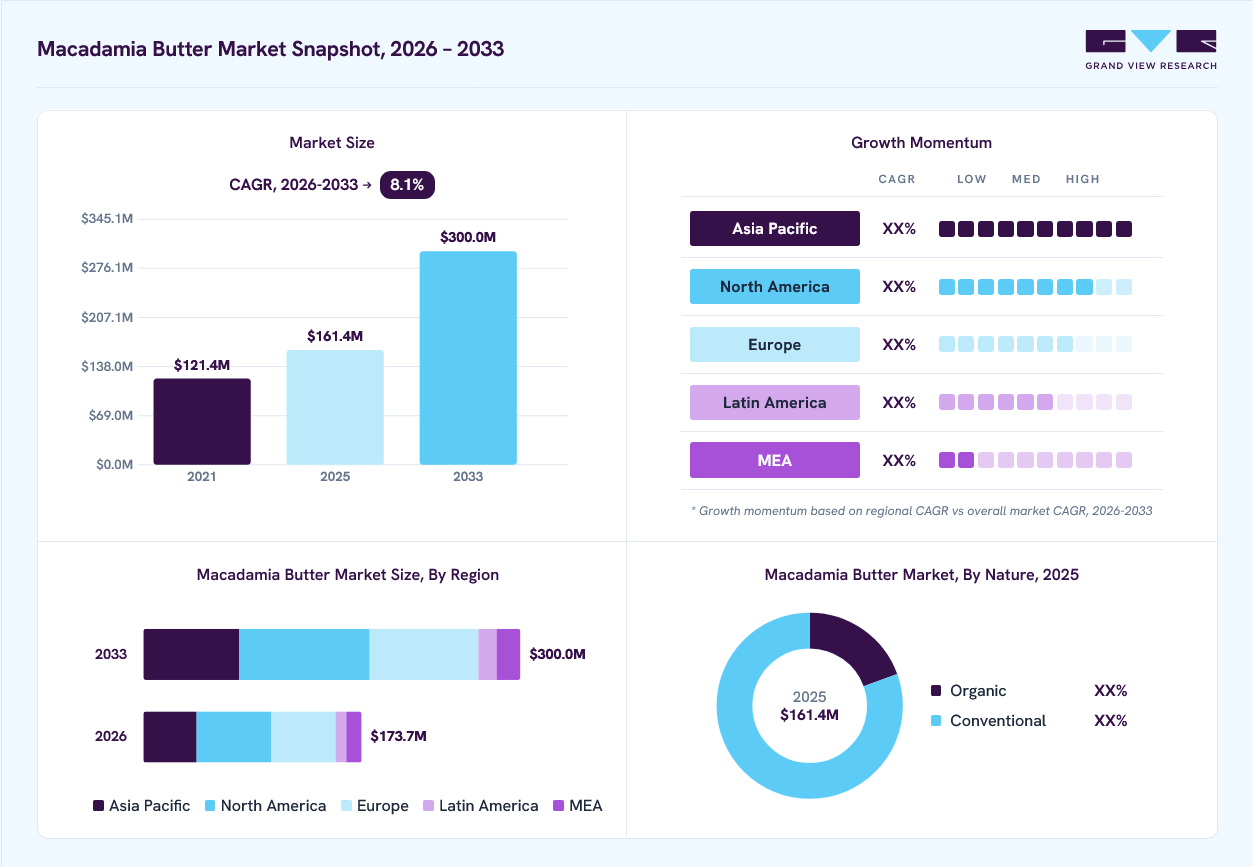
The global macadamia butter market size was valued at USD 161.4 million in 2025 and is projected to grow from USD 173.7 million in 2026 to USD 300.0 million by 2033, at a CAGR of 8.1% from 2026 to 2033. North America dominated the market, accounting for a revenue share of 34.3% in 2025. There is a growing consumer demand for healthier and more nutritious food options. Macadamia butter, which is rich in healthy fats, vitamins, and minerals, fits well into this trend.
 Source: Grand View Research, IR Documents, Primary Interviews, Paid DatabasesTo learn more about this report,
 Download Free Sample Report
Key Market Trends & Insights
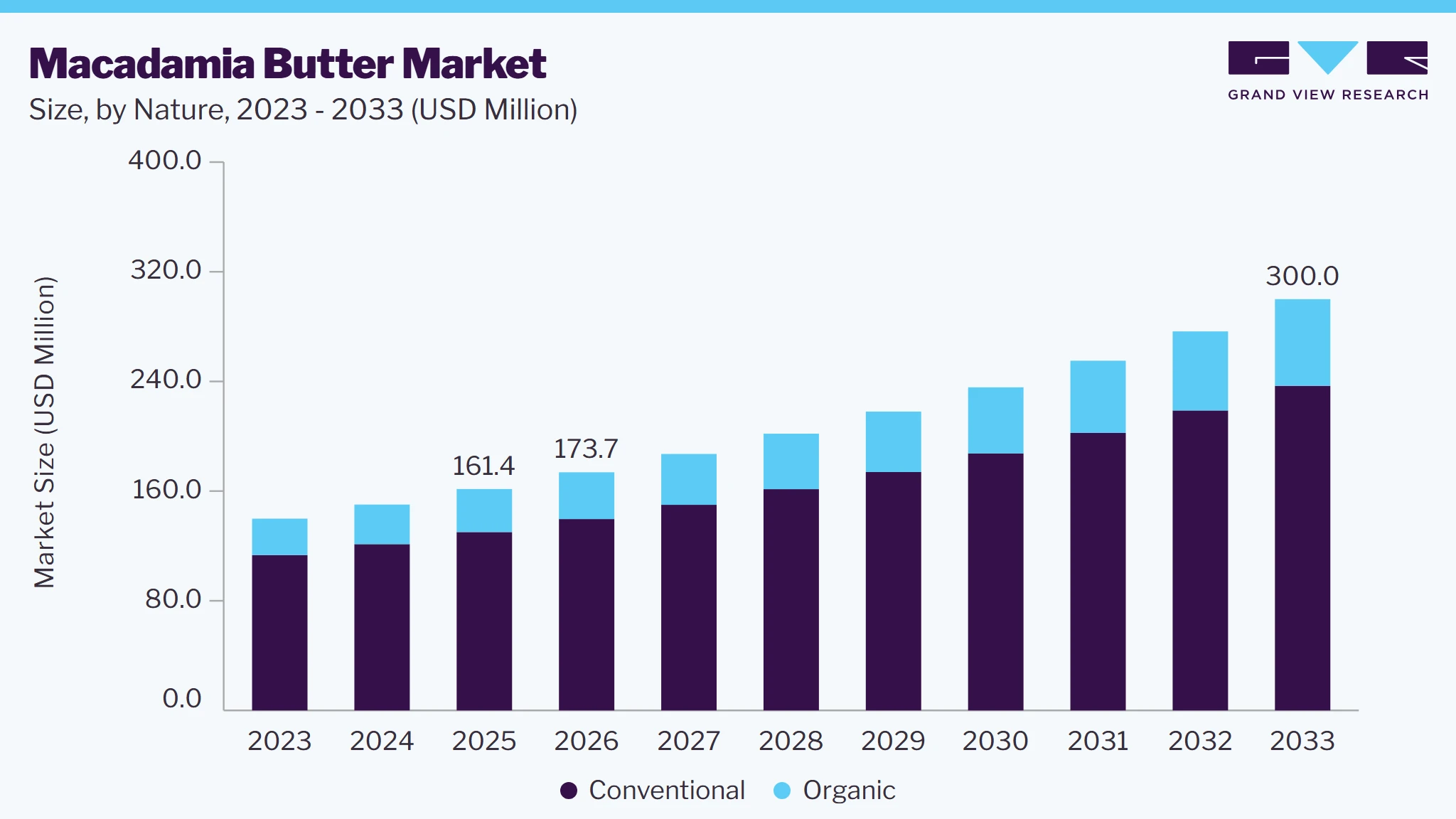
- By nature: Conventional segment led the market with the largest revenue share of 80.6% in 2025.
- By form: Roasted segment led the market with the largest revenue share of 56.0% in 2025.
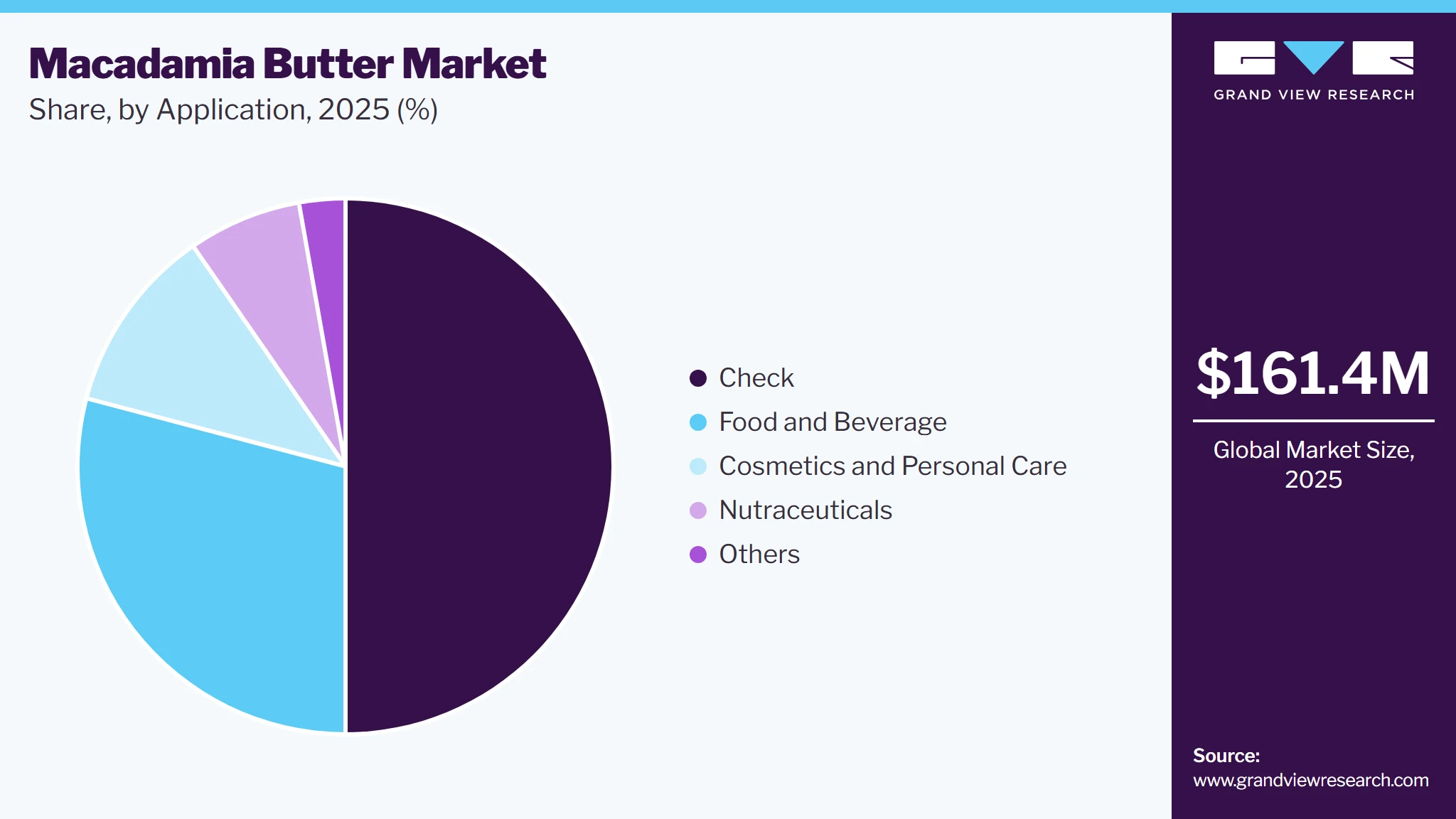
- By application: Food & beverage segment led the market with the largest revenue share of 58.2% in 2025.
Regional Highlights
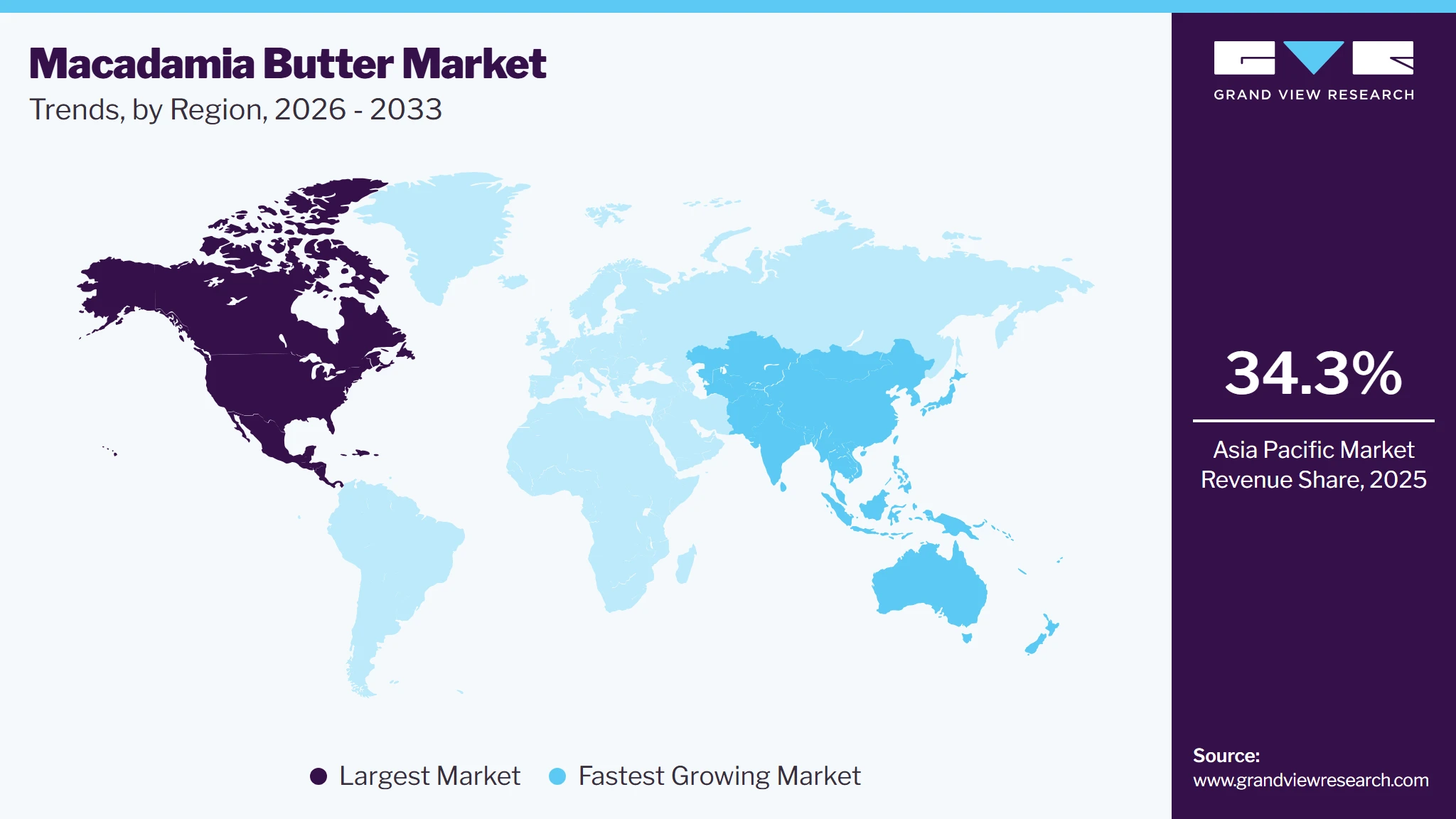
- Largest regional market: North America (34.3% revenue share, 2025)
- Fastest-growing regional market: Asia Pacific (highest CAGR, 2026-2033)
- By country: The U.S. held the largest market share in 2025.
Market Size & Forecast
- Market size in 2025: USD 161.4 Million
- Estimated market size in 2026: USD 173.7 Million
- Projected market size by 2033: USD 300.0 Million
- CAGR (2026-2033): 8.1%
Prism AI by Grand View Research Free to tryAsk a question about the macadamia butter marketTry asking✓Every figure cited from GVR research Prefer the report? Download free sample →The rise in popularity of plant-based diets and the increasing awareness of food allergies and intolerances are contributing to the market growth. As more people seek plant-based or allergen-friendly natures, macadamia butter offers a viable alternative to dairy-based and nut butter, which might not be suitable for everyone. Moreover, the creamy texture and rich form of macadamia butter also make it a desirable option for those looking to diversify their diet.
 To learn more about this report, Download Free Sample Report
The expansion of the specialty food sector, including premium and artisanal natures, has further fueled interest in macadamia butter. Consumers are increasingly willing to pay a premium for unique and high-quality food items, and macadamia butter's exotic appeal fits this demand. Moreover, the rise of e-commerce has made it easier for niche natures like macadamia butter to reach a wider audience, increasing its availability and market reach.
Sustainability and ethical sourcing have become significant considerations for many consumers. Macadamia nuts are often grown in regions where sustainable farming practices are emphasized, which aligns with the values of environmentally conscious shoppers. As awareness of sustainable practices grows, macadamia butter's reputation as a natural made from responsibly sourced ingredients may continue to boost its market appeal.
Market Dynamics
Macadamia butter is witnessing growing consumer adoption owing to increasing demand for premium, plant-based, and nutrient-rich food products. Rich in healthy monounsaturated fats, antioxidants, and essential nutrients, macadamia butter is gaining popularity as a wholesome alternative to conventional nut spreads. The rising preference for clean-label ingredients, functional foods, and wellness-focused dietary choices, coupled with expanding applications in bakery, confectionery, snacks, and nutritional products, is expected to support sustained growth of the macadamia butter market.
The increasing shift toward plant-based nutrition and clean-label food products is a major factor supporting the growth of the macadamia butter market. Consumers are actively seeking nutrient-dense alternatives to traditional spreads that align with wellness-focused lifestyles, including vegan, flexitarian, and low-carbohydrate diets. Owing to its rich content of monounsaturated fats, premium nutritional profile, and versatility across food applications, macadamia butter is gaining traction among health-conscious consumers. The trend is further supported by increasing product innovation and the incorporation of macadamia-based ingredients into premium food and beverage offerings.
In December 2025, the Australian Macadamias reported that brands worldwide launched 735 new products featuring macadamias during 2025, representing nearly a 20% increase compared to the previous year. The majority of launches were new products and line extensions across snacking, bakery, confectionery, and beverage categories, highlighting growing manufacturer investment in macadamia-based innovations and strengthening demand for value-added products such as macadamia butter.
The growth of the macadamia butter market is constrained by the limited global production base and the susceptibility of macadamia cultivation to adverse weather conditions. Since macadamia nuts are primarily sourced from a few producing countries, including Australia, South Africa, Kenya, and Hawaii, disruptions in crop yields can significantly impact raw material availability and pricing. Fluctuations in supply often lead to higher production costs for manufacturers, affecting product affordability and limiting mass-market penetration. Furthermore, the premium pricing of macadamia nuts compared to other nut varieties such as almonds and peanuts poses an additional challenge to the widespread adoption of macadamia butter products.
In July 2025, the Australian Macadamia Society significantly revised its 2025 macadamia crop forecast downward due to prolonged rainfall, adverse orchard conditions, and weather-related disruptions across key growing regions. The forecast was reduced from approximately 55,960 tonnes to a range of 37,300-41,970 tonnes, with growers in New South Wales reporting their lowest yields in a decade. The decline highlighted the vulnerability of macadamia supply chains to climatic events and the resulting uncertainty in raw material availability for downstream products such as macadamia butter.
The macadamia butter market remains relatively niche compared to other nut butter categories, creating opportunities for manufacturers to introduce differentiated products with unique flavors, enhanced nutritional profiles, and premium positioning. Growing consumer interest in indulgent yet health-oriented foods is encouraging brands to experiment with novel ingredient combinations that improve taste, functionality, and overall consumer experience.
In 2025, the global macadamia industry recorded 735 new macadamia-based product launches, representing nearly a 20% increase from the previous year. Most launches were new products, line extensions, or flavor innovations across food categories, demonstrating manufacturers' growing focus on value-added macadamia applications. This trend highlights a significant opportunity for brands to expand innovation within the macadamia butter segment through flavored, functional, and premium product offerings.
Analyst Perspective
The macadamia butter market is evolving from a niche nut spread category into a premium functional food segment where differentiation will depend less on raw ingredient quality and more on value-added innovation. As supply constraints limit large-scale price competition, the strongest competitive advantage will belong to brands that combine macadamia butter with functional ingredients, convenient formats, and premium positioning. Over the long term, market leaders are likely to be those that successfully expand consumption beyond spreads and establish macadamia butter as a versatile ingredient across snacking, nutrition, and wellness applications.
Nature Insights
Based on nature, the conventional segment led the market with the largest revenue share of 80.6% in 2025. The market for conventional macadamia butter is driven by its increasing popularity as a healthy, nutrient-dense alternative to traditional nut butter. Consumers are drawn to its rich, buttery form and high content of healthy fats, vitamins, and minerals. In addition, rising awareness of the health benefits of macadamia nuts and the growing demand for natural and minimally processed foods contribute to the market's expansion.
The organic segment is anticipated to grow at the fastest CAGR of 8.9% from 2024 to 2033. The market is driven by increasing consumer demand for healthier, natural, and sustainably produced foods. Growing awareness of the health benefits of macadamia nuts, coupled with a rising preference for organic natures free from synthetic additives and pesticides, fuels this trend. In addition, the broader shift towards plant-based diets and premium, eco-friendly natures contributes to the popularity of organic macadamia butter.
Form Insights
Based on form, the roasted segment led the market with the largest revenue share of 56.0% in 2025. The roasting process enhances the nutty notes and adds depth to the taste, making it a popular choice among food enthusiasts and health-conscious individuals alike. Moreover, the growing trend towards natural and organic food natures has increased demand for high-quality nut butter, further boosting the market growth.
The raw segment is anticipated to grow at the fastest CAGR of 7.2% from 2024 to 2033. As people become more aware of the benefits of raw, minimally processed foods, macadamia butter, with its rich, creamy texture and high nutrient profile, including healthy fats and antioxidants, has gained popularity. Moreover, trends toward vegan and gluten-free diets, coupled with macadamia butter's versatile use in both sweet and savory recipes, further fuel its market growth.
Application Insights
Based on application, food & beverage segment led the market with the largest revenue share of 58.2% in 2025 and is expected to grow at a CAGR of 8.0% over the forecast period. Macadamia butter offers a rich, creamy texture and a unique form profile, positioning it as a premium alternative to traditional nut butter. In addition, its nutritional benefits, including high levels of monounsaturated fats and essential nutrients, appeal to health-conscious consumers. The increasing trend towards clean label natures and natural ingredients further fuels its popularity, leading to expansion in various culinary applications from spreads to smoothies and baked goods.
 To learn more about this report, Download Free Sample Report
The cosmetics and personal care segment is anticipated to grow at the fastest CAGR of 8.3% from 2024 to 2033. Macadamia butter, known for its rich, buttery texture and high monounsaturated fatty acid content, offers exceptional moisturizing and skin-conditioning properties, making it a coveted ingredient in formulations for lotions, creams, and hair care products. In addition, the increasing consumer preference for natural and sustainable ingredients in personal care natures further fuels the demand for macadamia butter.
Regional Insights
North America dominated the women’s health app market with the largest revenue share of 34.3% in 2025. It is primarily driven by rising consumer demand for healthy, plant-based alternatives to traditional spreads and butter. Increased awareness of macadamia nuts' nutritional benefits, such as their high content of healthy fats, vitamins, and antioxidants, combined with the growing trend towards clean eating and organic natures, is fueling this demand. In addition, the expanding availability of macadamia butter in various retail outlets and online platforms is contributing to its popularity.
 To learn more about this report, Download Free Sample Report
U.S. Macadamia Butter Market Insights
The macadamia butter market in the U.S. held the largest share in the North America region in 2025. As people become more health-conscious, they are seeking natures with beneficial nutritional profiles, including healthy fats and lower sugar content. In addition, macadamia butter’s rich, creamy texture and unique form appeal to those looking for gourmet and premium food experiences. The rise of specialty food stores and online shopping has also made it more accessible to a broader audience.
Europe Macadamia Butter Market
The macadamia butter market in Europe is expected to grow at the fastest CAGR of 7.6% from 2024 to 2033. In Europe, the market is being driven by the growing demand for premium, plant-based alternatives in the health and wellness sector. Consumers are increasingly seeking out nutritious, gourmet spreads that offer unique forms and health benefits. This trend is further supported by rising awareness of sustainable and ethically sourced ingredients, with macadamia butter gaining popularity for its rich taste and high monounsaturated fat content. In addition, the rise of dietary preferences such as veganism and gluten-free diets is contributing to the market growth in Europe.
Asia Pacific Macadamia Butter Market
Asia Pacific dominated the macadamia butter market with a revenue share of 23.96% in 2023. The region's rising middle class, coupled with a burgeoning interest in gourmet and exotic ingredients, is also fueling the popularity of macadamia butter. Furthermore, the increasing availability of macadamia natures in retail and food service sectors is boosting market growth.
Key Macadamia Butter Company Insights
The market is highly competitive, with a range of companies offering various forms. Many big players are increasing their focus on new form launches, partnerships, and expansion into new markets to compete effectively.
Key Macadamia Butter Companies:
The following key companies have been profiled for this study on the macadamia butter market.
-
MaraNatha
-
Futter’s Nut Butters
-
Wilderness Poets
-
Big Spoon Roasters
-
Woodstock Foods
-
Yumbutter
-
Carley’s of Cornwall Ltd
-
Tiny Isle
-
Torere Macadamias
-
Artisana Organic Foods
Competitive Benchmarking
Category
Operating Strategies
Competitive Edge
Weakness
Established Players (MaraNatha, Wilderness Poets, Woodstock Foods)
Focus on premium, organic, and clean-label product portfolios while expanding distribution through retail, specialty stores, and e-commerce channels.
Strengthen brand positioning through product quality, certifications, and diversified nut butter offerings to enhance consumer loyalty.
Established brand recognition, extensive distribution networks, and strong sourcing capabilities support market presence.
Ability to leverage economies of scale, premium product portfolios, and long-standing customer trust.
Premium pricing may limit penetration among price-sensitive consumers.
Dependence on macadamia nut availability exposes operations to raw material cost fluctuations and supply constraints.
Emerging Players (Futter’s Nut Butters, Yumbutter, Carley’s of Cornwall Ltd)
Adopt niche-market strategies focused on artisanal production, sustainability, and innovative flavor profiles to build market visibility.
Utilize direct-to-consumer channels and targeted branding to attract health-conscious and premium-seeking consumers.
Greater agility in product innovation, customization, and response to evolving consumer preferences.
Strong authenticity and local sourcing narratives help differentiate offerings in the premium nut butter segment.
Limited production capacity and distribution reach compared to established competitors.
Higher vulnerability to supply chain disruptions and challenges in scaling operations while maintaining product consistency.
Recent Developments
- In June 2023, Fit Butters, a premium nut butter brand promoting a healthy and active lifestyle, launched three of its forms nationwide at nearly 1,300 Walmart stores across the U.S. The brand will offer its Cinnamon Sugar Cookie cashew almond butter (vegan), Chocolate Chip Cookie Dough cashew butter, and a Walmart exclusive form, White Chocolate Macadamia peanut butter, catering to consumers seeking better-for-you options without sacrificing taste
Macadamia Butter Market Report Scope
Report Attribute
Details
Market size in 2025
USD 161.4 million
Estimated market size in 2026
USD 173.7 million
Projected market size by 2033
USD 300.0 million
Growth rate
CAGR of 8.1% from 2026 to 2033
Base year for estimation
2025
Historical data
2021 - 2024
Forecast period
2026 - 2033
Quantitative units
Revenue in USD million/billion and CAGR from 2026 to 2033
Report coverage
Revenue forecast, company ranking, competitive landscape, growth factors, and trends
Segments covered
Nature, form, application, region
Regional scope
North America; Europe; Asia Pacific; Central & South America; Middle East & Africa
Country scope
U.S; Canada; Germany; UK; France; Spain; Italy; France; China; India; Japan; Australia; South Korea; Brazil; South Africa; Saudi Arabia
Key companies profiled
MaraNatha; Futter’s Nut Butters; Wilderness Poets; Big Spoon Roasters; Woodstock Foods; Yumbutter; Carley’s of Cornwall Ltd; Tiny Isle; Torere Macadamias; Artisana Organic Foods
Customization scope
Free report customization (equivalent up to 8 analysts' working days) with purchase. Addition or alteration to country, regional & segment scope.
Pricing and purchase options
Avail customized purchase options to meet your exact research needs. Explore purchase options
Global Macadamia Butter Market Report Segmentation
This report forecasts revenue growth at the global, regional, and country levels and provides an analysis of the latest industry trends and opportunities in each of the sub-segments from 2021 to 2033. For this study, Grand View Research has segmented the global macadamia butter market report based on nature, form, application and region.
-
Nature Outlook (Revenue, USD Million, 2021 - 2033)
-
Organic
-
Conventional
-
-
Form Outlook (Revenue, USD Million, 2021 - 2033)
-
Raw
-
Roasted
-
-
Application Outlook (Revenue, USD Million, 2021 - 2033)
-
Food and Beverage
-
Cosmetics and Personal Care
-
Nutraceuticals
-
Others
-
-
Regional Outlook (Revenue, USD Million, 2021 - 2033)
-
North America
-
U.S.
-
Canada
-
-
Europe
-
Germany
-
UK
-
Spain
-
Italy
-
France
-
-
Asia Pacific
-
China
-
India
-
Japan
-
Australia
-
South Korea
-
-
Central and South America
-
Brazil
-
-
Middle East & Africa
-
South Africa
-
Saudi Arabia
-
-
Research Methodology
The macadamia butter market figures in this report are based on a proven research process that combines executive interviews with secondary research from proprietary databases, company filings, and recognized regulatory and institutional sources. Market size is built through value-chain sizing - reconciling supply-side and demand-side estimates - and triangulated with bottom-up and top-down approaches. Every estimate passes multiple levels of expert validation before publication, with each macadamia butter segment quantified using the revenue-capture definitions in the table below.
Segment Definition
Segment - Type
Revenue capture definition
Organic
This segment includes the sales of macadamia butter produced from organically cultivated macadamia nuts without the use of synthetic fertilizers, pesticides, genetically modified organisms (GMOs), or artificial additives. Revenue is generated through retail, specialty health food stores, online platforms, and foodservice channels catering to consumers seeking clean-label, natural, and sustainably sourced food products.
Conventional
This segment includes the sales of macadamia butter manufactured from conventionally grown macadamia nuts using standard agricultural practices. Revenue is generated through supermarkets, hypermarkets, convenience stores, online retailers, and food processing applications, offering consumers a more widely available and cost-effective alternative to organic macadamia butter.
Segment - Application
Revenue capture definition
Food and Beverage
This segment includes the sales of macadamia butter used in spreads, bakery products, confectionery, snacks, beverages, and desserts. Revenue is generated through retail, foodservice, and food manufacturing applications.
Cosmetics and Personal Care
This segment includes the sales of macadamia butter used in skincare, haircare, and personal care products for its moisturizing and nourishing properties. Revenue is generated through cosmetic and beauty product formulations.
Nutraceuticals
This segment includes the sales of macadamia butter used in functional foods, dietary supplements, and wellness products. Revenue is generated through health-focused formulations leveraging its nutritional benefits.
Others
This segment includes the sales of macadamia butter used in specialty and emerging applications beyond food, cosmetics, and nutraceuticals. Revenue is generated through niche and innovative product developments.
Estimation Model
Layer
Guiding Question
Description
Raw Material Production Layer
What is the available macadamia nut supply?
Identify global macadamia nut production volumes across key producing countries and estimate the proportion allocated for value‑added processing applications, including nut butter manufacturing.
Processing & Manufacturing Layer
How much supply is converted into butter products?
Assess the share of macadamia nuts processed into butter and spread formulations by manufacturers, considering processing capacity and product diversification trends.
Consumption Layer
Who actively purchases macadamia butter?
Evaluate adoption among health‑conscious consumers, plant‑based diet followers, premium food buyers, and foodservice operators to determine the addressable consumer base.
Revenue Realization Layer
How much revenue is generated?
Multiply macadamia butter consumption volumes by average selling prices across retail, online, specialty, and foodservice channels to estimate market revenue.
Delivered Customizations
This report has been delivered with the following In-depth customizations
Client Request
Customization Delivered
Value Adds
Premium Nut Butter Positioning & Consumer Preference Analysis
Assessed consumer demand for premium, plant-based, clean-label, and functional macadamia butter products across key markets and demographics.
Helps stakeholders identify high-value consumer segments and refine premiumization strategies.
Product Innovation & Flavor Development Assessment
Evaluated trends in flavored, protein-enriched, organic, and functional macadamia butter formulations, including emerging product formats and ingredient innovations.
Supports product development initiatives by identifying whitespace opportunities and differentiation strategies.
Supply Chain & Raw Material Risk Assessment
Examined macadamia nut sourcing trends, production concentration, pricing volatility, and climate-related supply risks.
Assists in procurement planning, risk mitigation, and long-term supply security strategies.
Frequently Asked Questions About This Report
Roasted segment led the market with the largest revenue share of 56.0% in 2025.
Food & beverage segment led the market with the largest revenue share of 58.2% in 2025.
North America dominated with a market share of 34.3% in 2025.
Asia Pacific is the fastest growing regional market with a CAGR over the forecast period.
Some key players operating in the macadamia butter market are MaraNatha, Futter’s Nut Butters, Wilderness Poets, Big Spoon Roasters, Woodstock Foods, Yumbutter, Carley’s of Cornwall Ltd, Tiny Isle, Torere Macadamias, Artisana Organic Foods
The market for macadamia butter is being driven by several key factors. First and foremost, there is a growing consumer demand for healthier and more nutritious food options. Macadamia butter, which is rich in healthy fats, vitamins, and minerals, fits well into this trend. Its high content of monounsaturated fats, which are known for their heart health benefits, appeals to health-conscious consumers looking for alternatives to traditional butters and spreads.
The global macadamia butter market size was valued at USD 161.4 million in 2025, and is estimated at USD 173.7 million in 2026.
The global macadamia butter market are expected to grow at a compounded growth rate of 8.1% from 2026 to 2033, reaching 300.0 million by 2033.
Conventional macadamia butter accounted for a share of 80.6% of the global revenues in 2025. The market for conventional nature macadamia butter is driven by its increasing popularity as a healthy, nutrient-dense alternative to traditional nut butters. Consumers are drawn to its rich, buttery form and high content of healthy fats, vitamins, and minerals. Additionally, rising awareness of the health benefits of macadamia nuts and the growing demand for natural and minimally processed foods contribute to the market's expansion.
About the Author(s)
Consumer F&B Research Team
Consumer Goods · Consumer F&BThis report was authored by the consumer f&b research team at Grand View Research - comprising two research analysts, one senior research analyst, and one industry expert - with specialized expertise in the consumer f&b segment of the consumer goods industry. All findings are based on proprietary consumer goods databases, executive interviews, and regulatory analysis, subject to internal peer review prior to publication.
Last Updated:
Speak to Analyst

Customize this report to your needs - add regions, segments, or data points, with 20% free customization.
Or view our licence options:


ISO 9001:2015 & 27001:2022 Certified
We are GDPR and CCPA compliant! Your transaction & personal information is safe and secure. For more details, please read our privacy policy.


